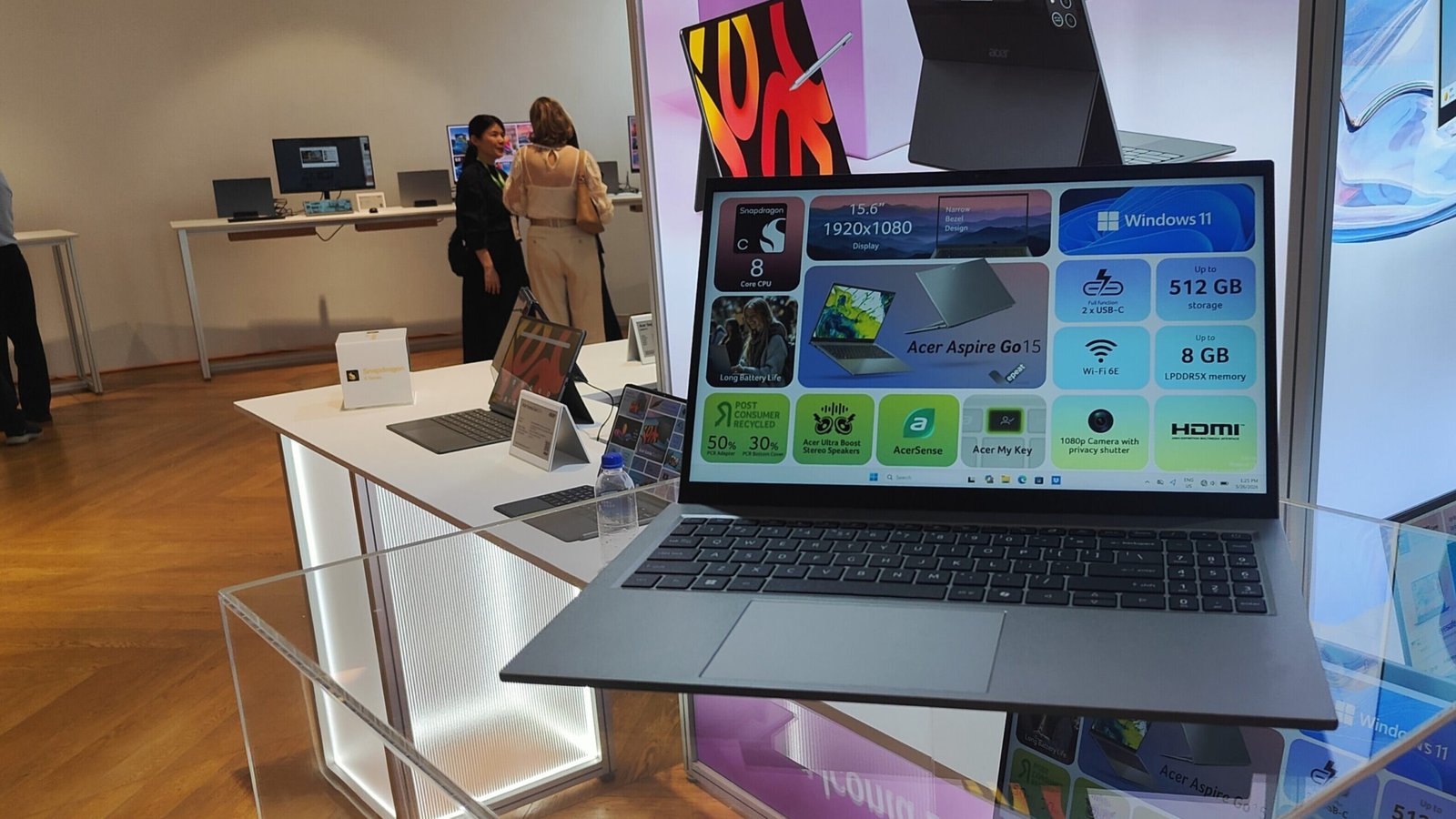
Budget electronics aren’t easy to find in 2026, but Qualcomm’s Snapdragon C might just make $300 laptops possible again with a mix of capable performance and strong efficiency. These new chips offer eight low-power cores, ample memory support, and strong connectivity features, which could make even the MacBook Neo look expensive.
Qualcomm first hinted at the Snapdragon C’s potential in May, and we got our first hands-on time with a Snapdragon C laptop in June. Now we have more details about what the chip at the heart of this design can do.
The Snapdragon C SoC includes a Qualcomm Kryo CPU with eight Arm cores. It has a single-core max boost frequency of 3GHz and an all-core boost clock of 2GHz. These are significantly lower than most modern processors, which often reach north of 5GHz, but this is a low-power, entry-level chip for similarly entry-level machines. Lower clock speeds also help maintain strong battery life.
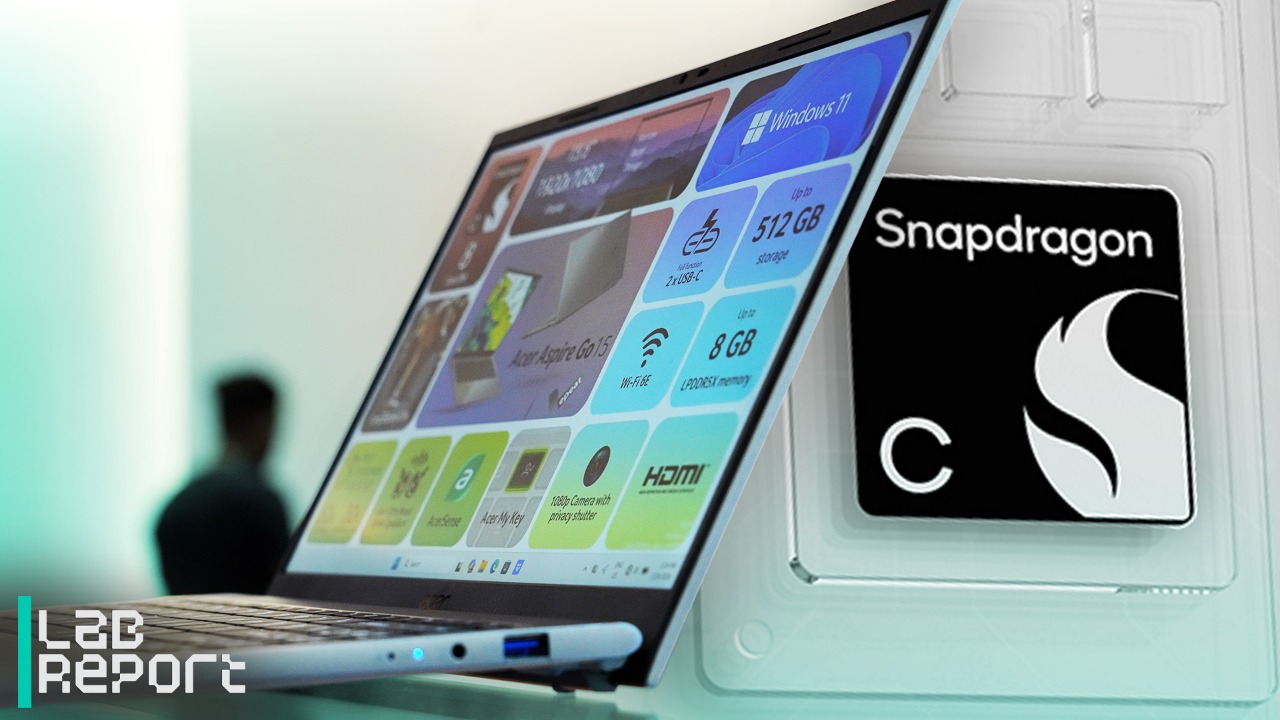

I Just Got My First Look at a Snapdragon C Laptop
Alongside the CPU cores, the Snapdragon C chip has an integrated Adreno GPU with a 900MHz boost clock; no core counts were listed. It also has a Qualcomm Hexagon NPU for lightweight AI workloads, though no TOPS figures have been provided, making it tricky to compare it to its contemporaries.
To help cut costs and keep power consumption low, this chip is designed to work with LPDDR4X and LPDDR5X and up to 4,200 MT/s and 6,400 MT/s, respectively. That gives manufacturers a few options for memory, which will make up a large portion of any resulting device’s bill of materials. It can support up to 16GB, which is uncommon in these kinds of low-cost designs. If we do see $300 Snapdragon C laptops, expect 4-8GB of RAM at most, and likely 128GB or 256GB of storage.

(Credit: Qualcomm)
Indeed, the storage may well be UFS rather than NVMe SSD, too. Although the Snapdragon C does support PCIe 3 SSDs, it also supports UFS 2.2 and 3.1, which may be better suited to ultra-low-cost designs.
Connectivity may be strong, though, with the Snapdragon C chip sporting native support for Wi-Fi 6 and 6E, Bluetooth 6.0, and USB 3.1 over both USB-C and USB-A. Indeed, the early laptops we saw came with a decent selection of USB ports, as well as a 3.5mm audio jack, HDMI output, SIM card slot, and microSD card reader.
Recommended by Our Editors
Qualcomm also released performance and efficiency numbers comparing the Snapdragon C to Intel’s N250, a similarly low-cost CPU with four cores and a 3.8GHz boost clock. They’re first-party numbers, so we’d like to test this ourselves before confirming, but Qualcomm claims a 24% advantage in multi-core workloads on GeekBench, and up to 44% faster in single-core workloads. It also claims to be more than twice as efficient, potentially unlocking some impressive battery life figures.
All of this will depend on how the chip is implemented in eventual laptops, but we’re going to get designs from Asus, Acer, HP, and Lenovo in due time. Watch this space.
About Our Expert

Jon Martindale
Contributor
Experience
Jon Martindale is a tech journalist from the UK, with 20 years of experience covering all manner of PC components and associated gadgets. He’s written for a range of publications, including ExtremeTech, Digital Trends, Forbes, U.S. News & World Report, and Lifewire, among others. When not writing, he’s a big board gamer and reader, with a particular habit of speed-reading through long manga sagas.
Jon covers the latest PC components, as well as how-to guides on everything from how to take a screenshot to how to set up your cryptocurrency wallet. He particularly enjoys the battles between the top tech giants in CPUs and GPUs, and tries his best not to take sides.
Jon’s gaming PC is built around the iconic 7950X3D CPU, with a 7900XTX backing it up. That’s all the power he needs to play lightweight indie and casual games, as well as more demanding sim titles like Kerbal Space Program. He uses a pair of Jabra Active 8 earbuds and a SteelSeries Arctis Pro wireless headset, and types all day on a Logitech G915 mechanical keyboard.
Leave a Reply