In brief
- SpaceX says orbital AI data centers may not become commercially viable.
- Elon Musk has called space-based AI computing “a no-brainer.”
- The filing also warns that Starship delays could slow the company’s growth.
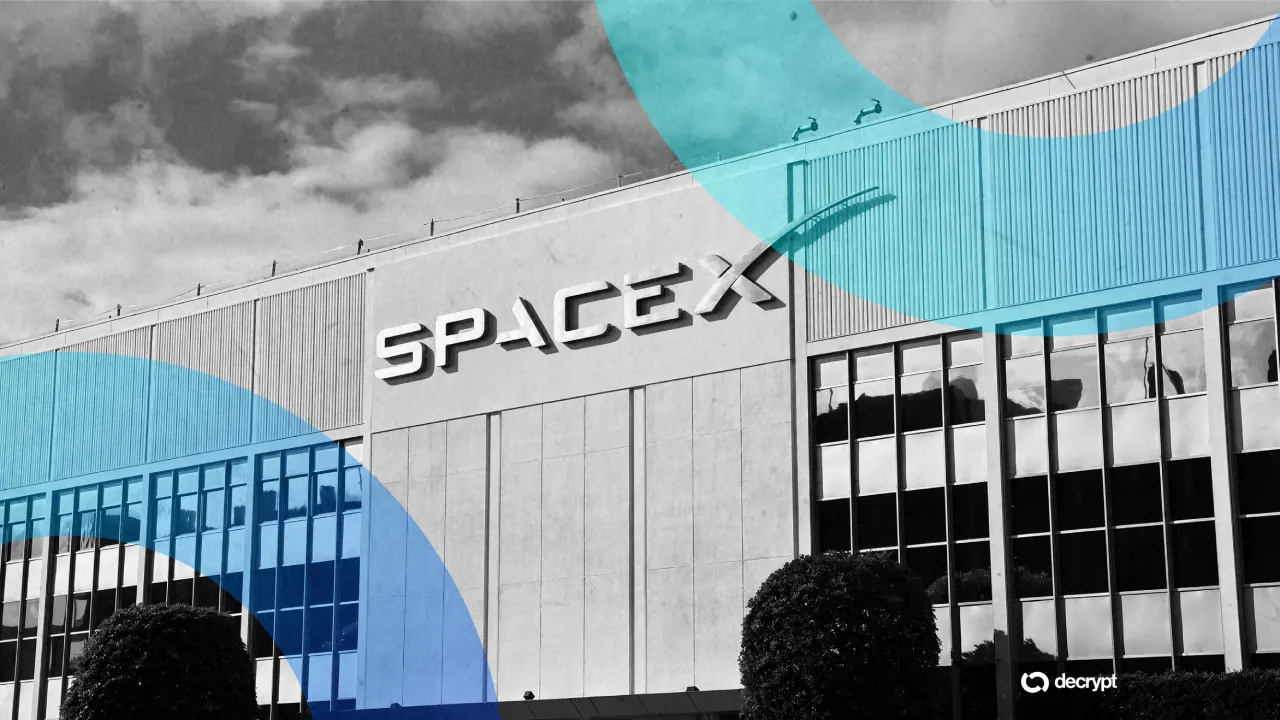
SpaceX is warning investors that one of Elon Musk’s most ambitious artificial intelligence bets—putting data centers in orbit—may never become a viable business.
According to a report by Reuters, in a newly disclosed section of its pre-IPO S-1 filing, SpaceX says its plans for orbital AI compute—along with broader efforts to industrialize space, the moon, and Mars—remain in early stages, involve significant technical complexity, and may not achieve commercial viability.
“Our initiatives to develop orbital AI compute and in-orbit, lunar, and interplanetary industrialization are in early stages, involve significant technical complexity and unproven technologies, and may not achieve commercial viability,” the filing says.
The disclosure comes as SpaceX prepares for what could be the largest IPO in history. The company is reportedly targeting a valuation of about $1.75 trillion and seeking to raise $75 billion in the coming months.
In January, in a conversation with BlackRock CEO Larry Fink at the World Economic Forum in Davos, Musk called building AI data centers in space “a no-brainer” and said orbit could become “the lowest-cost place to put AI” within two to three years. In February, after announcing a merger between SpaceX and Musk’s AI company xAI, Musk said in a post on the SpaceX website, “space-based AI is obviously the only way to scale.”
“Global electricity demand for AI simply cannot be met with terrestrial solutions, even in the near term, without imposing hardship on communities and the environment,” Musk wrote at the time. “In the long term, space-based AI is obviously the only way to scale. To harness even a millionth of our Sun’s energy would require over a million times more energy than our civilization currently uses.”
While the concept appears straightforward, satellites equipped with AI chips could draw near-constant solar power in space while avoiding some of the land, energy, and cooling constraints facing Earth-based data centers. But turning that vision into reality is another matter.
Space-based systems could offer continuous solar energy and the ability to radiate heat into space. However, the economics remain uncertain with launch costs, maintenance, radiation exposure, and space debris needing to be factored in.
SpaceX acknowledged those risks in the filing, warning that orbital AI data centers would operate in “the harsh and unpredictable environment of space,” where systems could malfunction or fail.
While the realities of space development offer major hurdles, SpaceX may still be better positioned than its rivals to pursue the idea, having already launched the Starlink satellite internet network into orbit, and developing Starship, the fully reusable rocket Musk says is essential to cutting launch costs enough to make large-scale orbital infrastructure possible.
However, according to SpaceX’s filing, Starship itself includes its own risks. The rocket designed to carry much larger payloads than previous SpaceX vehicles has suffered testing failures and delays, and the company said further setbacks could limit its growth strategy.
SpaceX did not immediately respond to Decrypt‘s request for comment.
Daily Debrief Newsletter
Start every day with the top news stories right now, plus original features, a podcast, videos and more.
Leave a Reply