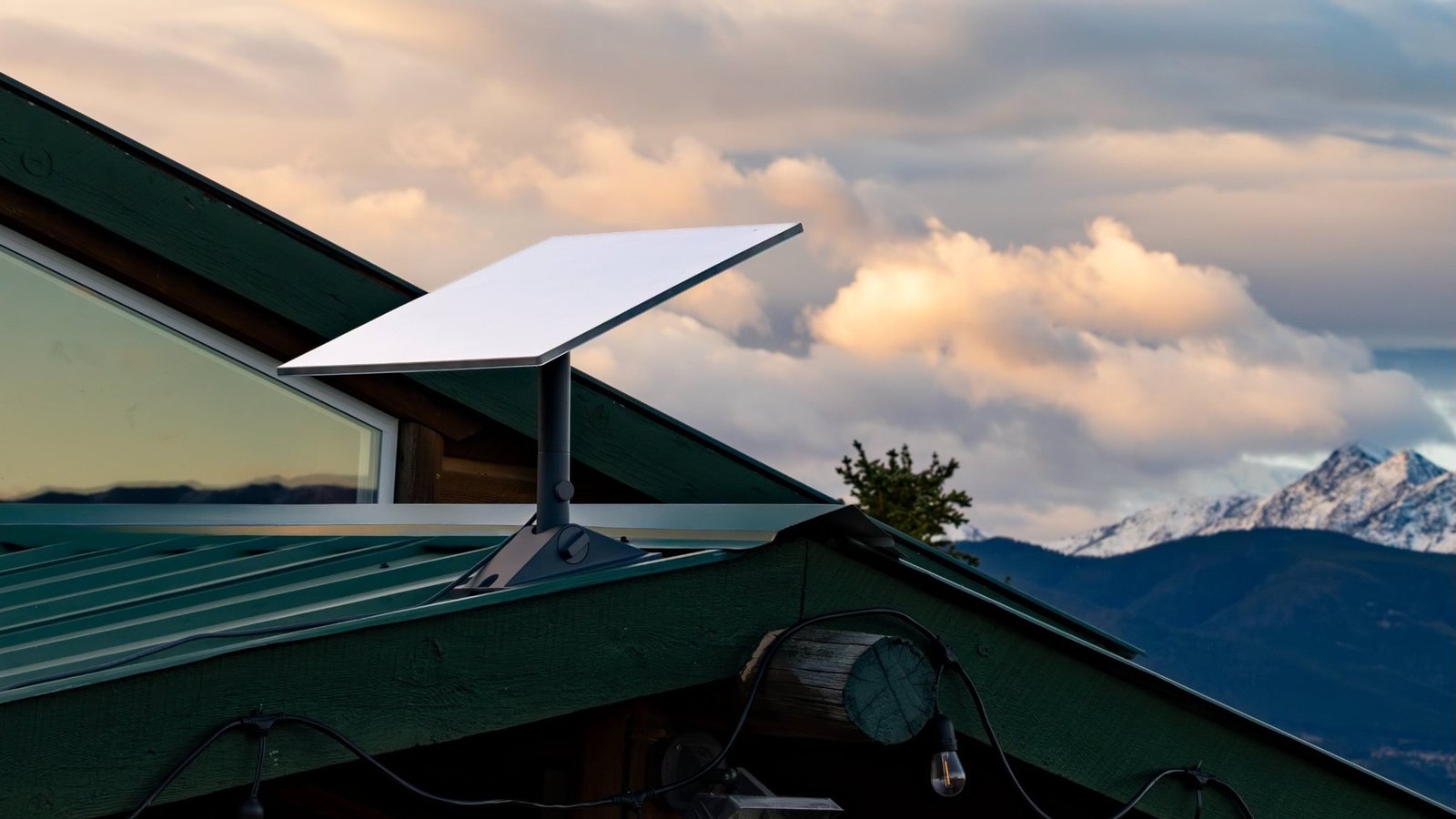
Many people in the US seem to be adopting Starlink after switching from DSL, cable, and even fixed wireless access, according to findings from Ookla, the parent company of Speedtest.net.
Ookla noticed the trend while examining speed test scores from US-based Starlink users between Q4 2025 and Q3 2026 and comparing them with those from their previous ISPs. “We found that in the US, nine out of 10…new Starlink subscribers switched to Starlink from some type of non-fiber connection such as DSL, fixed wireless access (FWA), or cable,” Ookla added.
Many Starlink subscribers, particularly in rural areas, have told us similar stories of switching from slow or inconsistent DSL, cable, or cell service. But the FWA finding is surprising, since cellular network technology can often deliver faster speeds than Starlink by harnessing extra capacity at 5G cell towers to provide home broadband. Ookla’s data show FWA delivering higher median download rates between 135Mbps and 231Mbps, depending on the provider. Starlink’s nationwide median download rate reached 119.7Mbps.

(Credit: Ookla)
As for why, Ookla suspects Starlink’s Residential 100 Mbps plan is attracting US users with its relatively low price and temporary discounts. During Q3, Ookla’s speed test data showed a year-over-year increase in Starlink users at the 100 Mbps cap.
“The share of Starlink users averaging 100–109 Mbps rose from 3.5% to 5.9%, making it one of the most common speed ranges on the network,” Ookla added. “Before the capped plans launched, users were spread evenly across that part of the speed range, with no spike at 100 Mbps. This suggests the 100 Mbps residential plan promotions were especially effective at attracting new subscribers.”

(Credit: Ookla)
Another notable trend in the Speedtest.net data was Starlink’s growing adoption in US urban areas, which continued from last year. “Using the US Census Bureau’s urban-rural classification, we found that the number of Starlink Speedtest users testing in urban areas increased 73% year-over-year in the first half of 2026, more than double the 33% growth in rural areas,” the report says. “In fact, urban users grew faster than rural users in all states but Alaska and Hawaii.”
Urban Starlink users “more than doubled in New Jersey, Ohio, Pennsylvania, Illinois, and Michigan,” Ookla says. “And in six states—Florida, Nevada, Massachusetts, Connecticut, Hawaii, and New Jersey—more Starlink users now test from urban locations than rural locations.”

(Credit: Ookla)
Ookla concludes that SpaceX’s Starlink promotions earlier this year, ahead of its IPO, likely drove adoption in the first half of this year. During the same period, the median download rate for the US also increased modestly year-over-year, from 119.71Mbps to 120.01Mbps. In 16 states and the DC area, though, download speeds fell slightly year-over-year.

(Credit: Ookla)
Still, Ookla noted: “Median upload speeds surged 42% year-over-year, from 14.63 Mbps in 1H 2025 to 20.73 Mbps in 1H 2026, and improved in all 50 states and DC, with gains ranging from 25% to 70%.”
Recommended by Our Editors
SpaceX hasn’t revealed the current number of Starlink subscribers in the US, although Deutsche Bank estimates it’s now at 4.1 million, up from the over 2 million active customers the Elon Musk-led company reported in 2025.
A big question is whether SpaceX can sustain or accelerate the growth. After offering promotions earlier this year, Starlink announced a price hike in May for the Residential and Roam plans, adding an extra $5 to $10 to monthly bills. This past weekend, the company began expanding its controversial dynamic pricing for existing Starlink subscribers, sparking heated backlash.
At the same time, SpaceX has once again been offering discounts in certain parts of the US, this time even better monthly price reductions that don’t currently have an expiration date. In addition, the company has introduced a second-gen Mini dish that’ll start shipping to invited customers in December. So, we’ll be curious to see Starlink’s subscriber numbers for Q4. Globally, the satellite internet service had 13.6 million subscribers in Q3.
About Our Expert

Michael Kan
Principal Reporter
Experience
I’ve been a journalist for over 15 years. I got my start as a schools and cities reporter in Kansas City and joined PCMag in 2017, where I cover satellite internet services, cybersecurity, PC hardware, and more. I’m currently based in San Francisco, but previously spent over five years in China, covering the country’s technology sector.
Since 2020, I’ve covered the launch and explosive growth of SpaceX’s Starlink satellite internet service, writing 600+ stories on availability and feature launches, but also the regulatory battles over the expansion of satellite constellations, fights with rival providers like AST SpaceMobile and Amazon, and the effort to expand into satellite-based mobile service. I’ve combed through FCC filings for the latest news and driven to remote corners of California to test Starlink’s cellular service.
I also cover cyber threats, from ransomware gangs to the emergence of AI-based malware. In 2024 and 2025, the FTC forced Avast to pay consumers $16.5 million for secretly harvesting and selling their personal information to third-party clients, as revealed in my joint investigation with Motherboard.
I also cover the PC graphics card market. Pandemic-era shortages led me to camp out in front of a Best Buy to get an RTX 3000. I’m now following how the AI-driven memory shortage is impacting the entire consumer electronics market. I’m always eager to learn more, so please jump in the comments with feedback and send me tips.
Leave a Reply