Starlink is finally introducing a second-gen Mini dish, which adds a built-in and swappable battery that lasts up to 4.5 hours. But SpaceX is asking early adopters to pay $999 to own it.
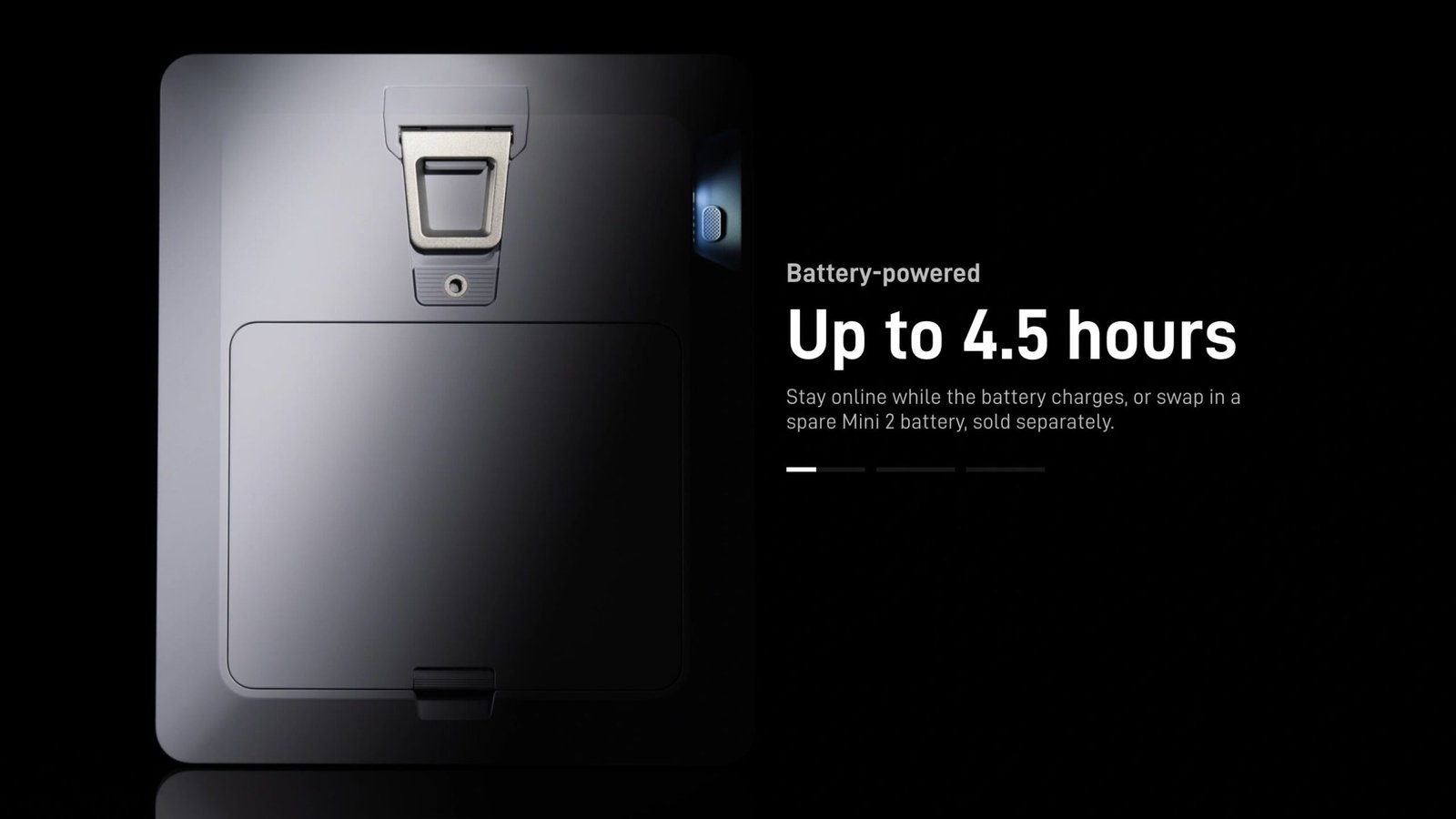
After an earlier tease, SpaceX on Tuesday officially debuted the Mini 2, the first Starlink dish to support the company’s add-on battery. “Get up to 4.5 hours of connectivity on a single charge with the quick-swap battery, or plug in with USB-C,” the company added in a tweet.

(Credit: Starlink.com)
The built-in 71 Wh battery and USB-C support seem to be the main selling points, since the first-gen model shipped only with a DC power cable, requiring you to buy a USB-C adapter. The web page for the Mini 2 shows the battery sits in the dish’s rear as a rectangular power bank that can also be easily removed. The 1.08-pound battery features a USB-C port for charging and its own battery life indicator.

(Credit: Starlink.com)
The Mini 2 dish also features a USB-C port for connecting to its power bank. On the side of the dish is possibly another battery life indicator for easy viewing as well. Another improvement is that the Mini 2 features a built-in Wi-Fi 6 modem for up to 1,800 square feet of coverage, an upgrade from the first-gen’s Wi-Fi 5 modem, which offered up to 1,200 square feet.

(Credit: Starlink.com)
SpaceX also says the second-gen Mini is a bit thinner at 21mm, down from 38.5mm in the previous model. With the battery and kickstand together, the Mini 2 weighs 1.6 kg (3.5 pounds). In contrast, the first-gen Mini comes in at 1.16 kg (2.56 lb) with the Kickstand, but that’s obviously without a battery.
“With tougher materials, a redesigned enclosure, and an IP67 rating, Mini 2 is engineered to keep you connected through rain on the trail, wind on the water, and sand at the beach,” SpaceX added. That said, the first-gen Mini also has an IP67 rating. The Mini 2 also appears to lack an Ethernet port based on the images on the website.
Despite the product’s official debut, for now, Starlink’s website merely says: “Preorders now open by invitation for select US customers. Coming soon to more customers and countries.”
This Tweet is currently unavailable. It might be loading or has been removed.
However, Starlink has already begun inviting some subscribers to purchase the Mini 2. The only issue is the satellite internet service is asking early adopters to pay $999, according to emails sent to users. On the plus side, the high fee includes one full year of Starlink Roam Unlimited, which SpaceX says is usually valued at $2,100. In the US, a Roam plan has also been a requirement for the Mini dish.
Recommended by Our Editors
“Secure yours today with a refundable $100 deposit,” the Mini 2 email adds. “The remaining $899 plus tax is charged when your Mini 2 ships. Shipments are estimated to begin in mid-December, and this price and year of included service are exclusive to this preorder invitation.”
This Tweet is currently unavailable. It might be loading or has been removed.
Still, the $999 price is surprising. The day before, YouTube channel DISHYtech discovered references in the Starlink.com API indicating that the product would be available for $249 as part of a beta program. Another section of the code said the battery will be sold for $50.
So it’s possible the Mini 2 might arrive for $249 at a later date. In the meantime, interested users can visit the Mini 2 web page to sign up for availability updates.
About Our Expert

Michael Kan
Principal Reporter
Experience
I’ve been a journalist for over 15 years. I got my start as a schools and cities reporter in Kansas City and joined PCMag in 2017, where I cover satellite internet services, cybersecurity, PC hardware, and more. I’m currently based in San Francisco, but previously spent over five years in China, covering the country’s technology sector.
Since 2020, I’ve covered the launch and explosive growth of SpaceX’s Starlink satellite internet service, writing 600+ stories on availability and feature launches, but also the regulatory battles over the expansion of satellite constellations, fights with rival providers like AST SpaceMobile and Amazon, and the effort to expand into satellite-based mobile service. I’ve combed through FCC filings for the latest news and driven to remote corners of California to test Starlink’s cellular service.
I also cover cyber threats, from ransomware gangs to the emergence of AI-based malware. In 2024 and 2025, the FTC forced Avast to pay consumers $16.5 million for secretly harvesting and selling their personal information to third-party clients, as revealed in my joint investigation with Motherboard.
I also cover the PC graphics card market. Pandemic-era shortages led me to camp out in front of a Best Buy to get an RTX 3000. I’m now following how the AI-driven memory shortage is impacting the entire consumer electronics market. I’m always eager to learn more, so please jump in the comments with feedback and send me tips.
Leave a Reply