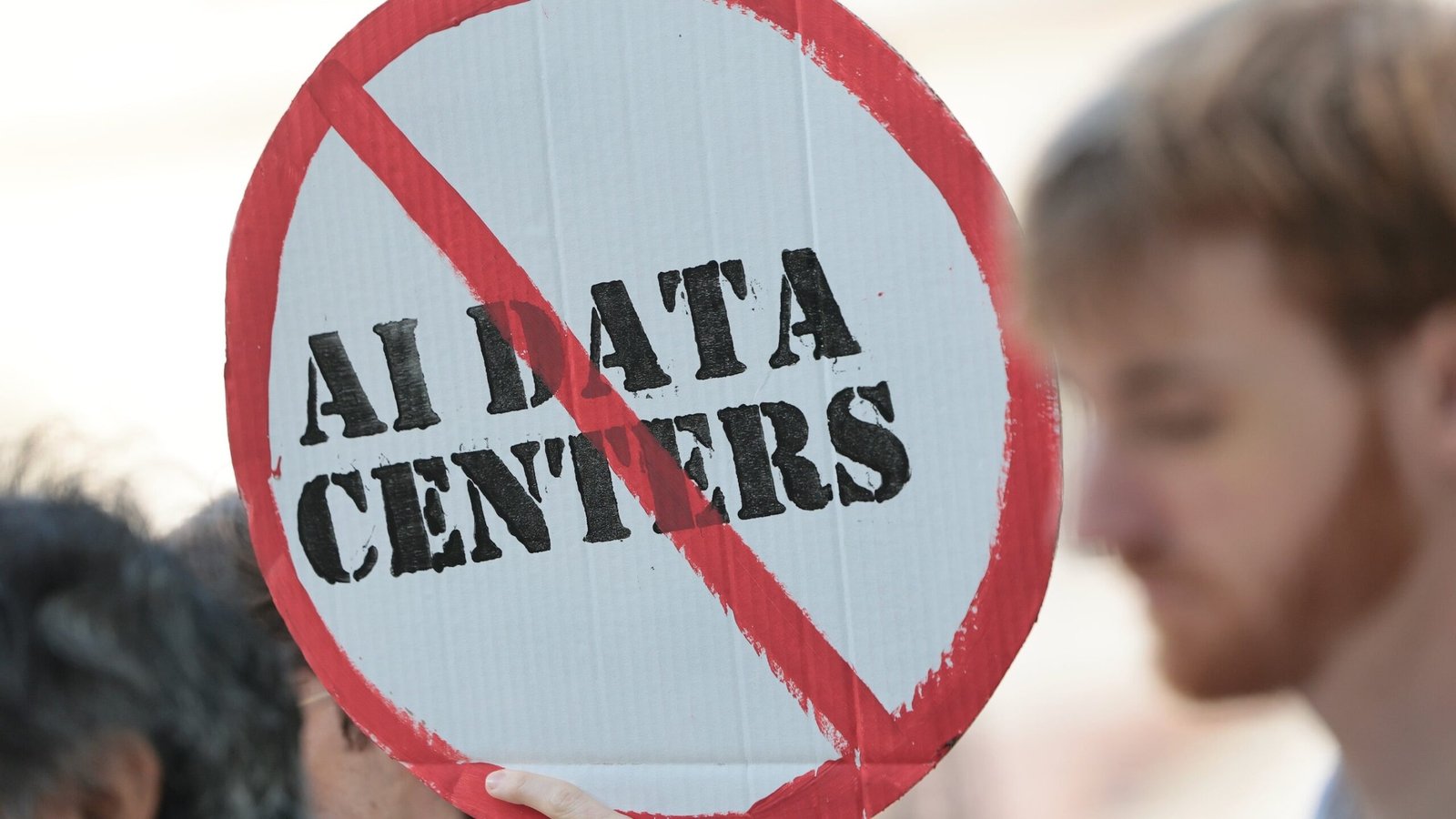
US voters overwhelmingly rejected new AI data center construction during Tuesday’s midterm elections, dealing a blow to the tech industry. But SpaceX CEO Elon Musk seems to be half-joking that the results justify his push to put data centers in orbit.
In 10 US states, including Illinois, Kansas, and Ohio, 41 ballot measures related to blocking, restricting, or imposing 180-day moratoriums on new AI data centers were up for vote on Tuesday, according to Ballotpedia. And it currently looks like nearly all are on track to pass.
Although votes are still being counted, “every reported ban, moratorium and voter approval requirement passed, and every reported question that would have helped a project failed,” according to The Gridsight, a service that helps AI data center builders plan in local communities.
Meanwhile, Rebud Consulting reports that one ballot measure in Harwood, North Dakota, that’s more friendly to data centers appears on track to pass. But it’s not an automatic green light; it requires an “independent review, paid for by the developer, and to hold a public hearing and adopt written findings before approving large industrial projects such as data centers.”
The results reflect ongoing opposition to local AI data center construction, which has faced complaints about pollution, water consumption, excessive noise, rising electricity prices, along with concerns about the technology’s disruptive impact on society. A poll in August found that 75% of Americans don’t want a data center built near them, with 64% “strongly opposed”
The other big news is that Democrats won big in Texas, securing a US Senate seat, and winning the state’s governor and attorney general races. That’s sparked speculation that SpaceX and Tesla’s operations in Texas will face more scrutiny, regulations, and investigations, as Musk has long antagonized Democrats. In this election cycle, the trillionaire reportedly contributed $474 million in campaign donations to Republican candidates and groups.
Recommended by Our Editors
Last night, AI industry analyst Dylan Patel highlighted Texas, tweeting: “I am now bullish [on] space datacenters.”
Musk then tweeted a similar take: “Data centers in space looking pretty appealing right now.” SpaceX is proposing to operate up to 1 million data-center satellites through its upcoming Starmind constellation. However, Musk will need to overcome numerous technical challenges, including cooling the data center in the vacuum of space and making the satellites economically competitive with ground-based data centers. Other groups, such as astronomers and environmentalists, oppose Starmind and orbital data center projects over fears about exorbitant rocket launch pollution and how the satellites could alter the night sky.
About Our Expert

Michael Kan
Principal Reporter
Experience
I’ve been a journalist for over 15 years. I got my start as a schools and cities reporter in Kansas City and joined PCMag in 2017, where I cover satellite internet services, cybersecurity, PC hardware, and more. I’m currently based in San Francisco, but previously spent over five years in China, covering the country’s technology sector.
Since 2020, I’ve covered the launch and explosive growth of SpaceX’s Starlink satellite internet service, writing 600+ stories on availability and feature launches, but also the regulatory battles over the expansion of satellite constellations, fights with rival providers like AST SpaceMobile and Amazon, and the effort to expand into satellite-based mobile service. I’ve combed through FCC filings for the latest news and driven to remote corners of California to test Starlink’s cellular service.
I also cover cyber threats, from ransomware gangs to the emergence of AI-based malware. In 2024 and 2025, the FTC forced Avast to pay consumers $16.5 million for secretly harvesting and selling their personal information to third-party clients, as revealed in my joint investigation with Motherboard.
I also cover the PC graphics card market. Pandemic-era shortages led me to camp out in front of a Best Buy to get an RTX 3000. I’m now following how the AI-driven memory shortage is impacting the entire consumer electronics market. I’m always eager to learn more, so please jump in the comments with feedback and send me tips.
Leave a Reply