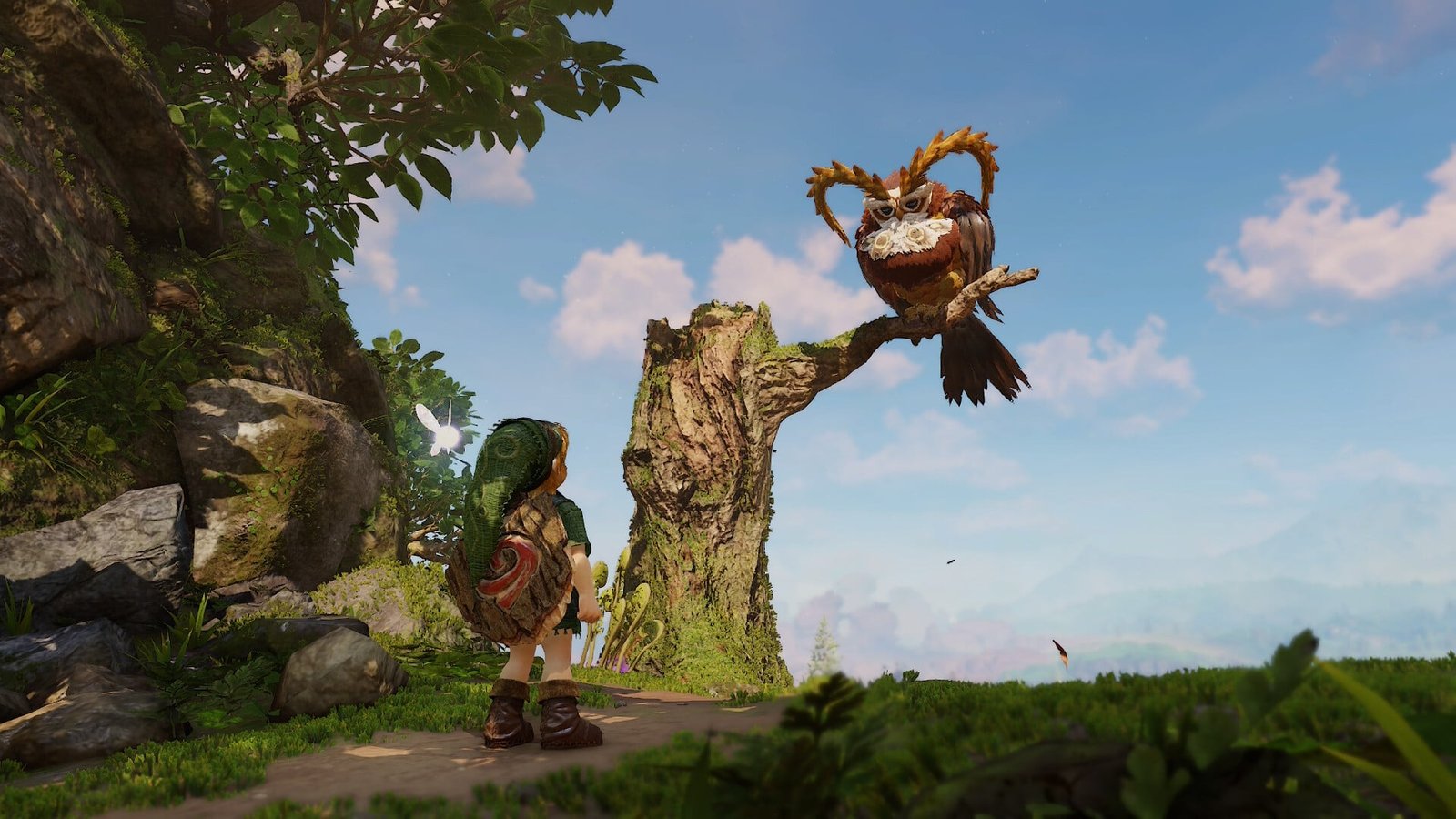
The Legend of Zelda: Ocarina of Time on the Nintendo 64 is a masterpiece, a title few games have earned without qualification. Link’s transition from 2D to 3D is a sprawling, meticulously designed adventure filled with puzzles to solve and secrets to find, and it holds up to this day, even if its N64-era graphics are simple and some of the game’s control choices are awkward remnants from the days before standardized dual-analog gamepad layouts.
You can have that original experience on your Switch or Switch 2 right now if you subscribe to Nintendo Switch Online + Expansion Pass, but that’s far from the best way to play Ocarina, though. That would be the $59.99 Switch 2 remake, which fixes the control complaints and overhauls the visuals while keeping the best pieces of Ocarina intact.
As Star Fox 64 and Super Mario RPG got with their remakes (and, to a less graphically intense extent, Metroid Prime and Paper Mario: The Thousand-Year Door), Ocarina is the same game in terms of content, design, and structure, but with the benefit of nearly 30 years of technical development for 3D visuals. You won’t find anything new here besides a few minor touches, but that’s the best approach for bringing this game to modern hardware. This isn’t a reimagined Ocarina; it’s a better-looking and feeling Ocarina.
Incidentally, this is Nintendo’s second remake of Ocarina. It was also remade for the Nintendo 3DS in 2011, with upgraded graphics and improved controls. Star Fox 64 also got a 3DS makeover in addition to its Switch 2 overhaul. The 3DS remakes of both games definitely looked nicer, but the Switch 2 versions are so much more visually impressive that the older ones might as well be high-resolution texture packs of the N64 games. The 3DS Ocarina remake has one advantage over the Switch 2 game, though, which I’ll get to in a bit.
Why Is Ocarina So Great, Anyway?

Ocarina showed how good Zelda games, and action-adventure games in general, could be in 3D. (Credit: Nintendo)
Understanding what makes Ocarina a masterpiece in the first place requires some historical context. The mid-90s were a heady time in video games, with everyone figuring out how to move 2D games into the newly available world of 3D graphics. There were many, many attempts, and most were bad because there wasn’t a broad understanding of how to best take advantage of 3D environments and mechanics, or even a widely agreed-upon control system for navigating them. Super Mario 64 stood out in 1996 because it showed just how great 3D platforming could feel, thanks to thoughtful level design and the right controls (for the time; this was before dual analog sticks became standard). Mario, already the biggest star of side-scrolling platformers, jumped into 3D with one of the best examples of the concept at the time.
Two years later, Link did the same thing with Ocarina of Time. The elf’s adventures were already lengthy and satisfying in 2D on the NES, Super NES, and Game Boy, but his debut on the N64 was downright epic. The newly 3D world of Hyrule was full of mystery and personality, with far more characters and hidden details than A Link to the Past had. The dungeons were ominous, multi-level complexes with layouts both eldritch and natural, no longer limited to square tile arrangements. Puzzles and monsters could come at you from above and below, and while there still wasn’t a second analog stick for camera control, the ability to Z-target on an enemy with a button to reorient the camera was an incredibly effective solution to the problem.
More than anything else, just like Mario 64 felt like a Mario game, Ocarina felt like a Zelda game. It was thoughtfully built, with challenging puzzles and tense fights arranged with consideration for pacing and flow. It was dense enough to feel consistently engaging (most of the time), but had enough space and room to explore to give a sense of grandeur. Structurally, Ocarina is almost identical to A Link to the Past, a fairly brisk experience compared with the much longer, less action-focused RPGs of the time. But it felt epic.
Ocarina is a masterpiece because it takes the qualities of previous standouts like A Link to the Past and Link’s Awakening and successfully transitions them to 3D. That was an incredible achievement in 1998, and it still holds up as one of the best games of all time.
An Eye-Popping Switch 2 Makeover

To say the environment is more detailed in the remake would be an understatement. (Credit: Nintendo)
The remake looks absolutely gorgeous; there’s no question about that. The simple 3D models and textures on the N64 that saw a modest but still low-resolution upgrade on the 3DS look as good as any modern AAA game. Lights from torches and Navi the fairy play off the floors and walls of dungeons with lavish detail, making metal glint and bringing out the cracks and contours of stone and tile. Bushes and shrubs are sculpted and arranged vegetation with individual leaves clearly placed, no longer polygonal painted with plant patterns. Hyrule Field, while still just as empty of activities, doesn’t look like a lifeless, rumpled grass-print tablecloth anymore. Now it looks like a proper plain, loaded with gentle slopes, shallow rifts, and countless rocks and scrubs.
Link and his friends and enemies all look amazing, too, though rather than leaning toward photorealism, Nintendo sensibly went with a stylized aesthetic closer to Twilight Princess and Skyward Sword. Faces keep their exaggerated proportions from Ocarina of Time, but with far more detailed modeling and animation to add personality. As a child, Link looks almost cherubic, along with the perpetually young Kokiri, and adult Link is a more detailed version of his non-toon GameCube and Wii descendants (in terms of game progression, not in-universe narrative). Ganondorf is the ultimate example of this, with his visage keeping its cartoonishly sinister sharp angles and unnaturally green pallor. He looks just like he did on the N64, just better.

Link is only really wet in that one scene. (Credit: Nintendo)
Fans who were worried about what the game would look like based on early screenshots can put their fears to rest. The really, really wet Link we saw in that first trailer is only so thoroughly and uncomfortably glistening in one rain-drenched scene, and looks perfectly fine, and dry, most of the time. He doesn’t even look that soaked when going through the Water Temple.
His clothes and equipment, while full of detail, also aren’t festooned with distracting elements. Even if the knit of his hats and tunics has a few different patterns, and the blue and red tunics in particular incorporate new visual accents they didn’t have before, nothing overwhelms the senses or overshadows the recognizable profiles and palettes of the full outfits. Unless you get in really close with the camera to examine Link, every element simply contributes to the whole without compromising it.
These early worries say a lot about just where our priorities are when it comes to Ocarina of Time, and how reaching for the “best” graphics in polygon-counting, ray-tracing-agonizing obsessiveness can be self-defeating. Style, aesthetic, and general vibe are much more important to most games and to most interactive and visual media in general than sheer technical achievement. Make the game look better, but only if it’s still your game at the end and not some completely different technical showpiece.
The Little Changes Under the Skin
The Ocarina of Time remake fantastically preserves the vibes of the original (and 3DS remake). It looks incredible without changing the fundamentals of the game it’s remaking, just like Star Fox did with Star Fox 64.

The Breath of the Wild/Tears of the Kingdom item quick select menu helps make up for having only one item button. (Credit: Nintendo)
Speaking of game fundamentals and Star Fox, let’s talk about the smaller changes, and lack of changes, that really make the Ocarina remake a masterpiece. Underneath the incredibly good-looking presentation is basically the exact same game that first came out in 1998. The story? The same. The dungeons? The same. The puzzles? Mostly the same. The combat? Mostly the same. When I hit credits, I didn’t feel like I played through an entirely new experience. I felt like I played through Ocarina again. That’s not a complaint; some games hold up so well mechanically and structurally that I can have almost as much fun playing through them now as I did then.
Ocarina is one of them, and it’s not even the only Zelda game on that short list. A Link to the Past is another such game, joined by Super Mario RPG, Star Fox 64, Metroid Prime, and Paper Mario: The Thousand-Year Door. Of all of those, A Link to the Past is the only one to not get a remastered Switch port that only improves the graphics and leaves the gameplay almost completely untouched.
The Ocarina remake addresses gameplay tweaks with a mostly light touch, and they’re almost all simple quality-of-life improvements. The most significant gameplay change is the addition of a jump button, like in Breath of the Wild and Tears of the Kingdom. In previous versions of Ocarina, Link would jump automatically when he came to gaps he could jump over. Now you have to press X to manually leap between platforms. It feels more engaging and natural to jump whenever you want, especially when trying to get into a good position in a room filled with monsters and flowing lava.
Recommended by Our Editors

Gyro controls make aiming the slingshot, bow, hookshot and mirror shield easy. (Credit: Nintendo)
Since the game’s no longer limited to the N64 controller’s single analog stick, you can now fully control the camera with the right analog stick. Gyro aiming has been added to ranged weapons, so you can quickly and easily hit your targets just by tilting your controller (or the Switch 2 itself, in handheld mode). Both of those changes are pretty great, taking full advantage of modern control systems to overcome the limitations of the original hardware. The N64 was revolutionary, and Ocarina’s Z-targeting-based camera was incredibly reliable for the time, but the extra stick and additional sensors really improve the feel of the game.
The pause menu is no longer the charming rotating cube of the N64 game; it’s now a more standard tab-based interface, but it works the same and includes a few inventory management improvements. It adds BotW/TotK-style item switching where you hold the L or R button and select what you want to use from a scrollable one-row menu. Masks and boots can now also be toggled on and off by pressing the direction pad up or down.
Fixing the Original’s Few Flaws

This place is the bane of all N64 Ocarina players. (Credit: Nintendo)
That last tiny little change might seem like nothing, but after playing through the entire game it’s my favorite upgrade in the entire remake, because it smooths down one of the most annoying parts of the original game. The Water Temple is considered by most to be Ocarina’s low point, because it requires repeatedly putting on and taking off the Iron Boots to navigate, and later dungeons require similar efforts with the Hover Boots. On the N64, you could only change footwear through the pause menu. Here, you just tap a button. The 3DS remake of Ocarina also fixed the Water Temple in the same way, letting you toggle boots by tapping their icon on the system’s touch screen. Fixing that pain point is a better improvement to the game than any mind-blowing graphics can be.
Those changes, by the way, make the remake a superior choice for playing Ocarina over the original N64 game included on Nintendo Switch Online + Expansion Pass. Even if that version is upscaled to look sharper on the Switch, it suffers from the same control issues it had on the N64, making the Water Temple a slog once again.
The equipment toggling and quick item switching also mitigate what would otherwise be a mechanical downgrade in the remake: the single equipment slot. Ocarina on the N64 gave you three item slots with dedicated buttons, and Ocarina on the 3DS gave you two item slots on the touch screen. On the Switch 2, you get only one slot, assigned to the ZR button. Fortunately, there are few cases where it’s necessary or even helpful to rapidly fire off multiple items at once, and with the mask and boot toggles I didn’t find myself wishing for another item slot. It would have been nice to have a potion available at a single button press in difficult fights, but since the quick-switching menu pauses the action while you choose a jar to use, I had no problems healing when I needed to.
Sadly, There’s No Master Quest

You can re-fight bosses, but there isn’t much new content in the game besides that. (Credit: Nintendo)
In terms of content extras, there’s almost nothing. There’s a new enemy gallery where you can get closer looks at the monsters you defeated and can re-fight bosses in challenge gauntlets, and there’s a new Business Scrub item that lets you summon a leafy item salesman wherever you are, but that’s about it. There are no extra dungeons or multiplayer modes or anything like that.
I was a little disappointed to save Hyrule and go through the game’s credits only to be kicked to the title screen with options to either continue at my last save point or start a new game file (and overwrite the last one, because for some reason there’s only one save per profile). I would have loved to see the Master Quest content from the 3DS version (originally exclusive to a promotional GameCube disc) with remixed dungeons, but that doesn’t seem to be in the cards at launch. Perhaps Nintendo will add it as DLC, paid or otherwise.
The Best Version of Ocarina of Time

This is the best-looking, best-feeling version of Ocarina to play. (Credit: Nintendo)
The Switch 2 remake of Ocarina of Time is the new definitive way to play the game, just like the remakes of Star Fox 64 and Metroid Prime are for their respective games. Sure, it looks amazing, but what really matters is that the core of the original game is there, full and undiminished. This isn’t a new game. It’s just Ocarina at its best. The real treasure here is the little fixes and updates that make this masterpiece play better on modern hardware than the original. The incredible graphics are just a nice bonus.
About Our Expert

Will Greenwald
Principal Writer, Consumer Electronics
Experience
I’m PCMag’s home theater and AR/VR expert, and your go-to source of information and recommendations for game consoles and accessories, smart displays, smart glasses, smart speakers, soundbars, TVs, and VR headsets. I’m an ISF-certified TV calibrator and THX-certified home theater technician, I’ve served as a CES Innovation Awards judge, and while Bandai hasn’t officially certified me, I’m also proficient at building Gundam plastic models up to MG-class. I also enjoy genre fiction writing, and my urban fantasy novel, Alex Norton, Paranormal Technical Support, is currently available on Amazon.
Leave a Reply