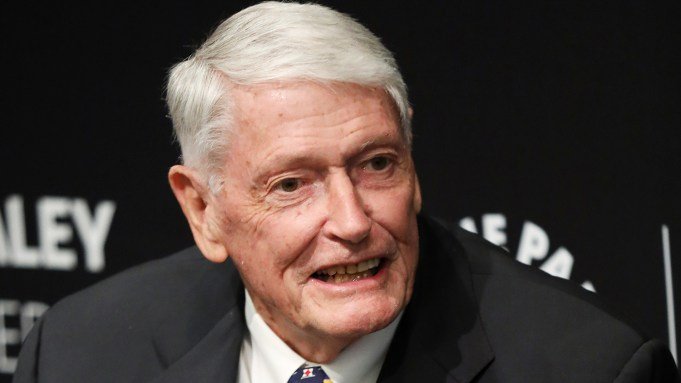
UPDATED: Media mogul John Malone says that the Trump administration informed Netflix that their proposed acquisition of Warner Bros. Discovery would be blocked, with the streaming giant then dropping out of the bidding and clearing the way for Paramount’s purchase.
At the Paley Center for Media’s International Council Summit on Wednesday, Malone said, “They were right on the verge of pressing on, and were told by the administration that they had no chance of getting regulatory approval from the U.S. I think that that was really the spike that got ’em.”
Malone, a major stakeholder in Warner Bros. Discovery, did not go into details about the message he said was sent to Netflix. Paramount had lifted its offer for all of WBD by a modest amount as the companies jockeyed, clinching the merger by offering WBD shareholders $31 a share along with providing financing guarantees.
Netflix Co-CEO Ted Sarandos went to the White House to meet with administration officials in late February, and the company abandoned its bid later that day. Under the terms of the negotiations with WBD, Netflix still had four days to respond to Paramount’s last offer.
“There was mixed opinion amongst us [about Netflix dropping out] on the Warner Bros. Discovery side,” Malone added. “We would have seen, and would liked to have seen, the different outcome. Though for shareholders this final outcome was more than sufficient.”
Sarandos later told Bloomberg that Donald Trump was “completely neutral” on the transaction, and said that the reason Netflix dropped out was that the WBD deemed Paramount’s offer to be superior. He also said that the White House meeting was “nothing out of the ordinary.”
Democrats, however, zeroed in on the Sarandos meeting, querying then-Attorney General Pam Bondi for details, while alleging that political favoritism was at work.
The Justice Department announced in June that it would not challenge the transaction and released a statement explaining its reasoning. It also addressed what was one of Netflix’s pro-merger arguments, that its competitors included not just other studio streamers but YouTube. The DOJ Antitrust Division wrote that alternatives like YouTube, TikTok and social media “do not appear to be competitive substitutes here under well-established antitrust legal precedents, although they compete broadly for consumer attention.”
California and 11 other state attorneys general challenged the the transaction in July, but reached a settlement last month that allowed Paramount and Warner Bros. to merge.
Spokespersons for the White House and the Justice Department did not immediately return Deadline’s requests for comment. Netflix declined to comment.
Malone’s remarks came the morning after Netflix reported mixed financial results, with its stock tumbling to a 2-year low on concerns around slower viewer growth and competition. The Warner scenario, which would have stocked Netflix with storied properties like Harry Potter, Game of Thrones and DC characters, is an interesting what-if, though the company’s pursuit alone unnerved investors given the price tag. Paramount ultimately paid $110 billion in the leveraged buyout, one of the biggest media M&A transactions in history.
Leave a Reply