The 76ers defeat the Celtics, 106-93, to force a Game 7 on Saturday to see who will take on the Knicks.
No two franchises have played each other more times in NBA history than the Boston Celtics and Philadelphia 76ers. So appropriately, we’re getting a Game 7 in their 23rd playoff series.
The Sixers made it happen with a comfortable, 106-93 victory in Game 6 on Thursday, the second straight game in which they shot down the Celtics’ high-powered offense. Philly outscored Boston, 62-40, over the middle two quarters and had Celtics head coach Joe Mazzulla taking his starters out of the game with more than 10 minutes left in the fourth.
All five of the Sixers’ starters scored at least 14 points, and Tyrese Maxey led the way with 30 on 11-for-22 shooting. Joel Embiid (19 points, 10 rebounds and eight assists) wasn’t efficient, but created plenty of open shots for his teammates.
In addition to having lost their 3-1 series lead, the Celtics may have a concern with the health of Jayson Tatum, who seemed to have an issue with his lower left leg. (It was his right Achilles that he tore less than a year ago.)
“My leg just was a little stiff,” Tatum said, “when I came out in the third quarter.”
Here are some notes, numbers and film as the series heads back to Boston for Game 7 on Saturday (7:30 ET, NBC/Peacock):
1. Maxey takes what the Celtics give him
Maxey has become a big problem for the Celtics’ defense. He averaged 27 points through the first three games of the series, but on a true shooting percentage of just 48.8%. Over the last three games, he’s averaged 25.7 on 65.4%. And with the win on Thursday, the Sixers are 15-3 when Maxey has scored at least 30 points on a true shooting percentage of 60 or better.
His in-between game wasn’t particularly sharp in Game 6; he shot just 3-for-11 on 2-pointers outside the restricted area. But he was 5-for-6 at the basket, 3-for-5 from 3-point range and 5-for-5 from the free-throw line.
The Celtics have been “icing” more pick-and-rolls since Game 3, trying to force the ball-handler away from the screener. And that strategy was working prior to Thursday, with the Sixers scoring just 0.83 points per chance when an iced screen led directly to a shot, turnover or trip to the line.
But in Game 6, the Sixers scored 17 points on eight chances (2.13 per).
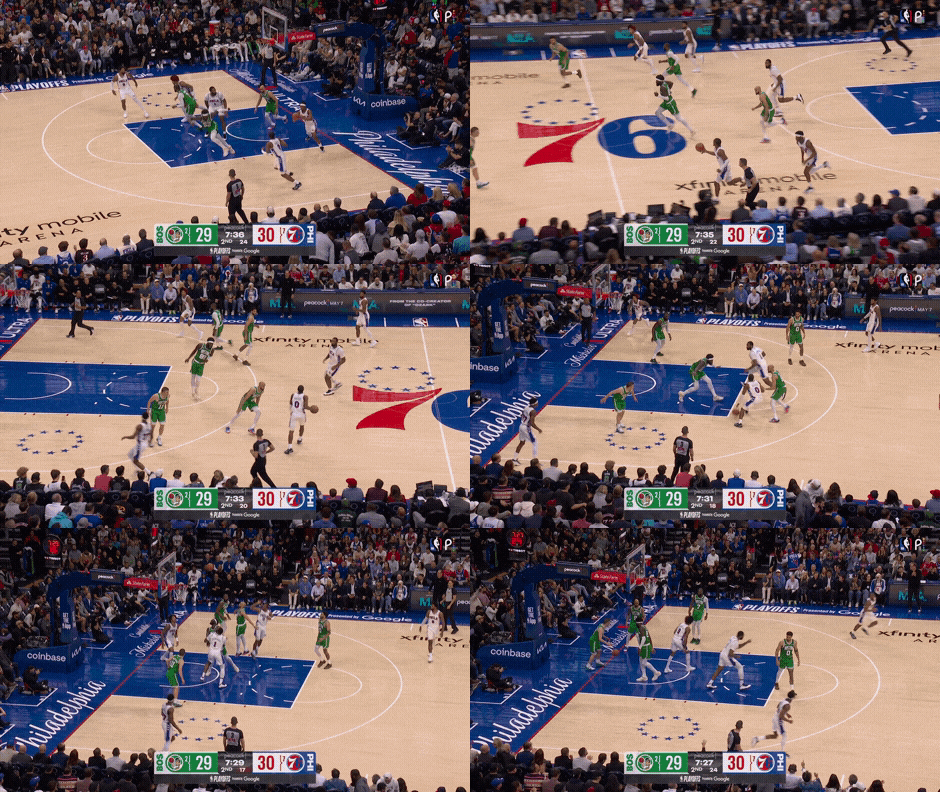
Midway through the second quarter, Derrick White jumped out to keep Maxey from using an Andre Drummond screen toward the middle of the floor. So Maxey went the other way, snaked his way back to the middle, kept White on his hip, and dropped in a short runner:
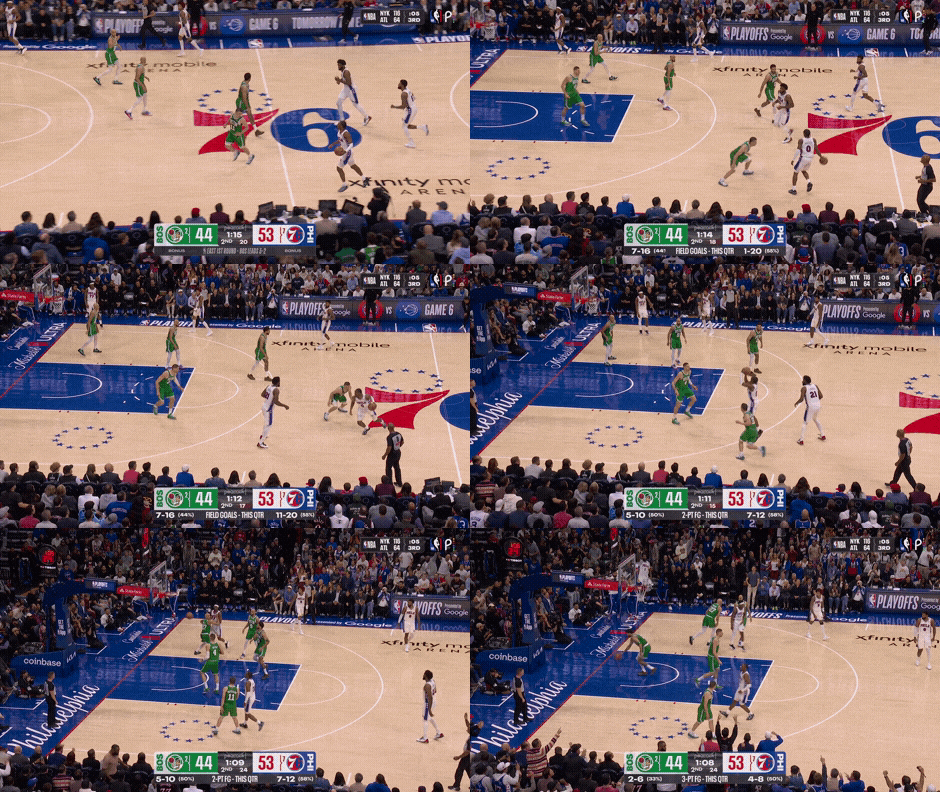
Late in the second, Payton Pritchard tried to keep Maxey from using an Embiid screen toward the middle of the floor. So Embiid flipped the screen and Maxey drained a pull-up 3, with Nikola Vučević in drop coverage:
After the Celtics took their starters out, they started blitzing Maxey, maybe a preview of what’s to come in Game 7. That forced him to get rid of the ball, but it just created 4-on-3 advantages or mismatches for the Sixers, which resulted in some wide-open looks from the corners.
2. The Celtics’ offense has been shut down
The 2025-26 Celtics are responsible for four of the 14 games of the last 30 years where a team scored more than 150 points per 100 possessions. And over these last two games, they’ve scored just 97.9 per 100.
In fact, Games 5 and 6 of this series are just the second time this season that the Celtics have scored fewer than 105 points per 100 possessions in consecutive games. The other time was in January, when they lost to the Spurs in the second game of a back-to-back and then lost in Indiana without Jaylen Brown (or Tatum).
Some of it is just some poor shooting from the outside. Their three losses in this series are just the 19th, 20th and 21st times that the Celtics have shot below 30% from 3-point range this season. Sam Hauser, a career 41% shooter from deep, had two wiiiiide-open looks late in the third quarter on Thursday, and he missed them both.
The Sixers have also been terrific defensively. Paul George was, once again, stout when guarding the Celtics’ stars. Multiple Sixers made timely weak-side rotations to block shots at the rim. And even Maxey held his own on that end of the floor.
The Celtics scored just four points on their first 10 possessions, and Maxey played a big role in a couple of the Sixers’ stops. On the Celtics’ first possession of the game, he chased Hauser around two screens and made a great trail contest on his 3-point attempt.
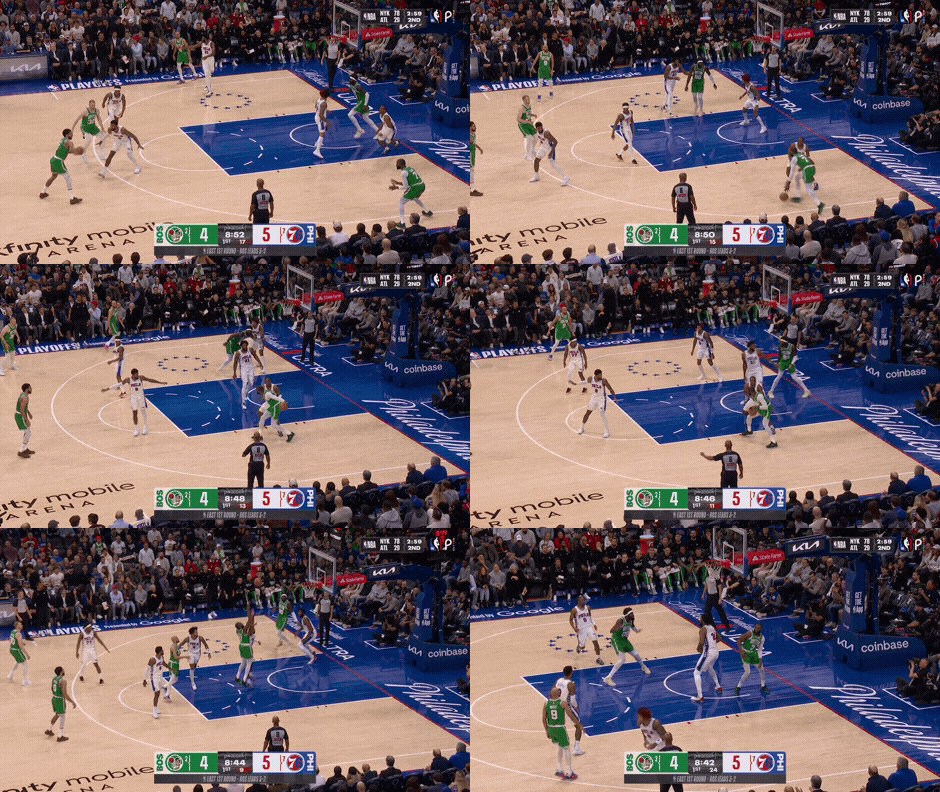
A few minutes later, Maxey got switched onto Brown and successfully defended him in the post:
Embiid got beat off the dribble multiple times in Game 6 and will need to be better in Game 7 on Saturday. But as a group, the Sixers are doing some terrific work against what was the league’s second-ranked offense in the regular season.
3. Sixers finally stop ‘Spain’
The Celtics had some success with their “Spain” or “stack” pick-and-roll action, where a standard, high pick-and-roll is followed by a back-screen on the initial screener’s defender. Their first points of the night came when Hauser blew by Embiid after the Spain action forced a switch.
Boston’s second bucket of the night was another Spain pick-and-roll where Embiid got screened by White and VJ Edgecombe (White’s defender) was late to pick up Tatum’s drive to the bucket.
Early in the third quarter, Tatum had an even clearer path to the rim when Hauser screened Embiid and Maxey (worried about sticking to Hauser) failed to switch onto the drive:
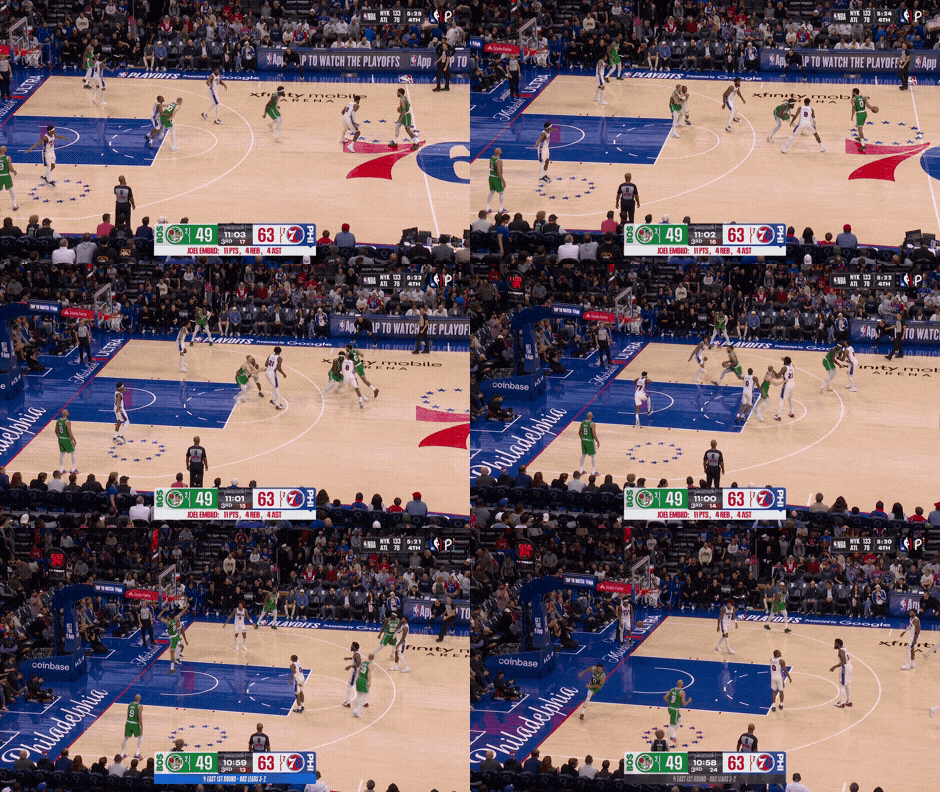
But on the very next possession, the Sixers were ready. Embiid sunk back in the paint to avoid getting hit with the back-scree and George navigated the ball-screen expertly to get back in front of Tatum. Maxey initially stayed with Hauser, but then came from Tatum’s blind side and poked the ball away:
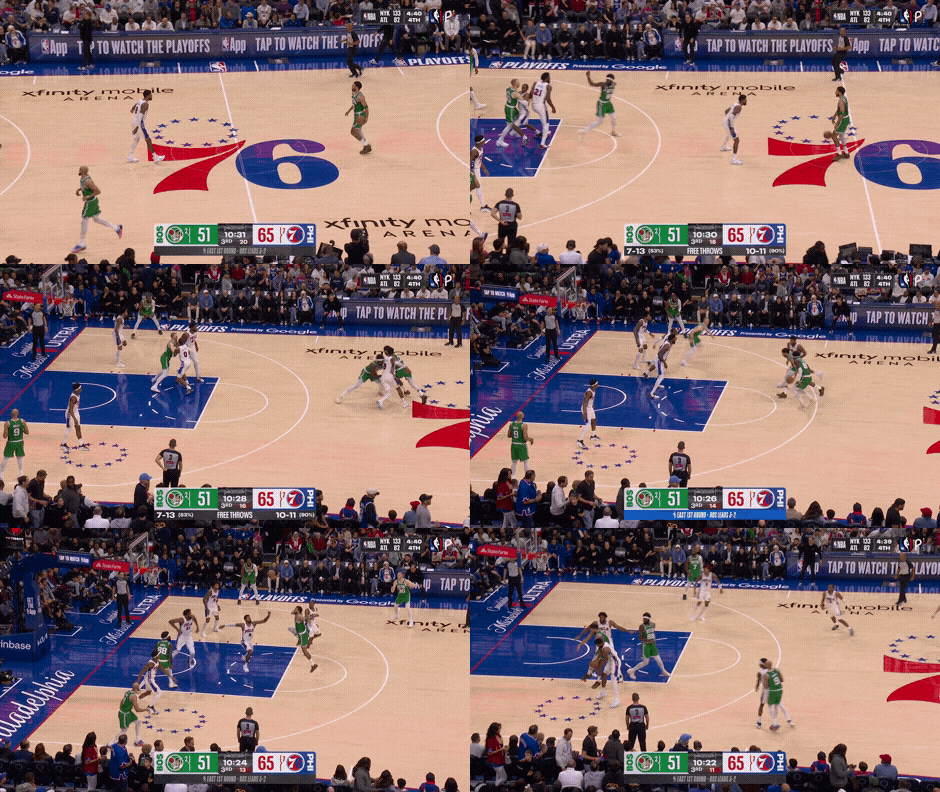
Spain can be a difficult action to stop, because it involves communication and coordination between three defenders instead of just two. The Sixers also ran it on Thursday and we can expect to see more of it in Game 7.
4. The Celtics’ 3s aren’t going down … or getting up
In addition to connecting on just 29% of their 3-pointers in Games 5 and 6, the Celtics have also been shooting fewer 3s. After taking an amazing 58% of their shots from beyond the arc over Games 2-4, they’ve taken just 46% of their shots from deep over the last two. That’s a noteworthy drop-off, and the rate on Thursday climbed after they took their starters out early in the fourth quarter.
That 46% is still a higher rate than almost every other team in those playoffs. And more important, of course, is the success rate.
In the regular season, the Celtics were 38-5 (.884) when they shot the league average (36.0%) or better from 3-point range and 18-21 (.462) when they didn’t. That was the league’s second-biggest differential, and the largest among the 16 playoff teams.
That differential was more about how good they were when they shot well, and that 18-21 mark was still the ninth-best record when shooting worse than average. But this has been a make-or-miss series on their end of the floor, and Boston will need to make more in Game 7 on Saturday.
* * *
John Schuhmann has covered the NBA for more than 20 years. You can e-mail him here, find his archive here and follow him on Bluesky.
Leave a Reply