Singer-songwriter Olivia Rodrigo donated $10 million to abortion organizations in summer 2026.
Rating:
What’s True
Rodrigo announced she would donate the $10 million proceeds from her Daisy Chain Fields music festival to several organizations. One was Planned Parenthood, which provides reproductive healthcare, including abortions. Other recipients advocate for reproductive healthcare and defend it in courts, although they do not provide abortion services themselves. However …
What’s False
… the list of recipients also included a number of organizations that do not have any involvement with abortion. In addition, philanthropist Melinda French Gates pledged to match the proceeds, doubling the total amount to $20 million.
What’s Undetermined
It was unclear how much of the $20 million total was destined for organizations involved with abortion and whether the money had already reached beneficiaries. We’ve reached out to the festival’s organizers and will update this story if we learn more.
In the summer of 2026, a rumor spread that singer-songwriter Olivia Rodrigo had donated $10 million to abortion organizations after U.S. President Donald Trump cut funding for reproductive healthcare.
The claim appeared onFacebook and X. One X post said that based on the alleged amount Rodrigo donated and the supposed cost of an abortion of $580, she was “responsible for the murder of 17,241 babies” (archived). (It’s worth noting that, according to Planned Parenthood, the actual average cost of all types of abortion is higher than the post claimed.)
The claim spread following a music festival Rodrigo hosted on Aug. 29, 2026. It’s true that the festival, which had an all-women lineup, brought in $10 million in proceeds that Rodrigo said would be donated to several organizations, one of which was Planned Parenthood, which provides reproductive healthcare, including abortions. Other beneficiaries did not directly provide reproductive healthcare, but advocated for it and defended it in courts.
However, the list also included organizations not involved with abortion or reproductive healthcare. In addition, philanthropist Melinda French Gates pledged to match the $10 million Rodrigo raised with the festival, bringing the total amount for donations to $20 million. For this reason, we rated this claim a mixture of true and false information.
As of this writing, it was not clear how much of the $20 million was destined for organizations that provide abortions or advocate for abortion rights. It was also unclear whether the funds had been paid out, as of this writing. We’ve reached out to the festival’s organizers to ask for answers to these questions and will update this story if we learn more.
The Daisy Chain Fields festival
The singer first announced the Daisy Chain Fields festival on June 22, 2026, in an Instagram post that listed an all-women group of performers, including Generation Z favorites such as Rodrigo herself, Chappell Roan, Eli and Katseye, as well as older acts such as Sarah McLachlan, alternative rock band The Breeders, which started in 1989, and 78-year-old singer-songwriter Stevie Nicks.
“Daisy Chain Fields features an all-women lineup and 100 percent of the net proceeds will go to charities dedicated to advancing and advocating for women and girls,” Rodrigo’s Instagram post read (archived):
The Daisy Chain Fields festival website listed organizations that would benefit from the proceeds of the event. Planned Parenthood, known for providing reproductive healthcare including birth control, screenings and care for sexually transmitted infections, prenatal care or abortions, was one of them.
The Center for Reproductive Rights, also listed, does not offer healthcare. Instead, its mission is to defend reproductive rights in courts across the U.S. Meanwhile, the National Institute for Reproductive Rights is an advocacy group dedicated to creating access to reproductive healthcare at city and state level.
But among the organizations set to benefit, some had nothing to do with reproductive healthcare or reproductive justice. These included Baby2Baby, a charity that provides essential items to very children living in poverty — it is known, in particular, for distributing diapers, formula and clothing, but also school supplies, backpacks and hygiene items.
Another organization poised to receive a donation from the festival was FreeFrom, which helps survivors of gender-based violence build financial independence.
In other words, only a portion of the proceeds was destined to fund reproductive healthcare, including abortion.
French Gates gets involved
The festival took place on Aug. 29, as scheduled. Near the end of the evening, Rodrigo called French Gates to the stage, announcing that the billionaire philanthropist had matched the amount set for donation, bringing the total to $20 million (archived):
French Gates confirmed this through her social media accounts. The same day, she posted a photo of herself with Rodrigo, saying she would donate the money through her organization, Pivotal (archived):
U.S. President Donald Trump’s Environmental Protection Agency approved the use of the pesticide trifludimoxazin, a known carcinogen and a PFAS “forever chemical.”
Rating:
What’s Undetermined
The EPA classified trifludimoxazin as having “suggestive evidence of carcinogenic potential,” which essentially means that while there is evidence the chemical could potentially be one that causes cancer, there isn’t enough data to say for sure. Additionally, the EPA does not consider trifludimoxazin a PFAS, though the intergovernmental Organization for Economic Cooperation and Development does.
In late summer 2026, some people on social media claimed that U.S. President Donald Trump’s administration approved the use of a potentially carcinogenic pesticide that’s a “forever chemical,” also known as PFAS. PFAS, an abbreviation for perfluoroalkyl and polyfluoroalkyl substances, are long-lasting chemicals that persistently remain in the environment, capable of accumulating in things like rivers, plants, animals and people’s bodies, that often have harmful health effects on people, according to the Environmental Protection Agency.
For example, one Facebook post (archived) claimed that the EPA “just approved a carcinogenic herbicide called trifludimoxazin,” to be used on crops including corn, wheat, oats, soybeans, peanuts, citrus fruits (including oranges), apples and tree nuts such as almonds. According to the post, environmental groups consider trifludimoxazin a PFAS pesticide and “forever chemical.” The post began:
The U.S. EPA just approved a carcinogenic herbicide called trifludimoxazin for agricultural use on a wide range of crops, including corn, wheat, oats, soybeans, peanuts, citrus fruits (including oranges), apples, and tree nuts such as almonds.
Trifludimoxazin is also considered by many environmental groups to be a PFAS pesticide because it contains highly fluorinated chemical structures and can break down into persistent fluorinated compounds – i.e. nature can’t break it down properly as it’s synthetic. Environmental organizations have described it as a “forever chemical” and have filed lawsuits challenging the EPA’s approval.
Environmental groups have also pointed out that the company’s own studies showed evidence suggesting cancer concerns and that the EPA downplayed those findings whe not was approved. The EPA claims the product is safe and that people shouldn’t be concerned. Not a good look for MAHA.
Similar Facebook (archived) posts (archived) shared the same claims, which were also spread on X (archived) and Reddit (archived). Snopes readers searched the site and sent us emails asking if the rumor is true.
The Trump administration’s EPA proposed approving trifludimoxazin in June 2025 and went through with the approval in June 2026. Researchers have found some evidence suggesting the chemical may be carcinogenic, but it’s not a “known carcinogen” like some posts claim. Trifludimoxazin is a PFAS as defined by the intergovernmental Organization for Economic Cooperation and Development, although not as defined by the more narrow EPA definition.
Therefore, we’ve rated the claim mostly true.
Trifludimoxazin is a pesticide, specifically an herbicide, that kills certain broad-leafed plants and grass weed species at agricultural sites farming “row crops (e.g., cereal grains, legumes, soybean) and tree orchards and groves (citrus, pome fruits, and tree nuts),” according to the EPA (PDF Page 6).
This wasn’t the first time the EPA has tried to approve trifludimoxazin. In 2021, while Joe Biden was president, the EPA approved pesticide products containing trifludimoxazin, however; this approval was halted by lawsuits filed by environmental groups. The EPA then changed rules to require further EPA assessments before approving a new pesticide, and, ultimately, the makers of trifludimoxazin dropped their request for approval at the time.
The same environmental groups are attempting to halt the new approval for trifludimoxazin through lawsuits, as they did previously.
Potential carcinogen
The EPA did find evidence suggesting trifludimoxazin could possibly be carcinogenic, although it did not do enough research to confirm with certainty whether the chemical is carcinogenic.
In one study of rat carcinogenicity through chronic dietary exposure (PDF Page 8), the EPA found “suggestive evidence of carcinogenic potential.” According to the EPA, such a classification means that the data raises a concern that the chemical has “potential carcinogenic effects in humans,” but the EPA has determined the data is “not sufficient for a stronger conclusion.”
Trifludimoxazin’s entry on the pesticides properties database maintained by the U.K.-based University of Hertfordshire says that the chemical is “known not to cause a problem” as a carcinogen. The entry does report that trifludimoxazin is a potential liver toxicant, though. The database also notes “no serious health implications have been identified” with trifludimoxazin.
So while trifludimoxazin could potentially be a carcinogen, there currently isn’t enough evidence to say with certainty that the chemical causes cancer.
Forever chemical
There are at least three definitions of PFAS, according to a 2022 paper in the peer-reviewed journal Digital Discovery: a broader definition from the Organization for Economic Cooperation and Development that is widely used internationally, a narrower definition used by the EPA and a definition that is a compromise between the two other definitions.
Trifludimoxazin meets the OECD’s broader definition, according to the chemical’s listing on PubChem. Trifludimoxazin does not meet the EPA’s 2023 definition of PFAS.
The University of Hertfordshire’s database also classifies trifludimoxazin as a PFAS.
Where else has it been approved?
According to the University of Hertfordshire’s database, trifludimoxazin has not been approved for use in the United Kingdom or the European Union as a whole. However, each individual state within the European Union has approved the pesticide for use in their individual countries. It has also been approved for use in Canada.
For further reading, Snopes has previously fact-checked claims about potentially toxic chemicals, including a claim about the use of paraquat by the parent company of the pomegranate juice brand Pom Wonderful.
The claim that authorities in Florida rescued 163 missing children is still under investigation pending the release of more detailed information.
The offices of Florida Attorney General James Uthmeier and Florida Department of Law Enforcement Commissioner Mark Glass said on Aug. 25, 2026, their agencies had made “46 recoveries by the Tampa Bay region, 41 by Miami, 32 by Jacksonville, 21 by Orlando, 12 by Fort Myers, 8 by Pensacola, and 3 by Tallahassee.”
They said victims’ ages ranged from 2 months to 17 years. “Many recovered children had experienced various levels of abuse, neglect, exploitation, or exposure to other criminal activity, including human trafficking,” Uthmeier’s statement read.
Florida prosecutor Rita Peters said the mix of children included runaways, indicating the authorities had not just targeted a single trafficking ring. Uthmeier announced three arrests had been made and more would come.
Some posts about the operation claimed the children were recovered from underground cages. There was no evidence this was the case.
Snopes will update this report if additional information surfaces. We have reached out to the FDLE seeking, specifically, the exact number of children who were trafficked, the number of children who were abused and sexually abused, the number of children abducted by one parent over custody battles, the number of runaways and whether further arrests were made in the days since the announcement. We await responses to these questions.
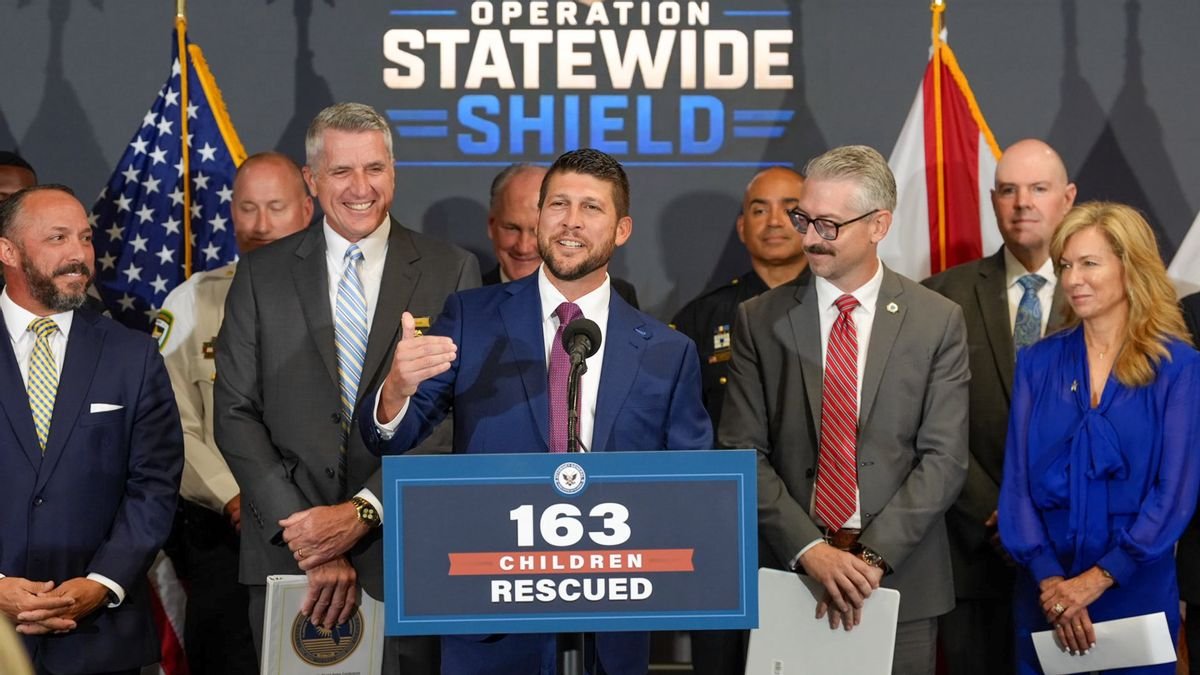
In August 2026, a claim spread that 163 missing children had been recovered in a statewide law enforcement operation in Florida.
The rumor appeared onFacebookand X. One post on X said the rescued children were “in underground cages with duct tape over their mouths from a human trafficking ring in Florida” (archived):
Several Snopes readers emailed, seeking to confirm the veracity of the claim.
It is true that the state’s Attorney General James Uthmeier and Department of Law Enforcement Commissioner Mark Glass announced on Aug. 25, 2026, their agencies and others had cooperated in a statewide operation to rescue 163 missing children. They said three men had been arrested and more arrests were in the works. They said many of these children had been victims of abuse and trafficking, but did not specify how many. While we await more details, the claim will remain unrated.
Uthmeier’s office declined to comment further.
“Circumstances surrounding the recoveries in this operation include but are not limited to various levels of abuse, neglect, exploitation, or exposure to other types of criminal activity,” a spokesperson for FDLE said in an email. “There was no one singular trafficking organization identified as a main perpetrator, and most cases were unrelated to one another.”
We sent follow-up questions seeking, specifically, the exact number of children who were trafficked, the number of children who were abused and sexually abused, the number of children abducted by one parent over custody battles, the number of runaways and whether further arrests had been made in the days since the announcement.
We also asked why the task force would recover 163 children across the state in such a short period of time instead of tackling cases progressively, as children are reported missing. We will update this story should we receive a response.
On Aug. 25, Uthmeier and Glass spoke to reporters to announce the massive rescue operation:
“We are honored to announce that we have rescued 163 missing children in just a five-day operation,” Uthmeier said at the 5:21 mark. “This is incredible.”
Uthmeier added many of them had been abused, without specifying how many. “It won’t surprise you that many have suffered great abuses. Many appear to have been trafficked, neglected, exploited, and abused.”
“These children were a mix, as you’ve heard, of endangered, at-risk, and juvenile runaway cases,” Special Counsel to the Attorney General Rita Peters, who Uthmeier said was prosecuting the case, said during the news conference (at 20:15).
Peters then explained the distinction was less important than it seemed, as runaways often become exploited by adults who take advantage of their situation:
Victimization of a child rarely begins with an abduction. It begins with a child who has left home or or has been pushed out of one, who has no money and nowhere to sleep, and who often meets an adult offering food, shelter, and much needed attention. These children often leave because being on the street is better than being with their abusive parent or their guardians who sell them on a daily basis.
In the statement published on Uthmeier’s website, his office said the victims’ ages ranged from 2 months to 17 years. During the news conference, Uthmeier also said three men had been arrested on various counts, including, per his office’s statement, lewd and lascivious acts with a minor, lewd and lascivious battery on a victim 12 to 16 years old, and interference in a child custody case. In other words, there was no indication the operation targeted one specific child trafficking ring.
Authorities did not give any indication the children had been found in underground cages with their mouths duct-taped, as some social media posts claimed.
The attorney general’s statement said the operation took the Florida task force to “Alabama, California, Ohio, New York, North Carolina, Puerto Rico, and Tennessee. Outside of the US included Brazil, Canada, Colombia, Dominica, Finland, Ghana, Guatemala, Italy, Jamaica, Mexico, Spain, and Taiwan.” We inquired about the international aspect of this operation in our email to the FDLE.
A chef claimed U.S. Sen. Josh Hawley, R-Mo., twice met with a male escort.
Rating:
What’s True
It’s true that a chef named Joe Gera posted the claim on X in late July and early August 2026. However …
What’s Undetermined
There was no evidence to suggest the senator met with a male escort. Gera has yet to provide evidence to support his story. In a legal notice sent to Gera and shared with Snopes, an attorney representing the senator called Gera’s accusations “false and defamatory,” adding Hawley “has never exchanged money for sex, nor has he ever paid anyone to remain silent about sex.” The notice demanded Gera retract or correct his prior statements and cease publishing anything similar in the future, warning of the potential of a defamation lawsuit.
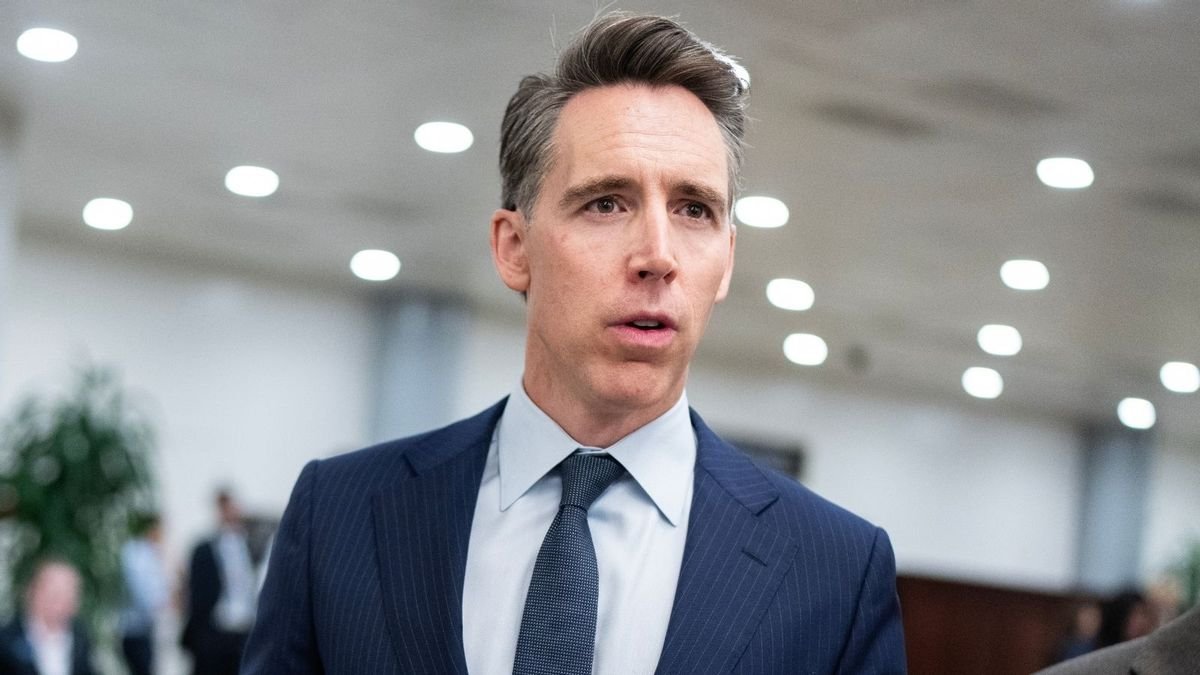
In July and August 2026, people shared a rumor about a chef alleging U.S. Sen. Josh Hawley, R-Mo., twice met with a male escort. There was no evidence to support the story.
For example, on Aug. 18, a Facebook user posted (archived), “Chef accuses anti-LGBTQ+ GOP Sen. Josh Hawley of kissing a male escort.” The post’s meme reads, “Married, MAGA, and anti-gay Senator Josh Hawley facing accusations he was seen kissing a male escort before bribing them to remain silent.”
Believers of the gossip alleged hypocrisy by the Republican senator. Hawley, who has three children with his wife, has for years opposedlegislation and rulings strengthening the rights of LGBTQ+ people. During that time, some critics have lobbed unproven allegations of the senator and other Republicans secretly living as gay men.
In sum, a chef named Joe Gera, owner of the Pennsylvania-based caterer Keystone Cue, genuinely posted the allegations in severalX posts in late July and early August 2026. However, there was no evidence, such as photos or videos, to support his story.
When we contacted Gera for supplementary evidence to support his claims, he answered our questions in X direct messages but did not provide evidence supporting his story. As of now, we’ve rated this claim a mixture of true and undetermined information: It’s true a chef made such a claim, and that claim’s veracity is undetermined.
Hawley’s team said the allegations are not true. In a legal notice addressed to Gera that Hawley spokesperson Madeline Sieren, shared with Snopes, attorney David Thompson, a managing partner with the Washington-based Cooper & Kirk law firm representing the senator, called Gera’s accusations “false and defamatory,” adding that Hawley “has never exchanged money for sex, nor has he ever paid anyone to remain silent about sex.”
The notice demanded Gera retract or correct his prior statements and cease publishing anything similar in the future, and warned of the senator potentially filing a defamation lawsuit.
We asked Gera if he wished to respond publicly to the legal notice and will update this article if we receive an answer.
As we noted in an article examining unsubstantiated claims regarding the late Sen. Lindsey Graham’s sexuality, Snopes is not in the business of declaring a person’s gender or sexual identity. As of this writing, no credible, publicly available evidence supports the rumor that Hawley is gay.
In X posts and messages to Snopes, Gera alleged to Snopes without providing proof that Hawley twice met with the same male escort in 2022 at two properties owned by Gera’s former employer: the first time that February at a luxury hotel in Washington, D.C., and then at a Virginia mountain resort in April. He said his former employer did not wish to be named at this time for privacy reasons.
Gera said he learned of the alleged Washington hotel encounter from a busboy named Carlos who purportedly witnessed Hawley kissing a man, though he did not provide a last name for us to contact that person for independent corroboration. Gera also claimed to have viewed surveillance footage showing the alleged incident but did not provide proof.
In Gera’s Xposts, he quote-shared Hawley’s posts about congressional matters with his allegations about the male escort. Gera’s posts alleged that Hawley chased the busboy “into the elevator going back up into the kitchen” and paid him $100 “to keep his mouth shut.”
Fake image of Hawley with other man
As Gera’s allegations spread online, so did a fakepicture of Hawley supposedly preparingtokiss a man holding a voice recorder. It appears someone fabricated the image by prompting an artificial intelligence tool to alter an authentic photo of a reporter speaking with Hawley in 2019.
For further reading, we previously reported about another rumor involving Gera in which he made allegations about the vaccination status of Sen. Rand Paul, R-Ky. Gera said he cooked at an early 2022 event the senator attended that required unmasked attendees to provide a negative COVID-19 test.
U.S. Secretary of Health and Human Services Robert F. Kennedy Jr. said people in hospice care weren’t dying fast enough and were costing taxpayers too much money.
Rating:
Context
Kennedy did not explicitly that hospice patients cost taxpayers too much money because they received treatment for too long. Instead, he was specifically referring to instances of suspected hospice fraud in California.
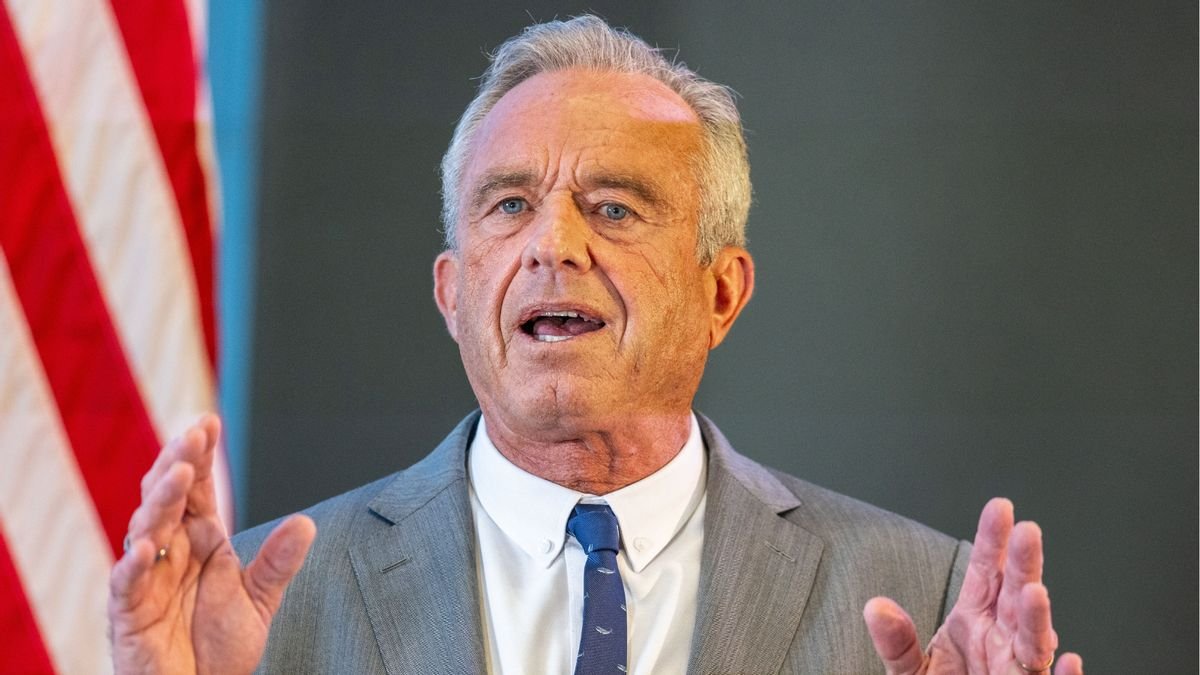
In late August 2026, a claim (archived) circulated online that U.S. Health and Human Services Secretary Robert F. Kennedy Jr. said people in hospice care weren’t dying fast enough and were costing taxpayers too much money.
For example, independent journalist Aaron Rupar shared a clip of Kennedy speaking on X and wrote, “RFK Jr complains that people in hospice aren’t dying quick enough and therefore cost too much money.”
Though Kennedy did speak about hospice care during an appearance on the Fox News program “Saturday in America” on Aug. 29, summaries such as Rupar’s on X did not accurately reflect his words.
Kennedy did not explicitly say that hospice patients cost taxpayers money because they received treatment for too long. Rather, he said hospices in California had fraudulently received federal funds, pointing to billing for patients over multiple years instead of the typical several months as one example.
In August 2026, The Associated Press reported on one incident of fraud where a California hospice billed Medicare for a healthy 71-year-old woman.
In a recording of the “Saturday in America” town hall featuring Kennedy, he said (at 52:52):
We closed down thousands of hospices in California, they didn’t have patients, they were just billing us. And the way we found them is because the patients would never die. And so, we could see, we’ve been paying for this guy for five years — usually, if you go to a hospice, it means you’ve got three months left to live — these people were never dying, they just had the patient numbers and we were being charged $6,000 a month and just paying, I think 8,000 of them, of these hospices. We’re talking about tens of billions of dollars stolen every year.
Given the above, we find claims that Kennedy said hospice patients weren’t dying fast enough and costing taxpayers money false. Instead, he was specifically referring to instances of suspected hospice fraud.
We contacted the Department of Health and Human Services to ask when it closed the 8,000 hospices Kennedy mentioned and how much money the department estimated hospice fraudsters had received and await a reply.
Medicare, the U.S. federal health insurance program for people 65 and older, covers hospice care for eligible patients. According to Medicare’s website, a patient is eligible if one or more doctors certify they are terminally ill, with a life expectancy of six months or less — not three, as Kennedy said. The insurance program covers hospice care for two initial 90-day periods and successive unlimited 60-day periods.
Vice President JD Vance’s anti-fraud task force, which President Donald Trump established in March 2026, has focused on hospice fraud through Medicare.
The Associated Press reported in August 2026 that fraudsters opened fake hospices and tricked real patients into enrolling, or stole people’s identities to bill Medicare for hospice services they did not receive.
In May 2026, the Centers for Medicare and Medicaid Services announced six-month moratoriums on Medicare enrollment for hospices and home health agencies. The centers said they had worked with Vance’s anti-fraud task force to suspend federal payments to 800 hospices and home health agencies suspected of fraud in Los Angeles. The suspected fraudulent companies received $1.4 billion in Medicare payments in 2025, according to the news release.
The release noted that hospice fraud was especially prevalent in Arizona, California, Georgia, Ohio, Nevada and Texas.
California’s Department of Justice described hospice fraud as “an epidemic” in the state. The department said it carried out its own investigations into hospice fraud within Medi-Cal, California’s state-level health insurance program and that it had secured 51 “hospice related convictions” since 2021.
For further reading, Snopes routinely investigates claims about Medicare.
A civilian engineer working aboard a U.S. Navy vessel filed a civil lawsuit against the United States in 2023, alleging she had been raped on duty, and the court dismissed the suit in 2026, determining it fell under the jurisdiction of the U.S. Department of Labor as a worker’s compensation issue.
Rating:
Claims circulated in August 2026 that a civilian engineer named Elsie Dominguez was working aboard a U.S. Navy vessel in 2021 and allegedly raped on duty, for which she later sued the United States seeking unspecified monetary damages.
According to the claim, a judge dismissed the case, deeming it an issue related to worker’s compensation, which falls under the jurisdiction of the Department of Labor.
People on socialmedia platforms spread the report online, claiming that Dominguez’s lawsuit was dropped because the rape was deemed to have happened while in performance of her work duties and was reclassified a worker’s compensation issue.
It was true that a judge dismissed Dominguez’s case because he determined it fell under the Federal Employees’ Compensation Act and should therefore be handled by the U.S. Department of Labor, according to court documents.
The decision cited a prior Supreme Court ruling that determined “unequivocally that FECA is the exclusive remedy for civilian seamen on public vessels.”
On May 12, 2026, a joint letter from the plaintiff’s and defendant’s attorneys said that “the Office of Workers’ Compensation Programs issued an acceptance” of Dominguez’s claim on March 11, meaning the office had decided to classify the rape as a “work-related injury.”
Snopes reached out to the Department of Labor to ask for documentation of this decision and was instructed to make a Freedom of Information Act request.
According to the case docket, Judge Edward S. Kiel dismissed the case on Aug. 11, 2026.
Another joint letter from the attorneys, dated one day before the dismissal and embedded below, said “Ms. Dominguez firmly disagrees” with the decision that the assault should be classified as a work-related injury and that she believed it “does a significant disservice to service members like her” but opted not to appeal. As a result, the letter said, “this matter may be dismissed.”
For instance, one New York-based firm said it’s possible to sue for worker’s compensation when “sexual assault by a supervisor or co-worker when the employer knew about the risk (e.g., through a previous incident) but failed to protect you.”
History of the case
Dominguez graduated from the U.S. Merchant Marine Academy and “excelled professionally and rose through the civilian ranks within Military Sealift Command from 3rd Assistant Engineer to 1st Assistant Engineer, an accomplishment achieved by very few female mariners,” according to court documents.
The documents said Dominguez met her alleged attacker, the future captain of the USNS Carson City, upon her first assignment out of school in 2014, when he was ranked second mate.
She was assigned to the USNS Carson City in October 2021.
The alleged perpetrator purportedly initiated a sexual relationship with Dominguez after her transfer to his ship. Dominguez said in court documents that she felt like she could not refuse because he was her superior.
She called the experience “demeaning and upsetting” and “told the Captain that she did not enjoy the encounter and did not wish to have any kind of romantic or sexual interactions with him moving forward.”
The documents described Dominguez as fending off further advances until the situation escalated in December 2021, ultimately resulting in Dominguez’s complaint, which she filed on Nov. 11, 2023.
The plaintiff’s accounting of events stated she was ashore at a bar with colleagues, became intoxicated — possibly drugged — and later woke up in her quarters as she was allegedly being raped by the captain.
The civil complaint, embedded below, said Dominguez sought “justice for the sexual assault that she endured aboard the USNS Carson City” on Dec. 21, 2021, as well as “for the failure of the United States to care for her or protect her when she reported the attack the next morning using the proper reporting procedures.”
The lawsuit sought unspecified monetary damages for Dominguez’s experience:
As a direct and proximate result of the negligence of the United States, Ms. Dominguez suffered physical and emotional injury, pain and suffering, mental anguish, loss of capacity for the enjoyment of life, loss of future wages and earning capacity, damage to her professional prospects and reputation, and other harms and losses to be proven at trial. These losses and injuries are either permanent or continuing, and Ms. Dominguez will suffer these losses and injuries in the future.
The court documents Snopes reviewed on the national legal index PACER included a letter dated Feb. 8, 2024, from Adam Calendrillo, chief of procedures of the Office of Workers’ Compensation Programs, who determined “a substantial likelihood of FECA coverage for Ms. Dominguez’s alleged injuries.”
Calendrillo wrote, “Even though the alleged assault occurred sometime in the early morning hours while she was asleep, Ms. Dominguez was under the protection of the FECA 24 hours a day with respect to any injury incidental to her duties.”
On June 4, 2024, the defendant’s motion to stay was granted in part “pending plaintiff’s filing of a Federal Employees Compensation Act claim with the Department of Labor and related resolution.”
We’ve reached out to Dominguez’s attorneys for further comment on the ruling in the civil case and to ask about future plans regarding the complaint. We will update this story if we hear back.
Footage depicting an elephant rescuing a man from floodwaters was taken during August 2026 flooding in Nepal.
Rating:
Context
Since we were unable to identify the video’s original source, we could not definitively confirm its authenticity. However, the clip predated the August 2026 flooding in Nepal and displayed visual inconsistencies that pointed to AI generation.
As Nepal suffered from catastrophic flooding that left more than 900 people dead and thousands of others missing in late August 2026, a video appearing to show an elephant wading into floodwaters to rescue a man and carrying him to shore circulated online.
“In Nepal Elephants were saving people,” one X post caption read (archived). “What an amazing world we live in.”
(X user @TonyGunk123.)
Severalfact-checking sites concluded that the video appeared to be authentic, but it predated the flooding in Nepal and was said to have been captured in India. While we were unable to identify the video’s original source for verification, we confirmed that the clip was shared before flooding in Nepal began on Aug. 26, 2026, and displayed visual inconsistencies that pointed to AI generation.
The earliest version of the video that we could find was posted to YouTube on Aug. 5, 2026 (archived).
The video contained multiple anomalies commonly found in AI-generated media. Our analysis of screenshots revealed a lack of detail, harsh or unnatural shadows, inconsistent skin color and texture, degraded quaity, object bleeding and misshapen extremities.
(Snopes Illustration.)
Although the Aug. 5 video featured a song as the audio, in otheriterations of the post, people spoke in the background and yelled as the man appeared to climb onto the elephant.
The text over one such video was in Hindi (archived), reading “Watch Nature’s Display/View” and “How the elephant saved a human” (translation via native speaker). However, the audio was in Thai — further evidence it was not captured during the August 2026 flooding in Nepal. One man can be heard saying “flood” while another woman says, “It’s an elephant” before asking, “What is it going to do?” (translation via native speaker).
Several commenters on Reddit and Facebook claimed the video depicted a real incident in which an elephant rescued her caretaker as a stunt at an elephant park in Thailand.
“The story originates from a genuine, widely celebrated 2016 video filmed at the Elephant Nature Park in Chiang Mai, Thailand,” one Facebook user wrote. “The clip captures a real moment where a young elephant named Kham Lha rushed into a fast-flowing river to ‘rescue’ her favorite human caretaker, Darrick, whom she believed was drowning.”
Although that story was authentic and KhamLa is a real elephant at Elephant Nature Park in Thailand, the widely shared video of the 2016 incident is not the same video that spread in August 2026.
Another article claimed the video was authentic and depicted a real 2017 incident in which elephants helped rescue hundreds of people from a flooded Nepali safari park. We found no proof the video was connected the the 2017 flooding. The image attached to the article was also AI-generated, as evidenced by the man’s disfigured fingers and the merging of his arm and shirt sleeve (archived).
Unlike the 2016 video of KhamLa swimming to her caretaker or the 2017 news reports regarding elephants helping to rescue people, no reputable news outlets reported on the August 2026 video or confirmed it was authentic.
In sum, the video appearing to show an elephant rescuing a man from floodwaters is not from the August 2026 Nepal floods. The clip also displayed visual inconsistencies that pointed to AI generation, such as unnatural lighting, texture movement and shapes.
For further reading, we confirmed that CCTV footage authentically showed floodwaters destroying the Gyirong Port, a Nepal-China border crossing.
A rumor circulating in late August 2026 claimed crews cut down dozens of cherry trees to pave the way for U.S. President Donald Trump’s plans to renovate a Washington, D.C., golf course.
As of this writing on Sept. 1, we’ve found no evidence to support the claim dozens of cherry trees had been removed as part of the project.
The rumor about cherry trees appeared to have originated with readers misunderstanding or misrepresenting an Aug. 28 Washington Post article reporting that an informal count found roughly 60 trees had been removed. Out of those 60, only one was a cherry tree.
An Interior Department spokesperson told Snopes arborists recommend the removal of dying, declining or hazardous trees as a part of routine maintenance. For example, during the Biden administration, the National Park Service reportedly removed 300 trees (including 140 cherry trees) from the Tidal Basin area north of East Potomac Park as part of a three-year project capped off by the replanting of 277 cherry trees.
In late August 2026, Snopes received emails and searches asking if it was true crews cut down dozens of cherry trees to pave the way for U.S. President Donald Trump’s Washington, D.C., golf course renovations, specifically the East Potomac Golf Links property inside East Potomac Park, the site of the nation’s first cherry blossom planting.
Earlier in the year, the Trump administration revealed visual plans to overhaul the property into a championship-style golf course. Then, Trump announced on Truth Social that work on the golf course would begin Sept. 1. Earlier in the year, the DC Preservation League filed a lawsuit challenging the project, including citing crews dumping White House East Wing debris at the site.
Readers specifically asked if a rumor that between 60 and 158 cherry trees were chopped down was true, and whether the administration violated a court order by doing so. They also wanted to know if the alleged tree removal impacted the cherry tree collections gifted to the U.S. by Japan in 1910 and 1912.
For example, one reader emailed, “Despite court orders, Trump is moving forward with plans to remove 158 iconic cherry trees near the Tidal Basin and 60 have already been cut down.”
Another email read, “Has Trump ordered the removal of dozens of cherry trees in DC that were a gift from Japan?”
In sum, as of this writing on Sept. 1, we have found no evidence to support the claim, nor any examples of news media outlets reporting that dozens of cherry trees were removed from East Potomac Park, including any that arrived from Japan in 1910 or 1912.
Regarding court orders, U.S. District Judge Ana Reyes reportedly said on May 4 the court must be told if the renovation plans called for the removal of more than 10 trees.
We haven’t given this multipart claim a true or false rating given the lack of conclusive evidence either way and the fact that it remains an ongoing situation.
One popular Facebook post (archived) indicated the rumor stems at least in part from people misrepresenting an Aug. 28 Washington Post report. That story, headlined “Trees are coming down by the dozen as Trump’s D.C. golf makeover nears,” tells of “newly cut stumps and bare patches of dirt [marking] the places where dozens of trees recently stood” and says an informal count found that 60 trees “appeared to have been removed in recent weeks.” The Post mentions noticing at least one removed cherry tree near the 14th green of the blue course, as well as two large sycamores removed around another area.
An Interior Department spokesperson provided the same statement the Post published, saying arborists recommended recent removals of dying, declining or hazardous trees as a part of routine maintenance:
Arborists are doing routine maintenance at East Potomac Park with selective removal of hazard trees, non-native invasive trees and declining and dying trees that cannot be brought back to good health through any degree of intervention. Trees throughout the park are regularly monitored for potential safety impacts to visitors, and when a tree is determined to be dying, declining or hazardous our arborists may make the decision to remove it.
In response to the department’s statement, we requested numbers of removed trees from previous years for comparison.
For example, in March 2024, when former President Joe Biden was in office, the NPS reportedly announced a $133 million project to rebuild and reinforce the sea wall of the Tidal Basin, an area located north of East Potomac Park. The work, scheduled at the time to last three years, featured the removal of 140 cherry trees out of 300 total trees, as well as the replanting of 277 cherry trees at the project’s conclusion. Those removals included a beloved tree named “Stumpy.”
According to an NPS article last updated in 2019, fewer than 100 of the cherry trees Japan gifted the U.S. in the early 1900s remain to this day and are planted along the Tidal Basin and around the park and the city. Those few remaining trees make up only a small portion of “the nearly 4,000 cherry trees growing in West and East Potomac Parks, on the Washington Monument grounds, and in several other park locations.”
Officials reportedly burned most of Japan’s 1910 cherry-tree shipment after arrival upon finding they were infested with insects and disease, with the 1912 shipment proving more successful. In 2009, the Post, citing century-old reporting, told of some of the 1910 trees possibly being saved and planted in an “experimental plot” — a gathering possibly remaining to this day, located at the southern tip of the park in Hains Point.
We reached out to the White House, which referred us to the Interior Department, as well as the DC Preservation League and the National Park Service for further comment, and will update this article if we receive further information. We also contacted Post writer Rick Maese, who posted on X, “It doesn’t seem like any cherry trees from the historic grove have been impacted thus far.” Another journalist responded to the post, bringing up the 2009 Post article about officials possibly planting a small number of Japan’s 1910 shipment.
An online booking search for East Potomac Golf Links tee times showed availability continuing into the first days of September, with no sign of any potential closures.
Tree care company denies axing cherry trees
During the Post’s Aug. 27 visit to the property — a site Snopes has not visited firsthand — the writer reported seeing a company named RTEC Treecare cutting trees, including a large tree that showed “clear signs of decay.” The writer also mentioned noticing white dots and yellow ribbons on some trees, marked for purposes not known to the Post.
The RTEC Treecare website displays a message addressing the cherry tree rumor, reading in part as follows (bolded emphasis theirs):
RTEC Treecare is currently performing hazard tree pruning and removal services for the National Park Service at East Potomac Park Golf Course. The trees assigned for treatment have been evaluated and selected by National Park Service arborists based on established hazard assessment criteria.
We want to be clear: RTEC Treecare has not removed any cherry trees at East Potomac Park Golf Course. Our work has been limited to trees identified by the National Park Service as hazardous, non-native, or invasive.
We contacted RTEC Treecare to ask if they were aware of who chopped down the cherry tree the Post reported about and will update this story if we receive more details.
DC eyewitness reports from East Potomac Park
On Aug. 31, Threads user @drybrarian, whose bio identifies him as “Kennedy Center Bike Guy,” posted (archived) photos purporting to show the current state of East Potomac Park, including one displaying a newspaper with the day’s date as evidence of when he captured the images. The thread of posts, featuring more than the post embedded below, reported that the user witnessed some trees being cut down, adding, “there has NOT been a wholesale Cherry Blossom Massacre,” as well as that “the VAST majority of the trees are still there.”
We messaged the user to ask for further information and will update this story accordingly.
For further reading, we previously reported in July about similar rumors of the Trump administration planning to chop down cherry trees.
Sources
Burgum, Secretary Doug. “Excited to Unveil the Design for the East Potomac Golf Links Renovation from Fazio Design. .” X, 14 May 2026, https://x.com/SecretaryBurgum/status/2054934836771488181.
Domingo, Ida. “Trump Says DC’s East Potomac Golf Links Renovation to Begin Sept. 1.” WJLA, 29 June 2026, https://wjla.com/news/local/donald-trump-east-potomac-golf-links-washington-dc-course-renovation-interior-department-doug-burgum-tom-fazio-parks-federal-court-land-use-project-truth-social-pga-us-open-september-1.
“Eliza Scidmore’s Faithful Pursuit Of a Dream (U.S. National Park Service).” National Park Service, https://www.nps.gov/articles/scidmore.htm.
“Final Complaint, Case 1:26-Cv-00477-ACR.” Court Listener, 13 Feb. 2026, https://storage.courtlistener.com/recap/gov.uscourts.dcd.289401/gov.uscourts.dcd.289401.1.0_1.pdf.
“Honest Tree Care In Washington, DC Metropolitan Area.” RTEC Treecare, https://rtectreecare.com/.
“Judge in Dispute over Washington Golf Course Tells Trump Officials Not to Cut Trees without Notice.” The Associated Press, 4 May 2026, https://apnews.com/article/trump-east-potomac-golf-course-442c7772c96d9574b95bd2dc068694cb.
Khalil, Ashraf. “More than 100 Iconic Cherry Trees in Washington Are Being Cut down. So Long, Stumpy.” The Associated Press, 22 Mar. 2024, https://apnews.com/article/cherry-blossom-peak-bloom-trees-removed-stumpy-dc-3de67f20140dafd20dfefcee6e20ba92.
“Legal Challenge Brought Against Effort by Trump-Vance Administration to Stymie Public Access to East Potomac Park, Create Exclusive Golf Course for President.” Democracy Defenders Fund, 13 Feb. 2026, https://www.democracydefendersfund.org/news/legal-challenge-brought-against-effort-by-trump-vance-administration-to-stymie-public-access-to-east-potomac-park-create-exclusive-golf-course-for-president/.
MacFarlane, Scott. “Judge Reyes Puts a Number on the Table.” X, 4 May 2026, https://x.com/MacFarlaneNews/status/2051278957354348925.
Rogelberg, Sasha. “Debris from the White House East Wing Demolition Was Dumped at a Nearby Public Golf Course and Contains Toxic Metals, National Park Report Finds.” Fortune, 7 May 2026, https://fortune.com/2026/05/07/white-house-east-wing-demolition-debris-toxic-metals-golf-course-trump/.
“Truth Social Posts of June 28, 2026.” The American Presidency Project, https://www.presidency.ucsb.edu/documents/truth-social-posts-june-28-2026.
Ward, Joe, and Daniel Wood. “Trump Envisions a Championship Golf Course in Washington. Locals Are Skeptical.” The New York Times, 26 June 2026, https://www.nytimes.com/interactive/2026/06/26/us/trump-dc-golf-course.html.
In August 2026, investigative outlet 404 Media (and later The Wall Street Journal) used location trackers to follow large shipments of books, some of which were rare, to an Amazon facility in Las Vegas. 404 Media claimed Amazon was cutting off book spines to more efficiently scan their contents for artificial intelligence data training purposes — destroying the books in the process.
The facility, called LAS8, was home to the VGT3 operation. Publicly available Google Maps images show the entrance of the facility emblazoned with the image of a dinosaur baring its jaws, holding a book in its claws.
According to online posts predating 404 Media’s reporting by more than a year, people claiming to be Amazon employees at the site described “cutting and scanning books for up to 12 hours at a time.”
404 Media also pointed to authentic 2024 messages from booksellers in Amazon vendor support channels raising concerns about unusually large orders for books coming from Las Vegas.
In an email to Snopes, an Amazon spokesperson said: “Amazon purchases books through commercial channels to help develop and improve the products and services our customers use.”
It remains unclear whether Amazon specifically seeks out rare books — or whether some of the books it acquires happen to be rare. It’s also unclear, as of this writing, whether the books are used purely for training AI or for some other purpose.
In August 2026, a claim circulated online that tech giant Amazon was acquiring large quantities of books, some of them rare, and cutting off the spines to more efficiently scan the pages for artificial intelligence training data — destroying the books in the process.
Social media users across multipleplatforms claimed Amazon was similarly destroying books, and dozens of Snopes readers contacted us seeking answers.
“Amazon is buying massive quantities of books, scanning them for AI training data, and destroying them in the process,” one Instagram user posted (archived) on Aug. 18, gaining more than 2.2 million views, as of this writing.
(Instagram user @aaronparnas)
The rumor stemmed from an Aug. 17, 2026, story by digital investigative outlet 404 Media. Reporter Emanuel Maiberg collaborated with a bookseller who suspected a large order of books was linked to Amazon’s book scanning project, planting an Apple AirTag in the shipment that eventually appeared at an Amazon facility in Las Vegas called LAS8.
Maiberg pointed to posts from booksellers raising concerns about unusually large shipments as well as online forum posts by people claiming to be Amazon employees writing in about the work at VGT3, the name for the operation, which Snopes tracked down and verified below.
In a follow-up story Aug. 26, Maiberg reportedly spoke with an employee who worked at Amazon’s VGT3 warehouse. The employee, who was quoted anonymously, reportedly described how machines cut the spines off books before 20 to 25 scanners flipped through the loose pages “like machines that count cash.”
Asked for a response to 404 Media’s reporting, an Amazon spokesperson wrote in an email to Snopes: “Amazon purchases books through commercial channels to help develop and improve the products and services our customers use.”
We also reached out to Maiberg regarding whether Amazon specifically sought “rare” books and whether he came across any evidence that Amazon was scanning books for e-books, but did not immediately hear back. We will update this story if we do.
Although we verified the location of the VGT3 operation and identified the online messages referred to in 404 Media’s reporting, and Amazon confirmed it purchases books for the purposes of developing its products, we left this claim unrated because it remains undetermined whether Amazon specifically seeks out “rare” books and whether it uses the books exclusively for AI training data, as well as whether the online posts truly came from Amazon employees who worked at the Las Vegas facility.
Evidence of Amazon’s book-scanning operation
In July 2026, a bookseller reportedly told Maiberg they received an order of around 1,000 books on Biblio, an online bookselling marketplace. In cooperation with 404 Media they placed an AirTag in the shipment, which eventually turned up at an Amazon warehouse at 5801 Nicco Way, Las Vegas.
(Google Maps)
The entrance to the facility, where a window bears a large illustration of a dinosaur with its jaws bared holding an open book, is currently publicly viewable on Google Maps. A reporter for a local Las Vegas news outlet also captured another angle of the facility’s entrance.
Google Street View imagery from February 2026 shows the same building entrance — though it did not have the dinosaur emblem at that time.
We asked Amazon whether there were similar operations in other cities or countries, which the spokesperson did not address in their response.
The Wall Street Journal also reportedly spoke with a bookseller in the Pacific Northwest who similarly followed a shipment using location trackers inside the book covers. Reporter Melissa Korn wrote:
The other book went first to a warehouse in Kenosha, Wis., then to a spot in northern Las Vegas at an intersection with at least two Amazon facilities. It eventually moved to a position in Mexicali, Mexico. While the seller couldn’t determine the exact address, a Google map of the location shows a sprawling recycled-paper manufacturing facility.
404 Media also pointed to messages in Amazon support channels in which booksellers raised concerns about large orders. “This is the first order I’ve seen like this in over 10 years of selling here,” one bookseller wrote in September 2024, reporting that the buyer’s address matched an “Amazon Fulfillment Center” in Las Vegas.
An Amazon support representative responded that they were investigating the concerns, before eventually confirming the orders were legitimate.
What have purported Amazon employees said?
Both The Wall Street Journal and 404 Media referenced posts on online forums by purported Amazon employees from more than a year prior to the 2026 stories in which they described work at the Las Vegas facility, reportedly involving cutting and scanning books for up to 12 hours at a time.
“Some are assigned to cut books, and others go to receive where they get books and scan the bar codes,” one comment reportedly read.
Snopes verified that this post was real (archived), as were other posts dating back to at least July 2025 (archived, archived), although we were unable to verify they were truly made by Amazon employees.
In its Aug. 26 story, 404 Media reported that when asked what it looked like when the book spines were cut off, the employee said:
It’s a machine people operate. Each of these machines is just like a little workstation, and there’ll be one person at each of these stations. It’s really safe because it has a little cover and it has a little area where you slide the book into, remove your fingers from the area, and then you press a button, and it just comes down and slices it. And then you remove the books after the blade is gone.
The employee reportedly described how after the books were cut, they were put into large containers, saying, “They’re just piled in there. It’s also right next to where they start cutting the spines, and so I think right after that, that’s where it’s going [the trash].”
Because we do not rely on anonymous sources for our fact-checking, we do not consider this account to be primary evidence.
How did 404 Media define ‘rare’ books?
According to 404 Media, the books in the shipment it tracked were rare, meaning “there are not many copies of them in circulation.” Though many people online appeared to believe Amazon and other AI companies were specifically seeking out rare books, perhaps with the intention of gatekeeping or monetizing their contents by converting them into exclusive digital copies, we did not find evidence of this, as of this writing. Maiberg wrote:
That employees are scanning the barcodes or ISBNs on books — a unique serial number given to every published book — before scanning their content gives further credence to another theory put forth by booksellers: AI companies are trying to methodically scan every printed book in the world by working through the list of ISBNs. One bookseller told me they suspected this was the case because the very large orders they were getting never included very rare books that do not have ISBNs.
In other words, Amazon may be indiscriminately acquiring printed books, which may include some that have few copies in circulation.
This would align with the internal Anthropic documents we previously reported on, which stated that the goal of its book-scanning project, “Project Panama,” was to “scan and destroy ‘all the books in the world.’” In an email to a bookseller, project director Tom Turvey said “less common books are a great place to start.” It’s unclear whether “less common” refers to a book’s actual market rarity or the number of circulating copies.
It’s unclear, as of this writing, whether Amazon was specifically seeking out rare or collectable books in any capacity. We reached out to Maiberg seeking clarification. We also asked the Amazon spokesperson about how it chooses the books the company purchases, and they did not address this question in their response.
The anonymous employee who reportedly spoke with 404 Media said the shipments contained “all kinds of books”:
When we first started a lot of them were brand new. Some of them are used as well. Like you could tell, they were liquidated from a library or something like that. We were even getting boxes of stuff from London. There were a lot of books from the University of London. There was even like, I don’t know what you would call them, but it was like kind of stapled together papers that said that they were presented to Parliament on the behalf of Her Royal Majesty the Queen. So they were like government documents. I don’t know if they’re public. Probably they’re public, but it was just interesting that we found all that in there.
According to The Wall Street Journal, several “rare-book sellers” reported receiving these mass orders, with one seller reportedly claiming his sales more than doubled in one year. It’s unclear what percentage of the total amount of books Amazon has acquired has come from rare-book sellers as opposed to standard book marketplaces.
Unclear whether Amazon uses books for AI training
Amazon did not respond to our question regarding whether the book scans were used to train AI, converting the physical books into e-books or some other purpose.
“They didn’t tell us it was for AI, I personally thought we were scanning them to make them into e-books, that was depressing to realize,” a Reddit user who claimed to have once worked at VGT3 posted in August 2026.
As we previously reported, AI companies such as Anthropic have sought to train their models on books as high-quality data to prevent “model collapse,” which happens when AI trains on its own content. This feedback loop degrades the quality of AI output and results in AI slop.
In the days after Dolly Parton’s death, rumors spread online about recent public funding cuts to the country legend and philanthropist’s Imagination Library, which sends free books to children up to age 5. Readers asked us whether “Republicans,” U.S. President Donald Trump’s administration and/or Congress had defunded Parton’s organization, either before or after her death.
Parton’s Imagination Library, which has a presence in all 50 states, receives state government funding in about two dozen states. Two Republican-controlled and two Democrat-controlled states — Indiana and Missouri, and Maine and Washington — cut that funding months before Parton’s death. In Nevada, which has a Legislature controlled by Democrats and a Republican governor, a state grant that helped maintain the Imagination Library’s presence there ran out, affecting operations in a major county.
Some Imagination Library partners lost federal grant funding that helped support their organizations’ work. For example, New Hampshire’s Whitefield Public Library lost funding to run an Imagination Library program in the northern half of the state after a financial partner shut down because Trump’s administration rescinded its federal education grants.
In several of the above instances, state governments, the Imagination Library and its partners turned to private charity to maintain the program. There also are bipartisan efforts in various states to protect existing funding or secure new statewide funding for the Imagination Library.
After country music legend and philanthropist Dolly Parton died in August 2026, rumors spread online about supposed public spending cuts to her Imagination Library, which sends free books to children until their 5th birthdays.
Posts online claimed that Missouri or Indiana Republicans cut funding for the child literacy program. Someclaims were vaguer, merely stating that “Republicans” ended financial support for the Imagination Library. Readers asked us whether the Imagination Library was “defunded” after Parton’s death or in the past year and whether U.S. President Donald Trump’s administration, Congress, Republicans or other various entities were the culprit.
Here’s the truth: In about two dozen states, the Imagination Library receives state government funding. In the year before Parton’s death, two states with Republican-controlled governments — Indiana and Missouri — and two with Democrat-controlled governments — Maine and Washington — ended or reduced financial support for the Imagination Library.
At least one state with a Republican governor and Democrat-controlled Legislature, Nevada, also did not renew several grants that supported local partners of the Imagination Library.
The federal government does not directly fund the Imagination Library, which the Dollywood Foundation oversees. However, at least two of the Imagination Library’s local partners lost funding after the Trump administration rescinded education grants as part of a larger clawback of federal funds.
Dollywood Foundation spokesperson Tracy Long declined via email to answer any questions about funding for the Imagination Library; The New York Times reported on Aug. 25 that the Imagination Library was overwhelmed following Parton’s death.
At least one state, Oregon, passed bipartisan legislation in 2026 that codified the Imagination Library as an official state program.
According to the Imagination Library’s website, one in six kids in the U.S. under age 5 receives books from the organization. Imagination Library’s website also has a map showing which areas of the United States have coverage.
Here’s everything we know about the Imagination Library’s funding and why some states and other organizations stopped providing support within roughly the last year of Parton’s life:
How is the Imagination Library funded?
The Imagination Library uses a mix of private and public funding at the state and local levels. The organization itself covers all of the administrative and overhead costs. Local partners who work with the Imagination Library are asked to enroll children in the coverage area and pay an average of $2.60 per child per month toward wholesale books and mailing costs, according to a 2024 infographic from the library.
(Imagination Library)
According to Courtney Vashaw, director at a New Hampshire library that partners with Parton’s foundation, in at least some cases, like hers, the Imagination Library pays for the books, too.
“Where does local funding come into it? The postage,” she said in a phone call. “There has to be some kind of partnership that allows for that money to be raised.”
As of June 2026, the Imagination Library has full coverage in 21 states, according to a fact sheet the organization released. State governments oftensupport those statewide programs through a 50/50 funding match, where the state pays for half of the local partners’ costs.
Many of the Imagination Library’s local partners — which are all nonprofit organizations — also heavily rely on federal or state grant funding.
Did state Republicans cut funding?
Missouri and Indiana Republicans cut funding after reportedly facing budget deficits. Kentucky lawmakers also reportedly considered cutting funding but reversed the move after public backlash.
Missouri
In November 2023, under Republican Gov. Mike Parson, Missouri became the first state to cover all costs for the Imagination Library. (Tennessee, Parton’s home state — which Republicans control — was the first to introduce a statewide program involving partial public funding support.)
In lieu of local nonprofit partners, Missouri had school districts partner with the initiative, and the schools did not have to pay for the books or postage.
But in June 2026, under Republican Gov. Mike Kehoe, Missouri lawmakers cut state funding for the program for the upcoming fiscal year — reportedly from $6 million to $2 million.
“The Governor is a strong supporter of children’s literacy. Given the seriousness of Missouri’s budget imbalance, tough decisions are being made to restore responsible spending across the entirety of state government,” Gabby Picard, Kehoe’s spokesperson, said in an email.
According to the Missouri Department of Education, the planned cuts mean it can’t support adding more children to the program. However, Missouri children already enrolled in the program will continue receiving books “as funding allows.”
Indiana
Indiana began supporting the Imagination Library statewide through the 50/50 funding match model in 2023 under Republican Gov. Eric J. Holcomb, who championed the program. Lawmakers allotted $6 million to the program over two years.
In 2025, under Republican Gov. Mike Braun, GOP lawmakers cut the funding from the state budget entirely. Facing public backlash, the Indiana governor tasked his wife, Maureen Braun, with fundraising for the state-level match.
“In March, Mrs. Braun announced that fundraising for the state-level match for the program through June 30, 2027 is nearly complete,” Griffin Reid, a spokesperson for Indiana’s governor, said in an email. “The program is successfully delivering books to young Hoosiers in all 92 counties in Indiana.”
According to the Indiana Capital Chronicle, the program was on hiatus while Maureen Braun fundraised.
News outlets have reported that the governor’s office has consistently declined to share how much the first lady has raised. Reid also did not respond to our questions asking for specific numbers.
Did state Democrats cut funding?
Yes, in Washington, which was facing budget issues, and Maine, for unclear reasons. Nevada, which has a Republican governor but a Democratic state Legislature, also failed to renew several grants to help fund local partners of the Imagination Library.
Washington
Washington established its statewide program in 2022 through bipartisan legislation under Democratic leadership. The state also used the 50/50 match model.
In 2025, while facing a $12 billion shortfall, Washington cut all state funding to the Imagination Library under Democratic Gov. Bob Ferguson and a Democrat-controlled Legislature.
State Superintendent Chris Reykdal, a Democrat, kept the program running through “limited discretionary funds” until June 2026. Reykdal has called on the Legislature and Ferguson to restore funding.
On July 31, 2026, the Imagination Library of Washington announced grants from two private foundations “expected to ultimately restore access for approximately 40,000 children and return the program to full statewide coverage.”
Ferguson’s office did not return an inquiry about restoring state funding.
Maine
Maine’s Imagination Library program launched in late 2023 using the 50/50 match model after the Democratic state Legislature approved a $200,000 proposal from Democratic Gov. Janet Mills.
During Maine’s budget process for fiscal years 2026 and 2027, both Mills and the Maine State Library requested funding to continue operating the program and to expand it into all of Maine’s counties, according to emails from Beth Crist, director of special projects at Maine State Library, and Ben Goodman, a spokesperson with Mills’ office.
The final budget the Legislature approved provided only $100,000 a year, however, which was not enough to expand the program, nor to support the existing nonprofit partners who administered it across seven counties at the time, Crist and Goodman said.
Maine’s budget chairs, both Democrats, did not return an inquiry as to why the Legislature did not fully fund the program. Crist said the Legislature did not provide an explanation to Maine State Library.
Some chapters still operate in Maine without state funding.
Nevada
Nevada does not have a statewide Imagination Library program. However, in October 2025, Storied, a local partner serving Clark County, announced that the Nevada Legislature did not renew a grant that started in 2023, as the Nevada Current reported (and Storied confirmed).
Meredith Helmick, executive director of Storied, said in an email that the organization was able to resume its program in July 2026, “but on a much smaller scale.”
“Kids will start receiving books in September,” Helmick said.
Helmick said Storied spent the 10-month hiatus applying for local and state grants and receiving donations from local private foundations and individuals. She hopes to “find a path towards statewide coverage or to at least bring the program in Clark County back to its previous levels.”
The Nevada Independent also reported that United Way Northern Nevada and the Sierra, a partner in Nevada’s Washoe County, lost state grant funding in 2025.
However, a United Way Northern Nevada and the Sierra spokesperson, Daniel Amaya, said in an email that it was “changes in federal funding and resources being allocated elsewhere” that resulted in a pause in its partnership with Imagination Library.
“The loss of federal funds to the State of Nevada directly impacts the amount of money the state can allocate,” Amaya said.
According to the Imagination Library’s website, Washoe County no longer has an operating Imagination Library presence. United Way is seeking donations to resume the program.
“Our hope and goal is to restart Dolly Parton’s Imagination Library in Northern Nevada as soon as we secure the funding needed,” Amaya said. “We look forward to the day we can turn the page and begin this important work again.”
Did Trump or the federal government cut funding?
Federal funding indirectly provided support to local partners who worked with the Imagination Library, even though the federal government doesn’t directly fund the program.
Aside from Washoe County in Nevada, the Trump administration’s 2025 cuts to federal grant funds affected at least one other area: New Hampshire’s North Country, which is effectively the top half of the state.
Whitefield Public Library — the Imagination Library’s local partner in the North Country — first launched the program in 2025 after months of work, said Vashaw, the director of Whitefield Public Library.
Part of that work involved finding a financial partner who could cover the local partner costs for the program: an organization called the Education Alliance for New Hampshire.
After just a “handful of months” of that group running the program, however, the Trump administration rescinded federal grant funding that the Education Alliance relied on. The Education Alliance closed down.
“Their doors were shuttered, their programs closed with very little notice and that meant we had no funding,” Vashaw said. “We literally weren’t sure we were going to be able to pay the bills come January.”
The Department of Education declined to answer questions about these funds on the record.
After emergency fundraising, the Whitefield Public Library was able to keep the program going. As of this writing, 620 kids are enrolled, Vashaw said.
Vashaw said private fundraising isn’t on track for 2027. However, she’s hoping a bipartisan effort from New Hampshire lawmakers to make the Imagination Library available statewide will help keep the program going.