Tag: NBA

  • Rockets’ Kevin Durant out for Game 3 vs. Lakers with a sprained left ankle

    Rockets’ Kevin Durant out for Game 3 vs. Lakers with a sprained left ankle

    Rockets fans will have to hope the rest of the squad can pick up an injured Kevin Durant in Game 3.

    • Download the NBA App

    HOUSTON (AP) — Kevin Durant won’t play in Game 3 of Houston’s first-round playoff series against the Los Angeles Lakers on Friday night because of a sprained left ankle.

    Durant also missed the opener of the series because of a bruised right knee. He returned for Game 2 and scored 23 points in 41 minutes of the 101-94 loss that gave the Lakers a 2-0 lead in the series.

    Austin Reaves also was ruled out shortly before the game after the Lakers had listed him as questionable to return from an oblique injury that has kept him out since April 2.

    Coach Ime Udoka said Durant was injured with about seven minutes left in Game 2 when he was chasing down Luke Kennard, but he did not leave the game.

    “We’ve seen the play and found out when it happened. Just played the remainder of the game and obviously adrenaline and was still loose,” Udoka said. “But afterwards swelled up, some tenderness and got worse over the next day or so.”

    Durant’s injury problems this postseason came after the 37-year-old ranked second in the league in the regular season by playing 2,840 minutes.

    Durant, who is in his first season in Houston after a blockbuster offseason trade from Phoenix, is the fifth-leading scorer in NBA history.

  • 3 things to watch in Thunder-Suns Game 3

    3 things to watch in Thunder-Suns Game 3

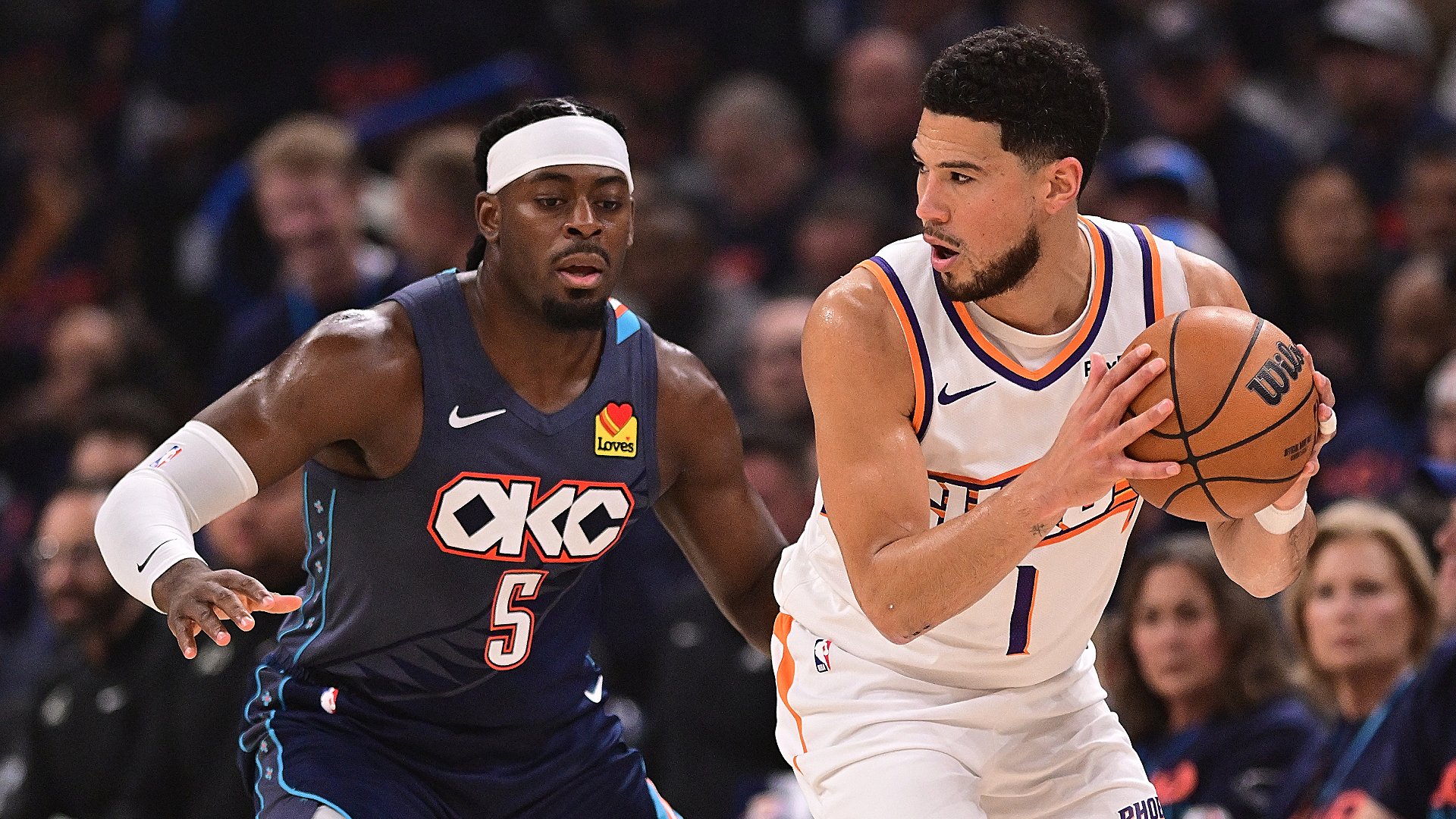
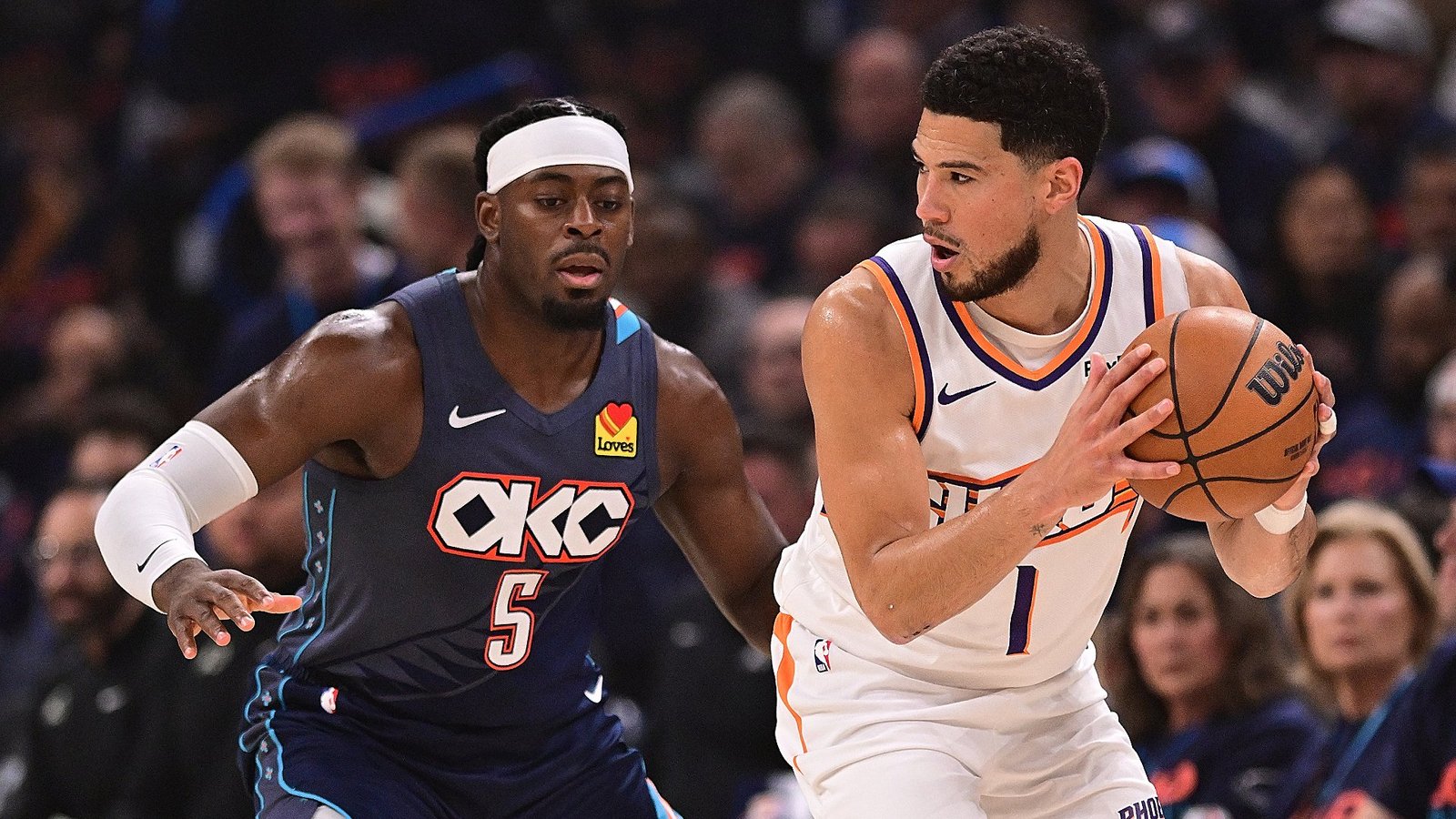
    Devin Booker has been kept mostly under wraps in the series by Lu Dort and the Thunder defense.

    • Download the NBA App

    Unsurprisingly, the Oklahoma City Thunder have been the most dominant team in these playoffs, outscoring the Phoenix Suns in the first two games of their first-round series by 25 points per 100 possessions. Relative to their opponents’ regular-season numbers, the Thunder have had the best offense (by a huge margin) and the third-best defense of the playoffs through Thursday.

    But the Thunder’s bid to repeat as champions has hit a bump in the road, with Jalen Williams having suffered a left hamstring injury in the third quarter of Game 2 on Wednesday night. Williams will be re-evaluated on a weekly basis and it’s likely that he’s out for (at least) the remainder of this series.

    Maybe that gives the Suns a little hope as the series moves to Phoenix.

    Here are three things to watch for in Game 3 on Saturday (3:30 p.m. ET, NBC/Peacock):


    1. The Thunder will manage without Williams … again

    Williams missed 49 games in the regular season (the Thunder went 39-10 without him). Cason Wallace is the most likely player to start in his place, having started 58 games in the regular season. In fact, the lineup with Wallace in place of Williams was the Thunder’s most-used five-man unit in the regular season, and it outscored opponents by 18.6 points per 100 possessions in its 167 total minutes. The 102.3 per 100 that it allowed was the second-best defensive mark among the 37 lineups that played at least 150 minutes.

    But the Thunder just can’t be as good offensively without Williams, who had totaled 41 points in his 52 minutes in this series, shooting 16-for-26 and also dishing out 10 assists (with just two turnovers). Not only do they lose a second off-the-dribble weapon in the starting lineup, but also the player running the offense when Shai Gilgeous-Alexander goes to the bench.

    In the regular season, the Thunder scored 11.1 fewer points per 100 possessions with Gilgeous-Alexander off the floor (110.4) than they did with him on the floor (121.5). That was the fourth biggest on-off differential on offense among 263 players who played at least 1,000 minutes for a single team, and that off-the-floor mark was well below the league average.

    The good news is that the Thunder are one of the best defensive teams we’ve ever seen. In the regular season, they allowed 8.3 fewer points per 100 possessions than the league average, the second-best differential in the 30 seasons for which we have play-by-play data.

    2. Can the Suns free up Booker?

    Booker has averaged 22.5 points per game in this series, a solid number, but down from 26.1 in the regular season.

    Booker’s true shooting percentage (scoring efficiency) has been the same in the playoffs (58.5%) as it was in the regular season. But his usage rate is down from 30.7% in the regular season to just 25.7% in these two games.

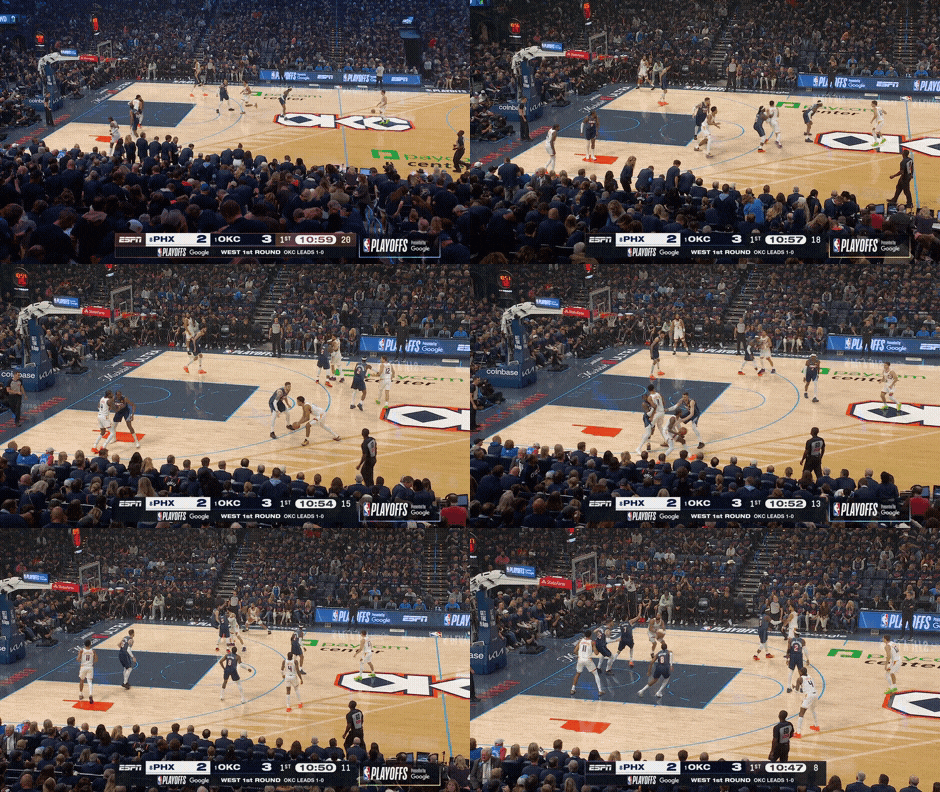
    The drop in usage rate is obviously more about the Thunder than Booker’s desire to take shots. Just watch this possession early in Game 2, where Lu Dort stays hugging onto Booker, even when the ball is on the opposite side of the floor and when Dort might be tempted to help on the ball …

    Lu Dort stays attached to Devin Booker

    Of the Suns’ three leading scorers, Booker is the most efficient by a healthy margin. The Thunder are right, then, to prefer that Dillon Brooks and Jalen Green take more shots. Each of them had a big half in Game 2 on Wednesday, but they’ve combined for a true shooting percentage of just 47.9% in this series.

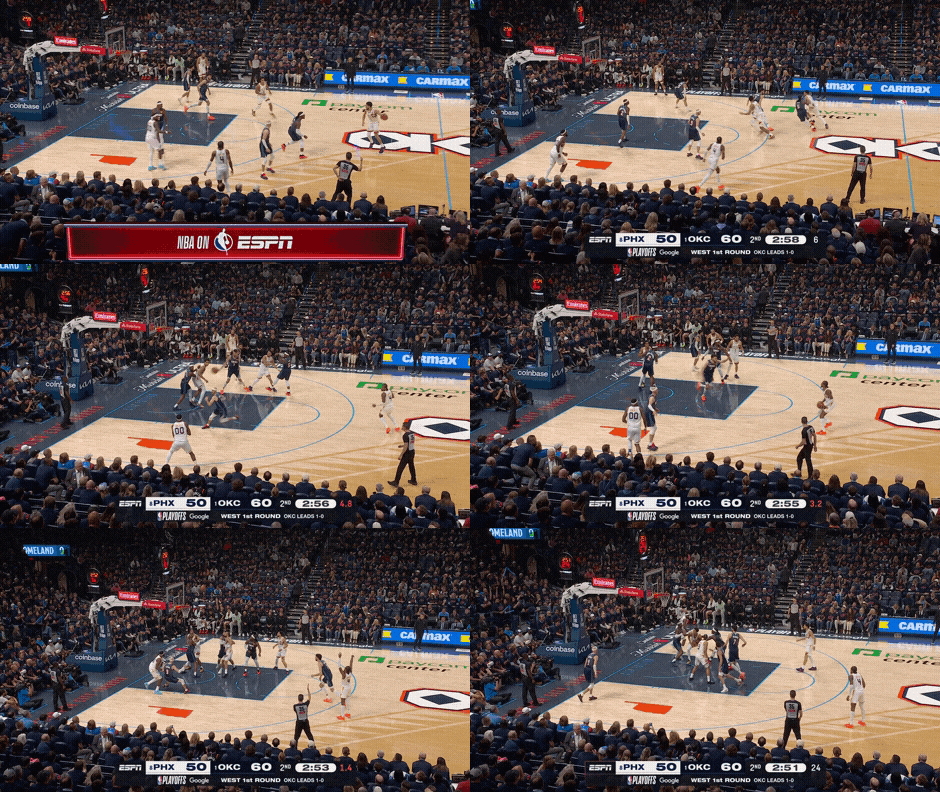
    The Suns can obviously take advantage of the attention on Booker to generate good shots on the other side of the floor …

    Jalen Green misses open 3-pointer

    … but they’d also like to get Booker some good shots, too. According to tracking data, he ranked near the bottom of the league in shot quality in the regular season, and that shot quality has been even lower in this series.

    Even when he’s seemingly had space to pull up from mid-range, his defender has contested the shot from behind. Sometimes when he’s cut back door against a top-locking defender, another has been there to help.

    Placing Booker on the weak side of the floor doesn’t help if his defender remains attached to him, but flare screens can get him some separation in a space where there are fewer help defenders with their eyes on him.

    Really, Booker’s best shots have come in transition or after offensive rebounds. Winning the possession game, forcing turnovers and grabbing offensive boards are critical for Phoenix.

    3. The turnover differential is historic

    The Suns rank third in offensive rebounding percentage (36.5%) in the playoffs, with Oso Ighodaro (15.9%) ranking fourth among individuals. So they’ve given themselves plenty of second chances.

    But the leading offensive rebounder in the playoffs has been Isaiah Hartenstein (22.2%), and the Thunder rank fourth in offensive rebounding percentage, just behind the Suns. And the turnover differential has been dramatically in favor of the champs.

    In fact, the turnover differential (11.5 per game) would be the biggest in any playoff series in (at least) the last 30 years, topping that of the Thunder’s sweep of the Memphis Grizzlies (8.8 per game) in the first round last year.

    The Suns have seen a huge jump in turnover rate and a huge drop in opponent turnover rate from the regular season …

    Suns’ own and opponents’ turnovers per 100 possessions

    Season Own Rank Opp. Rank
    Reg. season 14.7 19 16.5 3
    Playoffs 21.4 16 9.4 16
    Diff. 6.7 -7.1

    We often focus on how the Oklahoma City defense forces turnovers, but we can’t overlook how good the offense has been at avoiding them. This was the second straight season that the champs had the league’s lowest turnover rate, and they’ve been even better at taking care of the ball in this series, even though forcing turnovers has been the biggest strength of this particular opponent.

  • Kansas standout Darryn Peterson declares for 2026 NBA Draft

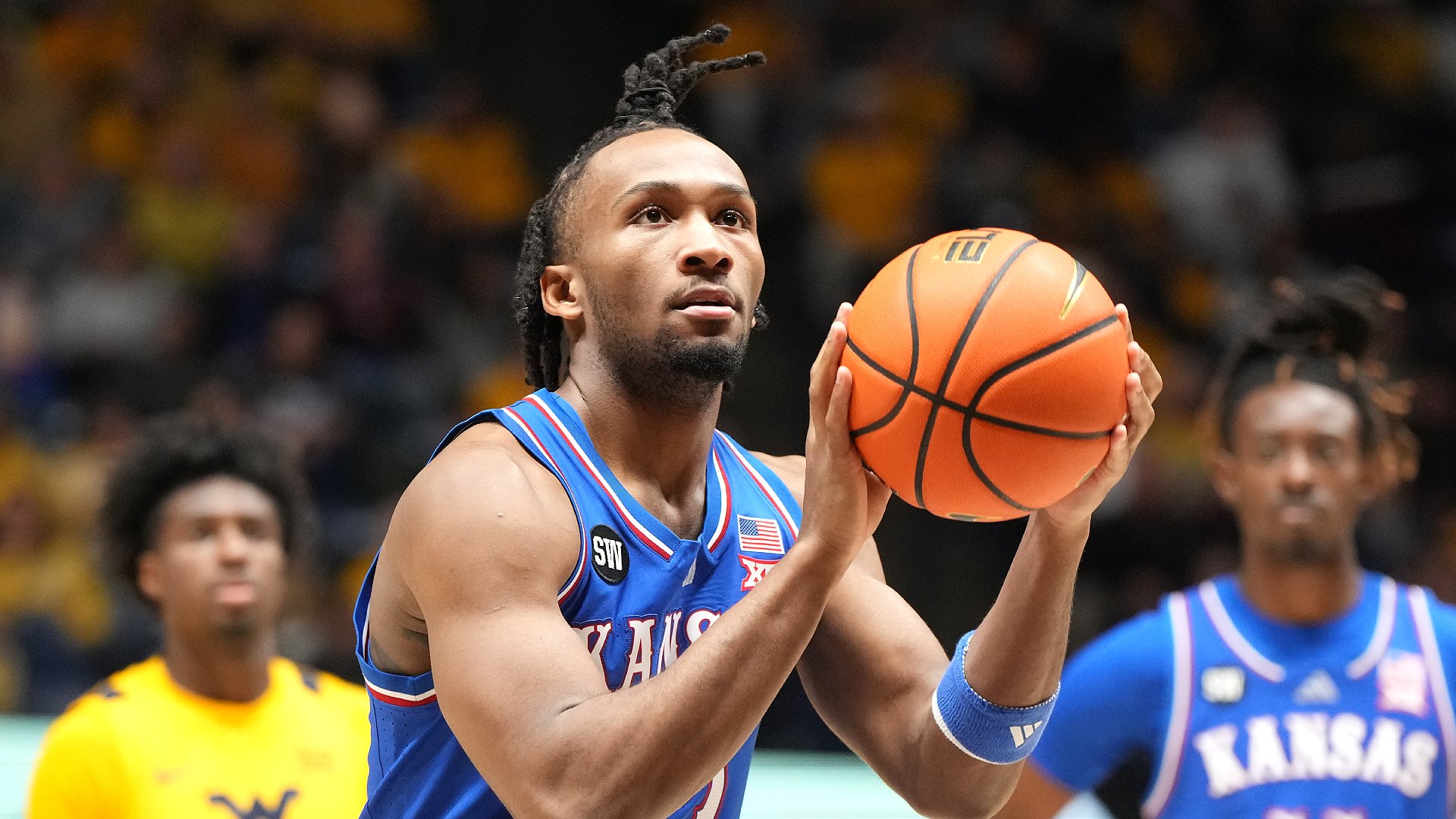
    Kansas standout Darryn Peterson declares for 2026 NBA Draft

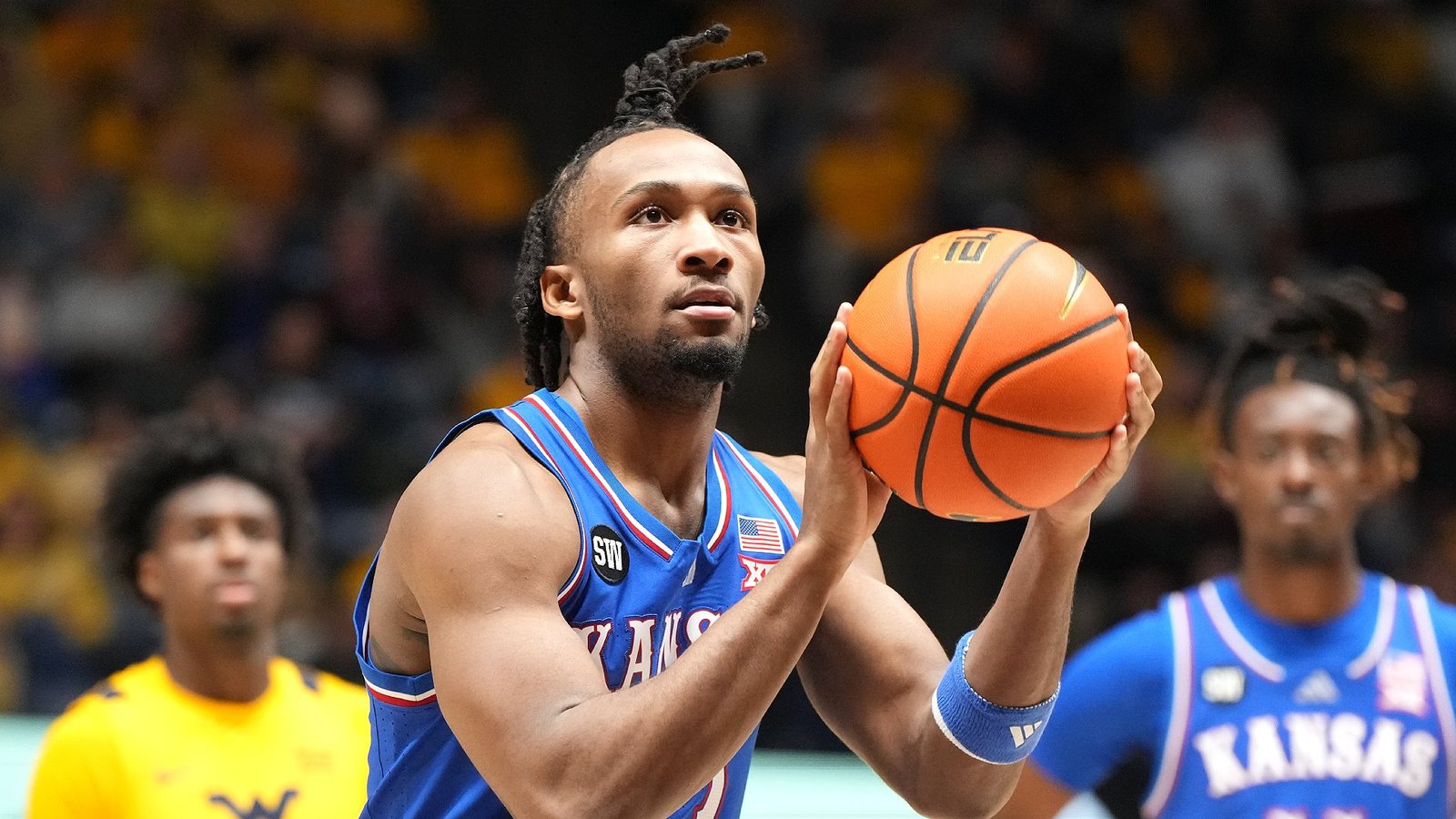
    Darryn Peterson was a high-scoring standout guard during his lone season at Kansas.

    LAWRENCE, Kan. (AP) — Kansas freshman Darryn Peterson declared for the NBA Draft on Friday, just as nearly everyone had expected he would ever since his arrival on campus, and the high-scoring guard figures to be among the first three players selected in June.

    The 6-foot-6 Peterson showed flashes of brilliance with the Jayhawks, but he also caused a lot of headaches for the team. He dealt with a severe full-body cramping issue that required hospitalization before the season, and additional injuries and illnesses caused him to miss 11 games, hurting his ability to build any continuity with the rest of his teammates.

    Peterson wound up averaging 20.2 points and 4.2 rebounds while shooting 38.2% from beyond the arc in 24 games.

    He started to hit his rhythm in the postseason, scoring 24 points against TCU and 14 against Houston in the Big 12 Tournament. He had 28 points in a first-round NCAA tourney win over Cal Baptist and 21 in a last-second loss to St. John’s in the second round.

    “To my teammates, friends and everyone at the University of Kansas, a heartfelt thank you!” Peterson posted to social media Friday. “Your belief in me, your encouragement and your constant support have been invaluable every step of the way. This journey has been everything to me, and none of it would have been possible without your love, support and sacrifices.”

    Most mock drafts have Peterson or BYU’s A.J. Dybantsa going first overall, though Duke’s Cameron Boozer also could be in the mix.

    The closest comp to Peterson has generally been 6-foot-5 Devin Booker, the Phoenix Suns’ five-time All-Star. Both have the ability to score at all three levels, and their athleticism allows them to play much bigger than their size.

    Peterson’s announcement came one day after Dybantsa declared for the draft in his hometown of Brockton, Massachusetts.

    Dybantsa led the nation with 25.5 points per game, while also pulling down 6.8 rebounds with 3.7 assists. He’s the first player to post those averaged in a season and be a consensus All-American since Larry Bird did it in 1978-79 for Indiana State.

    Tennessee freshman Nate Ament also declared for the draft Thursday after starting all 35 games he played and averaging 16.7 points and 6.3 rebounds. His announcement came in an Instagram post in which he thanked the Volunteers for the opportunity.

    “I promise to always represent the Vols with the upmost pride,” Ament wrote. “This University means more to me than just basketball — to me it’s a place I call home. I might’ve only been here a year but I’ll remember this year for the rest of my life.”

    Another top draft prospect, Darius Acuff Jr. of Arkansas, declared for the draft on Wednesday. He joined LSU legend Pete Maravich as the only SEC players to have led the league in scoring (23.5 points per game) and assists (6.4 per game) in the same season.

    Ament and Acuff also are widely considered to be top-10 draft picks.

  • Tennessee forward Nate Ament declares for NBA draft

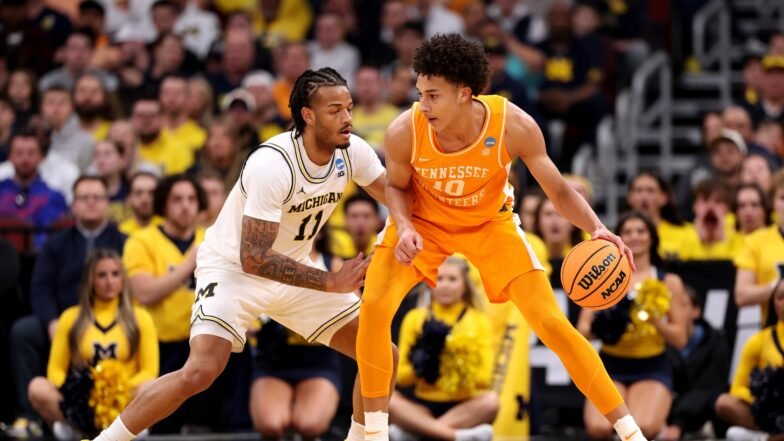
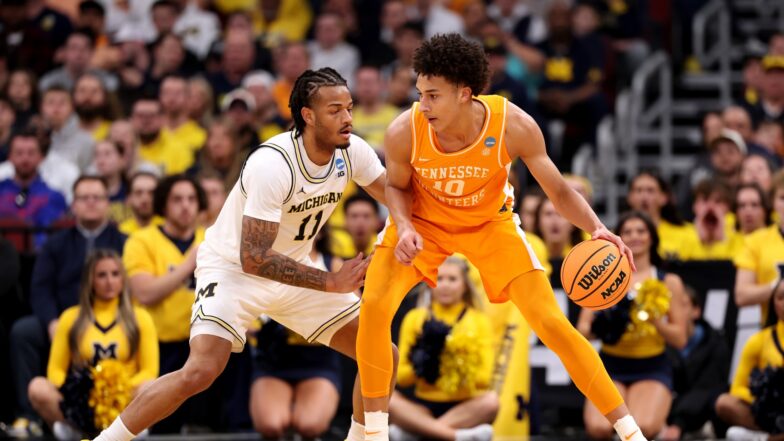
    Tennessee forward Nate Ament declares for NBA draft

    Nate Ament averaged 16.7 ppg, 6.3 rpg and 2.3 apg during his freshman season at Tennessee.

    KNOXVILLE, Tenn. (AP) — Tennessee forward Nate Ament declared Thursday that he’s heading to the NBA Draft after one season in college.

    Ament helped the Volunteers go 25-12 and to a No. 12 ranking in the final AP Top 25 poll with a third straight Elite Eight berth in the NCAA Tournament. The 6-foot-10, 207-pound Ament started all 35 games he played, and he ranked second in scoring 16.7 points a game. He averaged 6.3 rebounds per game, as well.

    He announced his intentions in an Instagram post, saying the support from his Vol family is a huge reason why he has this opportunity.

    “I promise to always represent the Vols with the upmost pride,” Ament wrote. “This University means more to me than just basketball — to me it’s a place I call home. I might’ve only been here a year but I’ll remember this year for the rest of my life.”

    Tennessee coach Rick Barnes said earlier Thursday that Ament was so special.

    “Honestly when he goes through this process that any and every team he sits down in front of they’re going to see the same things that we see,” Barnes said. “There’s so much more to him than what you see on the court. Basketball-wise right now I mean there’s no ceiling for him. He hasn’t even really scratched the surface.”

  • Play NBA Pick’Em Streak to the Finals!

    The 2026 NBA Playoffs have tipped off, and now is your time to test your knowledge with NBA Pick’Em Streak to the Finals, a daily prediction game where fans compete to build the longest-active streak by correctly answering questions about each day’s games. The grand prize is a trip to Game 3 of the 2026 NBA Finals!

    Here’s the rundown on how to play NBA Streak to the Finals, which runs through the end of the 2026 Conference Finals.


    How to play

    • Each day, fans are presented with questions tied to that night’s NBA games. Daily questions will be available by 10 a.m. ET on game days.
    • Each correct answer increases your streak.
    • Any incorrect answer resets your streak to zero.
    • Question order matters!
    • Questions are scored in the order they are presented. For example, if the first two questions are answered correctly, but the next question is answered incorrectly, your streak resets to zero. If the first question is answered incorrectly, but the next two questions are answered correctly, your streak becomes two.
    • Skipping questions is part of the game. Fans may skip a question using the “Skip” button OR leave a question unanswered to preserve their current streak.
    • Skipped questions DO NOT impact streaks.
    • Questions lock at tip-off time of NBA Playoff games. If there is a game that hasn’t tipped off yet, you can still answer that game’s questions.
    • Changed your mind about your answer? No problem, fans can update answers any time before questions lock.

    Participation rules:

    • Fans can play daily throughout the game window.
    • Only one NBA ID per user is allowed.
    • See OFFICIAL RULES at picks.nba.com/pickem

    Prizing

    Eligibility

    • Prizing available to US & Canada residents only

    Grand prize

    • The fan with the longest-active streak at the end of the Conference Finals wins a trip to Game 3 of the 2026 NBA Finals! *Remember, the winner is based on the current ACTIVE streak, not the longest streak ever achieved throughout the game.

    Tiebreakers

    • If multiple users share the longest-active streak, tiebreakers apply. Check out the official rules for full details on tiebreaker scenarios.

    Additional prizes

    • Awarded to the top 25 active streaks, include: autographed NBA memorabilia, NBA store gift cards.

    Winner notification

    • Winners will be contacted via email within three days after the final Conference Finals game.
    • Winners must respond within two days to claim their prize.
  • 3 things to watch in Celtics-76ers Game 3

    Tyrese Maxey finishes with 29 points and nine assists in a Game 2 win for the Sixers.

    • Download the NBA App

    The Boston Celtics and Philadelphia 76ers have a rich postseason history and, for decades, stood as one of the league’s original rivalries. It was one with epic performances and finishes, especially in the 1980s, when their playoff series often sent the eventual NBA champion to the NBA Finals.

    Fast forward to today, and there’s a scent of a rivalry brewing again, if only because their first-round series is tied at one game each and suspense has entered the building.

    The Sixers have the next two games in Philly and should have an emotional boost. Expect all the old-time legends (like Allen Iverson and Julius Erving) to sit courtside and provide motivation.

    However, Iverson and Erving can’t suit up and play for the Sixers. It’s up to the current players lacking in championship experience to keep the series moving in a positive direction. That won’t be a simple task against a team that’s healthier, bringing higher expectations and championship mettle with Jayson Tatum and Jaylen Brown.

    Whether this series elevates in terms of intrigue and intensity, therefore, falls on the shoulders of the Sixers and whether they can either maintain the home court or at least split the next two games.

    Here’s what to watch for Game 3 tonight (7 ET, Prime Video) in Philadelphia:


    1. What is Maxey’s mindset?

    The following statement is to be taken in context and isn’t meant to offer a comparison. Now that it’s understood, here it goes — the last time the Sixers were led in the playoffs by a quicksilver point guard who caused whiplash and broke ankles and was tough to contain was Iverson.

    The latest problem for other teams is Tyrese Maxey, who can shift gears off the dribble and change directions on a dime and score on anyone the Celtics offer up in defense. Sometimes two Celtics.

    How Maxey craves the ball in big moments is something to behold. He was always a shooting guard trapped in a point guard’s body, although in his case, that’s not such a bad thing. If Maxey has the will, the Sixers might find a way to win more than a game against Boston, and Maxey definitely has the will.

    The playoffs have a way of exposing you for the player you truly are, with every game and often every possession magnified along with the demands. Some players gravitate toward this, while others regress.

    Maxey’s shooting hasn’t always been sharp in this series, but he doesn’t allow the misses to discourage him. As the Sixers continue without Joel Embiid, Maxey can’t afford to lose confidence.

    2. Embiid’s status for Game 3

    The elephant in the room, metaphorically speaking, of course, is the former Kia MVP and Sixers starting center. He can change an entire game or maybe even a best-of-seven series, but is currently inactive because of injury. The identity of that person isn’t very hard to know.

    This has been Embiid’s career, for the most part. His games played and games missed, if placed on opposite ends of a scale, would show an even balance. This season, he played just 38 games.

    But the longer the Sixers stretch this series, the more the possibility — nothing certain, but still — that Embiid, upgraded as doubtful for Game 3, could heal up in time to see action.

    The last thing the Sixers will do is rush their big man back from an emergency appendectomy, which he suffered on April 9. He has entered the next phase of his rehab, but hasn’t done any contact drills. That means it’s safe to assume he’s more likely not to play than to play, which means more Adem Bona and Andre Drummond in the post.

    But Sixers fans can dream. If somehow this series is tougher than anyone imagined and Embiid, who averaged 26.9 points and 7.7 rebounds per game, finds a way to suit up…well, let’s just pencil that in for the event of the entire playoffs.


    3. Brown ready to take over?

    The one constant for the Celtics, not only in this series but all season, is Jaylen Brown and his high level of performance. He’s averaging 31 ppg in the playoffs and is the only Celtics player hitting his 3-pointers (at 50%). All this comes on the heels of a Kia MVP-flavored regular season where he carried the Celtics for stretches and finished among the league’s top scorers and rebounding guards.

    His next trip, if it becomes necessary, is to carry the Celtics through this series, especially if the 3-pointers don’t fall for his teammates and the Sixers somehow get juiced by two home games.

    Speaking of the home court, the Celtics are not pushovers on the road. Only Detroit, San Antonio and Oklahoma City were better in hostile arenas. And again, this was without Tatum for the most part.

    Brown enjoys being one of the league’s top players, an ascent that began with his performance in the 2024 NBA Finals, and he intends to keep his place in line. The best way is to be the finest player on the floor, starting with this series.

    In that sense, so far anyway, it’s Brown vs. Maxey. Who will be the last player standing at the end?

    * * *

    Shaun Powell has covered the NBA since 1985. You can e-mail him at spowell@nba.com, find his archive here and follow him on X.

  • Daniss Jenkins, Marcus Sasser see their dream come true as Pistons teammates

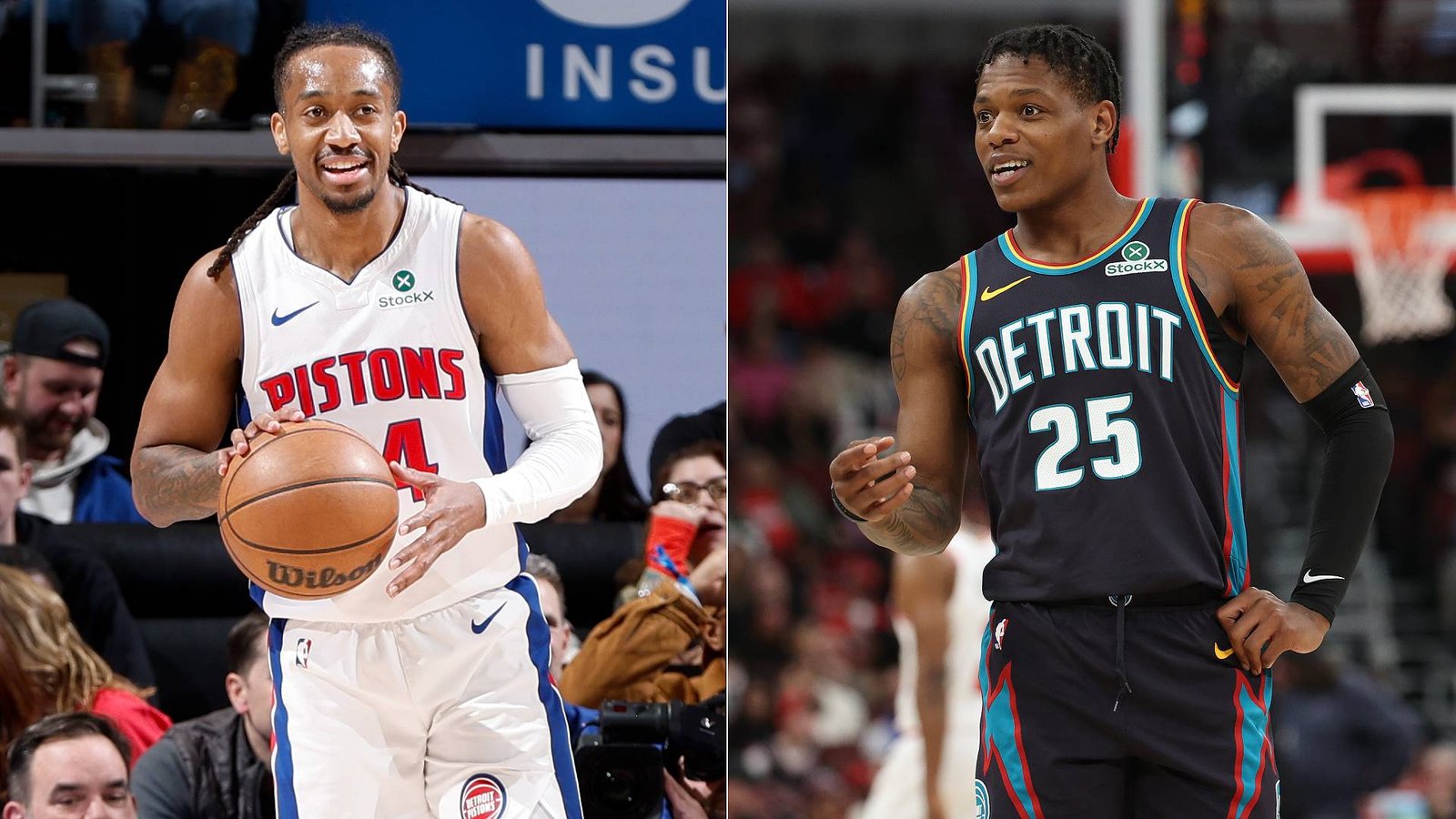
    Daniss Jenkins, Marcus Sasser see their dream come true as Pistons teammates

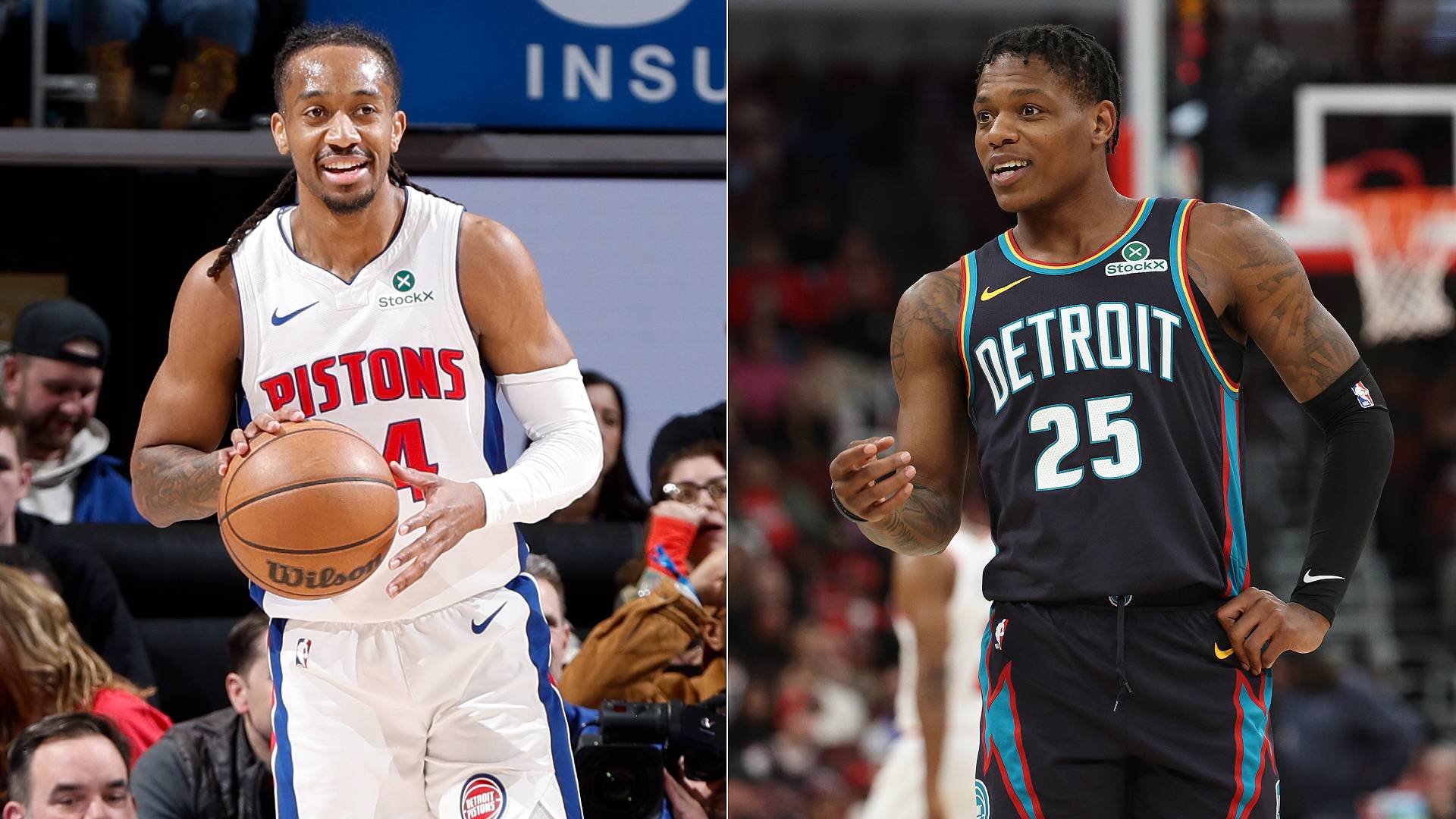
    Daniss Jenkins (left) and Marcus Sasser are key rotation players for Detroit this season.

    DETROIT — The dreamers and believers, they think anything is possible even in the face of astronomical odds.

    Detroit Pistons guards Marcus Sasser and Daniss Jenkins, they are dreamers and believers.

    Growing up together in Dallas, they dreamed they’d be in the NBA. They believed they could.

    And they are also doers. You have to do the work to make dreams a reality.

    Sasser and Jenkins gave the required effort, and now the childhood friends/competitors are NBA teammates. They navigated different trails to the same mountaintop – Sasser’s more direct, Jenkins’ more winding through three universities and one junior college.

    “It’s definitely a dream come true because we wanted to go to the same high school, but it did not end up happening,” Sasser said. “And then we wanted to go to the same college. He was going to transfer to Houston, but it couldn’t happen. Now it’s crazy that we were able to finally get it at the highest level where everyone could see it.”

    This season, Sasser, a third-year guard who was the No. 25 pick in the 2023 NBA Draft, averaged 5.2 points and 2 assists per game while shooting 41.5% on 3-pointers. Jenkins, undrafted coming out of St. John’s in 2024, had a breakout season at 9.3 ppg, 3.9 apg and 2.3 rpg while shooting 37.4% on 3-pointers.

    Jenkins gave the Pistons a productive backup to All-Star Cade Cunningham, and when Cunningham missed games due to injuries, Jenkins started 19 games. During that stretch, he posted 17.2 ppg, 7.4 apg and 3.6 rpg on 43.9% shooting overall 35.6% on 3-pointers.

    Daniss Jenkins recorded a career-high 30 points in a win over the Lakers this season.

    The Pistons rewarded Jenkins in February, converting his two-way contract to a standard contract through the 2026-27 season.

    “It just wasn’t an easy path for him from high school to college to junior college, back to college, college, you know what I mean?” Pistons coach J.B. Bickerstaff said. “At any point in time, he could have been discouraged, but he wasn’t. And he just continued to work and continued to get better.

    “And also, it didn’t jade him. If you’re around him every day, he’s a beautiful spirit. A lot of times when people get told ‘no’ and ‘you’re not good enough,’ it changes your personality, but he’s a joy to be around every day.”

    Jenkins started his college career at Pacific, where he played two seasons. He played one season at Odessa College (junior college), played one season at Iona for Rick Pitino. When Pitino left Iona for St. John’s, Jenkins followed him for his final season of college ball.

    Looking at a tattoo on his left thigh that reads, “I JUST DIDN’T QUIT,” Jenkins reflected on his journey.

    “My end goal never changed. Never changed,” Jenkins told NBA.com after a recent practice. “And I never wavered on the game. And my faith in God. I always tell people, if you put your faith and trust in God and you live your life the right way, and you put the work in, there’s some reward. Good things happen to good people. I’m a firm believer in that.

    “And at the end of the day, I have this tattoo because that’s a testament to my life. I didn’t give up. I never stopped.”


    Sasser, Jenkins ‘stacking moments’ as NBA teammates

    Sasser and Jenkins were childhood competitors on the court for different elementary and middle school teams in Dallas. Then they began working out together. They attended different high schools but remained friends and workout partners, dreaming about playing in the NBA.

    The Dallas-Fort Worth area is well represented on the Pistons’ roster. Cade Cunningham is from Arlington, Texas, and Ron Holland II is from Duncanville, Texas.

    Sasser’s dad, Marcus Sr., whose two brothers — Jason and Jeryl — had brief NBA careers, used to run Marcus and Jenkins through drills before and after school at a local rec center.

    “He would put us through a lot of hard workouts,” Sasser said. “He was there, rebounding and motivating us.”

    But let’s be realistic. The chance of any one kid making it to the NBA is small. The chance that two friends from childhood make it to the NBA and end up on the same team is even smaller.

    That didn’t stop their belief in themselves and in each other.

    “I knew how his mindset was, and I knew how hard he always worked,” Sasser said of Jenkins. “I just knew he wasn’t going to let nothing hold him back. I knew he was going to find a way to make it. And just watching his last year at St. John’s, I knew he was an NBA-caliber player.”

    Jenkins returned the praise.

    “Watching him flourish and become a star in college basketball, he just motivated me because I knew how hard we worked,” Jenkins said. “Just to see him doing the same exact stuff that we used to work on every single day and apply it, it just gave me a sense that it can be done.”

    After Jenkins’ final season at St. John’s, he began preparing for the draft and had pre-Draft workouts scheduled. The Pistons showed interest and invited him to Detroit for a workout.
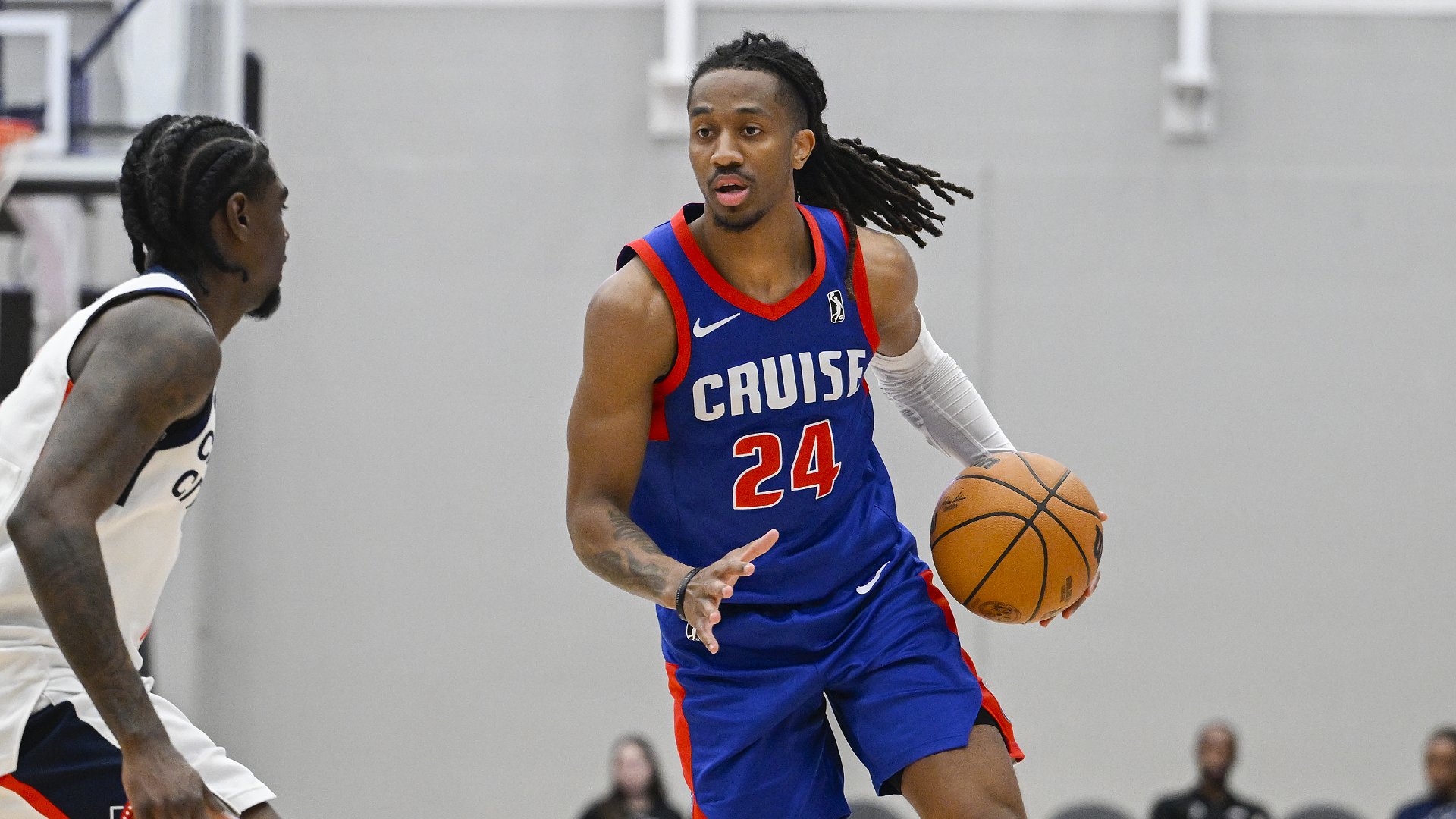
    Daniss Jenkins had multiple stints with Detroit’s NBA G League team before realizing his NBA dream.

    Just like the old days, Sasser and Jenkins found a gym. Not a rec center like when they were kids, but the Pistons’ practice facility, where Sasser had access since he was on the team.

    Sasser rebounded and Jenkins got up shots.

    “I was just giving him words of encouragement, and he went out there and killed it the next day,” Sasser said. “We were just going to do what we did in high school – in the gym all day, work our tails off.”

    No team drafted Jenkins, but the Pistons called after the second round and reached a deal with him on a two-way contract.

    “One of the first people I called was Marcus just to let him know, ‘Man, would you believe that they signed me?’ ” Jenkins said. “It was just everything I really dreamed of. This is just playing basketball. This is me playing with one of my childhood friends.”

    Jenkins still had to prove he belonged in the NBA, and he did that through NBA Summer League, training camp, practices, NBA G League and regular-season opportunities with the Pistons.

    “My impact was loud,” Jenkins said. “I never knew how loud it was going to be, but I knew the impact I would have on the team once I finally got an opportunity. I didn’t know how loud and how crazy and great it would be. So that’s the biggest thing for me. It’s not so much a moment. It was just stacking moments.”

    * * *

    Jeff Zillgitt has covered the NBA since 2008. You can email him at jzillgitt@nba.com, find his archive here and follow him on X.
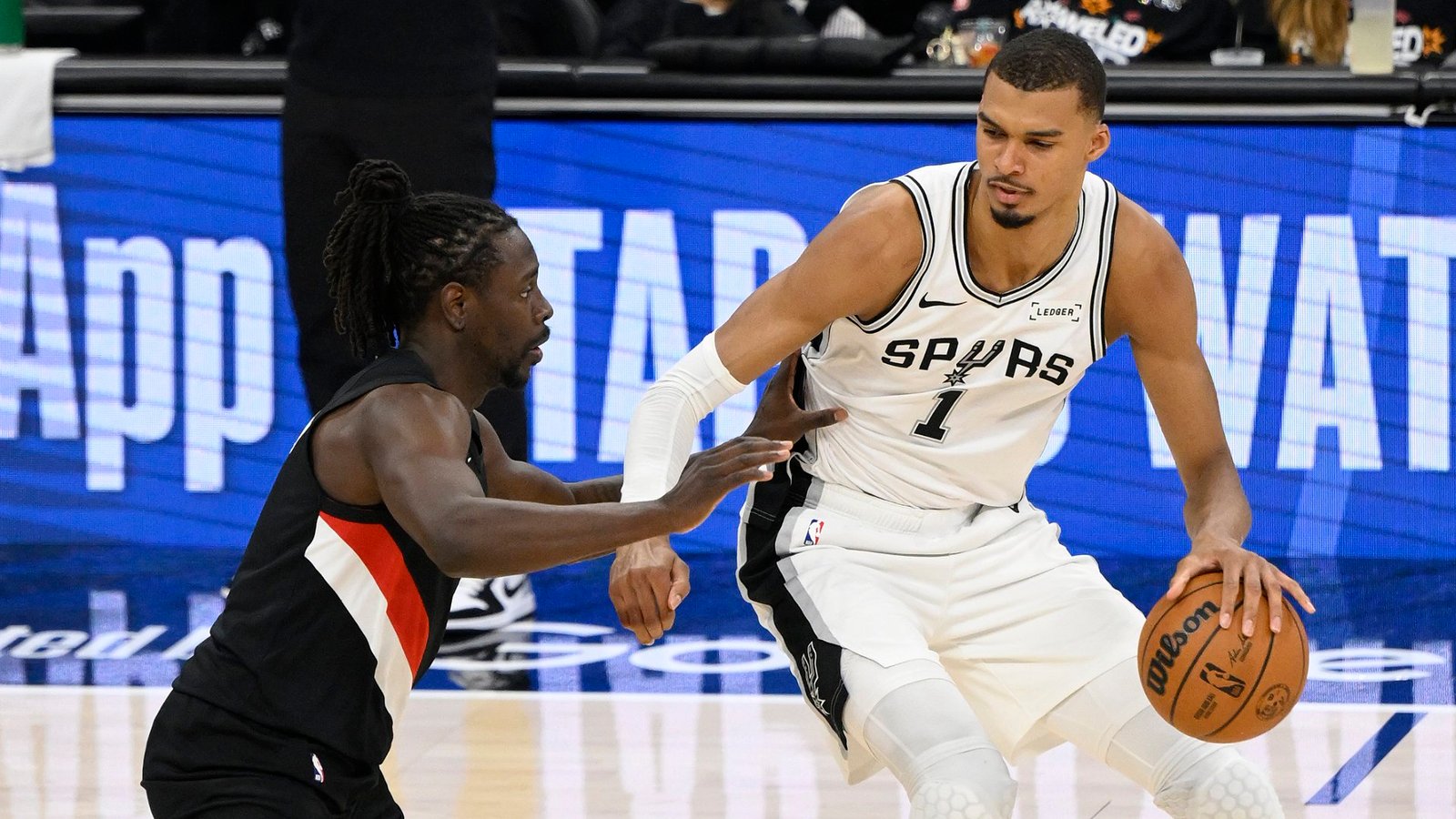
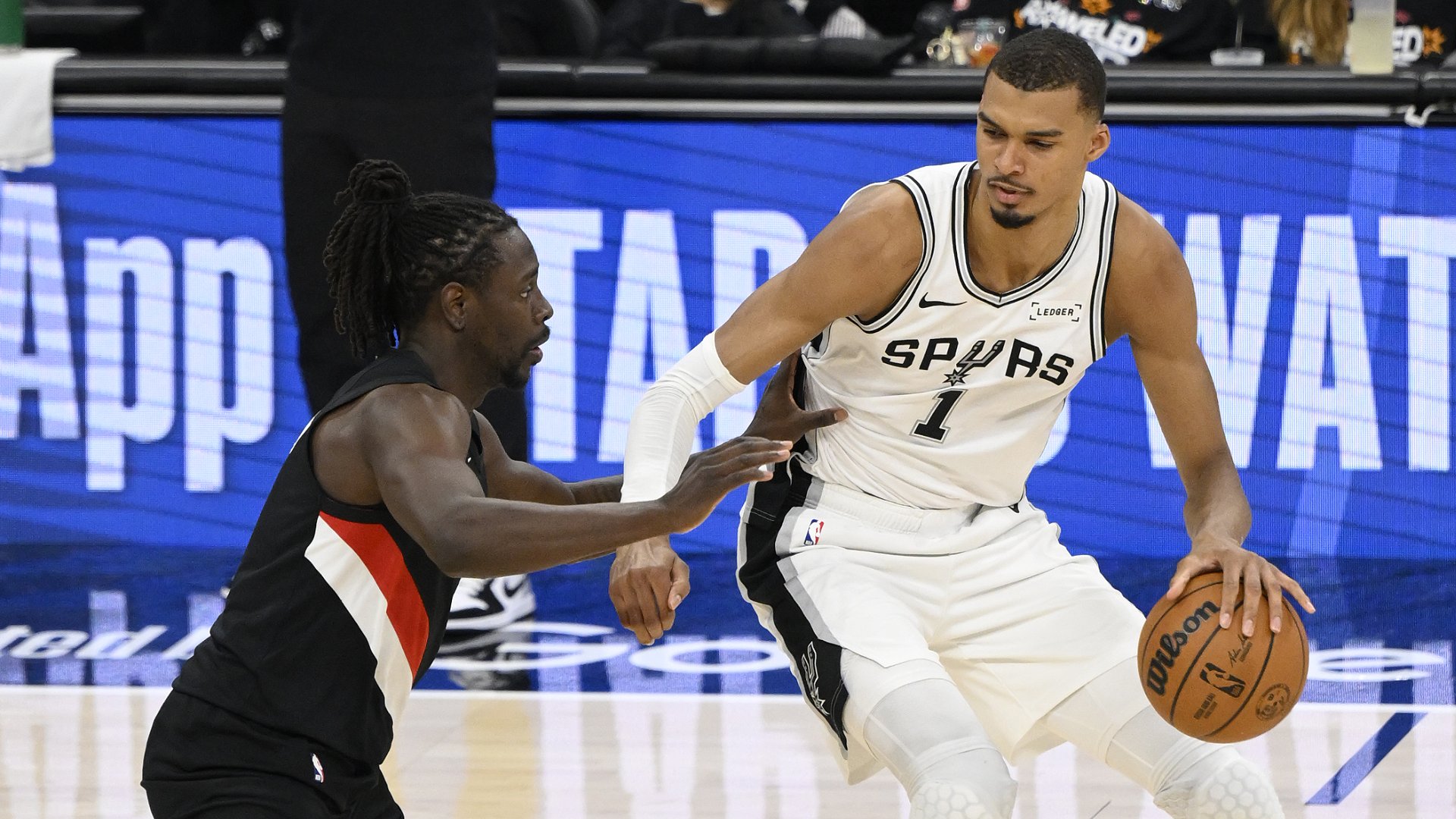
  • 3 things to watch in Trail Blazers-Spurs Game 3

    3 things to watch in Trail Blazers-Spurs Game 3

    Victor Wembanyama’s health status and Jrue Holiday’s overall play are among the factors to watch as Game 3 nears.

    • Download the NBA App

    San Antonio Spurs All-Star Victor Wembanyama’s availability after sustaining a concussion in Game 2 against the Portland Trail Blazers is the biggest storyline heading into Game 3 of their first-round Western Conference series. 

    If he plays, it means he has met the return-to-participation conditions listed in the NBA concussion policy summary, which includes no concussion-related symptoms at rest, clearance by a team physician, completion of an exertion process and confirmation from the league’s director of the concussion program. 

    “It’s pretty straightforward,” Spurs coach Mitch Johnson said. “Obviously, we hope he’ll be back at some point. But we’ll allow the protocol to play out. And again, there’s nothing more important than his health.” 

    As the 1-1 series moves to Portland, here are three things to watch in Game 3 on Friday (10: 30 p.m. ET, Prime Video)


    If Wembanyama plays vs. if he doesn’t

    Wembanyama was stellar in Game 1, setting a franchise record for points in a playoff debut with 35 in the Spurs’ victory. In Portland’s Game 2 victory, Wembanyama left the game with 8:57 remaining in the second quarter when he stumbled and hit his face and head on the court. 

    The numbers are stark for the Spurs when Wembanyama is on the court vs. when he is not – it’s nearly a 17-point difference per 100 possessions. If Wembanyama can’t play, center Luke Kornet will get more minutes, and he had 10 points and nine rebounds in Game 2.

    Though they’re not centers, veteran Harrison Barnes and rookie Carter Bryant could receive more playing time in smaller lineups, and Johnson also has veterans Bismack Biyombo and Kelly Olynyk on his bench. 

    The Trail Blazers had success with Robert Williams III on the court in Wembanyama’s absence. Williams had 11 points, nine rebounds, four assists and two blocks and was plus-13 in 23 minutes in Game 2. The Blazers also have more defensive versatility with Williams and Toumani Camara when Wembanyama is not in the game. 

    Can Blazers’ guards have repeat performance?

    Twenty-year-old Scoot Henderson delivered 31 points on 11-for-17 shooting and Jrue Holiday, a two-time NBA champion, generated 16 points, nine assists, five rebounds and two blocks in Game 2. A similar performance from that backcourt will put Portland in an advantageous position.  

    High-scoring guard Shaedon Sharpe is playing limited minutes since returning late in the season from a left fibula injury, and he is capable of an efficient performance. He had nine points on five shots in 13 minutes in Game 2.  

    Fox’s production will be key

    Of San Antonio’s regular starters, guard De’Aaron Fox is the oldest and the only one with playoff experience before this season. Even though it was just one series when Fox was with Sacramento, he produced against Golden State in 2023, scoring 38 points twice in the seven-game series. He had at least 24 points in four other games and at least nine assists in four games against the Warriors. 

    San Antonio needs that version of Fox even if Wembanyama is available and especially if he’s not. The Spurs acquired Fox at the 2025 trade deadline to provide backcourt experience for these moments. 

    * * *

    Jeff Zillgitt has covered the NBA since 2008. You can email him at jzillgitt@nba.com, find his archive here and follow him on X. 
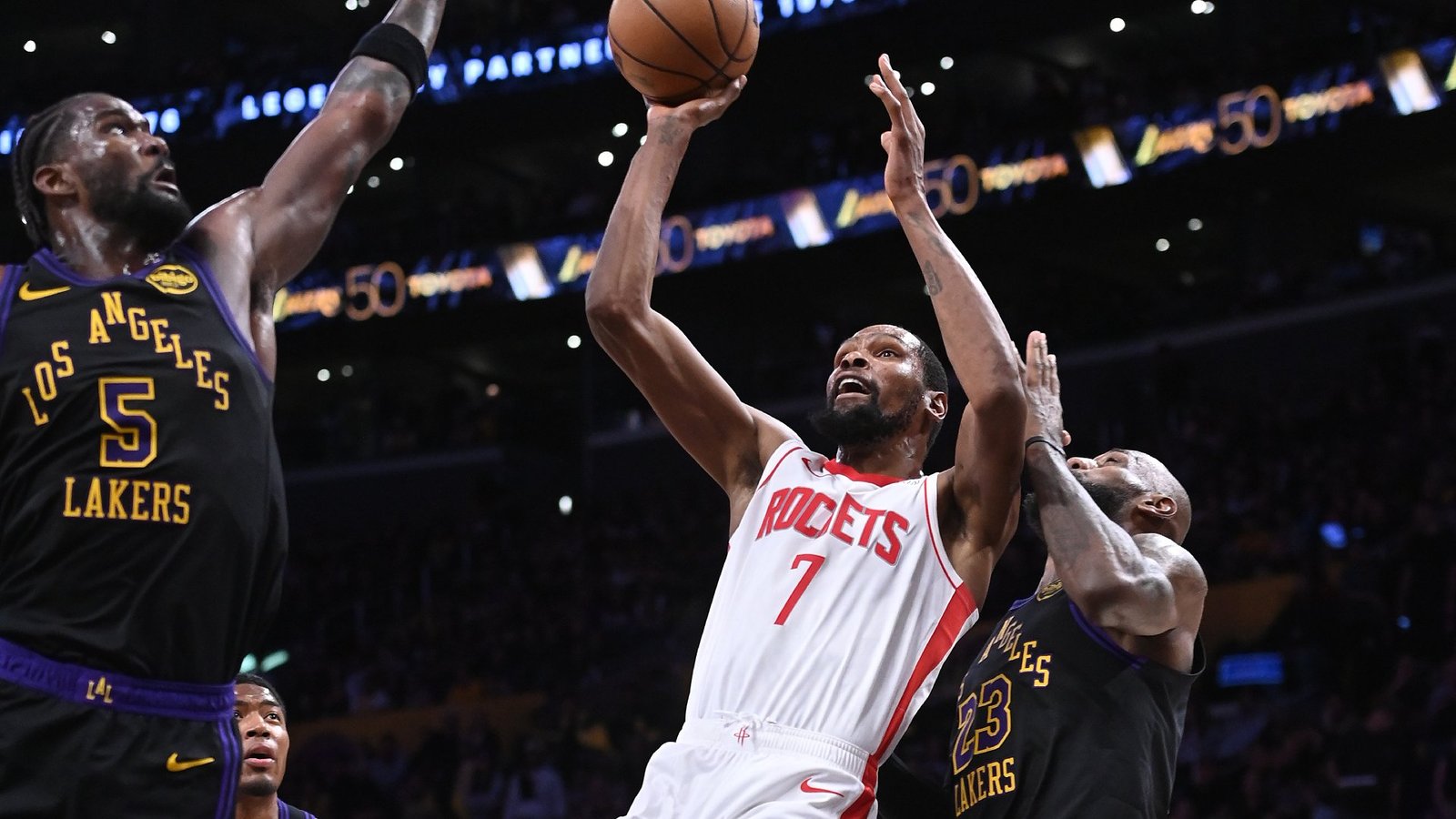
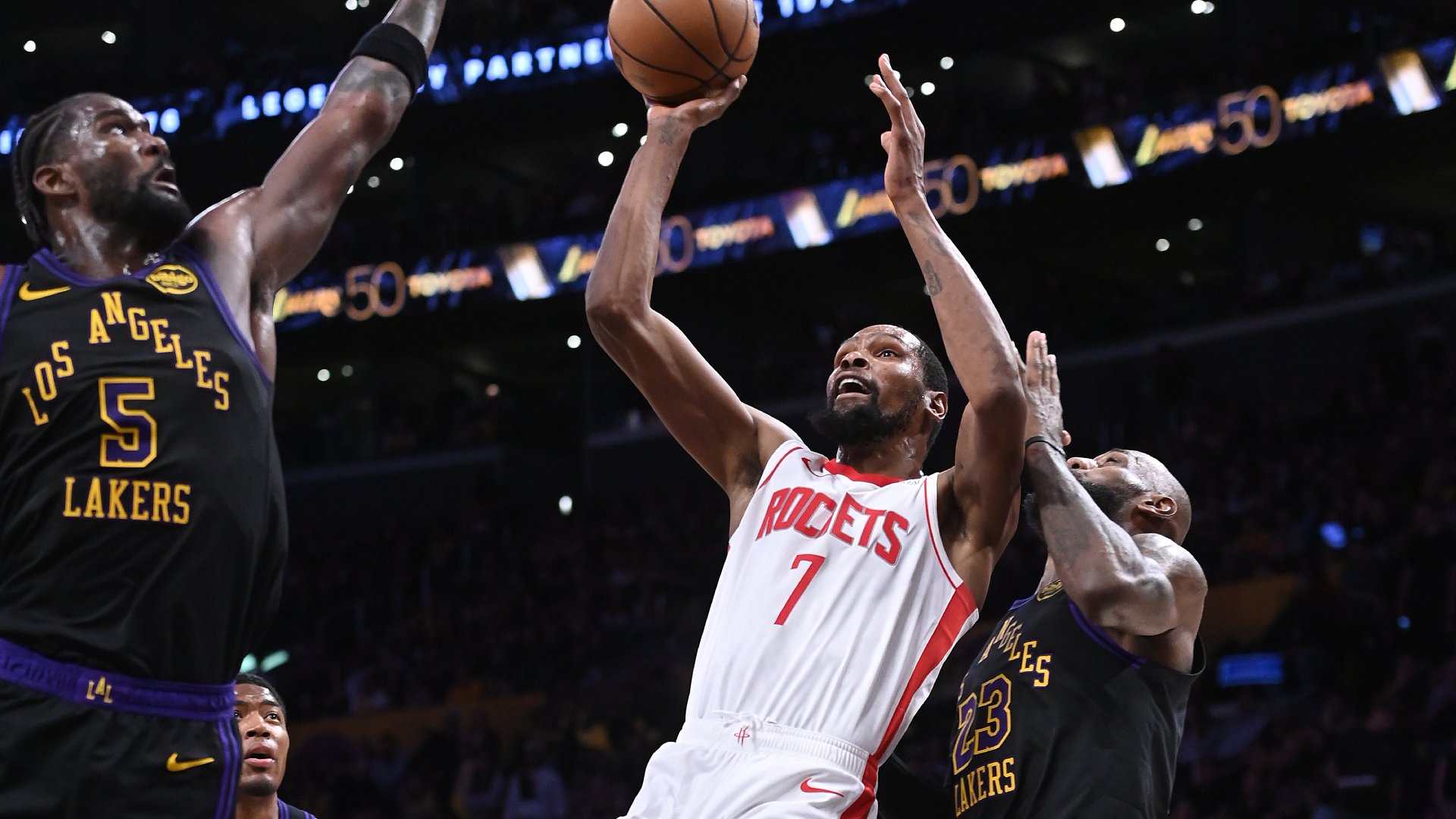
  • Kevin Durant aims to make Lakers pay for double team tactics

    Kevin Durant aims to make Lakers pay for double team tactics

    Rockets star Kevin Durant frequently found himself double teamed in Game 2 of the series.

    • Download the NBA App

    Houston Rockets star Kevin Durant lamented that the Los Angeles Lakers sent double teams his way from the first possession of Game 2.

    He wasn’t wrong. On his first offensive touch 65 seconds into the first quarter, the Lakers made sure Luke Kennard and Deandre Ayton defended Durant.

    It was like that for much of the game. The Lakers either wanted Durant to take a shot with two defenders on him or force the ball out of his hands with a pass.

    “They feel confident in that scheme,” Durant said.

    Though Durant scored 20 points in the first half, he had just three in the third and fourth quarters as the fourth-seeded Lakers defeated fifth-seeded Houston 101-94 Tuesday for a 2-0 lead in their first-round Western Conference playoff series.

    Durant took just 12 shots – nearly six below his season average – and just five in the second half while committing a season-high nine turnovers.

    “It’s hard to get into our actions,” Durant said. “We’re used to teams playing pick-and-roll or maybe trapping me or playing in the drop. But they’re switching, and then just running a guy at me at the half(-court line) or at the 3-point line, or wherever I’m at, to double.”

    Durant, one of the game’s most gifted scorers and the NBA’s fifth all-time leader in points, is not fond of double teams. He prefers operating one-on-one, where he has an advantage against most defenders. The Lakers, who are missing Luka Dončić and Austin Reaves due to injuries, want to eliminate that advantage as much as possible.

    “He’s the type of player who can take over a series,” Lakers coach JJ Redick said.

    In three meetings this season, the Lakers won twice in Houston, and Durant averaged 20.3 ppg and shot 56.1%.

    Durant missed Game 1 with a bruised right knee and was a game-time decision ahead of the second game.

    How will Durant handle double teams in Game 3 on Friday (8 p.m. ET, Prime Video)? Durant indicated that he planned to take more shots and do a better job passing out of those double teams. Of those nine turnovers, five came when the Lakers had at least two defenders surrounding him. Four turnovers were in the fourth quarter.

    “When two, three people are on me and I shoot, we can get an offensive rebound. … I’ve got to shoot more of those and put my teammates in better position,” he said, adding, “I’ve just got to be more aggressive and look to score no matter where the double team is coming.”

    It would help Durant’s cause if the Rockets were better offensively. They have scored fewer than 100 points in both games, shooting 39% from the field and 29% on 3-pointers.

    “We’re just not making shots to be honest,” Durant said. “We’re not shooting the ball well. We’re missing a lot of layups. I just think that’s the difference in the game. They’re making shots.

    “We’ve played this team before, and they know the way for them to stay in the game is to play this type of defense. We’ve got to make them pay.”

    If the Rockets shoot better, that would force the Lakers to make decisions. But until then, expect a steady stream of double teams on Durant.

    * * *

    Jeff Zillgitt has covered the NBA since 2008. You can email him at jzillgitt@nba.com, find his archive here and follow him on X.
  • Saints draft Arizona State receiver Jordyn Tyson, brother of Cavaliers’ Jaylon Tyson

    Saints draft Arizona State receiver Jordyn Tyson, brother of Cavaliers’ Jaylon Tyson

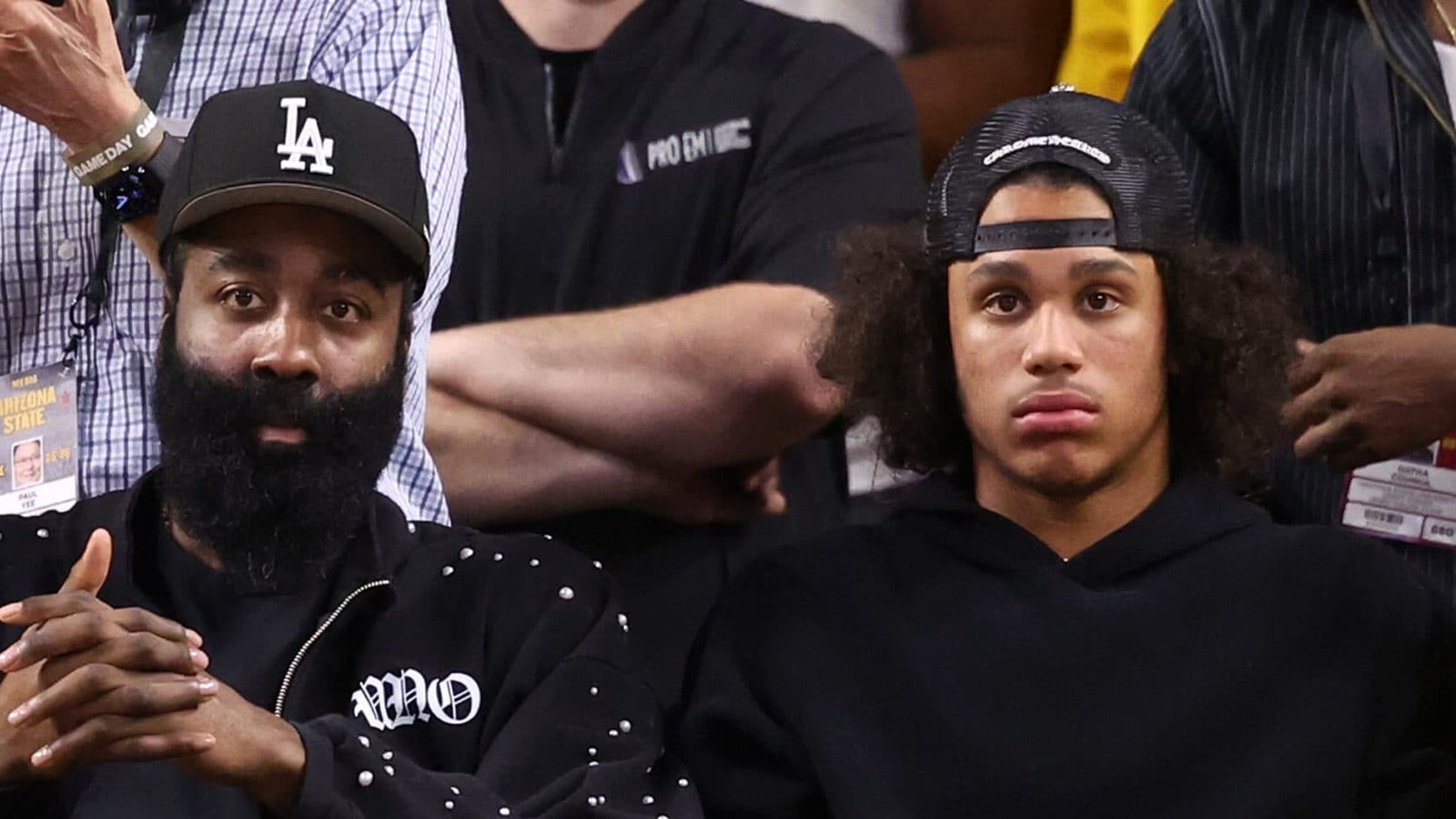
    James Harden and Jordyn Tyson attend the game between Arizona State and the Arizona Wildcats in January.

    METAIRIE, La. (AP) — The New Orleans Saints selected Arizona State receiver Jordyn Tyson with the eighth pick in the NFL draft on Thursday night, adding a potential playmaker to a position group that could use one.

    “I’m ready to hit the ground running right now,” Tyson said. “I keep getting better. I just want to continue on that track. Work works.”

    The 6-foot-2, 203-pound Tyson — whose brother, Jaylon Tyson, plays in the NBA with Cleveland — was the second receiver drafted behind Ohio State’s Carnell Tate, who went fourth overall to Tennessee.

    The 21-year-old receiver said his name was called in the draft around the same time he he saw his brother hit a 3-pointer in Cleveland’s 126-104 Game 3 playoff loss against Toronto.

    Now, Tyson joins a Saints receiver corps that was headlined by four-year veteran Chris Olave in 2025, but had little depth behind him after Rashid Shaheed was traded to eventual Super Bowl champion Seattle.

    “This is a great add to that group,” Saints coach Kellen Moore said, highlighting Tyson’s ability to make plays on deep balls as a wideout, as well as his ability to play as a slot receiver.

    Tyson said he met Olave during a pre-draft visit to New Orleans and bonded well with him.

    “It’s going to be amazing to take pressure off each other, make our jobs easier,” Tyson said. “I feel like us, (covered) one on one — shoot — it’s going to get ugly.”

    The Saints entered the draft with their most apparent needs at receiver, edge rusher and defensive back.

    Last season, Tyson played in nine games at Arizona State, catching 61 passes for 711 yards and eight touchdowns in a campaign shortened by a hamstring injuries in both legs.

    He had his best season statistically in 2024, catching 75 passes for 1,101 yards and 10 TDs.

    But more than his statistics, it was Tyson’s knack for making clutch plays and the knowledge of football he exhibited in meetings with staff in New Orleans is what sold the Saints on him.

    “You felt the football junkie in him,” Moore said. “He’s got a really smart head to him as far as football acumen and awareness about what’s going on in this league.”

    Tyson’s injury history also includes torn knee ligaments — requiring reconstructive surgery — when he played at Colorado in 2022. He played in just three games in 2023 with Arizona State because of a broken collar bone.

    But he dismissed concerns about his health going forward, and said his recent training with former NFL receiver Hines Ward, a receivers coach at Arizona State, has helped him learn how to maintain his body like a pro football player should.

    “I’m going to give myself the best opportunity to stay on the field and be as healthy as possible,” Tyson said. “I’m going to do everything in the weight room, do everything with nutrition, I’m going to have a chef. I’m going to get a massage on the same day every week.”

    Moore didn’t sound too concerned, either.

    “Guys are going to go through things they have to navigate,” Moore said. “He battled through it and that’s a credit to him. … This guy’s a really tough football player. He’s battled some things — and that’s a positive.”