Tag: NBA

  • 4 takeaways: Shai Gilgeous-Alexander dominates Thunder-Suns Game 3 & OKC nears sweep

    The Oklahoma City Thunder defeat the Phoenix Suns, 121-109, to take a 3-0 series lead.

    • Download the NBA App

    The Oklahoma City Thunder are one one of the most dominant, two-year runs in NBA history, and the dominance continued with a 121-109 victory in Game 3 of their first round series with the Phoenix Suns on Saturday afternoon.

    The Thunder were without Jalen Williams, who suffered a hamstring strain three days earlier. But Shai Gilgeous-Alexander didn’t need much help.

    The reigning MVP scored a career-playoff-high 42 points, shooting an amazing 15-for-18 from the field and 11-for-12 from the free throw line, adding eight assists. The Thunder continue to score efficiently against what was a top-10 defense in the regular season, and Gilgeous-Alexander’s performance was just the seventh 40-point playoff game in NBA history where the player had a true shooting percentage over 90%.

    Playing at home for the first time, the Suns led by nine points late in the first quarter. But the Thunder closed the period on an 18-4 run and were in control most of the way after that.

    Here are some notes, numbers and film as the champs improved to 11-0 in first-round games over the last three years:


    1. Gilgeous-Alexander is too much from mid-range

    Even when he won the Kia MVP award last season, Gilgeous-Alexander wasn’t as good of a mid-range shooter as he was this year, when he shot an incredible 197-for-359 (54.9%) between the paint and the 3-point line. That was the fourth-best mark for a player with at least 300 mid-range attempts in the 29 seasons for which we have shot-location data; the only three better ones are held by Kevin Durant.

    On Saturday, Gilgeous-Alexander was 6-for-7 from mid-range, and his best work was done over the last six minutes of the second quarter, when the Thunder took full control of Game 3.

    Collin Gillespie has been Gilgeous-Alexander’s primary defender for most of this series, but he was getting the business. So the Suns actually assigned starting center Oso Ighodaro to the MVP for a stretch late in the second.

    Gilgeous-Alexander proceeded to target Devin Booker in the pick-and-roll, getting to his mid-range pull-up:
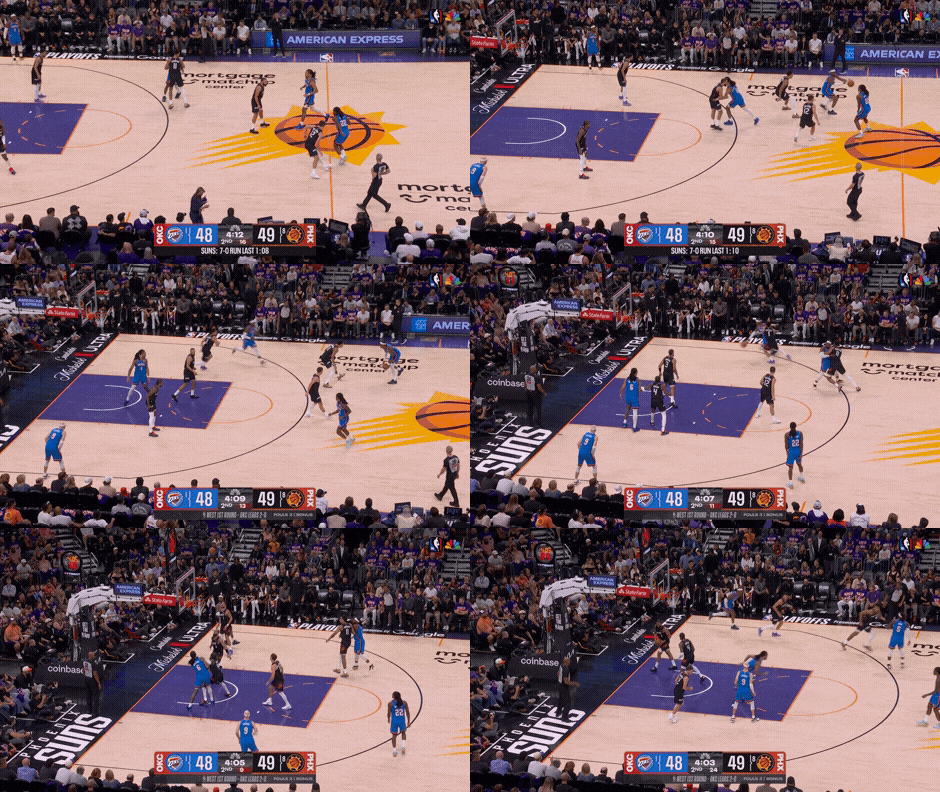
    Shai Gilgeous-Alexander pull-up jumper vs. Devin Booker

    On the next possession, he rejected a screen, beat Ighodaro off the dribble, and drew a foul on Booker. Then, attacking Booker again, he got an open 3 for Jaylin Williams.

    Grayson Allen made his series debut on Saturday and was not spared. Gilgeous-Alexander attacked him to generate a layup for Alex Caruso and to get to another mid-range pull-up:
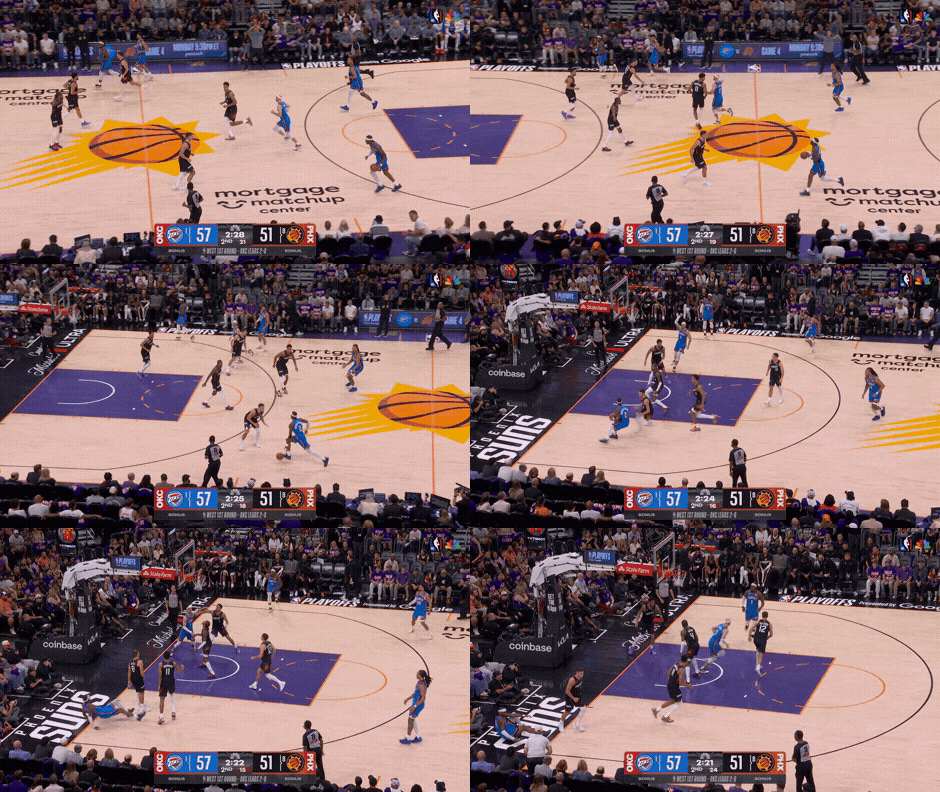
    Shai Gilgeous-Alexander pull-up jumper vs. Grayson Allen

    Finally, the Suns sent a double-team at Gilgeous-Alexander in the middle of the floor. The result was an open corner 3 for Caruso.

    Again, the Suns ranked ninth defensively, and the Thunder have scored at least 120 points per 100 possessions in all three games of this series. Overall, they’ve scored 10.9 per 100 more than Phoenix allowed in the regular season.


    2. Thunder handle the pressure

    The biggest strength of the Suns’ defense was forcing turnovers. They ranked third in opponent turnover rate, forcing 16.5 per 100 possessions, having seen the biggest jump (by a wide margin) from last season.

    But now they’re facing the team that has committed the fewest turnovers per 100 possessions in each of the last two seasons. And the Thunder have been even better at taking care of the ball in this series.

    Over the three games, the champs have committed just 8.9 turnovers per 100 possessions, what would be tied for the third-lowest rate for any team in any playoff series in the 30 years for which we have play-by-play data. They’ve taken their opponents’ biggest strength and turned it into a major weakness.

    According to tracking data, the Suns rank fourth in these playoffs in average pick-up distance, so they’re applying pressure. But it’s not working on the Thunder, who had just two live-ball turnovers in Game 3 on Saturday.

    Shooting is the most important thing in this game, but you there are other ways to boost your efficiency and the Thunder have done it by taking care of the ball.


    3. Best bench in basketball

    It was a little bit of a surprise that Ajay Mitchell started in place of Jalen Williams on Saturday, given that Cason Wallace started 42 more games than Mitchell (58-16) in the regular season. Mitchell was the Thunder’s second leading scorer (15 points) in Game 3, but shot just 5-for-20, forcing some tough shots along the way.

    The Thunder’s new starting lineup had played just 37 total minutes (over seven games) together in the regular season and was outscored by four points on Saturday. But the champs outscored the Suns by 16 points with at least one reserve on the floor.

    Even without Williams to run the second-unit offense, the Thunder outscored the Suns by two points (20-18) in Gilgeous-Alexander’s 10 minutes on the bench. The shooting wasn’t great (8-for-22, including 1-for-7 from 3-point range), but they didn’t commit any turnovers when the MVP sat.

    They used the same five-man unit (Mitchell, Wallace, Jared McCain, Chet Holmgren and Isaiah Hartenstein) for those entire 10 minutes. Mitchell scored seven of his 15 points and McCain scored all of his seven in those no-SGA minutes, with a couple of SGA-esque buckets included.

    The Thunder have had the league’s No. 1 bench in each of the last two seasons, and though their versatility is a little compromised with the absence of Williams, they’re never dependent on the success of any particular lineup. Still, it will be interesting to see if Mitchell remains the starter going forward.


    4. Booker still can’t get going

    Dillon Brooks (33 points) and Jalen Green (26) were again the Suns’ leading scorers on Saturday, and that’s by the Thunder’s design. The league’s No. 1 defense has made Devin Booker its No. 1 priority, making sure he plays in a crowd and has a hard time finding open shots.

    For this entire series, Booker’s best looks at the basket have come in transition or after offensive rebounds.

    When he’s used a ball-screen, he hasn’t seen any kind of advantage for himself:
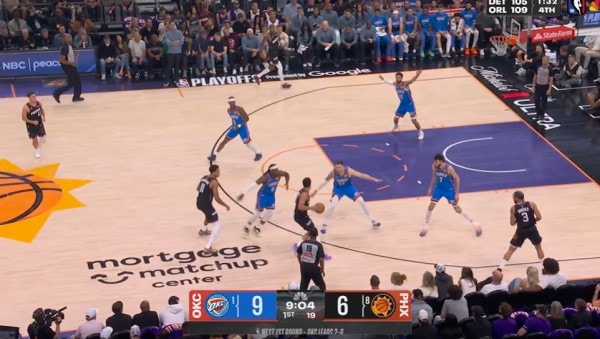
    Wall of Thunder defenders facing Devin Booker

    The Suns have bee able to leverage the attention on Booker to get good shots for his teammates. Early in the third quarter on Saturday, there was no weak-side help on an Ighodaro roll to the rim, because Dort stayed attached to Booker in the corner:
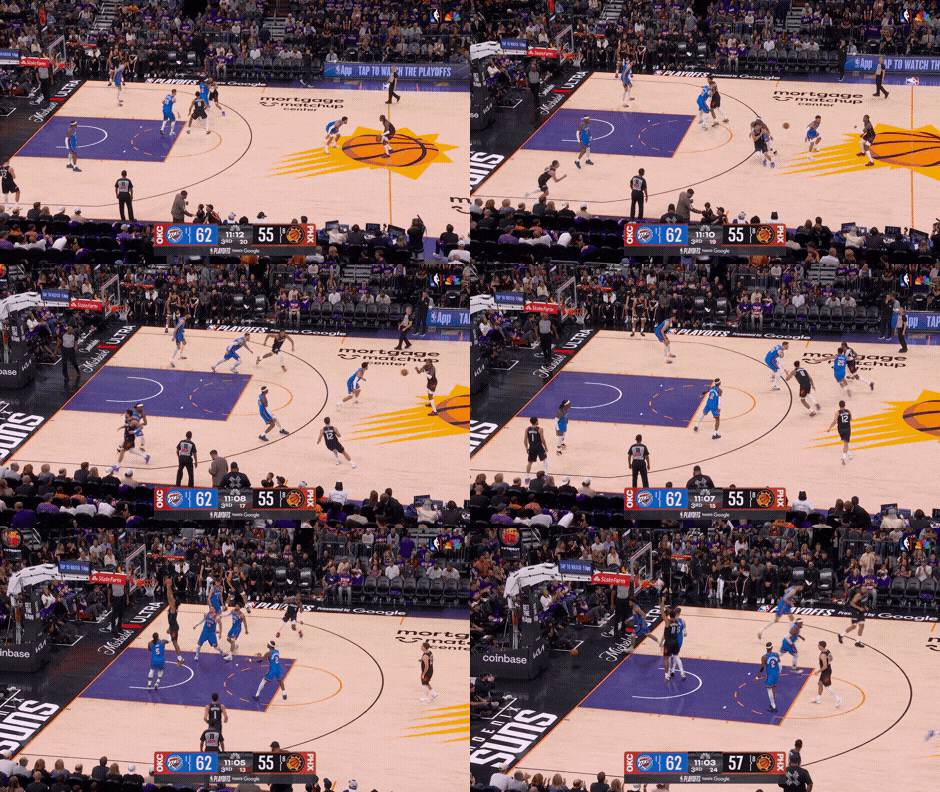
    Jalen Green assist to Oso Ighodaro

    But the Suns haven’t been able to find enough of those kinds of openings to keep up with the Thunder. And at 20.3 points per game, this is the lowest-scoring playoff series of Booker’s career. His true shooting percentage of 55.1% would be his third worst mark of the 10 series that he’s played in.

    The Suns first chance to avoid a sweep is Game 4 on Monday (9:30 ET, Peacock).

    * * *

    John Schuhmann has covered the NBA for more than 20 years. You can e-mail him here, find his archive here and follow him on Bluesky.
  • 3 things to watch in Lakers-Rockets Game 4

    LeBron James forces OT, where the Lakers ultimately prevail to take a commanding 3-0 series lead over the Rockets.

    • Download the NBA App

    Just get one. For any team down 3-0 in a series, winning Game 4 is the goal.

    Everyone knows the statistic: No team has come back from a 3-0 deficit to win a series in the NBA playoffs. The overall record in a series for teams trailing 3-0 is 0-159.

    Down 3-0 to the fourth-seeded Los Angeles Lakers in a first-round Western Conference playoff series and their season on the line, the fifth-seeded Houston Rockets don’t need a reminder of the steep climb they face.

    Can the Rockets force a Game 5?

    There were enough positives despite a late Game 3 collapse for the Rockets to draw from as they try to extend the series.

    Here are three things to watch in Game 4 on Sunday (9:30 ET, NBC/Peacock):


    1. What is Kevin Durant’s availability for Game 4?

    Rockets star Kevin Durant missed Game 1 with a bruised right knee sustained in a practice and missed Game 3 with a sprained left ankle sustained in the fourth quarter of Game 2.

    He is listed as questionable on the official injury report and likely will be a game-time decision.

    “He’s getting treatment still around the clock,” said Rockets coach Ime Udoka. “I think there’s some soreness and (he’s) pushed a lot of swelling out, but it’ll be a matter of if he can go. We’ll try it out I’m sure tomorrow morning and before the game, and we’ll know his status then.”

    Even hobbled, the Rockets can use Durant’s skillset.


    2. Slowing LeBron James

    LeBron James turns in a vintage performance with 29 points, 13 rebounds and six assists in a pivotal Game 3 win over the Rockets.

    The Lakers are playing without Luka Doncic and Austin Reaves – the team’s top two scorers – and the Rockets haven’t found a way to limit 41-year-old LeBron James.

    James is averaging 25.3 points, 9.7 rebounds, 8.7 assists and 2.0 steals and shooting 47.4% from the field and 43.8% on 3-pointers. He has orchestrated a masterful Lakers performance that has allowed Luke Kennard to average 21.3 points; Marcus Smart, 20.3 points; and Rui Hachimura, 16.3 points.

    It’s too easy for James, who is relishing the moment and throwing lobs to his son, Bronny James, forcing turnovers and making clutch 3-pointers with the game on the line.

    The Rockets need to find a way to mitigate his production.


    3. Limiting mistakes, better shooting for the Rockets

    The Rockets featured a starting lineup with five players 24 years old or younger in Game 3. They have a talented, young team, and that leads to mistakes which were on display late in Game 3 when the Lakers overcame a 101-95 deficit in the final 30 seconds of the fourth quarter to force overtime.

    Turnovers, fouls and shooting (just 28.7% on 3-pointers in the series) have hurt the Rockets.

    But there are positives they can apply to Game 4. The Rockets controlled much of the second half, and Alperen Sengun, Jabari Smith Jr., and Amen Thompson each scored at least 24 points. Sengun had 33 points, 16 rebounds, six assists and three steals; Thompson posted 26 points, 11 rebounds, four assists, three steals and three blocks; Smith added 24 points and six rebounds.

    That’s the kind of production that can lead to a victory. Reducing ill-timed turnovers and improved shooting will put Houston in position to extend the series. Each game has been decided by nine points or fewer, and Game 3 went to overtime.

    The Rockets have been close but haven’t been able to finish.

    * * *

    Jeff Zillgitt has covered the NBA since 2008. You can email him at jzillgitt@nba.com, find his archive here and follow him on X.

  • 4 takeaways: Shai Gilgeous-Alexander dominates Thunder-Suns Game 3 & OKC nears sweep

    The Oklahoma City Thunder defeat the Phoenix Suns, 121-109, to take a 3-0 series lead.

    • Download the NBA App

    The Oklahoma City Thunder are one one of the most dominant, two-year runs in NBA history, and the dominance continued with a 121-109 victory in Game 3 of their first round series with the Phoenix Suns on Saturday afternoon.

    The Thunder were without Jalen Williams, who suffered a hamstring strain three days earlier. But Shai Gilgeous-Alexander didn’t need much help.

    The reigning MVP scored a career-playoff-high 42 points, shooting an amazing 15-for-18 from the field and 11-for-12 from the free throw line, adding eight assists. The Thunder continue to score efficiently against what was a top-10 defense in the regular season, and Gilgeous-Alexander’s performance was just the seventh 40-point playoff game in NBA history where the player had a true shooting percentage over 90%.

    Playing at home for the first time, the Suns led by nine points late in the first quarter. But the Thunder closed the period on an 18-4 run and were in control most of the way after that.

    Here are some notes, numbers and film as the champs improved to 11-0 in first-round games over the last three years:


    1. Gilgeous-Alexander is too much from mid-range

    Even when he won the Kia MVP award last season, Gilgeous-Alexander wasn’t as good of a mid-range shooter as he was this year, when he shot an incredible 197-for-359 (54.9%) between the paint and the 3-point line. That was the fourth-best mark for a player with at least 300 mid-range attempts in the 29 seasons for which we have shot-location data; the only three better ones are held by Kevin Durant.

    On Saturday, Gilgeous-Alexander was 6-for-7 from mid-range, and his best work was done over the last six minutes of the second quarter, when the Thunder took full control of Game 3.

    Collin Gillespie has been Gilgeous-Alexander’s primary defender for most of this series, but he was getting the business. So the Suns actually assigned starting center Oso Ighodaro to the MVP for a stretch late in the second.

    Gilgeous-Alexander proceeded to target Devin Booker in the pick-and-roll, getting to his mid-range pull-up:

    Shai Gilgeous-Alexander pull-up jumper vs. Devin Booker

    On the next possession, he rejected a screen, beat Ighodaro off the dribble, and drew a foul on Booker. Then, attacking Booker again, he got an open 3 for Jaylin Williams.

    Grayson Allen made his series debut on Saturday and was not spared. Gilgeous-Alexander attacked him to generate a layup for Alex Caruso and to get to another mid-range pull-up:

    Shai Gilgeous-Alexander pull-up jumper vs. Grayson Allen

    Finally, the Suns sent a double-team at Gilgeous-Alexander in the middle of the floor. The result was an open corner 3 for Caruso.

    Again, the Suns ranked ninth defensively, and the Thunder have scored at least 120 points per 100 possessions in all three games of this series. Overall, they’ve scored 10.9 per 100 more than Phoenix allowed in the regular season.


    2. Thunder handle the pressure

    The biggest strength of the Suns’ defense was forcing turnovers. They ranked third in opponent turnover rate, forcing 16.5 per 100 possessions, having seen the biggest jump (by a wide margin) from last season.

    But now they’re facing the team that has committed the fewest turnovers per 100 possessions in each of the last two seasons. And the Thunder have been even better at taking care of the ball in this series.

    Over the three games, the champs have committed just 8.9 turnovers per 100 possessions, what would be tied for the third-lowest rate for any team in any playoff series in the 30 years for which we have play-by-play data. They’ve taken their opponents’ biggest strength and turned it into a major weakness.

    According to tracking data, the Suns rank fourth in these playoffs in average pick-up distance, so they’re applying pressure. But it’s not working on the Thunder, who had just two live-ball turnovers in Game 3 on Saturday.

    Shooting is the most important thing in this game, but you there are other ways to boost your efficiency and the Thunder have done it by taking care of the ball.


    3. Best bench in basketball

    It was a little bit of a surprise that Ajay Mitchell started in place of Jalen Williams on Saturday, given that Cason Wallace started 42 more games than Mitchell (58-16) in the regular season. Mitchell was the Thunder’s second leading scorer (15 points) in Game 3, but shot just 5-for-20, forcing some tough shots along the way.

    The Thunder’s new starting lineup had played just 37 total minutes (over seven games) together in the regular season and was outscored by four points on Saturday. But the champs outscored the Suns by 16 points with at least one reserve on the floor.

    Even without Williams to run the second-unit offense, the Thunder outscored the Suns by two points (20-18) in Gilgeous-Alexander’s 10 minutes on the bench. The shooting wasn’t great (8-for-22, including 1-for-7 from 3-point range), but they didn’t commit any turnovers when the MVP sat.

    They used the same five-man unit (Mitchell, Wallace, Jared McCain, Chet Holmgren and Isaiah Hartenstein) for those entire 10 minutes. Mitchell scored seven of his 15 points and McCain scored all of his seven in those no-SGA minutes, with a couple of SGA-esque buckets included.

    The Thunder have had the league’s No. 1 bench in each of the last two seasons, and though their versatility is a little compromised with the absence of Williams, they’re never dependent on the success of any particular lineup. Still, it will be interesting to see if Mitchell remains the starter going forward.


    4. Booker still can’t get going

    Dillon Brooks (33 points) and Jalen Green (26) were again the Suns’ leading scorers on Saturday, and that’s by the Thunder’s design. The league’s No. 1 defense has made Devin Booker its No. 1 priority, making sure he plays in a crowd and has a hard time finding open shots.

    For this entire series, Booker’s best looks at the basket have come in transition or after offensive rebounds.

    When he’s used a ball-screen, he hasn’t seen any kind of advantage for himself:

    Wall of Thunder defenders facing Devin Booker

    The Suns have bee able to leverage the attention on Booker to get good shots for his teammates. Early in the third quarter on Saturday, there was no weak-side help on an Ighodaro roll to the rim, because Dort stayed attached to Booker in the corner:

    Jalen Green assist to Oso Ighodaro

    But the Suns haven’t been able to find enough of those kinds of openings to keep up with the Thunder. And at 20.3 points per game, this is the lowest-scoring playoff series of Booker’s career. His true shooting percentage of 55.1% would be his third worst mark of the 10 series that he’s played in.

    The Suns first chance to avoid a sweep is Game 4 on Monday (9:30 ET, Peacock).

    * * *

    John Schuhmann has covered the NBA for more than 20 years. You can e-mail him here, find his archive here and follow him on Bluesky.
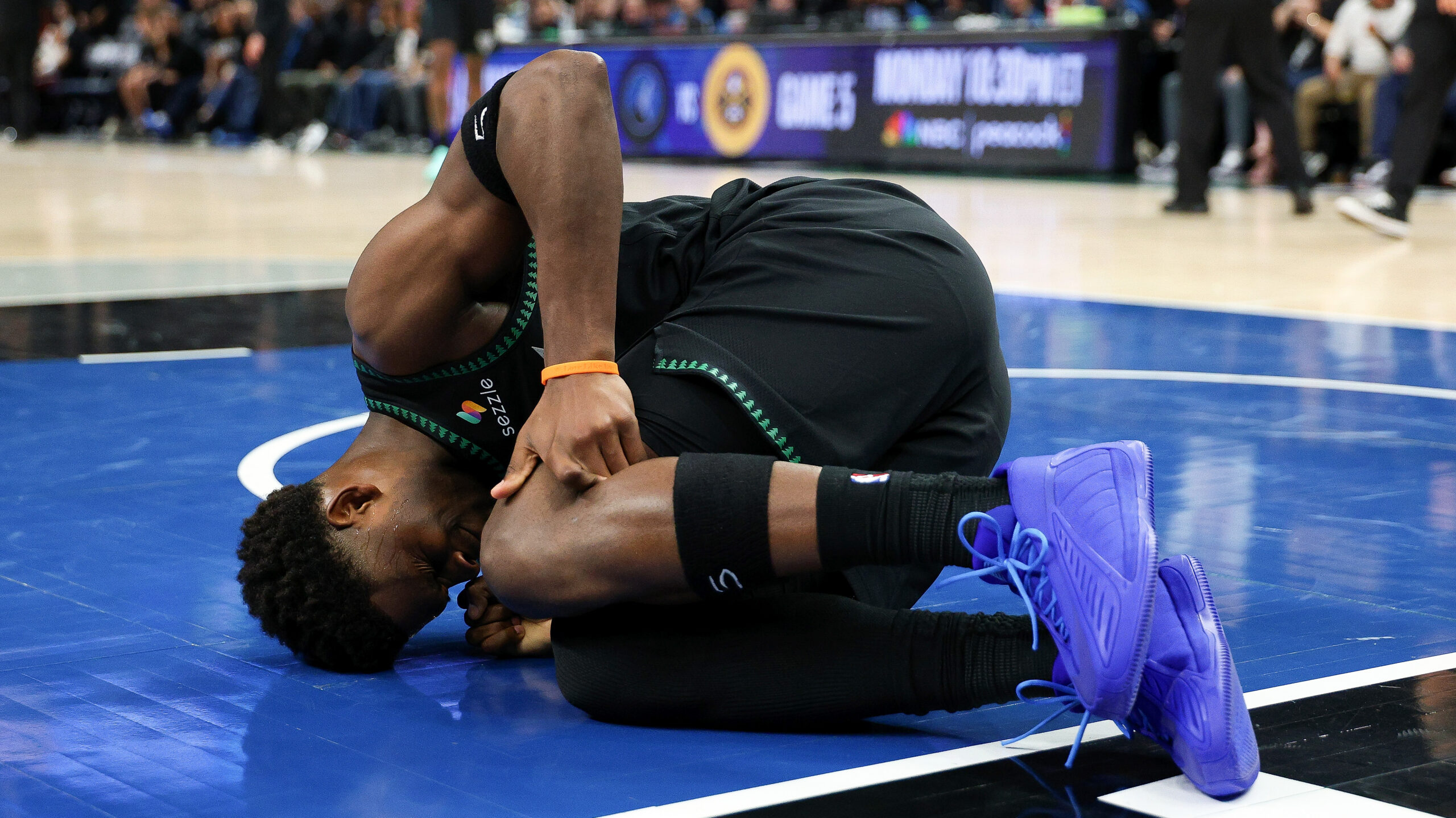
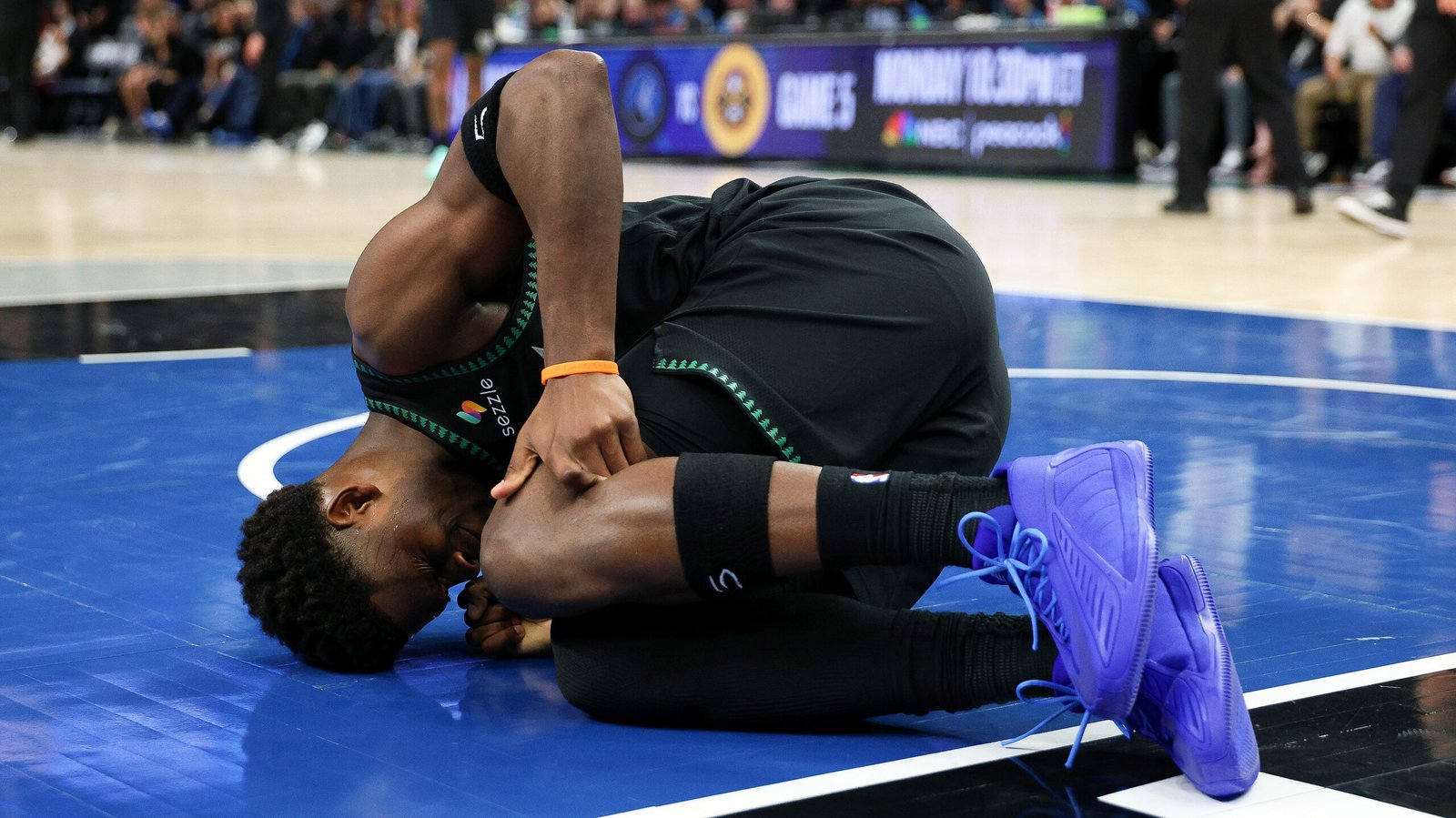
  • Timberwolves lose Anthony Edwards, Donte DiVincenzo to leg injuries in Game 4

    Timberwolves lose Anthony Edwards, Donte DiVincenzo to leg injuries in Game 4

    Anthony Edwards’ left knee appeared to buckle as he landed after contesting a layup late in the second quarter.

    • Download the NBA App

    MINNEAPOLIS (AP) — Donte DiVincenzo’s season is over with an Achilles tendon injury and the severity of Anthony Edwards’ left knee injury remains unclear, an emotional Minnesota coach Chris Finch said Saturday night after the Timberwolves’ playoff win over the Denver Nuggets.

    DiVincenzo was lost 1:19 into Game 4, the nature of his injury immediately suggesting that it was an Achilles issue. Edwards was lost late in the first half, and even without their starting guards the Timberwolves — behind 43 points from Ayu Dosunmu — beat the Nuggets for a 3-1 lead in the Western Conference quarterfinal series.

    “I feel completely devastated for Donte,” Finch said.

    Edwards’ left knee appeared to buckle as he landed after contesting a layup late in the second quarter. He was helped to the locker room and the Timberwolves ruled him out for the rest of the game with a left knee injury.

    DiVincenzo appeared to injure his lower right leg in the game’s opening minutes when he slipped to the court as he raced to chase a ball. He immediately waved to the bench for help and put little to no weight on his right foot as he was helped to the locker room, and he eventually left the arena in a wheelchair.

    “Losing those two guys is really tough, tough emotionally for our guys,” Finch said.

    Edwards came into Saturday averaging 23 points and eight rebounds in the series, as the sixth-seeded Timberwolves look to upset the third-seeded Nuggets. DiVincenzo averaged 14.3 points and made 11 of 22 3-pointers in the first three games.

    “I was heartbroken,” Dosunmu said in the televised on-court postgame interview when asked about the injuries to DiVincenzo and Edwards. “This is for them. Ant, Donte, they mean so much to the organization. I’m sending them prayers. I hope for a speedy recovery. I hope they’re fine, but this game, personally, was for them.”

  • 3 things to watch in Celtics-Sixers Game 4

    When you’re a title contender, you want to take care of business in the first round. And, up 2-1, the Boston Celtics would surely love to take control of their first round series with the Philadelphia 76ers by sweeping two games in Philadelphia.

    The Sixers should be the desperate team, having lost home-court advantage on Friday night, unable to get any stops down the stretch of Game 3.

    Here are three things to watch for in Game 4 on Sunday (7 ET, NBC/Peacock):


    1. The return of Embiid?

    Joel Embiid has missed the first three games of this series, recovering from an appendectomy in the last week of the season. But he wasn’t ruled out of Game 3 until about two hours before tip time, and he was listed as doubtful on the initial, Game 4 injury report.

    The Sixers were just 11-10 with Tyrese Maxey, Paul George and Embiid all in the lineup, including just 5-7 against playoff teams. But they were at their best in the regular season (plus-5.8 points per 100 possessions) with Embiid on the floor, with the bigger impact coming on offense.

    Even when he’s limited, Embiid makes the Sixers a better team, and the on-off differential has been magnified in the playoffs. Over his seven postseasons, the Sixers have been an amazing 17.1 points per 100 possessions better with Embiid on the floor than they’ve been with him off the floor.

    Sixers playoff efficiency, 2018-2024

    Embiid on/off MIN OffRtg DefRtg NetRtg +/-
    On floor 2,083 114.0 106.1 +7.9 +322
    Off floor 1,153 103.3 112.5 -9.2 -218
    Diff. 10.7 -6.3 17.1

    OffRtg = Team’s points scored per 100 possessions
    DefRtg = Team’s points allowed per 100 possessions
    NetRtg = Team’s point differential per 100 possessions

    The effect has almost always been there, even though those seven postseasons have come under three different head coaches, with varying supporting casts, and against a bevy of opponents.

    Embiid played in two games against the Celtics this season, but both of those were in October. He was better (20 points on 6-for-13 shooting) in the Sixers’ home loss on Halloween than he was (four points, 1-for-9) in their opening-night win in Boston.


    2. It’s a make-or-miss series

    All three games in this series have gone the way of the better 3-point shooting team …

    • The Sixers shot 19-for-39 (49%) from 3-point range in Game 2, but are 16-for-58 (28%) over their two losses.

    Perimeter shooting means more for the Celtics, who have taken only 33% of their shots in the paint, what would be the second lowest rate for any team in any playoff series in the last 15 years. They were the jump-shootingest team in the regular season (41% of their shots came in the paint), and they’ve been even more so in the playoffs.

    The Sixers took only 32 (36%) of their 90 shots in the paint in Game 2, when Maxey and VJ Edgecombe were a combined 11-for-22 from 3-point range. They dominated the paint in Games 1 and 3, but that success was trumped by the Celtics shooting from deep.

    There’s obviously some luck in the small sample sizes you get in the playoffs, and in all three games, the winning team has shot better from 3-point range than expected, given the quality of their shots, with the biggest differential being that of the Sixers in Game 2. The losing team has shot worse than expected in all three games, with the biggest differential being that of the Sixers in Game 1.

    Overall, the Sixers and Celtics been about even in the quality of their 3-point attempts, ranking right in the middle of the pack (eighth and ninth, respectively) in the playoffs.

    The search for great shots will continue in Game 4, but sometimes, it’s just a make-or-miss league.


    3. Can the Sixers get anything easy?

    One way to be less reliant on jump shots is to get some easy baskets in transition. According to Synergy tracking, the Sixers averaged 25 transition points per game in their four regular-season meetings with the Celtics.

    But they have just 44 transition points total (14.7 per game) in this series. Maxey and Edgecombe are two of the most explosive guards in the playoffs, and the account for 30 of the Sixers’ 44 transition points. But the Sixers haven’t been able to get them in the open court enough over these three games.

    On issue is that the Celtics have committed just 12.3 turnovers per 100 possessions, the fourth lowest rate in the first round. And only 15 (38%) of their 40 total turnovers have been live balls, with the Sixers’ 5.5 steals per 100 possessions being the second lowest rate and down from 9.0 per 100 (seventh highest) in the regular season.

    If the Celtics continue to take care of the ball at that level, it will be tough for the Sixers to get their guards out in the open floor.

    * * *

    John Schuhmann has covered the NBA for more than 20 years. You can e-mail him here, find his archive here and follow him on Bluesky.
  • 4 takeaways: Pistons-Magic Game 3 leaves Detroit stunned after Orlando re-takes series lead

    Game Recap: Magic 113, Pistons 105

    The Magic defeat the Pistons, 113-105, to take a 2-1 lead in the best-of-seven series.

    • Download the NBA App


    Paolo Banchero’s circus shot wound up being unnecessary, triggering a few smiles and alleviating some tension in the final minute of Orlando’s 113-105 home victory Saturday. But in the moment, it seemed invaluable as the bucket that pushed the Magic’s lead from five points to eight – with 38 seconds left, a three-possession lead beats the heck out of a two-possession margin.

    No one knew at the time that Detroit already was done scoring for the night, its final points coming way back at the 2:52 mark. So it was 110-105 when Orlando center Wendell Carter Jr. appeared to deke Cade Cunningham in the post into his ninth turnover. Banchero got the steal with 58.3 seconds left and, 20 seconds after that, launched a 3-pointer.

    The ball hit the heel of the rim and kicked high, straight up. There was just enough time to flash back to that Tyrese Haliburton freak shot against the Knicks last spring in Game 1 of the East Finals, before Banchero’s shot dropped straight down through the rim.

    “The optimist in me was like, ‘That’s going in,’” Banchero said.

    The optimists in Orlando are feeling good about the Magic’s chances now that they hold a 2-1 lead in their first-round series against Detroit. The Pistons have until Monday to figure out how to grab back homecourt advantage in Game 4 (8 ET, NBC/Peacock).

    Here are four takeaways from Game 3:


    1. Your momentum, wait, our momentum

    The floor seemed tilted against Orlando. The Magic had done so much, so right late in the third quarter and early in the fourth to craft a handsome 96-79 lead with less than nine minutes left and then … everything shifted.

    Over the next five minutes, the Pistons accelerated hard, hit shots, earned free throws, cashed in on second chances and bottled up Orlando’s offense. To the dismay of the Kia Center crowd and maybe another dozen or more fellows in Magic uniforms, a lead that had been 17 vanished in a flash. Paolo Banchero got blocked at the rim, Cade Cunningham hit a 26-foot pull-up three and poof! Gone.

    Tied at 104-104, the Magic looked flat-footed. And worse, when Jalen Suggs threw the ball away coming out of his coach’s timeout. Cunningham got fouled and hit one of two free throws for the Pistons’ first lead of the half. Now not only was Orlando’s momentum gone, the air in the building was leaking out.

    That’s when the game flinched. In a three-play sequence of 44 seconds, the Magic altered the trajectory and reset the mood. Franz Wagner sank a jumper off the dribble with 2:30 left. Tobias Harris, so essential to Detroit’s rally, missed from 15 feet and when the ball rolled off the rim, it was Magic center Wendell Carter who claimed it. Then it was Wagner again, draining a 3 from 27 feet.

    Somehow the Magic had slammed the brakes on a freefall. They were up 109-105 and 1:46 remained. Four points – 109-105 – normally wouldn’t feel safe, but the way Orlando closed, it proved insurmountable. That Cunningham free throw with 2:52 left? The Pistons’ last point. The Magic scored the night’s final nine.

    “Runs are part of the game. We’ve got to recognize what’s happening within them,” said Orlando coach Jamahl Mosley. “Are we getting the right shots, are we organizing what we’re doing offensively, are we getting the right type of stops? They hit some tough shots, we fouled a few times. But being able to settle it down. And part of that is, can we get to the free throw line in those moments to stop the run, get our composure, communicate with one another and get our sets right and get our defense set up right?”

    The Magic responded with a bundle of yeses to Mosley’s questions. They might even emerge better off for getting chased down yet wriggling free. Detroit had no intention of slowing down the stretch, until Orlando painted a tunnel opening on a mountain wall in time for the Pistons to go splat.


    2. Harris offers glimpse of value to Cunningham

    Too often in this series, Detroit’s point guard has seemed to be playing in a 1-on-5 predicament, with teammates cold or not clicking as reliable secondary scoring sources. Unhappy Pistons fans have been grumbling about coach J.B. Bickerstaff’s lineups and rotations, a shortage of perimeter shooters (that explained Javonte Green’s 23 minutes Saturday), and even the need for a backcourt upgrade next to Cunningham – remember Jaden Ivey?

    At least Tobias Harris responded this time like the veteran scorer he is. Harris scored 23 points, 10 during the rush to tie in the fourth. Now he needs to do it as aggressively for a bigger chunk of the game.

    By the way, non-Cunningham minutes could become a thing in Detroit the way non-Jokić minutes matter in Denver. In the 119 minutes their All-NBA point guard has been on the floor in the series, the Pistons are seven points better than Orlando. In the 25 he has sat, they have been outscored by 11.


    3. Bully ball backfires on Bickerstaff’s bunch

    Look, the NBA gets it: Pistons big man Isaiah Stewart is all about intimidation, a boxer in a hoops player’s uniform. Teammate Jalen Duren is so ripped, you’d wince just standing next to him. But the brawn battle hasn’t worked well so far for Detroit.

    Duren has underperformed after a regular season in which he earned his first All-Star invitation and was voted to be a finalist for the Kia Most Improved Player award. He had eight points and nine rebounds in Game 3, and is averaging 9.0 points and 8.3 rebounds in the three games, compared to 19.5 and 10.5 during the season. His five blocked shots – Ausar Thompson also swatted five – were great disruptors of Orlando’s attacks. But little is coming for Duren that’s intentional, mostly leaving scraps off broken plays or offensive boards.

    Stewart has stepped back even further. He was one of the NBA’s most effective rim protectors this season, but he has yet to reach 20 minutes in any game of the series. It was 12:25 for him Saturday, including a cameo in the fourth quarter in which Stewart missed one shot and was a minus-7 in a mere 1:55.

    His first half was busy, at least, with three personal fouls, one technical and one flagrant-1 foul in a scoreless 8:22. After that, Bickerstaff was seen having a 1-on-1 talk with Stewart, presumably about what the Pistons need from him and what they do not.

    Credit to Carter for not getting drawn into any antics and winning the strong, bruising race.


    4. Magic rotation sorting out

    Desmond Bane, Paolo Banchero combine for 50 points in Game 3

    One of the theories behind Orlando’s underwhelming regular season was their abundance of talent and the lengthy process – still unfinished two weeks into April – needed to sort it out. There was speculation that Banchero and Wagner overlap or chafe in tandem, and other pecking-order concerns that many teams nail down in the fall.

    But a formula seems to have emerged in this series. Banchero is the closest thing the Magic has to Cunningham as far as a beginning, middle and end go-to player. Wagner has a knack for showing up late in close games.

    Desmond Bane tied a franchise record with seven 3-pointers in Game 3, hitting his first six attempts. Jalen Suggs is streaky enough to ignite his team’s performance or occasionally torch it. With Bane cramping up late and Suggs in foul trouble, Anthony Black provided 26 helpful minutes and shot eight free throws to buy time when other options weren’t working.

    If it’s all replicable, Orlando – 7-1 at Kia Center over the past three postseasons – Orlando is a Game 4 victory away from putting real drama into this 1 vs. 8 matchup.

    * * *

    Steve Aschburner has written about the NBA since 1980. You can e-mail him here, find his archive here and follow him on X.  

  • 3 things to watch in Spurs-Trail Blazers Game 4

    Dylan Harper scores a playoff career-high 27 points, including 22 in the second half, of the Spurs Game 3 victory.

    • Download the NBA App

    The Portland Trail Blazers don’t have much time to mull their Game 3 home loss to the San Antonio Spurs.

    Game 4 is an early afternoon start Sunday in Portland, less than 48 hours after the Spurs took a 2-1 series lead with a 120-108 victory Friday night.

    San Antonio won without center-forward Victor Wembanyama, who requires medical clearance to play after sustaining a concussion in Game 2, and San Antonio burrowed through a 15-point second-half deficit thanks to impressive scoring from 20-year-old rookie guard Dylan Harper (27 points) and 21-year-old second-year guard Stephon Castle (33 points).

    Will the Spurs take a 3-1 series lead? Will the Blazers tie the series? Will Wembanyama play in Game 4 Sunday (3:30 ET, ESPN)?

    Here are three things to watch in Game 4:


    1. What is Wembanyama’s status for Game 4?

    Even if Wembanyama, 22, wants to play and says he can go, it’s not his decision. After a concussion, a player must be symptom-free and go through a series of tests and physical exertion steps and get clearance from a doctor and the NBA’s director of the concussion program before returning.

    Wembanyama, the Kia Defensive Player of the Year and one of three finalists Kia MVP this season, set a franchise record for points in a playoff debut with 35 in San Antonio’s Game 1 victory.

    The Spurs await his return with patience. Spurs coach Mitch Johnson said Wembanyama is progressing but would not speculate on his availability, citing the detailed return-to-play process.


    2. Blazers must avoid a letdown

    Portland led 82-67 with 5:09 remaining in the third quarter. With 5:48 to go in the fourth, San Antonio owned a 108-96 lead. During that stretch, Portland was 6-for-23 from the field, missed its six 3-point attempts, Deni Avdija was 0-for-4, Jrue Holiday — who otherwise had a terrific game with 29 points, six rebounds, five assists and four steals — was 1-for-4 and Jerami Grant was 0-for-3.

    The Trail Blazers couldn’t do much to slow the Spurs, who shot 13-for-19 from the field and 7-for-9 on 3-pointers. Harper scored 20 points during that run, and 20-year-old rookie Carter Bryant was on the court for the entire stretch, contributing offensively and defensively. He finished with an impactful three points, six rebounds, four assists and three blocks.

    Harper also had 10 rebounds, becoming the youngest guard to record a double-double in a playoff game. Per the Spurs, Harper was the first rookie with at least 25 points and 10 rebounds off the bench in a playoff game since 1987. Harper and Castle also joined Kevin Durant and Russell Westbrook as the only duos in NBA history, age 21 or younger, to score 25 or more points in the same playoff game.


    3. Can Avdija produce more offensively?

    After scoring 30 points in Game 1, Trail Blazers All-Star Deni Avdija had 14 points in Game 2 and 19 points in Game 3. Of those 19 points, 12 came on free throws, and he was 3-for-15 from the field and scored eight points in the second half and three in the fourth quarter.

    The Spurs have made shooting difficult for him, especially in the paint, where Luke Kornet was waiting to alter Avdija’s shots at the rim. Avdija was 2-for-10 on shots in the paint as San Antonio played a physical game and used multiple defenders on him.

    * * *

    Jeff Zillgitt has covered the NBA since 2008. You can email him at jzillgitt@nba.com, find his archive here and follow him on X.

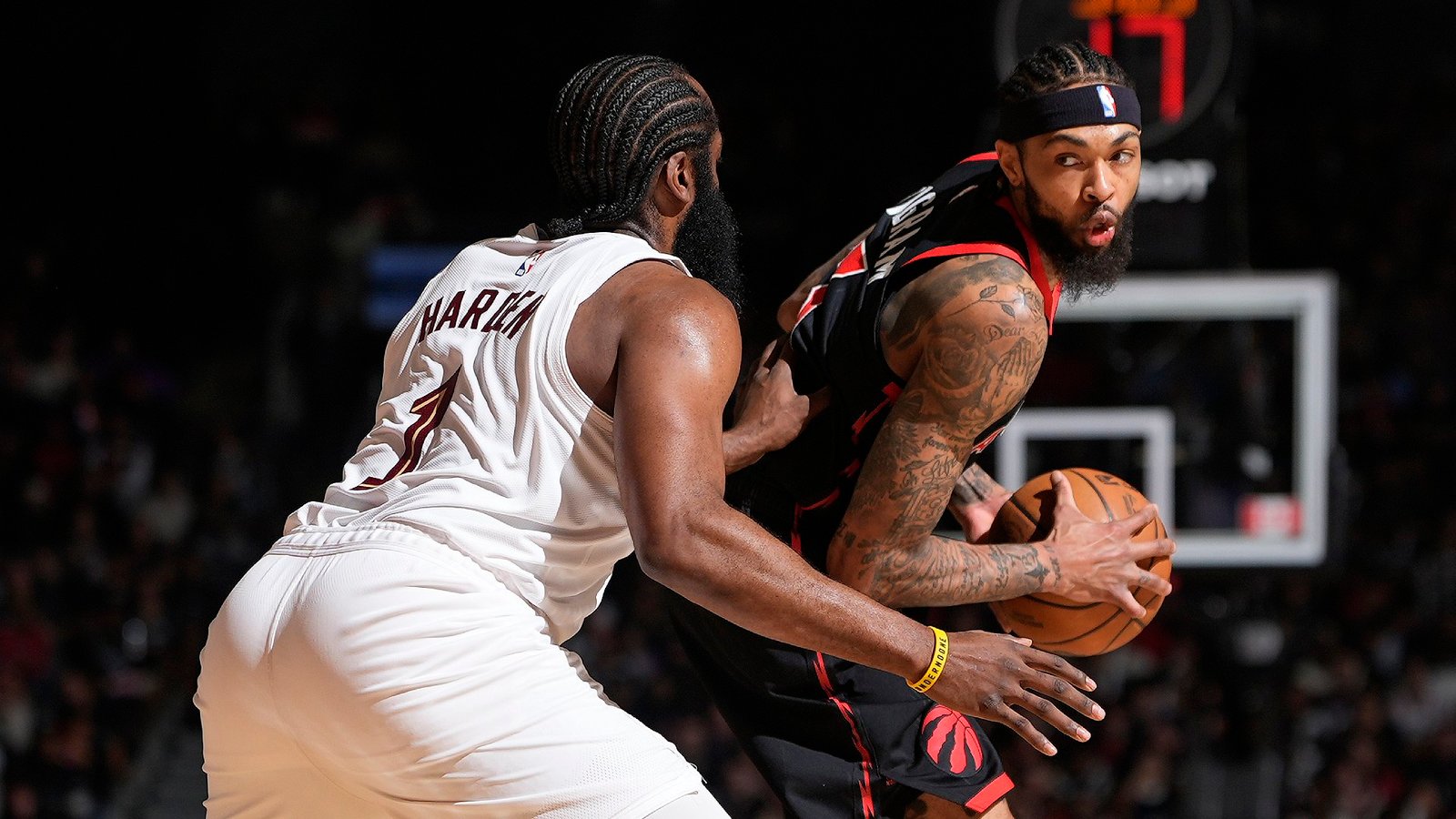
  • 4 things to watch in Cavaliers-Raptors Game 4

    4 things to watch in Cavaliers-Raptors Game 4

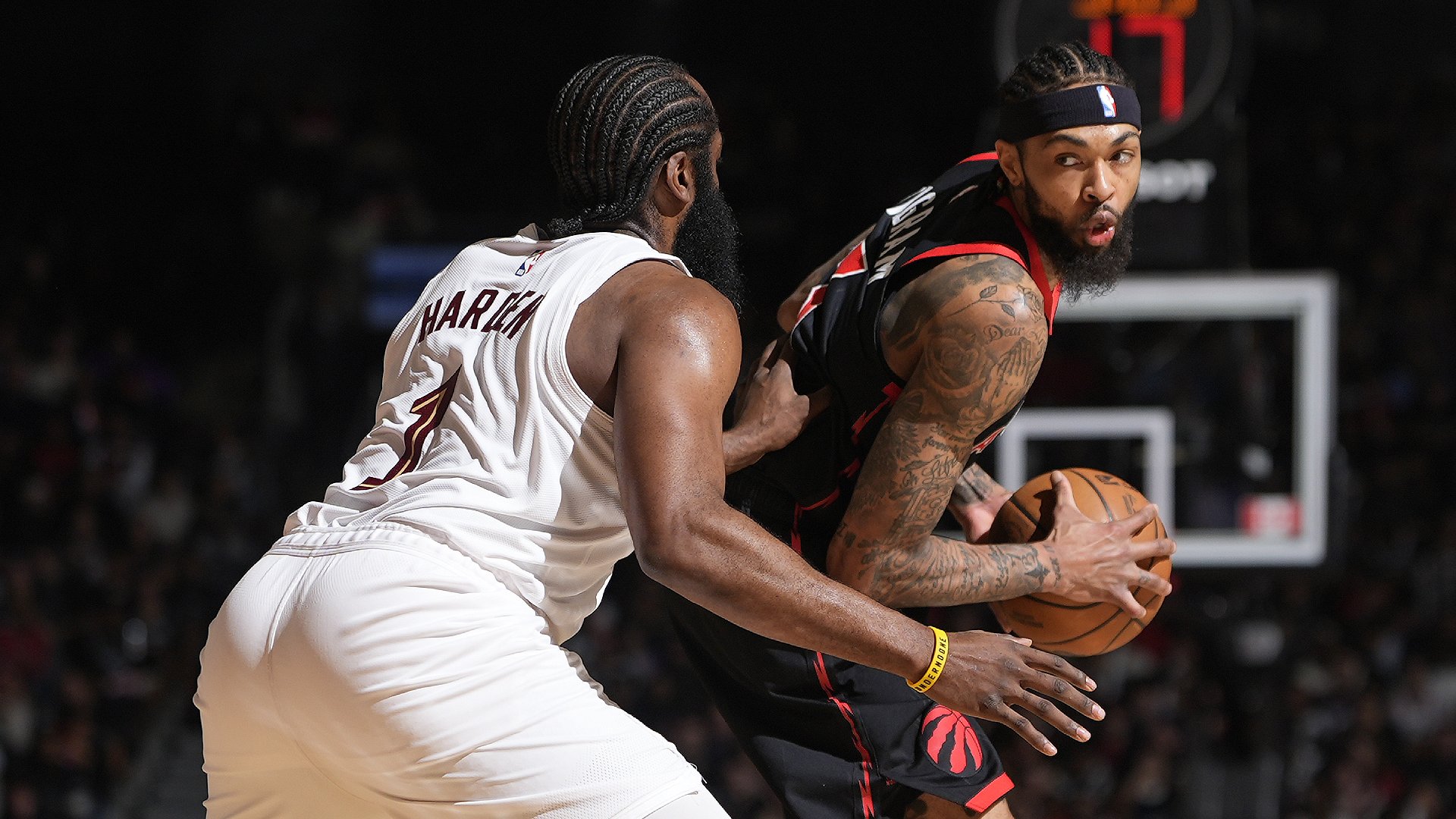
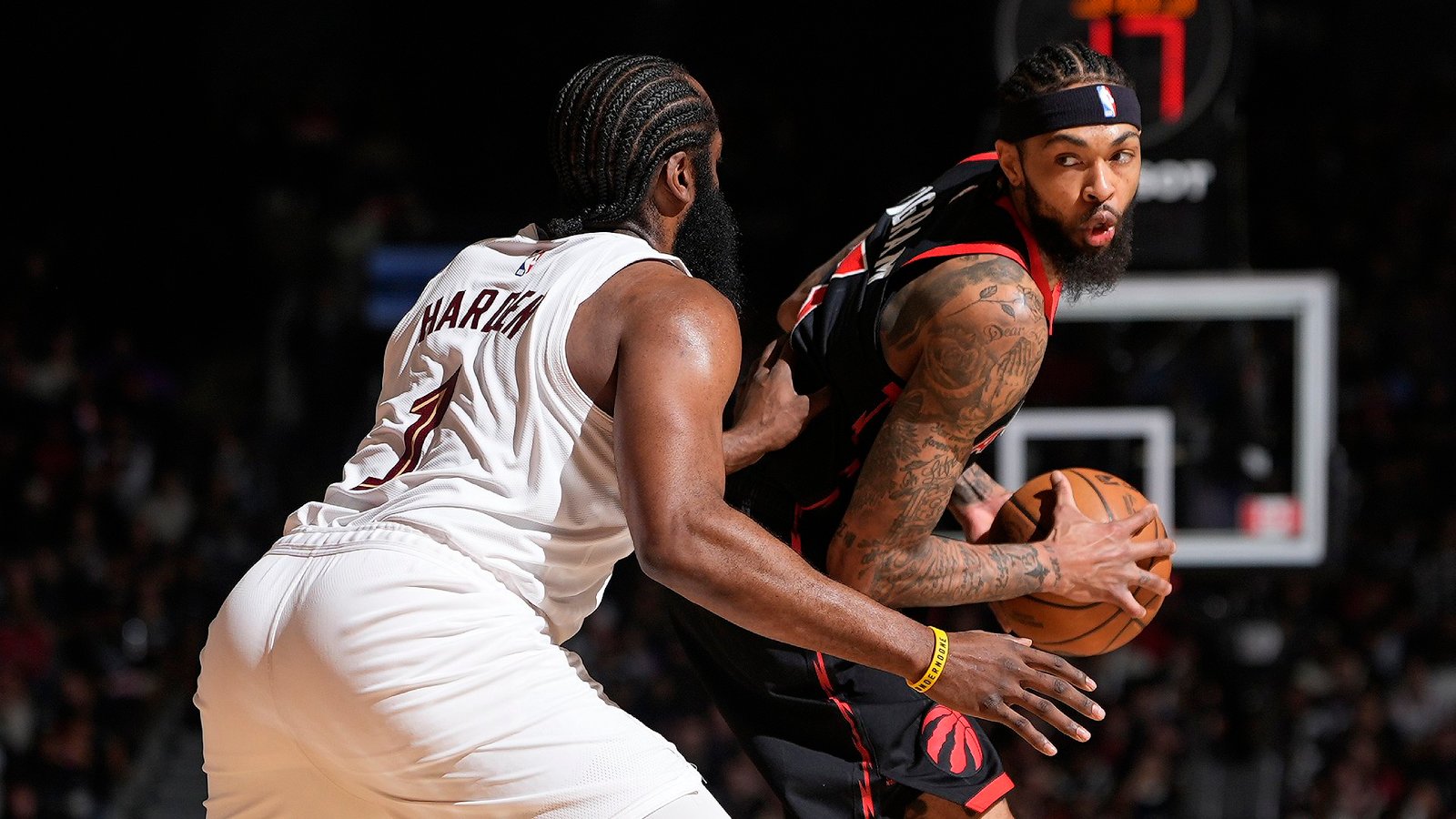
    Brandon Ingram has yet to have a breakout offensive game in the first round vs. Cleveland.

    • Download the NBA App

    The long, harsh Canadian nightmare is over, and this isn’t about winter. Or maybe so, because 12 straight times the Toronto Raptors had no answer for the Cleveland Cavaliers in the playoffs, until Game 3 of this first-round series.

    It was a chilly stretch that ended a few nights ago when LeBron James was finally a no-show. Actually, that’s because the noted Raptors-slayer no longer plays for the Cavs. It was Donovan Mitchell and James Harden who took their foot off the pedal, allowing the Raptors to experience their breakthrough.

    The Cavs-Raptors playoff series is streaking in another direction, if only for the time being. The Raptors trail just 2-1, and Game 4 will tip off Sunday afternoon in Toronto (1 ET, ESPN), giving the home team a chance to square the series and inject some suspense.

    While the Cavs are the more imposing team and higher seed, anything’s possible for the Raptors, especially if Brandon Ingram can shake free of his shooting slump.

    Just the same, the Cavs have been fairly consistent during the regular season, especially once their overall health improved, and rarely string together a stretch of poor games.

    “We will respond,” Harden said.

    Here’s what to watch for Game 4 in Toronto:


    1. More from Toronto’s ‘Killer Bs’

    While one of the Bs, Brandon Ingram, stayed mired in a slump, the Raptors turned to two others and got better results in Game 3. RJ Barrett and Scottie Barnes both dropped 30-plus points and were a combo that was too much for the Cavaliers to handle.

    In a sense, those two were more effective than Harden and Mitchell and were a key factor in the victory. Both can cause trouble off the dribble and are capable of hot stretches. Barrett is the better shooter, Barnes is craftier. They find ways to get buckets and together can place stress on most defenses.

    Ingram, Barnes and Barrett are a total handful if all three are on their game, simultaneously dropping shots and posing as threats. That’s when the Raptors are at their best, because they’re not a great 3-point shooting team. In this series, Toronto is still waiting for them to be fully in sync in the same game. If the ball moves and the shots drop among them, the Cavaliers have serious problems.


    2. More from Harden, Mitchell

    Speaking of problems, this could go two ways. Cleveland has issues if Harden and Mitchell are mistake-prone and missing shots, as they did in Game 3. Just the same, the Raptors are perhaps helpless if those two are tag-teaming the Toronto defense. So it’s possible the series, not just Game 4, will be dictated by the production of the Cavs’ starting backcourt.

    The Harden and Mitchell tandem is a wonderful NBA story, as these two lead singers have found a way to make each other comfortable and productive. That’s not easy to do, especially since Harden arrived just a few months ago. But egos were placed aside for the good of the team, and here they are.

    Both players know what’s at stake. Mitchell has a bucket full of sterling playoff performances — 50-pieces and whatnot — in his past, but is still waiting for that elusive trip to the NBA Finals. Harden made the NBA Finals once, but it was well before he became Kia MVP James. In other words, a long time ago, and since then has suffered through a few poor performances in the postseason.

    All of that can be washed away if they and the Cavs get hot. And their next chance is Sunday.


    3. More from the Tyson Family Weekend

    One of the more improbable sports stories is still unfolding; two brothers are realizing their dream in pro sports. Jordyn Tyson, a standout wide receiver, was the No. 8 pick in the NFL draft on Thursday, going to the New Orleans Saints.

    Meanwhile, his brother Jaylon is in the NBA playoffs and is a valuable rotational player for the Cavs. It’s the first time two brothers became first-round picks in two different pro sports.

    When Jordyn appeared on the red carpet the day before the NFL Draft, their mom, Sandra, wore a Cavs shirt and their father, John, wore a wine-colored suit, in a salute to Jaylon and the Cavs. Jordyn also wore the shoes his older brother wore at the NBA Draft in 2024. The parents probably switched up and reflected the Saints’ colors later after the NFL draft, who knows.

    The former No. 20 pick, Jaylon Tyson is making strides after being served a minor role as a rookie. The 6-foot-6 guard moved up in the rotation and took advantage of increased playing time caused by prolonged injury absences by the since-departed Darius Garland and averaged 10 points off the bench this season.

    In Game 3, he was one of the few bright spots for the Cavs, notching 13 points and four assists. As the Cavs look to use their depth as a strength, Tyson’s role and minutes could prove crucial, especially if either Harden or Mitchell struggles again.


    4. More from Murray-Boyles

    The Raptors made a wise decision to draft Collin Murray-Boyles at No. 9 last summer because the forward dropped plenty of hints during the season that he could be counted upon in the playoffs. Sure enough, Murray-Boyles was a difference-maker in Game 3 with good efforts at both ends.

    He’s also pushing for more playing time and that’s important, considering the Cavs bring more experience on the front line. Murray-Boyles brings a physical presence and plays bigger than his listed 6-foot-7 frame. The Raptors could use his inside presence against Evan Mobley and Jarrett Allen.

    If the rookie follows up his 22 points and eight rebounds in Game 3 with another mature output, Toronto’s chances of winning will increase.

    * * *

    Shaun Powell has covered the NBA since 1985. You can e-mail him at spowell@nba.com, find his archive here and follow him on X.

  • 4 things to watch in Cavs-Raptors Game 4

    4 things to watch in Cavs-Raptors Game 4

    Brandon Ingram has yet to have a breakout offensive game in the first round vs. Cleveland.

    • Download the NBA App

    The long, harsh Canadian nightmare is over, and this isn’t about winter. Or maybe so, because 12 straight times the Toronto Raptors had no answer for the Cleveland Cavaliers in the playoffs, until Game 3 of this first-round series.

    It was a chilly stretch that ended a few nights ago when LeBron James was finally a no-show. Actually, that’s because the noted Raptors-slayer no longer plays for the Cavs. It was Donovan Mitchell and James Harden who took their foot off the pedal, allowing the Raptors to experience their breakthrough.

    The Cavs-Raptors playoff series is streaking in another direction, if only for the time being. The Raptors trail just 2-1, and Game 4 will tip off Sunday afternoon in Toronto (1 ET, ESPN), giving the home team a chance to square the series and inject some suspense.

    While the Cavs are the more imposing team and higher seed, anything’s possible for the Raptors, especially if Brandon Ingram can shake free of his shooting slump.

    Just the same, the Cavs have been fairly consistent during the regular season, especially once their overall health improved, and rarely string together a stretch of poor games.

    “We will respond,” Harden said.

    Here’s what to watch for Game 4 in Toronto:


    1. More from Toronto’s ‘Killer Bs’

    While one of the Bs, Brandon Ingram, stayed mired in a slump, the Raptors turned to two others and got better results in Game 3. RJ Barrett and Scottie Barnes both dropped 30-plus points and were a combo that was too much for the Cavaliers to handle.

    In a sense, those two were more effective than Harden and Mitchell and were a key factor in the victory. Both can cause trouble off the dribble and are capable of hot stretches. Barrett is the better shooter, Barnes is craftier. They find ways to get buckets and together can place stress on most defenses.

    Ingram, Barnes and Barrett are a total handful if all three are on their game, simultaneously dropping shots and posing as threats. That’s when the Raptors are at their best, because they’re not a great 3-point shooting team. In this series, Toronto is still waiting for them to be fully in sync in the same game. If the ball moves and the shots drop among them, the Cavaliers have serious problems.

    2. More from Harden, Mitchell

    Speaking of problems, this could go two ways. Cleveland has issues if Harden and Mitchell are mistake-prone and missing shots, as they did in Game 3. Just the same, the Raptors are perhaps helpless if those two are tag-teaming the Toronto defense. So it’s possible the series, not just Game 4, will be dictated by the production of the Cavs’ starting backcourt.

    The Harden and Mitchell tandem is a wonderful NBA story, as these two lead singers have found a way to make each other comfortable and productive. That’s not easy to do, especially since Harden arrived just a few months ago. But egos were placed aside for the good of the team, and here they are.

    Both players know what’s at stake. Mitchell has a bucket full of sterling playoff performances — 50-pieces and whatnot — in his past, but is still waiting for that elusive trip to the NBA Finals. Harden made the NBA Finals once, but it was well before he became Kia MVP James. In other words, a long time ago, and since then has suffered through a few poor performances in the postseason.

    All of that can be washed away if they and the Cavs get hot. And their next chance is Sunday.

    3. More from the Tyson Family Weekend

    One of the more improbable sports stories is still unfolding; two brothers are realizing their dream in pro sports. Jordyn Tyson, a standout wide receiver, was the No. 8 pick in the NFL draft on Thursday, going to the New Orleans Saints.

    Meanwhile, his brother Jaylon is in the NBA playoffs and is a valuable rotational player for the Cavs. It’s the first time two brothers became first-round picks in two different pro sports.

    When Jordyn appeared on the red carpet the day before the NFL Draft, their mom, Sandra, wore a Cavs shirt and their father, John, wore a wine-colored suit, in a salute to Jaylon and the Cavs. Jordyn also wore the shoes his older brother wore at the NBA Draft in 2024. The parents probably switched up and reflected the Saints’ colors later after the NFL draft, who knows.

    The former No. 20 pick, Jaylon Tyson is making strides after being served a minor role as a rookie. The 6-foot-6 guard moved up in the rotation and took advantage of increased playing time caused by prolonged injury absences by the since-departed Darius Garland and averaged 10 points off the bench this season.

    In Game 3, he was one of the few bright spots for the Cavs, notching 13 points and four assists. As the Cavs look to use their depth as a strength, Tyson’s role and minutes could prove crucial, especially if either Harden or Mitchell struggles again.

    4. More from Murray-Boyles

    The Raptors made a wise decision to draft Collin Murray-Boyles at No. 9 last summer because the forward dropped plenty of hints during the season that he could be counted upon in the playoffs. Sure enough, Murray-Boyles was a difference-maker in Game 3 with good efforts at both ends.

    He’s also pushing for more playing time and that’s important, considering the Cavs bring more experience on the front line. Murray-Boyles brings a physical presence and plays bigger than his listed 6-foot-7 frame. The Raptors could use his inside presence against Evan Mobley and Jarrett Allen.

    If the rookie follows up his 22 points and eight rebounds in Game 3 with another mature output, Toronto’s chances of winning will increase.

    * * *

    Shaun Powell has covered the NBA since 1985. You can e-mail him at spowell@nba.com, find his archive here and follow him on X.

  • Kevin Durant improving but status for Game 4 is unknown

    Kevin Durant improving but status for Game 4 is unknown

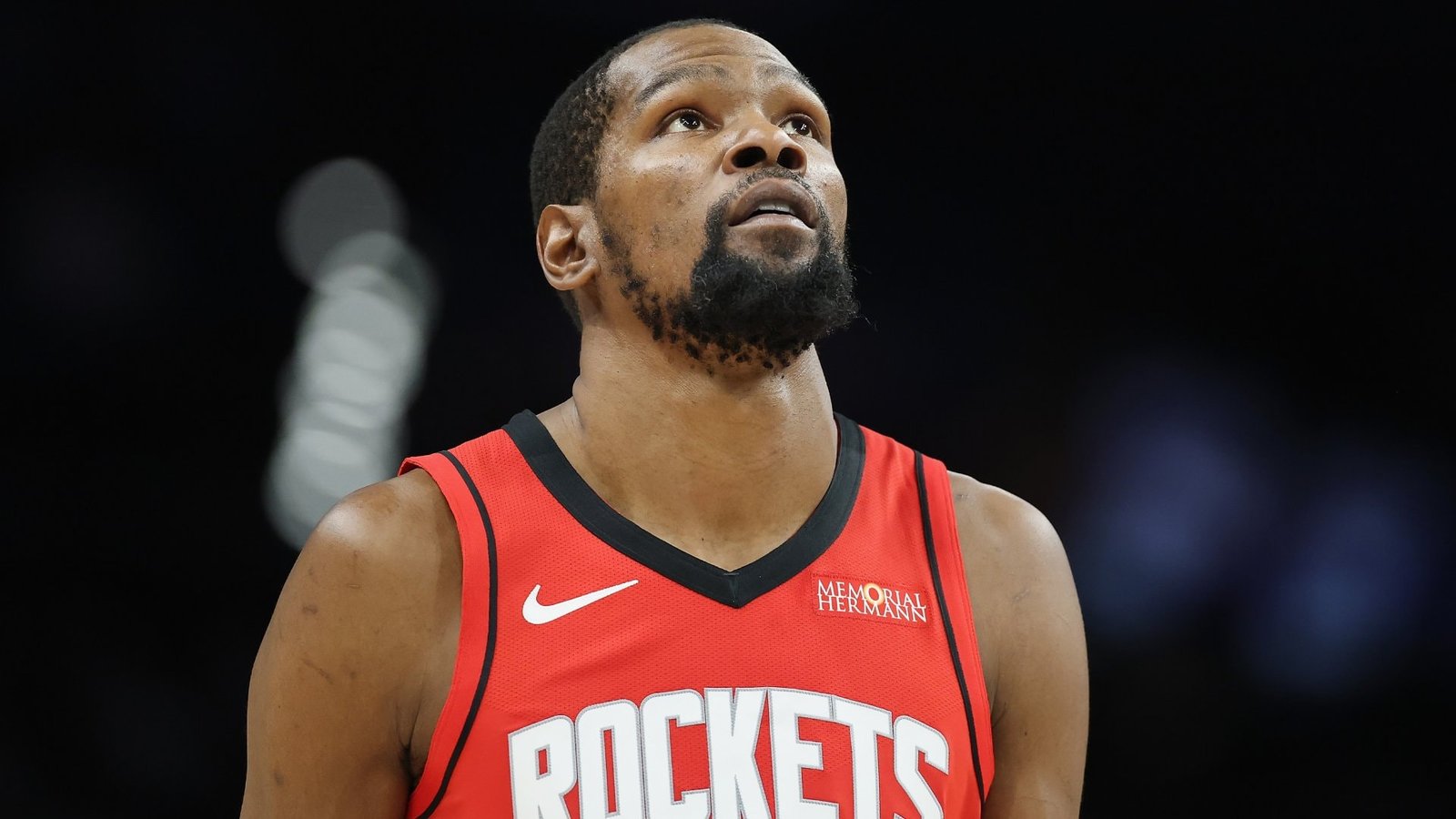
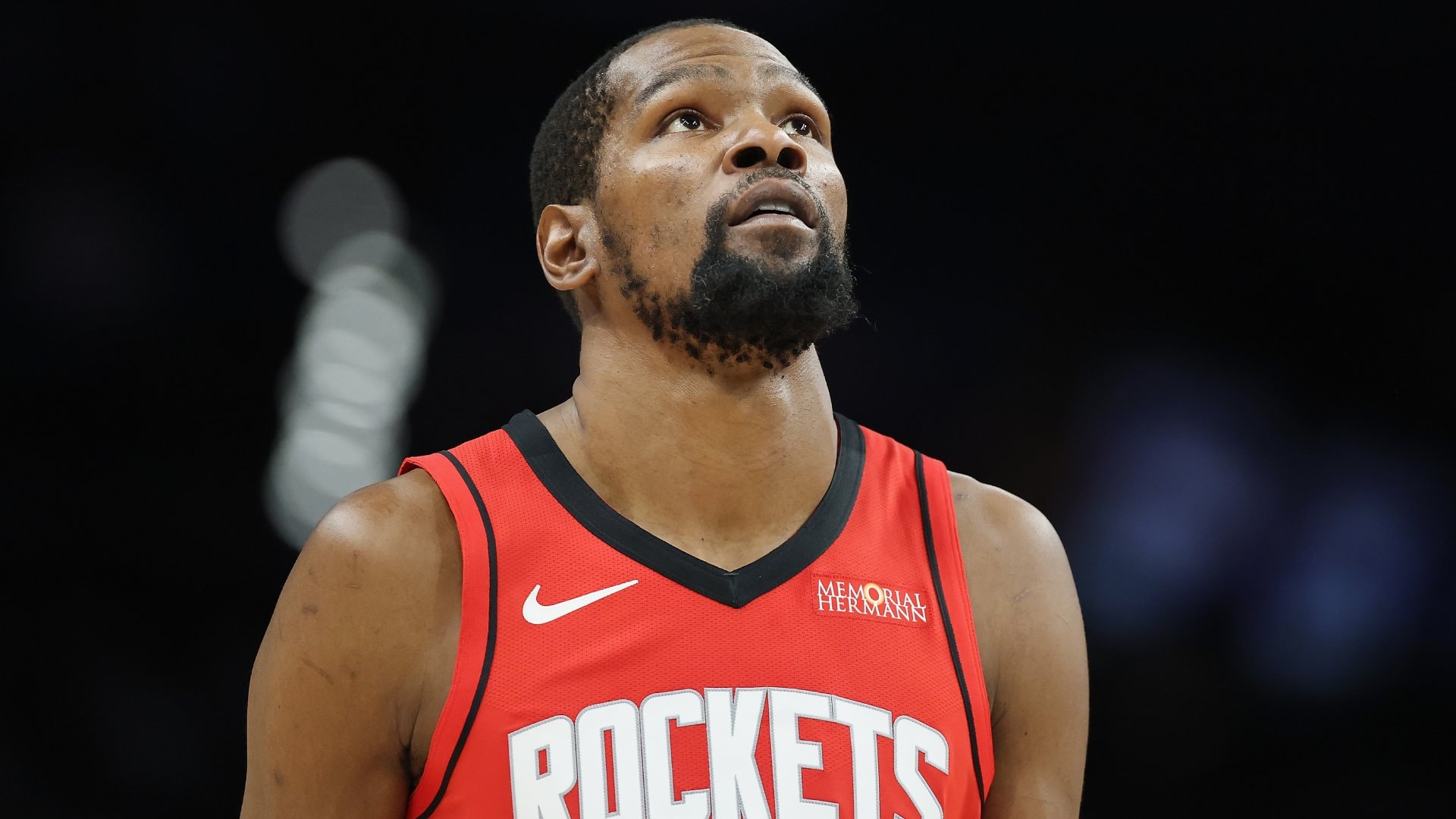
    Rockets star Kevin Durant has appeared in only 1 game so far in the team’s first-round series.

    HOUSTON — Rockets coach Ime Udoka said Saturday that injured star Kevin Durant was doing better but his status for Game 4 against the Los Angeles Lakers on Sunday night (9:30 p.m. ET, NBC & Peacock) was still unclear with the Rockets facing elimination.

    Durant missed Game 3 with a sprained left ankle on Friday night, when the Rockets blew a six-point lead with less than 30 seconds to go in regulation of an eventual 112-108 overtime loss to fall to 0-3 in the first-round series.

    “He’s getting treatment still around the clock,” Udoka said. “I think there’s some soreness and (he’s) pushed a lot of swelling out, but it’ll be a matter of if he can go. We’ll try it out I’m sure tomorrow morning and before the game, and we’ll know his status then.”

    Udoka was asked how likely he believes it is that Durant will play Sunday as the Rockets try to avoid being swept in the best-of-seven Western Conference series.

    “Every day that goes by, the likelihood goes up,” he said. “But I thought he might be OK (Friday) based on shootaround and that’s different going half speed and then ramping it up right before a game. And so you really can’t tell, but he’s doing everything he can to get back.”

    Durant missed the opener of the series because of a bruised right knee. He returned for Game 2, scoring 23 points in 41 minutes of the 101-94 loss, during which he injured his ankle late in the game.

    His injury problems this postseason came after the 37-year-old ranked second in the league in the regular season by playing 2,840 minutes.

    Durant, who is in his first season in Houston after an offseason trade from Phoenix, is the fifth-leading scorer in NBA history.