Tag: HollywoodReporter

  • Alexa Nikolas Wins Key Ruling In Defamation Case Against Bryan Freedman Over Smear Claims

    Alexa Nikolas Wins Key Ruling In Defamation Case Against Bryan Freedman Over Smear Claims

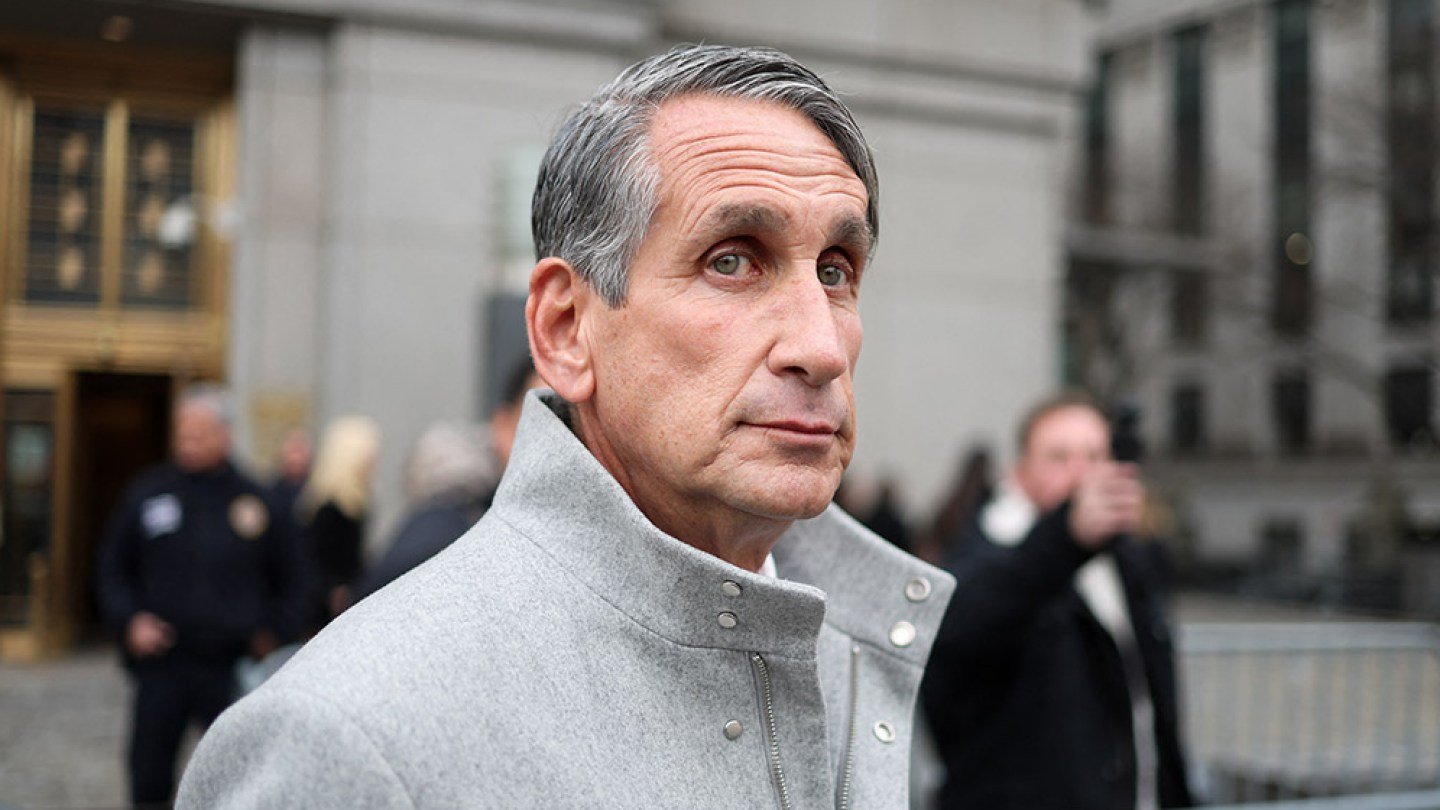
    Months after a resolution to the sprawling legal battle over the filming of It Ends With Us, Hollywood power lawyer Bryan Freedman is still dealing with fallout from the case.

    Zoey 101 alum Alexa Nikolas won a key ruling on Wednesday in a defamation lawsuit against Freedman, with a court finding that she’s established a probability of prevailing on defamation claims accusing him and those in his orbit of marshaling a smear campaign against her.

    Nikolas, founder of advocacy organization Eat Predators, has a long and contentious history with Freedman, who had represented her ex-husband Michael Milosh when she sued the musician for sexual abuse. She had organized protests outside of his offices in 2022 after discovering that he had also been accused of sexual assault in a case that resulted in a no-fault settlement in 1991. Around the time of these protests, a smear site that aimed to undermine her activism — including through assertions that her current husband was a predator — popped up about her.

    Nikolas didn’t connect Freedman to the site until Lively sued It Ends With Us director Justin Baldoni and his production company Wayfarer. The thrust of Lively’s lawsuit focused on alleged sexual harassment on the set of the film, but it also accused Baldoni and his public relations team — led by top crisis publicist Melissa Nathan and digital fixer Jed Wallace — of spawning a smear machine that threatened her reputation. This led to sister lawsuits, including one from publicist Stephanie Jones, who claimed that Nathan and Wallace have long engaged in creating smear sites targeting women. That gave Nikolas the ammunition to file a lawsuit, which points to alleged data identifying Freedman as involved in the generation of some of the sites.

    In Wednesday’s ruling, Los Angeles Superior Court judge Michael Whitaker rebuffed Freedman’s bid to dismiss the case. He concluded that Nikolas has produced enough evidence to potentially prove the alleged campaign was defamatory.

    Among the findings: Nikolas sufficiently demonstrated a probability of proving the allegedly defamatory statements were untrue. This includes a claim on a second smear site about her that she partnered with former California senator Joe Dunn to push others into making false accusations of sexual assault.

    Whitaker also pointed to court records across multiple cases in which several plaintiffs describe a “similar modus operandi and common website traffic optimization tactics.”

    Freedman had argued that Nikolas can’t prove the assertions advanced in the sites were false and that some were simply statements of opinion, which can’t give rise to a defamation claim. On this front, the court said that the allegations in the site “all imply provably false assertions of fact” that Nikolas is “either a criminal who has committed criminal acts, or she is not.”

    Multiple smear sites identified in the case between Jones and Baldoni appear to have evidence of common authorship, including Alexanikolas.net, which claimed she extorted multiple ex-boyfriends by threatening them with manufacturing sexual abuse claims, among other things. In Jones’ case, a cybersecurity expert submitted an expert report indicating that those who created the site about Nikolas may have also created ones about Amanda Ghost, who’s engaged in a defamation battle against Rebel Wilson.

    “There is a tangled web of connections between these sites and numerous others in addition to that authored about plaintiff,” Whitaker wrote, noting a “conspiracy to smear various individuals” who had adversarial connections to Freedman’s clients. That not only suggests a motive, the court found, but also indicates that the lawyer may have been “involved in directing or otherwise effectuating all of those alleged smear campaigns.”

    Earlier this year, Wilson’s crisis public relations team — comprised of Nathan and Wallace — was heard discussing plans to create anonymous sites that accused Ghost of sex trafficking as part of an alleged smear campaign solicited by the actress against The Deb producer. In a recording obtained by The Hollywood Reporter, Wallace instructed Nathan to assert without evidence that Ghost is a “madame” whose work involves procuring young women for wealthy and powerful men.

    “We can’t just do, like, oh, she’s a bitch, she sucks,” Wallace says in the recording. “It’s, like, it’s got to be really, really heavy and connected to something that heavy.”

    At one point in the conversation, Wallace referenced the involvement of Freedman, Wilson’s then-counsel in the case. Freedman and Nathan didn’t respond to requests for comment, though they’ve previously denied involvement in the creation of the smear sites.
  • Sally Field Recalls the Roles She Fought for the Hardest

    Sally Field Recalls the Roles She Fought for the Hardest

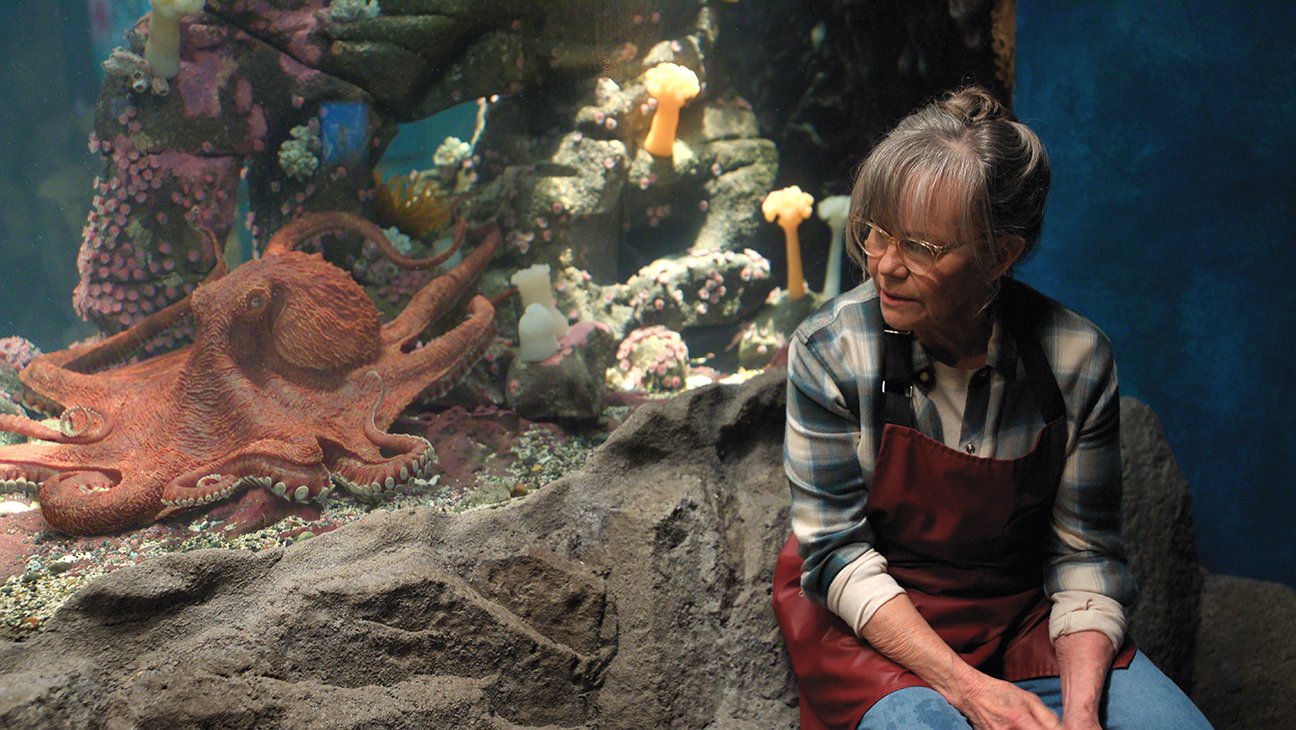
    Over the course of Sally Field‘s storied career, there have been opportunities to discover her character on set (like the ad-lib-heavy Mrs. Doubtfire) and those where it was all on the page (Tony Kushner’s Lincoln script). In Netflix’s, an adaptation of Shelby Van Pelt’s novel that’s sold more than 2 million copies, it was a little bit of both. “Lewis Pullman and I were improvising all the time,” Field says of her primary co-star … at least the one that’s not a CGI octopus. “That relationship was really created out of he and I playing with each other. You can kind of see it in the movie.”

    Her Emmy nom for the work isn’t just interesting because it’s her 10th (she has three wins), she’s also the first actress in nearly a decade to earn one for a TV movie. But for Field, who went from ABC’s The Flying Nun to an Oscar winner for Norma Rae early in her career, the medium is something she’s learned not to focus on.

    Is there some role or project you’re still itching to do that’s not being presented to you?

    My whole life, it’s been very difficult to find projects that I wanted to do. In the beginning, it was very difficult to find projects where they would even let me in the room to audition. I started in situation comedy television in 1964. In those days, they didn’t let you out. You lived and you died on that railroad track. You weren’t getting out. Even after I got to a place where [they’d let me audition], it has always been difficult to find films, characters, stories that I want to be part of me … that I would go, “OK, that’s it. This is the one.” It’s always taken me a long time. I never was an actor that was able to work back-to-back-to-back, doing one project after another. I just had to keep my head down, as they say.

    What were the conversations with your team like in those moments where you felt like you weren’t booking what you wanted?

    I didn’t think it was their responsibility. They would perhaps come across something that I might like, even if it wasn’t offered to me, maybe they would show it to me. But many times, the things that I finally, eventually did do, I found it. I came after it. Certainly Lincoln was one of them. I fight like crazy. You don’t get delivered things, and at least women don’t and certainly not older women. You don’t get a whole box of chocolate, so to speak, and say, “Hmm, which one do I want today?” It just doesn’t happen.

    Lewis Pullman and Field in the Netflix movie.

    Courtesy of Netflix

    Was Lincoln the role that you fought the hardest for?

    No, I fought hard for Sybil. That was a huge turning point. And I fought hard to get into this movie, Stay Hungry [1976]. That was the first [feature]. It was incredibly difficult to even get in the room. Nobody wanted me there. I could hear [director] Bob Rafelson in the back room yelling at Dianne Crittenden, the casting director, for even letting me sit in the waiting room because I was wasting his time. I had to use that anger as my fuel. It was a long haul to get to my movie career and then to find the things I wanted to do.

    You talk about this stigma of working in sitcoms at the beginning of your career. You went back to TV in 2006 with Brothers & Sisters — a time before a lot of other Oscar winners started working in both mediums. Did you feel that the iron curtain was lifting?

    I wanted to tell stories that were worth telling. I wanted to act. When I finally transitioned to film, I was able to find Norma Rae, Places in the Heart, Absence of Malice, Mrs. Doubtfire, Forrest Gump, Steel Magnolias and whatever they were. But the industry was changing at the same time. When Brothers & Sisters came along, it just struck me. Those five years, I’m proud of them. It’s about a woman who’s older, obviously, because she’d raised children. I understood that because I had raised sons. Also, I had a gay son who was just coming out or had just barely gotten his feet under him. I got to play a mother with a really great family and a great son [Matthew Rhys] who happened to be gay. And this was a very crucial time in our country when this was not done. I mean, Will & Grace had been done, but it was comedy and very broad.

    Matthew Rhys, the onscreen son from Brothers & Sisters who you just referenced, is nominated for two Emmys this year.

    Yes! Good for him. He deserves it.

    Do you keep in touch with him?

    I sure do.

    A very important scene in film history for me and several of my friends is you repeating the phrase “The whole time?” in response to learning your husband had been cross-dressing as the nanny in Mrs. Doubtfire. Would you mind telling me a little about filming that scene?

    That was me improvising. That whole sequence, we shot it at the end of the film. It was several days in that restaurant. But that moment, that is an ad-lib because the line was [supposed to be] very calm. “The whole time” was an improvisation. Robin [Williams] and I had created a relationship, a world where we improvised a lot. It allowed Mrs. Doubtfire to come alive because it was such a weird circumstance.

    I don’t know how much you think about how the work is going to be received commercially or critically while you’re making it, but I’d imagine that many people involved in Mrs. Doubtfire expected it to hit as big as it did. Did you feel that was the case?

    I think they thought it would be successful. Robin was at the height of just … brilliance. But I don’t think anyone saw it being as huge as it was. The script wasn’t what was on the page because of what Robin and I were allowed to do by [director] Chris Columbus. We did not want — and Robin felt this strongly, too — the mother to be the villain. We both felt that there were no villains in this divorce. Marriages don’t always last. Sometimes there are no bad guys. It’s time to move on. Without getting in the way of the comedy, it was a delicate dance to allow her to not be mean. She was hurt to lose her marriage, too, but he was impossible. Who could be married to this guy?

    Field with Robin Williams in 1993’s Mrs. Doubtfire

    20th Century Fox Film Corp/Courtesy Everett Collection

    Looking back at the whole of your career, what do you feel like the biggest risk you took was?

    Everything’s a risk. Otherwise, forget it. If it’s not a risk, then stay home. Easy is overrated.

    You and your Lincoln collaborators Tony Kushner and Steven Spielberg saw Oh, Mary! before it went to Broadway. Now that Cole Escola has ceded the role to a revolving door of famous actors, would you ever step back into Mary Todd Lincoln’s shoes?

    No, no, no. (Laughs.) Maya Rudolph [just did it], and I couldn’t be in her world. She’s never not great. And Cole is so dazzlingly talented. I think they tried to keep it from them, the three of us were in the audience when we saw it. I can be in awe of it, but I can’t do it.

    This story first appeared in an August stand-alone issue of The Hollywood Reporter magazine. To receive the magazine, click here to subscribe.

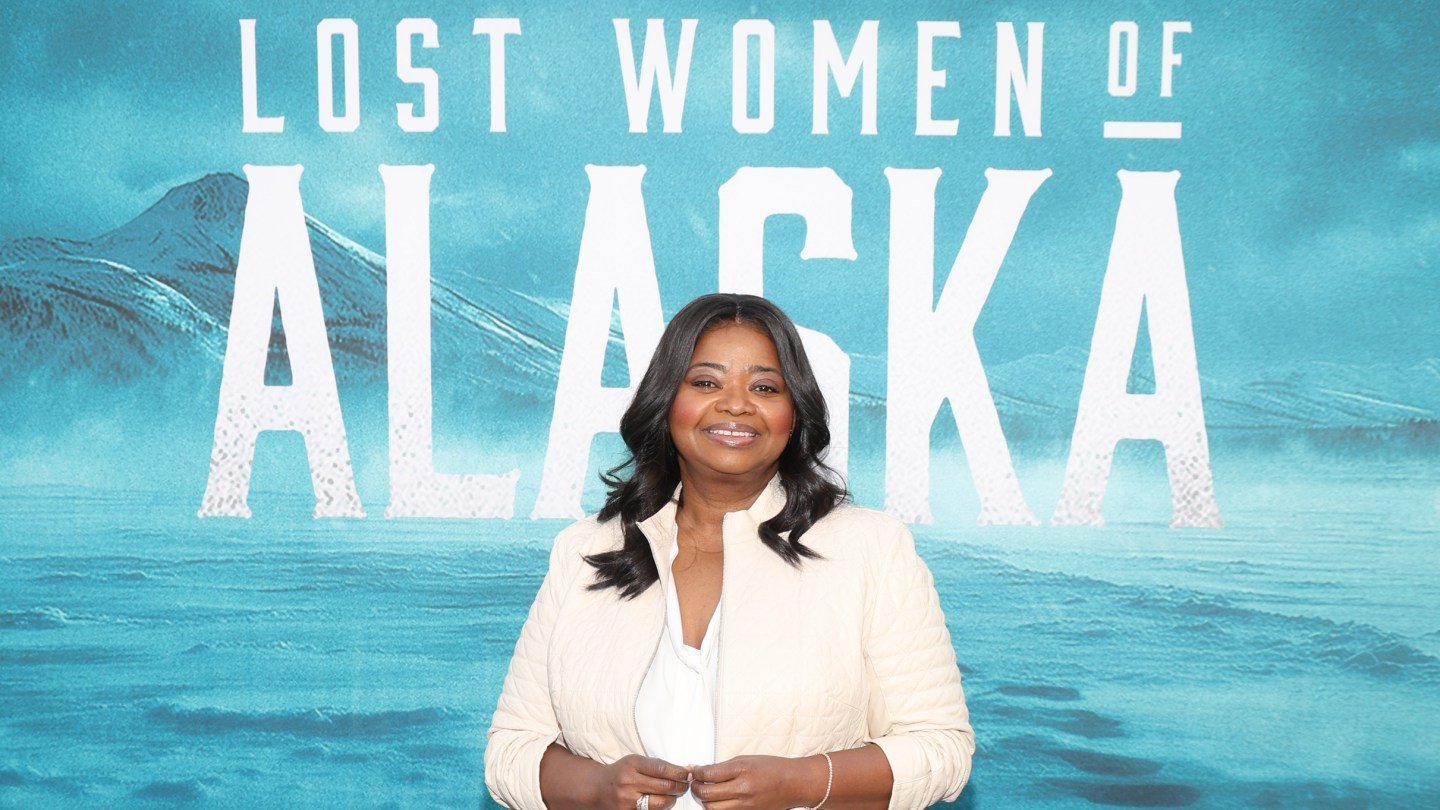
  • “We Don’t See This as Entertainment”: ‘THR Presents’ Q&A With Octavia Spencer on True Crime Docu-Series ‘Lost Women of Alaska’

    “We Don’t See This as Entertainment”: ‘THR Presents’ Q&A With Octavia Spencer on True Crime Docu-Series ‘Lost Women of Alaska’

    The murders of two Alaskan Native women, Kathleen Jo Henry and Veronica Abouchuk, at the hands of serial killer Brian Steven Smith, are centered in ID’s Lost Women of Alaska.

    The three-part series narrated and executive produced by Octavia Spencer lays out the vulnerabilities that allowed Smith, who is serving a 226-year sentence for the killings, to prey upon Henry, Abouchuk and countless other native women he and other men are suspected of harming, from remote terrain to racism and biases against sex workers.

    “Amplifying these stories is our duty,” said Spencer, who’s nominated for an Emmy for best narrator for her work on the series, during a taping of THR Presents powered by Investigation Discovery. “These women had lives, they have loved ones, and they are human. We are human.”

    Right from the beginning, the series lays out the disproportionate number of missing persons in Alaska—roughly 1,300, with only 100 being actively worked on. Were you aware of the situation in Alaska prior to this project?

    As a Black woman, I know that our stories here are not prioritized. So it was not shocking, sadly, to me, that these indigenous women were going missing at alarming rates. It’s a systemic failure within our culture to disregard people who are Black and brown. 

    The end of the third episode notes that Brian Steven Smith is still being investigated for possibly committing more crimes in Alaska and his native South Africa. Are there any new developments?

    Without having concrete evidence, these aren’t his first victims. He was too good at it and had his modus operandi. He went to Alaska because it was a broader playing field, of that I am sure. But the same way that they weren’t vigorously investigating the indigenous women, I can almost assure you that his victims [in South Africa] were Black and aren’t being as rigorously investigated either. 

    True crime, as a genre, has been critiqued as sensational. What sets Lost Women apart?

    We don’t see this as entertainment. I don’t watch true crime for entertainment. I watch it to gain knowledge, and if I’ve seen something, I want to be responsible and report it. Lost Women, for us, is one about being restorative of lives and voices and bringing some resolution, hopefully, to families. It’s not that we glamorize crime against women. I find it abhorrent. Lost Women is about empowering all women and young girls to be a part of a community that helps each other, that we see each other, that we report, and that we fight for laws that protect us. This is a passion of mine, but not for entertainment, for justice for these victims.

    This is your second narration Emmy nomination, both of which were for the Lost Women series. What does that mean to you?

    It’s wonderful because it amplifies the story of the Lost Women of Alaska. I always joke and say, “Is my voice the right one to be narrating their stories?” But visibility is something that I can give with my name. And the voice — I’m compelled to use it for good and to tell these women’s stories because they can no longer tell their own stories. So it’s very, very humbling. And it’s not for me. I see this as a nomination for The Lost Women of Alaska.

    Watch the full Q&A with Spencer in the video above.

  • Shooting Blancs: Why Hollywood Is Drunk on “White Wine Thrillers”

    Shooting Blancs: Why Hollywood Is Drunk on “White Wine Thrillers”

    It was just three years ago when Bela Bajaria revealed the internal label for Netflix’s programming ideal, the gourmet cheeseburger. Evoking populist fare with a garnish of prestige, it seemed like the only dining-related descriptor the TV industry would ever need. But there’s a new moniker on the rise, which I learned when a screenwriter friend recently shared their concerns about a project never getting out of development. The rationale? “Oh, they’re only buying white wine thrillers.”

    This trio of words is so evocative that it barely needs a definition. Let’s establish one, just to be safe. A white wine thriller can get dark but not too dark. The body count is kept low. A few murders, nothing too graphic. There must be aspirational elements, typically wealthy characters wearing Brunello Cucinelli while emotionally unraveling in Nancy Meyers-worthy kitchens. White wine thrillers are often adaptations of books. And, pivotally, they are centered on female protagonists and marketed with a female audience in mind. The characters may drink white wine. They frequently do. The real implication is that the viewer is drinking it as they watch.

    Roots of this label can be traced to Peacock. “It was just after All Her Fault, we were talking about female-led thrillers, and one of the executives called them white wine thrillers,” says Lisa Katz, president of scripted content at NBC and Peacock. “I don’t know what that conjures for you, but I like wine. To me, white wine feels lighter, refreshing, enjoyable. It goes down easy. You don’t feel bad the next day.”

    For every person I’ve approached who claims to have never heard the term, there are at least another two who trill with excitement at its mention. And not because the white wine thriller is anything revelatory or new. It’s because there are finally the words to articulate a kind of show we’ve been watching for years. Look back at the female-driven hits of the past decade, and so many fit the bill. Netflix’s adaptation of Elin Hilderbrand’s The Perfect Couple? Quintessential white wine thriller. Hulu’s Nine Perfect Strangers? Big white wine energy. HBO’s The Undoing? Pour another glass of Grüner. In short: If Nicole Kidman is in the mix, keep a corkscrew within arm’s reach. This brings me to Big Little Lies. No series better encapsulates the tenets of the white wine thriller. HBO assembled The Avengers of A-list actresses, put them in stunning homes on the California coast, asked viewers which one killed the shitbag husband played by Alexander Skarsgard, and our cups ran over.

    All Her Fault is the latest industry standard for white wine thrillers. The 2025 miniseries, which stars Sarah Snook as a mother unraveling the cashmere mystery of her missing son, is nominated for seven Emmys. It’s a watershed hit for Peacock. Until the recent launch of the Jennifer Garner drama Five Star Weekend, All Her Fault ranked as the most watched original in the streamer’s history. The fact that, in the wake of All Her Fault’s success, Peacock announced in July that it was finally profitable certainly suggests that white wine thrillers are worth the investment.

    “It’s such a good phrase because you immediately understand exactly what it means,” says Tessa Coates, the comedian turned showrunner behind Prime Video’s Ride or Die. “But thrillers, when correctly done, are incredibly difficult to pull off. The fact that you enjoy them with a white wine is not a damning thing. White wine makes it clear that we’re here for a bit of fun. If you wanted to be truly damning, you would call it a prosecco thriller. That says, ‘We’re sugar. We’re sweet. We’re silly.’ “

    Coates’ series starring Octavia Spencer and Hannah Waddingham skews too comedy and too action to satisfy the white wine criteria, the most comedic-skewing example of the genre likely being Kaley Cuoco’s The Flight Attendant, but Ride or Die is part of a wave of female-fronted hits setting the summer TV narrative. Apple TV has the Anya Taylor-Joy-fronted Lucky, which is said to skew too male to be a white wine. The aforementioned Five Star Weekend is deliberately short on thrills (“It’s possibly more of a rosé,” jokes Katz). And then there’s Furious, on Hulu, a red wine thriller.

    Red wine thrillers check many of the same boxes as their sauvignon blanc counterparts. The biggest differences are higher body counts and a bit of grime where you’d normally find the aspiration. Picture Amy Adams in Sharp Objects. Her alcoholic character may have been quaffing vodka from Evian bottles, but that was a red wine thriller all the way. A red wine thriller demands a stronger constitution, a willingness to wake up the next morning with some lingering effects. Those watching Furious — Liz Meriwether and Emmy Rossum’s cat-and-mouse thriller about an Epstein-esque victim taking out her rapists one by one — know the series is not so easy to shake.

    “A red wine thriller stains your teeth, it’s tannic,” one producer tells me, noting that white wine thrillers are in higher demand but that some buyers have developed a taste for red. “Peacock and Hulu are definitely looking for white wine thrillers. Netflix and HBO Max might skew more red. And Paramount has absolutely no idea what it wants.”

    Paramount appears to be, as a recent THR report detailed, finally turning its attention to women after so many years relying on the work of Taylor Sheridan and his abundant testosterone. All this serves as a reminder that programming for or about women is still spoken of in terms that would almost never be used for men. Male-skewing series don’t suffer such labels, as much as I’d argue for Shane Gillis’ Tires being dubbed a Kirkland Signature comedy. Calling something a white wine thriller could be interpreted as pejorative, if not sexist.

    “Looking at these female-fronted shows that are doing so well, they’re all different,” says Larry Salz, an agent and partner at UTA. “I think the danger of boxing them in is the notion of a network going, ‘Well, we already have our female thriller.’ “

    Taxonomies, even cheeky ones, can also be helpful. In a marketplace so often defined by confusion, calling something a white wine thriller offers a rare bit of clarity for all parties. “People want to categorize because people are always trying to figure out what audiences want,” says Katz. “What I’ve learned is that you never know what they want. So the only way to approach this is to make something entertaining, something well-executed that will connect no matter the genre.”

    This story appeared in the Aug. 12 issue of The Hollywood Reporter magazine. Click here to subscribe.

  • What Showrunner Will Smith’s Exit Means for ‘Slow Horses’ Season 6

    What Showrunner Will Smith’s Exit Means for ‘Slow Horses’ Season 6

    Slow Horses, Apple TV’s wry cult spy series, isn’t planning on, well, slowing down anytime soon.

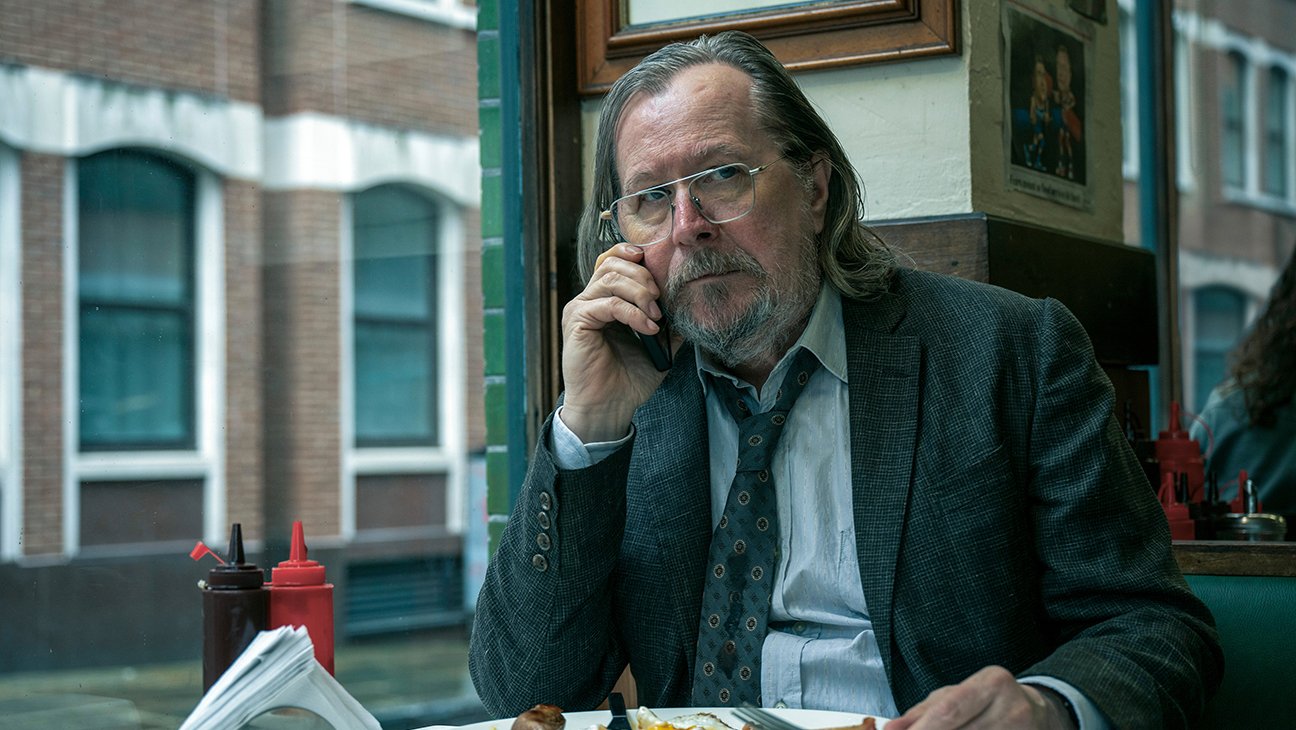
    The show, starring Gary Oldman as the crotchety and flatulent Jackson Lamb; Jack Lowden as River Cartwright; and Kristin Scott Thomas as MI5 director Diana Taverner, hit a bit of a snag at the end of its most recent fifth season, when lead writer and executive producer Will Smith walked away from the show for other pursuits.

    While Slow Horses, which films in Britain, doesn’t operate with a traditional showrunner, Smith served as the de facto captain at the helm. His departure raised some questions about the future of the slow-burn series. However, executive producer Doug Urbanski says the production, in part because there isn’t a lone showrunner, had built up a creative foundation that meant if they couldn’t figure out the best way forward, they should all resign.

    “Will leaving really meant that we just had to solve it, and I think we did, as you will see with season six about to premiere,” Urbanski says. “Some people have seen it already and have said they think it’s the best season yet. Now we’ve heard that season after season, but it is very good.”

    After the first couple of seasons flew under the radar, Slow Horses has in recent years cemented itself among shows consistently vying for critical recognition. For its most recent season, the show nabbed nine Emmy noms, including lead and supporting actor nods for Oldman and Lowden, as well as best drama series.

    “There’s not one award that I’ve been nominated for that I haven’t been surprised by, and the same goes for Gary,” Urbanski reveals. “Awards add another sort of pressure to the whole thing. … So we don’t really think about awards, and we don’t make the show for awards. But the recognition is nice.”

    The sixth season of Slow Horses is set to premiere Sept. 16. Co-executive producer Gaby Chiappe was tapped to serve as lead writer for the season, which will be the first in the series to adapt two of author Mick Herron’s books for a single season — usually one book nets out to one six-hour run of a season.

    Urbanski says in order to keep the character and story momentum of previous seasons going, combining the sixth and seventh books in Herron’s series made the most sense. “We thought the two books each were thin enough,” he explains, adding that Herron’s novels remain the creative foundation for the series. “Often some of the best dialogue and scenes you see in the show are stuff that Mick Herron has already authored.”

    With nine books on the shelf and a seventh season of TV based on the eighth novel already in production, the runway for the series after that point remains a question for fans. Urbanski says, however, the creative team is committed to keeping the show going, so long as they’re able to continue balancing its delicate tone and everyone involved — Apple, Oldman, etc. — wants to keep showing up.

    “We’re all having the family conversation,” Urbanski says. “But get this: Most TV shows don’t have books, so we can figure this out. … And there’s another thing: Mick Herron hasn’t stopped writing. I can’t speak for Mick, but you never know, more books might be coming.”

    This story first appeared in an August stand-alone issue of The Hollywood Reporter magazine. To receive the magazine, click here to subscribe.

  • ‘House of the Dragon’ Star on Narrowly Cheating Death: “They Can’t Get Rid of Me That Easily”

    ‘House of the Dragon’ Star on Narrowly Cheating Death: “They Can’t Get Rid of Me That Easily”

    [This story contains MAJOR spoilers from the House of the Dragon season three finale.]

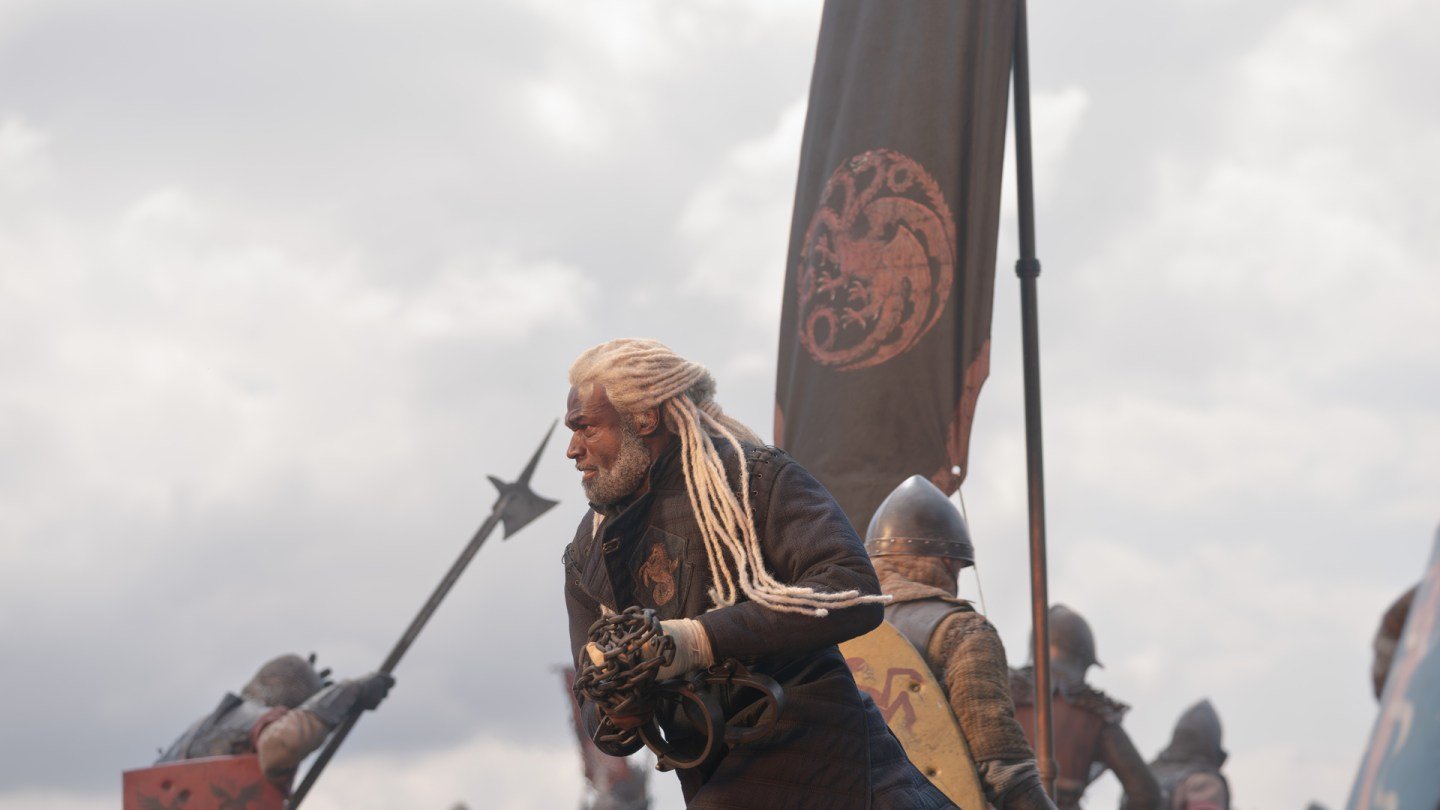
    Exiting the penultimate season of House of the Dragon, several season one alums who started the series are no long with us: Rhys Ifans as Otto Hightower, Harry Collett as Jacerys Targaryen, Fabien Frankel as Criston Cole, just to name a few. One original cast member, however, is very much still with us, even if it looked pretty touch-and-go for a while there: Corlys Velaryon, the Sea Snake, played with royal gravitas by Steve Toussaint.

    The Sea Snake started season three in the midst of the largest naval battle ever seen in the Game of Thrones universe. He survived that, despite a brief period where it appeared he’d been killed in action. Later, after Rhaenyra (Emma D’Arcy) refused to legitimize his bastard sons, Corlys publicly calls out the queen’s hypocrisy with her own children, and somehow manages to keep his head on his shoulders. Later still, after waging a private war against the crown’s defectors, Corlys ends up in the hands of the Hightowers in Tumbleton — and he survives that only by the good grace of Gwayne (Freddie Fox) exchanging Corlys to Daemon (Matt Smith) as a peace offering.

    Alas, the peace does not hold even for a minute, as Daemon takes Corlys back as a prisoner, and embarks on a fiery campaign against Tumbleton. By the end of it, Daemon faces death’s door, but is pulled away just in the nick of time by — you guessed it — the Sea Snake himself.

    If that felt like a rollercoaster to ride, imagine living it. Better yet, imagine being Toussaint, one of the most stalwart cast members of the Game of Thrones prequel, inhabiting that ride. Below, the actor speaks with The Hollywood Reporter about all of that and more.

    ***

    I have spoken to a lot of actors this season about their character’s deaths. It’s a nice change of pace to speak with an actor who still has some HOTD job security!

    So far! (Laughs.) You never know how long it’s going to last. I kept getting stuff from friends and family and social media going, “Are you still alive? Do you live? Come and tell me.” So it’s nice that I can say that yes, for now, I’m still here. Who knows what tomorrow may bring. But for now, I’m still employed. They can’t get rid of me that easy. 

    Corlys begins the season fighting for Rhaenyra’s cause, and ends the season as a prisoner of that same cause. It’s quite the journey for the Sea Snake.

    It is. There have been so many different facets to him that we’ve had a chance to explore this season, particularly him showing humility and vulnerability with his son, Alyn. One of the big things, of course, is that he apologizes for his earlier actions to Alyn in that scene in episode one. The other thing that’s consistent about him is, of course, taht Corlys is so steadfast in doing what he considers to be the right thing, no matter the personal cost. That’s been fascinating about him.

    Then at the same time — and this is from Corlys’s point of view — when he then says to the queen, “Look, I’ve lost all of this stuff. I’ve lost my wife. I’ve lost my kids. I now have lost my home and much of my fleet. Could you at least legitimize my two sons?” She sort of goes, “Not just yet.” There is a sense of righteous indignation on his part because I think for him, the only thing he can do is to try and put his sons in a position where they can better themselves, where carrying his name will help them.

    So it has been fascinating to see how he’s dealt with what he considers to be a betrayal by the realm. Of course, initially, he avoids King’s Landing and goes off on this rampage mopping up dead pirates and trying to calm his rage. It was a really lovely journey and lovely to explore these different facets of this character.

    You’re at the heart of my favorite scene of the finale: the hostage negotiation between Daemon and Gwayne, with you as the bargaining chip. What was it like, inside the scene?

    It was lovely. What was so good about it was you don’t quite know where Corlys is going to come down. Several times when I read the scene through, and then when we rehearsed it, I said to both Andrij Parekh who directed the scene, and then to David Hancock, one of our execs, “What is it that Corlys has said here that’s so bad?” Because when we were shooting it, Matt obviously plays the lines, but sometimes he likes to ad lib some stuff as well. He was just going wild with some of the insults he was throwing at me.

    Tommy Flanagan, Freddie Fox, Steve Toussaint and Matt Smith in the House of the Dragon finale.

    HBO

    Do we want to know?

    I don’t know. (Laughs.) I was like, well, I don’t know what he said that’s so bad, because it made sense to me! Corlys is at a point where he’s seen so many battles, seen the futility of war, and there is actually no need for him to shed any more blood than is necessary. So it’s unfortunate for him, of course, that he’s up against Daemon who’s like, “Oh no, everybody has to die.” It was lovely. We had a lot of fun. I don’t know how many times we actually shot that in the end, but the peaks and troughs of the scene were really lovely to play. They’re two wonderful actors to work with anyway. So yeah, it was a lot of fun.

    Were you disappointed to miss out on the big battle at the end of the season, or was the sea battle in the premiere hard enough work for you?

    I was happy to take a break. The premiere battle was so tough. We must have shot something like three or four weeks, maybe longer, of the battle itself, which ends up being about 10 minutes. I was quite happy just to be watching the dragons flying over and then doing a bit of running and jumping [in the finale]. That was good for me. I wouldn’t have minded cutting somebody up from the navel to the throat just to show that Corlys can! But no, I leave it to those guys to do that stuff.

    By the end of the season, Corlys — freshly imprisoned by Daemon — actually seeks out Daemon and is the one to talk sense into him: We’ve lost, and it is time to go. Where is the Sea Snake’s head at when he convinces Daemon to leave?

    What I saw when I watched the scene is what happens to Daemon after that explosion where he suddenly comes to. I think Daemon realizes they’re not going to win. So he starts looking for fights because I think he wants to go down fighting. He’s just looking to fight until somebody chops him down. It’s a death wish, I believe. Corlys saves him from himself. He sees in Daemon someone who is formidable, someone who is worthy and someone who is a vital instrument for the queen’s cause. I think that’s what Corlys is thinking when he saves Daemon. Their relationship has always been a bit up and down. Where will it go after they leave this scene? I’m not sure. 

    It should be an interesting return to King’s Landing, at the very least.

    Right, because the last time Corlys was with Rhaenyra, he called her out in public. And normally, people die for that. Now of course, at that stage, Corlys still had some use to the queen, but I’m as interested as anybody else to see what the relationship is like between him, Rhaenyra and Daemon. I do not have a clue, frankly.

    You could always read the book and find out! But if you’re going purely on instinct, as the man who inhabits this character, what’s your feeling on how things will shake out for you in season four?

    I feel like he comes back and is like, “Let’s put that shit behind us or let’s deal with that later. Right now we have a war to win, and that’s more important than anything else.” As you said, I haven’t read the books. I made that decision very early on that I wasn’t going to read the book while I was playing this. And I have tried in the past or just saddled up to Ryan [Condal] and sort of go, “What’s the story?” And he’s like, “I can’t tell you, but it’s good stuff. You’ll like it.” 

    What do you want to see when it comes to that good stuff? Is there anything left on the bucket list to make sure you achieve in the final season?

    (Pauses.) No, not really. We’ve seen him angry, we’ve seen him sad, seen him loving with his wife. I can’t think of any one particular thing that I’m like, “Oh yeah, we have to do that.” I’m just happy to be surprised.

    Is it too late to go for a dragon ride?

    Oh, you’re right.

    Maybe he’s just a late bloomer!

    Exactly. Or even he goes for a joyride with his son, Addam. Yes, that’s it. You’re right. That’s the one. I’m going to have to start putting that into Ryan’s ear.

    I’m picturing Corlys on one dragon, Addam and Alyn on the other, and you part ways across the Narrow Sea like the Westeros version of the end of Furious 7.

    From your mouth to Ryan Condal’s ears!

    ***

    House of the Dragon season three is now streaming on HBO Max; read THR‘s finale coverage.

  • Where to Watch 2026 FedEx St. Jude Championship Online

    Where to Watch 2026 FedEx St. Jude Championship Online

    If you purchase an independently reviewed product or service through a link on our website, The Hollywood Reporter may receive an affiliate commission.

    The 2026 FedEx Cup Playoffs commence on Aug. 13 as the top 69 golfers (formerly 70; Daniel Berger withdrew due to injury) compete in the St. Jude Championship. The four-day tournament, the first of three playoff events, has a $20 million purse at stake ($3.6 million for first place) and, of course, advancement to the BMW Championship. This year’s St. Jude Championship will air across CBS, ESPN and Golf Channel, all three of which can be livestreamed via DirecTV (with a five-day free trial) or Hulu + Live TV.

    At a Glance: How to Watch FedEx St. Jude Championship 2026

    • Dates: Thursday, Aug. 13-Sunday, Aug. 16 (broadcast times below)
    • TV channels: CBS, ESPN, Golf Channel
    • Stream online: DirecTV, Hulu + Live TV

    Since three primary TV networks share broadcasting rights of the tournament (CBS, ESPN and Golf Channel), neither Paramount+ (which will simulcast CBS’s two weekend windows) nor ESPN+ (which will simulcast ESPN’s linear TV coverage on Thursday and Friday mornings) will suffice for full event coverage — only partial. In a similar vein, live TV streaming service Fubo includes both CBS and ESPN (and also offers a five-day free trial), however, due to a carriage dispute, it does not currently carry Golf Channel.

    Where to Watch FedEx St. Jude Championship 2026: Broadcast Schedule

    The 2026 St. Jude Championship will be broadcast across CBS, ESPN and Golf Channel from Thursday, Aug. 13 through Sunday, Aug. 16.

    • Thursday, Aug. 13: 6-8 a.m. PT (9-11 a.m. ET) on ESPN; 11 a.m.-3 p.m. PT (2-6 p.m. ET) on Golf Channel
    • Friday, Aug. 14: 6-8 a.m. PT (9-11 a.m. ET) on ESPN; 11 a.m.-3 p.m. PT (2-6 p.m. ET) on Golf Channel
    • Saturday, Aug. 15: 10 a.m.-12 p.m. PT (1-3 p.m. ET) on Golf Channel; 12-3 p.m. PT (3-6 p.m. ET) on CBS
    • Sunday, Aug. 16: 9-11 a.m. PT (12-2 p.m. ET) on Golf Channel; 11 a.m.-3 p.m. PT (2-6 p.m. ET) on CBS

    Note: ESPN+ (which is also available via DirecTV’s five-day free trial period) will air early morning coverage leading up to the National TV coverage listed above.

    Where to Stream FedEx St. Jude Championship 2026 Live Online

    The tournament will be broadcast across CBS, ESPN and Golf Channel, all of which can be livestreamed on any streaming service that carries said networks, namely DirecTV (with a five-day free trial) and Hulu + Live TV (more on each plan below). Since the tournament runs for four days and DirecTV’s free trial runs for five, new subscribers can enjoy full PGA Tour event coverage (via its Choice, Ultimate and Premier Signature packages) at no cost.

    Alternatively, Fubo includes both CBS and ESPN (and also offers a five-day free trial), however, due to a carriage dispute, it does not currently carry Golf Channel, meaning select windows of coverage will be absent.

    Five-day free trial; packages from $19.99 per month

    CBS, ESPN and Golf Channel are included in DirecTV’s top three Signature packages: Choice, Ultimate and Premier. Plus, DirecTV offers a five-day free trial for its streaming service, meaning new subscribers can tune in at no cost for a limited time.

    Three-day free trial; packages from $89.99 per month

    Watch CBS, ESPN and Golf Channel with Hulu + Live TV, which offers a three-day free trial. Subscriptions come bundled with Disney+ and ESPN+, and start at $89.99 per month.

  • ‘The Matrix’ Director Lilly Wachowski Says Hollywood Won’t Finance New Film With Trans Cast

    ‘The Matrix’ Director Lilly Wachowski Says Hollywood Won’t Finance New Film With Trans Cast

    Lilly Wachowski, who co-directed The Matrix franchise, is opening up about the struggle to get financing for her new film that features a “wall-to-wall trans cast.”

    During a recent interview on KCRW’s The Business podcast, the filmmaker acknowledged that it’s unfortunately “not the greatest time in the industry to be trying to make these kinds of things because all of these opportunities are dwindling for folks with those kinds of stories to tell,” specifically those with “underrepresented voices and marginalized points of view.”

    Wachowski used her next project, The Hunted, as an example, saying it’s been a challenge because when she showed the script around Hollywood, nobody wanted to finance the dystopian political thriller that’s budgeted at roughly $10 million.

    “People like it, but they really don’t want to make it because it’s [got a] wall-to-wall trans cast,” she said of the film. “I have to get creative and figure out different ways that I can get this in front of people.”

    Wachowski added that the script, which she co-wrote with her partner, Mickey Ray Mahoney, “was extremely important for me to write.” She continued, “It was a response to what is happening in the world for trans people, and it gave me a hugely cathartic receptacle to dump all of my anger and rage and frustration into.”

    Despite her funding obstacles, Wachowski said she’s pivoted to other ways to get this story in front of people “that maybe isn’t a $10 million movie,” such as holding a live table read at Los Angeles’ Dynasty Typewriter theater earlier this month.

    “I’m just going to go out and I’m going to grab that trans joy with all of my friends. And we’re going to hopefully experience this together.” Wachowski said of The Hunted table read. “It’s not the thing that I had imagined it was going to be, but the end result is the same.”

    In addition to Wachowski and Mahoney, The Hunted is being produced by Lawrence Mattis and Sarah Marie Flores at Anarchists United and Natasha Lyonne at Ariadne Collective.

    Wachowski is best known for helming 1999’s The Matrix, 2003’s The Matrix Reloaded and 2003’s The Matrix Revolutions alongside her sister, Lana Wachowski. She’s also directed 1996’s Bound, 2005’s Speed Racer, 2012’s Cloud Atlas and 2015’s Jupiter Ascending, as well as co-created the TV series Sense8.

  • Zurich Film Fest Galas Set for Award Contenders ‘I Play Rocky,’ ‘Possible Love,’ ‘Josephine’

    Zurich Film Fest Galas Set for Award Contenders ‘I Play Rocky,’ ‘Possible Love,’ ‘Josephine’

    The Zurich International Film Festival unveiled highlights from its gala program Thursday, with a selection of “auteur cinema for a broader audience” in the words of festival boss Christian Jungen —that should further cement Zurich’s position as a key international stop for awards season.

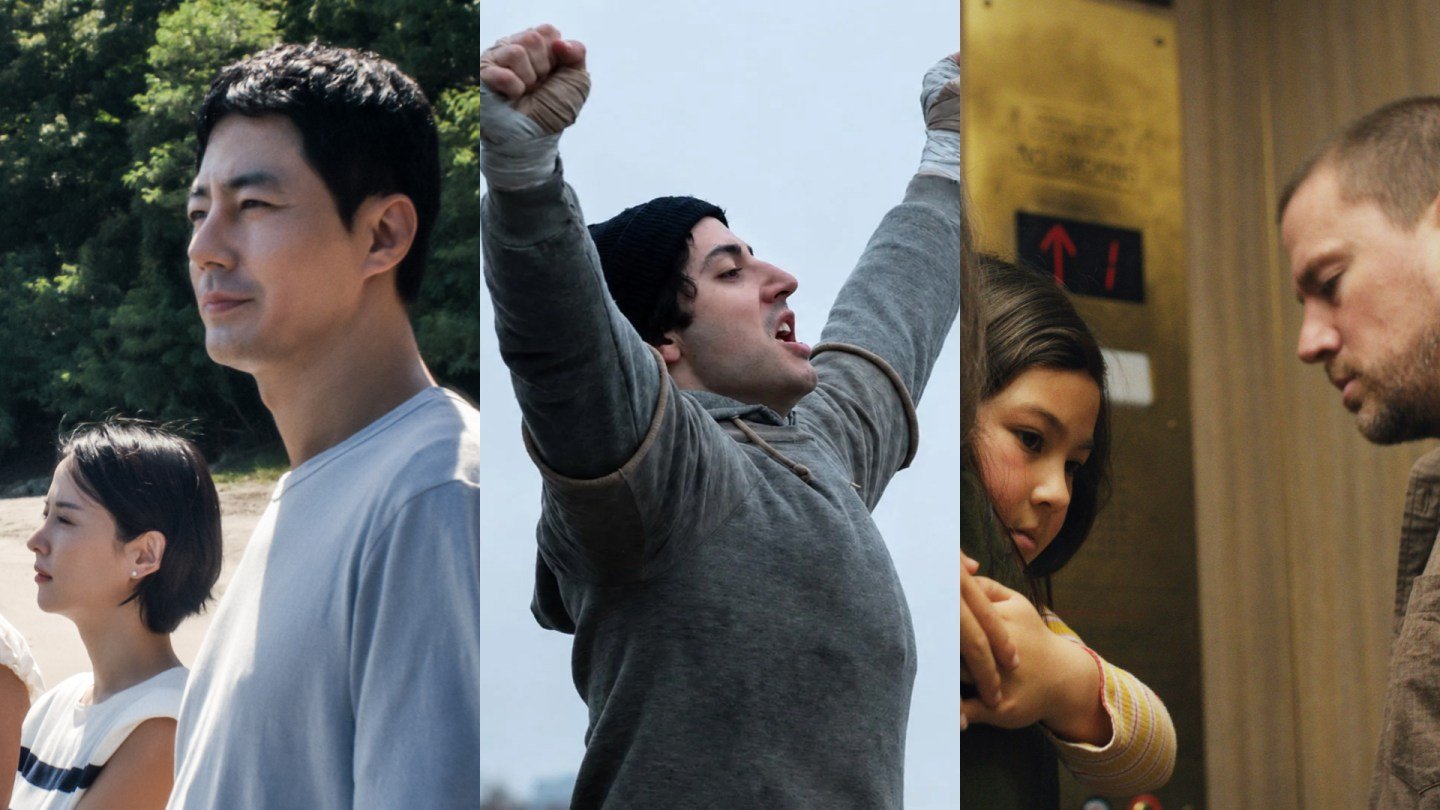
    The gala lineup includes several of this year’s buzziest titles, among them Peter Farrelly’s I Play Rocky, Beth de Araújo’s Josephine starring Channing Tatum and Gemma Chan and Possible Love, the new drama from acclaimed Korean director Lee Chang-dong (Burning).

    I Play Rocky, starring Anthony Ippolito as a young Sylvester Stallone, will have its world premiere in Toronto. Netflix title Possible Love premieres in Venice. Josephine screened at Sundance and Berlin.

    Love, After All

    c_Andres_Dresen_Kordes_und-Kordes_Film_Pandora

    Zurich also announced three world premieres. Films from two of Germany’s most acclaimed directors: Love, After All from Andreas Dresen (Cloud 9) and Doris Dörrie’s How Can I Help? will both launch at the Swiss fest — “their films are grounded in everyday life and, with a little wink, reflect on the state of our society,” says Jungen — as will Simon Wallon’s documentary The Hammer, a look a famed auctioneer Simon de Pury.

    How Can I Help?

    Zeitsprung_Pictures_Wild_Bunch_Germany_Mathias_Bothor

    The Hammer

    Kiss__Kill

    Other 2026 Zurich festival galas include 111 – Echoes from Halifax, a true-life drama from Mexican-Swiss director Mauro Mueller about the 1998 crash of Swissair Flight 111 off the coast of Halifax. The film will open this year’s Atlantic Film Festival in Halifax in its world premiere.

    111 – Echoes from Halifax

    Courtesy of the Zurich Film Festival

    Three more Venice titles: Casey Affleck’s Company starring Nick Nolte and Ben Mendelsohn; Nanni Moretti’s It Will Happen Tonight with Louis Garrel and Jasmine Trinca; and the documentary Burgundy from The Truffle Hunters directors Michael Dweck and Gregory Kershaw will also screen as Zurich galas.

    The 22nd edition of the Zurich Film Festival runs Sept. 24 – Oct. 4.

  • ‘SNL UK’ Sets Season 2 Return on Sky

    ‘SNL UK’ Sets Season 2 Return on Sky

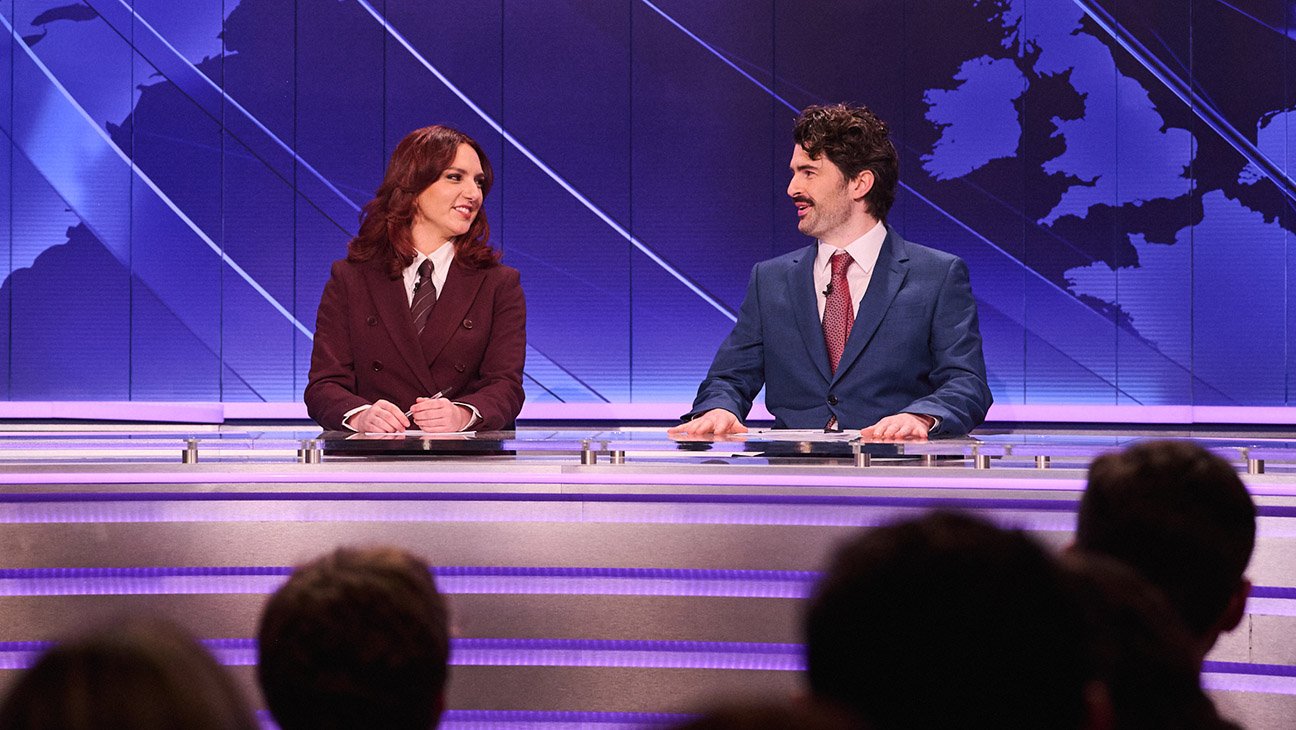
    Saturday Night Live UK has set its return on Sky and NOW.

    After a well-performing inaugural season earlier this year, the live comedy sensation returns on Sept. 12 with six brand-new episodes, the trailer for which was released Wednesday. Additional episodes are planned for early 2027.

    Broadcast live each week, the U.K. spinoff of NBC’s hit sketch series will once again welcome a different celebrity host and musical guest for every episode, alongside topical sketches, live music performances and a British take on the iconic Weekend Update segment. Last season’s celebrity hosts included Tina Fey, Jamie Dornan, Riz Ahmed, Jack Whitehall, Nicola Coughlan, Aimee Lou Wood, Hannah Waddingham, and Ncuti Gatwa.

    Fey’s episode was watched on Sky by over 220,000 people in Britain — though episode ratings trailed off after that — as the cast made use of our over-performing rolodex of U.K. talent. U.S. viewers were able to watch the episodes on Peacock.

    Returning for the second season are all 11 members of the inaugural cast: Hammed Animashaun, Ayoade Bamgboye, Larry Dean, Celeste Dring, George Fouracres, Ania Magliano, Annabel Marlow, Al Nash, Jack Shep, Emma Sidi and Paddy Young.

    On the production side, Laura Claxton has been promoted to co-head Writer, joining existing head writer Jonno Johnson. Liz Clare returns as director. Heather MacVean joins as costume designer and Sinead Oldnall is heading up the U.K. talent team as director of onscreen Talent.

    Lorne Michaels serves as executive producer on the show and James Longman is lead producer.

    “I’m incredibly proud of our team and the show,” said Michaels when the show was renewed. “It keeps getting better every week. I’m grateful to Dana Strong and Sky for believing in and supporting SNL U.K. I’m excited for the season ahead.”

    Watch the trailer for the new season below.