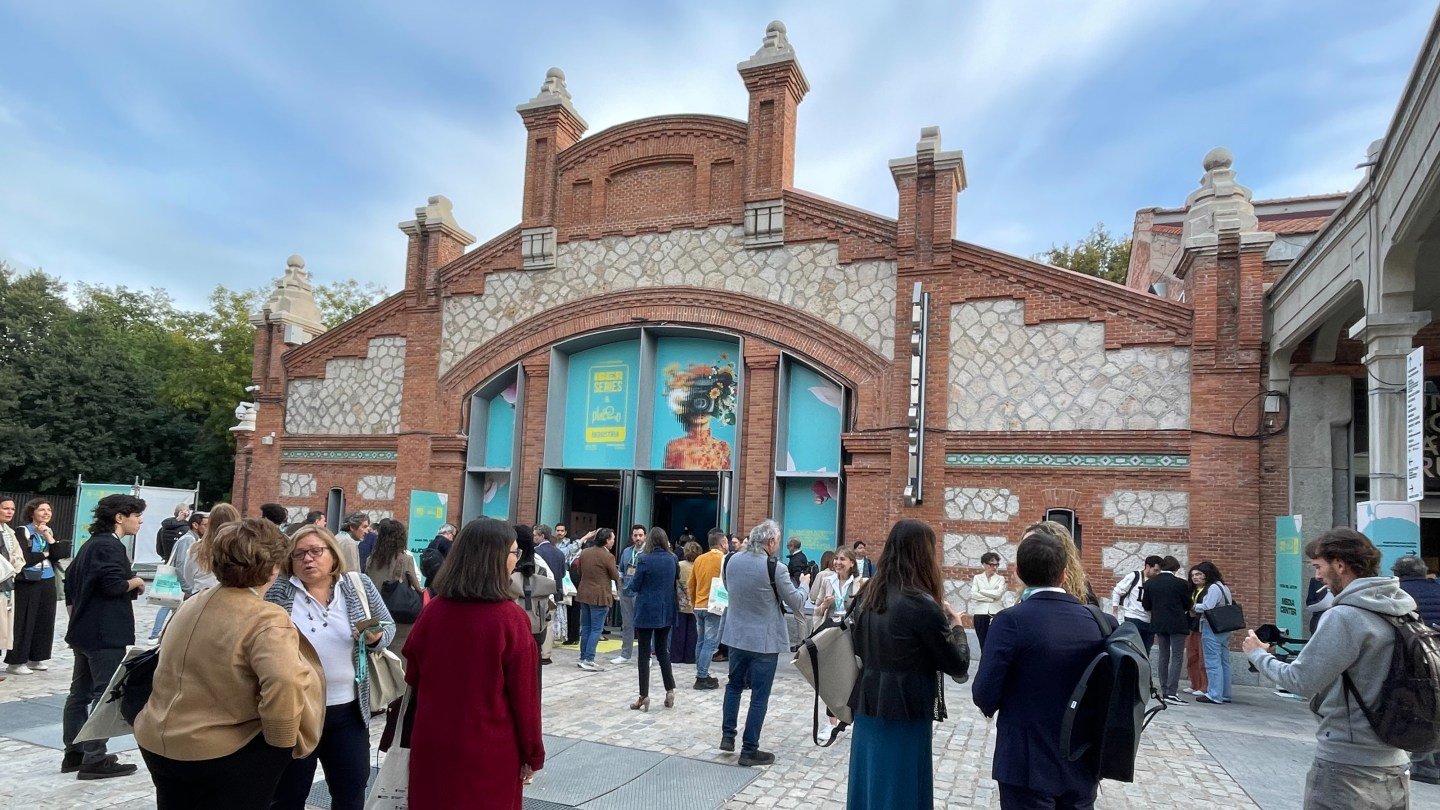
Spanish- and Portuguese-language stories are an increasingly key part of Amazon MGM Studios’ original content mix, and they can certainly keep up with Hollywood, two top executives told the sixth edition of Iberseries & Platino Industria in Spain’s capital Madrid on Tuesday.
Javiera Balmaceda, head of international originals for Latin America, Canada and Australia, and Nicole Morganti, head of international originals for Southern Europe, drew a big crowd with their session on how the studio develops and brings local-language stories to global audiences.
The executive duo also showed trailers for such action-packed film releases as Zeta and Vengeance. Zeta revolves around a national intelligence service team led by top agent Zeta, which must investigate the simultaneous killing of five former Spanish spies in different embassies around the world. Vengeance‘s plot is focused on Carlos Estrada. When his wife is brutally murdered, the decorated special forces hero is left with only one purpose: vengeance.
Of course, the success of bestselling author Mercedes Ron‘s film adaptations on Prime Video, from her popular Fault (Culpables) series to the recently launched romantic thriller Drawn Together (Marfil), was a key talking point and a point of pride for the executives.
Balmaceda highlighted that Drawn Together, starring Ester Expósito (Elite, The Wailing) and Hugo Diego Garcia (Death and Other Details, The Substance), has proven to be a hit after Culpables, which she described as “a massive success.” She told the Iberseries audience: “[Mercedes Ron] is the queen of young adult because Marfil is working extremely well as well.”
Why is the company making Spanish or Spanish-language action and dystopian fare when Hollywood has such a strong reputation for such genres? The Amazon MGM execs said that they have heard the question before.
“The United States produces a lot of action, such as Jack Ryan and other titles that work very well worldwide, so that’s why they ask us why we want to produce an action movie in Mexico or Spain,” Balmaceda shared. “I say more is more. We can do it as well. We can produce a successful movie, a successful story and make the audience grow, and it’s easy to see all the new audiences we have attracted.”
Morganti pointed to the upcoming Apocalypse Zsequel, Apocalypse Z: New World, which follows the original becoming one of the top non-English content offerings on the streaming platform. “There was a fantastic idea for an apocalyptic story in Spain, a very Spanish story with zombies,” she said about the first film’s genesis. “And they asked, ‘Why are you doing zombies in Spain?’ Well, first of all, because horror is a Spanish genre, and you need to democratize that as well, and you need to tell the bosses that it can be done. Also, zombies don’t have a nationality. They don’t speak English either. So now we are going to launch Apocalypse Z part 2 on Halloween.”
Iberseries & Platino Industria runs through Friday.
Godzilla Minus ZeroNight at Dodger Stadium in Los Angeles on Thursday promoted Toho‘s forthcoming movie, along with marking the final home game for the Major League Baseball team. Director Takashi Yamazaki’s film, which is a sequel to his Oscar-winning 2023 hit Godzilla Minus One, is set for theatrical release Nov. 6. On Thursday, the San Diego Padres beat the Dodgers, 4-2.
Ryunosuke Kamiki, who reprises his Godzilla Minus One role in the new sequel, threw out the first pitch ahead of the match-up as an individual in a Godzilla costume observed the action. The game drew 53,027 people, which helped the Dodgers break their yearly attendance record with 4,034,219 visitors in 2026. This surpassed last year’s record of 4,012,470.
The first 40,000 fans received a Godzilla Minus Zero bobblehead, while all guests enjoyed a Godzilla-themed drone show after the game. Other promotional opportunities included a Godzilla Minus Zero souvenir soda cup for purchase.
Ryunosuke Kamiki throws out the first pitch at Dodger Stadium.
Jayne Kamin-Oncea/Getty Images
Clearly, the themed evening was popular with the team’s supporters. Fan organization Dodgers Nation took to its Facebook page to post a video showing a lengthy line at the stadium ahead of the game, adding the caption: “Fans have lined up outside of Dodger Stadium 5 hours before 1st pitch on Godzilla bobblehead night.”
Between-innings activities included a Godzilla quiz, with the final question reading: “What color is Godzilla’s heat ray in Godzilla Minus One?” Appropriately enough for the baseball team known for its “Go Blue” chant, the correct answer was indeed “blue.”
After claiming the National League West division title in 2026 for the fifth straight season, the Dodgers’ first playoff opponent will be the winner of the Wild Card match-up between the Atlanta Braves and Philadelphia Phillies. The Dodgers are seeking their third-consecutive World Series title.
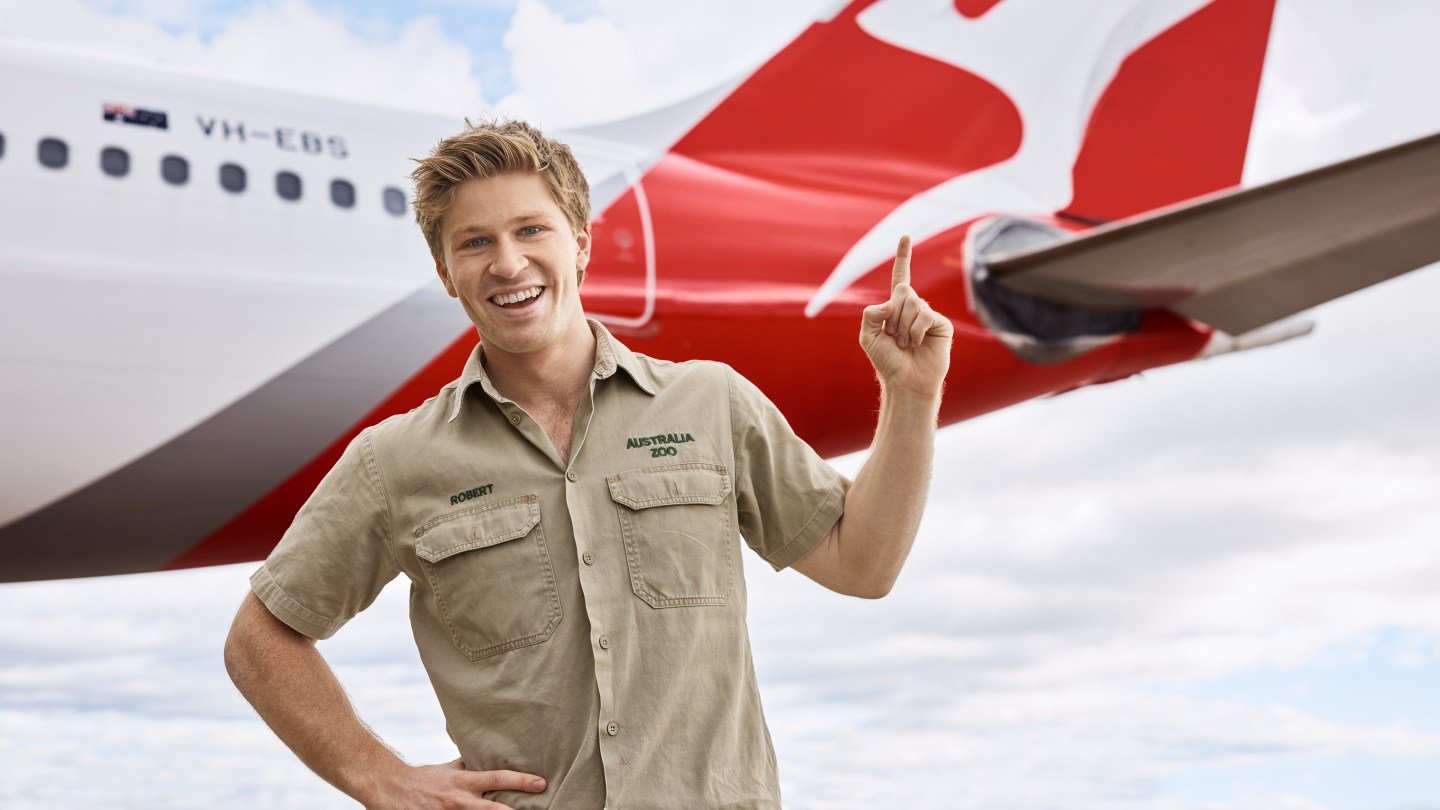
Robert Irwin has teamed with Qantas on a new campaign. Well, a bunch of Robert Irwins actually.
The wildlife conservationist, who broke out in a big way in America when he won season 34 of Dancing With the Stars, is featured in a new campaign for Australia‘s largest domestic and international airline. Though the creative captures Irwin in several places, one features the 22-year-old on board a Qantas flight sitting in a luxe business class seat in a cabin surrounded by … other Robert Irwins.
Irwin on board a Qantas flight.
Courtesy of Qantas
Other situations see Irwin and a Qantas cabin crew member explain Australian lingo, like the fact that “nah yeah” means yes and “yeah nah” means no, and he discovers that Qantas staff member had his artwork tattooed on their arm for years. Filmed at Australia Zoo’s Crocodile Hunter Lodge and onboard a Qantas aircraft, the campaign runs across North America, the United Kingdom and Asia.
As part of the airline’s hero “Australia in the Sky” campaign, Irwin appears onboard a Qantas aircraft before drifting off to sleep and dreaming of being back at Australia Zoo. It’s a dreamy scenario meant to evoke the idea that for Qantas customers, Australia begins the moment they board the airliner. Irwin encourages prospective travelers to use Qantas Explorer fares in a joint campaign with Tourism Australia that will play in several markets, a program that offers customers the chance to book an international Qantas flight to Australia using discounted economy and business fares.
“Robert Irwin is one of Australia’s most loved personalities and there is no one better placed to showcase our country to the world. For Qantas, that experience starts the moment customers step onboard one of our aircraft, through our distinctly Australian hospitality, food and wine. And with our Explorer fares offering discounted travel to more than 45 destinations across Australia, there has never been a better time to discover just how much this country has to offer,” explained Qantas group chief brand and corporate affairs officer Danielle Keighery.
Said Irwin: “Qantas has been part of my life since I was about the size of a loaf of bread. Some of my earliest memories are walking down the aerobridge with mum and getting to visit the flight deck. When I get on a Qantas flight, I’m amongst friends. There is something about the warm Australian hospitality that feels like home. Getting to join forces with our national carrier to show the world just how much Australia has to offer is something that means a great deal to me.”
As part of the partnership, Qantas will support the 2026 Steve Irwin Gala in Brisbane, Australia, which raises funds for global conservation through Wildlife Warriors. The organization was founded by Robert’s parents, Steve and Terri Irwin, in 2002 as a way to reel in caring people in the support and conservation of the world’s most threatened wildlife species and natural habitats.
The sixth edition of Iberseries & Platino Industria in the Spanish capital Madrid opened on Tuesday with a focus on data, courtesy of media and entertainment research and intelligence company Parrot Analytics.
In a session entitled “Content Without Borders: How to Win Over Audiences and Markets,” Jaime Otero, vp, partnerships at Parrot Analytics, explored key market trends and identified the types of content that resonate most strongly with audiences in Spain, Latin America, and the U.S. Hispanic market. He also examined which series, genres and markets offer the greatest international potential.
One of the surprise takeaways: South Korea has been a key driver of demand growth for Spanish- and Portuguese-language (SPLATAM) content.
The expert also shared estimates for the subscriber impact that Netflix hit series The Eternaut from Argentina has brought to the global streamer. The drama, set after a devastating toxic snowfall that killed millions and focusing on a group of survivors in Buenos Aires who must resist an invisible threat from another world, was the top SPLATAM series in 2025, he highlighted, estimating that it boosted Netflix subscribers by 236,000. It also led to around 2.78 million subs renewing their Netflix membership, according to Parrot’s estimates.
All in all, Otero spoke of how the series, for which a season 2 is in the works, engaged 3.01 million global Netflix subscribers.
The Parrot vp also told the Iberseries crowd that in 2025, for the first time, non-SPLATAM markets accounted for the majority of SPLATAM content demand worldwide. And he highlighted key markets that have experienced particularly strong SPLATAM series demand over the 2024-2026 period. Leading the charge was Korea, which registered a 243 percent gain, according to Parrot, followed by Japan, which saw 148 percent growth.
Other key growth market cited by Otero were Turkey (up 132 percent), China (119 percent), Sweden (103 percent) and Sweden (102 percent).
Iberseries & Platino Industria 2026 runs through Friday.
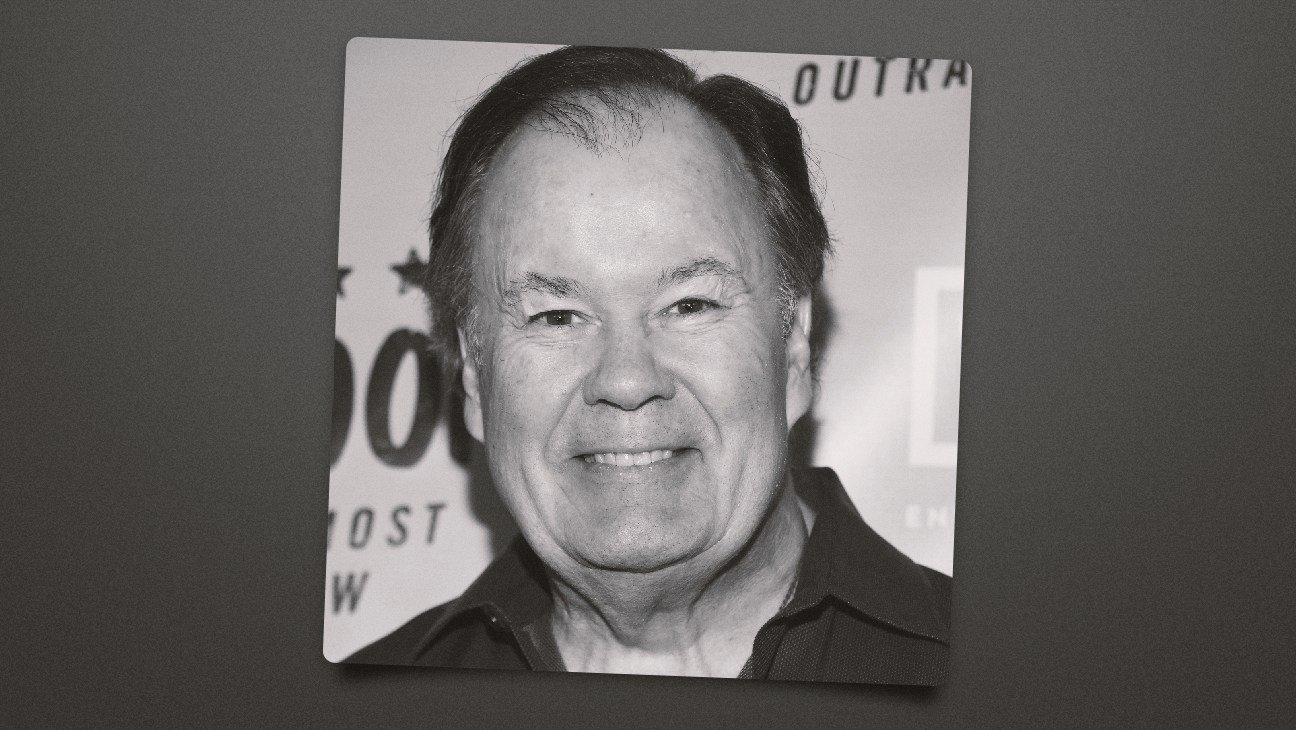
Dennis Haskins, who for more than a decade played the lovable but stern Principal Richard Belding on Saved by the Bell,has died, his agent, Jay Schachter, announced in a statement. He was 75.
“It’s a tragic loss. Everyone loved Mr. Belding, and those of us who got to know Dennis loved him even more,” Schachter said. “He was a great person, and he loved, I mean absolutely LOVED his fans. He always had time for them, no matter what. He was my client and dear friend for over 20 years, and I will miss him terribly.”
Details of his death were not provided.
Haskins played Principal Belding first on the Disney Channel show Good Morning, Miss Bliss, which was retooled after one season and became Saved by the Bell on NBC, running from 1989-93. He then reprised the character on Saved by the Bell: The New Class, which aired from 1993-2000.
Haskins would go on to play Belding one final time in February 2015 when he reunited with Bell stars Mark-Paul Gosselaar, Elizabeth Berkley, Mario Lopez and Tiffani Thiessen for a sketch on The Tonight Show Starring Jimmy Fallon.
The Chattanooga, Tennessee-born actor appeared in numerous TV shows and films throughout his decades-long career, including Seth MacFarlane’s A Million Ways to Die in the West(2014), Mad Men, Hot in Cleveland andNew Girl. He also was on the Showtime series I’m Dying Up Here, Cartoon Network’s Robot Chicken and FX’s It’s Always Sunny in Philadelphia.
Haskins made his onscreen debut in 1979 when he showed up on an episode of CBS’ TheDukes of Hazzard.
He played basketball for a year at the University of Tennessee at Chattanooga and in 2000 was honored with the school’s Most Distinguished Alumni Award. He also had a regional high school academic decathlon named after him, The Dennis Haskins Open.
Also a musician, Haskins in 2000 participated in two USO tours for troops in Kosovo, Macedonia and Bosnia and again in 2002 in Afghanistan, Pakistan, Oman and Kyrgyzstan. He also flew with the Blue Angels.
The Tokyo International Film Festival will honor filmmakers Mohammad Rasoulof and Mipo O with its Kurosawa Akira Award at the event’s 39th edition next month.
Named for the Japanese master, the award recognizes directors whose work has made an impact on cinema and who are expected to help shape its future. It was revived in 2022 after a 14-year hiatus with support from Capcom. Last year’s recipients were Chloé Zhao and Lee Sang-il.
This year’s honorees were selected by a committee comprising filmmakers Yoji Yamada and Lee Sang-il, cinematographer Akiko Ashizawa and TIFF programming director Shozo Ichiyama.
Rasoulof, one of Iran’s leading dissident directors now living in exile in Europe, won Berlin’s Golden Bear for There Is No Evil (2020), while The Seed of the Sacred Fig (2024) received a special prize at Cannes before earning an international feature Oscar nomination as Germany’s submission.
The committee singled out the two films for “their humanist perspective, which portrays even those who perpetrate oppression as ordinary citizens.” It also praised Rasoulof’s “unwavering commitment to creative expression despite relentless pressure.”
“Receiving the Kurosawa Award is a great honor for me. His films are profound explorations of the human condition and the moral choices we make in moments of crisis. Kurosawa was a dynamic and inquisitive visual storyteller whose unique perspective on humanity, nature, and the world has made his work an enduring source of inspiration in cinema,” Rasoulof said.
O, a Japanese-born filmmaker of Korean descent, made her feature debut with The Sakais’ Happiness in 2006. Her credits include The Light Shines Only There (2014), Japan’s Oscar submission that year, and Being Good (2015), an ensemble drama exploring child abuse, bullying and the possibility of breaking those cycles through human connection.
After a nine-year break from feature filmmaking, she returned with Living in Two Worlds (2024), a family drama starring Ryo Yoshizawa as the hearing son of deaf parents, whose desire for independence complicates his relationship with his mother. Her latest, How Dare You? (2025), takes a more comic approach to childhood, following three elementary school students whose budding environmental activism — mixed with a classroom crush — leads to unintended consequences.
The selection committee praised her “multifaceted perspective on individuals living on the margins of society” and her avoidance of “a simple lens of good vs. evil,” while highlighting her work with child performers.
“To receive such an extraordinary honor on the 20th anniversary of my directorial debut fills me with immense gratitude and deep humility,” O said. “Winning the Shindo Kaneto Award in 2010 provided me with the vital support to keep making films. Though my progress has been slow, reaching the Kurosawa Akira Award is a stroke of fortune that makes me truly savor what a happy cinematic journey I have had. This recognition is by no means mine alone. My heartfelt thanks go to all the cast and crew members I have met along the way, the audience who stepped into the theaters, and the selection committee—led by director Yamada Yoji—who discovered my films.”
Tokyo will also screen 4K restorations of Kurosawa’s Sanshiro Sugata (1943) and Ikiru (1952), alongside Charles Chaplin’s The Circus (1928) and Abbas Kiarostami’s Where Is the Friend’s House? (1987).
Separately, the festival named Alice in Borderland actor Hayato Isomura president of its Ethical Film Award jury. Launched in 2023 with Sumitomo Corporation, the prize recognizes films addressing social issues including the environment, poverty and discrimination. Three members of TIFF’s Student PR team will join Isomura on the jury.
The nominees are Brazil’s Amadeo and the Hypothetical New World, the German-Ukrainian feature I Rarely Wake Up Dreaming and Australia’s Time and Tide. The award ceremony and a talk with Isomura are scheduled for Nov. 2.
“Today, we absorb vast amounts of information in seconds through a small screen. I often feel we fall into the trap of believing we understand something instantly, constantly searching for quick answers. Yet, when it comes to deepening our awareness and understanding of social issues, the process of reaching those answers is what truly matters,” Isomura said. “Cinema possesses the unique power to pause our hurried pace, allowing us to experience that very process through the lives and emotions of others. I am committed to taking the thoughts, hopes, and wishes woven into these films by each filmmaker deeply to heart, and to reflecting on them together with everyone.”
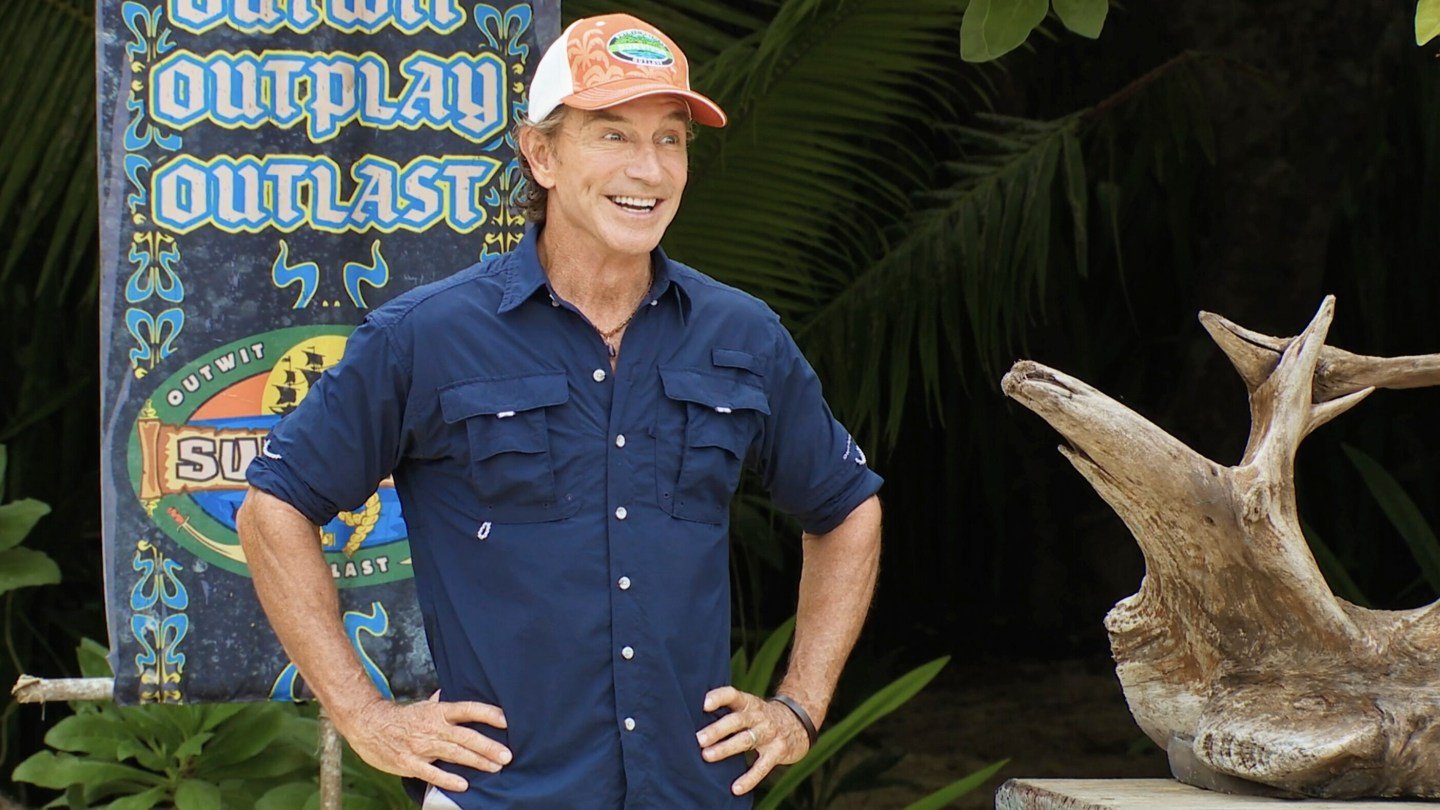
Jeff Probst said “nothing has changed” on Survivor when it comes to the reality show’s approach to diversity, equity and inclusion, despite Paramount rolling back DEI policies when Donald Trump returned to the White House.
The long-running host and showrunner recently told The New York Timesthat it was “one of the biggest positive changes ever,” referring to when CBS launched a DEI initiative in 2020, post-Black Lives Matter, that required unscripted reality shows to have at least 50 percent of castmembers be people of color.
“If you watch our show, you know that we’re so diverse — and it’s not just skin color or ethnicity. It goes much deeper than that,” the Emmy winner said. “It’s one of the biggest positive changes ever. Our stories are so much more interesting now because we have people from completely different walks of life.”
The Hollywood Reporter reported last year that Paramount was among companies across the entertainment industry stepping back on policies aimed at boosting diversity amid a larger crackdown on DEI programs driven by the Trump administration. David Ellison’s Skydance also committed to eliminating all DEI initiatives last year as it sought the FCC’s approval for Skydance’s merger with Paramount.
Probst added to the Times, “I feel no pressure. No one ever says, can you count the numbers again? But Jesse Tannenbaum, who runs our casting team, knows: There’s no stopping, not because we’re told to do it. This is what we need. We need diversity. It’s for narrative. All those differences matter in the story when you throw people together and force them to rely on each other while conspiring against each other. The more diverse, the more interesting.”
As Survivor returned for its 51st season last Wednesday, Probst previously told THR that he felt “enormous pressure” heading into the new season following the show’s milestone 50th season.
“We felt pressure before we shot 50,” the host said. “We were already feeling like, ‘What are we going to do after 50, even though we have not even produced 50?’ And I think that pressure was really good because it focused us on 50 and the minute 50 was over, everybody was thinking, ‘OK, what’s next?’ That’s really what led to this idea of the ‘Open Era’ — the pressure of needing something new to really birth us into the next decade.”
All eyes on Madrid! The Spanish capital and film and TV production hub is bringing together media and entertainment industry folks, including producers, creatives and executives from Europe, Latin America, the U.S. and beyond, to discuss Spanish- and Portuguese-language content opportunities and hot industry topics at the sixth edition of Iberseries & Platino Industria this week.
Organized by the Secuoya Foundation, Spain’s largest rights collection agency EGEDA, and the Ibero-American Federation FIPCA, the big annual event, which runs Tuesday through Friday, will once again feature keynote addresses, panel discussions, screenings, pitching sessions, and social events, along with all sorts of innovations.
AI, microdramas, co-productions, literary adaptations and much more will be in the spotlight during four jam-packed days in Madrid.
Among the many high-profile speakers and panelists at Iberseries are the likes of Katina Medina Mora, who has directed such series as Off Campus, The Summer I Turned Pretty, Emily in Paris and Swagger and such films as LuTo, Luis Fernández, chairman of NBCUniversal Telemundo Enterprises, and Pedro Pina, vp, YouTube EMEA.
THR caught up with Iberseries & Platino Industria co-directors Samuel Castro, head of Iberseries, Juan Alía, head of Platino Industria, and Adriana Castillo, general coordinator of Platino Industria, to preview the 2026 showcase of the Spanish- and Portuguese-language content industry event and what’s different this year.
What’s new for this year’s edition?Could you highlight any new offerings and innovations?
SAMUEL CASTRO This year, we wanted to reinforce our commitment to the industry and further establish Iberseries & Platino Industria as a truly business- and networking-driven event. With this in mind, we have launched two new pitch sessions: Euro Atlantic Series Co-Pro Pitch, focused on European series projects seeking international co-production and financing partners; and the Fundación SGAE Pitch Session, featuring outstanding projects from Spanish-speaking showrunners.
ADRIANA CASTILLO One of the things we have worked on this year is making Iberseries & Platino Industria useful at different stages of a project’s journey. We do not want it to be simply a place where talent comes together; we want it to be a place where talent finds the conditions to grow: financing, partnerships, distribution and real international opportunities.
That has led us to open new doors this year. We created the Literary Works Pitch for Audiovisual Adaptation, strengthened international co-production through the Euro Atlantic Series Co-Pro Pitch and the Co-Production and Financing Forum, and opened spaces to discuss new ways of telling stories, including vertical fiction and microdramas.
For me, the important thing is that these are not isolated activities. We are trying to connect the dots. A creator can arrive with an idea or an IP and meet producers, financiers, platforms, studios, distributors, or potential partners. Ultimately, what we want is to shorten the distance between a good story and the people who can help bring it to life.
JUAN ALÍA I do not think the novelty lies simply in adding more activities. When an edition ends, we sit down to look at what worked, what we can improve and, above all, what the industry is asking of us. This year, we have opened up more avenues for projects to find financing, partners and buyers, and we have broadened the scope with areas such as literary IP and vertical fiction.
For us, the key is usefulness. We want professionals who come to Madrid for four days to have real opportunities to find the content, project, or partner they are looking for. If those meetings lead to synergies, co-productions or new lines of business, then the event is fulfilling its purpose.
Why did it make sense to add the first edition of Euro Atlantic Series Co-Pro Pitch to your already busy program? And Sony Pictures Television’s Elevator Pitch will also return. How successful was that last year?
CASTRO Euro Atlantic Series Co-Pro Pitch was created with the aim of promoting the co-production and international circulation of European fiction, docuseries and animation projects conceived from the outset to travel across territories and connect with global audiences. It is another reflection of the increasingly international scale of Iberseries & Platino Industria, as we continue evolving from an Ibero-American event into a truly global industry platform.
Samuel Castro, co-director Iberseries & Platino Industria
Courtesy of Iberseries & Platino Industria
The selection committee for this first edition also brings together highly respected professionals from the European audiovisual industry, including Laura Miñarro, vp of international business and co-production at Buendía Estudios (Spain), Diego del Pozo, fiction manager at Atresmedia Televisión (Spain), José Fragoso, programming director at RTP1 and RTP Internacional (Portugal), and Georges Huercano, development and co-productions manager at RTL (Belgium).
Can you tell me a bit about why you added the new literary works adaptation pitch event?
CASTILLO It emerged quite naturally from what we had been hearing from the industry. In our conversations with [streaming] platforms, studios and producers, IP comes up again and again. Executives are looking for attractive properties, of course, but above all they are looking for powerful stories, distinctive worlds and characters capable of sustaining an audiovisual life.
At the same time, there is an enormous catalogue of stories in the publishing world, and there is not always a natural space for the publishing and audiovisual sectors to meet, or even to speak the same business language. We saw a clear opportunity to build a bridge between them.
This is not about bringing a book fair to an audiovisual market. It is a curated business space where publishers and literary agencies can present works directly to producers, studios and platforms looking for material to adapt, and then continue those conversations through one-to-one meetings.
Literary IP also brings something extremely valuable to the audiovisual pipeline: narrative development and, in many cases, a story that has already connected with a community of readers. But our interest goes beyond a one-off rights sale. We want to foster longer-term relationships between publishers and producers, help those catalogues circulate internationally and identify stories that can genuinely find a second life on screen.
In that sense, the pitch [event] also reflects something we are seeing across the industry: the search for IP has become much more strategic. It is no longer simply a question of whether a book is well known; it is about whether there is a powerful story there and what can be built from it.
ALÍA In this case, we are not inventing a need; it is something the market has been signalling to us for some time. Platforms and production companies are increasingly looking for IP, while publishers and literary agencies have enormous catalogues of stories. What was missing was a more direct and structured meeting point between the two sectors.
If a publisher or agency leaves Madrid having started a real conversation with a production company, studio or platform, then the pitch has already been useful.
Everybody is talking about AI in the industry. How important a topic will that be at Iberseries? And what other key themes do you expect to be in focus at this year’s edition?
CASTRO AI will have the prominence it deserves, but always from the perspective of understanding it as a regulated tool at the service of creators, technicians and audiovisual production professionals.
Among this year’s activities focused on AI, I would particularly highlight the workshop “Artificial Intelligence for Creators: Enhancing Audiovisual Storytelling,” led by Concepción Díaz, head of AI trainings EMEA at Google, and the conference “AI in Action: New Production Models,” featuring Erik Barmack, founder & CEO of Wild Sheep Content (USA), and Johann Choron, partnerships & Gen AI lead for film & TV at Google EMEA (France).
How is attendance trending this year compared to what I think was a record last year?
CASTRO It is still difficult to give a definitive answer. The industry as a whole is going through a period of some contraction, and companies seem to be taking a more cautious approach. Against this backdrop, we have deliberately chosen to offer a more disruptive and ambitious program this year. I hope that this will encourage even more industry players to join us.
Are there any key new companies or industry sub-sectors coming to the event this year?
CASTILLO Yes, and I think what is particularly interesting this year is not only the arrival of new companies, but also the way different areas of the industry are beginning to connect within Iberseries & Platino Industria.
We are also seeing very interesting models emerging from the meeting point between traditional audiovisual players and digital communities. Disney+ and Luzu TV are a great example. ‘Somos así, la serie de Nadie dice nada’ comes out of an alliance between one of the leading streaming platforms and one of Argentina’s most influential digital communities. A live-streaming phenomenon is being transformed into fiction, and that raises a very interesting question for the industry: how do you take a community with such a strong relationship with its creators and build a fictional universe around it without losing the authenticity that made it successful in the first place?
Adriana Castillo, general coordinator of Platino Industria
Courtesy of Iberseries & Platino Industria
Then there is the increasingly important role of audience intelligence. JustWatch adds another dimension to that conversation with its session on intent-based marketing: how behavioural signals and audience preferences can help us understand not only what people have watched, but what they are looking to watch next, and how that information can be used to make more efficient marketing decisions. Netflix, for example, is participating through different parts of the programme. One of them addresses an increasingly important challenge for the audiovisual industry: how we train the next generation of professionals, how we reduce access gaps in training and how we build a more diverse, equitable talent base with broader territorial reach across Ibero-America.
A panel featuring FORMA, the training initiative promoted by FIPCA [, an intercontinental organization that brings together producer associations and audiovisual companies,] with the support of Netflix, is a good example of the kind of collaboration we want to encourage more and more at Iberseries & Platino Industria: initiatives that not only respond to the needs of today’s productions, but also strengthen the industry over the long term.
The platform is also involved in content presentations, so its presence connects training, industry development and programming.
ALÍA I think what matters is that we are trying to open the scope as widely as possible. Netflix, Disney+, Luzu TV and JustWatch are very different players, but each represents a very specific change taking place in the sector: training and professionalisation, the transition from digital communities to fiction, and the growing importance of audience data in marketing and decision-making.
CASTRO One of our main [goals] this year has been to give the event an even stronger European dimension. We have attracted major companies such as Banijay, Mediawan, Beta, ARTE and RAI, to name just a few. But perhaps even more significant is the growing number of European production companies interested in co-producing with Spain. This is reflected in the participation of leading professionals such as Iris Bucher, Femke Wolting from Submarine and Nathalie Perus from Atlantique Productions, among others.
It is not about adding companies simply for the sake of adding logos. We want the event to be the opportunity the producer or executive has been looking for.
Which Spanish- and Portuguese-language or -produced films and series have highlighted the global appeal of Iberian content?
CASTILLO There are some very clear examples. El Eternauta (series The Eternaut) from Argentina and O Agente Secreto (film The Secret Agent) from Brazil have shown, in very different ways, how stories deeply rooted in a specific place and culture can have an international life and reach new audiences. And I think that is very important: global does not have to mean neutral. Very often, the specificity of a story – its language, its characters, its social context, even its sense of place – is precisely what makes it interesting to other audiences.
This year, we will present Véspera, HBO Max’s new Brazilian original series based on Carla Madeira’s bestselling novel. It is a complex family story, deeply Brazilian in origin, but built around emotions, relationships and moral conflicts that are entirely universal.
For me, Véspera also connects with another conversation we are having this year: the strength of literary IP. It shows how a successful Portuguese-language novel can move into another medium and potentially reach a completely new audience. That circulation between books and screens, between local identity and international audiences, and between Spanish- and Portuguese-speaking territories, is exactly the kind of movement we want to promote through Iberseries & Platino Industria.
ALÍA I think Spanish- and Portuguese-language content no longer has to prove that it can travel. Titles such as El Eternauta and O Agente Secreto make that quite clear: they emerge from very specific cultural realities and yet work internationally.
Juan Alía, co-director of Iberseries & Platino Industria
Courtesy of Iberseries & Platino Industria
That is also why we believe it is important to present titles such as Véspera at Iberseries & Platino Industria. A market should not only look at what has already worked; it should also help upcoming projects find partners, circulate and reach new audiences.
CASTRO Portugal is particularly important to us this year. We have worked closely with APIT and the Portugal Film Commission to bring a delegation of Portuguese producers to the event, including Nicky Correia from SIC, Bruno Lima from Coral Europa, Pandora da Cunha Telles from Ukbar Filmes and Piet-Hein Bakker from Plural Entertainment, among others. Their participation reflects both the strength of Portuguese production and our commitment to strengthening connections between the Portuguese, Spanish and wider international audiovisual industries.
Is there anything else you would like to highlight?
ALÍA Ultimately, what matters to us is that all of this is useful. The number of accredited professionals is important, of course, as is the event’s international character, but the real assessment does not end on 2 October.
What will truly make us happy is to look back in two or three years and see that projects presented here in a pitch, a forum or a meeting have become reality, have reached a cinema, a television channel or a platform and, above all, have reached audiences. If Iberseries & Platino Industria has contributed to that, then we will feel that we have done our job well.
CASTILLO I would certainly highlight Mexico, which is our Country in Focus this year. We were very clear that the objective was to put forward a specific industry proposition.
For several years, the conversation around Mexico has focused on its talent, the size of its market and its production scale. These are already recognised strengths. This year, we want to take the conversation one step further and ask another question: why produce in Mexico today? There are new conditions that make this conversation particularly relevant: incentives, such as [the Tax Incentive for Film and Audiovisual Production] EFICA, production infrastructure, specialised technical services, post-production, film commissions and, of course, a production community with enormous experience in both Mexican and international projects.
That is why there will be a series of activities designed to position Mexico from different angles: its creators and stories, of course, but also its production capacity, its services and its potential to become a partner on international projects.
I think that is the message we want to leave: Mexico has always had stories and talent. What is particularly interesting today is the combination of that creative strength with increasingly competitive conditions for making films and series in the country.
CASTRO There are two highlights I would particularly mention this year. The first is Pedro Pina’s keynote, “YouTube: A Strategic Partner for the Audiovisual Ecosystem,” which will explore YouTube’s increasingly important role within the audiovisual industry.
The second is the Mediawan Spotlight, featuring Elisabeth d’Arvieu, CEO of Mediawan Pictures and chief content officer of Mediawan, which I believe will be another major moment in this year’s program.
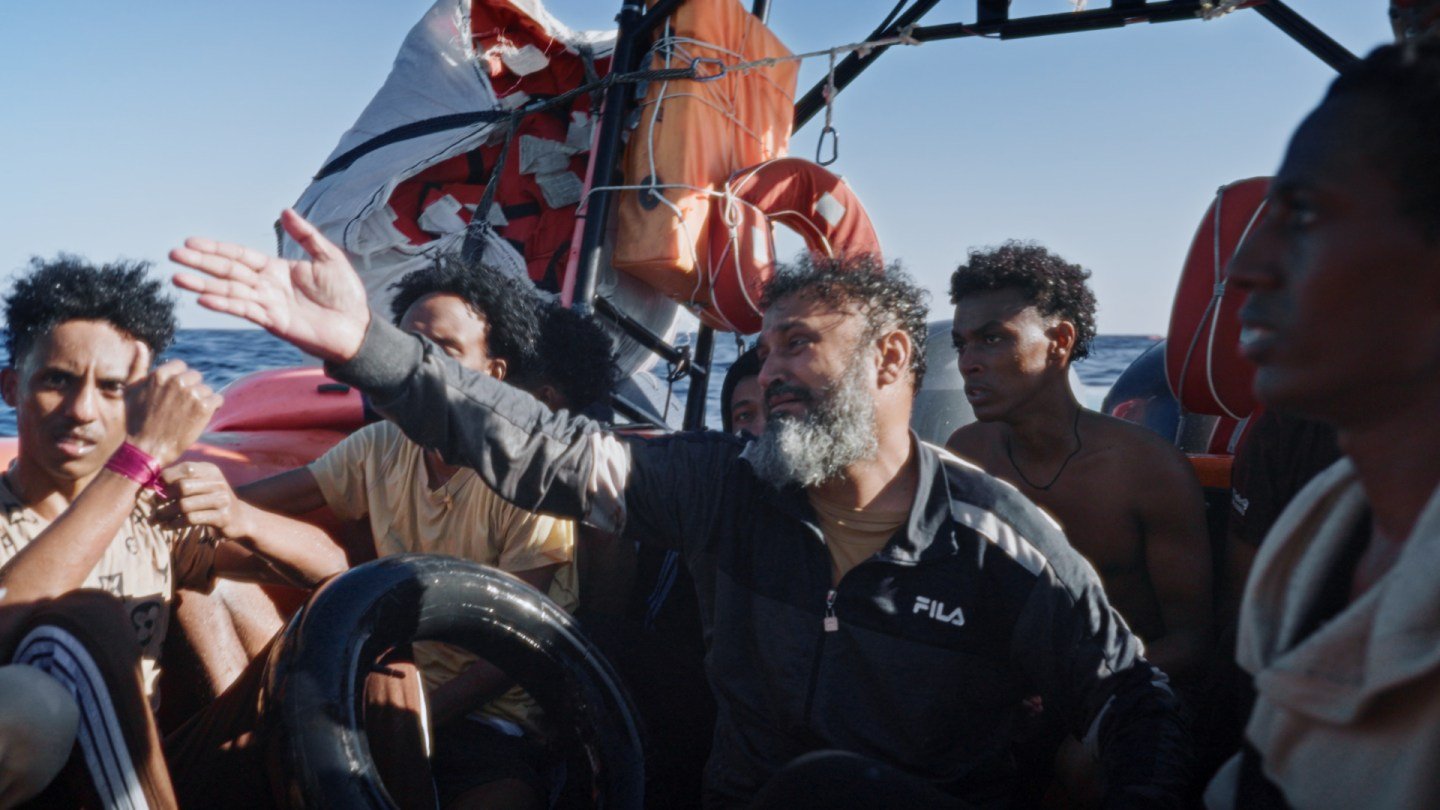
Italy’s Fandango Distribution has acquired Sine Plambech’s Rescue for all rights, including theatrical release, The Hollywood Reporter has learned.
Radio Télévision Suisse (RTS) has come on board as a broadcaster, joining pre-sale partners DR, VPRO, SVT and NRK, in deals negotiated by Vienna-based Autlook Filmsales, which handles worldwide sales on the film.
The agreements land as Plambech, serving as president of the documentary competition jury at the 22nd Zurich Film Festival, presents the European premiere of Rescue in the festival’s Now/Future section this week.
Rescue tells the story of Roro, a Yemeni mother of young children fighting to reunite her family after a Mediterranean rescue operation left her separated from her husband and held in captivity in Libya. Filmed with rare access aboard Doctors Without Borders’ Geo Barents, the documentary examines the fallout of Europe’s “externalization” of migration control to North African countries, tracing one woman’s fight for justice, dignity and the right to be seen amid a broken system.
The film is written by Plambech and Janus Metz, and produced by Elk Film’s Andreas Dalsgaard, Sofie Husum Johannesen, and Tereza Šimíková. Troels N’koya Jensen is the cinematographer, with editing by Per K. Kirkegaard and Marion Tuor and music by Uno Helmersson. Running 80 minutes, the film is in Arabic, English and French with English subtitles.
Rescue had its world premiere at TIFF and screens in Zurich’s Now/Future section, which this year features nine films exploring human rights, social conflict and sustainable development. Presented in collaboration with the EurAsia Heart Foundation and Dementia Research Switzerland, the section highlights figures committed to equality and social justice alongside perspectives on ecological, social and economic questions for the future.
Plambech is currently heading up the doc competition jury in Zurich. She is an award-winning director, anthropologist and senior researcher at the Danish Institute for International Studies (DIIS). Among other things, she directed Mission Trafficking (2010, in collaboration with Judith Lansade) and Becky’s Journey (2014), and provided the research foundation for From Thailand to Thy (2008) and From Thy to Thailand (2008), both directed by Janus Metz.
Her major breakthrough, Heartbound (2018), which built upon the two films from 2008, had its world premiere at TIFF, was selected for IDFA, and won the Golden Eye Award for best international documentary at the Zurich Film Festival that year.
All eyes on Madrid! The Spanish capital and film and TV production hub is bringing together media and entertainment industry folks, including producers, creatives and executives from Europe, Latin America, the U.S. and beyond, to discuss Spanish- and Portuguese-language content opportunities and hot industry topics at the sixth edition of Iberseries & Platino Industria this week.
Organized by the Secuoya Foundation, Spain’s largest rights collection agency EGEDA, and the Ibero-American Federation FIPCA, the big annual event, which runs Tuesday through Friday, will once again feature keynote addresses, panel discussions, screenings, pitching sessions, and social events, along with all sorts of innovations.
AI, microdramas, co-productions, literary adaptations and much more will be in the spotlight during four jam-packed days in Madrid.
Among the many high-profile speakers and panelists at Iberseries are the likes of Katina Medina Mora, who has directed such series as Off Campus, The Summer I Turned Pretty, Emily in Paris and Swagger and such films as LuTo, Luis Fernández, chairman of NBCUniversal Telemundo Enterprises, and Pedro Pina, vp, YouTube EMEA.
THR caught up with Iberseries & Platino Industria co-directors Samuel Castro, head of Iberseries, Juan Alía, head of Platino Industria, and Adriana Castillo, general coordinator of Platino Industria, to preview the 2026 showcase of the Spanish- and Portuguese-language content industry event and what’s different this year.
What’s new for this year’s edition?Could you highlight any new offerings and innovations?
SAMUEL CASTRO This year, we wanted to reinforce our commitment to the industry and further establish Iberseries & Platino Industria as a truly business- and networking-driven event. With this in mind, we have launched two new pitch sessions: Euro Atlantic Series Co-Pro Pitch, focused on European series projects seeking international co-production and financing partners; and the Fundación SGAE Pitch Session, featuring outstanding projects from Spanish-speaking showrunners.
ADRIANA CASTILLO One of the things we have worked on this year is making Iberseries & Platino Industria useful at different stages of a project’s journey. We do not want it to be simply a place where talent comes together; we want it to be a place where talent finds the conditions to grow: financing, partnerships, distribution and real international opportunities.
That has led us to open new doors this year. We created the Literary Works Pitch for Audiovisual Adaptation, strengthened international co-production through the Euro Atlantic Series Co-Pro Pitch and the Co-Production and Financing Forum, and opened spaces to discuss new ways of telling stories, including vertical fiction and microdramas.
For me, the important thing is that these are not isolated activities. We are trying to connect the dots. A creator can arrive with an idea or an IP and meet producers, financiers, platforms, studios, distributors, or potential partners. Ultimately, what we want is to shorten the distance between a good story and the people who can help bring it to life.
JUAN ALÍA I do not think the novelty lies simply in adding more activities. When an edition ends, we sit down to look at what worked, what we can improve and, above all, what the industry is asking of us. This year, we have opened up more avenues for projects to find financing, partners and buyers, and we have broadened the scope with areas such as literary IP and vertical fiction.
For us, the key is usefulness. We want professionals who come to Madrid for four days to have real opportunities to find the content, project, or partner they are looking for. If those meetings lead to synergies, co-productions or new lines of business, then the event is fulfilling its purpose.
Why did it make sense to add the first edition of Euro Atlantic Series Co-Pro Pitch to your already busy program? And Sony Pictures Television’s Elevator Pitch will also return. How successful was that last year?
CASTRO Euro Atlantic Series Co-Pro Pitch was created with the aim of promoting the co-production and international circulation of European fiction, docuseries and animation projects conceived from the outset to travel across territories and connect with global audiences. It is another reflection of the increasingly international scale of Iberseries & Platino Industria, as we continue evolving from an Ibero-American event into a truly global industry platform.
Samuel Castro, co-director Iberseries & Platino Industria
Courtesy of Iberseries & Platino Industria
The selection committee for this first edition also brings together highly respected professionals from the European audiovisual industry, including Laura Miñarro, vp of international business and co-production at Buendía Estudios (Spain), Diego del Pozo, fiction manager at Atresmedia Televisión (Spain), José Fragoso, programming director at RTP1 and RTP Internacional (Portugal), and Georges Huercano, development and co-productions manager at RTL (Belgium).
Can you tell me a bit about why you added the new literary works adaptation pitch event?
CASTILLO It emerged quite naturally from what we had been hearing from the industry. In our conversations with [streaming] platforms, studios and producers, IP comes up again and again. Executives are looking for attractive properties, of course, but above all they are looking for powerful stories, distinctive worlds and characters capable of sustaining an audiovisual life.
At the same time, there is an enormous catalogue of stories in the publishing world, and there is not always a natural space for the publishing and audiovisual sectors to meet, or even to speak the same business language. We saw a clear opportunity to build a bridge between them.
This is not about bringing a book fair to an audiovisual market. It is a curated business space where publishers and literary agencies can present works directly to producers, studios and platforms looking for material to adapt, and then continue those conversations through one-to-one meetings.
Literary IP also brings something extremely valuable to the audiovisual pipeline: narrative development and, in many cases, a story that has already connected with a community of readers. But our interest goes beyond a one-off rights sale. We want to foster longer-term relationships between publishers and producers, help those catalogues circulate internationally and identify stories that can genuinely find a second life on screen.
In that sense, the pitch [event] also reflects something we are seeing across the industry: the search for IP has become much more strategic. It is no longer simply a question of whether a book is well known; it is about whether there is a powerful story there and what can be built from it.
ALÍA In this case, we are not inventing a need; it is something the market has been signalling to us for some time. Platforms and production companies are increasingly looking for IP, while publishers and literary agencies have enormous catalogues of stories. What was missing was a more direct and structured meeting point between the two sectors.
If a publisher or agency leaves Madrid having started a real conversation with a production company, studio or platform, then the pitch has already been useful.
Everybody is talking about AI in the industry. How important a topic will that be at Iberseries? And what other key themes do you expect to be in focus at this year’s edition?
CASTRO AI will have the prominence it deserves, but always from the perspective of understanding it as a regulated tool at the service of creators, technicians and audiovisual production professionals.
Among this year’s activities focused on AI, I would particularly highlight the workshop “Artificial Intelligence for Creators: Enhancing Audiovisual Storytelling,” led by Concepción Díaz, head of AI trainings EMEA at Google, and the conference “AI in Action: New Production Models,” featuring Erik Barmack, founder & CEO of Wild Sheep Content (USA), and Johann Choron, partnerships & Gen AI lead for film & TV at Google EMEA (France).
How is attendance trending this year compared to what I think was a record last year?
CASTRO It is still difficult to give a definitive answer. The industry as a whole is going through a period of some contraction, and companies seem to be taking a more cautious approach. Against this backdrop, we have deliberately chosen to offer a more disruptive and ambitious program this year. I hope that this will encourage even more industry players to join us.
Are there any key new companies or industry sub-sectors coming to the event this year?
CASTILLO Yes, and I think what is particularly interesting this year is not only the arrival of new companies, but also the way different areas of the industry are beginning to connect within Iberseries & Platino Industria.
We are also seeing very interesting models emerging from the meeting point between traditional audiovisual players and digital communities. Disney+ and Luzu TV are a great example. ‘Somos así, la serie de Nadie dice nada’ comes out of an alliance between one of the leading streaming platforms and one of Argentina’s most influential digital communities. A live-streaming phenomenon is being transformed into fiction, and that raises a very interesting question for the industry: how do you take a community with such a strong relationship with its creators and build a fictional universe around it without losing the authenticity that made it successful in the first place?
Adriana Castillo, general coordinator of Platino Industria
Courtesy of Iberseries & Platino Industria
Then there is the increasingly important role of audience intelligence. JustWatch adds another dimension to that conversation with its session on intent-based marketing: how behavioural signals and audience preferences can help us understand not only what people have watched, but what they are looking to watch next, and how that information can be used to make more efficient marketing decisions. Netflix, for example, is participating through different parts of the programme. One of them addresses an increasingly important challenge for the audiovisual industry: how we train the next generation of professionals, how we reduce access gaps in training and how we build a more diverse, equitable talent base with broader territorial reach across Ibero-America.
A panel featuring FORMA, the training initiative promoted by FIPCA [, an intercontinental organization that brings together producer associations and audiovisual companies,] with the support of Netflix, is a good example of the kind of collaboration we want to encourage more and more at Iberseries & Platino Industria: initiatives that not only respond to the needs of today’s productions, but also strengthen the industry over the long term.
The platform is also involved in content presentations, so its presence connects training, industry development and programming.
ALÍA I think what matters is that we are trying to open the scope as widely as possible. Netflix, Disney+, Luzu TV and JustWatch are very different players, but each represents a very specific change taking place in the sector: training and professionalisation, the transition from digital communities to fiction, and the growing importance of audience data in marketing and decision-making.
CASTRO One of our main [goals] this year has been to give the event an even stronger European dimension. We have attracted major companies such as Banijay, Mediawan, Beta, ARTE and RAI, to name just a few. But perhaps even more significant is the growing number of European production companies interested in co-producing with Spain. This is reflected in the participation of leading professionals such as Iris Bucher, Femke Wolting from Submarine and Nathalie Perus from Atlantique Productions, among others.
It is not about adding companies simply for the sake of adding logos. We want the event to be the opportunity the producer or executive has been looking for.
Which Spanish- and Portuguese-language or -produced films and series have highlighted the global appeal of Iberian content?
CASTILLO There are some very clear examples. El Eternauta (series The Eternaut) from Argentina and O Agente Secreto (film The Secret Agent) from Brazil have shown, in very different ways, how stories deeply rooted in a specific place and culture can have an international life and reach new audiences. And I think that is very important: global does not have to mean neutral. Very often, the specificity of a story – its language, its characters, its social context, even its sense of place – is precisely what makes it interesting to other audiences.
This year, we will present Véspera, HBO Max’s new Brazilian original series based on Carla Madeira’s bestselling novel. It is a complex family story, deeply Brazilian in origin, but built around emotions, relationships and moral conflicts that are entirely universal.
For me, Véspera also connects with another conversation we are having this year: the strength of literary IP. It shows how a successful Portuguese-language novel can move into another medium and potentially reach a completely new audience. That circulation between books and screens, between local identity and international audiences, and between Spanish- and Portuguese-speaking territories, is exactly the kind of movement we want to promote through Iberseries & Platino Industria.
ALÍA I think Spanish- and Portuguese-language content no longer has to prove that it can travel. Titles such as El Eternauta and O Agente Secreto make that quite clear: they emerge from very specific cultural realities and yet work internationally.
Juan Alía, co-director of Iberseries & Platino Industria
Courtesy of Iberseries & Platino Industria
That is also why we believe it is important to present titles such as Véspera at Iberseries & Platino Industria. A market should not only look at what has already worked; it should also help upcoming projects find partners, circulate and reach new audiences.
CASTRO Portugal is particularly important to us this year. We have worked closely with APIT and the Portugal Film Commission to bring a delegation of Portuguese producers to the event, including Nicky Correia from SIC, Bruno Lima from Coral Europa, Pandora da Cunha Telles from Ukbar Filmes and Piet-Hein Bakker from Plural Entertainment, among others. Their participation reflects both the strength of Portuguese production and our commitment to strengthening connections between the Portuguese, Spanish and wider international audiovisual industries.
Is there anything else you would like to highlight?
ALÍA Ultimately, what matters to us is that all of this is useful. The number of accredited professionals is important, of course, as is the event’s international character, but the real assessment does not end on 2 October.
What will truly make us happy is to look back in two or three years and see that projects presented here in a pitch, a forum or a meeting have become reality, have reached a cinema, a television channel or a platform and, above all, have reached audiences. If Iberseries & Platino Industria has contributed to that, then we will feel that we have done our job well.
CASTILLO I would certainly highlight Mexico, which is our Country in Focus this year. We were very clear that the objective was to put forward a specific industry proposition.
For several years, the conversation around Mexico has focused on its talent, the size of its market and its production scale. These are already recognised strengths. This year, we want to take the conversation one step further and ask another question: why produce in Mexico today? There are new conditions that make this conversation particularly relevant: incentives, such as [the Tax Incentive for Film and Audiovisual Production] EFICA, production infrastructure, specialised technical services, post-production, film commissions and, of course, a production community with enormous experience in both Mexican and international projects.
That is why there will be a series of activities designed to position Mexico from different angles: its creators and stories, of course, but also its production capacity, its services and its potential to become a partner on international projects.
I think that is the message we want to leave: Mexico has always had stories and talent. What is particularly interesting today is the combination of that creative strength with increasingly competitive conditions for making films and series in the country.
CASTRO There are two highlights I would particularly mention this year. The first is Pedro Pina’s keynote, “YouTube: A Strategic Partner for the Audiovisual Ecosystem,” which will explore YouTube’s increasingly important role within the audiovisual industry.
The second is the Mediawan Spotlight, featuring Elisabeth d’Arvieu, CEO of Mediawan Pictures and chief content officer of Mediawan, which I believe will be another major moment in this year’s program.