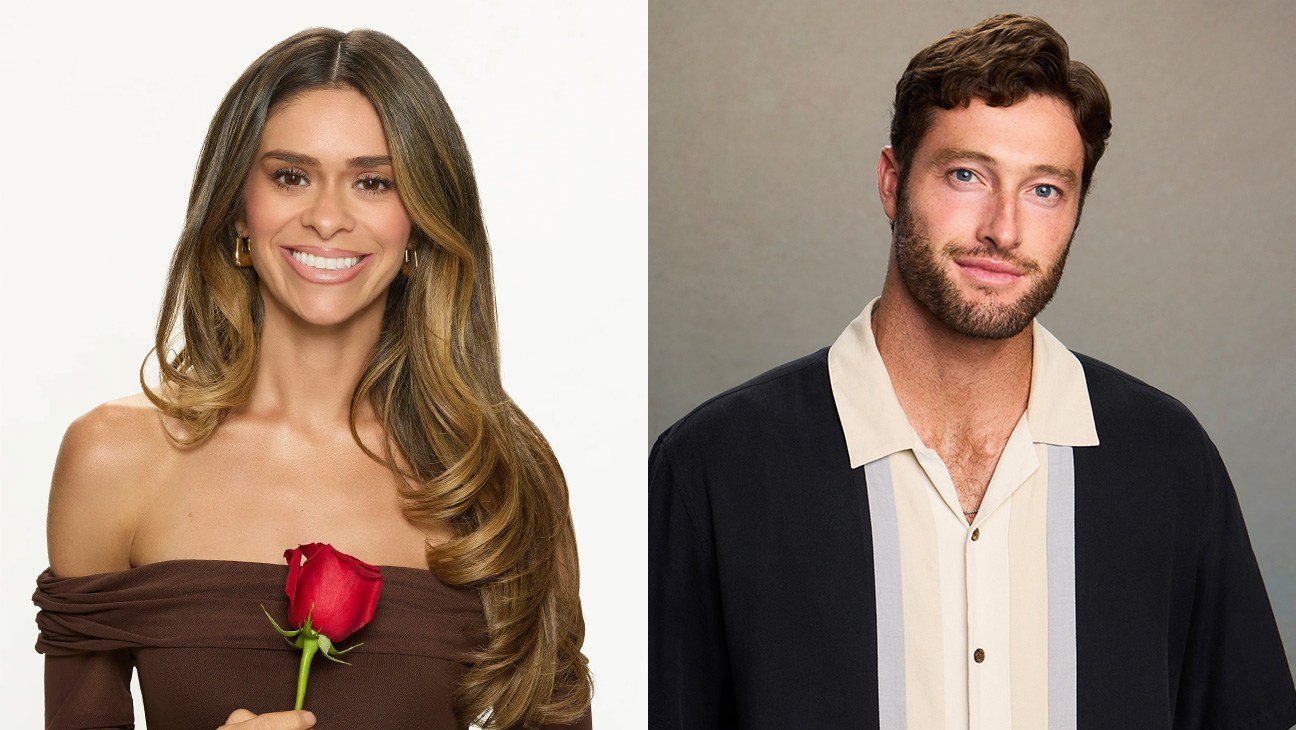
Taylor Frankie Paul is revealing major details surrounding her Bachelorette season that viewers will likely never get to see — including that she got engaged and what went wrong.
During Thursday’s episode of Hulu’s Get Real podcast, an exclusive clip from the upcoming fifth season of The Secret Lives of Mormon Wives shows Paul spilling what happened to fellow castmembers Jessi Draper, Mikayla Matthews and Mayci Neeley.
The clip begins with the women asking Paul if she was intimate with anyone in the Bachelor Nation franchise’s infamous fantasy suites. Paul seemingly shakes her head no.
Without naming him, Draper points out that Paul’s reported final pick on the season, Doug Mason, shares some similarities with Paul’s ex-boyfriend and the father of one of her son’s, Dakota Mortensen, including their initials and the fact that they’re both from Idaho.
“They have the same initials. They’re both from Idaho,” Draper says. “It’s so weird.”
“I didn’t learn all that until later,” Paul responds.
Paul then reveals that she received an unexpected proposal — and said yes.
“He did get down on one knee and proposed,” Paul says. “I was shocked.”
Draper replies, “He told us he wasn’t going to,” referring to when she and other Mormon Wives castmembers visited Paul while she was filming The Bachelorette.
Paul says she believed the same and confirms that she accepted the proposal. However, she adds, “Then, I came home.”
After returning to Utah, Paul says she began texting Mortensen again.
“I don’t know how it led to it, but he came over,” she says, seemingly implying that the two hooked up — something that has been widely speculated.
Paul, who founded the Mormon influencer group known as MomTok, was set to make her debut as the Bachelorette on March 22. However, ABC pulled the season just three days before its scheduled premiere after TMZ published video footage showing the events that led to Paul’s 2023 arrest following an argument with Mortensen.
Paul pleaded guilty to aggravated assault in 2023 as part of a plea agreement that resulted in her other charges being dismissed. Her plea was held in abeyance, with the felony charge set to be reduced to a misdemeanor if she completed the terms of the agreement. The incident was later chronicled on The Secret Lives of Mormon Wives.
Two days before ABC pulled the season, Paul spoke with The Hollywood Reporter at a press event in New York City, where she addressed widespread TikTok speculation that Mason was her final pick.
“I’ve seen a lot of spoilers. However, none of them have been really correct,” she said at the time. “So for me, I’m just like, I guess keep putting out those incorrect spoilers. For the audience, I would want to watch to see if they’re actually true, because there have been so many different ones. How do you even know which one is even it at this point?”
In the weeks following the cancellation, Utah authorities investigated additional domestic violence allegations involving Paul and Mortensen. Mortensen reported an alleged 2024 incident to West Jordan police in February, while Draper police separately investigated another incident involving the former couple. In April, the Salt Lake County District Attorney’s Office announced that it would not file new charges against Paul after reviewing the cases.
In July, before the season five premiere date was announced, Mormon Wives co-star Miranda Hope told THR that she hadn’t been in touch with Paul.
“We haven’t really spoken recently,” she said. “But I genuinely hope that she’s doing well, and from what I know and what I hear, it seems like and sounds like she’s doing better. I truly wish nothing but the best for her.
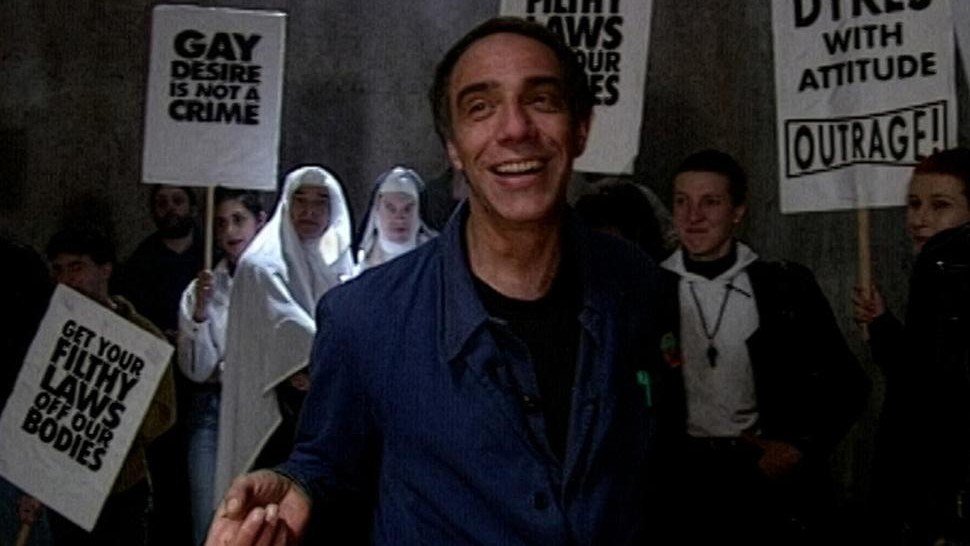
In 1991, Irish cinematographer Seamus McGarvey, who later became known for the likes of Atonement, The Hours, Nocturnal Animals and The Greatest Showman, was invited by the legendary Derek Jarman to shoot behind the scenes on the set of his film Edward II, his gay love story with a bloody ending.
After 30 hours of footage remained unseen for decades, British creative Theo Rollason looked through them and assembled them into their directorial feature debut, Queer Edward II, which will world-premiere in an out-of-competition slot of the Venice Open section of the 83rd Venice International Film Festival on Sept. 4.
Queer Edward II is a Lightborn Films production in association with March 13th and John Gore Studios.
The documentary provides intimate access to Jarman and his collaborators, including Tilda Swinton and costume designer Sandy Powell, who are both executive producers on the new film. And it puts a spotlight on how Jarman, back then fairly newly diagnosed with HIV, refused to separate art from politics and the harsh political climate that queer people in Britain were facing at the time. Also featured are a controversy surrounding Ian McKellen accepting a knighthood and an incident involving queer rights activists and a British pop star, who was rehearsing for a tour on the same studio lot where the film shoot was taking place, which snowballed into a tabloid scandal and threatened to derail the production.
Plus, the film shows a pack of beagles let loose, drag nuns taking a smoke break – and much more. After Hours and Cinephil are handling sales on Queer Edward II.
“When I was first approached to look through unseen rushes shot on the set of Edward II – which had been sitting in a cupboard for over 30 years – I hoped there might be enough material for a short,” Rollason shares in a director’s statement. “Instead, I was astonished to find a comprehensive record of Jarman’s idiosyncratic filmmaking practice, capturing everything from rehearsals to intimate conversations to production office dramas. What really struck me, however, was the set’s embrace of the 1990s political climate, particularly regarding gay rights,” they added.
And the director recalls learning how Jarman became the first public figure in the U.K. to disclose his HIV status and his association with activist group OutRage! “As a queer filmmaker born just after Jarman’s death, I saw a clear opportunity to use the Edward II set as a springboard to discuss what I wish I’d known: just how high the stakes were for the community at this historical moment, and Jarman’s centrality to the struggle that followed,” Rollason concludes. “My perspective is shaped by a belief that queer history is too often depoliticized and reduced to respectable narratives of progress, rather than the messy, confrontational movements that made that progress possible.”
That also makes Queer Edward II very timely. “With anti-trans rhetoric and attacks on queer rights again intensifying, I hope the film can function not simply as a snapshot of a historical moment, but as a reminder of what collective resistance can look like – and what role art has to play,” Rollason highlights.
THR can now exclusively premiere a clip from Queer Edward II. It shows Jarman discussing how to best shoot a scene in a bed, including the number of people fitting into it, as well as the necessary choice of clothing, or lack thereof.
A gothic gem overlooking Venice’s iconic lagoon got a refresh in time for the Venice Film Festival.
Reservations are open at Danieli, Venice, a Four Seasons Hotel following a restoration process that was unveiled this summer and remains ongoing at the property’s adjacent palazzos and within a soon-to-be finished Danieli Spa. Located on the waterfront stretch known as Riva degli Schiavoni and within walking distance from the wildly popular tourist destination Piazza San Marco, aka St. Mark’s Square, Danieli is often praised by guests for its views of the lagoon from both the terrace and inside the rooms and suites.
French interior designer Pierre-Yves Rochon steered the renovation by focusing on a “balance of history, light and materials” per Four Seasons. The color palette is said to have been inspired by the lagoon and mixed with inspiration from Venice’s marble facades, plasterwork and architecture through the use of celadon greens, soft blues, terracotta, ochre and powder pink.
Inside the Palazzo Dandolo lobby, hand-restored gilding creates a quatrefoil motif against a blue background reminiscent of water while the columns, stonework and the staircase were restored by local artisans. The space also leans on natural light through Venetian mirrors while Murano glass, Venetian terrazzo floors and Rubelli fabrics connect each space to Venetian tradition and codes. A collection or artworks has been curated to honor Venice’s heritage and history as a destination for artists and writers.
The Danieli has a rich history. Originally built in 1471 and known as Palazzo Dandolo for the noble family, Giuseppe Dal Niel, aka Danieli, converted the property into a hospitality destination in 1822.
Courtesy of Four Seasons
The hotel reopened with a total of 120 rooms and suites available, a collection said to be more spacious with an expansion of junior and one bedroom suites. The total number of accommodations will balloon to 168 once the restoration of Palazzo Danieli Excelsior is done in 2027. The Four Seasons reports that a particular emphasis was placed on integrating technology into those rooms through such features as a custom-designed media wall to integrate the television with artwork and decorative objects, automated curtains, customizable lighting and a climate control system, the latter of which is ever more necessary as Europe faces historic and punishing summer temperatures.
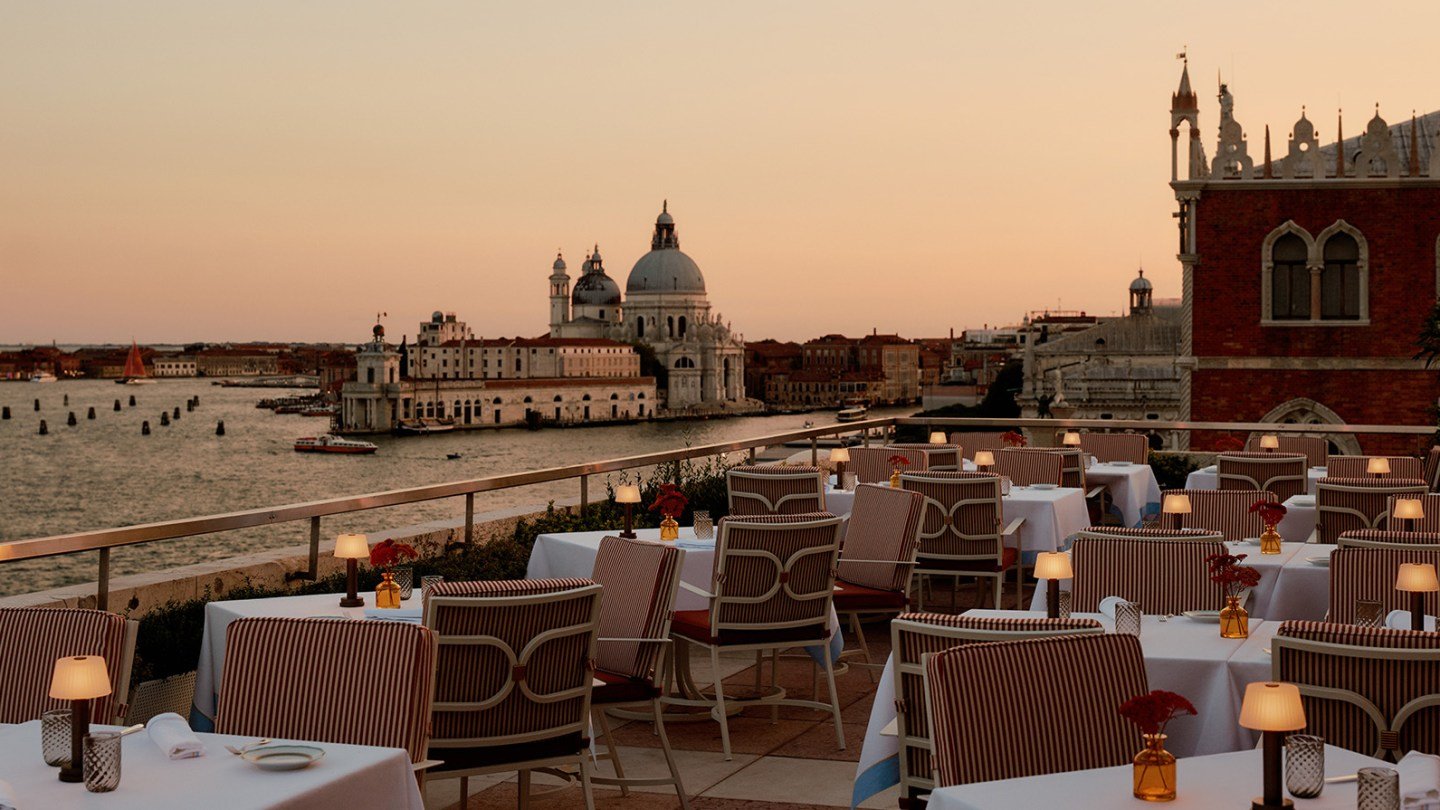
Rooftop restaurant Terrazza Danieli also got a refresh, seen below, which insiders note was done in a way to transform the atmosphere without disrupting the architectural identity. Dark finishes were swapped with pastel tones, blue accents and golden colors, and mirrors were added to play off the natural light. Executive chef Adriano Rausa presents a “contemporary interpretation” of Italian cuisine with a Venetian twist, and many of his menus signature dishes are finished tableside to add a little bit of drama and entertainment.
A view of the grand staircase above the lobby.
Courtesy of Four Seasons
As for the spa, it is expected to open during this second half of the year. It will feature three treatment rooms (including one for couples), a sauna and bathhouse. Danieli, Venice, a Four Seasons Hotel is party of the brand’s Italian portfolio that includes destinations in Milan, Florence and Taormina.
“With the reopening of the iconic Danieli, Venice, a Four Seasons Hotel, our fourth property in Italy from the spectacular collection, we are inaugurating a new chapter in the history of this celebrated palazzo,” said Rainer Stampfer Four Seasons president of global operations, hotels and resorts. “In collaboration with our longtime partner, Gruppo Statuto, we are offering guests the unique opportunity to experience the grandeur of Venice in a whole new way.”
Added Danieli, Venice general manager Christian Zandonella: “The reopening of Danieli as a Four Seasons experience represents an exciting milestone after months of dedication and meticulous restoration. We are delighted to welcome guests back to one of Venice’s most iconic addresses, where the hotel’s extraordinary heritage is reimagined through legendary Four Seasons hospitality.”
Austrian filmmaker Manuel Wetscher made a name for himself with such fiction shorts as 2018’s Four Seasons, 2021’s At Night When Mice Scream and 2022’s Magma. Then came the 2024 experimental short doc Richard, a particularly personal film.
“I only learnt the real reason for my father’s death 10 years after he died,” reads a synopsis for the film. “At first, I was told that he had died of pneumonia, then later of lung cancer. The truth finally came out from a drunken relative at a birthday party when I was 17 years old. Since then, I have known that my father died of AIDS in 1993 at the age of 40.”
Wetscher’s feature film debut Eklipse, which world premieres in the Horizons section of the 83rd edition of the Venice Film Festival on Sept. 5, is inspired by his experience of being kept in the dark on the details of his father’s situation by his family. And as the title, which means “eclipse,” suggests, the sun plays a role in the movie, just as it did in Magma. And yes, the title Eklipse is spelled with a “k” in both its German and English versions.
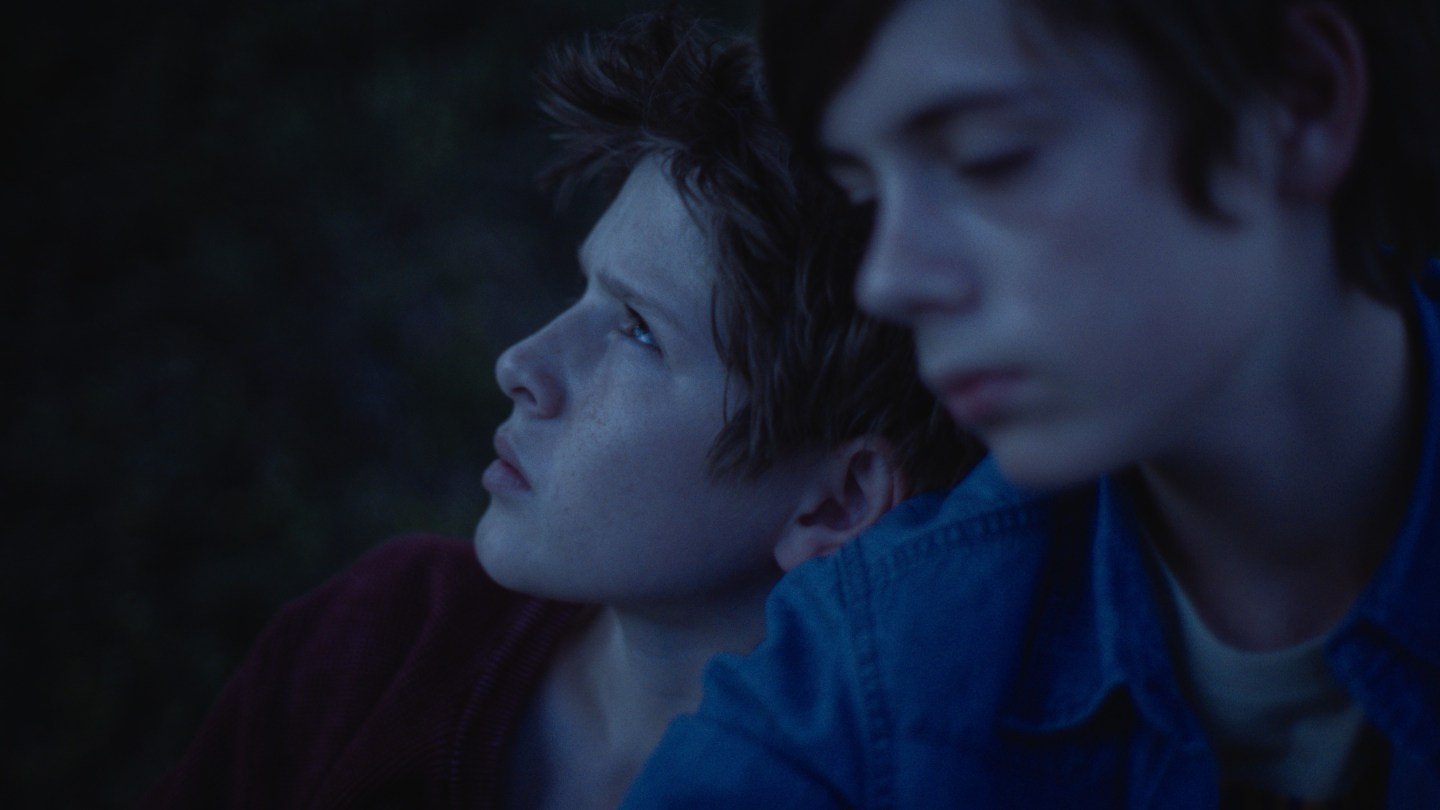
Eklipse, starring Moritz Hohlrieder as Tomy and Finley Brown as his best friend Chris, is set in the 1990s at an alpine dairy farm in Austria. The two teenagers spend a summer helping Tomy’s uncle, portrayed by Hannes Perkmann, with milking and other duties, as well as exploring the outdoors.
But as the title suggests, darkness overshadows their time together, while also leading to some revelations. After all, Tomy’s father is in hospital, and his mother decides to keep the real reason from her son in the film from production companies Eutopiafilm in Austria and Albolina Film in Italy. But then, Chris learns that Tomy’s father is in hospital with “the gay disease,” and he becomes frightened, leaving Tomy suddenly confronted with rejection and the silence of his loved ones.
Wetscher co-wrote the film with Bernhard Jarosch, with whom he also collaborated before on several short films. Simone Hart handled the cinematography, and Anna Kirst is the editor of Eklipse, which also features actors Lenz Moretti, Lisa Schützenberger and Barbara Romaner. Films Boutique is handling world sales on Eklipse, which comes from production companies Eutopiafilm in Austria and Albolina Film in Italy.
“Eklipse is a film about the taboos surrounding AIDS and the fear of social exclusion,” Wetscher says in a director’s statement. “It tells the story of how prejudice and ignorance affect the friendship between two boys, and how social contexts are mirrored within the microcosm of a family.” And he emphasizes: “With Eklipse, I want to create memories by exploring the sensory and tactile qualities of cinema.”
THR talked to Wetscher about mixing the autobiographical and the fictional in Eklipse, including his cameo in the film, how he found his young stars, how he and his team discussed Andrea Arnold and Alice Diop films, his efforts to transport audiences into the alpine environment, and the timeliness of the fear of AIDS and the unknown.
The film feels very intimate, and I understand that it is inspired by your and your family’s experiences. How much of what we see is autobiographical and how much is fictionalized?
It’s part [of a cinematic] game. I wrote the screenplay with a good friend of mine. The film draws a lot on the personal experience of losing my dad in 1993, when he died of Kaposi’s sarcoma, a cancer caused by AIDS, but then it also includes completely fictional things. Later on, seeing films and getting to know more about what people did [back when my father died] made me look at my family history differently. But many summers, I spent in Tirol working for my grandfather on a farm, so I knew these two elements. That is also where I actually experienced the 1999 eclipse, so these were all elements I had from the beginning.
But then, of course, writing the screenplay meant having to make it all into a story, something that keeps you interested and that works in itself. That’s a process I love, [during] which I also experienced a lot about myself and about the time back then. It allows you to reflect on how certain mechanics in society work and this dilemma of what you tell and what you don’t tell a kid.
I guess that is why the film feels so specific about its time and location but also very universal…
That’s something that interests me when watching films – when they make me understand the world or learn, experience, or feel something. So yeah, the goal from the beginning was to make a film that gives people who don’t know this background or specific location the experience of things that come with being and living there. For example, this experience of going into a stable with 50 cows.
It’s very tricky to translate that into cinema because when you go there, it’s so physical and it’s so sensorial. There are so many things going on, including the smell. It was a beautiful challenge to think about how to put that into cinema and what kind of ingredients we have to use to recreate that. Part of that is choosing the team that is able to go there, but then also later on in the sound design and with the musicians, we focused on recreating the sound, including with synthesizers and loops, to make sure you really have this feeling in the image but also in the sound. That’s much more direct of an experience.
How did you think about time?
One element that we decided on while editing was that we wanted to sometimes let things stand for a while and let you go through a process, because that is what our characters do in the film.
There are scenes that look like old home videos in Eklipse. Are they real?
Yes, that includes my cameo as a baby. And we have this material with the father, which is a home video that I have from my dad and me. There is also this image that the boys look at of the dad who is in the hospital. It’s an actual picture of my dad. I worked with personal material in creating this film. I was showing people [on the team] these images, so they could relate better. And because this is authentic material, it also has the emotion for me in it that I was searching for.
For cinema, you play with [such material and emotion] and then it becomes something else. In the film, it becomes the character’s memory. You asked about universal themes. We tried to tell the story in a very limited and small place, but through using the eclipse, which is very big and outside of our world, we also had the chance to fade to the bigger elements. When you look at the stars, the light that comes to the Earth has already been gone for a long time. In the edit, we realized that it was so beautiful to understand that this material that he sees or memory itself is far away. But then in the moment where you look at it, it’s there at the same time. So to use this element felt really right and made a lot of sense.
Did anybody on your creative team and crew have similar experiences?
Since this is my first feature, the idea was to have some newer people but also to have people who are more experienced and could bring stability for us. And these conversations were very interesting because some of the people who experienced the ’90s lost friends to AIDS or had someone in their family. Talking to them really made me understand in a different way my mother’s or my family’s position.
By coincidence, I also met a doctor who was working back then in the hospital in Innsbruck where my father was, and hearing how complicated it was and how scared people were and how impossible it was to talk about it, even within groups of friends who then suddenly wouldn’t talk to you anymore, helped me [understand that time] better. They did this out of fear. It also created a possibility for me after a long time to talk with my mother about it and to also see her point of view.
Has your family seen the finished film?
There will be the Austrian premiere, and my family will come there.
‘Eklipse’
Courtesy of Venice Film Festival
You probably started working on Eklipse before what feels like a backlash against queer people and LGBTQ+ rights…
I can see what you describe and what is happening politically at the moment. But yeah, we were not foreseeing that. I mean, I wish this would not be happening. I can see the dynamics, and that’s just scary how people who are different or live another way are being discriminated, and how populism is using that. But that is coming from the outside.
What we are looking at in the film is the friendship, the vulnerability of the people and the families. And the smaller the details we show, the more vulnerable we become, but through these small things, you understand so much about the dynamic and the universal issues and bonds.
How did you find your two young and excellent leads?
We started with online casting, and it went through schools. We were looking specifically in the region where we shot because it was important to have actors who had roots or a connection to this region that has a specific language and sound. We realized that to be authentic, you need to have the dialect.
We picked Moritz and Finley and did a casting with them together because they needed to match and make you feel a connection between the two of them. They could not just pretend to be friends. And then we also took Georg, who plays the uncle, to see the dynamic between all three. We went to the mountain because we also needed to know if they were able to play with the cows and not be afraid. So we put them there to work a bit and to experience all this, and then we felt they were great.
How early did you know the title for the film? And there is no English-language spelling version of it, correct?
We had it from the beginning. Of course, there were a lot of moments where everybody came to ask: Is it the right title or not? And we tried different things, but we always came back to it. There was the question of how to do the international title. And the final decision was to say it’s going to be in German and, also for international, always written with the K to make it a bit more unique or more recognizable.
Were there any films you watched when you worked on Eklipse or movies that may have been an influence?
For the cows and all these things, Cow by Andrea Arnold was a film we looked at. Also, Saint Omer by Alice Diop and [Céline Sciamma’s] Petite Maman were films that we talked a lot about in the making with the DOP to create authenticity and keep it simple but also [allow for] the bigger picture.
When the credits started rolling, I had an unusual feeling or idea…
It’s cutting to black at the end, like another eclipse.
Indeed! And I wondered if that also symbolically invites you as a viewer to think about what you just saw and heard…
It’s like the aftermath, the echo of what you just saw. How the images reappear and how you put them together. That’s one thing. There is something else. It’s called Eklipse because of the solar eclipse, but then you have the same term in virology, which you use when an infection goes into the body, but it has not infected the cells yet. That’s also called an eclipse, and for us, in the dramatography and in developing the story, this knowing and not knowing, what is visible and what is not visible also became important.
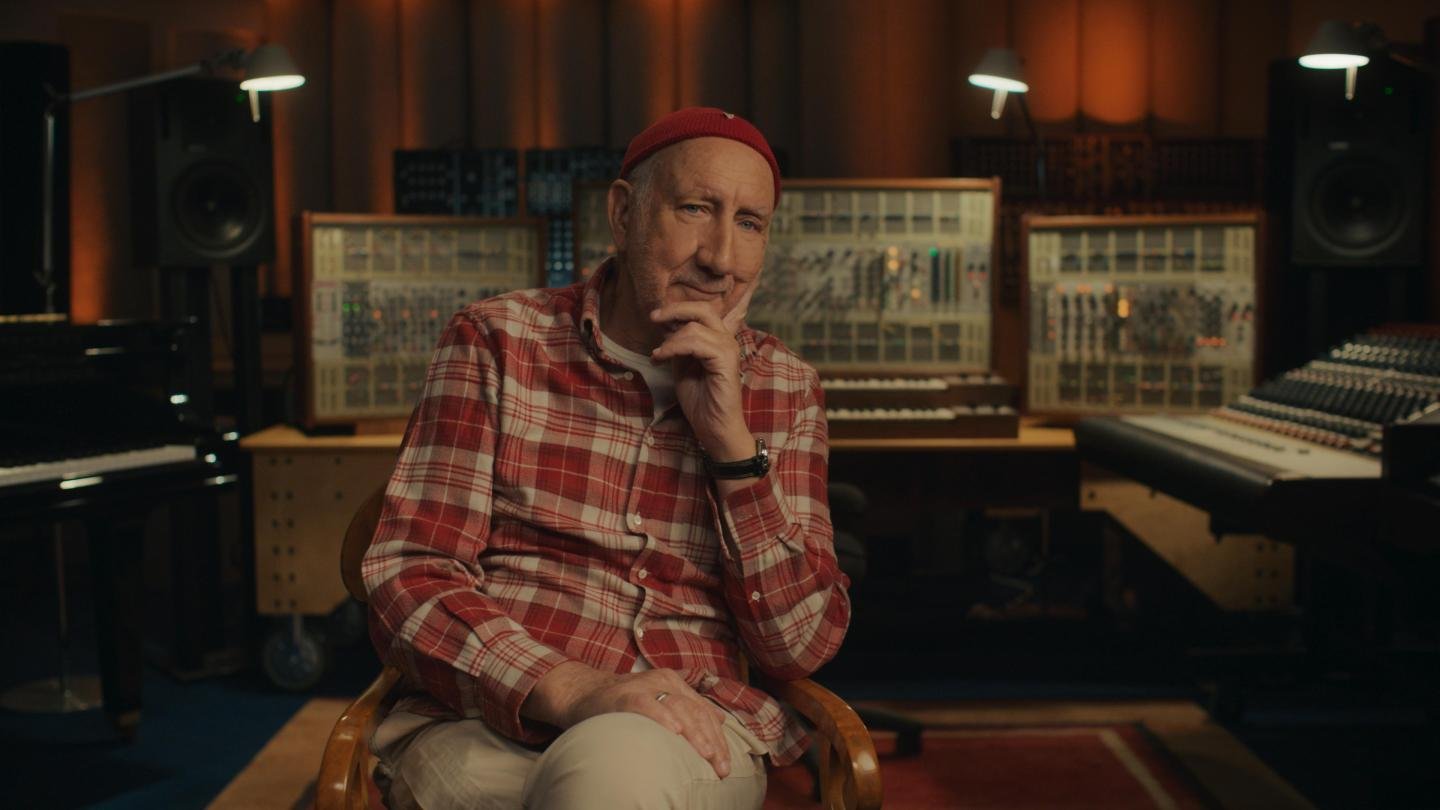
The legendary singer/songwriter Pete Townshend of The Who has cooperated with a documentary feature about his colorful life and career, and specifically about a time that almost destroyed him and his band: when, shortly after the release of the album Tommy, Townshend and The Who tried to make a science fiction rock opera called Lighthouse.
Behind Blue Eyes, which was co-directed by Frank Marshall and Nigel Sinclair, is headed to multiple fall film festivals as a sales title. The film’s backers — it was produced by Kennedy Marshall Documentaries, White Horse Pictures and VICE Studios, and is presented by Sobey Road Entertainment in association with Spirit Music Group, Polygram Entertainment and Trinifold Management — hope it will land a buyer and a spot in this season’s awards race.
Marshall and Sinclair exclusively discussed the film with The Hollywood Reporter.
What was it about Pete Townshend’s story — and specifically the story of Lifehouse — that made you feel this was a film that needed to be made now?
FRANK MARSHALL It’s a fascinating story and very compelling as a film now because the world has finally caught up with it. In 1971, no one could understand what Pete was talking about and he thought Lifehouse had failed. The irony is, 55 years later, we’re living inside his story.
NIGEL SINCLAIR And the other part of this is that Pete’s reached a point in his career and life where he is prepared to take a very intense look back at his creative process, with all its twists and turns; and that was captivating.
As you dug into this period of Pete’s life, what surprised you most about him or changed your understanding of the man behind the music?
MARSHALL I was surprised by how intellectual Pete is, his art school background and how he was trying to describe the future with technology. His solution wasn’t destroying technology, but human connection. He wanted to connect to the audience and bring them together through music. And out of that apparent failure came “Baba O’Riley,” “Won’t Get Fooled Again,” “Behind Blue Eyes,” “The Song Is Over” and other amazing music originally connected to Lifehouse.
SINCLAIR What surprised me was how self-aware he was from an early stage in his career. Discovering the link between his childhood torment and the character of Tommy was an extraordinary revelation. The other thing was the intense duality of his personality — the introvert and the extrovert, the rock superstar and the internal artist who wanted to be thought of as a writer not a rockstar.
Lifehouse emerged from a deeply personal crisis that nearly tore apart both Pete and The Who. How did you approach telling that story in a way that captures both the enormous musical ambition of the project and the personal stakes for Pete?
SINCLAIR Ironically, the enormous musical ambition of the project resulted in Who’s Next, which is easily the biggest album The Who released, groundbreaking, and often considered one of the top 10 rock albums of all time. In two days of interviews, Pete opened up his heart and explained how much Lifehouse was intended to reconcile the two sides of his personality, the rockstar and the artist. So its failure was heartbreaking then and, it appears so, now, as he tells it. So many of the later decisions Pete made about his career were so obviously driven by this “disaster.” And maybe from it came the wisdom that gave Pete a greater sense of fulfillment later, and made his relationship with Roger even more powerful.
What do you hope audiences come away understanding differently about Pete Townshend — and his place in music history — after seeing the film?
SINCLAIR Pete Townshend was one of the avatars who took rock and roll as a form of popular music and turned it into an anthem, a generational call to action, for then and for so many generations since. With Townshend, a select group — John Lennon, Bob Dylan, Ray Davies of the Kinks, and a little later David Bowie — gave the music, the lyrics and the performance of rock and roll the power to become an identity for millions and millions of people on earth. If Dylan changed the narrative with his The Times They Are a-Changin’ album, Pete turned it up to another level with the Tommy double album.
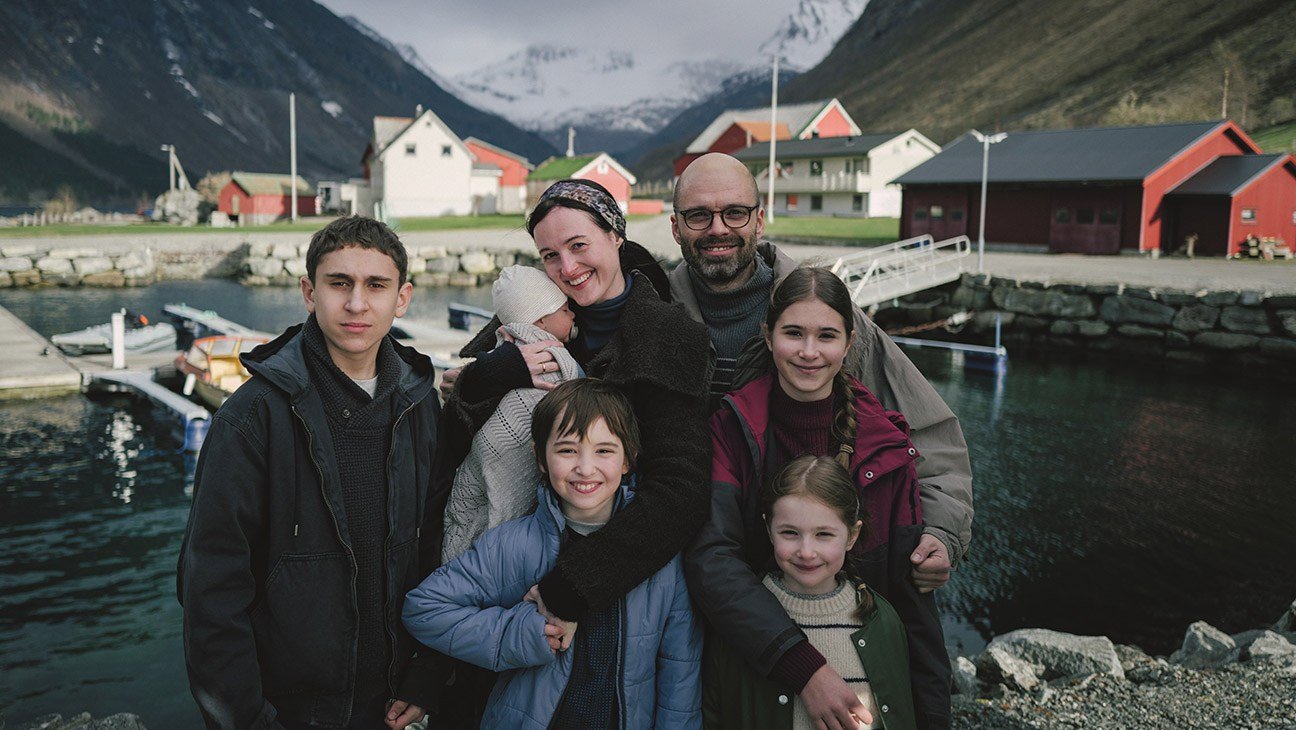
In the drama about progressive politics, religious faith, and the limits of tolerance, Reinsve and Stan play two fundamentalist parents who relocate from Romania to a small Norwegian village, only to find themselves accused of child abuse, and forced to defend their beliefs, and strict parenting style, in court. The film is in Romanian and Norwegian with substantial portions in English.
Reinsve, hot off her box office success with horror sensation Backrooms, starred in this year’s Best International Feature winner, Joachim Trier’s Norwegian melodrama Sentimental Value.
Fjord premiered in Cannes, where it won the Palme d’Or for best film. Neon snatched up the film for domestic release ahead of the festival. Under new Academy rules, the Palme d’Or win meant Fjordreceived automatic entry qualification for the Best International Feature category, whether Romania chose to pick it or not.
The film’s star power and its hot-button themes, as well as the Palme d’Or prestige, could help Mungiu secure his first-ever Oscar nomination. The Romanian director won the Palme d’Or back to 2007 victory with his breakout 4 Months, 3 Weeks and 2 Days, but that film was not put forward for the Academy Awards, triggering an outcry. His 2012 feature Beyond the Hills was Romania’s official Oscar pick and it made the shortlist, but did not secure a nomination. Fjord looks like a strong contender in this season’s race, not just for Best International Feature but in other categories, particularly Best Original Screenplay.
To date, the only Romanian film to be nominated for an Oscar is Alexander Nanau’s documentary Collective, about an investigation into hospital corruption in the wake of a nightclub fire. Collective was nominated for two Academy Awards, in both the Best Documentary and Best International Feature categories. A Romanian film has yet to win an Oscar.
The Academy of Motion Picture Arts and Sciences will announce the 15 films on the best international feature film shortlist on Dec. 15. The five nominees will be announced Jan. 21, 2027. The 99th Academy Awards ceremony will take place on March 14, 2027.
If you purchase an independently reviewed product or service through a link on our website, The Hollywood Reporter may receive an affiliate commission.
Lego Insiders got early access beginning Sept. 1, while the set becomes available to everyone on Sept. 4 for $229.99. The release arrives two decades after Lego launched its dedicated Batman range in 2006, initially with seven sets based on the titular character and his world. Since then, the company has made several vehicles, including The Dark Knight Tumbler and the 1995 Batman Forever Batmobile.
Lego
First of its kind
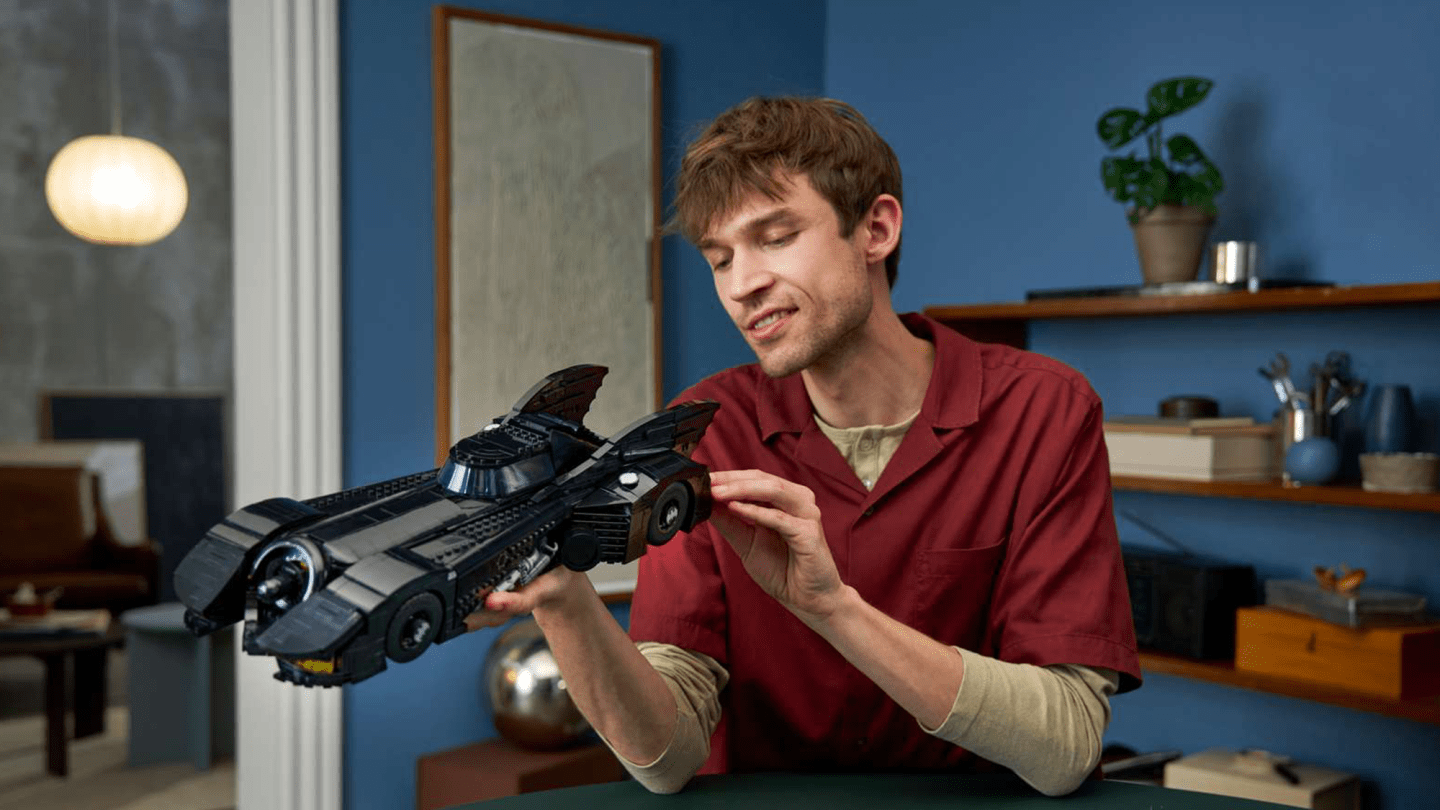
‘Batman Returns’ Batmobile Lego
Early Access for Lego Members
A clever transformation reveals the Batmissile tucked away inside the vehicle.
The 18-and-up set measures more than 17 inches long and includes six hidden Easter eggs, including The Penguin’s tracking device. Its headline feature is a button-activated transformation that drops the Batmobile’s side panels to reveal the Batmissile escape vehicle. The set includes an exclusive Batman minifigure with a newly molded cowl and cape, plus a dedicated Batman Returns display stand.
Lego
For longtime Lego Batman collectors, the significance of this release extends beyond the car itself. The company’s Batman catalog has grown from those seven inaugural 2006 sets into a sprawling archive of vehicles that have become sought-after display pieces.
For instance, Lego’s 1989 Batmobile that arrived in 2019 is now a retired product, but third-party sellers are offering up the collectible online for over $500, while the sold-out 2024 Classic TV Series Batmobile is going for over $250 on eBay.
Jennifer Aniston and Jim Curtis took a very public step in their relationship on Wednesday, sitting down together for a conversation at 92NY.
The event was held in celebration of Curtis’ new book The Book of Possibility, and saw Aniston interview the transformational coach and wellness expert — who she’s been dating for over a year — on stage.
“This is very, very exciting. It is quite an honor to be here, especially with you, Jim Curtis,” Aniston told the crowd, before launching into a story about how she grew up going to gym class and playing dodgeball in the 92NY building. “It’s quite a full circle moment to be back here with you, speaking of dodging balls,” she teased, wondering, “Have I completely embarrassed you?”
“Not yet. We’re still on track here. First question please,” Curtis joked back. She began by asking him about his journey to wellness and self-help, after growing up in Boston (where “we didn’t suffer woo-woo,” Curtis said) and having a finance career on Wall Street. Eventually, he hit an “ultimate low” with his health and relationships, and wound up in the hospital with a scary diagnosis.
“I just said, ‘You know what? I’ve reached rock bottom and it’s time to change,’” Curtis told the crowd as he got emotional. Aniston responded, “You reached this point where you’re met with two roads, and you definitely took the road less traveled in your case.”
Curtis has walked with a limp since he was young due to lesions on his spinal cord, and admitted that when people would ask why, he’d say he got into a motorcycle accident.
“I was so shameful that I had a medical condition, that I was broken in some way, that I thought that a motorcycle accident was at least a little macho, right? It’s like this identity of the macho strong man,” he said. “It didn’t come with the connotation and shame of ‘this could get worse’ and ‘should we hire you?’ and that’s what was thinking in my head.” Curtis added, “I overcame that with self-acceptance and self-love and it was a long journey in which I realized I could have done it quicker, and that’s what this book is about.”
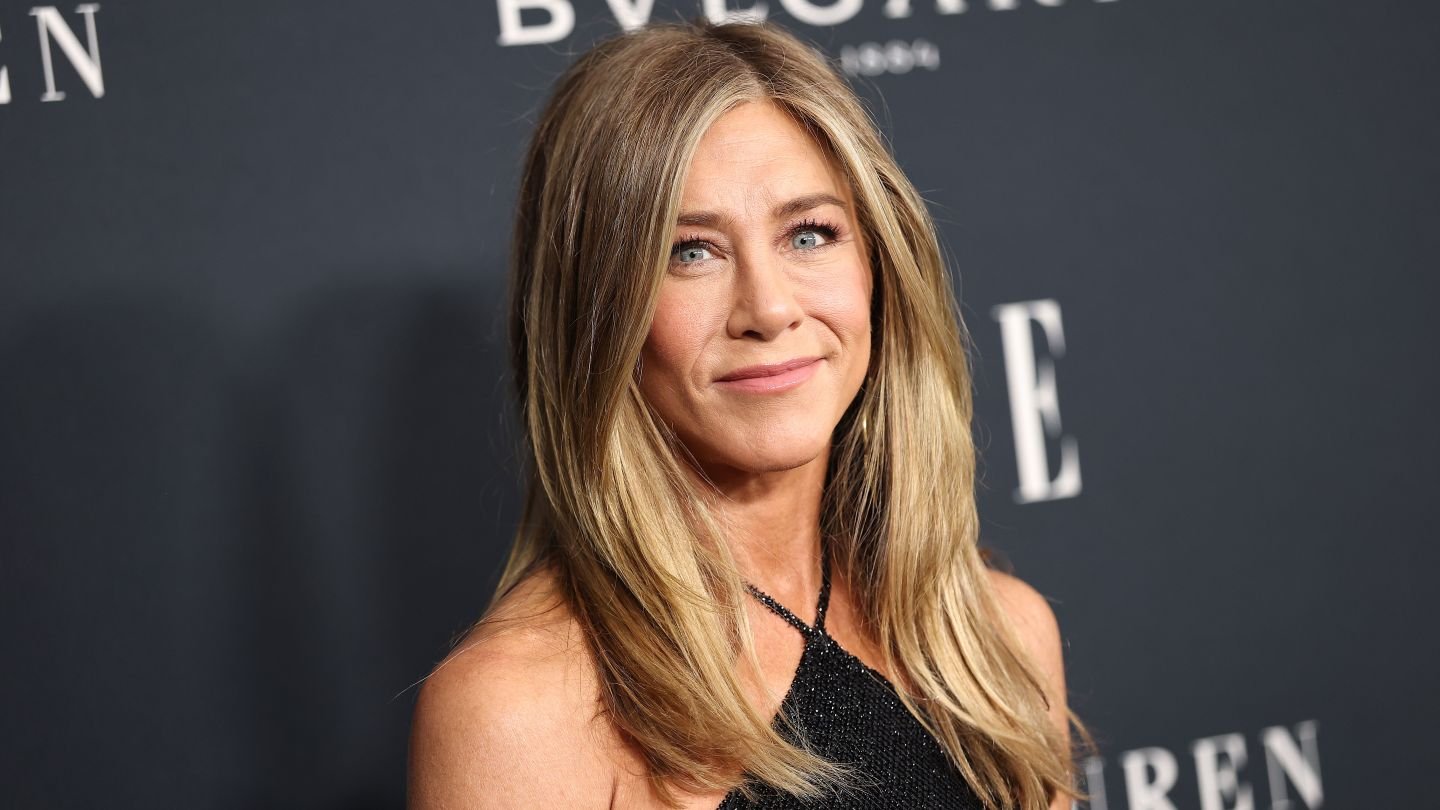
Jim Curtis and Jennifer Aniston at Elle’s 2025 Women in Hollywood Celebration.
Michael Kovac/Getty Images for ELLE
The couple also drew some comparisons between their professions, as Aniston mused that “if you’re a director and you have an actor, depending on who your actor is — some actors, they’re just like, ‘I want to bleed this character from my veins, so please talk to me.’ And then there’s others that are like, ‘Just give me a line reading. I want to be a Nobu by eight.’” Curtis coaches a wide-range of clients, many that are quite successful, and had to learn how to speak to each person differently.
“People think like I’m ‘look into my eyes’ type of thing,” Curtis joked, referencing his work as a hypnotherapist. “Really what our conversations as a coach is is asking the right questions so people can understand themselves more… I’m lucky enough to have worked in finance. I’m lucky enough to have worked in media and the entrepreneurial companies, and so I can speak that language to that person in a way that isn’t like ‘believe in the source of love that you are, straight from the heavens.’ That doesn’t fly.”
Before jumping to some audience submissions, Curtis told Aniston, “Those were fantastic questions, by the way — and I know that we kind of went over those questions,” as she jumped in, “I didn’t ask you one question that was prepared. I don’t know what you’re talking about.”
Their banter continued as the transformational coach joked that the hardest part of working on the book was choosing the cover: “Is that a good enough picture of me? How does my hair — you know. How many times did I ask you, ‘Is this a good picture of me to put on this cover?’”
“A lot,” Aniston responded, teasing him with the next question, “What did you learn about yourself while writing the book? You got a good picture.” At the end, Curtis threw a few questions to Aniston, with her admitting she had to “overcome a very deep, deep fear of public speaking” to do the event with him.
After a 30-minute chat, Aniston exited the stage and Curtis led the crowd in a guided meditation — but first, he had to get a feel for the audience. “How many people here meditate on a regular basis? And be honest, how many people here just came here to see Jennifer Aniston interview me?” he laughed. “How many people here, despite that, are willing to try some meditation? How many people here are worried I’m going to try to hypnotize you and you’ll act like a chicken?”
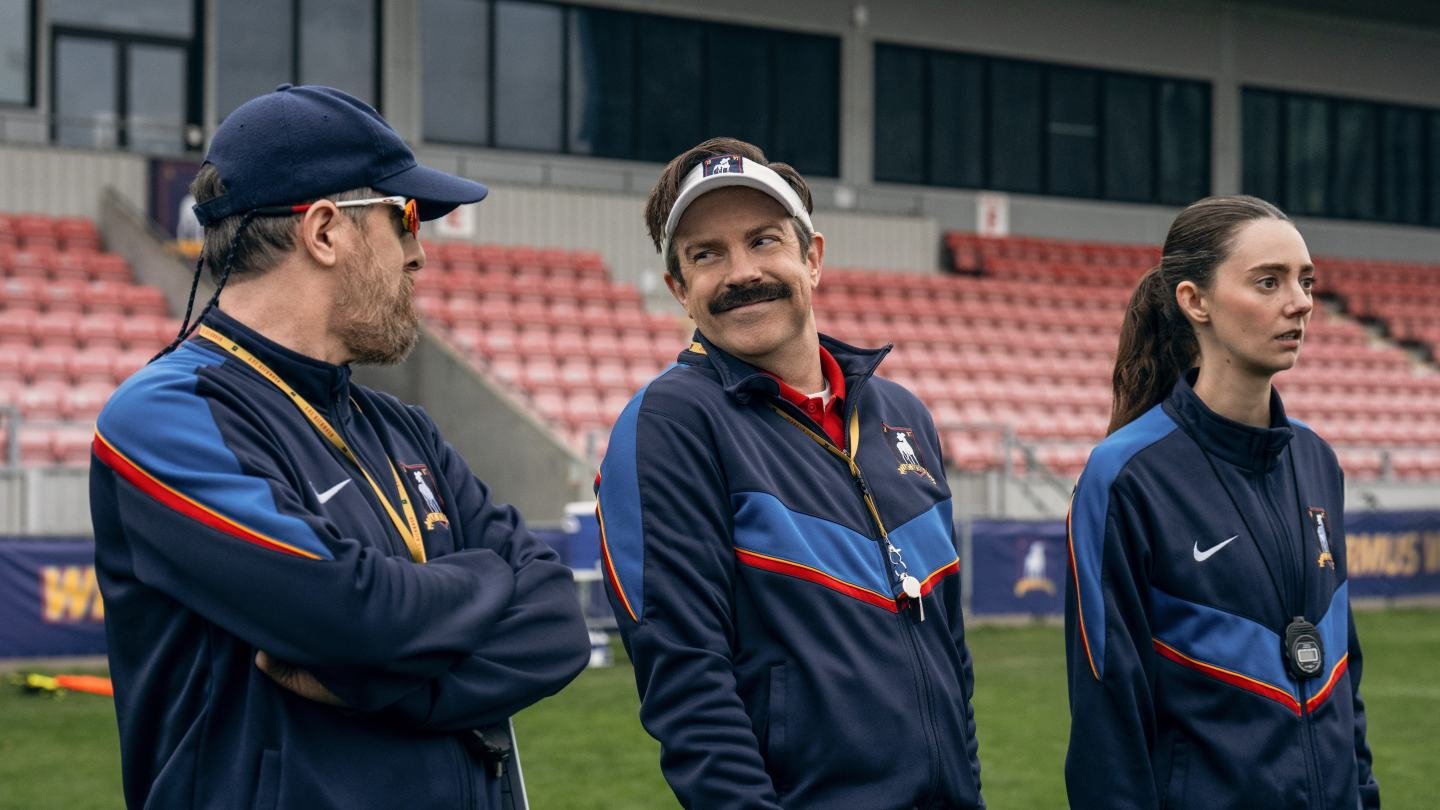
Ted Lasso returned with a new episode on Wednesday — though hardcore fans will likely have already watched it when it drops on Apple TV on Tuesday nights. Season four, episode five of Apple’s hit comedy, titled “Riches of Embarrassment,” has romantic woes around every corner — for both the veteran cast and some of the newbies on Richmond’s new women’s football team. It’s the clearest sign yet that this workplace comedy is leaning into relationship-drama territory, a tendency that’s bubbled below the surface since Ted first landed in England and we all fell for this early-pandemic-era surprise hit.
The episode marks the season’s halfway point, with several of Ted Lasso’s romantic entanglements hitting another crossroad. Keeley is looking to rekindle a romance with Roy, but her timing sours when she learns his “10-date experiment” is over — and that the last five rendezvous were all with the same woman. Beard confronts Jane after attending her experimental meta play, and she agrees to stop performing in it herself, only for the show to become the toast of London and get picked up for a West End run. And then there’s the very rich, poor-in-love Rebecca, who gets an unexpected visit from her suitor Matthijs. It’s a relationship where the pitfalls keep coming: the hopeful news of his move to London loses its shine once it becomes clear it’s less about getting closer to Rebecca and more about staying close to his daughter’s mother.
And then there’s the football. The Lady Greyhounds face the formidable Chelsea in their biggest match yet, on their home turf. Ted pulls a classic Ted Lasso and manages to keep the team motivated, even as he juggles the fresh challenge of managing Coach Chilton’s struggles.
Amid all that romantic chaos, it’s the titular, mustachioed, warm-hearted coach who manages to dodge relationship hell himself — not that his team doesn’t try to drag him in. The episode opens with a photo of Ted eating a hot dog alone in public, sent to the Lady Greyhounds’ group chat and opening the floodgates of scrutiny about who their coach really is beneath all that face fuzz. When the team ambushes him with questions about his personal life, he deftly dodges them — much like the show itself has dodged the topic all season. Maybe that’s setting us up for something more later on.
By the end of the episode, frustration abounds: Matthijs wants to hit pause on his relationship with Rebecca; Keeley’s plan to rekindle things with Roy has backfired right when she was finally ready to make a move; and Beard, in a subplot unrelated to the rest of the episode’s relationship woes, is still tangled up with a partner the show frames as successful but far from healthy. Coach Chilton, meanwhile, has to sit out the season’s final game after using her position to exact some revenge on the team. And capping it all off, the Lady Greyhounds suffer a surprisingly close loss to Chelsea.
But never fear — this is Ted Lasso, where our feel-good American coach always shows up with a folksy quote to soften the blow of reality, one that also happens to sum up the season so far. “That’s one of the great things about sports,” Ted tells Coach Chilton after the team’s stinging loss. “There’s always another chance.”
The photos look glamorous but off camera, festivals can be a grind.
That’s certainly true in Venice, where it’s common to encounter packed boats, sweaty lines and crowded screening rooms all in a day’s work every September. But Hotel Cipriani — the luxury oasis opened in 1958 and home over the years to A-listers like Sophia Loren, Cary Grant, George Clooney, Julia Roberts and Lady Gaga — opened doors to a chic relaxation escape just in time for this year’s film fest.
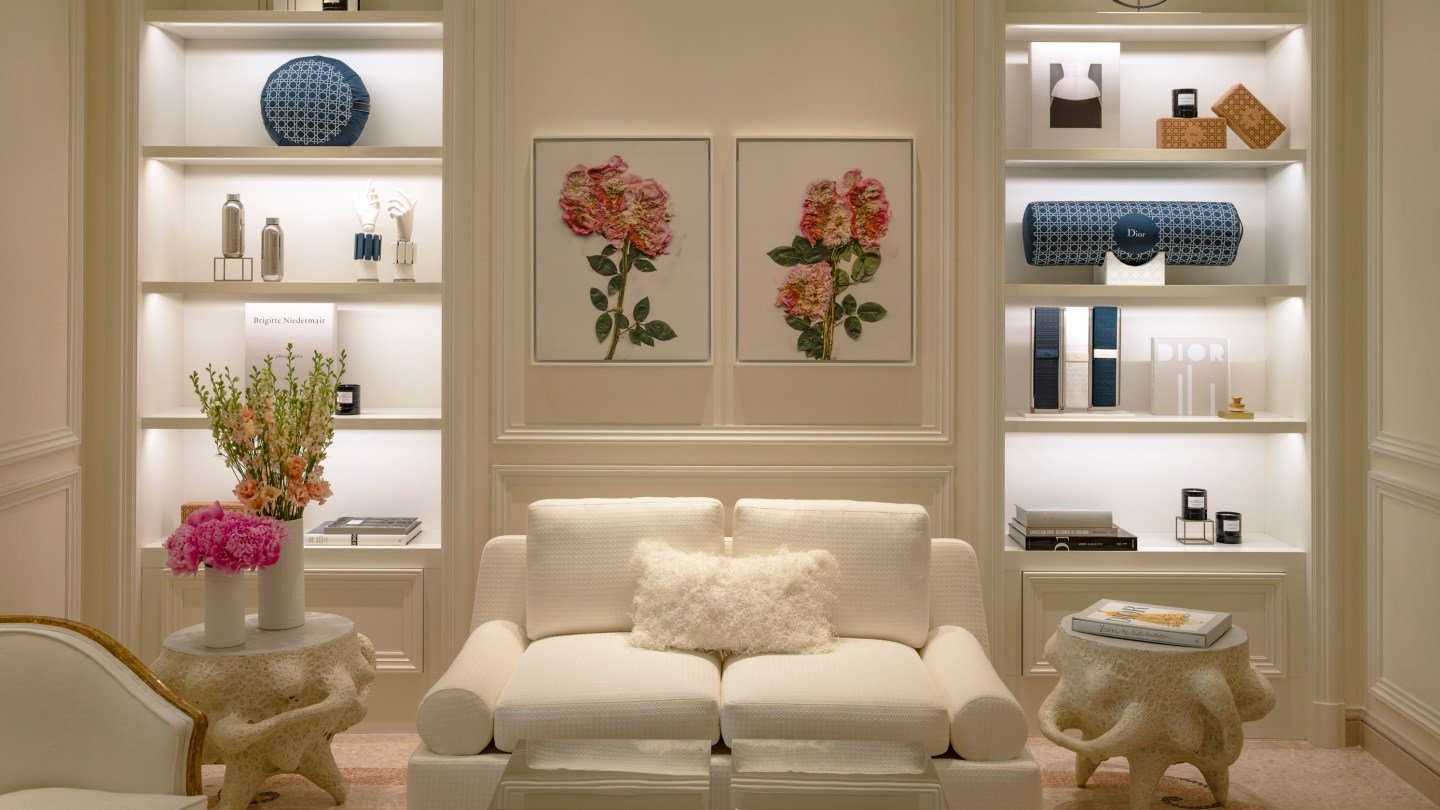
As part of an expansion of its collaboration with Belmond, Hotel Cipriani now hosts Dior Spa, a “haute wellness” destination that launched in June. Designed by architect Peter Marino, who also steered a renovation of the hotel, the space mixes “Venetian aesthetic codes with those of Dior” across five cabins (including one double), a relaxation lounge and a boutique where Dior wares (fragrances, skincare and makeup) are on display and for sale.
A view inside the new Dior Spa at Hotel Cipriani in Venice, Italy.
Courtesy of Dior
The spa menu features three exclusive signature treatments designed to “revive the skin and the body, or impart a glow to the face while soothing the mind.” There’s “Theatre Corporel” for the body at 90 minutes, a treatment that features a four-hand ritual thanks to two Dior wellness experts working in sync using Ayurvedic traditions. “Mascarade” focuses on the face over 90 minutes after beginning with a gentle abdominal stimulation to restore balance and release tension. Also employed: ultrasound, microdermabrasion, microcurrents, LED mask, cryotherapy and an oxygen mask.
Lastly, there’s “Grand Bal,” a multi-sensory treatment spread across 120-240 minutes focused on the entire body with a glam treatment to finish for hair and/or makeup styling. It begins with a reviving scalp treatment with hydra dermabrasion and a stimulating massage, and is followed by a facial to exfoliate, cleanse and tighten the skin. The treatment closes with a glam session tailored to the client’s choices, and can include hair styling, makeup, manicure, pedicure and more.
A view inside the new Dior Spa at Hotel Cipriani in Venice, Italy.
Courtesy of Dior
The three offerings are in addition to a healthy range of typical spa choices like massages, scrubs, facials, red light therapy, dry brushing and more. But wait, there’s more: Dior Spa also offers yoga, pilates, sound healing, breathwork and mindfulness, and a piéce de résistance: a self alignment cruise on a private boat. Curated by Rose Ferguson, a global Dior wellness expert in nutrition and functional medicine, the 120-minute jaunt takes guests for a cruise on the Venetian lagoon while they journal, experience guided visualization, sensory meditation and a healthy snack and light drink to close.
Opening a Dior Spa in Venice has historical roots for house founder Christian Dior, who was invited to attend what was billed the “ball of the century” by flamboyant millionaire art collector and interior decorator Charles de Beistegui in 1951. “It was the most beautiful evening of my life, and one that I will never experience again,” Dior once said. The house currently operates a luxury boutique in Venice, and has regularly participated in the Art Biennale.
The Dior Spa in Venice follows pop-up spas and takeovers at other properties, including the popular industry hangout, the Beverly Hills Hotel. In 2024, Dior returned to the Beverly Hills Hotel for a second edition of its Dioriviera luxury pop-up, including a pool takeover, special boutique and spa treatments. The residency — one in a series of Dioriviera global activations that included eight Dior boutiques, 12 resort stores and six pop-ups — featured splashes of Dior’s Toile de Jouy print seen everywhere from deck chairs and umbrellas to towels, not to mention an exclusive spa experience.
A view inside the new Dior Spa at Hotel Cipriani in Venice, Italy.
Courtesy of Dior
A view inside the new Dior Spa at Hotel Cipriani in Venice, Italy.