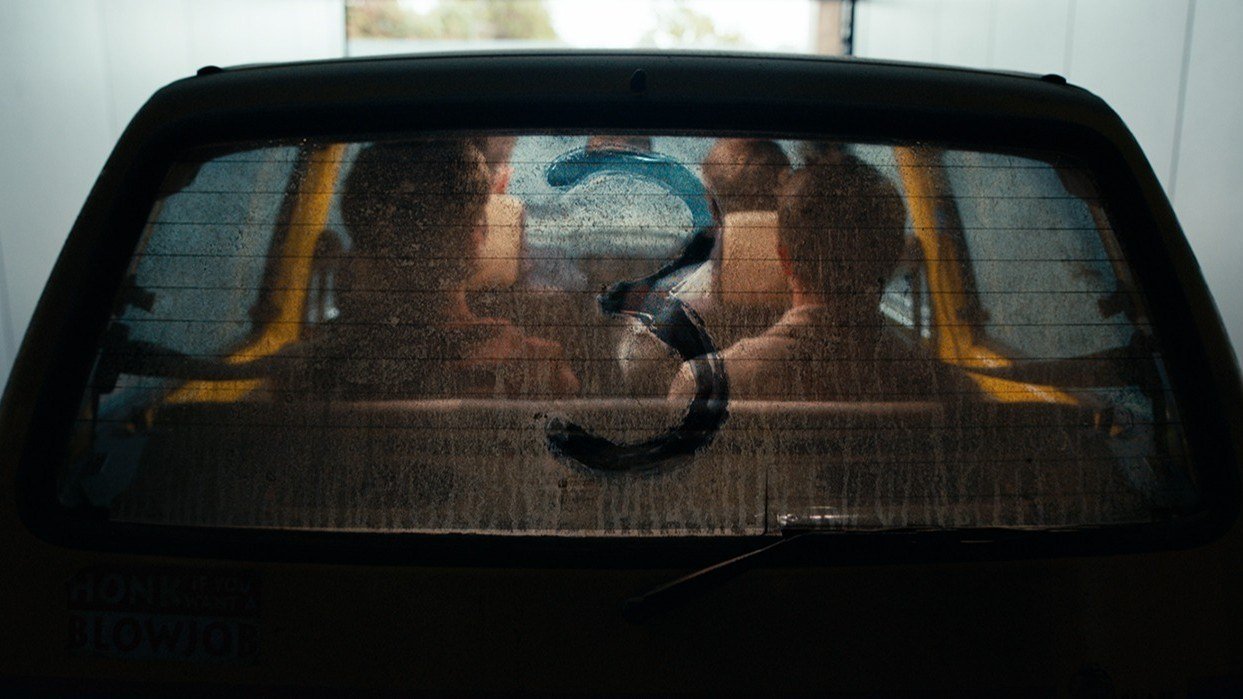
If you’ve never loved anything before, apart from a car or a sandwich or The Inbetweeners, this news is for you! Netflix unveiled on Monday that a third movie in the raunchy franchise is moving ahead, with production beginning on Monday in the U.K. on The Inbetweeners 3, which the streamer described as “a continuation of the hugely popular sitcom and its two record-breaking films.”
Simon Bird, James Buckley, Blake Harrison and Joe Thomas will reprise their roles as the protagonist trio Will McKenzie, Jay Cartwright, Neil Sutherland and Simon Cooper who get into all sorts of misadventures. And The Inbetweeners creators Damon Beesley and Iain Morris are back to write and direct the film.
The film is produced by Claire Jones alongside Banijay’s Patrick Holland and Fudge Park Production’s Mark Lesbirel. Caroline Levy, Caroline Leddy, Phil Gilbert, Suzanne Knight, Tom Jordan, Farhana Bhula, Iain Morris and Damon Beesley serve as executive producers.
“It’s been super-fun hanging out with our friends again, and we’re going to work hard every week to ensure there are no problemos making this new film for humans,” said Beesley and Morris.
The coming-of-age sitcom was originally broadcast on Channel 4 between 2008 and 2010, following the misadventures of suburban teenager Will McKenzie and his friends Simon Cooper, Neil Sutherland and Jay Cartwright at the fictional Rudge Park Comprehensive as they navigated school life, friendship and failed sexual encounters.
Over three seasons, the series set ratings records for the British broadcaster and won multiple awards. Two Film4-backed movies followed, released in 2011 and 2014, respectively. The first one set a record for the biggest opening weekend for a U.K. comedy at the time of its release, with the sequel also breaking records.
Talk about a third Inbetweeners movie has been a recurring feature over the years. Last year, rights holder Banijay U.K. unveiled a deal with creators Morris and Beesley via their production firm Fudge Park Productions. That was seen as a strong sign of an eventual return of the hit comedy, with Netflix now officially its home.
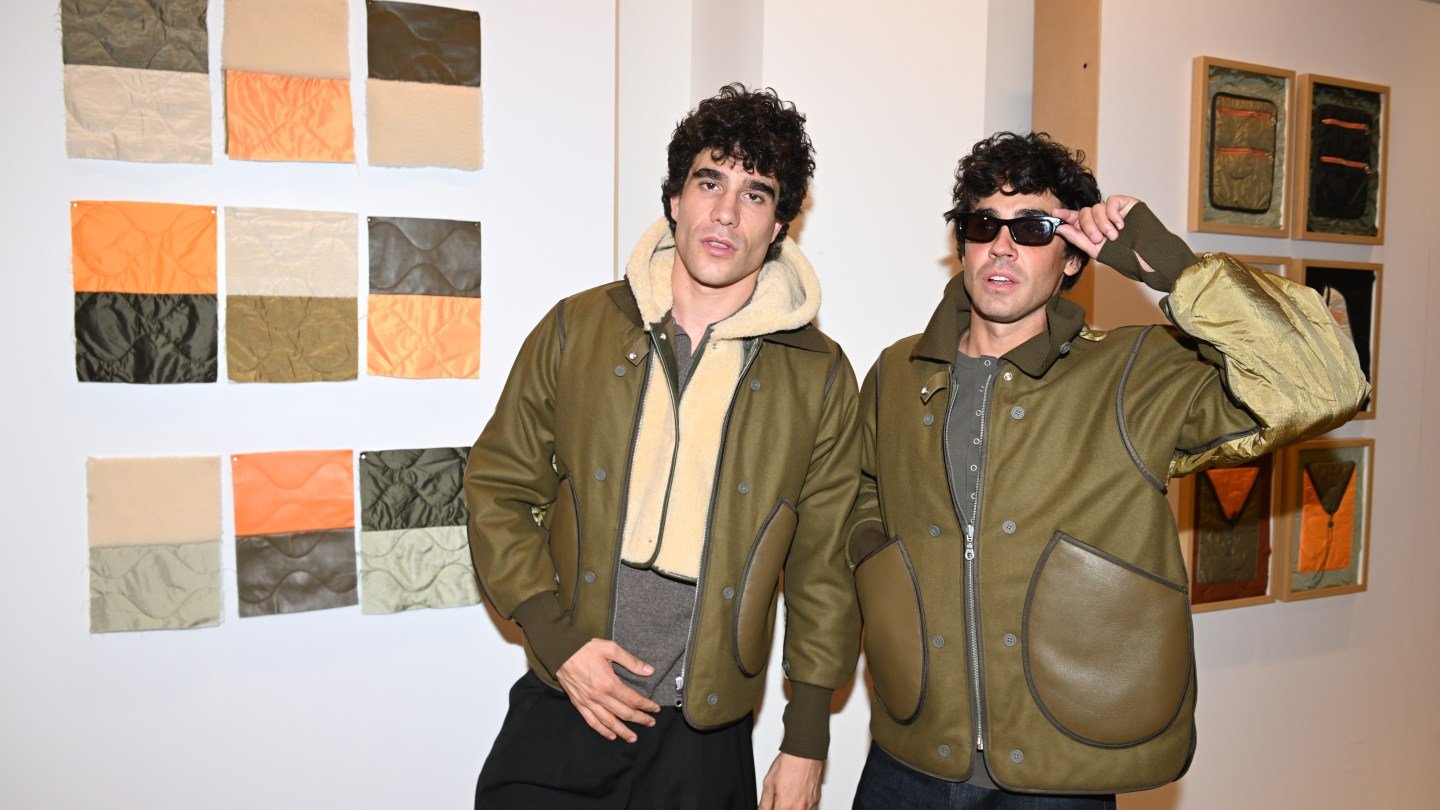
It was hard for La Bola Negrato make much noise over the whole of Cannes, if only because the gay Spanish epic did not premiere until the very end of the film festival — at which point, it promptly emerged as one of its clear breakouts. Directed by creative (and, previously life) partners Javier Ambrossi and Javier Calvo — known colloquially as Los Javis — the film earned strong reviews, was acquired by Netflix in a splashy deal, and won the festival’s coveted best-director prize (in a tie with Fatherland’s Pawel Pawlikowski). It was a smash hit, at least for those who remained on the Croisette in those final days.
So Telluride, where La Bola Negra made its North American premiere this weekend, has represented the moment for the movie to prove itself as a true word-of-mouth hit. It’s done that and more. On gondolas and in line for premieres, around cafés and passersby on Colorado Avenue, it’s among the films I’ve heard about the most — a sweeping emotional experience that doubles as a deftly ambitious and subversive exploration of Spanish queer history.
The filmmakers, alongside star Carlos González, gathered on Sunday for a post-screening Q&A (moderated by yours truly) at the Palm Theater on the town’s western edge, where they met an electric response. As Calvo summed up the grand vision behind the movie: “Let’s give all the straight people the war movie they want, but let’s give our community the love story that they want — why can’t we have it all?”
(From left) Interpreter Lorna Silva, star Carlos González, directors Javier Calvo and Javier Ambrossi, and moderator David Canfield at Telluride’s North American premiere of La Bola Negra on Sunday.
Vivien Killilea/Getty Images
La Bola Negra, loosely adapted from Alberto Conejero’s play La piedra oscura, tells its story in three separate timelines that gradually converge. The 1937 section is drawn most directly from Conejero’s work (Conejero also co-wrote the screenplay), set during the Spanish Civil War. The modern strand, set in 2017, follows a young man named Alberto (González) investigating his family history while negotiating complex relationships with his partner (Julio Torres) and mother (Lola Dueñas). And the final third, taking place in 1932, marks La Bola Negra’s most audacious gambit: It imagines the entirety of Federico García Lorca’s great unfinished work, also called La Bola Negra (translated to The Black Ball) — its themes of lust, shame and legacy rippling through the stories that follow.
Made for under $15 million, the Spanish-language drama offers immense scope, which was by design. “We thought, ‘Let’s make the gayest war movie ever,’” Ambrossi said. “That’s the politics behind this. And no one told us to change it a bit. And now, here we are.” The movie was made, per Calvo, with reverence for great war films like Apocalypse Now, using minimal CGI and making the most of every practical location, extra and visual effect they had at their disposal. La Bola Negra was also shot on 35mm, and brought in starpower via small but pivotal roles for Glenn Close and Penélope Cruz (whose mere mention elicited loud applause from the audience).
The movie’s emotional pull is anchored by a bracing examination of gay identity, of what’s inherited and passed on between generations. “It made me understand the importance of art in a physical way — the things that come to us, the pieces of art from past generations that tell us about who we were and what happened to us,” Calvo said of Lorca’s work. “At a time when art is being questioned, we have to remind ourselves that it speaks the best language.”
“He represents the war, all the dead…in our country that remains hard to talk about,” González added, noting that when he was taught García Lorca in school in Spain, the legendary writer’s sexuality was never discussed.
La Bola Negra lifts the veil on that silence — immersing audiences in its impassioned, maximalist filmmaking. “It’s very visceral. This is the black ball that is inside all of us as LGBTQ+ members of the community,” Ambrossi said. “We’ve been rejected.” La Bola Negra offers the chance, he then explained, to be seen.
**
Netflix will release La Bola Negra in theaters on Oct. 16 before streaming 47 days later on Dec. 2, the longest theatrical-exclusive window in the company’s history.
After the fireworks of the summer, the season comes to an end with a sleepy weekend at the box office, at least in terms of new entries like By Any Means and Onslaught.
Sony and Marvel’s Spider-Man: Brand New Day is expected to be No. 1 for its sixth weekend in a row, with roughly $22 million over the four-day frame. The Destin Daniel Cretton-directed feature just crossed $900 million domestically, making it only the second film ever to do so, behind 2015’s Star Wars: The Force Awakens, which stands as the all-time domestic holder at $936 million. Brand New Day should pass that record soon to become the all-time domestic leader. Globally, Brand New Day has surpassed $2.33 billion, making it the No. 3 movie of all time behind Avatar and Avengers: Endgame, after passing up Avatar: The Way of Water.
Christopher Nolan’s The Odyssey, now in its eighth weekend and also starring Brand New Day star Tom Holland, will come in at at No. 2 with around $16.4 million, which would put it at $588.1 million domestically through Monday for the Universal title.
Coyote vs. Acme is expected to come in third with $15 million for the four days. Its three-day number is estimated to hit around $11.3 million with a very strong hold, declining just around 27 percent after the much-talked about movie bowed to $15 million last weekend. Warner Bros. Discovery famously shelved the film, with distributor Ketchup Entertainment rescuing it after a fan outcry.
This weekend’s newcomers include By Any Means, filmmaker Elegance Bratton’s true-life crime drama starring Yahya Abdul-Mateen II as an FBI agent sent into 1960s Mississippi to investigate the killings of civil rights leaders and Mark Wahlberg as a mob hitman he must work with on the case. Paramount is distributing the film, which was made and financed by Hammerstone. It’s expected to bring in around $9.2 million for the four days.
Onslaught, the modestly budgeted movie from A24 and filmmaker Adam Wingard, brought in $782,000 on Friday and is expected to end the weekend in the $2.3 million range. It stars Adria Arjona as a military vet who must protect her daughter from killer super soldiers. It stands at 54 percent on Rotten Tomatoes.
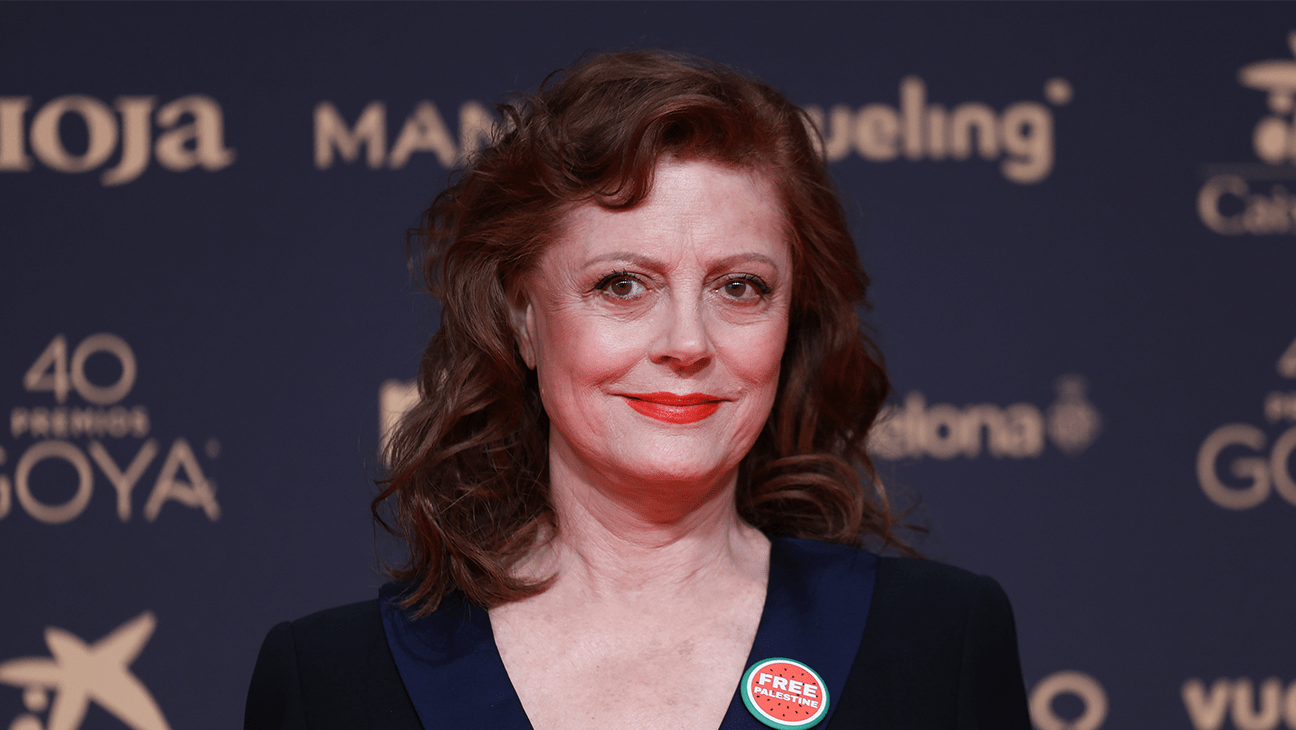
Susan Sarandon says she’s lost out on movie roles due to her support of Palestine.
At the Venice Film Festival on Sunday, Sarandon was asked if she thinks that the “mood [is] changing” in Hollywood as it pertains to the conflict in Gaza.
“I think that the narrative has completely changed,” she responded, according to videos posted online. “There’s a lot of things that people are aware of now.”
She continued: “In terms of the power structure, I’ve still had movies taken away recently, because there are agencies that are telling people not to hire me still. But that’s the power structure. I think within the people, certainly internationally, I feel welcome. So it depends. If it’s a major studio, I think there is, not just with me, but with other people, that have been told that that is impossible, in terms of being able to do this film, I thank Andrea for that, because he didn’t listen to the warnings.”
Sarandon was referring to made the remarks at a press conference at the Venice Film Festival. She’s there representing the movie The Echo Chamber, an Italian production directed by Andrea Pallaoro, whom she was referring to above.
Sarandon went on: “So I think, yes, there has been a change in terms of understanding of the situation, and I think the general public, but there are still very strongly held positions within my industry that are held by Zionists and who have not relaxed their feelings towards me. But I found my family, I found my people, and I’m OK.”
She was greeted with applause after she finished answering the question.
In November 2023, Sarandon caused an uproar over controversial remarks made at a pro-Palestinian rally in New York City’s Union Square.
“There are a lot of people afraid of being Jewish at this time, and are getting a taste of what it feels like to be a Muslim in this country, so often subjected to violence,” Sarandon told attendees, pointing to American Jews fearful over rising antisemitism.
A few days later, United Talent Agency dropped Sarandon, who’d been a client since 2014.
“Recently, I attended a rally alongside a diverse group of activists seeking to highlight the urgent humanitarian crisis in Gaza and call for a ceasefire. I had not planned to speak but was invited to take the stage and say a few words,” she wrote. ““Intending to communicate my concern for an increase in hate crimes, I said that Jewish Americans, as the targets of rising antisemitic hate, ‘are getting a taste of what it is like to be Muslim in this country, so often subjected to violence.’ This phrasing was a terrible mistake, as it implies that until recently Jews have been strangers to persecution, when the opposite is true. As we all know, from centuries of oppression and genocide in Europe, to the Tree of Life shooting in Pittsburgh, PA, Jews have long been familiar with discrimination and religious violence which continues to this day. I deeply regret diminishing this reality and hurting people with this comment. It was my intent to show solidarity to the struggle against bigotry of all kinds, and I am sorry I failed to do so.”
Sarandon stars in The Echo Chamber with Alicia Vikander and Luca Marinelli. She plays a retired rock singer lured out of retirement in the movie, which had its premiere Sunday at the Venice fest.
“It’s a terrific role for Sarandon, whose screen career kicked off 51 years ago with the landmark musical Rocky Horror [Picture Show], and whose singing here, on a handful of original songs by Clément Ducol and Émilie Gassin, has a lovely, unforced sense of broody introspection and yearning,” The Hollywood Reporter film critic Sheri Linden wrote in her review. of the film The scenes between her and Marinelli are charged with vulnerability, each character balancing honesty and self-protection, both actors conveying whole lifetimes through the most nuanced shifts in body language and gaze.”
Danish filmmaker May el-Toukhy, one of the two female directors competing for the Golden Lion this year, in Venice with a sharp, searing analysis of the women thrown to the wolves in the aftermath of World War II.
Women Unknown — Scandinavian in both its aesthetic and precision — was always going to be about class, complicity and survival. For a brief period, it was even going to focus on the Reformation witch hunts, before el-Toukhy found herself a little bored by the perpetrators. “The reasons they were hunting these women were just not that interesting,” she laughs to The Hollywood Reporter.
Inspired by a newspaper picture dated from the 1940s of a woman sitting with a swastika painted on her back, el-Toukhy and co-writer Maren Louise Käehne soon turned their attention to the women whose bodies became a battlefield during the Second World War; those who found themselves with no choice but to fall into the arms of soldiers from occupying armies, and suffered severe consequences — hunted down, publicly shamed and punished for the rest of their lives.
Woman Unknown is backdropped by a Danish city free from Nazi occupation, mere months after World War II has ended. It tells the story of Marie (Mathilde Arcel), a young nanny and housemaid about to marry her wealthy, older, and widowed employer, Christian (Carsten Bjørnlund). But Marie guards a shameful secret. During the war, she was in an intimate relationship with a German soldier. Now Marie’s past threatens to catch up with her, and she is forced to do everything in her power to preserve her new status as lady of the house in post-war anarchy.
It is as much about resistance and patriotism in a euphoric, liberated Europe as it is about the chastisement of women and their sex lives. El-Toukhy is adamant that this is a story about the female experience. “There have been so many films about the Second World War, and that is true. But they’re all based mostly on men’s experiences and recollections of war. So that really energized me,” she says. “Let’s just do another 100 films about the women in this time period, and then we can say we’re over and done with it, you know?”
A co-production between Denmark, Sweden and Latvia, financing the film wasn’t the tallest hurdle — but el-Toukhy has learned to be economical with her resources at a time when filmmaking costs have never higher. With her third feature film, following Long Story Short (2015) and Queen of Hearts (2019), she comes to the Lido buoyed by the hope that Woman Unknown will produce debate. El-Toukhy spoke to THR about the far-and-wide casting search for Marie, why she feels she’s already won before even stepping foot in Italy and whether those nerves have begun to kick in: “I’ve worked 16 hours a day for more than a year. I’ve spent all my savings. I’ve used every part of me to make this film and all the resources, all the muscle power I have. I can’t really do any more, so therefore I feel okay.”
I’m curious about this period of Danish history, and whether you learned about it at school. Why use it as a backdrop for this film?
After my last film, I thought I was going to do a film on the witch hunts after the Reformation, in the middle of [the] 1500s, and so I started researching that subject matter. But I found it quite hard to engage with the perpetrators because the reasons they were hunting these women were just not that interesting. (Laughs.) At that time, me and my co-writer were slowly moving away from that idea, and then while we were moving away from that idea, some photos got republished in the newspaper with a woman who was sitting on a bench with a swastika painted on her back. And she [had been] assaulted in these photographs. Those [were] the propaganda photos that were produced in 1943. So we were reminded of that issue.
It is something that we do learn in school here. It’s part of the curriculum — to deal with the First World War, Second World War, the events between the two wars and the aftermath, but often the aftermath here, in schools, would be focused on the politics, the collaboration the Danish government chose at that time and also the resistance movement. We didn’t spend too much time in school dealing with or talking about [or] debating the destiny of these women. I’m always interested in investigating something that takes a lot for me to engage in; that’s difficult material. Where there’s no black and white, but everything is gray.
And you chose to depict that woman in that photograph in the film.
Yeah. In the propaganda photos, they were reproducing this image of a woman who has been assaulted, but then when I started digging, [I found] an archive [of them]… I think what’s interesting about the situation itself is it’s a societal, structural mob mentality. It’s fellow citizens who are punishing these women. It doesn’t come from the government. The government actually tried to remove these women from the streets — to protect them — but they didn’t manage very well. And sometimes, even on the way to a camp, a woman would be assaulted, even though she was supposed to be protected by the government. For me, it was quite important to really show an audience what this feels like. They didn’t get killed, these women, but their souls were hurt and they were stigmatized and traumatized for life.
How did you find your way to Marie as a character, and her story?
I think there’s a class aspect in the story that I’m very drawn to, and also I had that thematic base in my last film. She’s a young woman who is moving away from the area she knows and her family and takes a job in a big city. [She] probably feels protected by living in a big city compared to being at home where she can be more exposed. She’s a woman who is struggling to survive. I might not agree with some of her actions, but I completely understand where that survival instinct comes from, and the idea that she wants to protect what she’s fought to obtain.
Mathilde Arcel as Marie in ‘Woman Unknown’
Venice Film Festival
What went into that casting search for Marie, and why was Mathilde right for it? As the title suggests, she’s very elusive for much of the film, up until her unraveling.
I always have quite extensive casting processes, partly because I come from theater, but also because I really enjoy [it]. Casting a lead is, for me, like casting a creative partner. So I have to fall in love with the gaze of that person and their take on the character, and therefore I do many rounds and many callbacks. I did that with Mathilde as well, and some of it was improv, some of it was table readings, some of it was written scenes. I think what’s fantastic about Mathilde is that she has so much mystery to her and the way she’s chosen to interpret the character inspired me as a writer-director. That collaboration is key for me, and therefore I spend a lot of time figuring out which direction I want to go [in]. I’ve really enjoyed working with her, and I think she’s extremely talented.
So mysterious but so expressive too.
Yes, yes.
One of the themes that stood out to me was complicity and what it means to be complicit when that head-down mentality is still so entrenched and the hangover of the war so menacing. What were you trying to speak to in this context?
The film is not so much [about] giving answers to what’s right and wrong, but to debate what’s right and wrong, or what’s possibly right and what’s possibly wrong. It’s all a bit murky and muddy. Throughout the development of the film, it’s been quite important for me to to not tell the audience — or the readers, in the development of the script — what they should think, but create a situation where the audience can dive into that discussion with themselves or the people they’ve watched the film with.
And it’s not only in that time, because I think it’s present also today — in many conflicts. It’s quite hard to to say that it’s just one thing, and the ability to contain two opposite thoughts at the same time is quite hard. Both can be true, and that’s my ambition with the film. Obviously, I have my own opinion about what’s going on in the film, but I think it’s quite important for me as a storyteller that there is room for reflection for the audience.
It’s also very much a female-driven story. Do you think this is a period of history for women that isn’t depicted on screen enough? Is it an underrepresented story you’re telling?
When I first started the process of developing the script with my co-writer, I would pitch the idea when people ask me: “What are you doing? What are you working on right now?” I started to semi-pitch it, just to see how people would react and what they respond to. And I could see that they would glaze over. (Laughs.) They would have this empty gaze, because I think there have been so many films about the Second World War, and that is true. But they’re all based mostly on men’s experiences and recollections of war. So that really energized me.
Yes, there have been a lot of films about this period [of history], but let’s just do another 100 films about the women in this time period, and then we can say we’re over and done with it, you know? The invisibility of women is everywhere, and certainly in cinema and in our films. So I don’t think we’re finished with the period, but it also sparked the idea of trying to make this film look different than a classical period piece, and to constantly disrupt the idea of a classical period piece. So that’s been an ongoing process of developing and shooting and in post[-production].
How long did it take you to get this film off the ground? I know it’s a co-production which must have helped.
The process has been long, but not too long. I did my last film, then once it had premiered at Sundance and had the festival run and premiered in Denmark, I started to develop this film — first with the witch idea and then turning to these horizontal collaborators. Then COVID happened… I worked intensively on the script, and we [were in a place where we] could start the financing. But the financing part of it hasn’t been that difficult in the sense that we’ve had a lot of yeses. We’ve had so many people wanting to do this film. The problem in European cinema is that we don’t get very far with the money we get. There’s been an increase of costs after COVID, everything has gone up, and so we have to work faster in every part of the process. That’s been the challenge with this film, not so much getting the money, but getting far enough with the money we managed to get.
What did it mean to you to find out this would be premiering in competition in Venice?
I’m delighted that it’s part of this historic festival and that also this theme gets to be exposed for a European audience. I think it’s very important that we keep reminding ourselves of our past and these stories, so that we understand and we analyze and we debate to be able to handle the present and the future differently — if possible. I don’t think it is. But I’m really happy, [Venice is] the best place to be for European film right now.
I’m excited. I have this place inside of me where I can go after I’ve made a film. I’ve spent all the time I possibly could on this film. I’ve worked 16 hours a day for more than a year. I’ve spent all my savings. I’ve used every part of me to make this film and all the resources, all the muscle power I have. I can’t really do any more, so therefore I feel okay. Slightly anxious, and I think that’s only natural.
There must be a really liberating feeling of finally being able to send it out into the world.
Yeah. And I think getting into the festival and being in competition, I’ve already won.
How can exposure in Venice help a filmmaker like yourself and your career?
[Festivals are] important for the arthouse [films] because it’s a market. It’s also a place where you, as a filmmaker, can create new relationships that you can build on later down the line. But for me, it’s really about the audience that’s there. Through a festival, you can access an audience if you have enough buyers that take the film and they then distribute it around the world. And I think it’s quite important for me as a filmmaker to cling on to [the audience], because it’s so easy to be distracted by other things that are equally nice and shiny and attractive. But especially the way we finance film in Scandinavia, where it’s publicly funded, I think it’s really important that these films find their audience. None of us have that crystal ball where we can look into it and say, “Okay, if I put this person into a film with this theme and shoot…” But that’s really the hope for me, that this film will find its audience.
Are you already thinking about the next one?
I can’t help thinking about the next and the next and the next, especially when I go cycling or walking or hiking. But I don’t have that much spare time right now. So, most of my energy is channelled into promoting this film. I’m in the service of this film still.
The film was the unanimous pick of Iraq’s official National Selection Committee for the Academy Awards, mandated by the state ministry of culture.
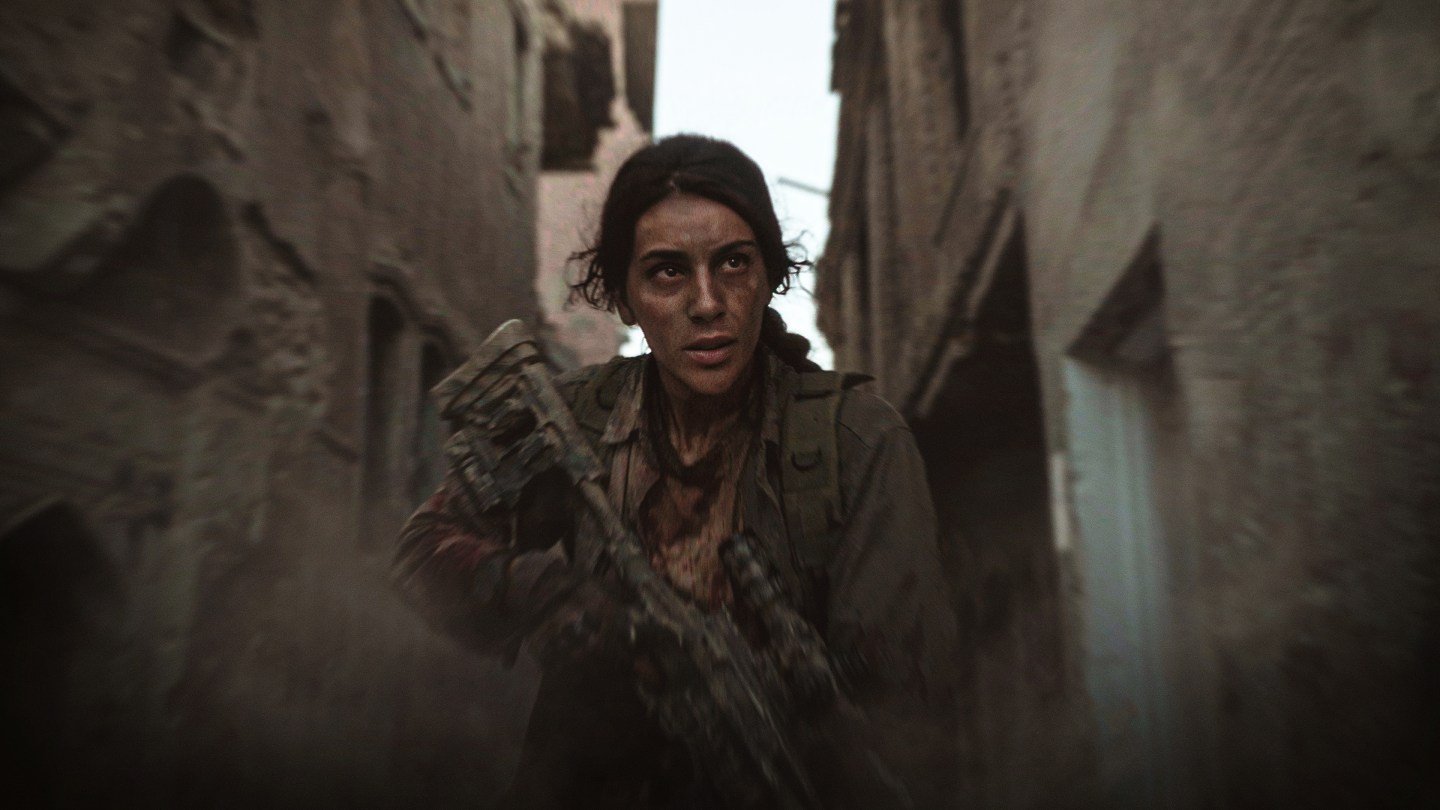
The film follows Vyan, a Kurdish sniper who has survived war by suppressing her emotions. When she learns that her younger sister, missing since the ISIS assault in 2014, may still be alive, she returns to Mosul, determined to rescue her. Avan Jamal (The Exam) stars as Vyan, alongside Norwegian actor Thorbjørn Harr. The main cast also includes Kanar Sarchl and Kader Jalal.
Mustafa, who was born in Iraqi Kurdistan and fled to Norway as a child, said the film was inspired by his encounter with a female Peshmerga sniper during the 2014 frontline battles, as female Kurdish fighters countered Islamic State attacks.
The director’s previous films include Hiding Saddam Hussein, a documentary about the farmer who hid the Iraqi dictator for 235 days in 2003, Iraq’s 2016 Oscar submission The Classic, and the 2015 documentary The Women ISIS Fears, which also looked at the world of female Kurdish fighters.
No Paradise If You Are Killed by a Woman was filmed on location in Mosul. Hene Films produced the film in co-production with La Media and The Chimney Pot. True Colours is handling international sales.
The film will have its world premiere out of competition at the Venice Film Festival on Monday.
The Academy of Motion Picture Arts and Sciences will announce the 15 films on the best international feature film shortlist on Dec. 15. The five nominees will be announced Jan. 21, 2027. The 99th Academy Awards ceremony will take place on March 14, 2027.
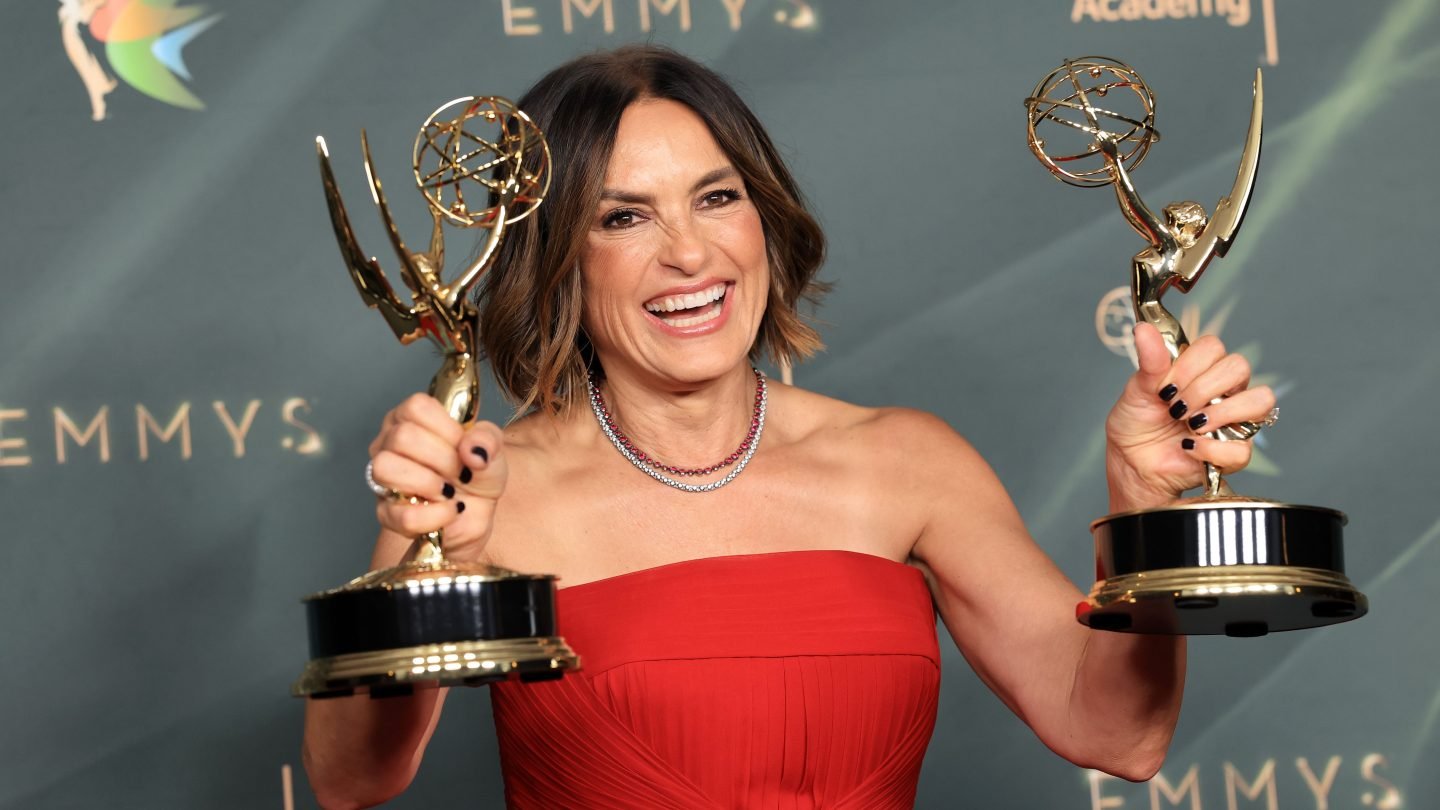
The star, who is helming the Primetime Emmys on Sept. 14, took home two prizes at the Creative Arts Emmys for My Mom Jayne: A Film By Mariska Hargitay. She landed wins for directing for a documentary/nonfiction program and for outstanding documentary or nonfiction special; the night brings Hargitay’s career Emmy total to three, after she won best actress for Law & Order: Special Victims Unit in 2006.
“It feels extraordinarily new and it’s deeply meaningful for me to have gone into a completely different arena, and to be recognized like this is really beyond my wildest dreams,” she told reporters backstage of how these two trophies compare to her one from two decades ago.
Hargitay also spoke about this particular moment in her career, where she’s living by the motto of “I just say yes. I said yes to Broadway and I said yes to hosting the Emmys — when they called me, I thought it was a joke, and then I went, ‘Why not?’”
“It’s a year of firsts and a year of saying yes and not limiting myself or not being governed by fear. Like, what would I do if I wasn’t afraid? What if it all works out?” she continued. “I’m in that place right now of going, ‘I’ll figure it out.’ I’m really happy right now.”
She also gave a hint at her mindset heading into the main show, admitting, “It’s been a big week, this hosting the Emmys is no joke,” teasing that NBC “undersold it to me” and told her it would just be two days of rehearsal, which was “a lie.” However, she expressed how excited she was to be working with The Late Show with Stephen Colbert writing team on her material and added, “I just can’t believe at this place in my life — my third act is starting and it’s pretty awesome.”
MGM+ and BBC One’s A Tale of Two Cities is neither the best of adaptations nor the worst of adaptations, but Daniel West’s take on the Charles Dickens classic may well be the meh-est of adaptations.
The four-part series benefits somewhat from the lack of an instantly identifiable definitive filmed interpretation of A Tale of Two Cities (depending on how you feel, I suppose, about the best picture-nominated 1935 feature) — a minor oddity given that the novel is in many ways Dickens’ most streamlined, featuring one of his best beginnings, best endings and most approachable narrative hooks.
A Tale of Two Cities
The Bottom Line
Fails to stand out as a romance, thriller or period piece.
Airdate: Sunday, September 6 (MGM+) Cast: Francois Civil, Kit Harington, Mirren Mack, Roxane Duran Creator: Daniel West
It’s a love triangle and a thriller set against the backdrop of the French Revolution. It features the usual Dickensian melange of colorful characters, breathless cliffhangers, shocking twists (not Oliver) and trenchant social commentary. It’s very much the epitome of a ripping yarn.
Ultimately, though, freedom from negative comparisons to previous adaptations is not enough to prevent this take on A Tale of Two Cities from being a bland disappointment — one of the least Dickensian adaptations of a Charles Dickens work since Steven Knight adapted A Christmas Carolaround the question, “What if Ebenezer Scrooge could say ‘fuck’?” It’s still a love story, but with virtually no passion between any of its three principals; and while it may be a tale of two cities, they both look like nearly identically designed stages in a warehouse in some affordable Eastern European country.
For those who haven’t read A Tale of Two Cities or seen one of the forgettable previous adaptations — none, apparently, since a 1989 take that aired in the States under the Masterpiece Theatre banner — the plot is at once simple and convoluted.
After a brief prelude in Paris in 1764, in which a young Lucie Manette watches her father apparently be killed, the action jumps forward 18 years. Lucie (Mirren Mack) is now living in London hoping to follow in her late father’s footsteps as a doctor. Lucie’s concrete interest in medicine is not, if memory serves, a part of a book in which she’s a more nebulous “healer,” nor is it all that relevant to the series after a strange introduction in which she’s practicing surgery on a corpse. It’s a nearly pointless choice, one of many.
Lucie is living with Mrs. Lorry (Sharon Duncan-Brewster) and doing just fine for herself when her life is turned upside down with the arrival of Charles Darnay (François Civil). Charles is working on behalf of French revolutionaries, embodied by Roxane Duran’s Madame Defarge, to smuggle a generally irrelevant woman to safety in England. He’s also bearing a letter that suggests that Lucie’s dad (Yannick Renier) isn’t actually dead. The letter contains the evocative words “recalled to life,” which are potent on the page and nearly meaningless in the series.
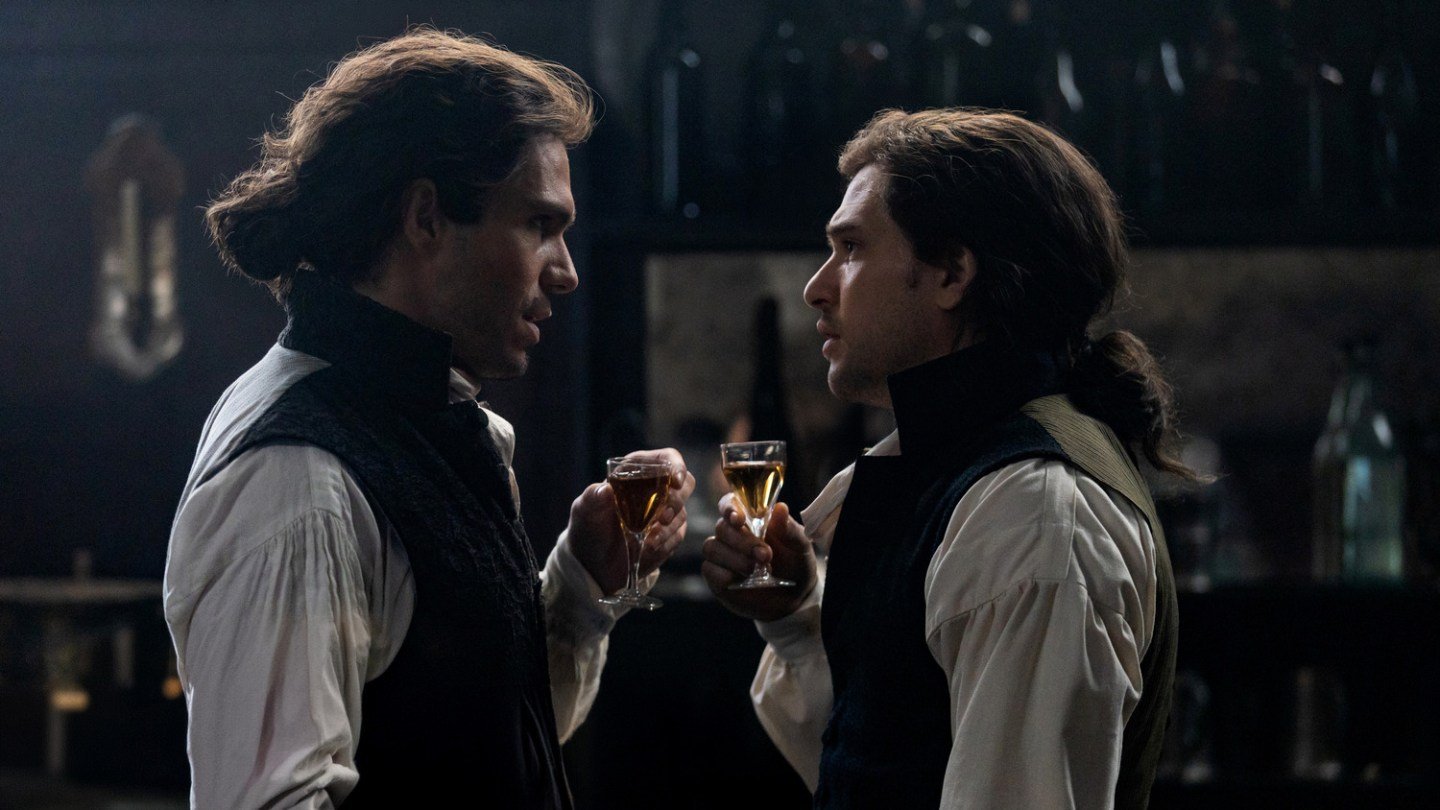
At the English border, Charles is wounded, which lets Lucie utilize her medical knowledge briefly. Then he’s arrested as a spy. Lucie seeks out legal representation for the heroic Charles, but finds only the generally drunk and uncouth Sydney Carton (Kit Harington).
Both Charles and Sydney immediately fall in love with Lucie, because she’s somewhat the protagonist of the story and she’s pretty. Lucie, for her part, falls in love with both Charles and Sydney, which makes a little bit of sense since they look almost identical (assuming they aren’t standing next to each other, allowing one to see that Civil is a lot taller) and they’re both in constant need of chaste undressing. It makes less sense, though, because nothing in her interactions with either man comes across as the least bit romantic and the chemistry between Mack, Civil and Harington is wholly lacking, regardless of the permutation.
As Lucie is reunited with her father, seriously psychologically damaged by his two decades in the Bastille, she learns shocking truths about Charles and his lineage and about the revolutionary motivations of Madame Defarge, whose general intransigence has caused her to be viewed as the villain of the piece, regardless of logic.
Watching A Tale of Two Cities, it’s almost impossible to gauge what attracted West and the producers to the book, other than the IP and the reality that there are only so many times one can adapt Great Expectations, David Copperfield, Oliver Twistand A Christmas Carol before it becomes necessary to cycle back into the Dickens catalogue. The inspiration is nowhere to be found here.
And A Tale of Two Cities is, as I’ve already said, a ripping yarn, featuring doppelgängers and surprises and the French blooming Revolution — featured in one thoroughly lifeless scene — plus it’s eternally timely since the story is one of those reliable Dickens screeds in which the impoverished masses are on the verge of toppling the heartless elite. Madame Defarge is — whether or not you buy her as a villain — one of fiction’s great adversaries, and her backstory is, itself, both eternally timely and specifically timely at a historical moment when you might have noticed one or two headlines about immoral wealthy men preying on defenseless young women.
One could certainly adapt A Tale of Two Cities in a way that steers into the complications of Madame Defarge as a character, resulting in something that might almost resemble Hulu’s summer hit, Furious. She is, as a character, at best a righteous crusader and at worst a rigid zealot, but she’s hard to make uninteresting. Duran captures Defarge’s rage and, in a series plagued by thinly sketched characterizations hers comes closest to rising to the level of interesting. But her cause and her connection to that cause are mechanical pieces of the plot here, making it impossible to hate her or empathize with her. She’s just the person stirring up trouble whenever we go to Paris.
Plus, it’s hard to know when we’re in Paris. As directed by Richard Clark, A Tale of Two Cities is temporally choppy and fails to build any emotional or geographical momentum. Though two cities are in the title, we’re treated to maybe a block or two of London and a block or two of Paris, visually interchangeable in a way that offers no real tangible connection to either staged location.
Presumably, making Paris and London interchangeable is intentional, a parallel to the similarities between Charles and Sydney? Except that the entire purpose of the story’s arc is that one should be able to chart the life Charles was born into and the changes he made (all before the start of the story, since he’s pretty much stagnant onscreen throughout) and compare that to Sydney’s journey from the man he is when we meet him to the man he becomes by the end of the tale. In this case, though, since Harington and Civil are comparably solemn and earnest throughout — the actors do, if nothing else, look as similar as the story necessitates — there isn’t much evolution to trace.
There are supposed to be comparable parallels to the arcs of Lucie and Madame Defarge, one as a force of optimistic good and the other as a force of all-consuming vengeance, but neither progression is all that engaging. Like Duran, Mack brings a little fire to the series, but Lucie is one of those Dickensian women who are unexplained rays of light who exist mostly to fuel the growth of the main male characters.
As for the supporting ensemble from the page, from the bloodthirsty revolutionaries collectively known as Jacques to Sydney’s partner Mr. Stryver (a wasted Fehinti Balogun) to the figure known as The Vengeance, they’re either gone entirely or written so thinly here as to leave no impression.
A Tale of Two Cities is in such a hurry to get from that memorable opening (rendered poorly as a voiceover at the end of the first episode) to that tremendous closing (rendered poorly as another voiceover) that the adaptation might as well have been as a two-hour movie. Certainly the cliffhangers at the end of each episode lack the urgency that Dickens himself understood so well how to evoke. The story itself is probably good enough to pull some viewers along from episode to episode, but the telling definitely is not good enough to inspire anybody to seek out MGM+.
Regardless, there’s a far, far better adaptation of A Tale of Two Cities than has ever been done. This is not it.
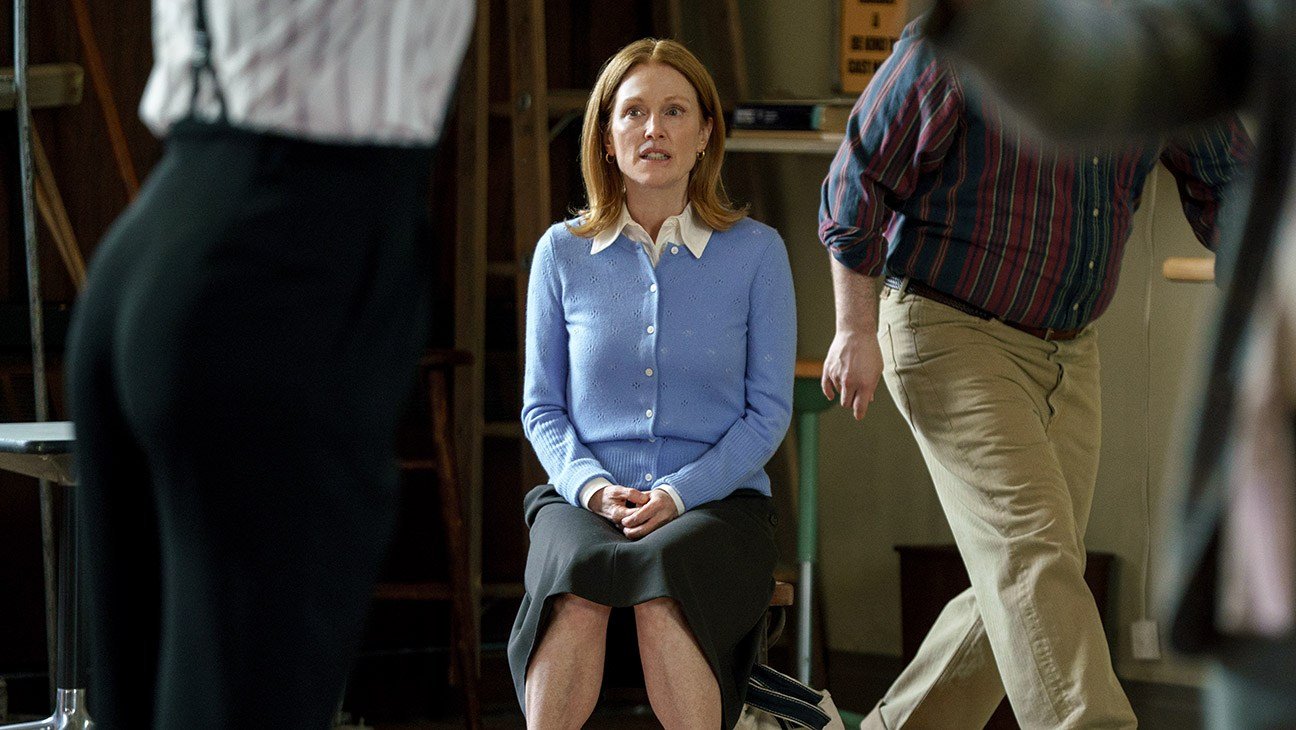
When Mona (Julianne Moore) tells a friend she’s auditioned for a production of a show called Nosy Neighbors at their local theater, he admits he’s never liked musicals. They just don’t feel authentic, he explains, the way the characters are always bursting into song. Who does that?
Well, no one, not even in the musical-loving The Debut. But among the first of the film’s sly tricks is that it builds a world in which it feels like people could, where in fact it feels more unnatural that they don’t. Blessed with swing-for-the-fences brio and, in Moore and Paul Giamatti, a leading duo capable of navigating every one of those wild turns, the latest feature by Jesse Eisenberg makes for a frequently hilarious journey into the mind of an overly committed actor — even if, in the end, it seems unsure quite what it wants to say about the self-destructive pursuit of artistic perfection.
The Debut
The Bottom Line
A very good time, if not necessarily a profound one.
Venue: Telluride Film Festival Cast: Julianne Moore, Paul Giamatti, Halle Bailey, Jesse Eisenberg, Cara Buono, Craig Bierko, Eldar Isgandarov, Bernadette Peters Director-screenwriter: Jesse Eisenberg
Rated R,
1 hour 45 minutes
At first, Mona would seem an unlikely candidate to go Method in the way of certain prestige actors or comic book movie stars. When we meet her, she’s a meek suburban housewife who’s never acted a day in her life, and whose audition is so mediocre she doesn’t even realize how mediocre it is. Once she lands a relatively minor role anyway, owing to a twist of fate that she may have ever-so-slightly nudged along, she’s just happy to be there, drinking in any suggestion or note or friendly gesture extended to her.
But even from the start, before Mona properly goes off the deep end, The Debut starts inuring us to her heightened perspective. When Mona gets the call saying she’s gotten the part, a spotlight floods her grin and the camera rushes in, as if she might start belting on the spot. On her first day of rehearsal, the whole world is lit a little brighter than it was a few scenes earlier. When she endears herself to her new colleagues with a joke, the laughter feels slightly too enthusiastic. The effect is almost eerie to start, and it takes some getting used to. But it turns out to be just the tip of the iceberg.
The pivot comes when the production’s director, Jerry (Giamatti) — described in a low-key perfect bit of dialogue as “basically the biggest name in New Jersey community theater” — pulls Mona aside for the private special instruction that she (as a truly godawful singer and actress) so desperately needs. Jerry’s usual method is to break his actors down so he can “put Humpty Dumpty together again,” and it begins exactly as planned in an acting exercise that yields one of the very biggest laughs in a film rich with them.
But then Mona takes a little too well to his guidance. As Mona loses herself in her character, a building superintendent named Miss Danielle, her wardrobe, courtesy of costume designer Stacey Battat, goes from prim cardigans to ripped jeans to an actual coverall she’s stolen from a janitor. (This is neither the first nor last time you’ll think to yourself, “Man, theater people are a menace” and “Jesse Eisenberg’s seen some shit, huh?”) She begins frequenting a seedy motel that production designer Anne Ross has cleverly made into a theater actor’s exaggeratedly noirish version of what a seedy motel would look like, with smoke-blurred neon lights and a trash can fire outside and an inexplicably naked man roaming the halls inside.
Most worryingly for Nosy Neighbors — in-universe a well-known musical that’s been around a few decades, in reality an original concocted by Eisenberg and seen here in perfectly cheesy snippets — Mona starts to question Miss Danielle’s motivations, then her lines, then her actions. Jerry realizes he’s created his own worst nightmare: the sort of difficult actor who thinks she knows her character better than the director or even the script that invented her.
Lively throughout, The Debut ascends to new heights whenever Giamatti and Moore share the screen together. Moore is an absolute hoot as Mona, who starts out looking on paper like one of those disaffected housewives she’s played so often (and so expertly) in her career but turns out to be much, much stranger. Giamatti makes Jerry ferocious but not monstruous, a man who certainly likes barking orders at various underlings but loves making good theater even more. Their scenes opposite each other are not just entertaining but thrillingly dynamic, as the balance of power between them begins to shift.
It’s all so much fun that it’s easy not to notice at first that none of this is headed anywhere particularly profound. There’s a touch of poignancy in the understanding that Mona is so eager to lose herself in Miss Danielle because — like Rita, the protagonist of Telluride 2026’s other “New Jersey suburbanite abandons her family to pursue a more authentic life under the guidance of a charismatic but demanding leader” premiere — she barely knows who she is in the first place.
But the film never builds out the rest of Mona’s world, like her inattentive husband (Patrick Fabian), or even co-stars like Steph (a very endearing Halle Bailey) and Todd (Eisenberg, adorably giving himself an excuse to sing and dance), to take that line of thinking anywhere truly insightful or emotional.
Among the arguments between Mona and Jerry are what theater can or should be. Mona argues that that the stories it tell should be “real,” even at the expense of a happy ending, while Jerry argues that no one cares much about the plot — audiences just want to feel while spying on the intimate lives of other people.
The Debut, in prioritizing style, humor and outrageous plot turns over complex emotionality, would seem to side with Jerry. Maybe it’s not everything it could be. But as I howled over the lengths Mona would go to for the sake of what Jerry unkindly but accurately points out is, in the end, just some “thankless tertiary character,” it felt like more than enough.
This delightful if darkness-tinged documentary is comprised of footage shot by then not yet fully-fledged cameraman Seamus McGarvey (who went on to be DP for Atonement and The Hours among other features) on the set of Derek Jarman’s 1991 adaptation of Edward II. For reasons not explained here, McGarvey’s material was left sitting in a cupboard for 30-odd years, unedited into the making-of documentary it was meant to be, even after Jarman’s death from AIDS-related illness not long after EdwardII came out.
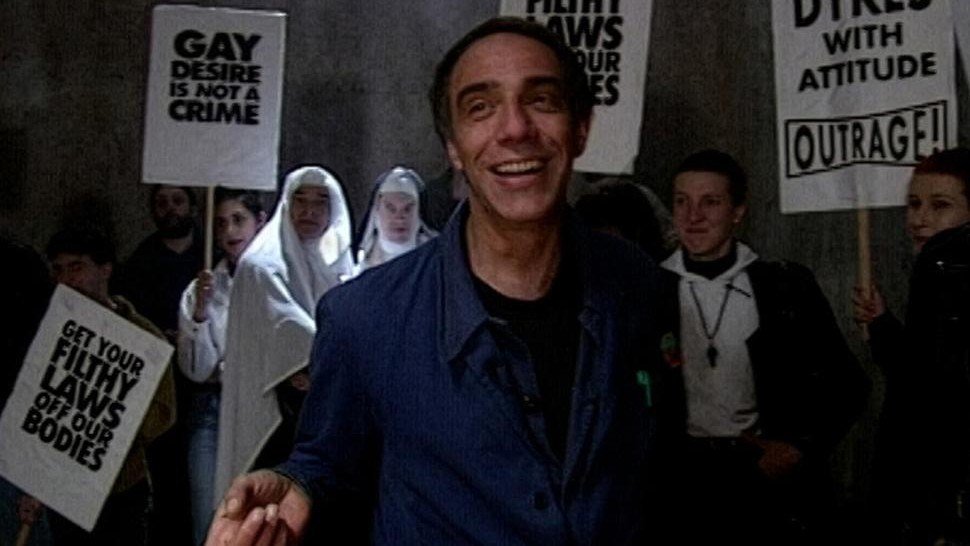
But maybe all things happen for a reason because now, thanks to young British director Theo Rollason and their team, the original footage gets to be part of a larger documentary. Filled out with vintage archive that supplements the portrait built here of the irrepressibly charming Jarman and his highly talented team of collaborators, this easily tallies up as more than the sum of its parts. It’s also guaranteed to induce swooning nostalgia in those who remember queer life, London and the filmmaking scene thereof in the early 1990s. Those too young, like Rollason, to have lived through those thrilling if dangerous times will have to contend with the complicated jealousy this will induce. And hopefully take away sadly timely history lessons about the necessity of resisting despotic, homophobic authoritarians, especially if you can do it with men dressed as nuns.
Queer Edward II
The Bottom Line
An insightful and delightful nostalgia trip.
Venue: Venice Film Festival (Venice Open — Out of Competition) Director/screenwriter: Theo Rollason Producers: Ben Fowlie, Sebastien Rabas, Michael Sherman
1 hour 37 minutes
Fans of Jarman can spend happy hours debating which of his features — Latin-language trailblazer Sebastiane, punk fetish object Jubilee, irreverent The Tempest, painterly Caravaggio, to name just a few — is the best, and Edward II definitely has its passionate defenders. It certainly deftly collated together key Jarmanian features, such as giving an English Lit classic (Christopher Marlowe’s 16th century play) a pointedly political contemporary frame, mixing opulence and austerity in its sets and costumes, and serving up lashings of hot boy-on-boy action and a diva or two. (Annie Lennox has a walk-on moment singing Cole Porter’s ‘Ev’ry Time We Say Goodbye.’)
As is pointed out here, this was also his most expensive feature up until then, costing about £900K, hardly a princely sum even then. Presumably a goodly chunk of that change went to proper professional actors (including Steven Waddington and Andrew Tiernan as Edward and his lover Gaveston) who could cope with the Elizabethan verse, as well as regular Jarman chums in the cast like Tilda Swinton, who played Edward’s sulky French wife. (She looks unspeakably radiant here in Sandy Powell’s gorgeous costumes.) But McGarvey also captures the comic horror show of low-budget filmmaking in Britain at the time as one producer dips into his own pocket to pay off some bolshy background artists demanding extra to cover their expenses.
Indeed, the footage of the harried production staff trying to keep the show going on from the office at Bray Studios where the shoot is happening sometimes plays like a vintage workplace comedy but with a dark undertow. The highlight is the sequence where visiting extras from the queer activist group Outrage! decide to invade a neighboring studio where popstar Cliff Richard, long rumored to be gay, is rehearsing and offer him keys to help him come out of the closet.
At first, it all looks like juvenile hijinks, the attempted outing (all the rage in those days) now looking very much not cool to contemporary eyes. Jarman, when told about it, looks more like he’s trying to keep a straight face than channel censorious disapproval. But when someone leaks the story to the tabloids and the scandal threatens to shut down production if Richard sues, it’s suddenly not such a lark, especially for production manager Sarah Swords, who’s left manning the phones, trying to negotiate with the tabloid reporters the way a canary negotiates with a cat.
Luckily both for Swords and the film itself, and of course this documentary about the film, the whole thing blows over and the team goes on to fight other battles and make more films. Younger viewers and those not from Britain will learn here about Clause 28, proposed legislation that would criminalize the “promotion of homosexuality” in state schools, which campaigners such as Jarman, the Outrage! protesters and many others fought hard against. (It did become law but was repealed in the 2000s.) The footage here follows Jarman as he and others voluntarily “surrender” en masse to London police stations as a publicity stunt, the kind of disruptive, playful non-violent intervention that’s all too thin on the ground these days, in both the U.K. and offshore.
Rollason and fellow editor Nicole Halova, with supervision provided by the legendary longtime Werner Herzog-collaborator Joe Bini, effortlessly weave this material into the filmmaking story, underscoring how intimately intertwined politics, protest and art were at the time — a rebellious spirit of the times that will induce nostalgia almost as much as the intarsia knitwear and early ’90s haircuts seen here.