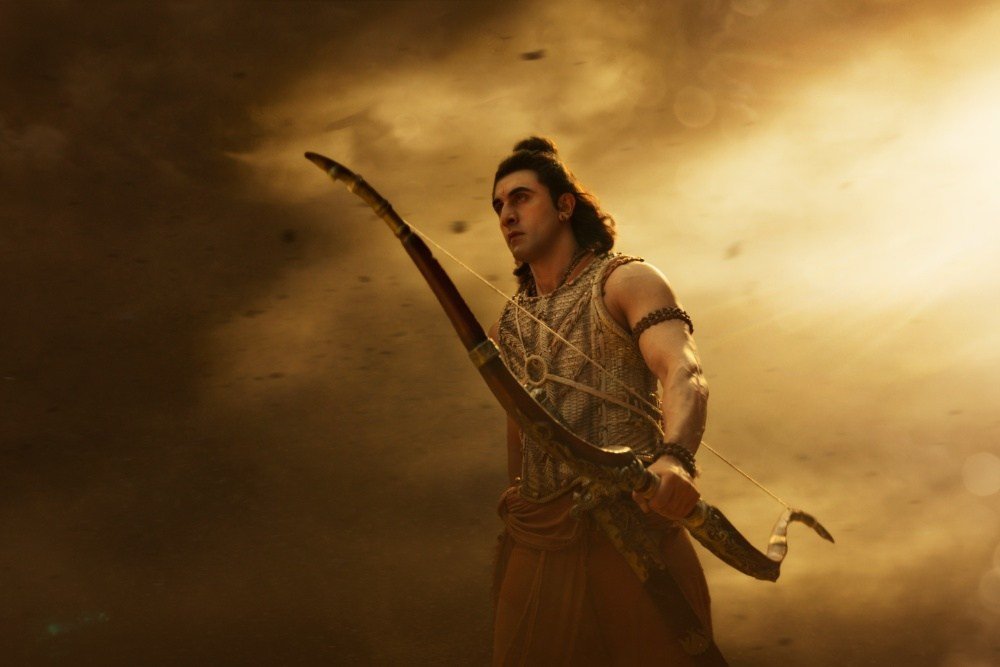
The epic, starring Ranbir Kapoor, Yash and Sai Pallavi, follows exiled prince Rama (Kapoor) and his consort Sita (Pallavi) through exile into catastrophe, as Sita’s abduction at the hands of Ravana (Yash) sets in motion an epic war between righteousness and evil.
Nitesh Tiwari helms the two-part adaptation. Designed for audiences across cultures, it will be released in multiple languages, including English.
In a trailer released earlier this Summer, audiences got a glimpse of footage showcasing high-scale visual effects, mythological weaponry, and massive battles as Rama vows to defeat Ravana across the three worlds and rescue Sita, signaling the start of the era of Rama.
Hans Zimmer and A.R. Rahman join forces to deliver the film’s epic score. The production also features action choreography by Terry Notary and Guy Norris, and production design by Ramsey Avery and Ravi Bansal.
The film is produced by Namit Malhotra’s Prime Focus Studios and Yash’s Monster Mind Creations. “Ramayana” Part 1 opens during the Diwali holiday frame, with Part 2 following on Diwali 2027.
The choice of release window is no accident. Diwali – one of the most widely observed festivals in the Hindu calendar – marks the return of Rama to his kingdom of Ayodhya after 14 years of exile and his victory over Ravana. The lighting of lamps that defines the celebration is said to represent the illumination of Ayodhya on the night its beloved prince came home.
“Ramayana” is planned as a two-part movie event based on the 5,000-year-old saga and is envisioned as an unprecedented cinematic spectacle for global audiences, with both parts filmed for Imax.
DNEG – the eight-time Oscar-winning VFX house, whose credits include the “Dune” movies, “Interstellar” and “Inception” – is handling visual effects. Tiwari, whose “Dangal” remains the highest-grossing Indian film ever made, directs from a screenplay by Shridhar Raghavan.
The film’s Indian distribution will be handled by media personality Karan Johar’s Dharma Productions.
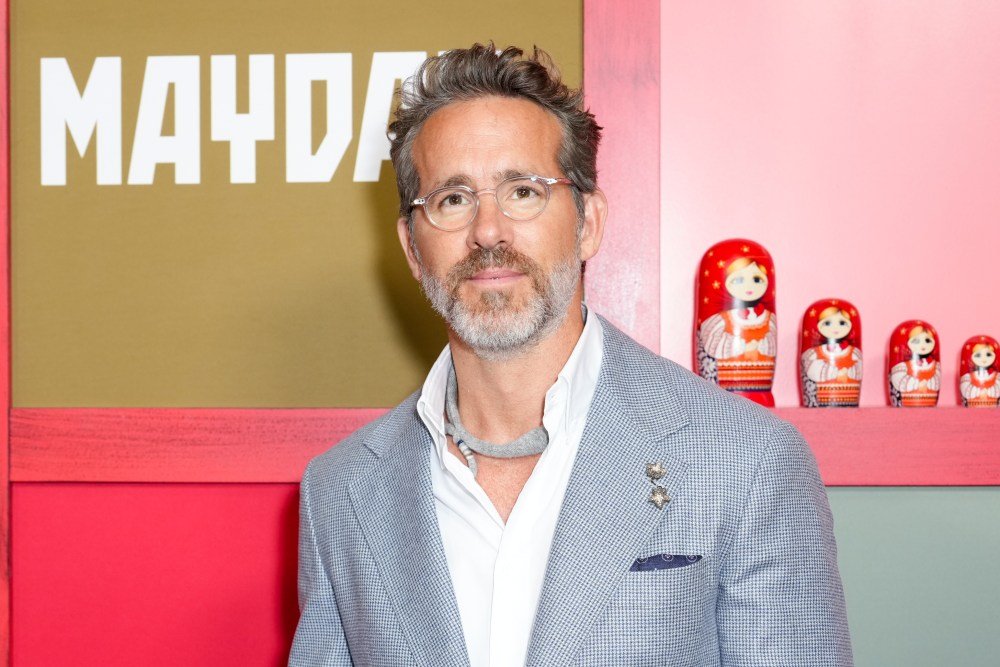
“Obviously, [‘The Odyssey’] is an incredible, incredible movie. Christopher Nolan literally breathes the rarest air on Earth. He’s a singular filmmaker,” Reynolds told Variety at the “Mayday” premiere at AMC Lincoln Square in New York City on Tuesday night. “I mean, Matt Damon, Tom Holland, who’s clearly batting a thousand stars with Zendaya. I just love that people are going to the movie theaters. I don’t even care why or for what reason. Just go to the movie theaters. There’s no better shared experience.”
Ryan Reynolds praises Christopher Nolan after “The Odyssey” beats “Deadpool & Wolverine” to become the biggest R-rated movie ever:
“Obviously, [‘The Odyssey’] is an incredible, incredible movie. Christopher Nolan literally breathes the rarest air on Earth. He’s a singular… pic.twitter.com/ydNoZxvggF
Apple Original Films’ “Mayday” marks Reynolds’ first major movie role since “Deadpool & Wolverine” hit theaters more than two years ago. Set at the end of the Cold War, he stars as a U.S. Navy pilot who becomes trapped behind enemy lines and forms an unlikely friendship with an eccentric ex-KGB agent (Kenneth Branagh) who idolizes ’80s American culture. Reynolds believes that the rosy-colored nostalgia surrounding the decade, popularized in modern-day projects like “Stranger Things,” tends to gloss over the more turbulent nature of the era.
“When you get far enough away from a time period that’s quite distinct, there’s always a lovely feeling associated with it, almost like you pave over all the trauma with puppy dogs and ice cream,” Reynolds said. “The 80s was a brutal, brutal time for people. It was a fucking mess and people forget that.”
Reynolds was quick to point to the fear of nuclear war that lingered over Americans as U.S.-Soviet tensions surged again in the early ’80s. The decade also saw the decline of American manufacturing devastate many working-class communities, along with the AIDS epidemic, which became the country’s most urgent health crisis.
“It was a tremendous strife,” Reynolds explained. “Socio political tensions everywhere. We were still pretty fresh off a Cuban missile crisis, which was only 15-20 years before. It’s a tumultuous period, but you look back at it now and you’re like, ‘Oh, yeah. ‘Top Gun.’ Cocaine!’ Like, ‘No!’ It was really scary.”
When the time comes to dissect the 2020’s in decades to come, Reynolds predicts that creatives will “pick on the big ticket items that didn’t really leave the footprint culturally that you would think they would.”
“So much of the aughts were like a mix of all the decade’s previous, whereas the decade’s previous were their own thing. I wonder if it’s going to be the Covid era or something. I have no idea. We are living in the friggin’ salad days right now! We just don’t know it.”
While “Mayday” isn’t getting a theatrical release, Reynolds teased at this year’s San Diego Comic-Con that he could return as Deadpool later this year in Marvel’s “Avengers: Doomsday.” Reynolds snuck into the Marvel presentation at Hall-H in a grey denim Deadpool suit and asked Paul Rudd a question from the crowd: “Mr. Paul Rudd: where is Thor, and why was he crying?”
Branagh, who also directed the first “Thor” movie with Chris Hemsworth in 2011, says Reynolds never brought up the ongoing Thor gag while filming together on “Mayday.”
“He worries about offending me, that’s what it is,” Branagh joked. “That was my baby, you know! Way back before you came in.”
Could Hollywood entice younger audiences by having a little faith?
A surprising new Future of Faith study from The Center for Scholars & Storytellers (CSS) at UCLA suggests that both Gen Z and Gen Alpha crave realistic and complex depictions of religion and spirituality in their entertainment that go beyond stereotypes. The group surveyed over 2,000 people, ages 14-24, and a majority cited a sensitivity to how their beliefs were portrayed on-screen.
Among the interesting data points:
Only around 40% felt that “people who hold beliefs or worldviews like theirs were accurately represented in the media.”
70% of “religious respondents said the way their religion or spirituality is portrayed in the media affects how others treat them.”
“More than 97% of religious respondents and 80% of nonreligious respondents said a piece of media had spiritually moved, inspired or comforted them.”
Asks from young audiences to storytellers include: both existing on-screen and being in the rooms where decisions are made; showing the ordinary side of religion vs. only the most extreme elements; showing internal group diversity; and having spiritual characters be complex and not just token.
Respondents weren’t shy in suggesting they thought Hollywood could do a better job with well-rounded depictions of faith and spirituality that didn’t veer into stereotype.
“We heard from young people that they wanted to see grappling with faith,” says CSS founder and CEO Yalda T. Uhls, Ph.D., in an interview with Variety about the findings. “They’re at this age when they leave home, they no longer have the structure of adults saying, ‘You go to church, go to this.’ They’re around all these other people, and a lot of them do question their faith and they try to do it safely. But that’s one of the things they complained about: there’s a lot of performative religion and policing from their faith groups online. They want to be able to have honest discussions.”
Uhls, the senior author of the study, is a professor in UCLA’s psychology department, and previously worked for nearly two decades as a senior executive at studios like MGM and Sony. Her background makes her confident that developing spirituality-forward storylines could help the entertainment industry engage with younger audiences. Given the turnout at the Aug. 5 CSS event The Future of Faith, where the findings were presented, Hollywood is listening.
“It’s a big opportunity,” she says of spirituality-forward content. “At our event, we had execs from Netflix, Amazon, NBC, Lionsgate. We were talking about that. They’re all exploring it. Lionsgate has several movies around this. They see purely religious movies make a lot of money with that very specific audience, but I think there’s opportunity to integrate it into different divisions — not just the faith division.”
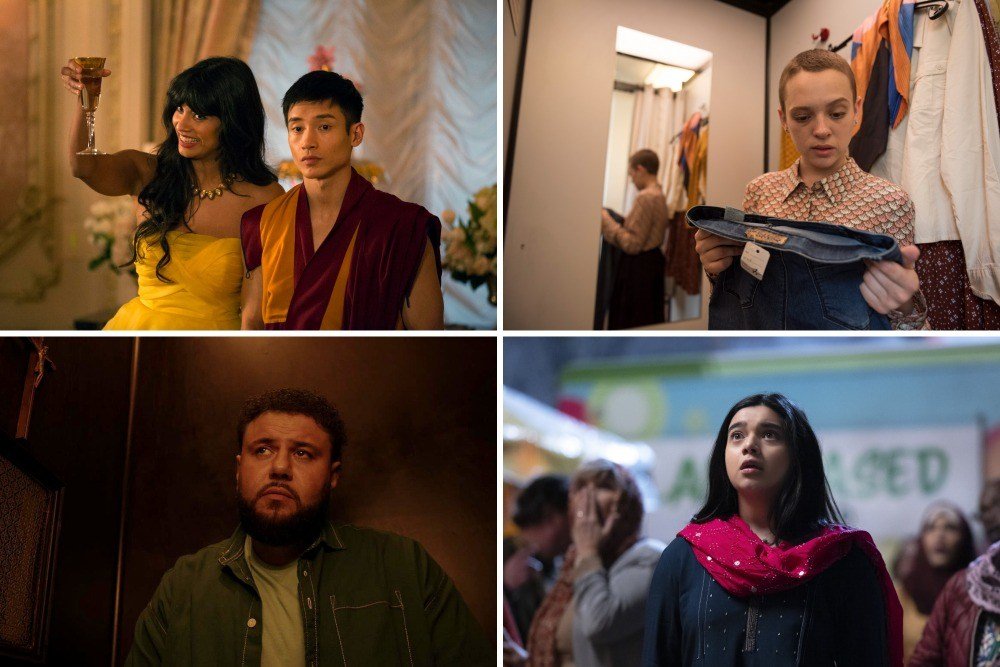
Uhls says respondents cited numerous series and films they believed were positive examples of what they were looking for, including films like “Wake Up Dead Man: A Knives Out Mystery,” “Over the Moon” and “Bend It Like Beckham,” as well as series like “Mo,” “The Good Place,” “Ms. Marvel” and “Avatar: The Last Airbender.”
Yet the story also doesn’t have to depict the religious elements reverentially for it to be seen as impactful. Uhls points to the Netflix series “Unorthodox,” about a woman who leaves her Orthodox Jewish community to start life over, as a prime example.
“I remember when ‘Unorthodox’ came out, there was a big backlash from the Orthodox community,” she says. “But I bet younger people are really thinking deeply about these questions as you’re figuring out who you are.”
That sentiment was carried by the keynote speaker of the Future of Faith event, Dustin Lance Black, the Oscar-winning screenwriter of “Milk.” He spoke about adapting “Under the Banner of Heaven,” a true crime account of murder in the fundamentalist Mormon community, and how the story impacted him due to his real-life faith.
“He used to be a Mormon, and he was queer,” Uhls says. “And so he felt lost. He left the faith, but he went through a very long period questioning it. He still is very spiritual. He said he went back to the Bible and read it and felt like, ‘Wow, there’s stuff in here that I can relate to,’ but it wasn’t reflected in the religious structure of the Mormon faith. So I do think you’ll turn off some people with that, but you will find a lot of young people grateful. I think the young people today, because they have so much information, they want things to be really real. They don’t want to see these glossy lives or fake hypocritical stories that don’t reflect the messiness of real life.”
In recent years, several high-profile directors have tackled projects which lean into discussions about faith. When speaking to Variety in 2024, Lee Daniels said his exorcism-meets-family-drama feature “The Deliverance” was deeply inspired by belief.
“This dysfunctional family finds a higher power, and in this time that we’re in, I think that is what we need to find, whether it’s Buddha, whether it’s Allah, whether it’s Jesus, whether it’s yourself,” he said in the interview. “How do you love yourself more? Because tomorrow isn’t promised and we don’t know what’s happening out here, and it’s dark. I think this is trying to scare you to your Higher Power. I don’t know whether I succeeded, but that’s what I was trying to do.”
And there’s been several high-profile films in recent years which have put a spotlight on wrestling with questions of faith, from 2024’s “Conclave” and “Heretic” to last year’s “Wake Up Dead Man” and “The Testament of Ann Lee.” The trend won’t stop, as it seems that Greta Gerwig’s next film, an adaptation of “Narnia: The Magician’s Nephew,” won’t shy away from author C.S. Lewis’ Christian themes. And these titles don’t even include wholly faith-based projects, like “The Chosen” series and films like “I Can Only Imagine 2.”
Ultimately, Uhls says she’s happy to shine a light on the desire young people have to engage with content that takes spirituality seriously.
“People are very, very interested in Hollywood listening to them,” she says. “There’s nobody, as far as I know, in any studio that is in charge of getting it right. There are people in charge of the creative teams developing the faith content, but they rely on the individual creator to do the homework, and maybe the exec. When I was an executive, nobody talked to me about any of this advocacy. So I didn’t know anything about it until a long time after I left the business.”
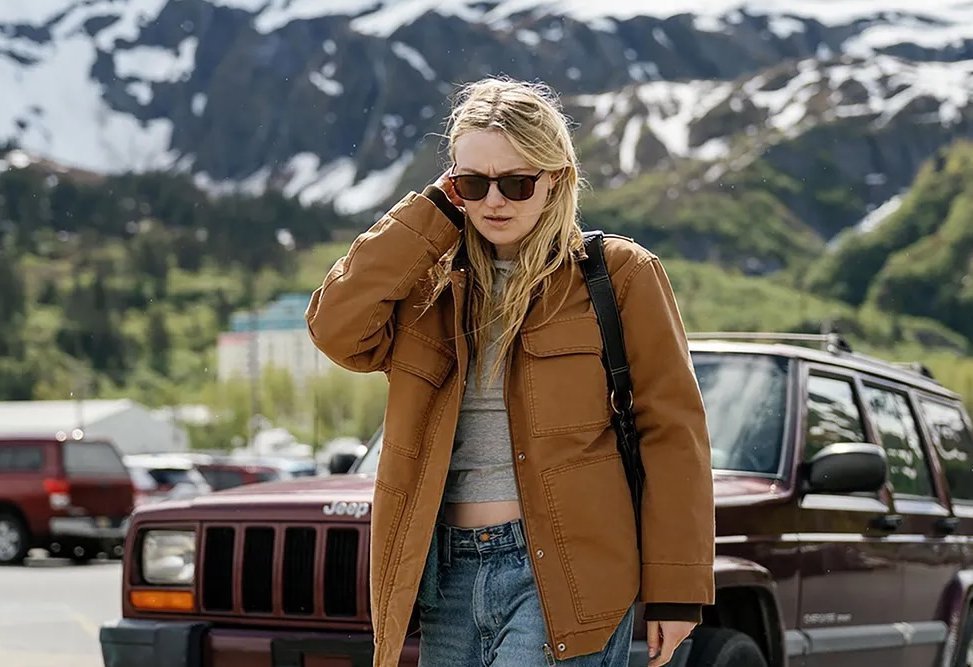
Long past his sexually explicit enfant terrible mumblecore origins, writer-director Joe Swanberg continues his ongoing experiments in honoring the romantic comedy’s conventional satisfactions while expanding its sexual parameters with “The Sun Never Sets.” Wendy (Dakota Fanning) has been dating sedate single dad Jack (Swanberg regular Jake Johnson) for two years. When he decides they should take a break so that Wendy can see other people and make absolutely sure she’s happy in their relationship, a love triangle is sparked. Both bizarre and boring, it’s definitely a signature Swanberg product: performance-driven, sexually (at least putatively) adventurous, full of craft beer.
In drone shots scored to generic indie-pop, Wendy (Dakota Fanning) drives into town, looking vaguely wistful under opening credits — so far, so romcom. But she’s not on the right heterosexual track to marriage and children, which particularly rankles after bestie Lindsay (Debby Ryan) announces she’s pregnant. With two kids and an ex-wife, Jack has no desire for more children or another marriage, but senses that Wendy might come to resent him for denying her both. So, he proposes she take six months off for her to see what else is out there; very reluctantly, she accepts.
Jack’s unnamed best friend (Lamorne Morris, popping in for a “New Girl” cameo reunion with his old castmate via Zoom) tells him the plan is half-baked, but Jack is unconcerned because he’s in Anchorage rather than his former base of New York City: “It’s a bunch of sweaty guys who smell like salmon. I’m not worried about it.” Mistake! Wendy immediately runs into old flame Chuck (Cory Michael Smith), who literally just got back to town the day before and, no longer a bad boy, begins by proposing marriage and seven children. The man who won’t change anything versus the man who’ll immediately change everything — descriptions that first apply to one character, then another, as Jack becomes desperate to win Wendy back while Chuck’s immature cracks emerge, leaving the lead with two theoretically equally red-flag choices at all times.
Scenery and single salmon joke aside, “Sun” doesn’t particularly show off its novel setting, unfolding in interiors proving Anchorage can be just as generic as any other American city: one of Swanberg’s beloved craft beer bars, a dive bar on trivia night, an art gallery for local painters, spacious suburban kitchens, less tony apartment complexes. Within these confines the main characters register as aliens; Wendy and Jack aren’t just flustered but people who seem to have never been inculcated with a rudimentary sense of social propriety. For example, Wendy is on a bar date she didn’t want to go on when she runs into Chuck, immediately sending the other guy packing; her decision is mirrored later when Jack also splits with his date Sara (Karley Sciortino) in a different bar after running into Wendy. Here, Sara finally raises her voice to express bafflement: “Is this a bit?”
The otherwise strangely becalmed register might make more sense if the protagonists were conceived as unflappable sociopaths, but the film’s theoretical naturalism heightens the inadvertent strangeness of watching people put other through so many stress positions while keeping their voices and mannerisms calm and level. That disjuncture could work if the film were stylized in some way to indicate that we’re operating in a realm of heightened emotional logic, rather than the familiar world of naturalism.
But despite shooting on 35mm, Swanberg continues to pursue a visually inconspicuous style that’s complementarily but counterproductively in line with the performance style. This is a film about difficult people in self-made traps — not unlike the willfully abrasive performers in the work of one of Swanberg’s admitted inspirations, Maurice Pialat, who understood the dramatic importance of externalized volatility to drive his emotionally bruising scenarios. Here, everyone both behind and in front of the camera seems a little too concerned with remaining likable and smooth on the surface. Like its protagonists, “The Sun Don’t Shine” wants to, but can’t, have it all.
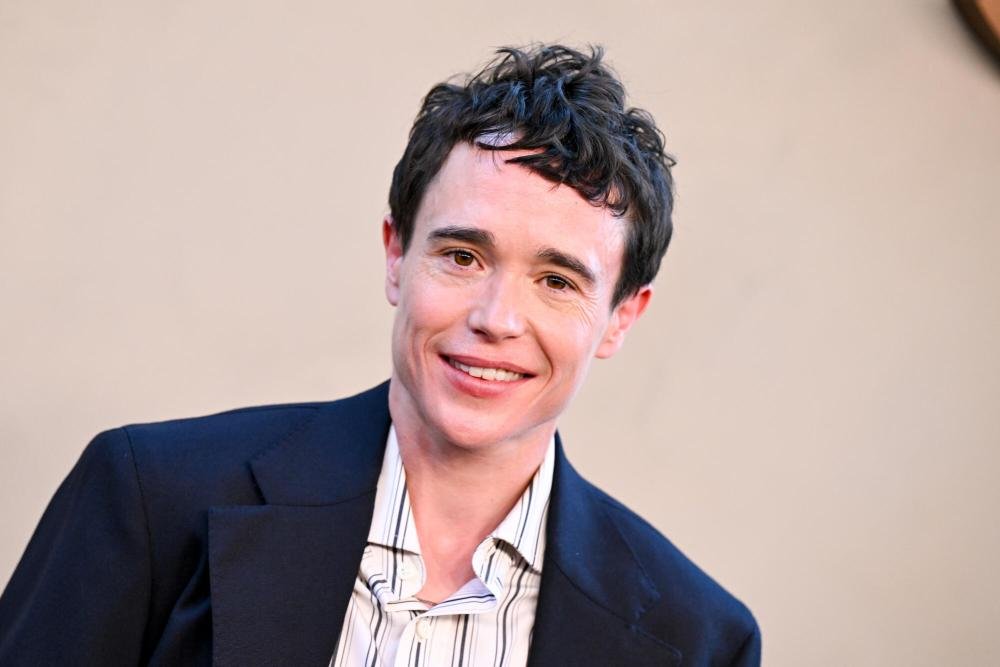
Elliot Page has never felt more comfortable on screen. Finding the right role, however, has proven to be more difficult. During his appearance on the “On Film… With Kevin McCarthy” podcast, Elliott revealed he hasn’t been able to find another great role after starring in “The Odyssey,” which hit theaters in July. The actor revealed he has no role currently lined up.
The “Umbrella Academy” actor, who came out as transgender in 2020, said he hopes to continue acting. Looking back at his experience filming Christopher Nolan‘s 2010 film “Inception,” Page recalled feeling uncomfortable in his own skin. But now that he’s embraced his true identity, he feels he’s in the perfect place to accomplish his “best work.”
“I had such a great time being in [“Inception”]. I had such a great time working with [writer-director Nolan], but I was also personally really uncomfortable,” the Oscar nominee shared. “Whereas a part like ‘Juno,’ I was able to feel more comfortable and embodied.”
While working on Nolan’s film, Page developed shingles after feeling out of place while working “in a cast full of cis men.” In his memoir, “Pageboy,” the actor shared the cast and crew were “delightful to work with,” but he still struggled to feel comfortable on set.
Page reunited with Nolan for “The Odyssey,” which he told McCarthy was a “cathartic” experience compared to working on “Inception.” On his last day filming Nolan’s epic, Page said it was an emotional day because it marked a full-circle moment.
“To come back now, as you can imagine, being more comfortable in yourself makes these sorts of projects more enjoyable,” Page said during the “X-Men: Days of Future Past” panel at New York City Comic Con in 2025 about “The Odyssey.” “To get to have a Chris Nolan experience again now meant so much to me selfishly.”
When Page’s casting as Sinon, the cousin of Odysseus (Matt Damon), was announced, the actor faced backlash online. Conservative commentator Ben Shapiro called the choice an “absolute puzzler,” noting that Page is “about 5’2 and 105 pounds soaking wet and has the voice of a woman. It doesn’t work.”
Whoopi Goldberg spoke out against Shapiro’s remark during an episode of “The View” in July, saying “A lot of conservatives who see this are going to feel the same way. That’s okay. But I don’t understand. Why go see the movie? If you don’t want to see it, don’t go see it. Why do you care who’s cast in it?”
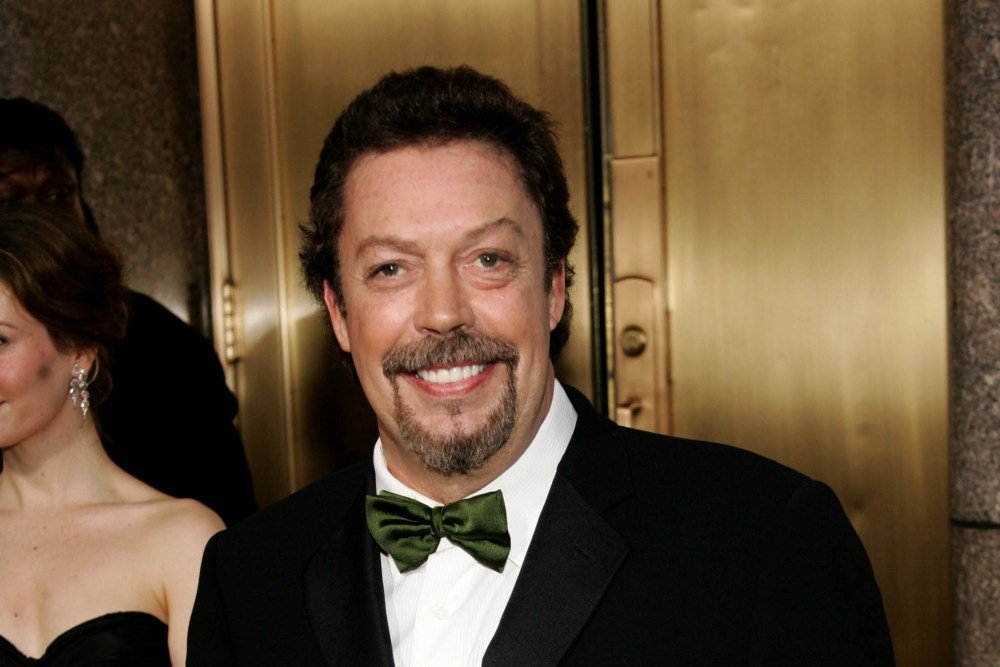
A cause of death has been confirmed for “Rocky Horror Picture Show” star Tim Curry, a week after his death at 80. The actor’s main cause of death was coronary artery disease, People magazine reported.
The Los Angeles County Department of Public Health also listed a history of stroke and kidney cancer as contributing factors.
The theater and film star had suffered a near-fatal stroke in 2012. Doctors discovered two blood clots in his brain and performed emergency surgery. Following the stroke, the left side of his body was paralyzed and he required the use of a wheelchair.
Curry was unable to speak for several weeks after the stroke. Although his voice returned the following year after rehabilitation, he focused mainly on voice acting for the remainder of his career.
The actor was transparent about his stroke and recovery. “I still can’t walk, which is why I’m in this silly chair, and that’s very limiting,” he said at a 50th anniversary screening of “Rocky Horror Picture Show” in September 2025. “So I won’t be singing and I won’t be dancing very soon. I still have real problems with my left leg.”
“I don’t fear death. I suspect that in the end I will welcome it,” he told Ben Mankiewicz last year. “I may well embrace it.”
The actor’s last credited role was in the 2024 horror film “Stream.” He was set to return in an expanded role in “Stream 2: Sudden Death,” which is in production with Fuzz on the Lens Productions. The film will be dedicated to Curry, who completed filming his scenes for the sequel, director Michael Leavy said.
“I had been very scared when I did not know what was happening to me, because I had no sense of whether tremendous pain was forthcoming,” Curry wrote in his 2025 memoir “Vagabond.” “But if death comes for me peacefully and I fade gently from light into dark oblivion, why would I be afraid of it? Sometimes, I rather think it would be a comfort.”
Venice Film Festival kicked off on Wednesday night with the splashy premiere of “Ink,” an explosive drama about the rise of Rupert Murdoch’s tabloid empire.
The film, which stars Jack O’Connell as The Sun editor Larry Lamb and Guy Pearce as media mogul Rupert Murdoch, was met with a nearly four-and-a-half minute ovation after the credits rolled. Festival director Alberto Barbera tried to keep up the clapping by telling the cast to move up on the stairs. They obliged, but only for a few moments. The ovation was cut short because stars O’Connell and Claire Foy started to walk back to their seats, collect their stuff and head for the exit.
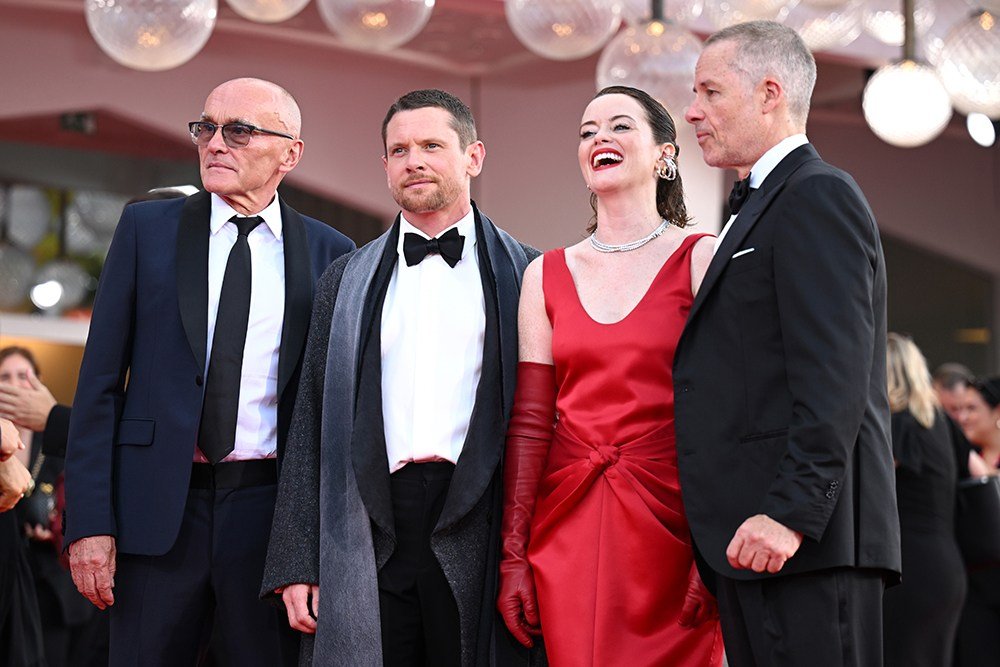
Earlier, O’Connell, Pearce and Foy walked the red carpet with director Danny Boyle. It was so hot and humid on Lido that O’Connell took off his Dunhill coat and handed it to a publicist before blotting the sweat on his face and white shirt with paper towels.
Set in 1969 London, “Ink” follows a young Murdoch, who buys The Sun and transforms the struggling paper into a high-selling tabloid. O’Connell stars as “The Sun” editor Larry Lamb, Pearce portrays Murdoch, and Foy plays a fictional journalist named Jules Davies.
Of course, Murdoch became one of the most influential — and divisive — media figures in history. The 95-year-old Australian built an empire spanning television, sports and entertainment through the conglomerate Fox Corporation, which includes Fox News and Fox Sports, as well as newspapers such as Wall Street Journal and New York Post. During Wednesday morning’s press conference for “Ink,” Boyle noted the movie doesn’t “monsterize” Murdoch, which he says, “a lot of people do now.”
“He represented, at the time, a breath of fresh air in what was a very rigid British society,” Boyle said. “He offered a kind of freedom with a different voice.”
“Ink,” which was acquired by Netflix prior to the festival, is competing for the Golden Lion. After Venice, the streamer will bring the awards hopeful to North America for stops at Telluride and Toronto International Film Festival. “Ink” will debut in theaters on Dec. 11 before landing on Netflix on Jan. 8.
Venice is opening against a politically charged backdrop, and jury president Maggie Gyllenhaal spoke to tensions surrounding the wars in Gaza and Ukraine, as well as U.S. politics, at Wednesday morning’s press conference. She said she thinks movies are “fundamentally, unavoidably political,” adding that no subject should be off limits. “I think we can challenge ourselves to hear stories about the most corrupt, most perverse people because it opens up the opportunity to find empathy for those people.”
Gyllenhaal also spoke about lack of female directors in this year’s competition lineup. Only two films up for the Golden Lion — “Woman Unknown,” a drama by Danish-Egyptian filmmaker May El-Toukhysolely and “Naza,” a documentary co-helmed by “No Other Land” filmmakers Rachel Szor and Yuval Abraham, were directed by women.
“There’s a systemic problem,” she said. “It’s harder for women to get films financed.”
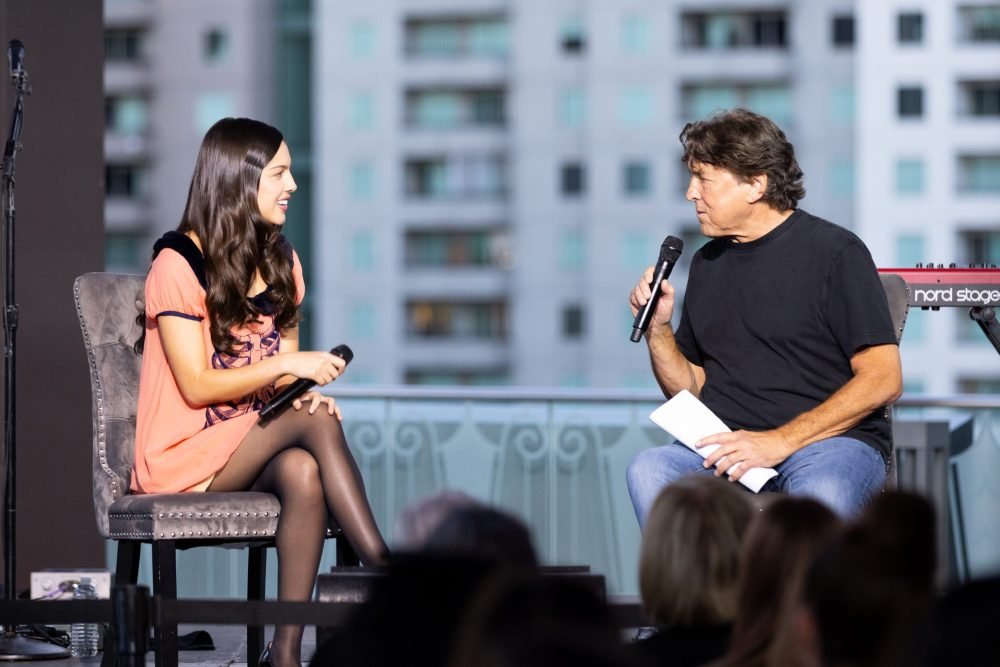
Filmmaker Cameron Crowe has biopics on the brain, being in late-stage development on his long-planned Joni Mitchell movie, the casting of which is still unknown. So he used his Q&A with Olivia Rodrigo Tuesday night at the Grammy Museum to ask her about casting thoughts — not for his own film, but for a theoretical one about her.
“In the biopic, in the kind of Broadway musical version of this album,” Crowe asked, “who plays you?”
“Well, you’re directing it,” the pop superstar answered, to audience cheers. “I don’t know who plays me… Sometimes I see a picture of Monica Barbaro, and I’m like, ‘Ooh, that’s a picture of me! Oh, no, that’s Monica.’ So, maybe her.”
“Good choice,” Crowe responded. “But then, there’s also you.”
“Yeah, I could do it,” Rodrigo responded, before passing the buck: “I mean, you’re directing it. You have to cast it.”
Even if she’s an old soul, a biopic about the 23-year-old is something that’s unlikely to happen any year or decade soon, but in the theoretical world where it could happen this early, there’s little doubt that it would be a very bankable box-office attraction. Rodrigo — who is just a few days out from having successfully organized and presided over her own music festival, Daisy Chain Fields — is easily one of the most popular figures in pop music. One of the most respected, too, with her third album, “You Seem Pretty Sad for a Girl So in Love,” being one of 2026’s best-reviewed albums, on top of its preordained bestseller status. She’s going to need some kind of fall before she’s eligible for a movie’s rise-and-fall-and-rise storyline, but right now there are no blips in sight.
The small audience that gathered on the rooftop of the Grammy Museum for a conversation and acoustic performance shared a sense they’d won the pop lottery this week, sitting among an audience of about 200, instead of among the 45,000 who’d just attended Daisy Chain Fields (which had proven a pretty tough ticket itself, being an instant sellout). In the back of the outdoor room, meanwhile, were a couple of dozen noticeably older industry-fan types, some of whom will surely be shortly casting preliminary ballots for the Grammys, where Rodrigo is expected to enjoy a high profile this year.
Olivia Rodrigo attends Olivia Rodrigo exhibit and program at Grammy Museum on September 1, 2026 in Los Angeles, California. (Photo by Alison Buck/Getty Images for The Recording Academy)
Getty Images for The Recording Academy
In her roughly half-hour performance with the acoustic guitarist and pianist from her all-female band providing the accompaniment, Rodrigo sang versions of the recent album’s “Drop Dead,” “Stupid Song,” “Maggots for Brains,” “Less” and “The Cure,” all of which — not to foster any FOMO — even more stirring than their full-band versions in Irvine three nights earlier. (Actually, “Less” didn’t get sung at Daisy Chain. With it being acknowledged by Rodrigo as the saddest song on the album, and quietest too, it’ll be interesting to see whether it gets picked up for her soon-to-launch arena tour or left out.)
Prior to that mini-set, Rodrigo sat for 33 minutes of questions from Crowe, resuming his intermittent music-journo career, and praising the singer as ” someone who really knows how to use her popularity well. She truly makes the future even better than the best of the past.”
When Crowe asked how she was feeling coming out of her big weekend, Rodrigo, who is nothing if not professsional and polite to a fault, backtracked to explain that “I run this festival called Daisy Chain Fields,” as if there was anyone on the roof who hadn’t been there or tried. “Oh my gosh, I am on cloud nine, I’m so happy,” she exulted. Asked in a card submitted from the audience for favorite memories of the day, Rodrigo said, “Oh my gosh, so many. There’s images of girls braiding each other’s hair. There were girls at the Bikini Kill set that were singing along to every single lyric of ‘Rebel Girl.’ They were like 7 years old. It was incredible.”
Inevitably she got to the charity component, where $20 million was raised for 10 organizations partially or entirely benefitting women and girls. “This one’s kind of sad but really moving. One of the organizations that Daisy Chain benefited is National Domestic Workers Alliance, which is basically nannies and house cleaners, and they try to provide services and help them have a living wage. It’s just this really beautiful organization. I was watching this video of the founder, Ai-jen Poo, talking to one of the girls who had come who’d been a caretaker for her dad since she was 15, and she said that she always felt kind of alone in that job, and it’s obviously very hard and heavy. She came to Daisy Chain and started reading about all these stories of other domestic workers that National Domestic Workers Association was working with, and she said that it made her feel less alone. I think that that was the most beautiful story, and that was exactly kind of what I was hoping would come out of Daisy Chain — that girls could come there and feel like they were a part of a community, and know that people are out there that really care about them… To make someone feel less alone in the world, that’s some goodness out there.”
Olivia Rodrigo attends Olivia Rodrigo exhibit and program at Grammy Museum on September 01, 2026 in Los Angeles, California. (Photo by Alison Buck/Getty Images for The Recording Academy)
Getty Images for The Recording Academy
Crowe mentioned Daisy Chain coming to a close with Stevie Nicks joining Rodrigo for a final duet. “It’s amazing that you guys chose ‘Landslide’ and were able to make it your own. I was lucky enough to write about them when I was just starting at Rolling Stone, and they had just finished the ‘Rumours’ album, and they were all kind of together realizing that they had put that drama from their lives into all these songs, and now it was present for everybody to know. And I think it felt like the rawness that they put into making it was now no longer theirs; it belonged to everybody. You’ve written so beautifully about your feelings, and impulses that you’ve had, and you put them out there for people in a generous way. I wonder sometimes if you think, ‘Wow, I’ve been really honest with people.’ That’s a badge of honor, really, isn’t it?”
“You know, it is kind of a weird job description, to just air so many of your personal grievances on such a large scale,” the singer responded. “But I don’t know; I just love writing songs. It is truly my therapy; I don’t know what I would do if I didn’t have that outlet. Most songs for me just come from a really personal place, and I’m just writing them to see how I feel, and because I love writing them. I only start to think about them being out in the world after the fact — that’s when it sets in.”
One tie-in for Rodrigo’s night at the museum was it being the eve of a exhibit opening Wednesday — but on view to the Tuesday night audience as a preview — dedicated solely to sets and artifacts from her music video for the song “The Cure.” (Solely for now, anyhow; the Grammy Museum is promising an expansion of the exhibit that will incorporate other aspects of her career coming some time this fall.)
“It’s my favorite song on the record. It might be my favorite song I’ve ever made,” she told the audience. “And it might be my favorite video I’ve ever made. We worked really hard on that video. We were really excited about having everything be really tactile and practical. So everything that you’ll see in the exhibit is handmade. It’s cardboard; it’s yarn. It’s made by artists and they put maybe even 1,000 hours of work into it. I think today there’s so much digital stuff, and it was really nice to have something that was really tactile. It felt really fresh and inspiring. So now you can go walk through the exhibit, which is so cool. I just walked through it for the first time, and I’m wearing my skeleton dress in honor of the little X-ray machine” that was in the hospital-themed video and is now on exhibit for a fan photo opp.
Olivia Rodrigo attends Olivia Rodrigo exhibit and program at Grammy Museum on September 01, 2026 in Los Angeles, California. (Photo by Alison Buck/Getty Images for The Recording Academy)
Getty Images for The Recording Academy
She addressed the conceptual nature of the recent album, which devotes its first half to the rise of a relationship and the second half to its fall, apparently reflecting real life circumstances during its making. “There’s this Fiona Apple quote where someone’s like, ‘Is it really hard to write these happy songs?’ And she’s like, ‘Well, yeah. If I’m having a good time, why would I stop what I’m doing and go sit down at the piano?’ Which I think is kind of true. But that was sort of the nexus of ‘You Seem Pretty Sad for a Girl So In Love’: I really wanted to challenge myself to write from a place of more positivity and a happier version of a romantic relationship. It kind of took a turn in the middle, but we’ll get to that later.” (Unfortunately for inquring minds, they did not get to that later, at least not directly.)
“I think that’s why it’s called ‘You Seem Pretty Sad for a Girl So In Love,’” she continued, “because over the course of trying to write these love songs, I very quickly realized that what made my favorite love songs so moving is that there was a bit of melancholy in them, or a bit of fragility or something broken in the love song. Like, I think the Cure does a really good job at that” — by which she meant the band, not her own song of that same name. “One of my favorite songs ever is ‘Love Song’: ‘However far away, I will always love you. However long I stay, I will always love you.’ It’s so heartbreaking because it’s kind of sad and fearful. So it was songs like that that taught me about grounding love songs in something sort of broken, and that was sort of the whole exercise of the album was me trying to toe that line.”
Rodrigo talked at length about the most ebullient song in the early part of the album, “Stupid Song.” She noted that “I wrote some of the lyrics, uh, about Steve and Miranda from ‘Sex and the City’,” but mostly it was personal.
“I wrote that song (after) I flew from London to New York, and I was really jet lagged. I woke up at 4:30 in the morning, wide awake, and I couldn’t fall asleep. And I walked around New York City. I was living in Greenwich Village at the time. I felt a little funny walking outside. Sometimes people take pictures, and I always felt a little anxious. But at 5 in the morning, I was walking around and nobody knew who I was. There was nobody on the streets, and I literally was just doing twirls on the sidewalk. I felt so free. And then this guy came up to me, and I was like, ‘Oh, he’s gonna ask for a picture.’ And he’s like, ‘You are so beautiful. Can I take you out on a date?’ And I was like, ‘No, but this is the best day ever!’ Oh my God, I was so happy. I was twirling around the sidewalks, and I went home and I sat down at my piano and I wrote that song. So I think that it has some of that element of freedom and New York vibes. It was a good feeling. I tried to bottle it.”
Yet that single was also the most extenuated song on the latest album, after the initial burst of joy. “‘Stupid Song,’ I swear to God, we were working on for a year and a half. It was such a hard one to pull off. We just kept editing production and melodies, and we didn’t finish it until maybe one week before we had to turn the album in. But I’m really happy with where it ended up, so it was worth it.”
Olivia Rodrigo and Cameron Crowe attend Olivia Rodrigo exhibit and program at Grammy Museum on September 1, 2026 in Los Angeles, California. (Photo by Alison Buck/Getty Images for The Recording Academy)
Getty Images for The Recording Academy
There were goofy moments, she recalled, explaining how she and co-writer/producer Dan Nigro do overlapping comical character voices when they get to gang vocals. On the more serious side, Rodrigo admitted her long TV resume has affected how she is able to get her most sincere vocals, counterintuitive as that may seem.
“I was a child actor when I was younger, and so I’m very used to being in front of a camera. And so sometimes when I’m not giving an emotional enough performance, Dan (Nigro) will actually just set up the camera on his phone and film me, and I’ll always do a better job, for whatever reason. Muscle memory, I guess.”
Sometimes the emotions in the songs reach demographics beyond the ones she’s imagining when the records come out. Talking again about Daisy Chain, she said, “I think just being able to play a show and see young people in the audience and hopefully provide a space where they know that their feelings and their experiences are really important is very moving to me. … But I also think it teaches me that music is the great equalizer, too. I mean, even beyond younger people in the audience, it teaches me that we’re so much more alike than we are different. Even with a song like ‘Driver’s License,’ to this day I’ll meet a 50-year-old dad from Omaha, Nebraska who’s like, ‘When I went through my divorce, that’s exactly how I felt.’ And I’m like, ‘Whoa. Our lives are so different!’ But at our core we’re all the same and we all experience these feelings of insecurity and heartbreak and love, and I think music is the most distilled form of that.”
Olivia Rodrigo speaks on stage during Olivia Rodrigo exhibit and program at Grammy Museum on September 1, 2026 in Los Angeles, California. (Photo by Alison Buck/Getty Images for The Recording Academy)
Getty Images for The Recording Academy
Moving on to the performance segment, Rodrigo explained where she got the title for “Maggots for Brains.” “The idea for this song (came when) I was walking through a record shop and I saw a magazine that was called Maggot Brain. Interesting choice of words, ‘maggot brain.’ And so I wrote it down in my phone and when it came time to write the song, it came to memory.” Left unknown was whether she was made aware Maggot Brain is Jack White’s magazine, or that it took its title from a famous 1970s Funkadelic instrumental, but in any case, it’s a breakthrough to have the insects finally inspire actual lyrics.
The delicate “Less” may have been the high point of her Grammy Museum set, whether or not there’s an attempt to try to have it fulfill that role again in 18,000-seaters when her tour starts Sept. 25 in Connecticut. “This is known within my inner circle as the saddest song on the record,” she acknowledged. “Making this album, I was really interested in the gray areas of love. Not only the breakup song and love song, but the stuff that’s in between them. So this song was kind of about that, and it’s about how you could be breaking up with someone but still have really fond feelings for them at the end of the day and still love them. So, it’s a pretty sad one.”
Olivia Rodrigo performs on stage during Olivia Rodrigo exhibit and program at Grammy Museum on September 1, 2026 in Los Angeles, California. (Photo by Alison Buck/Getty Images for The Recording Academy)
Getty Images for The Recording Academy
Regardless of how many cameras were rolling, her actorly intensity was ramped up for a seemingly deeply felt performance of “The Cure” to wrap up the evening — including a high note added to the song’s climax that hasn’t been heard in previous readings of the song. And, although there’s been some speculation about which hit Rodrigo might submit for the Grammys, her talk about this song made it sound pretty certain it’s what she wants to emphasize.
“Like I was saying before, it’s my favorite song on the record, so I saved it for last for you guys — I just love this song so much,” she said. “It feels so me, and I think it’s a thesis statement of ‘You Seem Pretty Sad for a Girl So in Love.’ It’s basically about this realization that I had that none of these external factors will fix problems that you have within, as cheesy as that sounds. You think that being in a perfect relationship or getting a new job or falling in love for the first time, it’ll suddenly make you feel better about yourself, and the song is about the pretty solemn realization that that is not true. And in fact, sometimes I think falling in love can actually make these issues in yourself even clearer to you, which is a really kind of curious, interesting part about falling in love.”
To be sure, “60 Minutes” has tangled with corporate attorneys, politicians and other challenging subjects. But the program has never had to grapple with its own internal processes being undermined from within. When Weiss cut former executive producer Tanya Simon, executive editor Draggan Mahialvich, and Sharyn Alfoni and Cecelia Vega (with Scott Pelley exiled later), she did so at a critical moment (Anderson Cooper in February announced he would step away from the program after nearly two decades, marking another reduction in veteran staff). Most of the show’s personalities try to have a produced story on an evergreen topic like health, science or culture in the can before taking a vacation in July. This year, according to people familiar with the program, much of that work wasn’t approved, and therefore was not filed in timely fashion.
Now Nick Bilton, the new executive producer, could be left with less room to maneuver as “60 Minutes” prepares for its 59th season, slated to start Sunday, September 13 — a few weeks earlier than the norm.
“Generally, the show has about a dozen or so evergreens in the bank by the season premiere. The expectation is, every producer should have one piece produced — one piece approved and in the bank — with a second one in production by the season premiere in September,” says one former longtime “60 Minutes” producer. Those stories will serve the show well as it steers into a new cycle. “The most critical and most demanding part of the year is from the end of August until the end of March, basically the NFL season into March Madness. It’s nonstop. Three new, fully vetted, 13-minute pieces each — minidocumentaries, really — week after week for months. The math is crushing. The deadlines are punishing.”
The start of the new “60” season will serve as a real-time test. Segments from the newsmagazine that have had time to marinate are proven to be appetizing. But what of stuff that is served, like most TV-news programming, fresher from the grill?
Bilton has approved more than three dozen stories, according to a person familiar with the matter, with each in various stages of production, which include research, shooting, writing and more. This person says more than a dozen stories are in the editing process, either being screened or being prepared for screening.. Bilton wants to continue and augment the show’s tradition of investigative reporting, this person says, and also sees an opportunity for “60” to weigh in heavily on the effects of AI on the world and all facets of society, much in the way “60 Minutes” featured coverage of the Vietnam War or the tobacco industry in decades past. More decisions tied to senior leadership are expected to be unveiled in days to come.
Still, “60 Minutes” has its own way of ticking, according to people familiar with the show, and it’s not easy to get into gear.
A lot is at stake for Weiss, Bilton, CBS News and corporate overseers at Paramount Skydance as the show moves toward what may be its most unusual season yet. While Weiss and others at CBS News think “60 Minutes” needs to do more to appeal to digital audiences and employs too many producers working on too few stories, the simple fact of the matter is that the program is the jewel of the CBS network. “This is the biggest challenge that ’60 Minutes’ faces,” says Ben Bogardus, chairman of the journalism department at Quinnipiac University in Hamden, CT. “The producers need to find a way to reach younger viewers where and when they consume news and information, but at the same time not turn away older viewers who still make up most of the show’s audience.”
That crowd helps bring ad dollars to Paramount’s coffers. “60 Minutes” snared $67.2 million in ad revenue in 2025, according to Guideline, a tracker of ad spending. And the audience for the program rose 9% during its most recent season — no small feat in the streaming era.
Also of note: “60 Minutes” serves as a conduit that brings audiences from CBS’ Sunday NFL showcase into its primetime lineup. Any decrease in ratings this season would undermine the luster of NFL games at a time when the league is already holding preliminary discussions with Paramount about the possibility of renewing the company’s current rights deal.
That’s a lot to put in the hands of less experienced personnel. The program has been holding talks with new producer candidates during the summer, even as correspondents are supposed to be filing new stories — all adding elements of potential disorder to the show’s off-season operations. Bilton is relying heavily on Maria Gavrilovic, a longtime producer who worked extensively with Pelley, and who has been elevated to a senior role, as well as dozens of longtime staffers familiar with the ways of the show, says the person familiar with the show’s work over the summer. He is also working to find ways to make “60 Minutes” more relevant to a generation of news aficionados who might be more interested in podcasts and newsletters, this person says, and is examining ways to update internal proceses. Viewers should not see shocking changes to the look and feel of the program, this person says, but may notice what were described as “gentle” tweaks to its presence on air.
CBS News declined to make producers or executives available for comment.
The looming season debut is just the latest in what has been a surreal string of events surrounding the newsmagazine. The show was turned into a bargaining chip between Paramount’s previous managers and the Trump administration, which leveraged a $16 million settlement to President Donald Trump to end what had been viewed in many legal circles as a flimsy lawsuit tied to a pre-Election Day interview between Bill Whitaker, a “60 Minutes” correspondent, and former U.S. Vice President Kamala Harris. Paramount made the deal as it sought to complete its sale to Skydance.
As a result, two senior CBS News executives — Bill Owens, the former executive producer of “60 Minutes,” and Wendy McMahon, the former CEO of CBS News, local stations and syndication — suggested in remarks that they could no longer push back against corporate mandates they felt would weaken the newsroom. Both left CBS News last year.
There is a lot of skepticism about how well the staff can proceed in weeks to come. When former “60 Minutes” executive producers like Jeff Fager or Owens “had to crash a story in the middle of the season, it took everything they had to keep the show on the rails,” says one person familiar with the workings of the show. “I have no idea how this team is equipped to do something like that.”
Having a broad array of stories at the ready can only help. “Every Sunday, you want a mix — a hard-hitting lead, an international story, a lighter feature. The idea is, if some viewers aren’t interested in the piece about climate change or the war in Ukraine, they’ll stick around for the profile of Christopher Nolan or Lady Gaga. That kind of variety only works if you’ve got a bank to draw from,” says the former producer. Besides, there can often be an emergency need for a back-up story, particularly if a subject backs out of a timely report or a story that was supposed to be ready requires last-minute changes. “It doesn’t happen every week, but it’s not a hypothetical either.”
For decades, “60 Minutes” personnel have been steeped in the ways of the program. Getting a segment on air “is a whole gauntlet,” the former producer recalls, involving meticulous research and rounds of scripting. Stories also go through multiple screenings with the staff. “Sometimes it gets heated — loud arguments, especially in the old days, people practically ready to throw a phone across the room. But everyone wants the same thing in the end: making the story better. And that just takes time,” the former producer says. “It takes time to get there.”
The off-season interruptions will take a toll, says the former producer. “With thin experience at the top and no real bank of stories to fall back on, the staff is going to have to work like hell just to get the show on the air every week. And they’ll be doing it in an atmosphere where a lot of people still feel underappreciated and still haven’t gotten over how badly Tanya and Draggan were treated,” this person says. “The producers’ professionalism will carry them forward. But that’s a lot to ask of people.”
Other media moguls have sought to update beloved journalism properties by weaning them away from long-held traditions. After Rupert Murodch’s News Corp. snatched The Wall Street Journal away from its longtime owners, the Bancroft family, in 2008, Robert Thomson, named to lead the paper, famously complained that its signature front-page “leders” took too long to produce. Many of the pieces, Thomson joked, had “the gestation of a llama.” The Wall Street Journal of 2026 features a wider array shorter stories along with snappier headlines, but in some cases, critics would argue, less depth.
The debate may be moot. News Corp. in August said its Dow Jones segment, which contains The Journal, saw revenue increase by 7%, driven by circulation, subscriptions and advertising.
But discussion continues. Both Stahl and Whitaker at a recent party held for Tanya Simon, the former executive producer, were heard acknowledging their trepidation about staying with the show, according to people who were present at the event. Even so, Whitaker, whose remarks were previously reported by the media newsletter Status, indicated he intended to do his best to stick to “60” traditions. And Stahl has been hard at work, according to one of the people familiar with the show.
Some news aficionados may watch new episodes to see how their efforts hold up. “Initially, the television versions of stories will probably look more or less the same, in order to avoid alienating the program’s audience with jarring changes,” says Bogardus. “But viewers may start to notice an increased presence on social media, with vertical-video versions of stories that play well on Instagram and TikTok, audio and video podcast versions of interviews that are longer and less edited than the ones used in the TV broadcasts, more on-demand streaming options online and on YouTube, and stories told about topics that interest a younger audience, instead of the generally older demographic that is still loyal to the over-the-air version of the show.”
The facts are in: At summer’s end, “60 Minutes” has no time left for immediate self-improvement, and a season of shows that need to be filled.
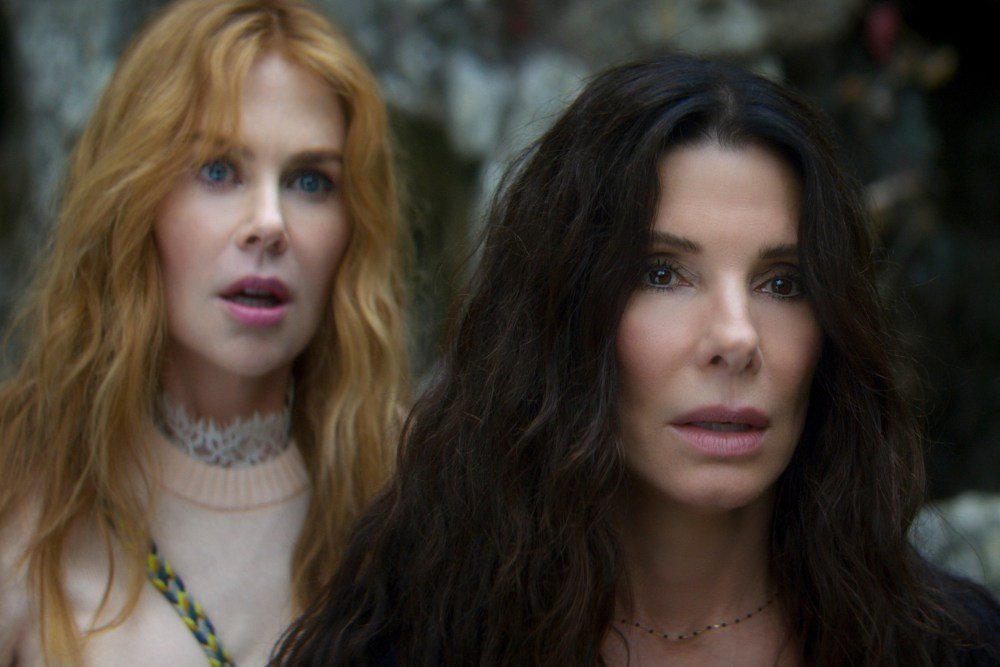
Evan Rachel Wood appeared to shade her original “Practical Magic” co-stars Nicole Kidman and Sandra Bullock by revealing in an Instagram story (via Entertainment Weekly) that no one involved in the 1998 cult classic reached out to her when she was not invited back to return for this year’s “Practical Magic 2.” Wood starred as Bullock’s daughter Kylie in the original. Joey King takes over the role in the sequel and, according to Wood, was the only person to reach out.
“I really appreciated Joey King reaching out to me because no one who worked on the original film did. She’s a sweetheart,” Wood shared on Instagram.
King told The Hollywood Reporter at the “Practical Magic 2” premiere in Los Angeles that she had a “lovely” conversation with Wood about taking over her original role, adding: “I just was so appreciative of the support that she showed to me and to the rest of the cast. She is so talented and so beautiful and she made this role so special when she was a young girl. I feel so grateful to be able to play Kylie at this age but I love Evan so much and I’m so appreciative of her kind words and the exchange that her and I shared.”
In the 1998 movie, Wood and Alexandra Artrip played Kylie and Antonia Owens, the daughters of Sandra Bullock’s Sally. In the sequel, Artrip is replaced by “Game of Thrones” favorite Maisie Williams. The sequel is adapted from “The Book of Magic” by Alice Hoffman, a sequel to her own novel “Practical Magic,” which inspired the first film.
“Practical Magic 2” is directed by Susanne Bier, who previously worked with Kidman on the HBO limited series “The Undoing.” The filmmaker spoke to Variety at the sequel’s Los Angeles premiere (see video below) about not asking Wood to reprise the role of Kylie.
“It was not a personal thing,” Bier said. “The kids in the story are right out of college, so it wasn’t really a question. We had to recast.”
Wood told “Entertainment Tonight” earlier this summer that it was “sad” not to be asked back for “Practical Magic 2” because “we bonded with that cast so much as children, and so to miss out on the opportunity to look at that cast and look at that house as an adult and see the history in our eyes, it’s something that can’t be faked. I’m sad that doesn’t get to exist, especially for the fans.”
“I read the book and it seems like they’re not following the book,” Wood added. “I think in the book it would have made sense to bring me back; I think in the way they’re redoing it and approaching it, it didn’t make sense.”
Last year on Instagram, Wood revealed that she “offered my services” to appear in “Practical Magic 2,” adding: “Even if it was one scene or one line. I was told they are re-casting. I am sorry to disappoint the fans. It was not in my control or my choice. I would have happily rejoined my sisters.”
“Practical Magic 2” opens in theaters Sept. 10 from Warner Bros.