Management of the Writers Guild of America West met with the staff union on Sunday night as the two sides aimed to resolve the week-old staff strike.
But while there has been some movement on some issues, the staff union said that not enough progress has been made.
“Management is still not ready to meet the moment,” said Dylan Holmes, co-chair of the Writers Guild Staff Union bargaining committee, during picketing on Tuesday. “They do not want us to be on this picket line and are trying to figure out how to get us off of it. But they are still unwilling to bargain in good faith with us in order to get there.”
The WGSUwent on strike on Feb. 17, alleging that union leadership had failed to seriously address the staff’s concerns. The staff union — which includes about 100 guild employees — argues that wages are too low and that workers are subject to unfair promotion and discipline practices. Many WGAW employees make $50,000 to $80,000 a year, according to public data.
WGA management has denied the allegations of bad-faith bargaining and said it will continue to work with the staff to reach a resolution. The two sides met on Sunday night at the International Longshore and Warehouse Union hall in San Pedro, as WGAW management sought a “neutral” site.
Another meeting was expected as soon as Tuesday night.
If the strike persists much longer, it could impact the WGA Awards, which are scheduled for March 8 at the J.W. Marriott hotel in downtown Los Angeles. Staff members typically work at the event alongside an event production crew. If they are on strike, it might raise concerns among members about crossing a picket line.
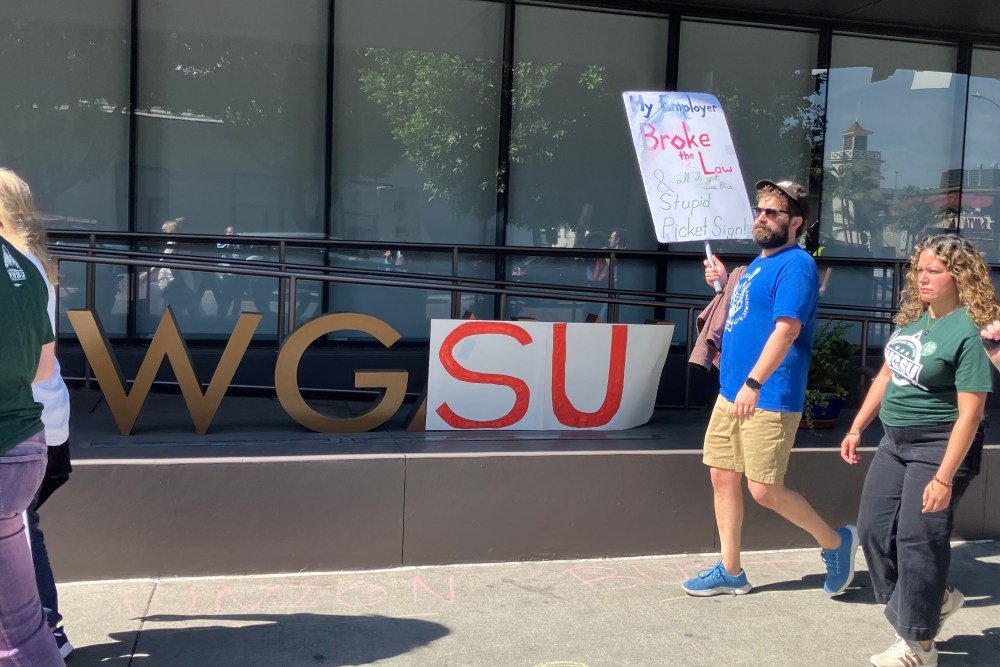
A few dozen WGA members joined the staffers in picketing outside the union headquarters at Fairfax Avenue and 3rd Street on Tuesday morning.
“It’s very hypocritical and quite frankly embarrassing that a union that is always at the forefront of trying to get a good deal for its members won’t do the same for its own staff,” said writer Joe Russo, who was an assistant lot coordinator during the 2023 WGA strike. “I don’t think it’s a good look.”
The WGSU formed last April and is working to get its first contract. Last August, the union filed an unfair labor practices complaint accusing the WGA of firing a union staffer for union activity. At the picket on Tuesday, WGA workers and members carried signs holding Ellen Stutzman, the guild’s executive director, accountable for alleged ULPs.
“Come on y’all, this is embarrassing,” read one sign. Another: “Thought we were on the same team.”
The WGA is due to sit down with the Alliance of Motion Picture and Television Producers on March 16 to begin bargaining new contract on behalf of writers. The WGA has said that bargaining will go on even if the staff is on strike.
“I don’t love that we’d be basically negotiating on two fronts,” Russo said. “So it would be great to resolve this, get all our ducks in order, stop airing our dirty laundry and focus on a deal for members, because at the end of the day that will help staff too.”
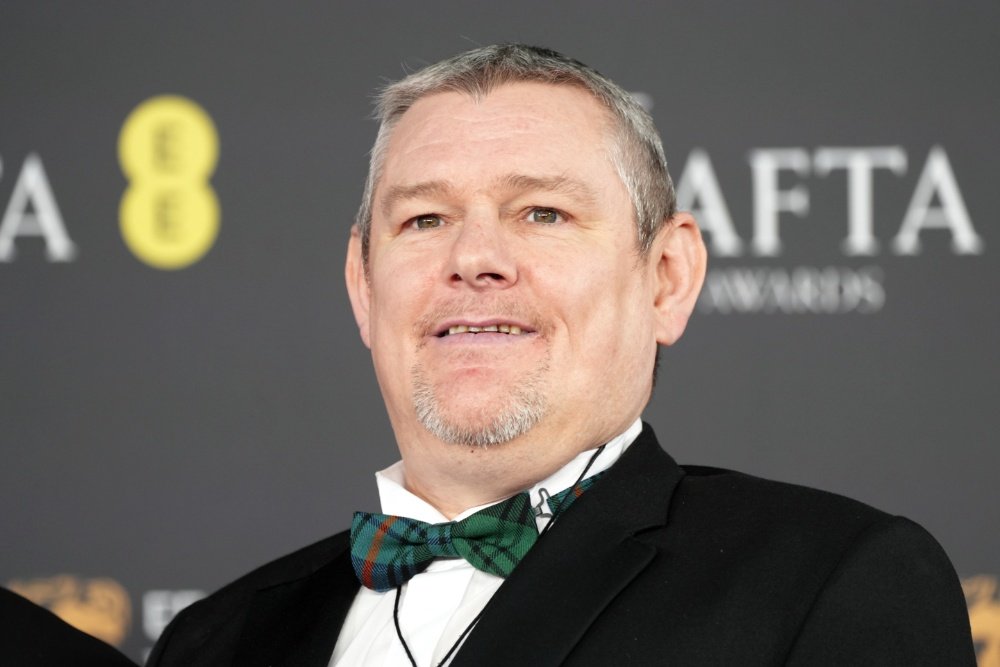
John Davidson, the Scottish Tourette’s syndrome activist and real-life inspiration for “I Swear,” was thrust into the spotlight at the 79th BAFTA Awards when his involuntary vocal tics disrupted the ceremony, including an outburst of racial slurs that occurred as “Sinners” stars Michael B. Jordan and Delroy Lindo presented an award. In an exclusive email interview with Variety, Davidson offers his perspective on what happened, including what precautions and guardrails he had expected the BBC and BAFTA to take before he attended the ceremony.
Since the fallout, Davidson’s team shares that he’s reached out to the studio handling “Sinners” in order to directly apologize to Jordan, Lindo and production designer Hannah Beacher.
Here he is, giving his account, in his own words.
LONDON, ENGLAND – FEBRUARY 22: Michael B. Jordan and Delroy Lindo present the Special Visual Effects Award on stage during the EE BAFTA Film Awards 2026 at The Royal Festival Hall on February 22, 2026 in London, England. (Photo by Stuart Wilson/BAFTA/Getty Images for BAFTA)
Getty Images for BAFTA
Many people’s only frame of reference for Tourette’s syndrome comes from stereotypes, particularly the idea that it’s “just swearing” or saying slurs for shock value. How do you describe the condition to someone starting from that place?
Very often, the media focuses on my particular type of Tourette’s, which is called coprolalia — the involuntary use of obscene or offensive language. This symptom affects 10% to 30% of people with the condition and is not a criterion for diagnosis. However, it is one of the hardest tics to manage and can be very distressing for those living with it. Many individuals report discrimination and isolation as a result.
I have been physically beaten to within an inch of my life with an iron bar after ticking a comment to a young woman whose boyfriend and accomplice ambushed me one evening.
The real challenge isn’t the tics themselves, but the misconceptions surrounding them. Understanding the full range of Tourette’s helps reduce stigma and supports everyone living with the condition.
When socially unacceptable words come out, the guilt and shame on the part of the person with the condition is often unbearable and causes enormous distress. I can’t begin to explain how upset and distraught I have been as the impact from Sunday sinks in.
In the moment before a vocal tic, do you know what’s coming, or does it only become clear after the fact?
Depending on the severity of the condition, people either have an ability to suppress what they are saying for short periods of time, or they don’t. Suppressing can be compared to taking a full bottle of Coca-Cola and shaking it each time you feel the need to tic. Before long, the pressure is so intense it has to be released, and it bursts out — and on occasion, that can lead to a tic attack.
For me personally, my brain works so fast and the tics have always been so aggressive that I have no idea when they are coming or what they will be. I have almost no ability to suppress, and when the situation is stressful, I have absolutely no choice but to tic — it simply bursts out of me like a gunshot.
When a tic involves a slur or taboo phrase, what’s the single most important thing you want people to understand about the distinction between intent and involuntary neurological response?
I want people to know and understand that my tics have absolutely nothing to do with what I think, feel or believe. It’s an involuntary neurological misfire. My tics are not an intention, not a choice and not a reflection of my values.
Those who have seen “I Swear” will understand this. My tics have said and done things over the years that have caused huge pain and upset — punching Dottie [my second mother] in the face is a prime example. Dottie is someone I love dearly. I would never, ever want to hurt her. I have even punched her in the face when she was driving at speed, almost causing a head-on collision.
Tourette’s can make my body or voice do things I don’t mean, and sometimes those tics land on the worst possible words. I want to be really clear that the intent behind them is zero. What you’re hearing is a symptom — not my character, not my thought, not my belief.
Tourette’s can feel spiteful and searches out the most upsetting tic for me personally and for those around me. What you hear me shouting is literally the last thing in the world I believe; it is the opposite of what I believe. The most offensive word that I ticked at the ceremony, for example, is a word I would never use and would completely condemn if I did not have Tourette’s.
I am often triggered by what I see and/or what I hear, and this part of the condition is called echolalia. For example, when the chair of BAFTA started speaking on Sunday, I shouted, “Boring.” On Sunday, Alan Cumming joked about his own sexuality and, when referencing Paddington Bear, said, “Maybe you would like to come home with me, Paddington. It wouldn’t be the first time I have taken a hairy Peruvian bear home with me.” This resulted in homophobic tics from me and led to a shout of “pedophile” that was likely triggered because Paddington Bear is a children’s character.
I would appreciate reports of the event explaining that I ticked perhaps 10 different offensive words on the night of the awards. The N-word was one of these, and I completely understand its significance in history and in the modern world, but most articles are giving the impression I shouted one single slur on Sunday.
What went into the decision to attend in person, and what conversations, if any, did you have with BAFTA or the BBC in advance about how to support you and other guests?
This was an awards ceremony that featured six nominations connected to a film that told the story of my life living with Tourette’s. This has been a three-year project for me, working with the writer, director, production and cast. I am also an active executive producer on the film. I had as much right to attend as anyone.
I also knew that as voting members, most people in the audience would have seen “I Swear” and would be well prepared, well educated and well informed about my condition.
After living with Tourette’s for almost 40 years, I was aware of how physically and mentally difficult it would be for me to attend. I also had a serious heart operation only five weeks ago. I put every ounce of energy and concentration into being able to attend.
I was thrilled to see that on the night, everyone — including some of the most well-respected and famous people from the film world — cheered at my name and applauded. I stood and waved to show my appreciation and acknowledged that this was a significant moment in my life, finally being accepted. It started as one of the most memorable experiences of my life.
StudioCanal were working closely with BAFTA, and BAFTA had made us all aware that any swearing would be edited out of the broadcast. I have made four documentaries with the BBC in the past, and feel that they should have been aware of what to expect from Tourette’s and worked harder to prevent anything that I said — which, after all, was some 40 rows back from the stage — from being included in the broadcast.
As I reflect on the auditorium, I remember there was a microphone just in front of me, and with hindsight I have to question whether this was wise, so close to where I was seated, knowing I would tic.
What was going through your mind in the moment you realized the room could clearly hear your tics?
Initially, my tics were noises and movements, but the more nervous I got, the more my tics ramped up. When my coprolalia tics came out, my stomach just dropped. As always, I felt a wave of shame and embarrassment hit me all at once. You want the floor to swallow you up. I wanted to disappear. I wanted to hide — just get away from all the eyes.
I was hoping people would understand. My mind was saying: These people have seen the film. They will know I can’t help this. They will know it’s not me. This is exactly why we are here. I was saying in my head, “Please don’t judge me. Please understand this isn’t who I am.”
I was trying to calm myself down, to breathe, but ultimately, I made the decision to leave to not cause any more upset. BAFTA found a private room with a monitor where I watched the rest of the awards.
The awards were, in all honesty, just a heightened version of my everyday life and are the reason why, for many periods in my life, I have been fearful of leaving the house — because I am so anxious and nervous about what I might tic and what people’s reaction might be.
You’ve spent years educating and campaigning around Tourette syndrome. Where have you seen real progress — and where does misunderstanding persist most stubbornly?
Sometimes you feel like you are making real progress in educating people on the condition, but there is so much more needed. Comments following the BAFTAs where people have said things like, “I need to stay inside,” “I wouldn’t say these things unless I thought them,” and “I am racist deep down” are deeply upsetting for me, and show there is still so much to do.
The negative responses only go to show the importance of people seeing the film and understanding more about an incredibly complex neurological condition. I had an expectation that the BBC would physically control the sound at the awards on Sunday. I was so far from the stage. From the lack of response from the early presenters to my tics, and with no one turning around to look at me, I assumed, like everyone else, that I could not be heard on the stage.
The only time I became aware that my tic had reached the stage was when Delroy and Michael B. Jordan appeared to look up from their role as presenters, and soon after that I decided to leave the auditorium.
Finally, is there any language you’d ask us to avoid — words like “outburst” or “uncontrollable” — in favor of something more accurate?
It’s important not to use the word “disability.” This is considered a “condition” by the Tourette’s community. I would prefer phrasing such as: “I have lived with the condition …”
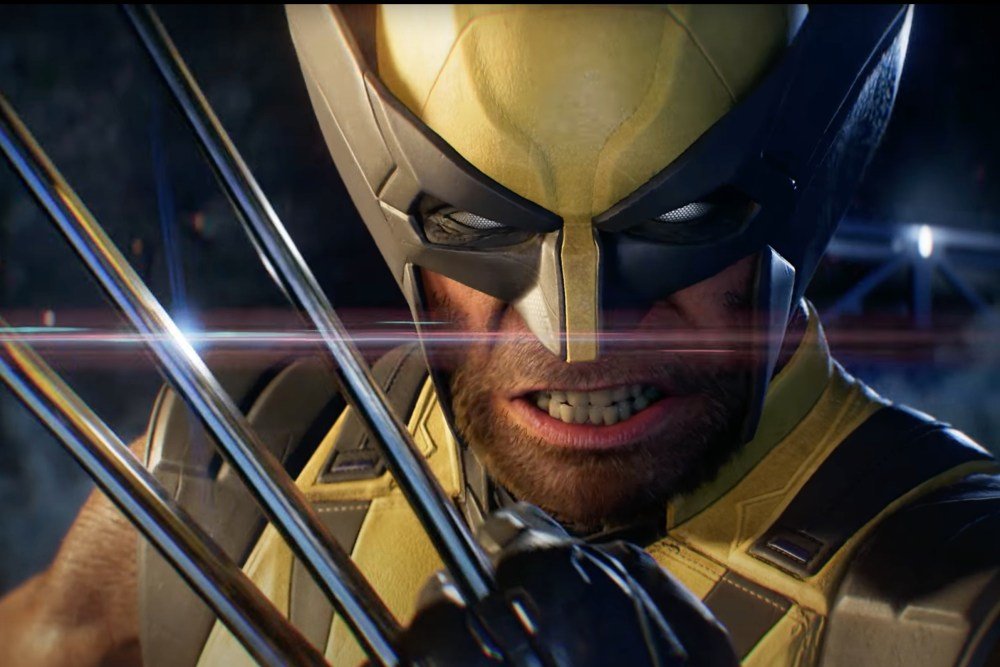
PlayStation’s highly anticipated “Wolverine” video game will launch on Sept. 15.
The titular character, Logan/Wolverine, will be played by Liam McIntyre. Per the studio, the game “intends to deliver the ultimate Wolverine fantasy, with fast, fluid, and ferocious combat; exhilarating, action-packed set pieces, and a gripping story that taps into the core tenets of one of the most compelling comic book characters of all-time.”
“Wolverine” was developed by Sony Interactive Entertainment’s Insomniac Games in partnership with Marvel Games and released its first trailer during PlayStation’s “State of Play” presentation in September 2025.
“We aim to deliver the ultimate Wolverine fantasy built on Insomniac staples like fast, fluid, and ferocious combat; exhilarating, action-packed set pieces; robust accessibility features; and a gripping story that taps into the core tenets of one of the most compelling comic book characters of all-time,” Insomniac Games senior community manager Aaron Jason Espinoza said in a PlayStation blog post first announcing the game. “We’re breaking new ground with Wolverine, yes, but our penchant for telling stories about heroes overcoming colossal odds is as strong as ever. We’re eager to explore Logan’s story with you and tap into his signature spin on heroism, which is much darker and more brutal than you might expect from Insomniac.”
A release date hasn’t been set but SPC is eyeing a theatrical debut in the fall.
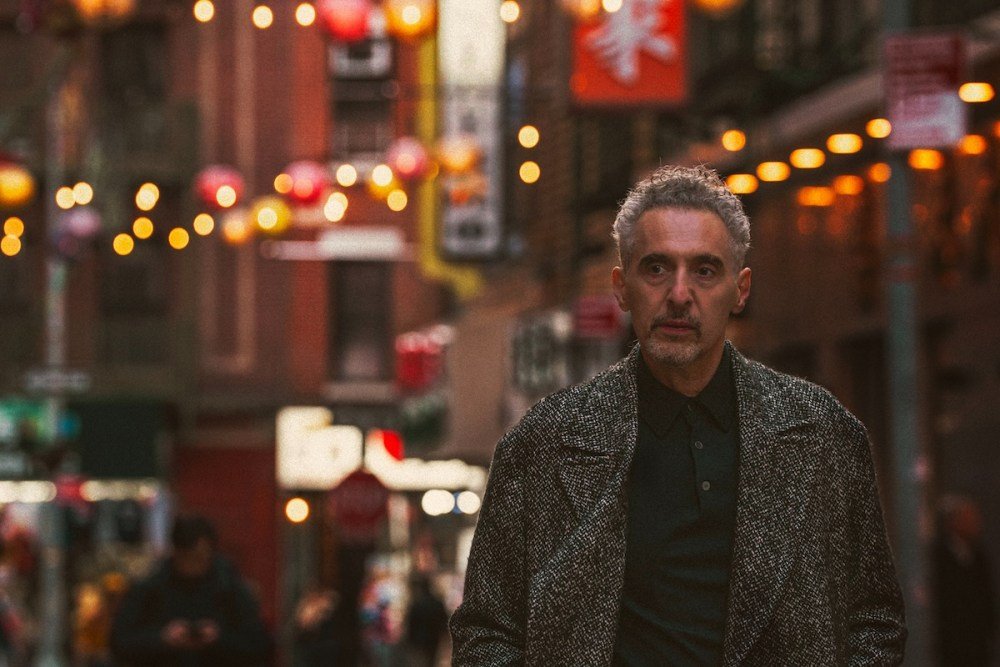
Written and directed by Noah Segan, “Pickpocket” follows Harry (Turturro), a veteran of the craft who struggles to keep up with the changing times — phones are trackable, wallets rarely have cash and guns are hiding in plain sight. When a theft goes awry, Harry embarks on a high-stakes race against time through the Big Apple. Giancarlo Esposito, Tatiana Maslany, Steve Buscemi, Karina Arroyave, Victoria Moroles, Will Price and Jamie Lee Curtis round out the cast.
“Noah Segan’s ‘The Only Living Pickpocket’ is one of the great New York movies ever featuring John Turturro in the finest performance of his career, and it’s a glorious entertainment,” Sony Pictures Classics said in a statement. “It will be a big hit this fall with audiences everywhere.”
In Variety’s review, critic Tomris Laffly shared a similar sentiment and praised “The Only Living Pickpocket in New York” as an “unapologetically local love letter to the Big Apple and its less-illustrious denizens that New York deserves.” She added that “Pickpocket’ feels like a new, minor-key New York classic.”
This is Sony Pictures Classics’ third acquisition out of this year’s Sundance following the crowd-pleasing love story “Ha-Chan, Shake Your Booty” and drama “Bedford Park.”
Segan is best known for working with Rian Johnson on such films as “Looper,” “Brick” and the “Knives Out” trilogy. His last directorial effort was 2022’s “Blood Relatives,” a horror comedy about Jewish vampires. “Pickpocket” was produced by Johnson’s T-Street Productions, which backed a prior Sundance darling in Chloe Domont’s psychological thriller “Fair Play,” which sold to Netflix for a staggering $20 million in 2023.
Segan called Sony Pictures Classics co-presidents Michael Barker and Tom Bernard “legends in their own right” and thanked them for “iconically supporting the sort of sincerity and care we’ve put into the film.”
“As a multi-generational New Yorker, capturing the soul and energy of our city was a requirement for ‘The Only Living Pickpocket in New York.’ No one embodies that vibe more than John Turturro,” Segan said in a statement. “Working alongside his legendary friends and colleagues like Steve Buscemi and Giancarlo Esposito, actors who have defined New York Cinema throughout their careers, gave us the authenticity that New York demands. Alongside our crew, we managed to make discoveries in our own backyard, through fellowship and shared history. It is a great honor to partner with Sony Pictures Classics in bringing the movie to audiences.”
The Warner Bros. Discovery board of directors announced Tuesday that a revised bid from Paramount Skydance of $31 per share could “reasonably be expected” to lead to a “superior proposal” in its potential acquisition deal with Netflix.
Per a press release issued by the David Zaslav-led company, WBD’s board “has not made a determination” as to whether the revised proposal is “superior” to the merger agreement in place with Netflix, and WBD “will engage further” with Paramount to determine if a “company superior proposal” — a term defined within the language of its existing Netflix pact — can be reached. If the board finds such a deal has been received, Warner Bros. Discovery says Netflix will “have four business days after such determination to negotiate with WBD and to propose any revisions to the Netflix transaction.”
The Netflix deal, which includes buying Warner Bros. and HBO Max, is valued at nearly $83 billion. Paramount most recently fielded a $108 billion offer for the entirety of WBD, including its cable channels.
As it stands, Warner Bros. Discovery’s Netflix agreement remains in effect, and the WBD board says it is continuing to recommend in favor of that deal, which is up for a vote on March 20. Warner Bros. Discovery emphasized that there’s “no assurance” that the board will find the transaction superior to the Netflix merger, or “that any definitive agreement or transaction” will come from further discussions with Paramount.
The new Paramount bid will include an increased purchase price of $31 per WBD share, plus a daily ticking fee of 25 cents per quarter beginning after Sept. 30, as well as a $7 billion regulatory termination fee payable by Paramount Skydance if the deal does not close due to regulatory matters, and payment of the $2.8 billion termination fee that Warner Bros. Discovery would be required to pay to Netflix to terminate their existing merger agreement.
Additionally, Paramount’s new proposal would include contribution of additional funding to “the extent needed to support the solvency certificate” required by Paramount Skydance’s lending banks, and a “company material adverse effect” definition that excludes the performance of WBD’s linear networks business.
A representative for Netflix declined Variety‘s request for comment Tuesday.
Monday wrapped a busy seven-day period in which the WBD board sought Netflix’s blessing to engage in discussions with Paramount to “seek clarity” on its “best and final offer.” WBD asked Paramount Skydance “to clarify your proposal, which we understand will include a WBD per share price higher than $31” in a letter from Warner Bros. Discovery CEO Zaslav and board chairman Samuel Di Piazza Jr. to Paramount’s board.
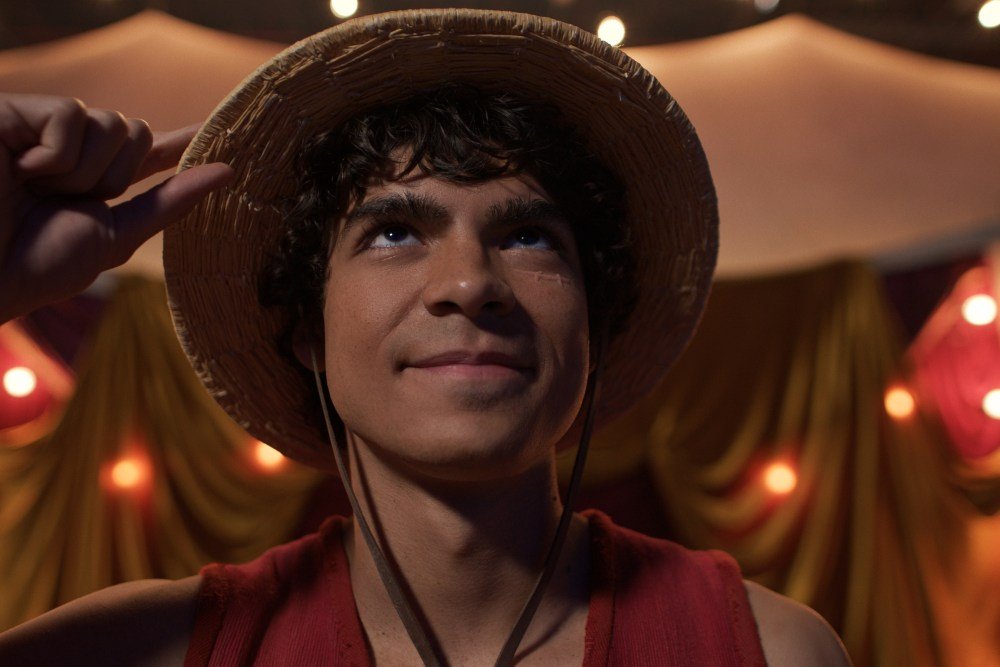
Monkey D. Luffy and his pirate crew are sailing into more uncharted territories: movie theaters.
Netflix will bring the first two episodes of “One Piece” Season 2 to select cinemas on March 10, tied to its streaming release date. The theatrical screenings will take place in the U.S., Canada and Japan, with the North American showings starting at 6 p.m. local time.
Tickets will go on sale Thursday, Feb. 26, at 8 a.m. PT / 11 a.m. ET. Participating U.S. theaters include AMC, Regal, Cinemark, Alamo and Cineplex, with additional theaters in Canada and Japan.
In Season 2, “Luffy (Iñaki Godoy), Zoro (Mackenyu), Nami (Emily Rudd), Usopp (Jacob Romero), and Sanji (Taz Skylar) travel to the Grand Line, a legendary stretch of sea where danger and wonder await at every turn. There, they’ll visit bizarre islands, recruit more allies, and battle formidable new foes as they search for the world’s greatest treasure,” the logline teases.
“One Piece” marks the second streaming series that Netflix has brought to movie theaters, after it packed cinemas with “Stranger Things” on New Year’s. The series finale made more than $25 million at the box office, with more than 1.1 million ticket vouchers sold. AMC made $15 million from food and drink sales alone.
Godoy, Mackenyu, Rudd, Romero, Skylar and Charithra Chandran star in the live-action adaptation of the beloved anime. Additional cast members include Anton David Jeftha, Brendan Sean Murray, Callum Kerr, Camrus Johnson, Clive Russell, Daniel Lasker, David Dastmalchian, James Hiroyuki Liao, Jazzara Jaslyn, Joe Manganiello, Julia Rehwald, Katey Sagal, Lera Abova, Mark Harelik, Mark Penwill, Mikaela Hoover, Rigo Sanchez, Rob Colletti, Sendhil Ramamurthy, Sophia Anne Caruso, Ty Keogh, Werner Coetser and Yonda Thomas.
Matt Owens and Joe Tracz are the co-showrunners, executive producers and writers of “One Piece” Season 2. Other executive producers include Eiichiro Oda, Marty Adelstein and Becky Clements through Tomorrow Studios, Tetsu Fujimura, Chris Symes, and Steven Maeda.
The Warner Bros. Discovery board of directors announced Tuesday that a revised bid from Paramount Skydance of $31 per share could “reasonably be expected” to lead to a “superior proposal” in its potential acquisition deal with Netflix.
Per a press release issued by the David Zaslav-led company, WBD’s board “has not made a determination” as to whether the revised proposal is “superior” to the merger agreement in place with Netflix, and WBD “will engage further” with Paramount to determine if a “company superior proposal” — a term defined within the language of its existing Netflix pact — can be reached. If the board finds such a deal has been received, Warner Bros. Discovery says Netflix will “have four business days after such determination to negotiate with WBD and to propose any revisions to the Netflix transaction.”
The bid will include an increased purchase price of $31 per WBD share, plus a daily ticking fee of 25 cents per quarter beginning after Sept. 30, as well as a $7 billion regulatory termination fee payable by Paramount Skydance if the deal does not close due to regulatory matters, and a payment of the $2.8 billion termination fee that Warner Bros. Discovery would be required to pay to Netflix to terminate their existing merger agreement.
Additionally, Paramount’s new proposal would include contribution of additional funding to “the extent needed to support the solvency certificate” required by Paramount Skydance’s lending banks, and a “company material adverse effect” definition that excludes the performance of WBD’s linear networks business.
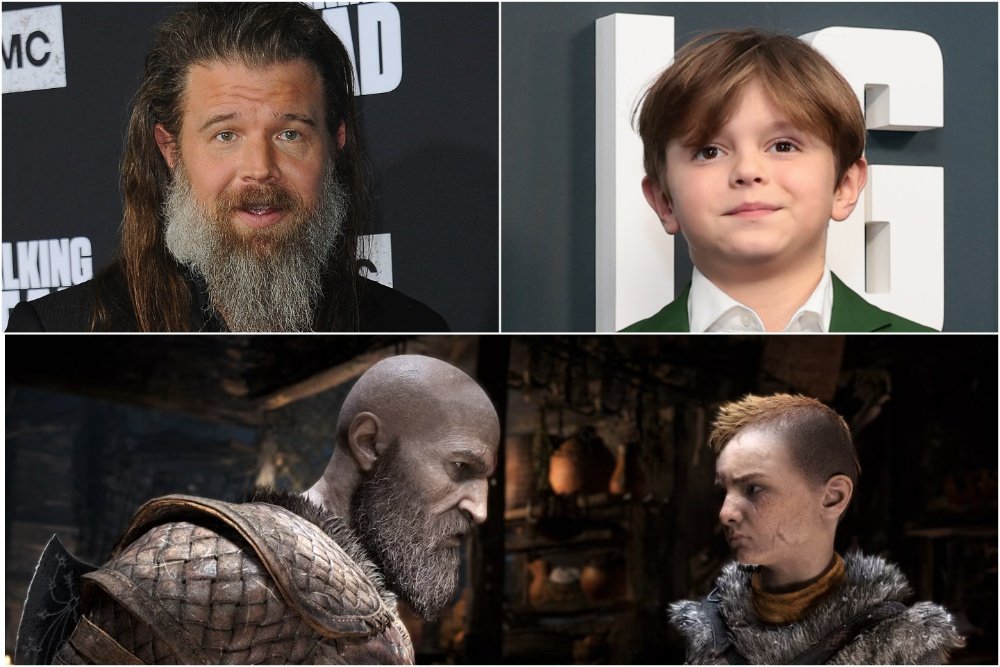
One of video games’ most famous and angriest characters is finally being brought to life. PlayStation’s “God of War” series is being adapted by Amazon Prime Video, and Kratos, Atreus and several of the Norse god characters have been cast.
The upcoming show follows the 2018 “God of War” game, which brought the tragic Greek general Kratos into the frigid Norse wilderness. After brutally killing off nearly every Greek god in PlayStation’s hit video game series, Kratos settles down with a new wife and son, Atreus, in the Norse realm of Midgard. However, after the death of his wife, Kratos is forced to develop a closer bond with his son if they’re to survive attacks from the Norse gods and Ragnarok, the fabled end of the world.
Kratos will be played by Ryan Hurst, who’s recently starred in “The Walking Dead,” “Paradise City” and “The Mysterious Benedict Society.” Hurst is no stranger to the “God of War” video game universe; he voiced Thor in the sequel “God of War: Ragnarok” in 2022. Young newcomer Callum Vinson will star as Atreus, while “Severance” actor Ólafur Darri Ólafsson plays Thor, Mandy Patinkin is Odin and Ed Skrein is Baldur.
Prime Video’s series is the first time “God of War” makes the jump to live-action, and it follows the success of the streamer’s other video game show “Fallout.” There’s no lack of video game adaptation on TV or the big screen, with HBO’s “The Last of Us” returning for a third season and films like “The Super Mario Galaxy Movie,” “Street Fighter,” “Resident Evil” and “Mortal Kombat 2” hitting theaters in 2026.
See the live-action “God of War” cast below.
Kratos (Ryan Hurst)
Kratos was first introduced in the 2005 video game “God of War,” set in ancient Greece. He’s a brutal Spartan warrior who was tricked by the god Ares into murdering his own family. Destroyed by grief, Kratos goes on a blood-filled quest for vengeance and murders scores of gods, heroes and monsters across three main games, two spinoffs and a prequel. He’s cursed to wear his family’s ashes on his skin, turning it pale white and earning him the nickname, the Ghost of Sparta. His main weapons are the Blades of Chaos, fiery dual swords that are chained to his wrists.
Eventually, Kratos completes his revenge quest (after surviving an apparent mortal wound in “God of War III”) and settles down in the quiet, snowy Norse realm of Midgard. In the 2018 “God of War” game, he’s remarried to a woman named Faye (who’s recently died) and has a young son named Atreus, who’s weak and must learn survival skills from his father. Instead of his Blades of Chaos, Kratos now wields the Leviathan Axe, which magically returns to him after it’s thrown, much like Thor’s hammer Mjolnir.
Ryan Hurst, known for his roles in “Sons of Anarchy” and “The Walking Dead” on TV and for voicing Thor in “God of War Ragnarok,” brings the video game icon to life in live-action. Terrence C. Carson and Christopher Judge had previously voiced Kratos.
Atreus (Callum Vinson)
Young newcomer Callum Vinson plays Kratos’ son Atreus, who’s more gentle and sickly compared to his strong, gruff father. Atreus is a skilled archer and is sensitive toward animals, but he’ll need to learn some hard skills from his father in order to survive in the harsh world of Midgard. He and his father are on a mission to spread his late mother’s ashes. Sunny Suljic (“Lurker,” “Mid90s”) played Atreus in 2018’s “God of War” and its sequel “Ragnarok.”
Thor (Ólafur Darri Ólafsson)
The god of thunder first appeared in the post-credits teaser at the end of “God of War” and played a major villain role in “Ragnarok.” With his hammer Mjolnir, Thor is a massive, talented fighter who goes up against Kratos. “Severance” actor Ólafur Darri Ólafsson plays Thor after Ryan Hurst, who now plays Kratos, voiced him in “Ragnarok.”
Odin (Mandy Patinkin)
Odin is the All-Father of the gods, ruler of Asgard and primary villain in the Norse “God of War” games. Despite his age, Odin is a cruel tyrant who spies on people across the nine realms with his all-seeing ravens. He’s played by “Criminal Minds” and “Homeland” star Mandy Patinkin after Richard Schiff (“The West Wing”) voiced him in “Ragnarok.”
Baldur (Ed Skrein)
Image Credit: Bob Wolfenson
Baldur is the impervious villain of “God of War” and one of Odin’s sons. He shows up at Kratos’ doorstep one day and sets off the events of the game after a destructive fight with the Greek hero. Baldur is unable to feel any pain (or pleasure), which makes him a particularly tough god to kill. He’s also Thor’s brother and the first Norse god that Kratos encounters.
Heimdall (Max Parker)
Heimdall is the Norse god of foresight, a son of Odin and a villain in “God of War Ragnarok.” Arrogant to a fault, he’s able to predict people’s moves before they make them, making him a skilled fighter. He also holds Gjallarhorn, a magical horn that signals the beginning of the end of the world, aka Ragnarok, when blown. Max Parker (“Boots,” “Emmerdale”) takes over from Scott Porter (“Friday Night Lights,” “Ginny & Georgia”), who played Heimdall in the second Norse game.
Sif (Teresa Palmer)
The goddess Sif is known for her long, golden hair and being Thor’s wife. The couple have three children,Thrúd, Modi and Magni.
Mimir (Alastair Duncan)
Alastair Duncan reprises his role as Mimir, a wise ex-advisor to Odin who imprisoned him inside of a tree. When Kratos and Atreus meet Mimir, they free him by decapitating him and take his talking, story-telling head on their journey.
Brok (Danny Woodburn)
Brok is the blue-skinned brother to Sindri, and the two are the most talented blacksmiths in the realms. They become allies to Kratos and Atreus once they cross paths.
Sindri (Jeff Gulka)
Sindri is a dwarven blacksmith who creates powerful weapons, like Mjolnir and the Leviathan Axe, with his brother Brok. He’s much more anxious and germaphobic than his tough brother.
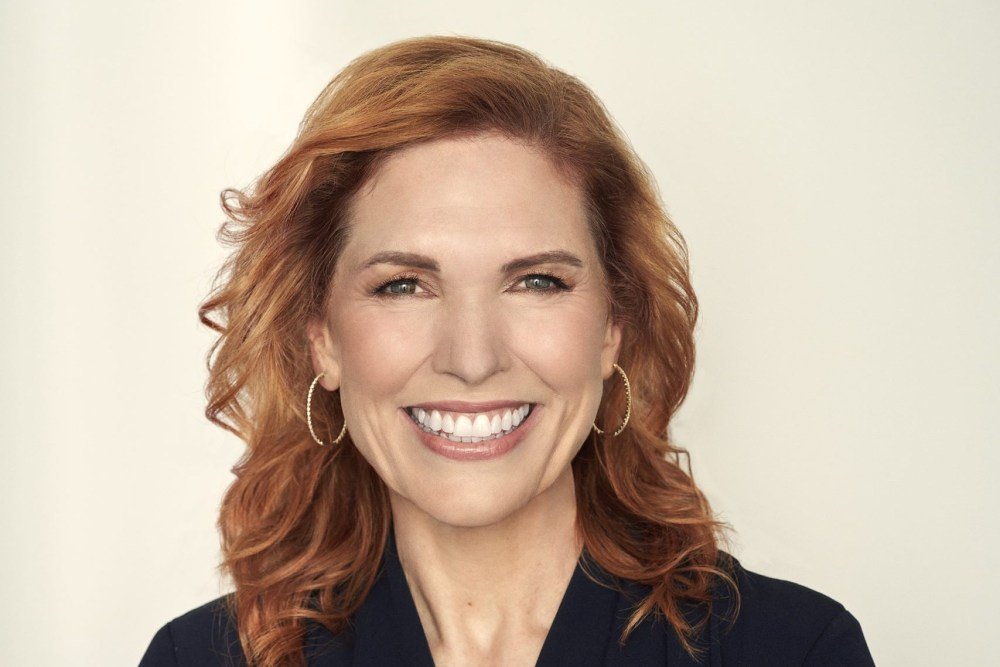
Kristina Schake will end her four-year run as Disney‘s chief communications officer next month as Bob Iger wraps his tenure as CEO.
Schake’s departure from the role of the Mouse House’s top communications strategist is not a surprise given the C-suite transformation under way at Disney. Earlier this month, Josh D’Amaro, a veteran of Disney’s parks and experiences unit, was elevated to the CEO, which will formally take effect on March 18 at Disney’s annual shareholders meeting. Dana Walden, at present co-chairman of Disney Entertainment, will be elevated to president and chief creative officer at the same time.
Schake, whose background is in politics and public service, came to Disney in June 2022 amid the turmoil of Bob Chapek’s two and a half years as CEO, in between Iger’s first and second stints in the job. Her predecessor, Geoff Morrell, was unpopular internally and connected to several gaffes that didn’t help Chapek’s rocky time at the helm. Schake kept a low profile but was respected internally for the depth of her experience and for establishing better coordination among the company’s many communications executives.
When Iger hastily returned to the CEO post in November 2022, there was speculation that he would make a change at the top of Disney’s communications hierarchy. But Schake won his trust.
“Kristina is an accomplished and respected communications leader, and Disney has been fortunate to have her expertise and insight during a dynamic period that has demanded strategic clarity and judgment,” Iger said. “Kristina is a skilled strategist, a trusted advisor, and an admired leader whose positive impact on Disney will be lasting. She strengthened how the company aligns communications with business and strategic priorities, ensuring critical stakeholder audiences are engaged with discipline and purpose. I am grateful for her partnership and friendship, her counsel, and her innumerable contributions.”
Schake, who was also senior executive VP, joined Disney after working for the Biden administration as a key communications strategist related to COVID-19 pandemic issues as vaccines and other preventative measures were rolled out. Earlier, she worked as a top aide to first lady Michelle Obama during the Obama administration. She also served as deputy communications director for Hillary Clinton’s 2016 presidential campaign. And she is a co-founder of the American Foundation for Equal Rights, which fought against California’s same-sex marriage ban in the years before the 2015 Supreme Court decision established the legality of such marriages nationwide.
Schake’s employment contract with Disney was extended last October through June 2027. There’s no word yet on a successor.
“I am so thankful to have had the opportunity to serve the Walt Disney Company during such a pivotal chapter in its history,” Schake said. “The company I joined in 2022 was in a vastly different place from where it is today, both reputationally and from a business perspective, and I am proud of the work our worldwide communications team has done to support Bob as he has put Disney on a steady course for growth for the next generation of leaders. With that mission now successfully completed, I’m looking forward to my next challenge. Working alongside Bob, his management team, and so many exceptional communications professionals has been a privilege I will carry with me forever, and I leave with tremendous respect for this institution and great confidence in Disney’s future under Josh D’Amaro and Dana Walden.”
Here are the full memos sent Tuesday by Iger and Schake to Disney staffers:
Dear Fellow Employees and Cast Members,
I’m writing to share that Kristina Schake, Senior Executive Vice President and Chief Communications Officer, will be departing The Walt Disney Company after March 18, coinciding with the end of my tenure as Chief Executive Officer.
Since joining Disney in 2022, Kristina has been an accomplished and respected leader and trusted advisor throughout a period of significant change for our company and our industry. Disney has been fortunate to have her expertise and wisdom during the most consequential moments over the past four years.
Beyond her strategic expertise, Kristina has built and strengthened Disney’s outstanding global communications function into the world-class organization it is today, positioning it as a critical partner to our businesses and leaders. I am personally grateful for Kristina’s partnership and friendship, and for the lasting impact she has made at Disney. Please join me in thanking her for her leadership and wishing her the very best in her next chapter. We will share more information about future communications leadership in due course.
Sincerely,
Bob
Team,
I wanted to write to you directly and simply say thank you. Working alongside this outstanding communications team has been one of the great privileges of my career.
The past four years have been among the most consequential in our company’s history, and I could not be more proud of how you showed up for every moment. You brought clarity, creativity, and thoughtful strategy to the work, helping to communicate and advance Bob’s strategic priorities in ways that employees, investors, reporters, and consumers could understand and believe in.
As Disney begins its next chapter, the company is fortunate to have outstanding leaders in Josh and Dana guiding the way. I am excited to see the stories you will help tell and the impact you will continue to have as that chapter unfolds. This team’s talent, care, and creativity are exactly what this moment calls for, and I know you will shape what comes next in remarkable ways.
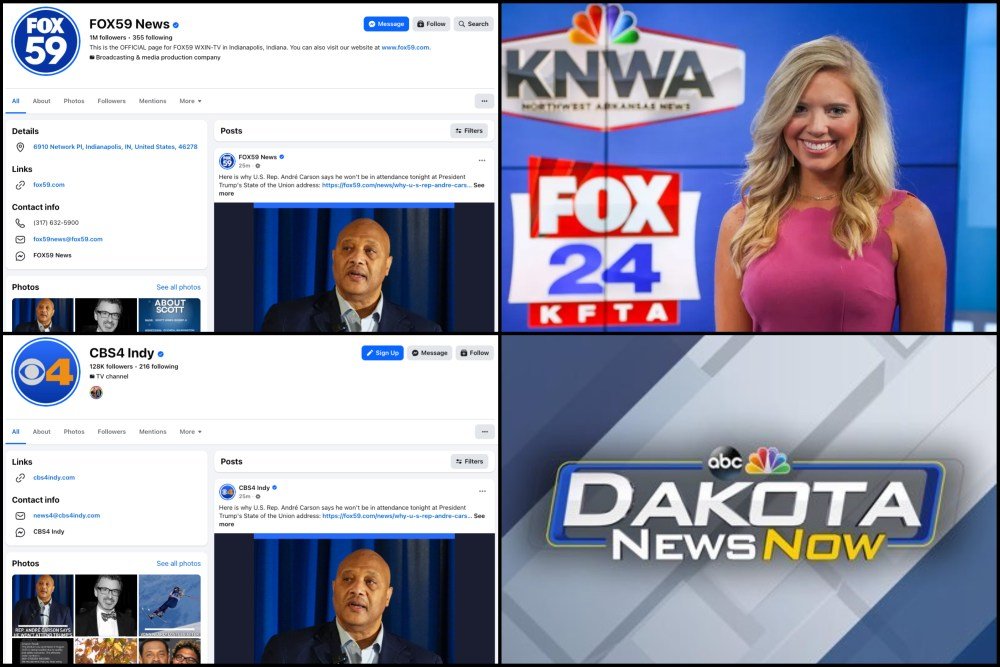
As the FCC explores raising station cap limits and station groups aim for more mega-mergers — including Nexstar‘s proposed acquisition of Tegna — a new report commissioned by DirecTV shows that markets with a Big Four duopoly, triopoly or even quadropoly have been left with fewer newsrooms and less diversity of voices.
“Recent history shows that when broadcasters acquire a second, third, or fourth station in a local market, they consolidate news operations, leaving one newsroom where there had been two, three, or four, thus decreasing the quality of local news,” wrote DirecTV attorneys Michael Nilsson and Annick M. Banoun in a letter sent today to the FCC. “This is not a speculative claim. In fact, in the context of the proposed Nexstar-Tegna transaction, we’ve filed evidence demonstrating that Nexstar, for example, has done this with every duopoly or triopoly it possesses.”
DirecTV looked at every Nielsen DMA (designated market area) with Big Four affiliates operated under the same management team (excluding ABC, CBS, NBC and Fox O&Os), and found that there are 98 duopolies, 15 triopolies and three quadropolies. (And DirecTV didn’t even include combos with non-Big Four affiliates like The CW or My Network TV — even though a great number of Nexstar stations are affiliated with The CW, which the company owns. And DirecTV didn’t include stations that are considered “sidecar operations,” where companies like Nexstar work with stations that are owned by other entities. That would have made the marked decrease in local news even more telling.)
And as one might expect, according to DirecTV, those co-managed stations consolidate their online news to a single site, utilize one news director across all stations and share journalists and anchors across those stations — instead of operating them as distinct news operations.
“By our calculations, in the vast majority of markets in which any broadcaster holds a duopoly, triopoly, or quadropoly today, they have consolidated news operations,” the DirecTV filing said. “In the majority of duopolies, triopolies, and quadropolies, the co-owned stations offered essentially the same local news.”
To create its study, DirecTV first identified Big Four affiliate duopolies, triopolies and quadropolies, across station groups including Nexstar, Sinclair, Scripps, Hearst, Lilly, Gray, Tegna and more. It looked at station websites to see if more than one station was referenced, if there was a shared news director and if there was shared news talent. Among all broadcast duopolies and beyond, 90.5% of news sites were shared, 98.2% of news directors were shared and 97.3% of news talent was shared.
“The evidence conclusively demonstrates that broadcaster consolidation reduces competition, output, and quality in local news. Accordingly, we urge the Commission to reject broadcasters’ proposals that would create more duopolies, triopolies, and quadropolies and decrease local news content,” Nilsson and Banoun wrote.