Tag: Entertainment-Variety

  • ‘Under Salt Marsh’ Creator on Jackie’s Pregnancy, Possible Season 2 and Picking the Murderer: ‘I Want People to Say, “Of Course, Holy Sh-t, It’s [SPOILER]”‘

    ‘Under Salt Marsh’ Creator on Jackie’s Pregnancy, Possible Season 2 and Picking the Murderer: ‘I Want People to Say, “Of Course, Holy Sh-t, It’s [SPOILER]”‘

    SPOILER ALERT: This article contains major spoilers for “Under Salt Marsh,” which had its season finale on Friday.

    “Under Salt Marsh” is one of Sky Atlantic’s biggest non-HBO drama pushes in recent years. The original six-part series (Sky has yet to confirm where it’ll land in the U.S.) stars “Yellowstone’s” Kelly Reilly as Jackie, a detective turned teacher with an unfinished case that comes back from the dead when, late one night after a secret tryst, she stumbles across the lifeless body of one of her pupils in a ditch. Soon, it’s confirmed that he’s been murdered, making him the second child to die in the small Welsh community of Morfa Halen in three years. With a storm threatening to destroy vital evidence – as well as the coastal village itself — Jackie teams up with her old police partner, Detective Eric Bull (Rafe Spall), to try and find the killer.

    Ahead of the season finale on Feb. 27, Claire Oakley, who created, co-wrote and co-directed the series, sat down with Variety to talk about her inspiration for “Under Salt Marsh,” if Mac was always going to be the killer and whether audiences will see Jackie and Bull team up again for a second season.

    Where did the idea for the show originate?

    I really wanted to set something [in North Wales], because I’d really fallen in love with the area, and particularly the salt marshes. They’re such a rare and unique environment.

    And I came up with the idea that if we had a detective series, then we could get really into the fine detail of these marshes, and suddenly the ecology and the salt content in the water and all of these little things would become really vital.

    This is a bit conceptual, but the salt marshes protect us. They protect us from the sea level rise from the storms. So they’re very important if we want to continue living here, because our island is getting smaller. And so [there as] this idea of protection and “What if we don’t protect the things that we need to?” What if we don’t protect the future generations against potential horrors? I started to think about the plot in that way, like, how would this detective story, this murder mystery, reflect that idea?

    Claire Oakley and Kelly Reilly on the set of “Under Salt Marsh” (Courtesy of Sky Atlantic)

    One early scene a lot of viewers have discussed is in Episode 1, when Jackie insists on telling Cefin’s parents about his death rather than letting the police do it. Why did you make that choice?

    I liked the idea that Jackie is often acting on instinct and that is probably what made her ultimately leave the police and perhaps not be the best type of person to join the force. In some ways, she’s a very good detective. In other ways […] she can’t cope when things get personal. And I wanted to put her in a position early on where, as a human being, maybe she felt it was right that she had to tell the parents as soon as she could, they were going to be the first people that she would go to and she wasn’t going to wait for the police, who, in this particular community, might take quite a long time to get there. But as it’s happening, [she’s] realizing, like, “oh […] it’s kind of a very irresponsible thing to do.” I was interested in these moments where she’s not responsible, but she’s responsible emotionally, on a human level.

    I also really liked in that scene the idea that she turns up covered in mud and shell-shocked and pale and obviously in distress. And their response to her is like, maybe that’s not abnormal [for Jackie]. Like, “We thought you were doing well, Jackie. Sit down and I’ll call your dad.” It was a way to understand that she had a complicated past.

    Viewers have also been remarking on Jackie’s big age gap relationship with Dylan (played by Harry Lawtey). Was that written into the script or was it a result of casting Lawtey?

    It was written in. I felt that [worked] for Jackie, the idea of a younger boyfriend who might not demand from her all the things that someone her own age might demand — Like, are we going to move in together? What’s going to happen? Is this a real relationship?

    She could get love and passion and sex from this person, while also not having to give much of herself and not have to take responsibility in that way.

    Was there a particular intention behind making Jackie pregnant?

    I liked this idea that she’s stuck in the past. She can’t move on until she finds out what happened to Nessa — a little bit like the whole community, they’re already eroded by this awful thing that has happened — but she, in particular, can’t. On the surface she’s got a new job, she’s got a new career, she’s doing it. But the pregnancy allowed me to suggest that all is not quite well. If you are happy and you feel steady about your future, there’s no reason not to tell your boyfriend that you’re pregnant or really anyone else.

    I was actually also pregnant as I was writing it, so that almost certainly gave me some insight.

    In Episode 6 where the storm has hit the village and Jackie is chasing after Dylan, there’s a huge wave that hits his car. How did you create that scene?

    We built the whole center of the village. The chip shop, the butcher and that whole T-junction, where that wave occurs, is all a set in Dragon Studios in Cardiff. It was all built outside on the back lot of the studios, and we had to create this special concrete pad that had to take the weight of all of the set and also the water.

    We had a first level of water. When Jackie and Dylan are there, it’s kind of knee-high. The cars can still drive through it. So that was the first level of water and we were working in that water. It was January. There were like 1,000 conversations about, “What if the water freezes?”

    But we couldn’t heat the water because then it starts to steam. Then there were endless conversations about, “How long could someone — either a member of the cast or crew — be stood in this almost freezing water at a time? Were we going to be able to shoot a 6-page dialogue scene?”

    And then that wave. We had this huge kind of slide, essentially, with massive buckets of water at the top on cranes, and we tipped them down, and so they shot out across. The car was rigged on a winch. So as the water came, we winched the car backwards, because the water was never going to be powerful enough to move the car in reality.

    A lot of what you see was done in camera but then the water was augmented to be slightly bigger — so that we could believe it would push the car — in VFX.

    Rafe Spall as Detective Eric Bull in “Under Salt Marsh” (Courtesy of Sky Atlantic)

    And what about the scene when Mac has locked Bull in the room, which is flooding with water, until James [Osian Emlyn] stumbles across him and lets him out?

    That was actually two different sets. Inside the room, when it’s filling with water, we had a hydraulic set that was a three-sided room on a hydraulic platform that went up and down in a tank in like a big swimming pool. So as it’s filling with water, we’re just slowly lowering the set into the water as Bull does his take.

    There was no door in that set. So the opening of the door was in another set that we built where it was the outside of the room, that kind of corridor-y bit and the stairs. And when [James] opened the door, in real life we had a stunt person.

    Was Mac always going to be the murderer?

    Not really, no. I was commissioned by Little Door to write the pilot, and that was before we took it to Sky.
    I hadn’t planned out the whole series. I think I had a brief outline […] and that these were the things I wanted to explore with the killer and it needed to be linked to the environmental reasons why he did it or she did it. But I didn’t have anyone pinpointed. And then Sky came on board and they wanted a second episode written before they decided on whether to greenlight it or not.

    We did a small writers’ room. It was me and Jonathan Harbottle, who came on board to write Eps 3 and 5 at that point, and we sketched out just the first half, so the next two episodes, so Eps 2 and 3 together, and then I went away and wrote Ep 2, and we still didn’t know who the killer was. We still hadn’t addressed the second half of the series. And so I wrote Ep 2, had [my] baby, we got greenlit, John wrote Ep 3, and then we realized we had to figure out the second half of the series. And so we did another writers’ room, and that’s when Nikita Lalwani came on board, who wrote Ep 4. We did it in my sister’s house, she lives one street away from me, so that I could be brought the baby to breastfeed every three hours while we were doing the room. And I think we did 8 days and we planned out the second half of the series.

    It wasn’t ideal, in a way. In some ways it meant it happened very organically, the story. In other ways, it made things hard, because we’d already had three eps written without really knowing the ending.

    You then have to go back to the beginning, and re-work things in and feed things in. Like, we knew with Mac, once we’d settled on him, then it’s about protecting your reveal but when he’s finally revealed, I didn’t want people to say, like, “What the fuck?” I want people to say, “Of course, holy shit, it’s him. How do I not see that?” So it needs to add up and not be too wacky.

    When you have a story about two kids being murdered, there’s the possibility it’s sexually motivated. But Nessa and Cefin are both killed – directly or indirectly – because of the toxic waste. Did you ever consider giving Mac a different motivation?

    No, I definitely didn’t want to explore a sexually motivated crime, or even a crime of passion or a psychopath or those sorts of things. I was interested in exploring the idea that someone “normal,” if any of us were in that specific situation, we may have done the same thing. That it was just someone who was under a huge amount of pressure, whose idea of life had become skewed because of that. And it was a bit of a self-protection; he ultimately kills those children in order to protect his reputation and his status in the community and what he feels he’s doing for good. He’s building this seawall, he’s protecting this community, but at what cost? “But at what cost are we doing these things?” was the idea that I was trying to dig into. So I wanted the crime and the killer to represent those themes right from the beginning.

    Is there a likelihood we’ll see Jackie and Bull reunite for a second season?

    We’re exploring what a second season might look like. We’re looking at different options of how we could take it forward, if it got commissioned.

    This interview has been edited and condensed for space and clarity.
  • Chris Hemsworth Says Moving Out of L.A. Was the ‘Greatest Decision’ Because ‘Nothing Was Shooting There’ and ‘You’d Come Home’ to Paparazzi

    Chris Hemsworth Says Moving Out of L.A. Was the ‘Greatest Decision’ Because ‘Nothing Was Shooting There’ and ‘You’d Come Home’ to Paparazzi

    Chris Hemsworth appeared on a recent episode of the “SmartLess” podcast while continuing to promote his latest movie, Amazon MGM’s “Crime 101,” and spoke honestly about his decision to move out of Los Angeles with his family during the height of his Marvel fame. Hemsworth and his wife, actor Elsa Pataky, were five years into their marriage when they decided to leave L.A. and relocate their family to Hemsworth’s home country of Australia.

    “It was right around the time my boys were born, and it was just, we kind of were set up in L.A. and not enjoying it, you know?” Hemsworth said. “Like nothing was shooting there. We were filming kind of everywhere else and then… you’d come home and paparazzi and all the sort of the trappings of, you know, living in that space.”

    Hemsworth said moving out of L.A. was the “greatest decision,” one that did not disrupt his professional career as an actor since he was also traveling elsewhere to shoot a lot of his projects.

    “You know, when you come back from work, you wanna go on a holiday? Like coming home for me is — it feels like a holiday,” Hemsworth said of living in Australia. “We have a big farm and horses and motorbikes and surf.”

    The actor’s exodus from Hollywood was years before the COVID pandemic, and Hollywood strikes even further reduced the amount of productions being shot in Los Angeles. As Variety reported last month, L.A. production days for film, TV and commercials fell 12.3% in the final quarter of 2025 compared to the previous one. That continued a downward trend that has persisted since 2022. For 2025 overall, production volume was about half what it was in 2019.

    Hemsworth made his Marvel debut as Thor in 2011, two years after his Hollywood debut as George Kirk in J.J. Abrams’ 2009 “Star Trek” reboot. He had three Marvel sequels (“The Avengers,” “Thor: The Dark World” and “Avengers: Age of Ultron”) under his belt when he decided to leave L.A. for Australia. He continued to act in major Hollywood productions like 2016’s “The Huntsman: Winter’s War” and “Ghostbusters.” Hemsowrth will be back as Thor at the end of this year with December’s “Avengers: Doomsday.”

    Listen to Hemsworth’s full interview on the “SmartLess” podcast in the video below.

  • Bruno Mars Makes a Leisure Suit of a Record With ‘The Romantic,’ Doubling Down on Silk Sonic’s Hermetically Sealed ’70s Revivalism: Album Review

    Bruno Mars Makes a Leisure Suit of a Record With ‘The Romantic,’ Doubling Down on Silk Sonic’s Hermetically Sealed ’70s Revivalism: Album Review

    When it rains reigning male pop superstars, it pours. The boys are back in town, and two of the three or four biggest guys in the recording business, Bruno Mars and Harry Styles, are coincidentally releasing albums on back-to-back weekends, as if teaming up to storm the barricades mostly held in recent years by pop’s girl bosses. So it’s interesting to see what these two alphas are bringing along as stylistic arsenals in their attempts to reassert some dominance, or at least parity. Coming next week is Styles’ intriguingly titled “Kiss All the Time. Disco, Occasionally,” and we’ll find out soon enough whether Harry means to use the D-word there literally or just figuratively.

    But for Mars’ first solo album in 10 years, “The Romantic,” it is as if disco never happened. It is a time machine back to the mid-1970s, just before dance music took over, with a heavy, heavy emphasis on retro-soul balladry. The album ends with a song called “Dance With Me,” but it’s a song dedicated to slow dancing, just like the surprisingly slow-simmering track that opens the album. When the pace does get upped a couple of times, it’s to bring us up to the tempo of the O’Jays, not to snap us back to the time of J. Cole. There’s not a moment on the whole nine-song collection that sounds like it was minted any more freshly than 1976. It’s already been well-established that the album’s first single (and one of its few bangers), “I Just Might,” reminds folks a little of Leo Sayer’s “You Make Me Feel Like Dancing,” which came out that year. So, truly, here, Mars is Bicentennial Man.

    Given how unhappy many people are with 2026, a trip headed exactly 50 years back into the past will be a welcome ride for a lot of hitchhikers. But will you ultimately find “The Romantic” compelling as anything much more than a mood ring… er, mood piece? The best predictor for that will be how much you loved or liked “An Evening With Silk Sonic,” the similarly throwback album Mars put out with Anderson .Paak four and a half years ago. (How time flies when you’re arresting it!) Paak has moved on, but Mars is remaining committed to the bit — really, really committed. It takes some nerve, after a full decade of not putting out a solo album, when that last solo record was a Grammy winner for album of the year (“24k Gold”), to return with something that is completely beholden to styles that went out of fashion before you were born. But it’s slightly less nervy if you think of it more in terms of sticking with the formula that last brought you an album-sized smash. This is “Silk Sonic II,” for most intents and purposes.

    I am part of the target audience for “The Romantic,” as an admitted nostalgist who thinks the 1970s was a golden era for just about everything but gas lines. But I’m also not part of the target audience, inasmuch as I don’t prefer the homages to past eras to be completely hermetically sealed, without even slight nods to what has transpired since, let alone an attempt to bring them a little bit into the future. I think “The Romantic” is actually better than “An Evening With Silk Sonic,” in several quantifiable ways, including its bold emphasis on ballads, where you really get to hear Mars test what he can do with those pipes, which is a lot. And there’s something even craftier about how well he, his extremely talented co-producer, D-Mile, and his band, the Hooligans, have replicated the exact feel of a great era in record-making. But, among these two albums, it does have the disadvantage of coming second. The album is great as a stunt, but, slightly refined or not, it’s the second time in a row doing what amounts to the same stunt. You can admire his ability to reverse-engineer the cool sounds of his forefathers, but that doesn’t mean you’re going to be moved by it.

    Especially when, once you get past admiring the encyclopedic knowledge of ’70s flourishes, you realize there’s not really much in the way of great songs here. Nearly everything sounds like a possible candidate for a followup single to “I Just Might,” but nothing jumps out as the pick. There’s actually a decent amount of sub-genre variation from song to song, but emotionally, it’s kind of a flat-line, with the most perfunctory lyrics you will hear on any album this year. There never seems to be even a remote possibility that Mars is telling us anything about his real life amid all the fill-in-the-blank cliches (“The fire don’t burn like it used to, girl”; “Let’s go to the moon a little later / Hope your wings get to fly”; “Turns out you don’t need a rocket ship, no / To find your own shooting star”). So, in the age of hyper-autobiographical pop, “The Romantic” feels weirdly and completely impersonal, unless you consider extreme pastiche a personality. It’s like a fun costume party where you never find out who actually attended. Although, to be fair, Curtis Mayfield is a hell of a mask, right?

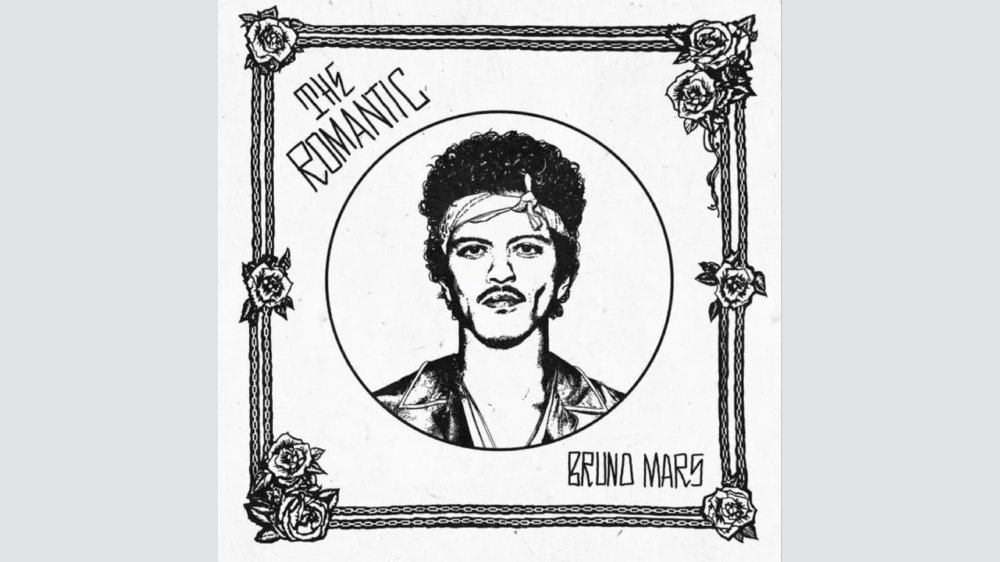
    One thing that’s kind of interesting, though, is a Latin current that ebbs and flows through a few pieces of the record, starting with the album cover itself, which features hand-written lettering that is meant to remind oldsters of a golden age of Chicano rock. The first couple of tracks seem to be headed toward a concept album in that direction. “Risk It All” is the aforementioned kick-off that really does feel like a bit of a risk, not just because it starts off the album on a slow, pleading note with acoustic guitar plucking and some of Mars’ most supple vocals. There are horns through a lot of the record, but in this number, they’re played as mariachi horns. (It also has arguably the album’s most vapid lyrics — “I would swim across the sea just to show you / Sacrifice my life just to hold you,” et al. — but never mind those.) He ups the Latin quotient with the tenser rhythms and strings and congas of the second track, “Cha Cha Cha”; maybe the title is a giveaway. (On the non-Latin tip, it also interpolates Juvenile’s’s 2004 “Slow Motion,” a nice combo.) But these Latin flavors turn out not to be a constant through the rest of the album. They do return in one of the most up-tempo tracks, “Something Serious,” a fairly direct cop of “Oye Como Va,” which is fun until you start thinking about how the chorus is not that special and you’d rather be listening to “Oye Como Va.”

    After the third number, “I Just Might,” snaps you to attention with its booty-shake-or-go-home machismo, the fourth, “God Was Showing Off,” is when it really settles into the groove where Mars is most comfortable these days, bridging the gap between Motown and Philly soul. “Why You Wanna Fight?” almost sounds like a parody of some of these genres, with a backing chorus repeatedly and dramatically cooing whyyouwannafight as a single word, in-between the singer’s more extenuated phrases. “On My Soul” and “Nothing Left” bring in some welcome electric guitar licks. Most of the tracks that follow will make you think of the kind of vintage Top 40/AC soul where it’s summertime and the listenin’ is EZ.

    Overall, it’s an album that seems designed to be background music, which is not entirely meant as an insult; there’s an art to making music that can be put on at literally almost any party and suit the tastes of grandmas as well as kids, and serve that function for a couple of years or more. But if you were planning to foreground “The Romantic,” this one may have a more limited shelf life. As a leisure suit of a record, this is not really album-of-the-year material, like “24K Magic” was. It’s not even meant to be that kind of tour de force, to be fair, but it’s also probably not meant to be quite this in-one-ear-and-out-the-other. How can vocals be as bountifully impressive as Mars’ are here and still leave you thinking that there’s no lived experience in any of the songs?

    This really is a “romantic” album, but what’s missing is the sensation that the material has any tangible connection to actual love. Unless love for early Kool & the Gang counts.

  • ‘Grey’s Anatomy’ Airs McSteamy Tribute After Eric Dane’s Death; Emotional Video Montage Is Set to ‘Chasing Cars’

    ‘Grey’s Anatomy’ Airs McSteamy Tribute After Eric Dane’s Death; Emotional Video Montage Is Set to ‘Chasing Cars’

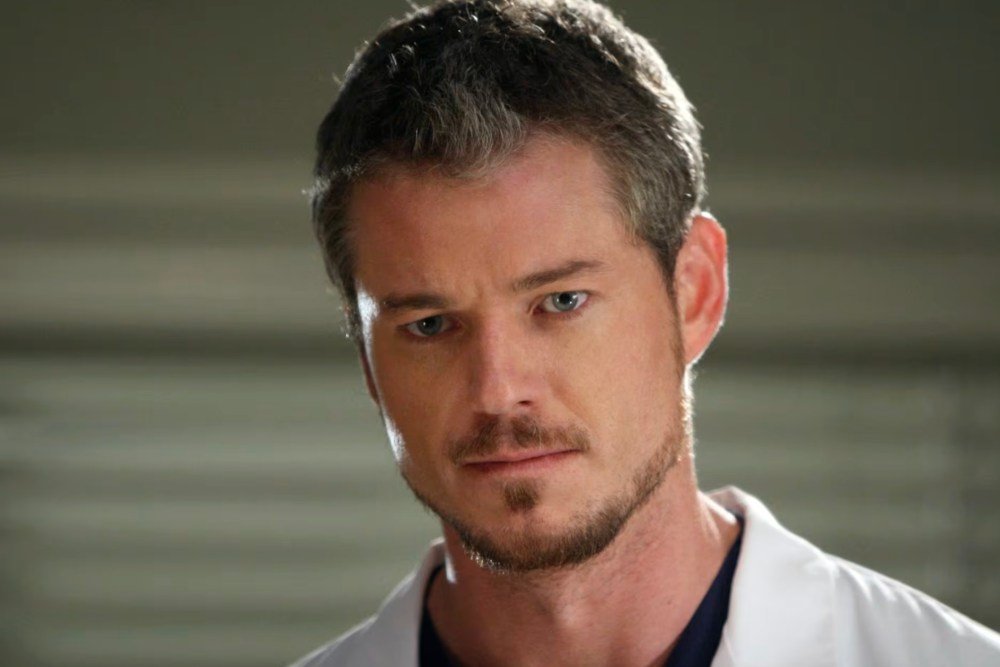
    Former “Grey’s Anatomy” star Eric Dane died on Feb. 19, one week ago — and in Thurday’s episode of the long-running ABC drama, the show paid tribute to him and to his character, Dr. Mark Sloan, in a video at the end of the episode. The 65-second-long McSteamy montage was set to Tommee Profitt & Fleuries’ cover of Snow Patrol’s “Chasing Cars,” a song that was made iconic after being used in the show’s Season 2 finale when Denny (Jeffrey Dean Morgan) died and Izzie (Katherine Heigl) wouldn’t let go of him. Different versions of “Chasing Cars” have been used on “Grey’s” and in its promos ever since to great effect, always to underscore an emotional event. (The full video is below.)

    Dane joined the cast of “Grey’s Anatomy” in Season 2, playing a plastic surgeon and a ladies’ man — Mark, nicknamed McSteamy, was the best friend of Derek Shepherd (Patrick Dempsey) whose affair with Derek’s wife Addison (Kate Walsh) had broken up that marriage. Mark Sloan proved to be a popular character, and Dane became a series regular in Season 3. He died during Season 8, after a bunch of the hospital’s doctors were in a plane crash. Nevertheless, Dane appeared in a few more times on the show, including with Meredith (Ellen Pompeo) in Season 19 when she was in a hallucinatory state from COVID, and characters who had died on the show visited her.

    Dane was diagnosed with amyotrophic lateral sclerosis in 2025; despite his terminal illness, he played an ALS patient on NBC’s “Brilliant Minds” in the fall, and completed filming Season 3 of “Euphoria,” on which he played Cal Jacobs. “Euphoria” will premiere on HBO on April 12.

    Dane’s death prompted an outpouring of grief from his colleagues at “Grey’s Anatomy,” from creator Shonda Rhimes to Heigl to Walsh and beyond, all of whom wrote loving tributes to him on social media.

    The video, with “Chasing Cars” playing, begins with Mark’s earliest appearances, when he referred to himself and Meredith as the “dirty mistresses” through his becoming a father. Mark’s advice to Jackson (Jesse Williams) from his deathbed plays over a montage: “If you love someone, you tell ’em, even if you’re scared that it’s not the right thing. Even if you’re scared that it will burn your life to the ground, you say it. You say it loud.”

    Watch the “Grey’s Anatomy” tribute to Eric Dane below.

  • ‘Sesame Street,’ ‘Formula 1: Drive to Survive’ Win Early PGA Awards

    ‘Sesame Street,’ ‘Formula 1: Drive to Survive’ Win Early PGA Awards

    Sesame Street,” “Formula 1: Drive to Survive” and “Adolescence: The Making of Adolescence” are among early winners as the Producers Guild of America held its west coast PGA Awards nominee celebration on Thursday.

    The majority of awards will be announced on Saturday at the annual Producers Guild Awards. But for Thursday’s event at The Aster in Hollywood, four awards were announced. The Children’s and Sports award winners were originally scheduled to be announced on Monday at an event in New York, until it was canceled due to the weather.

    Here are the 2026 Producers Guild Awards winners in the sports, children’s, and short-form:

    Outstanding Sports Program

    WINNER: “Formula 1: Drive to Survive”
    “100 Foot Wave”
    “Big Dreams: The Little League World Series 2024”
    “Hard Knocks: Training Camp with the Buffalo Bills”
    “Surf Girls: International”

    Outstanding Children’s Program

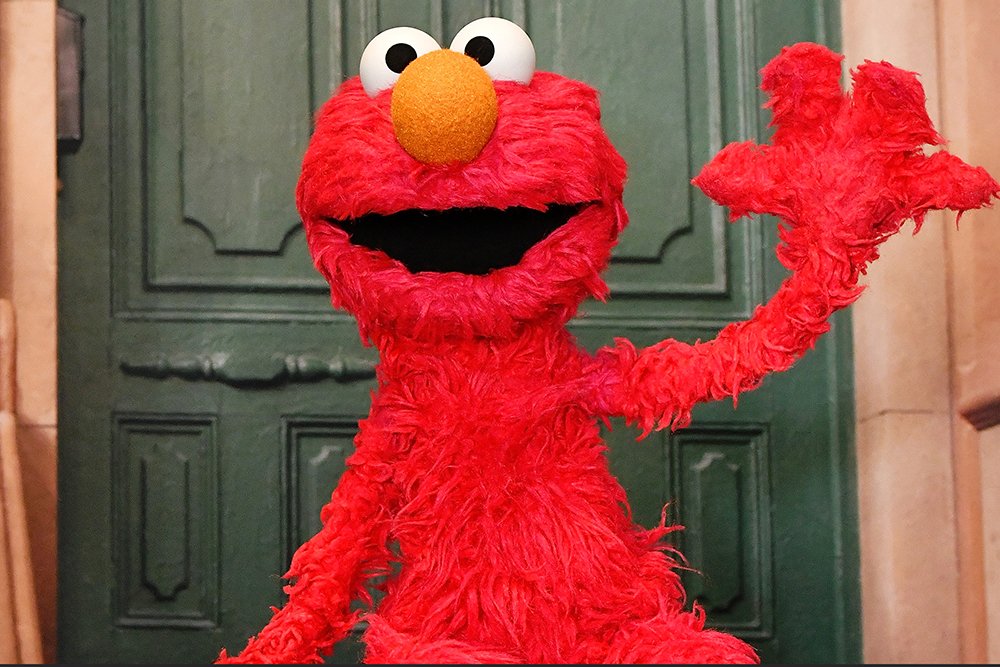
    WINNER: “Sesame Street”
    “Lego Star Wars: Rebuild the Galaxy – Pieces of the Past”
    “Phineas and Ferb”
    “Snoopy Presents: A Summer Musical”
    “SpongeBob SquarePants”

    Outstanding Short-Form Program

    WINNER: “Adolescence: The Making of Adolescence”
    “The Daily Show: Desi Lydic Foxsplains”
    “Hacks: Bit By Bit”
    “Overtime with Bill Maher”
    “The White Lotus: Unpacking the Episode”

    Also, the producing team for “The Wizard of Oz at Sphere” have received the PGA Innovation Award, “which celebrates outstanding entertainment endeavors across VR, AR, experiential and other emerging media.” The juried award was chosen by a jury led by AGBO chief creative officer Angela Russo-Otsot, Laurel Beach CEO Joanna Popper and Baobab Studios co-founder/CEO Maureen Fan.

    And Lydia Dean Pilcher (“Queen of Katwe,” “Radium Girls”) has received the Vance Van Petten Entrepreneurial Spirit Producing Award, “for her nearly two decades of work championing sustainability in film and television, including chairing the PGA’s Sustainability Task Force,” presented by Tendo Nagenda; NYU MBA/MFA grad Jessica Li recieved the Debra Hill Fellowship supporting emerging producers, presented by Selection Chairs Deniese Davis and Lucienne Papon.

    The 2026 Producers Guild Awards event chairs are Mike Farah and Joe Farrell; and the ceremony is produced by Anchor Street Collective. Branden Chapman is executive producer, and Carleen Cappelletti is co-executive producer.

  • Chinese Producers Push Microdramas and U.K. Partnerships at Mip London

    Chinese Producers Push Microdramas and U.K. Partnerships at Mip London

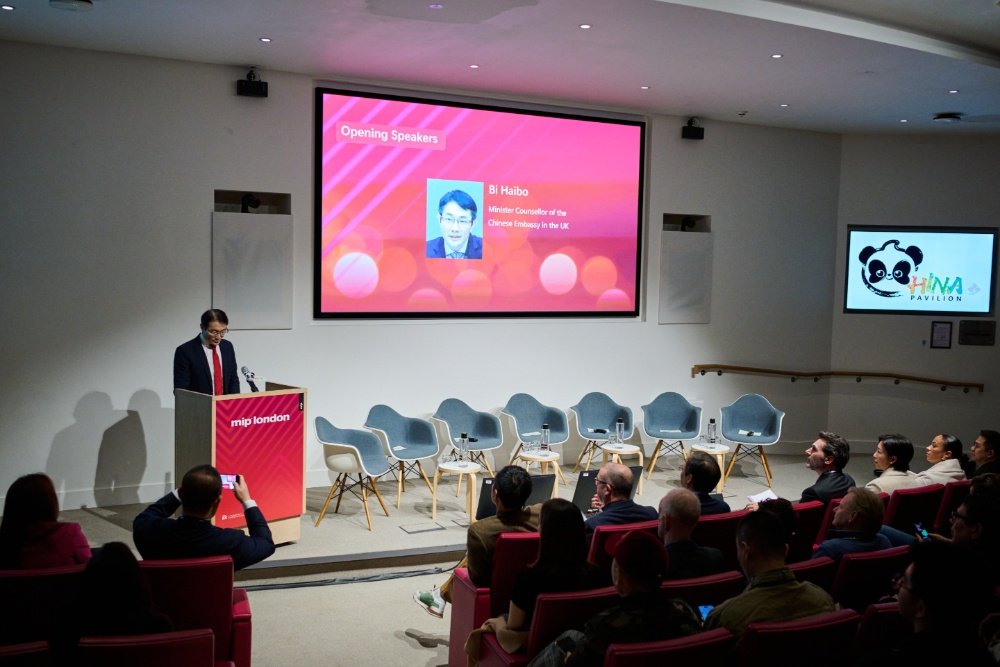
    Chinese producers are positioning microdramas as a key export vehicle while accelerating U.K. co-production partnerships, speakers said at the “Chinese Drama Trends” forum at Mip London, underscoring a dual-track strategy of global expansion and format diversification.

    Opening the session, Bi Haibo, minister counsellor for press and public affairs at the Chinese Embassy in the U.K., said Chinese television has made “remarkable progress in thematic innovation, production quality and global distribution,” with more series “reaching audiences here in the U.K. and across the global serving as cultural bridges that connect people and foster mutual understanding.”

    Bi also referenced agreements signed during U.K. Prime Minister Keir Starmer’s recent visit to China, including partnerships between China Media Group and British counterparts that he said had “expanded collaboration in the media and cultural sectors.”

    Bi noted that since Feb. 17, China has implemented a unilateral visa free policy for U.K. nationals, “which will further facilitate people to people exchanges and practical cooperation between our two countries,” urging industry players to “take full advantage of this policy.”

    Rupert Daniels, director of services and skills at the U.K. Department for Business and Trade, pointed to the scale of Britain’s creative economy – employing nearly 3 million people and exporting roughly £60 billion ($81 billion) globally – and cited existing collaborations such as the Chinese-language adaptation of “Inside No. 9” and co-productions involving BBC Studios, Tencent, Bilibili and Phoenix TV.

    Qiu Yuanyuan, secretary-general of the Jiangsu International Communication Center at Jiangsu Broadcasting Corporation, moderated the discussion, which focused on how Chinese content can travel more effectively in international markets.

    Gary Woolf, executive VP of strategic development at All3Media International, said globally viable projects require strong production partners and universal storytelling. “We’re looking at the quality of the production company… the quality of the idea… how universal some of the themes of that show might be,” he said, adding that distributors also weigh budget levels and commissioning broadcasters.

    Guo Feng, chair of Yulele Media Group, said his company’s slate blends Chinese cultural specificity with universal themes. His wartime-set project “Tile Cat,” he said, centers on “family bonding… generational love… struggles between lovers and reconciliations,” arguing that “the theme is universal.”

    While traditional long-form Chinese-language dramas face hurdles in Europe, Roy Lu, general manager of Linmon Media International, argued that microdramas present a more agile export pathway.

    “We Chinese [are] very good at microdramas,” Lu said, noting that “roughly every day, we have 200 to 300 titles becoming available” in China. He added that the format’s rapid turnaround allows companies to test audience response and adjust quickly for overseas markets.

    Qiu Zhengyang, deputy general manager of Hangzhou Jiaping Pictures, said his company now operates separate long-form drama and microdrama divisions. “I don’t think they will fight each other. I think they can be two parts of the future,” she said, arguing the formats will coexist rather than compete.

    Liyanne Marie Manning, head of casting at Onset Octopus, described the production pace of U.K.-based vertical drama shoots, emphasizing the need for immediate audience engagement. “If you don’t get that on your screen in 30 seconds and that doesn’t hit then… I’ve not done a good job,” she said.

    Qiu Qianyi, chief representative (Office of Hong Kong & Macau SAR) at Shenzhen Media Group, promoted Shenzhen as a growing hub for short-form production, highlighting the China International New Media Short Film Festival, which she said has received 60,000 short films from more than 200 countries and supported nearly 300 directors. She described the city as building “an ecosystem for the microdrama studio.”

    Despite language and market-entry barriers, the overarching message was one of expansion – with microdramas emerging as a strategic tool for global reach alongside deepening U.K.–China production ties.

  • ‘For All Mankind’ Spinoff ‘Star City’ Unveils First-Look Photos

    ‘For All Mankind’ Spinoff ‘Star City’ Unveils First-Look Photos

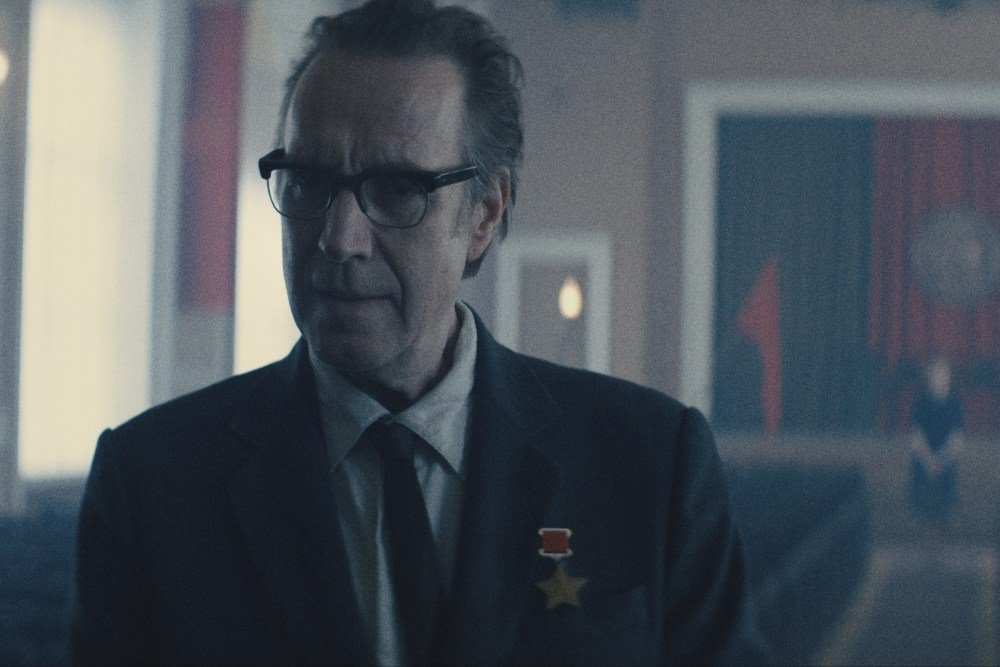
    Apple TV has unveiled first-look photos for “Star City,” the new series expanding the world of “For All Mankind.” From creators Ben Nedivi, Matt Wolpert and Ronald D. Moore, the series will debut with two episodes on Apple TV on May 29, running through July 10.  

    The eight-episode series “is a propulsive paranoid thriller that takes us back to the key moment in the alt-history retelling of the space race — when the Soviet Union became the first nation to put a man on the moon,” reads the official logline. “But this time, we explore the story from behind the Iron Curtain, showing the lives of the cosmonauts, the engineers, and the intelligence officers embedded among them in the Soviet space program, and the risks they all took to propel humankind forward.” 

    The series will star Rhys Ifans (“House of the Dragon”), Anna Maxwell Martin (“Motherland”), Agnes O’Casey (“Black Doves”), Alice Englert (“Bad Behaviour”), Solly McLeod (“House of the Dragon”), Adam Nagaitis (“Chernobyl”), Ruby Ashbourne Serkis (“I, Jack Wright”), Josef Davies (“Andor”) and Priya Kansara (“Bridgerton”). 

    Variety first reported that “For All Mankind” would be getting a spinoff back in 2024 when the show was renewed for its fifth season, which will premiere on March 27. The alternate history series first premiered in 2019, and stars Joel Kinnaman, Toby Kebbell, Edi Gathegi, Cynthy Wu, Coral Peña and Wrenn Schmidt, alongside other series regulars. 

    Wolpert and Nedivi serve as showrunners and executive produce alongside Moore and Maril Davis of Tall Ship Productions, as well as Andrew Chambliss and Steve Oster. “Star City” is produced for Apple TV by Sony Pictures Television.

    See first-look images here.

  • Scripps CEO Adam Symson Renews Contract Through 2029 Amid Company’s Major Cost-Cutting Plan, Reacquisition of 23 ION Affiliate TV Stations

    Scripps CEO Adam Symson Renews Contract Through 2029 Amid Company’s Major Cost-Cutting Plan, Reacquisition of 23 ION Affiliate TV Stations

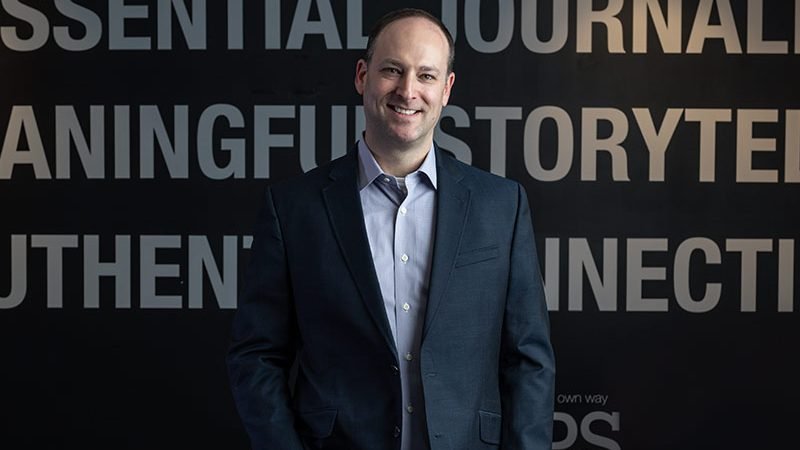
    E.W. Scripps Co. has renewed its contract with CEO Adam Symson through 2029.

    Symon’s new contract includes a large one-time $10 million performance-based cash award tied to Scripps’ target of boosting adjusted earnings by between $125-150 million over the next three years.

    The longer-pact announcement came during the company’s quarterly earnings call Thursday, when Symson briefed analysts on Scripps’ plans for major cost-cutting moves, as well as its pending $54 million reacquisition of 23 ION-affiliated TV stations, which it originally divested in 2021 to INYO Broadcast Holdings. Scripps sees that deal, which is subject to regulatory approval, as being “immediately accretive” to its networks segment profit.

    “Several weeks ago, we gathered more than 200 Scripps employees together to begin executing this transformation plan. And in the weeks since, the circle has been steadily expanding,” Symson said. “Our colleagues across the country are engaged in this work and are excited by the opportunity to drive this important company farther, faster and into the future. And so am I. The next few years will be pivotal as we accelerate our momentum. So I’m grateful that the Scripps board has decided to extend my contract until the end of 2029. I have the collective creativity and talent of nearly 5,000 colleagues behind me. I believe deeply in our ability to execute yet another Scripps transformation, and I am committed to seeing it through. And now, operator, we’re ready for questions.”

    During the call Thursday, Symson and other Scripps execs declined to confirm the exact number of layoffs that are expected across the company, but noted that workforce reductions are not the only cost-saving move planned. Leadership reiterated that cost savings and revenue growth initiatives will “leverage technology including AI and automation” and increase revenue yield for its existing businesses.

    “Over the last couple of years, as fragmentation has proliferated and people have turned to more and more platforms for the news and information, we have continued to ask our employees to do more with less, and that has diminished the quality of our product,” Symson aid. “AI opens up the opportunity for us to actually ensure that our reporters, our field journalists, are spending their time doing that which they got into the business to do: actually report. To ensure that they are connecting with the communities that they serve, to ensure that they are speaking directly to our consumer, to ensure that they are actually able to attend the news events and not have to rush off in order to then post something on the web, and then immediately put something on social media, and then do four live shots. And so using AI in order to care for some of those things is already opening up opportunity for our journalists to spend more time doing journalism and less time doing what I would characterize as some of the performative aspects, or the distribution or production aspects of their job.”

    Symson added: “We want them creating the content. That’s where the value is. That’s what differentiates us from the commodity news and information that’s out there. We don’t want them spending their time rewriting broadcast scripts into an AP Style story that can go on the web. There’s technology that can care for that, and we’re already using it.”

  • NBC Expects Savannah Guthrie’s ‘Today’ Return, But Timeline Remains Uncertain

    NBC Expects Savannah Guthrie’s ‘Today’ Return, But Timeline Remains Uncertain

    The new normal at NBC’s “Today” is anything but.

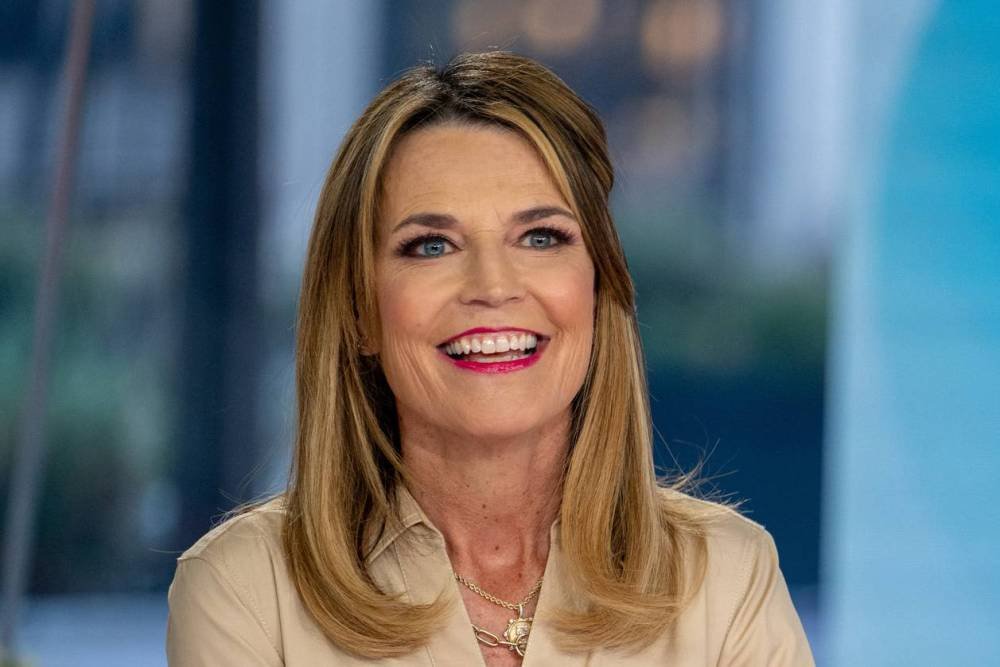
    Anchors at the long-running A.M. franchise have grappled with many challenges over the years, ranging from personal health issues to talent transitions, but this past month has presented a set of circumstances that are believed to be without parallel: Nancy Guthrie, mother of longtime “Today” co-anchor Savannah Guthrie, has been missing since January 31, and an agonizing search is in progress around her home in Arizona, leaving producers not only to manage coverage thoughtfully, but also to ponder how to fill Savannah Guthrie’s seat for an undefined interim.

    “This situation is tragically unprecedented, and I think it’s really hard to compare anything else to what Savannah and her family are dealing with right now,” says Katie Couric, who famously worked as a co- anchor at “Today” between 1991 and 2006, during a recent interview. “I do think morning shows are living, breathing organisms, and when something happens to a member of these very close-knit teams, it is devastating, I think, to everyone. I think the ‘Today Show’ team is doing the best they possibly can, and it must be excruciating to try to carry on, but also to cover a story about a beloved colleague.”

    How has “Today” handled the matter? Hoda Kotb, the veteran “Today” co-anchor who left full-time duties early last year, has rejoined the show on an interim basis, and is holding forth with Craig Melvin. Kotb will stay while Guthrie is with her family, according to a person familiar with the matter. Guthrie is expected to return to the show on her own timeline, even if she requires a significant period to feel ready to do so, this person says.

    Each morning, Melvin and Kotb inform viewers that their colleague “remains with her family,” and typically offer a segment about the search for Nancy Guthrie. In the case’s earliest days, the Guthrie story led the “Today” news report, but in more recent broadcasts, the anchors have tackled severe weather, the arrest of former Prince Andrew in the U.K. and the recent State of the Union speech before turning to the Guthrie case. Liz Kreutz, an NBC News correspondent, remains on the ground in Arizona to keep up on the latest details. “Today” has also offered an array of stories about people lending support to the Guthrie family, including a sorority at Savannah Guthrie’s alma mater in Arizona and neighbors of Nancy Guthrie who keep looking out for new clues.

    Interest in the case remains high. NBC News broke into programming with a special report earlier this week, anchored by Kotb and Melvin, detailing a $1 million reward from the Guthrie family for their mothers’ recovery. Savannah Guthrie delivered an emotional message asking for information on her mother, while nodding to the dire circumstances surrounding her absence.

    Having Kotb on hand offers a viable solution for NBC and “Today” producers. She’s already affiliated with the show, and adding someone new to the mix during such a difficult moment could be ill advised The introduction of someone less known to viewers to fill in more regularly for Guthrie — even on an interim basis — could alienate the audience, which has a years-long relationship with her and doesn’t want to see her treated poorly, particularly under duress. The first two hours of “Today” generated nearly $203.5 million in 2025, according to Guideline, a tracker of ad spending.

    “They are fortunate that Hoda, who is a familiar and beloved face, is able to step in so seamlessly under very difficult circumstances,” says Couric. “I think they are trying to handle it as well as they possibly can.”

    Amid an emotional and chaotic era for the program come some potential reasons to take a breath: Support for Savannah Guthrie and interest in her family’s plight have buoyed “Today” even as its staff tries to master difficult terrain.

    Morning-show audiences have tuned in more to “Today” in recent weeks. Viewership for “Today” for the five days ended February 20 rose 19%, or 517,000 viewers, according to data from Nielsen, compared to the year-earlier period. That viewership hike follows one of 30% in the prior week and one of 23% in week before that.

    Audiences for main rival “Good Morning America” on ABC ticked up 6% for the five days ended February 20, while viewership for “CBS Mornings” was off 14%.

    It’s not clear how much of a boost can be attributed to the Winter Olympics. In 2022, “Good Morning America” won more viewers overall than “Today” during NBC’s first week of coverage of the extravaganza from Beijing, the first time it was able to do so in the first week of a Winter Olympics in more than three decades. Next week’s ratings report could be a pivotal one for the program, as it will reveal how much of the surge at “Today” has been due to a halo effect tied to the Olympics and how much the Guthrie crisis has galvanized the potential audience for the show.

    There also appears to be an internal loyalty to Savannah Guthrie, who has served as the “glue” of the program since being elevated to an anchor in “Today’s” flagship 7 a.m. to 9 a.m. hours in 2012. Guthrie has proven instrumental in helping “Today” muscle past some difficult moments.

     She replaced Ann Curry, who exited in an emotional moment that soured some viewers on the program and boosted interest in “GMA,” and played a critical role during a rebuilding period for the show. It was Guthrie and Kotb who were tasked on the morning of November 29, 2017 , with informing viewers that longtime anchor Matt Lauer had been ousted by NBC, which cited “inappropriate sexual behavior,” a claim that he denied. She has kept up with the demanding morning news role even while over the years juggling an eye injury resulting from a mishap at home, and, more recently, surgery on her vocal cords, which she has used daily for years in service to NBC.

    She has helped NBC in some critical spots as well, and not just during Election Night or special reports. She presents NBC’s coverage of the Thanksgiving Day Parade, a spectacle that has taken on more economic importance to the network in recent years as advertisers hunt for programs that draw large, simultaneous crowds.  In 2020, she boosted NBC after it made a controversial decision to hold a town hall with President Donald Trump opposite a similar event by then-Democratic candidate Joe Biden, which was being televised by ABC. Guthrie kept a tight rein on the proceedings. “You’re the president, you’re not like somebody’s crazy uncle who can retweet whatever,”  Guthrie told President Trump after asking why he had recently retweeted a conspiracy theory.

    “These are serious times we are living in,” she told Variety in January of 2020 while speaking about her “Today” role. “You can start interviewing the Vice President of the United States, and you can end with Oprah on a beach. That can happen. That does happen all the time. That’s about really measuring what the audience expects, and I think we try to approach the news with substance and sophistication, and I don’t think we are flashy.”

    In the earliest hours of the morning, before the “Today” anchors get to the studio and get ready to go on the air, you can sometimes find Guthrie in the hair and make-up room, talking to reporters and correspondents like Kirsten Welker about the nuances of one of the stories set to air in the first minutes of the program. Staffers at “Today”  would like to hear her voice filling that room once again.

  • ‘Scream 7’ Review: Neve Campbell Returns for a Back-to-Basics Sequel That’s a Little Too Basic

    ‘Scream 7’ Review: Neve Campbell Returns for a Back-to-Basics Sequel That’s a Little Too Basic

    The “Scream” movies, at their best, are delectable booby-trapped entertainments, and part of that is how cleverly they stay a step ahead of us. But there’s a moment in “Scream 7” that typifies the sensation this new movie gives you: that it’s leading the audience and lagging behind it at the same time.

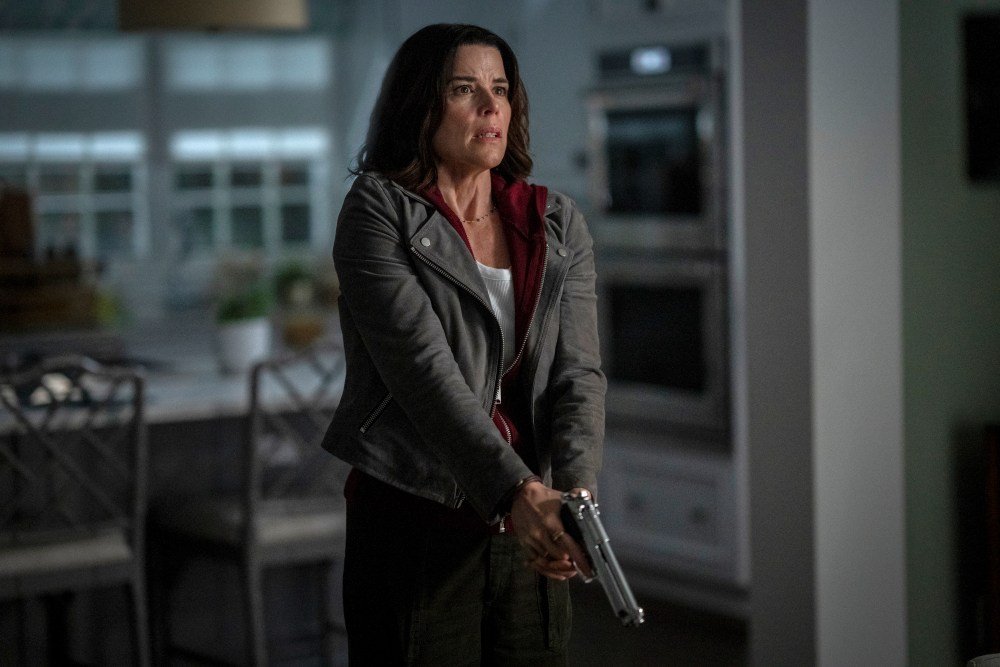
    We’re watching a homicidal pursuit through the home of Sidney Prescott (Neve Campbell), who is not only back but once again the central character (let’s call her the Final Girl as Mom). Sidney and her teenage daughter, Tatum (Isabel May), a kind of Final Girl in Training, are attempting to elude the blade of Ghostface. There’s a good bit where they inch along a catwalk behind the living-room wall, with Ghostface stabbing it from the other side. He misses, and they wind up on the street outside, where the killer gets smashed by a car that comes barreling out of nowhere (the driver, in fact, turns out to be an old friend). 

    The killer’s costume-shop Edvard Munch mask gets pulled off, revealing his identity, and this is followed by some chatter about how Ghostface often turns out to be more than one person. You don’t say! Considering that we’re only 45 minutes into the movie, that’s kind of a super duh. “Scream 7” is inadvertantly revealing its true theme, which is: Does anyone even care anymore who Ghostface is? Once all the obvious suspects have been eliminated, the answer is destined to be as arbitrary as it is forgettable.

    The last two “Scream” films were nothing if not busy — nearly antic at times, stuffed to the bloody gills with backstory and mythology and schlock trivia. Yet there’s no denying that that was part of what kept the pulse of the series alive. In the lead-up to “Scream 7,” however, the busy quality seemed to transfer over to the drama offscreen: the firing of Melissa Barrera after comments she made that some judged to be antisemitic; the bowing out of Jenna Ortega; the fight over Neve Campbell’s salary (she sat out “Scream VI”); the fact that the directors who’d taken over the franchise, Matt Bettinelli-Olpin and Tyler Gillett, opted out, and their replacement, Christopher Landon, then quit after he started getting death threats over Barrera’s firing.

    As if to calm the waters, the reins were handed back to Kevin Williamson, who 30 years ago wrote and created the original “Scream.” He was the series’ true auteur: the one who devised the whole concept of a meta slasher movie, a trash thriller maze that would be equal parts straight horror and a hack-’em-up version of Trivial Pursuit.

    But Williamson returns to the “Scream” franchise, now directing one of the films for the first time, with a weirdly restricted agenda. The whole slaughter-movie scholarship side of the “Scream” films — “Look! We’re deconstructing the prospect of our own deaths like horror-film-class geeks!” — has basically been played out. And the series is all too aware of that. Williamson knows that he can’t just go back to that age-of-VHS ’90s drawing board. So what he’s done instead is to return the series to its “roots” in a straightforward, analog, Jamie Lee Curtis-in-the-rebooted-“Halloween”-franchise sort of way. “Scream 7” has enough shocks and yocks to keep the product churning and the audience, at least for a weekend, turning out. Williamson has gone back to basics, but the result is a “Scream” sequel that, while it nods in the direction of being seductively convoluted, is really just…basic.

    The teenage Tatum, named for Sidney’s late lamented bestie (the Rose McGowan character from the original “Scream”), has a boyfriend, Ben (Sam Rechner) who smirks too much, along with a minor circle of friends who could all, theoretically, be suspects. But they get bumped off with a regularity that lets us know the mystery is elsewhere. One of the murders is a grisly piece of showmanship: Hannah (Mckenna Grace), flying around on a harness as she rehearses the high-school play, gets slashed with Ghostface’s knife until her innards fall out. But that scene is the exception to the film’s rule of routine “sensational” killings. Simply put, “Scream 7” isn’t very scary, and it isn’t very inventively gory (which some of the sequels have been).

    The film opens with a fun variation on the ritual Ghostface phone call: Scott and Madison (Jimmy Tatro and Michelle Randolph) are visiting the former home of Stu Macher, which has been turned into a slasher museum. Among the nostalgic artifacts is a life-size Ghostface model that turns its head via movement sensors. Roger L. Jackson is once again the voice of Ghostface (the aggro psycho as AM radio DJ), and all of this erupts into a satisfyingly incendiary prelude.

    But once “Scream 7” settle into its main story, Williamson adopts a tone of mordant sincerity regarding Sidney and the trauma she can’t seem to outrun. Courteney Cox’s Gale Weathers shows up, and she too becomes a major player, though the “media” commentary is strictly pro forma. The film has better luck reviving Matthew Lillard’s Stu, a character we were certain was dead‚ and he may in fact be. But then how is Stu, with mottled skin, calling up Sidney and conducting threatening live video-phone chats with her? Lillard’s raging performance could almost be his answer to Quentin Tarantino’s dis of him. The actor, like the character, is saying, “I’m still here,” and that’s true even if Stu is just a deepfake.

    As Mindy, the aspiring TV news reporter who’s working for Gale, Jasmin Savoy Brown gets to deliver the film’s few token snippets of horror-snob geekery, and she’s so good at it that she made me wish Williamson had included more of it. Maybe the reason this stuff got so played out is that the series, creatively speaking, could actually use a more expansive vision of what horror movies are. But that’s not about to happen, because the “Scream” films are so successful they’re now effectively trapped in a genre that can’t risk being too smart about playing dumb.