Tag: Entertainment-Variety

  • Hwang Dong-hyuk on Burying ‘Squid Game’ for a Decade, Korea’s Global Rise and What He Owes Hong Kong Cinema at Asian Film Awards Masterclass

    Hwang Dong-hyuk on Burying ‘Squid Game’ for a Decade, Korea’s Global Rise and What He Owes Hong Kong Cinema at Asian Film Awards Masterclass

    The best feedback Hwang Dong-hyuk received when he first pitched “Squid Game” in 2009 was someone asking him how he could possibly have come up with something so absurd. “That was the most positive response I got,” he told a packed house Sunday at the Xiqu Centre, Hong Kong, where he opened the Asian Film Awards‘ day of masterclasses.

    Hwang traced the origins of the series to a period of acute personal hardship. His first feature had failed commercially, a second project had fallen apart before production, and he was selling household furniture to cover living expenses. He spent much of his time in manga cafes, reading survival game comics in which protagonists gambled their lives for large sums of money. He wondered whether he could make something similar but distinctly Korean in character. Where most survival narratives featured protagonists with superhuman abilities, he wanted to tell a story about entirely ordinary people playing the simplest games imaginable – the kind any child had grown up playing, requiring no special skills or genius, only the will to keep going.

    After a year of fruitless meetings with investors and actors who universally dismissed the project, Hwang made the decision to bury the script in his computer and wait. He made three more feature films in the intervening decade. When he returned to the idea in 2018 and reread the script, he said, he felt an immediate conviction that the time had come. “By 2019, the world had somehow come to look more like ‘Squid Game’ than it did when I first wrote it,” he said. Competition had intensified, the wealth gap had widened, and the economic pressures and social tensions he had imagined as extreme had come to feel entirely plausible. “People’s lives had become harder,” he said. “The story no longer seemed so far-fetched.”

    The arrival of Netflix Korea was the final piece. Hwang had always believed the premise would resonate more easily outside Korea than within it – the survival game genre had never been commercially popular at home – and Netflix offered immediate access to a global audience. He also found the series format liberating. His original screenplay was a two-hour film in which the games crowded out nearly everything else. Expanding to eight hours allowed him to develop the backstories of characters like Sang-woo and Sae-byeok, and – crucially – to create the figure of Oh Il-nam, Player 001, the elderly man who turns out to be the architect of the games. “That character didn’t exist in the film version,” Hwang said. “The series gave me the space to build him, and with him the entire emotional logic of the final episode.”

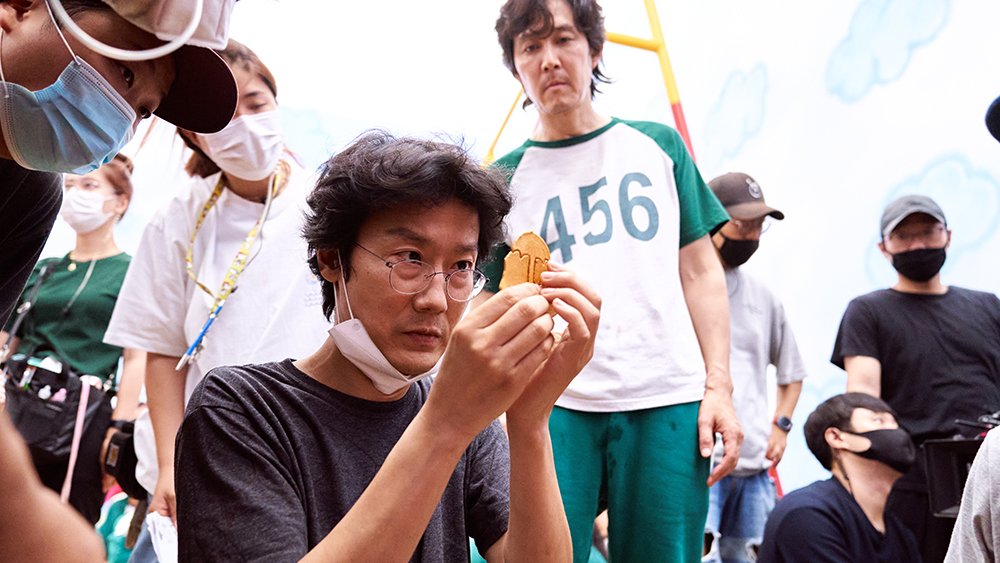
    Several games were also redesigned for international audiences. Some of the original choices had rules too culturally specific to be immediately comprehensible to viewers outside Korea. The replacements – marbles, the honeycomb candy carving game, the ddakji tile-flipping game – were chosen because any viewer anywhere could understand them within seconds. The giant doll in the Red Light, Green Light sequence, which became one of the series’ most iconic images, was designed with a deliberate choice. Rather than something conventionally threatening, Hwang drew on the image of a girl character named Young-hee, familiar to every Korean child from first-grade textbooks. “We wanted something cute,” he said. “I genuinely did not think people would find it frightening. Their reaction surprised me.”

    The production design of the series reflected a philosophical choice rooted in Oh Il-nam’s psychology. Where most survival narratives set their action in dark, oppressive spaces, “Squid Game” used pastel colors and the aesthetic of a children’s play cafe. Hwang explained that Oh Il-nam built the games to recapture childhood joy – his own and others’ – and that the spaces he designed would therefore be cheerful and colorful, not menacing. The horror, Hwang said, came from what happened within those cheerful spaces, and the contrast made it more devastating.

    On the series’ central theme, Hwang said the world of “Squid Game” is one in which people in a hyper-competitive society are conditioned to see those beside them as rivals rather than allies – while the people who actually designed the system watch from above and profit from it. He said he wanted the series to ask whether it was possible for people to recognize that their real adversaries were not their neighbors but those further up, and whether some form of collective response might be imaginable. He stopped short of prescribing an answer but said the question felt urgent.

    The session also ranged across Hwang’s broader career. He studied journalism at university – his father, who died when Hwang was young, had been a journalist – but grew disillusioned after participating in the pro-democracy student movements of the early 1990s and finding that the Korean press was too conservative and pro-government to do the investigative work he had hoped it would. He began watching two or three films a day in a lost period after abandoning his journalism ambitions, and eventually went to study film at the University of Southern California. He recalled his first class there, in which the professor asked students successively how many expected to direct one feature film after graduating, then two, then three – and concluded that statistically, not one person in the room would likely make even one. “Looking back,” Hwang said, “the only person from that class who became a feature film director was me.”

    His USC graduation short, “Miracle Mile” – about a sibling who travels to the United States to find a brother who had been adopted away, carrying a dying parent’s apology – led directly to his first feature, “My Father,” after a Korean producer saw the short and reached out. The story drew on a memory from his own life: a paternal aunt who had been given up for adoption to America when his family was too poor to keep her, and who returned to find her birth family when Hwang was around 19.

    He described the production of “Silenced” – based on the real-life sexual and physical abuse of students at a school for deaf children in Gwangju – as one of the most grueling experiences of his career. He initially turned the project down, he said, but reconsidered after researching the case and concluding that a film might be the last chance to return it to public consciousness. He deliberately chose to make it as a work of narrative cinema – emotionally immersive rather than documentary in approach – on the conviction that audiences needed to care about the characters before they could feel the full force of the injustice. The film’s release led to real-world legal changes. But the psychological cost was severe. “I lost weight, I developed insomnia, I was in a bad way,” he said.

    “Miss Granny,” the broad intergenerational comedy he made next – about a grandmother who is magically transformed into her younger self – was a direct reaction to that ordeal. It was also, Hwang said, a personal tribute to his mother and grandmother, who had raised him after his father’s early death. He said he had wanted to make a film that three generations of a family could sit down and watch together, each finding something to recognize in it. The film went on to be one of the top three highest-grossing Korean films of its year and spawned remakes across Asia, including versions in China, Vietnam and India. Hwang said he had been struck, while watching the various adaptations, by how each country’s version drew on its own era of popular music and its own cultural textures – the Indian remake especially, with its Bollywood-style musical sequences.

    Closing the session, Hwang reflected on his affection for Hong Kong cinema, which he credited as a defining influence on his generation of Korean filmmakers. He watched Chow Yun-fat’s “A Better Tomorrow” ten times, he said, and when he was seriously studying film as a craft, it was Wong Kar-wai’s “Chungking Express” and “Days of Being Wild” that made the deepest impression. He expressed sadness that Hong Kong cinema had largely disappeared from Korean screens, saying that “Infernal Affairs” was the last Hong Kong film he had seen theatrically and that he had had little opportunity to follow the industry since.

    On the question of how Korean content had come to dominate global popular culture, Hwang offered a structural rather than a mystical answer. Korea’s entire postwar economic development, he said, was built on an export mentality – the country had nothing and built everything by manufacturing and selling abroad. That orientation had transferred to the cultural industries over time, with filmmakers, musicians and drama producers gradually becoming more attuned to international audiences alongside domestic ones. He said he did not believe the phenomenon had happened quickly but was the accumulated result of a long habit of thinking outward – and that he himself had had that global audience in mind when he decided to take “Squid Game” to Netflix.

    His advice to the aspiring filmmakers in the room was unsentimental. Film technique, he said, can be learned quickly – his own MFA program at USC deliberately avoided admitting film majors, preferring students from other disciplines who already had something to say. The hard part is not learning to use a camera but knowing what story you need to tell. He urged young filmmakers to read, travel, make friends and accumulate experience rather than focusing narrowly on technical skills – and to be honest with themselves about whether they were truly prepared for a path that offers no stability and demands the willingness to risk everything.

  • ‘Sinners’ Stars Recreate the ‘Pierce the Veil’ Sequence With Stunning Oscar Performance of ‘I Lied to You’

    ‘Sinners’ Stars Recreate the ‘Pierce the Veil’ Sequence With Stunning Oscar Performance of ‘I Lied to You’

    The stars of “Sinners” recreated the “Pierce the Veil” segment from the film at the 98th Oscars with a stirring rendition of “I Lied to You” from an all-star cast of musicians led by Miles Caton and Raphael Saadiq.

    Caton and Saadiq paid homage to Ryan Coogler’s film alongside an impressive array of musicians and performers including Misty Copeland, Eric Gales, Buddy Guy, Brittany Howard, Christone “Kingfish” Ingram, Jayme Lawson, Li Jun Li, Bobby Rush, Shaboozey and Alice Smith. The performance was billed ahead of time as a tribute to the film’s “singular visual style.” Watch the performance here.

    Saadiq set off the segment by strumming on the guitar before passing it to Caton, who sang the first verse with support, at one point, from Shaboozey. On a set resembling the film’s Club Juke, the subsequent all-star cast joined in — Brittany Howard on guitar, Alice Smith singing, and Misty Copeland dancing ballet as she came together with the ensemble to finish off the song.

    Caton, who played the young version of Sammie in “Sinners,” has performed the song alongside Saadiq and composer Ludwig Göransson several times since the film’s release, including renditions on “Jimmy Kimmel Live” and the American Cinematheque Awards. “I Lied to You,” of course, earned an Oscar nod for best original song, one of the record-breaking 16 nominations that “Sinners” achieved.

    The “Sinners” soundtrack and score played an integral role in the film, inspired by music from the 1930s and ’40s and blues artists like Robert Johnson. “I Lied to You” is played in one of the defining scenes in “Sinners,” where Sammie sings the song at a juke joint as Black music’s lineage swirls around him. It was one of two “Sinners” songs submitted for Oscar consideration alongside “Last Time (I Seen the Sun),” a soulful duet performed by Smith and Caton and co-written by Smith, Caton and Göransson.

    Outside of original song, “Sinners” was nominated for a record-breaking 16 awards, including best picture, director, actor, supporting actor, supporting actress and original screenplay, among several others.

  • Why Amy Madigan’s ‘Weapons’ Oscar Win Is So Inspiring — for Fans and for Hollywood

    Why Amy Madigan’s ‘Weapons’ Oscar Win Is So Inspiring — for Fans and for Hollywood

    Amy Madigan seemed stunned to take the Oscars stage — understandably so.

    She gave an all-out performance in “Weapons,” but that’s the kind of movie that generally doesn’t win Oscars even in an era more open to genre. What “Weapons” has to say about contemporary life is stated in a more minor key; its larger objective is terrifying the audience, and Madigan’s Aunt Gladys, alternating between grandiosity and quiet menace to become a horror-movie villain for the ages, was the chief delivery system for that terror.

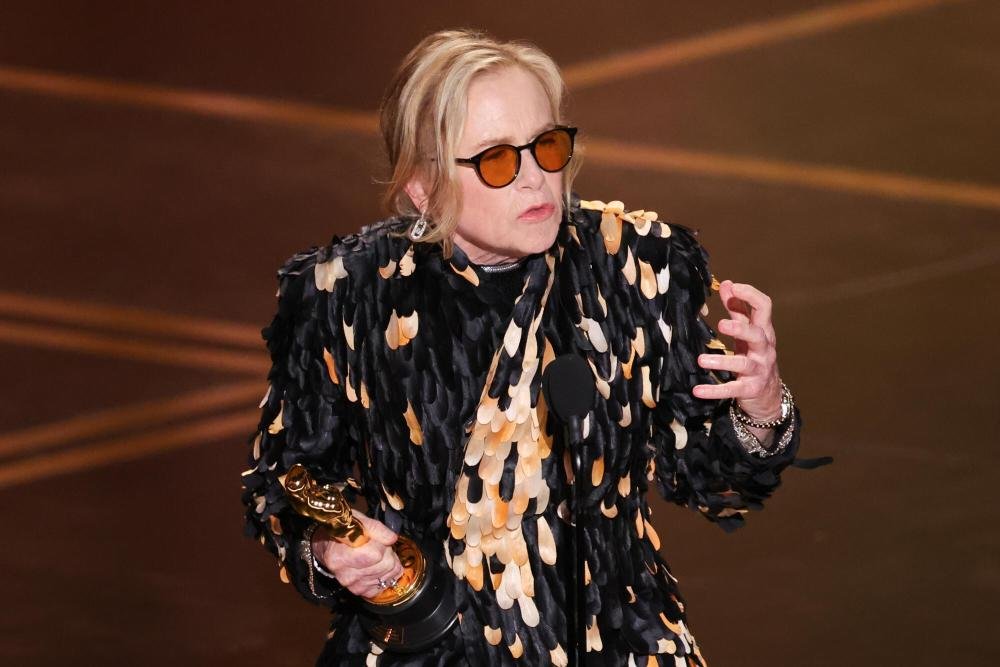
    So when she won best supporting actress, Madigan was understandably flummoxed, giving a charmingly off-the-cuff speech that rebuffed the notion that one isn’t supposed to read a list of names — after all, those names belong to the people that brought you there. Her humility seemed well-earned. Throughout the promotion cycle for “Weapons,” both in its theatrical run and its awards campaign, Madigan made the point that she’d felt counted out by Hollywood for years, and had grown accustomed to the phone not ringing. 

    There’s a pain in that, but also an opportunity to prove one’s mettle. This performer, whose only previous Oscar nomination (for 1985’s “Twice in a Lifetime”) came before any of her four fellow nominees had been born, took the role of Aunt Gladys and imbued it with a richness and life that Zach Cregger could only have hoped would have sprung up from a character whose origins and motivations aren’t there on the page. 

    Why Aunt Gladys is siphoning the life from those she enchants is both obvious (she needs their juice to keep on going!) and beyond what can be understood by us non-witchy mortals. Madigan makes it all coherent, even as she toggles between Aunt Gladys’ performance for the public as a somewhat batty woman who aims for lovability and her life behind closed doors as a malign force.

    This isn’t the type of performance that usually wins: One might point to Ruth Gordon playing a similarly garish and threatening witch in “Rosemary’s Baby,” but that was nearly 60 years ago, and “Rosemary’s Baby” had enough prestige to land another nomination, for its screenplay. Madigan was so undeniable that she triumphed over four performers whose films were widely-celebrated across the Oscar nominations this year, while she was the only representative from “Weapons.” That’s how undeniable her work was.

    And it came after Madigan herself had been denied for some time. (At 75, she is the second-oldest winner in the category ever.) Her work in “Weapons” already spoke for itself, but the fact of her striding onstage and being battily herself — and making us wonder both where she’d been all this time and what might still lie ahead for her — ought to serve an inspiration, of sorts. That it could inspire performers to know their best shot is a meeting away is obvious. It also should spark, in directors as imaginative as Cregger, a desire to find the next Madigan, someone whose name we only just recall and whose talent we deserve to rediscover.

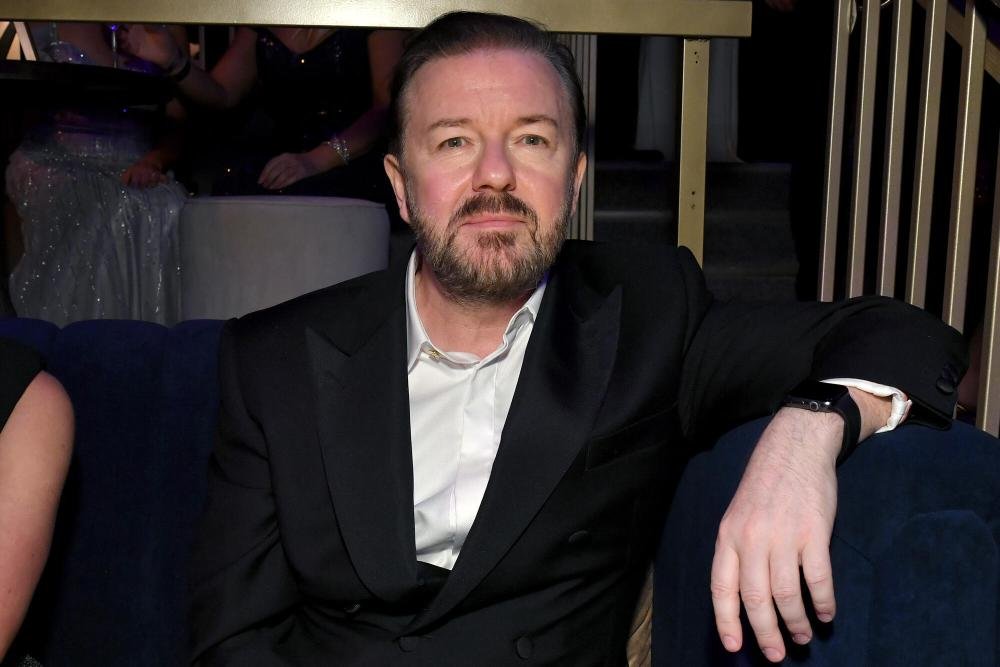
  • Ricky Gervais Rejects Fan Request to Host Oscars: ‘F— That!’

    Ricky Gervais Rejects Fan Request to Host Oscars: ‘F— That!’

    Ricky Gervais may have hosted the Golden Globe Awards five times, but he’s in no rush to take on Oscar hosting duties.

    Hours before the Oscars were set to take place on March 15, the British comedian took to X to respond to a fan account named The Ricky Gervais Clips, which posted, “Repost if you wish @rickygervais was hosting the #Oscars tonight.” Gervais himself quote responded, writing, “Fuck that! 😂”

    Gervais hosted the Globes in 2010, 2011, 2012, 2016 and 2020. His duties were remembered for mocking celebrities to their face, and swinging much more aggressively at Hollywood stars than many of his contemporaries.

    Last year, Gervais spoke with Variety about his times hosting the ceremony, and said that his image as a brutal truth-teller was as much a marketing tactic as reality.

    “The marketing thing is that, ‘It’s live. He could say anything. Oh, my God. He’s brutal. Oh, he doesn’t care about anything.’ All those are untrue,” he says. “I write those jokes. I look at them from every angle. I make sure they’re bulletproof. I go out with a beer, I pretend to be a loose cannon, but I’m not. I’m never drunk. I have like a sip. And I can justify anything. I’m never that brutal. It just seems like it.”

    Gervais’ most recent comedy special, “Ricky Gervais: Mortality,” won best stand-up comedy performance at this year’s Globes. He won the same award last year, too, for “Ricky Gervais: Armageddon.”

    See Gervais’ social media message below.

  • Odessa A’Zion Bombed Disney Audition for ‘The Little Mermaid’ Live-Action Movie: ‘I Was So Nervous I Forgot the Lyrics’

    Before Odessa A’Zion stepped into the role of Rachel Mizler for “Marty Supreme,” she was almost Ariel in the 2023 live-action “The Little Mermaid.” There was just one problem: She flubbed her audition. 

    Speaking with CNN and Variety on the red carpet for the 98th Academy Awards on Sunday, A’Zion recounted the “really embarrassing” experience. 

    “I sang ‘Part of Your World.’ I was so nervous that I forgot the lyrics to ‘Part of Your World’ while I was singing it,” she said. “And then, because I was doing it in Ariel’s voice — like a princess voice —  they’re like, ‘Just do it normal.’ [And] I couldn’t do it normal. I’d memorized it in that voice.” 

    “I left like ‘That was the most embarrassing thing on planet Earth,’ and didn’t hear back, didn’t get a call back,” A’Zion continued. 

    In the film directed by Rob Marshall, the role ultimately went to singer, actress and songwriter Halle Bailey. 

    “After an extensive search, it was abundantly clear that Halle possesses that rare combination of spirit, heart, youth, innocence, and substance — plus a glorious singing voice — all intrinsic qualities necessary to play this iconic role,” Marshall said in a statement at the time of the casting.

    Looking back on it, missing out on the role of the red-headed mermaid didn’t deter A’Zion’s career at all; this year, she’s at the Oscars with “Marty Supreme,” which nabbed nine nominations, including Best Picture. 

    For her role as Mizler, Marty Mauser’s (played by Timothee Chalamet) love interest and childhood friend, A’Zion was nominated for both an Actor Award and a BAFTA Award in supporting categories. 

    A’Zion also stars as influencer Tallulah Stiel in Rachel Sennott’s HBO show, “I Love LA.”

  • Adrian Grenier Says ‘It’s a Disappointment’ Not to Be Cast in ‘The Devil Wears Prada 2’: ‘I Also Understand There’s Some Backlash With Nate’

    Adrian Grenier Says ‘It’s a Disappointment’ Not to Be Cast in ‘The Devil Wears Prada 2’: ‘I Also Understand There’s Some Backlash With Nate’

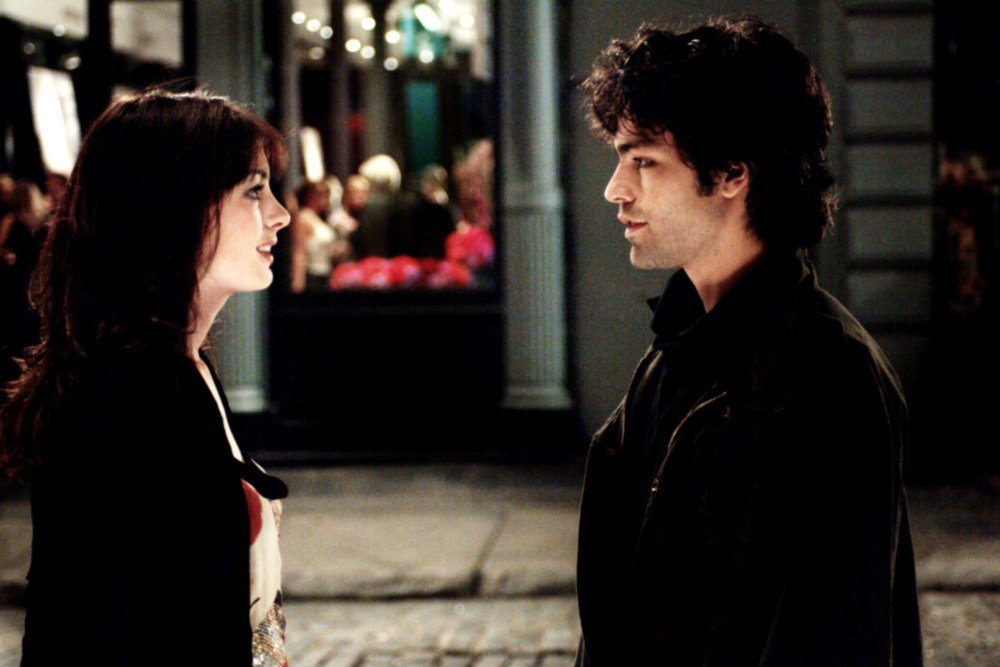
    Adrian Grenier, who played Nate, the toxic boyfriend of Anne Hathaway’s up-and-coming fashion writer Andy in “The Devil Wears Prada,” recently told Page Six that “it was a disappointment” he wasn’t asked to return for “The Devil Wears Prada 2.”

    “We’re all fans of the movie, whether or not we’re in it,” he said. “Obviously, it was a disappointment that I didn’t get the call to be in the sequel, but I also understand there’s some backlash with Nate, the character, so that might have something to do with it. But I think that just leaves room for a spinoff.”

    When asked if he thought the fan backlash to Nate was the reason he wasn’t asked to return for the sequel, Grenier said, “As opposed to what?” He added, “Either way, it’s a disappointment, and either way, it leaves room for a beautiful spinoff in which Nate has his own film.”

    Based on the 2003 novel by Lauren Weisberger, “The Devil Wears Prada” was released in 2006 and followed Hathaway as Andy Sachs, an overachieving college graduate who becomes the assistant to the tyrannical fashion media mogul Miranda Priestly, played by Meryl Streep. Grenier’s character, Nate, was largely hated in online circles for being a flaky, unsupportive boyfriend to Andy during her turbulent time working at Runway Magazine. Other cast members include Emily Blunt, Stanley Tucci, Simon Baker and Tracie Thoms.

    “The Devil Wears Prada 2,” which hits theaters on May 1, follows Andy and Miranda as they compete against their former co-worker Emily in a declining print journalism industry. Streep, Hathaway, Blunt and Tucci once again lead the cast, joined by franchise newcomers Justin Theroux, Lucy Liu, Lady Gaga, Amanda Morrow and B.J. Novak. “The Devil Wears Prada” director David Frankel returns to direct the sequel. Aline Brosh McKenna and Weisberger, who wrote the original film, also penned the sequel.

  • Artists4Ceasefire Unveils New Pins Designed by Shepard Fairey Ahead of Oscars (EXCLUSIVE)

    Artists4Ceasefire Unveils New Pins Designed by Shepard Fairey Ahead of Oscars (EXCLUSIVE)

    Artists4Ceasefire has a new pin badge just in time for the 2026 Oscars ceremony.

    With just hours to go until the 98th Academy Awards, the collective of actors, filmmakers and other artists — which as per its description has been calling for a permanent ceasefire in Gaza and lasting peace between Palestinians and Israelis since late 2023 — has unveiled the new pin that it will be distributing ahead of Sunday night’s ceremony at the Dolby Theater.

    Designed by Shepard Fairey, the pins feature a dove carrying a lotus flower with a barbed wire stem, an image the group says embodies “hope, resilience and a just peace.” According to Artists4Ceasefire, which was started two weeks after the Oct. 7 attacks, the heart above the flower “reinforces the power of leading with love, reminding us all that love for humanity includes a commitment to liberation and freedom for all people — from Palestine and Lebanon, to Iran, Sudan, Minnesota and beyond.”

    “Humanity and justice are not privileges reserved for some of us; they belong to all people, without exception,” said Fairey. “Art has the ability to remind us that, before borders and boundaries, we are all citizens of this planet first. This collaboration with Artists4Ceasefire serves as a reminder that love for all people is not the absence of justice and accountabliity — it is a necessity. My hope is that this image speaks to the power of solidarity and serves as a reminder that when we come together, the seeds of compassion, dignity and freedom can break through.”

    While it’s as-yet unknown which stars will be wearing the new design on the Oscars red carpet, the previous Artists4Ceasefire badge has become a familiar presence at awards shows over the last two years. Attendees at the 2024 Academy Awards — including Billie Eilish, Mark Ruffalo, Ava DuVernay, Ramy Youssef, Riz Ahmed, Mahershala Ali and Finneas O’Connell — were seen sporting the pin, as was Kaouther Ben Hania, who returns this year with international film nominee “The Voice of Hind Rajab.” Meanwhile, Javier Bardem and Megan Stalter wore the pin at the 2025 Emmy Awards.

    Other stars known for wearing the Artists4Ceasefire pin include Susan Surandon, Phoebe Bridgers, Nicola Coughlan and Hannah Einbinder.

  • Vince Vaughn’s Gangster Doubles Have SXSW in Stitches at ‘Mike & Nick & Nick & Alice’ Premiere

    Vince Vaughn’s Gangster Doubles Have SXSW in Stitches at ‘Mike & Nick & Nick & Alice’ Premiere

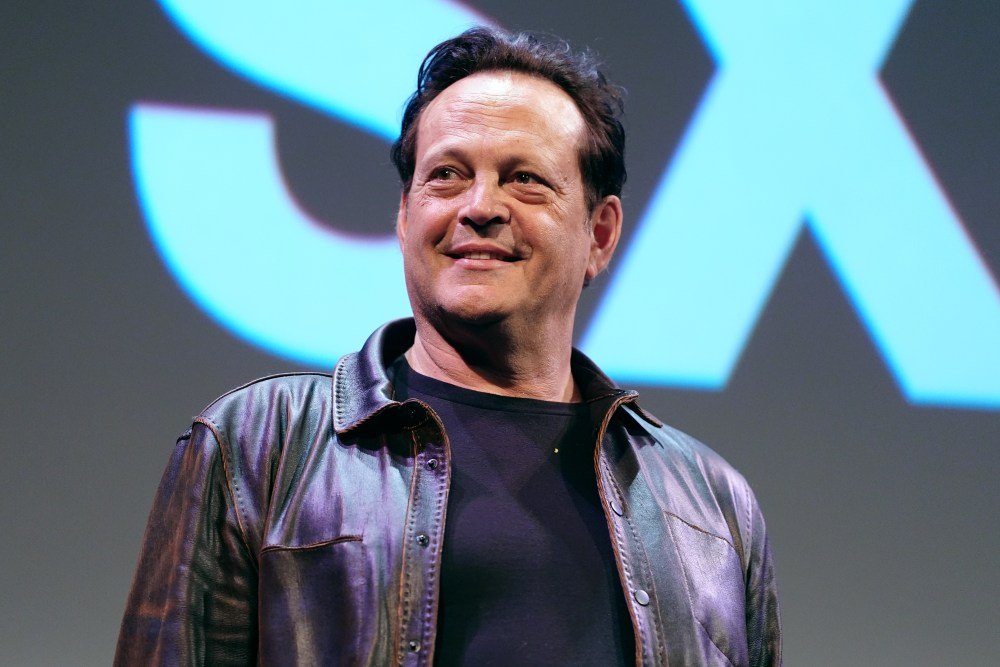
    Vince Vaughn stars opposite himself in the action comedy “Mike & Nick & Nick & Alice,” an R-rated gangster movie that had SXSW in stitches during its Saturday night world premiere.

    Out March 27 on Hulu, the film, directed by BenDavid Grabinski, follows mobster Nick (Vaughn), who travels back in time so that Future Nick and Present Nick can save fellow gangster buddy Mike (James Marsden) from being murdered. Eiza González plays Alice, a woman caught between these two dangerous men, as the four of them (does that add up?) face assassins, kingpins and coke-sniffing henchmen. The ensemble includes Keith David, Jimmy Tatro, Stephen Root, Lewis Tan, Ben Schwartz, Emily Hampshire and Arturo Castro.

    Grabinski introduced the film by reading some remarks written on his phone. “This following speech was saved in my Google Docs as the speech I’d give if ‘Mike & Nick & Nick & Alice’ wins an MTV Movie Award,” he said. “But I’m pretty sure those don’t exist anymore, which sucks shit.”

    Setting the stakes, he added, “Movies are the best thing in the entire world. Movies are why I get up in the morning. Movies are why I exist. Movies bring me joy, and you are all about to watch a fucking movie. It’s a movie made by a major studio with movie stars and jokes and fights and surprises and explosions, a lot of music and a time machine.”

    The movie is full of laugh-out-loud moments and absurd, violent fight sequences. And — no spoilers — a famous action movie star makes a surprise cameo as a hit man.

    “It’s just so nice to have an original idea made,” Vaughn said during a post-film Q&A.

    González, who also stars in another SXSW headliner, “I Love Boosters,” said she was “terrified” signing onto “Mike & Nick & Nick & Alice” because “I’ve never done comedy.”

    “Be kind to me,” she pleaded with the audience. “This is the first I’m doing it. I was really nervous.”

    Vaughn assuaged his co-star’s nerves: “I thought you were super funny. It’s so surprising to hear you say you were nervous, because you were so confident. You had so many great ideas, and I thought you were terrific in the film.”

  • ‘SNL’ Tackles the Oscars: Tucker Carlson Rants About Liberal Movies, ‘Weekend Update’ Hosts Ponder Drone Attack and Best Actor Race 

    ‘SNL’ Tackles the Oscars: Tucker Carlson Rants About Liberal Movies, ‘Weekend Update’ Hosts Ponder Drone Attack and Best Actor Race 

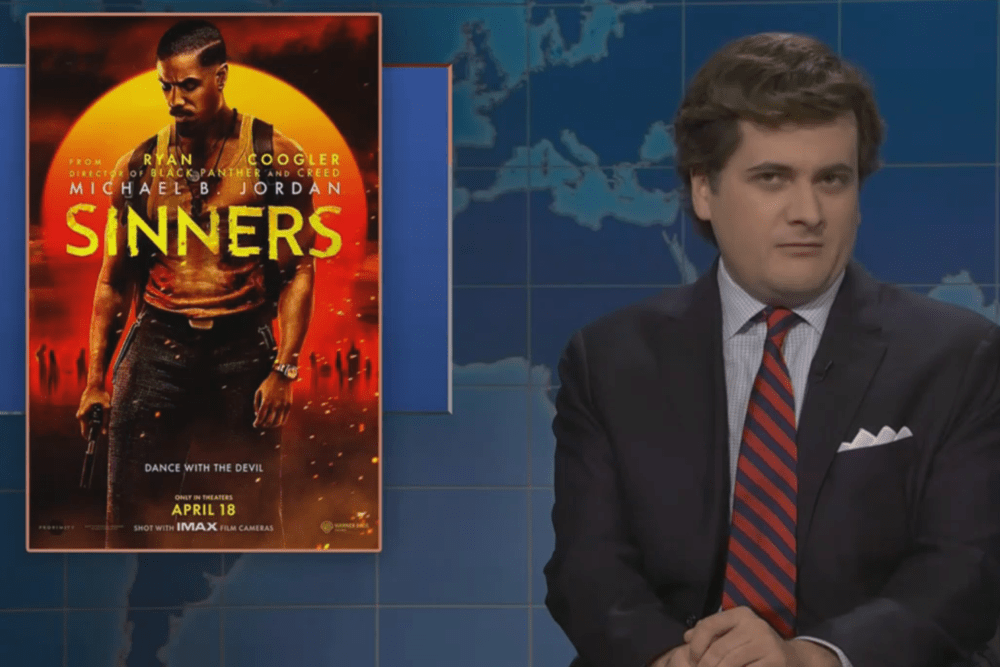
    Ahead of Hollywood’s Big Night, SNL‘s “Weekend Update” featured “conservative commentator” Tucker Carlson, played by Alex Moffat, to talk about the “liberal politics influencing the awards too much.”

    “Why don’t we talk about “Sinners.’ That’s right, ‘Sinners,’” Moffatt’s Carlson says when asked his thoughts on this year’s leading best picture nominees. “Leftist woke America’s favorite movie this year is about sinning, huh? Really, why does that not surprise me? Sorry kids, we don’t go to church anymmore, we go to ‘Sinners.’ That’s the rule. That’s the goal now.”

    He went on to take jabs at the rest of this year’s nominees, including “Hamnet.” “Because we’re not allowed to say ‘Hamlet’ anymore — They took the ‘L’ and gave it to the ‘gbtq.’”

    His alt-right take on “Bugonia”? “I guess heterosexual women aren’t allowed to have hair anymore,” he said, nodding to Emma Stone’s shaved head in the best picture nominee. “They have to shave their heads instead of their armpits. And I’m supposed to be attracted to that? No. Oh! Don’t look at my breasts, look at my scalp.”

    He went on to mention “One Battle After Another,” leading this year’s nominees alongside “Sinners,” saying, “What is this? What’s going on? I’m genuinely asking, I did not see that movie.”

    The segment began with Michael Che and Colin Jost reading jokes about Donald Trump’s war on Iran, including one about a potential drone attack on the Oscars ceremony. “The FBI has reportedly warned police departments in California that Iran could retaliate by launching drones at high-profile targets on the West Coast…The Oscars, tomorrow on NBC!”

  • ‘Hokum’ Review: Adam Scott is Trapped in a Haunted Irish Hotel in Effectively Unnerving but Convoluted Horror

    ‘Hokum’ Review: Adam Scott is Trapped in a Haunted Irish Hotel in Effectively Unnerving but Convoluted Horror

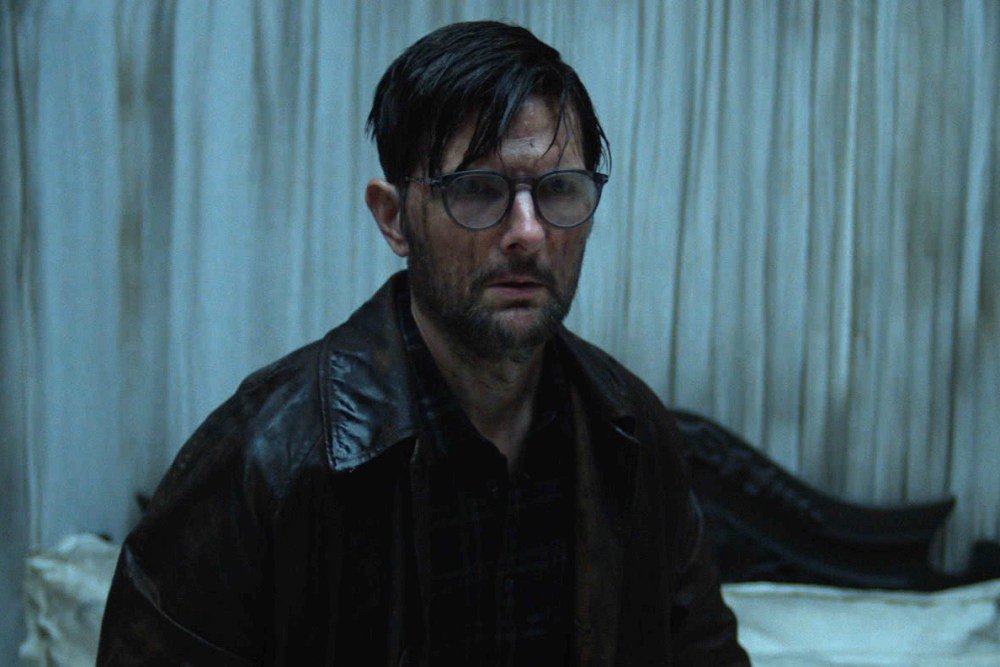
    In “Hokum,” a new supernatural horror outing from Irish filmmaker Damian McCarthy, an American writer, Ohm Bauman (Adam Scott), finds himself on the verge of finishing his popular book series about a conquistador with a bleak ending. McCarthy opens the film in the desert with the conquistador from Ohm’s imagination about to commit murder. The scene is interrupted when in the scribe’s home, shrouded in darkness, eerie sounds distract him from what’s on his digital page. The jump scares start there but will only intensify when Ohm travels to the wooded area in Ireland where his now deceased parents spent their honeymoon.

    With two other horror features to his name (“Caveat,” “Oddity”), McCarthy has mastered how to conjure up unnerving scenes in mundane spaces, but in this case the accumulation of ideas inside his cauldron makes for a convoluted concoction.  

    During the first act, McCarthy plants several characters in and around the charmingly outdated hotel where Ohm is staying for the viewer to suspect of wrongdoing later on. There’s the elderly owner (Brendan Conroy), whose only scene sees him spook a pair of children by telling them about a vicious witch from folktales. Witnessing this interaction with disdain, Ohm reveals his antagonistic personality. He wants to be left alone to work, but he’s an author of substantial fame, so the employees, among them the well-meaning receptionist Mal (Peter Coonan), are curious about his visit. Scott plays to his strengths as a performer with an ironic demeanor well-versed in deadpan humor. In an early scene, he viciously belittles timid bellhop and aspiring writer Alby (Will O’Connell). Scott inflicts Ohm’s nonchalant meanness with a piercingly perverse matter-of-factness that places the character as far away as possible from the realm of likeability. He’s an arrogant jerk.

    Lurking in the forest is Jerry (David Wilmot), a vagabond living in his van, whose animosity with Fergal (Michael Patric), the inn owner’s prickly adult son, will play a role in how the days ahead will go haywire. And then there’s Fiona (Florence Ordesh), a bartender whose exchange with Ohm introduces him to the mystery of the honeymoon suite, which hasn’t been used in years. Fiona and Alby suggest the reason could be the presence of a witch. Ohm, a cynical skeptic, dismisses their claims. On that same night, Halloween, a suicide attempt, and a disappearance rattle the old hotel. McCarthy then thrusts Ohm into a pursuit of the truth, and of Fiona’s whereabouts. He eventually arrives in the dreaded honeymoon suite.

    The time that Ohm spends trapped in that off-limits room, overnight and in near darkness save for a small lamp, packs the film’s most effective scares, but even as information about what’s occurring at this establishment comes to light, more questions about how it’s all meant to fit together arise. The talent of cinematographer Colm Hogan maintains every object and Scott legible to the eye during this extended passage where everything appears coated in gray hues. The hotel’s outdated amenities and overall look — you can almost whiff a musty odor emanating from its dusty fixtures — lend themselves to the narrative: an old bell that communicates with reception or what looks like a dumbwaiter that goes down to the basement are integral to how the plot unfurls. McCarthy astutely uses specific production design elements to heighten the uneasiness of these sequences.

    Nightmarish visions of Ohm’s childhood involving his mother suggest that his personal trauma is also haunting him here, not only the witch that Alby claims to have seen before. Though intensely disturbing, a scene where a TV shows a distorted iteration of a character that Ohm watched as a kid rings out of place, even if the context involves his mother’s tragic passing. On top of these apparitions, a human foe, whose motives for committing a crime seem rather nebulous, also exists. The combination of ghosts, dark magic practitioners, and a flesh-and-blood villain turns “Hokum” into an overstuffed, otherworldly entanglement. In that sense, the content lives to its title as a collection of larger-than-life bizarre elements.

    McCarthy’s previous effort, “Oddity,” about a spirit haunting a home, was a more focused exploration of unseen presences interacting with the mortal plane with righteous intentions. Nonetheless, there’s plenty of terror inducing imagery in “Hokum” that will satisfy the craving for a visceral scare. These shots mostly come in the form of horrifying faces or masks that momentarily peek through the darkness. Probably none of them match the shock of one particular instance in “Oddity,” but McCarthy knows the language and timing to deploy these moments and succeed at jolting the audience.

    McCarthy subverts expectations in that most characters reveal themselves to be the opposite of the archetypes they were broadly painted as, and yet that doesn’t make “Hokum” feel more original. The filmmaker’s desire to give Jerry a bit of a back story beyond his life on the outskirts of society doesn’t extend to any of the other characters but does somewhat bond him to Ohm in a morbid manner: they both feel judged over the death of a loved one. Buoyed by Scott’s level-headed turn — he doesn’t transform into a scream king — “Hokum” is a proficient horror exploit, which hinges on atmosphere instead of gore, even if its many frightening threads feel disjointed, like rooms in distinctly different hotels.