Tag: Entertainment-Variety

  • ‘Harry Potter’ First Look: The Wizarding World of Hogwarts Is Revealed

    ‘Harry Potter’ First Look: The Wizarding World of Hogwarts Is Revealed

    Welcome to Hogwarts! A first look at the fictional school of witchcraft and wizardry from HBO’s upcoming “Harry Potter” series has finally been unveiled.

    The photo, posted to the show’s official Instagram page, shows Harry (Dominic McLaughlin) from behind as he walks towards the quidditch pitch while wearing a red and gold cloak, which represents Hogwarts’ Gryffindor house and has his last name and player number on the back. Ahead of him is a large group of students entering the pitch, which is displaying flags for Gryffindor and Hufflepuff. See the full photo below.

    Mara LePere-Schloop, a production designer whose credits include “Interview With the Vampire” and “Pachinko,” is behind the look of the school for the new series.

    “Harry Potter” is currently in production at Warner Bros. Studios Leavesden in the U.K. Along with McLaughlin, the cast includes Alastair Stout as Ron Weasley, Arabella Stanton as Hermione Granger, John Lithgow as Albus Dumbledore, Janet McTeer as Minerva McGonagall, Paapa Essiedu as Severus Snape, Nick Frost as Rubeus Hagrid and more. See a full cast guide here.

    HBO’s adaptation of J.K. Rowling’s famous book series-turned-movie franchise is being led by showrunner Francesca Gardiner and director Mark Mylod. Executive producers include Rowling, Neil Blair, Ruth Kenley-Letts of Brontë Film and TV and David Heyman of Heyday Films. The series will follow young Harry as he discovers he’s a wizard, leaves his Muggle family behind and sets off to attend Hogwarts. Along the way, he befriends Ron and Hermione Granger and battles Lord Voldemort.

  • BTS Play First U.S. Concert in Four Years at Chilly but Intimate Invite-Only Spotify Event in New York

    BTS Play First U.S. Concert in Four Years at Chilly but Intimate Invite-Only Spotify Event in New York

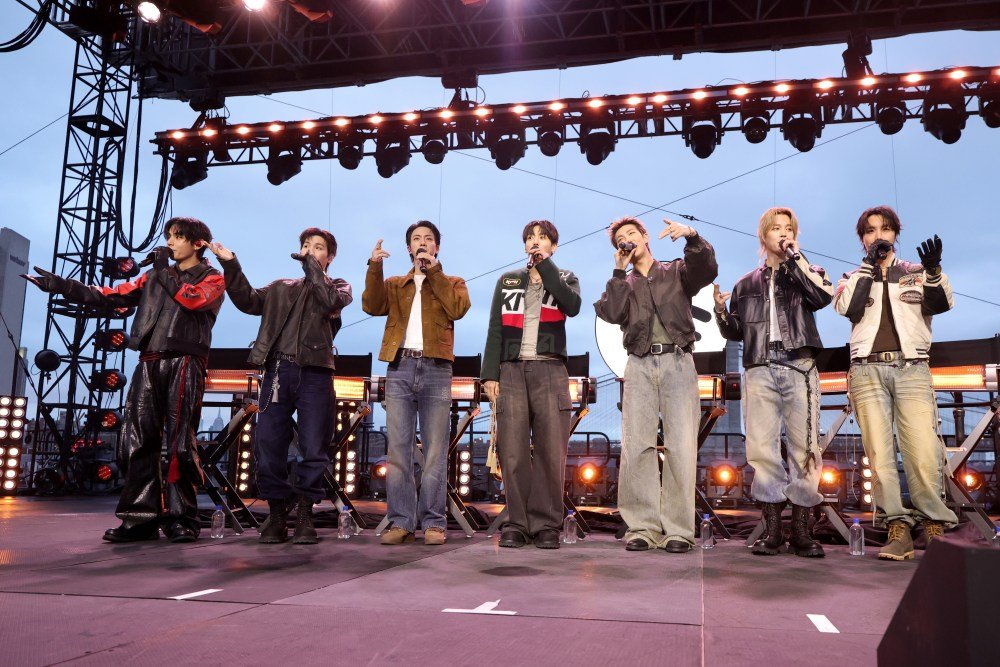
    Just two days after their epic reunion concert at Seoul’s Gwanghwamun Square, BTS performed a second show some 7,000 miles away — at New York’s Pier 17 for an exclusive fan event with Spotify on Monday titled “Spotify x BTS: Swimside.”

    The name of the event was loosely tied to “Swim,” a track from the group’s new album, “Arirang,” as was the location: Pier 17 is located at the top of a five-story building in the city’s Seaport neighborhood, and although New York enjoyed unusually warm temperatures last weekend, the weather gods went in the other direction on Monday night: temperatures hovered in the 40s during the day and even dropped into the 30s as the evening progressed, combining with the wind, the elevation and occasional light rain to make for a frigid experience for the 1,000 specially invited fans who were treated to a brief Q&A with the seven members led by British singer Suki Waterhouse, followed by a three-song performance.

    However, the setting was stunning: Facing the stage, fans — who were selected because they were the area’s top BTS streamers on the platform — could see the New York City skyline to the left and the Brooklyn Bridge to the right, with the Statue of Liberty, the Wall Street district and the harbor at their backs. It was an intentionally iconic setting for the group’s first U.S. performance of songs from “Arirang” and their reunion as OT7.

    (L-R) Suga, V, Jin, Jungkook, RM, Jimin, and J-Hope of BTS (Photo by Kevin Mazur/Kevin Mazur/Getty Images for Spotify)

    Kevin Mazur/Getty Images for Spo

    And as they always do, the fans — aka BTS’ Army — turned up and turned out. Word of the concert’s location leaked out early in the day and fans lined up hours in advance, enduring the cold winds and rain to secure a spot closest to the stage. Yet despite the conditions, their enthusiasm never faded, as they cheered, sang along and waved special hand-held “Army Bomb” lights.

    The event kicked off with the Q&A moderated by Waterhouse, which included some queries submitted by fans. “It’s really an honor for us to do our first stage in America here,” the group’s RM said. “Thanks to Spotify for giving us this chance. And thank you for being together again with us

    When asked “What is the message you’d like to leave for the Army in this album?” RM replied, “First is that we are here — second is that we are here together.

    “It’s been four years but now we’re here,” he continued, referencing the group’s hiatus due to their service in the South Korean Army. “We seven, and with you all, Army. We, with you, can take over the world.”

    In the second half of the Q&A, BTS got a bit casual by playing a game called “Alien vs. Normal,” referring to two tracks from their “Arirang” album. That segment of the Q&A became comical when RM jokingly called out Jimin for never being on time because “he spends too much time on the toilet,” and Suga admitted that he actually hates swimming because he doesn’t like the water.

    Another question asked, “Is it Alien vs. Normal to change your clothes once you get home?” Jimin replied, “Typically when I get home, I’m naked,” which caused the crowd to start shouting. Jung Kook joined in while RM and Jimin shook their heads.

    During a 20-minute intermission before the performance, the fans showed just how dedicated they are: “Arirang” had been out for just three days, but as songs from the album played, the gathered Army sang along to every word, waving their Army bombs in sync. The group then took the stage to perform the album tracks “2.0,” “Normal” and of course “Swim.”

    Some fans held up red hearts that read “We Stayed!” and waved them throughout the performance. Their efforts paid off at the end of the night, when V acknowledged them by shouting, “You stayed? Army stayed?” before the group walked offstage.

    As the shivering but exhilarated fans made a quick exit, all made enthusiastic comments about the performance, the album, how far the group has come the cultural impact they’ve had in South Korea and beyond. But one fan spoke for all when she said, “I’m just happy to see them all together again.”

  • Doc10 Unveils Lineup, Billie Jean King Film ‘Give Me The Ball!’ to Open Festival

    Doc10 Unveils Lineup, Billie Jean King Film ‘Give Me The Ball!’ to Open Festival

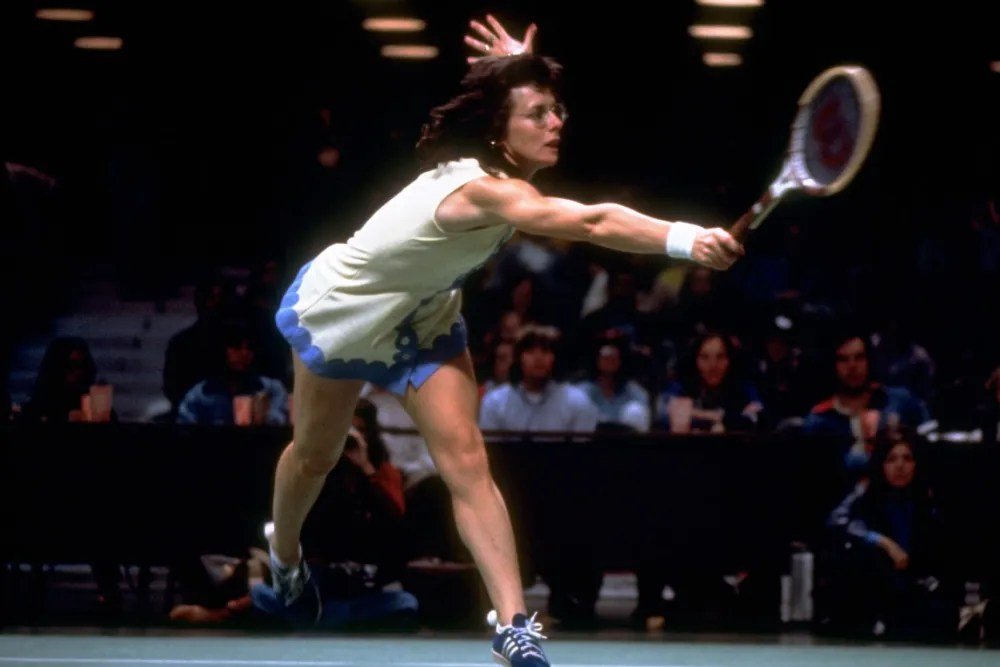
    Give Me The Ball!,” an upcoming ESPN film, will open the Doc10 film festival’s showcase of documentary cinema on April 30.

    Screening at the Davis Theater, “Give Me The Ball!” tells the true story of American tennis player Billie Jean King through interviews with King, who delves into her “competitive drive on the court as well as her private struggles with her sexual identity.”

    The festival’s 11th edition will close on May 3 with “Knife: The Attempted Murder of Salman Rushdie,” which chronicles the 2022 violent assault against world-renowned author Salman Rushdie. A Q&A with Rushdie, director Alex Gibney and poet Rachel Eliza Griffiths will follow the screening.

    Doc10’s slate also includes the latest projects from other acclaimed documentary-makers, including two-time Oscar nominated filmmaker Maite Alberdi (“The Mole Agent”) with her film “A Child of My Own,” about a woman desperate to be a mother, who faked her own pregnancy, and Ross McElwee’s “Remake,” which focuses on the juxtaposition of the death of his son and an awkward Hollywood development deal.

    Other highlights include “Soul Patrol,” about the first elite unit of Black special ops fighters in the Vietnam War; “Everybody to Kenmure Street,” which follows a 2021 immigration raid in Glasgow and the community’s rallying response to stop their neighbors’ deportation; and “The Baddest Speechwriter of All,” about Martin Luther King Jr.’s trusted lawyer and speechwriter, directed by Ben Proudfoot and Stephen Curry.

    “If I had to come up with a theme for this year’s selection, it would be perseverance,” said Doc10 Senior Programmer Anthony Kaufman. “Many of our films follow people who are fiercely determined, whether Billie Jean King, Salman Rushdie, or Amy Goodman; a father relentlessly searching for his missing son; a would-be mother who desperately wants a child; American doctors bravely trying to provide medical care in Gaza; or even Girl Scouts tenaciously selling cookies. Perhaps these are exactly the kind of
    stories we need right now.”

    For more information, visit doc10.com.

  • UFC Legend Georges St-Pierre Biopic in the Works From Director Thomas Soto (EXCLUSIVE)

    UFC Legend Georges St-Pierre Biopic in the Works From Director Thomas Soto (EXCLUSIVE)

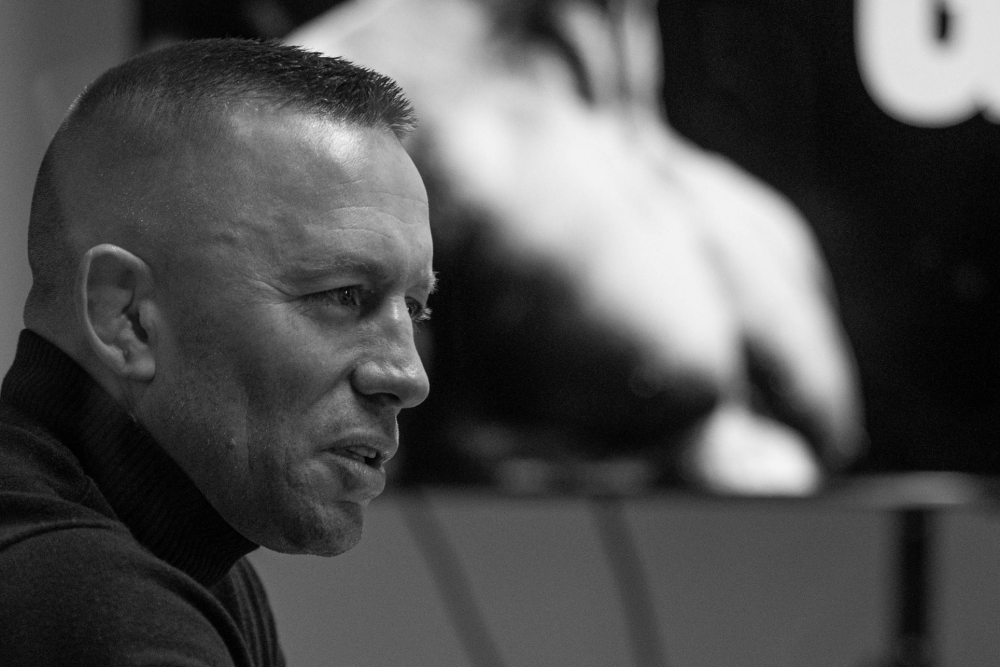
    Georges St-Pierre, one of the most dominant champions in UFC history, is getting the big screen treatment. A movie about the mixed martial arts icon is officially in development, with Quebec director Thomas Soto attached to helm the project.

    “We have been considering telling my story for a moment now, and when we found this team it was clear to us that we wanted this to be told in a new creative way,” St-Pierre said in a statement.

    The biopic will trace St-Pierre’s journey from Saint-Isidore, Quebec, to Octagon history, becoming a two-division champion at the UFC. The filmmakers say they want to strip away the myth of “GSP the global icon” to “reveal Georges, the man.”

    The project is led by executive producers Brandon St-Jacques and Jean-Christophe Pelchat, alongside producers Bruno Rosato and Vito Balenzano. Casting will be announced at a later point.

    Soto has earned a Rising Star Award nomination from the Academy of Canadian Cinema and Television. Working as a writer, director and director of photography, Soto’s credits include his short film “Hold the Lighthouse”, the final season of the CBC television series “Six Degrees”, and the series “Still I Rise” on
    Crave.

    “I want to tell the story of Georges behind GSP in a way that feels intimate, honest and deeply human,” Soto said in a statememnt. “To me, bringing that story to the world is both a privilege and a responsibility.”

    St-Pierre is widely regarded as one of the greatest mixed martial artists of all time. He is both a welterweight and middleweight champion, who retired with a professional record of 26-2 and has since appeared in films including “Captain America: The Winter Soldier” and “Kickboxer: Vengeance.” Beyond fighting, St-Pierre is a businessman, philanthropist, and cultural ambassador for Quebec and Canada.

    St-Pierre is represented by Benji Bar David at CAA.

  • Jon Bernthal’s ‘Punisher’ TV Special Titled ‘One Last Kill” and Sets May Release Date, Same Day as ‘Daredevil: Born Again’ Season 2 Finale

    Jon Bernthal’s ‘Punisher’ TV Special Titled ‘One Last Kill” and Sets May Release Date, Same Day as ‘Daredevil: Born Again’ Season 2 Finale

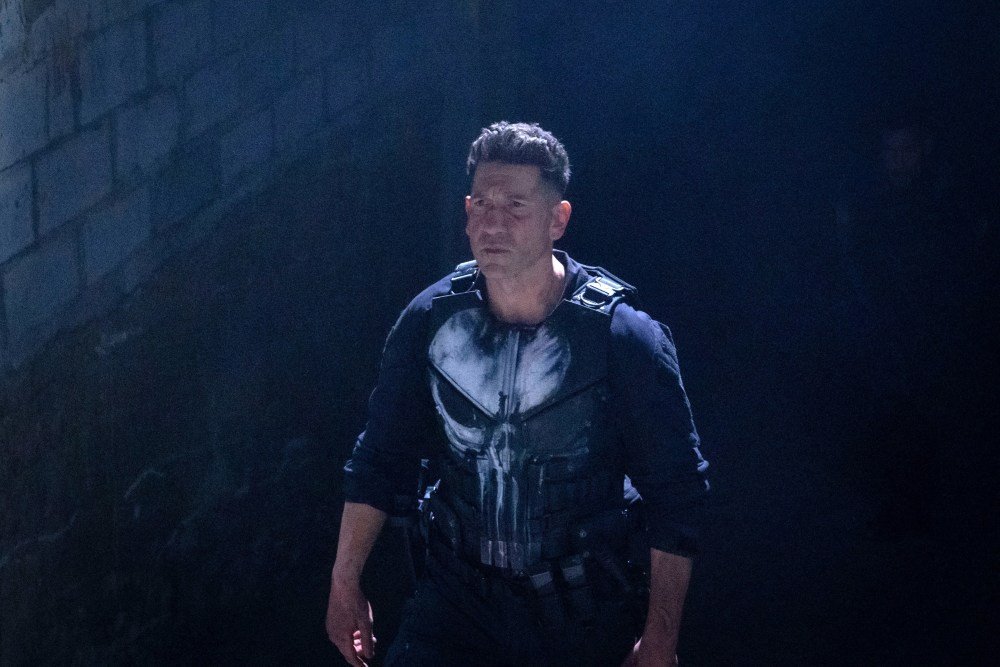
    After returning in “Daredevil: Born Again” Season 1, Jon Bernthal is back for his Marvel Special Presentation, “Punisher: One Last Kill,” set to release May 12 — the same day as the “Daredevil: Born Again” Season 2 finale.

    Bernthal originally starred as Frank Castle in Season 2 of Netflix’s “Daredevil” series in 2016. He faced off against Charlie Cox’s blind vigilante, and later teamed up with him. Castle, a military veteran driven to vengeance after the massacre of his family, proved to be popular enough to headline his own “Punisher” spinoff show that ran for two seasons from 2017 until 2019.

    Netflix’s street level heroes, including Bernthal’s Punisher, Cox’s Daredevil and Krysten Ritter’s Jessica Jones, slowly made their way back into the MCU. After his Netflix show ended, Cox reprised his role as lawyer Matt Murdock in “Spider-Man: No Way Home,” then “She-Hulk: Attorney at Law” and “Echo.” In 2025, he starred in the revival series “Daredevil: Born Again” on Disney+, which was the first M-rated Marvel series. Bernthal also appeared on the show, reuniting with Cox and teaming up with him against corrupt New York City mayor Wilson Fisk (Vincent D’Onofrio), aka the Kingpin. After the success of “Daredevil: Born Again,” which is renewed through Season 3, it was revealed Bernthal would star in his own Punisher MCU special.

    But that’s not all for Bernthal’s character: He’ll also appear in “Spider-Man: Brand New Day” with Tom Holland. Fellow MCU characters like Mark Ruffalo’s Hulk and Michael Mando’s Scorpion from “Spider-Man: Homecoming” will also reappear in the movie.

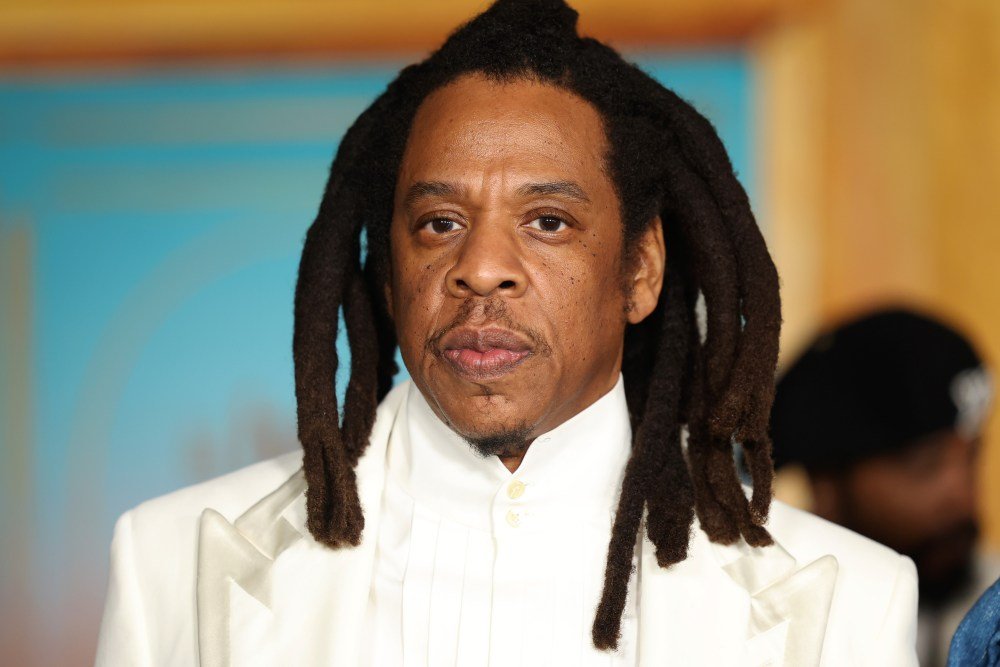
  • Jay-Z Says Kendrick-Drake Beef Went Too Far by ‘Bringing People’s Kids In,’ Explains Why He Refused to Settle Sexual Assault Lawsuit: ‘I Would Die’

    Jay-Z Says Kendrick-Drake Beef Went Too Far by ‘Bringing People’s Kids In,’ Explains Why He Refused to Settle Sexual Assault Lawsuit: ‘I Would Die’

    The past decade has taught us to wake up to surprises, but it’s probably safe to say Jay-Z’s first interview in many years — let alone a sprawling conversation drawn from four hours of interviews — was not very high on the list of possibilities.

    In a long, long interview with GQ senior editor Frazier Tharpe tapping out at nearly 8,000 words — and in advance of his concerts at Yankee Stadium and the Roots Picnic this summer — Jay talked about a wide range of topics, from his early career to being a billionaire, being a father, being a Black businessman, the painful sexual-assault lawsuit he refused to settle last year, and much more.

    Yet the item the streets — both today’s and the ones he came up in 40 years ago — are most hungry for is probably his thoughts on the Kendrick LamarDrake beef and Lamar’s Super Bowl performance.

    That part of the conversation begins with Jay’s thoughts his Roc Nation company overseeing Super Bowl’s Halftime talent. “For a lot of years, it was only one side of music that was being represented for whatever reason,” he says, clearing noting that most of the talent before he took the helm in 2019 was white and male. “We got the opportunity to create a more balanced idea of what popular music is today. I’m not going out on a limb. These are the most famous people in the world. I didn’t pick the indie artist that I really like from Portland. [This was] the number one streamed artist in the world. ‘I got an idea, let’s let him [Bad Bunny] play.’ [Laughs.] It’s Rihanna!”

    The interviewer then suggests how much Jay must have enjoyed Lamar’s performance last year because it was a solo rap headliner.

    “Yeah, for sure,” Jay replied. “[Lamar] could have made it a little easier on himself. The artistic choice to play the new album was brave in front of that big of an audience. Because even if 10 million people know some of these songs, there’s 120 million people that’re like, ‘What is he doing?’ As an artist, to stand up there and do it and complete your vision — I had to tip my hat. I had high respect for him already, but, like, even more my respect was like: He’s really about what he says he’s about.”

    The interviewer then references Jay’s early ‘00s beef with Nas, saying, “As someone who was part of the genre’s biggest rap beef —” before Jay interjects, “Well, until now.” — the interviewer completes the thought, “As a spectator, what did you think of the 2024 back-and-forth between Kendrick and Drake?”

    Jay then takes a long route to getting to what he describes as, “an answer you’re not going to like. Well, I don’t know if you’re going to like it. That’s presumptuous. There are four pillars of hip-hop. There’s breakdancing, graffiti, there’s DJ’ing and battling. Breakdance is not at the forefront of rap anymore. It’s actually an Olympic sport. So that’s dead [laughs]. Graffiti, beautiful in certain places. It’s not part of hip-hop. The DJ was in the forefront. It was Jazzy Jeff and the Fresh Prince. Eric B. and Rakim. You don’t even know the DJ for half of the artists anymore. And the last pillar is battling. We love the excitement and I love the sparring, but in this day and age there’s so much negative stuff that comes with it that you almost wish it didn’t happen.”

    He continues, “Now, people that like Kendrick hate Drake, no matter what he makes. It’s like an attack on his character. I don’t know if I love that. I don’t know if it’s helpful to our growth where the fallout lands, especially on social media.

    “It’s too far. It’s bringing people’s kids in it. I don’t like that. I sound like the old guy wagging his finger, but I think we can achieve the same thing, as far as sparring with music, with collaborations more so than breaking the whole thing apart. It could stand it before because there was no social media. You had the battle and it was fun and then you moved on. Right now, I don’t know if it could stand it with the technology that we have.

    He concludes, It’s like trying to tear down people’s lives. I don’t know if it’s worth it at this point. I love the idea that we got so much music in such a short period of time. Just everything around it was like, ‘Man, this is taking us a couple steps back.’ We’ve just grown so much that — I guess I’m going to say it — I don’t know if battling needs to be part of the culture anymore. We grew from breakdancing. We love graffiti. Before, the MC’s job was to bring attention to the DJ…. I want to hear what the rapper is saying.

    “Now the last pillar is battling, and these are all the things that come with it. I hate that I have this point of view on it. I do. Because I know what it sounds like. It’s just how I feel about it.”

    Jay later added to his comment, saying, “There is clearly an agenda to silence voices in our community, a heavy right wing agenda. And the culture is happily playing along in the name of this insane thirst of Stan culture to have something on the other side. We are in a strange time. I’m curious as to how this plays out!”

    The interviewer then noted that Jay’s choice of Lamar for the Super Bowl made it seem like he was choosing side.

    “I chose the guy that was having a monster year,” he replied. “I think it was the right choice. What do I care about them two guys battling? What’s that got to do with me? Have at it. They drag everybody in it, like everyone’s part of this conspiracy to undermine Drake, I guess. But, it’s like, what the fuck? I’m fucking Jay-Z! [Laughs.] All due respect to him. I’m fucking Hov. Respectfully. It doesn’t make any sense. It couldn’t be that these guys just don’t like each other. I think this has been brewing, just like me and Nas was brewing. It didn’t happen at the Summer Jam — that happened with ‘Lex with TV sets, the minimum.’ It was a whole bunch of stuff leading up to that point. I actually regret that because I really like Nas. He’s a really nice guy.

    Jay later added, “I realize it’s a bit hypocritical because of how many battles I’ve been in, and given the nature of ‘Super Ugly.’ It takes growth to arrive at this place, because I’ve done the bullshit too!”

    Yet he ends on a positive note, saying, “I’m careful because I always hear that person talking about the new culture of folks. And I always was like, “Shut the fuck up. You had your time.” So I’m really careful to let people just do their thing…  I accept it all. I trust that you guys are going to take it in a proper direction.”

    Surprisingly, the interview starts with the sexual-assault lawsuit, the gravity of which becomes apparent because it’s Jay’s answer to the interviewer’s question, “How was your 2025?”

    “It was hard,” Jay replies. “Really hard. I was heartbroken. I’m glad we got right to that so we could just get that out the way. Like I was really heartbroken by everything that occurred. We’re in a space now where it’s almost like consequence is not thought about enough. Because everything is so instant, you know what I’m saying?

    “That whole [lawsuit thing], that shit took a lot out of me,” he continues. “I was angry. I haven’t been that angry in a long time, uncontrollable anger. You don’t put that on someone — that’s a thing that you better be super sure. It used to be like that. You had to be super sure before you put those kind of things on a person. Especially a person like me. Even when we were doing the worst things, we had those kind of rules. There was a line: no women, no kids. You hear those sayings, but those are the things that I took from the street. We lived and died by that. So it’s strict for me, like it meant a lot to me.

    “I took that really hard. I knew that we were going to walk through that because, first of all, it’s not true. And the truth, at the end of the day, still reigns supreme.”

    He then explained why he chose to fight the lawsuit rather than the arguably simpler course of settling. “I can’t take a settlement — it ain’t in my DNA,” he said. “First of all, first I had to tell my wife. Let’s back up. I know the weight that this is going to bring on our family. I can’t do it. I would die.

    “If I settled — make that thing go away. And for me, it would’ve been cheaper? Yes. Cheaper, quicker, move on with your life. I knew what was coming. I wasn’t naive. I called — again, after my family — my partners. They were like, ‘What do you need to help? Don’t even worry.’ In a phone call. Not even a: ‘I got to go to the board with this.’ It was like a testament because people know me. Like: ‘I know who you are and that’s impossible. Not only are we standing by you, but what do you need?’

    Asked how he’s been recovering, he said, “I’m still dealing with that. Because that’s a horrible thing to put on someone. It was like released the night of my daughter’s [movie] premiere,” for “The Lion King.”

    He even said he briefly considered the possibility of not attending, “because this is her moment,” he said. “But our family, we are a tight unit. Blue has this jersey with ‘Jay-Z’ on the back. She put it on one day. She went to school with the “Jay” [points to his back]. I was just in the corner, like tears coming down. Seriously. To have that, it’s priceless. People can say that [they’ll always be there for you], but it’s very rare that you’re going to have to exercise it. And in the darkest moment for me, I got to see those sorts of things.”

    Read the full interview here.

  • TV Academy Reveals New Eligibility Rules for Prop Masters

    TV Academy Reveals New Eligibility Rules for Prop Masters

    Property masters are now eligible for active voting or associate membership within the Television Academy.

    The Academy created a new Property Masters subgroup within the Directors Peer Group for individuals who have advanced the art of storytelling through their craft as a Property Master.

    The Academy’s membership committee, chaired by Jo DiSante, has been working closely with the Property Masters Guild to develop criteria for the inclusion of this community’s members who have significant creative impact on the productions on which they work.

    DiSante said, ““Property Masters are industry professionals who make significant contributions to television production. We are thrilled to be able to welcome them into the Television Academy.”

    The Television Academy consists of 31 peer groups, each representing specific fields of expertise within the television industry.

    According to the new rules, applicants must meet requirements of the new subgroup to be considered for membership, including: Employment for a minimum of two years within the last four years with screen credit as property master or assistant property master; credits on a minimum of 15 episodes of scripted drama, comedy or sketch series; or credits on five long-form programs, defined as a television movie or special running one and one-half hours or more in length. Property Masters who work on game, talk, reality, and variety produced for television must include additional information with an overview of responsibilities and show a significant creative contribution to the program. 

    Earlier this year, the Television Academy also introduced new rules — including a new name for the TV movie category, which will now be known as “outstanding movie.” Also, the org revealed AI guidelines, in which it “reserves the right to inquire about the use of AI in submissions. The core of our recognition remains centered on human storytelling, regardless of the tools used to bring it to life.”

    The Academy included changes to the short form, sound mixing and music categories and also expanded eligibility in the casting, costume and lighting, camera & technical arts categories.

    The complete list of new rules for the 78th Emmys is here.

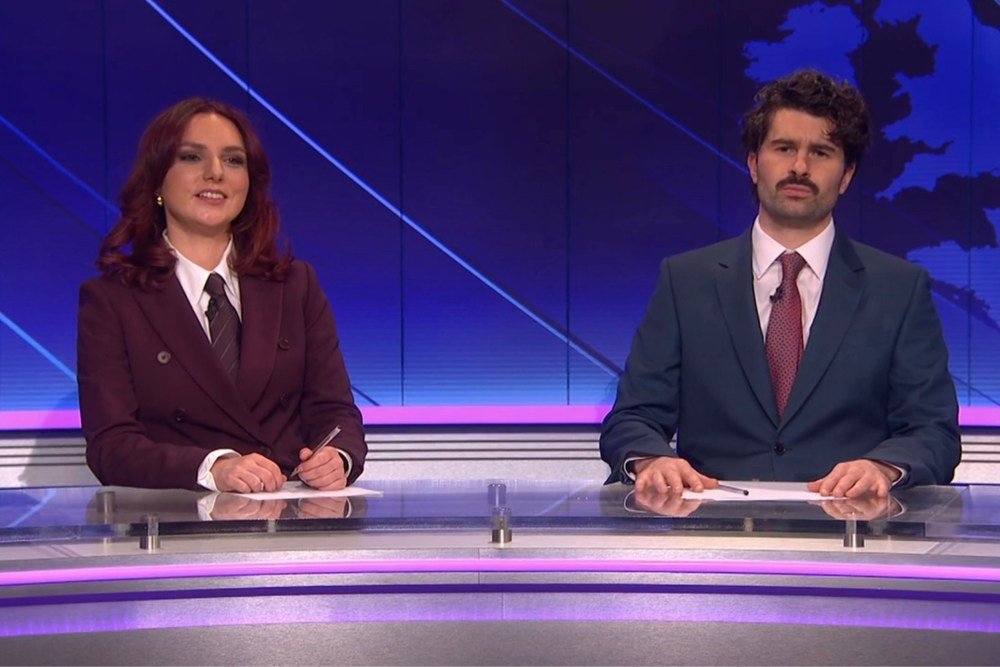
  • ‘SNL U.K.’ Budget No Joke at Estimated $2.6 Million Per Episode (EXCLUSIVE)

    ‘SNL U.K.’ Budget No Joke at Estimated $2.6 Million Per Episode (EXCLUSIVE)

    When Sky CEO Dana Strong described “Saturday Night Live U.K.” as a “major investment in the U.K. comedy eco-system” at a showcase for the broadcaster last week, it turns out she wasn’t joking. Variety understands that each episode of the British adaptation is costing around £2 million ($2.6 million).

    Variety has also learned that, unusually for a weekly entertainment production, “SNL U.K.” has hired the largest studio in central London’s Television Centre on a standing (exclusive) basis for the entirety of its eight-week run, meaning the cast and crew aren’t sharing the space with any other production. Nor will they need to disassemble sets and clear out of the offices, galleries, edit suites and storage spaces in between episodes. It’s a luxury few productions can afford these days as budgets are tightened.

    The studio, the 10,800-square foot TC1, is usually home to “The Graham Norton Show”—as Norton himself pointed out during “SNL U.K.’s” inaugural episode, when he popped up during Fey’s opening monologue. His show is not set to return until the autumn.

    It’s yet another sign of Sky’s faith in “SNL U.K.,” which was originally earmarked for only 6 episodes before a last-minute vote of confidence that saw it bumped up to 8 before the first episode had even been broadcast. At the Sky showcase five days before the inaugural episode aired, Strong described the show as “a point of pride for me” and “perhaps our most ambitious undertaking yet.”

    While the show’s weekly budget still falls far short of its Stateside counterpart’s rumoured $4 million (£3 million) per episode, it’s a figure that is almost unheard of for a topical sketch show in the U.K., even one running to 75-minutes.

    Insiders tell Variety that a typical British sketch show usually costs around £300-500,000 per episode, less than a quarter of “SNL U.K.’s” budget.

    They pointed out it’s one of the reasons the sketch show format has become something of a dying art in the U.K. “They’re expensive, which is why no one does them anymore,” says one entertainment veteran. “Topical shows also have no repeatability, unlike dramas.”

    As well as the exclusive studio hire for two months, a chunk of “SNL U.K.’s” budget will no doubt have gone on the 11-strong cast and team of 20 writers, not to mention the producing team, which includes “The Late Late Show With James Corden” vet James Longman as producer and “SNL” creator Lorne Michaels as exec producer, plus its numerous sets and costumes, many of which need to be produced with a tight turnaround as the writing team responds to current events.

    The ratings for the inaugural episode, hosted by Tina Fey, drew a respectable 226,000 viewers and a mixed bag of reviews. Scott Bryan, reviewing the first episode for Variety, said it risks being “too American” for a British audience but even where a sketch doesn’t always work “there’s enough one-liners to keep you going.”

    Online, and particularly YouTube, where “SNL” skits tend to have their most successful half-life, Fey’s opening monologue attracted over 1.6 million views in less than 48 hours, followed by the Keir Starmer cold open with 1 million views.

    Sky will no doubt now be waiting to see what the viewing figures look like next weekend, when “Fifty Shades” star Jamie Dornan takes over hosting duties from Fey, to see if their £16 million investment has been worth it.

    Comcast-owned network Sky, which is producing and broadcasting the series in the U.K., declined to comment.

  • Ex-Jockey Jo Lodder’s 59-Racecourse Run Gets Documentary Treatment From U.K.-China Film Collab (EXCLUSIVE)

    Ex-Jockey Jo Lodder’s 59-Racecourse Run Gets Documentary Treatment From U.K.-China Film Collab (EXCLUSIVE)

    A documentary is in development following former British professional jockey Jo Lodder‘s plan to run an unbroken course taking in every one of the U.K.’s 59 licensed racecourses this fall, raising money and awareness for charities focused on the racing community and mental health.

    Lodder, who now lives in Hong Kong, was a multi-winning professional jockey who competed for a decade across the U.K. and Europe before his career ended abruptly in his late 20s after he broke his back. He has since found a new sporting life in ultra-distance running, completing a number of major long-distance events.

    The documentary will be produced by Hiu Man Chan through NGO U.K.-China Film Collab, weaving together footage shot on the route with archive racing material and interviews with Lodder and figures from across the sport. U.K.-China Film Collab, whose previous credits include the Hong Kong documentary “Four Trails,” plans to pursue a tailored release strategy across festival and cross-border markets, with a focus on U.K., Hong Kong and international audiences.

    “Injury took racing away from me and I hid away. Now I’ve risen my head and seen how amazing the racing community is. I want to give back by running all 59 racecourses, telling their stories, and helping the less-seen people critical to our sport,” Lodder said.

    Chan said: “When I hear about Jo’s stories, I can already see a film. Oftentimes, the greater impacts are driven by an individual’s intense and unexplainable passion. It’s the extraordinary imagination and sometimes madness that will continue to inspire the next generation to question and reflect on life. With a similar determination, I hope to translate Jo’s journey into a cinematic endeavour.”

    The project is not Lodder’s first time as a documentary subject. In 2025 he featured in “Run China Run,” which chronicled his team’s 3,140km journey on foot from the Great Wall of China to Kai Tak Airport in Hong Kong, completed over 60 days.

    The project was developed over conversations at the U.K. Film Pavilion during FilMart 2026 in Hong Kong.

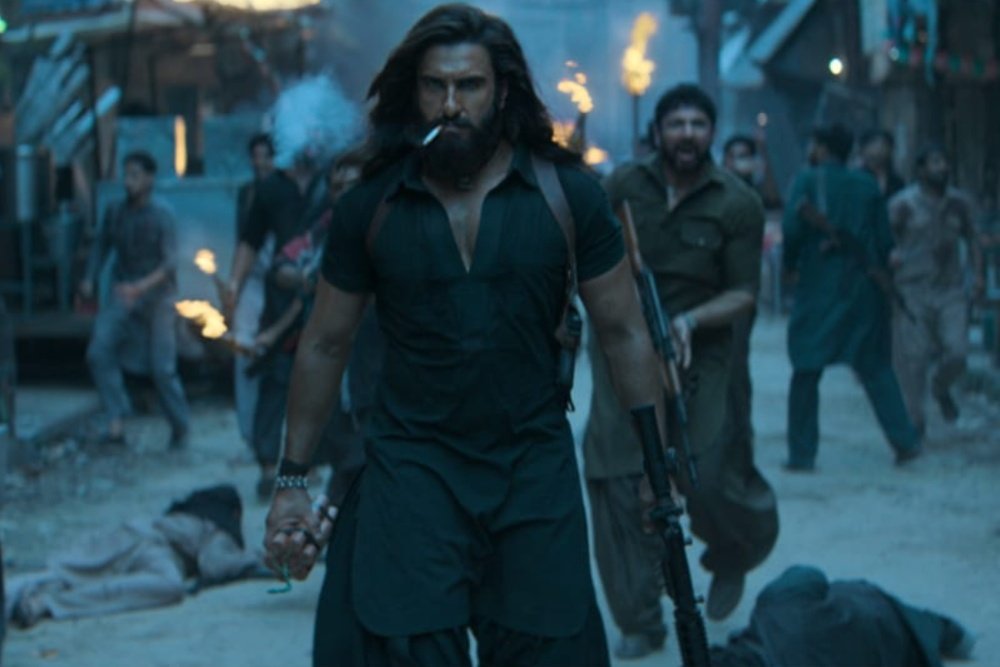
  • ‘Dhurandhar’ Headlines Record $2.18 Billion 2025 for Indian Film as Overall Media and Entertainment Sector Reaches $29.6 Billion

    ‘Dhurandhar’ Headlines Record $2.18 Billion 2025 for Indian Film as Overall Media and Entertainment Sector Reaches $29.6 Billion

    With “Dhurandhar” shattering records and 37 films crossing the INR1 billion ($10.7 million) box office threshold, India’s filmed entertainment segment posted its best-ever year in 2025, reaching INR205 billion ($2.18 billion) – part of a broader surge that lifted the country’s total media and entertainment sector 9% year-on-year to INR2.78 trillion ($29.63 billion), according to the FICCI-EY report “Stories, Scale and Impact: Unlocking India’s Media and Entertainment Economy,” released Tuesday in Mumbai at the FICCI Frames conference.

    The sector’s growth outpaced India’s per-capita GDP expansion of 7.7%, with digital media, advertising and live experiences the primary engines, even as select segments faced regulatory and cost pressures.

    Digital media emerged as the single largest segment of the industry, crossing $10.66 billion for the first time. India’s streaming market crossed $2.9 billion in 2025, with regional languages’ share of consumption rising from 27% in 2020 to 56% in 2025. Regional cinema now contributes over 65% of all films produced in the country. Total advertising revenues grew 13.5% to $15.98 billion, equivalent to 0.41% of India’s GDP. The sector is projected to reach $35.17 billion by 2028, growing at a compound annual rate of over 7%, with new media expected to constitute 53% of total revenues by that point.

    The M&E sector contributes around 0.8% of India’s GDP and provides direct employment to approximately 2.75 million people, with indirect employment extending to over 10 million. India produced almost 200,000 hours of content in 2025, a majority of it in regional languages other than Hindi, with 96% produced for television excluding news bulletins, 2% for films, 1% for streaming and 1% for short video and microdramas.

    Digital advertising rose 26% to $10.09 billion, accounting for 63% of total advertising revenues as brands continued to shift spending toward performance-led, measurable and commerce-linked formats. E-commerce and point-of-sale advertising surged 50% to $2.34 billion, a figure equivalent to 85% of linear television advertising revenues. Digital advertising also encompasses $3.87 billion from more than one million small and medium enterprises and long-tail advertisers. Advertising on Connected TVs rose from $735.3 million in 2024 to $1.06 billion in 2025 as Connected TV subscriptions grew 35% and delivered affluent audiences to marketers.

    Digital subscription revenues climbed 60% to $1.74 billion. Paid video subscriptions reached 216 million, spanning 143 million households, driven by premium sports and films placed behind paywalls. Paid music subscriptions grew 37% to 14.4 million. News subscriptions remain limited to 4 million, primarily owing to the abundance of free alternatives.

    Kevin Vaz, chair of the FICCI Media and Entertainment Committee, said the digital milestone was “a highly encouraging signal, underscoring the sector’s strong growth momentum,” and described Connected TV as complementing linear television by enhancing large-screen experiences. He added that “measured regulatory forbearance, coupled with innovation, will be critical in sustaining long-term growth.”

    The organized live events segment surged 44% to $1.55 billion, fuelled by ticketed concerts, personal functions such as weddings, government events and religious gatherings including the Maha Kumbh Mela.

    The film segment reached a record $2.18 billion. More than 1,900 films were released in 2025, with theatrical revenues rising 14%, mainly from higher ticket prices. Thirty-seven films earned $10.7 million or more at the box office, with “Dhurandhar” cited in the report as a record-setter for the year. Digital and satellite rights values declined 8% and 10% respectively, as buyers rationalized slates and adjusted values based on theatrical performance.

    Television continues to be the predominant medium in India, reaching approximately 745 million individuals weekly. Linear TV advertising revenue declined 10.3%, reflecting reduced advertising volumes as sectors shifted spend to digital and a 3% reduction in the number of advertisers using the platform. Subscription revenues decreased 8%, attributed to a loss of 11 million Pay TV households, though Free TV and Connected TV subscribers grew. Connected TV reach increased to approximately 40 million weekly active homes from 30 million in 2024. Combined linear and Connected TV advertising revenues were stable at $3.86 billion.

    Out-of-home media grew 13%, with premium properties and locations leading the expansion. Digital OOH contributed 18% of total segment revenues, up from 7% in 2023. The music sector saw revenues increase 10%, with digital licensing expanding just 2% – attributed by the report to declining returns from YouTube – while revenues from other streaming platforms and social media channels demonstrated growth. Music labels’ other income rose 26%, supported by expansion into events, talent management and branded content.

    Animation and VFX grew only 2%, as international studios struggling with profitability focused on fewer films and series in the wake of the Hollywood writers’ strike’s impact on global supply chains, while domestic demand increased as more mid-budget films incorporated VFX. Print advertising revenues rose 2%, with subscription earnings dropping 1% due to reduced circulation among younger audiences. Radio segment revenues declined 7% to $245.1 million, primarily due to reduced ad rates, with the report noting that certain mobile devices and automobiles are no longer equipped with FM receivers. Non-advertising revenues now comprise 25% of segment revenues.

    The online and video games segment saw a 17% decrease following the ban on money gaming that took effect at the end of August 2025, with money gaming revenues dropping 26% compared to 2024. In-app purchases in video games rose 15% as the industry pivoted to that format. Esports revenues declined 8%, largely as a result of global sponsorship challenges and the segment’s reliance on money gaming brands for sponsorships.

    Deal activity in the sector remained robust, with 105 transactions recorded in 2025, an 8% increase in volume compared to 2024. Excluding the mega Jio-Star transaction, deal value reflected a 27% increase over the adjusted 2024 base. Some 73% of deals pertained to new media, with digital media and sports the most active segments.

    Looking ahead, the report projects the sector will grow 2.8% in 2026 to reach $30.48 billion; excluding online gaming, growth is expected at 8% before accelerating to a CAGR of over 7% through 2028. The sector is expected to reach $31.97 billion by 2027, adding $5.5 billion in absolute terms between 2025 and 2028.

    By segment, digital media is projected to be the fastest-growing, with a 14% CAGR to reach $17.48 billion by 2028. The report projects digital advertising to lead with $4.75 billion in incremental revenues, driven by SME advertising growing at 16% to reach $6 billion by 2028 and e-commerce and point-of-sale advertising growing at 22% to $4.31 billion. The share of programmatic advertising is expected to surpass 75% of all non-premium and impact inventory, representing $10.12 billion in digital ad spend managed through self-serve algorithms by 2028.

    Digital subscription revenues are projected to grow by $905.8 million, with video streaming subscriptions expanding from 143 million to approximately 191 million households. Transactional video-on-demand revenues are expected to rise from $53.3 million to $78.9 million, while audio streaming subscriptions are set to double, reaching between 28 million and 30 million paid subscribers.

    Live events are expected to expand beyond the current top eight metro cities to more than 20 cities with populations exceeding 2 million, with concert days hosting audiences of 10,000 or more projected to rise from 130 in 2025 to over 200 by 2028, driving the segment to $2.09 billion. Filmed entertainment is projected to grow to $2.7 billion on the back of increased screens, a greater number of high-concept films and a rebound in digital rights values. Animation and VFX is forecast to grow at a 10% CAGR to $1.47 billion, aided by stabilizing global content pipelines and increased offshoring by major studios to India.

    Television is projected to continue losing audiences to Connected TV, with total Linear Pay TV subscriptions declining at a rate of 3.1% to 83 million by 2028. However, total linear and Connected TV advertising revenues are expected to grow to $4.02 billion by 2028 as ad-targeting capabilities improve and SMEs increase Connected TV investment. Video games are projected to grow at 13% to reach $980.4 million by 2028, though the report notes the segment may not be able to fully recover the $2.02 billion gap caused by the ban on money gaming.

    Speaking at the report’s launch, Ashish Shelar, Minister of Information Technology and Cultural Affairs for the Government of Maharashtra, described the sector’s expansion as reflecting “not just scale, but the sector’s growing strategic importance to the nation’s economy.” He said Mumbai “continues to be the creative capital of India and the epicenter of our media and entertainment ecosystem,” adding that the government is “committed to building a future-ready ecosystem that seamlessly integrates creativity with cutting-edge technology, ensuring sustainable and globally competitive growth.”

    Shelar further described the global opportunity as unprecedented, noting that “the world is increasingly recognising India not just as a large market, but as a creative powerhouse and a trusted partner in content creation.”

    Anant Goenka, president of FICCI and vice chair of RPG Group, said the industry’s evolution is “increasingly defined by the interplay of stories, scale and impact,” and that “unlocking this potential will depend on how effectively the industry aligns storytelling, distribution and sustainable monetization across the ecosystem.”

    Ashish Pherwani, partner and leader of EY India’s Media and Entertainment sector, described 2025 as a year in which the sector “crossed a critical inflection point,” and said the next phase of growth would “be defined by sustainable monetization models, disciplined investment and the ability of stakeholders to adapt to shifting consumer behavior and regulatory realities.”