The Universal film, from “F1” and “Top Gun: Maverick” director Joseph Kosinski, is scheduled for release on Aug. 6, 2027. Production on the movie, which will be filmed for Imax, will start later this year.
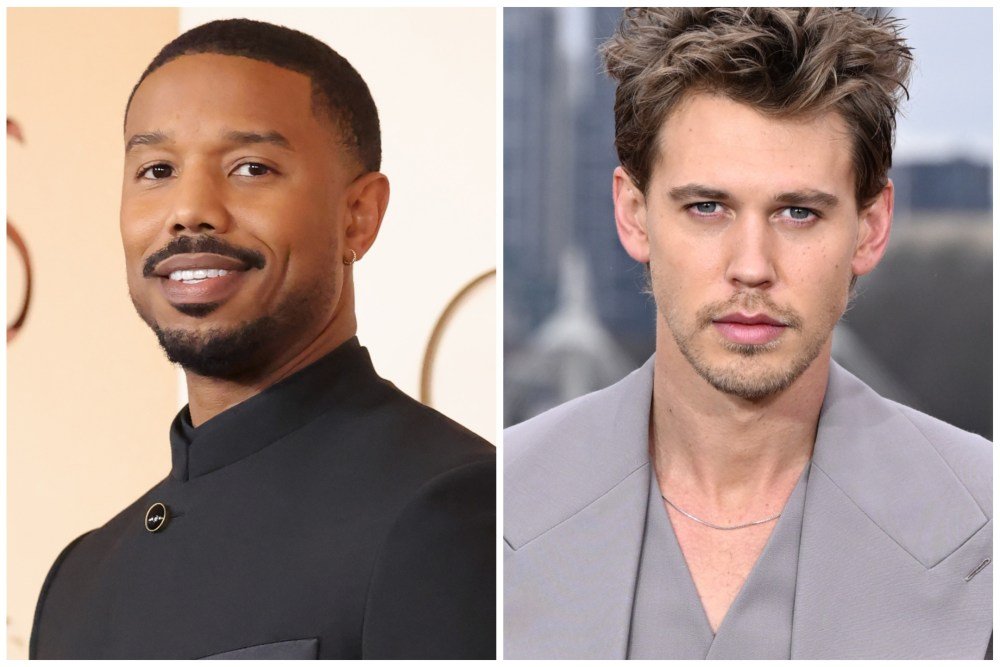
Jordan, the newly minted best actor Oscar winner, will star as Ricardo “Rico” Tubbs, with Oscar nominee Butler playing James “Sonny” Crockett. (Philip Michael Thomas and Don Johnson first portrayed the suave South Florida detectives in the classic 80s TV series; then Colin Farrell and Jamie Foxx starred in the first big-screen adaptation, 2006’s “Miami Vice,” directed by Michael Mann.)
Jordan and Butler were first reported as being in talks to star in the film last year. “Michael is someone I’ve admired for a long time, [and] always wanted to work with him. Austin, I think, is proving himself as someone to watch. Again, I’ve just have really admired his choices,” Kosinski told Variety at the time, explaining why the duo topped his wish list. “If it ends up being those two, I’d be very lucky.”
Indeed, Jordan and Butler join the film at the top of their respective games. Jordan won the Academy Award, SAG-AFTRA’s Actor Award and two NAACP Awards for his dual-performance in Ryan Coogler’s blockbuster hit “Sinners.” Next, he stars in, directs and produces a reimagining of “The Thomas Crown Affair” for Amazon MGM Studios, the sexy trailer for which electrified the CinemaCon audience. Jordan is represented by 1v1 Entertainment, WME, Johnson Shapiro Slewett & Kole, and 2PM Sharp
Butler added Baz Luhmrann to his list of collaborations with auteur filmmakers (and a best actor Oscar nod) with his transformative performance as Elvis Presley in “Elvis.” Since then, Butler starred in films for Denis Villeneuve (“Dune: Part Two”), Jeff Nichols (“The Bikeriders”), Darren Aronofsky (“Caught Stealing”) and Ari Aster (“Eddington”). Butler will next star in the A24 crime thriller “Enemies” with Jeremy Allen White. He is represented by WME, Brillstein, Sloane Offer Weber & Dern and 2PM Sharp.
Per the film’s logline, Kosinski’s “Miami Vice ’85” will explore “the glamour and corruption of mid-80’s Miami” and is “inspired by the pilot episode and first season of the landmark television series that influenced culture and set the style of everything from fashion to filmmaking.”
Dan Gilroy penned the script, based on characters created by Anthony Yerkovich from the TV series, which was executive produced by Yerkovich and Mann. Eric Warren Singer wrote an earlier draft of the screenplay.
Dylan Clark (for Dylan Clark Productions) and Kosinski serve as producers on the film. Executive VP of production development Sara Scott and creative executive of production development Christina Hoffrogge will oversee the project for the studio.
Kosinski, Clark and Gilroy are represented by CAA. Kosinski is also represented by Untitled Entertainment and Sloane Offer Weber & Dern; Clark is also represented by 42West; and Gilroy is also represented by LBI and Behr Abramson Levy Johnson.
Supermodel Ashley Graham is adding actress to her resume with a cameo credit in “The Devil Wears Prada 2,” set to hit theaters on May 1. At Variety’s Entertainment Marketing Summit presented by Deloitte, Graham and UTA Partner and Agent Natasha Bolouki dove into the cameo, what drives business decisions, how the two work together and how Graham continues to cultivate authentic relationships with her fans.
Bolouki got candid about the opportunity, explaining that when they first spoke about Graham appearing in the film, they were aware of the fact that her cameo could get cut. “You don’t know what’s going to happen [on the] editing room floor,” she explained. “But it just turned out [great]. First of all, she was in the trailer… She’s in the opening scene of the movie. And even prior to that, that small thing has led to some other really great partnerships just because of that.”
It might not have seemed like the “biggest thing when you first look at it,” said Bolouki, but the better question is what the opportunity can lead to in the future. That’s one example of how opportunities for today’s multi-hyphenate talent environment requires representatives like Bolouki to be “thinking outside of the box.”
Graham, long outspoken about the need for size inclusivity, discussed today’s fashion trends, explaining that her focus remains on continuing the conversation around needing “to see all shapes and sizes on the runway…we need to have more than just an XL or a double XL in the store.”
And when it comes to engaging with her fanbase, Graham is all about community. “I’m in the comments, commenting. I’m in the DMs. I love sending a voice note,” she said. “I love to have intimate dinners.” For the premiere of “The Devil Wears Prada 2,” she brought Ella Halikas, a top plus-size creator, as her plus one. “I just thought, you know what, why not invite one of these girlies who’s probably not going to get the opportunity, and opening up that door for someone? For me, it’s constantly thinking about how to connect, how to engage, and how to stay connected with my community as well.”
Graham, who currently has a plus size collection in partnership with JC Penny and founded Lucci Lambrusco, also discussed turning down deals that don’t align with her — or her audience. “I’ve said no to million dollar deals, because I know that the fans would be like, ‘Wait, what?’” said Graham. “There have been things that Natasha has brought me, and she said, ‘I just don’t think this is going to make sense. Here’s the dollar amount.’ We take a day to think about it, and we’re like, ‘We just can’t do it.’
Variety’s Entertainment Marketing Summit brought together leaders shaping the future of entertainment marketing and spotlightedg the growth of the creator economy, strategies for how brands can reconnect with audiences and more. Other speakers include Tina Knowles, Warner Bros Motion Picture Group co-chair and CEO Pam Abdy, design expert and TV host Bobby Berk and TV personality, host and entrepreneur Harry Jowsey.
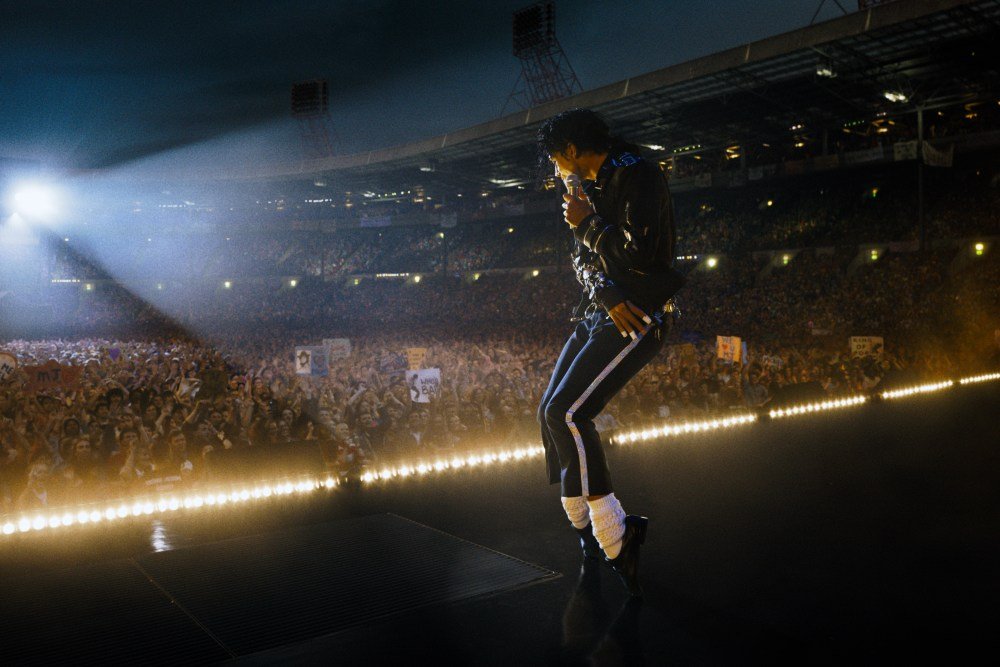
Just ahead of the Friday release of the Michael Jackson biopic “Michael,” a family member has taken gleeful aim at the media in a series of posts.
Taj Jackson, Michael’s nephew and the son of Jackson 5 member Tito, took to Twitter/X to jeer at the media writ large on Tuesday, saying it can no longer “control the narrative anymore of who Michael Jackson truly was. The public gets to watch this movie… they will decide for themselves,” before closing with: “And you can’t handle that.”
The film, directed by Antoine Fuqua and produced in part by Michael Jackson’s estate, covers the King of Pop’s life from 10-year-old member of the Jackson 5 through to the apex of his popularity – somewhere around 1988, when he was 30 years old and touring behind the epochal album Bad.
Originally, the film extended further into the future, addressing the shocking 1993 accusations of child molestation levied against Michael Jackson and the subsequent investigation. However, lawyers from the Jackson Estate found that a settlement with one accuser had precluded any depiction or mention of them in a film. The discovery meant a new third act had to be developed, requiring 22 days of reshoots at the cost of $15-20 million.
Earlier reporting from Variety shows predictions of a $65-70 million domestic opening for Michael with hopes for a $700 million overall, worldwide. The film currently sits at 37% approval rating on Rotten Tomatoes from an aggregation of critics’ reviews.
“Can’t wait ‘till some critics have to eat crow,” Taj Jackson continued, adding, “And yes I will be that petty.”
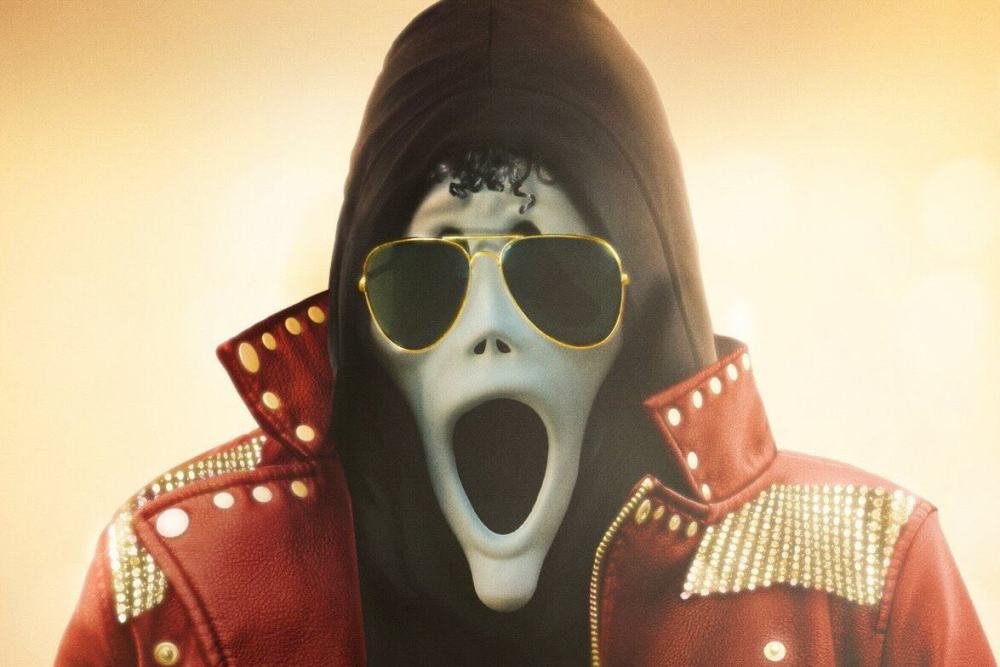
The new “Scary Movie” isn’t pulling any punches when it comes to celebrity jokes, and Michael Jackson is in the crosshairs for some new promotional material.
The franchise’s Ghostface-inspired killer is dressed up like Jackson in a just-released poster that directly parodies the “Michael” promotional material. But in this case, the two taglines are “Prepare to Hee-Hee” and “Touching Fans Everywhere,” the latter a reference to child abuse allegations that have followed Jackson for years.
The biopic “Michael,” which debuts in theaters on Friday from Lionsgate Films, won’t explore any of the allegations.
Per a recent New York Mag feature on “Michael” director Antoine Fuqua, the director “is not convinced that Jackson did what he is accused of doing, despite the number of accusers (five) and the fact that Jackson publicly talked about sharing his bed with boys.”
“Scary Movie 6” is set to bring back many of the central characters from the first two films in the franchise, including Marlon Wayans as Shorty Meeks, Shawn Wayans as Ray Wilkins, Anna Faris as Cindy Campbell and Regina Hall as Brenda Meeks. The Wayans brothers are back to writing and producing this movie as well, after sitting out the last three chapters.
The “Scary Movie” team also released a short teaser trailer on April 22, which stars “Saturday Night Live” star Kenan Thompson as a very clumsy version of the King of Pop.
“Scary Movie” heads to theaters via Paramount Pictures on June 5.
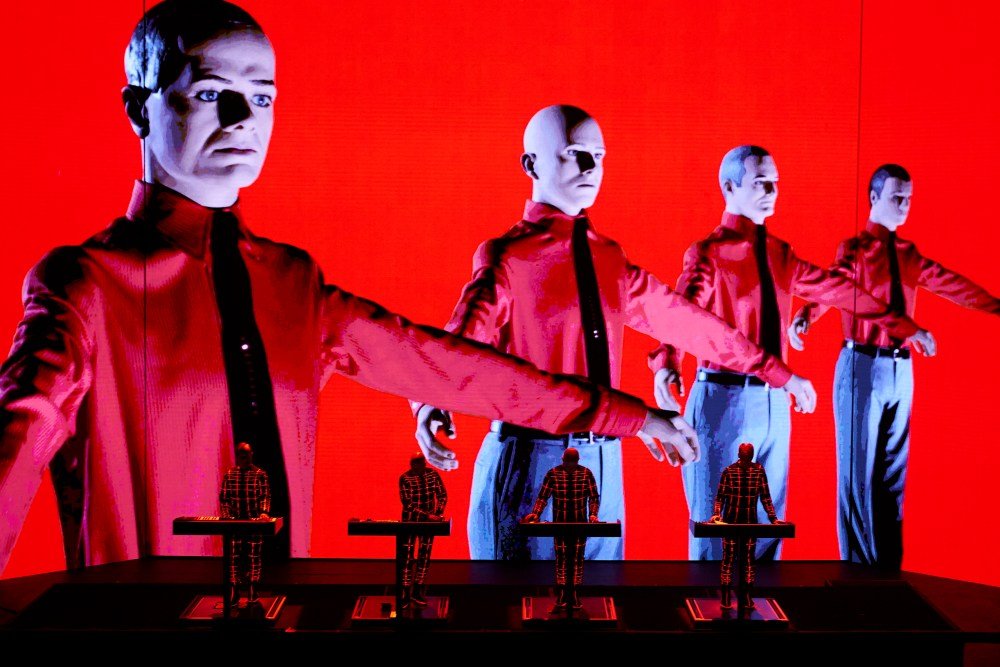
A circuitous and protracted copyright infringement case first brought by German electronic-music pioneers Kraftwerk in 2004 has finally been settled — and not in the pioneering electronic group’s favor.
The European Court of Justice, the principal judicial authority of the E.U., decided on April 14 that an unapproved, two-second sample of Kraftwerk’s 1977 song “Metall auf Metall” used by producer Moses Pelham in the 1997 single “Nur mir” was legal.
The ECJ found that the producers’ use of Kraftwerk’s percussion was within the provisions of “pastiche,” which, due to a 2022 ruling, allows for the unauthorized use of creative work if that use is noticeably different from the original and is in artistic dialogue with the original. (The U.S. has similar, but roomier, laws around “fair use” that allow for, among other things, creators to use copyrighted works without permission if they’re engaging with it critically or comedically.)
“The European Court of Justice has helped to clarify the urgently needed definition of the concept of pastiche, thereby seeking to strike a balance between artistic freedom and the protection of intellectual property,” says René Houareau, Managing Director Legal & Political Affairs for Germany’s music industry association BVMI, in a statement to Variety. “This is also significant because the exception introduced in Germany in 2021 has so far been associated with considerable legal uncertainty.”
The path to the decision has been a long and complex one, with 22 years spent circumnavigating the European justice system across appeals and remandments that ping-ponged between two regional German courts, the German Federal Court of Justice, the German Federal Constitutional Court and, now, the ECJ.
The pastiche provision “does not have a catch-all nature,” the Court wrote in its decision, “but covers creations which evoke one or more existing works, while being noticeably different from them, and which use, including by means of sampling, some of those works’ characteristic elements protected by copyright, in order to engage with those works in an artistic or creative dialogue that is recognisable as such and that can take different forms, in particular the form of an overt stylistic imitation of those works, of a tribute to them or of humorous or critical engagement with them.”
In other words, the ECJ has carved out a comfortable, but not infinite, legal space for sampling and other creative interpolations in such contexts.
“The fact remains that sampling is only possible within narrow limits,” Kraftwerk representative Hermann Lindhorst told Süddeutsche Zeitung.
The case will now head to the German Federal Court of Justice for final reassessment under the new ECJ guidelines.
On today’s episode of “Daily Variety” podcast, Erik Gordon, a professor at the University of Michigan’s Ross School of Business, breaks down the Warner Bros. Discovery sale saga as the company’s shareholders prepare to vote on the sale to Paramount Skydance.
Gordon, who studies mergers and acquisitions and has used Warner Bros. Discovery as a case study in one of his classes, says that the process has been “unusual” for both WBD and Paramount Skydance. WBD shareholders will get the chance to vote April 23 on whether to support the deal. It’s been a long road for the company since sale rumors picked up steam last summer. WBD at first tried to hold off its aggressive suitor, which was one of many unconventional aspects of the transaction.
“It’s unusual for the target to just say, ‘We’re not going to talk to you, take a hike. We don’t want to listen.’ It’s sort of like, putting their hands over their ears and going, nah, nah, nah, nah, nah, nah. That’s pretty unusual,” Gordon says. “It finally got to the point where some legal duties took over. It’s also unusual for the pursuer, the acquirer Paramount Skydance, to be so persistent. I mean, you’ve got to give David Ellison credit for. He’s the guy who gets turned down by a girl 23 times. And he asks the 24th time and she says, ‘OK, I’ll go out with you.’ ”
The jockeying around WBD, the tug of war between Netflix and Paramount Skydance over the deal reflects so many crosscurrents that are roiling the traditional entertainment business. But fundamentally, a company endowed with sui generis assets such as Warner Bros. and HBO offers a rare opportunity to grab significant showbiz real estate.
“This deal, even though it didn’t create the big changes in the industry, this deal will probably come to symbolize all of those big changes,” Gordon says.
Annecy Animation Film Festival is rolling out a slate of events to mark its 2026 edition and the opening of its sprawling new institute, including a showcase for Laika, the studio behind “Coraline” and “The Boxtrolls,” and an exhibition dedicated to Ankama (“Krosmoz”).
Annecy is already considered the world’s leading animation festival. The new hub, called Cité Internationale du Cinema d’Animation, will now expand Annecy’s reach beyond its annual festival and reinforce its status as a global animation platform.
The site will open on June 19 with an inaugural exhibition, “Ankama: From Sketch to Epic — 25 Years of Creation.” The immersive showcase – running through January 2027 — will explore the studio’s “Krosmoz” universe across animation, video games and publishing, tracing its creative journey from early sketches to finished works.
The exhibition around Laika, meanwhile, will bring its CEO, filmmaker Travis Knight, on the ground in Annecy where he will present early footage from “Wildwood,” one of the most anticipated animated films in the pipeline. .
A year-round cultural and educational hub, the Cité Internationale du Cinema d’Animation boasts a vast screening room, an artists’ residency, special areas for training courses and cultural action, alongside exhibition spaces, a bookstore and a gift shop. It’s located in a 19th century landmark called Haras, which spreads over 2.6 acres of lush gardens and buildings listed as French historic monuments.
Mickaël Marin, the director of Annecy festival and its industry market MIFA, previously told Variety that the idea behind the venue was to “create a cultural hub like the French Cinematheque in Paris or the Lumiere Institute in Lyon, which will bring together animation lovers and artists from all around the world.”
As Gaëtan Bruel, the president of the National Film Board, pointed it, “The Annecy Festival is not only the world’s leading animation event, but also the third-largest event of its kind across all genres.”
“Together with the Cité internationale du cinéma d’animation, our goal is to build on these achievements and take things even further by making Annecy and its region the year-round global capital of animation,” he added.
Dominique Puthod, president of CITIA, the festival’s organizing body, said, “The Cité is a place for today — and above all for tomorrow. It’s a place for young people, where animation becomes a living heritage shared by all.” He added, “Animation is not a minor form of cinema, but an art in its own right — a universal language that connects generations.”
Education will be a core pillar at the Cité Internationale du Cinema d’Animation, with spaces such as the “Grenier à images” offering workshops and programs designed to help younger audiences understand how images are made and how to engage with them.
“With the opening of the Cité, Annecy fully asserts its status as the world capital of animation,” said Antoine Armand, describing the project as a “major milestone” that strengthens a “unique ecosystem” and boosts the city’s international reach.
Heart Eyes Killer, the deranged murderer who strikes on Valentine’s Day, has staked a big-screen return.
Paramount Pictures will co-produce and co-finance “Heart Eyes 2,” with a release date set for Feb. 11, 2028. Sony Pictures had distributed the first film, which earned $33 million at the global box office against an $18 million budget in 2025.
Olivia Holt and Mason Gooding starred in “Heart Eyes” as two co-workers who are mistaken for lovers by a serial killer whose modus operandi is slaying couples on the most romantic holiday of the year. Gigi Zumbado, Michaela Watkins, Devon Sawa, and Jordana Brewster rounded out the cast. It’s unclear who from that group is returning for the sequel. Plot details haven’t been revealed, either.
Josh Ruben is back to direct “Heart Eyes 2.” He will also co-write the script with Darcy Fowler from a story by Christopher Landon and Michael Kennedy. Spyglass Media co-produced and co-financed “Heart Eyes” and the sequel. Landon and Divide/Conquer will also serve as producers.
“Heart Eyes” wasn’t exactly a box office smash, but reviews were solid for the horror genre. Variety’s Courtney Howard praised the film as a a breezy rom-com slasher that slices and dices with charm,” adding that “‘Heart Eyes’ makes us swoon and squirm in equal measure.”
Last year, Ruben suggested the”Heart Eyes” franchise has the “potential for a long life.”
“I’ll put it this way: You could replicate the structure of any great rom-com, from ‘His Girl Friday’ to ‘Defending Your Life,’ and you could drop Heart Eyes into the center of that story, and have him flash and slash about,” he said. “That’s what’s exciting about this: There’s an opportunity that we could have whoever the filmmaker was — certainly, I’d be interested — genuinely trying to create or replicate that rom-com, or the feeling of a “Bridget Jones” or “Love Actually” or what have you, but actually have those people terrified by this psychopathic killer.”
It’s been 15 years since the Producers Guild introduced its Green Production Guide, and yet convincing film and television productions to think about the life cycle of their sets and props remains a work in progress.
“A lot of these productions don’t have a plan in place,” says Reese Medefesser, the reuse coordinator at EcoSet in Northeast L.A.’s Glassell Park neighborhood. “They need to be off the stages. So what’s the easiest thing to do? They just get the dumpster,” he says, and everything goes into the landfill.
The PGA’s sustainability guidelines encourage producers to “build in time at the end of production for a sustainable wrap” and warn “the landfill should be the last option.” But it’s still a battle to convince productions why money should be spent to eliminate waste.
That’s where EcoSet comes in. The Glassell Park warehouse isn’t the only place where sets and props get recycled in Los Angeles, but since 2009, it’s been a key resource for film, TV, music videos, commercial productions and live events that want to divert waste away from landfills. Even better, EcoSet’s Materials Oasis provides a wide array of supplies free of charge to non-profits like schools and other organizations that can make use of cast-off sets, furniture, art supplies and assorted props.
EcoSet’s mission is to get productions to consider what will happen to their materials when the show is wrapped – since everything that needs to be disposed of comes with an environmental and financial cost.
“We’re an alternative dumpster. Just like you have to pay the dump to throw things away, that’s all that we are — an alternative stream for the stuff productions are trying to get rid of,” says Medefesser.
On the day Variety visits, a woman is pushing a shopping cart filled with assorted decor materials. She designs haunted houses, she says, and backdrops for photo booths at horror conventions. Since she’s not part of a non-profit, customers like her pay $30 to grab whatever they can within an hour of shopping time.
When materials arrive at the warehouse, “We’ll go through an assessment to find out which items have the most reuse value. We want to make sure that the nonprofits, the schools, the public sector get first dibs on it,” Medefesser explains.
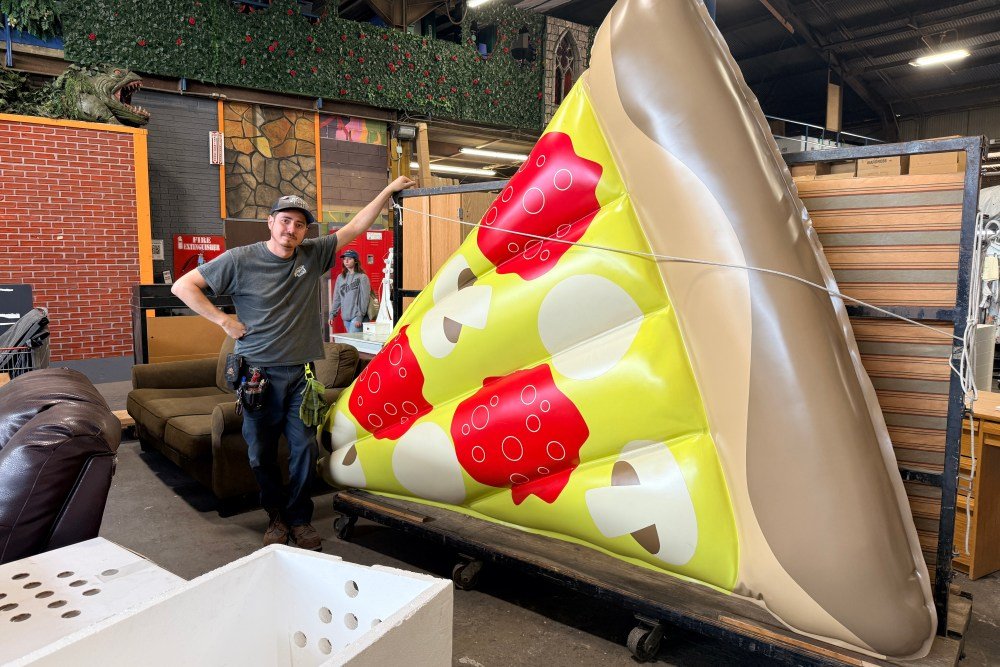
While a tour of the warehouse uncovers a few fun items like a giant inflatable pizza slice, a huge arrow sign and a section of jail bars, the bulk of the inventory is less eye-catching – lots of wood flats, walls, doors, windows and other construction materials. But it could all potentially help set builders, event designers and artists save money and reduce waste.
“When you look at this junk, you’re looking at thousands upon thousands of dollars of walls and stuff,” Medefesser explains.
Drop-offs are the most cost-effective way to unload used items, he says, though pickups are also available. And just like there would be a fee to drop waste off at the dump, there’s a fee to leave materials at EcoSet – starting at $350 for a vanload, up to $2200 or more for a large scenic trailer’s-worth.
EcoSet was founded in 2009 by Shannon Bart, who was working on commercial production with now-executive director Kris Barberg, and wanted to find a more sustainable way forward for the chronically-wasteful industry. The company also consults on zero-waste practices for sets such as recyclable craft services items, and helps divert leftover craft services meals to Every Day Action, which distributes food to organizations in need.
Also headquartered at the warehouse is Expendables Upcycler, which recovers everything from unused gaffer’s tape to camera equipment and batteries. Production crews can both buy and sell gently used or new expendables to cut down on both cost and trash on their sets.
Though fluctuations in production affect the amount of items coming in, there are more customers looking to shop at the Materials Oasis than ever. Much of this is due to a few recent TikToks that promoted the warehouse as a treasure chest for devoted thrifters. But Medefesser warns that you’ll never know what you will find or what the value of it might be — and non-profits will get priority.
“You are seeing a changing attitude now, a lot of the younger people are getting more in tune,” Medefesser says. But ultimately, he just wants everyone to think about how they’re going to dispose of everything they’re using, and whether it can be reused, stored or recycled.
“The more communication, the more coordination, the more logistics that we’re able to work out, the more that I can help you guys out,” Medefesser tells productions. “Our whole motto here — it says it on our website — is ‘with a game plan in place, it’s not waste.’”
It’s “speak-up season” in “Noah Kahan: Out of Body,” the new Netflix documentary from director Nick Sweeney about the celebrated musician. Kahan has been frank about the ups and downs in his emotional life, which was part of the essential appeal of “Stick Season,” one of the most unexpected and wildly successful breakout albums of the 2010s. But for Kahan there was still the slightest of removes in presenting those feelings to an audience through the filter of songwriting, as opposed to appearing completely unfiltered over a period of months of filming in which some old mental health concerns and some brand new anxietiess rose to the fore along with his growing public profile.
Some of the usual issues arise as they would with a newly minted star, like how it feels to go from zero to hero while still harboring some insecurities that don’t really square on the inside with the public adulation. But Kahan goes way beyond vague discussions of depression and anxiety, getting into the specifics of personal issues like a body dysmorphia that he’s struggled with most of his life. There are also practical issues that veer over into poetic difficulties, like the writers’ block he contends with after he’s removed himself from his beloved Vermont to be closer to the music-industry action in Nashville. Throughout “Out of Body,” Kahan is a fascinating mixture of rock-star confidence and small-town-lad humility, and again establishes himself as one of pop’s funniest and most self-deprecating quipsters, even as he leads fans through dark moments he hopes will shed some light on their own.
Kahan and Sweeney spoke about the Netflix film with Variety, as the singer also provided some insight into how he broke a creative logjam discussed in the movie to come up with the goods for his new album, “The Great Divide,” out this Friday.
This documentary probably began like most music documentaries do — with producers or executive producers who are involved in the artst’s business. How quickly did the most personal themes come into view, as opposed to more generic themes of touring success and follow-up albums?
NoahKahan: I will say that I did initially think we were kind of planning on doing a tour documentary, and when Nick came in, he started to pick up on deeper themes and subjects, and we went there. Nick, I would love to hear how you developed that idea.
NickSweeney: I heard that Noah was interested in doing a documentary, and his music is very cinematic, so I was like, that could be really fun. But obviously the big question for me was, was Noah really ready to let somebody in? Because what’s really interesting as the filmmaker is seeing people at a kind of crossroads as they grapple with the big questions in their life. As soon as we started having discussions, it was really clear that there were all of these big challenges that he was dealing with beyond just the music — things to do with his family and hometown and identity and grappling with his mental health. At that point, as a filmmaker you’re like, how much of this am I gonna be able to show? What became really clear, as I was testing the waters and we were having the first discussions and first shoots, was that there was nothing off-limits. Anything that I would ask Noah when I would see what he was going through or what his challenges were, he never pushed back. He always answered very honestly. That was when it was really clear that this was so much more than kind of a tour doc, that it was really a very intimate and relatable story, or series of stories.
Noah, you’re a candid person to begin with. Was there a moment when you kind of realized, this could address some of the stuff you’ve already talked about in songs, but in a more literally revealing way?
Kahan: It happened pretty naturally. Like you said, in my life, I’m pretty open about things I’m going through or the dynamics of my life and my career and my family, and my family is very open with it. So when you start just capturing some of that stuff, it never seemed like, “OK, today is the day we’re gonna go talk about sad stuff with your dad.” What I think is great about the documentary is that you can be laughing hysterically and then kind of crying in the same few minutes. So it really kind of captured the natural way that I live my life. That comes from having honest conversations with family. We address things in our family every day that are tricky to talk about, which is a total privilege. Nick did a great job of allowing it to feel normal and not like “Here’s the scene we need to get.”
In a lot of ways it was therapeutic for me, making the documentary. I didn’t really think about it coming out. In my head I was like, “OK, this is gonna help me address some things within my family, and within myself, that I might not have talked as much about without this spark.” But watching it at the premiere at South by Southwest, seeing people react to it showed us that this wasn’t just gonna maybe help just me or my family. It might actually help some other folks who are going through something similar. So any insecurity or fear that I might have had feels pretty small now compared to the potential impact. … I had some high-level industry people that came into the room and pulled me aside, and I thought I was gonna get “This is gonna be huge.” But they were like, “Look, that part where you talked about not recognizing your body or yourself, I feel that.” And to hear these people that you think have it all together really opening up to you after seeing something like that, I hope that’s the result for everybody, not just music fans or fans of mine. Man, I hope they come out of this being like, “I wanna talk about this,” or “I want to make that phone call.”
Sweeney: There’s this really interesting line that Noah says towards the later part of the movie, where he’s talking about some of the mental health challenges that he’s going through. He says, “I’m not curing it, but I’m definitely walking near it and I’m poking up with a stick and saying, ‘What are you?’” I remember when we were filming, thinking, that’s such an interesting way to think about it.
After dealing with writers’ block, the film ends with kind of a suggestion that a move away from Nashville back home to Vermont might help. This comes after having that blocked moment where you just declare, “I don’t even care about music right now.” If any of your professional associates were seeing you say that on camera, they must have thought, “Ohhh, interesting.”
Kahan: “Oh, how am I gonna get my beach house?” [Laughs.] Yeah. I thought Nick and the team did a brilliant job ending it. I had no idea how it was gonna end. We were filming at so many different times, and there were so many different scenes that I was thinking, “Maybe that’ll be the ending of the movie.” But I thought it was a really beautiful, understated way to finish the movie in a way that didn’t give you a happy ending, but it gave you a step forward and enough of a hope at the end to show that life moves on and creativity returns, and you can have your issues, but the things that make you happy are still there for you. I love the ending because it captures me in a moment where I’m most happy and most myself. But Nick, I would love to hear from you about what drew you to that ending, specifically.
Sweeney: I just remembered that quote about “I don’t give a fuck about music anymore.” And there’s this other moment where you’re saying, “I just don’t have a vision for what’s next. And I feel the darkness approaching.” I remember just thinking, oh my God. This feeling that I was observing you going through felt very heavy, and from the outside, it looked like to some extent you saw it as insurmountable. I remember feeling for you in those moments and being really shocked at the kind of language that you were using to describe this. One of the things you say is, “I’ve gone from 100 to zero after Fenway,” and just that feeling of feeling adrift. So then when we then saw you in the studio, which I really never thought we were gonna be capturing in this documentary, recording in this completely different state, with energy and momentum, I was like, “Oh, this feels like the place that we leave this story.”
Noah, you are worried during the movie about how you can write a new album from such a different place, literally and otherwise, than where you were in creating “Stick Season.” Now a new album is coming out — spoiler alert — so something that was in the wheels starting to spin again at the end of the film worked for you.
Kahan: Yeah, it did. It took a long time. It definitely took longer than I wanted it to. I just wanted the process to be the same so badly, because it was so pure and important to me, and it just felt like the perfect way to make an album. I was kind of trying to fit my new life back into my old life, and it didn’t fit anymore, and I had to start trying new things. I had a phone call with Marcus Mumford, which was helpful for me. I was really lost. It was right around after we finished filming and I was still kind of just feeling like, “I don’t know what I’m gonna do … I don’t know if I can do this again.” And he told me, “The process is never going to be the same again. You can’t get that back.”
It was just letting go for a little while — letting go of the idea of making it a great album, or an album, even. I was just like, “What makes me want to be creative?” It required taking some time and being down to explore new places and to work with different people and to rethink what my principles on creativity were. It was realizing that it doesn’t have to be like drawing water out of a rock — it doesn’t have to be painful or scary all the time — and letting myself try to find what I enjoy about it. When I let go and when I had those conversations is when I started to be creative again.
What you see in the documentary speaks to what worked so well about the process for this album and why I think the album is really cool: there’s a community around it. There’s people that have been through this experience with me. My producers and my band are playing all over the album. My wife helped me write a song on the album. I brought in community that let me feel like I was getting outside of myself, so I really do feel like the creative mojo returned. It still hasn’t left. I’m still feeling very creative, and I’m much more aware of how important it is to nurture that creativity. I think I really took too much time stepping away from what made me creative and trying to do what would make me bigger as an artist.
People who got to know you through your albums, or through interviews, have probably had at least some mild curiosity about who your family and these other people in your life were and how they affected you. So to meet them as characters is really fun and enjoyable. But when you are talking with your mom late in the film about, you say something to the effect of: “Maybe I should have asked you guys before I revealed your lives to the world.” Of course, you are saying that with cameras watching, which heightens the irony. So, how were they all with this?
Kahan: I think one thing I learned from the “Stick Season” experience, which Nick was able to capture me learning in real time, was how important it is to let people have agency over what is described about them to the public. I didn’t realize how big of an album “Stick Season” would be, so I was just writing these feelings down just to get ’em out. Suddenly the album’s huge, and I’m having to grapple with my family being like, “What the hell?” So when we started thinking about a documentary, I feel like the first thing I wanted to clear with everybody is, “Are you comfortable with this?” And I think they all were. I think it’s always uncomfortable to have cameras around you. It’s always weird to see yourself back on screen. After we all watched it together, we were like, whoa — like, this is kind of crazy. It was maybe freaking us out a little bit. But what the documentary really did bring us was this ability to observe the love and the support we have for each other, and the really, really special family that I think we are. That overrides that discomfort, being able to just say, “Hey, we got to get closer as people because of this documentary. And this is going to show people how much we love each other.”
I think everybody comes off so well in it. They all appear happy and funny. I think it’s naturally scary to open up like that, but for the most part, they’ve been absolutely down for the ride, and the communication has been very clear and honest from the beginning. I would never put out anything in the world if they didn’t like it, and they know that. So it’s been special to have their blessing.
Sweeney: One thing I loved filming with Noah and his family is that Noah is having these types of conversations with them that I think many of us will do anything to avoid having. He says in the film at one point, “You may never have the conversation with your parents that you want to have, or that you know you should have.” And we see him having those conversations with them in this film in real time. Noah’s mom says, “Noah’s music makes our family’s dirty laundry seem like being human.”
Noah has a well-noted sense of humor, so you knew there’d be a lot of laughs in the movie, so you at least had that security. But there’s a moment where Noah says, it’s one thing for him to joke about myself, but indicating it still stings when it comes from other people. So there’s that whole self-deprecating “beat them to the punch” sense of humor.
Sweeney: I think Noah really exists in this kind of sweet spot between painful and funny. A lot of us use humor as a way to sometimes deal with some of the painful things in our life, and we see Noah doing that in the film. There’s this really hilarious joke that I’ve always loved that he says on stage at Fenway, which is like, “If your parents are split up, let me hear you say, ‘Two Christmases!” And so much of the audience yells back “Two Christmases!,” because they’re children of divorce too. It was a great tool in our belt that we did have this underlying humor that we see in Noah’s life, often going between struggle and pain and then very absurd moments.
Kahan: One of my favorite moments captured on film is when we’re talking about body dysmorphia in my backyard, near the bonfire, and the chair breaks under me. There’s that moment where it’s very serious, and then that happens in real life, and I could tell everyone around us wanted to start laughing, but it was so intense… Just having the permission to laugh at yourself is something that I’ve always been really lucky to have, even in moments that are hard. I think Nick allowing that to be part of the movie instead of making all the sad parts be sad and all the funny parts be funny is what makes it a unique documentary.
(L to R) Lauri and Noah Kahan in Noah Kahan: Out of Body.
Courtesy of Netflix
There are certain tropes you expect out of a doc about this, because they are a part of real life. Like the exhilaration of playing Fenway Park immediately followed by the isolation out on the pond, which could be taken as an “it’s lonely at the top” thing. But it’s something so-called normal people may be able to relate to, as well — because when you maintain a very busy life, what happens when you’re alone and have to deal with yourself? That’s a universal theme.
Sweeney: We see Noah coming off stage at Fenway, a venue that’s hugely significant in his life, with fireworks and screaming, and he’s in a van and completely hyped up, and then the following day — I mean, hours later — standing at the kitchen counter, emptying cinnamon into this weird coffee drink he’s making. I was really kind of surprised how kind of extreme these contrasts in his life were.
Kahan: You don’t want to be “woe is me” about a lot of this stuff. And I feel like allowing those moments of silence in the sound editing, and the silence of that moment right after Fenway, where it’s just completely quiet besides the bugs and the wind — that tells that story without having to be me sitting there being, “It’s so hard.” There’s a lot of “show, don’t tell” in the documentary, which I love in movies.
There’s something about Noah’s popularity that is intrinsically tied to the sense of place people get about Vermont, whether they’ve ever been or just imagine it as a state of mind based on his music — a place that is mundane and relatable and yet maybe a little bit exotic to them at the same time. That’s a big part of this film. People could listen to the songs and sort of get an idea of what that landscape was like and how it affected Noah, being in the kind of small towns where people either want to stay forever or can’t wait to get out. Having interviews with some of the townspeople brings it all home.
Kahan: The comment I’ve seen is, Vermont is as much a character in the documentary as anything else. I think they did a really great job capturing what it’s really like but also capturing… not the indifference, but the forward-moving way of Vermonters. They’re not sitting around considering my music all the time. And I think breaking up the idea that like there’s Bernie Sanders, maple syrup and “Stick Season”…. There’s so much depth to the people in Vermont, and I really love that we had scenes where people were like, “Yeah, I don’t know. I knew him growing up, but I don’t really listen to his music.” I just think that’s so quintessentially New England and Vermont. And getting footage that isn’t just summertime or changing leaves, but getting that dirty, muddy snow in March and the cold and all of that, I feel like really captured where I’m from. You could talk about it in music, but showing them is a better way to do it. We did get really dirty making this film! When we were up there filming in the winter months, we came back really caked in mud, literally.
Do you ever have any regrets, even momentary, when you’re as candid as you are? Making an album, you have time to think about it before it goes out, but it might feel different when it’s something being captured on film and you’re not completely in control of whether anyone else at all hears it.
Kahan: It has been difficult, I think more so than with music, just because there’s so much you can obfuscate with music. You can kind of hide behind lyrics or melodies or characters. I have been anxious about [the film] — not because there’s anything that I’m worried about the world seeing; I like to be an open book. But it is vulnerable, and that feeling is a little anxiety-inducing. I think it’s OK, because I know that at least one person is gonna watch this and it’s gonna make them call their dad or their mom or their friend or confront something within themselves. That is worth the discomfort. It’s also a really great tool to tell people about my music and the album and the tour, and I just think overall it’s gonna be more helpful than the feeling of being anxious about it.