Tag: Entertainment – Variety

  • Who Will Take Home the Claret Jug? Here’s How to Watch The Open Championship 2026

    Who Will Take Home the Claret Jug? Here’s How to Watch The Open Championship 2026

    If you purchase an independently reviewed product or service through a link on our website, Variety may receive an affiliate commission.

    The final major championship of the 2026 golf season is here as the world’s best players head to Royal Birkdale in Southport, England, for the 154th playing of The Open Championship. Golf’s oldest major returns to one of its most historic venues, where players will compete for the coveted Claret Jug before the PGA Tour season shifts its focus to the FedExCup Playoffs.

    The tournament arrives with plenty of storylines, starting with defending champion and world No. 1 Scottie Scheffler, who enters The Open looking to build on his recent major success. Scheffler’s preparation took an unexpected turn last week at the Genesis Scottish Open, where he missed the cut for the first time since the 2022 FedEx St. Jude Championship.

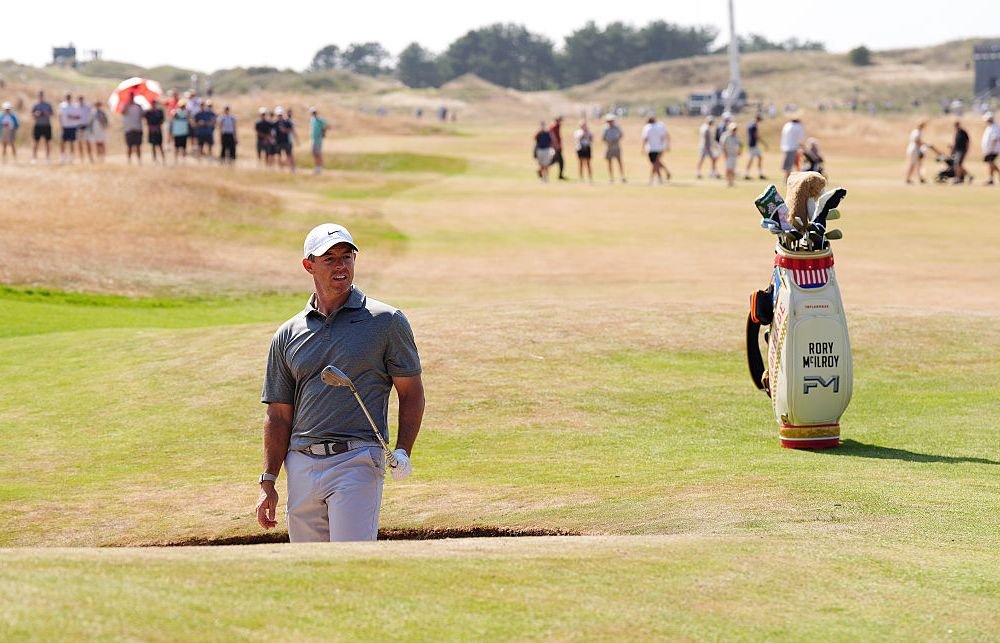
    Scheffler will face a strong group of contenders, including Tom Kim whose coming off a victory at last week’s Genesis Scottish Open and Tommy Fleetwood, who returns to Royal Birkdale with a unique hometown connection, growing up just minutes from the course in Southport. The field also features several recent major champions looking to add another title to their resumes, including Rory McIlroy, Aaron Rai, and Wyndham Clark, all chasing the 2026 Claret Jug.

    Here’s everything you need to know about how to watch The Open Championship, including the full TV schedule and the best ways to stream every round without cable.

    The Open Championship Streaming Schedule

    Coverage of The Open Championship begins Thursday, July 16 and streams on Peacock, NBC and USA Network all weekend long. Here’s when and where to stream all four rounds of golf’s final major:

    Thursday, July 16: 1:30 AM – 4:00 AM ET on Peacock | 4:00 AM – 3:30 PM ET on USA Network
    Friday, July 17: 1:30 AM – 4:00 AM ET on Peacock | 4:00 AM – 3:30 PM ET on USA Network
    Saturday, July 18: 5:00 AM – 7:00 AM ET on USA Network | 7:00 AM – 3:00 PM ET on NBC
    Sunday, July 19: 4:00 AM – 7:00 AM ET on USA Network | 7:00 AM – 2:00 PM ET on NBC

    How to Stream The Open Championship for Free

    If you’re looking to watch The Open Championship without cable, you have several streaming options to choose from, including services that offer free trials and flexible streaming plans.

    Peacock is the official streaming home but you can also use Hulu + Live TV, which is one of the easiest ways to stream The Open Championship, with access to NBC and USA Network in its live channel lineup in eligible markets. Plans start at $89.99 per month and include access to Disney+ and ESPN, with a 3-day free trial currently available for new subscribers.

    SlingTV is one of the more affordable options for streaming USA Network coverage of The Open Championship. The Sling Blue plan includes USA Network, with plans starting at $45.99 per month.

    DirecTV’s Entertainment package includes local NBC channels. For a limited time, the plan is discounted to $59.99 for the first month (a $30 savings) and includes 90+ channels, including ESPN. New customers can also take advantage of a 5-day free trial.

    One of the most affordable ways to access Peacock is through a Walmart+ membership. New members can try Walmart+ for just $1 for 30 days and receive six months of Peacock Premium at no additional cost, making it a budget-friendly option for streaming the tournament and more NBCUniversal content.

    You can now access Peacock through YouTube Primetime Channels, YouTube’s à la carte storefront for individual streaming subscriptions. Unlike YouTube TV, there’s no base monthly fee — you only pay for the services you choose to add. Peacock Premium Plus is available through YouTube for $16.99 per month.

  • Quentin Tarantino Plans to Retire After His Next Movie. Christopher Nolan Hopes He ‘Won’t Stay True’ to His Word

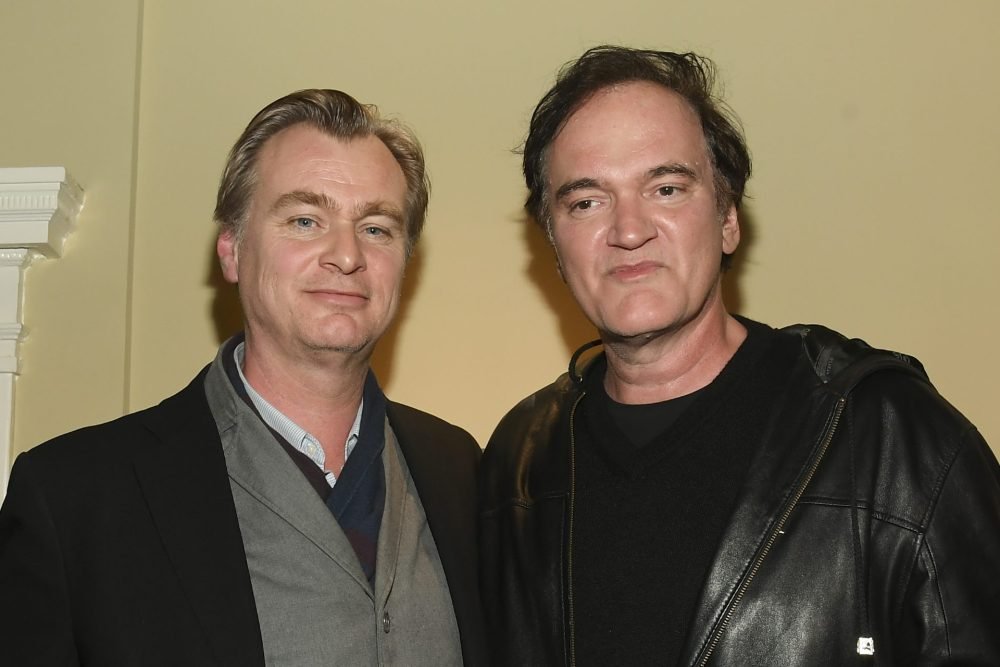
    Quentin Tarantino Plans to Retire After His Next Movie. Christopher Nolan Hopes He ‘Won’t Stay True’ to His Word

    If Quentin Tarantino remains committed to retiring from filmmaking after his 10th feature film, then whatever movie the Oscar winner decides to make next will be his swan song from the big screen. Christopher Nolan is disappointed.

    “I think it’s dangerous to look at it that specifically,” Nolan recently told The Telegraph about Tarantino’s long-discussed 10-movie retirement plan. “I mean, Quentin has his reasons, and I respect those enormously. But I’m hoping that he won’t stay true to them… I view every film that I do as the last I’ll ever make, and one day I will be right. So every time I want to put everything into the project at hand. I’m never thinking, ‘Well, I’ll save this for the next one.’ I don’t ever want to think like that. I want each movie to be everything.”

    Tarantino has spoken for years about his plan to retire after making 10 feature films (the “Kill Bill” movies count as one film in his eyes, as they were developed and shot as a single feature), saying he wants to leave behind a consistently strong and tightly curated body of work.

    “And do you believe him?” Nolan asked the “ReelBlend” podcast hosts in 2023 while promoting “Oppenheimer.”

    “Quentin’s point has always been that — and he never, very graciously, he’s never specific about the films he’s talking about or whatever — but he’s looking at some of the work done by filmmakers in later years and feeling that if it can’t live up to the heyday, it would be better if it didn’t exist,” Nolan explained at the time. “And I think that’s a very purist point of view. It’s the point of view of a cinephile who prizes film history.”

    “I’m not sure that I would trust my own sense of the absolute value of a piece of work to know whether or not it should have been brought into existence,” Nolan added. “I’m a big fan, as is Quentin, of films that maybe don’t fully achieve what they try to, but there’s something in there that’s a performance, or a little structural thing, or a scene, you know, that’s wonderful. And so, yes, I understand. I think he wanted to keep a sort of perfect reputation of something, but also kind of don’t want to take anything off the table.”

    Nolan and Tarantino’s friend and fellow filmmaker Paul Thomas Anderson has been a lot more blunt in his criticism of Tarantino’s 10-movie plan.

    “I know Quentin [Tarantino] likes to say, ‘I’m making 10 movies and then I’m quitting.’ But I could never do that,” Anderson said back in 2018. “I don’t know how he could say that, or how he could take himself seriously when he says that. This is what I want to do as long as I’m able to do it. As long as I’m able to do it, I’m going to do it. I think things can become peculiar when directors don’t act their age maybe, or seeing them try to keep up with the kids or trying to be hip. That’s never a good look.”

    As for what Tarantino has planned for his 10th and alleged final feature remains to be seen. There was a time when “The Movie Critic” was being prepped as his swan song, but Tarantino has since scrapped that screenplay. Even if Tarantino does retire, there are other artistic mediums through which he can continue to put out new content. He’s already authored a few books, and his new play, “The Popinjay Cavalier,” is set to open on London’s West End in 2027.

  • ‘Motor City’ Review: Potsy Ponciroli’s Audacious Thriller — a Scorsese Opera without Dialogue — Announces the Arrival of a Startling Voice

    ‘Motor City’ Review: Potsy Ponciroli’s Audacious Thriller — a Scorsese Opera without Dialogue — Announces the Arrival of a Startling Voice

    The needle drop as we know it was born in 1969, with the instantly iconic use of “Born to Be Wild” in “Easy Rider.” There were precedents, of course. The first use of a rock ‘n’ roll song in a movie was “Rock Around the Clock” played over the opening credits of “The Blackboard Jungle” (1955), and by any measure the godfather of the needle drop was Kenneth Anger, whose 28-minute-long 1963 bikers-and-drugs-and-Jesus-and-leather-queers-gone-pop “Scorpio Rising” — in my estimation, one of the 10 greatest films ever made — invented the ecstatic juxtapositions that inspired the premier cinematic poet of the needle drop, Martin Scorsese. Which filmmakers have given us the greatest needle drops? The answer is Scorsese (the aesthetic son of Kenneth Anger), Tarantino (the son of Scorsese), Paul Thomas Anderson (the son of Tarantino), and, from a very different track, the Michael Mann of “Manhunter” (a movie I’ll write about next week, when it’s released for its 40th anniversary).

    I zip through this history because there’s a needle drop in “Motor City,” the startlingly high-wire new crime thriller (it’s got love, violence, suspense — but no dialogue), that earns comparison to the work of all those other directors. And so I want to be clear that we aren’t simply talking about an ordinary needle drop but, rather, the visionary hypnotic kind.

    Set in Detroit in 1977, the film introduces us to John Miller (Alan Ritchson), an ex-con and Vietnam veteran who is burly and blockish enough to look like he’s halfway between Bruce Banner and the Hulk. But in his G.I. Joe haircut, he’s trying to walk the straight and narrow. We have seen that he’s in love with Sophia (Shailene Woodley), his live-in girlfriend, who he gets down on one knee to propose to (an offer she gratefully accepts). And we’ve witnessed a rather strange crime in which his vintage green ’70s muscle car was stolen…and then returned to him. By this point, we like Miller and Sophia well enough to want to see them happy.

    Then the familiar, deliberate plucking of an acoustic guitar comes on the soundtrack, and we recognize the intro to “The Chain,” the great Fleetwood Mac song from 1977. In a scene that unfolds in slow motion, a canister of tear gas is tossed into the couple’s home, tearing through their veil of domestic bliss. Police detectives burst in and demand to see Miller, who from what we can tell has done nothing wrong (in fact, he’s just completed his parole requirement). Outside, the cops, led by a dry sinister officer in a long black leather coat, order him to get on the ground, face down; Sophia comes out of the house and is placed in the back of a car, staring at all this through the glass. As the cops open the trunk of Miller’s car and fish out kilos of drugs, our mounting horror and dread is echoed, but oh so ironically, by “The Chain,” which is playing throughout all of this. The song is a slow build, one that finally explodes into that gorgeously melancholy up-tempo climax (“Cha-a-a-ain…keep us together!…Runnin’ in the shadow!”), and it elevates the fear and trauma of what we’re watching into the purest opera.  

    Staging a great needle drop isn’t the same thing as directing a great movie. But Potsy Ponciroli, the director of “Motor City” (which opens July 24), has an operatic temperament in a large way. He has made a stylized crime drama that’s full of pop music, and also full of naturalistic sound, so that it looks and feels more or less real, only the characters don’t converse. (They say an occasional throwaway word here or there.) Even when two of them are just seated in the booth of a diner, what passes between them is suggested by looks, gestures, and our ability to read the situation. The reason this works is that we’ve seen enough thrillers to be able to color in the essence of the dialogue ourselves; we don’t need to hear the words. And without them, we plug into the sheer presence of the actors. At times, “Motor City” is like a silent movie directed by Scorsese. It draws us in because it’s got a glittering underworld-opera surface, but also because the audience needs to use its noodle a bit to participate in the film’s telling.

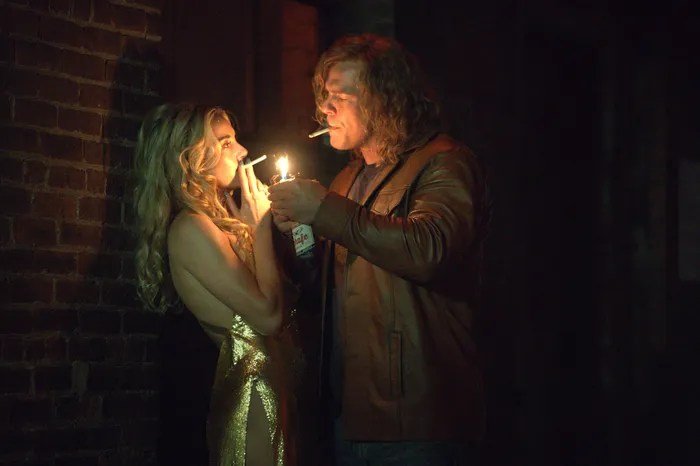
    “Motor City” offers up Detroit as a gritty and squalid place, a crumbling purgatory with a period rock vibe (posters of Styx and Zappa) that’s the perfect setting for crime drama. The sound of David Bowie’s “Cat People (Putting Out Fire),” heard in a revamped version (at this point, the song is a reference to a reference to a needle drop), sets the tone of dread-soaked rapture, and a flashback to what happens in the alleyway just outside a scuzzy club gives us all the drama we need. That’s where Sophia, hanging out of her dress like a ’70s “floozy,” first meets Miller, who resembles a party boy carved out of marble. The twist is that she’s already attached to Reynolds (Ben Foster), who looks like a dweeb — but is, in fact, an extremely wealthy and powerful drug kingpin. Miller wound up taking Sophia right out from under Reynolds’ controlling gaze. The cops come to Miller’s house because Reynolds, out for revenge, has set him up.

    A headline, glimpsed in a newspaper box, tells us that Miller has received a 25-year sentence for possession of narcotics. That’s what happens when you steal an underworld boss’s girlfriend. And now Reynolds has taken Sophia back. He comes to visit Miller in prison, giving him a photograph of himself and Sophia (they’re married now), with an inscription scrawled on the back: “You should have seen the honeymoon.” Ponciroli stages a powerful sequence, set to Donna Summer’s “I Feel Love,” that’s all about Miller’s jealous fantasies, and “Motor City” keeps tightening the screws of sadism and vengeance. It’s also got a diligent cop and a few canny twists, like one that hinges on a wedding ring. Written by Chad St. John, it’s a grungy piece of primal pop that recalls everything from “Drive” to David Lynch to the primitive low-budget ingenuity of “Dragged Across Concrete.”

    I was a fan of Ponciroli’s sneaky, stylish 2021 Western, “Old Henry,” starring Tim Blake Nelson as a varmint who wasn’t to be messed with. But “Motor City,” while it’s a less perfect film, demonstrates that Ponciroli has a talent I think could be explosive in a mainstream movie. If I were a producer or studio head, I would sign him up immediately. He brings out an expressiveness in his actors (that’s a big part of what makes the film work), and there’s an audacity to his choices that can feel rhapsodically right, as when he stages an intricate prison-escape sequence to the Moody Blues’ “Nights in White Satin.”

    That said, the last part of the movie falls off in a rather inexplicable way. Miller, having broken out of prison (with a dagger made of smelted candy), is going to get his revenge, but for some reason the movie’s needle drops drop out, replaced by a blandly orthodox suspense score. Did Ponciroli suddenly lose the rights to songs that he’d been planning to use? The trouble is, it feels like a violation of the film’s aesthetic, not to mention a colossally blown opportunity. I was greatly looking forward to scenes of ultraviolence set to the last songs on earth you’d imagine them being set to. And the epilogue, which takes place many years later, feels like a miscalculation. But “Motor City,” as its best, qualifies as a true immersive cinematic experience. It’s a movie almost entirely without words, but it speaks.
  • ‘I Play Rocky’ Trailer: Anthony Ippolito Becomes Sylvester Stallone in This Inside Look at the Making of a Movie Classic

    ‘I Play Rocky’ Trailer: Anthony Ippolito Becomes Sylvester Stallone in This Inside Look at the Making of a Movie Classic

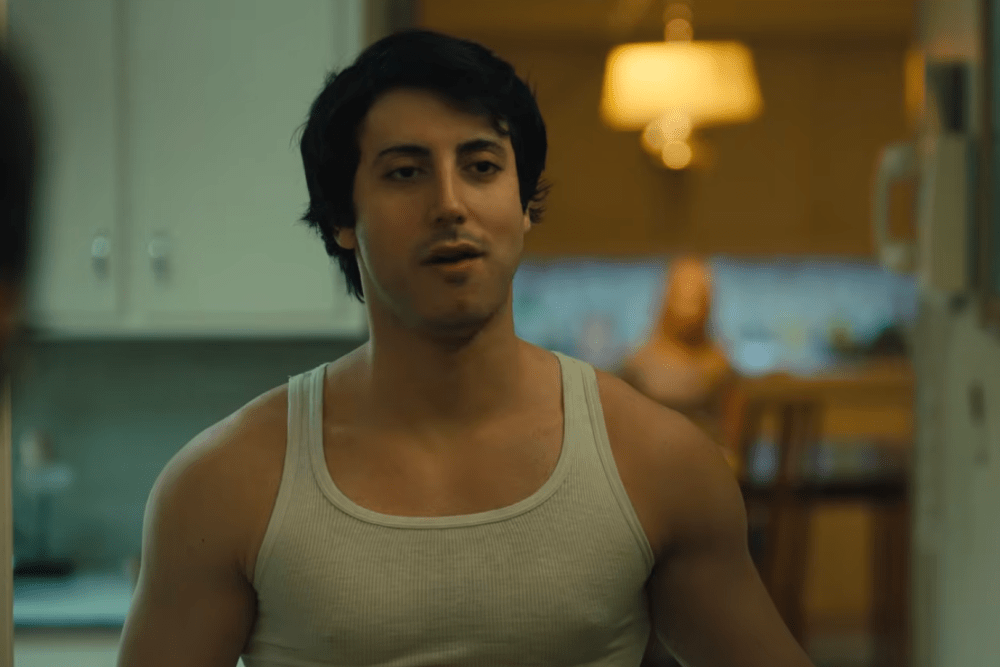
    Ever wonder how Sylvester Stallone became Rocky? Peter Farrelly’s upcoming biographical drama “I Play Rocky” will answer the question as “Grand Army” actor Anthony Ippolito takes on the role of Stallone in this behind-the-scenes dramatization of the making of the classic 1976 sports drama.

    The official synopsis for “I Play Rocky” from Amazon MGM reads: “The film tells the true story of Sylvester Stallone and his unshakable belief that he wasn’t just meant to write Rocky, he was meant to be Rocky Balboa.”

    The film’s supporting cast includes Stephan James as Carl Weathers, plus AnnaSophia Robb, Matt Dillon, Toby Kebbell, Tracy Letts Jay Duplass and Robert Morgan. Farrelly, who directed Best Picture winner “Green Back,” returns to more dramatic territory with “I Play Rocky” following his R-rated Amazon comedies “Ricky Stanicky” and “Balls Up.”

    Ippolito has experience playing acting icons of the 1970s. He starred as Al Pacino in the Paramount+ limited series “The Offer,” which recounted the making of “The Godfather.” Now he takes on the role of Stallone, who famously got “Rocky” made for under $1 million. The movie became the biggest box office hit of 1976 and won the Oscar for best picture. After cementing its place in Hollywood history, the original “Rocky” spawned several sequels as well as the “Creed” spinoff series.

    “I Play Rocky” opens in theaters this November from Amazon MGM. Watch the trailer below.

  • Dave Kendall, Creator and Longtime Host of MTV’s 120 Minutes, Dies

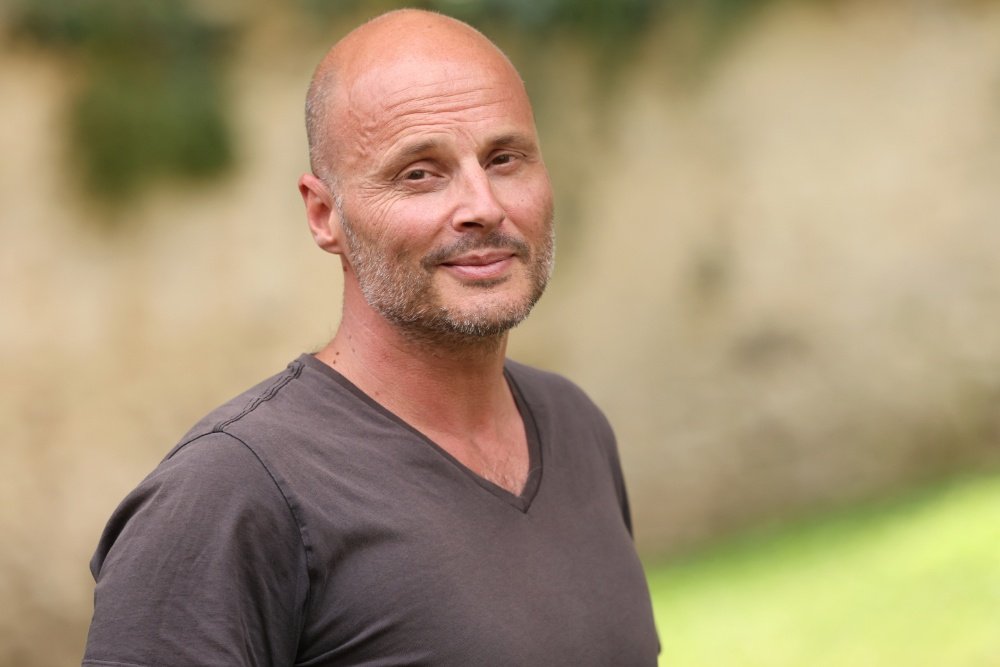
    Dave Kendall, creator and former host of MTV’s “120 Minutes,” has died, according to a post from his friend and latter-day host of the show, Matt Pinfield. No caused of death or age were cited, although he was likely in his sixties.

    From scrappy beginnings, the show launched on March 10, 1986 and quickly became a high-profile platform for the rising wave of indie and left-of-center musicians that would soon be dubbed “alternative.” While Kendall, a British-born music journalist, was sometimes seen as an emissary of the “establishment” by the snooty intelligentsia of the indie-sphere, his knowledge of and passion for the music he presented was obvious and genuine.

    “At the beginning it was pure chaos,” he said in a SiriusXM documentary video on the show. “I wanted to play music that I thought was cool and original, but the programming department wanted to include all the videos that were in light rotation, folks like Michael Barnes and Jermaine Jackson.

    “I had zero experience as a tv producer,” he added.

    Regardless, Kendall was hired and his vision won out, and he made the show happen his way. The MTV management team realized he was onto something, and artists from Sonic Youth to the Mighty Lemon Drops and beyond received big looks on the show at a time when there was no email or internet, let alone social media and YouTube, and few televised outlets for that type of music.

    Originally its producer, Kendall hosted the show from 1989 until 1992 — ironically, just as the genres of music he’d championed were reaching peak popularity — and worked as a DJ and video host for SiriusXM and a number of outlets. In recent years he lived in Thailand and Indonesia, working as a correspondent for the Bangkok Post and championing environmental causes.

    “Dave was one of the true believers,” Pinfield wrote. “Long before alternative music found its way into the mainstream, he was there every week on ‘120 Minutes,’ introducing people to bands that would go on to define an era. He didn’t just host a show. He gave a home to music that deserved to be heard.

    “He loved the music, respected the artists, and connected with fans in a way that always felt authentic,” he concluded. “That’s a rare gift.”

  • ‘Toy Story’ Franchise Has Generated $51 Billion in Economic Activity, Study Finds

    ‘Toy Story’ Franchise Has Generated $51 Billion in Economic Activity, Study Finds

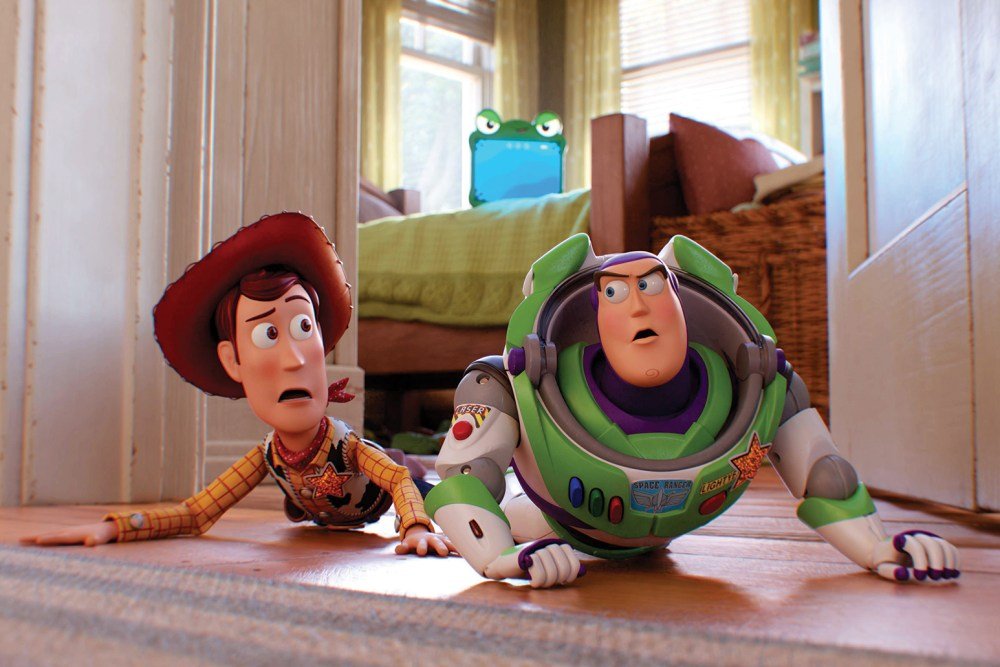
    “Toy Story” helped launch Pixar when it premiered in 1995. More than 30 years and four films later, the family franchise has become a revenue-generating juggernaut for the Walt Disney Company and the global economy. The series has added $51 billion in overall economic activity since its inception, according to a study that Disney commissioned from Steward Redqueen, an independent impact advisory firm.

    Much of that figure comes from consumer product sales, which Steward Redqueen argues lifts suppliers, retailers, small businesses and service providers. That includes everything from salaries to the sales of clothing, dolls and games touting “Toy Story” characters. It also factors in transportation, tourism, manufacturing, and utilities revenues related to seeing the movies, visiting theme park attractions and producing “Toy Story” merchandise. The report comes as “Toy Story 5” has dominated the box office since it was released in June, earning more than $880 million globally. In addition to ticket sales, the series is also the most streamed franchise on Disney+.

    In terms of direct economic impact for Disney, Buzz and Woody have generated $16.2 billion. That includes the sale of merchandise, movie tickets and home entertainment rentals. That figure is more than it cost the company to buy all of Pixar, Marvel and Lucasfilm combined (Disney shelled out $15.4 billion to purchase those brands).

    “This is our No. 1 animated franchise,” says Asad Ayaz, Disney’s chief brand officer. “I don’t think there’s many other franchises that have been embraced by audiences and critics over the course of three decades. People who were kids when the first movie came out are taking their own children to the new ‘Toy Story.’”

    The study also looks at the multi-generational impact of “Toy Story.” As Ayaz states, because the series has been part of the culture for so long, Millennials, who grew up with the characters, have driven the greatest impact with 74%. Gen Z and Gen Alpha account for 19% and 7% of the economic impact, respectively.

    Nearly $25 billion of the overall economic impact occurred in the U.S., Steward Redqueen reports, with California and Florida, where Disney has theme parks, as well as Texas, New York and Illinois listed as the states enjoying the biggest benefits from the franchise. The firm casts a wide net to capture those numbers. It estimates sales margins for downstream suppliers like manufacturers, retailers, and other distributors. So, for example, it factors in what movie theaters spend on popcorn providers, which allows those vendors to also earn profits, pay taxes and pay salaries.

    Steward Redqueen said to come up with its calculations it looked at consumer spending on the “Toy Story” franchise across movies, home streaming, consumer products, parks, experiences and music. It then separated those figures in terms of their direct and indirect impact. Direct impact captured the economic contributions directly generated by the franchise’s operations (such as the economic contributions supported by production of the movies). Indirect impact includes the economic contributions supported by the franchise through its suppliers and sales partners (distributors and retailers selling “Toy Story” products), as well as their respective suppliers. This is the first study of its kind that Disney has commissioned on one of its franchises.

    With “Toy Story 5” topping the box office, it seems like a sixth film is inevitable.

    “I’ll leave that up to the Pixar team,” Ayaz says. “I hope there is more. But what’s great about Pixar is that they wait until they have a story that is worth telling to make another movie.”

  • Fabrice Du Welz to Head Locarno International Competition Jury

    Fabrice Du Welz to Head Locarno International Competition Jury

    Belgian filmmaker Fabrice du Welz will preside over the jury for the international competition at the 79th Locarno Film Festival, part of a full slate of juries the festival has revealed across its sections.

    Du Welz has made nine features that have screened at major festivals; Locarno has shown two of them, “Adoration” on the Piazza Grande in 2019 and “The Passion According to Béatrice,” out of competition in 2024. He is joined on the jury by Italian producer Marco Alessi, founder of Rome-based Dugong Films, whose credits include work with directors Stefano Savona, Yuri Ancarani and Rä di Martino and who produced Bertrand Mandico’s “Roma Elastica,” playing out of competition in Locarno this year. Rounding out the panel are French actor Lolita Chammah, whose career includes collaborations with Claude Chabrol, Werner Schroeter, Claire Denis, Claire Simon and Benoît Jacquot; Chilean actor Paulina García, who won the Silver Bear for “Gloria” in 2013; and Olivier Père, who previously served as artistic director at Locarno and as general delegate of the Cannes’ Directors’ Fortnight, and who now heads the cinema unit at Arte France Cinéma as executive director, a post he has held since 2012.

    The Filmmakers of the Present Competition, the section dedicated to emerging directors, will be judged by Tunisian actor, director and producer Afef Ben Mahmoud, who also directs the Gabès Cinéma Fen festival; Czech producer and director Radovan Síbrt, co-founder of production company Pink, whose credits include the Academy Award-winning “Mr. Nobody Against Putin” (2025); and filmmaker Margherita Spampinato, whose breakthrough feature “Sweetheart” (“Gioia Mia”) followed its selection in the section last year with a David di Donatello win, plus the Kering Women In Motion Emerging Talent Award, presented at Cannes.

    Three filmmakers will judge the Leopards of Tomorrow section. Lebanese director, writer and actor Mounia Akl has had work presented at Cannes, Venice, Toronto and London. South African producer Steven Markovitz, a longtime force in regional independent cinema, counts “aKasha” (2018), “Rafiki” (2018), “Tug of War” (2021) and “Omen” (2023) among his credits. Italian director Antonio Piazza, who co-directed “Sicilian Letters” (“Iddu,” 2024) with Fabio Grassadonia, rounds out the panel; that film premiered in competition in Venice.

    The First Feature jury, which awards the Swatch First Feature Award for the festival’s best debut, comprises Matthieu Darras, who runs the festival consultancy Tatino and brings programming experience from Cannes, Venice, San Sebastián and TorinoFilmLab; Sung Moon, a Jeonju International Film Festival programmer and former member of the Korean Film Council; and Swiss-Peruvian filmmaker Klaudia Reynicke, whose film “Queens” (“Reinas”) took the Prix du Public UBS at Locarno77 on its way to becoming Switzerland’s Oscar submission and a Swiss Film Awards winner.

    The Pardo for Change jury, which recognizes films engaging with environmental, ethical, social and cultural issues, includes freelance war reporter and author Gianluca Grossi; Somali-Austrian filmmaker Mo Harawe, whose debut feature “The Village Next to Paradise” bowed in Cannes’ Un Certain Regard sidebar in 2024; and Seta Thakur, who leads communications and social innovation work at the Wyss Academy for Nature.

    A separate jury will oversee the Locarno Kids Screenings, deciding the winner of the Locarno Kids Award la Mobiliare in the festival’s new competitive strand for feature films made for young viewers. This year, for the first time, 13 jurors between ages 11 and 15 will screen seven titles in the section before selecting a winner, meeting daily throughout the festival for a training program led by industry professionals.

    Locarno artistic director Giona A. Nazzaro said: “Selecting those whose eyes will be watching the films in the competitive sections is a task that always brings out desires and emotions. The diversity of talent meets the diversity of perspectives. Ultimately, however, what matters most is a willingness to be surprised, to be amazed, and to embrace the unexpected. In this sense, we are proud that the films of the 79th edition can begin their journey out into the world accompanied by those talented creative figures who have agreed to share the adventure of the Locarno Film Festival with us.”

    The 79th Locarno Film Festival runs Aug. 5-15.

  • Locarno Winner Nelson Yeo’s ‘The House on the Moon’ Boards Parallax Films for Worldwide Sales (EXCLUSIVE)

    Locarno Winner Nelson Yeo’s ‘The House on the Moon’ Boards Parallax Films for Worldwide Sales (EXCLUSIVE)

    Parallax Films has come aboard “The House on the Moon,” the Singapore wuxia science-fiction feature set to world-premiere in international competition at the 79th Locarno Film Festival, as worldwide sales agent.

    The company holds exclusive rights across most international territories. German-speaking territories, Taiwan and Singapore are excluded from that exclusivity, while Parallax also holds non-exclusive rights across other regions in Southeast Asia.

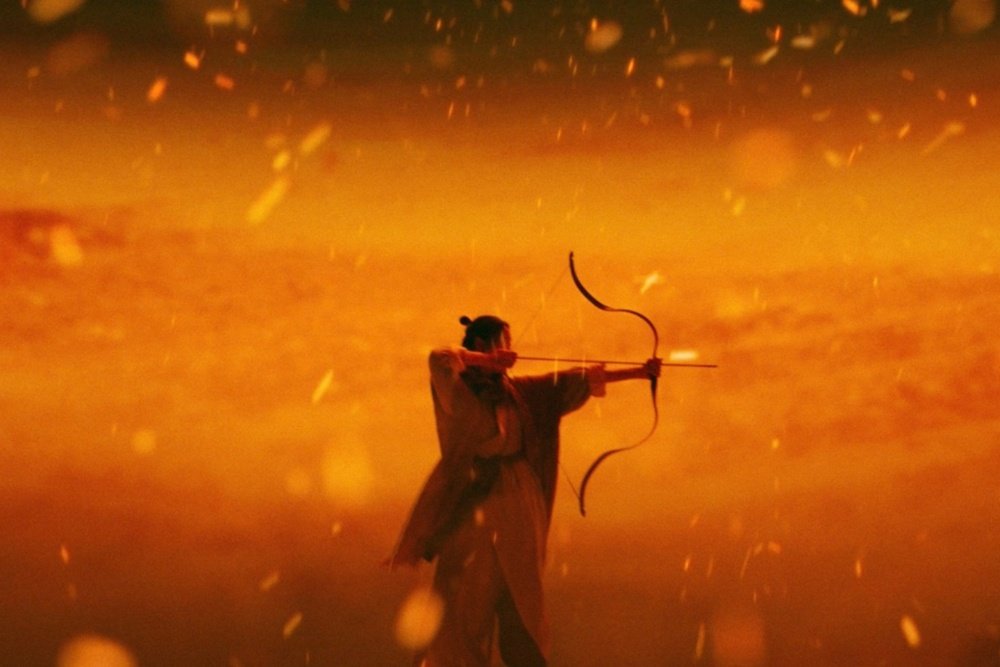
    Directed by Nelson Yeo and co-written by Yeo and Vicki Yang, “The House on the Moon” blends science fiction with wuxia, the Chinese tradition of martial-arts hero stories, drawing on the Chinese myth of moon goddess Chang’e and legendary archer Hou Yi. It is Singapore’s first wuxia feature film and the country’s first feature produced using virtual production technology.

    Yeo previously premiered his debut feature “Dreaming & Dying” at Locarno in 2023, where it became the first Southeast Asian film to win both the Golden Leopard in the Filmmakers of the Present competition and the festival’s Best First Feature award.

    “Returning to Locarno with ‘The House on the Moon’ feels like the stars have aligned. A few years ago, this felt like reaching for the moon – and we have,” Yeo tells Variety. “I’m so grateful to our fantastic cast and crew for embarking on this journey with me and bringing a childhood dream to life. We can’t wait to share the film with audiences around the world.”

    The ensemble cast includes Lim Shi-An as Chang Er, Dominick Rustam as Hou Yi, Akira Huang as Nanyang Bandit, Harry Chang as Peng Meng, Lee Kang-sheng as Yue Lao and Doreen Toh as Yin Yuan.

    The film is produced by Tan Si En, Wendy Lie and Kuek Shee Heng for Momo Film Co – part of Fremantle – and Aview Images, with co-producers Weydemann Bros., 9LB Film and KawanKawan Media. Financing comes from the Taiwan Creative Content Agency (TAICCA), with support from the Singapore Film Commission’s VP Grant.

  • U.K. Government Proposes Social Media Curfew for Older Teens Alongside Under-16 Ban

    U.K. Government Proposes Social Media Curfew for Older Teens Alongside Under-16 Ban

    The U.K. government has proposed a social media curfew for older teenagers alongside its pending ban for those under 16.

    According to the BBC, 16 and 17-year-olds could face apps such as Instagram, TikTok and YouTube being unavailable to access by default between the hours of midnight and 6 a.m. However, they would be able to opt out of this by changing their settings.

    In June, it was announced that the U.K. was moving ahead with a full social media ban for children under 16 years old. The curfew for 16 and 17-year-olds would take effect alongside the ban, which if passed in Parliament, will begin in spring 2027.

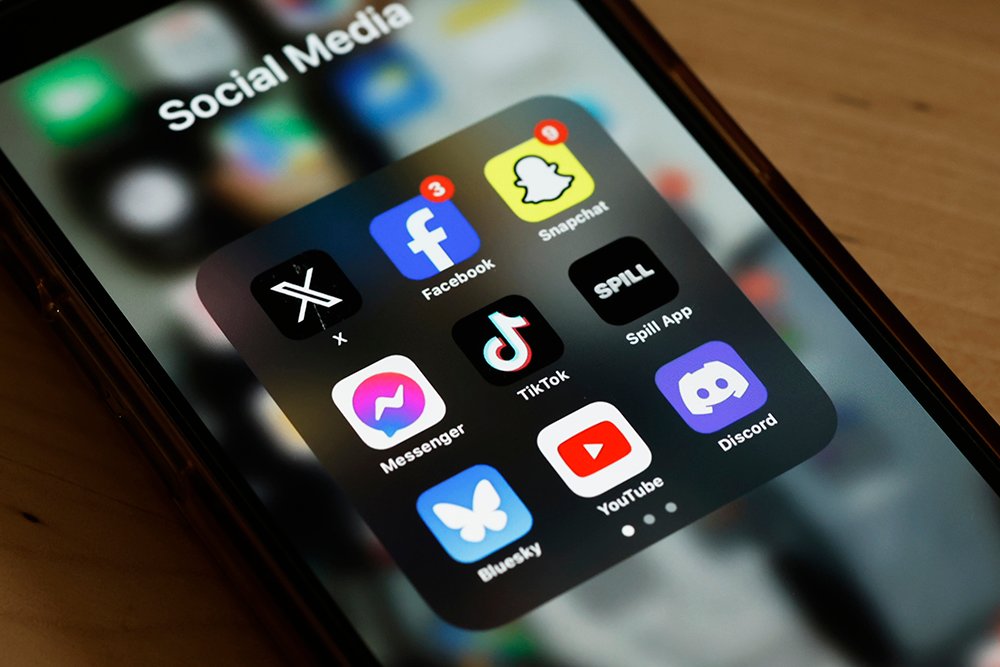
    The platforms to be banned for under-16s include Snapchat, TikTok, YouTube, Instagram, Facebook and X. WhatsApp and Signal will not be part of the ban.

    The BBC reports that “addictive” features like auto-play and infinite scrolling would also be disabled, and there will also be measures to help under-18s use AI chatbots safely, including enforced breaks. Technology Secretary Liz Kendall said in a statement that, along with the midnight curfew, this measure will be “crucial in helping young people get the sleep they need, focus on school and college, and spend more quality time with family and friends, all of which are fundamental to building a happy, healthy and fulfilling adult life.”

    She added: “We want young people to enjoy the benefits of technology while having the tools to make the online world a place where they can thrive.”

    The proposed U.K. ban follows similar legislation introduced in Australia, Indonesia and France earlier this year.

  • Mayu Matsuoka, Riisa Naka’s Netflix Cosmetic Surgery Drama ‘Plastic Beauty’ Sets September Premiere, Adds 23 Cast Members

    Mayu Matsuoka, Riisa Naka’s Netflix Cosmetic Surgery Drama ‘Plastic Beauty’ Sets September Premiere, Adds 23 Cast Members

    “Plastic Beauty,” Netflix‘s upcoming Japanese drama set inside the country’s fast-growing cosmetic surgery industry, will premiere Sept. 17, the streamer announced alongside 23 additional cast members joining stars Mayu Matsuoka and Riisa Naka.

    Yuki Saito, who previously directed “Unmet: A Neurosurgeon’s Diary,” helms the series from a script by Junya Ikegami (“The Queen of Villains”). Netflix and the creative team spent months researching Japan’s cosmetic surgery world firsthand ahead of production. That research extended to the makeup department, where special effects artist Amazing JIRO (“Straight to Hell”) led a team that crafted a distinct “before,” “downtime” and “after” progression for every patient character featured across the cast.

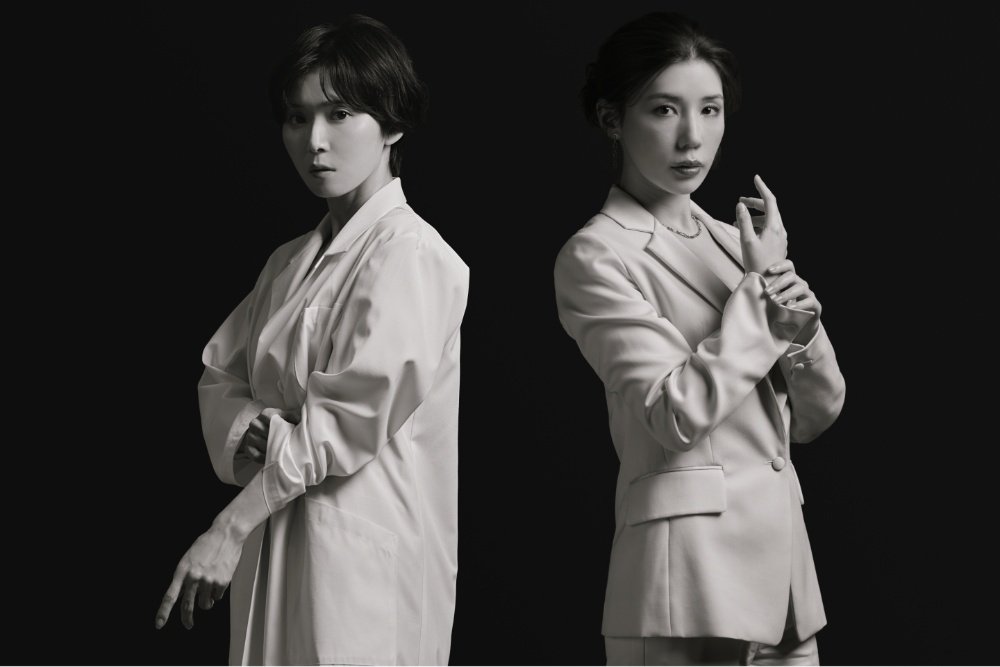
    The series unfolds against Japan’s ongoing debate over beauty standards – a culture growing more open to diverse appearances even as its cosmetic surgery sector remains one of its fastest-growing industries. That tension plays out through two doctors with opposing views on transformation: Fumi Numata, a gifted physician forced out of her hospital after an emergency operation, and Rin Tohyama, a celebrity surgeon who sees beauty as a source of healing. When Fumi takes a job at Rin’s clinic planning to expose its darker side, their standoff drives the series, with the story more interested in what pushes people toward transformation than in the surgeries themselves.

    Matsuoka (“Shoplifters”) plays Fumi, a doctor whose principles are put to the test once she enters a profession with its own set of rules. Naka (“Alice in Borderland”) plays Rin, the clinic’s public face and its most committed defender against Fumi’s efforts to take it down.

    Also joining the cast are Shotaro Mamiya as Rui Komiya, the clinic’s second-in-command; Minami Tanaka as head nurse Nanami Todoroki; Hiromi Nagasaku as Fumi’s mother, Taeko Numata; and Atsuro Watabe as Arata Tohyama, an influential figure in the industry. Rounding out the ensemble are Riku Hagiwara, Mijika Nagai, Daichi Watanabe, Reiji of comedy duo Nakagawake, Kavka Shishido, Yu Shirota, Naosumi Masuko, Sosei Takeda, Rika Izumi, Kentaro Tamura, Eisuke Sasai, Hana Amano, Hina Kagei, Naoko Ken, Kayo Noro, Rin Furukawa, Yumi Adachi, Shunsuke Kazama and Kōki.

    Harue Miyake and Katsuhito Mogi produce, with Shin-ichi Kudo serving as planning producer. K2 Pictures produces the series for Netflix.