If the briefings in the Nancy Guthrie kidnapping case sometimes feel like reality TV, that’s because — in a way — they sort of are.
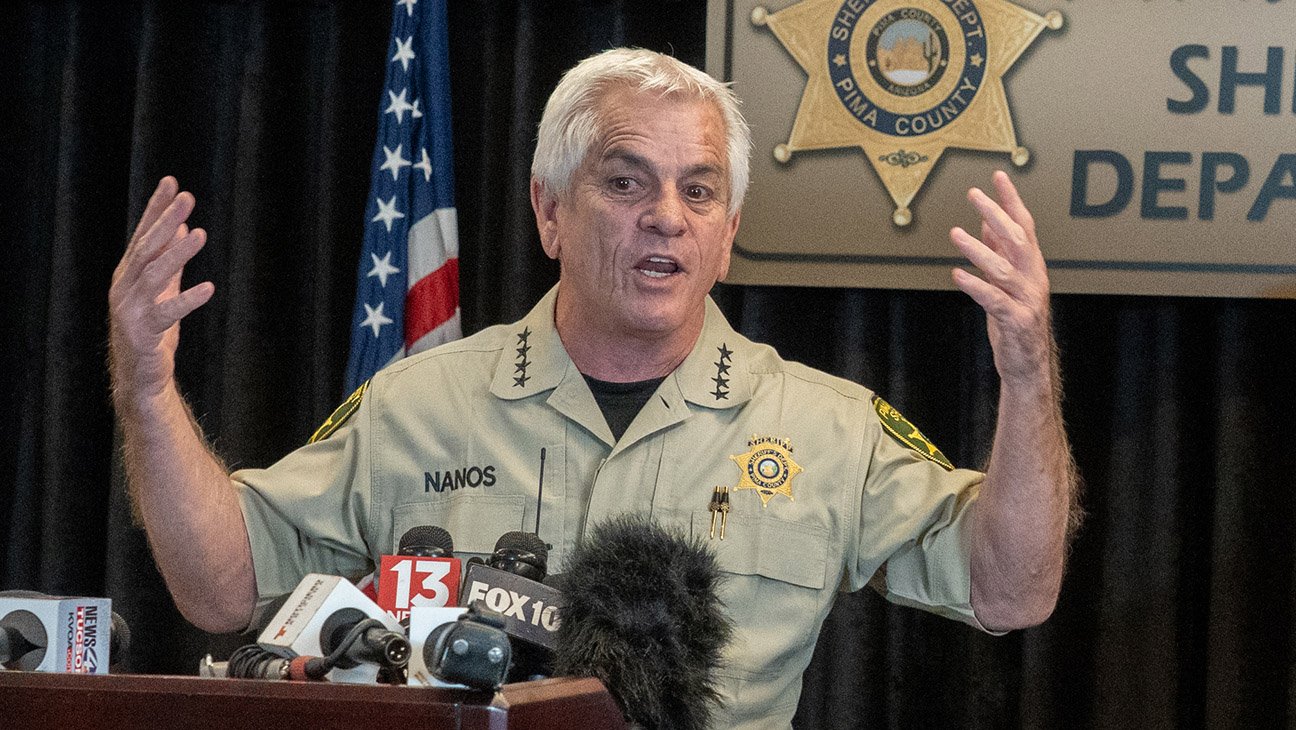
The man fielding questions at all those press conferences, Sheriff Chris Nanos, doesn’t just run the local police department that’s been investigating the disappearance of Savannah Guthrie’s mother — he’s the off-camera production partner for Desert Law, the A&E docuseries that follows Nanos’ deputies as they patrol more than 9,000 square miles of arid Arizona terrain. “Immersed in the pressure and danger of policing the desert night,” the show’s promo copy describes it, “the series captures a world where the spirit of the Old West still lingers and the fight for order never ends.”
Nanos himself doesn’t appear in the show — his choice, according to sources close to the series. But that could change next year — although those same sources say the possibility of the kidnapping becoming part of the plotline for season two has not yet been discussed. Still, over these past few weeks, since Nancy Guthrie’s disappearance, Nanos hasn’t exactly been shy when it comes to news cameras.
After initially holding joint press conferences with the FBI, he has recently shifted to a series of more personal, one-on-one interviews — a strategy that has occasionally led to awkward exchanges, particularly while conversing with conservative outlets.
“Let’s just say he did not put out the welcome mat,” Newsmax’s John Huddy tweeted after his Feb. 18 sit-down with Nanos, during which the sheriff, a Democrat, brushed off what he sees as politically motivated criticism. “This isn’t an election campaign — that’s three years down the road.” Nanos’ Feb. 17 appearance with NewsNation’s Brian Entin wasn’t any friendlier. On his YouTube recap, Entin described the pre-interview moment when Nanos set the tone: “You have questions for me,” Nanos told him, “and I have questions for you.”
Of course, the stakes remain deadly serious: An 84-year-old woman is still missing. But when a sheriff whose department headlines a reality show finds himself sparring with reporters on MAGA platforms, it definitely feels like an unscripted star may have just been born.
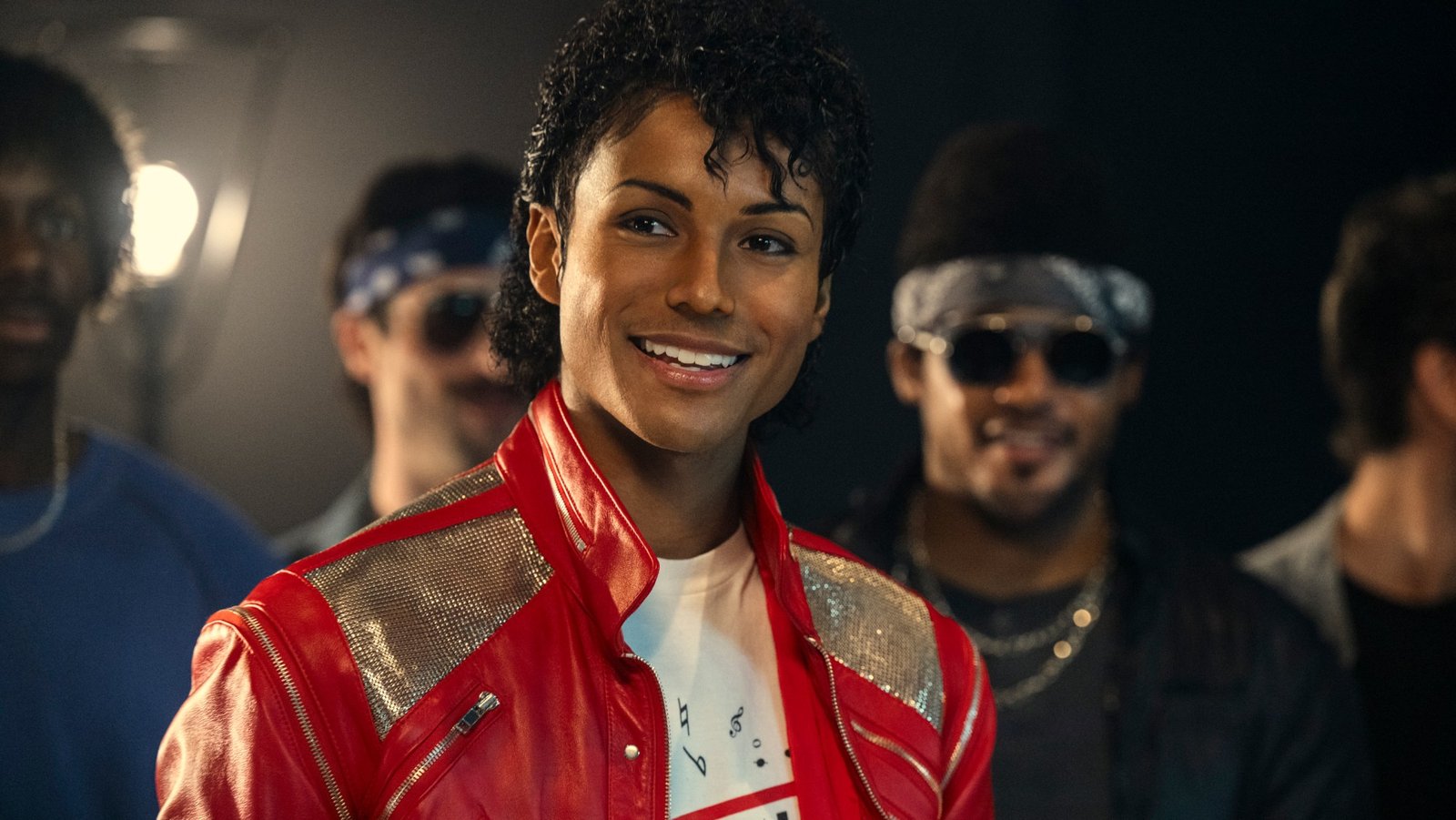
Michael is set to hit theaters and Imax on April 24 after its release was delayed several times, most recently having been dated for the fall of 2025. Marking his feature debut is Jackson’s nephew Jaafar Jackson in the lead role as the pop music icon. Lionsgate is distributing the movie domestically, while Universal handles the global launch.
“It’s a very spiritual journey, making a movie about someone like Michael,” Fuqua says in a video that Lionsgate released Monday. “Michael was a big influence on my career as a director, seeing how he refused to get put in a box as just a Black artist only.”
Fuqua’s movie debuted its latest trailer earlier this month. Michael co-stars Colman Domingo as the singer’s father, Joe Jackson, and Nia Long as his mother, Katherine. Rounding out the cast are Miles Teller, Laura Harrier, Kat Graham, Larenz Tate and Derek Luke. Graham King, John Branca and John McClain produce the film that has a script from John Logan.
“Michael’s whole life was giving to people this joy of his voice,” Fuqua continues in the video. “When I watched him on TV, he was always larger than life. For me as a filmmaker, it wasn’t a leap to see it in a cinematic way.”
The Training Day director adds, “I don’t think you can understand Michael Jackson as a human being unless you went back and go on a bit of a journey. He was struggling between his love for his family and his love for his music.”
Jaafar Jackson as Michael Jackson in the biopic Michael.
Kevin Mazur
The Hollywood Reporterpreviously reported that Michael, initially intended to span the star’s life and have a lengthy run time, had pivoted and would instead end with Jackson leaving his family’s group The Jacksons after the release of his first solo album, 1979’s Off the Wall. According to sources, a second film remains in development that would focus on the rest of Jackson’s career and path prior to his 2009 death.
Puck reported last year that Michael’s previously planned third act had to be retooled, due to it including a dramatization of an individual who accused Jackson of child sexual abuse. The accuser had a past settlement with the performer’s estate stipulating that he would never be dramatized.
“Why I wanted to make it is Michael,” Fuqua said during a San Diego Comic-Con panel in 2024. “Michael was a big part of my life growing up, a big influence on my career, an incredible artist — but he was a human being, and we’re exploring that.”
Following the rave reviews and reactions to 2022’s Emily the Criminal, filmmaker John Patton Ford felt like he needed to strike while the iron was hot.
The South Carolina native made the rounds to discuss the possibilities of what he could do for his sophomore effort. Such a water-bottle-collecting moment was truly a long time coming for the writer-director. He’d been toiling away since the late 2000s in order to get one of his scripts produced. Several projects had fallen apart on or near the one-yard line, but together with his lead actor Aubrey Plaza and what would become her career-best performance, he finally crossed the plane with Emily in 2022.
The crime thriller may not have blown the roof off the summer box office, but its strong word of mouth and four Independent Spirit Awards nominations, including Ford’s win for “best first screenplay,” flooded his inbox with opportunities.
“It was an overwhelming moment that I didn’t quite know how to deal with, to be honest. I felt a lot of insecurity at that time. I felt like I had to get another movie going pronto or else the attention would go away,” Ford tells The Hollywood Reporter.
Within a few months, Ford dusted off an old script called Rothchild that The Black List had recognized all the way back in 2014. Loosely inspired by 1949’s Kind Hearts and Coronets, the tragicomedy chronicles a bastard son named Becket who starts killing off all the estranged family members who stand in the way of the inheritance that he and his late mother were wrongly denied. Like Emily, it’s a film about the desperate measures people take for money.
“After school, I struggled for a long, long time. Now I’m a white guy with an education; I can only fail so hard. But I wasn’t getting to do what I wanted to do for a long, long time,” Ford says. “It seeped into my pores and took over my personality. I thought it was just never going to end. So I was willing to do whatever it took to get my career going, and hey, big surprise, I make movies about similar people.”
In 2019, the film nearly got made when it hit the Cannes Market as a Shia LaBeouf-Mel Gibson package for another director. At the time, LaBeouf was riding high on the Sundance sale of his semi-autobiographical drama, Honey Boy, and Gibson was still enjoying some post-Hacksaw Ridge goodwill. However, between Gibson’s checkered history and the title’s similarity to a real-life banking dynasty, controversy seemingly derailed the picture.
In 2023, the project reemerged with a new title and a new family surname (among other things). Glen Powell and Ed Harris eventually became the new grandson-grandfather pairing of Becket and Whitelaw Redfellow. Ford has repeatedly likened Powell to a cross between Captain America and a golden retriever, but he reveals that there was early concern among executives when Powell showed up to set looking like Steve Rogers, pre-Super Soldier Serum. The actor, as he noted in a THRcover story, lost at least 15 pounds by ingesting a steady stream of bone broth. He even changed his hair color after another coiffure concept was ruled out.
“When he came on set, he didn’t quite look like Glen Powell — or not how people expected — and some of the executives were actually really concerned at first,” Ford shares. “He also had a crazy wig [initially], and we were like, ‘That’s a step too far.’”
For a film that ultimately condemns billionaire families who take all they can and give next to nothing back, Ford repurposed a directive he once received during a sales job to define the Redfellow patriarch’s (Harris) unwavering philosophy.
“They said [the sales pitch] like it was a lesson that we needed to learn: ‘Your only enemy is your own conscience. If you can turn that off, you can actually succeed,’” Ford recalls. “It is, on one hand, a brilliant thing to say. On the other hand, it’s completely sociopathic. I didn’t want to have a movie that says, ‘Rich people are bad, period,’ and that’s it. I wanted something a little more complex.”
Below, during a recent conversation with THR, Ford also discusses some of the film’s lingering questions, as well as whether he and Plaza have another team-up in store.
***
Aubrey Plaza as the title character in John Patton’s Ford’s Emily the Criminal.
Courtesy of Sundance Institute/Low Spark Films
Emily the Criminal received rave reviews, and it became a word-of-mouth movie among industry people and the audience. Did you go on a water bottle tour as you figured out what to do next? Or did you go straight for this old Black List script of yours?
I did the tour. I didn’t quite know what I wanted to do next. It was an overwhelming moment that I didn’t quite know how to deal with, to be honest. I felt a lot of insecurity at that time. I felt like I had to get another movie going pronto or else the attention would go away. It’s funny how that works, and it took me a minute. It was maybe two or three months before this project came to light [again], but when it did, I was on that train for as long as it took.
Both Emily and How to Make a Killing explore the extreme lengths that people will go to for money. Is there a deep-rooted reason why you’re drawn to this theme?
This is a lot like the Zoom therapy session I had two days ago. The quick answer is: after school, I struggled for a long, long time. Now I’m a white guy with an education; I can only fail so hard. So I don’t mean to paint a picture like I had it rough, but I wasn’t getting to do what I wanted to do for a long, long time. I was living off of an incredibly low amount of money a year in L.A., and I don’t even know how I did that for so long. It seeped into my pores and took over my personality. I thought it was just never going to end. I was cooking in that marinade for so long that I’ll probably be burning off the fumes of those feelings for a while. So I was willing to do whatever it took to get my career going, and hey, big surprise, I make movies about similar people.
John Patton Ford on the set of How to Make a Killing.
A24
When a debut feature is received well, the filmmaker is sometimes miscategorized as an overnight success, and that probably happened with you and Emily.
Yeah, it was probably about 12 years of trying to get something made. I’d had four projects come together and fall apart. One of them was pretty late into the game, and it was brutal.
Marty Supreme had the slogan of “dream big.” I just watched a movie called GOAT that also had the “dream big” mantra. Kate Hudson and Hugh Jackman’s recent movie, Song Sung Blue, even has the tagline of “dream huge.”
Does it really? (Laughs.)
It does. But Ruth (Jessica Henwick) makes the opposite point that it’s okay to dream small even though we’re not taught to think that way. Do you think it’s a mistake that so many of us are conditioned to believe that “the right kind of life” involves fame and/or fortune?
I don’t know if it’s a mistake, but I do know that we have a societal conundrum in the sense that we’re born into this system where you have to grow, expand and earn more. We have a system that is reliant upon growth, or it quite literally won’t work. We measure our success in growth. How much more money are we making? How many jobs have we added? How is the GDP going up? That boils down to the individual, and yet the definition of contentment is literally the sensation of not wanting anything more than you currently have. So how do you reconcile these two things? And maybe that’s just the experience of being a human regardless of what system you’re inside of. I don’t know. But I find it fascinating and compelling.
I also find it interesting how hard I work and how many things I’m doing. Does it net out to contentment or security as much as I think it does? Probably not. I’m fascinated by Gen Z and their emerging attitude that they’re just not going to work as hard as previous generations. They’re kind of my favorite generation ever. I’m cheering them on, man. I’m also terrified of them, but I hope it works out.
The whole movie, Becket is trying to figure out what his mother meant when she made him promise to pursue “the right kind of life.” He assumes it’s material wealth, but do you think his mother would ultimately agree with Ruth?
I would probably never speak to that in an interview. I feel like I don’t want to show all the marbles. Is that an expression? I think I just made that up.
Show all your cards?
Cards! Thank you. Who’s got marbles anymore? But I hesitate to get too in the weeds about that. We definitely wanted his mom to provide this canonic text in the beginning, and then for the rest of the story, he’s trying to interpret what she exactly meant by that. For me, it just reflects an overall cultural norm, especially in the U.S. We’re taught from early on about ambition — reach for the stars and dream big, as you said. But what does that mean? What do we do with that? Where does it lead and why? It’s a little mysterious. So these are the questions I was interested in. What did his mom literally mean? I don’t really know. I don’t know any more than the central character does.
Jessica Henwick as Ruth in How to Make a Killing.
A24
I don’t think this movie works without Jessica Henwick pulling off the heart and moral compass as well as she does. Knowing you had so many despicable characters, did you always view Ruth as the movie’s linchpin?
Yeah, I think so. I saw Ruth as someone who provided an alternative. She’s someone who has a different value system and a different way of living that would provide the central character with a dilemma. Do I want to go in her direction, or do I want to go in another direction? Jess is an incredible actor. She can do anything. But she also has a flavor of that kind of thing in real life. She strikes me as someone who’s really well-adjusted, and she has her passions outside of acting. She’s so great that people keep asking her to be in stuff over and over again, but she’s one of the only actors I know who’s constantly trying not to work. Actors are always doing whatever they can to get booked — except for Jess Henwick. She’s like, “I just want to go backpacking. I just want to go on a solo.” She’s big into outdoor stuff. She’s a super experienced backpacker, and she’s always trying to take these trips. Then she gets cast in something, and she’s like, “Ah! I had all my gear.” She’s the best.
She and I talked about her future recently, and I definitely walked away worried.
We can’t let her go. She’s too good.
Glen Powell as Becket Redfellow in How to Make a Killing.
A24 Films
Glen Powell went on the world-famous bone broth diet to lose weight for this movie. What was his reasoning? That Becket was hungry literally and figuratively?
That was something he brought to the table. He wanted to look a certain way, and he didn’t want the character to be reminiscent of previous characters he played. I think it’s worth noting that, on arrival, stock Glen, the basic version of Glen, looks like a superhero. The dude is jacked, and his base weight is “jacked dude.” So he didn’t think that made sense for the character. For this person to be an underdog and for him to not be getting what he wants, he felt that it doesn’t make sense for him to look like Captain America. So he went on a crazy diet and lost a lot of weight. He even changed his hair color. When he came on set, he didn’t quite look like Glen Powell — or not how people expected — and some of the executives were actually really concerned at first. He also had a crazy wig [initially], and we were like, “That’s a step too far.”
Becket’s childhood friend, Julia (Margaret Qualley), keeps close tabs on him throughout the movie, and she’s onto him and his killings before anyone else. Thus, was their initial reunion at the Brooks Brothers-type store really an accident? Could she have been that many moves ahead? Did she already sense that her fiancé Lyle was heading in the wrong direction and start lining up a plan B?
To me, it wasn’t calculated. It’s just happenstance, and then it kicks things off. But the thing about Margaret is that she’s so overwhelming on camera. She has such confidence that she takes over everything when she shows up, and it’s impossible to look at anything else. And for that reason, audiences are free to project any number of things onto her character. That character is so nuts that you can easily imagine that she had it all figured out and planned. She just has so much confidence that you can build your own narrative off of it. But from my mind, she was just showing up.
Margaret Qualley as Julia in How to Make a Killing.
A24 Films
To put it mildly, Redfellow-type people have been in the news a lot lately, and so I couldn’t help but watch the film through that lens. Thus, Ed Harris’ monologue about ignoring one’s conscience was what I imagine a lot of these wealthy elites learn to do. Were you actually trying to rationalize how many of these people live with themselves?
Yeah, sure. In that moment with Ed Harris, I didn’t want a movie that says, “Rich people are bad, period,” and that’s it. I wanted something a little more complex. Who is this guy actually? What is his mantra? What is his way of living, and can you criticize it exactly if it works for him? What he says is something that someone said to me once at a sales pitch for this company I was working for, and they said it in an unironic way. They said it like it was a lesson that we needed to learn: “Your only enemy is your own conscience, telling you some kind of story about what’s right and what’s wrong. If you can turn that off, you can actually succeed.”
It is, on one hand, a brilliant thing to say. On the other hand, it’s completely sociopathic. Which one is it? History is littered with no shortage of geniuses and incredibly successful people who probably followed that mantra completely, from Napoleon to Henry Ford to you name it. But what were the casualties of that mindset? Yes, they led to great breakthroughs and successes and things that may have helped humanity as a whole, but what did it cost? So I wanted to infuse it with that.
In a perfect world, what would you do next?
I would love to make something more similar to my first movie. I would love to get back to a character-driven thriller, something much more grounded and based in reality. This movie was a huge adventure out into the left field. It’s something I never thought I’d do, and it just felt so different. No regrets, I learned a lot, but I also learned that it is not the comfiest zone for me. Things that are elevated and aren’t quite reality, they’re hard. So now that I have a better idea of what my wheelhouse is, I’d like to get back to that wheelhouse. If Sidney Lumet was born in the ‘80s, what movie would he make right now? That’s what I’m looking for right now.
Do you think you and Aubrey Plaza will have another story to tell someday?
Yeah, I love Aubrey. Whatever she wants. I would love to. We’re both a little bit older now. We’d have to figure out what that thing is. We were both raised by lawyers. Both of our parents are attorneys and litigators, and there’s something there. I would love to see her playing an attorney who’s locked into really heated debates with someone. If you’ve been around Aubrey, you know how smart she is and how good she is at arguing. So I’d love to see that. I don’t have a story, but I’d love to see whatever that is.
*** How to Make a Killing is now playing in movie theaters.
Hulu‘s revival of The X-Files is moving forward and the project has cast its first co-lead.
Danielle Deadwyler has landed one of the two coveted starring roles in the series.
In addition, Sinners filmmaker Ryan Coogler — who has long been attached to the show — is now confirmed to both write and direct the pilot, which has been officially greenlit.
The new show’s official description: “Two highly decorated but vastly different FBI agents form an unlikely bond when they are assigned to a long-shuttered division devoted to cases involving unexplained phenomena.”
This logline is slightly different from the premise of Fox’s original, which debuted in 1993 and ran for nine seasons and spawned two movies. The original series kicked off with Agent Dana Scully (Gillian Anderson) being assigned to the paranormal division to help debunk true believer Agent Fox Mulder’s (David Duchovny) work.
Jennifer Yale (See, The Copenhagen Test) will serve as showrunner. The X-Files‘ original creator and showrunner, Chris Carter, will be a non-writing executive producer on the series. Sev Ohanian and Zinzi Coogler, who are Coogler’s partners at their Proximity Media banner, are also non-writing EPs on the show.
Coogler is a great get for Hulu, with the Black Panther director red hot after delivering last year’s most celebrated surprise hit with Sinners, which is nominated for 16 Oscars.
Deadwyler has appeared in The Woman in the Yard and Netflix’s adaptation of The Piano Lesson (and earned a Screen Actors Guild Award nomination for best supporting actress for the latter). She is also set to appear in HBO’s upcoming third season of Euphoria and star in HBO’s upcoming comedy series Rooster.
The X-Files will be produced by Onyx Collective and 20th Television and is returning amid a widespread surge of interest in aliens and UFOs. The topic has received congressional attention with several hearings devoted to UAP (Unidentified Aerial Phenomena), recent headlines with presidents Barack Obama and Donald Trump weighing in on the topic, and Steven Spielberg’s upcoming film, Disclosure Day, having a premise that sounds straight out of The X-Files.
Yale is repped by CAA, Brillstein Entertainment Partners, and Hansen Jacobson. Carter is repped by CAA and Gang, Tyre, Ramer, Brown & Passman, Inc.
With nine total NBA Champion rings — five as a player and four (thus far) as head coach of the Golden State Warriors — Steve Kerr is a bonafide NBA legend. But what would be truly legendary is if Kerr’s bright mind could help change gun culture in America.
Kerr’s father Malcolm Kerr was assassinated by a pair of gunmen in 1984 at the American University of Beirut, where he served as president. Malcolm Kerr allowed Lebanese residents to use the college’s vacant buildings to avoid an Israeli assault on West Beirut. What he did not allow was for Israeli officers to inspect those he sheltered. Kerr’s assassination was claimed by the Islamic Jihad Organization, a militant organization close to Hezbollah.
Steve Kerr is a natural shooter — he still holds the NBA record for career 3-point shooting percentage. Given his family tragedy, Kerr has also naturally transitioned into an advocate for common sense gun safety. His two pursuits crossed paths just a few months ago when John Beam, the athletic director at Laney Community College and the head football coach on season five of Netflix docuseries Last Chance U, was shot and killed on campus some 12 miles from where the Warriors play.
At a press conference for just another NBA game in November, Kerr used his platform to honor Beam and pushed for a change in our unfortunate culture of American gun violence. Kerr’s message brought him to Joshua Seftel’s All the Empty Rooms documentary, a short film chronicling the bedrooms of children murdered by gun violence that is now on Netflix and in Oscar contention, as an executive producer. That’s where The Hollywood Reporter began its Q&A, recorded on the Friday of NBA All-Star Weekend, with Kerr.
What did you actually do here as an executive producer?
My joke, which is the dead truth, is that executive producer is a fancy way of saying, “I had nothing to do with it.” But I support it. I was asked maybe a year ago if I would be interested in being an executive producer, and immediately said, “Yes,” because I think— number one, I think it’s brilliant. I think it’s so powerful, and I think it speaks to everybody, and it cuts through all the political bullshit. And I think it’s so important. I mean, I have two granddaughters who are going to be heading off to school in the next couple of years. You know, the thought of them having to go through these active shooter drills, it’s just heartbreaking. So I just think there’s got to be ways to get through to people that this is an issue that we can tackle, and we don’t have to be pitted against each other on political lines.
What is your solution to gun violence in America?
I do work with Brady — you’ve probably heard of them. And one of the things I like about Brady is that they’re named after a Republican, and they are very much nonpartisan in their quest to protect people and save lives. But it almost sounds funny saying that, because it so clearly is a partisan issue. What Brady tries to do is cut through the political lines, and I do think that there are ways to do that. And one of the the campaigns that they have is called End Family Fire. It’s basically a nationwide campaign for gun owners to safely store their guns. So you’re really reaching out to gun owners, not far left people in San Francisco. You’re talking to directly to people who have guns. Eight kids a day are shot by un-stored guns. Seventy-five percent of school shootings happen with unsecured guns.
And so this is a really simple campaign that Brady has embarked on. This is not about the Second Amendment — it’s about gun responsibility. And in the old days, the NRA was all about gun safety. They taught gun safety. They encouraged good habits, and they were a completely different organization than they are now — now they’re just basically a wing of the gun lobby trying to increase sales. But when they first started, they were trying to teach gun owners how to be safe. And so even that alone is saving lives already.
Like most social-impact documentaries, this one was a very hard watch at times. Is there one story or scene that is particularly tough for you to watch?
Gosh, I mean, I cried several times. You know, I’ve seen it several times, and I’ve cried every time. I think the SpongeBob characters in the room (was the hardest for me). That was really, really tough … Seeing the rooms, I think, is so real because — you know, I have three kids, and they’re all grown now, but it’s like those rooms could have been my kids rooms or your kids rooms. I think that’s what hits home, is that anybody with children, it really reminds you that this is about human loss. It’s not about a statistic or political issue. And that’s the power of the movie.
You know they never mention guns one time in the film. They don’t even talk about solutions. It just focuses on the loss. And I think the most beautiful part of the film is just how deeply moved and empathetic (journalist) Steve Hartman and (photographer) Lou (Bopp) both are. Like, the juxtaposition of them going home to their own kids, and how respectful they are, you know, taking their shoes off before they go into the room. I just thought it was so beautifully done. And I don’t know that it could have happened without those two guys and their humanity and how prominent that was.
It was interesting to me that, to a family, each of the kids rooms were untouched — for some that included not picking up after and cleaning dirty laundry. No judgment on my end because far be it for anyone not in that terrible situation to say what they would or wouldn’t do, but it struck me.
Yeah, yeah. I totally agree. I thought that was really interesting, too. And it seemed to be the common thread that all the parents just wanted to preserve everything so that they could go in there and just feel the presence of their children. You’re young enough where you haven’t experienced it yet, but for every family who’s an empty nester, you go into your kid’s room after they leave for college and you sit in there sometimes and you reminisce and you think about their childhood — and they’re alive. So imagine the power of that room if the children are no longer with you. So, yeah, it was really, really something — so difficult to watch and yet so necessary to watch.
What would an Oscar mean for this film and the subject matter?
Well, I don’t really know, because it’s not my world. It’s something that I’ve thought about, and I don’t really know what to make of it. I would hope that it would just increase viewership. I think the more people who watch it, the more impact it will have. And that’s the main thing for me, is — what I want is, I want people to act, I want people to be proactive with this issue. I think Steve Hartman talks about it in the beginning of the movie, he says that human nature is to go numb and to look away — but the point of the movie is for people not to look away. It’s to address it and understand it. What my hope is, if they can address it and understand it a little bit, then they’ll be more willing to act on it.
Like a lot of issues that society has — it’s kind of a movement that has to happen. It’s not going to be, you know, all of a sudden people in Congress are going to come to their senses and say, “Oh, OK, maybe [we’ll change gun laws].” It’s going to be a movement. It’s going to be people sort of demanding it. It’s the turning of the cruise ship, is the analogy. So hopefully this will, you know, help turn the cruise ship.
7 May 1996: John Starks (left) of the New York Knicks puts a hand in the face of guard Steve Kerr of the Chicago Bulls during the Bulls 91-80 round 1 Eastern Conference Playoff win at the United Center in Chicago, Illinois.
Doug Pens/Getty Images
If you’ll indulge me, I’d love to talk some hoop here too.
Of course.
Your Warriors contract expires in a few months — what are you thinking for next season?
I love what I do. I love coaching and so this is something I want to keep doing. But you know, it has to line up organizationally, and, and I’m completely at ease with that fact. These jobs all have expiration dates on them, and you don’t know exactly when that is. But, it’s important for me that this ends in a really healthy way. So if it’s not right for next year and I move on, I’ll be very happy and grateful for the opportunity. And if it works out, great, then I’ll keep going — but we all have to be on the same page.
You were a pretty good 3-point shooter in your day and still hold the record for highest career three-point percentage. You have a guy on your team who can shoot a bit as well — is there anything you’ve personally taught Steph Curry about shooting?
I’m not touching it — I haven’t touched it. I’ve never, ever given him one bit of shooting advice.
When I was growing up, there was a commercial about the Maytag repairman. The Maytag repairman just had nothing to do all day because Maytags run perfectly. I am the Maytag repairman (with Steph).
Last week (at the time of this interview), Fox Sports talking head Nick Wright said the way to fix the NBA All-Star Game is white players vs. Black players. Thoughts?
First, I thought it was hilarious, and I’m glad we’re getting back to being allowed to tell politically incorrect jokes. But maybe he was actually serious. I don’t really know.
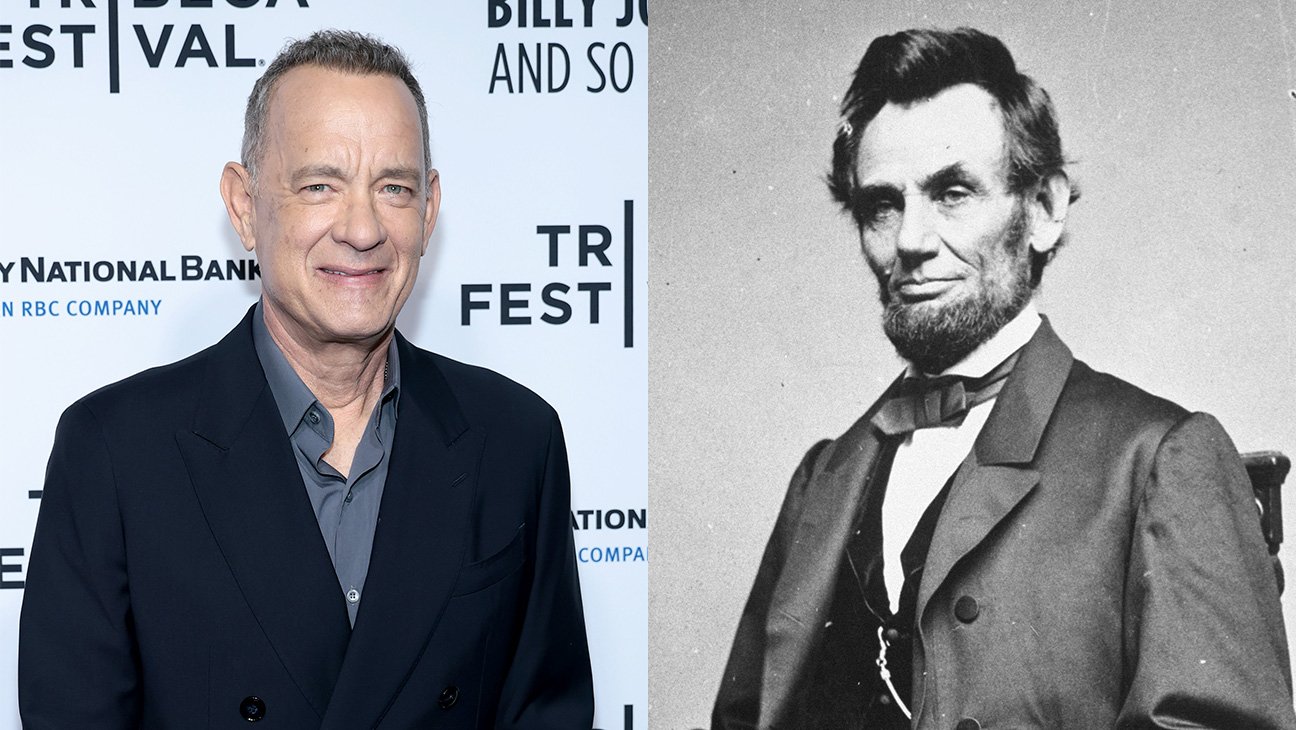
The Oscar-winning performer will portray former President Abraham Lincoln in Lincoln in the Bardo, a feature adaptation of author George Saunders’ best-selling 2017 novel.
Duke Johnson is directing the film that is a hybrid of live-action and stop-motion animation. Hanks will appear as a live-action version of the 16th U.S. President for the film that is currently in production in London.
Johnson, who co-directed the Oscar-nominated 2015 animated feature Anomalisa, helms Lincoln in the Bardo from a script by Saunders. Lincoln in the Bard centers on Lincoln’s relationship with his recently deceased 11-year-old son Willie Lincoln.
Producers include Hanks and Gary Goetzman for Playtone, along with Johnson, Devon Young Rabinowitz and Paul Young for Starburns Industries. Saunders, Steven Shareshian and Aaron Mitchell are executive producing. Saunders’ acclaimed novel won the 2017 Booker Prize.
Hanks’ recent features include The Phoenician Scheme, Here and Freaky Tales. He reprises his voice role of cowboy Woody in Pixar’s Toy Story 5, set for release this summer from Disney, and also stars in director Aaron Schneider’s forthcoming World War II drama Greyhound 2.
Lincoln’s legacy has remained in the forefront of popular culture in recent years. Hamish Linklater played the commander in chief in the 2024 Apple TV+ series Manhunt, while the Broadway play Oh, Mary!, a comedic examination of the politician’s personal life, won multiple Tony Awards last year.
Hanks is represented by CAA and Greenberg Glusker.
As 20th Century Studios and New Regency prepare to celebrate the 10th anniversary of Alejandro G. Iñárritu’s The Revenant, Insight Editions has announced a new publishing effort centered on the Oscar-winning frontier survival epic and its behind-the-scenes.
But this are no mere making-of book. Insight, working hand-in-hand with Iñárritu and in partnership with New Regency, is putting out a premium luxury book set aimed at the ultra cinephile and film book collector. Upping the collectibility factor, the package comes signed not only by Iñárritu but by star Leonardo DiCaprio as well.
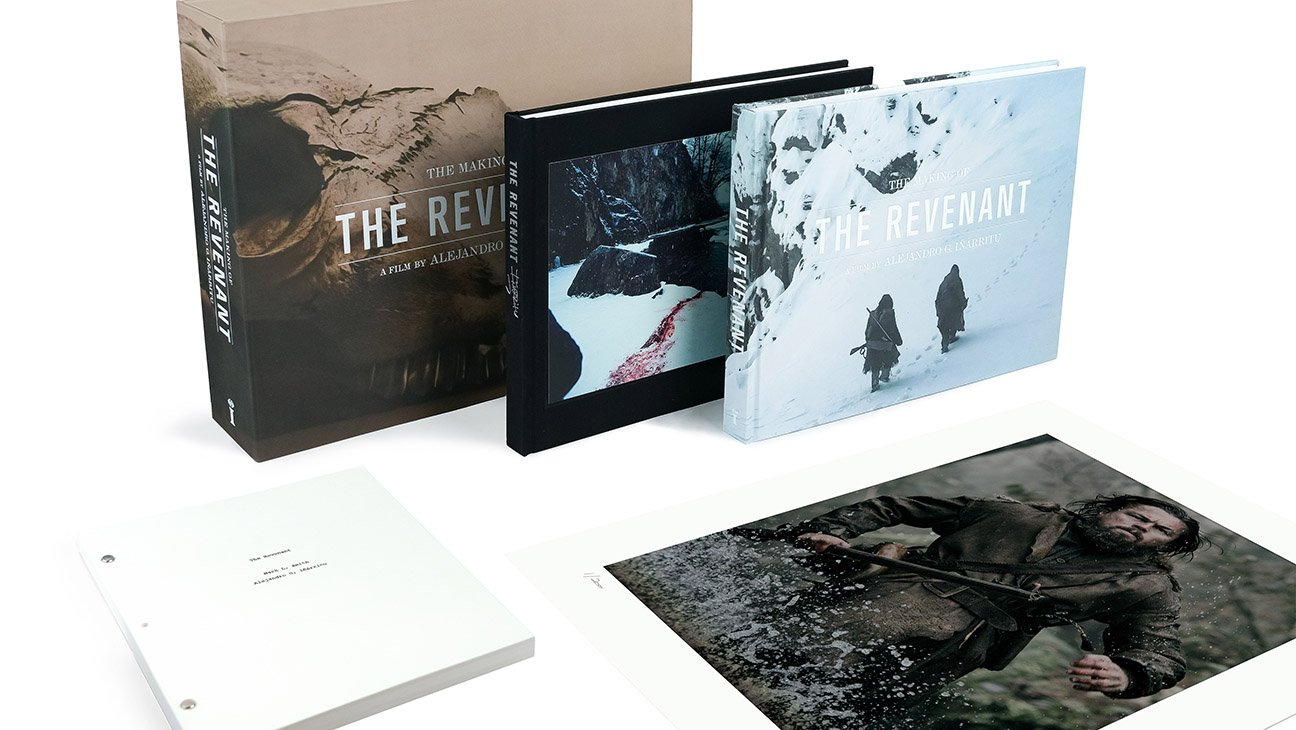
The Making of The Revenant limited edition set is housed in a bespoke clamshell box, the clothbound collection includes two debossed, foil-stamped hardcover volumes, as well as a traditionally bound facsimile of the original shooting script.
One volume is a facsimile of Iñárritu’s rare photography book, originally created as a personal wrap gift for cast and crew and reproduced exclusively for this volume.
The second volume is the actual The Making of The Revenant tome by author Gina McIntyre, offering an in-depth look at the film’s production, creative vision, and behind-the-scenes journey through detailed commentary and striking images by on-set photographer Kimberly French.
The limited edition set is restricted to only 500 numbered copies, signed by Iñárritu, DiCaprio, and cinematographer Emmanuel “Chivo” Lubezki, each of whom received an Academy Award for their work on the film.
While that alone should make the set highly coveted, within that batch is the so-called Signed Print Edition of The Making of the Revenant. This one has the above books and script but also comes with an exclusive 16” x 20” giclée print on archival Hot Press Bright paper, signed by DiCaprio.
Those editions, in which the collector is receiving a double dose of DiCaprio signatures, are limited to the first 150 of the 500 numbered copies.
20th Century and New Regency are bringing back Revenant to select Imax theaters nationwide on February 26 and March 1. It will also be re-released internationally in the U.K., France, Germany, Italy, Spain, Australia, New Zealand, and Mexico.
To celebrate the film’s 10th anniversary, Iñárritu will participate in a special Q&A panel discussion Feb. 26, where he will be joined by the film’s star DiCaprio via Zoom. A few tickets still remain for that event but they are going fast.
Live Nation is looking to delay its impending monopoly trial against the Department of Justice, according to documents the company filed on Sunday. The ticketing giant is arguing that the trial shouldn’t start until appeals it has filed over Feb. 18’s ruling to proceed with the trial are resolved.
Live Nation filed a motion for an Interlocutory appeal on Sunday looking to reverse some of the initial rulings from last week’s hearing, which the company argues would “dramatically change and substantially narrow the upcoming jury trial.”
Specifically, Live Nation is appealing regarding the court’s decision that the Justice Department and state plaintiffs “do not need evidence of actual price discrimination to prove their alleged targeted customer markets in this actual monopolization case.” The company is also seeking to address that the plaintiffs “can proceed with a tying claim without a properly defined market for the tied product.”
“If either or both legal questions were decided the other way, the nature and scope of the upcoming trial would fundamentally change: Of the three sets of claims this Court identified as proceeding to trial after summary judgment, the first two would be effectively eliminated,” Live Nation said. “The Court should not empanel a jury to try a complex, month-long case when that trial (at least as currently envisioned) may well prove wholly unnecessary.”
Live Nation concluded the court should “stay proceedings in this matter pending resolution of the appeal.”
Live Nation’s motion comes a bit over a week before the trial is set to begin on March 2. Last week, the court dismissed Live Nation’s motion to dismiss the case outright, though Live Nation did manage to narrow the case as Judge Arun Subramanian decided to dismiss some claims that Live Nation monopolizes promotion and bookings.
The DOJ first filed its much anticipated suit against Live Nation in 2024, calling to break up the eponymous concert promotion giant and Ticketmaster, the industry’s largest primary ticket provider, which would undo a merger the Justice Department itself had allowed over a decade ago. The DOJ argued that Live Nation uses its vertically-integrated business to crush competitors, further claiming that rival venue management business Oak View Group helped coerce venues into signing deals with Ticketmaster. Live Nation has consistently denied the allegations.
The case’s status has been a subject of significant conversation in the industry in recent weeks after assistant attorney general Gail Slater stepped down from her post earlier this month following reports that Live Nation had been negotiating settlement talks with other Trump political allies. Slater tweeted a congratulatory message to the DOJ last week after the court’s ruling kept the case alive.
The motion could also help Live Nation buy more time if it is still looking to reach a settlement. Even if the federal case ends in a settlement, the company would still have to face the case from the individual states. For now, the federal suit is still on the docket to go to trial.
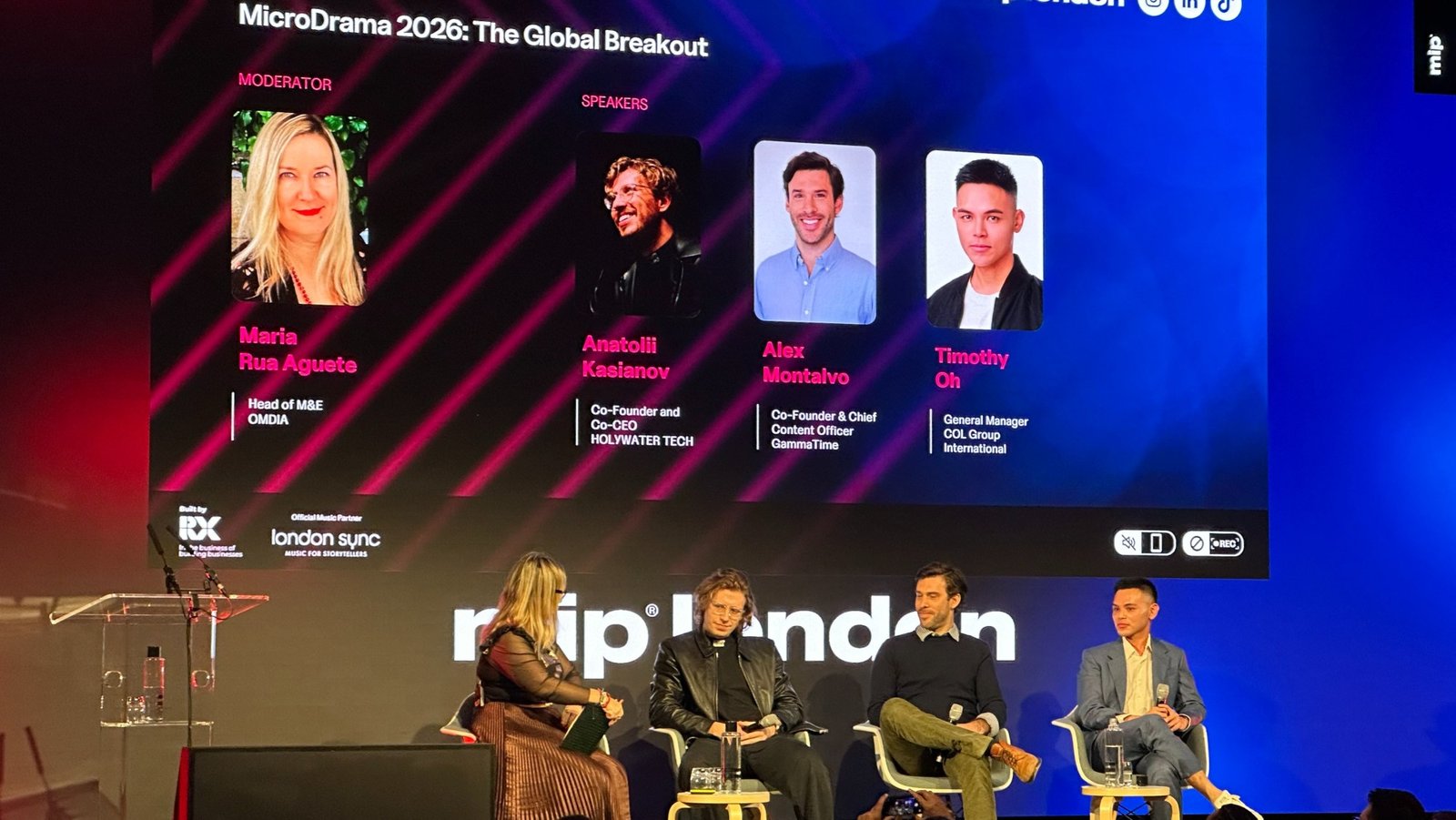
The global rise of microdramas, shortform vertical storytelling for the mobile generation, was in focus during a crowded panel session at MIP London on Monday. Among the topics of debate was a lack of big stars among casts, the growth outlook and the benefit of being able to watch microdramas in one of the most private spaces.
Sensor Tower’s annual report on the state of mobile recently highlighted that video streaming app downloads increasedglobally by nearly 39 percent in 2025, while their revenue increased nearly 18 percent. The gains were driven by short drama app downloads, which grew more than 100 percent over 2024, while traditional streaming app downloads fell by more than four percent.
Panel moderator Maria Rua Aguete, head of media & entertainment at intelligence and data firm Omdia, also highlighted on Monday that microdramas already account for $11.1 billion in global revenue, including $3.5 billion in advertising revenue.
Alex Montalvo, co-founder and chief content officer of GammaTime, a Hollywood-backed premium microdrama platform, was asked if vertical content wasn’t mostly bad. “I would beg to differ,” he replied. “This is a brand new medium,” and programming was continuously evolving. The firm’s genres and storytelling have continued to expand, he added.
After showing a sizzle reel of key short series, he said: “You can see, we’re already offering a wider range of options for consumers: true crime, thrillers, romance stories. We’re also finding early success in partnering with some of the most successful people in, dare I say, traditional Hollywood and bringing them into our ecosystem. As you saw on the screen, four of our projects were created and written by Anthony E. Zuiker, who is the creator of CSI.” Indeed, the platform showcases his thriller The Temptress, sex-crime drama Lust Cop, romantic series The Road Between Us and thriller series Kill Switch.
Concluded Montalvo: “We are adapting high-end IP, and it’s only just the beginning of the types of partnerships that we’re striking.”
The former executive of Warner Bros. Discovery and Jeffrey Katzenberg’s shortform mobile content service Quibi, which abruptly shuttered in 2020, was also asked why Quibi failed. “We probably were early,” he offered.
Anatolii Kasianov, co-founder and chief technology officer of Holywater Tech, the company previously known as Holywater until its recent acquisition of visual effects company Jeynixa, which specializes in facial animation, face replacement, de-aging and lip-sync work, also spoke on the panel. The European startup’s platforms include microdrama service My Drama and ad-supported streaming service Freebits.
He said the Jeynixa deal was designed to help the firm “disrupt how content is made [and] not only in vertical.”
Asked about how Holywater has attracted investment from the likes of Fox, Kasianov said: “We built this kind of IP incubation where we [take] hundreds of best performing, best selling books, then we transfer them into verticals and they already have an existing audience.”
He added: “We also recently signed, exclusively, Dhar Mann. He’s one of the biggest creators, I think second after MrBeast.”
Why have women been the core audience for microdramas? “I think that’s how the niche originated,” he offered. “It came from adaptations of books and performed very well, so it just started from this genre that was underrepresented, I think it’s already, on our platform, moving towards male as well.”
Tim Oh, general manager of COL Group International, where he oversees the likes of international operations, IP licensing and global expansion of the company’s microdrama and shortform content businesses, was asked about opportunities in the space for owners of existing intellectual property (IP). He said they should look at extensions of their franchises and “tell them in the microdrama space.” In fact, has team has been in talks with IP owners for “microdrama versions” of their brands that would come in a “quite tactical” way.
But Oh shared that so far, his firm has not looked to get Hollywood stars to act in its short dramas, sharing about acting talent: “We don’t cast famous actors at this point because [for audiences, watching is about] a fantasy.” And stars may distract from that.
So, is microdrama a fad or the future, the MIP London panelists were asked. “Is it a hype? Is it a fad? Yes, but at the same time, it is here to stay,” Oh offered. “Candy Crush was the biggest game at one point. People are still playing it, but there are a million other mobile games that have come out.”
He predicted a similar future for the microdrama space. “It is going to change, and it’s going to change very quickly,” Oh said. “The vertical format or short attention span is not going to change. You’re able to watch a microdrama on the way to work on the tube, walking back. It would be so hard to watch a full-length series of 40 minutes and finish it, but you get paid off and satisfied [with a microdrama].”
Oh saved one key benefit of shortform mobile content for last, sharing: “I can watch this on the toilet.”
The players of Survivor50 haven’t set foot on the beach yet, but many already know who they want out. As the landmark season approaches — with its Wednesday premiere date (8 p.m. on CBS/Paramount+) — returning contestants aren’t waiting to size each other up. They’re identifying threats, predicting alliances and comparing reputations.
The Hollywood Reporter spoke with all 24 castaways and posed one pointed question: Which player concerns you most because their game doesn’t align with yours? Their answers reveal the rivalries, suspicions and strategic fault lines forming long before the game begins.
***
Christian Hubicki: I have a hypothesis as to how this cast was put together and what everyone’s role are on the season from a Survivor standpoint. I think there are basically four categories of players divided among the 24 people. That’s six people — three men, three women. What are those four roles and what does this mean in terms of who I’m targeting?
One role: challenge beasts. You can think of those off the top of your head: You got you Joe, your Ozzy, your Jonathan Young. Those are your three men. You got your Tiff, your Chrissy, and your Stephenie, those are your women. Chrissy got four immunity challenge wins. These are what people are known for, in part, from their seasons.
Another category: witty confessionalists who are reliable narrators to tell the story. You wonder, where do I fall in these categories? That’s me, Mike White, that’s Rick. You got Aubry, Kamilla and Emily Flippen for the women. So I’m seeing these trios. This season is cast in trios, three tribes of eight.
Another category: drama. You can imagine who is drama. That’s your Coach, that’s your Q, that’s your Angelina and, in my opinion, Jenna Lewis. And our two unknown mystery 49ers. That’s where they sit. I would go so far as to say while I don’t know why the Rizgod walks among us, I believe the reason is he’s cocky drama. I think that’s why he’s here. I don’t know much about Savannah, perhaps someone who will stir the pot and not take nonsense from people.
Which leaves the final category: the threats, the people who do not stand out in any of these other categories. They are relatable people who are very good at this game. That makes them the most dangerous and with me. Charlie is a Harvard educated lawyer who runs marathons who’s charming, handsome and delightful. I stand out way too much against that.
These six — Charlie, Kyle, Colby, Genevieve, Dee, Cirie — are the people who are on this island because they are well-equipped to win.
Cirie Fields: Joe and Kyle. My history has shown that alpha men are, for some reason, quick to target me and usually afraid of me. They don’t have to be, but it’s usually a certain type. Aras [Baskauskas] was an alpha man, but a warmer alpha man. When I played with Colby in Heroes vs Villains, he wouldn’t even look in my direction. I’m waving, doing back flips and everything. He would not look at me.
Mike White: It’s hard to know off the bat, you have to vibe people out. But I feel that some people might feel like, “What’s this guy doing here?” Or think of me as a wild card. Some people might be trophy hunting, and I’d be a good head to put on the mantle. So maybe a guy like Charlie, who seems like he thinks he’s the smartest guy in the room — I could see him trying to go for me.
Charlie Davis: The people I’m most concerned about are the old schoolers who are more about honor and integrity — they keep it simple, build an alliance and never turn on players. I think they’ll be out here hunting anyone who gives them the vibe of a strategist or a nerd. People in that bunch might be Colby or Coach. Although I don’t know about Coach. He might be a different brand.
Jonathan Young: I don’t know anything about Taylor Swift, I’m not a Swiftie and while I think Charlie’s a great game player, we don’t have a lot in common. Cirie scares me because she’s so good. She’s like a mom out here. Everybody respects Cirie, but I think everybody fears Cirie.
Kyle Fraser: Charlie played a similar game to me in a lot of ways. He was a template for me and able to put his ego aside and hide in plain sight when he was clearly a great player. So he scares me because I think he can spot what I’m doing. Dee is scary; she can see BS really easily. The season 49 people concern me for a different reason, I just don’t have game tape on them.
Tiffany Ervin: Charlie probably concerns me most only because he’s played with me. He’s seen me play and knows how my mind works, he has intel on me. But also he’s one of those people that’s not a big, flashy, neon sign threat who could go undetected for a while. Q also has that same intel but doesn’t approach things in the most rational way, so people may not take his word at face value the way they would Charlie’s.
Dee Valladares: Rick Devens is smirking at everybody. It’s too much for my liking. He co-hosted the On Fire podcast with Jeff, he was the first one. But there can only be one co-host. Bye Rick, bye Charlie. Q concerns me a little bit just because he’s so chaotic. It’s going to be interesting to play with him. I feel like he’s going to drive me crazy, but I feel like we’re going to have a lot of fun. He’s kinda goofy and I want to play this game with goofy people.
Rick Devens: I hope that Aubry isn’t spreading the gospel of “watch out for Rick.” It’s been long enough that I don’t think people are thinking about me. I wouldn’t be surprised if some people here hadn’t watched my season. I didn’t have anyone in mind coming in but there are people around Ponderosa I’m not getting much of a vibe from, like Q. I’m not sure Q wants to play with me or has any idea who I am. But I don’t care because I kinda want to play with Q, he’s my son’s favorite player so that’s my in.
Quintavius “Q” Burdette: If you’ve ever sat at the end, whether you’ve won, lost or whatever, if you’ve ever pleaded your case at the end, I don’t want to work with you long term. I want you out of the game. You’re not going to get a second shot at either winning or a shot at redemption. It’s not going to happen on my watch.
Colby Donaldson: I think Kamilla played an incredible game with Kyle. She could be a huge threat in this game. Angelina, without a question, is a big threat. And believe it or not, a guy that concerns me is Q and I can’t quite put my finger on it. I watched him play and there were some things he did during his season that I think make him a question mark. I’m going to enjoy competing with him because he’s clearly good at challenges, but I don’t trust Q at all. In fact, there’s no way in the world I would put myself in a position where I had to rely on him.
Angelina Keeley: I’ve never met him and I could be wrong but I heard through the grapevine that Colby said, “Angelina, that girl seems like she’s chaotic.” Am I a little chaotic? Yeah, fair. But it’s not a good thing to say to someone else before we come out to Fiji. It’s season 50 — not season five. It’s been awhile for some of these folks. So we’ll see what happens.
Aubry Bracco: I’m a little worried about Genevieve. I want to play like Genevieve, I have so much respect for her as a player but she scares me. She can be a little savage in the game. I also think Chrissy can be a little bit savage, like smile and stab you in the back. I’m a little worried about both of them.
Jenna Lewis-Dougherty: Cirie is the biggest threat out here. Everybody in the world loves Cirie. I don’t know Cirie, but I know that I like Cirie when I watch Cirie. Take Cirie out, that’s gotta be number one. I would also say that Jonathan is a pretty big threat as is Joe and Kyle, who has won. Dee, another winner, is also a big threat but not as big as Kyle only because he has two people he worked with from his season.
Joe Hunter: Genevieve combined with Aubry and Emily. I’m just naming them because of how strategic they are. They’re brilliant players, and Charlie too. They’re all extremely strategic and that is dangerous as they know how to adapt to what’s in front of them.
Genevieve Mushaluk: I just saw, like we all did, season 48 where Joe in particular ran a strength and integrity alliance. I’m not really known for my physical strength, and integrity is open to interpretation. Would you think of Genevieve and think, “Yeah, strength and integrity?” Probably not. You might think resilience, you might think calculated, you might think independent. Joe didn’t lead an alliance with any of those names in the title. So I’m worried about maybe not meshing with him or not being a part of his plans or how he wants to play the game.
Emily Flippen: A lot of the big, burly dudes concern me a little bit. We’ve seen it in season 48 with the Joes of the world and the big, strong guy alliance. I look at somebody like Jonathan who’s obviously physically fit and is a physical asset to his tribe. These people tend to be protected early when I’m not and tend to want to keep other big threats around. So if I’m on a tribe with these big, buff guys I’m probably going to have a hard time not just associating with them on a physical level but on a personal level as well. I don’t know if we have a lot in common and that scares me a little bit.
Ozzy Lusth: One of the people who concerns me the most is Joe. He seems like a really loyal standup guy, and he’s a huge challenge threat. You also have Q and Kyle, who won his season. And you have Jonathan, Tiffany and Stefanie LaGrossa. She was the original, amazing physical threat. I used to have a huge crush on her. It’s just insane to be playing with some of these legends, like Colby Donaldson, the original Survivor heartthrob. There are some big, big physical threats out there.
Benjamin “Coach” Wade: I don’t get a good vibe from the two season 49 players. I don’t know them but I’m having flashbacks of Russell [Hantz] and how he came into Heroes vs Villains and nobody knew how he played and he lied to us. I have a fear of the two new players because they know all of us, and none of us know how they play.
Chrissy Hofbeck: Who concerns me because I think his game is a lot like mine is Christian. Not only is he charming and you want to be around him but darn it, he’s smart. He’s a person who I think will play a similar game to me, so that worries me. I have this feeling that Ozzy just won’t like me that much. Maybe that’s my season 35 fears coming back, he’s a cool kid and I’m not a cool kid. But maybe this season isn’t really full of cool kids anyway.
Kamilla Karthigesu: I think Genevieve’s game will clash with mine pretty badly. She’s a known flip flopper, she’s good at lying and she was part of so many blindsides on her season, which is scary. I don’t want another person out there good at lying because I could be lied to. Also, I’m pretty sure I saw her crush a puzzle in 47, and I don’t want puzzle competition.
Stephenie LaGrossa Kendrick: Kamilla concerns me a lot. She prides herself on lying and likes to lie. Although I loved Kamilla and Kyle as a viewer, great gameplay. She is one of those people that can be 20 minutes behind in a challenge and if there’s a puzzle in the end, she’s going to blow you away. She is going to be a huge threat.
Rizo Velovic: There are a lot of people in their 50s, 40s and late 30s. I have to be more cognizant of older players like Stephenie, Cirie, Jenna Lewis. I want to make sure that I don’t come off as this bratty, young, cocky guy and be somebody more endearing who they want to work with because I remind them of their child. While I want to work with old school players, I think my personality fits better in the New Era and I want to make sure I don’t come across as something I’m not to these old school people.
Savannah Louie: A lot of these New Era people, especially the ones who are really social, are the ones who concern me the most. You have three people from season 48 here: Kyle, Joe and Kamilla. That’s a scary group. You have people like Dee and Emily and Genevieve who, while they didn’t all play together, probably bonded at Survivor events. Q, Tiffany and Charlie all played together. Who knows what’s going on in their DMs? A lot of the New Era people created these tight bonds, which may become alliances. I think maybe some of the old school players might be open to working with someone who’s a little less certain, being me.
***
Survivor 50 aires new episodes Wednesday at 8 p.m. on CBS, streaming on Paramount+. See how the cast is divided into their tribes here.