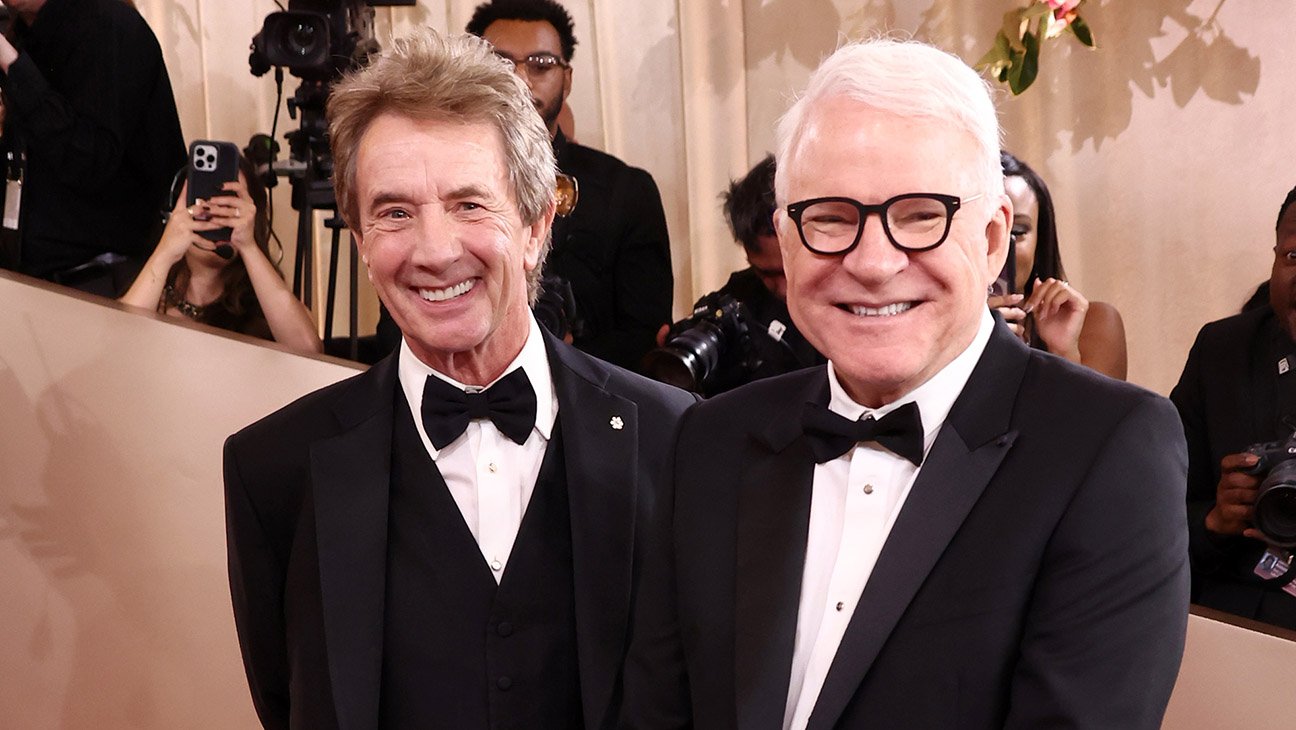
Katherine Short, one of Martin’s three children, whom he adopted with his late wife, actress Nancy Dolman, died Monday at the age of 42. Sources told TMZ that she died from a self-inflicted gunshot wound, as the LAPD responded to her Hollywood Hills home shortly after 6 p.m on Monday. The L.A. Medical Examiner ruled her cause of death a suicide.
All of the scheduled February dates for The Best of Steve Martin & Martin Short have been postponed. The Only Murders in the Building co-stars were slated to kick off their joint tour on Friday in Milwaukee at the Miller High Life Theatre.
“Due to unforeseen circumstances, Steve Martin & Martin Short’s show, originally scheduled for Friday, February 27th in Milwaukee, has been postponed,” a message on the venue’s website reads. “Tickets will be honored for a future rescheduled date. We will be in contact with further news when it is available.”
The duo was also scheduled to perform at Minneapolis’ Orpheum Theatre on Saturday, with a similar message on the venue’s website reading, “Steve Martin & Martin Short’s shows originally scheduled for Saturday, Feb. 28 have been postponed. Tickets will be honored for a future rescheduled date when determined.”
Their next stop, scheduled for March 13 the Dar Constitutional Hall in Washington, D.C., does not share any details about the show being postponed. A series of additional appearances with the duo is scheduled through Dec. 4.
“It is with profound grief that we confirm the passing of Katherine Hartley Short,” a rep for Martin Short said in a statement on Tuesday. “The Short family is devastated by this loss and asks for privacy at this time. Katherine was beloved by all and will be remembered for the light and joy she brought into the world.”
Martin and Dolman also shared two sons, Henry and Oliver. Katherine graduated from NYU in 2006 with a bachelor’s degree in psychology and gender sexuality studies, and also obtained her master’s in social work from USC in 2010.
Only Murders in the Building was renewed for a sixth season in late October, with filming for the installment seemingly expected to begin in May.
As major cinema chains slump on reduced 2025 attendance, Imax is reporting a surge in global box office during its fourth quarter from a mix of Hollywood tentpoles like Avatar: Fire and Ash, local language titles and alternative programming.
On Wednesday, the film technologies company also revealed its gross box office during the three months to Dec. 31, 2025 jumped 62 percent to $336.2 million, which marks a new Q4 record. And Imax is looking to increased contributions from Hollywood blockbusters shot with its proprietary cameras and local-language films to drive what it touts as a Big Bang moment for the company in 2026.
“Our slate for 2026 is arguably the strongest we’ve ever seen, with a record of at least 12 Filmed For Imax releases worldwide; a highly anticipated offering of family films in a time where we’re growing market share with family audiences; and more international blockbusters than ever,” Imax CEO Richard Gelfond stated.
The Imax chief added, “The year is highlighted by huge, Imax-centric tentpoles — including Christopher Nolan’s The Odyssey, the first theatrical feature shot entirely with Imax film cameras; and Filmed For Imax releases including Denis Villeneuve’s Dune: Part Three, Jon Favreau’s The Mandalorian and Grogu, and Greta Gerwig’s Narnia — and our strong slates for 2027 and 2028 continue to come into view.”
Imax during an after-market analyst call is also expected to discuss grabbing a bigger share of the global box office this year and next as a provider of premium theatrical screens and technologies to distinguish itself from the broader exhibition industry.
On Wednesday, Imax said it posted Q4 revenue up 35 percent to $125.2 million, compared to $92.7 million in the year-ago period. That beat an analyst forecast for revenue of $120.12 million. Net income fell 64 percent to $2.5 million, compared to a year-earlier $6.9 million.
During the latest quarter, Imax recorded a one-time charge of $15 million to repurchase convertible notes due 2026, and a non-cash goodwill impairment charge of $7 million. The adjusted earnings per-share hit 58 cents, against a year-earlier 27 cents.
Also during the fourth quarter, content solutions revenue rose 50 percent to $38.2 million, against a year-earlier $25.5 million, underpinned by the strong gross box office growth. The technology products and services revenue was up 32 percent to $84.6 million, compared to $64 million in the same period of 2024.
Imax earlier said its worldwide theater network helped the company post $1.28 billion in global box office for 2025, a new company record. That surpassed Imax’s previous highwater mark of $1.1 billion in global box office for 2019, and the company now expects $1.4 billion in global box office for 2026.
[This story contains major spoilers from the third season of The Night Agent.]
Genesis Rodriguez did not quite know what she was signing up for when she agreed to play financial journalist Isabel de Leon in the third season of Netflix‘s The Night Agent.
Fresh off a stint in the second season of Taylor Sheridan’s spy thriller Lioness, where played a U.S. Army pilot, Rodriguez had to switch gears to play a whipsmart woman whose investigative reporting reveals that her own flesh and blood is at the center of a government conspiracy. “It’s jarring. I went from this very tough, physical character [in Lioness] to a very cerebral character [in Night Agent],” Rodriguez previously told The Hollywood Reporter when shooting the newly released third season of Night Agent in Istanbul back in December 2024. “I love a challenge.”
At that point, Rodriguez was still largely in the dark about her character’s connection to the central plot of season three. Midway through the season, protagonist Peter Sutherland (Gabriel Basso), much like the rest of the audience, discovers that Isabel is actually the estranged daughter of Jacob Monroe (Louis Herthum), the ruthless intelligence broker with whom Peter struck a deal at the end of season two to thwart a terrorist attack on the UN building in New York.
A rising reporter for The Financial Register in New York, Isabel secretly travelled to Istanbul at the start of the season to meet with fugitive FinCEN analyst Jay Batra (Suraj Sharma) and receive classified evidence of a massive stateside money-laundering operation that funded a deadly terrorist attack on a civilian airliner. This evidence places her in the crosshairs of a powerful network, including corrupt banker Freya Myers (Michaela Watkins), an unnamed assassin played by Stephen Moyer, and a shady businessman who happens to be her old man. Teaming up with Peter, Isabel begins to connect the financial dots between the domestic shell companies owned by her father and President Richard Hagan (Ward Horton).
Through a series of revelations and flashbacks, Isabel discovers that her mother, Sofia (Daniela Peña), was a casualty of her biological father’s past life as a CIA mole in the ’90s. Sofia died in prison years ago while Monroe chose to protect himself. Despite this painful history, Monroe’s lingering paternal instinct becomes a catalyst for the plot; he ultimately agrees to tear down his criminal empire and cooperate with Peter specifically to ensure Isabel’s safety. In the end, however, Monroe is shot point blank in the head by Peter’s new partner, Adam (David Lyons), who turns out to be President Hagan’s former commanding officer in the military and was installed as a Night Agent to carry out orders specifically on behalf of the corrupt POTUS.
Following Monroe’s death, which she believed was not a staged suicide, Isabel realizes that the key to the massive database of criminal evidence that would bring down her father’s entire criminal enterprise is hidden inside a sentimental copy of Grimm’s Fairy Tales. By decoding this book cipher, she unlocks the proof needed to take down the conspiracy. In the high-stakes finale, she survives an attack by the President’s rogue agents and successfully broadcasts a live interview — with Myers going on the record — that exposes the First Family’s criminal conduct to the world, providing a sense of closure for her family’s tragic past while holding the most powerful people in the country accountable.
“It’s so brave to throw yourself under the bus or throw everybody under the bus because the truth and her moral compass is so strong that that’s the most important thing above anything. ‘Let it all burn down,’” Rodriguez now tells THR in an interview about the third season, which released Jan. 19. “It’s very poignant. It’s very relevant to today’s world. I think journalists — and playing a journalist right now — are very important, and there are people out in real life trying to get the truth out there and risking it all.”
Below, Rodriguez offers her take on Isabel and Monroe’s fractured yet loving relationship, why she never saw Isabel and Peter’s relationship as anything more than platonic — and what viewers can expect from the next season of Sheridan’s Lioness, which she says will wrap production very shortly.
***
Once you landed this role, what do you remember from your earliest conversations with creator and showrunner Shawn Ryan about Isabel’s arc in the third season? Did you know who she really was?
I had no idea who she turned out to be until I was shooting, which is really cool because I was kind of discovering with the audience. I honestly feel it was good that way because I don’t think Isabel really cared about his backstory. It was the present relationship she had with him that informed the way she went about him. It was a tough position for her because, at the end of the day, he is her father. And always underneath all the resentment and abandonment is a love there. So it was a very tough, layered thing we had to pull off of having to [believably] turn in your father when you don’t have a great relationship with him. [We wanted] her search for the truth to be the thing that drives her. I think she’s a very special person who puts her morals and integrity above everything — above a relationship with her own father.
You mentioned that you did not know her true identity until you were shooting. At what point during filming did you learn that she was the estranged daughter of Monroe?
I learned after episode three. So here I was investigating [a shell company called] CorePoint Dynamics. I knew it had something to do with my father, but I didn’t know how. I think she didn’t know much about him. So in a way, she was just investigating where he got his money and how he made his money. It didn’t make sense to her. And especially with the way she went about journalism in general, she said, “Always follow the money.” It’s a different approach to how she would [normally] get to the truth and how she feels like justice would be served. So I think [her arc] was, in a weird way, to get to the bottom of who her father is because he never really shared that with her.
One thing I have come to appreciate about this show is how cultural details for the characters of color have been woven into the last couple of seasons — the Iranian storyline in season two, and now Isabel’s bicultural upbringing between the U.S. and Mexico in season three. You’re Venezuelan and Cuban, but did you ever have any conversations with Shawn about weaving in any cultural details for Isabel?
I personally love the episode where they flash back just to give you the whole point of view of how she grew up. I honestly feel like Shawn did such a good job at bringing in so much backstory that really it was easy for me to tap into bringing this to life — to be someone that comes to the States to better themselves, to chase a dream. That is this country’s story, and there are so many people like this. I’m a child of immigrants. It’s easy to tap into this and to straddle two cultures. It’s what I grew up with. So just by being open to the words, but also he was extremely open to everything that I had to say about things — it was just a very collaborative environment when it came to forming and sculpting this character.
Gabriel Basso as Peter Sutherland in The Night Agent season three.
So much of this season is built on this unlikely new alliance between Peter and Isabel. They begin on a more antagonistic note, but episode four definitely reveals a new side of that dynamic as they confide in each other about their personal lives — and Peter even risks his own life to save Isabel’s. Why do you think Isabel brings herself to immediately and implicitly trust Peter, even as she worries about her own journalistic credibility being called into question?
I think when people are put in danger, and they are put in danger together and he so easily stepped up to protect her, that creates a bond. But what I love about their relationship is that the romance isn’t even a question. It’s two people with the same idea, the same journey of doing the right thing. They’re experts at what they do in their own way, and both of them complement each other. She’s so cerebral and skilled in researching and going down the rabbit hole, and he’s so good at connecting the dots in real time and so instinctual. They have two different expertise that come together for the same thing. And not only that, it’s also refreshing that a male and a female can have a friendship on television where she teases him the entire time and he allows for it. It’s refreshing to see that for these two characters.
When I spoke with Shawn Ryan about the third season, he told me it was never his intention to lean into any kind of romance between Peter and Isabel, but some viewers still believed that Isabel was being set up as some kind of love interest for Peter. Did you, at any point, see the potential there, even if you were excited about the prospect of them being just friends?
I don’t think so. I certainly don’t think we played it like that. The words didn’t lend for romance. It lent for trust, and led to a friendship. Especially because she was so sure of herself at the cabin in the pool episode [episode four]. She’s like, “Okay, what’s your deal? You haven’t looked at me sideways. Not once. Every guy looks at me sideways. What’s your problem?” (Laughs.) And it was just so refreshing to see that he can’t have that [romantic relationship] and have his job, and do what his journey is meant to do. I really enjoyed that it wasn’t that. It’s very hard to come into a third season, and people are already comparing you to someone else. I don’t feel like I’m filling a void; It’s like an own little separate thing. So that was kind of alleviating.
Isabel keeps telling Monroe throughout the season that she can’t trust him. At one point, she says, “I don’t know what’s a negotiating point or what’s not, not even with your cancer diagnosis. And now you want me to play like I’m a good daughter. Like you never abandoned my mother and me. I want my father in my life… but you need to earn it.” Do you think there is any world in which Isabel would have been able to trust Jacob, or would she have always resented her for abandoning her and her mother and then trying to buy her love?
I absolutely believe if Monroe would’ve led with the truth, despite what her judgment would’ve been like, she would’ve been open at least [to a relationship]. But the man didn’t know how to not lie, even to protect her. He just couldn’t help himself. I feel like her little token that she got was that he did love her, despite the fact he was never open with her. That is something she would have to deal with once she decodes everything and sees that her mom meant a lot to him, and the story that she had told herself wasn’t entirely true. What’s sad, though, is that there was really no real closure. There is a closure about who he was and that he did love her, but they never had the chance to really have a relationship.
One of the standout moments of the season for me was when Isabel, who intentionally chose not to have a heartfelt goodbye with her father, learns that he has died suddenly. Can you give voice to what is going through her head as she attempts to process that news?
I think it’s the loss of the relationship that could have been. It’s the loss of the only living parent that you had. Despite not getting along with them, you’re still going to miss that parent. Even if they disappointed you, even if they broke your heart, now you don’t have anybody. I think she was more so mourning what could have been. And when you get a chance to play those things, it’s so fun because it’s so complex. There’s so many different emotions that are battling within you that you get to interpret. I’m happy you were happy with that scene, but obviously you lose some sleep before you do it. (Laughs.) You’re like, “God, I hope that I got this right.”
Shortly after processing the news, Isabel insists she wants nothing to do with her father anymore. Do you think there is a part of Isabel that still loved her father, even after he was killed? Do you think she only said that to the people around her as a way to suppress her own grief?
Absolutely. Throughout the entire storyline, she loved her father. No matter who that person is, or who they turn out to be, you’re still looking for validation and love from your parent. You could be 80 years old and still living that way. I absolutely believe that she loved him — and continued to love him. Even despite turning him in and all these things, that was the underneath of it all. That’s what made it so hard because he had a cancer diagnosis. There were so many things she wanted from him that he couldn’t even tell her. There was just no way to have a relationship the way that he was presenting it.
After the FinCEN scandal involving the POTUS comes to light, Isabel chooses not to reveal Peter’s involvement with Monroe in her reporting. She tells Peter, “You were the only one who made a deal with my father who was actually trying to help people. You weren’t the story.” What exactly do you think she has learned from working with him?
What she discovers is that not everyone is black and white, that sometimes you have to do certain things to do the right thing. I think she can accept that because of her relationship with Peter, because underneath she saw his heart and who he was and why he was doing certain things. And for her, she definitely changed after her relationship with Peter because in the beginning for her, it was always black and white and there was room for grey. She finally sees that by the end.
The last time we see Isabel onscreen, she tells Peter she is going to Barcelona for a few months to try to find some balance in her life. Is this the last we’ve seen of Isabel, or have you had any discussions with Shawn about the character coming back in a future season?
I’d absolutely love to come back. The door is definitely open, so I hope there is a storyline in the future where that could happen.
You spent the last few months shooting the third season of Lioness. How far into production are you right now, and what are the new layers you have found in playing Josie this time around?
We’re about to finish season three. It’s interesting that the two characters I’m playing have some daddy issues. (Laughs.) We’re having fun. We are just bringing in another packed season. I think it comes out later this year.So I guess spoiling without spoiling, she’s obviously back for season three. You see her in the dynamic within the QRF now, and how she fits into the dynamic now. When you saw her, she was kind of this outsider who wasn’t accepted by the QRF, and now she’s a part of the team. And obviously, there is the whole “Crusie” [a portmanteau of Rodriguez’s Josie and Laysla De Oliveira’s Cruz Manuelos] situation happening. And that “Crusie” is still cruising!
[This story contains spoilers for Good Luck, Have Fun, Don’t Die.]
Haley Lu Richardson is a true original. You will struggle to find another actor who is so authentically themselves in every facet of the entertainment business. You also won’t find a more varied portfolio of brand new work than hers.
Richardson is currently on the big screen in Gore Verbinski‘s Good Luck, Have Fun, Don’t Die, a sci-fi comedy that gives artificial intelligence the roasting it rightly deserves. She also just premiered Zi, her third independent drama with Kogonada, at Sundance. You can also catch her alongside Emilia Clarke in the Peacock streaming series, Ponies, where she and Clarke play widows who step in for their deceased CIA operative husbands during the late ‘70s portion of the Cold War. Last but not least, Richardson and her childhood best friend, Lily Kravetz, just put out a poetry book called I’m Sad and Horny, chronicling “the chaos of being a twenty-something girl in this world.”
In Don’t Die, the Arizona native routinely steals scenes as Ingrid, a party princess with electromagnetic sensitivity. It’s an impressive feat when you consider that she’s acting opposite Oscar winner Sam Rockwell and the likes of Zazie Beetz, Michael Pena and Juno Temple. Her character’s allergy to mobile phones and Wi-Fi has made human connection all the more difficult, so Richardson took inspiration from a singer-songwriter who’s become a defining voice for those who feel isolated and heartbroken.
“Honestly, Phoebe [Bridgers] is a crucial part of the emotional, physical, psychological development in my life,” Richardson tells The Hollywood Reporter. “I would love to collaborate one day. I was very much inspired by Phoebe for Ingrid — her energy, her mannerisms, her stance, her hair. We had a picture of Phoebe up in the hair and makeup trailer as one of our inspirations.”
As the author of I’m Sad and Horny, Richardson did not realize that Bridgers concocted a viral tweet during the pandemic that said, “Finished Normal People and now I’m sad and horny …” Series co-lead, Paul Mescal, then responded, “I’m officially dead.” And in another relevant twist of fate, Bridgers shot back, “No, don’t die …”
“Oh my God, I did not know about that. I’m feeling mixed emotions right now because I’m such a Phoebe fan,” Richardson says. “Phoebe’s music makes me sad and horny, and it has really helped me accept my sadness inside. So it’s actually crazy to hear that she tweeted that. Maybe I’m just really in tune with her, or maybe she’s inspired me so much that I think like her now.”
In Good Luck, Have Fun, Don’t Die, Richardson and Rockwell’s characters have a very unique relationship on screen, one that is explored via the Q&A below in spoiler-y detail. The two actors also got to share a memorable moment together off camera when Rockwell asked Richardson to help him read his now-famous The White Lotusmonologue scene at a point when he was still on the fence about accepting the job. Richardson, who starred on season two of Mike White’s smash hit HBO series, essentially stood-in for Walton Goggins’ character. The latter’s eventual response to the brutally honest speech spawned some of the most hilarious reaction shots in recent memory. But it turns out that Richardson may have given Rockwell the nudge he needed to commit to season three.
“I remember sitting in his trailer when he asked, ‘Would you run this scene with me?’ I obviously know how far [creator] Mike [White] will go with his White Lotus characters, but I was shocked when I heard Sam’s big monologue,” Richardson recalls. “I was like, ‘What is Mike on?’ So I read it with Sam, and he was still deciding if he wanted to do it for sure. He was like, ‘I don’t know, man. Are people going to think I’m a creep? Is this too much?’ And I was like, ‘Sam, I think you really have to do this.’”
Below, during a wide-ranging conversation with THR, Richardson also discusses why she went “method-lite” for her Don’t Die character, as well as why she’s still optimistic about the arts in the AI era.
***
I’m sorry you have to spend Valentine’s Day on Zoom with me, especially while you’re in Berlin.
Well, for this interview, we can be each other’s valentines.
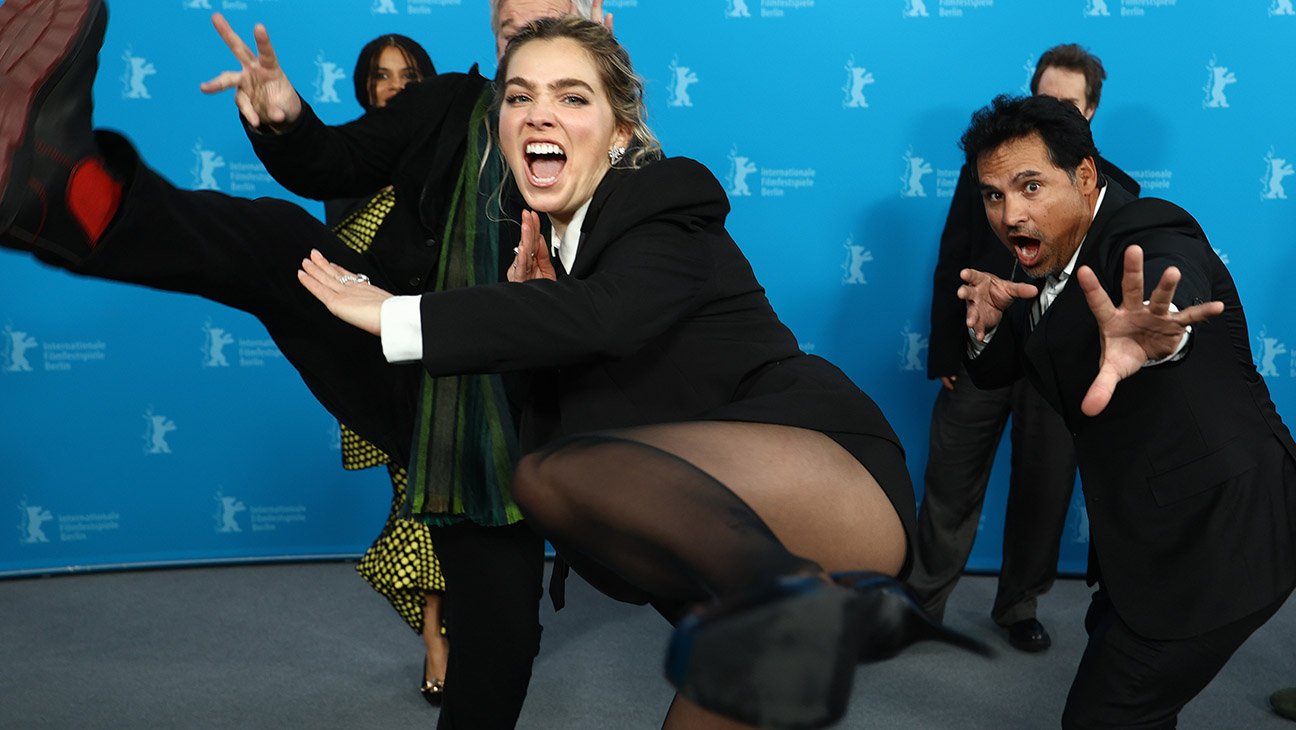
Deal. Between the airplane message in Silicon Valley and you doing headstands on the Berlinale carpet, Good Luck, Have Fun, Don’t Die’s marketing has reached a whole new level.
(Laughs.) I don’t know what happened to all of us yesterday. It’s definitely a wild, batshit, unhinged movie, and we’re also like that in a lot of ways. Gore [Verbinski] and I definitely are. So our energies combined with the energy of the movie, and we were just unhinged yesterday.
Gore Verbinski, Haley Lu Richardson, Sam Rockwell, Zazie Beetz and Michael Peña pose at the Good Luck, Have Fun, Don’t Die photocall during the 76th Berlinale International Film Festival Berlin at Grand Hyatt Hotel on Feb. 13.
Arturo Holmes/Getty Images
There was some peer pressure?
I’ve never felt more energy from the photographers on a red carpet or press line or photo call or whatever they’re called than the photographers here at [Berlinale]. You do one thing that’s wacky or untraditional, and they are like, “Do it 20 times now! Do it again, but on your head!” I fall easily into the trap of “dance monkey,” but I had fun doing it. I can’t help who I am. I’ve surrendered to it at 30. This is the way I am for better or worse.
I’ve been wondering why you weren’t in Kogonada’s A Big Bold Beautiful Journey. I thought you’d be in all his movies. Besides there not being an optimal role for you, is it because Good Luck, Have Fun, Don’t Die shot at the same time?
Did it?
Yeah, according to the internet, both began shooting in April 2024.
Actually, I do remember texting with Kogonada while we were both filming, but no one asked me to be in A Big Bold Beautiful Journey. And it’s okay. I forgive him.
Perhaps you could’ve played the bride at the wedding Margot Robbie and Colin Farrell meet at, but it’s such a brief part that maybe Kogonada didn’t feel like it’d be worth your time.
At one point, I had sent a headshot to Kogonada, and I think [Columbus co-star] Rory Culkin did as well. Our headshots were going to be a little Easter egg in the scene where [Phoebe Waller-Bridge and Kevin Klein] send Colin on his way, but I guess he cut them out. [Writer’s Note: Richardson proceeds to have a coughing fit that becomes a running joke the rest of the interview.] Good Luck, Have Fun, Don’t Choke to Death. I literally started choking on my own breath and words. Thank you for bearing with me.
Of course. I’m guessing Zi more than made up for your Big Bold absence?
Yes, Zi was the perfect experience to have with someone like Kogonada, and it was also just a gift of a creative experience in general. I don’t know if you know about the nature of how it all started and came to be, but it was pretty unique and independent and amazing.
All I know is that it was a response to all the rigamarole he experienced on Big Bold. He wanted to get back to something pure and without a lot of fanfare.
Well, in the decade since we met on Columbus, we’ve maintained this beautiful friendship and respect for one another. Every time we meet for lunch or coffee or talk on the phone, we’d both share stories from what we’ve been working on and how we’re growing as artists and as people. Some of them have been a part of the big machine of the industry. It has its upsides and positive challenges, but it also has its soul-crushing bits that definitely distract from the reason why we both really love to tell stories.
For the last few years, he’s been talking about wanting to do something that’s just truly independent and pure with a very small group. I’ve been waiting for it to be the right time and for him to have the spark of an idea, and then he asked me to come to Hong Kong [in October 2025]. I ended up learning a lot because all we had were our instincts, and that takes an immense amount of trust in your collaborators. It also really connected me to trusting myself more, which is super valuable in life and specifically with acting.
I can’t wait to see it. Were you able to read the Don’t Die script without your reps giving away the major spoiler in the movie?
Yeah, no one spoiled it for me. They were all really excited for me to read it because a great script, unfortunately, is rare to come across. My mom read it before me too. She read it the day that it was sent to me, and she was like, “Haley, I’m not going to tell you anything about it, but I know you’re going to want to do it. You need to read this right away.” So I listened to my mother, and she was right. Then I manifested that Gore would let me do it, and he did.
Asim Chaudhry, Juno Temple, Michael Pena, Sam Rockwell, Zazie Beetz, Haley Lu Richardson in Good Luck, Have Fun, Don’t Die
Courtesy of Briarcliff Entertainment
We’ll touch on the spoiler later. Does your mom usually function as your script filter/personal reader?
My mom reads all my scripts and sends me emails titled, “Mom’s two cents.” She actually has incredible instincts. She’s right 98 percent of the time. It’s pretty cute and pretty helpful.
Your character, Ingrid, has electromagnetic hypersensitivity. She’s allergic to technology, especially cell phones and Wi-Fi. Thus, she’s a rent-a-princess for young kids’ outdoor birthday parties because they generally don’t have phones yet. Has this character and this movie altered your screen time at all?
She definitely did while we were filming. I went method-lite and deleted Instagram for the few months we were in South Africa. I also never brought my phone to work. So instead of having four to six hours of screen time a day, I had maybe 15 to 30 minutes, and that was a really amazing, inspiring reset. Since then, I’ve definitely gone through phases where I’m sucked into the vortex. And next thing I know, three weeks of my life goes by and a third of it was spent on the phone doing shit.
Part of what drew me to the themes of this movie and specifically to Ingrid was the fact that I’ve always had this awareness/deep resistance to social media in general. I do love my Instagram, and it does suck me in, but I definitely value being present and living my life so much more. My friends have said throughout my life how bad of a texter I am. It’s because when I’m hanging out with people, I’m rarely the person who’s checking texts. But I do think that playing Ingrid and the thoughts that this movie provokes have made me even more aware. That’s not to say I got a flip phone. I, unfortunately, still have an Instagram and a smartphone.
Good Luck, Have Fun, Don’t Die is the most anti-AI movie to come out in the AI era. This technology is being imposed on us, and it’s a threat to most walks of life, especially creative ones. You already had reasons to worry as an actor, but as the author of a recent poetry book called I’m Sad and Horny, have you become even more opposed to AI?
Lily [Kravetz] did all of the art in the book with me, and she’s been my best friend since we were 11. We felt so proud upon having the book released because it’s something that AI could never make. Whether people like it or not, we can always feel proud of that fact. All of the things that I’ve experienced as a human — heartbreak, joy, growth, shame, coughing fits — are things that AI could maybe try to replicate, but it would never understand the nuances and the actual lived experience. The way that Lily did the art is symbolic on such an inside level, and only she and I would know of these experiences. So it’s just something artificial intelligence would never understand.
But, yeah, I have a lot of feelings about AI. Sometimes, I fall into the trap of avoidance because they’re overwhelming feelings. Still, I’m a very hopeful person, for better or worse, and I really believe strongly in my gut that there will always be people who value the irreplaceable human experience and connection through art. AI will continue to develop and get stronger, but I have to believe that there will always be people who prioritize human expression and human … What am I trying to say?
Human ingenuity?
What does ingenuity mean?
Inventiveness, creativity …
Yeah, exactly. Therefore, as long as people value that, I will always have a space to do the thing I love. I’m holding onto that hope.
You’re a noted friend to all felines, so how do you feel about the cat imagery in the film?
Zazie [Beetz] and I both love cats so much, and we love the big cat centaur/weird, large glitter-spewing penis thing. We just love it. It might be the best character in the movie. I don’t necessarily think that it makes cats look bad. If anything, the movie makes us look bad. (Laughs.) I think Ingrid says something toward the end of the movie about this “warped, twisted, worst version of us,” and we, unfortunately, are responsible for starting all this.
Gore Verbinski’s Good Luck, Have Fun, Don’t Die ensemble.
Courtesy of Briarcliff Entertainment
I thought I had been through some bad breakups, but for Ingrid to be told by her boyfriend Tim that he’d rather live in a virtual reality coffin than actual reality with her, just brutal.
Yeah, Tim is the only human she’s ever been able to connect with or be with, physically and emotionally, in her life. So for him to fully do a 180 and abandon her in the most vile, disturbing, insane way, it’s pretty rough.
Let’s get into the major spoiler of the movie. It’s revealed that Ingrid is actually the mother of Sam Rockwell’s “The Man from the Future.” He’s trying to safeguard this AI superintelligence right before it launches so that it doesn’t kill your character many years later. How would you describe the day where you cradled Sam Rockwell in your arms as if he’s your son?
As if? He is! (Laughs.) When he disappeared in my cradled arms, the rest of the cast was having the easiest, most fun day of their careers. They were walking around, smiling and hugging each other, while I was having this crisis, this psychotic break and this deep panic. So I definitely felt like a crazy person that day because everyone was so emotionally regulated and happy and chill, and I physically looked like an insane person. Normally, when you have a really intense, emotional, crazy scene like that, the other people around you are also in that headspace. So there’s this energy around you that you can rely on, but much like Ingrid in the scene, I felt totally alone and on the exact opposite page of everyone else.
[Major spoiler question continues.] There are a lot of clues like when she wants to watch the sunrise with Tim (Tom Taylor). Or when The Man from the Future goes off on her for not getting out of the way of the falling car. Did you and Sam feel like you didn’t have to leave any added breadcrumbs because the script already had enough clues baked into it?
Yeah, the script already had the perfect amount of clues. The first time I read it, I was just so interested to learn more about Ingrid as the movie progresses. She’s truly mysterious. She comes off like she doesn’t care, but it’s obvious that she deeply cares. She’s at a very critical emotional time in her life, and you just want to know why.
As far as her and “The Man from the Future,” I’ve named him Derek. I feel like I’m allowed to name him because I’m his mom. There’s a weird relationship between Ingrid and Derek, and you don’t know why he’s so opposed to her going on the mission at the beginning. You don’t know why he seems to care about her when he doesn’t really care about anyone else. I then had this interesting revelation when I first read the script and was realizing in real time that Ingrid is his mom and she’s pregnant with him during the mission. I had this weird realization hit me where I was like, “Of course, she is!” It was almost like I already knew it instinctively.
When we did the scene where the weird creepy AI boy is revealing it to Ingrid, I felt that too as Ingrid. So there was a deep subconscious draw or connection to this strangely dressed, rabid man that comes into Norms. It was more than just, “Fuck it. I’ll risk my life to follow this crazy person because I’m depressed and heartbroken and alone in the world.”
Did you and “Derek” (Rockwell) talk about The White Lotus since he got the last-minute offer to join season three while you were filming?
First of all, I love that you’re on board with Derek. And yes, he got that part offered to him when we were in South Africa. I remember sitting in his trailer when he asked, “Would you run this scene with me?” And I was like, “Sure!” I obviously know how far [creator] Mike [White] will go with his White Lotus characters, but I was shocked when I heard Sam’s big monologue. I was like, “What is Mike on? How could this possibly fit into anything? What is happening?” So I read it with Sam, and he was still deciding if he wanted to do it for sure. He was like, “I don’t know, man. Are people going to think I’m a creep? Is this too much?” And I was like, “Sam, I think you really have to do this.”
So you heard his monologue for the ages before Walton Goggins did.
Yes, I’m Walton’s stand-in. (Laughs.)
Haley Lu Richardson and Jennifer Coolidge on The White Lotus season two.
Fabio Lovino/HBO
I’ve loved all of your recent answers to questions about whether you’d be willing to come back for more White Lotus. Your response is basically, “How is this even a question?”
Yeah, it’s just one of those shows that really hits people. It’s so fun, and Mike is just really smart. So, yeah, returning would just be a no-brainer.
As season three was airing, did you hear the fan theory about Portia potentially being Carrie Coon’s character’s daughter?
Yeah, my dad sent me some article about that, and it was literally all rooted in the fact that we had the same haircut. It was literally that simple. I was like, “Yeah, that’s how genetics work. If you have the same haircut, that’s how [blood relation] works.” (Laughs.)
Haley Lu Richardson and Emilia Clarke in Ponies.
Katalin Vermes/Peacock
I regret to inform you that I’m only halfway through Ponies, but as soon as I heard you were being teamed up with Emilia Clarke, I just knew the two of you would be a perfect duo. I particularly love the moment where you mock her character for asking if she can ask a question. That’s been a pet peeve of mine for decades.
Well, I regret to inform you that I am, in real life, one of those people that says, “Can I ask you something?”
Wow.
I’m really sorry. That’s why it was extra hilarious that I said that line because I truly have been that person. I’m very sorry to everyone I’ve ever done that to and to everyone I will do that to moving forward. It’s redundant and annoying.
A friend of mine used to do it every time we hung out, and despite repeatedly telling him how unnecessary it was, he kept doing it for over a decade.
And even if you said no, he’d still ask it anyway.
Exactly!
It’s really stupid.
I have one last question regarding your book. Was the title I’m Sad and Horny inspired by that famous Phoebe Bridgers’ tweet where she said, “I’m sad and horny,” after watching the show Normal People during the pandemic?
Oh my God, Phoebe Bridgers said, “I’m sad and horny”?
Yes, and then Paul Mescal responded, which led to a whole thing between them.
Oh my God, I did not know about that. I’m feeling mixed emotions right now because I’m such a Phoebe fan. I just love her music so much. Phoebe’s music makes me sad and horny, and it has really helped me accept my sadness inside, which also makes my horniness deeper in a weird way. (Laughs.) Honestly, Phoebe is a crucial part of the emotional, physical, psychological development in my life. So it’s actually crazy to hear that she tweeted that. Maybe I’m just really in tune with her, or maybe she’s inspired me so much that I think like her now. I don’t know.
I hope this example of two great minds thinking alike leads to a team-up someday.
I would love to collaborate with Phoebe one day. I was very much inspired by Phoebe for Ingrid — her energy, her mannerisms, her stance, her hair. We had a picture of Phoebe up in the hair and makeup trailer as one of our inspirations.
Who would’ve thought that my last question about a 6-year-old Phoebe Bridgers tweet would tie your recent work together so well?
It’s your human ingenuity, as I google ingenuity. Thank you for asking great questions and for putting up with my choking.
*** Good Luck, Have Fun, Don’t Die is now playing in movie theaters.
Robert Cosby Jr., the son of The Real Housewives of Salt Lake City star Mary Cosby, has died. He was 23.
The Salt Lake City police department confirmed his death with The Hollywood Reporter. On Monday, police responded to an overdose call at about 6:14 p.m., noting that it then became a death investigation.
“Our beloved son Robert Jr. has been called home to the Lord. Though our hearts ache, we take comfort in God’s promise and in knowing he is finally at peace,” Mary and her husband, Robert Cosby Sr., shared in a statement with THR. “We are grateful for your prayers and trust in the Lord to carry us through this time of sorrow.”
Bravo shared an additional statement: “We are heartbroken to learn of the passing of Mary’s beloved son. Robert Jr. Mary is a cherished member of our family, and our thoughts, love and deepest condolences are with her and her loved ones during this incredibly difficult time.”
Robert made appearances on the Salt Lake City-based Real Housewives series alongside his mother, who joined the show in season one. During season five, he spoke about his substance-abuse problems in a conversation with Mary, explaining that he began taking drugs, including Xanax, acid, Molly and cocaine, at 16.
“I wanted to die at the time,” Robert confessed during his conversation with Mary, to which she responded, “You know how that would kill me?”
It was a standout moment from the wider Real Housewives franchise.
During the season six reunion of RHOSLC, which aired Jan. 20, Mary revealed that Robert was in jail, relating to eight charges, including a violation of a protective order involving his wife, Alexiana Smokoff. Earlier in the season, she had opened up about Robert’s relapse after he attended rehab in 2024.
In December of that year, Mary confirmed during a Watch What Happens Live appearance that her son had been in rehab. “He did an excellent job. He came out a new person,” she said.
In early February, Robert celebrated his release from jail, as did Mary, with posts on Instagram. “Thank you all for your prayers,” the Housewife wrote on a photo of her son. “Love you.”
Following Robert’s candidness about his addiction on RHOSLC, Mary reacted to the outpouring of support she and her son received from viewers, telling The Hollywood Reporter that “my son and I didn’t even plan [to talk about that on camera].”
“The cameras started rolling, and he and I just started talking. He was shocking me and I was shocking him, and we were just being ourselves as if cameras wasn’t there,” she said in September. “To be able to get that reaction and feedback from people is mind-blowing. It’s humbling. It feels good. I’m glad I did it. I wouldn’t change anything.”
Bravo boss Andy Cohen shared his condolences on Threads on Wednesday, writing: “Devastatingly sad news out of SLC. This is every parent’s worst nightmare. My heart is broken for Mary, and I am sending all my love to her and Robert Sr.”
If you purchase an independently reviewed product or service through a link on our website, The Hollywood Reporter may receive an affiliate commission.
Whether it’s Palm Springs’ palm tree-lined El Paseo shopping district or the cobblestone lanes of the Cotswolds, Boden’s spring womenswear collection fits seamlessly into any getaway. The British label is known for its effortless, versatile pieces that make a timeless statement: think fit-and-flare maxi dresses in vacation-ready prints that go from brunch to beach, or V-neck swimsuits that pair effortlessly with linen shorts by day or maxi skirts by night.
With the approach of spring and summer, stylish Hollywood insiders are plotting their next sunny weather adventures around film festivals and other occasions. And for those who prefer to make every inch of carry-on space count, a worry-free wardrobe that works for every possibility leaves room in your travel schedule to soak up every special second.
Here, see how Boden defines every vacation moment with smart, chic travel staples, styled for six star-loved destinations.
Beachside Brunch in Saint-Tropez
From the late Brigitte Bardot’s And God Created Woman to Emily in Paris, the French Riviera town (a favorite pre- or post-festival stop for Cannes) has starred in no shortage of stylish scenes on the big and small screens. Boden’s print-happy Clean Sweetheart Swimsuit – paired with your favorite breezy coverup, the chic pink suede Triple Strap Sandal and Hammered Double Earrings – suits the mood for beachfront brunch at the famed Café Senequier before grabbing your Raffa Moon Clutch and stepping on to a chartered yacht to sip mimosas and soak up the sun along the Côte d’Azur. And when there’s talk of an impromptu swim, Boden’s one-piece will have you ready to take the plunge in style.
Clean Sweetheart Swimsuit
Triple Strap Footbed Sandal
Sunrise and Flat Whites in Sydney
Start the day at sunrise with Boden’s breezy blue linen Tie Neck Kaftan – ideal for covering up under Australia’s notoriously strong sun – and strappy gold Knot Sandals, perfect for grabbing a flat white before strolling the waterfront and people-watching at the Circular Quay. The embroidered midi dress and Mini Straw Tote suit Sydney’s beach-chic vibe – and you’ll look equally chic and comfortable while wandering into the Art Gallery of New South Wales or browsing the historic Rocks Market for one-of-a-kind finds.
Gallery Tour in Florence
Though Italy is a tempting place to step into tailored territory, an adventure in Florence calls for Boden’s linen Pia Cotton Yoke Dress. When finished with the exquisite gold Circle Necklace and Hammered Double Earrings, the classic striped ensemble tells a bold, luxurious style story that blends seamlessly with the artistic city. Throw on the embellished black suede sandals to gaze upon Renaissance masterpieces at the Uffizi, then hop over to the Accademia Gallery (home of Michelangelo’s “David”) – along the way, you might satisfy your sweet tooth with gelato at Mercato Centrale or discover the most delicious schiacciata of your trip.
Statement Circle Necklace
Shoreside Relaxation in East Hampton
For the white sand beaches of East Hampton, Boden’s crisp Florence Linen Maxi Dress is ready to go where the day takes you. Leave your strappy gold sandals and Raffa Moon Clutch on your beach blanket for an ankle-deep dip into the Atlantic (or wear the Porto V-Neck Swimsuit beneath the dress so you’re ready for a dive), then head back for seaside charcuterie, gourmet cheese and rose. Keep the low-key itinerary going with shopping on Main Street and lobster rolls at the casual-cool Bostwick’s Chowder House (frequented by Neil Patrick Harris and Bobby Flay) or throw on Boden’s gold jewelry for high-end, Mediterranean fare at Nick & Toni’s (where you might spot the likes of J Lo, Tom Hanks or Steven Spielberg).
Florence Linen Maxi Dress
Garden Lunch in the Cotswolds
Ellen DeGeneres and Portia de Rossi are among the stars who recently flocked to the English countryside, which makes for a dreamy weekend getaway. Boden’s gorgeous green Short Kaftan Dress – in a summer-ready linen and floral-embroidered silhouette – and the woven Interlocked Flat Sandal are fitting picks for lunch at the Burford Garden Centre, whose rustic, seasonal menu and artisanal home goods attract the likes of David and Victoria Beckham, Taylor Swift and Travis Kelce and other stars. From there, grab your Mini Straw Tote and wander Hidcote Manor’s stunning Arts & Crafts gardens – lest you forget, your understated-luxe ensemble makes for a floral-filled photo moment.
Clean Sweetheart Swimsuit
Sunset Stroll in Palm Springs
Summer nights in Palm Springs always require pavement-to-pool dressing – especially when poolside cocktails come calling. The former stomping grounds of Frank Sinatra, Marilyn Monroe and Dean Martin (and now a vacation home spot to Leonardo DiCaprio, Clint Eastwood and others) is a picturesque backdrop for Boden’s zig-zag printed Mykonos Deep V Swimsuit and matching Belgravia Linen Shorts as you step out for a sunset stroll along shopping and art paradises such as Palm Canyon Drive or El Paseo. After dinner, don’t be surprised if you end up at midcentury resorts or cool poolside bars like L’Horizon, the Parker Palm Springs or Palm Canyon Swim & Social for mai tais and agave-infused spritzes.
Hilary Duff is opening up about being at the center of the drama surrounding Ashley Tisdale’s viral “Toxic Mom Group” essay.
While appearing on the Call Her Daddy podcast on Wednesday, the actress-singer reflected the buzz around Tisdale’s January essay “Breaking Up With My Toxic Mom Group” for The Cut. In the essay, Tisdale reflected on no longer being a part of a mom group due to feeling excluded and for acting like they were in high school. Though Tisdale did not directly name the members of the mom group, Tisdale has been photographed in the past spending time with Duff, Mandy Moore, and Meghan Trainor’s mom group. She now only follows Trainor on Instagram.
When talking about the essay Duff told host Alex Cooper, “I felt really sad. I honestly felt really sad. I was pretty taken aback and felt just sad.”
She went on to say that she feels “lucky” given that motherhood has brought her a “core group of friends” who have been her “ride or die for 10 to 20 years.”
“I have tons of different groups of mom friends because I have four kids, you know? So, I think I just was like, ‘Whoa.’ It sucks to read something that’s not true and it sucks on behalf of like six women and all of their lives,” she added.
Duff’s husband, Matthew Koma, also made headlines at the time for sharing a pointed response to Tisdale’s essay by recreating her photo used for The Cut and writing a headline that read, “When You’re The Most Self Obsessed Tone Deaf Person On Earth, Other Moms Tend To Shift Focus To Their Actual Toddlers.”
Duff said that she didn’t know Koma was going to post that but noted, “Honestly, everything he does makes me laugh, so I was like, ‘Oh my god. Oh my god,’ but I also don’t censor him and I don’t tell him what he can and can’t post. He is so fierce for me and I love him for that.”
The essay was published amid Duff’s return to music, preparing to release her first album in a decade. Duff said the timing also made her feel “used”: “I think it came at like the craziest time where I was like, like the timing felt not great and I felt used.”
In a conversation with The Los Angeles Times, Duff said that the public attention cased from the essay was something she was used to. “This is not new for me,” Duff told the Los Angeles Times. “I’ve had this since I was maybe 15 and starting to get followed around by paparazzi. Everything starts getting documented and everyone knows my life and all the players in it. So the stories that get news pickup — it’s not what happens to a normal person who maybe became an actor as an adult.”
Duff recently released her new album, luck… or something, her first in years. The album was largely written alongside her husband.
There’s the sort of artistic failure that can only be made by incredibly talented people — misfires, but misfires of audacity and ambition, unsuccessful attempts to buck conventional wisdom or smash through stylistic constraints.
I always try to give some grace to failures of that sort, because the difference between greatness and well-intended awfulness can be an eyelash.
The Gray House
The Bottom Line
Great story, risible execution.
Airdate: Thursday, February 26 (Amazon) Cast: Mary-Louise Parker, Daisy Head, Amethyst Davis, Paul Anderson, Ian Duff, Hannah James, Robert Knepper, Christopher McDonald, Colin Morgan, Rob Morrow, Colin O’Donoghue, Sam Trammell with Keith David and Ben Vereen Creators: Leslie Greif & Darrell Fetty and John Sayles
Amazon’s new eight-part Civil War miniseries The Gray House does not lack for talent. The series’ co-writers/co-creators include Leslie Greif (the solid Hatfields & McCoys) and John freakin’ Sayles, while each episode was directed by Roland Joffé, who earned Oscar nominations for The Killing Fields and The Mission, his first two features. Kevin Costner is an executive producer, while Morgan Freeman is an executive producer and sporadically narrates.
The Gray House is not, however, the sort of artistic failure that can only be made by incredibly talented people. It’s just a throwback mess, half endeavoring to tell the under-appreciated story of the Southern women and Blacks who risked their lives to assist the Union cause in the Civil War, and half a hodge-podge of caricatures and stereotypes that go back centuries. There’s no aesthetic excellence or narrative complexity to add value, and while several of the performances are sturdy, many more are underdeveloped at one end of the spectrum or ridiculously hammy at the other.
At best, it’s a dry, poorly edited, questionably acted Wikipedia entry in which most of the facts contain the qualifier, “This information cannot be verified.” At worst, it’s an accidental episode of Drunk History, particularly the finale, which I found to be shockingly and hilariously shoddy at every overextended turn.
There is a kernel of a true story at the heart of The Gray House, which is credited in totality to Greif and Darrell Fetty and Sayles in a way that left me with very large questions regarding the precise nature of the Eight Men Out auteur’s contributions.
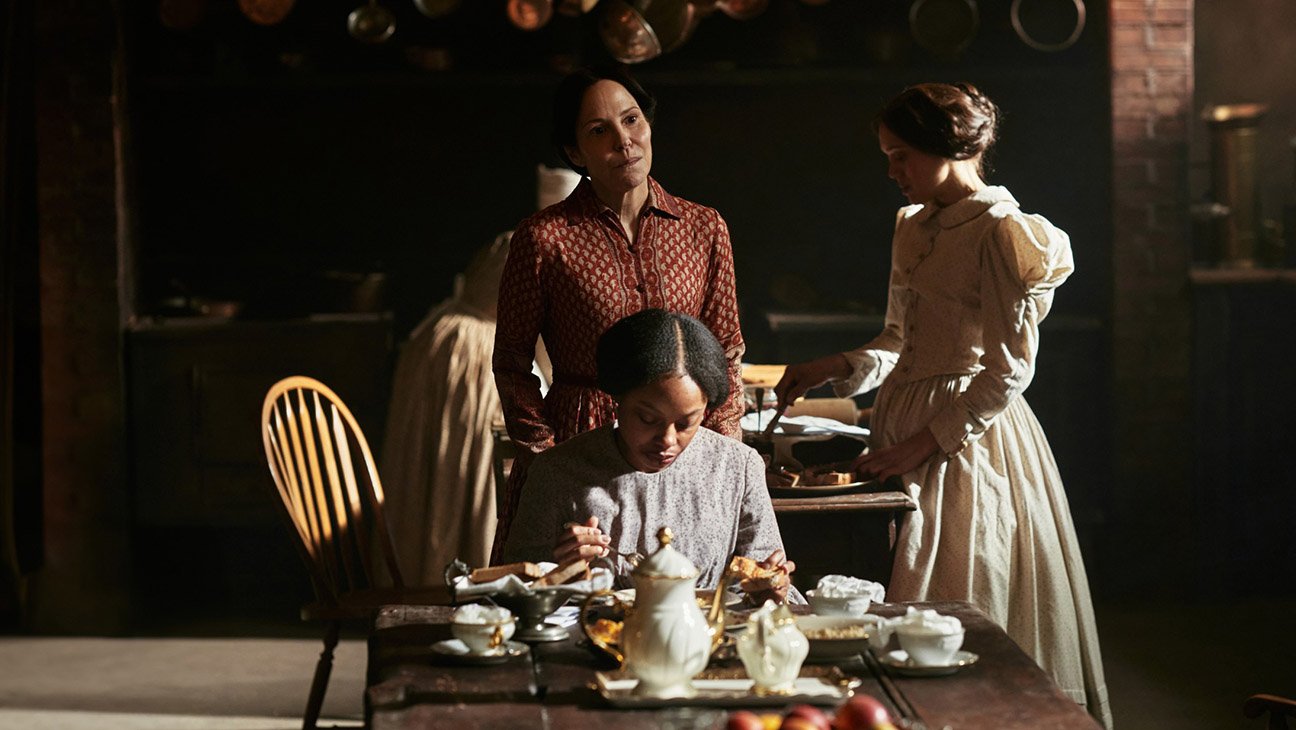
Eliza (Mary-Louise Parker) and Elizabeth (Daisy Head) Van Lew are Richmond social royalty, as tensions with the North are ramping up in July 1860. The family has a vast estate financed by Eliza’s late husband’s hardware business and populated by servants whom the husband freed on his deathbed. That Eliza and Elizabeth currently own no slaves makes it possible to root for them, and the show definitely doesn’t want you to think that they’re remaining in a house and lifestyle that was supported on the back of slavery.
When the story begins, Mary Jane (Amethyst Davis), one of those paid servants who definitely isn’t a slave, is returning from Liberia, where she was learning about the possibilities for emigrating. After the first episode hints that she’s returning with trauma from that experience, it’s barely mentioned again.
As war breaks out, the Van Lews realize they have an opportunity to help the Northern cause, and they set up a spy network, which includes Mary Jane, their chief porter Isham (Ben Vereen), local prostitute Clara (Hannah James), local baker Thomas McNiven (Christopher McDonald) and a growing assortment of other people.
So far, so accurate!
It’s true that Jefferson Davis (Sam Trammell) took up residence in Richmond at what came to be known as The Gray House; that his Secretary of War/State Judah P. Benjamin (Rob Morrow) was an integral part of the Confederate government; and that the real-life Mary Jane took up work at the Gray House, allowing her to gather and disseminate information in heroic fashion.
So, again, you have a real-life spy ring that was absolutely important to the Union cause, with several details — they utilized a cipher, they often transported documents hidden in eggs — that are part of a historical record. But the historical record is fuzzy, and at almost every turn the writers have decided to latch onto information that, when you Google looking for more depth, is described as “disputed” since nearly everything we know about Mary Jane apparently came from a single, questionably reliable source.
I don’t begrudge printing the legend in cases like this, but for all of the pieces of The Gray House that are real and even the pieces that are embellished, it’s the stuff that’s purely fictional that is just excruciating. Elizabeth finds herself in a chemistry-free romance with a Louisiana gentleman (Colin Morgan’s Hamton) that gets upended because he loves the Confederacy and because Elizabeth’s sister-in-law Laurette (Catherine Hannay) is a predatory cartoon character.
And speaking of predatory cartoon characters, every member of the local Richmond Confederacy has been instructed to act as broadly as possible, including sheriff-or-something Stokely Reeves (Paul Anderson), general nefarious gadfly Bully Lumpkin (Robert Knepper) and a few others. I’m not, by any stretch of the imagination, saying the show needs some nuanced, developed slaveowner characters. I am saying that there’s a point at which Bully Lumpkin is cackling and doing a near-jig — a level of superficiality I can accept from a tertiary henchman, not somebody who is one of the series’ most identifiable adversaries.
Indeed, entirely too many of the supporting performances fall into high-school theatrical Dixie burlesque, with lots of exaggerated Southern accents (plus whatever accent McDonald is doing, which is invisible some moments, full-on-Shrek in others) and, when available, mustache twirling. The various unnamed and barely-named slave characters are, in several cases, basically retrograde archetypes that would have been at home in Gone with the Wind.
Trammell and Morrow aren’t really playing Jefferson Davis and Judah P. Benjamin. I’m not even sure they’re playing Wikipedia entries for either man. Trammell looks almost nothing like Davis, but the hair and makeup team give him the oddly two-pronged beard Davis has in some pictures. Morrow looks nothing like Benjamin and the show does nothing to address that. These two neither look nor sound like real people, but they’re better than the wax-museum replicas of Ulysses S. Grant and Abraham Lincoln who appear in the finale, and better than Charles Craddock’s John Wilkes Booth, who pops up in historically inappropriate times and places as a set-up for…nothing.
There are better performances. If anybody sees the show, it will be a breakout for Davis, whom I remember also being decent in FX’s short-lived attempt to adapt Kindred. I think Mary Jane probably has less screen time than Elizabeth, but she’s the more complicated character; I wish we’d had the chance to see what befell Mary Jane in Liberia. Head is feisty and a bit anachronistic in her affect, but if there’s a high-school theater vibe to the whole show, she gives the impression of being the popular girl who has talent as well. Vereen becomes largely invisible in the second half of the show, but he has one early episode in which the pain and injustice of Isham’s years in slavery come bursting out of him in searing monologues, and it’s hard not to be like, “Oh right. Ben Vereen. National treasure.”
And speaking of searing monologues and national treasures, everyone in Hollywood should seek out Keith David‘s agent, who got him a “With” credit for a role — abolitionist Henry H. Garnet — that amounts to exactly one scene, in which he delivers a fiery speech with typical aplomb.
Though I’m certain that Joffé deserves blame for the coaching of the motley cast — it takes effort to steer Parker to a performance this less-than-good — there are moments when his cinematic pedigree comes through and you can see him, for example, getting unexpected depth from the generically verdant Romanian locations. Then again, there are moments in which bad lighting over-exposes the excessively pristine period costumes and slathered-on hair and makeup. There are also at least four key character death scenes that I had to rewind and watch multiple times because the action was so poorly shot and edited together.
The editing. Man. The show is called The Gray House, which doesn’t in any way reflect its focus, but it probably should have been called Appomattox, because it feels like somebody simply surrendered at trying to build any kind of momentum within the show. The first episode, at 81 minutes, is borderline abusive and I nearly quit watching entirely. The middle of the season, in which episodes are still mostly over an hour, moved a bit better. But then the finale really is comical in its haphazard attempt to depict the bedlam of end-of-war Richmond and give “satisfying” resolution to characters — mostly meaning killing off those wicked Confederates in ludicrous and operatic fashion.
I know that sometimes when I write a negative review, people say, “Well now you made me want to watch!” This is a negative review and I’d urge restraint. If you want a Civil War resistance thriller, watch WGN’s Underground, now streaming on Hulu. If you want a little more Civil War history with a few fictional leaps and far better production values, watch Manhunt on Apple. And if what you really crave is an overpriced, 66-minute Drunk History episode, skip straight to the Gray House finale. You may not get the context, but you’ll still find things to laugh at.
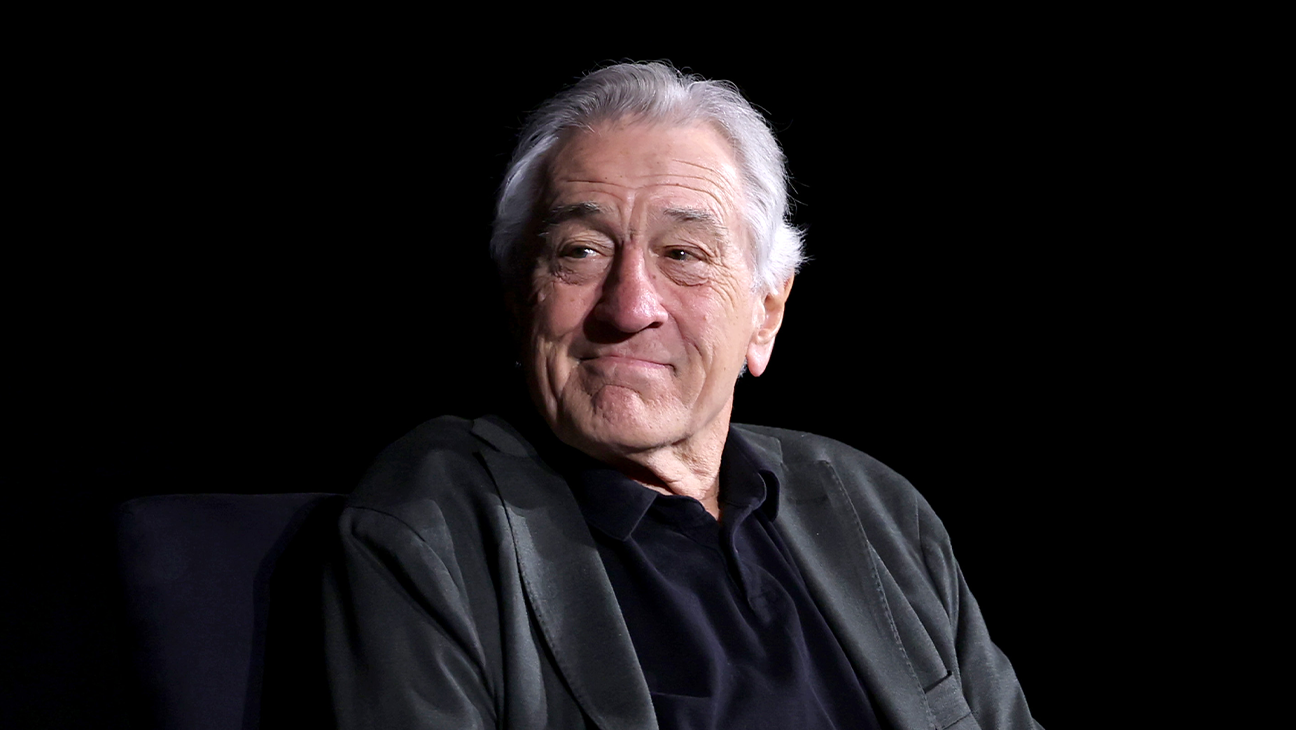
The progressive actor — a frequent and longtime critic of the president — appeared on Nicolle Wallace’s MS NOW podcast, The Best People, on Monday, where he tore into Trump and urged people to protest his actions.
“Trump is the enemy of this country, let’s not kid ourselves,” De Niro said. “It’s that simple. Everybody has to stick together to get them out and get back on track. We can all argue and fight about our little differences and all that. This is the big problem.”
When asked if he thought Trump would step down at the end of his second term, De Niro replied, “No way.”
“He won’t leave,” De Niro said firmly. “Let’s not kid ourselves. He. Will. Not. Leave. It’s up to us to get rid of him. We have to make sure … We’ve got to get rid of him. He’s going to ruin the country. People have to mobilize now and be ready for the midterms.”
In addition, De Niro made the case for people peacefully protesting and uniting against Trump in every legal way possible.
“Everybody has to get out there every way possible,” De Niro said. “This is our country. You know, I want my country back. I don’t want everybody going around with their MAGA flags and American flags like they’re the only ones [who are patriotic]. We are Americans, too. And there are more of us because we believe in what’s right and wrong; empathy, and kindness. Bringing the country together, not dispersing it … I understand tribalism — you stick with your own and all that. But this is way, way, way more serious.”
In fact, even if Trump dies, De Niro is concerned that the movement he’s created won’t go away.
Even if Trump dies for some reason — by having an illness or something — parts of that movement are still there, and that’s the scary part,” he said. “It has to be neutralized by the people who say, ‘Wait a minute, our rights are being trampled on.’ We have to stand up. Period.’”
During the most emotional part of the interview, Wallace played a clip of De Niro’s 1981 Oscars acceptance speech for best actor and asked him about why he’s always been driven to “lift up everybody around you.”
“You have to lift people up,” the 82-year-old Goodfellas actor said, his voice cracking and eyes watering. “You have to bring them together, period. You can’t divide people. You can’t win that way. It’s a no-win situation. It’s almost like our destiny to have this thing there attempting to destroy this country, and maybe not even understanding why. So it’s up to us to protect the country that we love.”
Trump has slammed De Niro repeatedly in turn, including today, when he urged the actor to leave the country on Truth Social, writing, “[Reps. Ilhan Omar of Minnesota and Rashia Tlaib of Michigan] should actually get on a boat with Trump Deranged Robert De Niro, another sick and demented person with, I believe, an extremely Low IQ, who has absolutely no idea what he is doing or saying — some of which is seriously CRIMINAL.”
If you’re interested in De Niro’s comments, it’s worth watching the whole 40-minute video rather than just reading the cherry-picked quotes above because this is a very earnest, deep-dive conversation that gets into a lot of detail about the actor’s feelings on this issue.
Presidents use television for lots of reasons. Eisenhower used it to message cuddly. Bill Clinton used it to message cool. Barack Obama used it to message compassionate.
For Donald Trump, TV has served more purposes than most, including a chance to gain dominion over our mindshare (see under: all those televised rallies in the first campaign) or to seem like a martyr in the face of evil (see under: the 2024 RNC appearance right after the assassination attempt) — both of which helped him win elections many pollsters saw him losing.
Tuesday night’s appearance on all major networks for the State of the Union required some particular television magic. Trump’s approval ratings are abysmal, with the numbers consistently in the 35-40 percent range, a double-digit drop from a year ago. Independents, who will be key to many midterm races, believe the country is worse off today than a year ago to the tune of nearly 70 percent.
Could Trump use television to pull another polling and ultimately electoral miracle? That was the question hovering above the SOTU, and Trump responded by trying two key prongs.
The first was old-fashioned showmanship. Having been gifted the specter of a major U.S. win on the international Olympic stage, Trump grabbed the box and tore off the bow. The dramatic entrance of the United States men’s hockey team into the gallery early in the speech, complete with gold medals and USA sweaters, had all the trappings of a reality-show triumph. Mark Burnett, Trump’s maker and mentor, would be proud.
Members of the Team USA Men’s Hockey Team, including goalie Connor Hellebuyck, wave to the audience as U.S. President Donald Trump delivers his State of the Union address.
Chip Somodevilla/Getty Images
Trump’s talk about all the “winning” the U.S. is doing can’t be focused on affordability, which is a growing challenge for many Americans and seen largely as a loss So the president shifted to a kind of winning we all agreed on. Toss in some “U-S-A” chants, some good-natured jokes about goalie Connor Hellebuyck and the sight of Jack Hughes’ heroically toothless grin, and you have the makings of a perfect Trump small-screen spectacle in line with so many of his other effective small-screen spectacles.
Whatever your politics, the moment was great by pure TV standards. Sure, there were the five athletes who were conspicuously absent. Yes, ICE and inflation concerns continue to rock the country. But the scene on national television did what all good showmanship is supposed to do — make you forget about the facts and get caught up in the moment.
But this is the modern era, and television can’t just be used for great television moments. So Trump went to another trick, one honed by his years of dominating and mastering social media. He crafted a spectacle on TV he knew would go viral — knew would engage and engage again on all the platforms that prized the verb.
He asked Democrats to stand up.
“If you agree with this statement then stand up and show your support,” he called out to the chamber, proceeding to read the statement, “The first duty of the American government is to protect American citizens, not illegal aliens.”
This substantively meaningless statement is of course an obvious trap, and a pretty brilliant one. If the Democrats do stand up, they look subservient to Trump and his ICE agenda and he affirms his power. If they don’t, they look petulant and dissenting of the first part of his message, about protecting Americans. They didn’t stand, and took the lesser of two evils.
Trump then implemented the next phase of his neat one-two plan, riding the sitting for all it was worth. He shook his head in performative disappointment and exclaimed, “Isn’t that a shame? You should be ashamed of yourself! Not standing up. You should be ashamed of yourselves.”
Having crafted the perfect feelgood spectacle moment, which is what television is made for, Trump had now crafted the perfect outrage spectacle moment, which is what social media is made for. Needless to say, the bit did exactly what it was meant to do, going viral and causing many right-wing influencers to shriek online about how awful Democrats were. I suspect not much will be remembered about the speech itself and its awkward combination of fearmongering about immigrants and Panglossian visions of an America on the rise. But we will remember the afterburn of these two moments — a smiling USA Hockey Team, and a sitting USA congressional bloc.
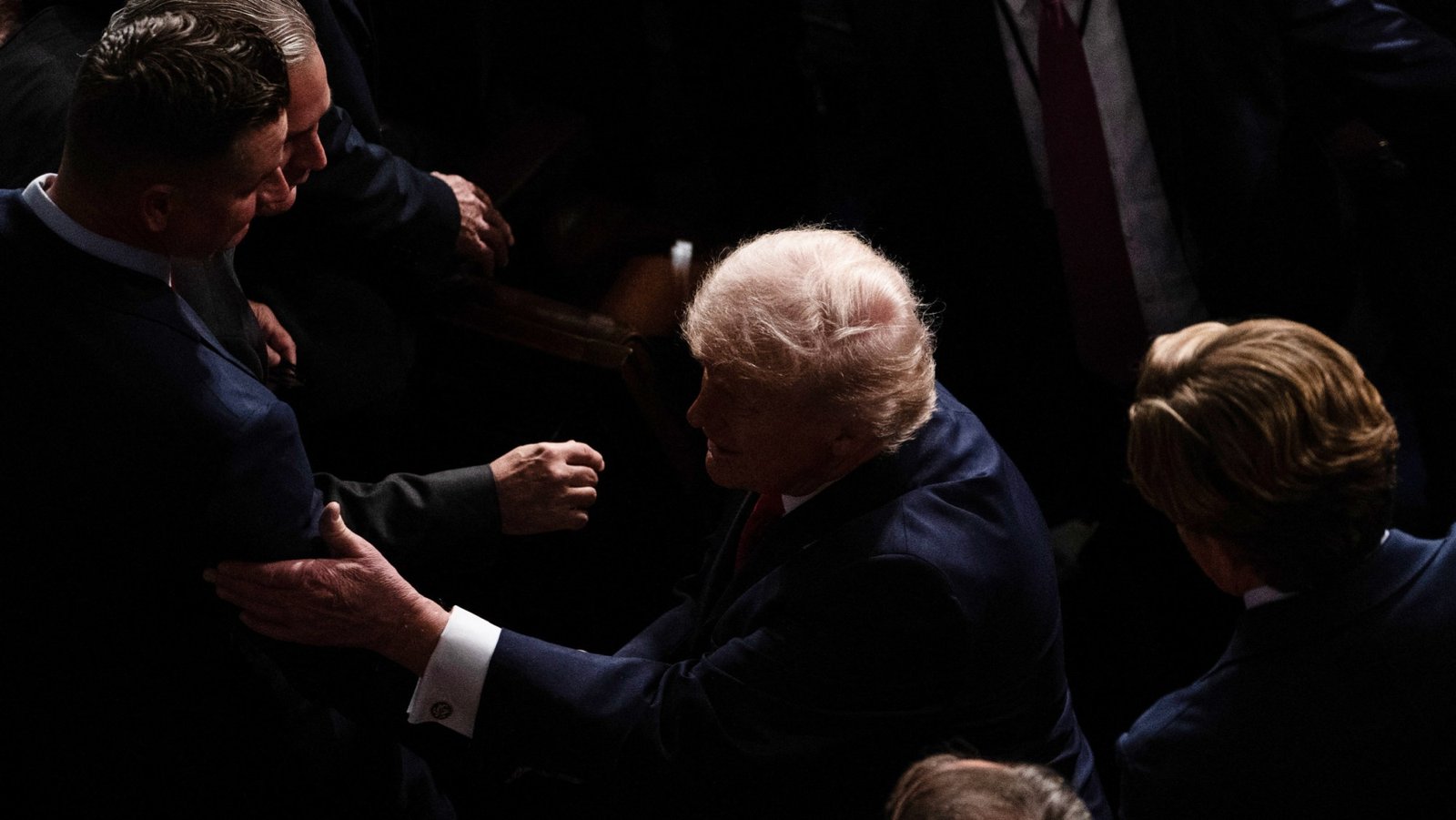
Donald Trump concludes his remarks during the State of the Union address in the House Chamber.
The bad news, if we care about democracy, is that television and digital platforms have now been turned over to such shenanigans. Presidents have always used the medium for the message; to decry that is to be naive. But before Trump they’ve rarely tried to poison it — turn it into something whose sole purpose is to get us angry. Given how effective Trump has been politically over the last decade, there’s not a ton of reason to think it will stop; the outrage-farming will probably be adopted by plenty of future Democrats and Republicans alike. The medium may be the message. Unfortunately, that message is now fear and anger about other Americans.
But the good (or at least better) news, if we care about democracy, is that these manipulative moments may in fact be losing their effectiveness. We’ll see what the latest president poll numbers show, but early anecdotal reports, like the swing-voter panel CNN convened, did not seem to go for it. Creating viral outrage moments is not the electoral tool it was a decade ago when Trump began his disruptive journey — our social media itself is too divided, too wary, for even shrewd tricks like this to break through and sway undecideds. Presidents will always find new ways to have the medium deliver the message. But the angry message, at least, may not land like it used to.