Tag: Entertainment-HollywoodReporter

  • Neil Sedaka, “Breaking Up Is Hard to Do” and “Laughter in the Rain” Singer-Songwriter, Dies at 86

    Neil Sedaka, the buoyant singer-songwriter and pianist who had No. 1 hits with “Laughter in the Rain,” “Breaking Up Is Hard to Do,” “Bad Blood” and, for Captain & Tennille, “Love Will Keep Us Together,” died Friday in Los Angeles. He was 86.

    “Our family is devastated by the sudden passing of our beloved husband, father and grandfather,” his family said in a statement. “A true rock and roll legend, an inspiration to millions, but most importantly, at least to those of us who were lucky enough to know him, an incredible human being who will be deeply missed.”

    First teaming with lyricist Howard Greenfield — a neighbor in his Brooklyn apartment building — while still in his teens, Sedaka scored his first hit as a songwriter in 1958 when Connie Francis recorded the duo’s “Stupid Cupid,” a peppy single that rose to No. 17 on the Billboard Hot 100.

    They wrote several other hits for Francis, including 1958’s “Fallin’” and “Where the Boys Are,” the theme to the popular 1960 MGM comedy; the latter reached No. 4 in the U.S. and became her signature song.

    The clean-cut Sedaka quickly cemented his pop stardom with a string of popular tunes that included “Oh! Carol” (No. 9), “Stairway to Heaven” (No. 9), “Run Samson Run” (No. 28), “Calendar Girl” (No. 4), “Little Devil” (No. 11), “Happy Birthday, Sweet Sixteen” (No. 6) and “Next Door to an Angel” (No. 5).

    Sedaka and Greenfield’s “Breaking Up Is Hard to Do,” with a carefree, nonsensical opening — “Do do do, Down dooby doo down down, Comma, comma, down dooby doo down down, Comma, comma, down dooby doo down down” — proved irresistible to teens, enjoying a 14-week run on the singles chart and in the summer of 1962 becoming Sedaka’s first No. 1 hit.

    “I was the king of the tra-la-las and doo-be-do’s in the ’50s and ’60s,” he told Reuters in 2010. “It had to have a very catchy tune, with a catchy beat that you can dance to.”

    Between 1958-62, Sedaka and Greenfield would sell 25 million records, with 10 big hits in a row.

    “First, his songs have clever lyrics and wonderfully infectious tunes,” The New York Times wrote in 1976. “Second, his melodies have just enough soft‐rock and rhythm and blues underpinnings to avoid bonelessness. Third, he leavens the cheeriness with sentimentality more innocent than crass. Fourth, he has remarkable voice — a sweetly mellow, evocative high tenor that shades imperceptibly into falsetto.”

    Despite all that, Sedaka’s popularity and that of other American pop stars began to wane in the mid-’60s amid the British music invasion. He didn’t release an album for six years as singles including “Sunny,” “The World Through a Tear” and “The Answer to My Prayer” barely made a ripple.

    When his label opted not to renew his contract in 1966, Sedaka took a break from singing and focused on songwriting. Over the next several years, he teamed with Carole Bayer to write “When Love Comes Knockin’ (at Your Door)” and “The Girl I Left Behind Me,” hits for The Monkees.

    He and Greenfield also penned tunes for The Cyrkle (“We Had a Good Thing Goin’”) and Davy Jones (“Rainy Jane”). The 5th Dimension landed in the top 20 with “Workin’ on a Groovy Thing,” a tune he wrote with Roger Atkins. The Carpenters, Andy Williams and Shirley Bassey enjoyed success with “Solitaire,” a song Sedaka recorded and wrote with lyricist Phil Cody.

    When his album releases in 1969 (Workin’ on a Groovy Thing) and 1971 (Emergence) didn’t generate much excitement, Sedaka moved to England in 1970 to change things up. After a chance meeting with Elton John in 1973, he signed with John’s fledgling label, The Rocket Record Co.

    The move led to one of the most successful periods in Sedaka’s career. In 1974, Polydor Records released Sedaka’s Back, a collection of songs — some recorded with future members of 10cc — from three albums that had only been released in the U.K. It peaked at No. 23 on the Billboard 200 album chart and gave Sedaka his second No. 1 song when the lilting “Laughter in the Rain,” co-written with Cody, became a stateside sensation.

    The following year, Sedaka scored again with the Rocket Records release The Hungry Years. It went gold in the U.S. and gave him another No. 1 with “Bad Blood,” featuring John on backing vocals. The LP also featured a new version of “Breaking Up Is Hard to Do”; rearranging it as a ballad, he breathed new life into the song and turned it into another top 10 hit and a Song of the Year nominee.

    In 1975, Captain & Tennille recorded his “Love Will Keep Us Together” and featured it as the title tune on their debut album. The jubilant tune became the year’s best-selling single and was named Record of the Year at the Grammys. (Toni Tennille gave him nod by ad-libbing “Sedaka is back” in the song’s closing frame.)  

    “The crowning touch was winning the BMI award for Most Performed Song of the Year [for ‘Love Will Keep Us Together’],” Sedaka said in Bruce Pollock’s 1979 book, When Rock Was Young. “It was the dream of a lifetime. I mean, I’d been going to that BMI dinner since I was a kid. I got six awards in one year, including the Most Performed Song of 1975, beating out ‘Rhinestone Cowboy.’”

    Neil Sedaka during his 1976 NBC special, Neil Sedaka Steppin’ Out.

    Courtesy Everett Collection

    Sedaka was born in Brooklyn on March 13, 1939, and raised in the Brighton Beach section of the borough. His father, Mordechai, drove a taxi for 30 years. His mother, Eleanor, took on part-time work in an Abraham & Straus department store to pay for his first piano when he was 9.

    “My parents told me that when I was an infant, I wouldn’t eat until the radio was playing music,” he said in the 2014 BBC documentary Neil Sedaka: King of Song.

    In 1947, Sedaka landed a scholarship to Juilliard’s School of Music’s Preparatory Division for Children. “Without blowing my own horn, I have the musical training. I studied many, many years,” Sedaka said in a 2019 interview with The Morning Call newspaper. “Matter of fact, in 1956, Arthur Rubinstein, the great pianist, chose me [to be] on a radio program, and I won as the best New York City high school pianist. I was 16 years old.”

    Sedaka’s mom wanted him to pursue a career as a classical pianist, but Greenfield, a budding poet, convinced him that they should write pop tunes together. They began working together in October 1952 when Sedaka was 13, and one point, they had written at least one song a day for 500 straight days.

    In 1956, the pair approached Jerry Wexler at Atlantic Records, and soon, their songs were being recorded by the likes of The Clovers (“Bring Me Love”), The Cookies (“Passing Time”), LaVern Baker (“I Waited Too Long”) and Clyde McPhatter (“Since You’ve Been Gone”).

    Meanwhile, Sedaka tried his hand at singing, joining forces with three Lincoln High School classmates to form the Linc-Tones. He went solo in 1957, but not before the group enjoyed some success with “While I Dream,” “I Love My Baby,” “Come Back, Joe” and “Don’t Go Away,” all Sedaka-Greenfield compositions. (The Linc-Tones would evolve into The Tokens, who hit pay dirt in 1961 with “The Lion Sleeps Tonight.”)

    Over the next year, Sedaka released “Laura Lee,” “Ring a Rockin’” and “Oh Delilah,” all written with Greenfield. He didn’t cause much of a stir as a singer, though he performed “Ring a Rockin’” on American Bandstand. The songwriting team fared better, however, and landed a contract with Al Nevins and Don Kirshner at Aldon Music in the Brill Building.

    Through Aldon, they arrived at the home of Francis, who was in search of a follow-up to “Who’s Sorry Now,” and presented her with a selection of ballads. “They played and they played and they played, and I was really falling asleep,” she said in King of Song. “I said, ‘Fellas, I don’t know how to tell you this, your music is beautiful, but it’s too educated, the kids don’t dig this kind of stuff anymore.’”

    On a lark, Sedaka played “Stupid Cupid,” which he and Greenfield had written for another act. Francis told them on the spot she wanted it for her next record, and its success put the songwriters on the map.

    As he and Greenfield continued working with the singer, Sedaka observed her writing in a journal. He wanted a look inside, but she refused, and that inspired him to write “The Diary.” Little Anthony and the Imperials recorded a version, but Sedaka’s take (he also played piano on it) got him a recording contract with Aldon.

    Sedaka wrote “Oh! Carol” in 1958, drawing the idea for the title from Carole Klein, a girl he had dated at Lincoln. He encouraged her to join him at the Brill Building in Manhattan, the mecca for songwriters, and she did.

    There, Klein joined forces with her future husband, Gerry Goffin, and as Carole King, she became one of the most influential singer-songwriters of her generation. (“Oh! Carol,” meanwhile, sold 3.5 million records, and he said his life changed when he received his first royalty check from that song, for $42,000.)

    The year 1959 saw the release of Rock With Sedaka, his first solo album as a recording artist. “The Diary,” its debut single, charted, as did the second release, “I Go Ape.” It also contained Sedaka’s takes on “Fallin’,” “Stupid Cupid” and “Another Sleepless Night,” which Jimmy Clanton turned into a hit the following year.

    “Howard Greenfield and I mastered the art of the 2 1/2-minute single,” he said. “We could tell a whole story from beginning to end [in that time].”

    He eventually split with Greenfield and partnered with Cody, and “Laughter in the Rain” marked his big comeback, landing at No. 1 in 1975 in its 16th week on the Billboard Hot 100. “I went from making $30,000 a year to $6 million a year with [that] song,” he said.

    A five-time Grammy nominee and member of the Songwriters Hall of Fame, Sedaka would write or co-write 700-plus songs and release more than two dozen studio albums during his career.

    In 2005, Erik Jackson and Ben H. Winters conceived Breaking Up Is Hard to Do, a stage musical celebrating the songs of Sedaka, Greenfield and Cody. It has been performed in the U.K. and throughout the U.S.

    Around that time, “(Is This the Way to) Amarillo,” a song he wrote with Greenfield that was first recorded by Tony Christie in the ’70s, became another huge hit for him when it was rereleased.

    Survivors include his wife, Leba, whom he married in 1962, and his children, Dara, a recording artist and vocalist for commercials, and Marc, a TV writer and film editor.

    “I think the reason that my music is so special is it was a combination of show music, pop music, evergreen standards and rock. It’s like me and Phil Cody and Carole Sager and Howie Greenfield — we had a combination of all of those styles,” Sedaka said in his Morning Call chat.

    “I saw Stevie Wonder not long ago on television and he was asked, ‘Who is your inspiration?’ And he said, ‘Neil Sedaka. They used to call me ‘Whitey’ in Detroit because I liked and played Neil Sedaka records.’”
  • Condé Nast’s LGBTQ Media Brand Them Acquired by Equalpride, Publisher of Out and The Advocate

    Condé Nast’s LGBTQ Media Brand Them Acquired by Equalpride, Publisher of Out and The Advocate

    Condé Nast’s Them has a new home.

    Equalpride, publisher of standout queer brands like Out, The Advocate, Out Traveler, Health PLUS Wellness, Pride.com and Advocate Originals, has aquired the LGBTQ media brand launched by Condé in 2017. Equalpride confirmed the news on Friday, and said the acquisition is designed to expand its portfolio and strengthen its position “as the most comprehensive and influential platform for LGBTQ+ news, entertainment, culture and community connection.”

    But the news comes a week after a significant number of staff cuts at Equalpride, including The Advocate editor-in-chief Alex Cooper, Pride.com editor-in-chief Rachel Shatto, brand partnerships manager Erin Manley, community editor Marie-Adélina de la Ferriére, and Out magazine staff writers Moises Mendez and Bernardo Sim.

    Them, led by editor-in-chief and former Netflix staffer Fran Tirado, is a digital platform focused on LGBTQ+ culture, politics and identity. Based in New York City, it maintains a strong readership among Gen Z and millennial audiences with a healthy 1.1 million Instagram followers.

    In addition to Tirado, the Them team includes executive editor Ludwig Hurtado, managing editor Samantha Allen, lifestyle editor Quispe López, associate director of audience development and analytics Mandy Velez Tatti, social media manager Ana Osorno, executive director of video programming and creative development Mi-Anne Chan, manager of video programming and creative development Catherine Mhloyi, staff writer James Factora and a number of contributing writers and editors-at-large.

    “Equalpride exists to elevate, celebrate and protect LGBTQ+ storytelling at scale,” said Equalpride CEO Mark Berryhill. “By combining the strengths of our brands with this respected digital platform, we’re creating a unified ecosystem that delivers even more impact for our audiences, advertisers, and community partners. Adding the Them brand accelerates our mission and expands the ways we can champion LGBTQ+ voices year‑round.”

    He added: “This is about scale with purpose. Together, we’re building the most trusted, far‑reaching LGBTQ+ media network in the world that honors our history while innovating for the future.”

    Them was always a bit of an outlier among Condé Nast brands as the lone LGBTQ title among publications like Vogue, Vanity Fair, GQ, The New Yorker, Self, Architectural Digest, Bon Appétit, Condé Nast Traveler, Glamour, House & Garden, Wired, Pitchfork and more. In recent weeks, Them has made news of its own by launching a new weekly column and companion newsletter led by Tirado titled Feral, and a recently-launched video series, Privacy Please!

    The media business has faced headwinds in recent years, times made even more tough on brands serving niche audiences. Cultural attacks on LGBTQ content and the administration’s focus on dismantling DEI programs have created further challenges, issues that Berryhill acknowledged in a memo sent to staff last week ahead of the layoffs.

    “Companies aren’t spending as much on marketing due to current economic concerns and challenges. In the last few months, we have had cancellations of major advertising campaigns, which have dramatically impacted our company,” he wrote. “We can’t let the economic and political climate overshadow our calling to amplify the voices that need to be heard as our queer community fights for inclusion and faces daily setbacks in human rights.”

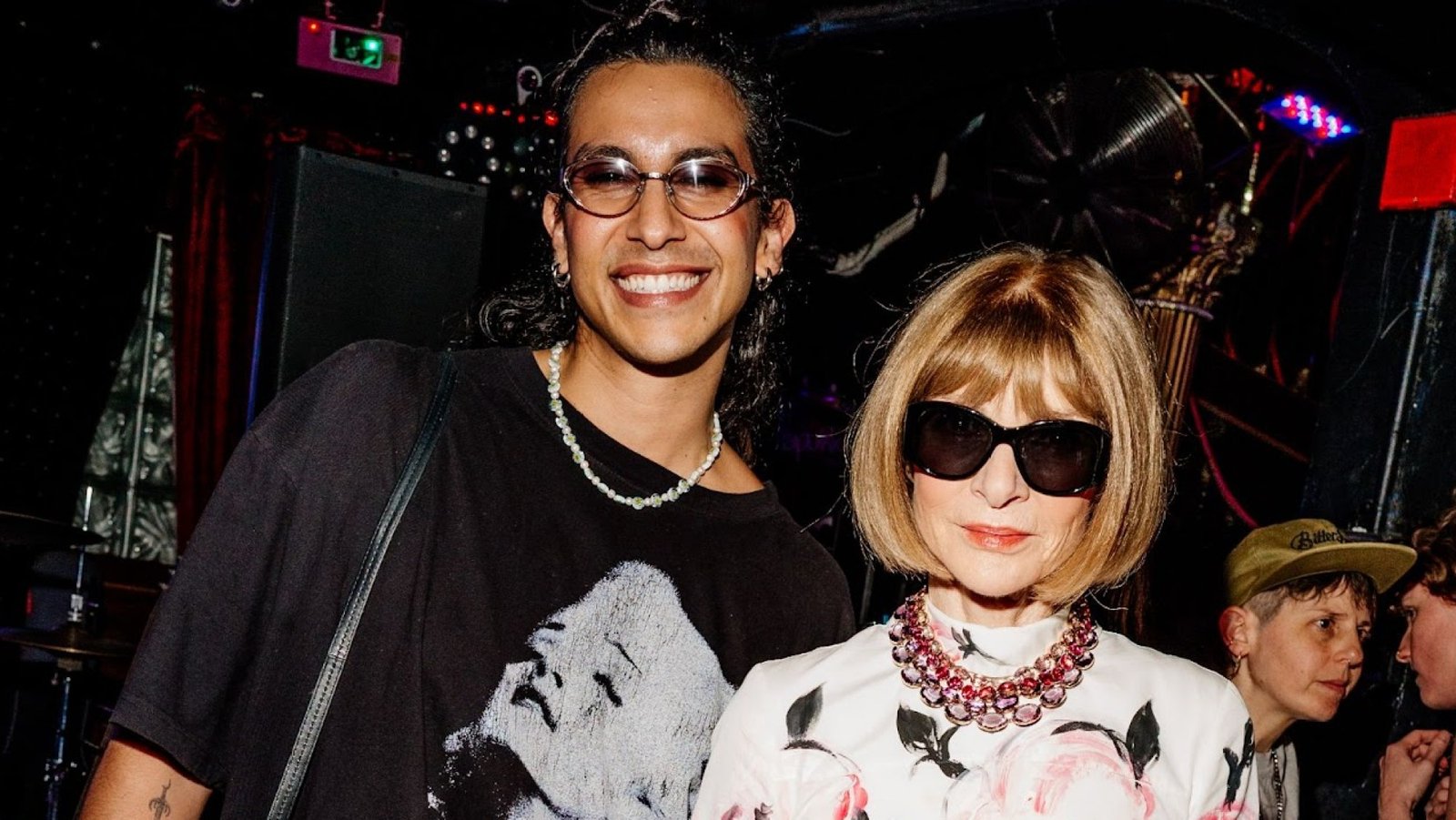
    Dylan Mulvaney attends the Them Now Awards at New York’s Public Hotel on June 14, 2023.

    (Photo by Craig Barritt/Getty Images for Conde Nast)

  • With Paramount Looming, CNN Braces for Impact

    With Paramount Looming, CNN Braces for Impact

    The cold, hard truth that many inside CNN have been grappling with these past few months was that the venerable cable news channel, Ted Turner’s greatest invention, was about to undergo radical change, whoever won the battle for parent company Warner Bros. Discovery.

    If Netflix won, CNN would be spun out into a debt-laden public company, which was widely expected to slash costs and consider a fire sale of its assets (Nexstar’s Perry Sook is said to have coveted the cable channel, though it isn’t clear whether he would have pursued it, given his company’s ongoing pursuit of TEGNA).

    But Paramount has already been undergoing a news overhaul, with CEO David Ellison installing Bari Weiss at CBS News with a mandate for change. Weiss and Ellison are both said to be obsessed with the (undeniable!) fact that consumers, regardless of political affiliation, are losing trust in the mainstream media.

    “We are not producing a product that enough people want,” Weiss told CBS News staff last month. “We can blame demographics or technology or fractured attention spans or ‘news avoidance,’ but these are all copes.”

    While the execution of that plan remains in flux, Weiss has sought journalists that put themselves at the center of the story, taking a cue from creators and influencers on TikTok and YouTube, while also bringing more right-leaning voices into segments.

    Or as David Ellison told Paramount shareholders earlier this week: “As part of this revitalization, we are focused on expanding the range of stories covered and the voices amplified.”

    Assuming the Paramount deal goes through, that change is coming for CNN. Weiss is widely expected to expand her remit, though she may not be alone: It has not been lost on some at CNN that their former colleague Chris Wallace has quietly joined RedBird Capital Partners, which is Ellison’s financial and operating partner at Paramount, as a senior advisor.

    Wallace (the son of legendary CBS newsman Mike Wallace), who most recently hosted a CNN interview show, previously served as a longtime anchor and analyst for Fox News, and also moderated NBC’s Meet the Press. RedBird leans on its team of advisors (which also includes former Vanity Fair editor Graydon Carter) to help advise its investments. And of course Jeff Zucker, CNN’s former president, is also working with RedBird as an operating partner and the CEO of its RedBird IMI joint venture.

    For CNN staff, the angst is driven by a seemingly never-ending barrage of owners, from AT&T to Discovery to Paramount, with each change followed by new cost cutting. And it is also driven by comments from the President of the United States, who has made it crystal clear that his primary interest in the sale of WBD is who will control CNN.

    “I think the people that have run CNN for the last long period of time are a disgrace. I think it’s imperative that CNN be sold,” President Donald Trump told reporters in December. The Wall Street Journal had also reported at the time that Ellison promised to make significant changes at the channel, though the specifics of those promises are not known.

    That being said, CNN is a substantially stronger business than CBS News, despite neither outlet dominating the ratings charts. WBD disclosed as part of the sale process that CNN is projected to have $1.8 billion in revenue in 2026, rising to $1.9 billion in 2027, $2 billion in 2028 and $2.2 billion by 2030. CNN’s adjusted EBITDA in 2026 is estimated to be about $600 million, before falling to $500 million in 2027 and remaining flat at $600 million through 2030.

    CBS News has substantially lower revenue than that, though it isn’t exactly an apples-to-apples comparison, with CNN scoring dedicated pay-TV carriage fees, with CBS News sharing those fees with the rest of CBS. Sources have pegged CBS News at around break even or with a slight low to mid eight figure loss (depending on how you account for those fees).

    CBS News and CNN had actually discussed a potential merger years ago, multiple sources say, when CNN was owned by Time Warner. Those talks were driven by a desire to save costs. A source says that the negotiations fell apart when the complexities of merging the unionized CBS and the non-union CNN became clear. It will be Paramount’s problem now.

    But Weiss has had a hard time assuaging CBS staff that her desire is driven by a sincere desire to pull the network news division into the 21st century, rather than being a political project for the company’s owner. Anderson Cooper chose to leave CBS’ 60 Minutes while staying with CNN, and what he does if and when this deal closes is sure to be closely watched.

    And while WBD CEO David Zaslav genuinely enjoys news coverage (he frequently texts CNN anchors to discuss segments and interviews he watched on-air, and his daughter is a producer for the cable news channel), Ellison appears to be more squarely focused on the entertainment business.

    Or as one TV news veteran said, most media executives “don’t see [news] as an opportunity, they see it as a problem.”

    It’s a setup that has CNN staff understandably on edge, as CNN CEO Mark Thompson seemed to recognize in a note to staff Thursday evening.

    “I want to end this note with two thoughts: “Despite all the speculation you’ve read during this process, I’d suggest that you don’t jump to conclusions about the future until we know more,” he wrote. “And secondly let’s not forget our duty to our audience. We’re still near the start of what is already an incredibly newsy year at home and abroad, one that will culminate with critical U.S. midterm elections and who knows what else. Let’s continue to focus on delivering the best possible journalism to the millions of people who rely on us all around the world.”

    As Thompson notes, CNN needs to focus on the midterm elections as its employee base grapples with what the next steps will be. Pending deals are always a drag on morale, and in the media business that can sometimes be seen onscreen.

    Or as Jake Tapper told CNN viewers in a “Breaking News” alert Thursday evening: “We have some breaking news in our national lead that affects everybody I’m looking at right now in the studio.”

    CNN is about to be changed, but exactly how remain obscured for the time being. In the meantime, tension appears poised to rule the day.

  • ‘Love Story’ Star Sarah Pidgeon on Recreating JFK Jr. and Carolyn Bessette’s Infamous Battery Park Fight

    [This story contains spoilers from Love Story, episode five, “Battery Park.”]

    While Love Story: John F. Kennedy Jr. & Carolyn Bessette is, at its core, a romance, it doesn’t shy away from the couple’s most painful moments.

    Thursday night’s episode, “Battery Park,” revisits one of their most infamous: the heated 1996 argument after they left their Tribeca apartment at 20 N. Moore St. and walked to Battery Park. Though the time period was before smartphones and viral TikTok videos, paparazzi captured the fight on camera, and the footage was featured on tabloid front pages.

    In Love Story, the episode imagines what may have led to that very public unraveling. Over the Fourth of July weekend in 1995, John (Paul Anthony Kelly) proposes to Carolyn (Sarah Pidgeon) during a fishing trip on Martha’s Vineyard. She doesn’t immediately accept. Unsure whether she’s prepared to become Mrs. JFK Jr., Carolyn asks for time.

    Her hesitation, exacerbated by relentless tabloid scrutiny and the pressures of sudden public attention, and her belief that John lets people walk all over him, begin to strain their relationship. When John issues a statement denying that he proposed, it worsens. The episode suggests that mistrust ultimately erupts into the now-famous Battery Park fight, where the pair are shown screaming at one another and John appearing to yank off Carolyn’s engagement ring before she lunges toward him — all of it caught on video.

    Still, Pidgeon acknowledges that viewers should take the recreated dialogue with a grain of salt.

    “You know, who knows what they really said in these moments,” Pidgeon tells The Hollywood Reporter. “That certainly was a private moment that, unfortunately, was captured on film.”

    Regardless of the scene’s exact accuracy, Pidgeon describes filming it as a rewarding challenge.

    “It was quite exciting as an actor, especially approaching Carolyn, where there is so much mystery in how she sounds and how she walks when she knows she’s not being filmed in the photos taken by a friend versus a paparazzo,” she says. “Having a few moments where we actually had video footage — whether it be Battery Park or their first public photo as a couple when they come out of North Moore [Street] — it was really exciting to come at the scene through her physicality.”

    After moving from the park to a bench and eventually to a nearby street curb, the episode shows the couple talking through the fractures in their relationship. An emotional John pleads, “Why can’t we just love each other? Why does it have to be so hard?”

    They ultimately confront what each needs to make the relationship work. Carolyn struggles to adjust to life in the public eye, while John insists he doesn’t want to change her.

    “I don’t want to bring you into my world. I want you to pull me out of it. I want you to be my family,” he tells her.

    When Carolyn receives reassurance that John has no desire to follow in his father’s footsteps and pursue the presidency, she experiences a breakthrough. Though she never imagined herself as someone’s wife, she realizes she wants that future — because it’s with him. The episode ends with Carolyn accepting his proposal and crying in his arms, mirroring another iconic image of the couple.

    Speaking with THR ahead of the series premiere, Pidgeon reflected on filming both the emotional lows — like the Battery Park argument — and the joyful highs, including the wedding depicted in next week’s episode.

    “I think high, energetic, joyful scenes can be just as difficult as the emotionally taxing crying — the lowest points,” she says. “The extremes of emotion can be hard. It’s quite vulnerable to be completely joyous. Because when you’re joyous, you’re not watching yourself when you really smile. It’s different from when you’re putting on a smile.”

    Executive producer Brad Simpson also noted an unexpected parallel between the actors’ experience and the real-life scrutiny Carolyn and John faced. Even during filming, paparazzi surrounded the production.

    “It was really hard on our actors, because they were in a situation where we were being stalked by paparazzi, just like Carolyn was. We had 17 paparazzi out in front of us,” he says. “When you see a scene of their first date in the first episode, you should know that seven feet away, there are photographers outside our barrier, snapping pictures like crazy. It was a lot for her to go through, and, weirdly, it mirrored Carolyn Bessette’s journey — from being unknown to suddenly being criticized for her every move.”

    ***

    The first five episodes of Love Story are now streaming on Hulu and Disney+, with new episodes of the nine-episode series to premiere on Thursdays at 6 p.m. PT/9 p.m. ET on FX/Hulu. Read THR‘s interviews with the stars and creatives hereSarah Pidgeon‘s Next Big Thing feature, Paul Anthony Kelly’s episode three postmortem and more coverage here.

  • 2026 PGA Awards: ‘The Making of Adolescence’ Wins Shortform Prize While ‘Wizard of Oz at Sphere’ Wins Innovation Award

    2026 PGA Awards: ‘The Making of Adolescence’ Wins Shortform Prize While ‘Wizard of Oz at Sphere’ Wins Innovation Award

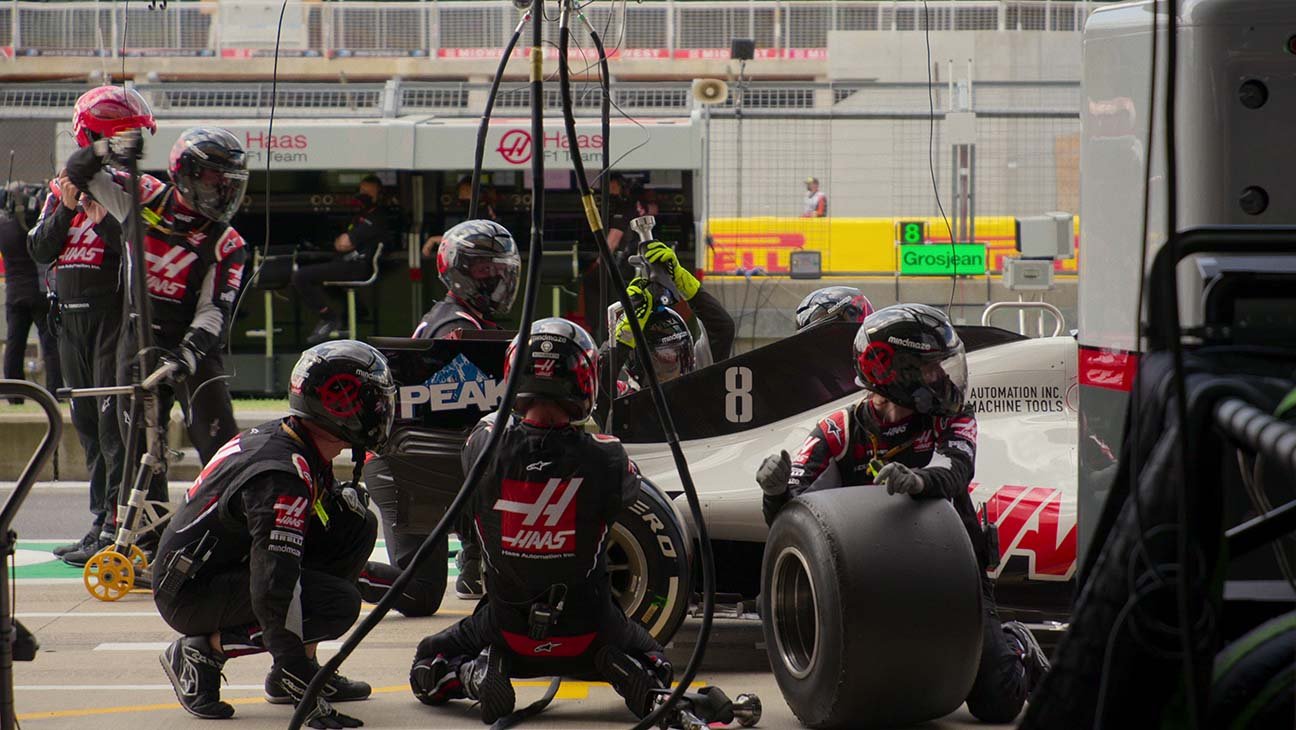
    Formula 1: Drive to Survive, Sesame Street, Adolescence: The Making of Adolescence and The Wizard of Oz at Sphere have won the first four honors of 2026 Producers Guild of America Awards.

    Formula 1: Drive to Survive was recognized best sports program; Sesame Street for best children’s program; The Making of Adolescence for best shortform program; and The Wizard of Oz at Sphere (Sphere Entertainment Co.) received the PGA Innovation Award. The awards were handed out Thursday night at The Aster in Hollywood.

    Due to inclement weather in New York City, the categories were all announced Thursday night instead the two planned separate ceremonies (the first was initially scheduled for Monday, to announce the children’s and sports categories; and Thursday’s event to announce the shortform and PGA Innovation Award).

    Also on Thursday night, Lydia Dean Pilcher was recognized with the Vance Van Petten Entrepreneurial Spirit Producing Award. Jessica Li was additionally announced as the recipient of the Debra Hill Fellowship supporting emerging producers.

    The full slate of 2026 PGA Awards winners will be announced on Saturday at the Fairmont Century Plaza in Los Angeles. The nominees for the, Darryl F. Zanuck award for outstanding producer of theatrical motion pictures, which has historically mostly corresponded with the Oscars’ best picture winner, include Bugonia, F1, Frankenstein, Hamnet, Marty Supreme, One Battle After Another, Sentimental Value, Sinners, Train Dreams and Weapons. (Last year, Anora won the award before dominating the 2025 Academy Awards.)

    See below for the winners in the four PGA Awards categories announced on Thursday night.

    The Award for Outstanding Sports Program

    100 Foot Wave
    Big Dreams: The Little League World Series 2024
    Formula 1: Drive to Survive
    (WINNER)
    Hard Knocks: Training Camp with the Buffalo Bills
    Surf Girls: International 

    The Award for Outstanding Children’s Program

    LEGO Star Wars: Rebuild the Galaxy – Pieces of the Past
    Phineas and Ferb
    Sesame Street
    (WINNER)
    Snoopy Presents: A Summer Musical
    SpongeBob SquarePants

    The Award for Outstanding Shortform Program

    Adolescence: The Making of Adolescence (WINNER)
    The Daily Show: Desi Lydic Foxsplains
    Hacks: Bit By Bit
    Overtime with Bill Maher
    The White Lotus: Unpacking the Episode

    The PGA Innovation Award Finalists

    ASTEROID (Doug Liman’s 30 Ninjas / Google’s 100 Zeros) 
    Big Wave: No Room for Error (Cosm) 
    D-Day: The Camera Soldier (TARGO / TIME Studios) 
    territory (Double Eye Studios / Kinetic Light) 
    The Wizard of Oz at Sphere (Sphere Entertainment Co.) (WINNER)

  • Ethan Hawke’s First Acting Award Was a Bong From ‘High Times’ Magazine. With ‘Blue Moon’ He’s Aiming Even Higher

    Ethan Hawke’s First Acting Award Was a Bong From ‘High Times’ Magazine. With ‘Blue Moon’ He’s Aiming Even Higher

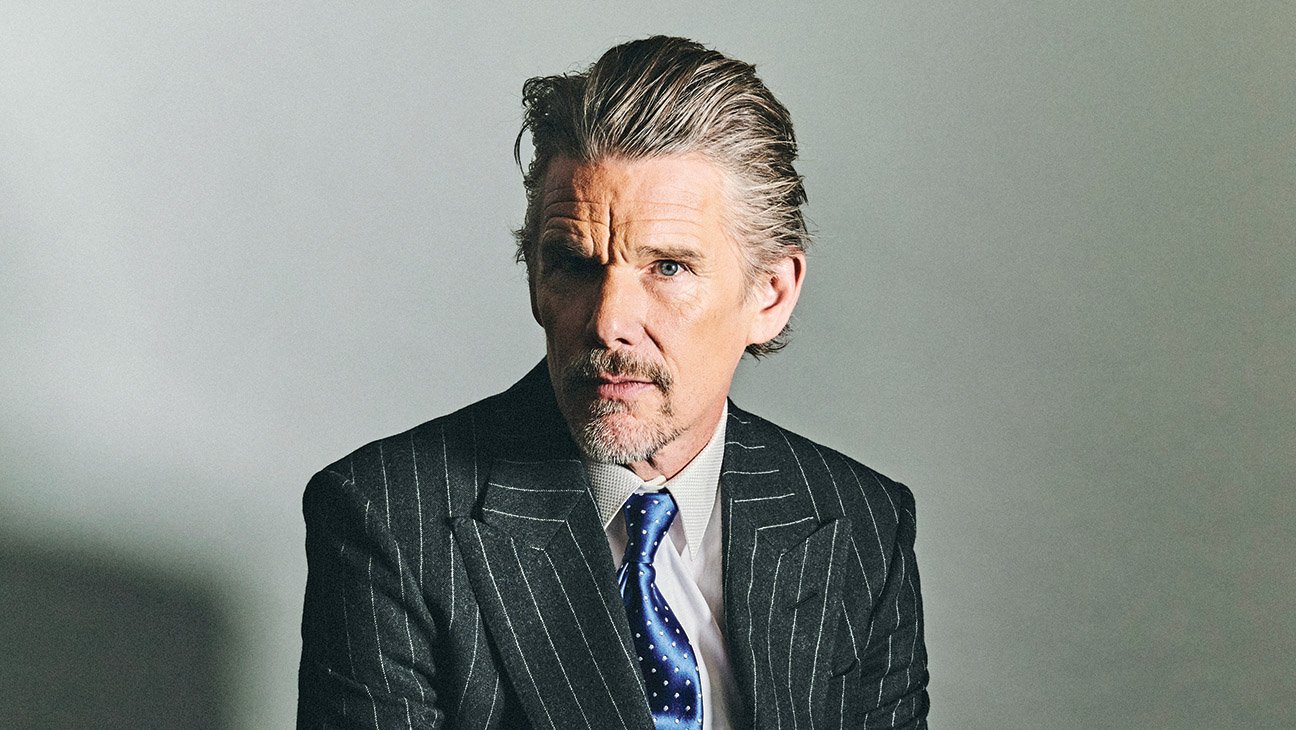
    After getting an Oscar nomination for his role as famed Broadway composer Lorenz Hart in Blue Moon, Ethan Hawke couldn’t help but reminisce on his long-lasting friendship with the film’s director, Richard Linklater. “I have to express my gratitude to Linklater because my first acting award I ever won was a bong from High Times magazine for my performance in Tape as the best stoned performance of the year. And, Rick just keeps giving me these things, so I’m incredibly grateful,” Hawke says.

    In the indie film, Hawke transforms himself into the diminutive composer, who regales attendees at Sardi’s bar with anecdotes about his career highs in the theater and bemoans the loss of his former partnership with Richard Rodgers. Set during the opening-night party for Oklahoma!, the film almost always trains the camera on Hawke as he vacillates between charm and pleas for continued relevance in the theater world.

    Hawke, who calls the role one of the hardest he’s taken on in his long career, speaks about becoming Hart and why the physical transformation was akin to skiing down a hill that makes you think, “Holy shit, I’m going to die.”

    What keeps drawing you back to working with Richard Linklater?

    Oh, that’s totally uncomplicated. It’s just friendship. We met in ’93, I think, and we just started talking and talking. We’ve been talking for 30 years, and every now and then these movies grow out of that friendship.

    He pitched this movie to you more than a decade ago and waited for you to age into the role. But was there more that happened over that decades-plus process?

    I think his intuition was that we weren’t ready to make it. And I don’t know if he could have articulated exactly why. Part of it had to do with me getting older. Part of what happened in the last decade is that I’ve gotten more and more interested in what people call character acting, and I’ve gotten better at it, and so the time wasn’t wasted. We also knew what a razor’s edge the film walks. A movie set in real time, in one party. It’s a very difficult filmmaking accomplishment, and it needed a lot of meditation about how to pull something like that off.

    What made you become more interested in character acting?

    It’s just life’s relationship to this profession. I’d probably say my friendship with [Philip Seymour] Hoffman had a lot to do with it, but a lot of it was continuing to try to grow. You’ve got to figure out, “Well, all right, what if I did something totally different?” and you start pushing the boundaries of the box.

    You worked on this character during a series of workshops over several years. What did you learn through that process?

    It really all comes back to my friendship with Linklater. We would just read it and work on it. We would talk about Larry, about the people we know that were like this, or what the film is about, and what do we think he’s thinking about that? Then we’d send each other records and be like, “That’s an interesting line, where does that line come from?” And we started kind of seeing the movie as a Rodgers and Hart song, like, “What if we made a movie that was a 90-minute Rodgers and Hart song?” In a lot of ways, Rick’s job was to create the architecture and skeleton and musculature the way that Richard Rodgers would for the song, and my job was the lyrics to sit on top of it and dance and play. Because what’s so powerful about their music is that it has all the strength and gravitas and, at the same time, it’s completely silly. And when you can be silly and strike a note that’s profound, it’s a magic trick.

    Ethan Hawke in his Oscar-nominated role as Broadway composer Lorenz Hart in Blue Moon.

    Sabrina Lantos/Sony Pictures Classics

    You’ve called this the hardest role you’ve ever done. Why is that?

    There have been a handful that have been extremely challenging. It’s just one of the few jobs that’s used everything I’ve learned over the years, from the physical stuff, to the vocal work, to the movement work, to the verbiage, to the text, to the ideas that we’re trying to communicate. It was not a light lift.

    How did you find his voice?

    When you become a professional actor, there’s a great push to just always stay in the same box. You stop letting yourself play as much, and the play is where really good things happen. So in that way, I love that Rick was giving me a chance to really jump out of the normal sandbox … so I could really find a voice that matched his wit and his energy and his soul, for lack of a better word, and making all that language feel like it was my own.

    You also had a big physical transformation to become Lorenz Hart, including shaving your head, wearing a comb-over and adjusting your posture to help appear about a foot shorter. How did it feel taking that on?

    If you’ve ever skied, and you ski down a slope that’s way too difficult, while you’re doing it, you’re absolutely miserable. And when it’s over, you’re like, “Wow, that was fun.” Once you survive, you’re like, “That was pretty interesting. I love that.” But while you’re doing it, it’s like, “Holy shit, I’m going to die.”

    You’re a big theater person. Is that what drew you to this story?

    Absolutely. The legend of Broadway looms large in my psyche. So any time you get to touch those myths — and even some of the final shots of all the portraits of the artists on the Sardi’s wall — it’s like the way the baseball player feels about the Hall of Fame. You want to know what they were thinking, and what they were doing, and how did they do that? How did they feel about it? Trying to make all that come alive for the audience is a game I find thrilling.

    You have been doing a lot of campaigning for this movie. Do you now see this as the end of the campaign trail or is there more to come?

    Ask me in a couple of months. It was amazing to get the nomination, and it was even sweeter that [writer] Robert Kaplow was nominated because that makes me feel like people really saw the movie. Because if you see the movie, it’s one of the most staggering pieces of writing Rick and I’ve ever come across in 30 years of working, and it’s just an absolutely brilliant screenplay. I really feel my job is like an ambassador of independent film. I want movies like this to get made. I want there to be a future in my life and other people’s lives for movies like this to exist, so people have choices in what they’re seeing.

    This story appeared in the Feb. 23 issue of The Hollywood Reporter magazine. Click here to subscribe.

  • Apple Strikes F1 Deal With Netflix: Will Share Canadian Grand Prix, New ‘Drive to Survive’ Season

    Apple Strikes F1 Deal With Netflix: Will Share Canadian Grand Prix, New ‘Drive to Survive’ Season

    In a surprise deal, Apple and Netflix are teaming up for select Formula 1 programming.

    The deal will include Netflix simulcasting the F1 Canadian Grand Prix May 22-24 (it will also be on Apple TV, of course), and with Apple TV getting streaming rights to season eight of Drive to Survive alongside Netflix.

    Drive to Survive will land on Apple TV at midnight tonight, the same day it debuts on Netflix.

    Eddy Cue, Apple’s senior VP of services, announced the deal in a conference call with reporters Thursday.

    More to come.

  • TKO May Lose $30 Million on White House UFC Fight: A “Once-In-a-Lifetime” Earned Media Play

    As the UFC continues its planning for its blockbuster UFC bout at the White House in June, parent company TKO is warning investors that it is a one-time event that will likely cost it tens of millions of dollars … and that’s just fine.

    On TKO’s earnings call Wednesday, president and COO Mark Shapiro told Wall Street analysts that the White House event, currently slated for June 14th on the South Lawn, will cost “upwards of $60 million.”

    “I think by the time we get done, all is said and done with the event, and with what we pay the fighters and the fan fest we’re gonna have, that could move north,” Shapiro added. “It’s definitely not moving south.”

    He said that the company is engaging corporate partners and others who he thinks can offset about half the cost of the event, meaning that the company is planning for $30 million in losses, or more if the costs continue to rise.

    That being said, the company is also framing it as a one-time spectacle that could be a huge draw to the mixed martial arts promotion, which is just kicking off its multi-year deal with Paramount global.

    “I wanna be clear about something: We will not profit from the White House event independently. We will not be making money on America’s 250th anniversary,” Shapiro said. “This is an investment for the long term. This is about earned media.

    “This is about sampling, new fans, casual viewers, a spectacle on a stage that will ultimately expand our audience, our viewership, and our success on Paramount+,” he added. “We see this once-in-a-lifetime stage as a strategic investment to drive subscriber acquisition at Paramount+, massive audience sampling for the UFC overall, and Super Bowl-like earned media across the globe.”

    UFC, of course, hosted a one-off event at the Sphere in Las Vegas in 2024, and Shapiro indicated that, while the focus is on the White House fight, TKO will have its eyes open for other one-offs that can drive attention to the sport.

    “We’ll be the first one and maybe the only one ever on the South Lawn of the White House,” he said. “I can’t tell you that we have any events coming up at the Kremlin, but we will definitely be looking for more one-time events.”

  • ‘Jury Duty’ Season 2 Trailer Gives First Look at New Unbeknownst Star Anthony

    Jury Duty is returning for its highly anticipated second installment, and Prime Video is giving viewers a first look at its latest unbeknownst star, Anthony.

    Entitled Jury Duty Presents: Company Retreat, Prime Video released the first trailer for the docu-comedy on Thursday, introducing the audience to Anthony, the man who has no idea that he’s surrounded by a bunch of actors. Instead, Anthony believes he’s been hired as a temporary worker attending an annual company retreat for hot sauce company Rockin’ Grandma’s.

    The trailer sees Anthony introduced to the new, outlandish group of employees. At part of the center of the season’s drama is the potential sale of Rockin’ Grandma’s, which was originally slated to be taken over by the company head’s son.

    “If they think they can just come in and do whatever they feel like they wanna do, they’re in for a rude awakening,” Anthony says at one point in the trailer when the potential buyers of the hot sauce company are introduced. “I care about y’all. This is a family.”

    Season two of Jury Duty will hit Prime Video on March 20, with a drop of three episodes. Two additional episodes will hit the streamer on March 27, followed by a three-episode finale on April 3.

    Alex Bonifer, Blair Beeken, Emily Pendergast, Erica Hernandez, Jerry Hauck, Jim A. Woods, LaNisa Renee Frederick, Marc-Sully Saint-Fleur, Rachel Kaly, Rob Lathan, Ryan Perez, Stephanie Hodge, Warren Burke and Wendy Braun make up the ensemble cast of Jury Duty Presents: Company Retreat.

    The debut season of Jury Duty was a beloved hit, spotlighting Ronald Gladden as the unbeknownst star, and James Marsden, who joined to play himself. Going off the name of the show, season one depicted a faux jury selection and trial full of actors who knew the case was fake, except for Ronald, who believed he was in the middle of a real scenario.

    A breakout from the series, Gladden landed a two-year overall deal with Amazon MGM Studios in November 2023. The show itself earned four Emmy nominations (including a nod for Marsden), becoming the first title from Amazon’s Freevee to score an Emmy nomination

    It was confirmed that the series was renewed for a second season in February 2025, and that said season had already been filmed.

    Season two is executive produced by David Bernad (The White Lotus, Bad Trip), Lee Eisenberg (Lessons In Chemistry, The Office), Gene Stupnitsky (Hello Ladies, The Office), Todd Schulman (The Chair Company, Who Is America?), Nicholas Hatton (Borat Subsequent Moviefilm, Who Is America?), Jake Szymanski (7 Days in Hell, Mike and Dave Need Wedding Dates), Anthony King (The Afterparty, Silicon Valley), Chris Kula (Wrecked, Community) and Marsden. Eisenberg and Stupnitsky co-created the series, while Szymanski directs. 

  • Mentalist Oz Pearlman Tapped As Entertainer for This Year’s White House Correspondents Dinner

    Mentalist Oz Pearlman Tapped As Entertainer for This Year’s White House Correspondents Dinner

    The White House Correspondents Association is swapping a comedy act for mindreading at this year’s dinner.

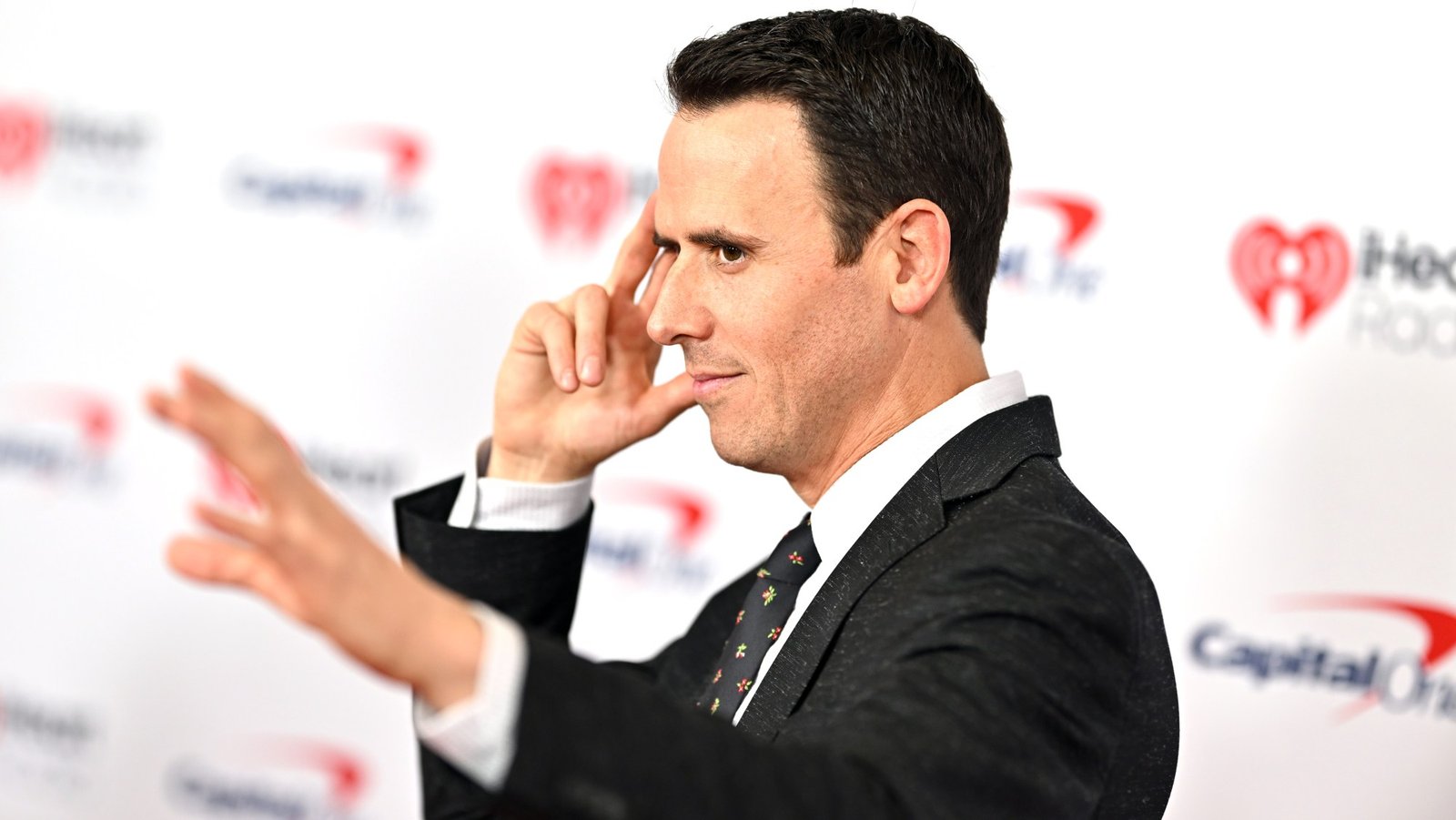
    The WHCA said Thursday that mentalist Oz Pearlman, whose exploits have gone viral on TikTok and YouTube and have made him a frequent guest on channels like CNBC and Fox News, will be this year’s featured entertainer at the White House Correspondents Dinner.

    “As the world’s most celebrated mentalist, Oz Pearlman will offer a fascinating glimpse into what’s truly on the minds of Washington’s newsmakers,” said CBS News correspondent Weijia Jiang, president of the association. “We look forward to an exciting, fresh, and interactive evening as we celebrate the First Amendment and Washington news coverage together.”

    The WHCD, of course, is typically attended by the White House press corp and members of the administration, including the President of the United States. That being said, President Trump has not attended most of the dinners in his time in office, which shouldn’t be too surprising given the frequent sparring between the journalists that cover the White House and his administration.

    Last year’s event was no exception, and in fact the WHCA had to cancel the planned appearance from comic Amber Ruffin, who had been targeted for criticism by the White House. Pearlman’s act is not about politics, but he does cater it to the audience, as his appearances on CNBC and in front of NFL teams show.

    “I am thrilled to be the featured entertainer at this year’s WHCA dinner and join the ranks of Frank Sinatra, Jay Leno and Conan O’Brien, among many other legends,” said Pearlman. “This is a rare opportunity to gather so many accomplished, perceptive people in one place and invite them to share moments of wonder, surprise and awe.”