Tag: Entertainment-HollywoodReporter

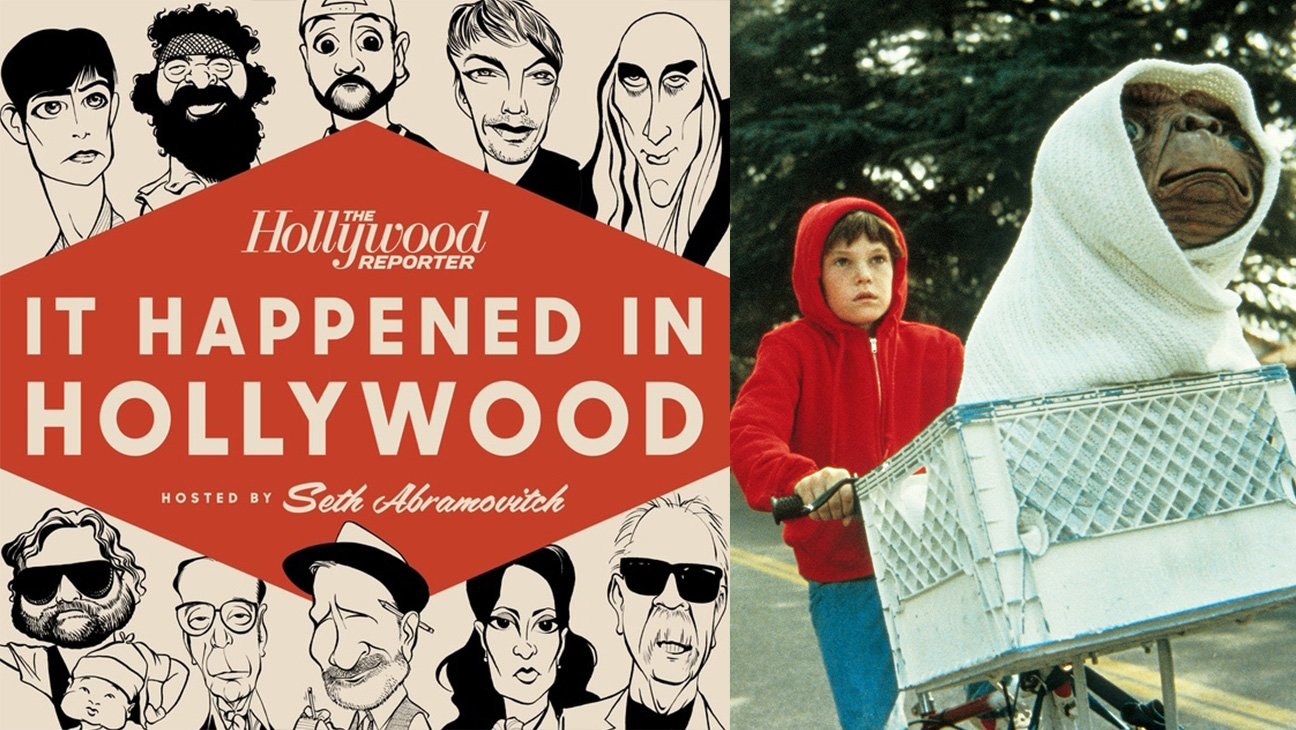
  • “I Thought I Blew It”: Henry Thomas on the Audition, Trauma and Movie Magic Behind ‘E.T.’

    “I Thought I Blew It”: Henry Thomas on the Audition, Trauma and Movie Magic Behind ‘E.T.’

    Before E. T. the Extra-Terrestrial became the most beloved alien movie ever made — before it dethroned Star Wars at the box office, before kids everywhere pointed glowing fingers at each other in suburban backyards — Henry Thomas thought he’d already lost the part.

    “I felt like I had done the worst job possible,” Thomas says on The Hollywood Reporter’s It Happened in Hollywood podcast. “I thought I blew it the minute I opened my mouth.”

    What happened next is now the stuff of Hollywood legend. Steven Spielberg, unsatisfied with the scripted read, pivoted. Forget the sides, he said. He gave the 10-year-old actor a scenario: Your best friend is being taken away. And so Thomas didn’t act — he remembered.

    He thought about his dog — killed by a neighbor’s dog in front of him as a child — and collapsed into something raw enough to make Spielberg cry. “That’s what you see,” he says now. “I just plugged into that.” Spielberg didn’t hesitate: “OK, kid, you got the job,” he said, casting Thomas as Elliott, the suburban child hero of the film.

    The performance that followed would define a generation. But at the time, almost no one — not even the — believed E.T. the Extra-Terrestrial would be a hit.

    “It was kind of like, ‘Go off and do this little movie,’” Thomas recalls. The prevailing wisdom, shaped by Alien, was that audiences wanted monsters, not something gentle and homesick. “They assumed the mean alien would do better,” Thomas explains, referring to John Carpenter’s much-anticipated The Thing, released two weeks after E.T. on June 25, 1982.

    The Thing would flop — though go no to become a much-admired classic. But E.T. made $793 million — $2.5 billion in today’s dollars — enough to dethrone Star Wars, then the box office record holder with $775 million in ticket sales.

    The film clicked with audiences young and old because Spielberg made a film about loneliness, childhood and loss — and built its emotional core on a child who didn’t even think the script sounded exciting. “No lightsabers, no space battles,” Thomas remembers thinking. “My 10-year-old brain was like, ‘This doesn’t seem that exciting.’”

    On set, Spielberg attempted something radical: preserve the illusion. He shot largely in sequence, kept technical details hidden and encouraged the young cast to treat E. T. as real. For Drew Barrymore, who played Elliot’s little sister, it worked. She’d wrap the animatronic creature in a scarf so it wouldn’t get cold.

    For Thomas, it was harder. The illusion broke under the mechanics — whirring servos, inflatable bladders, multiple versions of the creature. The breakthrough came from somewhere else entirely: a mime named Caprice Roth, who performed E.T.‘s hands.

    In the film’s devastating farewell, Thomas wasn’t acting opposite a puppet. He was saying goodbye to her. “That’s what made it real,” he says. “It’s always a human connection.”

    That human connection is what made E.T. endure. It’s also what made it devastating. Spielberg pushed the film to the brink of something most family movies avoid: death.

    The famous “death” scene, in which E. T. turns pale and lifeless while Elliott sobs over him, remains one of the first times many viewers confronted grief. And then, just as suddenly, resurrection. The flower revives. The heart glows. Relief floods in.

    Spielberg, the great manipulator, had done it. But while audiences processed grief and catharsis in the dark, the film’s young star was about to experience a far more disorienting aftershock.

    “I wasn’t ready for the fame,” Thomas admits. “I had never even thought about being famous.” One week, agencies wouldn’t return his calls because he lived in Texas. Two weeks later, after E.T. hit No. 1, “my phone started ringing.”

    He stayed in Texas anyway — a decision that may have saved him. While some of his co-stars spiraled under the weight of early fame, Thomas drifted in and out of the industry on his own terms, building a career that was anything but conventional.

    “There were times where everything was great and times where you couldn’t get arrested, ” he says. “You realize it’s all cyclical.”

    More than four decades later, E. T. hasn’t faded. If anything, it’s grown. The first generation of merchandising may have been an afterthought — “little stuff they could produce quickly, ” he says — but the emotional imprint was permanent.

    It’s still the rare blockbuster that feels handmade, intimate and deeply personal. A story about a boy and a creature, yes, but really about absence, longing and the fragile magic of connection. Or, as Thomas puts it, with the clarity of someone who’s lived both the illusion and the aftermath.

    “We all get born and we all die. You don’t get a rule book,” he says. Somewhere in between, if you’re lucky, you make something that lasts forever.

    Conversation highlights:

    You’ve said you didn’t expect E. T. to be a hit. But it was Spielberg. Didn’t that signal something big?

    It was a big deal to work with Steven, of course. He’d done Jaws, Raiders, Close Encounters. Everybody knew who he was. But E. T. felt like a smaller, more personal project. The studio basically said, “Go off and do this with your friends,” and gave him $10 million. At the time, the idea of an alien movie meant something like Alien, something scary. I think they assumed a mean alien would connect more than a gentle one. No one really knew how audiences would react to something this tender.

    Your audition has become legendary. What actually happened in that room?

    What people see online is only the second half. First I read dummy sides and felt like I completely blew it. If you watch the tape, I’m looking down at the start because I thought I’d lost the part. Then Spielberg and casting suggested we try an improv: I had a friend the government was taking away. The only thing I could connect it to was losing my dog as a kid. I saw it happen, and it was traumatic. So I just went there emotionally. When Steven said, “Okay, kid, you got the job,” I was shocked.

    Did you even know what the movie was about at that point?

    No. I didn’t know anything about the story until a couple of weeks before filming. They kept everything very secret. When I finally read the script, I remember being a little disappointed. There were no lightsabers, no space battles. My 10-year-old brain was like, “This doesn’t seem that exciting.”

    Spielberg famously tried to preserve the illusion of E. T. for the kids. Did it feel real on set?

    That was the intention, and to a degree it worked. Drew Barrymore was young enough that she really believed in E. T. sometimes. She’d wrap a scarf around him so he wouldn’t get cold. For me, it was harder. I knew it was a construction. There were multiple versions of E. T., lots of mechanics, and it could be noisy and distracting. What made it real for me was a mime named Caprice Roth, who performed his hands. In the goodbye scene, I was really saying goodbye to her. That human connection is what sells it.

    What do you remember about working with Spielberg as a director?

    He was incredibly hands-on. He’d talk to me constantly, even during takes, adjusting things on the fly. It was so ingrained that when I first saw the finished film, I thought I could still hear his voice in it. I told Kathleen Kennedy, “You’ve got to take Steven’s voice out.” She said, “Henry, it’s not there.” But it felt like it was.

    You became one of the most famous kids in the world almost overnight. How did you handle that?

    Not very well. I wasn’t ready for it and never saw it coming. The first time someone recognized me, it felt bizarre. And then there was this pressure to follow it up. I stayed in Texas for a long time, which in hindsight probably helped. I didn’t approach my career in a strategic way. It was always about the experience or the people. Sometimes that worked, sometimes it didn’t.

    You’ve had a remarkably steady career. Was that intentional?

    Not really. I just kept going. There were periods where things were great and periods where it felt like you couldn’t get arrested. You realize eventually it’s all cyclical. You don’t get a rule book. You just keep showing up.

    Looking back now, what does E.T. mean to you?

    It’s strange because it’s so far behind me now, but it’s also something people never stopped loving. It stayed in theaters for over a year around the world. That kind of connection is rare. I think it’s because at its core, it’s about something very simple and human. And that’s what people respond to.

    Listen now and be sure to subscribe on Apple Podcasts, Spotify or wherever you listen to podcasts.
  • ‘Bridgerton’ Season 5 to Follow Francesca and Michaela Stirling Love Story, Now Filming

    Dearest gentle readers, Hannah Dodd and Masali Baduza are set to lead the next season of Bridgerton, now in production.

    Netflix confirmed on Tuesday that Dodd’s Francesca Bridgerton will be the next sibling to find true love in the adaptation of Julia Quinn’s bestsellers.

    In season four of the hit series, which premiered in two parts earlier this year, Luke Thompson and Yerin Ha took the helm as Benedict Bridgerton and Sophie Baek. They fell in love despite Sophie’s position in society, while she was working as a maid.

    It was also in that season that we saw the death of Francesca’s new husband, John (Victor Alli), setting the show up to focus on the blossoming romance between Francesca and John’s cousin, Michaela (gender-swapped from Michael in Quinn’s books).

    “A certain countess shall find love again…,” said Netflix on X. “Bridgerton season five is now in production. Starring Hannah Dodd as Francesca Bridgerton and Masali Baduza as Michaela Stirling.” Another post added: “FRANCHAELA RISING” with new photos of the actresses.

    Bridgerton has been an immensely successful franchise for the streaming giant, having accrued hundreds of millions of views over the course of its four-season run so far. The first instalment saw Rege-Jean Page and Phoebe Dynevor fall in love as Simon and Daphne Bridgerton, followed by season two’s Jonathan Bailey and Simone Ashley, and then Luke Newton and Nicola Coughlan in season three.

    Fans have been speculating over who might be the next Bridgerton sibling to lead the show, with some suggesting it could be Claudia Jessie’s Eloise.

  • A Former Anthropology Student From Los Angeles Might Be the George Lucas of AI

    This story comes from The Hollywood Reporter’s upcoming AI Issue, which publishes March 31. Check out further stories throughout the week, and the complete issue next week.

    On Instagram, the filmmaker known as Gossip Goblin posts bleak sci-fi epics set in strange worlds populated by mutated creatures and bunker societies. The images are accompanied by philosophical narrators contemplating reality. The short films look uncannily like fragments of big-budget genre cinema. But they weren’t shot on soundstages or rendered by a VFX studio: They were generated and assembled using artificial intelligence.

    At a moment when Hollywood and Silicon Valley are still arguing over what AI actually is — a cost-cutting tool, a visual gimmick or the foundation of an entirely new cinematic language — Gossip Goblin offers a more provocative possibility: that AI already has an emerging aesthetic, and that it belongs not to studios but to individuals willing to wrestle it into something personal. His films don’t reject the medium’s telltale strangeness — the dream logic, the synthetic textures, the sense of images half-remembered rather than fully observed — but lean into it, suggesting a form of storytelling that feels less like traditional filmmaking than like visualized thought.

    The man behind the account is Zack London, 35, a Los Angeles native who has so far kept a relatively low public profile even as his work has spread widely online. The name “Gossip Goblin, ” he suggests, began as a deliberately unserious alias — a kind of Internet pseudonym — but has since become a banner for a growing body of work that is anything but disposable. London studied sculpture and anthropology at Pitzer College before drifting into product design and virtual-reality work at tech companies like Oculus. Four years ago, he relocated to Stockholm after meeting his Swedish partner. While experimenting with early image-generation software after work, he stumbled onto a new way of visualizing the stories he’d long been writing.

    Since then, Gossip Goblin has quietly amassed more than 1 million followers on Instagram and millions more views across platforms. London recently quit his tech job, raised a small round of funding and launched a studio to produce longer AI-driven films with a small international team. His first major effort, a 20-minute short titled The Patchwright — set in a grungy, Blade Runner-esque world populated by flesh-and-metal hybrid characters and featuring a full cast of voice actors, a foley artist and an original score — is set to be released in the coming weeks after roughly five months of production.

    The approach puts him in a curious position within the fast-moving AI landscape. While social media is flooded with one-click AI videos (often dismissed as “slop”) London insists his projects still involve many of the same steps as traditional filmmaking: scripts, shot lists, voice actors, foley artists and extensive editing.

    Whether that process represents the future of independent filmmaking or simply a transitional curiosity remains an open question. But Hollywood is already paying attention. London says he has fielded calls from studios, actors and directors curious about what AI storytelling might become.

    The Hollywood Reporter spoke with London about how his films are made, why most AI content fails to stand out and whether a legitimate blockbuster could someday emerge from this new medium.

    You’re from Los Angeles originally. How did you end up doing this from Stockholm?

    I grew up in the Valley and studied sculpture and anthropology at Pitzer College — two very lucrative disciplines. I thought maybe I’d go to law school after, but I ended up doing a Fulbright in Malaysia and spent almost two years traveling around Southeast Asia. After that I moved to the Bay Area and started working in tech as a product designer at startups and eventually at Facebook on Oculus doing virtual reality work. I moved to Sweden about four years ago after meeting a Swedish girl — it was either she moved to the States or I moved here, so here I am. Filmmaking was never really part of the plan. I’ve always illustrated and written stories, even self-publishing some small books of travel writing and short fiction, but it never occurred to me that making films was something available to me. AI kind of changed that.

    How did you first start experimenting with AI tools?

    About three and a half years ago I was messing around with early image-generation tools with a coworker after work. We were trying to use them for a design project and the results were terrible — totally unusable for corporate work — but the technology itself was fascinating. Before video generation existed I started doing a tongue-in-cheek travel writing series about a fictional country called Urumquan, written in the style of 1980s National Geographic. I created an entire fake ethnography of this imaginary Soviet satellite state and used Midjourney to generate images that looked semi-documentary but surreal. It unexpectedly took off online and got me excited about storytelling again. When the video tools started appearing, I realized moving pictures meant you could actually build narrative worlds — even though early on the technology was so limited that the storytelling had to adapt to what the AI could realistically produce.

    Your work looks far more polished than most AI videos online. How are these films actually made?

    The biggest misconception is that someone types “sci-fi film” into a prompt and a movie pops out the other side. Maybe we’ll get there eventually, but that’s not where the technology is today. Our process starts with a script, and then we break that script into something like a traditional shot list — every scene, every angle, every environment. After that we start exploring the visual world: what the characters look like, what the creatures look like, what kind of lighting and architecture this world has. Once we define that aesthetic, we generate and refine hundreds or thousands of images and video clips that fit the story, and then everything gets assembled and edited in DaVinci Resolve like a normal film. We also work with voice actors and even a foley artist to create sound effects, so there’s still a lot of traditional filmmaking craft involved.

    What AI tools are you using to generate the imagery?

    Quite a lot of them — somewhere between 15 and 25 tools across the entire pipeline. There isn’t one magic generator that does everything. Some tools are better for creating initial images, others are better at replicating characters consistently across different scenes, and others are better for motion or animation. Midjourney is still a favorite for generating images, but we also use other models that are better at reproducing a specific character from multiple angles or lighting conditions. Consistency is one of the hardest problems in AI filmmaking — if a character changes appearance from shot to shot, the illusion falls apart — so a lot of the work is figuring out how to control the outputs across different tools.

    One thing I noticed watching your short film is that it relies heavily on narration rather than dialogue. Was that intentional?

    Mostly that was a technical limitation. When we made that film, the tools simply weren’t good enough to produce convincing dialogue scenes with synchronized speech and performances. If we tried to do it, it would have felt awkward or artificial, so we leaned into narration and atmosphere instead. The next project we’re working on is around 25 minutes long and much more dialogue-driven because the technology has improved significantly since then. The tools are evolving so quickly that what felt impossible a year ago now feels achievable.

    Are the voices in your films AI-generated?

    No, they’re all human voice actors. We work with a couple of performers — one used to be an opera singer who’s now a DJ in San Francisco, and another is a jazz singer in the UK. Synthetic voices have become incredibly convincing, but real performers still bring something that’s hard to replicate. Eventually motion-capture performance will probably become a bigger part of this workflow too, where you record an actor’s performance and translate it onto an AI-generated character, but that part of the technology is still pretty early.

    You’ve built a following of more than a million people online. Why do you think your work stands out from other AI content?

    Honestly, because most AI content is what people call “slop.” The technology has a kind of default visual style, and if you just press the button and accept whatever it generates you end up with generic sci-fi imagery that looks like everything else. It actually takes a lot of work to push the AI away from that baseline and impose a specific creative vision. The other difference is storytelling. A lot of creators focus purely on visuals — impressive images with no narrative behind them. I’m much more interested in building a mythology, with recurring characters and stories that exist within a larger world.

    You recently quit your job and started a studio around this work. What’s the goal?

    The goal is to build out a larger universe of stories — not mass-manufactured content, but thoughtful science fiction created with a small team. What’s exciting about AI is that it might allow people to create ambitious genre storytelling without needing hundreds of millions of dollars. Historically, if you wanted to make large-scale science fiction you needed a massive studio production. Now a handful of people might be able to create something visually comparable with far fewer resources.

    Have Hollywood studios started reaching out to you?

    Yes, I’ve spoken with most of the studios and streamers at this point, as well as some actors and directors whose work I really admire. A lot of those conversations are simply curiosity — people trying to understand what the future of filmmaking might look like. Some actors ask questions about whether they should license their voices or likenesses for AI use. I don’t think anyone really knows the answers yet, but there’s definitely a lot of interest.

    Do you ultimately want to partner with Hollywood or build this independently?

    Our goal is to retain as much ownership of the intellectual property as possible. In a future where AI allows anyone to generate huge amounts of content, there will be an overwhelming amount of noise online. The things that will actually hold value are recognizable characters and worlds that audiences connect with. If we can build a small set of stories and IP that people genuinely care about, that’s where the long-term value lies.

    Do you think a true AI-generated blockbuster is coming?

    Probably. The technology is improving so quickly that it feels inevitable. But I’m less interested in being the first person to prove it can happen. There are already well-funded companies trying to win that race. What matters to me is doing it well and focusing on storytelling rather than simply demonstrating the technology. At the end of the day, audiences don’t care about the tool — they care about whether the story is compelling.

    I do feel like someone is going to be the George Lucas of this, and wouldn’t that be interesting if it was you?

    That’s what we’re telling investors, but I don’t want to jinx it. That is essentially the elevator pitch: “We can tell a totally vast and unfiltered sci-fi epic spanning all of these different worlds and ideas and storylines, and we can do it fairly reliably with a fairly small team.” Plus it’s not a huge risk to take this on. It’s not like we’re asking for the world to do this.

  • “IMDb for Creators” Platform in the Works for Stars, Crew of Digital Projects (Exclusive)

    “IMDb for Creators” Platform in the Works for Stars, Crew of Digital Projects (Exclusive)

    When a digital creator wants to showcase their body of work to potential collaborators or clients, they can post some previous work to their Instagram or LinkedIn, maybe dig out a few old contracts from a drawer. But with the scale and diversity of output that successful creators produce, from quick sketches to full-scale brand campaigns, it’s an unwieldy and imperfect approach.

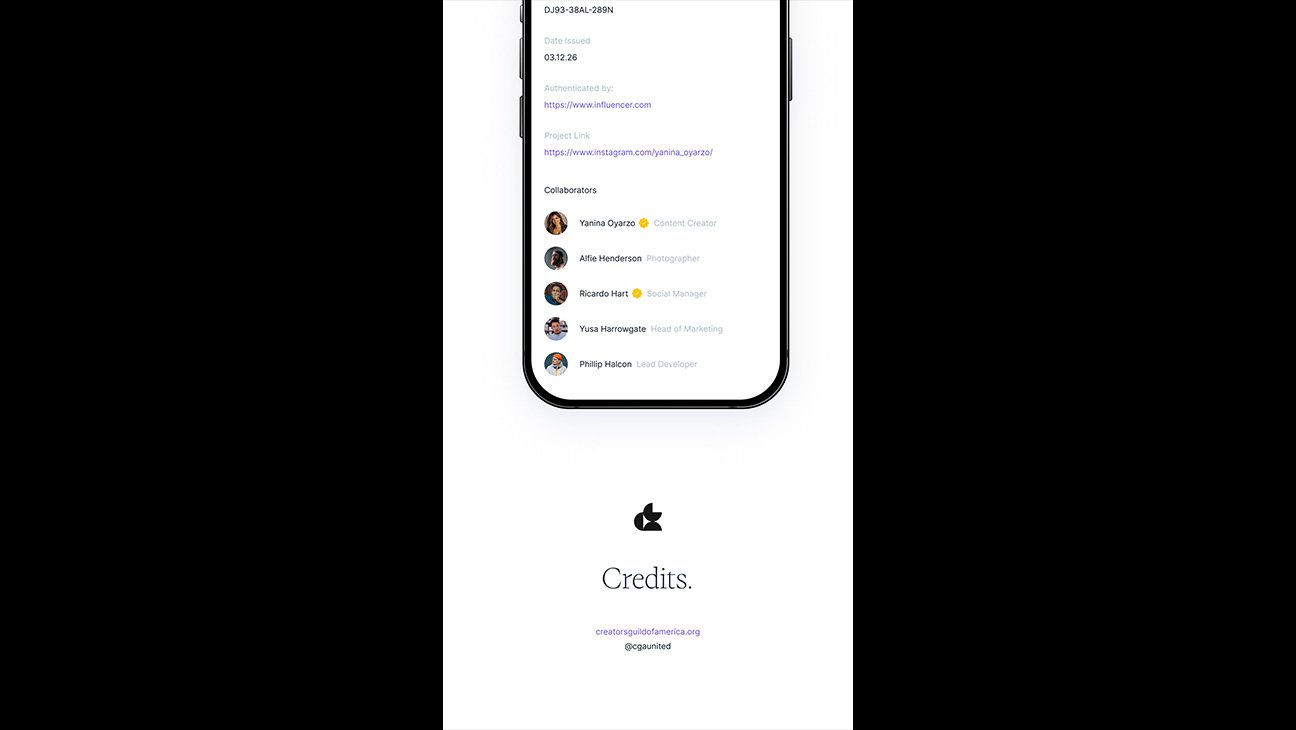
    A new initiative from the Creators Guild of America is aiming to solve that issue. On Tuesday, the industry nonprofit (led by former Producers Guild of America arbitrations administrator Daniel Abas) launched an open beta version of Mosaic, a “first of its kind” credentialing platform tailored to the vast workflows endemic to creators and their behind-the-scenes creatives.

    Branded as the “IMDb for creators,” Mosaic offers creator economy workers a digital resumé to help them showcase their work history to collaborators, brands and audiences. A few thousand beta testers have already signed on to Mosaic prior to Tuesday’s launch.

    “Without a infrastructure for credit, it’s difficult to know and provide recognition for what creators are doing. Mosaic is exactly that. It is infrastructure to demonstrate and provide recognition for work,” Abas told The Hollywood Reporter. “Creative work is very granular. It’s project by project, hence the name of Mosaic. When you put this work together, you can see someone’s complete creative arc.”

    All credits that are submitted to Mosaic will be verified by third parties with knowledge of the jobs, according to the CGA. They will also be judged according to the CGA’s “professional eligibility standards” (for instance, for an individual influencer to receive a CGA credit, they need to have been paid by a brand, agency, platform or have a paid subscriber base of 10 or more people).

    An image showcasing the credits feature of Mosaic.

    Courtesy of the Creators Guild of America

    Mosaic will also give each participant a unique Creator ID that they can use across different social media platforms. Comparing it to a driver’s license number, Abas says the number will help give creators more independence from particular handle names, will help differentiate creators with the same names and will offer safeguards against fraudulent promotions or fake videos.

    In a statement, lifestyle creator Yanina Oyarzo emphasized that the Creator ID component of the platform could protect influencers like herself from being associated with fake promotions. Oyarzo discovered last year that her likeness was being used to promote products without her knowledge or consent. “I’m excited for Mosaic, because we need the protection it will bring to today’s creators,” she said. “We have it for writers, actors, and other forms of creatives in the entertainment industry. It’s about time we are able to be protected and work alongside AI with the right contracts and safeguards.”

    While the idea for the platform pre-dated recent developments in the world of generative AI, the rise of synthetic creators and deepfake videos has accelerated the CGA’s work on Mosaic, said Abas: ”The truth is important in the world that we are entering. What is real? What is not real?”

    The platform is free and open to any creator and creative that works in the creator economy, not just members of the CGA, though only members of the organization can be verified on the platform as human creators.

    “I’m excited about Mosaic because when we watch creators, we usually only see the person in front of the camera,” said content creator and CGA board member Justine Ezarik (whose handle is @iJustine) in a statement. “We don’t always see the writers, producers, editors, and videographers behind the scenes who help bring that content to life. So having this new platform that properly credits the entire team feels like a missing piece of the creator puzzle.”

    An image showcasing the Creator ID feature of the Creators Guild of America’s Mosaic platform.

    Courtesy of the Creators Guild of America

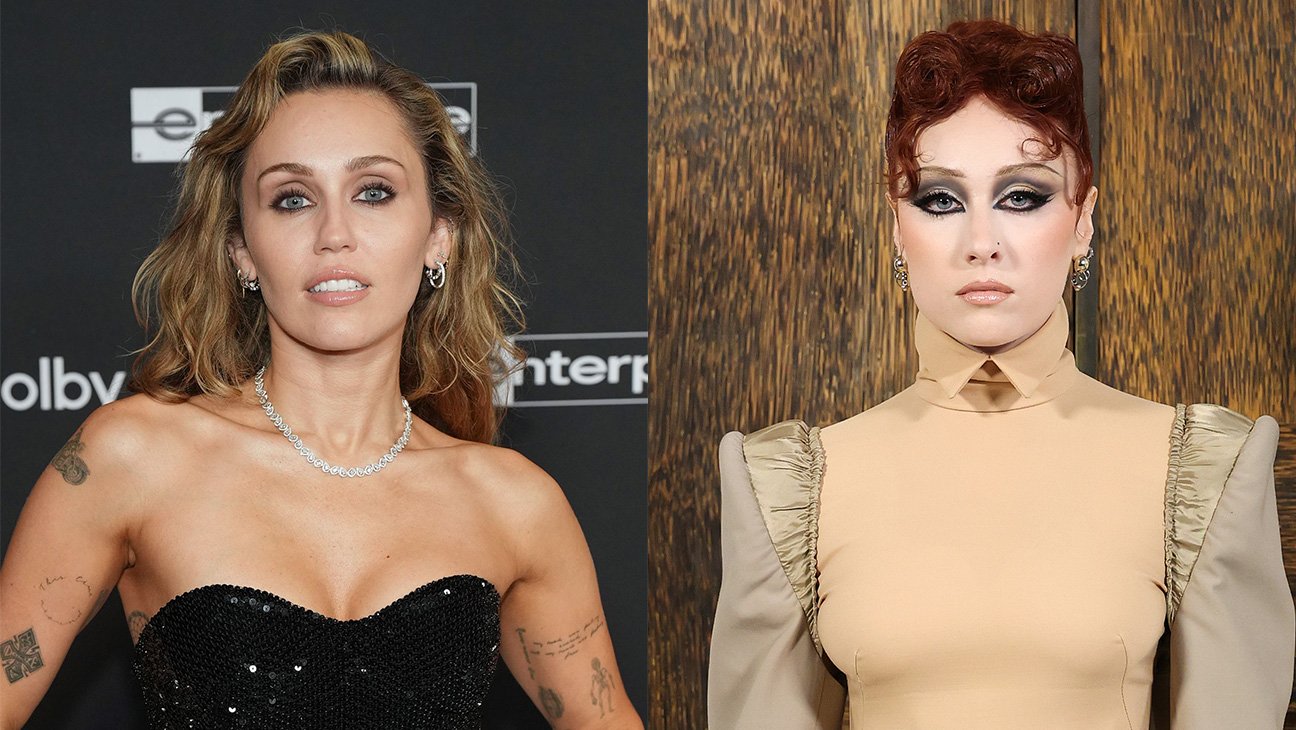
  • Chappell Roan Says Miley Cyrus “Walked So I Could Run” During ‘Hannah Montana’ Anniversary Special: “The World Really Took It Out on You”

    Chappell Roan Says Miley Cyrus “Walked So I Could Run” During ‘Hannah Montana’ Anniversary Special: “The World Really Took It Out on You”

    Hannah Montana is turning 20, and Miley Cyrus is celebrating with an hour-long special — with the help of some of her fellow pop stars.

    The Hannah Montana 20th Anniversary Special sees Cyrus return to the set of the Disney Channel show that launched her career, reflecting on her wigs, her closet and her early days in Hollywood alongside her mom Tish and dad Billy Ray.

    Selena Gomez, who played Hannah Montana’s enemy Mikayla in the series, also stopped by in the special to reminisce. “When I watch it back, I’m like ‘we were vicious,’” Cyrus said, with the two characters throwing insults at each other constantly.

    “It’s pretty mean! I don’t think they’d get away with saying half of that now,” Gomez said. “I was so mean, I’m sorry!” Cyrus teased back that “we can make amends now.”

    Adding to the star power, Chappell Roan, who grew up watching Hanna Montana, makes a surprise appearance as well, telling Cyrus that “you literally walked so I could run.” Chappell pointed to her own moments confronting photographers on the carpet and how Cyrus paved the way for her.

    “I was gagged for that,” Cyrus said, to which Roan replied, “But that’s because you took a lot of the heat for that in 2012, 2013.”

    “I don’t have to deal with that as much because the world really took it out on you,” Roan said, harkening back to the response to Cyrus’ album Bangerz and her infamous VMAs performance with Robin Thicke.

    “To see you be the artist you are, to be able to do this, just shows like your heart and your appreciation for your younger self and what got you here,” Roan continued.

    As Cyrus said: “That’s really what this whole moment, this whole celebration, is about — loving on our younger selves, knowing that my younger me worked so hard so I could have the life that I have now.”

    In another moment in the special, Cyrus — who at points throughout is interviewed by Call Her Daddy‘s Alex Cooper — touches on Taylor Swift’s appearance in 2009’s Hannah Montana: The Movie.

    Teasing “get the tea kettle,” Cyrus reflected how “this was kind of the beginning of her career and they were looking for someone who would authentically, no shade, I guess, be performing in a barn. We both performed in the barn and so she came and did the performance.” Swift also wrote the movie’s finale song “You’ll Always Find Your Way Back Home,” to which Cyrus declared: “She ate with that one.”

    Cyrus takes the stage for several songs during the special as well, doing modern renditions of “Best of Both Worlds,” “This is the Life” and “The Climb.” She closes with a new song dedicated to her time on the show, telling the audience directly to camera that “it’s been an honor to celebrate 20 years with Hannah Montana, and I’ve looked back at every memory with a heart full of love. Hannah, she gave me my start, but my fans gave me this life.”

    The Hannah Montana 20th Anniversary Special is now streaming on Disney+ and Hulu.

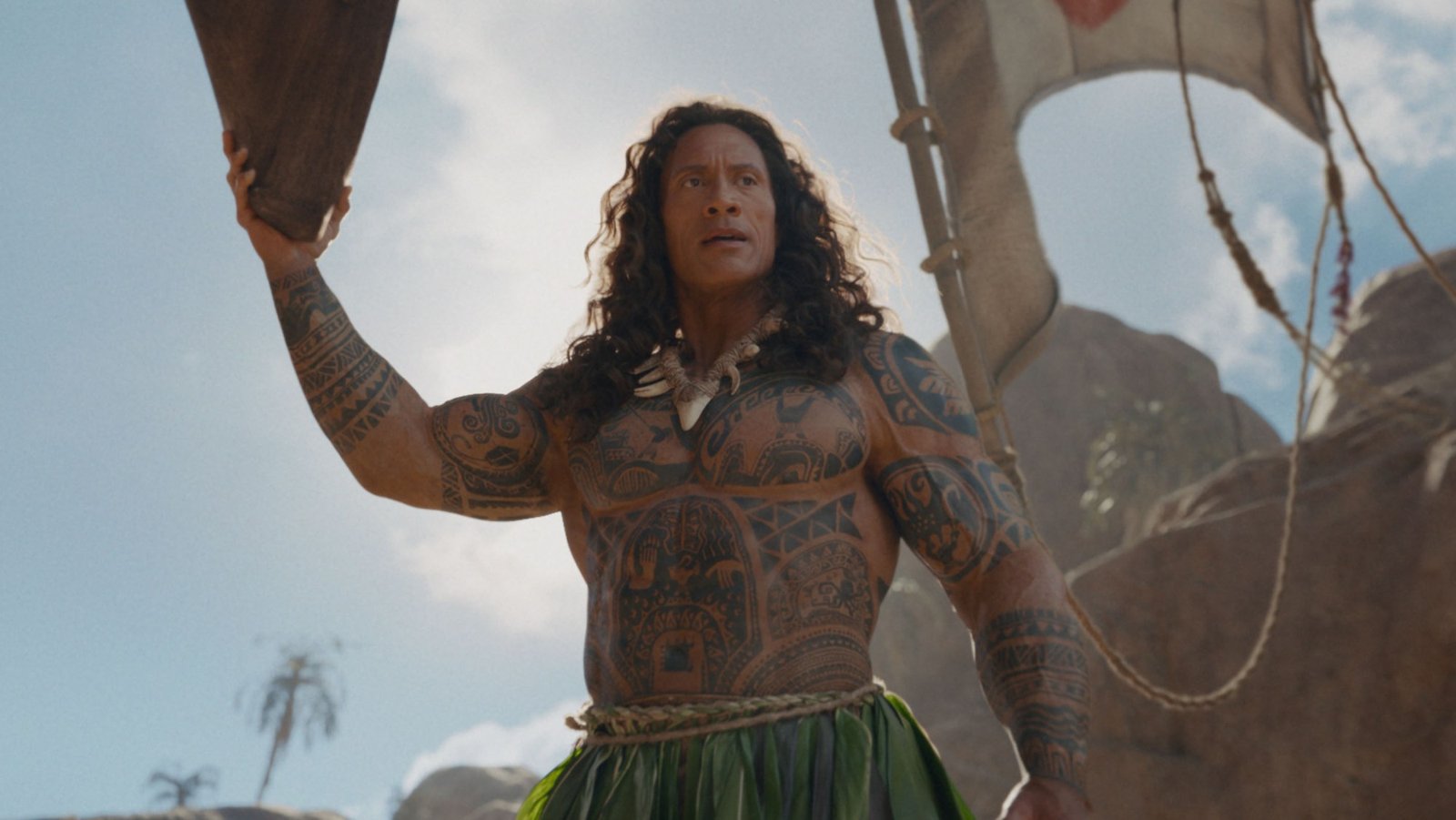
  • ‘Moana’: New Trailer Shows Dwayne Johnson as a Live-Action Version of His Character Maui

    ‘Moana’: New Trailer Shows Dwayne Johnson as a Live-Action Version of His Character Maui

    Disney on Monday released a new trailer for its upcoming live-action version of Moana.

    The film stars newcomer Catherine Lagaʻaia as the wayfinder Moana and Dwayne Johnson, who reprises his role as the trickster demigod Maui from the animated film. 

    Fans of the original movie will recognize the scenes shown in the trailer, from Moana’s interactions with Maui to the crab who’s obsessed with shiny objects to the lava and fire creature Te Kā, along with some familiar songs, including “I Am Moana (Song of the Ancestors).” Fans also noted online that Johnson has a full head of flowing locks, befitting his character.

    The cast also includes John Tui as Moana’s father, Chief Tui; Frankie Adams as Moana’s mother, Sina; and Rena Owen as Moana’s Gramma Tala.

    Catherine Laga’aia as Moana in Disney’s live-action Moana.

    courtesy of Disney

    Disney is calling the film a “reimagining” of the Oscar-nominated movie. The live-action version is directed by Thomas Kail (Hamilton), with Johnson, Dany Garcia, Beau Flynn, Hiram Garcia and Lin-Manuel Miranda as producers. Kail is also an executive producer along with Scott Sheldon, Charles Newirth and Auliʻi Cravalho, who voiced Moana in Moana and its sequel. 

    Moana features original songs by Miranda, Opetaia Foaʻi and Mark Mancina, and an original score composed by Mancina. 

    The movie hits theaters July 10.

    Watch the trailer below.

  • ‘Paradise’ Star Enuka Okuma Goes Inside That Heavy Reunion: “Both of Them Don’t Give Up”

    [This story contains spoilers from Paradise episode seven of season two, “The Final Countdown.”]

    Last week’s Paradise ended with the highly anticipated moment of Xavier Collins (Sterling K. Brown) finally laying eyes on the wife he had been searching for ever since finding out she was actually alive. And this week’s episode picked up right from that cliffhanger to play out their long-awaited reunion.

    Xavier had thought his wife and mother of their two children, Terri, played by Enuka Okuma, had died in the near-apocalyptic event that kicked off the hit Hulu series created by Dan Fogelman. He found out at the end of the first season that she actually survived, and he left the safety of the bunker to go and find her in season two. Against all odds, Xavier found Terri, tracking her to the location where she had called in on the radio. This episode, however, shows how Terri’s friend Gary (Cameron Britton) had misdirected Xavier into thinking Terri was in danger as a ruse, since Gary is also in love with Terri. Xavier and Terri must contend with Gary, which they do, before setting out on their mission to return to the bunker in Colorado.

    Each of them now has an additional child in their care when they reconnect and vow to go get their children — Xavier is taking care of Annie’s (Shailene Woodle) baby in hopes of reuniting her with father Link (Thomas Doherty) and Terri comes now with a boy named Bean (Benjamin Mackey), whom she has protected since The Day the world changed. “I never stopped trying to find my way back you — you just found me first,” she tells him.

    “We learn that Terri is as tough as Xavier,” executive producer and writer John Hoberg tells The Hollywood Reporter about how Xavier and Terri have changed in the three years since The Day. “The two of them both have this irresistible force quality. When they are together, they’re almost unstoppable. Xavier is a different person, and she’s a different person. So now this is like a marriage where two people took different jobs away from each other for a few years and are coming back together and, how is that going to work?”

    For Brown, also an executive producer, the comparison between present day and the levity of their meet-cute was a fun and flirty color to put on, he says, of filming their flashbacks in season two. “Then finally, after going through so much, to be reunited… I hope there’s a sense of relief that the audience feels in getting a chance to see these two people find one another again,” he tells THR, “because that’s what it felt like: relief. Like, ‘You’re here. I didn’t know if you were going to be here. So many things kept me from getting to you. I made it to you. I love you. Let’s go.’”

    Below, THR speaks with Okuma about when she found out that Terri would be entering the present-day story in such a big way, what it was like filming Terri and Xavier’s reunion, and what she knows about the already renewed third season.

    ***

    What did you know after season one about if this reunion between Terri and Xavier would happen in season two?

    I had no idea how or if that would ever happen. I did know that Terri was going to be a larger role and that you would get to see into her world, but I didn’t know how. Especially reading the beginning of the season and seeing that flashback episode, I figured — in [Dan] Fogelman-style — that I would be in a lot of flashbacks. So it was a nice surprise to know that we would dive into what happened to Terri outside, but then of course that wonderful episode seven was a nice surprise, too!

    Did you have a chat with creator Dan Fogelman and the writers about Terri’s arc ahead of time, or did you find out as you were receiving scripts?

    It was mostly finding out from reading. But then once we were shooting, being able to talk to our directors and to Dan about exactly that. Just how long it has been that those two have been missing each other.

    Had you been peppering Sterling K. Brown with questions leading up to this?

    Oh, he knows everything [as an executive producer also]. I would always ask him, but at the same time I didn’t want any spoilers. So he wouldn’t tell me, but would look at me and say, “It’s good. It’s gonna be good.” So I would just trust that it was going to be great.

    Sterling K. Brown with Enuka Okuma in episode seven of season two.

    Disney/Ser Baffo

    How did you react when you got to the end of episode six and read that they finally lock eyes on one another, but that Gary potentially stands in their way?

    I was pretty concerned. As an actor, we all have our worries and insecurities. I wanted to do it justice. As an audience member myself I had been hoping that those two get together, so I wanted to do it justice and was putting extra pressure on myself. But once we got to set — and it was so hot! Plus there were trains and explosions and hundreds of extras. It was just so massive. The stakes were so high, that all I had to do was surrender and lean into the what-if of it all, and it was all fine and natural in the end because it was almost like the stakes were actually happening.

    Did you film their reunion scene in one day?

    No, we didn’t. In fact, the tearful reunion — part two of the reunion — was shot in studio. We had done everything outside a week before. That informed everything going on in the tent, but it also gave a lot of time to really sit with that second level. It’s all pretty crazy when they first see each other, so I love that the writers gave us that moment to truly connect. There’s so much grief and loss for the time that has passed, the time they didn’t have with each other and how they couldn’t be there for one another. Giving those characters that moment was great.

    Up until this point, you and Sterling had only filmed flashbacks to establish their relationship. What was it like to bring their relationship up to date and portray them now?

    That was very much informed by how these two were leaders in their own way, in their own worlds. So coming together was now, in many ways, falling back into the pattern of who they are as husband and wife. But then it became two people who have a mind of their own and are on their own mission. Terri is not going to be told what to do, and has been running things in her own camp. So it becomes a dance of leadership.

    Brown with Okuma during Xavier and Terri’s reunion.

    Disney/Ser Baffo

    How would you say their time away from each other has informed how they’re able to step up for each other and for their family by the end of this season?

    I think because they have been away from each other for so long that coming back together as a unit, no matter what — no matter this butting of heads, in terms of leadership — shows that they have found each other and it is that union. They are going forth together and now it’s about getting the rest of that [family] unit back together, as the world is falling apart around them. I think you see very quickly the harmony they have and how they do work together.

    They are this unbelievable, one-in-a-million story to have found each other again. What do you hope viewers take away from their hopeful love story?

    Both of them don’t give up, and that is what makes the story so special to me — they’re steadfast in their belief and their faith that they will get back together. I read the story of their standoff with Gary in a cynical way, thinking, “Okay, they just got back together and this is how she’s going to die.” Maybe my heart is a little bit dark! But I do love for them that this was the fire that was stoking both of them. My love is out there, and I must find them. I must be with them again. I think it’s a beautiful message of hope and strength, and the fact that they do get together is an affirmation that it can happen.

    ***

    Paradise releases its season two finale on Monday. Read THR‘s coverage.

  • Top CNN Stars: Welcome to Our Humble Podcast Studio

    On an otherwise normal hour of CNN last week, viewers may have been greeted by the title card “Global Report: War With Iran” and an array of correspondents fanned out across the Middle East — from Tel Aviv to Doha — speaking with Anderson Cooper on AC360. Or they saw Jake Tapper multitasking as usual on The Lead, grilling interview subjects, ticking through breaking news like the dearth of TSA workers at airports due to a government shutdown. The substance was the same. The style was not.

    Out were the crisp, buttoned-down trappings of a stereotypical Cable News studio set. In were podcast-style audio setups and messy, center-of-the-newsroom production vibes more line with the aesthetic of indie influencers. The ties were gone (or loosened) and the map of Iran was printed out for a table top that included a studiously messy arrangement of New York Times sections (that, perhaps, is more Morning Joe than TikTok).

    “Here we are, giving it a shot,” Tapper told viewers, a dry welcome to his office with a note explaining that this is where his team plots out journalism daily, so may as well let everyone in with a bit of transparency. (His office is decorated with presidential campaign trinkets, specifically of the losing candidates.) Cooper, meanwhile, was camped out in the middle of the newsroom at a table that was used frequently by data whiz Harry Enten, that was now repurposed with an arrangement of podcast mics for the anchor and analyst guests.

    The AC360 podcast set up in the CNN newsroom.

    The stylistic changes are a small cosmetic tweak — but an interesting one given that seemingly every video is becoming “a tile on YouTube” in digital media right now. (Tapper himself may on the fence about the change-up: “Will we do it again?” the anchor asked on Friday. “Stay tuned.”)

    Does it work? Two Hollywood Reporter editors have diverging views:

    No, It Doesn’t

    ALEX WEPRIN: Retro, low-fi and reminiscent of Larry King … who was of course channeling the old-school late night radio shows that he once hosted before jumping to TV.

    Clearly there is a push to be more “authentic” in the same way that a lot of podcast stars are, and Tapper at least shows off his personality. In the case of Cooper, they just took a table in the middle of the 18th floor newsroom (I assume Harry Enten found somewhere else to do his data analysis in the office).

    I don’t like it, it strikes me as phony. These are millionaire celebrities, with a small army of producers, crew and support staff trying to look low-fi. A lot of the people who found success in the podcast space genuinely started from scratch, and even some of the most successful (like Piers Morgan and Megyn Kelly) have staff that number in the single digits.

    While I think CNN (and all news channels) should be endeavoring to help viewers how they “get” the news in the name of transparency, we weren’t watching Tapper work the phones or Cooper pull up an Excel spreadsheet, these looked like their normal shows in a more casual setting. Surely there is a way to actually get some reporting into the show? That might require bringing in the producers who do a lot of the legwork.

    That said, there is clearly something happening here. MS NOW is adding some Crooked Media pods, Fox News has Will Cain emulating the radio and podcast look … I think we are going to see more of these, particularly as actual video podcasts proliferate on TV sets through YouTube and Netflix. Ultimately, 20 years ago someone with access to a TV at, say 10 AM or 2 PM, would probably turn on a news channel. Now they may turn on Netflix or YouTube and watch a talk show there, so that is fresh competition. It isn’t really CNN vs Fox News vs MS NOW anymore, the universe is bigger.

    Yes, It Does

    ERIK HAYDEN: I’ll say that I thought “Summer Fridays,” in which Newsnight With Abby Phillip films from the Food Network kitchen while having its typical panelists get into arguments about bread-and-butter CNN topics, to be an interesting experiment, too. It’s too easy for reporters typing on keyboards to take potshots. Stylistically, there’s got to be some way to shake up the Cable News Studio feel that all of a sudden feels less real — and perhaps less trustworthy? — to viewers right now. And for all of the headlines during the short-lived Chris Licht era about how the veteran Late Show producer was shaking things up — remember King Charles? — programmingwise and visually (remember the tweaked chyron design?). The Mark Thompson-led CNN has yet to make as many wild swings. But in small ways like this it’s been more experimental around the edges of what CNN programming can, and should, look like.

    To Alex’s point, yes, these are “millionaire celebrities, with a small army of producers, crew and support staff” but I’d say it’s increasingly difficult to tell that there’s a small army of producers, crew and support staff in a lot of TV programming, which can sometimes look just as cheap as one dedicated journalist who knows how to web produce their own videos. But what does differentiate CNN from a lot of these indies is its vast support network. So I’m all in favor of roaming the halls of CNN’s New York and Atlanta studios, taking a tour of Jake Tapper’s office (maybe when he’s interviewing Trump on the phone, next time), heading to the podcast studio with Anderson Cooper or going to the control room to check out which feed from a far-flung location matters for viewership.

    By all means pile on the print newspapers — wave around the New York Post or Times as a prop, print out some maps, and head over to the actual newsroom cubicles where CNN digital journalists or producers are sitting, normally blurred in the background, to check out sourcing or when there’s breaking news. No one’s asking for CNN to be TMZ on TV, with Anderson Cooper as a Harvey Levin-esque ringleader in the newsroom. But it’s also a reminder of where all the breaking news updates come from (Or how about a “day in the life” of a CNN chyron writer?). The podcast mics themselves may be an easy target for a joke, but take away those mics and roll around the cameras and viewers may see how much work goes in to maintaining a live feed for hours during the day. It might be more interesting and unpredictable too. It is TV, after all.

    An overhead angle of the CNN newsroom table, maps of Iran, newspapers and all.

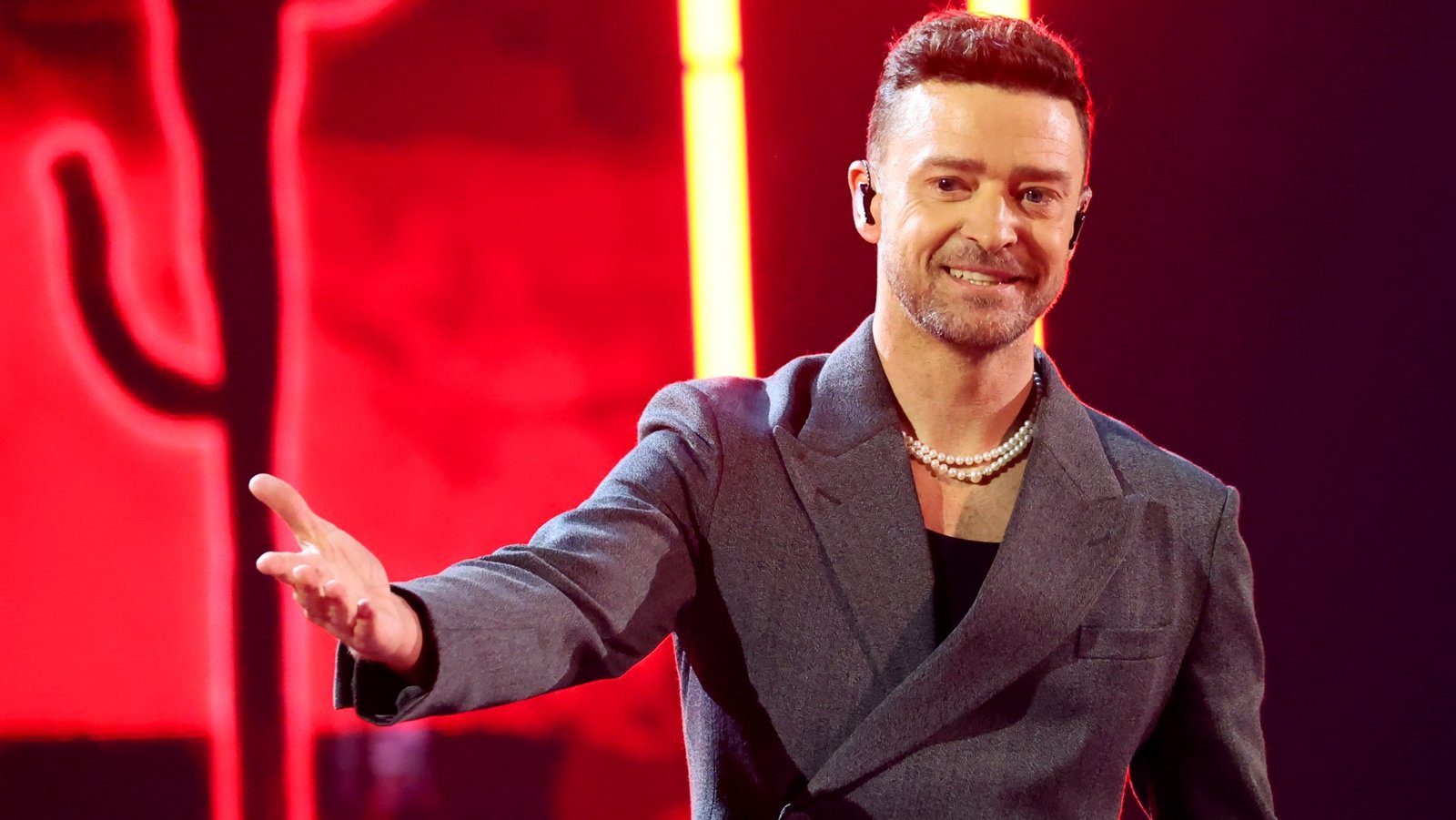
  • Justin Timberlake’s DUI Arrest Legal Battle Ends as Internet Frenzy Begins

    Justin Timberlake’s DUI Arrest Legal Battle Ends as Internet Frenzy Begins

    The controversial — and highly memeable — police body-camera footage of pop star Justin Timberlake’s arrest for driving under the influence in June 2024 on eastern Long Island was released late last week after a legal battle was waged by the singer against the small former whaling town to keep the “embarrassing” footage under wraps. The dispute led to a negotiated release and the redaction of certain moments that his attorney said were so sensitive they amounted to a major violation of the singer’s privacy.

    In June 2024, while visiting the tony beach town of Sag Harbor, Timberlake was pulled over and after a few traffic infractions, was soon arrested on a DUI charge. The singer was asked to perform a sobriety test, questioned by officers while handcuffed at the small town’s precinct, and finally placed in a holding cell alone for the night. Footage of all these moments was made public by the town’s police department on Friday, 21 months after it was sought by several news outlets via Freedom of Information Act requests.

    The release of eight hours of footage surrounding the Grammy winner’s arrest was not something the former boy band frontman turned actor — or the team behind his public image — wanted millions of people to see. As soon as the release was announced at the beginning of March, Timberlake’s legal team filed for a temporary restraining order and a preliminary injunction to prevent the town from making the footage public.

    That Monday, his attorneys met with a Sag Harbor judge, arguing that releasing the unedited footage would constitute an invasion of privacy. They requested either a block on the release or a private judicial review of the potentially embarrassing material. From a legal standpoint, they argued, this would ensure that any content not subject to disclosure under New York’s Freedom of Information Law would be excluded.

    Attorney Edward Burke Jr. argued the release would “devastate” Timberlake’s privacy by revealing “intimate, highly personal and sensitive details.” He added that it would cause “severe and irreparable harm” to the singer’s reputation by subjecting him to “public ridicule and harassment.” The footage was ultimately released Friday after a heated back-and-forth between the singer’s legal team and the village resulted in an agreement on a partially redacted version.

    “Since Justin Timberlake’s arrest, the Village and Police Department have attempted to comply with the mandates of the Freedom of Information Law.  We are pleased the litigation regarding the release of video footage related to Mr. Timberlake has been resolved and the Village is able to comply with its statutory obligation to release the material that is subject to disclosure under FOIL,” the law firm of VIncent Toomey said in a statement sent to The Hollywood Reporter.

    Attorneys representing Timberlake did not return an email and call placed by THR on Monday.

    What was released quickly set the internet ablaze over the weekend, as several moments caught fire, became memes or sparked debate. Whether police went too far in their treatment of the pop star — who, in one clip, is seen handcuffed to a table while being questioned — became a point of contention. In the footage, Timberlake himself questions the officers as they assure a baffled singer that this is standard procedure for members of the public accused of taking the serious risk of drunk driving.

    “You boys treat me like a criminal,” Timberlake tells two officers. Earlier, when first approached, he said, “I’m on a world tour.”

    “A what?” an officer asks.

    “A world tour… I’m Justin Timberlake.”

    The moment has already become a viral sensation, with online tastemakers revisiting past controversies surrounding the singer — from the fallout of the Super Bowl XXXVIII halftime show controversy to renewed scrutiny following Britney Spears’ bestselling memoir, which reshaped public perceptions of their relationship.

    Still, the arrest’s most memorable moments — captured throughout the redacted, Timberlake-approved footage — have already delighted millions as they rapidly spread online.

    In another clip, a woman who has not been identified but was with Timberlake rushes up to officers after he is placed in a squad car. Expressing shock, she insists that Timberlake be given his cell phone.

    “Stop it. No way. Don’t say it,” she tells the officers. “You’re arresting Justin Timberlake right now? Stop it. Why?” she adds, attempting to get a moment with her friend. “Can you guys please just do me a favor, because you loved ‘Bye Bye Bye’ or ‘SexyBack’?”

    During a sobriety test outside his vehicle, Timberlake appears visibly inebriated — though not incapacitated — after being pulled over for drifting into oncoming traffic and missing a stop sign. In what likely sealed his fate that night, body-cam footage shows him unable to complete a simple heel-to-toe, nine-step walk.

    A moment of levity comes when Timberlake is handed a booking form. After examining it, he turns to an officer and exclaims, referring to his listed race: “White?!” The moment plays awkwardly, highlighting his apparent surprise at an interaction with law enforcement that many people of color experience far more frequently.

    But the footage’s darkest moment comes when Timberlake is placed in a holding cell at the local police station. As the heavy door begins to close, he asks officers if they will keep the light on.

    According to reports, during the first quarter of 2025, an average of 37 people were killed each day in drunk-driving crashes.

    In the summer of 2024, a Suffolk County judge accepted Timberlake’s guilty plea as part of a deal that lessened his punishment and allowed the pop star to avoid further jail time. As part of his plea deal, the singer agreed to 25 to 40 hours of community service and to pay a fine.

  • Spotify Lays Off 15 Staffers In Podcast Division

    Spotify Lays Off 15 Staffers In Podcast Division

    Spotify has laid off about 3 percent of staff in its podcasting group.

    The layoffs Monday impacted 15 positions across The Ringer and Spotify Studios. The changes are being described as improving the unit’s execution and speed, rather than as a cost-cutting matter, according to a person familiar with the matter. 

    Overall, the goal is to flatten the structure of the unit, and give creative leads more direct control, the source said. 

    “Spotify does not comment on staffing shifts,” a spokesperson for Spotify said when asked for comment. 

    As part of the layoffs, the Ringer podcast New York, New York With John Jastremski will be ending. Andrew Gruttadaro, special projects lead at The Ringer, and staff writer Miles Surrey, both wrote on social media that they had been laid off. 

    “It’s impossible to sum up nine years in a tweet but: I worked on so many things — profiles, theme weeks, special projects—that I am incredibly proud of,” Gruttardo wrote on X.

    Spotify has been growing overall user numbers, reporting 751 million monthly active users in its most recent quarter, an increase of 38 million, marking the highest number of net adds in Spotify’s history, and pushing heavily into a video podcasting strategy, including inking a deal with Netflix.