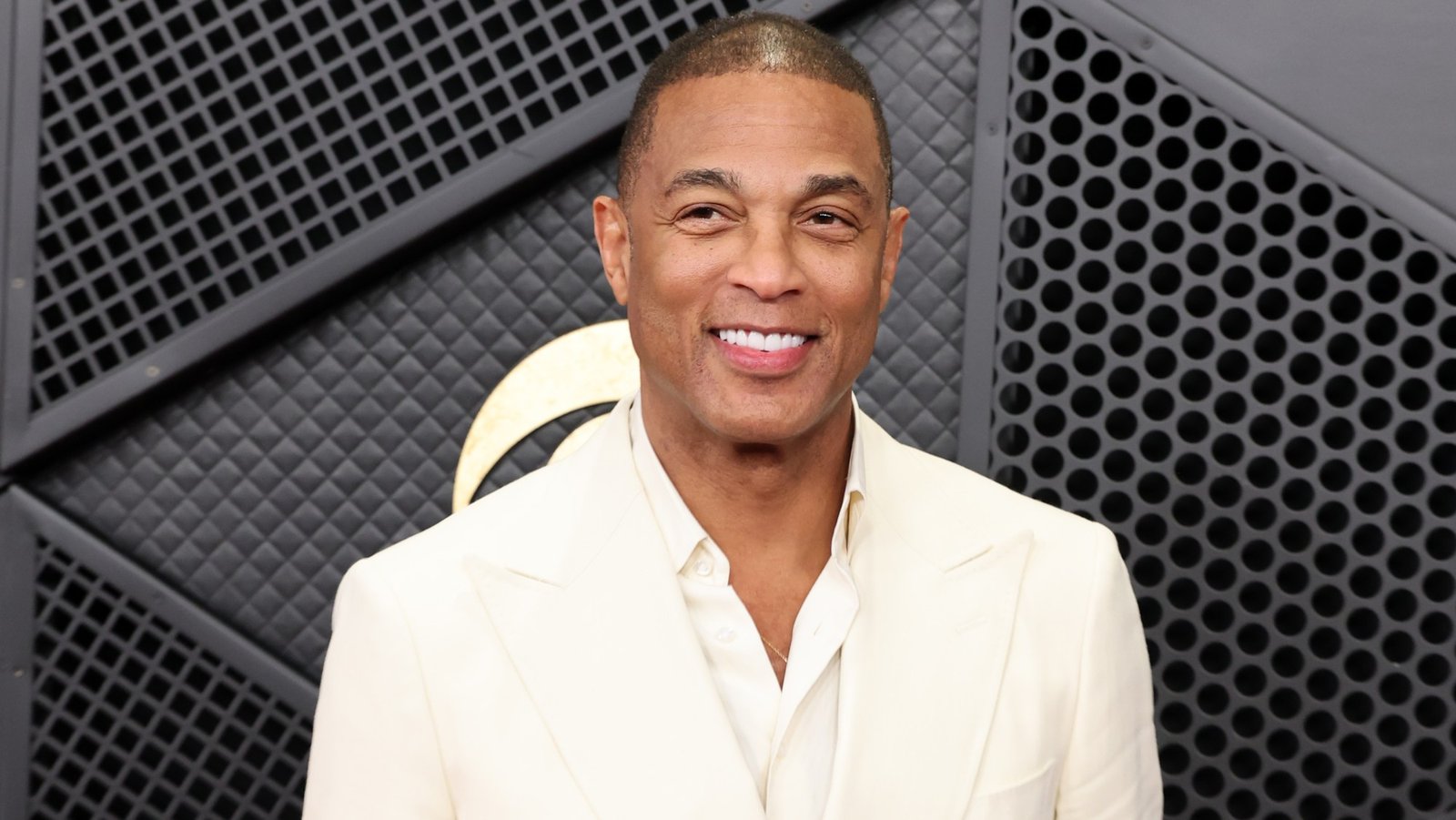
With help from presenting sponsor Gilead Sciences, the event will take place at the Rainbow Room at Rockefeller Center and be hosted by CNN’s Laura Coates. The honoree program will fete MAC’s charitable arm, Viva Glam, veteran journalist Don Lemon, ETAF’s own Tim Rosta, and Christie’s Marc Porter and Heather Barnhart, all singled outfor their contributions to HIV/AIDS awareness and advocacy.
MAC Viva Glam will receive the Elizabeth Taylor Legacy Award for its “decades-long commitment to HIV/AIDS, LGBTQIA+ rights and women’s health,” per the org. Since 1994, the charitable arm has raised north of $540 million by donating 100 percent of the selling price of its Viva Glam lipsticks to nonprofit partners like ETAF.
Rosta serves as founding executive director of Lifebeat, a program of ETAF that mobilizes the music and entertainment industries to support HIV/AIDS prevention and treatment. Rosta previously served on MTV’s Staying Alive Foundation board for more than 20 years.
Porter and Barnhart of Christie’s are being singled out for their philanthropic leadership in supporting HIV/AIDS-related causes. Porter is chairman of the Americas while Barnhart is global head of client strategy and business development. Together they’ve helped support ETAF by utilizing opportunities around auctions and events.
Lastly, Lemon, the longtime CNN anchor who now works as an independent journalist, will be feted with the Elizabeth Taylor Bold Voice Award for his “unwavering commitment to raising awareness about HIV and combating stigma.” He served as the 2025 champion for ETAF’s HIV Is Not A Crime Campaign. News of his award comes on the heels of being arrested over his reporting of an anti-ICE protest at a Minnesota church.
The Pitt, HBO Max’s widely lauded hit series that has repeatedly mirrored reality, including a recent timely season 2 ICE storyline, got the London spotlight on Tuesday evening. Tied to Thursday’s U.K. and Ireland launch of Warner Bros. Discovery (WBD) streamer HBO Max, the first episode of the medical procedural screened in central London, followed by a discussion between HBO and HBO Max chief Casey Bloys and The Pitt star and executive producer, and former ER actor, Noah Wyle.
Created by R. Scott Gemmill, the series stars Wyle as Dr. Michael “Robby” Robinavitch, who leads an understaffed, underfunded emergency room set in Pittsburgh. The show has developed a reputation for accurately portraying the world of healthcare workers and having its fair share of episodes that closely resemble what is happening in the real world.
Coinciding with the launch of HBO Max in the U.K., The Pitt will begin streaming in the market on Thursday, March 26, with all episodes of season 1 and much of season 2, which is still rolling out in the U.S., dropping at once. The streamer will be available in the U.K. directly via its URL, as well as via launch partners Sky and Prime Video.
On Tuesday evening, Wyle expressed his hope that the series would also touch a nerve in the U.K., despite the country’s healthcare system being different from that in the U.S., making it “frustrating for totally different reasons.” About the U.S., the star said: “Our system at the moment is laden with the insurance companies being the intermediary … and care being predicated by the algorithm that the insurance company dictates. So it’s really become a profit-driven, quality-of-care-diminishing system. And I think it’s really enviable that that’s not part of your conversation” here in the U.K., where the National Health Service, or NHS, is the publicly funded system that provides comprehensive free care.
Concluded Wyle: “I personally think we need some sort of national healthcare service in the United States. We need universal coverage for everybody.”
The star and executive producer also discussed how The Pitt takes audiences inside the E.R. “Everything is geared towards it being a voyeuristic experience for the viewer, kind of analogous to being in the back seat of a patrol car going on a ride-along, or being embedded with a combat unit in battle,” he explained. “And it’s an endurance test on the viewer, just like it is on the characters. So that makes it an interesting relationship.”
He continued: “We’re working in real time, shooting 360 degrees. It’s very kinetic, it’s very active, and it’s the closest to doing live theater that you can work with a camera.”
Wyle also shared on Tuesday evening in London that “one of the gratifying things about season two is that we realized that we don’t need a big deus ex machina plot device to keep this engaging, that there is something really fascinating about watching everyday people try to get through the course of their day, beset by all the trials and tribulations that come over the course of their day.” And he offered: “If that is satisfying television, then this show could run forever.”
The medical drama is produced by John Wells Productions with Warner Bros. TV. Gemmill, Wyle and John Wells executive produce alongside JWP’s Erin Jontow, Joe Sachs, Simran Baidwan and Michael Hissrich.
The Pitt returned to HBO Max in the U.S. almost exactly one year after it premiered, with new episodes of the 15-episode season dropping weekly ahead of the April 16 finale. The first season of The Pittwon five Emmys, including for best drama series, best actor for Wyle and best supporting actress for Katherine LaNasa.
The hit medical drama was renewedfor season three ahead of its season two premiere. Bloys asked Wyle about the status of season 3, saying: “You are writing season three right now, and then you’ll start producing. Talk a little bit about the process for coming up with the season. … When will it get on its feet?”
Replied Wyle: “Very soon, boss. We are in the process of writing character arcs for season three for everybody. It’s a very interesting show to break because, unlike a lot of shows where there are 22 episodes that may play out over a calendar year, this is 15 hours of one day. So you’re painting with a much finer brush. For a character’s arc, it’s not really enough to go through the courtship of a romance, but it’s enough to get your head turned. These are really small arcs that happen in the course of a day, but can be really satisfying if you’re engaged with that character.”
Bloys also asked Wyle about his medical instincts after playing a doctor for 23 years, only for the star of The Pitt to share how he helped KPop Demon Hunters producer Michelle Wong at the Critics Choice Awards. “She slipped out of her SUV and hit her head on the ground really hard, and I was the only one around,” Wyle recalled, before quipping that “delusion kicked in.” Concluded the star: “She had a little cut on her elbow. Somebody handed me a Band-Aid, and I felt very medical.”
Chip Taylor, the singer and member of the Songwriters Hall of Fame who laid the groundwork for “Wild Thing” by The Troggs, “Angel of the Morning” by Juice Newton and “Try (Just a Little Bit Harder)” by Janis Joplin, has died. He was 86.
Taylor died Monday night in hospice care, according to an Instagram post from Grammy-winning singer Billy Vera. In 2023, he underwent treatment for throat cancer, which he wrote and sang about on his album Behind the Sky, released in February 2024.
One of Taylor’s older brothers is Oscar-winning actor Jon Voight, and one of his nieces is Voight’s daughter, Oscar-winning actress Angelina Jolie.
The much-appreciated Taylor sang, played guitar and recorded some two dozen albums during a remarkable six-decade career — that is, when he was not carving out a living as a professional gambler.
He started out in a rockabilly band born, not in the South, but in his hometown of Yonkers, New York, then spent time as a writer and producer at April Blackwood Music, the publishing arm at CBS, where he signed Vera and James Taylor.
Taylor’s expansive songwriting résumé also included “I Can’t Let Go,” recorded by frequent collaborator Evie Sands, The Hollies and Linda Ronstadt; “I Can Make It With You” (The Pozo-Seco Singers, Jackie DeShannon); “Welcome Home” (Walter Jackson, Dusty Springfield); “Sneakin’ Up on You” (Peggy Lee); “On My Word” (Cliff Richard); and two tunes performed by Vera and Judy Clay, “Country Girl City Man” and “Storybook Children.”
“I’m the kind of writer who doesn’t think too much about what he’s writing about,” he said in 2000 of his approach to music.
Taylor’s first big hit was the rock anthem “Wild Thing,” which the British group The Troggs took to No. 1 in July 1966 and the Jimi Hendrix Experience performed the following June at the Monterey Pop Festival. When Hendrix was through with it, he famously set his guitar on fire.
“I think The Troggs’ record was a right funky record. You couldn’t beat that,” Taylor noted in a 2006 interview. “It was like the demo, except they played it with an electric guitar. The feeling was exactly the way it should have been. To me, that was the start of punk.”
“Angel of the Morning,” a song about premarital sex, was first recorded by Sands in 1967 before Merrilee Rush & the Turnabouts’ version made it to No. 7 on the Hot 100 in June 1968. Thirteen years later, Newton’s take sold more than a million copies and peaked at No. 4 as the first country song to play on MTV.
(Fun fact: Rush’s version was used in the 1999 film Girl, Interrupted, which starred Jolie in her Oscar-winning turn. Watch Taylor perform his song here.)
In 1969, Joplin recorded “Try (Just a Little Bit Harder),” written by Taylor and Jerry Ragavoy, and used it as the opening track on her debut album, I Got Dem Ol’ Kozmic Blues Again Mama!, and as a signature tune in concert.
Chip Taylor performing in 2016 in New York City.
Larry Busacca/Getty Images
The third of three boys, James Wesley Voight was born on March 21, 1940. His brothers, Barry Voight, a geologist who invented a formula to predict when a volcano will erupt, and Jon were born in 1937 and 1938, respectively.
Their father, Elmer, was a golfer who played in the U.S. Open in 1928 and 1929 and then served as the pro at the Sunningdale Country Club in Scarsdale, New York. Their mother, Barbara, was a teacher and a swim instructor.
“The three of us were very close in age, and we did all this stuff growing up,” Taylor told NPR in 2010. “Our mom and dad were very supportive of us being crazy, so we have wonderful days together.”
Taylor said his “hardcore turn toward music” came when he was 7 or 8 and his parents took him to see My Wild Irish Rose.
“I didn’t want to go to the show, but I was just mesmerized by the music,” he recalled. “I remember going back in the car that night, I didn’t want to talk, I just wanted to keep the physical feeling I felt when I heard the music sitting in the fourth row. So I felt, that night, that something changed in me.”
He became a fan of country music and Southern blues by listening late at night to a radio station in Wheeling, West Virginia, and while still a student at Archbishop Stepinac High School in White Plains, he wrote songs at the Brill Building at 1650 Broadway.
In 1957, he and his band, Wes Voight & the Town and Country Brothers, were signed by King Records, then predominately a home for Black artists.
Now known as Chip Taylor — execs at the label were worried DJs would have trouble pronouncing “Voight” — he recorded a few singles that went nowhere before moving to Warner Bros. Records in 1962, when he made it on the Hot 100 with “Here I Am.”
However, “It wasn’t any moneymaking time for me. It was still, ‘How am I going to survive to stay in this business?’” he said. “And that’s when I decided I was going to really make an effort to write for other people.”
He wrote “He Sits at Your Table,” recorded by Willie Nelson, then sent other songs to country music execs Chet Atkins and Gerry Teifer. That led to him becoming a staff writer (working often with Al Gorgoni and Ted Daryll) at April Blackwood Music.
Asked to write a song for Jordan Christopher and the Wild Ones in 1965, Taylor toldBillboard in 2016 that he “hung the phone up, started looking out the window and thinking about some girls, some wild things I had known in my life. I don’t remember which one I was thinking of at that moment, but the chorus for [‘Wild Thing’] came right to me.
“I loved the sound of the chords and the feeling of the chords. I went in the studio without it being finished and just asked the engineer to turn the lights out, and I tried to put myself in the mindset of whatever the heck I wanted to say to that girl. And it was very simple. I didn’t say much, but it felt right, it was powerful.”
He said his three favorite versions of “Wild Thing” were done by The Troggs, Hendrix and the X rendition that’s heard as Charlie Sheen arrives from the bullpen in Major League (1989).
In 1967, Taylor and Gorgoni formed Rainy Day Records and released the song “Night Owl” by the Flying Machine, a group that included James Taylor. The singer, however, would depart to become the first non-British act to sign with The Beatles’ Apple Records.
Other artists covering Chip Taylor’s songs included Frank Sinatra, Waylon Jennings, Barbara Lewis, Lita Ford, American Breed, Lorraine Ellison, the Bobby Fuller Four, Marshall Crenshaw, The Fleetwoods, Emmylou Harris and Anne Murray.
Taylor recorded seven solo albums in the 1970s, included the gem “Last Chance,” and appeared in Jonathan Demme’s Melvin and Howard (1980) before stepping away from music in 1981 when he said Capitol Records refused to promote his single “One Night Out With the Boys,” which he thought was a sure-fire hit.
He then went from a part-time gambler to a full-time one, with horse racing and card counting, which got him banned from many casinos, his specialty. “To say did I make a lot of money, could I have survived and just lived with that? Yeah, I could have,” he toldCBS Sunday Morning in 2008.
Taylor resumed his music career in 1995 and launched an independent label, Train Wreck Records, in 2007, intimate, Americana tunes with the likes of singer-violinist Carrie Rodriguez, guitarist John Platania, bassist Tony Mercadante and singer-fiddler Kendel Carson.
His 2011 children’s album, Golden Kids Rules, featured his granddaughters Kate, Samantha and Riley. And after he was inducted into the Songwriters Hall of Fame in 2016, they all took the stage to perform “Wild Thing.”
In addition to his brothers and granddaughters, survivors include his wife, Joan (they first married in 1964, got divorced and remarried), and his children, Kelly and Kristian.
“I just try to let my spirit go someplace,” he said in 2010. “And then I try to catch up to it, to find out where we’re going with it.”
From left: Brothers Jon Voight, Chip Taylor and Barry Voight gathered before Taylor was inducted into the Songwriters Hall of Fame.
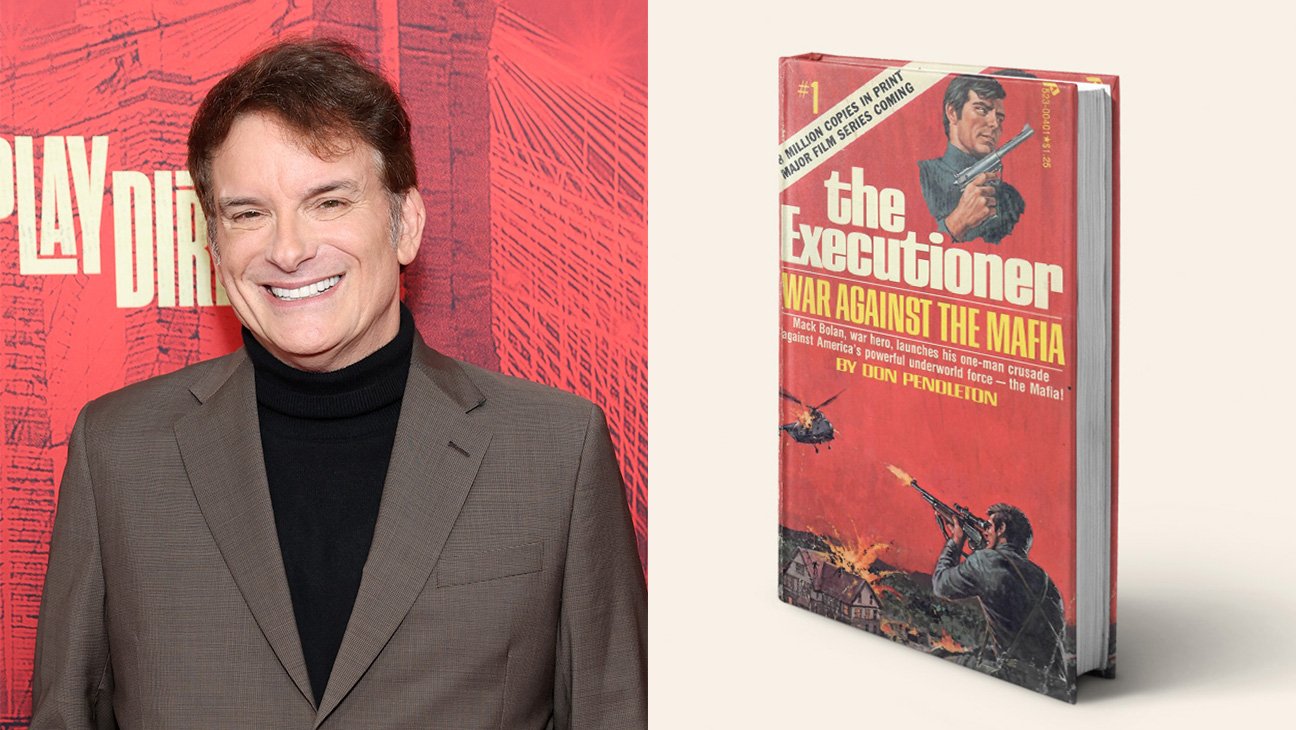
Don Pendelton’s The Executioner book series is taking another run at the big-screen.
Sony Pictures has picked up a testosterone-fueled creative package that sees Lethal Weapon and The Nice Guys‘ Shane Black reteam with veteran action producer Joel Silver to adapt the action-adventure paperback novels. The package pick-up happened as Sony secured the complicated screen rights to the Executioner books, putting them in one house for the first time in decades.
Black will write, with an eye to direct, the script with frequent collaborators Anthony Bagarozzi and Charles Mondry. Silver will produce alongside Angry Films’ Don Murphy and Susan Montford, who have spent the last several years steering the complicated rights of Pendleton’s creation.
Executioner was a pulpy book series that told the muscular and bullet-filled adventures of Mark Bolan, a sniper turned one man army fighting against the Mafia, the KGB, terrorists and cyber-criminals, or whoever were the bad guys of his latest book’s era.
Initially the books were written by Pendleton but later ghost writers were hired as Pendleton licensed out the books, which at their height were being churned out upwards of two a month and in the end numbered 464 books. The series ran from 1969 to 2020 (Pendleton died in 1995), selling hundreds of millions copies worldwide, spawned spin-off book lines, a magazine and comics.
Hollywood had long tried to adapt Bolan’s adventures. William Freidkin made an attempt that would have seen Sylvester Stallone play Bolan. Burt Reynolds and Steve McQueen were also involved in certain iterations.
Screenwriter Shane Salerno tried to set up an adaptation at Warner Bros. in 2014 with Bradley Cooper attached to star but that was destined to fail from the outset. According to several sources, he only had part of the rights in his hands as Sony has had domestic screen rights to the books for decades.
But this new deal sees all the rights line up under Sony’s umbrella, hopefully paving a clear runway.
The Executioner deal is a full circle moment for Silver, who tried to get a movie off the ground in the early 1990s. And Black is a dime store paperback and pulp fiction aficionado, with the Bolan stories among his favorites.
The reunion of Black and Silver is a tantalizing one. As writer and producer, the pair respectively count classic and well-remembered action movies Lethal Weapon, The Last Boy Scout, Kiss Kiss Bang Bang, and The Nice Guys among their collaborations. (The duo also worked together on Black’s Amazon movie Play Dirtybefore the producer was let go over claims of verbal abuse.)
Bagarozzi and Mondy, meanwhile, are also frequent collaborators of Black’s. Bagarozzi co-wrote Nice Guys with Black and co-wrote Dirty Money with both Black and Mondry. Mondry and Bagarozzi also co-wrote the Jake Gyllenhaal-starring reboot of Road House, which Silver producer.
Murphy, one of the producers of the long-running Transformers franchise, and Montford are producers behind the upcoming edgy horror movie Faces of Death, which IFC/Shudder open April 10. Their Angry Films banner is also developing a live-action feature adaptation of horror video game Poppy Playtime and classic pulp hero Buck Rogers, both with Legendary.
Pendleton’s estate is repped by Joel Gotler at Intellectual Property Group, which also reps authors such as Jeffrey Archer, James Ellroy, and Micheal Connelly.
Black is repped by WME, Greenlit Management and Goodman Genow. Bagarozzi and Mondry are also repped by WME, Greenlit Management and Goodman Genow.
Kevin DiCicco, who as the owner of the basketball-playing golden retriever named Buddy helped tip off the lucrative, long-running Air Bud franchise, has died. He was 63.
DiCicco, who suffered from respiratory issues and had a recent bout with homelessness, died Saturday in hospice care in San Diego, his brother Mark told TMZ.
DiCicco adopted Buddy after finding him near his Sierra Nevada cabin in 1989. He trained the dog to play basketball, baseball, football, soccer, etc., and they appeared on America’s Funniest Home Videos and on installments of David Letterman’s “Stupid Pet Tricks.”
“My obsession with sport, and his obsession with ball playing, the combination of the two, created this tremendous canine athlete,” DiCicco said of Buddy in a 2024 interview.
He launched Air Bud Productions, and the first film, 1997’s Air Bud, directed by Charles Martin Smith, features Buddy as a circus dog who escapes his cruel clown master (Michael Jeter) and leads Josh Framm’s (Kevin Zegers) school basketball team to a championship.
The family-friendly movie, from Keystone Entertainment and Disney’s Miramax label, grossed $23 million on a $3 million budget and was followed by a big-screen sequel, Air Bud: Golden Receiver (1988), and direct-to-video releases in 2000, ’02, ’03, ’06, ’08, ’09, ’11 and ’12 (featuring such titles as Air Buddies, Snow Buddies and Santa Buddies). And another Air Bud film is on the way.
Buddy died in February 1998 at age 9 — he only appeared in the first film — but DiCicco bred and trained three of his offspring to keep things going.
‘Air Bud: Seventh Inning Fetch’ was released straight to video in 2002.
Buena Vista Pictures/Courtesy Everett Collection
Even though the films by some estimates have raked in more than $200 million, DiCicco said he didn’t receive much of the profits.
“They are so cleverly crafted to make sure that these films don’t really ever receive the big money,” he said. “That’s why we now find ourselves in a position of instead of enjoying those twilight years and sliding into retirement, we’re almost having to start over.”
DiCicco said he lost his job as a property manager during the pandemic, became homeless and clinically depressed and developed COPD from using medical marijuana, forcing him to use an oxygen tank to help him breathe. Money from a GoFundMe page helped him keep going.
While Jeff Probst may be the face of Survivor, one of the people most responsible for what viewers see onscreen has spent 50 seasons behind the scenes. John Kirhoffer has been with the show since inception as a co-executive producer, overseeing the iconic challenges that have become one of the series’ most defining and enduring elements.
He also created one of Survivor’s most lasting traditions: the Dream Team.
For the uninitiated, the Dream Team is a rotating group of 20somethings who test challenges before the castaways. If you’ve ever spotted mysterious knees or rogue calves in a challenge preview, those legs likely belonged to a Dream Teamer. Kirhoffer originally created the group so he, Probst, Mark Burnett and other producers wouldn’t have to run the obstacles themselves. What began as a practical workaround has since evolved into a training ground for young creatives hoping to break into television production.
On the day Survivor 50 kicked off, The Hollywood Reportercaught up with Kirhoffer who shares below the origins of the Dream Team, why Burnett might be the most competitive person alive and why — like Whitney Houston — he believes “the children are our future.”
***
How the idea of the Dream Team came about
“Season one, we had all these ideas [for challenges]. We would go to a park in L.A., any park we could find, and put together makeshift versions of these games we were going to do and test them. It was pretty rudimentary, to say the least. Then we get out on location and would start setting them up and we realized, Holy crap, we don’t have 16 designated people. I’m doing it. Mark Burnett’s doing it. Jeff Probst is doing it. And so right away I was like, We need designated people. It was us testing all these games, and nobody’s watching it. That’s part of the problem, we need to watch it to learn.
So we said, If we ever do this again, we need designated people. So the next season (season two in Australia), we went out, scouted, came back — and I’m talking to the money people saying, “Hey, I need a designated team of people to test, young people. They just have to be PAs (production assistants), and then they can also help other people and cameramen and stuff.” We never thought it would turn into the mentoring apprenticeship that it turned into. We just needed bodies. So those first dozen seasons or so, we’d go to wherever we were locally and get kids on holiday from all over the world.
We weren’t flying anybody in. We were going to get anybody we could. I would go to youth hostels and post up signs like: Needed for X amount of weeks, $200 a week, plus all your meals. That’s how it started, and then we decided we needed to give them a name. My friend Kevin McManus goes, What about the Olympic basketball team, the Dream Team? Let’s call them the Dream Team. So he named them the Dream Team — and it’s been the Dream Team ever since.”
Jeff Probst, John Kirhoffer, and Chris Marchand on the set of Survivor 50.
Getting on the Dream Team isn’t easy
“Hudson Smith, who’s a co-EP on our show, and Matt Van Wagenen, our EP, saw the mentoring potential in the Dream Team and wanted to focus on film school and get the best of the best — bring them in, let them work with professionals and watch them rise through the ranks. Supervising producer Chris Marchand [nicknamed ‘Milhouse’ by the crew] and I do most of the vetting. Matt and Hudson will then go out to colleges and talk to students, give them our information, and they write to us. I’ve spoken at schools, and anybody who’s interested to hear somebody from Survivor talk will come in. But we go through the film and TV departments.
We only have about 25 positions, usually the same number as the cast. We get a couple hundred applications. I have 175 people a year I turn down. We don’t advertise but people hear about it through word of mouth. Also, everyone [on the crew] has a niece, daughter, son, nephew, cousin — a buddy who they want that are of age and would be perfect. So you take everything into account. But every year, there’s a handful of people I’ve never met who have no association with anybody else. They just came in because they heard about the opportunity and got on.”
Being a Dream Teamer is just the first step
“Art Department and Challenges are like brother and sister. The majority of the time when the Dream Team, especially newer Dream Team, aren’t out testing things, they’re painting, helping load and unload trucks. They’re out in the field getting things together, helping out the prop and construction guys. Then we also have shadowing. Every season at the beginning of the season, we bring everybody in one by one to ask, What are you interested in? I always tell them right up front, First of all, just be a good Dream Teamer. But as you go, if you see something in television production, say, ‘Hey, I’m really interested in camera, I’m interested in audio, I’m interested in art. I want to be a producer.’ Let us know.
Brittany [Crapper] is a perfect case example. She’s a co-executive producer. She was a Dream Teamer. Now she’s at my level, we’re absolute contemporaries. And she worked for me many, many years ago. Her husband, Riley, was a Dream Teamer. Then he became our prop master, and we became friends and I was at their wedding. I’ve been to six different Dream Team weddings. Brittany and Riley have three of the 80-something Survivor babies that are out there from people who met on the show and had a family.”
A “marooning” rehearsal with Dream Teamers from season 50.
The legacy of the Dream Team
“The legacy of the Dream Team, I think, is finding talent where you weren’t initially looking. We were just looking for bodies to do something, and then you realize nobody aspires to be a production assistant all their lives. We get these young kids and they all have desires and passions and talents. We don’t look at them as a herd of labor, but as a bunch of individual potential superstars. I don’t want anybody being a PA for too many years. Move up, move up, move up.
I think it’s the responsibility of everybody who’s a boss or a manager to the people that are below them, not to just keep the good ones where they are, but to nurture them. As soon as possible, promote them up. I see people who don’t want to get rid of their production assistants because they’re such good assistants. It’s like, No, move them on, move them on, move on. Another crop of good ones will come through. I think the legacy of the Dream Team is, to quote Whitney Houston, I believe the children are the future. Treat them well and let them lead the way.”
Competing on a challenge with Mark Burnett
“One of my favorite stories from season one — it’s been a long time since I talked about this — but we had a challenge where you had to swim out, dive down and get a heavy chest. We called it In From the Deep, and we were on a sandbar out in the ocean. Back then it was probably 12 feet deep or so. We had to swim out and dive down to a really heavy chest filled with lead. There were two teams side by side and six handles. You go down, pick it up, then you walk as far as you can underwater, drop it. When you run out of breath, get some air, go back down and keep going.
Back then, 26 years ago, I was a 35-year-old surfer. I was a scuba diver. I was in pretty darn good shape. I consider myself a water guy. And Mark Burnett is the most competitive person I’ve ever met in my life. Mark and I are on one team, and some of our other friends are on another team.
We went down, we pick it up, and we’re heading towards the beach and get halfway. And I gotta go up and let go. We pop up and Mark goes, What happened? I go, What? He goes, What’s wrong? Are you okay? Yeah. Well, why’d you stop? I ran out of breath. He goes, You’re freaking kidding me. We have to win this thing.
And we’re going down and I was just dying. Finally, I could feel my head hit the surface of the water, three more steps and I could breathe. We went up and we won. And I realized, Oh my gosh, when you’re competing with Mark Burnett, you don’t stop. You just don’t stop at all. That was super fun.”
***
Survivor 50 airs new episodes Wednesday at 8 p.m. on CBS, streaming on Paramount+.
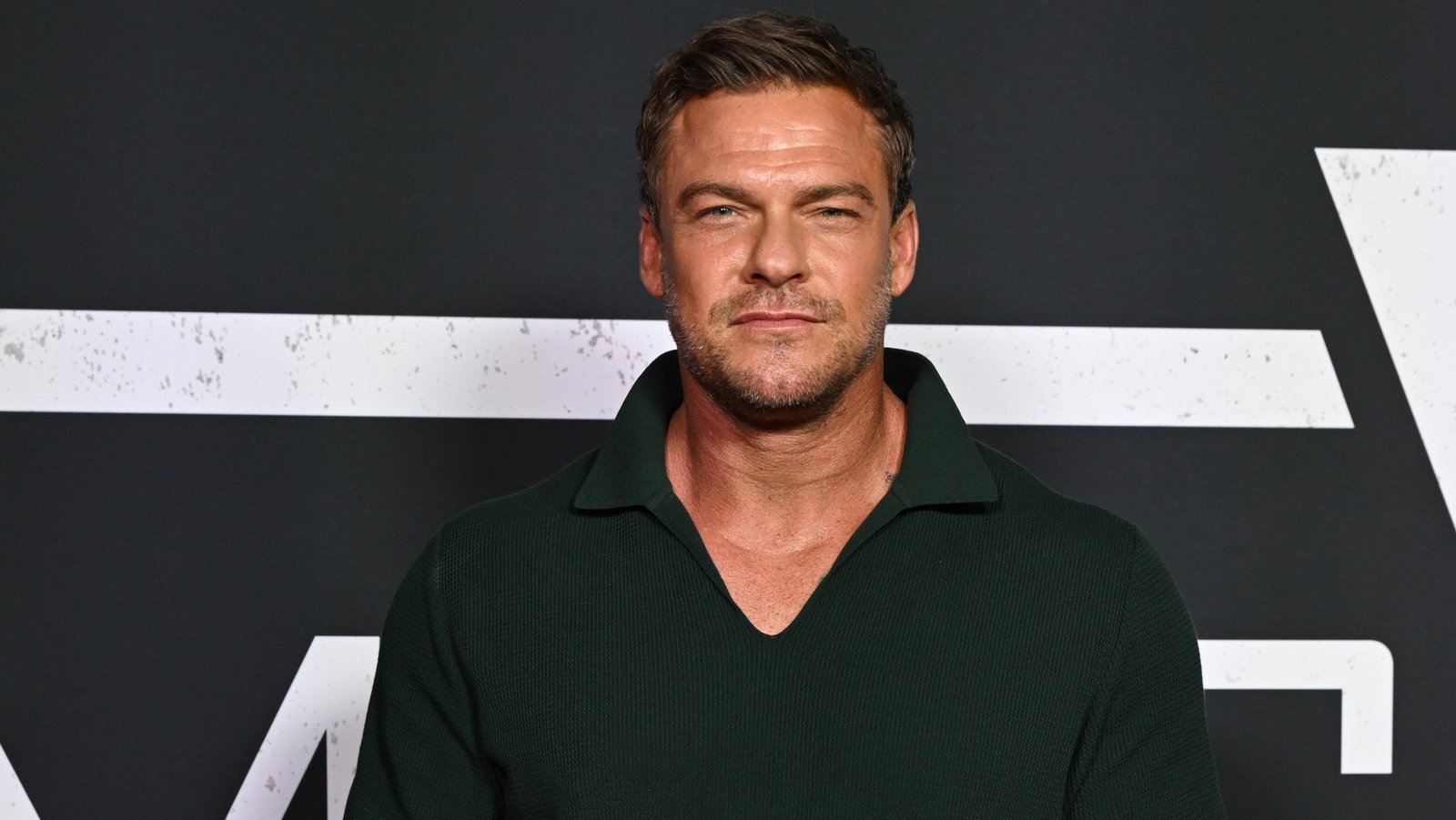
Local police concluded that the Reacher star acted in self-defense during an explosive fight with his neighbor, Ronnie Taylor, on Sunday in the Nashville suburb of Brentwood, Tennessee. As such, police have closed the investigation and will not pursue any charges in the matter, which stemmed from an altercation involving the two men over Ritchson’s motorcyle which Taylor claimed was causing a noise disturbance.
“After reviewing available evidence, including video footage and witness statements, authorities determined that no criminal charges will be pursued. Mr. Ritchson’s actions were found to be in self-defense,” Brentwood Police Captain Steven Pepin tells The Hollywood Reporter.
Pepin added that Ritchson declined to pursue any charges of his own against the neighbor who admitted that he instigated the physical contact. “Although a potential reckless endangerment charge was considered, Mr. Ritchson declined to pursue charges. With the agreement of the District Attorney’s Office, the case is now closed, and no further action will be taken,” per Pepin.
TMZ broke the story over the weekend by publishing a video that featured Ritchson in an altercation with Taylor. The man later told the outlet that the situation unfolded over two days, beginning on Saturday when he claims to have witnessed Ritchson speeding through the neighborhood on a motorcycle and causing a disturbance. Taylor then claimed that he spotted Ritchson on his motorcycle again, this time on Sunday joined by two individuals also on motorbikes, a pair that happened to be the actor’s young sons.
Taylor confronted Ritchson in the street at which point the situation allegedly turned physical with Taylor admitted on TMZ Live that he was the one who instigated the physical contact by shoving Ritchson and pushing him off his Kawasaki. The outlet also reported that Taylor “dared Alan to hit him” while Ritchson was still on the ground, though the actor tried to leave the scene until he was shoved by Taylor.
🚨NEW: Video shows how the fight started between Alan Ritchson and his neighbor
The neighbor stepped directly in front of the bike, causing Ritchson to flip over the handlebars
The neighbor previously said he told the actor to “slow it down.”
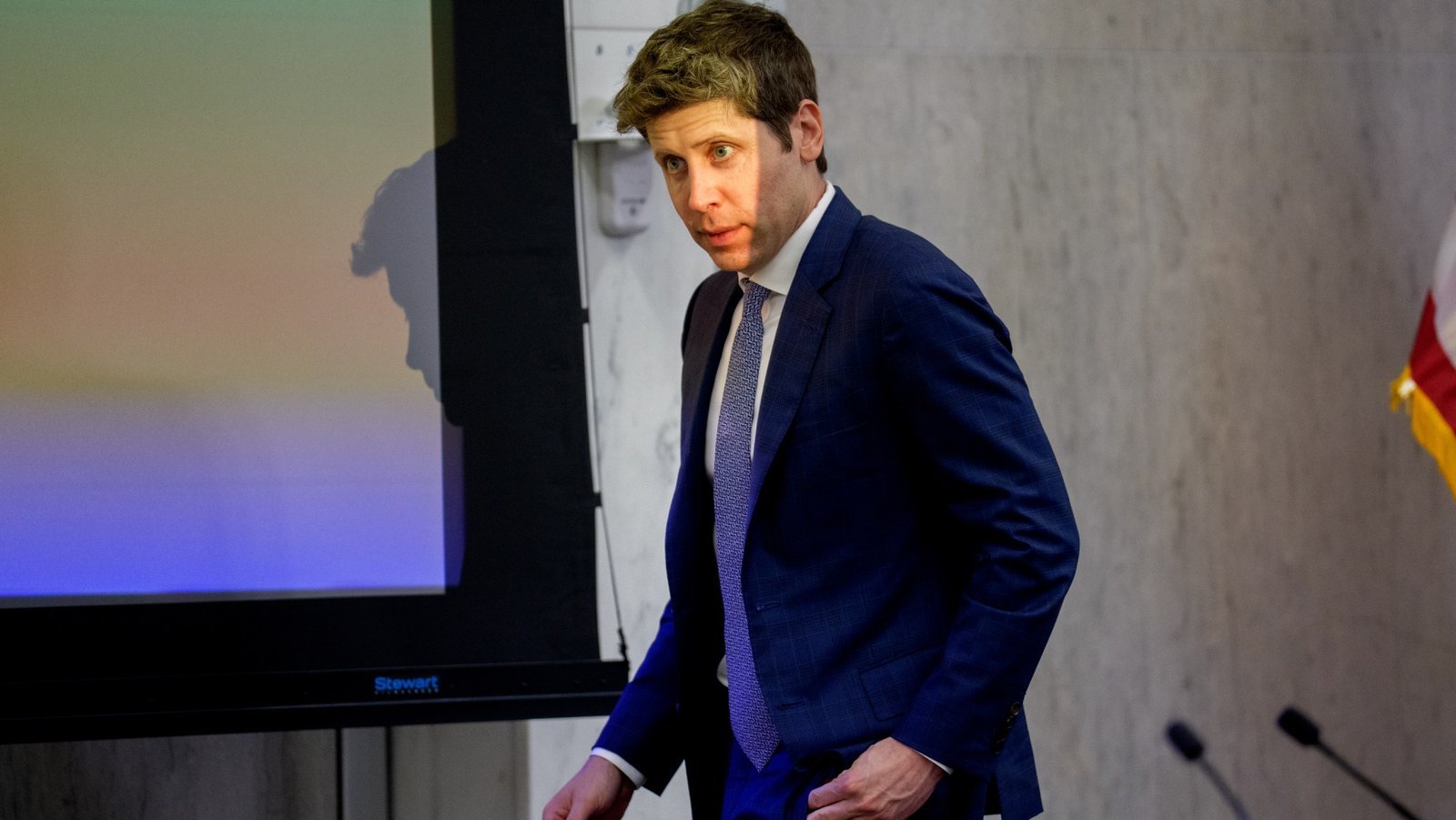
In a surprise move, OpenAI will shut down its Sora AI video app, just months after it was first launched.
“We’re saying goodbye to Sora. To everyone who created with Sora, shared it, and built community around it: thank you,” the company said in a statement. “What you made with Sora mattered, and we know this news is disappointing. We’ll share more soon, including timelines for the app and API and details on preserving your work.”
A source familiar with the matter says that Disney is also exiting the deal it signed with OpenAI last year, in which it pledged to invest $1 billion in the company and agreed to license some of its characters for use in Sora.
OpenAI, led by CEO Sam Altman, is not getting out of the AI video business (AI video is one of many tools that can take form in the ChatGPT app), of course, but it appears the standalone Sora app will be a casualty of its evolving ambitions.
Sora launched last fall, shocking and awing Hollywood with its free use of established intellectual property and known actors. The company had to backtrack a few days after it launched, giving Hollywood studios and talent more control over their IP and likenesses on the platform.
But the closure of the app also raises questions for Disney, which inked a blockbuster deal to invest in OpenAI last December, in exchange for adding some of its characters to Sora. The goal, of course, was to integrate the tech into Disney+ itself.
Now the OpenAI deal is dead, though the company could ink a deal with another AI giant.
“As the nascent AI field advances rapidly, we respect OpenAI’s decision to exit the video generation business and to shift its priorities elsewhere,” a Disney spokesperson said. “We appreciate the constructive collaboration between our teams and what we learned from it, and we will continue to engage with AI platforms to find new ways to meet fans where they are while responsibly embracing new technologies that respect IP and the rights of creators.”
However generative AI changes video development and production, it appears that Sora will end up as a footnote, rather than a game-changing piece of software.
The Yellowstone-verse got hit with a jolt of excitement when it released a first look at Dutton Ranch, the spinoff series that will return Beth Dutton and Rip Wheeler to TV this spring.
A release date and teaser trailer for the Paramount+ series with Kelly Reilly and Cole Hauser, respectively, reprising their fan-favorite Yellowstone couple came on Monday, one day after the latest episode of Marshals, which stars Beth’s only surviving sibling, Kayce, played by Luke Grimes.
Marshals is a runaway hit for CBS. The drama that launched with a major twist death airs weekly and repeated for two weeks as the top series on network or streaming in cross-platform ratings — earning a quick season two renewal from the network. And if interest in the Dutton Ranch first look is any indication, the Paramount+ spinoff is sure to be another hit for Yellowstone mastermind Taylor Sheridan when it releases on May 15 with a two-episode premiere.
Marshals showrunner Spencer Hudnut recently told The Hollywood Reporterthat the summer before flagship series Yellowstone signed off with its series finale, in December 2024, David Glasser at 101 Studios and Keith Cox at Paramount began exploring how they could continue Sheridan’s mega-hit franchise.
“David did start the conversation by asking, ‘Would you rather watch a spinoff about Kayce Dutton or Beth Dutton?’ And, because he’s David Glasser, he, of course, will have both shows on the air,” said Hudnut.
Marshals has a 13-episode season that concludes on May 24, while Dutton Ranch‘s nine-episode first season wraps on July 3. With both surviving Dutton siblings having overlapping weeks back on television, THR wanted to know if the stakeholders plan to feature the other Dutton on their series.
“If the stars aligned, that would be pretty cool to have Beth and Rip in our world,”Marshals boss Hudnut tells THR. “Luke [Grimes] and I have talked about it in the past. I think it’s really just having these two productions and trying to figure that out that would be the challenge.”
Dutton Ranch was filmed in and around North Texas beginning in August 2025 and wrapped earlier this March. Marshals also filmed from mid-2025 through the end of the year, but in Utah. Dutton Ranch‘s story is set in Texas, while Marshals plays out in Montana.
“I certainly think the Yellowstone audience deserves seeing Kayce and his sister together, again, at some point,” agreed Hednut of the possibility of seeing Beth at some point. “They ended Yellowstone at a really good place, and they both have lost so much family that it would seem like their bond would be even stronger than ever.”
Christina Alexandra Voros, an executive producer on Dutton Ranch who directed multiple episodes, including the premiere and finale, shares the excitement. “There’s so much potential in having all of these spinoffs in the universe, you would love to see what could come of that,” she said when speaking to THR recently for The Madison, the Sheridan drama starring Michelle Pfeiffer and Kurt Russell that recently released its six-episode first season. “Everything is sort of its own satellite in a way. But I’m down for synergy.”
Voros, who has directed many episodes of Yellowstone, said that working on Dutton Ranch felt like being back at the Yellowstone ranch. Much of the crew came from Yellowstone, and next will travel along with her to Sheridan’s Tulsa King spinoff series, Frisco King. “Kelly and Cole always feel like going home for me. We have been through so many battles together, they’re like a brother and sister to me,” she said. “I feel so lucky to be able to continue to tell stories with them.”
Meanwhile, Yellowstone ghosts will continue to haunt Kayce as Marshals continues, including the sins of his family — which very much involve Beth and Rip. “Given how successful and how popular that show was, and just the richness of Kayce’s backstory and the Dutton backstory — and we’re still in Montana; he’s still on the same ranch that he was all of Yellowstone, in a corner of it — it would be really foolish to turn our back on that,” Hednut previously told THR about keeping Yellowstone lore in Marshals. “We will always have that connective tissue to Yellowstone. It’s what makes the show unique, so I think we will always try to service that. Between Rainwater [played by Gil Birmingham] and Mo [played by Mo Brings Plenty] and Kayce, I would be foolish to not continue to tap into that.”
Netflix is none too pleased with a claim being made by stand-up comic Mark Normand.
Normand recently told an anecdote on his Tuesdays with Stories! podcast about the streamer’s handling of a sensitive joke from his new special, Mark Normand: None Too Pleased.
Normand claimed Netflix executives insisted he not promote a joke about Muslims on social media, saying it would be too dangerous for the company.
“We got to do a conference call,” Normand says. “There’s 18 Jews on there with a speakerphone and my Jews. And they go, ‘Yeah, bad news. We reviewed the special again, we’d like you to take out the Muslim joke.’ I go, ‘Oh, why?’ And [they] go, ‘Well, the last time a comic did a Muslim joke, we got bomb threats. We got death threats. They said they were going to kill us. They ruined the whole studio, blowed the place up to smithereens. So we’d like to not use the Muslim joke.’ So I was like: I gotta fight for the joke here.”
Normand then says the executives backpedaled, or perhaps clarified, they they didn’t want to remove the joke from the special, but only from a social media promo. “They said, ‘We’ve got to get it off socials … socials is where all the shit starts.’”
Continued Normand: “I was like, ‘Okay, okay, I don’t love it, but okay. I will take it off on one condition: I want you to admit on this call they’re a dangerous people. You gotta admit it, or I’ll post again.’ I mean, I’m half joking … and they go, ‘Well, we’re not going to do that.’ And I’m like, ‘Why not?’ ‘Well, that’s offensive.’ And I go, ‘I just need you to say it out loud. I need acknowledgement’ … Like we’re all signaling, we’re all virtuous, but you don’t actually act that way, right? And I think this is a perfect example of that. ‘Hey we’re scared.’ Why are you nervous? That’s what I was getting at. So they admitted it.”
But a Netflix source strongly denies most components of Normand’s story. The kernel of truth, the source said, is “we advised him that we’re a global company and to be careful with the clips and jokes he used to promote the special on his own social channels.” But the source says the idea that a Netflix executive would portray Muslims as a dangerous threat on a conference call, let alone verbally agree with Normand that they’re a “dangerous people,” is “not true, not correct, completely false.” What’s more, the source says Normand wasn’t even on the call, only his reps. So the idea of a back-and-forth dialogue between Normand and the executives didn’t happen (“It’s an embellishment”).
Generally speaking, Normand playfully mocks all sorts of different groups rather equally. In case you’re curious, the joke — if you don’t mind a joke spoiler — goes like this: “All my friends with kids are just telling me horror stories about theirs. One of my friends has a teenage daughter, she’s like going through all these phases. First she went through a promiscuous pothead phase. Now she’s going through a Muslim phase. I was like, ‘Hey, she slept with a Muslim, that’s not bad. Now she’s on her knees five times a day for a different reason … He’s like, ‘Yeah, I guess, but you think she’ll stop smoking weed?’ I was like, ‘Well, she’s a Muslim woman. She could still get stoned.’”
Normand then comments, “Uh-oh, a Muslim joke! You laughed at the Jew shit, just trying to keep it even.”
A rep for Normand had no immediate comment. Here’s the trailer for his special: