Tag: Deadline News

  • Donald Trump Says LeBron James Is “Maybe A Racist” After 76ers Move & Prefers Michael Jordan: “I Only Like People Who Like Me”

    Donald Trump Says LeBron James Is “Maybe A Racist” After 76ers Move & Prefers Michael Jordan: “I Only Like People Who Like Me”

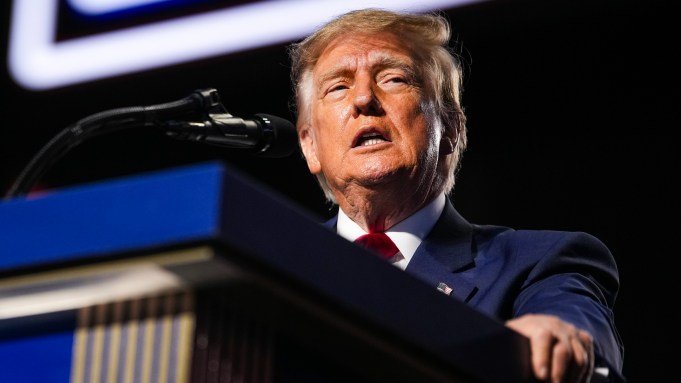
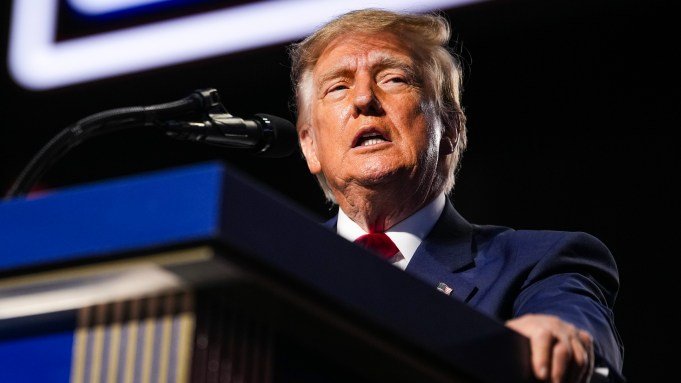
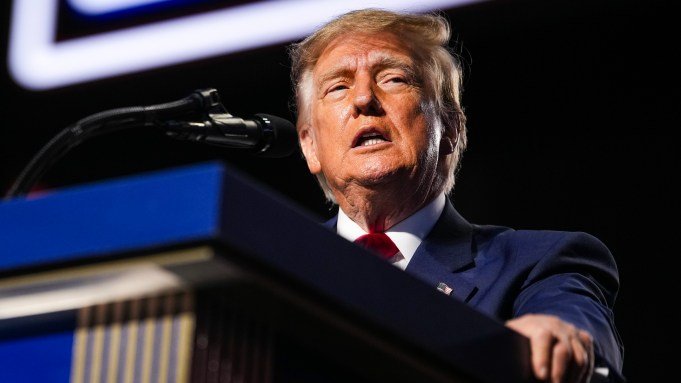
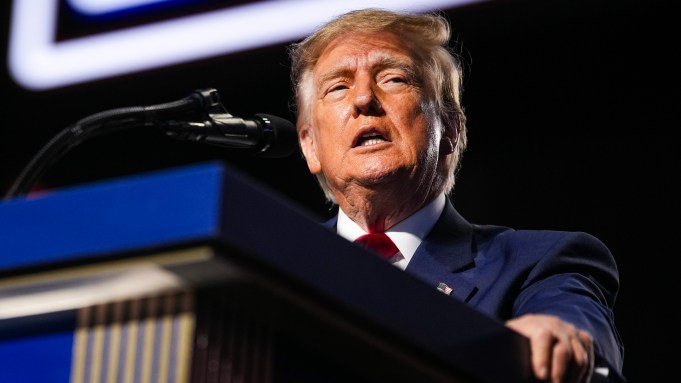
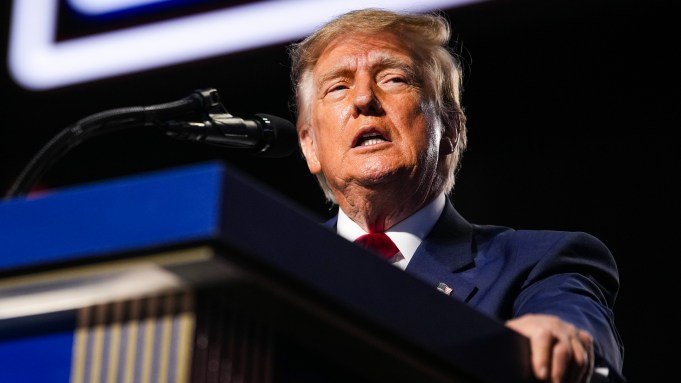
    Donald Trump is weighing in on LeBron James signing with the Philadelphia 76ers as he continues his NBA career after leaving the Los Angeles Lakers.

    During a press conference Friday at the White House, a reporter asked Trump where he stood on the James versus Michael Jordan debate.

    “Well, Michael Jordan is a guy who is a friend of mine — play golf with him. He’s a really good guy,” Trump said.

    He continued, “I think LeBron is… Maybe he’s a racist. Maybe he doesn’t like Trump. I don’t know, but I only like people that like me. So I would say Michael Jordan all the way.”

    James has been open about his political choices, voicing his support for Joe Biden and Kamala Harris in the 2020 election; for the 2024 election, James endorsed Harris in her presidential run. Claims that Jordan endorsed Trump for the last presidential election were debunked by his management team, who said “there is absolutely no truth” that the former NBA star publicly endorsed a candidate.

    James made news earlier in the day after he confirmed he was headed to the 76ers for “a chance at the feeling of winning another championship.”

    “I thought I was done when the season ended. I wasn’t ready to announce it, and I knew I needed some time to really decide, but I was pretty sure I played my last game,” James posted on X. “I was honest at that last press conference when I said I needed to look at myself and decide if I still love this game. I still truly love this game, and I have more to give.”

    ESPN reported that James signed an $8 million, two-year deal with the 76ers. The basketball star made almost $53 million playing with the Lakers last year.

    Watch Trump make the comments about James in the video below.

  • Paramount-WBD Merger Opponents Cheer Legal Delay, Stocks Slide As Industry Absorbs Latest Plot Twist

    Paramount-WBD Merger Opponents Cheer Legal Delay, Stocks Slide As Industry Absorbs Latest Plot Twist

    After Friday’s delay in the Paramount-WBD antitrust lawsuit, shares of both media companies slid in after-hours trading, foes of the merger exulted and observers tried to process the latest twist in the merger saga.

    California Attorney General Rob Bonta hailed the agreement, under which Paramount pledged not close the $110 billion deal before June 1, 2027, or a legal determination of the suit’s merits, whichever comes first. The pact is “great news for audiences, movie theaters, and the many people who write, build, and create the art, news, and entertainment so many of us enjoy,” he said in a statement. “We’re eager to continue to make our case in court and celebrate another tremendous win in our effort to ensure this unlawful merger never sees the light of day.”

    During a press briefing on Zoom, activists who joined the fight led by the 12 state attorneys general and the Writers Guild of America adopted a pragmatic tone.

    “The power of many can beat the power of money when we organize – and this is not a done deal,” said Anjuli Kronheim Katz, executive director of the Committee for the First Amendment. “We’re not also being overly presumptive that we’re going to block this merger. It’s not a full victory, but it is an important indication of the power that we’ve built and what’s possible when we organize people. There’s a lot more to do. This is going to be hard, but it is not hopeless.”

    Peter Murrieta, secretary-treasurer of the WGA West, joined the briefing from Comic-Con in San Diego to decry the deal’s potential to “push down our compensation for writers” or cut the output of films and series. (Paramount has described the merger as “pro-Hollywood” and disputes the assertion that it will have a negative impact on workers.)

    Financial Sector Reacts

    Paramount stock touched a 52-week low on the news before closing at $8.21 and drifting down another three cents in after-hours trading. WBD shares fell almost 1% during the trading day before sagging a bit more after the session.

    The financial sector was stunned by the development, which was announced with about an hour left in the trading day. Paul Nary, a management professor and M&A specialist at U. Penn’s Wharton School, posted on X that the situation will be a “more expensive adventure” given the delay. He noted the $7.2-million-per-day “ticking fee” Paramount has promised to pay WBD shareholders if the deal doesn’t close by September 30. A breakup fee of $7 billion will be owed to WBD if the deal is abandoned.

    Paramount “clearly saw the writing on the wall” after the judge initially granted and then extended a temporary restraining order pausing the deal, Abiel Garcia, partner at Kesselman Brantly Stockinger, told Deadline. Standards for a TRO and a preliminary injunction – the stage that would have followed the TRO – are similar, he said, noting that the judge’s TRO order contained a few key footnotes working against Paramount. They included cautions that the David Ellison-led company could not address streaming efficiency as an argument in the case; and that monies due (the ticking fee) was not a reason to accelerate the proceedings.

    Had the AGs been able to win a PI, “that’s a bad look” that would have further emboldened the states, said Garcia, who began his career at the California Department of Justice as a deputy attorney general. “I think they had to do this to try to keep themselves afloat and not lose control of the schedule.”

    The AGs have said they wanted a trial date in the winter. People familiar with the case have told Paramount will likely propose a date in November.

    Most experts anticipate that Paramount will appeal to the Ninth Circuit if it loses at trial, and would ultimately look to take the case to the Supreme Court. It’s not clear that the AGs would appeal.

    The June 1 date in Friday’s agreement appears to reflect the fact that the WBD merger agreement technically expires on June 7 if the deal hasn’t closed. The parties would need a few days to figure that out.

    Regardless of the exact timetable, the milestone effort to reshape Hollywood, a story that seemed to be reaching its end just two weeks ago will now have several more drama-filled chapters.

    Girding For Battle

    By skipping the preliminary injunction process, Paramount is aiming to re-orient their case as it proceeds to trial. “Paramount is saying that they have all this evidence that markets don’t work the way the AGs are saying … They’re going to try and move away from traditional markets, how things have been defined before. It’s not an easy thing to do, but it’s doable. Markets evolve and change,” Garcia said.

    WGA leaders noted at Friday’s presser that they’ll use the time to continue to generate support, solicit testimony and further build the case.

    The ticking fee and momentum from the lawsuit‘s early traction suggest “the states will likely be in no mood to settle, at least not early on, and at least not without major concessions,” U. Penn’s Nary observed.

    While the frustrations of Ellison; his father, Larry Ellison, the Oracle billionaire and deal backer; and others in the Paramount camp have taken center stage in recent days, WBD also faces a difficult path. Already preparing for its fourth corporate ownership change in the past decade, employees at the company will experience confusion and inertia in the coming months. And don’t forget, for a while they believed they were being taken over by Netflix after the streaming giant sealed a deal last December, outdueling Comcast and Paramount in the initial bidding rounds.

    The company is “stuck in limbo for now,” Nary wrote. It “can’t make major changes to position themselves for survival if they believe the deal will fail, and can’t start the integration process/restructuring with $PSKY. From my perspective, I think this means WBD business may suffer either way, making it even more difficult for them to go back to being a reasonably well-positioned standalone firm if the deal doesn’t close, and also making Paramount’s already tough job of integrating, cost-cutting, and making this deal work if and when they do close even more of an uphill battle.”

    Now, a deal that was hurtling through the regulatory process at a remarkable pace, going from proposal to the verge of completion in about five months, has now entered into a period of stasis. Executives from both companies are set to report their quarterly earnings over the next couple of weeks, and will certainly encounter questions about having to revise their optimistic projections about wrapping up the deal over the summer.

    “The deal may still close or it may not,” Forrester Research VP Mike Proulx told the Wall Street Journal. “What we know is that the path to either outcome just got longer, messier, and likely more expensive.”

  • Paramount Agrees To Not Close Warner Bros. Discovery Transaction Until Next Year Or Until Lawsuit Merits Are Resolved

    Paramount Agrees To Not Close Warner Bros. Discovery Transaction Until Next Year Or Until Lawsuit Merits Are Resolved

    Paramount has agreed not to close its proposed merger with Warner Bros. Discovery until June 1, 2027, or until shortly after the merits of lawsuits brought by state attorneys general and the Writers Guild of America are resolved.

    The agreement is an extraordinary new development in the merger transaction, which has won regulatory approval from the federal government and European regulators.

    After a court filing spelling out the agreement came during the last hour of trading on Wall Street, shares in Paramount added to what was already a lackluster day. They fell 3.3% on the day to finish at $8.21 after touching a 52-week low of $8.17. The stock slid another penny in after-hours trading.

    Read Paramount’s agreement not to close the transaction as legal proceedings take place.

    U.S. District Judge Araceli Martinez-Olguin this week granted the states a temporary restraining order pausing the transaction for 14 days to hold a hearing on whether to grant a lengthier preliminary injunction. She later extended the TRO by another 14 days, through Aug. 17. Now both sides have indicated that they want to schedule a trial.

    California Attorney General Rob Bonta, in a statement on social media, called the agreement “a major victory for a free and fair economy, for the entertainment industry, for workers, for consumers, and for affordability.” He planned to share additional thoughts with the media at a Friday afternoon press briefing.

    Hanging over the legal proceedings has been the prospect that Paramount would be on the hook to pay a $7 million-per-day “ticking fee” to Warner Bros. Discovery for every day that the transaction does not close past Sept. 30. The agreement opens the very real possibility that legal proceedings will extend well beyond that date. There is a $7 billion breakup fee if the deal falls apart.

    In their filing in federal court on Friday, the attorneys for the parties wrote, “The transaction at issue in State of California and Writers Guild shall not close, be consummated, or otherwise be completed and Defendants will not take any steps, directly or indirectly, to integrate or consolidate their operations pursuant to the Transaction until the earlier of (1) five days after the merits determination in these matters, or (2) June 1, 2027. This stipulation and order extends to Defendants’ agents, officers, servants, employees, attorneys, and other persons who are in active concert or participation with Defendants.”

    A Paramount spokesperson said, “Today’s agreement is a significant win because the result is exactly what we have sought from the outset: a direct path to a trial based on the evidence. This is the fastest and clearest way to prove that this transaction is good for competition, good for consumers, and good for creators, a conclusion dozens of competition authorities around the world have already reached. Plaintiffs’ market definitions bear no relationship to the realities of today’s marketplace and cannot withstand scrutiny. We look forward to proving our case at trial.”

    The judge still has to sign off on the plan, but she had asked attorneys for the plaintiffs and defendants to meet to try to agree to a schedule.

    In a joint statement on the agreement, the WGA West and WGA East said, “Paramount and Warner Bros. Discovery today agreed to what the state Attorneys General and the WGA both sought from the court: the merger will be put on hold pending the outcome of the states’ and the WGA’s cases or until June 1, 2027, whichever comes first. It remains our view that this merger is unlawful, and we will continue the fight to block it.  

    New York Attorney General Letitia James, representing one of a dozen seeking to block the transaction, said in a statement, “From the workers and artists who bring stories to life to the families who buy tickets at the box office, Paramount’s illegal takeover of Warner Bros. is a bad deal for all those who count on a competitive entertainment industry. Halting this merger while our case proceeds is a critical victory in our efforts to uphold the law and protect the film and television industries. I look forward to continuing our case to stop this illegal merger.”

    The sides also agreed to scrap the current briefing schedule, as well as an Aug 3 hearing on the motion for a preliminary injunction. They also agreed to file a joint statement regarding the scheduling of a trial by July 31.

    The state attorneys general sued on July 13 to block the transaction, claiming that it would stifle competition for wide release theatrical film distribution, anticipated big budget blockbusters, and basic cable television channel licensing. The WGA filed its own suit a day later, contending that the merger would illegally limit competition for writers services.

    Paramount called the state AGs lawsuit a “flawed application of the antitrust laws and is wrong on both the facts and the law. We will vigorously defend the transaction and demonstrate that this challenge is inconsistent with sound competition policy and the competitive realities of the media marketplace.”

  • Donald Trump Says LeBron James Is “Maybe A Racist” After 76ers Move & Prefers Michael Jordan: “I Only Like People Who Like Me”

    Donald Trump Says LeBron James Is “Maybe A Racist” After 76ers Move & Prefers Michael Jordan: “I Only Like People Who Like Me”

    Donald Trump is weighing in on LeBron James signing with the Philadelphia 76ers as he continues his NBA career after leaving the Los Angeles Lakers.

    During a press conference Friday at the White House, a reporter asked Trump where he stood on the James versus Michael Jordan debate.

    “Well, Michael Jordan is a guy who is a friend of mine — play golf with him. He’s a really good guy,” Trump said.

    He continued, “I think LeBron is… Maybe he’s a racist. Maybe he doesn’t like Trump. I don’t know, but I only like people that like me. So I would say Michael Jordan all the way.”

    James has been open about his political choices, voicing his support for Joe Biden and Kamala Harris in the 2020 election; for the 2024 election, James endorsed Harris in her presidential run. Claims that Jordan endorsed Trump for the last presidential election were debunked by his management team, who said “there is absolutely no truth” that the former NBA star publicly endorsed a candidate.

    James made news earlier in the day after he confirmed he was headed to the 76ers for “a chance at the feeling of winning another championship.”

    “I thought I was done when the season ended. I wasn’t ready to announce it, and I knew I needed some time to really decide, but I was pretty sure I played my last game,” James posted on X. “I was honest at that last press conference when I said I needed to look at myself and decide if I still love this game. I still truly love this game, and I have more to give.”

    ESPN reported that James signed an $8 million, two-year deal with the 76ers. The basketball star made almost $53 million playing with the Lakers last year.

    Watch Trump make the comments about James in the video below.

  • What To Expect As Donald Trump Attends The Rescheduled White House Correspondents’ Dinner; Watch The Livestream

    Donald Trump is expected to speak around 9 p.m. ET on Friday at the White House Correspondents’ Dinner, rescheduled after the association’s traditional April event was abruptly stopped after a shooting in which a gunman breached a security checkpoint.

    At the time, Trump had called for a new dinner. In remarks at an event on Thursday, White House Correspondents’ Association president Weijia Jiang said that there was determination from the association board, members and “from people across the political spectrum who reached out and said ‘That can’t be how your story ends this year.’”

    The rescheduled event will be different from the past: Instead of the Washington Hilton, it will be in a much smaller ballroom at the Waldorf Astoria, formerly a Trump hotel. There will be no pre-dinner receptions or red carpet, and a number of new security measures will be in place.

    You can watch the livestream of tonight’s event here via C-SPAN, which will begin coverage of the arrivals and dinner at 6 p.m. ET/3 p.m. PT.

    Also during tonight’s ceremony, the WHCA will be honoring Secret Service Police Officer Victor Gonzales, who was struck in his protective vest as he responded to the gunman, who was apprehended at the top of a flight of stairs leading into the Washington Hilton ballroom. Also being honored will be the staff of the Hilton who, among other things, preserved the thousands of uneaten meals to donate to local shelters.

    The suspect, Cole Tomas Allen, has pleaded not guilty to charges including the attempted assassination of the president.

    As was planned for April, the dinner will include the presentation of journalism awards and scholarships and, in addition to remarks from Jiang and Trump, entertainment from mentalist Oz Pearlman.

    The focus also will be on the First Amendment. As was the case in the spring, there is considerable attention on what will be said about the administration’s attacks on the media, and how Trump will respond, if at all. One of the awards is to be presented to the Wall Street Journal for its reporting on bawdy letters sent to Jeffrey Epstein, including one with Trump’s signature. The president has denied that he wrote it, and sued the Journal.

    There have been more recent flare-ups that have alarmed press freedom groups. At an event at the residence of British Ambassador Christian Turner on Thursday evening, Jiang noted that the Justice Department had withdrawn its subpoenas for journalists from the New York Times, who reported on the lack of security features on the new Air Force One. “Reporters should not have to look over our shoulders, just for doing their jobs, just for doing the very hard work to inform the public,” she said.

    The White House has indicated that Trump will have some jokes, but it’s always unpredictable given his tendency to go off script. Per incoming WHCA president Jacqui Heinrich, White House Press Secretary Karoline Leavitt previewed Trump’s remarks. Leavitt said in a statement, “The President’s speech will be a combination of unifying yet vicious, and serious yet hilarious, all at the same time, if you can imagine that. One thing I can assure you, it will be entertaining.”

  • Judge Extends Temporary Restraining Order Pausing Paramount-Warner Bros. Discovery Merger

    Judge Extends Temporary Restraining Order Pausing Paramount-Warner Bros. Discovery Merger

    A federal judge extended a temporary restraining order pausing the ParamountWarner Bros. Discovery merger by another two weeks, meaning that the companies won’t be able to close the transaction at least until Aug. 17.

    U.S. District Judge Araceli Martínez-Olguín wrote on Thursday that the TRO was extended to give the parties in the case more time to set an extended schedule for legal proceedings.

    She wrote hat she “finds good cause to extend the TRO on multiple grounds, including the need to resolve two preliminary injunction motions, the parties’ disputes regarding the schedule and the proposed format of the preliminary injunction hearing, and Defendants’ stated willingness to abide by the terms of the TRO for some weeks into the future.”

    Paramount has called for a three-day evidentiary hearing before the judge, who is weighing whether to grant a preliminary injunction, which likely would halt the merger for a lengthy period of time as the legal process plays out.

    The judge called for Paramount and the plaintiffs in the litigation, a dozen state attorneys general and the Writers Guild of America, to “meet and confer” and try to “reach a consensus on a path forward.” She said that a joint report on those talks would be due on July 24.

    As of now, plans for an Aug. 3 hearing on the case are still on. The judge also wrote that the WGA, which filed its own lawsuit to block the merger, also would be allowed to participate in the hearing on that date.

    The judge’s original TRO, issued on Monday, ran for 14 days until Aug. 3. She noted in her filing that she cannot extend a TRO further. She wrote that “if the parties can reach agreement and stipulate to maintain the TRO, the Defendant companies held apart, they may agree to an extended briefing and hearing schedule.”

    More from this Story Arc

    Paramount WB

  • Justice Department Withdraws Subpoenas For New York Times Journalists Who Reported On Trump’s New Air Force One

    Justice Department Withdraws Subpoenas For New York Times Journalists Who Reported On Trump’s New Air Force One

    UPDATED, with Times and DOJ comment: The Trump administration withdrew its subpoenas to a groups of New York Times journalists who reported on the  lack of security features on the new Air Force One, a gift of the government of Qatar that was accepted by President Donald Trump.

    The Times reported on Thursday that Sean Buckley of the U.S. attorney’s office in Manhattan told a federal judge that they were “prepared to unilaterally withdraw the subpoenas at this time.” The judge, Arun Subramanian, later issued an order confirming that the subpoenas were withdrawn.

    “As stated by the Government at the hearing, to the extent that a decision is made to renew the subpoenas, the Government will come to the Court in advance of issuance,” the judge wrote.

    At a hearing, the judge expressed his opposition to the government’s efforts to obtain testimony from the reporters, including Julian E. Barnes, Eric Lipton, and Eric Schmitt, as the White House launched an investigation into the source of leaks. The DOJ also sought phone records from the reporters and their relatives.

    “Subpoenas are the last step, not the first step, but the last step,” the judge said in the hearing, per the AP.

    David McCraw, senior vice president and deputy general counsel for the Times, said in a statement, “Today’s proceeding was an important affirmation of our country’s commitment to a free press. We are pleased that the government finally conceded that the subpoenas violated the law, but they should never have been issued in the first place. The Times and our journalists will continue to report and seek the truth without fear or favor. We will not be deterred in the face of tactics like these.”

    A DOJ spokesperson said, “This judge threatened our attorneys with sanctions unless subpoenas were withdrawn, and blocked us from presenting the meticulous process of this investigation. The grand jury has a right to hear testimony from all material witnesses in a federal criminal investigation. This judge’s conduct overrides clear longstanding principles and common sense—blocking the grand jury from receiving core evidence in a national security investigation.”

    The spokesperson added, “Make no mistake, this investigation remains ongoing, and we will pursue justice against those threatening national security by leaking classified information, a serious federal crime.”

    The Times sought to quash the subpoenas, arguing that they were “brought in bad faith to punish The Times for its coverage.”

    The Times reported that phone record subpoenas were also issued to Adam Goldman and Tyler Pager, two other co-authors of the reports on Air Force One.

    The Times reports detailed security concerns about the new Air Force One, as Trump left the NATO summit in Turkey earlier this month in the old aircraft. The report included the lack of antimissile capabilities in the new aircraft, a Boeing 747-8 that was donated by the government of Qatar and later retrofitted.

    The case was closely watched by First Amendment and press freedom groups, amid warnings that the issuing of the subpoenas were efforts to intimidate journalists.

    Bruce Brown, president of the Reporters Committee for the Freedom of the Press, said in a statement, “Targeting reporters to appease the White House has reached a dead end once again in the federal courts. Judge Subramanian saw DOJ’s effort clearly for what it was: a brazen and careless government overreach.”

  • Plaintiffs Object To Nexstar Executives Serving On Tegna Board, Claiming Potential Violation Of Judge’s Injunction In Antitrust Case

    Plaintiffs Object To Nexstar Executives Serving On Tegna Board, Claiming Potential Violation Of Judge’s Injunction In Antitrust Case

    A federal judge is being asked to clarify that Nexstar is prohibited from having its executives serve on the board of Tegna, as plaintiffs claim that it potentially violates an injunction that has put a pause on the merger of the two broadcast station groups.

    A coalition of state attorneys general, as well as DirecTV, filed a motion Wednesday in federal court to clarify that the injunction “does not permit Nexstar to appoint its current or recent former employees, executives, consultants, or other personnel to Tegna’s Board.”

    In April, U.S. District Judge Troy Nunley issued a preliminary injunction to halt the merger for the time being as the legal proceedings play out. But Nexstar already had closed the Tegna transaction, so the judge required that they keep their operations separate.

    In their filing, the plaintiffs, which include the states of California and New York, cited the judge’s order that Tegna had to operate as a “separate and distinct, independently managed business unit from Nexstar,” and that Nexstar “must place and maintain internal controls and procedures to prevent the sharing of competitively sensitive information.”

    In claiming a potential violation of the injunction, the plaintiffs pointed to the presence of Nexstar CEO Perry Sook and others on the board of Tegna.

    “These Nexstar executives have already taken part in managing Tegna’s strategy: They have approved Tegna’s budget, which was developed from forecasts that surely contain Tegna’s competitively sensitive information and which would not have been shared with Nexstar is the two companies were independent competitors.” The plaintiffs also wrote that Sook has “openly touted” that Tegna operates as a “subsidiary of Nexstar,” which “in his view means that Tegna senior management must ‘report to the Board’ and can ‘have conversations’ with Nexstar executives.”

    In response to the filing, Nexstar said in a statement that it “has scrupulously complied with the Court’s hold-separate order. Tegna continues to operate independently, and Nexstar has no involvement in Tegna’s retransmission consent negotiations, content decisions, staffing, or other day-to-day operations.  Nexstar’s executives’ service on Tegna’s Board is consistent with the Court’s order and is critical to ensuring that Nexstar can continue to satisfy its financial reporting obligations while the hold-separate requirements are in place.”

    Nexstar is appealing the preliminary injunction, but the Ninth Circuit has yet to set a date for oral argument.

    The merger would give Nexstar nearly 260 stations covering 80% of the country, or the largest station group. The FCC signed off on the transaction on March 19, and the company announced the deal had closed shortly after that. The approval came less than a day after DirecTV and the state attorneys general each sued to block the transaction.

    In their filing, plaintiffs argue that “antitrust law prohibits executives of one company from serving on the board of a competing company because doing so would enable a company to influence its competitor and access its confidential information — exactly what this Court’s preliminary injunction seeks to prevent.”

    The plaintiffs also want to judge to require that Nexstar to submit regular reports on its compliance with the injunction, and that it responds to requests for what type of information Tegna’s board has reviewed, among other things.

  • Paramount Seeks Three-Day Evidentiary Hearing As Judge Considers Preliminary Injunction To Halt Warner Bros. Discovery Merger

    Paramount Seeks Three-Day Evidentiary Hearing As Judge Considers Preliminary Injunction To Halt Warner Bros. Discovery Merger

    Paramount is proposing that a federal judge hold a three-day evidentiary hearing later in August as she weighs whether to issue a preliminary injunction that would halt its acquisition of Warner Bros. Discovery as legal proceedings play out.

    U.S. District Judge Araceli Martinez-Olguin issued a temporary restraining order on Monday, halting the transaction for two weeks, while she set a hearing for Aug. 3 on a lengthier preliminary injunction. The order was issued in response to an antitrust lawsuit brought by California and 11 other states last week.

    In a filing on Wednesday, Paramount’s legal team is seeking essentially a mini-trial, to be held the week of August 17 or August 24. They also said that the company would consent to an extension of the TRO “to cover the period through a decision by the Court.”

    Paramount’s lawyers wrote that the state AGs are seeking an “extraordinary and drastic remedy” — a preliminary injunction that would pause the merger for at least eight months — without giving the company “an opportunity for a full and fair hearing.”

    They wrote that the judge “has already recognized Defendants’ proof ‘creates disputes regarding the facts’ that need to be resolved to fully analyze the competitive effects of the transaction. … An evidentiary hearing would allow the Court to do so regarding critical factual issues including market definition, real-world competitive dynamics, barriers to expansion, and incentives. Resolving these factual disputes is essential to answering the fundamental question of whether Plaintiffs have carried their burden to prove that the proposed transaction substantially lessens competition. It does not.”

    Hanging over all of this is the date of Sept. 30, after which Paramount will owe a $7 million per day “ticking fee” to Warner Bros. Discovery if the deal is not closed by then. Paramount’s legal team, led by Jeffrey Kessler, noted that in their latest brief, writing that a preliminary injunction would
    create “commercial uncertainty regarding the transaction and cost Paramount well over $1 billion in ticking fees and other additional costs.”

    The judge set a briefing schedule in which the state AGs opening brief due on Thursday, and the company response is due on Monday. The state AG reply is due on July 30. Paramount’s legal team proposed a schedule in which opening briefs would be filed on July 28, the company reply on August 7 and the AG response on August 12.

    A spokesperson for California attorney general Rob Bonta said, “We are reviewing the filing and will respond as appropriate.”

    At the hearing on a TRO last week, the attorney for the state AGs, James Weingarten, opposed an earlier Paramount scheduling proposal, which he said was intended to speed up the proceedings. “Having two experts in a food fight in a month will just waste everyone’s time and resources, if it’s even possible,” he said.

    The Writers Guild of America filed its own motion for a preliminary injunction as part of is separate lawsuit, and is seeking to align its hearing with the states on August 3. Paramount’s legal team wrote that such a schedule was “not feasible,” but that it would be possible for a later date in August.

  • Plaintiffs Object To Nexstar Executives Serving On Tegna Board, Claiming Violation Of Judge’s Injunction In Antitrust Case

    Plaintiffs Object To Nexstar Executives Serving On Tegna Board, Claiming Violation Of Judge’s Injunction In Antitrust Case

    A federal judge is being asked to clarify that Nexstar is prohibited from having its executives serve on the board of Tegna, as plaintiffs contend that it violates an injunction that has out a pause on the merger of the two broadcast station groups.

    A coalition of state attorneys general, as well as DirecTV, filed a motion in federal court on Wednesday to clarify that the injunction “does not permit Nexstar to appoint its current or recent former employees, executives, consultants, or other personnel to Tegna’s Board.”

    In April, U.S. District Judge Troy Nunley issued a preliminary injunction to halt the merger for the time being as the legal proceedings play out. But Nexstar had already closed the Tegna transaction, meaning that they were required to hold their operations separately.

    In their filing, the plaintiffs, which include the states of California and New York, cited the judge’s order that Tegna had to operate as a “separate and distinct, independently managed business unit from Nexstar,” and that Nexstar “must place and maintain internal controls and procedures to prevent the sharing of competitively sensitive information.”

    The plaintiffs pointedto the presence of Nexstar CEO Perry Sook and others on the board of Tegna.

    “These Nexstar executives have already taken part in managing Tegna’s strategy: They have approved Tegna’s budget, which was developed from forecasts that surely contain Tegna’s competitively sensitive information and which would not have been shared with Nexstar is the two companies were independent competitors.” They also said that Sook has “openly touted” that Tegna operates as a “subsidiary of Nexstar,” which “In his view means that Tegna senior management must ‘report to the Board’ and can ‘have conversations’ with Nexstar executives.”

    In response to the filing, Nexstar said in a statement that it “has scrupulously complied with the Court’s hold-separate order. Tegna continues to operate independently, and Nexstar has no involvement in Tegna’s retransmission consent negotiations, content decisions, staffing, or other day-to-day operations.  Nexstar’s executives’ service on Tegna’s Board is consistent with the Court’s order and is critical to ensuring that Nexstar can continue to satisfy its financial reporting obligations while the hold-separate requirements are in place.”