Tag: Deadline News

  • Judge Clarifies That Reporter Catherine Herridge Doesn’t Have To Pay $800-Per-Day Contempt Fines As She Pursues Supreme Court Appeal

    Judge Clarifies That Reporter Catherine Herridge Doesn’t Have To Pay $800-Per-Day Contempt Fines As She Pursues Supreme Court Appeal

    A federal judge clarified that reporter Catherine Herridge doesn’t have to pay an $800-per-day contempt fine as she appeals to the Supreme Court.

    The judge, Christopher Cooper, had imposed the fine. She had been found in civil contempt after she declined to reveal the source for her 2017 Fox News stories that reported on a federal investigation of Yanping Chen, a naturalized U.S. citizen who founded the University of Management and Technology in Virginia. 

    Last month, Supreme Court declined Catherine Herridge’s emergency effort to block the fines. But Cooper issued a minute order on Friday, writing that he intended to put the fines on hold “Through the denial of any timely-filed certiorari petition or the completion of Supreme Court proceedings should such a petition be granted.” Cooper also ordered the return of any fine payments Herridge has made.

    The stories had to do with Chen’s affiliations with the Chinese military. The FBI investigation examined statements she made on immigration forms about her work in China in the 1980s. Chen was not charged, but sued the federal government, claiming that someone leaked information about her to Herridge and Fox in violation of the Privacy Act.

  • Trump White House Uses Spider-Man Imagery To Promote ICE Deportations

    Trump White House Uses Spider-Man Imagery To Promote ICE Deportations

    The White House once again turned to pop culture in characterizing their immigration strategy, this time using Spider Man imagery to portray ICE agents as “friendly neighborhood” figures and on the heroic side of deportations.

    An Instagram post this week, features Spider-Man‘s hand spinning out a web. That leads to an image of web-covered detainees, and the message, “Criminal aliens will be caught and deported.”

    “Your friendly neighborhood ICE agents,” the message from the White House reads.

    The post comes as Sony has enjoyed runaway success with the latest in the superhero franchise, Spider-Man: Brand New Day, which has passed $1 billion at the global box office, per Box Office Mojo.

    Last year, the White House featured a meme of Donald Trump as Superman, just as Warner Bros/DC Studios released the James Gunn-directed movie. Gunn had noted in an interview that Superman was an immigrant, triggering some of the right to claim that the superhero had “gone woke.” The film grossed more than $600 million worldwide, per Box Office Mojo.

    Spokespersons for Sony and Disney did not immediately return requests for comment.

  • Spencer Pratt To The Rescue? Failed L.A. Mayoral Candidate Wants To Help Trump Save Hollywood, Supposedly

    Spencer Pratt To The Rescue? Failed L.A. Mayoral Candidate Wants To Help Trump Save Hollywood, Supposedly

    Spencer Pratt may have flamed out in his bid to be L.A. Mayor, but the reality TV enfant terrible has seemingly found a new calling — saving Hollywood with Donald Trump.

    Just days after the deeply unpopular former Apprentice host swooped into Southern California for a behind-closed-doors RNC fundraiser, The Hills alum revealed online that he sat down with Trump to discuss a 25% federal tax credit for the admittedly ailing film and TV industry.

    “Working with the President on a 25% FEDERAL film tax credit to bring back Hollywood,” wrote Pratt with an accompanying pic with Trump at the MAGA boss’ Trump National Golf Club in Rancho Palos Verdes, California on August 4.

    Just days after the deeply unpopular former Apprentice host swooped into Southern California for a behind-closed-doors RNC fundraiser, The Hills alum revealed online that he sat down with Trump to discuss a 25% federal tax credit for the admittedly ailing film and TV industry.

    In and around Trump’s orbit since he was beaten out of a runoff spot in the L.A. mayoral campaign by incumbent Karen Bass and Councilmember Nithya Raman earlier this summer, Pratt offered few details of what he and Trump could be cooking up. The former City Hall contender didn’t respond to a comment for more info Deadline left on his IG post. Also, to that, the White House did not respond to a request from Deadline today on the conversation the two men had and the apparent resurrection of a stalled federal incentives package.

    RELATED: Trump Celebrity Supporters: Famous Folks In Favor Of The 47th President

    As he has so often in the past since stepping into the political arena what ex-Palisades resident Pratt (who lost his and Heidi Montag’s home in the horrific fires of early 2025) did do was sh*t on everyone else (including Canada) and lather up the easily flattered POTUS.

    “While Gavin Newsom’s commissioner is actively outsourcing production jobs to Hungary, and his rogue AG is trying to destroy CA production companies, the adults in the room are actually trying to repatriate the most quintessential American industry,” Pratt said on IG and X with swipes at California’s $750 million incentives program and Golden State Attorney General Rob Bonta’s antitrust lawsuit against the Paramount-WBD merger. “I’m committed to saving Hollywood, and I’m very grateful for the President’s remarkable generosity and focus on this issue. He is very passionate about revitalizing the entertainment industry and we will not let Canada, or the UK or Budapest steal our lunch anymore. Speaking of lunch…best clam chowder I ever had. We discussed several other very important topics, as well. I’m humbled and grateful for all the time and discussion from the President. Unlike many other cynical doomers out there, he refuses to write off California.”

    Okay. Lots to unpack there, and not just the chowder obviously.

    On one aspect of all that, Gov. Gavin Newsom’s crew had this to say when informed of Pratt’s post and that 25% federal tax credit for Tinseltown: “You mean Gavin Newsom’s idea from last year? Go, Spencer, go!”

    In fact, possible 2028 White House contender Newsom is far from the only one long advocating for a federal tax credit for the entertainment industry since past Emmy nominee Trump’s return to power. Trump’s sworn foe Sen. Adam Schiff (D-CA) is on board for such a program, as are SAG-AFTRA, the DGA, the WGA, studio execs and industry lobby groups.

    Also pushing for an incentive up around 10-20% is Enemy of the State star and MAGA cheerleader Jon Voight.

    One of Trump’s trifecta of Ambassadors to Hollywood, Voight and some producer pals submitted a tax incentive-heavy Make Hollywood Great Again to the White House in May 2025. Even as Trump raged, as he has on numerous occasions since, for a baffling 100% tariff on movies made outside the USA, a Voight-led letter to POTUS in May 2025 praised him for “the support you have shown the industry.”

    To give a sense of the support the industry needs, jobs and production has hit bleak levels in the home of Hollywood. The pandemic, the end of the Peak TV era, the 2023 strikes, consolidation and corporate debt, high costs and changing consumer habits has seen the L.A. region lose swaths of projects to the likes of the UK, Canada and several other incentive-offering states. That loss has translated into over 40,000 industry jobs gone, vendors boarding up their storefronts and an exodus of below and above-the-line talent from the high cost of living in the City of Angels.

    In that urgent context, the missive from Voight, the guilds, and others last year also said: “We also appreciate your understanding of the need to increase domestic film and television production to bring back American jobs and write seeking your support for the inclusion of three film and television priorities in the reconciliation package currently being drafted in Congress.”

    Unfortunately, despite the best bipartisan intentions of all concerned over the last 18 months, any initiative for a federal TV and film has withered on the Executive Office and Congressional vine. With the combative midterms taking center stage after Labor Day, hurting Hollywood shouldn’t expect any real movement this year on any such federal credits or out of Sacramento …regardless of how good the clam chowder is.

  • Judge Orders Nexstar Officials Off Tegna’s Board, Clarifies That It Violates Preliminary Injunction In Antitrust Case

    Judge Orders Nexstar Officials Off Tegna’s Board, Clarifies That It Violates Preliminary Injunction In Antitrust Case

    UPDATED, WITH Nexstar comment: Nexstar officials cannot serve on the board of Tegna as an order remains in place to keep the two companies separate, a federal judge ruled on Thursday.

    U.S. District Judge Troy Nunley clarified that his preliminary injunction, issued in April, prohibited current and former Nexstar “officers, employees, directors, consultants, or other affiliated personnel” from serving on Tegna’s board. He wrote that Nexstar had to file a report within 10 days to ensure compliance.

    “It is shocking that Defendants think installing a Board of Directors comprised primarily of Nexstar executives would not create influence over Tegna management,” the judge wrote. “This undermines Tegna as an independent entity and violates the preliminary injunction.”

    The judge also admonished Nexstar for their “lack of candor,” pointing to their lack of disclosure of the fact that three Nexstar officials, including CEO Perry Sook, were appointed to the Tegna board.

    “Defendants repeatedly failed to disclose material information to this Court, declined to seek Court guidance or relief, and then publicly declared that the Court had ‘approved’ their actions,” the judge wrote.

    A coalition of state attorneys general and DirecTV sued to block the Nexstar-Tegna merger in March. In the next 24 hours, the FCC gave its greenlight to the transaction, and Nexstar closed the deal soon after that.

    Nunley later granted a preliminary injunction that requires that the Nexstar and Tegna assets and operations be kept separate.

    The plaintiffs last month objected to the presence of Nexstar officials serving on Tegna’s board, including Nexstar CEO Perry Sook.

    In his order, Nunley also ordered a set of steps to ensure compliance, including providing board minutes and other documents to the plaintiffs on a monthly basis. He also directed the parties to file a stipulation and proposed order to potentially appoint a special master to oversee compliance. The judge wrote that Nexstar’s actions “violated the preliminary injunction as clarified. Therefore, ongoing compliance monitoring and discovery is warranted in this case to ensure adherence to the preliminary injunction, particularly in light of Defendants’ lack of candor.”

    A Nexstar spokesperson said in a statement, “We will comply with the court’s order, including its requirements regarding Tegna’s Board and the compliance process going forward. We remain focused on defending the transaction on the merits and strengthening local broadcasting for communities across America.”

    Nexstar is appealing the preliminary injunction, with oral arguments expected in November or December. A trial is on the docket for next year. The company had argued that its executives must sit on the Tegna board to fulfill
    Sarbanes-Oxley Act requirements and debt agreement obligations, but the judge wrote that he was not persuaded.

    The company said in a statement last month that it “has scrupulously complied with the Court’s hold-separate order. Tegna continues to operate independently, and Nexstar has no involvement in Tegna’s retransmission consent negotiations, content decisions, staffing, or other day-to-day operations.  Nexstar’s executives’ service on Tegna’s Board is consistent with the Court’s order and is critical to ensuring that Nexstar can continue to satisfy its financial reporting obligations while the hold-separate requirements are in place.”

    The plaintiffs argued that “antitrust law prohibits executives of one company from serving on the board of a competing company because doing so would enable a company to influence its competitor and access its confidential information — exactly what this Court’s preliminary injunction seeks to prevent.”

  • FCC Removes Key Limit On Media Ownership, Raising Potential For Major Consolidation Of Broadcast TV Stations

    FCC Removes Key Limit On Media Ownership, Raising Potential For Major Consolidation Of Broadcast TV Stations

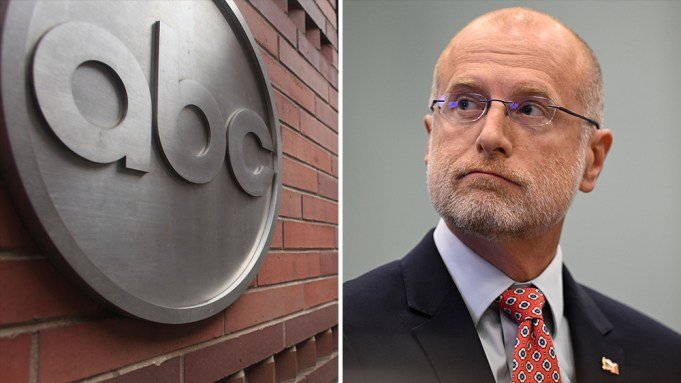
    UPDATED, with reaction: The FCC removed a key constraint on broadcasters’ ability to consolidate stations, voting to repeal an ownership cap put in place to try to limit power of any one media company.

    The FCC’s 2-1 vote Thursday was to repeal a restriction that limits companies from owning stations reaching more than 39% of TV households. But it faces a potential court challenge, amid warnings that only Congress has the authority to remove the restriction.

    FCC chairman Brendan Carr said that the move was long overdue given the dramatic changes to the competitive landscape, warning that inaction risked seeing local stations “going the way of newspapers.”

    “It is time to restore balance to the broadcast airwaves,” Carr said. “Repealing the national cap will provide essential relief for local broadcasters by restoring a healthy counterbalance to the growing leverage of national programmers.”

    He predicted that allowing broadcasters to increase scale will allow them to attract capital and boost advertising to produce news and other local programming.

    Removal of the cap — which limits any company from collecting stations that reach more than 39% of the country — has long been a goal of broadcasters, who have complained that they have been unable to scale up to compete with unregulated tech giants as they have siphoned off local television advertising revenue. The FCC move was quickly praised by the main broadcast lobby, the National Association of Broadcasters.

    Nexstar Media Group has been among the companies championing the repeal of the cap, having already obtained a waiver from the FCC’s media bureau to merge with Tegna, a transaction creating a broadcast giant with around 260 stations covering 80% of the country. The merger closed, but Nexstar has been ordered by a judge to keep the assets and operations separate amid an antitrust lawsuit brought by state attorneys general and DirecTV.

    Anna Gomez, the sole Democrat on the FCC, said in a statement today, “The large station groups positioned to grow even larger under this decision are not local broadcasters, they are national companies that own local stations and increasingly dictate what airs on them. Trading a squeeze from Big Tech for a squeeze from Big Media does nothing to protect the communities this cap was designed to serve.” She warned of shrinking newsrooms, as large station groups seek efficiencies in local operations.

    Skepticism of the FCC’s action crosses party lines. Sen. Ted Cruz (R-TX) has said that he has doubts that the FCC can repeal the cap on its own, and Michael O’Rielly, a former Republican commissioner, has said that the authority lies with Congress as it was a statute. Former House Majority Leader Tom DeLay, in a recent op-ed, wrote of how he negotiated the 39% figure in a 2004 appropriations bill. “Regulatory agencies cannot defy or modify laws enacted by Congress,” DeLay wrote for The Daily Wire.

    Newsmax CEO Chris Ruddy told a congressional hearing earlier this year that he was “prepared to litigate” over the FCC’s action, arguing that the TV industry “is too important to be handed over to a small number of conglomerates.”

    The FCC under Carr has argued that while Congress “has at times directed the Commission to change our rules, it has never withdrawn our authority under the Communications Act to regulate or change ownership limits.” In its order, the FCC claimed that Congress’ 2004 action was a directive only for the commission to “modify its rules.” The agency also cited a 2002 appellate court decision that characterized a specified percentage for the cap as a “starting point from which the Commission was to assess the need for further change.”

    Major station groups were praising the FCC’s action even before the vote. Chris Ripley, the CEO of Sinclair Broadcast Group, said on an earnings call Wednesday, “We fully expect people to challenge this order, and we think the FCC is on solid legal ground here in terms of their authority to change this rule and the rationale behind changing it. The FCC’s mandate is to deregulate over time. That was the mandate from Congress, as conditions change, and that’s what’s happening here.”

    With the cap repealed, the FCC will shift to a case-by-case review of merger transactions that otherwise would exceed the 39% threshold. Carr has said that a rationale behind removing the cap was to bolster local TV station groups in the leverage against major broadcast networks. That raises the prospect that some companies will get the greenlight and others, like networks with a national footprint, will not.

    “Congress never envisioned that local broadcast TV stations would become nothing more than undifferentiated passthroughs of national programming produced in Hollywood and New York,” Carr said on Thursday. “But if the FCC does not change course, this could become the reality in many towns and cities and counties.”

    In announcing the plans, the FCC stated, “There may be transactions that would have exceeded the limits of
    the 39% national cap that do not promote the public interest and those will be denied. On the other
    hand, there may be transactions that would have exceeded the cap that do promote the public interest
    and could gain Commission approval.”

    The FCC’s vote came around the same time that Nexstar was hosting an earnings call. Its CEO, Perry Sook, said that the repeal “will remove a certain level of uncertainty in future M&A,” and that it would allow broadcasters to “compete on the same playing field in the domestic U.S. with every other purveyor of advertising, and every other purveyor of video that we compete with that has access to 100% of U.S. households.”

    But he said that the move may not have a big impact on the Nextstar-Tegna merger lawsuit, as it’s “more about antitrust than the national ownership cap.”

    Sen. Elizabeth Warren (D-MA) warned that the FCC action was an effort to “illegally rewrite the rules to make it easier for billionaires to line their own pockets while jacking up costs and controlling what Americans watch. After rubber-stamping the Nexstar-Tegna megamerger, this looks like the Trump administration’s latest attempt to roll out the red carpet for more antitrust disasters.”

  • Judge Pauses Order For Trump To Hand Over Financial Records To BBC

    Judge Pauses Order For Trump To Hand Over Financial Records To BBC

    A federal judge stayed an order to compel Donald Trump‘s trust to provide financial documents to the BBC, which the president is suing in a $10 billion defamation claim.

    U.S. District Judge Roy Altman set aside for now a magistrate’s order that the Donald J. Trump Revocable Trust produce documents dating back to Jan. 1, 2023.

    Related Stories

    The BBC argued that the documents were relevant as Trump had claimed damages to his brands and businesses. Altman noted that Trump’s attorney no longer intends to pursue damages premised on harm to the businesses, granting the stay until the court rules on whether an amended lawsuit can be filed.

    RELATED: FCC Removes Key Limit On Media Ownership, Raising Potential For Major Consolidation Of Broadcast TV Stations

    Trump sued the BBC in December over edits that were made in a documentary about the January 6th attack on the Capitol.

    In the documentary, Trump: A Second Chance?, a clip is shown from his January 6 speech, in which he says, “We’re going to walk down to the Capitol … and I’ll be there with you. And we fight. We fight like hell.” In fact, the remark was an edit of different portions of the speech. The documentary aired on Oct. 28, 2024.

    The BBC opposes Trump’s effort to amend his complaint, calling it a “transparent effort to avoid the imminent court-ordered deadline to begin producing financial discovery.” Trump’s legal team contend that the revisions “further crystallize and focus this case.”

  • Judge Dismisses Consumer Lawsuit Challenging Paramount-Warner Bros. Discovery Merger

    Judge Dismisses Consumer Lawsuit Challenging Paramount-Warner Bros. Discovery Merger

    A federal judge tossed out an antitrust challenge to the ParamountWarner Bros. Discovery merger that was brought by a group of consumers.

    U.S. District Judge Araceli Martínez-Olguín wrote that the plaintiffs in the case had failed to establish standing, but she will allow them to file a revised complaint.

    “Plaintiffs’ standing theory amounts to little more than the assertion that they are consumers who watch television and go to the movies, and therefore a merger between entertainment companies would injure them,” the judge wrote.

    She also wrote that the plaintiffs alleged “only one concrete and particularized injury – a single, historical price
    increase on Paramount+.” But the injury was “not suffered in the same way by all five of the plaintiffs,” the judge wrote.

    Martínez-Olguín also is presiding over the separate antitrust cases challenging the merger brought by state attorneys general and the Writers Guild of America. On Tuesday, she set a trial date for March.

    The consumer lawsuit was filed in April, before the state AG lawsuit. The plaintiffs included five pay-TV and streaming services subscribers who claimed, among other things, that the acquisition would increase prices and diminish the diversity of viewpoints. The lawsuit also seeks the divestiture of Skydance’s acquisition of Paramount Global last year.

    Paramount’s legal team argued that the plaintiffs — Pamela Faust, Len Marazzo, Lisa McCarthy, Deborah Rubinsohn and Gary Talewsky — did not have standing, and that they failed to state a plausible claim of competitive harm from the merger.

    The judge held a hearing in the case earlier this month, but denied the plaintiffs motion for a preliminary injunction.

  • Republican Senator John Kennedy Warns FCC Official Of Agency’s Scrutiny Of Network Content: “You’re Getting Into The Foothills Of Violating The First Amendment”

    Republican Senator John Kennedy Warns FCC Official Of Agency’s Scrutiny Of Network Content: “You’re Getting Into The Foothills Of Violating The First Amendment”

    The FCC‘s general counsel Adam Candeub faced pointed questions as the agency has delved into network content, with one Republican senator, John Kennedy, warning him that the agency was “getting into the foothills of violating the First Amendment.”

    Candeub was recently nominated by Donald Trump to lead the Justice Department’s Antitrust Division, a role at requires confirmation by the Senate. He appeared at a Senate Judiciary confirmation hearing on Wednesday.

    FCC Chairman Brendan Carr, who was appointed by Trump, has undertaken multiple investigations of the networks, over issues ranging from diversity, equity and inclusion practices to the way that 60 Minutes edited an interview with Kamala Harris.

    The agency also is investigating The View and whether it is bound by the Equal Time Rule, and ordered ABC to submit its eight broadcast licenses for early renewal. The network claims that the actions are regulatory retaliation for Trump’s dislike of network programming, including ABC News content and Jimmy Kimmel. The FCC has not yet issued a decision.

    Kennedy, senator from Louisiana, asked Candeub, “All right, explain to me like you’re talking to a 10th grader. What business it is of the FCC if a television network criticizes a political figure?”

    Candeub responded, “Senator, as general counsel of the Federal Communications Commission, I don’t think it would be appropriate for me to venture into that issue.”

    Kennedy replied, “I do. Explain the law to me. … I mean, this stuff scares me. I don’t like some of the stuff that is said on television, but what business is it of the FCC? Educate me.”

    Candeub started to go into the history of FCC oversight, referring to the 1927 and the 1934 Communications Act, before Kennedy interrupted.

    “Well, we have’t given the FCC the right to regulate freedom of speech, have we?”

    Candeub answered, “You have required the FCC to regulate broadcasters pursuant to the public interest.”

    Kennedy replied, “And who decides what the public interest is?”

    Candeub answered, “It is the judgment of the FCC following precedent and following the law.”

    Kennedy continued, concluded by telling Candeub, “All I’m saying is ya’ll be careful. You are getting into the foothills of violating the First Amendment.”

    “Understood, sir,” Candeub replied.

    Carr has claimed that he has the authority to delve into content because stations are required to serve in the public interest. But the sole Democrat on the commission, Anna Gomez, has said that he’s using a vague standard to punish broadcasters for disfavored speech, even though the First Amendment still protects programming.

    Some Democrats on the Judiciary Committee also focused on the FCC’s investigations. Sen. Peter Welch (D-VT) pressed Candeub on the FCC probe of 60 Minutes,.

    “What would be the basis of opening that investigation?” Welch asked.

    “As general counsel of the Federal Communications Commission, my job is not to make policy. My job is simply to advise the chairman and the commission,” he said, declining to go further in his comment and citing attorney-client privilege.

    Sen. Cory Booker (D-NJ), the top Democrat on the Senate Judiciary antitrust subcommittee, said that he would not support Candeub’s nomination.

    Booker pointed to what he said was the politicization of the Antitrust Division. He cited its approval of the Paramount-Warner Bros. Discovery merger without any conditions as an example of how the division has lost its independence from Trump’s desires. He cited a report that the division cleared the merger even though career staffers had issued a recommendation, and “they were going to recommend blocking the merger.”

    Booker then asked Candeub to show his independence by answering the question, “Did Joe Biden win the 2020 presidential election, yes or no?”

    Candeub, like other nominees asked the question, answered that the “United States Congress certified Joe Biden.” Booker accused Candeub of “showing cowardice.”

    The hearing comes as state attorney generals have played a bigger role in challenging proposed mergers. California Attorney General Rob Bonta and others have sued to block not just Paramount-WBD but Nexstar’s proposed merger with Tegna.

    Sen. Mike Lee (R-UT), the chair of the antitrust subcommittee, asked Candeub “to what extent state attorney generals should play in antirust enforcement.”

    Candeub replied, “If confirmed, I hope to work with state attorney generals to have a coherent and consistent antitrust enforcement.”

  • Judge Sets Paramount-WBD Merger Antitrust Trial For March

    Judge Sets Paramount-WBD Merger Antitrust Trial For March

    UPDATED, with Paramount comment: A federal judge has set the Paramount-Warner Bros. Discovery merger trial for next March.

    The date is much closer to the timeline sought by state attorneys general and the Writers Guild America, who sued to block the transaction, rather than a trial start this fall favored by Paramount.

    U.S. District Judge Araceli Martínez-Olguín, based in Oakland, wrote that the trial will take place from March 2 to March 19 of next year.

    Paramount had sought a November trial start; the state AGs and the WGA proposed April.

    The judge wrote that the trial will run from 8:30 a.m. to 1:30 p.m., with two 15 minute breaks. The trial will be dark on March 8 and March 15.

    A Paramount spokesperson said in a statement, “We respect the court’s decision and continue to believe a trial on the merits is the best and most direct way for us to prove what we’ve said from the start – this transaction is lawful, pro-competitive, and raises no antitrust concerns. The lawsuit against us has no basis in fact, economics or antitrust law. We will continue to vigorously defend the transaction and remain committed to closing as soon as possible so its benefits for the creative community and consumers can be realized.”

    California Attorney General Rob Bonta, who is leading 11 other state AGs in challenging the merger, did not comment.

    The date of the trial is hugely important for Paramount, which will be on the hook to pay Warner Bros. Discovery $7 million for every day that the transaction doesn’t close after September 30. That was Paramount’s deal sweetener as it competed with Netflix for the legacy studio and other assets.

    The merger itself has an expiration date of June 4 of next year, and Paramount agreed to a $7 billion termination fee if the transaction did not close due to regulatory issues. The judge has not given any timeline as to when she would make a decision after the trial.

    A month ago, it looked as if Paramount may be on its way to closing the transaction this summer, as it racked up regulatory approvals around the world. But Bonta and the other states filed an antirust lawsuit to block the transaction on July 13 and then won a temporary restraining order to put the merger close on hold for at least four weeks. Paramount then moved to go directly to trial, arguing for the earlier date, albeit even a November trial would cost them tens of millions in ticking fees.

    RELATED: Ari Emanuel Has A Plan To Quell Fears About “Larry Ellison Controlling CNN & CBS”; TKO CEO Follows David Ellison’s NYT Rebuke Of ParaBros Suit

    Among other things, in a filing last week, Paramount warned that a trial next spring would require them to refile merger materials with the Justice Department, which has already cleared the transaction, because a waiting period expires on Feb. 19.

    “A trial after that date would require the parties to re-do regulatory work that has already been completed,” the company’s legal team said in its filing last week. “This burden is not limited to the United States but will also be applicable in other jurisdictions where pre-closing regulatory review and clearance has been obtained. Redoing work that has already been done to the satisfaction of government agencies around the world serves nobody’s interests.”

    RELATED: Could Cable TV, That Vestige Of Bygone Media Glory, Undo The Paramount-WBD Merger?

    The state AGs and the WGA, however, wrote that they needed extensive discovery. They pointed to the collection of materials on “the definition of the relevant product and geographic markets, the nature and scope of harm in those markets, whether expansion by other firms will prevent harm in those markets, and whether the merger will produce verifiable, merger-specific efficiencies sufficient to outweigh harm in those markets.”

    The company said that that the later date would leave the creative community in a period of uncertainty, as Paramount plans to boost production to 30 films per year.

    The judge set an initial case management conference for Aug. 19, with a joint case management statement due on Aug. 13.

    RELATED: Paramount Sacrificed Some Cinema History To Win Approval For Its Warner Deal, But Will It Be Enough To Safeguard Europe’s Theatrical Business?

    RELATED: David Ellison “Confident” WBD Deal Will Close, Thanks Staffers For Continued Patience

  • White House Does Its Own Take On Nicole Kidman AMC Theatres Spot To Promote MAGA “Golden Age”

    White House Does Its Own Take On Nicole Kidman AMC Theatres Spot To Promote MAGA “Golden Age”

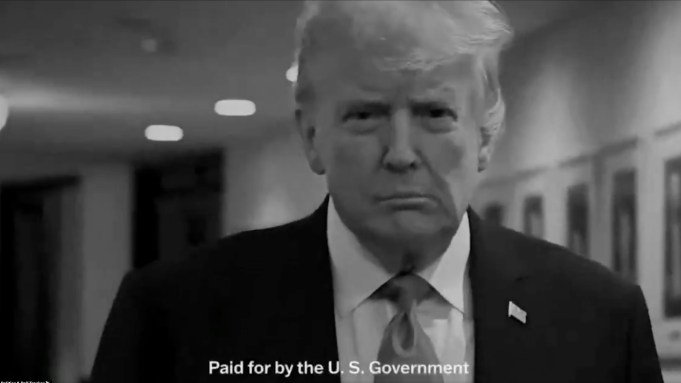
    The White House has turned to a well-known Nicole Kidman spot for AMC Theatres to try to remind MAGA voters of Donald Trump‘s promise of a new golden age.

    A new White House video is a takeoff of the 2021 Kidman spot, with a young man wearing a Make America Great Again hat entering the White House and a narrator saying: “We come to this place for MAGA. To fight, fight, fight and win, win. win.”

    The man walks down the West Wing colonnade, with the wall dressed in Trump’s “walk of fame” gold-framed portraits of his predecessors, as the narrator says: “All of us. The indescribable feeling we get when we hear the National Anthem. And stand together, stronger than ever before.”

    The man walks by a portrait of Trump, based on a famous photo from the assassination attempt on him in 2024, and then he walks into the East Wing. There, a film plays on a screen with clips from Trump’s second term. “We’re not just watching history, we are making it,” the narrator says. “Rebuilding our country better than ever. A country where we don’t do heartbreak. We do victory. An America that is safer, more secure, more prosperous. And any setbacks that stand in our way simply makes the comeback that much sweeter.”

    The screen then flashes with the letters MAGA, in a font similar to that of AMC, and the message, “Welcome to the golden age.”

    The video debuted on Monday, and it comes as polls show Trump’s job approval falling, at an average of 38.9%, per Real Clear Politics.

    The AMC spot debuted in 2021 as exhibitors were promoting moviegoing following Covid closures. Watch both clips here: