Tag: Deadline News

  • Judge Hears Arguments On Returning Trump’s Name To Kennedy Center, Sidesteps Talk Of Demolition Of Complex

    Judge Hears Arguments On Returning Trump’s Name To Kennedy Center, Sidesteps Talk Of Demolition Of Complex

    A federal judge heard arguments Thursday in the latest challenge to the Trump-controlled Kennedy Center‘s effort to install the president’s name on the complex, this time twice on its façade and once to designate the grounds for him.

    U.S. District Judge Christopher Cooper, however, stopped the center’s lawyer from bringing up the “dilapidated” condition of the center, referring to it as a “non sequitur” to the issue at hand: Whether the board can return Trump’s name to prominent locations at the complex.

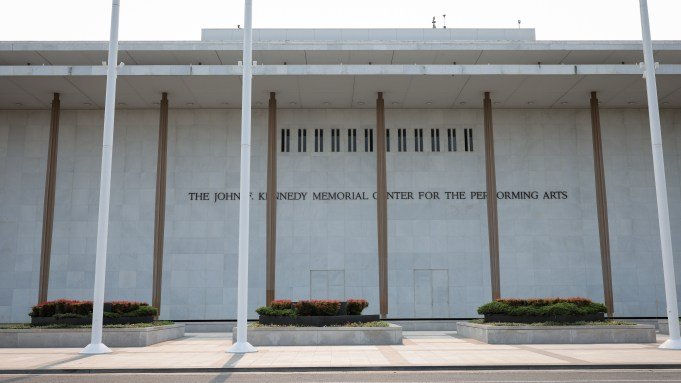
    Earlier this month, the Kennedy Center board voted to add “Renovated and Restored by President Donald J. Trump” to the front facade below the inscription, “The John F. Kennedy Memorial Center for the Performing Arts.” Once a $100 million threshold is met for an endowment, another inscription would be placed below that one to read, “Endowed by the Trump Kennedy Center Fund.”

    The board also voted to rename “the physical site and grounds upon which the center sits” as the “President Donald J. Trump Plaza.”

    Rep. Joyce Beatty (D-OH), an ex officio member of the board, is seeking a court order to stop the naming, as her attorneys argued that it violates a statute and the judge’s previous order. After the center’s board voted to add Trump’s name to the center, rebranding it as the Trump Kennedy Center, Beatty sued, arguing that only Congress could change the name of the complex, as it was designated as a memorial to President John F. Kennedy in 1964. Cooper agreed, and issued a preliminary injunction in June that forced the center to revert to the original name and remove lettering on the front façade of the complex.

    At the hearing, DOJ attorney Brantley Mayers, representing the center, argued that the latest plans for recognizing Trump are not a “renaming.” He also contended that it did not violate a congressional law in 1983 that restricted any other memorials at the complex. He noted that the board’s resolution “was quite clear that it wanted to recognize” Trump’s “ongoing contributions,” as memorials recognize something that happened in the past.

    But Cooper noted that the planned inscriptions are written in past tense.

    Earlier this week, in a court filing, the center’s attorneys warned that if Trump’s name wasn’t returned to the center, it would jeopardize its future, even pointing to the potential need for demolition.

    The judge declined to go into those arguments, stopping Mayers as he started to talk of the condition of the complex.

    “That is all fine and good, but what does that have to do with what Congress intended?” the judge asked. He later said that nothing in his earlier order prevented the center from proceeding with renovations, with Congress allocating more than $250 million for repairs as part of the One Big Beautiful Bill Act.

    Nathaniel Zelinsky, one of Beatty’s attorneys, said that the name change plans were an “outright defiance” of the judge’s injunction and an act of “massive bad faith.” He argued returning Trump’s name to the complex amounted to a rebranding, while Congress also intended the grounds and land the center sits on to solely honor Kennedy. He pointed to a past proposal, ultimately never realized, to construct a Kennedy Plaza on the grounds, saying that it was “another indication Congress didn’t intend to name [the complex] for anyone other than Kennedy.”

    Mayers, though, argued that Congress did not prevent the board from designating areas of the center for certain individuals. When Cooper asked if that meant the board could recognize Barack Obama or George W. Bush at certain parts of the complex, like a garage, Mayers agreed.

    Beatty sat with her attorneys during the hearing, in a courtroom packed with spectators including those from the group Hands Off the Arts. They have been protesting the changes at the center since Trump took control, including the efforts to install his name at the complex and a plan to close for two years for renovations.

    Also there was Secretary of Commerce Howard Lutnick, whose wife, Allison, is among the board members. During a brief break to address an audio issue, Lutnick huddled with DOJ lawyers.

    The judge raised some jurisdictional concerns over ruling on Beatty’s emergency motion as Trump is appealing. He did not indicate exactly when he would rule, but pressed Mayers on the deadline of September 8. The center has committed to refraining from installing Trump’s name until that date, but not after. Mayers said that the timing was the board’s decision.

    The judge also sounded weary that he was being asked to render a ruling so quickly, during a high time for summer vacation.

    In his May ruling, the judge also barred the center from embarking on the two-year closure, concluding that the board failed to consider options and the full impact. He left open the possibility of moving forward with such a plan if the board gave a more thorough consideration. In the meeting this month, the board again moved to shutter almost all of the complex, rejecting an alternative option to remain open during the construction. A consultant retained by the center concluded that remaining open would be more costly and force the renovations to extend to four years. The judge’s injunction remains in effect.
  • Rob Bonta Says It’s “Telling” Meta Settled With State AGs In The Midst Of Instagram Head Adam Mosseri’s Testimony & Before Mark Zuckerberg Took The Stand

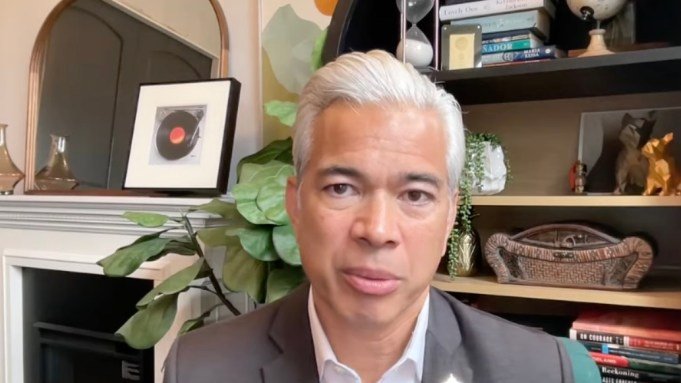
    Rob Bonta Says It’s “Telling” Meta Settled With State AGs In The Midst Of Instagram Head Adam Mosseri’s Testimony & Before Mark Zuckerberg Took The Stand

    California Attorney General Rob Bonta took a victory lap following a proposed settlement of up to $17 billion for claims brought by 51 attorneys general against Meta, suggesting that the parent of Instagram and Facebook realized that a trial was not going well for their side.

    As Bonta went through details of the settlement, including remedies designed to limit mental health harms and social media addiction among children and teens, he told reporters, “It’s also telling that Meta settled midway through Instagram President Adam Mosseri‘s testimony and before CEO Mark Zuckerberg could take the stand.”

    The company was defending itself in a trial that started on Aug. 18 in California.

    On the stand on Tuesday, Mosseri at one point was questioned by prosecutors about a feature, called Take a Break, a pop-up message suggesting to young users that they the give the app a rest after a fixed period of use. An internal document showed that only 1.8% of teens actually used the feature. A blog post by Mosseri around when it was introduced said “more than 90%” of users of the feature kept it on. But, the state AGs noted, the executive did not indicate that a very small number of people actually used it in the first place.

    “The trial was not going well for Meta. Having Instagram President Adam Mosseri giving testimony as we settled, it was not random … I think they were dying to have him get off the stand. It was not going well for him,” Bonta said.

    The settlement agreement still has to be approved by a federal judge.

    It includes a set of new restrictions that Meta will place on social media for users under 18, including a default daily time limit of two hours that can only be lifted by a parent. Other defaults are designed to limit use overnight and during school hours, and a ban on displaying numbers of likes or reactions for users under 18.

    Bonta also talked of the next step in their litigation: TikTok.

    “As big as Meta is, it doesn’t stand alone,” Bonta said. “We’re continuing our fight across social media, including our litigation against TikTok, and we’ll continue to demand better from all parts of this industry through our ongoing work with the legislature.” Bonta and other state attorneys general filed the TikTok lawsuit in 2024.

    Bonta also vowed to defend SB 976, the Protecting Our Kids from Social Media Addiction Act, a new California law that is being challenged by tech giants on First Amendment grounds.

    Bonta said that, with the Meta settlement, his “hope and my belief is that we will see commitments across the industry.” In addition to TikTok, he called out Snap and YouTube.

    Bonta later said that although YouTube is not the “same in its model as Meta and TikTok,” there are “similar features and products that YouTube uses that are along the same lines that … are designed to create excessive compulsive use that lead to mental health harms, and most importantly that hurt our children, and can and should be changed.”

    He added, “I think this …constellation of solutions in terms in injunctive relief that we’ve delivered here that apply to Meta, I really think that YouTube and Snap and TikTok should be thinking very closely about them and their commitment to adopt the same.”

    Several of the changes Meta agreed too are partly contingent on other social media players signing on. For instance, a default daily time limit of two hours for users under 18 that can only be lifted by a parent, under the settlement, would drop to one hour If other social media platforms agree to similar terms.

    And a default nighttime block between midnight and 6 a.m. for users under 18 that can only be lifted by a parent would expand to cover 10 p.m. to 7 a.m. if other social media platforms follow.

    This case and others lodged against social media giants have been compared to transformative litigation against big tobacco companies in the 1990s. Asked if he agress, Bonta said: “I think there are some similarities. There are also some limits to those similarities … Regardless, this is a major moment to clean up an industry that has been hurting our kids.”
     
    “So, in the way that the impact of the solutions delivered in [big] tobacco were good for health, good for kids, good for Californians and Americans, this is similar … It’s similar in that fact that it’s a number of AGs banding together, asserting ourselves, exerting our authority, demanding better, requiring accountability, and enforcing the law and delivering results. It’s similar in that way that Congress hasn’t been delivering and has left a vacuum and a gap, so that the state AGs stepped in.”
     
    He added, “It deals with public health. Different issues, but public health issues broadly … But I think the most important thing to focus on here, whether it’s similar tobacco or not, is this is transformative. This is momentous. This is a major step forward in the ongoing quest and journey to make sure that our children are safe everywhere, including online.”

    The settlement involved attorneys general from 47 states, the District of Columbia and U.S. territories.

  • “Delusional”: Joyce Beatty’s Attorneys React To Trump-Controlled Kennedy Center’s Warning Of Potential Demolition

    “Delusional”: Joyce Beatty’s Attorneys React To Trump-Controlled Kennedy Center’s Warning Of Potential Demolition

    A federal judge is holding a hearing on Thursday on another challenge to the Kennedy Center‘s plans to add Donald Trump‘s name to the complex.

    On Wednesday evening, attorneys for Rep. Joyce Beatty (D-OH) reacted to the most recent filing by the center, in which they suggested that the complex may have to be torn down if Trump’s name was not restored.

    Beatty’s attorney wrote, “In plain English, Defendants have not-so-subtly said: ‘What a nice Kennedy Center you have here. What a shame should something happen to it.’ This is a breathtaking assault on the rule of law. It is delusional. And it must stop.”

    The board of the Kennedy Center voted earlier this month to add “Renovated and Restored by President Donald J. Trump” to the front facade below the inscription, “The John F. Kennedy Memorial Center for the Performing Arts.” Once a $100 million threshold is met for an endowment, another inscription would be placed below that one to read, “Endowed by the Trump Kennedy Center Fund.”

    The board also voted to rename “the physical site and grounds upon which the center sits” as the “President Donald J. Trump Plaza.”

    Beatty claims that the addition of Trump’s name in those locations violates a judge’s order prohibiting a previous effort by the board to add POTUS’s to the name of the center.

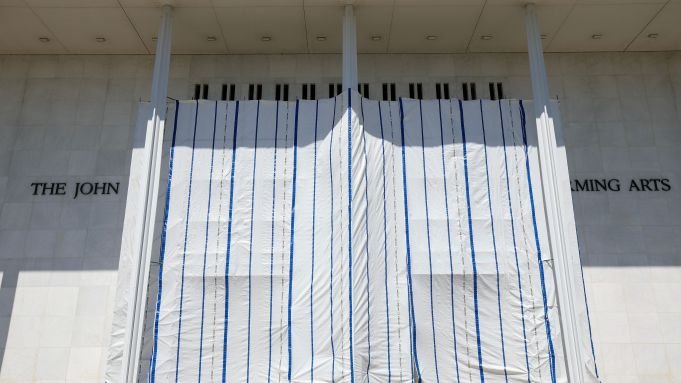
    From December until June, the center was rebranded as the “Trump Kennedy Center.” On the front facade, the words, “The Donald J. Trump and” were placed above “The John F. Kennedy Memorial Center for the Performing Arts.” But a judge ruled that only Congress could approve such changes, not the Trump-controlled board. The POTUS designation was removed in June, and part of the front facade is now covered by a tarp.

    In a filing earlier this week, center attorneys wrote that “undisputed evidence demonstrates, that without the prominent recognition of The Trump Administration, and President Trump’s efforts, the donors will not contribute, and the Center will continue to be in a financial and structural death spiral.”

    They added that Trump has “marshalled a new donor base to finance an endowment for the Center. These efforts promise to raise hundreds of millions of dollars to fund desperately needed structural improvements, thereby making the Center physically and financially secure for generations to come and, perhaps most importantly, to make the Center structurally safe from collapse or calamity.”

    They added, “Without those efforts, the Center will deteriorate further into an unsafe, decrepit structure that will be required to be taken down, with a determination to follow on what to build on the site, such as a large outdoor amphitheater overlooking the Potomac River that has been proposed, by some, for many years. Such a replacement will fail to adequately honor President John F. Kennedy, but would be simpler and more economical to build, operate, and maintain.”

    Beatty’s legal team also wrote that the center was “actively misleading” the judge and the public in claiming that “‘undisputed evidence demonstrates’ that ‘the Center will continue to be in a financial and structural death spiral’ unless President Trump’s name is added to the building, and that ‘President Trump’s efforts promise to stem the Center’s tremendous financial losses.’” They pointed to a report in The Washington Post that, after the board’s vote to add Trump’s name to the center, ticket sales and donations collapsed.

    “This doublespeak is unconscionable,” Beatty’s legal team wrote. “Moreover, to the extent Defendants cannot fundraise, the solution is to ask Congress to appropriate needed funds and hire professional management with expertise in the performing arts to supplement appropriations as needed—not to violate the law on the ridiculous conceit that putting ‘Trump’ all over the place will open a spigot of contributions.”

    The center has not yet commented on the new filing. But in a statement earlier this week, the spokesperson said, “Center leadership remains committed to demonstrating, by all legal means, the soundness of the Board’s decision to recognize Chairman President Donald Trump’s unprecedented support for restoring and revitalizing America’s Cultural Center.”

    Beatty, an ex officio member of the Kennedy Center board, also denied that she gave her approval to the proposal to rename the grounds of the center for Trump. In its filing earlier this week, the center’s attorneys wrote that at the board meeting earlier this month, Beatty “explicitly stated that she had ‘no objection’ to one component of it—re-naming the Center’s grounds after President Trump to honor the work he is doing to save the Kennedy Center.”

    In a declaration to the court, Beatty wrote that at the board meeting, she “tried to explain that I was not categorically opposed to recognizing Trump in some very limited way, for example, inside the building or with a modest bench or plaza.”

    She wrote, “My stated willingness, in that moment, to consider a more limited alternative was a good-faith effort to steer the Board away from actions I strongly suspected to be unlawful. And as I made clear at the time, any willingness on my part was conditioned on the lawfulness of the final action.”

  • Donald Trump’s Latest Financial Disclosure Shows Significant Sales Of Netflix Securities; Disney, WBD And Comcast Transactions

    Donald Trump’s Latest Financial Disclosure Shows Significant Sales Of Netflix Securities; Disney, WBD And Comcast Transactions

    Donald Trump reported more than 1,000 purchases and sales of corporate securities in June, including those of Netflix, Warner Bros. Discovery, The Walt Disney Co. and Comcast.

    The White House has previously said that the president’s stock and bond portfolio is independently managed.

    According to the president’s latest financial report, released by the Office of Government Ethics, he sold between $50,001 and $100,000 of Netflix on June 12, another $500,001 to $1 million on June 18, between $15,001 and $50,000 on June 16, and between $50,001 and $100,000 on June 24. He bought between $1,001 and $15,000 on June 3, and between $1,001 and $15,000 on June 23.

    Per the filing, the president also purchased between $50,001 and $100,000 in The Walt Disney Co. on June 18, and between $1,001 and $15,000 on June 3. He purchased between $1,001 and $15,000 in Warner Bros. Discovery on June 16. The form also showed the sale of $1,001 to $15,000 in Comcast securities on June 16, $1,001 to $15,000 on June 23, $1,001 to $15,000 on June 3, and between $100,001 and $250,000 on June 24.

    The report also showed the sale of $100,001 to $250,000 shares of Amazon on June 12 and the sale of $100,001 to $250,000 on June 24. It showed the purchase of $15,001 to $50,000 of Amazon on June 15, the purchase of $1,001 to $15,000 on June 23, the purchase of $1,001 to $15,000 on June 3.

    The OGE report does not require specific amounts of sales or purchases, but ranges.

    A White House official did not immediately respond to a request for comment. But the administration has previously said that “all holdings are maintained in discretionary accounts and invested through computer-based model portfolios that automatically replicate recognized indexes, such as the Schwab 1000.”

    The official said that Trump does not have the ability to “direct, influence, or provide input regarding how the portfolio is invested or when investments are bought or sold.”

    Some of the companies have regulatory business before the Trump administration. The Justice Department approved Paramount’s proposed merger with Warner Bros. Discovery on June 12. Disney, meanwhile, is challenging the FCC over its order that it submit the licenses of its eight owned stations for early renewal. Disney filed a First Amendment lawsuit against the agency earlier this month.

  • Rob Bonta Says It’s “Telling” Meta Settled With State AGs In The Midst Of Instagram Head Adam Mosseri’s Testimony & Before Mark Zuckerberg Took The Stand

    Rob Bonta Says It’s “Telling” Meta Settled With State AGs In The Midst Of Instagram Head Adam Mosseri’s Testimony & Before Mark Zuckerberg Took The Stand

    California Attorney General Rob Bonta took a victory lap following a proposed settlement of up to $17 billion for claims brought by 51 attorneys general against Meta, suggesting that the parent of Instagram and Facebook realized that a trial was not going well for their side.

    As Bonta went through details of the settlement, including remedies designed to limit mental health harms and social media addiction among children and teens, he told reporters, “It’s also telling that Meta settled midway through Instagram President Adam Mosseri‘s testimony and before CEO Mark Zuckerberg could take the stand.”

    The company was defending itself in a trial that started on Aug. 18 in California.

    On the stand on Tuesday, Mosseri at one point was questioned by prosecutors about a feature, called Take a Break, a pop-up message suggesting to young users that they the give the app a rest after a fixed period of use. An internal document showed that only 1.8% of teens actually used the feature. A blog post by Mosseri around when it was introduced said “more than 90%” of users of the feature kept it on. But, the state AGs noted, the executive did not indicate that a very small number of people actually used it in the first place.

    “The trial was not going well for Meta. Having Instagram President Adam Mosseri giving testimony as we settled, it was not random … I think they were dying to have him get off the stand. It was not going well for him,” Bonta said.

    The settlement agreement still has to be approved by a federal judge.

    It includes a set of new restrictions that Meta will place on social media for users under 18, including a default daily time limit of two hours that can only be lifted by a parent. Other defaults are designed to limit use overnight and during school hours, and a ban on displaying numbers of likes or reactions for users under 18.

    Bonta also talked of the next step in their litigation: TikTok.

    “As big as Meta is, it doesn’t stand alone,” Bonta said. “We’re continuing our fight across social media, including our litigation against TikTok, and we’ll continue to demand better from all parts of this industry through our ongoing work with the legislature.” Bonta and other state attorneys general filed the TikTok lawsuit in 2024.

    Bonta also vowed to defend SB 976, the Protecting Our Kids from Social Media Addiction Act, a new California law that is being challenged by tech giants on First Amendment grounds.

    Bonta said that, with the Meta settlement, his “hope and my belief is that we will see commitments across the industry.” In addition to TikTok, he called out Snap and YouTube.

    Bonta later said that although YouTube is not the “same in its model as Meta and TikTok,” there are “similar features and products that YouTube uses that are along the same lines that … are designed to create excessive compulsive use that lead to mental health harms, and most importantly that hurt our children, and can and should be changed.”

    He added, “I think this …constellation of solutions in terms in injunctive relief that we’ve delivered here that apply to Meta, I really think that YouTube and Snap and TikTok should be thinking very closely about them and their commitment to adopt the same.”

    Several of the changes Meta agreed too are partly contingent on other social media players signing on. For instance, a default daily time limit of two hours for users under 18 that can only be lifted by a parent, under the settlement, would drop to one hour If other social media platforms agree to similar terms.

    And a default nighttime block between midnight and 6 a.m. for users under 18 that can only be lifted by a parent would expand to cover 10 p.m. to 7 a.m. if other social media platforms follow.

    This case and others lodged against social media giants have been compared to transformative litigation against big tobacco companies in the 1990s. Asked if he agress, Bonta said: “I think there are some similarities. There are also some limits to those similarities … Regardless, this is a major moment to clean up an industry that has been hurting our kids.”
     
    “So, in the way that the impact of the solutions delivered in [big] tobacco were good for health, good for kids, good for Californians and Americans, this is similar … It’s similar in that fact that it’s a number of AGs banding together, asserting ourselves, exerting our authority, demanding better, requiring accountability, and enforcing the law and delivering results. It’s similar in that way that Congress hasn’t been delivering and has left a vacuum and a gap, so that the state AGs stepped in.”
     
    He added, “It deals with public health. Different issues, but public health issues broadly … But I think the most important thing to focus on here, whether it’s similar tobacco or not, is this is transformative. This is momentous. This is a major step forward in the ongoing quest and journey to make sure that our children are safe everywhere, including online.”

    The settlement involved attorneys general from 47 states, the District of Columbia and U.S. territories.

  • Rob Bonta Says It’s “Telling” Meta Settled With State AGs In The Midst Of Instagram Head Adam Mosseri’s Testimony & Before Mark Zuckerberg Took The Stand

    Rob Bonta Says It’s “Telling” Meta Settled With State AGs In The Midst Of Instagram Head Adam Mosseri’s Testimony & Before Mark Zuckerberg Took The Stand

    California Attorney General Rob Bonta took a victory lap following a proposed settlement of up to $17 billion for claims brought by 51 attorneys general against Meta, suggesting that the parent of Instagram and Facebook realized that a trial was not going well for their side.

    As Bonta went through details of the settlement, including remedies designed to limit mental health harms and social media addiction among children and teens, he told reporters, “It’s also telling that Meta settled midway through Instagram President Adam Mosseri‘s testimony and before CEO Mark Zuckerberg could take the stand.”

    The company was defending itself in a trial that started on Aug. 18 in California.

    On the stand on Tuesday, Mosseri at one point was questioned by prosecutors about a feature, called Take a Break, a pop-up message suggesting to young users that they the give the app a rest after a fixed period of use. An internal document showed that only 1.8% of teens actually used the feature. A blog post by Mosseri around when it was introduced said “more than 90%” of users of the feature kept it on. But, the state AGs noted, the executive did not indicate that a very small number of people actually used it in the first place.

    “The trial was not going well for Meta. Having Instagram President Adam Mosseri giving testimony as we settled, it was not random … I think they were dying to have him get off the stand. It was not going well for him,” Bonta said.

    The settlement agreement still has to be approved by a federal judge.

    It includes a set of new restrictions that Meta will place on social media for users under 18, including a default daily time limit of two hours that can only be lifted by a parent. Other defaults are designed to limit use overnight and during school hours, and a ban on displaying numbers of likes or reactions for users under 18.

    Bonta also talked of the next step in their litigation: TikTok.

    “As big as Meta is, it doesn’t stand alone,” Bonta said. “We’re continuing our fight across social media, including our litigation against TikTok, and we’ll continue to demand better from all parts of this industry through our ongoing work with the legislature.” Bonta and other state attorneys general filed the TikTok lawsuit in 2024.

    Bonta also vowed to defend SB 976, the Protecting Our Kids from Social Media Addiction Act, a new California law that is being challenged by tech giants on First Amendment grounds.

    Bonta said that, with the Meta settlement, his “hope and my belief is that we will see commitments across the industry.” In addition to TikTok, he called out Snap and YouTube.

    Bonta later said that although YouTube is not the “same in its model as Meta and TikTok,” there are “similar features and products that YouTube uses that are along the same lines that … are designed to create excessive compulsive use that lead to mental health harms, and most importantly that hurt our children, and can and should be changed.”

    He added, “I think this …constellation of solutions in terms in injunctive relief that we’ve delivered here that apply to Meta, I really think that YouTube and Snap and TikTok should be thinking very closely about them and their commitment to adopt the same.”

    Several of the changes Meta agreed too are partly contingent on other social media players signing on. For instance, a default daily time limit of two hours for users under 18 that can only be lifted by a parent, under the settlement, would drop to one hour If other social media platforms agree to similar terms.

    And a default nighttime block between midnight and 6 a.m. for users under 18 that can only be lifted by a parent would expand to cover 10 p.m. to 7 a.m. if other social media platforms follow.

    This case and others lodged against social media giants have been compared to transformative litigation against big tobacco companies in the 1990s. Asked if he agress, Bonta said: “I think there are some similarities. There are also some limits to those similarities … Regardless, this is a major moment to clean up an industry that has been hurting our kids.”
     
    “So, in the way that the impact of the solutions delivered in [big] tobacco were good for health, good for kids, good for Californians and Americans, this is similar … It’s similar in that fact that it’s a number of AGs banding together, asserting ourselves, exerting our authority, demanding better, requiring accountability, and enforcing the law and delivering results. It’s similar in that way that Congress hasn’t been delivering and has left a vacuum and a gap, so that the state AGs stepped in.”
     
    He added, “It deals with public health. Different issues, but public health issues broadly … But I think the most important thing to focus on here, whether it’s similar tobacco or not, is this is transformative. This is momentous. This is a major step forward in the ongoing quest and journey to make sure that our children are safe everywhere, including online.”

    The settlement involved attorneys general from 47 states, the District of Columbia and U.S. territories.

  • Paramount-WBD Antitrust Suit Heads To Supreme Court In Red State Vs. Blue State Showdown Over $111B Merger

    Paramount-WBD Antitrust Suit Heads To Supreme Court In Red State Vs. Blue State Showdown Over $111B Merger

    UPDATED 8:03 AM: Iowa and Montana are going to the Supreme Court to put a halt on antitrust efforts to prevent the $111 billion merger between Paramount and Warner Bros Discovery.

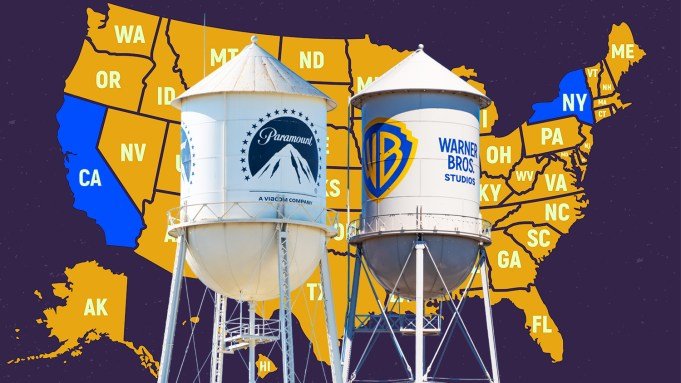
    This case is about the legal limits on politicized antitrust enforcement by a small handful of states seeking to enjoin a $110 billion merger that the United States, most American states, and competition regulators worldwide have cleared,” insists the two red states in their Motion for Leave to File a Bill of Complaint against the 12 blue state led by Golden State AG and MAGA anti-poster boy Rob Bonta.

    After threats Tuesday in an op-ed by Iowa Attorney General Brenna Bird, the Keystone State and the Treasure State filed paperwork with the High Court late last night – and they want a fast response.

    “Expedited consideration now will alleviate the need for exceedingly hasty action later,” they state of the proposed stoppage of a ParaBros combo pending the initial litigation of July 13. “Mergers do not freeze well.”

    In fact, barely letting the situation sit on ice at all, Iowa and Montana are looking at a deadline of September 15 to be exact.

    That is two weeks before the $7 million a day ticking fee paid to WBD shareholders kicks in for the David Ellison-run Para. “It is no great burden to ask Defendant States to file their response on an accelerated timeline,” today’s filing asserts, citing Supreme Court Rule 21. 

    “The case is not an emergency yet, but the deadline for the merger is June 2027, and there would be little hope of resolving the case by then if a decision on hearing it were made in January,” the filing adds. “That is especially so if the Court first addresses the threshold question of whether it even has discretion to deny audience on the merits for cases within its original and exclusive jurisdiction.”

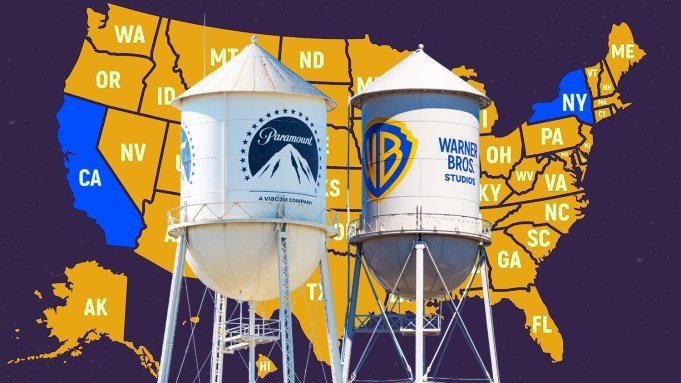
    Awaiting a reaction from the conservative majority SCOTUS, which could reject or slow walk the request, Iowa and Montana’s action against the “State of Arizona, State of California, State of Colorado, State of Connecticut, Commonwealth of Massachusetts, State of Minnesota, State of Nevada, State of New Jersey, State of New Mexico, State of New York, State of Oregon, and State of Washington” is a roll of the dice for all concerned.

    SCOTUS sign-offs on such requests are not rare for the Roberts court, but they aren’t common either.

    Still, perhaps playing to their real audience, the Iowa and Montana motion also jumps into defending the Ellisons’ bottom line – as Bird did in her August 25 Daily Wire op-ed.

    Blasting the blue states for running counter to a merger approved by 67 jurisdictions worldwide and seemingly fast-tracked by Donald Trump‘s DOJ,, the motion notes: “The costs are not limited to the companies themselves. Defendant States’ suit has injected uncertainty into every company that does business with Paramount or Warner Bros. Suppliers and other counterparties cannot make investment choices without knowing who the real decision maker is and whether the business relationship has a future once the deal closes (or does not close).”

    There has been no full-on response yet from Bonta, but don’t expect the media savvy CA AG to be silent too long on this latest challenge. “We are reviewing the filing and will respond as appropriate,” a spokesperson for Bonta told Deadline this AM.  

    PREVIOUSLY, 10:09 PM: With friends like Iowa Attorney General  Brenna Bird, does Paramount and David Ellison really need enemies?

    In an op-ed penned for the conservative Daily Wire Tuesday, the Hawkeye State ally of Donald Trump is threatening to take California to the Supreme Court. Declaring that “California is once again trying to be the country’s regulator,” Bird wants to stop the antitrust lawsuit from the Golden State, New York and 10 other states against Paramount’s $111 billion purchase of Warner Brothers Discovery.

    “Just like California should keep its hands off America’s bacon, California needs to understand that it doesn’t get to decide what Americans can choose to watch or stream,” the reelection-seeking Bird states of the state and its AG Rob Bonta.

    “If California believes a transaction that 68 regulators approved is nevertheless illegal, it is free to make that argument,” she notes, lamenting the $7 million a day ticking fee and more Paramount will have to start paying WBD shareholders starting October 1. “But it should make it in the one court with the authority to bind all of us, and it should make it now, before the bill for the delay comes due,” Bird claps, leaving out any reference to the Empire State’s Letitia James and other AGs.

    Yet, for all her rallying to the ParaBros cause, as well as some variations on what Bonta and gang are actually alleging in the March 2, 2027 trial-starting case before a federal judge in Oakland, Bird doesn’t seem to have actually filed anything with SCOTUS.

    It also seems hard to see how even if Iowa did take California to the conservative majority Supreme Court, how they could get a hearing before next spring or even October, with the John Roberts-led high court not back in session until October 5.

    However, let’s sidestep Bird getting a perch on SCOTUS’ fast tracked interim relief docket (AKA the emergency docket or shadow docket) for a second, and look at a possible route under the provisions of Article III, Section 2 of the Constitution. Even if the case fell within the “original jurisdiction” criteria and passed muster with the Justices, any ruling would likely still be drawn out — likely beyond the March 2027 trial already on the calendar. In the rare case SCOTUS picks up such a state-to-state battle, it would generally appoint a “special master’ to review the matter before getting directly on it.

    All of which, like Paramount CEO Ellison accused Bonta in an August 4 NYT op-ed, makes Bird’s flag planter reek of politics.

    Bird, who filed a brief in 2024 in support of the former Apprentice host’s ultimately successful bid to gain significant immunity from prosecution for acts taken while POTUS, sidesteps most of the meat of the actual antitrust suit the 12 states and the WGA are pursuing. A suit that Bonta, in an August 10 guest column for Deadline, paints as “a straight up antitrust enforcement case. One that is very cut and dry.” Instead, Bird, while giving the DOJ the benefit of the doubt, moves to blast Bonta and colleagues as “more hostile to this pro-competition merger than Europe and China.”

    The ‘To Save American Movies, I’m Taking California To The Supreme Court’ entitled piece in the Ben Shapiro-founded outlet insists a ParaBros combo is good for high streaming subscription paying Iowans, competition and the movie and TV businesses. “The merger could create a company to compete: an estimated $6 billion in savings to reinvest, and a public commitment to release at least 30 movies in theaters every year. More movies mean more entertainment — and more competition means lower prices,” Bird says.

    There is no mention by Bird of the $80 billion debt load a ParaBros will carry, the ongoing blame game settlement talks (or lack thereof) skirmish, nor the $1.88 billion bond Paramount desires to offset the “extraordinary losses” the court challenge poses.

    Bird also makes no mention of possible layoffs or other cuts from a Paramount and WBD melding. Cuts that every such M&A deal has seen. Cuts that the likes of the WGA SAG-AFTRA and the Teamsters warn of. Cuts that reports in both late June and last week to the L.A. County Board of Supervisors warned could see thousands pink slipped, and cost the region billions in wage and hundreds of millions in tax revenue.

    Rob Bonta, David Ellison

    L-R: Rob Bonta and David Ellison

    Getty Images

    Touting a Hollywood that few who live here may recognize, the Iowa AG chooses echoes the findings of earlier this year from Trump’s DOJ approving the merger. To that, right now, she says “more movies are being made, and more workers are being hired.”

    While seemingly concurrently stressing that a joint “Paramount+ and HBO Max together are smaller than Netflix, smaller than Disney and smaller than Amazon,” Bird also throws out there that “a successful Paramount-Warner Bros. merger would change that.” Later in the op-ed, the long time pol says: “That is the opposite of a monopoly problem.”

    Singing the tunes of the growing MAGA chorus that seeks to turn Bonta into the new Nancy Pelosi punching bag, Bird asserts “California is just dreaming up something radical” to go to war with Trump and his admitted “good friends” David Ellison and his Oracle founding father Larry Ellison.

    “California argues that the Department of Justice waved this through as a political favor to Paramount’s owners,” Bird wrote Tuesday in a smudging of what is actually in the July 13 filing by the coalition of blue states. “Then someone should explain how the Department managed to get approval in China, Europe, Canada, and the other 60-plus jurisdictions. When regulators in 68 jurisdictions with different laws, different politics, and no stake whatsoever in American elections all reach the same conclusion, the outlier is not the consensus.”

    Again, no filing seems to have occurred today so far at the Supreme Court from Iowa or Bird. Rob Bonta and Brenna Bird’s office do share the fact that neither of them responded to Deadline’s request for comment on the Iowa AG’s threat.

  • Rob Bonta Says It’s “Telling” Meta Settled With State AGs In The Midst Of Instagram Head Adam Mosseri’s Testimony & Before Mark Zuckerberg Took The Stand

    Rob Bonta Says It’s “Telling” Meta Settled With State AGs In The Midst Of Instagram Head Adam Mosseri’s Testimony & Before Mark Zuckerberg Took The Stand

    California Attorney General Rob Bonta took a victory lap following a proposed settlement of up to $17 billion for claims brought by 51 attorneys general against Meta, suggesting that the parent of Instagram and Facebook realized that a trial was not going well for their side.

    As Bonta went through details of the settlement, including remedies designed to limit mental health harms and social media addiction among children and teens, he told reporters, “It’s also telling that Meta settled midway through Instagram President Adam Mosseri‘s testimony and before CEO Mark Zuckerberg could take the stand.”

    The company was defending itself in a trial that started on Aug. 18 in California.

    On the stand on Tuesday, Mosseri at one point was questioned by prosecutors about a feature, called Take a Break, a pop-up message suggesting to young users that they the give the app a rest after a fixed period of use. An internal document showed that only 1.8% of teens actually used the feature. A blog post by Mosseri around when it was introduced said “more than 90%” of users of the feature kept it on. But, the state AGs noted, the executive did not indicate that a very small number of people actually used it in the first place.

    “The trial was not going well for Meta. Having Instagram President Adam Mosseri giving testimony as we settled, it was not random … I think they were dying to have him get off the stand. It was not going well for him,” Bonta said.

    The settlement agreement still has to be approved by a federal judge.

    It includes a set of new restrictions that Meta will place on social media for users under 18, including a default daily time limit of two hours that can only be lifted by a parent. Other defaults are designed to limit use overnight and during school hours, and a ban on displaying numbers of likes or reactions for users under 18.

    Bonta also talked of the next step in their litigation: TikTok.

    “As big as Meta is, it doesn’t stand alone,” Bonta said. “We’re continuing our fight across social media, including our litigation against TikTok, and we’ll continue to demand better from all parts of this industry through our ongoing work with the legislature.” Bonta and other state attorneys general filed the TikTok lawsuit in 2024.

    Bonta also vowed to defend SB 976, the Protecting Our Kids from Social Media Addiction Act, a new California law that is being challenged by tech giants on First Amendment grounds.

    Bonta said that, with the Meta settlement, his “hope and my belief is that we will see commitments across the industry.” In addition to TikTok, he called out Snap and YouTube.

    Bonta later said that although YouTube is not the “same in its model as Meta and TikTok,” there are “similar features and products that YouTube uses that are along the same lines that … are designed to create excessive compulsive use that lead to mental health harms, and most importantly that hurt our children, and can and should be changed.”

    He added, “I think this …constellation of solutions in terms in injunctive relief that we’ve delivered here that apply to Meta, I really think that YouTube and Snap and TikTok should be thinking very closely about them and their commitment to adopt the same.”

    Several of the changes Meta agreed too are partly contingent on other social media players signing on. For instance, a default daily time limit of two hours for users under 18 that can only be lifted by a parent, under the settlement, would drop to one hour If other social media platforms agree to similar terms.

    And a default nighttime block between midnight and 6 a.m. for users under 18 that can only be lifted by a parent would expand to cover 10 p.m. to 7 a.m. if other social media platforms follow.

    This case and others lodged against social media giants have been compared to transformative litigation against big tobacco companies in the 1990s. Asked if he agress, Bonta said: “I think there are some similarities. There are also some limits to those similarities … Regardless, this is a major moment to clean up an industry that has been hurting our kids.”
     
    “So, in the way that the impact of the solutions delivered in [big] tobacco were good for health, good for kids, good for Californians and Americans, this is similar … It’s similar in that fact that it’s a number of AGs banding together, asserting ourselves, exerting our authority, demanding better, requiring accountability, and enforcing the law and delivering results. It’s similar in that way that Congress hasn’t been delivering and has left a vacuum and a gap, so that the state AGs stepped in.”
     
    He added, “It deals with public health. Different issues, but public health issues broadly … But I think the most important thing to focus on here, whether it’s similar tobacco or not, is this is transformative. This is momentous. This is a major step forward in the ongoing quest and journey to make sure that our children are safe everywhere, including online.”

    The settlement involved attorneys general from 47 states, the District of Columbia and U.S. territories.

  • Rob Bonta Says No Paramount-WBD Settlement Talks Scheduled After He Canceled Monday Session

    Rob Bonta Says No Paramount-WBD Settlement Talks Scheduled After He Canceled Monday Session

    UPDATED: California Attorney General Rob Bonta told reporters that “we don’t have anything scheduled” with Paramount to negotiate a potential settlement of the antitrust challenge to the proposed merger with Warner Bros. Discovery.

    At a press conference on Tuesday, Bonta continued to lash out at the company, claiming that they were responsible for leaks of negotiation details in advance of a planned session on Monday. Late on Sunday, Bonta abruptly canceled the meeting.

    “They wanted to have the settlement discussions, and we are happy to hear them out,” Bonta said. “We thought that they were reaching out to us in good faith and sincerely, and the unfortunately, they violated the rules of engagement, and that was not okay. They leaked lies to the press while we were in settlement negotiations, and that’s not okay. That’s not acceptable. That is amateur hour. That is playing games.”

    Paramount issued a statement on Monday in which it said that it “has not been the source of the leaks of any of our confidential discussions with the AG’s office.”

    On Sunday, The Wall Street Journal reported, and confirmed by Deadline, that the AG’s asks included keeping the studios separate as well as unloading some cable networks. But there were earlier conversations between the parties. California Governor Gavin Newsom had indicated on Friday that there “are many meetings that are going on, and there’s a lot of conversation.”

    Bonta said, “It is the alleged disclosure of the substance of the conversations of what occurred in those meetings that is the problem. Those are required under federal law to be confidential, and for good reason. So you can be candid. So you can be productive. So maybe you can even be creative in those discussions. If you’re having confidential settlement discussions, and as you’re having them, one of the parties is going out to the press and representing to the press what’s being said by you in those negotiations and lying about it, whether it’s true or whether they’re lying, neither is acceptable.”

    A spokesperson for the attorney general later said that Paramount asked them to keep the contents of settlement negotiations confidential under Federal Evidence Code 408 but they believe “they turned around and disclosed it themselves.” The spokesperson said that they are not alleging that Paramount violated federal law at this time.

    Bonta also did not blame Newsom for disclosing that there had been talks. Bonta said that “we saw sourced people who had knowledge about what was discussed in the room. It was only my office and Paramount. The governor does not have anything to do with the concern. Paramount has everything to do with this issue.”

    Bonta said that Paramount “can also fix it, and if they want to fix it and stop playing games, we will be happy to meet.”

    A Paramount spokesperson said on Monday, “We remain hopeful and stand ready to continue good faith discussions to resolve the Attorneys General suit and move forward with our plans for increased competition and increased output to the benefit of the talent and entertainment workers.”

    Bonta and 11 other state attorneys general sued to block the merger last month. A federal judge granted a temporary restraining order that prevented Paramount from closing the transaction for four weeks, but the company later agreed not to complete the deal until June or until legal issues are resolved. The judge set a trial for next March.

    Bonta also told reporters that “we’re winning this lawsuit.” He also contended that the judge, Araceli Martínez-Olguín, said that Paramount was “likely to lose the whole case….that we, the states, are likely to succeed on the merits and block the merger.” Paramount’s legal team, though, has claimed that they will prevail once the whole case is laid out in a trial that is expected to be heavy in discovery documents and competing expert witnesses.

  • Iowa MAGA AG Wants To Take California & Rob Bonta To Supreme Court Over Paramount-WBD Antitrust Suit, Maybe

    Iowa MAGA AG Wants To Take California & Rob Bonta To Supreme Court Over Paramount-WBD Antitrust Suit, Maybe

    With friends like Iowa Attorney General  Brenna Bird, does Paramount and David Ellison really need enemies?

    In an op-ed penned for the conservative Daily Wire Tuesday, the Hawkeye State ally of Donald Trump is threatening to take California to the Supreme Court. Declaring that “California is once again trying to be the country’s regulator,” Bird wants to stop the antitrust lawsuit from the Golden State, New York and 10 other states against Paramount’s $111 billion purchase of Warner Brothers Discovery.

    “Just like California should keep its hands off America’s bacon, California needs to understand that it doesn’t get to decide what Americans can choose to watch or stream,” the reelection seeking Bird states of the state and its AG Rob Bonta.

    “If California believes a transaction that 68 regulators approved is nevertheless illegal, it is free to make that argument,” she notes, lamenting the $7 million a day ticking fee and more Paramount will have to start paying WBD shareholders starting October 1. “But it should make it in the one court with the authority to bind all of us, and it should make it now, before the bill for the delay comes due,” Bird claps, leaving out any reference to the Empire State’s Letitia James and other AG.

    Yet, for all her rallying to the ParaBros cause, as well as some variations on what Bonta and gang are actually alleging in the March 2, 2027 trial starting case before a federal judge in Oakland, Bird doesn’t seem to have actually filed anything with SCOTUS.

    It also seems hard to see how even if Iowa did take California to the conservative majority Supreme Court, how they could get a hearing before next spring or even October, with the John Roberts-led high court not back in session until October 5.

    However, let’s sidestep Bird getting a perch on SCOTUS’ fast tracked interim relief docket (AKA the emergency docket or shadow docket) for a second, and look at a possible route under the provisions of Article III, Section 2 of the Constitution. Even if the case fell within the “original jurisdiction” criteria and passed muster with the Justices, any ruling would likely still be drawn out — likely beyond the March 2027 trial already on the calendar. In the rare case SCOTUS picks up such a state to state battle, it would generally appoint a “special master’ to review the matter before getting directly on it.

    All of which, like Paramount CEO Ellison accused Bonta in an August 4 NYT op-ed, makes Bird’s flag planter reek of politics.

    Bird, who filed a brief in 2024 support of the former Apprentice host’s ultimately successful bid to gain significant immunity from prosecution for acts taken while POTUS, sidesteps most of the meat of the actual antitrust suit the 12 states and the WGA are pursuing. A suit that Bonta, in an August 10 guest column for Deadline, paints as “a straight up antitrust enforcement case. One that is very cut and dry.” Instead, Bird, while giving the DOJ the benefit of the doubt, moves to blast Bonta and colleagues as “more hostile to this pro-competition merger than Europe and China.”

    The ‘To Save American Movies, I’m Taking California To The Supreme Court’ entitled piece in the Ben Shapiro-founded outlet insists a ParaBros combo is good for high streaming subscription paying Iowans, competition and the movie and TV businesses. “The merger could create a company to compete: an estimated $6 billion in savings to reinvest, and a public commitment to release at least 30 movies in theaters every year. More movies mean more entertainment — and more competition means lower prices,” Bird says.

    There is no mention by Bird of the $80 billion debt load a ParaBros will carry, the ongoing blame game settlement talks (or lack thereof) skirmish, nor the $1.88 billion bond Paramount desires to offset the “extraordinary losses” the court challenge poses.

    Bird also makes no mention of possible layoffs or other cuts from a Paramount and WBD melding. Cuts that every such M&A deal has seen. Cuts that the likes of the WGA SAG-AFTRA and theTeamsters warn of. Cut that reports in both late June and last week to the LA County Board of Supervisors warned could see thousands pink slipped, and cost the region billions in wage and hundreds of millions in tax revenue.

    Rob Bonta, David Ellison

    L-R: Rob Bonta and David Ellison

    Getty Images

    Touting a Hollywood that few who live here may recognize, the Iowa AG chooses echoes the findings of earlier this year from Trump’s DOJ approving the merger. To that, right now, she says “more movies are being made, and more workers are being hired.”

    While seemingly concurrently stressing that a joint “Paramount+ and HBO Max together are smaller than Netflix, smaller than Disney and smaller than Amazon,” Bird also throws out there that “a successful Paramount-Warner Bros. merger would change that.” Later in the op-ed, the long time pol says: “That is the opposite of a monopoly problem.”

    Singing the tunes of the growing MAGA chorus that seeks to turn Bonta into the new Nancy Pelosi punching bag, Bird asserts “California is just dreaming up something radical” to go to war with Trump and his admitted “good friends” David Ellison and his Oracle founding father Larry Ellison.

    “California argues that the Department of Justice waved this through as a political favor to Paramount’s owners,” Bird wrote Tuesday in a smudging of what is actually in the July 13 filing by the colalition of blue states. Then someone should explain how the Department managed to get approval in China, Europe, Canada, and the other 60-plus jurisdictions. When regulators in 68 jurisdictions with different laws, different politics, and no stake whatsoever in American elections all reach the same conclusion, the outlier is not the consensus.”

    Again, no filing seems to have occurred today so far at the Supreme Court from Iowa or Bird. Rob Bonta and Brenna Bird’s office do share the fact that neither of them responded to Deadline’s request for comment on the Iowa AG’s threat.