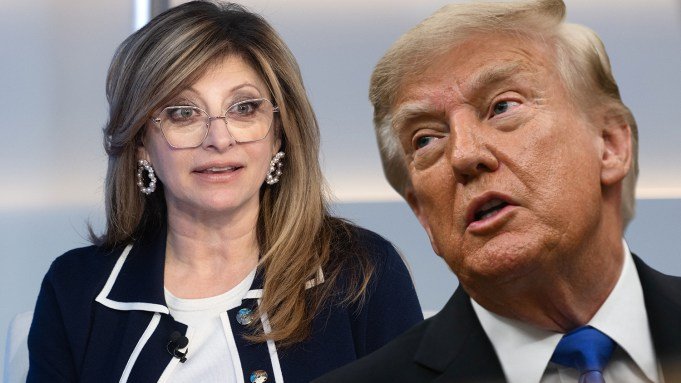
The assertions come Friday despite Bartiromo’s Hollywood attorney Bryan Freedman insisting the veteran Wall Street anchor is still “an employee” of Fox and threatening legal action. Adding to the burgeoning media mess surrounding the so-called “Money Honey,” Donald Trump had thrown serious shade on Fox for taking good pal Bartiromo off the air.
That shade could set the stage for yet another showdown between Trump and his once favorite media buddies at the Murdoch-ruled Fox.
“I can’t believe Maria Bartiromo is no longer going to have her great show(s) on FoxNews/Business,” Trump, a frequent Bartiromo guest, posted Thursday night, about 12 hours after Fox announced “effective today” that the Mornings With Maria host was out. “Three different shows, always number one. Maria is a total professional, and a true warrior. Her fans, of which there are many, will not be happy. God bless you, Maria!”
Bartiromo hadn’t been on the air for almost a month, with Deadline confirming that Fox brass had enough of the MAGA-friendly Bartiromo after they learned she passed corporate-guidance missives to the White House in recent months. However, carving her own way at Fox Business and Fox News for more than a decade, those communications were just the latest minefield that Fox execs feared could blow up in everyone’s faces.
“Her indiscretion was just the latest in a series of self-inflicted wounds,” a cable news insider says of Bartiromo and her close ties with Trump. “This has been a concern for a while, Maria being too cozy with the White House. She crossed a line, and she’s suffered the consequences.”
Weary of addressing allegations of similar conduct over the years by Sean Hannity and other Fox hosts, or Bartiromo’s contract specifics, the source added: “She’s no longer with Fox. Take that for what it is.”
Deadline hears that while there may be “technical truth” to Freedman’s remarks today that Bartiromo still works at Fox because of contracts and other paperwork, she is not returning to her Fox Business or Fox News roles — full stop.
Long a passionate defender of POTUS and offering him a platform over the years, Bartiromo’s apparent sharing of internal edicts with Trump administration officials, first reported by Status, made her pink-slipping inevitable.
Digging a little deeper and a few years back, the seeds of Bartiromo’s downfall were evident if you connect the red string.
In April 2023, Fox agreed to pay $787 million to settle a lawsuit filed by Dominion Voting Systems, one of the technology firms singled out in Fox’s coverage of the 2020 election results. Citied in volumes of court filings and the high-stakes trial that had just begun when Fox settled, Bartiromo was one of the main hosts on Fox promoting the false claims of irregularities with the election Trump lost and Joe Biden won. At the time, the top-rated Tucker Carlson was pulled off the air at Fox in a move that resulted in a Freedman-handled legal dust-up between Carlson and the media company.
No word from ex-Apprentice host Trump if Bartiromo is in the running to be the new White House Press Secretary, but sharp-elbowed lawyer Freedman says his client actually isn’t looking for a new job because she still has her old one.
“For many years, Maria Bartiromo hosted three number one rated television shows on Fox channels,” Freedman said Friday, as my colleague Dade Hayes noted earlier. “She has been, without question, one of the hardest working journalists throughout her award winning career.”
The lawyer for the likes of Carlson and Megyn Kelly, as well as Don Lemon, then unsheathed the knife that may lead to a bloody affair down the line.
“The irresponsible reports that have been published stating that Maria Bartiromo was fired or is no longer an employee of Fox are absolutely and unequivocally false,” Freedman said. “Make no mistake, we have the receipts and witnesses and they will come out whether through the courthouse or otherwise. Those reporting her firing or the incredulous facts supporting that fiction have exhibited a complete and utter reckless disregard for the truth.”
When Deadline asked Fox for a response to Freedman’s statement about his client’s employment situation, the company said: “the release speaks for itself.” The White House did not respond to Deadline’s request for comment.
The trial was to determine the fate of the Warner Bros empire, with the opposing sides presenting vastly different arguments. The government embraced the market as it has been, while the merging companies pointed to a future marked by disruption.
Studio veterans were anxious to get the deal done and cash out, while plenty more who stayed were wary of a culture clash with the new owners. Inside and outside of the company, suspicions abounded about the role of Donald Trump and his animus toward CNN driving the court challenge.
That was the picture eight years ago, when the government sued to block the $85 billion merger of AT&T and Time Warner. The six-week 2018 trial of U.S. vs. AT&T was a showdown billed as a momentous battle between the government and a corporate powerhouse. In 2026, as Paramount jousts with state attorneys general suing on antitrust grounds to stop the $110 billion acquisition of Warner Bros Discovery, the parallels are striking.
There are, at the same time, some substantial differences between the Justice Department’s AT&T-Time Warner litigation and the state attorney generals’ lawsuit against the Paramount-WBD deal. AT&T-Time Warner was a vertical transaction and Paramount-WBD is a horizontal one, for starters. A vertical deal, which hasn’t been blocked in the media business for decades, is more difficult to prove as anticompetitive than a horizontal one.
Both cases, though, highlight just how important one asset is in a fast-changing media environment: time.
AT&T and Time Warner won their case resoundingly in 2018, as the judge concluded the government had just not shown the transaction would substantially lessen competition. But the litigation cost the two companies precious time as rivals were building out their streaming platforms. In the end, AT&T cited its deal-related debt burden, at a time of soaring production costs, in opting to exit the entertainment business. (A similarly disastrous takeover of DirecTV cemented the decision, after both mergers cost AT&T shareholders tens of billions of dollars.) In April 2022, a bit less than four years after the Time Warner merger’s close, AT&T spun off the newly named WarnerMedia into a venture with Discovery.
Blair Levin, policy analyst at New Street Research, told Deadline via email that the time AT&T lost during the legal quagmire ultimately turned out to be a devastating blow. “While the Trump DOJ had a weak case against AT&T’s purchase (the real cause of which was not traditional Republican antitrust metrics but rather Trump’s anger at CNN), the government was able to delay the deal which was costly to AT&T and diminished the value of the asset,” he said. In the Paramount-WBD case, the states “have a stronger case thank the DOJ against AT&T as it is a horizontal, not a vertical case,” he added.
Levin also put a spotlight on the $7 million a day ticking fee for WBD shareholders that Paramount has to start paying next month and potentially billions more in other costs that could emerge as the parties inch towards the trial next spring. “The litigation is costly to Paramount both because of the ticking fee and the ability of the studios and other assets to engage in deal making while no one is certain who will be in charge when the deals go into production,” he notes.
One of the key figures from the AT&T-Time Warner trial is also a prominent player in the Paramount case: Makan Delrahim, the company’s chief legal officer. In 2018, he was the antitrust chief in the Justice Department, and he pushed back at the time on repeated claims of Trump administration influence.
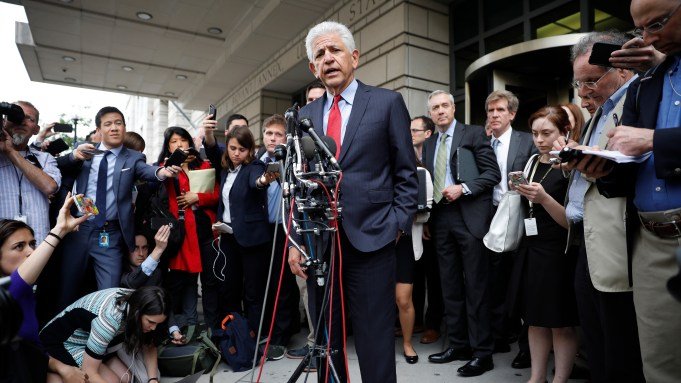
Another familiar face is AT&T’s lead attorney, Dan Petrocelli. He is now representing Warner Bros Discovery and is expected to play a supporting role in any trial.
The judge in the 2018 case, Richard Leon, was a colorful figure with a penchant for exclamation points, strict rules for gallery decorum (no crossed legs, as all spectators were warned to keep two feet on the floor). He also demonstrated an apparent affinity for Turner Classic Movies, as he more than once asked about its post-merger future. “If there ever were an antitrust case where the parties had a dramatically different assessment of the current state of the relevant market and a fundamentally different vision of its future development, this is the one,” he wrote in one early ruling. “Small wonder it had to go to trial!”
Here are some lessons from U.S. vs. AT&T, and why the case matters for Paramount-WBD:
Getty
Remember, It’s An Antitrust Trial
In his opinion, Judge Leon called the trial an “epic battle,” and it certainly seemed so at the time.
A Paramount-WBD trial may inspire visions of dramatic showdowns with CEOs on the stand, but journalists’ hopes of such moments quickly come crashing down in the reality of what is at hand: Antitrust trials are dominated by arguments about relevant markets, economic models and their inputs and dueling expert witnesses. They are almost always bench trials, decided by a single judge without the involvement of a jury. Yes, there can be moments where top executives are confronted with embarrassing emails, but most of the time they are wonkish and full of arcane details.
That said, Leon did inject some moments of drama, primarily in the way that he announced his decision. Rather than just drop it in the docket, he scheduled a date and time for the announcement, gathered all the parties and the press in the courtroom, and forbid anyone from leaving until he was finished reading portions of his opinion. The 100 or so people packed into the courtroom and dozens more waiting just outside reacted with a frenzy to the news that the deal would close, reshaping Hollywood a bit less than two decades after Time Warner’s ill-fated marriage with AOL.
The Future Factor
Leon concluded that the government had just failed to show that the AT&T-Time Warner merger would substantially lessen competition. And he devoted considerable portions of his opinion to taking down the government’s chief expert witness and his economic models – which perhaps stands as a warning to the state AGs as they prepare to make their case against Paramount.
The judge also acknowledged the fast-changing landscape, noting that in the face of declining video subscriptions and TV ad revenues and the rise of streaming and social media.In seeking to combine, AT&T and Time Warner “concluded that both companies could stop ‘chasing taillights’ and catch up with the competition,” he wrote.
One of Paramount’s big arguments nowadays for the WBD merger is that a bulked-up combined entity would create a more robust competitor to Netflix, Amazon and Disney, especially in the streaming world.
Among other things, Paramount argues that streaming and theatrical can’t be completely separated from theatrical, and that the merger will create a “virtuous cycle: more theatrical content will drive engagement on the combined streaming platform, a larger subscriber base will generate revenue to fund more theatrical content, and the merged firm will become a stronger competitor to the technology companies atop the streaming market.”
The states’ lawsuit doesn’t challenge the merger’s impact on the recently established market of streaming. Rather, it alleges competitive harm in three traditional markets: wide-release theatrical film distribution; anticipated big-budget blockbusters; and cable television channel licensing.
The cable market is where there is some overlap between the cases against AT&T and Paramount. Back in 2018, the government argued the combination of AT&T’s distribution and Time Warner’s content would give them more leverage, forcing rivals like Comcast and Charter to pay more in distribution fees for “must have” channels like CNN, TNT and HBO – or even withholding them altogether. In a nod to the future, the government also argued that the combined company would have the power to slow the transition to streaming.
The state AGs argue that Paramount will control more than 50 channels, including the most “in-demand” programming, like NCAA March Madness and Major League Baseball, giving it “enormous bargaining power” that will leave distributors with “little choice but to accept onerous terms.”
Paramount maintains that the channels are complementary of each another, not competitive, and argues that cord-cutting is reducing demand. “In this environment, every programmer’s bargaining position is diminishing because the underlying asset (pay television subscribers) on which affiliate fees are calculated is eroding annually,” the company’s legal team wrote in a filing earlier this summer.
“Much like in AT&T-Time Warner, defendants are likely to make sweeping arguments about how rapid changes in content business models create benefits across entertainment ecosystems,” said Diana Moss, vice president and director of competition policy at the Progressive Policy Institute. “If a judge gives credence to these arguments, as occurred in AT&T-Time Warner, the states might have a uphill battle defending the claim that the merger is anticompetitive, say, specifically in film markets. Even the unwinding of AT&T-Time Warner to revert to separate ownership and focus on content could be invoked to support the ‘efficiencies’ argument.”
Companies often point to efficiencies like streamlined operations and lower expenses in their defense of mergers. In his decision in AT&T, Leon took that into account.
Yet in the one ruling in the Paramount case so far, U.S. District Judge Araceli Martinez-Olguin splashed some cold water on Paramount’s invocation of the streaming landscape. She wrote in a footnote that she “cannot accept” the Paramount argument that the transaction will produce efficiencies in streaming. She wrote that courts “have expressly and repeatedly rejected the defense that a challenged merger will result in economic efficiencies ancillary to competition in the relevant market.”
The Other Major Merger
As the AT&T-Time Warner trial was playing out, the Justice Department was reviewing another massive merger: Disney’s $71.3 billion acquisition of most of 21st Century Fox, including its film and TV studio along with several cable networks and a large stake in Hulu.
Just weeks after the judge’s AT&T decision, the DOJ approved that deal. Unlike the Time Warner transaction, Disney-Fox was a horizontal merger that put one of the remaining legacy film studios, 20th Century Fox, under Disney control and effectively off the industry map. The state AGs call Disney-Fox a cautionary tale, noting that it resulted in the loss of 4,000 Fox employees, reducing production and film output.
Paramount dismisses the Disney-Fox merger impact as “irrelevant” in light of “a broader market trend that existing firms can, do, and likely would expand output in response to another competitor’s output reduction.” Paramount has pointed to the near doubling of its release count since the 2025 merger with Skydance, while also heralding its commitment for Paramount-WBD to distribute at least 30 theatrical films per year.
Paramount likely will challenge the state AGs’ market definitions as well as their claims that the combined market shares of the combined company in key markets – in this case around 30% – make it presumptively illegal. In this case, courts have considered other factors, such as low barriers to entry, Paramount contends. That’s why, when it comes to theatrical, Paramount’s legal team has emphasized the unexpected success of movies in the marketplace, including Focus Features’ Obsession.
They wrote that “the indisputable evidence shows that rival film production and distribution companies can and would expand their theatrical film slates if the merged firm were – contrary to its own economic incentives, to reduce output or try to increase prices for theatrical films. These low barriers to expansion would leave the merged firm with nothing to gain from reducing theatrical output or trying to increase prices to theaters.”
Martinez-Olguin, though, wrote in her opinion granting a temporary restraining order that Paramount still had not shown that the merger “would not substantially lessen competition.” That does not mean that she was convinced the merger was illegal — only that there were disputes over the facts of the market effects and that the lawsuit “at least demonstrates that serious questions going to the merits remain.”
CNN’s Role
From the moment the Justice Department sued to block the AT&T-Time Warner merger, there was suspicion that the motive was CNN, which critics said was being targeted for its unfavorable coverage of the Trump administration.
The DOJ denied this, but that didn’t stop AT&T from seeking a court order to compel the DOJ to produce information on potential White House influence. Judge Leon, though, refused to go down that route before the trial even started.
Donald Trump and anchor Kaitlan Collins spar at a CNN Town Hall in 2023
CNN
This time around, Paramount’s David Ellison has claimed that CNN is also behind the opposition, writing in a New York Times op-ed that the “issue is whether I can be trusted as a steward” of the network. Particularly among Democrats, there are concerns that Ellison will move the network to the right, and his repeated overtures to the GOP and Trump (dinners in his honor in Washington; trips to Mar-a-Lago; seats at UFC matches, which stream exclusively on Paramount+) have only increased suspicion. In contrast to AT&T-Time Warner, a merger proposed before he had even won a first term, Trump has been more overt this time in his desire for changes at CNN.
One idea floated by backers of the Paramount-WBD deal, among them TKO Group CEO Ari Emanuel: an independent committee set up to oversee the network to ensure the independence of its news operations. The setup has been implemented before. A special committee was set up in 2007 to oversee editorial integrity at the Wall Street Journal, as Rupert Murdoch’s News Corp was looking to acquire the news outlet from the Bancroft family trust. The committee to this day has to grant approval for the appointments of an editor-in-chief and editorial page editor.
Despite that precedent, California Attorney General Rob Bonta, who is leading the state AG lawsuit, signaled that such a condition would not be sufficient with Paramount-WBD. He denies that the plaintiffs’ complaint is rooted in concerns about CNN, and he insists that any settlement will require robust “structural” remedies, like the sale of assets to alleviate the impact on competition concerns.
Ticking Clock
When it comes to antitrust trials, the real drama can often be the ticking of the clock.
The fact that the AT&T-Time Warner merger was waylaid for 20 months due to the antitrust trial may not have been the only reason for its ultimate failure, but the protracted limbo state certainly didn’t help.
The delay hampered the launch of streaming flagship HBO Max. Like NBCUniversal and Disney, WarnerMedia had finally decided to enter the costly direct-to-consumer streaming market after a decade of ceding it to Netflix, Amazon and Hulu. In part due to the lawsuit, HBO Max was the only major new service to have to postpone its debut. It finally hit app stores in the spring of Covid-marred 2020, becoming the last in a multibillion-dollar burst of new entrants like Apple TV, Disney+ and Peacock coming to market over a seven-month span.
As mired as AT&T-Time Warner got in litigation, Leon’s decision that the trial should start in March 2018, just four months after the suit was filed, was a light-speed pace compared with the Paramount case. He was mindful of the June 21 expiration of the merger agreement, which carried a $500 million breakup fee.
Judge Martinez-Olguin, on the other hand, was not swayed by Paramount’s call for a trial on a similarly accelerated timeline, but her trial start date of March 2, with a shorter projected length of 12 days, still leaves some room to render an opinion before the June 4 merger expiration date.
The stakes, though, are much higher. Paramount would face a $7 billion breakup fee and has agreed to pay WBD shareholders a ticking fee of roughly $7 million for every day the deal is not closed after September 30.
Donald Trump went off on NBC News‘ Meet the Press moderator Kristen Welker on Sunday, vowing to report her to the FCC for “rebuke or punishment,” even as the agency is defending itself in a lawsuit brought by ABC alleging regulatory retaliation.
The issue: A comment Welker made about the president’s endorsement record.
On Truth Social on Sunday, Trump posted, “Kristen Welker, the Unpopular ‘Hostess’ of the once great Meet the Press, now considered Meet the Fake Press, just stated that Donald Trump has ‘mixed results’ on his Endorsements of Candidates, when the recent WINS of Darline Graham and Mike Mazzei, stand at 100% for the U.S. Senate, and 98% for the U.S. House, recently and over the longterm. How can anyone be allowed to say this, working for freely given Public Airwaves? Results are attached. Because of this purposeful inaccuracy, she will be reported to the FCC for rebuke or punishment. Unfortunately, she is not the only one. The Radical Left News is going out of their way to harass, demean, and libel anything ‘TRUMP.’ Their new weapon is to say that my 99% SUCCESS Rate on Endorsements, 100% on Senatorial Endorsements (Many of whom were not even given a shot of winning until I Endorsed!), is either a mixed result, or not very good. In actuality, it is, without question, the strongest Endorsement in the History of Politics.”
Welker made the comment in an appearance on local Washington, D.C. affiliate WRC-TV on Sunday, not on Meet the Press itself, and said of Trump, “He’s going to loom large over these midterms. There’s no doubt about that. He, of course, has endorsed a slate of candidates in the primaries. He’s had some mixed results, but most recently, his pick of Senator Darline Graham, of course, the sister of the late Senator Lindsey Graham, was successful in her primary battle, so now she takes on Dr. Annie Andrews in South Carolina.”
If there is a complaint filed, NBC likely would have a simple defense: What Welker said happens to be true. She wasn’t saying that he has a dismal record of endorsements, or even that a majority of his candidates have lost, only that there have been “some mixed results.”
While Graham won the South Carolina primary last week, some other high profile figures who won endorsements from Trump have recently lost their races. They include Mike Lindell, who lost the GOP primary for Minnesota governor to Lisa Demuth, and Rep. Andy Ogles (R-TN), who lost in his reelection bid to primary challenger Charlie Hatcher. Earlier, Rep. Randy Feenstra lost the GOP primary for Iowa governor to Zach Lahn, and Burt Jones lost the Republican primary for Georgia governor to Rick Jackson.
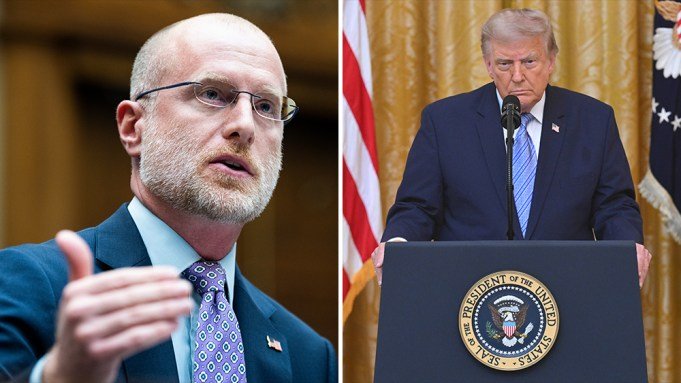
ABC sued the FCC earlier this month on First Amendment grounds, alleging that some of its regulatory actions are retaliation by the Trump administration over its news reporting and other content. Among other things, the FCC under Chairman Brendan Carr has ordered the network’s eight owned stations to submit its broadcast licenses for early renewal. As part of the lawsuit, the network’s legal team cited Trump’s Truth Social and other threats to use to FCC to punish broadcasters.
The FCC said in response, “All broadcasters have a legal obligation to operate in the public interest—even Disney. The FCC has been examining claims that Disney engaged in illegal DEI discrimination for over a year.” A judge will hear arguments in October on the network’s request for a temporary restraining order to halt the FCC’s early license renewal order.
Trump added in his Truth Social post, “The Press is a Disgrace to our Nation, and I hope that Chairman Brendan Carr, and the fine people of his Commission, will take this Threat to our Country very seriously. Thank you for your attention to this very important matter of Fake Polls and Commentary!”
NBC News said in a comment, “Kristen is one of the best in the business and we stand by her.”
An FCC spokesperson did not immediately return a request for comment. Anna Gomez, the sole Democrat on the commission, said, “As I’ve said many times, the FCC has no authority to punish journalists this administration doesn’t like. These threats to press freedom are dangerous. They undermine the foundation of our democracy, and they have no place in it.”
Trump also lashed out at polling. He posted on Truth Social, “THE FAKE POLLS USED BY OUR CROOKED MEDIA ARE OUT OF CONTROL, AND SOMETHING MUST BE DONE ABOUT IT. FCC TO THE RESCUE! President DJT”
The FCC has a news distortion policy, but advises that its authority “is narrow.”
“The agency is prohibited by law from engaging in censorship or infringing on First Amendment rights of the press.” the FCC states on its website. Any investigation is supposed to focus on claims that a news report “was deliberately intended to mislead viewers or listeners.”
The agency says in its guidance, “The FCC does not investigate claims of collateral inaccuracy in news reports or differences of opinion over the truth or validity of aspects of a news program.”
The White House has previously said that the president’s stock and bond portfolio is independently managed.
According to the president’s latest financial report, released by the Office of Government Ethics, he sold between $50,001 and $100,000 of Netflix on June 12, another $500,001 to $1 million on June 18, between $15,001 and $50,000 on June 16, and between $50,001 and $100,000 on June 24. He bought between $1,001 and $15,000 on June 3, and between $1,001 and $15,000 on June 23.
Per the filing, the president also purchased between $50,001 and $100,000 in The Walt Disney Co. on June 18, and between $1,001 and $15,000 on June 3. He purchased between $1,001 and $15,000 in Warner Bros. Discovery on June 16. The form also showed the sale of $1,001 to $15,000 in Comcast securities on June 16, $1,001 to $15,000 on June 23, $1,001 to $15,000 on June 3, and between $100,001 and $250,000 on June 24.
The report also showed the sale of $100,001 to $250,000 shares of Amazon on June 12 and the sale of $100,001 to $250,000 on June 24. It showed the purchase of $15,001 to $50,000 of Amazon on June 15, the purchase of $1,001 to $15,000 on June 23, the purchase of $1,001 to $15,000 on June 3.
The OGE report does not require specific amounts of sales or purchases, but ranges.
A White House official did not immediately respond to a request for comment. But the administration has previously said that “all holdings are maintained in discretionary accounts and invested through computer-based model portfolios that automatically replicate recognized indexes, such as the Schwab 1000.”
The official said that Trump does not have the ability to “direct, influence, or provide input regarding how the portfolio is invested or when investments are bought or sold.”
The Department of Homeland Security confirmed that Immigration and Customs Enforcement has detained right wing commentator Milo Yiannopoulos for overstaying his visa.
According to a statement posted on the DHS X account, Yiannopoulos, described as an “illegal alien from the United Kingdom, was arrested at Louis Armstrong New Orleans International Airport on Thursday.
“Yiannopoulos legally entered the country on May 14, 2019, through New York City, New York. He chose to overstay his welcome in violation of our nation’s laws,” DHS said.
“Yiannopoulos was issued a final order of removal by an Immigration Judge on July 22, after failing to show up for his immigration hearing. He will remain in ICE custody pending removal.”
Laura Loomer, one of Yiannopoulos’ foes on the right, wrote on X that she was the first to report that he was in the U.S. illegally. “I told you all that Milo was an illegal alien,” she wrote.
Yiannopoulos rose to prominence as an early backer of Donald Trump, with a Breitbart.com column and a determination to generate controversy. He resigned from Breitbart in 2017 amid the furor over remarks in which he appeared to condone sex with minors. He later worked for Kanye West’s 2024 presidential campaign and has supported the mass deportation operations during Trump’s second term. He wrote on X last summer, “Total legal immunity for ICE agents when they’re on duty.”
DHS appeared to be using the visibility of the Yiannopoulos detention to make a point. The department said in the X post that “being in detention is a choice. We encourage all illegal aliens to take control of their departure with the CBP Home App. The United States is offering illegal aliens $3,000 and a free flight to self-deport now. We encourage every person here illegally to take advantage of this offer and reserve the chance to come back to the U.S. the right legal way to live the American dream. If not, you will be arrested and deported without a chance to return.”
ICE also linked to a TMZ story on the arrest.
On August 27, ICE arrested Milo Yiannopoulos, an illegal alien from the United Kingdom, at the Louis Armstrong New Orleans International Airport (MSY) in Kenner, Louisiana. Yiannopoulos legally entered the country on May 14, 2019, through New York City, New York. He chose to… https://t.co/Hk6QBUmGDIpic.twitter.com/DbIhv8Z6PI
The White House has previously said that the president’s stock and bond portfolio is independently managed.
According to the president’s latest financial report, released by the Office of Government Ethics, he sold between $50,001 and $100,000 of Netflix on June 12, another $500,001 to $1 million on June 18, between $15,001 and $50,000 on June 16, and between $50,001 and $100,000 on June 24. He bought between $1,001 and $15,000 on June 3, and between $1,001 and $15,000 on June 23.
Per the filing, the president also purchased between $50,001 and $100,000 in The Walt Disney Co. on June 18, and between $1,001 and $15,000 on June 3. He purchased between $1,001 and $15,000 in Warner Bros. Discovery on June 16. The form also showed the sale of $1,001 to $15,000 in Comcast securities on June 16, $1,001 to $15,000 on June 23, $1,001 to $15,000 on June 3, and between $100,001 and $250,000 on June 24.
The report also showed the sale of $100,001 to $250,000 shares of Amazon on June 12 and the sale of $100,001 to $250,000 on June 24. It showed the purchase of $15,001 to $50,000 of Amazon on June 15, the purchase of $1,001 to $15,000 on June 23, the purchase of $1,001 to $15,000 on June 3.
The OGE report does not require specific amounts of sales or purchases, but ranges.
A White House official did not immediately respond to a request for comment. But the administration has previously said that “all holdings are maintained in discretionary accounts and invested through computer-based model portfolios that automatically replicate recognized indexes, such as the Schwab 1000.”
The official said that Trump does not have the ability to “direct, influence, or provide input regarding how the portfolio is invested or when investments are bought or sold.”
The White House has previously said that the president’s stock and bond portfolio is independently managed.
According to the president’s latest financial report, released by the Office of Government Ethics, he sold between $50,001 and $100,000 of Netflix on June 12, another $500,001 to $1 million on June 18, between $15,001 and $50,000 on June 16, and between $50,001 and $100,000 on June 24. He bought between $1,001 and $15,000 on June 3, and between $1,001 and $15,000 on June 23.
Per the filing, the president also purchased between $50,001 and $100,000 in The Walt Disney Co. on June 18, and between $1,001 and $15,000 on June 3. He purchased between $1,001 and $15,000 in Warner Bros. Discovery on June 16. The form also showed the sale of $1,001 to $15,000 in Comcast securities on June 16, $1,001 to $15,000 on June 23, $1,001 to $15,000 on June 3, and between $100,001 and $250,000 on June 24.
The report also showed the sale of $100,001 to $250,000 shares of Amazon on June 12 and the sale of $100,001 to $250,000 on June 24. It showed the purchase of $15,001 to $50,000 of Amazon on June 15, the purchase of $1,001 to $15,000 on June 23, the purchase of $1,001 to $15,000 on June 3.
The OGE report does not require specific amounts of sales or purchases, but ranges.
A White House official did not immediately respond to a request for comment. But the administration has previously said that “all holdings are maintained in discretionary accounts and invested through computer-based model portfolios that automatically replicate recognized indexes, such as the Schwab 1000.”
The official said that Trump does not have the ability to “direct, influence, or provide input regarding how the portfolio is invested or when investments are bought or sold.”
The White House has previously said that the president’s stock and bond portfolio is independently managed.
According to the president’s latest financial report, released by the Office of Government Ethics, he sold between $50,001 and $100,000 of Netflix on June 12, another $500,001 to $1 million on June 18, between $15,001 and $50,000 on June 16, and between $50,001 and $100,000 on June 24. He bought between $1,001 and $15,000 on June 3, and between $1,001 and $15,000 on June 23.
Per the filing, the president also purchased between $50,001 and $100,000 in The Walt Disney Co. on June 18, and between $1,001 and $15,000 on June 3. He purchased between $1,001 and $15,000 in Warner Bros. Discovery on June 16. The form also showed the sale of $1,001 to $15,000 in Comcast securities on June 16, $1,001 to $15,000 on June 23, $1,001 to $15,000 on June 3, and between $100,001 and $250,000 on June 24.
The report also showed the sale of $100,001 to $250,000 shares of Amazon on June 12 and the sale of $100,001 to $250,000 on June 24. It showed the purchase of $15,001 to $50,000 of Amazon on June 15, the purchase of $1,001 to $15,000 on June 23, the purchase of $1,001 to $15,000 on June 3.
The OGE report does not require specific amounts of sales or purchases, but ranges.
A White House official did not immediately respond to a request for comment. But the administration has previously said that “all holdings are maintained in discretionary accounts and invested through computer-based model portfolios that automatically replicate recognized indexes, such as the Schwab 1000.”
The official said that Trump does not have the ability to “direct, influence, or provide input regarding how the portfolio is invested or when investments are bought or sold.”
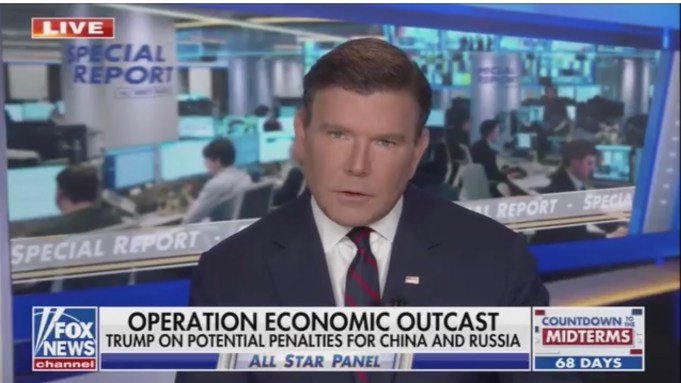
Fox News anchor Bret Baier called out Donald Trump over a Truth Social post in which he attacked Fox News report Jonathan Hunt as a “flunky.”
On Special Report on Thursday, Hunt reported on the status of efforts to reach a peace deal between the United States and Iran, reporting that there were “no significant developments” in regional efforts between Tehran and officials from Qatar and Pakistan. He reported that when it came to talks between Iran and the United States, Trump confirmed that “there are currently no talks between the two.” Hunt also reported that Iran had struck out again at ships in the Strait of Hormuz, mocked the Trump administration’s economic D-Day as “pure parody,” and thanked China for rejecting that sanctions plan.
Soon after, on Truth Social, Trump posted, “Jonathan Hunt of FoxNews did a particularly inaccurate report on the Failing Islamic Republic of Iran. I don’t want to meet, they do. In fact, they are begging to make a deal. Bret Baier should straighten out his flunkies, for a change! President DJT.”
Later in hour, Baier addressed Trump’s post, reading it to viewers and saying, “First of all Jonathan Hunt is not a flunky. He is a great reporter. First of all, Mr. President, we didn’t say you wanted to meet. In fact, we played a soundbite you didn’t want to meet and there are no negotiations. We said that Treasury Secretary [Scott] Bessent] is hoping to meet with G20 countries to increase the pressure on Iran and that Gulf state allies, including Qatar, are inside Tehran trying to get Iran to agree to concessions.”
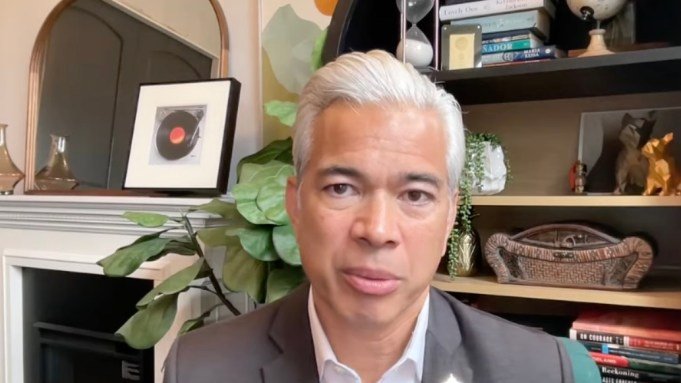
California Attorney General Rob Bonta took a victory lap following a proposed settlement of up to $17 billion for claims brought by 51 attorneys general against Meta, suggesting that the parent of Instagram and Facebook realized that a trial was not going well for their side.
As Bonta went through details of the settlement, including remedies designed to limit mental health harms and social media addiction among children and teens, he told reporters, “It’s also telling that Meta settled midway through Instagram President Adam Mosseri‘s testimony and before CEO Mark Zuckerberg could take the stand.”
The company was defending itself in a trial that started on Aug. 18 in California.
On the stand on Tuesday, Mosseri at one point was questioned by prosecutors about a feature, called Take a Break, a pop-up message suggesting to young users that they the give the app a rest after a fixed period of use. An internal document showed that only 1.8% of teens actually used the feature. A blog post by Mosseri around when it was introduced said “more than 90%” of users of the feature kept it on. But, the state AGs noted, the executive did not indicate that a very small number of people actually used it in the first place.
“The trial was not going well for Meta. Having Instagram President Adam Mosseri giving testimony as we settled, it was not random … I think they were dying to have him get off the stand. It was not going well for him,” Bonta said.
The settlement agreement still has to be approved by a federal judge.
It includes a set of new restrictions that Meta will place on social media for users under 18, including a default daily time limit of two hours that can only be lifted by a parent. Other defaults are designed to limit use overnight and during school hours, and a ban on displaying numbers of likes or reactions for users under 18.
Bonta also talked of the next step in their litigation: TikTok.
“As big as Meta is, it doesn’t stand alone,” Bonta said. “We’re continuing our fight across social media, including our litigation against TikTok, and we’ll continue to demand better from all parts of this industry through our ongoing work with the legislature.” Bonta and other state attorneys general filed the TikTok lawsuit in 2024.
Bonta also vowed to defend SB 976, the Protecting Our Kids from Social Media Addiction Act, a new California law that is being challenged by tech giants on First Amendment grounds.
Bonta said that, with the Meta settlement, his “hope and my belief is that we will see commitments across the industry.” In addition to TikTok, he called out Snap and YouTube.
Bonta later said that although YouTube is not the “same in its model as Meta and TikTok,” there are “similar features and products that YouTube uses that are along the same lines that … are designed to create excessive compulsive use that lead to mental health harms, and most importantly that hurt our children, and can and should be changed.”
He added, “I think this …constellation of solutions in terms in injunctive relief that we’ve delivered here that apply to Meta, I really think that YouTube and Snap and TikTok should be thinking very closely about them and their commitment to adopt the same.”
Several of the changes Meta agreed too are partly contingent on other social media players signing on. For instance, a default daily time limit of two hours for users under 18 that can only be lifted by a parent, under the settlement, would drop to one hour If other social media platforms agree to similar terms.
And a default nighttime block between midnight and 6 a.m. for users under 18 that can only be lifted by a parent would expand to cover 10 p.m. to 7 a.m. if other social media platforms follow.
This case and others lodged against social media giants have been compared to transformative litigation against big tobacco companies in the 1990s. Asked if he agress, Bonta said: “I think there are some similarities. There are also some limits to those similarities … Regardless, this is a major moment to clean up an industry that has been hurting our kids.”
“So, in the way that the impact of the solutions delivered in [big] tobacco were good for health, good for kids, good for Californians and Americans, this is similar … It’s similar in that fact that it’s a number of AGs banding together, asserting ourselves, exerting our authority, demanding better, requiring accountability, and enforcing the law and delivering results. It’s similar in that way that Congress hasn’t been delivering and has left a vacuum and a gap, so that the state AGs stepped in.”
He added, “It deals with public health. Different issues, but public health issues broadly … But I think the most important thing to focus on here, whether it’s similar tobacco or not, is this is transformative. This is momentous. This is a major step forward in the ongoing quest and journey to make sure that our children are safe everywhere, including online.”
The settlement involved attorneys general from 47 states, the District of Columbia and U.S. territories.