Tag: Business – Decrypt

  • Bitcoin Giant Strategy, Coinbase Among Most-Shorted Stocks: Goldman Sachs

    In brief

    • Shares of Strategy (MSTR) and Coinbase (COIN) are two of the most shorted stocks on the market, according to data compiled by Goldman Sachs.
    • Strategy has been a popular short target for use in arbitrage trades, Bitwise CIO Matt Hougan told Decrypt.
    • The firm’s stocks have both fallen heavily amid crypto’s decline, dropping 60% and 40% respectively in the last six months.

    Big money is betting against crypto equities like Bitcoin treasury firm Strategy (MSTR) and American crypto exchange Coinbase (COIN), new data compiled by Goldman Sachs Research shows. 

    The firms find themselves ranked first and fourth in short interest as a percentage of market cap at 14% and 10%, respectively, among companies valued at $25 billion or greater. 

    “Crypto is like cilantro: Some people love it and some people hate it,” Bitwise CIO Matt Hougan told Decrypt. “It’s not surprising to see it at the top of the short interest list,” he said of MSTR and COIN’s ranking.

    While the data, gathered from reported hedge fund holdings at the end of 2025, shows no notable change in hedge fund ownership for the two firms from Q3 to Q4, the pair have been some of the weakest performers among top shorted stocks. 

    While up about 9% on Wednesday to a recent price of $135, shares of MSTR have plunged around 60% in the last six months as Bitcoin has fallen precipitously from its October all-time high of $126,080. The top crypto asset, and the bedrock of Strategy’s business, is now changing hands at $68,614—over 45% below that all-time high mark. 

    That extended decline has led to mounting losses for Michael Saylor’s firm, formerly known as MicroStrategy, which now finds itself facing unrealized or paper losses of around $5.3 billion.

    Skeptics have previously noted that if MSTR shares fall far enough, it could force the firm to sell some of its Bitcoin holdings to repay debts, creating a cascading event within the market as its biggest player liquidates its BTC. The company established a cash reserve in December to cover stockholder dividends, but didn’t rule out potential Bitcoin sales in the future.

    Users on Myriad, a prediction market platform operated by Decrypt‘s parent company Dastan, currently pencil in a less than 15% chance that Strategy sells Bitcoin by the end of 2026. That mark has fallen from a peak above 35% earlier this month.

    “Shorting MSTR has been a popular trade for the past couple of years,” said Hougan, noting that some have been running arbitrage trades like “long Bitcoin and then shorting MSTR,” or “long the convertible bonds and short the stock.” 

    While those trades are “reasonable” in Hougan’s eyes, he said some traders shorting the firm are misinterpreting its business model.

    “Some people don’t understand MSTR’s balance sheet, and think the company is at some kind of threat of going bankrupt if the value of Bitcoin falls below their purchase price,” he added. 

    “This is, of course, wrong, and anyone shorting for this reason will learn they are wrong the hard way.”

    Saylor recently defended the firm amid similar concerns, noting that Strategy would be fine even if Bitcoin dropped all the way down to $8,000

    Despite its business not being centered on only Bitcoin, shares in Coinbase too have taken a dive amid falling crypto prices over the last six months, dropping around 40% during that time. The firm recently missed expectations for its fourth quarter earnings, but with shares trading around $167 at the time, analysts from Bernstein indicated the stock was “too ‘cheap’ to sell.” 

    COIN shares are trading higher today, above $184 amid a 14% boost on Wednesday, but sit well off its 52-week high of $444.

    Other firms with crypto ties on the most shorted list include CoreWeave (CRWV), Robinhood (HOOD), and PayPal (PYPL). 

    Daily Debrief Newsletter

    Start every day with the top news stories right now, plus original features, a podcast, videos and more.

  • MrBeast Employee Fined, Suspended by Kalshi for Insider Trading on YouTube Videos

    MrBeast Employee Fined, Suspended by Kalshi for Insider Trading on YouTube Videos

    In brief

    • Kalshi shared information about two insider trading cases.
    • They involved a YouTube video editor for MrBeast and a California political candidate, the company said.
    • Both individuals faced suspensions and fines.

    Kalshi revealed enforcement actions against two traders on Wednesday, saying a political candidate in California and YouTube video editor who worked for MrBeast conducted insider trading on its prediction markets platform.

    The cases are among the first that Kalshi has made public after sifting through a monthslong backlog of suspicious trading activity. They resulted in fines and disciplinary actions, as well as referrals to the CFTC, according to a blog post draft shared with Decrypt.

    One of the individuals, identified as Artem Kaptur by Kalshi, was employed by YouTube star MrBeast, whose real name is James Stephen Donaldson. The other individual was identified as Kyle Langford, a 24-year-old Republican political candidate in California.

    Kalshi said the insider linked to MrBeast traded around $4,000 on YouTube “streaming markets,” where people can wager on which words MrBeast will say in his videos. Kaptur was fined more than $20,000 and suspended from the platform for two years, Kalshi added.

    Prediction markets centered around predetermined outcomes, such as edited YouTube videos, have drawn skepticism because they are susceptible to insider trading and manipulation by the content creators themselves. Unlike a sporting event or a political election—where the outcome is determined by external, uncontrollable forces—the “truth” of a YouTube video is tailored.

    The insider linked to MrBeast exhibited “near-perfect trading success on markets with low odds,” which was flagged by Kalshi’s surveillance systems, the firm said. Meanwhile, several users flagged suspicious activity in associated trading data to the company.

    An investigation conducted by the prediction market startup determined that the video editor “likely had access to material, non-public information connected to his trading” based on his employment. 

    Following the original publication of this story, Beast Industries—the firm behind MrBeast’s growing content and packaged products empire—said it was taking action to prevent similar situations in the future.

    “Beast Industries has no tolerance for this behavior, whether by contestants or our own employees,” the spokesperson said. “We have a longstanding policy in place against employees using proprietary company information which safeguards the highest standards and ethics throughout our organization.”

    “With regard to this particular matter, we’ve already initiated an independent investigation as part of our overall ongoing efforts to ensure the integrity of our workplace and trust with our global audiences,” they added. “We welcome Kalshi—and hopefully others in the space—also taking this issue seriously, but it only works if they are willing to communicate their findings, so we’re hopeful they’ll be more open to that in the future.”

    Beast Industries did not specify whether it has taken any action against Kaptur. Decrypt inquired for more information.

    Furthermore, the spokesperson said that Beast Industries prohibits employee “wagering, betting, or [use of] prediction markets that could involve or be influenced by proprietary company information.”

    Additionally, the company said it will ensure that all contestants of its “Beast Games” show know that “access to confidential information explicitly precludes them from profiting, monetizing, or benefiting (financially or otherwise) from their access or participation in these markets.”

    The individual who appeared to be Langford wagered $200 on their own gubernatorial bid in California before pivoting to a Congressional run. Kalshi said that wager was telegraphed on social media, but he isn’t the only candidate for office in the U.S. that’s done that.

    Klashi indicated that the politician was fined $2,200 and banned from the platform for five years. It views self-wagers as a form of market manipulation. Langford predicted that he would become California’s next governor on Kalshi last year, per Event Horizon.

    Decrypt has reached out to Langford for comment.

    Kalshi said that it plans to donate fines to a nonprofit providing education on derivatives. Moving forward, it aims to publish information about investigations on a quarterly basis.

    Kalshi is required to report cases to the CFTC, but the exchange is trying to use that obligation as an opportunity to distinguish itself within a sector that critics argue is lightly regulated.

    When it comes to policing traders’ activity, Kalshi Enforcement Head Robert DeNault told Decrypt last week that “source agency” trading is among the firm’s biggest focuses.

    If a trader is affiliated with the entity responsible for an event’s resolution on Kalshi, they are barred from the market. As an example, he referenced the “legal duty” that background dancers from the Super Bowl halftime could have to refrain from trading due to confidentiality clauses.

    “Those are types of policing activity that we might see on the exchange that you wouldn’t see necessarily from a federal regulator,” he said. “‘Insider’ does have a real legal meaning, even though it’s not actually defined in any statute.”

    Editor’s note: This story was updated after publication to include comments from Beast Industries.

    Daily Debrief Newsletter

    Start every day with the top news stories right now, plus original features, a podcast, videos and more.
  • Democrat Senator Launches $1.7B Iran Sanctions Probe Into Binance

    Democrat Senator Launches $1.7B Iran Sanctions Probe Into Binance

    In brief

    • Senator Richard Blumenthal has opened an investigation into alleged sanctions violations at Binance.
    • A Wall Street Journal report claimed that $1.7 billion flowed from Binance accounts to Iran-linked entities.
    • Binance has denied wrongdoing and accused the WSJ of defamatory reporting.

    U.S. Senator Richard Blumenthal (D-Conn), the top Democrat on the Senate Permanent Subcommittee on Investigations, has opened a preliminary inquiry into Binance following reports that the cryptocurrency exchange allowed $1.7 billion in transactions tied to Iranian entities and Russia’s sanctions-evading oil trade.

    The probe follows reporting by The Wall Street Journal alleging that internal Binance investigators uncovered transfers from accounts on the platform to intermediaries connected to Iran, including entities linked to the Islamic Revolutionary Guards Corps and Yemen’s Houthi militants.

    According to the report, two Hong Kong-based partners—Hexa Whale and Blessed Trust—acted as conduits for some of the transactions. The articles said investigators identified roughly 2,000 accounts associated with Iranian entities despite Binance’s stated ban on Iranian users, and that some compliance staff who raised concerns were later suspended or dismissed.

    Binance has denied the allegations. In a tweet posted Tuesday, CEO Richard Teng accused the WSJ of publishing “defamatory claims” about the company’s compliance program and said the outlet failed to acknowledge corrections provided by the exchange.

    In a legal letter to the newspaper, Binance said it wants the “false information” corrected immediately and the “defamatory imputations retracted.”

    Binance has said its sanctions exposure is minimal, that it detected and reported suspicious activity, and that it found no evidence of violations in its own review. The company said accounts linked to the reported transactions were removed and that it stopped working with Blessed Trust in January.

    Decrypt has reached out to Binance and will update this article should the exchange respond.

    Binance is the world’s largest cryptocurrency exchange by trading volume, serving tens of millions of users globally and offering trading in hundreds of digital tokens. The company has sought to position itself as having strengthened its compliance controls in recent years following heightened scrutiny from U.S. regulators.

    Binance and compliance

    The latest allegations come after Binance pleaded guilty in 2023 to violating U.S. anti-money-laundering laws and sanctions requirements, agreeing to pay $4.3 billion in penalties and to exit the U.S. market. Founder Changpeng “CZ” Zhao was sentenced to four months in prison for his role in the violations. He was given a presidential pardon by Donald Trump in October last year.

    That hasn’t stopped U.S. lawmakers taking an interest. In a letter to Teng dated Tuesday, Blumenthal wrote that “Binance appears to have ignored warnings and recommendations to prevent Iranian money laundering schemes on its cryptocurrency exchange,” allowing $1.7 billion in transfers to Iran.

    He cited reports that internal compliance staff found that Hexa Whale and Blessed Trust facilitated laundering and trade with Iranian government entities, and that investigators traced cryptocurrency transfers to wallets associated with the Islamic Revolutionary Guards Corps as well as payments tied to Russia’s so-called shadow fleet of oil tankers.

    “Binance appears to have ignored clear warning signs, knowingly allowed illicit accounts to operate, and even provided hands-on support to entities engaged in money laundering,” Blumenthal wrote. “…The scale of the newly revealed illicit transfers — uncaught until nearly two billion dollars flowed to sanctioned entities — and the unexplained firing of internal investigators call into question Binance’s compliance with American sanctions and banking laws.”

    He also pointed to Binance’s ties to World Liberty Financial, a cryptocurrency venture associated with the family of President Donald Trump, suggesting the company has sought to influence policymakers while facing scrutiny.

    The senator requested that Binance provide extensive records by March 6, 2026, including documents related to the activities of Hexa Whale and Blessed Trust, internal reports and communications concerning Iranian and Russian-linked accounts, records tied to the use of Tether and the USD1 stablecoin in potential sanctions evasion, and documentation surrounding the suspension or dismissal of compliance staff involved in the investigations.

    Daily Debrief Newsletter

    Start every day with the top news stories right now, plus original features, a podcast, videos and more.
  • Morning Minute: Stablecoins Are Eating Everything

    Morning Minute: Stablecoins Are Eating Everything

    Morning Minute is a daily newsletter written by Tyler Warner. The analysis and opinions expressed are his own and do not necessarily reflect those of Decrypt. Subscribe to the Morning Minute on Substack.

    GM!

    Today’s top news:

    • Crypto majors rebound sharply, up 4-8%; BTC at $65.7k
    • Meta confirms plans to re-enter stablecoins across Facebook, Whatsapp and IG
    • Coinbase launches 24/5 stock trading with no fees & fractional shares
    • Tether teased an upcoming product, with speculation of card or neobank
    • Virtual rebounds 20% as Base continues to drive the onchain AI meta

    💰 Stablecoins Are Eating Everything

    Forget crypto winter.

    The stablecoin market doesn’t care.

    📌 What Happened

    On the same day, Stripe announced a $159B valuation driven largely by its stablecoin infrastructure, Meta confirmed it is re-entering the payments space with a stablecoin strategy targeting 3B users.

    Meta sent RFPs to crypto infrastructure firms seeking a third-party partner to administer stablecoin-based payments across Facebook, WhatsApp, and Instagram, targeting a launch early in H2 2026.

    Stripe, which acquired stablecoin platform Bridge last year and whose CEO Patrick Collison sits on Meta’s board, is the leading candidate. This comes after Stripe processed $1.9 trillion in total payment volume last year, up 34%. Bridge volume quadrupled. Stripe also received a national bank trust charter from the OCC last week, letting it custody crypto and manage stablecoin reserves directly.

    Meta is not issuing its own token, wanting a “stablecoin agnostic” integration and a new in-app wallet. Meta spokespeople clarified the project is about enabling payments, calling it “enabling people and businesses to pay using their preferred method.”

    🗣️ What They’re Saying

    “It may be a crypto winter, but it’s a stablecoin summer.”

    “Stablecoin payments are advancing quietly and inexorably as real-world uptake continues apace.” – Patrick and John Collison, Stripe annual letter

    “Nothing has changed; there is still no Meta stablecoin. This is about enabling people and businesses to make payments on our platforms using their preferred method.” – Andy Stone, Meta communications director

    🧠 Why It Matters

    A Meta stablecoin is a big deal.

    Facebook has 3.2 billion monthly active users. WhatsApp has 3 billion, with an 84.1% daily open rate (the highest of any major app) and 100 billion messages sent every day. Instagram hits another 3 billion.

    Meta’s full family of apps reaches 3.98 billion unique people per month. That’s roughly half the world’s population.

    For those who don’t remember, Meta’s prior stablecoin attempt failed because regulators came down hard on a company trying to issue its own global currency. This time, Meta is doing none of that. They’re opting to be stablecoin agnostic, using third-party rails.

    They learned the lesson and now the regulatory environment under the GENIUS Act has made it easier to execute.

    If Meta gets this working across WhatsApp alone—remittances, creator payouts, cross-border transfers—that’s a stablecoin use case at a scale that could dwarf everything currently on-chain.

    Stablecoin supply and volumes would soar.

    For traders: the clearest beneficiaries are Circle (USDC issuer, likely integration candidate), Tether (always in the driver’s seat), Stripe itself, and any infrastructure layer that sits between the wallet and settlement. And Meta of course…

    🌎 Macro Crypto and Markets

    • Crypto majors are very green after a big rebound; BTC +4% at $65.7K; ETH +6% at $1,940; SOL +8% at $83
    • Virtual (+20%), Morpho (+16%), DOT (+13%) and ETHFI (+13%) led top movers; AVAX +10% as well
    • Bitcoin is down 50% from its all-time high as trader sentiment turns increasingly bearish, per Decrypt reporting today.
    • The Ethereum Foundation began staking 70,000 ETH from its treasury, with an initial 2,106 ETH deposit going live today; staking rewards will fund protocol R&D and ecosystem grants
    • Vitalik has sold more than 10,700 ETH since early February, netting roughly $6.1M, with the proceeds used to help fund the Ethereum Foundation
    • The Trump administration is publicly pressuring the crypto industry to revive the stalled market structure bill
    • Meanwhile, World Liberty Financial is siding with Coinbase against the White House’s version of the market structure bill, creating a split between Trump’s administration and Trump’s own crypto business over stablecoin yield language
    • Michigan lawmakers introduced a bill that would allow state employees to receive wages in Bitcoin
    • Solana DeFi TVhas declined 52% from its September peak to $6.3B
    • Tether teased an upcoming product announcement, with speculation of a neobank and/or payments card

    Corporate Treasuries & ETFs

    Meme Coin Tracker

    • Meme majors were very green alongside majors; DOGE +4%, SHIB +2%, PEPE +4%, TRUMP +5%, PENGU +8%, SPX +10%, FARTCOIN +13%
    • Punch (+22%) and ARC (+25%) led notable movers; AgenC (+110x) and Claw (+52x) led new movers
    • Base AI tokens soared with Virtual (+20%), VVV (+27%), FELIX (+100%) and TIBBIR (+19%)

    💰 Token, Airdrop & Protocol Tracker

    • Coinbase announced tokenized stock trading, available 24/5, with 0 commission fees and with fractional shares available
    • Kraken launched tokenized equity perpetual futures via its xStocks framework, offering up to 20x leverage on assets including the S&P 500, Nasdaq 100, Apple, Nvidia, Tesla, and GLD
    • Binance returned to tokenized stocks for the first time since its 2021 regulatory pullback, listing 10 Ondo Finance-issued U.S. stock, ETF, and commodity tokens on Binance Alpha
    • Aave DAO published an audit of Aave Labs historical performance ahead of their $51M ask tomorrow
    • EtherFi announced its Earn function available on its iOS app

    🚚 What is happening in NFTs?

    • NFT leaders were slightly red with ETH rebounding; Punks -1% at 29.7 ETH, Pudgy -1% at 4.45 ETH, BAYC even at 6 ETH; Hypurr’s +2% at 467 HYPE
    • Doodles (+14%) and Moonbirds (+5%) led top movers
    • Ether Rock sells for 69.9 ETH
    • XCOPY’s ‘Last Selfie’ gets $1M loan

    Daily Debrief Newsletter

    Start every day with the top news stories right now, plus original features, a podcast, videos and more.
  • Circle Stock Jumps Double Digits as It Reports 72% Rise in USDC Circulation

    Circle Stock Jumps Double Digits as It Reports 72% Rise in USDC Circulation

    In brief

    • USDC circulation rose 72% year-on-year to $75.3B.
    • Transaction volume jumped 247% to $11.9T.
    • CRCL shares climbed as much as 20% after earnings.

    Stablecoin issuer Circle saw USDC circulation grow 72% year-on-year to $75.3 billion in the fourth quarter. The company also reported that transaction volume reached $11.9 trillion, an increase of 247%.

    USDC market capitalization has wavered slightly since the end of last year, dipping as low as $70 billion at the start of February. But it has since rebounded to nearly $75 billion, according to crypto price aggregator CoinGecko.

    Circle released its report early Wednesday morning and had its earnings call scheduled for 8 a.m. New York time. In pre-market trading, CRCL shares jumped 14%. After the opening bell, the gains jumped to 20%, with the stock changing hands for $73.24 at the time of writing.

    “The print reinforces continued USDC adoption despite a softer crypto backdrop and should support a strong positive stock reaction today,” wrote Clear Street analysts Owen Lau and Nikhil Vijay in a note shared with Decrypt.

    CEO Jeremy Allaire opened the company’s earnings call saying he believes Circle will grow in tandem with the artificial intelligence industry, and “drive the greatest acceleration of economic activity we’ve ever seen in human history.”

    “Not only will our global economic system become more internet-native, but it will also become dramatically more automated,” he said. “We are entering a world where, in my view, likely tens or hundreds of billions of AI agents will interact and perform economic functions over the internet.”

    He added later that the company has been building systems that support agentic payments.

    “In fact, we just went into testnet release of a new capability, the Circle Gateway, that allows for agents to autonomously and programmatically automate cross chain USDC transactions with a transaction cost of $0.00001,” Allaire said.

    The company saw its revenue and reserve income reach $770 million in Q4, a 77% increase from the previous year.

    Circle saw a net loss from continuing operations reach $70 million in 2025, noting that it was significantly impacted by $424 million worth of stock-based compensation tied to vesting conditions of the company’s initial public offering.

    Circle made its debut on the New York Stock Exchange last June and was so popular with investors that NYSE halted trading three times within the first hour. But the company saw its momentum slow in 2025 as the Federal Reserve lowered interest rates and investors fretted that it would impact interest earned on the cash reserves that back USDC stablecoins.

    Daily Debrief Newsletter

    Start every day with the top news stories right now, plus original features, a podcast, videos and more.
  • WisdomTree Gets SEC Nod to Enable Instant Settlement for Tokenized Money Market Fund

    WisdomTree Gets SEC Nod to Enable Instant Settlement for Tokenized Money Market Fund

    In brief

    • WisdomTree’s tokenized money market fund will soon trade 24/7.
    • The shift will also allow investors to cash out WTGXX instantly.
    • The arrangement required approvals from the SEC and FINRA.

    WisdomTree said on Tuesday that it’s enabling instant settlement for its tokenized money market fund, indicating its product won’t be limited by Wall Street’s pace any longer.

    The shift is expected to reduce “cash drag” associated with settlement delays in traditional markets, while harnessing certain advantages that are innate to digital assets, the institution with $168 billion in assets under management said in a press release.

    The arrangement, which also enables round-the-clock trading for the WisdomTree Treasury Money Market Digital Fund (WTGXX), required exemptive relief from the SEC.

    On Tuesday, the regulator said it was okay for investors to trade WTGXX’s shares at $1 with a dealer on an intraday basis, regardless of WTGXX’s net asset value. That is typically determined every business day immediately after U.S. markets close.

    “The SEC is committed to working with market participants to foster innovation and modernization, especially in enabling the tokenization of our capital markets.” Brian Daly, SEC director of the division of investment management, told Decrypt. “This relief preserves the protections of a regulated money market fund while permitting retail investors intra-day liquidity.”

    Although funds registered under the Investment Company Act of 1940 have historically functioned as investment vehicles, the SEC’s relief positions WisdomTree’s product as a form of digital cash that can be spent, moved, or traded instantly at any hour.

    WisdomTree described that functionality as “unprecedented,” while unlocking the efficiency and liquidity advantages native to digital representations of real-world assets.

    WisdomTree noted that its broker-dealer subsidiary gained FINRA approval to engage in principal trading for WTGXX. The company said that enables round-the-clock liquidity for shares in its tokenized money market fund, which can be exchanged for stablecoins.

    At the same time, WisdomTree said its rollout “continues dividend accrual” for WTGXX, which involves using blockchain timestamps to track how long investors hold the token. That allows shareholders to earn yield even as WTGXX moves between wallets, WisdomTree said.

    WTGXX was valued at $730 million on Tuesday, according to RWA.xyz. It has been issued across nine networks, such as Ethereum and Solana, while offering an annualized percentage yield of 3.5%. Backed by U.S. Treasuries, its shares aim to trade at a value of $1 like a stablecoin.

    The development underscores how the SEC is becoming increasingly comfortable with mainstream financial products augmented by their blockchain-based format. In its relief order, the SEC said its green light was “appropriate in the public interest.”

    In July, SEC Chair Paul Atkins said the agency was committed to modernizing securities rules and regulations enabling financial markets to move on-chain through an initiative called “Project Crypto.”

    In the press release, WisdomTree Head of Digital Assets Will Peck indicated approvals from the SEC and FINRA are paving the way for that transition.

    “This is a true innovation and improvement in the investor experience, and it demonstrates how blockchain can serve as a new set of rails for capital markets,” he said.

    Editor’s note: This story was updated after publication with a comment from the SEC.

    Daily Debrief Newsletter

    Start every day with the top news stories right now, plus original features, a podcast, videos and more.

  • Solo Bitcoin Miner Nabs $200K After Renting $75 Worth of Hash Power

    Solo Bitcoin Miner Nabs $200K After Renting $75 Worth of Hash Power

    In brief

    • A Bitcoin miner rented $75 worth of hash power and earned a $200,000 BTC reward by finding a block.
    • Based on current Bitcoin mining dynamics, such an event is likely to happen only once every 21 years.
    • Participating in solo Bitcoin mining has been likened by experts to “playing the lottery.”

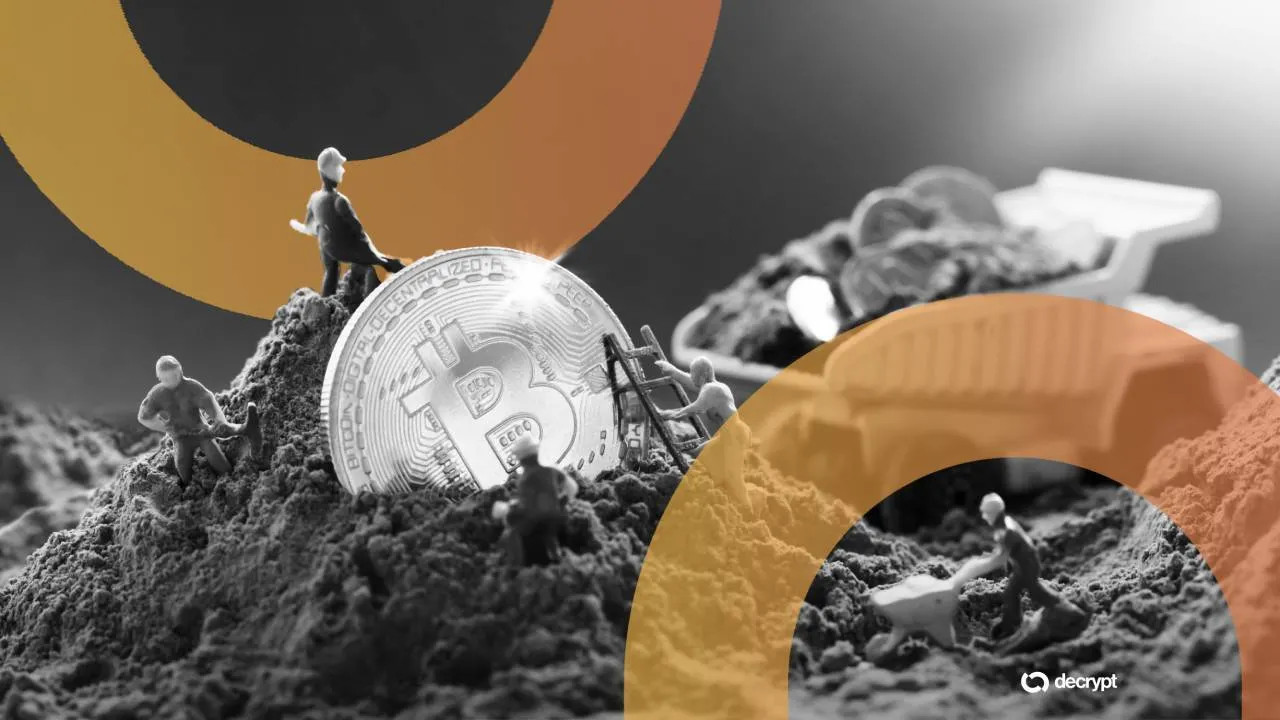
    A Bitcoin miner that rented $75 of mining power defied the odds by finding a solo block reward, earning more than 3.1 BTC worth around $200,000 early Tuesday. 

    The individual rented the minimum 1 Petahash/s (PH) of hash power via Braiins hash power marketplace, which allows users to rent Bitcoin mining capacity directly from the company without needing to install or operate any physical hardware themselves. 

    Based on the current hash rate of the Bitcoin network, at that mining capacity, a success would only occur approximately every 1 out of 1.1 million blocks, or about 21 years’ worth of mining, according to estimates from SoloChance.com. 

    Solo mining wins are rare, as most Bitcoin blocks are found and awarded to large mining pools that have dedicated massive amounts of computational power to solving cryptographic puzzles, which underpin Bitcoin’s public ledger and network. 

    But the act, likened by experts to “playing the lottery,” has provided a handful of jackpot winners of late. In January, two solo Bitcoin miners pulled in more than 3.1 BTC in respective rewards worth around $300,000 at the time. In December, another miner beat the odds, scoring a reward of more than $282,000 based on BTC’s price at that time. 

    The feats are even more impressive when you consider the growing hashrate, or the total computational power of the network, which is above 1.1 Zhash/s on average per day according to data from Bitinfo. At this time last year, the network’s overall computational power was around 730 Ehash/s—about 61% of its current capacity.

    That growing share may be coming from miners in China or elsewhere, as North American mining pools saw a declining share of computation power in 2025. A portion of that decline can be attributed to pools and miners that had previously been focused on mining BTC shifting their attention to growing demand for AI compute.

    For example, publicly traded Bitcoin miners like Bitfarms are completely winding down their mining operations, while others like Riot Platforms are being urged by investors to capitalize on opportunities in AI.

    A representative for Braiins did not immediately respond to Decrypt’s request for comment. 

    Daily Debrief Newsletter

    Start every day with the top news stories right now, plus original features, a podcast, videos and more.