Tag: Business – Decrypt

  • ‘The Odyssey’ Director Chris Nolan: Young Audiences are Rejecting ‘AI Slop’

    ‘The Odyssey’ Director Chris Nolan: Young Audiences are Rejecting ‘AI Slop’

    In brief

    • “The Odyssey” director Christopher Nolan has warned that younger film audiences are “utterly rejecting” generative AI.
    • He argued that in filmmakers are showing a “renewed interest” in tactile storytelling after years of “heavily virtual environments.”
    • The emergence of generative AI has divided the top rank of filmmakers, with some embracing the technology and others rejecting it outright.

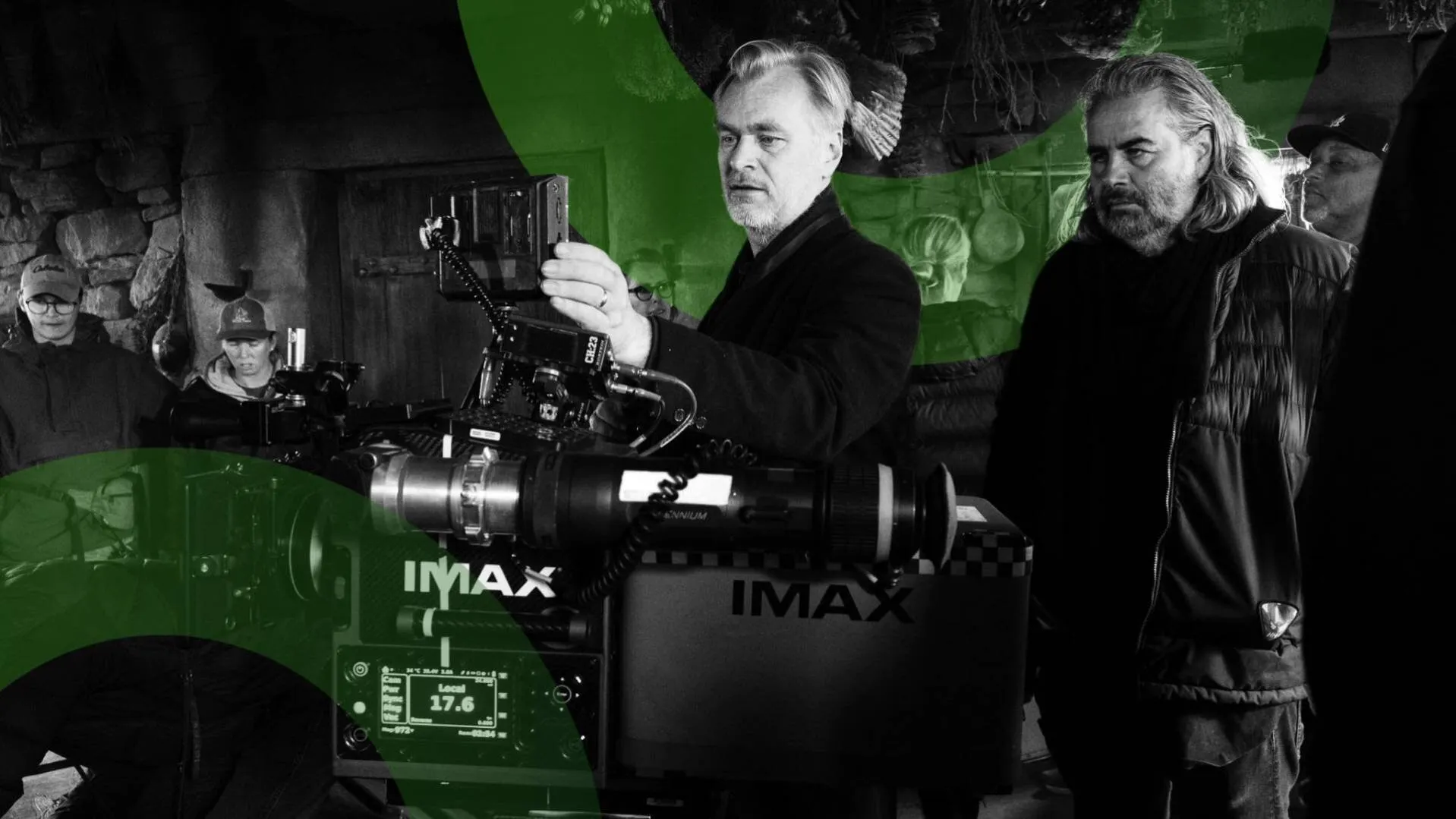
    “The Odyssey” director Christopher Nolan famously doesn’t use a smartphone, so it’s perhaps unsurprising that he isn’t on board with the latest tech buzzphrase.

    On the press tour for his latest effort, Nolan told The Telegraph that young audiences are “utterly rejecting” generative AI, adding that, “I’ve never seen a more rapid wholesale dismissal of a supposedly foundational jump in technology in my lifetime.”

    He pointed to the reaction of his four children, in their late teens and early 20s. “Their judgment of AI slop has been immediate and harsh,” Nolan said. “They see it for what it is very quickly—and it’s much easier for them to identify it—because it grew out of an online world they know really well.”

    The technology has hit at “exactly the wrong time” for filmmaking, he argued, pointing to a “renewed interest in more tactile, more real forms of storytelling” after a glut of films featuring virtual environments.

    Nolan’s own blockbusters have become famous for their spectacular in-camera effects work, whether crashing a 747 into a building for “Tenet,” landing a Spitfire on a beach for “Dunkirk” or planting entire crops of corn for a chase scene in “Interstellar.”

    That said, he’s not averse to using computer-generated VFX himself, like Two-Face’s scarred visage in “The Dark Knight,” and he conceded that not every aspect of generative AI is necessarily “useless or meaningless.”

    Generative AI and filmmaking

    Generative AI has caused a rift in the film industry, with some creatives openly coming out against the technology and others embracing it. Among the former camp are “Pan’s Labyrinth” director Guillermo del Toro, who has led chants of “fuck AI” on stage, and Steven Spielberg, who has dismissed the technology as an “empty chair with a laptop on it.”

    On the other side of the fence are the likes of Martin Scorsese, who has joined AI firm Black Forest Labs as an adviser, and “Terminator 2” director James Cameron, who sits on the board of Stability AI. Ben Affleck has become a convert to the technology, having sold his AI startup InterPositive to Netflix after previously doubting that the technology would be able to “write anything meaningful” or create films “from whole cloth.”

    While filmmakers debate among themselves, AI companies are pressing ahead with video creation tools like Utopia’s PAI, which aims to maintain consistency of output across cuts and scenes.

    Daily Debrief Newsletter

    Start every day with the top news stories right now, plus original features, a podcast, videos and more.
  • BitMine Buys $49 Million in Ethereum as Tom Lee Hails Early Robinhood Chain Demand

    BitMine Buys $49 Million in Ethereum as Tom Lee Hails Early Robinhood Chain Demand

    In brief

    • BitMine added $49 million worth of Ethereum in the last week, bumping its total holdings to nearly 4.8% of the circulating token supply.
    • Chairman Tom Lee said that ETH has showcased its product-market fit thanks to the success of Robinhood’s layer-2 network, Robinhood Chain.
    • BitMine’s stash is now worth more than $10.1 billion as ETH trades around $1,780.

    Publicly traded Ethereum treasury firm BitMine Immersion Technologies added another $49 million worth of ETH to its stash last week, acquiring 27,801 ETH. 

    The firm now holds 5,770,038 ETH, nearly 4.8% of the token’s circulating supply, valued around $10.1 billion as Ethereum trades around $1,780 on Monday. 

    BitMine’s latest purchase comes amid a strong week for the underlying Ethereum network, according to its chairman Tom Lee, who pointed to the strong public debut for Robinhood’s Ethereum layer-2 network, Robinhood Chain. (Disclaimer: Tom Lee is an investor in Dastan, the parent company of Decrypt). 

    “One of the biggest crypto success stories in 2026 is the breakaway success of the Robinhood Chain L2 mainnet on July 1, built on Arbitrum,” said Lee in a statement.

    “Already, dollar volumes have exceeded $1 billion, and Robinhood Chain now has more trading volume than any other decentralized exchange (DEX), demonstrating the outstanding utility and product market fit for Ethereum, which is the underlying chain,” he added. 

    DEX volumes on the chain in the last week have surpassed $3 billion according to data from DeFi Llama, but it still trails more established networks like Ethereum and Solana, which have registered $7.27 billion and $12.34 billion worth of DEX volume over the same time period, respectively. 

    Robinhood Chain, which finalizes on Ethereum and uses ETH as its native gas token, has blossomed in the early going, creating small fortunes for some early meme coin traders on the blockchain—like one individual who turned $85 into more than $2 million in paper gains.

    “Robinhood’s 27 million users are paying crypto fees denominated in ETH,” said Lee. “In other words, everyday users are starting to see ETH as money,” he added. 

    While the mobile brokerage may boast millions of users, data gathered by Token Terminal points to just 788,000 active addresses on Robinhood Chain thus far. 

    Despite the activity, ETH has dropped around 2% in the last 24 hours and has only gained around 1.3% in the last week of trading. That marks significant outperformance of shares in BitMine (BMNR), though, which have dipped 5.7% in the last five trading days. 

    BitMine shares are trading around $14.65 shortly after the opening bell on Monday, down more than 2.2% since trading began. 

    Daily Debrief Newsletter

    Start every day with the top news stories right now, plus original features, a podcast, videos and more.
  • Strategy Pads Cash Reserves to $3 Billion, Skipping Bitcoin Buy for Third Week

    Strategy Pads Cash Reserves to $3 Billion, Skipping Bitcoin Buy for Third Week

    In brief

    • Strategy lifted its cash reserves to $3 billion via common stock proceeds, skipping a Bitcoin buy for the third straight week.
    • Since July 22, the company has generated $215 million in proceeds from Bitcoin sales, less than half the amount of its latest fundraising.
    • At Bitcoin’s recent price, the firm’s stockpile stood around $11 billion underwater.

    Strategy’s Bitcoin-buying machine remained in neutral last week as the firm continued growing its cash reserves, forgoing acquisitions of the digital asset for a third straight week.

    The company raised $467 million during the period by issuing common stock, lifting the balance of its so-called USD Reserve to $3 billion, according to an announcement.

    Shares of Strategy were down 4% following the opening bell, changing hands around $90.80, according to Yahoo Finance. Although the firm’s stock price has tumbled 18% over the past month, it has steadied since hitting a 28-month low of $81.81 in late June.

    Strategy’s flagship preferred stock, Stretch (STRC), had edged down to $87.04, after approaching its highest point in nearly a week in pre-market trading. Since mid-May, the product that currently offers a 12% annual dividend has lingered below its $100 par value, while notching record lows.

    The company’s latest move underscored its commitment to ensuring that it can fulfill preferred stock dividend payments and debt interest obligations, padding its cash cushion to record levels following the adoption of a capital management framework weeks ago.

    In a note shared on Monday, Benchmark-StoneX Managing Director and Senior Research Analyst Mark Palmer shared that Strategy added around 18% to its cash reserves in a single move, providing the firm with more than 20 months’ worth of coverage for its annual dividend and interest obligations of $1.76 billion.

    “The entirety of the company’s capital markets activity during the week was channeled toward fortifying the balance sheet’s cash cushion,” he added.

    The framework marked a significant shift for Strategy, formalizing conditions under which the world’s largest corporate holder of Bitcoin could sell the digital asset. On Monday, the company’s stockpile of 843,775 Bitcoin was valued around $53 billion.

    Since Strategy reported its last Bitcoin purchase on July 22, the company has generated around $215 million in proceeds from selling the digital asset. Those funds were earmarked for dividends and debt, mirroring the intent of its latest fundraising efforts.

    Before Strategy formalized its new approach, some analysts voiced concerns that the company’s USD Reserve had worn too thin, intensifying scrutiny on the sustainability of “ballooning” costs tied to products such as Stretch that receive routine payouts.

    “Orange dots tell only part of the story,” Strategy co-founder and Executive Chairman Michael Saylor said in an X post on Sunday, hinting at the company’s shifting scope alongside a chart of the Bitcoin-buying firm’s recent purchases.

    The company’s willingness to tap Bitcoin as a source of liquidity for its cash reserves represented a reversal of Saylor’s buy-and-never-sell mantra, but some analysts say the shift toward “two-way capital allocation” is ultimately in the company’s best interest.

    On Monday, Bitcoin had fallen 2.3% over the past 24 hours to $62,600, according to CoinGecko. With an average purchase price of $75,476 per Bitcoin, that meant Strategy’s stockpile remained roughly $11 billion underwater.

    Daily Debrief Newsletter

    Start every day with the top news stories right now, plus original features, a podcast, videos and more.
  • Bank of Thailand Flags Abnormal Stablecoin Trades in ‘Grey Economy’ Crackdown

    Bank of Thailand Flags Abnormal Stablecoin Trades in ‘Grey Economy’ Crackdown

    In brief

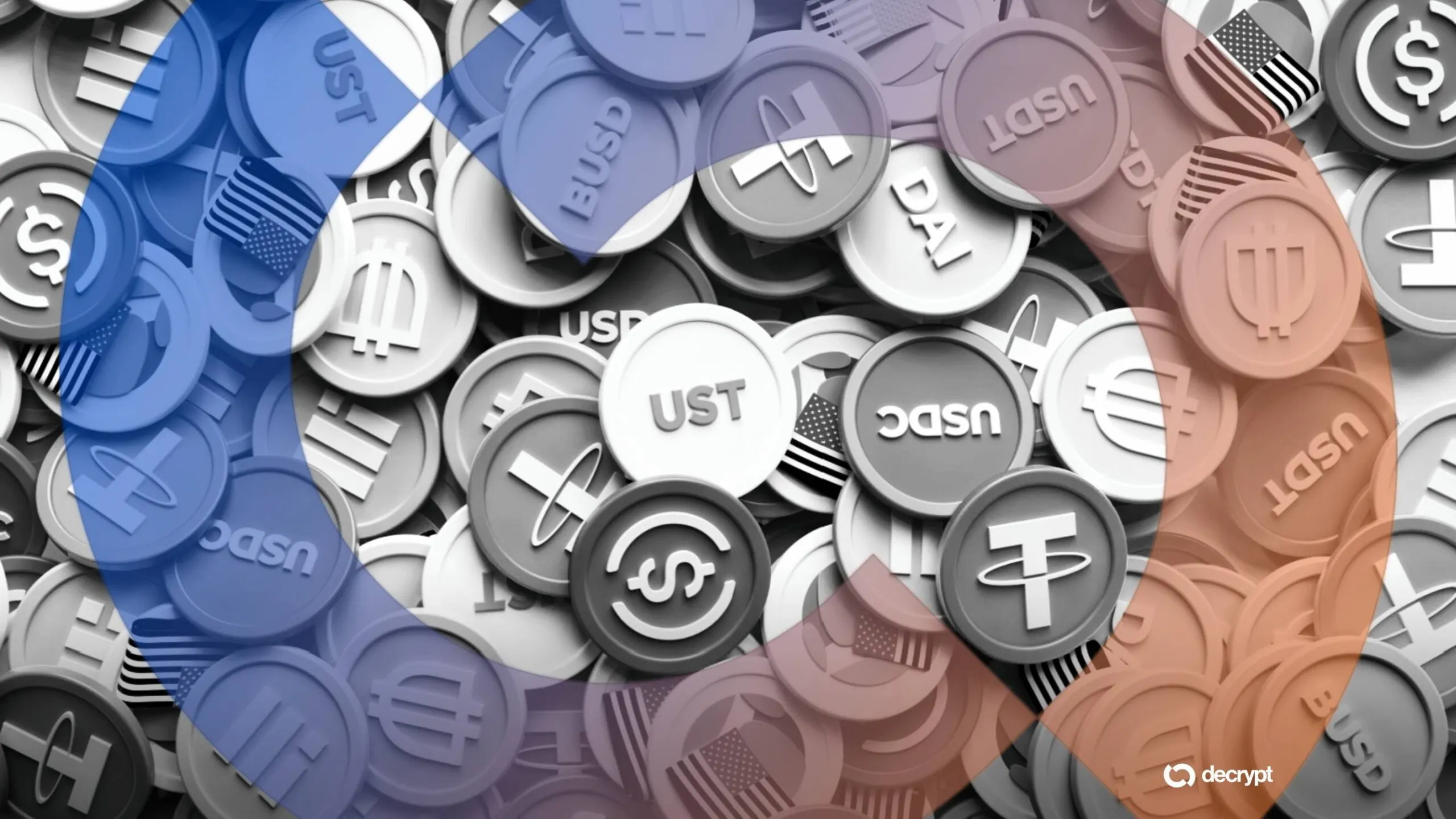
    • The Bank of Thailand is using data analytics to scan for abnormally high-volume trades in stablecoins, especially Tether’s USDT, as part of a crackdown on illicit finance.
    • Governor Vitai Ratanakorn said early reviews flagged transactions that appear designed to evade disclosure rules or bypass normal transfers; the SEC, which regulates digital assets, will decide on any follow-up.
    • The screening sits within a wider sweep targeting large cash deposits and withdrawals, gold trading, and online-gambling “mule” accounts.

    Thailand’s central bank has turned data-analytics tools on the country’s stablecoin market, scanning high-volume trades for signs of illicit money as part of a widening crackdown on the shadow economy.

    Bank of Thailand Governor Vitai Ratanakorn said the central bank has begun screening abnormally large stablecoin transactions, particularly in Tether’s USDT, and has already flagged some that appear designed to sidestep disclosure requirements or move funds outside normal banking channels, according to Thai outlet Thansettakij.

    Because the Securities and Exchange Commission, rather than the central bank, directly regulates digital assets in Thailand, the Bank of Thailand is coordinating with the SEC, which holds the authority to act on the findings. USDT is the largest stablecoin and the most widely used trading pair on crypto exchanges, according to CoinGecko data.

    A wider net

    The stablecoin screening is one strand of a broad campaign against what Thai officials call the “grey economy,” an effort the governor cast as a long haul requiring several measures running in parallel rather than any quick fix. Since April, banks have had to check the purpose of cash withdrawals of 5 million baht (about $150,000) or more, a rule the central bank says cut large cash withdrawals by roughly 35%. From the fourth quarter, depositors bringing in 5 million baht or more in cash may have to declare where it came from.

    Regulators are also tightening controls on high-value banknote exchanges and gold trading, where officials noticed buyers ordering gold through an app in the morning and collecting it from shops in the afternoon. Suspicious activity is now reported to Thailand’s Anti-Money Laundering Office, and monthly gold withdrawals have fallen from about 4,000 kilograms to around 700. Banks have separately closed thousands of “mule” accounts linked to online gambling.

    Crypto in Thailand

    Thailand has become a hotspot for crypto-enabled crime, and its agencies have been chasing it aggressively. Thai police recently traced a romance-scam laundering network in which a single wallet moved more than $122.5 million in 10 months through cross-chain swaps, as part of Interpol’s Operation First Light. In recent months, investigators have also widened a mining probe into a $300 million Chinese laundering network and seized $8.6 million in illegal mining rigs powering scam compounds.

    At the same time, the country is courting legitimate crypto: the SEC’s three-year plan pushes tokenization and crypto ETFs, and the central bank says it is working to develop a baht-backed stablecoin as part of a broader financial-infrastructure overhaul.

    Daily Debrief Newsletter

    Start every day with the top news stories right now, plus original features, a podcast, videos and more.

  • Apple Sues OpenAI, Claims Former Employees Stole Trade Secrets

    Apple Sues OpenAI, Claims Former Employees Stole Trade Secrets

    In brief

    • Apple sued OpenAI and two former employees, alleging theft of hardware trade secrets.
    • The complaint claims former Apple employees accessed confidential files, shared supplier information, and used internal information at OpenAI.
    • The lawsuit follows OpenAI’s $6.5 billion acquisition of Jony Ive’s hardware startup io Products.

    Apple has sued OpenAI and two former employees, accusing the ChatGPT maker of using stolen trade secrets for its consumer hardware efforts.

    The complaint, filed Friday in the U.S. District Court for the Northern District of California, names former Apple senior system electrical engineer Chang Liu and former iPhone and Apple Watch design executive Tang Yew Tan, along with OpenAI Foundation, OpenAI Group PBC, and io Products.

    Apple alleges Liu, who left the company in January after eight years, failed to return a company laptop and later accessed Apple’s internal systems through an authentication bug.

    “While employed by OpenAI, Mr. Liu also exploited a rare, previously unknown authentication bug to access Apple’s shared network folders,” Apple’s attorneys said in the complaint. “Upon discovering that he had this unauthorized access to Apple’s systems, Mr. Liu did not report it, return his stolen Apple-issued work laptop, or delete the program that allowed the access.”

    Apple alleges Liu downloaded dozens of confidential hardware files, including information about unreleased products, engineering presentations, technical specifications, and proprietary project data.

    The company also alleges Tan, who spent 24 years at Apple before becoming OpenAI’s chief hardware officer, used confidential information from his time at Apple to benefit OpenAI.

    The complaint claims Tan used Apple’s internal project names during OpenAI interviews and asked about unreleased products. Apple also alleges candidates were told to bring “actual parts,” for “show and tell.”

    Apple further claims OpenAI’s recruiting process requested “CAD/design artifacts,” prototypes, supplier information, and details about employees’ work on Apple hardware.

    Apple and OpenAI did not immediately respond to a request for comment by Decrypt.

    The lawsuit follows OpenAI’s $6.4 billion acquisition of io Products, the hardware startup founded by former Apple designer Jony Ive. Ive is not named in the complaint.

    According to the filing, OpenAI’s hardware division has hired more than 400 former Apple employees. Apple claims it contacted OpenAI in February with concerns about confidential information entering the company but did not receive a response.

    The news comes after a separate trade secret dispute between OpenAI and Elon Musk’s xAI. In September, xAI sued OpenAI, alleging the ChatGPT maker recruited former employees to obtain confidential source code, training methods, and data center strategies.

    OpenAI denied the allegations, and a federal judge dismissed the lawsuit in June, finding xAI failed to show OpenAI encouraged a former employee to disclose confidential information.

    The lawsuit is a stark pivot from Apple and OpenAI’s earlier relationship.

    In 2024, Apple tapped OpenAI to bring ChatGPT to Siri as part of its Apple Intelligence initiative. However, earlier this year, Apple turned to Google’s Gemini to power its next generation of AI models after delays stalled the rollout.

    Daily Debrief Newsletter

    Start every day with the top news stories right now, plus original features, a podcast, videos and more.