Tag: Al Jazeera

  • ‘Bordering on angry’: The state of play as US midterms enter final month

    ‘Bordering on angry’: The state of play as US midterms enter final month

    Washington, DC – Democrats have the momentum; Republicans are surging in defence and cash.

    That narrative has emerged ahead of the United States midterm elections in November, as races across the country enter their final stretch.

    Recommended Stories

    list of 3 itemsend of list

    With control of the US House of Representatives and the US Senate at stake, Democrats begin October with a surprisingly rosy outlook as more congressional seats are seen as in play.

    Republicans, meanwhile, appear to be in damage control, pouring millions of dollars into races once seen as secure victories while injecting more funding into a handful of marquee showdowns.

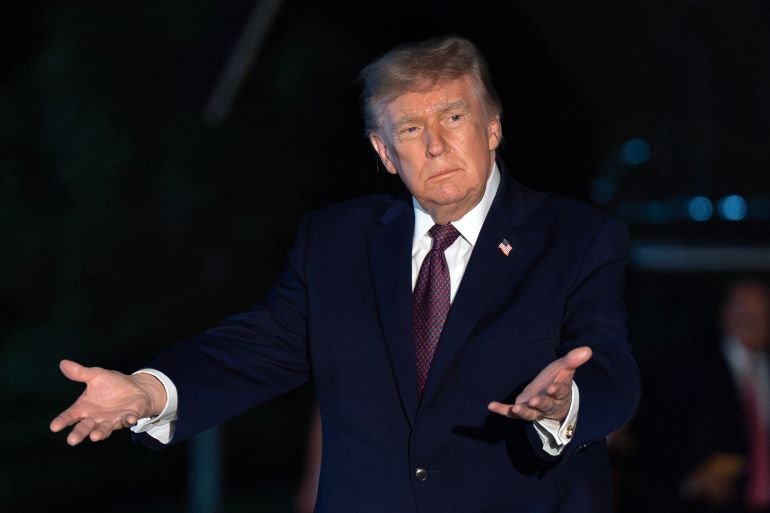
    The party’s standard bearer, President Donald Trump, who has embraced the notion of the election being a referendum on his leadership, enters the final month with staggeringly low approval ratings.

    The most recent Associated Press-NORC polling, released on Thursday, showed Trump with 31 percent approval, the lowest during either of his two terms. Only 26 percent of respondents approved Trump’s handling of the economy, dipping two points below his predecessor, former President Joe Biden’s lowest rating on the topic.

    Surveys continue to show voters rank the economy as their top issue, with topics like gas prices, made higher by the US-Israel war with Iran, dominating their concerns. Immigration and corruption have also regularly ranked high.

    “The broad stroke is that Americans are disappointed, bordering on angry that President Trump hasn’t delivered on the core promises he made when he won re-election,” according to Henry Olsen, a senior fellow at the conservative Ethics and Public Policy Center in Washington, DC.

    House looking solid for Dems

    Political trackers have long projected Democrats will take control of the US House of Representatives in the November 3 vote.

    Winning a majority in the 435-member chamber from Republicans would give the party renewed legislative power to assert leverage over Trump, while launching investigations into his administration’s dealings. Top Democrats have already signalled that probes into Trump’s family business dealings would be top priorities.

    Two election non-partisan prediction authorities, the Cook Political Report and the University of Virginia’s Sabato’s Crystal Ball, have recently assessed that the likelihood of Democrats taking the House has only increased.

    The Cook Political Report recently shifted 15 House races in the direction of Democrats, moving some considered “toss-ups” to “leans Democrat” and some previously considered “lean Republican” to “toss-ups”.

    One such shift was for a Texas border district represented by Republican Monica De La Cruz. Her district was emblematic of a wider Latino shift towards Trump in 2024. Once seen as holding the advantage over her challenger, Democrat Bobby Pulido, Cook now rates her race as a “toss-up”.

    All told, the political analysis clearinghouse now predicts Democrats are on track to win 5 to 15 House seats.

    Senate in play

    With 30 days left to go, “there’s much more drama in the Senate than the House races”, according to Kyle Kondik, the managing editor at Sabato’s Crystal Ball.

    Once considered a pipe dream for Democrats, who need a net gain of at least four seats to win a slim majority, the 100-member chamber has moved within a more comfortable striking distance.

    Unlike in the House, where every seat is up for re-election, only 35 Senate seats are up for grabs in this cycle, creating a far narrower pathway to control.

    “The trajectory of the polling since Labor Day (September 7) has generally been that a bad Republican environment is just getting worse,” Kondik said, adding that “the Senate just seems to get more and more competitive as the cycle has gone on”.

    To be sure, the quality of polling can vary across the country, with Kondik cautioning that gauging the political temperature of the Midwest has been particularly challenging for pollsters.

    Still, in North Carolina, former Democratic Governor Roy Cooper is expected to trounce former Republican National Committee chairman Michael Whatley in the race for a Senate seat currently held by Republicans. Top conservative donors have already begun to divert funds from the contest.

    Surveys have consistently shown Democrats leading in three other races for seats currently held by Republicans: Democrat James Talarico against Republican Ken Paxton in Texas; Democratic challenger Sherrod Brown against Republican incumbent Senator John Husted in Ohio; and Democratic Mary Peltola against Republican Dan Sullivan in Alaska.

    Races for Republican held seats in Iowa, between Republican Ashley Hinson and Democrat Josh Turek, and in Maine, between Republican incumbent Susan Collins and Democratic challenger Troy Jackson, remain separated by less than one point, according to Real Clear Politics polling averages.

    Democrats, meanwhile, have consistently led in polling in Senate races in Georgia, New Hampshire and Michigan for seats the party currently holds.

    Big money in the race

    For Republicans, salvation could be in the spending, with this year’s race continuing a US phenomenon of small fortunes poured into politics.

    All told, at least $4bn had been spent on gubernatorial and congressional midterm advertising buys as of September 17, putting the race on track to become “perhaps the most expensive midterm on record”, according to Michael Franz, co-director of the Wesleyan Media Project.

    Republicans entered September with a considerable funding edge. The Republican National Committee had $125.6m on hand, with the Democratic National Committee trailing far behind with $16.9m and $17.6m in debt.

    When accounting for the three major committees associated with both groups, the Republican Party had $233.4m in cash, according to a CNBC analysis, while the Democratic Party had $130.4m.

    Trip Yang, a Democrat strategist based in New York City, told Al Jazeera such spending can be deployed to help boost a candidate’s name recognition or to tear down a competitor.

    According to AdImpact, Republicans and their allies were set to spend $888m on advertising from mid-September to election day, with Democrats and their supporters set to spend $666m.

    The firm found pro-Republican ad spending would be particularly pronounced in the key Senate races in Ohio, Texas and Michigan, outpacing Democratic spending by at least $24m in each state.

    Trump’s unpopularity, Yang said, means “Republicans spending millions or hundreds of millions of dollars improving their candidates’ images by itself may not be enough”.

    “If you’re a little bit handicapped because your president is so toxic, you try to spend your hundreds of millions of dollars attacking the Democrats to make it more of a food fight,” he said.

    A New York Times analysis estimated by the end of August at least $1bn in so-called “dark money” had been poured into the midterms. The term refers to spending where the donor’s identity is shielded, typically through nonprofit and shell-company donations to Super PACs.

    Industry groups, including those supporting Crypto, AI and online betting firms, are expected to be top spenders in key races, although their support tends to cut across partisan lines.

    Trump, meanwhile, has pledged to spend between $400m and $500m from his MAGA Inc Super PAC, though it has so far spent about $15m to support Paxton’s Senate bid in Texas.

    Pro-Paxton ad reservations far outpaced Talarico in September, according to AdImpact data analysed by NPR, with $94m spent compared with $30m to support the Democrat.

    The Trump factor

    Trump has pledged to spend the final days before the election in non-stop campaign mode, after urging supporters during his Republican Midterm Convention in Dallas, Texas, to “vote like I’m on the ballot”.

    His plan to criss-cross the country for rallies underscores a “base turnout” strategy meant to energise voters already loyal to the party, according to conservative analyst Olsen.

    “But the Republican problem is a persuasion problem with people in the middle,” Olsen said. “[Trump’s campaigning] might help with some turnout … but their real problem is persuasion, and it’s not something that’s going to help with that in the slightest.”

    Polls have spelt trouble for Republicans when it comes to swaying independents, with a PBS News, NPR and Marist poll from September 23 showing unaffiliated voters breaking for Democrats at 57 percent compared with 32 moving towards Republicans.

    US President Donald Trump participates in a midterm election rally for Oklahoma Republican gubernatorial candidate Mike Mazzei at the Choctaw Event Center in Durant, Oklahoma, US, October 1, 2026. REUTERS/Nick Oxford
    US President Donald Trump participates in a midterm election rally for Oklahoma Republican gubernatorial candidate Mike Mazzei at the Choctaw Event Center in Durant, Oklahoma, US, October 1, 2026. [Nick Oxford/Reuters]

    The scenario has created a dilemma for some top Republican candidates over whether to break from the president on his most controversial actions, according to Lee Miringoff, the director of the Marist University Institute for Public Opinion.

    Senate candidates Ashley Hinson in Iowa, Jon Husted in Ohio and Mike Rogers in Michigan all recently put daylight between themselves and Trump on the war with Iran.

    One Republican House candidate, Representative Maria Elvira Salazar, has criticised Trump’s aggressive immigration enforcement policies as she seeks to rally Latino voters in South Florida.

    Trump, in turn, reposted a social media message calling Salazar a “backstabber”.

    “You need to have, you know, something else going for you other than endorsement of Trump,” said Miringoff. “Some Republicans are starting to have self-preservation kick in because they’re concerned.”

    What can change?

    Achieving a wide-scale shift in public opinion remains a tall order for Republicans in the final stretch of the race.

    Many of the defining issues are unlikely to change before November, with Trump signalling a possible escalation with Iran following the vote as he has downplayed the prospect of short-term affordability relief.

    At the same time, the US president has also not ruled out actions that rights groups say could upend voter turnout. Most recently, he refused to commit to not invoking the Insurrection Act or declaring a state of emergency surrounding the vote during an interview with Time magazine.

    Miringoff said he believed that the “potential for more than just a marginal shift is there”, as he assessed some Democratic candidates have struggled to present clear visions beyond opposition to Trump.

    “The result isn’t formed in concrete,” he said, “to the degree that there’s going to be a lot of money still spent.”

    Analyst Olsen saw less remaining wiggle room for the party.

    “Republicans have the time and the resources to change the outcome with respect to a few close Senate races,” Olsen said. “But to change direction, they would need something that would be apocal.”
  • Tennessee prisons official resigns after Christa Pike’s failed US execution

    Tennessee prisons official resigns after Christa Pike’s failed US execution

    The state’s governor said Frank Strada would step down as an independent review examines what went wrong.

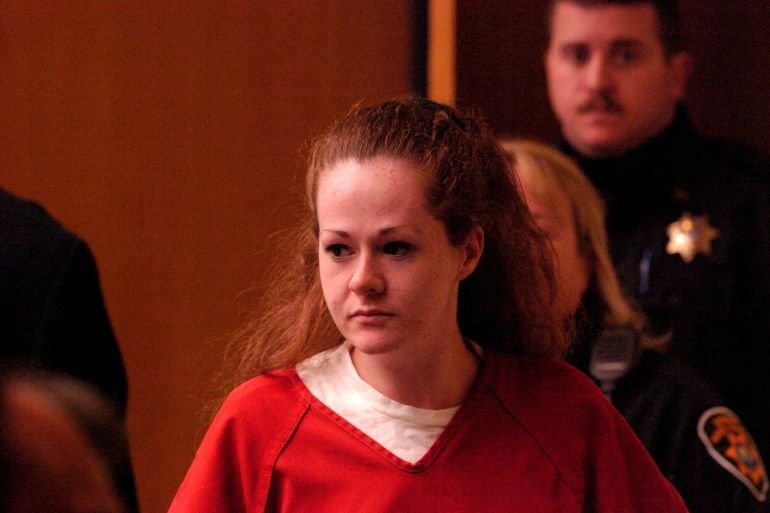
    The official in charge of the prison system in the US state of Tennessee has resigned just days after overseeing the botched execution of Christa Pike.

    The state’s governor, Bill Lee, announced on Saturday that Tennessee Department of Correction Commissioner Frank Strada would step down from his role later this month, a decision Lee described as necessary after the stunning failure.

    Recommended Stories

    list of 3 itemsend of list

    “Commissioner Strada has served with integrity, and I appreciate his willingness to put the interests of Tennesseans first during this difficult moment”, Lee said in a statement. “I have accepted his decision to step down and am grateful for his commitment to ensuring a smooth leadership transition”.

    A replacement for Strada was not announced.

    Strada, who started his role in Tennessee three years ago, previously served as a top official in Arizona’s corrections department where multiple executions on his watch faced complications. He said he was resigning “in the best interest of Tennesseans” as an independent review examines what went wrong.

    “I believe this review is entirely appropriate and necessary, and I look forward to doing everything I can to help determine exactly what occurred,” Strada said in a statement that defended his department’s handling of Pike’s execution.

    Pike was transported from prison to hospital on Wednesday after surviving two injections of the drug pentobarbital, which Tennessee uses to execute prisoners.

    Strada’s resignation was “justified”, Pike’s lawyers said in a statement. “But it does nothing to help Christa now.”

    “What happened to her Wednesday reflects a systemic failure that goes far beyond any one person,” they wrote. “We hope the Governor’s call for a full, independent review will expose the profound problems within Tennessee’s entire death penalty system.”

    In a court filing on Friday, Pike’s lawyers said she had been placed on a ventilator and intubated as medical staff worked to clear the drug from her system. They argued problems with the IV lines caused the pentobarbital to flow into her body instead of her bloodstream.

    “Apparently at no point did any member of the execution team realise that the IV lines were not correctly placed or that the veins had blown and that the pentobarbital was, in whole or in part, entering Ms Pike’s body,” they wrote in the filing.

    Pike was 18 years old when she was sentenced to death for the torture and murder of another young woman in 1995, becoming one of the youngest women to be sent to death row.

    Lee has suspended all executions for the remainder of the year while the state investigates.

  • Trump ramps up pressure on US Republicans to end US clock switching

    Trump ramps up pressure on US Republicans to end US clock switching

    United States President Donald Trump has increased the pressure on US Senate Republicans to make Daylight Saving Time permanent, singling out one of the body’s members for stalling legislation to end the twice-a-year changing of clocks.

    In a social media post on Saturday, Trump blasted US Senator Tom Cotton for “holding up” the Sunshine Protection Act, which Trump has personally opted to call the “No More Changing of Clocks Act”.

    Recommended Stories

    list of 3 itemsend of list

    “For some reason, Tom is stopping the Bill and, in the Senate, it’s very easy to do, it only takes one!” Trump wrote on his Truth Social account about the Arkansas Republican. “It should pass overwhelmingly, in a Bipartisan fashion”.

    “Nobody wants to spend their precious time running all over the place, turning Clocks back twice a year and, having sunshine in the afternoon is better than early in the morning!” he added.

    Trump went even further, publishing what he claimed was Cotton’s phone number as he implored Arkansas residents to pressure him. The move echoed a moment during the 2016 Republican presidential primaries, when then-candidate Trump gave out US Senator Lindsey Graham’s number after the former rival criticised him.

    FILE - Sen. Tom Cotton, R-Ark., speaks to reporters at the Capitol in Washington, June 2, 2026. (AP Photo/J. Scott Applewhite, File)
    US Senator Tom Cotton speaks to reporters at the US Capitol in Washington [File: J. Scott Applewhite/AP Photo]

    Al Jazeera called the number listed in Trump’s post, but an automated message stated the voicemail box was full. Cotton’s spokesperson and the White House did not respond to requests for comment.

    The president has routinely pushed Senate Republicans to pass legislation mandating year-round daylight saving, which would end Americans’ decades-long practice of changing their clocks twice a year to increase daylight hours. On Friday, Trump urged the US Senate to approve the bill, which passed the US House in July by a 308-117 vote.

    Cotton has previously opposed the bill, arguing in a US Senate floor speech last year that farmers, construction workers, commuters and children heading to school would begin their days in the dark during the winter.

    Trump disputed that argument in a separate post on Saturday, saying the bill “would be a very nice and easy WIN for the Republican Party”.

    “If Tom Cotton were putting Arkansas first, he would give them an extra hour of daylight and, more importantly, they wouldn’t have to run all over their houses, farms, workplaces, and everywhere else, twice a year, having to change their Clocks, and often forgetting to do so”, Trump wrote.

    Trump, an avid golfer, also highlighted what he considered to be another selling point of the bill: the North American Professional Golfers’ Association (PGA) tour.

    “The PGA TOUR, as an example, needs more Daylight in the afternoon in order to finish their Tournaments”, he wrote in a post, which included a letter from PGA Tour CEO Brian Rolapp supporting the bill. “Likewise, regular Golfers, Tennis Players, Hunters and, perhaps more importantly, Farmers who want more Daylight to play or work.”

    The US president, who spent part of Saturday at his golf club in Sterling, Virginia, indicated in a subsequent post that he had received personal feedback on the proposal: “I don’t know about anyone else, but a table full of very distinguished people just told me that they HATE, immediately after a mandatory time change, going home at night – and it’s DARK. It’s depressing!”

    In 1974, the US Congress briefly adopted year-round daylight saving time in response to the country’s energy crisis. But Congress repealed the law less than a year later over safety concerns as children commuted to school before sunrise.

    US senators left Washington this week and have no set plans to return until after the November 3 midterm elections.

    Some members, such as Senator John Kennedy, weren’t optimistic that Senate Republican Leader John Thune would bring the bill up for a vote before polling day.

    “It’s dead as disco,” the Louisiana Republican told Reuters this week of Trump’s push to make daylight saving time permanent. “My sense is it would have trouble passing … I don’t think the leader is going to bring it up.”

  • US and Australia suspend diplomatic operations in Brazil before election

    US and Australia suspend diplomatic operations in Brazil before election

    Security threats prompt US and Australia to suspend diplomatic operations in Brazil before pivotal election day.

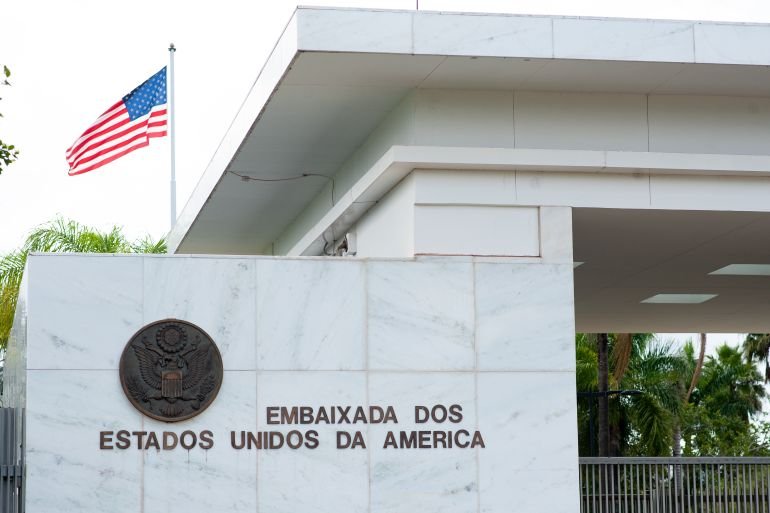
    The United States has suspended consular services in Brazil, prompting Australia to close its embassy in the Brazilian capital, two days before Brazil’s presidential election on Sunday.

    In a statement released on Thursday, the US embassy said it would suspend consular services starting on Friday and advised American citizens seeking assistance not to visit its embassy, consulates or other diplomatic facilities.

    Recommended Stories

    list of 3 itemsend of list

    The statement cited security concerns but gave no further detail on the nature of the threat or any link to the election.

    The US State Department said it was working closely with Brazilian counterparts to address the security concerns, adding that embassies and consulates routinely issue alerts about local threats and developments.

    Australia’s ambassador to Brazil, Sophie Davies, said on social media that the Australian embassy would also close on Friday, citing the US alert, and advised Australians to avoid US diplomatic facilities.

    Brazil’s federal police said they carried out preventive search and seizure warrants in Sao Paulo and the Federal District, the administrative region surrounding the capital, Brasilia, as part of an investigation into suspected plans that could threaten US diplomatic facilities.

    Police said the operation followed cooperation with foreign intelligence agencies, but that investigators had found no evidence corroborating the initially reported threat, nor identified any suspects linked to criminal organisations.

    An investigation was continuing after the seizure of communications equipment, according to the police.

    The closures came two days before the Brazilian presidential election, which pits incumbent Luiz Inacio Lula da Silva, who is seeking re-election, against Senator Flavio Bolsonaro, son of former President Jair Bolsonaro. Jair Bolsonaro is serving a 27-year sentence for attempting a coup.

    If neither candidate wins more than 50 percent of the vote on Sunday, a runoff will be held on October 25.

    Edinho Silva, president of Lula’s Workers’ Party, called the closures “unprecedented”, saying: “It makes no sense at all. It’s one of Trump’s ways of trying to influence Brazilian public opinion.”

    Lula’s allies have pointed to US tariffs and an effort by Washington to send officials to Brazil to “discuss electoral integrity” as evidence of foreign interference.

    Brazilian intelligence officials briefed French and German delegations in Brasilia this month on what they described as US and Russian interference in the race.

    US President Donald Trump has publicly praised Flavio Bolsonaro, a close ally, without formally endorsing him, saying he is “watching that election very closely”.

  • G7 to release 100 million barrels of oil and diesel, will it curb prices?

    G7 to release 100 million barrels of oil and diesel, will it curb prices?

    The Group of Seven (G7) countries have agreed to release 100 billion barrels of crude oil and diesel from emergency reserves over several months in an effort to reduce soaring energy prices after pressure from United States President Donald Trump.

    The US and Israel’s war on Iran, as well as Russia’s war on Ukraine, have triggered a spike in global oil and diesel prices.

    Recommended Stories

    list of 3 itemsend of list

    “The emergency release by G7 members will put some downward pressure on prices, particularly global diesel prices. However, the impact would be short-lived given that this is just a temporary solution to the supply crunch,” Hamad Hussain, a climate and commodities economist at Capital Economics, told Al Jazeera.

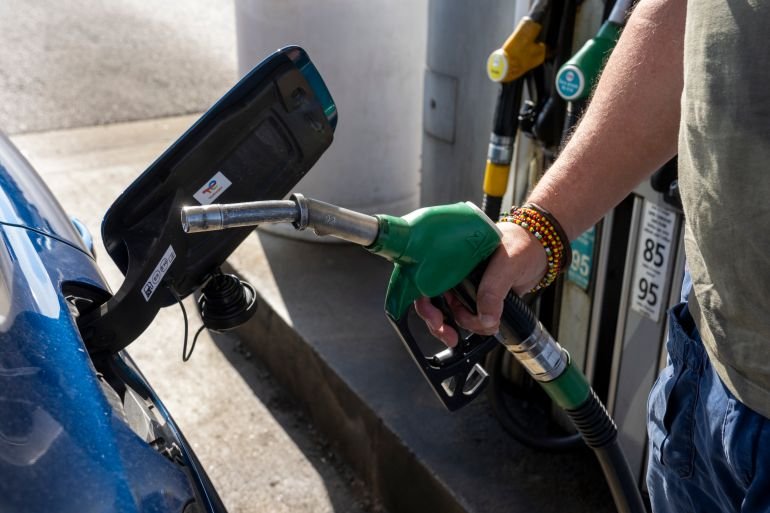
    Oil prices ‌jumped on Thursday and settled up more than $4 a barrel. Global diesel prices also hit a record high last Friday with the average price for a gallon (3.79 litres) of diesel at $6.50, up from $5.61 a month earlier, according to the American Automobile Association (AAA).

    In a statement on Thursday, the G7, which includes Canada, France, Germany, Italy, Japan, the United Kingdom and the US, with the European Union also represented, said there will also be a “substantial diesel release within the first 20 days” and discussions over “additional diesel releases as necessary” will be held in the coming days.

    Will the G7’s energy release stabilise the global energy market?

    Here’s what we know:

    What has the G7 announced?

    After a video conference of G7 leaders chaired by French President Emmanuel Macron on Friday, the group said in a joint statement: “Taking into account commitments that have already been fulfilled, we will implement our commitments with a coordinated release through the IEA of 100 million barrels.”

    Earlier this week, the International Energy Agency’s (IEA) Executive Director Fatih Birol said that members had released about two-thirds of the 400-million-barrel agreement.

    The G7 energy release will begin immediately and last for four months and will include a substantial diesel release for 20 days. It is not clear how many oil and diesel stocks each member of the group will release.

    “We will convene in the context of the IEA in the coming days to discuss the possibility of additional diesel releases as necessary,” the statement said.

    “We will coordinate maintenance schedules across G7 refineries to prevent simultaneous capacity shutdowns and temporarily increase utilization rates where feasible,” it added.

    The G7 also urged member countries to refrain from imposing export restrictions on energy products among themselves.

    Earlier this week, the Trump administration had threatened to impose a ban on US diesel exports and also pressured Europe to release its emergency diesel stocks to help ease soaring diesel prices.

    Why are oil and diesel prices so high?

    Global energy prices have been soaring due to the US and Israel’s war on Iran, which has disrupted energy exports from the Gulf. Meanwhile, Ukraine’s attacks on Russian energy installations have also disrupted global energy supplies.

    The former head of the International Energy Agency’s Oil Industry and Markets Division, Neil Atkinson, told Al Jazeera that there are three key factors contributing to the decline in global diesel supply.

    First, “there isn’t diesel coming out of the Middle East to Europe, and Europe took quite a lot of diesel from Saudi Arabia and from Kuwait”.

    Second, “Russia has now ceased to export diesel at all” due to “the attacks by Ukraine on Russian refineries”.

    “And China is no longer exporting diesel,” he added.

    “We’re in a situation where demand remains relatively high and is likely to stay high because of the agricultural harvesting season.”

    According to data from the Joint Organizations Data Initiative (JODI) and the Organization of Petroleum Exporting Countries (OPEC), the US is the world’s largest producer and exporter of diesel. It produces about 240.5 million tonnes and exports around 1.26 million barrels of diesel per day.

    Russia is the world’s second-largest diesel exporter, supplying 783,400 barrels per day (bpd) to the global market. Saudi Arabia is the world’s second-largest producer of diesel at 58.4 million tonnes, but it consumes a large portion of its diesel domestically.

    Will the G7 energy release bring prices down?

    After the G7 announcement, French President Macron, who had co-chaired the meeting, said the group’s move to release the oil will “bring down the prices of petroleum products, particularly diesel”.

    The price of Brent crude, the international benchmark, briefly dropped below $100 a barrel after the G7 announcement, but rose to about $102 in the evening.

    Naeem Aslam, chief investment officer at Zaye Capital Markets, told Al Jazeera that the G7 energy release was “very much needed”, but the group’s announcement was just to ease off pressure on the energy market.

    “The actual structure changes about who is going to release [the energy stocks] and what and where the bans will be lifted, remains an important component in terms of the market,” he said.

    Aslam added that by Sunday night, especially before the markets open, the added pressure on energy prices will come off. “But going into Monday morning … we could potentially see the reversal in the market,” he added.

    Atkinson, the energy expert, said the G7’s fuel release is welcome but “doesn’t deal with the fundamental problem that the global supply remains lower than normal”.

    Atkinson told Al Jazeera that “seven months after this war started in the Middle East, we are still in a situation where the global supply of crude oil or products remains significantly below pre-war levels”.

    “We are now in a situation where the focus is on end use of products, mainly diesel, which is what we’re talking about here,” he added.

    What has Trump said?

    Soaring diesel prices have been a source of tension for the Trump administration and Republicans who fear this will cost them votes in the upcoming November midterm elections.

    Last week, Trump pressured Ukraine to stop attacking Russian diesel facilities amid the war.

    Then, on Thursday this week, the US president told reporters that his administration “may” ask European countries to release diesel stocks, shortly after Treasury Secretary Scott Bessent urged Europe to “immediately” tap its reserves.

    Trump also threatened to ban US diesel exports if Europe did not release emergency diesel stocks.

    But on Friday, Trump told reporters at the White House that Washington would not impose a diesel export ban. He said the plan was never really on the table.

    “Europe has a lot of diesel, and they’re going to be making a major world contribution, and so are we. And we’re not going to be doing the export ban. We’re going to be doing what we’re supposed to do,” Trump said.

    “Trump is scared by diesel prices above $6, which is a price jump of 70 percent compared to before he started the war. This is likely to get worse with US diesel inventories at their lowest seasonal level since records began in 1982.

    “So if there is not enough diesel being produced because of the US-Israeli war on Iran, and diesel reserves have been used up, the only way to bring more diesel to the US market is by exporting less,” Frederic Schneider, a nonresident senior fellow at the Middle East Council on Global Affairs, told Al Jazeera on Friday.

    After the G7 announcement, Trump wrote on his Truth Social platform: “Europe has just agreed to release a massive amount of their heavily stocked Diesel Oil. The process will begin immediately.”

    The White House is also reportedly preparing an executive order to tackle record-high US diesel prices that could be unveiled as early as next week, two people familiar with the process told the Reuters news agency.

    Schneider noted that countries are also concerned about high energy prices since diesel and gasoline are important for economies and fulfil different roles.

    “While gasoline fuels cars, diesel fuels anything from trucks, freight trains, ships, tractors, harvesters, construction machinery, mining equipment and backup generators. This means gasoline is used more by consumers while diesel is mostly used by producers, meaning a diesel price shock spreads into the price of almost everything else, most prominently food, building materials and anything delivered by truck,” he added.

    Farmers are hit twice because diesel prices are rising at the same time as fertiliser prices, both of which have been pushed up by the closure of the Strait of Hormuz.

    “A higher diesel price therefore acts like a tax on production and logistics, while higher gasoline prices act like a tax on consumers directly. Like higher gasoline prices, higher diesel prices risk stagflation by pushing up inflation while simultaneously squeezing margins in transport and agriculture, meaning central banks find [themselves] in a dilemma between cutting rates [helping producers] and raising rates [cutting inflation],” he said.

  • Why Carney’s economic overhaul is clashing with Canada’s unions

    Why Carney’s economic overhaul is clashing with Canada’s unions

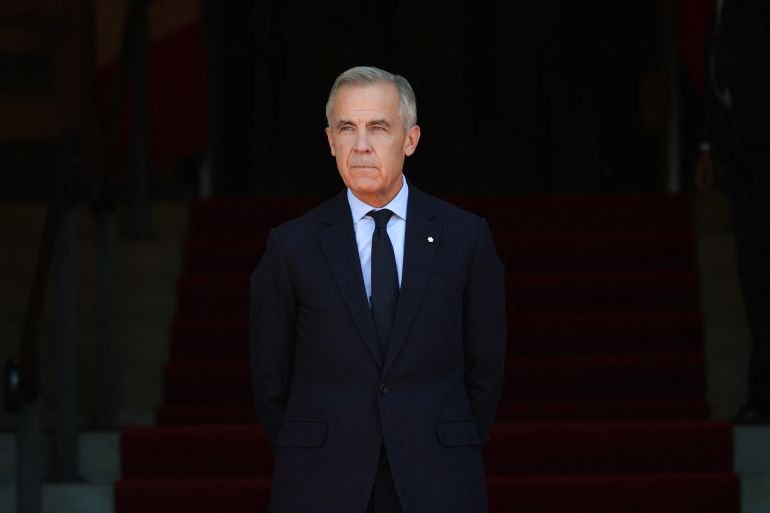
    Toronto, Canada: As Canadian Prime Minister Mark Carney races to make the country less dependent on the United States, attract billions in new investment and get major projects built faster, his economic overhaul is running into resistance from a group that says it wants many of the same things: organised labour.

    The latest clash, over the right to strike, comes after months of mounting pressure on Ottawa from Washington, DC.

    Recommended Stories

    list of 4 itemsend of list

    US President Donald Trump, since taking up a second term in office last year, has imposed steep tariffs on Canadian goods and weakened trade agreements – perilous moves as Canada has historically sent close to 80 percent of its exports to its southern neighbour. He has repeatedly piled on with the tariff threats to make Canada the 51st US state.

    Canada has responded with retaliatory tariffs, while a broader movement to “Buy Canadian” has taken hold. The hockey-inspired “elbows up” — meaning a readiness to defend against an opponent — has become a national rallying cry.

    With trade talks stalled since August, Carney has moved with urgency to shore up the economy and invite new investments. Last month, he announced Bill C-39, known as the Building Canada Strong Act, promising to bring “speed, certainty and predictability” to investors.

    Along with measures to speed up approvals for major projects, the bill would also give Ottawa clearer powers to intervene in legal strikes and lockouts in federally regulated workplaces — a provision that has put Carney on a collision course with unions.

    Canada’s largest unions have come together against the changes. The largest, the Canadian Union of Public Employees (CUPE), had its national executive go as far as voting to defy the bill’s proposed limits on the right to strike if it passes Parliament without amendments.

    CUPE National President Mark Hancock credited Carney’s handling of Trump and said the union’s 800,000 members, who work everywhere from hospitals to schools to municipal services, want to be part of “Team Canada”.

    “But at what cost?” he said in an interview with Al Jazeera.

    A fight over the right to strike

    The controversy centres on Section 107 of the Canada Labour Code, which already gives the Labour Minister broad powers to step into disputes if needed to maintain “industrial peace”, end work stoppages and force the two sides into a binding arbitration.

    Beginning in 2024, Ottawa used the provision eight times to intervene in disputes involving airlines, Canada’s two largest railways, three major ports and Canada Post and again during the Air Canada dispute in 2025 when flight attendants went on strike.

    Unions have challenged the use of that law in court and had hoped the proposed C-39 would restrict, if not repeal, that clause while businesses wanted it strengthened.

    The bill does neither. Instead, it introduces two conditions that the government would have to fulfil first before turning to Section 107.

    Before stepping in, the government would have to appoint a special mediator, wait for a public report and consider whether a work stoppage is hurting the “national interest”.

    Once a strike or lockout is underway, the minister could direct the Canada Industrial Relations Board to get operations running again and impose a binding process, such as arbitration.

    A protester carries an effigy depicting Canada's Prime Minister Mark Carney, next to demonstrators wearing rat costumes,
    A protester carries an effigy depicting Canada’s Prime Minister Mark Carney as people march to protest against the Canada Investment Summit in Toronto in September [File: Carlos Osorio/Reuters]

    The government says those steps put clearer guardrails around a power that already exists, and Carney has said the bill “absolutely reinforces the right to strike”, according to the Canadian Broadcasting Corporation.

    Unions have rejected this defence, pointing out that the meaning of “national interest” would ultimately be decided by the minister. They also argue that the prospect of government intervention is bound to change what happens at the bargaining table.

    “The political lesson that employers will draw from it is simple,” Larry Savage, a professor of labour studies at Brock University, told Al Jazeera. “Hold out long enough, emphasise the economic damage, and then Ottawa will remove the union’s leverage for you.”

    Disruption, Savage said, is precisely what gives a strike its power. “Every effective strike is disruptive,” he said.

    Unions say they have already seen employers expect Ottawa to intervene.

    Teamsters Canada alleges the Canadian National Railway (CN) and the Canadian Pacific Kansas City (CPKC) railroad companies were counting on Ottawa to step in when they locked out thousands of workers in 2024. Section 107 was invoked within hours.

    “Companies have gotten used to the idea that if there is a labour dispute, they can just wait for the government to intervene,” Christopher Monette, Teamsters Canada’s director of public affairs, told Al Jazeera.

    CUPE said it saw a similar dynamic at Air Canada in August 2025. Hancock said bargaining stalled after more than 10,000 Air Canada flight attendants voted overwhelmingly to strike because the airline was “expecting the government of Canada to step in and end the strike” — an account Air Canada disputed.

    Less than 12 hours after workers walked out, Ottawa invoked Section 107. Air Canada CEO Michael Rousseau later told BNN Bloomberg the airline had expected the provision to be enforced and did not expect a strike.

    “That was why they didn’t have a strategy on how to deal with the strike,” Hancock said.

    Building Canada faster

    The fight over the right to strike is also part of a much bigger argument taking shape around Carney’s economic agenda: Who gets a say in how Canada should change, and how quickly, in the name of making itself less vulnerable to the US?

    Critics accuse Carney of using the economic threat from the US to push through changes that go well beyond responding to Trump’s trade war.

    New Democratic Party leader Avi Lewis has accused him of using the “fear and disorientation around the trade war to push through a series of unpopular measures that he did not run on, has no mandate for and would never get away with under normal circumstances”.

    A protester carries an effigy depicting Canada's Prime Minister Mark Carney, as protesters gather at Nathan Philips Square in Toronto, Canada
    A protester carries an effigy depicting Canada’s Prime Minister Mark Carney outside the Canada Investment Summit in Toronto [File: Carlos Osorio/Reuters]

    That tension was on display in Toronto just a week before C-39 was introduced. Inside Canada’s first national investment summit, hundreds of global investors met with government officials and executives as Carney pitched a country ready to build.

    Outside, hundreds of protesters marched through downtown towards the summit’s opening gala under the banner “The Many vs The Money”. The rally brought together labour, Indigenous, environmental and migrant-rights groups, with signs and speeches taking aim at everything from fossil fuel and military projects to AI and the use of public money to attract private investment.

    For unions, C-39 has sharpened that debate, pitting the government’s promise of greater certainty for investors against workers’ ability to exert pressure through strikes.

    But Jim Stanford, an economist and director of the Vancouver-based Centre for Future Work, questions how much of an economic threat strikes actually pose.

    While work stoppages can be costly for individual companies, Stanford said, “It is very, very rare that you would see a noticeable and sustained impact on GDP, employment or incomes.”

    Production and transportation are often delayed rather than permanently lost, he added, with businesses catching up once work resumes.

    Stanford also questioned the idea that strikes are driving away investment, noting that more than 95 percent of collective bargaining ends without a work stoppage and saying there is “no empirical evidence whatsoever” that strikes have reduced investment.

    “This is more of the government giving some icing on the cake for business. It’s not that this has to happen or else our investment won’t work,” he said.

    There is also an economic cost to weakening the right to strike, Stanford argued. Workers need bargaining power to win higher wages, which can support consumer spending, productivity and worker retention.

    “It may seem like labour peace is a good thing, but if it means that a worker’s share of the pie shrinks, then this actually hurts the economy.”

    For labour leaders, that’s where Carney’s economic push goes too far.

    “Canada’s unions are part of Team Canada. We have our elbows up,” Canadian Labour Congress President Bea Bruske said in a statement. “But we can’t have our elbows up against Trump with our hands tied at the bargaining table.”

    Savage said the government’s “Team Canada” rhetoric risks treating workers’ bargaining power as a national liability.

    “I don’t think Canada becomes stronger by telling workers in ports or railways or airlines that their rights have to be surrendered whenever employers invoke competitiveness or the national interest,” he said.

  • Flydubai pilot recounts cockpit stabbing in call with Indian PM Modi

    Flydubai pilot recounts cockpit stabbing in call with Indian PM Modi

    Smit Machchhar recalls mid-air disaster after co-pilot’s attack on flydubai flight to Tel Aviv.

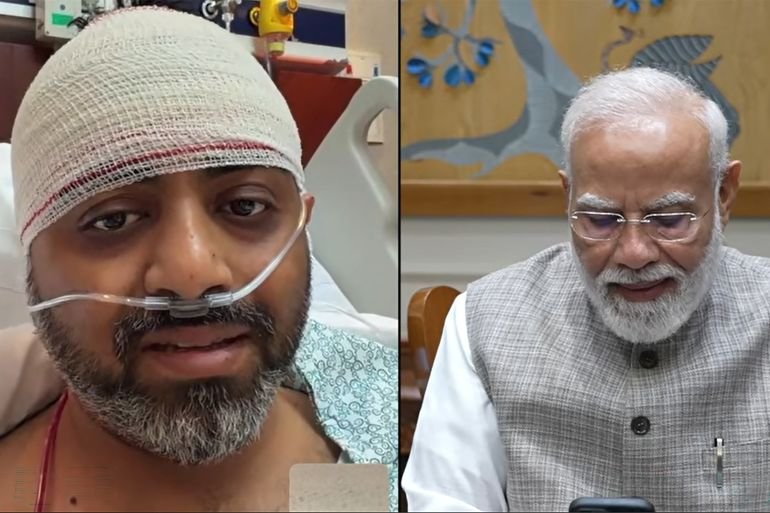
    Indian pilot Smit Machchhar, who was stabbed by his co-pilot in an alleged attempt to crash a Flydubai flight to Tel Aviv, has shared a public account of how he managed to open the cockpit door and let passengers take control of the plane despite his injuries.

    Speaking on Friday from a hospital bed in Abu Dhabi via video call with Indian Prime Minister Narendra Modi, Machchhar said that he knew the aircraft was going down as he lay bleeding on the floor.

    Recommended Stories

    list of 3 itemsend of list

    “I had suffered so many injuries that I had collapsed. At that time, I could feel that the aircraft was going down. I knew this was the last push, that the door was right there,” he said in a nearly 10-minute video released on the prime minister’s social media channels.

    He added: “I was being hit even then, but I just opened the door and everyone came in.”

    Machchhar, who has 17 years of aviation experience, including 11 as a captain, said that experience helped him grasp what was happening even while wounded.

    He told Modi he had recited a Hindu devotional prayer during the ordeal.

    “I know God himself saved me,” he said, in an emotional exchange with Modi, who is from the same home state of Gujarat.

    Modi praised Machchhar’s bravery, saying his presence of mind had saved lives and the reputation of Indian pilots.

    Machchhar said he allowed passengers and crew to overpower the co-pilot and let a second pair of Flydubai pilots take control and land the plane in Tabuk, Saudi Arabia.

    The Flydubai flight was carrying 174 people as it briefly plunged around 17,000 feet (5,180 metres) before it was brought back under control.

    UAE presidential adviser Anwar Gargash has called the incident a “terrorist act”, while Israeli Prime Minister Benjamin Netanyahu said the co-pilot had undergone “Islamist radical indoctrination” and appeared “suicidal”.

    US President Donald Trump has warned that Iran would be “hit very hard” if found to be linked to the attack.

    The United Arab Emirates has said it will launch an investigation into the incident.

  • Christa Pike unconscious, on ventilator after botched execution: Lawyers

    Christa Pike unconscious, on ventilator after botched execution: Lawyers

    The Tennessee woman’s legal team says doctors are working to clear doses of the drug pentobarbital from her system.

    Christa Pike has been placed on a ventilator and intubated after surviving a failed execution attempt, according to a court filing from her lawyers.

    The Tennessee woman, they wrote on Friday, “remains critically ill” and is unconscious while receiving treatment at a hospital in Nashville.

    Recommended Stories

    list of 3 itemsend of list

    According to the filing, medical staff are working to save Pike’s life and clear her system of the two doses of the drug pentobarbital, which the US state uses to execute prisoners.

    “Upon arrival, both of her arms were swollen, burned, and blistered,” Pike’s lawyers wrote about the drug’s effects on her body.

    The filing, which was part of an emergency request by Pike’s lawyers to preserve state records related to her execution, marks the most detailed update on Pike’s condition after she was transported by ambulance to hospital from a Tennessee prison on Wednesday, following the botched attempt.

    Pike’s lawyers argued that problems with the IV lines caused the pentobarbital to flow into her body instead of her bloodstream.

    “Apparently at no point did any member of the execution team realise that the IV lines were not correctly placed or that the veins had blown and that the pentobarbital was, in whole or in part, entering Ms Pike’s body,” they wrote.

    The lawyers allege prison staff prepared “a backup set of syringes” and “administered another lethal dose of pentobarbital”.

    Pike, who was sentenced to death at 18 after she was found guilty of torturing and murdering another young woman in 1995, would have been the first woman in more than 200 years to be executed in Tennessee. She was also the only woman on the state’s death row.

    Pike’s lawyers have called for her sentence to be commuted to life in prison after she endured what they called “chemical torture”.

    Tennessee’s Governor Bill Lee has suspended all executions for the rest of the year while the state investigates what happened.


  • Latin America sees China as more positive global influence than US: Poll

    Latin America sees China as more positive global influence than US: Poll

    Annual Latinobarometro survey finds views of China’s influence improving as perceptions of US influence worsen.

    China is perceived more positively as a global influence than the United States in Latin America, according to a new regional survey, in a first since the poll began in 1995.

    The 2026 Latinobarometro survey published on Friday found that 65 percent of respondents in 17 countries saw China as a positive influence. That was compared with 57 percent who said the same of the US.

    Recommended Stories

    list of 3 itemsend of list

    Support for China has risen sharply since 2020, when 48 percent of respondents viewed its influence positively. The figure for the US has fallen from 60 percent over the same period.

    Costa Rica and the Dominican Republic were the only countries surveyed where respondents viewed US influence more positively than China’s.

    Latinobarometro, a Chile-based nonprofit organisation, conducts annual surveys across the region on issues including democracy, the economy, security and migration.

    The findings come during US President Donald Trump’s second term, as his administration has sought to strengthen Washington’s influence in Latin America, particularly through exercising more military might.

    That has included conducting strikes on alleged drug smuggling boats in the region, which rights groups have decried as extrajudicial killings, and abducting Venezuela’s then-leader Nicolas Maduro in Brazil.

    Trump has described his approach as the “Donroe Doctrine”.

    Despite the findings on global influence, the US remained more popular than China when respondents were asked about their overall views of the two countries.

    Some 63 percent of respondents said they had a favourable opinion of the US, compared with 58 percent for China. The US figure was down from 73 percent in 2024.

    The survey also asked respondents about the US military capture of Maduro.

    A majority in all but one country, Argentina, approved of Maduro’s capture by US forces.

    Views were more divided over what the operation meant for Venezuela, with 35 percent saying removing Maduro had benefitted the country and 28 percent saying it had harmed it.

    Venezuelans were among the populations most likely to view US influence positively, according to the survey.

    The 2026 survey was based on about 19,200 face-to-face interviews conducted in 17 countries between May 7 and June 17, with a margin of error of 1 percent.

  • ‘I want the truth’: NY governor appoints prosecutor in Cornell rape case

    ‘I want the truth’: NY governor appoints prosecutor in Cornell rape case

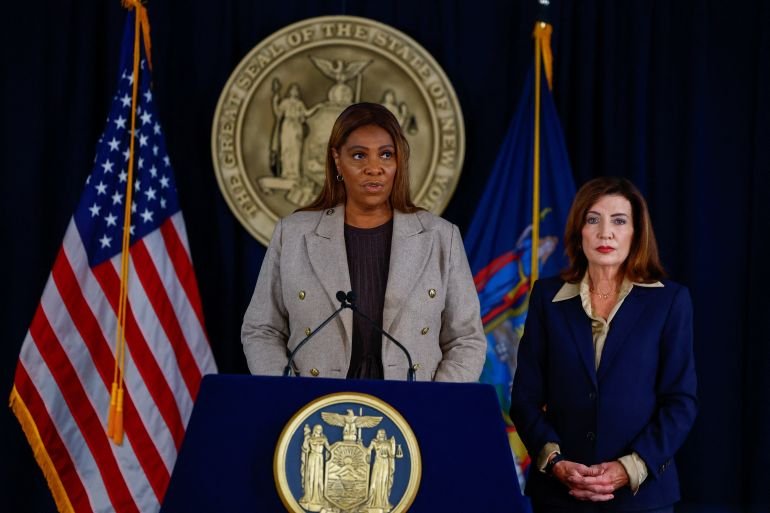
    New York Governor Kathy Hochul has appointed state Attorney General Letitia James as a special prosecutor to investigate an alleged gang rape at Cornell University, saying newly released information had undermined her confidence in the local prosecutor’s handling of the case.

    In a news conference on Friday, Hochul said that the woman who reported the alleged assault had been failed by institutions responsible for protecting her, including Cornell University Police and the Tompkins County district attorney’s office.

    Recommended Stories

    list of 1 itemend of list

    “In what world does the district attorney not even interview her, or anyone else involved, or even request the full transcript?” Hochul asked at the news conference. “And I want the truth. I think every parent in this state, every New Yorker wants the truth in this case.”

    Hochul signed an executive order on Thursday requiring the attorney general to investigate the alleged October 2024 assault. If warranted, evidence will be presented to a grand jury and the case prosecuted.

    The order states the Tompkins County district attorney declined to prosecute the case in November 2024 without speaking to Jane Doe and relied, at least in part, on information from a Cornell police statement that omitted her assertion that she had been sexually assaulted.

    On Friday in a post on social media, United States President Donald Trump decried Hochul’s decision to have James, who he claimed was “corrupt”, oversee the “highly controversial” case.

    The appointment of James means the state attorney general’s office, rather than the county district attorney, will now control the criminal investigation.

    ITHACA, NEW YORK - SEPTEMBER 30: Students walk past Cornell Police headquarters on the Cornell University campus on September 30, 2026, in Ithaca, New York. The New York state attorney general has announced a review of the university’s initial response to allegations by a former Cornell student that she was raped at a campus fraternity in 2024. The student, who is being identified only as Jane Doe, has alleged she was drugged and gang-raped inside the Chi Phi fraternity house on October 19, 2024. Spencer Platt/Getty Images/AFP (Photo by SPENCER PLATT / GETTY IMAGES NORTH AMERICA / Getty Images via AFP)
    The New York state attorney general has announced a review of the university’s initial response to allegations by a former Cornell student that she was raped at a campus fraternity in 2024 [File: Spencer Platt/AFP]

    Questions over the 2024 investigation

    Prosecutors initially closed the case without criminal charges in 2024. Tompkins County District Attorney Matthew Van Houten reopened the investigation on Monday, after Jane Doe filed a civil lawsuit accusing seven members of the Chi Phi fraternity of sexually assaulting her.

    Van Houten has defended his original decision, saying in a September 28 statement that prosecutors reviewed a six-page sworn statement the woman gave Cornell police in November 2024.

    He said the statement did not allege that she had been drugged against her will, and described her participation in sexual conduct as voluntary and consensual. He said multiple prosecutors and investigators reviewed the statement and concluded that, as presented, the facts did not establish a crime under New York law.

    The governor, however, said the full account given to police was not conveyed to prosecutors. She cited reports that Jane Doe told investigators she was “100% confident” she had been raped.

    Cornell has said its police department provided prosecutors with the evidence it had gathered, including a Snapchat screenshot, and that the university separately investigated the allegations through its disciplinary process. Cornell said sanctions imposed after that process included expulsions and suspensions.

    Cornell has also said it is conducting an independent review of how it handled the allegations.

    The Cornell case has renewed debate over New York’s definition of incapacity to consent. Under current state law, a person is considered “mentally incapacitated” when drugs or alcohol are given to someone without consent.

    A state bill introduced in June would extend the provision to cases in which a victim voluntarily consumed alcohol or drugs but became so intoxicated that they were temporarily unable to control their conduct, if the accused knew or reasonably should have known of the victim’s condition.

    The legislation has gained renewed attention following the Cornell allegations. Lawmakers said on Thursday that the case highlighted what they described as a gap in the state’s current law.

    “If someone is too intoxicated to consent, it should not matter whether they chose to use drugs or alcohol,” Hochul said at Friday’s news conference. “Voluntary intoxication is not a licence for sexual assault or gang rape, period.”

    Lindsey Boylan, a New York City Council candidate and the first woman to accuse former Governor Andrew Cuomo of sexual harassment publicly, said Hochul should use the moment to push for broader legislative change.

    “I expect to see her follow through with not just supporting the independent investigation, but also changing the state laws,” Boylan said. “That is what I’m expecting her to do now, and I think that is what every survivor is expecting her to do now.”