Tag: Al Jazeera

  • Hormuz ship attacks surge: Are increased oil exports sustainable?

    Hormuz ship attacks surge: Are increased oil exports sustainable?

    Oil exports from the Gulf have resumed significantly in recent days, despite a surge in attacks on ships around the Strait of Hormuz, maritime experts and trackers say.

    Gulf oil flows, excluding Iran, recovered to more than 81 percent of pre-war levels in September, while crude exports from the wider Middle East exceeded pre-war levels on 14 days during the month, maritime intelligence firm Kpler reported.

    Recommended Stories

    list of 3 itemsend of list

    However, the recovery has come as attacks on tankers increase and shipping companies face higher freight, insurance and security costs.

    On Tuesday, 12 crew members on a Panama-flagged tanker were injured in an attack by an unknown projectile while crossing the Strait of Hormuz, India’s Ministry of Foreign Affairs said in a statement.

    Before the US-Israel war on Iran began on February 28, the Strait of Hormuz typically handled about 125 large commercial vessels a day and shipments through it accounted for about 20 percent of global crude and liquefied natural gas supplies.

    In retaliation for US-Israeli attacks, Iran effectively closed the strait, while Washington has maintained a blockade on Iranian ports.

    So, how are ships getting through the strait, and how long can producers maintain the increased flow through one of the world’s most important energy corridors while attacks and harassment of ships continue?

    What do we know about the recent attacks on ships?

    The security situation in the Strait of Hormuz has continued to deteriorate even as more oil moves out of the region.

    At least seven incidents involving tankers have been reported in the past week, according to shipping intelligence service Marisks.

    The Kuwaiti-flagged Very Large Crude Carrier (VLCC) MT Kazimah III caught fire after being struck on October 1 while travelling through the strait, causing a fire on board. Five staff were safely rescued following the incident.

    On October 4, the Liberian-flagged Aframax tanker Lipsi was struck northeast of Oman’s Jazirat Umm al-Fayarin, damaging its engine room, with no casualties reported.

    The United Kingdom Maritime Trade Operations (UKMTO) agency has reported at least one attack a day in the Strait of Hormuz or the Gulf of Aden, where Iran-backed Houthis are targeting Saudi-linked shipping, since October 2.

    Threats continued on Monday, when a tanker entering the Hormuz strait near Oman was hailed by Iran’s Islamic Revolutionary Guard Corps (IRGC) and ordered to turn around or risk attack, according to UKMTO.

    INTERACTIVE_IRAN_Strait of Hormuz_JUNE4_2023-1685955591

    How much oil is getting through the Hormuz Strait?

    Despite those attacks, oil exports from the region have risen dramatically.

    According to provisional data from Kpler, the seven-day moving average for Middle East crude exports reached 18.3 million barrels per day (bpd) on September 30, compared with an average of about 18 million bpd during the 12 months before the war.

    Vortexa separately estimated that the 14-day moving average for Middle East crude and condensate exports had reached 18.6 million bpd.

    However, not all of that oil is actually being shipped through Hormuz.

    Kpler estimates that about 40 percent of oil exports now bypass the strait, while much of the crude that does cross is transferred between tankers offshore.

    Partly as a result of the increased oil exports, oil prices continue to fall, with Brent crude – the global benchmark – dropping 0.75 percent to $99.57 a barrel on Tuesday. US West Texas Intermediate crude also fell 1.2 percent to $88.37 a barrel, according to data from Oilprice.com.

    US President Donald Trump has repeatedly taken credit for the apparent increase in oil flows, boasting that Washington controls the strait and that US forces were succeeding in protecting vessels passing through Hormuz.

    Iran has disputed claims that oil flow through the key waterway has increased, saying the amount passing was “negligible” and that it still has effective control of the strait.

    [Al Jazeera]
    [Al Jazeera]

    How are oil exports bypassing Hormuz?

    The recovery of oil exports has been made possible largely by Saudi Arabia’s use of alternative export infrastructure and an increasingly complex system for moving crude around Hormuz.

    “The increasing availability of crude oil from the Middle East is due to two factors: the effective use of the East-West pipeline by Saudi Arabia and ship-to-ship transfer around the Strait of Hormuz,” Tamas Varga, an analyst at PVM Oil Associates, told Al Jazeera.

    Saudi’s East-West pipeline carries oil from fields in the east of the country to the Yanbu port on the Red Sea in the West.

    Ship-to-ship transfers happen when smaller shuttle boats, which often turn off their transponders to make them hard to detect, physically transport oil through the Strait of Hormuz, before offloading their cargoes onto larger tankers waiting just beyond it.

    Is this sustainable?

    Varga said current flows could be maintained as long as those methods and routes remain secure.

    Saudi’s East-West pipeline has already suffered temporary closures as a result of drone strikes, such as those launched by Iran-backed groups in Iraq in September.

    “The flow will be sustainable unless attacks on ships and shipping lanes or on the pipeline resume, something that does not seem imminent at the moment but could happen at any time if geopolitical tensions flare up,” he said.

    But maintaining those flows is also putting pressure on the shipping system.

    “The shuttle system in the Gulf is doing wonders in getting oil out, but it requires plenty of ships,” Chris Beauchamp, chief market analyst at IG Group, told Al Jazeera.

    That demand has pushed freight costs higher and reduced tanker availability elsewhere, while Asian buyers are increasingly having to source crude from further afield, he added.

    “Previously a supply story, this is now one about the underlying mechanics of shipping,” Beauchamp said. “Ships don’t get built overnight.”

    Varga said oil prices also remain comparatively high – currently hovering just less than $100 a barrel compared with around $72 before the war broke out – because of increased shipping and insurance costs.

    Last week, members of the Group of Seven (G7) announced they would release up to 100 million barrels of strategic oil reserves, including diesel, in a bid to control prices. Further releases of crude and diesel from strategic reserves could also ease prices, but with global inventories already thin, another deterioration in Middle East security could quickly push them higher again.

    “Only a sustainable and credible peace deal between the US and Iran and the subsequent permanent and unconditional reopening of the Strait of Hormuz would re-establish the pre-conflict status quo,” Varga said.

    On Monday, Saudi Aramco CEO Amin Nasser warned that the effects of the disruption could last well beyond the reopening of Hormuz, even if it does happen.

    Speaking at the Energy Intelligence conference in London, Nasser said nearly three billion barrels of oil supply had been lost since the conflict began at the end of February and that rebuilding depleted inventories while meeting demand could take as long as two years.

    “The system is already straining,” he added.
  • US lawmakers call on Israel to release imprisoned doctor Hussam Abu Safia

    US lawmakers call on Israel to release imprisoned doctor Hussam Abu Safia

    Letter from progressive US representatives brings attention to Israeli abuse and detention of Palestinian medical workers.

    A group of six progressive Congress members in the United States have released a statement condemning Israel’s abuse of Palestinian healthcare workers, including the Gaza doctor Hussam Abu Safia, who has been held in Israeli detention since 2024.

    The Tuesday statement draws attention to Israeli attacks on Palestinian medical workers, who have been targeted and detained during the country’s genocidal war on Gaza.

    Recommended Stories

    list of 3 itemsend of list

    It was signed by Representatives Rashida Tlaib, Ilhan Omar, Jesus “Chuy” Garcia, Summer Lee, Pramila Jayapal and Delia Ramirez.

    “Over the last three years, the Israeli government has systematically destroyed the health system in Palestine, murdering at least 1,700 Palestinian doctors, nurses, paramedics, and other healthcare workers and destroying dozens of hospitals,” the statement reads.

    “It has arrested and arbitrarily detained hundreds of Palestinian healthcare workers, including at least 16 physicians who continue to be held in inhumane conditions.”

    Among those detained is Abu Safia, who lawyers say was subjected to abuses such as torture, sleep deprivation and beatings during his detention.

    Israeli soldiers arrested Abu Safia in December 2024, after he and other medical workers reportedly refused to evacuate from Kamal Adwan Hospital, where they worked.

    No charges have been filed against Abu Safia, and he has not had a trial.

    Israeli attacks on health infrastructure in Gaza, including the destruction of nearly all of the strip’s hospitals and medical centres, are one component of what rights groups have depicted as an effort to deprive Palestinians of essential services such as food, water and medical treatment.

    Tuesday’s statement argues that such efforts are part of an “intentional policy designed to further occupation, apartheid, and genocide against the Palestinian people”.

    That assessment is shared by a growing number of rights organisations, scholars and United Nations officials, who have denounced Israeli actions in the Palestinian strip.

    Israeli officials have stated that they target hospitals and medical facilities as part of an effort to attack the Palestinian armed groups that allegedly use such facilities to carry out and coordinate operations.

    Such claims have often failed to withstand scrutiny. Israel admitted that its soldiers killed a group of 15 emergency workers in southern Gaza in March 2025, after initially stating that the ambulance convoy had approached soldiers “suspiciously” and claiming, without evidence, that several of those killed were linked to Hamas.

    A report by the group Forensic Architecture and Earshot found that Israeli soldiers fired more than 900 bullets as they opened fire on a clearly marked ambulance convoy and killed some of the medics “execution-style” before burying their bodies and their vehicles.

  • Fort Hood shooter to be executed by firing squad: All to know

    Fort Hood shooter to be executed by firing squad: All to know

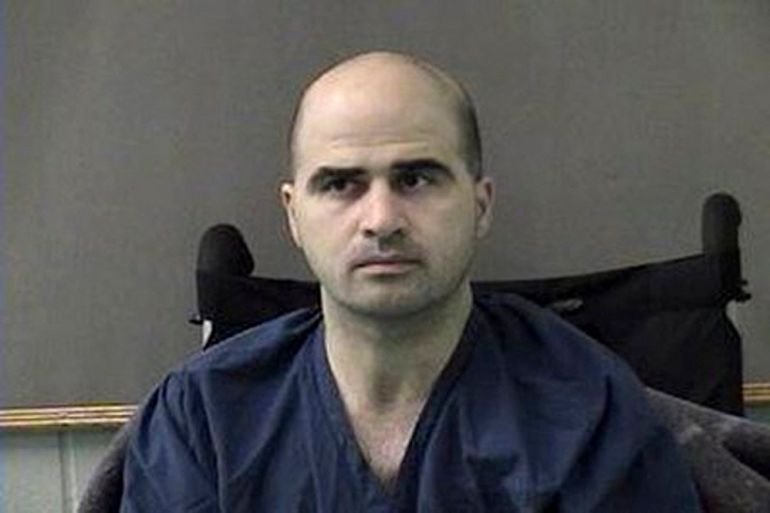
    United States President Donald Trump has approved the death by firing squad of Nidal Malik Hasan, a former army officer convicted of carrying out a 2009 mass shooting at Fort Hood, an army base in Texas.

    The move, if it proceeds, will revive executions in the army, which has not carried one out since 1961.

    Recommended Stories

    list of 4 itemsend of list

    Death sentences, as well as executions in the US military, are rare and require presidential approval.

    Under the army’s code of military justice, premeditated murder does carry the death penalty, but the process is often strict and prolonged.

    However, the Trump administration has shown more willingness to seek death penalties for serious crimes, including against civilians.

    Here’s what we know about the case:

    What is the presidential order?

    Defense Secretary Pete Hegseth had initially recommended an execution order for Hasan, and Trump has now approved it, according to an X statement posted by Pentagon spokesperson Sean Parnell.

    Parnell said the time and date of the execution will be set by Army Secretary Adam Telle, who is serving in an acting capacity.

    “Judgement day for Hasan has finally come,” he wrote.

    What happened at Fort Hood?

    On November 5, 2009, the US-born army major, Hasan, a psychiatrist in the force, walked into an army processing centre in Fort Hood, shouted “Allahu Akbar” (God is great) and opened fire on fellow staff members waiting to get medical attention.

    Thirteen people were killed, including a pregnant soldier, and 32 others were wounded during 10 minutes of shooting. Analysts have called it the worst shooting at a US military base targeting members of armed forces.

    Hasan was shot several times after two officers engaged him and remains paralysed from the waist down.

    What happened during the trial?

    Hasan was immediately court-martialled, and military prosecutors, from the start, sought the death penalty against him.

    However, the process would play out over the course of several years even after his conviction – largely because the US military is averse to capital punishment.

    During the trial, Hasan represented himself and admitted to the attacks, saying he was trying to stop deployments to Afghanistan and the killing of his fellow Muslims. He was due to be deployed weeks later.

    Investigations revealed Hasan had exchanged emails with Yemeni-American scholar Anwar al-Awlaki, accused of ties to al-Qaeda, before the shooting. He had also repeatedly voiced opposition to the US wars in Iraq and Afghanistan to colleagues and the treatment of Muslims in the army.

    Hasan made little effort to defend himself, and his assigned lawyers claimed his testimony aided the opposing side.

    He was charged and convicted on 13 counts of premeditated murder in 2013, and jurors recommended the maximum sentence of death. Controversially, Hasan was charged with “workplace violence” because the military justice code does not address the crime of “terrorism”.

    The judgement was further delayed by appeals mandated by the military, not because Hasan sought them.

    In 2020, the US Army Court of Criminal Appeals upheld the death penalty for Hasan, and in 2023, the US Court of Appeals for the Armed Forces did the same. In March 2025, the US Supreme Court denied a mandatory petition for a judicial review.

    In September 2025, Hegseth announced he was seeking presidential approval for Hasan’s execution.

    At the time, there was no report of Hegseth specifically seeking death by firing squad.

    The president holds the ultimate authority to specify the designated method of execution.

    Other forms of execution could have been lethal injection or hanging, which the US military has used in the past.

    What next?

    While Trump’s approval will begin a series of steps towards preparing for the execution, Hasan can still put the process on hold for years with an appeal in the civilian federal court system.

    However, that might be unlikely as Hasan made no effort to defend himself during the trial.

    He has been remanded to the US Disciplinary Barracks at Fort Leavenworth in Kansas, where three other men have also been on the military death row for years.

    Among them is Hasan Akbar, convicted of two counts of murder after attacking fellow army members on a Kuwait base in 2003, during the invasion of Iraq.

    Another is the convicted serial killer and rapist Ronald Gray, who was found guilty of four counts of murder and eight counts of rape in 2008. He was approved for execution in the same year under President George W Bush, but the process was put on hold by a judge.

    Timothy Hennis, a former sergeant, was convicted in 2010 of a triple murder and is also on death row.

    The last military execution took place in 1961, when former soldier John Bennett was hanged for the rape of an 11-year-old girl.

  • Tennis: World number one Sinner will not play in 2026 due to knee injury

    Tennis: World number one Sinner will not play in 2026 due to knee injury

    Jannik Sinner has not competed in a tournament since winning at Wimbledon in July and will continue his recovery.

    World number one men’s tennis player Jannik Sinner will not compete again in 2026 after opting to continue his recovery from a knee injury that has kept him out of action since his triumphant Wimbledon campaign in July.

    The five-time Grand Slam winner will “follow a course of treatment for inflammation in his knee”, Sinner’s team said in a statement on Tuesday.

    Recommended Stories

    list of 4 itemsend of list

    “The decision has been made to have the treatment now to give Jannik the necessary time to recover before beginning preparations for 2027. As a result, Jannik will be unable to compete again during the 2026 season.”

    Sinner also posted the update on his personal Instagram account, where he recounted ending last year on a high after retaining his ATP Finals title in Turin as he battled past then world number one Carlos Alcaraz.

    “But at the moment, I also need to think about my long-term career,” he said in a video posted on Instagram.

    “I will do everything possible to get back to 100 percent [and] I hope to see you very, very soon on court again.”

    Sinner, 25, has not played since his triumph at the All England ⁠⁠Club, missing the North American hardcourt swing, including the US Open, and the ongoing ATP 500 event in Beijing.

    He announced last week that he was withdrawing from the Shanghai Masters, which he won in 2024 after defeating Novak Djokovic in the final.

    Now he will also miss the Paris Masters and the ATP Finals in November. Plus, he will not be able to play for Italy, the host nation and three-time defending champion, in the Davis Cup Final 8.

    Sinner risks losing the top ranking while he’s out.

    But if Sinner does return at the start of next year, he could play the Australian Open – the next Grand Slam – which starts January 17.

    He enjoyed a 30-match winning streak this year before his meltdown in a second-round defeat at the French Open amid a Paris heatwave.

    Sinner’s main rival missed four and a half months this year due to a right wrist injury.

    Meanwhile, Germany’s Alexander Zverev won two of the four Grand Slam titles and is nearing the No 1 ranking.

  • Mapping where US bombers are based globally

    Mapping where US bombers are based globally

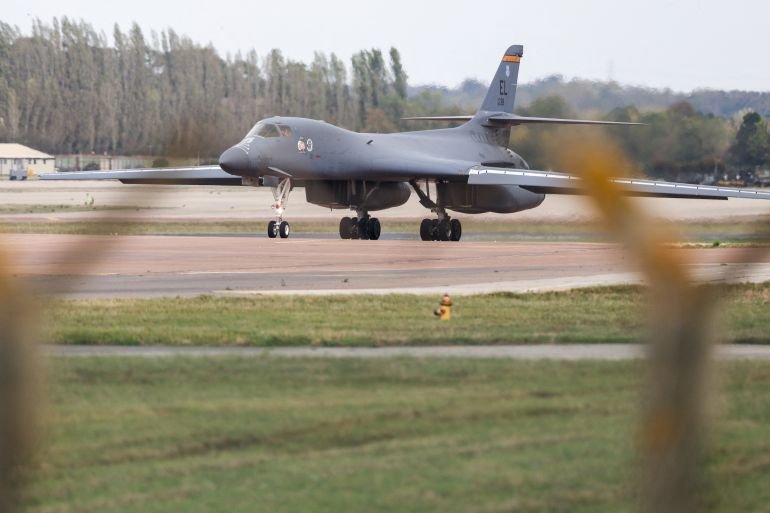
    Over the course of Sunday, a dozen B-1B bombers took off from Royal Air Force (RAF) Fairford in western England and flew home to the United States. Their departure abruptly ended the base’s role as a launchpad for US strikes on Iran, which began on February 28.

    The base, roughly 160km (100 miles) west of London, is the US Air Force’s only European airfield for heavy bombers and a key forward operating location for deployed bombers.

    Over the past two weeks, six people were arrested on suspicion of “terrorism”. They were all released on bail.

    US President Donald Trump said on Monday the bombers were moved because “there were some threats”, which he believed were linked to Iran. “So we moved them around a little bit, not very far,” he told reporters at the White House.

    Hours earlier, US Secretary of State Marco Rubio played down any link to the alleged plot, saying it was “not unusual to see rotations happen” and that he had confidence in the security of US bases.

    What happened at RAF Fairford?

    On September 27, police arrested five men on suspicion of plotting to plant explosives near Fairford in the United Kingdom. They were released on bail a day later.

    Investigators found petrol but no explosive devices in their vans, though UK officials say the men remain under investigation. On Thursday, police arrested a 25-year-old UK-Iranian dual national in London on suspicion of plotting an attack on the airbase. He was also released on bail on October 3.

    UK Prime Minister Andy Burnham suggested that “Iran played a part” in the alleged plot but declined to give details. Iran has denied any such scheme and summoned the UK ambassador in Tehran in protest at the arrests.

    What bombers does the US have?

    The US Air Force flies three types of bombers, with a fourth on the way.

    INTERACTIVE - US heavy bomber fleet b52 b1 b2 b21-1791282898

    The B-52 Stratofortress is the oldest. The B-52H model currently in service was built in the early 1960s. With a wingspan of 56 metres (185 feet), it is the largest US bomber and can carry about 31 tonnes of weapons, including nuclear bombs and cruise missiles.

    A United States Air Force B-52 Stratofortress strategic bomber takes off from RAF Fairford on March 19, 2026 in Fairford, England. Since UK Prime Minister Keir Starmer back-tracked on his initial refusal to allow the U.S. to use British bases to launch defensive strikes against Iranian missile sites, a variety of U.S. military aircraft, including B52 and B-1 bombers, have been spotted at RAF Fairford in Gloucestershire. (Photo by Leon Neal/Getty Images)
    A B-52 Stratofortress takes off from RAF Fairford on March 19, 2026 [Leon Neal/Getty Images]

    The B-1B Lancer, which entered service in the mid-1980s, is the fastest of the three. It can reach 1.2 times the speed of sound and has a swing-wing that sweeps back for high-speed flight. It carries the largest conventional payload, about 34 tonnes, but no longer carries nuclear weapons. These were the aircraft that left Fairford.

    The B-2 Spirit is a flying-wing stealth bomber designed to slip past air defences. Only 20 were built, of which 19 remain in service. It can carry both nuclear and conventional weapons, including the 13,600kg (30,000lb) “bunker buster” bomb used in US strikes on Iran’s nuclear sites in June 2025.

    INTERACTIVE-Bunker buster bombs-Iran Israel gbu57 b2 bomber-2025-1750307369

    The B-21 Raider, a smaller stealth bomber, is still in flight testing, and it remains on track for delivery in 2027. Over the next decade and a half, the air force plans to replace the B-1B and B-2, leaving a future fleet of B-21s and upgraded B-52s.

    The B-21 Raider, a new high-tech stealth bomber developed for the US Air Force, is seen in an undated photograph in Palmdale, California, US, released on December 2, 2022
    The B-21 Raider, a new high-tech stealth bomber developed for the US Air Force, is seen in an undated photograph in Palmdale, California, US, released on December 2, 2022 [Handout/US Air Force via Reuters]

    Where do these bombers fly from?

    All US bombers are permanently based in the US, at five main airbases:

    • B-52H: Barksdale Air Force Base in Louisiana and Minot Air Force Base in North Dakota
    • B-1B: Dyess Air Force Base in Texas and Ellsworth Air Force Base in South Dakota
    • B-2: Whiteman Air Force Base in Missouri
    • B-21: Due to arrive at Ellsworth in South Dakota in 2027

    All of these bases have long, wide runways, typically exceeding 10,000 feet (3,048 metres).

    That makes bomber runways about as long as those at a big international airport. What limits where bombers can operate is not tarmac but security, weapons storage and support.

    For missions abroad, the US rotates bombers through a handful of forward bases. Other important overseas operating locations include Andersen Air Force Base in Guam and Diego Garcia in the Indian Ocean.

    Beyond these, the air force sends small groups of bombers to allied airbases for a few weeks at a time, in what it calls Bomber Task Force deployments. Recent rotations have included B-52s at Moron in Spain, B-1Bs at Orland in Norway and Misawa in Japan, and B-52s at Tindal in northern Australia, which arrived in September.

    The bombers can also go on a strike mission from the US with the help of aerial refuelling. Bomber missions during the US-Israel war on Iran lasted more than 30 hours there and back. Each group of three bombers needed six to nine tanker aircraft to refuel them along the way.

    This image released by the US Navy shows an aerial view of Diego Garcia
    This image released by the US Navy shows an aerial view of Diego Garcia [File: US Navy via AP]
  • Attorney General announces record number of cases to strip US citizenship

    Attorney General announces record number of cases to strip US citizenship

    The United States Department of Justice has filed 40 new cases seeking to strip naturalised Americans of their citizenship over alleged crimes they have committed.

    In a statement on Monday, federal prosecutors said they were targeting individuals accused of “serious offenses”, including money laundering, child sexual abuse, visa fraud and tax evasion.

    Recommended Stories

    list of 3 itemsend of list

    The statement touted the 40 cases as the largest volume of denaturalisation petitions submitted in such a short period under President Donald Trump. The petitions were filed from late August through early October.

    “Today’s announcement marks the largest denaturalization effort in modern history,” said Attorney General Todd Blanche.

    “Under President Trump’s leadership, the Department of Justice will continue to employ the denaturalization process to maintain our national security and protect the American people.”

    The 40 citizens targeted in Monday’s announcement include people from a range of countries, including Mexico, Pakistan, China and Sierra Leone.

    They are accused of concealing criminal acts and other facts about themselves as they sought to obtain citizenship. Their criminal convictions largely came after they took their oaths of citizenship.

    Two people on the list are also accused of engaging in espionage on behalf of China. Committing these crimes before they became citizens, the Department of Justice alleges, meant these individuals lacked “good moral character” and should have been denied citizenship.

    Expanded use of denaturalisation law

    The laws to denaturalise US citizens have been used for decades, but historically, they have been reserved for serious crimes.

    After World War II, for instance, the US government moved to denaturalise dozens of citizens accused of concealing involvement in the Holocaust or engaging in war crimes.

    Notable cases include that of Emma Goldman, a Lithuanian-born anarchist and women’s rights activist who was jailed in 1917 for her antiwar activities, before being denaturalised and deported to the Soviet Union.

    But the practice has become much less frequent since the end of the Cold War.

    Top officials in the Trump administration, however, have sought to expand denaturalisation as part of a push to conduct the largest deportation operation in US history.

    Under US law, prosecutors can ask courts to strip citizenship from those born outside the country if they wilfully concealed a “material fact” during their citizenship application that would have otherwise disqualified them.

    But Trump’s efforts to widen denaturalisation proceedings have received pushback from human rights groups, which argue they could leave people stateless.

    Critics have also warned that Trump has sought to leverage denaturalisation against specific groups he perceives to be political rivals or enemies.

    Last year, for instance, the Trump administration indicated it would seek to denaturalise large numbers of Somali Americans after allegations emerged in Minnesota of daycare fraud involving the Somali diaspora.

    “Send them back from where they came, Somalia, perhaps the worst, and most corrupt, country on earth,” Trump wrote at the time.

    Members of Trump’s Republican Party, notably Representative Andy Ogles, have also floated the possibility of yanking citizenship from New York City Mayor Zohran Mamdani, who was born in Uganda. Trump himself has falsely suggested Mamdani may be in the country illegally.

    At one point, Trump even floated the idea of withdrawing citizenship from tech entrepreneur Elon Musk, a close ally and adviser to his second administration, after the two men had a falling-out in 2025.

    Trump has also pushed to do away with birthright citizenship, which is granted to virtually all children born in the US. The few exceptions include the babies of diplomats and foreign military forces.

    Birthright citizenship is protected under the US Constitution and cannot be taken away the way naturalised citizenship can.

    In June, the US Supreme Court struck down Trump’s efforts to dismantle birthright citizenship, but legal battles continue after the president issued a second executive order also seeking to restrict how birthright citizenship is applied.

  • US President says taxpayers will no longer fund TV ads praising him

    US President says taxpayers will no longer fund TV ads praising him

    Move comes after ethics experts criticised three nationally broadcast ads and called for independent investigations.

    United States President Donald Trump has said he will stop using taxpayer funds for television advertisements featuring him after widespread criticism of the campaign-style spots.

    In a post on his social media site on Monday, Trump defended the advertisements, which cost at least $1.5m in federal funds and were aired ahead of the US November midterm elections.

    Recommended Stories

    list of 4 itemsend of list

    Trump said he considered the advertisements to be “a positive promotion for our Great U.S.A.”, but that they would no longer be funded by taxpayers but by either him or his MAGA PAC,

    MAGA Inc. is Trump’s political war chest and had amassed more than $400m by the end of July.

    The announcement came as ethics experts and lawmakers from both ⁠parties have criticised the three nationally broadcast advertisements and called for independent investigations.

    The advertisements have run during football games as recently as Sunday and during other programming.

    One features Trump declaring that “America will never be a communist country”, ⁠while a chorus repeats the words “love me”. Another combines ⁠images of Mount Rushmore with footage of Trump praising a “golden age of America”.

    The advertisements end with a disclaimer saying they were paid for by the US government.

    Democratic lawmakers said last month that the White House transferred $20m in Homeland Security Department funds to air ⁠the advertisements, including one that closely resembles a 2024 Trump ⁠campaign ad, and sought independent probes.

    California Attorney General Rob Bonta on Monday called ‌for an independent investigation, calling it a “staggering misuse of public funding and breach of public trust” after the calls for a probe.

    Federal Communications Commission Chair Brendan Carr, a ‌Republican ‌named to his position by Trump, last week said the advertisements were appropriate and rejected a request to investigate them.

  • Secessionist party wins Quebec election in Canada

    Secessionist party wins Quebec election in Canada

    Parti Quebecois returns to power, promising a third referendum on Quebec’s independence from Canada.

    The secessionist Parti Quebecois has won the most seats in Quebec’s election and will form the next government in the predominantly French-speaking Canadian province, according to media reports.

    The result on Monday revives the question of whether the province should leave Canada, testing Prime Minister Mark Carney’s message of national unity.

    Recommended Stories

    list of 2 itemsend of list

    Paul St-Pierre Plamondon, the party’s leader, is set to become premier.

    During the campaign, he promised a third referendum on leaving Canada during his first term, although he said he would wait until US President Donald Trump leaves office in January 2029.

    It was not yet clear whether the party had reached the 64 seats needed for a majority in the 127-seat National Assembly.

    If it falls short, it would lead a minority government and need support from opposition lawmakers to pass major legislation and survive confidence votes.

    The Parti Quebecois, or PQ, last governed the province from 2012 to 2014.

    Monday’s victory marks a sharp recovery for the PQ, which won just three seats in the 2022 provincial election.

    Its return also ends eight years in power for the Coalition Avenir Quebec, or CAQ, a centre-right Quebec nationalist party that does not support independence.

    Daniel Beland, a political science professor at McGill University in Montreal, told The Associated Press news agency that the victory reflects Quebec’s multiparty system, where support is divided among several parties, rather than a surge in secessionist sentiment.

    Support for independence remains at about 30 percent, low by historical standards, he said.

    Still, Beland said a secessionist government in Quebec represents a new national-unity challenge for Carney, particularly with another independence-related vote approaching in Alberta.

    “Seeing that a pro-independence party won in Quebec barely two weeks before an independence-related referendum takes place in Alberta might suggest to the Trump administration that national unity remains a major issue in Canada despite the popularity of Mark Carney,” Beland said.

    Quebec held two previous referendums on independence, in 1980 and 1995, and voters rejected secession both times.

    The second vote was decided by a narrow margin, but there has been no further referendum in the three decades since.

  • ‘Smash the patriarchy’: Activists graffiti Cornell hall over gang rape case

    ‘Smash the patriarchy’: Activists graffiti Cornell hall over gang rape case

    Student groups call for the abolition of Greek life and punitive action in wake of fraternity assault allegations.

    Protesters in the United States have shattered a glass door at Cornell University’s main administrative headquarters and spray-painted messages on the building’s walls as backlash continues following allegations about a 2024 gang rape at a local fraternity.

    In the early hours of Monday, the glass panes on an entrance door for the building, Day Hall, were smashed, leaving shards strewn across the floor.

    Recommended Stories

    list of 3 itemsend of list

    Activists, outraged at the school’s handling of the case, also graffitied nearby walls with slogans like “At Cornell rapists are protected protesters are expelled” and “Smash the patriarchy”.

    The predawn incident came ahead of a rally demanding “justice for survivors” by student groups on Monday.

    Cornell spokesperson Kyle Kimball said Monday that the university was investigating the vandalism.

    “We understand the frustration and strong emotions being expressed across our community,” Kimball said. “Those concerns deserve to be heard, but damaging property is not the answer.”

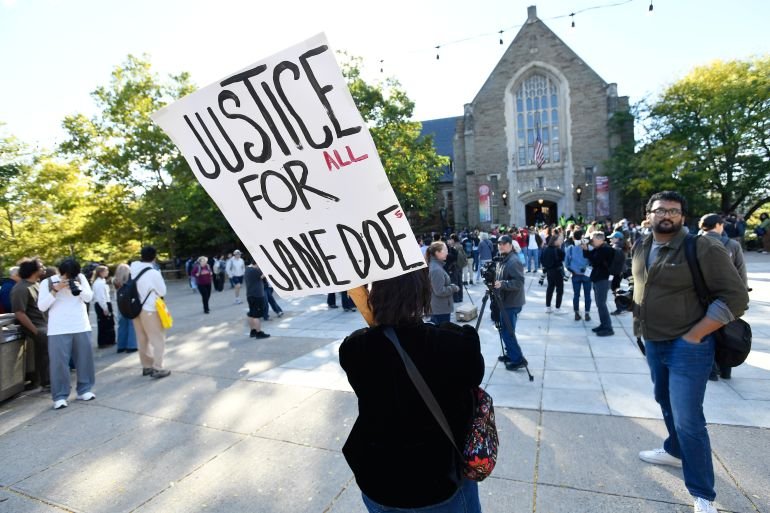
    Cornell, a prominent Ivy League university in the state of New York, has been at the centre of a national firestorm over sexual violence on US campuses, after an anonymous student, Jane Doe, filed a civil lawsuit last month alleging a gang rape at the fraternity Chi Phi.

    Her complaint accuses seven former students of perpetrating “heinous criminal sexual acts” against her during a fraternity party on the night of October 19, 2024, after she says she was pressured to drink and take the drug ketamine.

    The fraternity, Cornell University and others are named as co-defendants in the suit. Lawyers for two of the former students have rejected claims that they participated in sexual assault.

    The case has elicited outcry over how sexual assault is handled on campuses across the country.

    At Monday’s demonstration, students demanded an overhaul of the university’s sexual assault complaint process, the termination of certain school officials and stricter disciplinary action against alleged abusers.

    In a statement to the student news outlet The Cornell Daily Sun, student organisers wrote that they were calling for the “abolition” of the Interfraternity Council system on campus and the “expulsion/revocation of degrees for all Chi Phi members involved in the rape”.

    They also demanded that Cornell’s Office of Student Conduct and Community Standards be replaced by a “democratic disciplinary system”. Monday’s protest, they added, was designed to draw attention to the systemic failures that allow sexual violence to occur.

    “We wanted to ensure that Day Hall, the centre of Cornell’s administrative function, was not able to continue business as usual,” the students told the campus paper.

    The alleged crime at the fraternity, they wrote, was part of a “rampant pattern of sexual assault perpetrated by members of Greek life at Cornell University and hundreds of other academic institutions throughout the country”.

    Under pressure by New York Governor Kathy Hochul and Attorney General Letitia James, the university announced this week it would be appointing a law firm to conduct an independent internal review of how it initially handled the case.

    A transcript, obtained by US media, shows that although no charges were filed, Doe told campus police at the time that she could “say with 100% confidence I was raped”.

    Her lawsuit also alleges that Cornell “afforded” the accused fraternity members “the opportunity to mitigate their conduct by submitting essays” to the school. Two were later expelled, and another two were suspended.

  • Trump’s approval hits new low among Hispanic voters ahead of midterms

    Trump’s approval hits new low among Hispanic voters ahead of midterms

    Hispanic voters are twice as likely to favour Democratic Party over Trump’s Republican Party in the November elections.

    A new poll from the news agency Reuters and the research firm Ipsos has found that United States President Donald Trump’s approval rating remains at a record low as the midterm elections approach in November.

    The six-day survey, completed on Monday, found that just 32 percent of US voters approve of the job Trump is doing as president.

    Recommended Stories

    list of 3 itemsend of list

    While that low rate has held steady since September, the latest Reuters-Ipsos poll suggests his support among Latino voters is continuing to slide.

    Trump’s approval rating shrunk this month to 24 percent among Hispanic voters, its lowest point in either of his two terms in office.

    The Republican leader had previously made substantial inroads with that constituency.

    The Pew Research Center estimated that Trump and his Democratic rival, Kamala Harris, were within three percentage points of each other in the 2024 presidential race, earning 48 percent and 51 percent of the Hispanic vote, respectively.

    That rate marked a significant jump for Trump over the 2020 election, when he only earned 36 percent of the Hispanic vote.

    Experts have credited the boost in Hispanic support with helping Trump win the 2024 race. His 2020 bid, by contrast, ended in defeat to Democrat Joe Biden.

    The Monday poll found that Trump’s gains among Hispanics have largely evaporated.

    About 52 percent plan to vote for the Democrats in the November midterms, compared to 26 percent for Republicans.

    The upcoming midterm is largely viewed as a referendum on Trump’s second term and will decide whether the Republicans maintain their majorities in the US House of Representatives and the Senate.

    Democrats have seized on Trump’s low approval ratings, hoping to translate frustration with the president into voter momentum for their party.

    A Democratic majority in one or both houses of Congress would place substantial constraints on Trump’s agenda for the remainder of his time in office.

    But Trump has also faced rumblings from within his Republican Party as the November 3 midterms approach.

    One Republican incumbent, Representative Maria Elvira Salazar of Florida, released a campaign advertisement last month that addressed Trump directly, saying, “The same Hispanics who helped you get to the White House in 2024 feel betrayed today.”

    She cited Trump’s hardline immigration crackdown as a source of tension. “Some of your immigration enforcement efforts have gone too far,” she said, pointing to the detention and deportation of immigrants with no criminal record.

    Experts have also warned that the president’s shrinking popularity, driven in part by concerns about the cost of living and his decision to launch a war on Iran, could weigh down Republican candidates in key races across the country.

    Still, Trump has continued to express confidence about the prospects of his Republican Party in the upcoming midterms.

    He has also defended his decision to place himself at the centre of the Republican election campaign strategy. Trump recently launched a 32-day blitz of cross-country rallies ahead of the November 3 midterms.

    “Just so you understand, they all want me to go,” Trump said, denying that some Republicans would prefer he keep his distance. “They all want me to go campaign.”