Tag: Al Jazeera

  • Elon Musk spends $366m to bolster Republican Party in US midterm elections

    Elon Musk spends $366m to bolster Republican Party in US midterm elections

    The barrage of spending comes as Republicans fight to overcome Trump’s declining popularity and cost of living concerns.

    Elon Musk, the trillionaire tech mogul and backer of far-right causes, has reportedly spent $366m since last year to buoy the Republican Party in the United States midterm elections.

    The New York Times first reported on Monday that Musk has spent $276m since July alone, including $158m for a super PAC focused on Republican Senate candidates, making him the largest single donor this year.

    Recommended Stories

    list of 3 itemsend of list

    Musk is considered a close ally of President Donald Trump, the leader of the Republican Party, and was a special government adviser to the White House last year.

    Musk’s political action committee, America PAC, has confirmed the spending totals. In a statement to The New York Times, a spokesperson framed the record amount as necessary to defend Congress from a Democratic takeover during the midterm races.

    “These robust investments have allowed the GOP apparatus to get its message out so Republicans can have a fighting chance to defy history,” America PAC spokesman Andrew Romeo told the Times.

    The barrage of spending by Musk comes as Republican candidates are fighting to overcome Trump’s low popularity and rising concerns about the cost of living among US voters.

    Democrats are hoping to capitalise on voter dissatisfaction with Trump’s tenure to seize control of Congress, where Republicans currently hold majorities in both the House of Representatives and the Senate.

    The influence of wealthy donors and PACs has long been the subject of criticism. Opponents argue that such spending distorts US politics in favour of powerful interests.

    Musk became the world’s first trillionaire in June, when his aerospace company SpaceX made its initial public offering (IPO) on the Nasdaq stock exchange.

    The tech entrepreneur had previously said that he planned to step back from his involvement in US politics, stating in May that he had “done enough” and did not have plans for large spending efforts.

    Still, Musk has leveraged his tech holdings and wealth to support right-wing groups around the world.

    Last year, for instance, politicians in Germany accused Musk of trying to meddle in the national election. Musk has been a vocal backer of the Alternative for Germany (AfD) party, which has been accused of adopting a discriminatory stance on immigration and other issues.

    Voters in the US will head to the polls on November 3 to cast their ballots in the midterms, which will decide key state and local races, as well as congressional majorities.

    The Republican Party is considered to have a sizeable financial advantage over the Democrats ahead of the race, with heavy spending from groups such as MAGA Inc, a pro-Trump super PAC named for the president’s “Make America Great Again” movement.

    As of August, MAGA Inc reportedly had $416m in its coffers. The tracking site AdImpact found that it had spent $22m over the past month alone on the tight race unfolding for the open Senate seat in Texas.

    Trump has also increased his campaign activities, hosting a string of rallies in the final weeks before the election to help Republicans push their message.

    But Democrats appear confident that the Republicans’ spending advantage will not be enough to counter the effects of growing dissatisfaction with Trump.

    “Republicans are hoping to buy these elections, injecting tens of millions into races to try and outrun their unpopular candidates, unpopular president and unpopular economy,” said Lauren French, a spokesperson for Democrats’ Senate Majority PAC.

  • Canada’s Carney calls for unity as Alberta prepares for secession vote

    Canada’s Carney calls for unity as Alberta prepares for secession vote

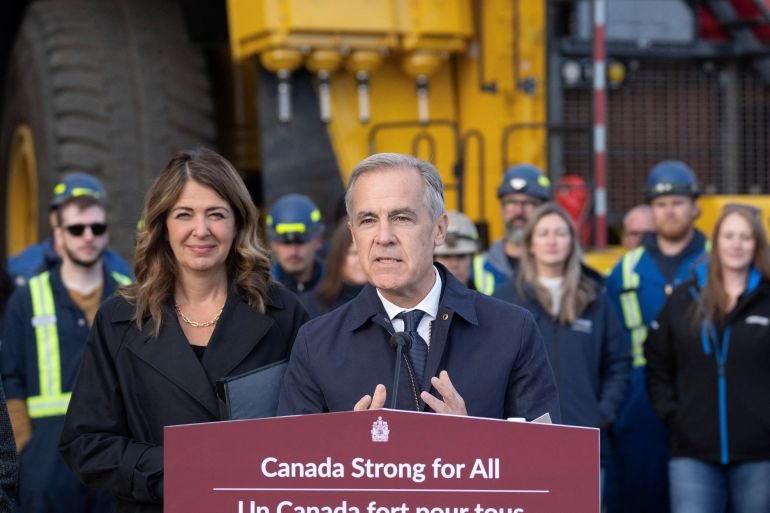
    Prime Minister Mark Carney’s Thanksgiving message comes a week ahead of Alberta’s vote on a separatism referendum.

    Prime Minister Mark Carney has used his Thanksgiving message to Canadians to call for national unity, a week before the oil-rich province of Alberta is set to vote on a proposal to secede from Canada.

    “We can’t build big things on fault lines,” Carney said in his video message on Monday, warning that Canada faces threats to its economy, security and way of life.

    Recommended Stories

    list of 3 itemsend of list

    “We have to be strong, and we are stronger together.”

    His comments come as Albertans head to the polls on October 19 to decide whether to begin the process of seeking independence. The initial referendum is non-binding, but it proposes to hold a binding vote in the future to decide whether Alberta should secede.

    The question facing voters is: “Should Alberta remain a province of Canada, or should the Government of Alberta commence the legal process required under the Canadian Constitution to hold a binding provincial referendum on whether or not Alberta should separate from Canada?”

    The vote follows a growing push by a vocal group of separatists, fuelled by longstanding grievances over federal energy and environmental policies.

    The secessionist movement has accused the Canadian government of unfairly targeting Alberta’s oil and gas industry, the cornerstone of the province’s economy.

    The movement is also being watched south of the border, as Canada’s relationship with the United States under President Donald Trump has become strained.

    An investigation by The Globe and Mail earlier this month revealed that US Republican operatives met with secession organisers in Alberta to talk about campaign strategies. Separatist leaders had reportedly offered access to the province’s water and oil royalties in exchange for US support for independence. Separatist leaders have disputed those claims.

    Carney’s comments also come after another secessionist movement, the Parti Quebecois, won the most seats in a provincial election in Quebec last week, allowing it to return to power after more than a decade.

    The Parti Quebecois, however, only won 59 seats out of a total of 129 in Quebec’s National Assembly, leaving it short of a majority government.

    Still, following that victory, US tech entrepreneur Elon Musk, considered the richest man on the planet, applauded the results. He has been known to use his wealth and influence to support political causes, particularly on the far right.

    “Good. Quebec should separate,” Musk wrote on social media. “They would be better off. Alberta and Saskatchewan should separate too.”

    Carney, who grew up in Alberta, said he was filming the message from a classroom at his former school, St Francis Xavier High School in Edmonton.

    “I’m back home a lot these days because we are building big things again in Alberta: thousands of new homes, high-speed rail, a new pipeline to the West Coast that will create lasting opportunity and prosperity for hundreds of thousands of people in this province and across the country,” he said.

    Despite the secessionist movement’s growing visibility, polls suggest most Albertans oppose independence.

  • Why the Cornell gang rape case has raised concerns about fraternity culture

    Why the Cornell gang rape case has raised concerns about fraternity culture

    For more than 40 percent of US presidents, the fraternity hall was an early stop on the road to the White House.

    Fraternal organisations, more commonly known as fraternities or frats, have a long and storied history on college campuses in the United States.

    Recommended Stories

    list of 3 itemsend of list

    One industry group, the North American Interfraternity Conference (NIC), represents 58 fraternities spread across 600 schools. It claims nearly 200,000 undergraduate students as active members and an alumni population of 4.2 million.

    The draw for college-aged men is the promise of brotherhood, a bond that transcends keg parties and late-night revelry. Like sororities and other members-only student organisations, fraternities are often touted as pathways to personal, academic and professional success.

    But critics argue that some fraternities have leveraged their exclusivity to encourage and normalise violence, dangling social acceptance as a reward for compliance.

    “This isn’t [some sort of] a hobbyist club,” said anthropologist Aldo Cimino, a Kent State University professor who studies fraternity hazing. “It is the seriousness of the affiliation that has generated the intensity of these induction rituals.”

    In recent weeks, one case has renewed debate over fraternity culture and whether the campus organisations use their exclusivity to shield bad behaviour.

    In September, an anonymous woman known as Jane Doe filed a civil lawsuit against the Chi Phi fraternity at Cornell University and seven of its members, accusing them of gang raping her during a party on the night of October 19, 2024.

    Doe’s sorority, Delta Delta Delta, and Cornell itself are among the co-defendants.

    Her lawsuit raises questions about fraternity and sorority culture at US schools, collectively known as “Greek life” for the groups’ use of Greek lettering and symbols.

    Upon her admission to Cornell, Doe argues she encountered a “glorified – yet materially false and misleading – facade” for Greek life.

    “She arrived on a campus where the University actively promoted Greek membership as a ‘vital’ part of the campus community and endorsed these organizations as well-managed, worthy pathways to new friendships and improving one’s educational and professional opportunities,” the lawsuit said.

    The complaint accuses the fraternities of instead perpetuating a pattern of sexual assault and abuse.

    What are fraternities?

    Now a multibillion-dollar industry, fraternities in the US trace their origins to men-only clubs established at some of the country’s oldest universities.

    The tradition began at the College of William and Mary in 1776, when Phi Beta Kappa was founded as a secret society for debate and scholarly exchange.

    Its adoption of the Greek alphabet, oath of secrecy, and arcane membership rites helped establish a blueprint for future fraternities and sororities. Often with houses of their own, fraternities eventually grew into informal extensions of the campus residential system.

    Historian Nicholas Syrett wrote about the origins of such groups in his book The Company He Keeps: A History of White College Fraternities.

    In an interview with Al Jazeera, he explained that fraternities have long embraced so-called masculine ideals. But those ideals have changed from generation to generation.

    In the past, fraternities sought to position themselves in “opposition to boyhood” by embracing “independence, strength of character, handsomeness and loyalty”, Syrett explained.

    But their modern iteration has shifted to include a greater emphasis on “athleticism, sexual success with women, and recklessness” as well as alpha-male posturing.

    Syrett argues that the fraternity system’s cult of toughness reflects a wider matrix of gendered expectations and social hierarchies.

    Early fraternity men, Syrett says, prized intellect and academic distinction, provided neither betrayed too much effort. But “this has largely taken a backseat in contemporary fraternities”, he explained.

    “When [men] are initiated, they are taught that loyalty to the brotherhood is of the utmost importance,” Syrett said of fraternities today. “This leads to the keeping of all kinds of secrets, including things that are against the rules and/or the law.”

    A mark of elite status

    In the two and a half centuries since the first fraternities were formed, Greek life has expanded to include different races and identities outside of white men.

    Some Greek groups have even eschewed the traditional gender divide altogether to better embrace transgender and non-binary members.

    But fraternities and sororities overall tend to act as “microcosms of the larger society”, according to Elizabeth Allan, a professor at the University of Maine and director of its Hazing Prevention Research Lab, “with race, pretty privilege and economic segregation helping shape the system”.

    “The [social] stratification that we see in the larger society is going to be reflected, in large part, in many of these organisations, unless they’re actively working to disrupt it,” she added.

    Between membership dues and rent at fraternity chapter houses, Greek organisations can price out all but the more affluent students, according to Allan.

    “Pretty privilege” – the social bias in favour of those deemed conventionally attractive – can add to the pressure, with sorority applicants in particular shelling out hundreds, if not thousands, of dollars for cosmetic treatments and outfits.

    Experts say the sense of exclusivity that many fraternities and sororities cultivate is a powerful draw for incoming students, who see membership as a path to upward social mobility.

    That perception is reinforced by the groups’ internal dynamics. Many sororities and fraternities encourage networking among members.

    A 2021 Gallup survey commissioned by the NIC and the National Panhellenic Conference found that 42 percent of fraternity or sorority alumni said a fellow member had helped them find an internship or job.

    Meanwhile, 51 percent of Greek members reported having a job waiting at graduation or found employment within two months. The rate was much lower among those who were not members of such fraternities or sororities, at 36 percent.

    How hazing shapes fraternities

    Critics often point to hazing rituals in particular as shaping a culture of violence at some fraternities and sororities.

    Hazing is a process through which prospective Greek life members undergo humiliating and sometimes perilous tasks to secure admission.

    The phenomenon is prohibited by law in most US states, though the definitions, penalties and scope of such laws vary. The consequences, however, can be deadly.

    One of the earliest recorded deaths associated with fraternity hazing took place at Cornell in 1873.

    At the time, a group of “pledges” – would-be fraternity members – were blindfolded and led far from campus at night, with instructions to make their way back on their own.

    In the dark, one of the pledges, Mortimer M Leggett, and two fraternity members stumbled over a cliff and plunged into the gorge of Six Mile Creek. The two fraternity members survived. Leggett, however, did not.

    Secret initiation rituals can forge an “informal psychological social contract in which members feel obligated to protect the organisation”, according to Pietro Sasso, who studies college student experience at Old Dominion University.

    Some members may feel the need to rally around the fraternity even when “doing so conflicts with their personal values or responsibilities to others”, Sasso added.

    “My research on fraternity cultures suggests that organisational socialisation can normalise behaviours that individuals might otherwise question, making the environment itself an important part of prevention,” he explained.

    Inside Doe’s lawsuit against Chi Phi

    Doe’s case cites some of the social pressures and incentives that lead young men and women to Greek life on campus.

    “She was drawn to the sorority and its promises of sisterhood and lifelong friendships, the status it conferred on its members, and the community it provided on campus when she was over 1,000 miles away from home,” the lawsuit said of Doe.

    But Doe said she joined Cornell’s Greek community without being fully aware of the pattern of sexual assault associated with the local fraternities.

    During Doe’s first semester, in 2022, there were at least five reported cases of victims at Cornell being drugged, and two alleged cases of sexual assault. All of those cases, according to her lawsuit, took place at fraternities.

    Two years later, on the night of the alleged gang rape, Doe claims she was pressured by fraternity members to take drugs like ketamine, marijuana and alcohol. After agreeing to a threesome, she said she found herself in a “room full of predatory, fraternity men” who raped her while she was incapacitated.

    A photo of a group chat included in her lawsuit shows one Chi Phi member informing his fellow fraternity brothers that there was “free pussy” in an upstairs alumni room. A member of the chat replies, “I f***ing love chi phi.” Another chimes in, “Like you can walk in and whip it out.”

    Several of the men have denied any wrongdoing.

    But the case has sparked questions about whether the culture of Greek life contributes to a high rate of sexual assault in fraternities and sororities.

    One 2021 survey published by the American Psychological Association tracked male students from high school through their second year of college. It found that fraternity members were 62 percent more likely to report sexual aggression during their first two years of college.

    Separately, a 2009 study published in the journal Violence Against Women estimated that 29 percent of sorority members reported suffering sexual assault during college, roughly four times the rate of non-members.

    Reforming Greek life

    After the alleged gang rape in 2024, Cornell’s Chi Phi chapter was closed, and the fraternity remains barred from campus. Two male defendants in Doe’s lawsuit were expelled, while another two were suspended.

    But some student activists say too little is being done to reform Greek life in the wake of Doe’s case. They want stronger measures to enforce accountability within private, members-only groups where secrecy often reigns.

    CJ Barles, a junior at the University of California, Davis, is one of the students across the US organising protests in support of Doe. She told Al Jazeera she understands the appeal of the fraternity and sorority systems.

    “Affiliated students say it looks good on their resume,” Barles explained. “They see it as a built-in cult, a seat at the table and a crew to call their own.”

    But Barles said she has heard troubling reports. Some fraternities, she explained, hold parties “requiring every man” to arrive with several women in tow. That requirement says “a lot about the culture some of these spaces cultivate”, she added.

    At a rally last week, Barles and other protesters called on the University of California system to implement new measures to hold fraternities accountable for sexual assault, including enshrining students’ right to withdraw consent during sexual encounters.

    But Barles said she left feeling dumbstruck by the accounts of sexual violence shared by women on campus, many of whom spoke from personal experience.

    “It’s unbelievably upsetting, the amount of stories I heard,” said Barles. The litany of grievances has fanned her scepticism of the Greek system: “I wouldn’t step within a mile of most of them.”
  • US Homeland Security secretary sees no ‘risk’ from livestreamed execution

    US Homeland Security secretary sees no ‘risk’ from livestreamed execution

    United States Homeland Security Secretary Markwayne Mullin has defended the planned livestreaming of Nidal Hasan’s execution, playing down warnings that images of his death by firing squad might be used as a propaganda tool for violent groups.

    In an interview on Sunday with the CBS News show Face the Nation, Mullin framed the decision as part of President Donald Trump’s hardline approach to crime.

    Recommended Stories

    list of 3 itemsend of list

    “I follow President Trump. He’s a commander-in chief of the country,” Mullin said, crediting the Republican leader with “restoring America values”.

    Mullin also brushed aside concerns that the images of Hasan’s execution could be leveraged against the US.

    “I don’t see an elevated risk at this point at all because of this,” Mullin said. “I think people need to understand, if you attack America, we will come after you, and we will make sure that the punishment fits the crime.”

    Hasan, a former US Army major, was sentenced to death in August 2013 after being convicted of shooting and killing 12 unarmed active-duty soldiers and a retired serviceman at the Fort Hood military base in Texas.

    The attack took place on November 5, 2009, when Hasan opened fire in a medical facility on the base where service members receive routine check-ups before deployment. The incident is considered one of the deadliest mass shootings to take place on a US military base.

    Another 32 people were injured in the shooting. In the process of responding to the attack, police on the military base shot Hasan, leaving him paralysed from the waist down.

    Critics have questioned the optics of broadcasting a firing squad killing of a man in a wheelchair. The livestreamed execution is scheduled for December 3.

    But Mullin dismissed those concerns, arguing that viewership is optional. “Once again, no one has to watch it if they don’t choose to,” Mullin said.

    Secretary of Defense Pete Hegseth had announced plans last week to livestream the upcoming execution, triggering a wave of criticism. But Trump on Saturday suggested he may reconsider the decision.

    “There are two thoughts: Don’t show it and show it. Because, you know, by showing it, maybe other people won’t be doing what he did,” Trump told reporters outside the White House.

    “So I’ll make a decision, ultimately. I know what the military would like to do, but we’ll make a decision.”

    FILE - This undated photo provided by the Bell County Sheriff's Department shows former Army psychiatrist Maj. Nidal Hasan. (Bell County Sheriff's Department via AP, File)
    Former Army Major Nidal Hasan was sentenced to death for a 2009 mass shooting at Fort Hood, Texas [File: Bell County Sheriff’s Department via AP Photo]

    Lawmakers on both sides of the aisle, however, have denounced the idea of a public execution.

    In a Sunday morning appearance on NBC’s Meet the Press, Republican Senator Thom Tillis warned that broadcasting Hasan’s death would “put at risk” US lives.

    “Terrorist organisations will use this as a recruiting tool. It will radicalise other people, and this is not who we are,” Tillis said.

    “Look, the Fort Hood shooter should be put to death, but there’s a way to deal with this that’s proper, and there’s a way to deal with this that’s more improper than I have ever observed in my life.”

    Tillis, whose term as senator ends in January, also directed criticism at Hegseth for what he suggested was reckless leadership.

    “It’s another example of why Pete Hegseth and all of his bravado needs to get the hell out of the Department of Defense, because he is a failed leader,” Tillis said.

    The senator was considered one of the deciding votes in Hegseth’s January 2025 confirmation vote, and he has since called his support for Hegseth’s cabinet nomination “the biggest regret” of his tenure.

    Other Republicans echoed Tillis’s concerns about the livestream. Senator Lisa Murkowski of Alaska, for instance, compared the public execution with something she would expect “from terrorists and dictators”.

    She also argued that Hasan has sought public attention, something he would receive in a broadcast execution.

    “It would give this individual, who deserves no further notoriety, the martyrdom he seeks,” Murkowski added.

    Republican Representative Tom Barrett of Michigan, a former military member, issued a statement on Friday explaining that he had trained at Fort Hood a year before the attack.

    He also said he opposed the public execution, despite considering Hasan “evil”.

    “Secretary Hegseth should seriously reconsider this decision,” Barrett wrote on X.

    “Making a public spectacle out of an already tragic situation is unnecessary and does not serve a public interest.”

    Military executions are extremely rare in the US and can only be approved by the president under the Uniform Code of Military Justice.

    If the order against Hasan is carried out, he will be the first member of the US military to be executed since 1961.

  • ‘Energy ceasefire’: What’s behind Trump’s love-hate ties to Russian oil?

    ‘Energy ceasefire’: What’s behind Trump’s love-hate ties to Russian oil?

    US President Donald Trump has announced an immediate “energy ceasefire” between Russia and Ukraine, days after easing sanctions on Russian fuel to tackle soaring domestic and global fuel prices.

    The energy truce, announced on Sunday, marks another shift in Washington’s approach to Russian energy, as the Iran-US war and recent Ukrainian strikes on Russian energy facilities disrupted global oil supplies and pushed up fuel prices. Trump has even asked Ukraine not to attack Russian oil facilities, as Moscow remains a major exporter of diesel.

    Recommended Stories

    list of 3 itemsend of list

    The spike in diesel prices in recent weeks has particularly put pressure on Trump’s Republican Party ahead of November’s midterm elections. Surveys show Americans hold the Trump administration responsible for the soaring fuel prices amid the unpopular US war on Iran.

    “Attacks on refineries and energy facilities have taken capacity out of an already stretched global fuel market, pushing up costs for transport, agriculture and businesses, with the pain ultimately passed on to consumers,” Susannah Streeter, chief investment strategist at Wealth Club, told Al Jazeera, referring to the mutual attacks on energy sites by Ukraine and Russia.

    “A genuine ceasefire could help protect supplies and ease some of that pressure, particularly as winter approaches.”

    However, she warned it was too early to call it a “diplomatic breakthrough”, citing Ukrainian President Volodymyr Zelenskyy’s statement that the energy truce came as a surprise to him.

    Trump’s decisions have drawn criticism from US politicians and European allies, who warn that allowing Russian fuel back into global markets could provide Moscow with new revenue to finance its war in Ukraine. In March, the Trump administration gave a sanctions waiver to Russian seaborne oil.

    So, why has Trump repeatedly changed his position on Russian energy, and what is behind his latest decisions?

    What is the ‘energy ceasefire’ Trump announced?

    On Sunday, Trump said Russia and Ukraine had agreed to immediately stop attacking each other’s energy infrastructure.

    “Both parties have agreed. Do not break it!” he wrote on Truth Social, without providing further details.

    Ukrainian President Volodymyr Zelenskyy said he was not aware of the energy truce, saying the deal was “news to me” but welcomed the announcement nonetheless.

    However, he said Russian drones continued targeting Ukrainian energy facilities, including a power plant in Kharkiv, after Trump’s statement.

    “We are waiting for the details of the conditions between the Americans and Russians, ⁠⁠⁠⁠and we are waiting ⁠⁠⁠⁠to see one specific step the Americans are ready to take,” Zelenskyy said on Monday during a video address to a security conference in Warsaw.

    “This ⁠⁠⁠⁠energy ceasefire, it can work, and it can become a major step towards ending ‌‌‌‌the war if the Americans truly step in now and make ‌‌‌‌sure ‌‌‌‌Russians respect it.”

    INTERACTIVE - IRAN US WAR - OIL GAS CONSUMPTION AND PRODUCTION OCT11, 2026-1791699311
    (Al Jazeera)

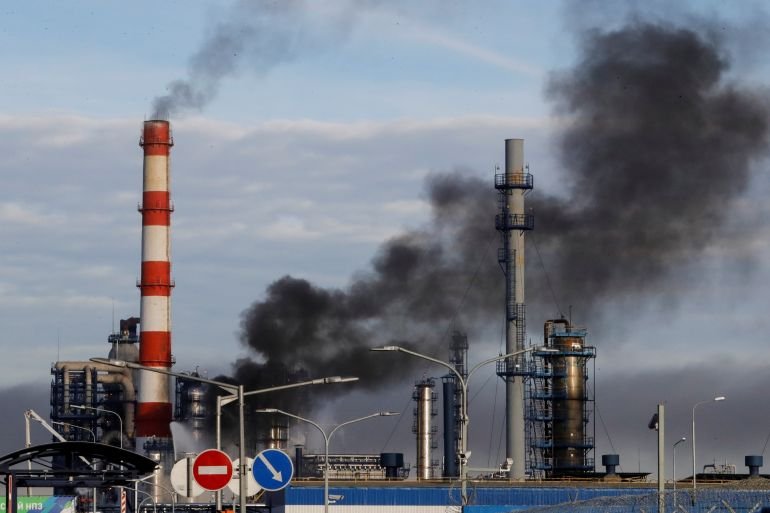
    Ukraine has repeatedly targeted Russian oil refineries, arguing that energy revenues help fund Moscow’s war. Russia, meanwhile, has attacked Ukraine’s electricity and heating infrastructure throughout the four-year conflict.

    Academic Alexey Muriaev has urged caution over Trump’s announcement, questioning whether an agreement has actually been reached, and if so, what it entails.

    “Is it about suspending attacks on oil refineries? And if that’s the case, then the situation would be inadequate, because Ukraine’s oil refineries have already been taken out by Russia’s strikes beforehand,” Muraviev, senior research fellow in Defence and Strategic Studies at Edith Cowan University, told Al Jazeera.

    “So, in this sense, it would mean effectively Ukraine suspending unilateral action against Russia’s oil refinery facilities.”

    Muriaev also linked the announcement to Trump’s diesel agreement with Russian President Vladimir Putin, suggesting it may be a signal to Zelenskyy.

    “Attacking Russian oil refinery capability would probably be interpreted by Washington as an attack on US economic interests,” he said, referring to the agreement on diesel exports through April 2027.

    What’s the state of global oil prices?

    The ongoing conflicts in the Middle East and Ukraine have continued to keep global oil markets under pressure.

    On Monday, Brent crude, the international benchmark, fell to about $103.04 a barrel following Trump’s ceasefire announcement and Russian diesel deal, while US West Texas Intermediate crude traded at about $90.96.

    However, prices remain elevated because of the US-Israel war on Iran, which began on February 28, and disruptions in the Strait of Hormuz, a key waterway through which one-fifth of the world’s oil supplies flow.

    Recent attacks on Saudi oil installations and airports by Yemen’s Houthis and the fighting around the Red Sea and Bab al-Mandeb Strait have put further pressure on oil prices.

    Ukrainian attacks on Russian refineries have compounded diesel shortages, affecting a fuel essential for the agriculture and trucking industries.

    The crisis prompted the Group of Seven nations last week to agree to release 100 million barrels of emergency oil and diesel reserves. The G7 decision came after pressure from Trump.

    How has the Trump administration zig-zagged between punishing and embracing Russian energy?

    Washington’s approach to Russian energy has shifted repeatedly since Moscow launched its full-scale invasion of Ukraine in February 2022.

    Under President Joe Biden, the US banned Russian oil and energy imports in March 2022, seeking to cut off revenue used to finance Moscow’s war.

    But Washington simultaneously supported a G7 price cap on Russian oil, designed to restrict Moscow’s earnings without removing too much supply from global markets.

    Moreover, the Biden administration also accepted India’s continued purchases of Russian crude to prevent global prices from rising.

    After returning to power last year, Trump initially intensified pressure on Moscow. In August 2025, his administration imposed additional tariffs on Indian goods over New Delhi’s purchases of Russian oil.

    INTERACTIVE-Who buys Russian crude oil - August 5, 2025 copy-1789649792
    (Al Jazeera)

    Two months later, Washington sanctioned Russian energy giants Rosneft and Lukoil, accusing Moscow of failing to seriously pursue peace negotiations to end the war in Ukraine.

    However, Washington’s approach took a dramatic turn this year. On March 5, Washington issued a 30-day waiver allowing India to buy Russian oil stranded at sea, as disruptions to shipping through the Strait of Hormuz amid US attacks on Iran threatened global supplies.

    A week later, the Trump administration expanded the exemption, allowing countries worldwide to buy sanctioned Russian oil and petroleum products already loaded onto tankers, with the waiver lasting until April 11.

    In September, Trump urged Ukraine to stop attacking Russian refineries, blaming the strikes for global diesel shortages.

    On October 9, he announced an agreement with Russian President Putin for Moscow to release more than 300,000 tonnes of diesel immediately, with another 1.5 million tonnes to follow.

    Why has Trump changed his position on Russian oil frequently?

    Trump’s shifting public position on Russian energy reflects ongoing, and often competing, political and economic pressures.

    “Trump is caught between his geopolitical ambitions and the domestic political consequences of expensive energy,” Susannah Streeter of Wealth Club, told Al Jazeera.

    She said Washington was trying to pressure Moscow over its war in Ukraine while simultaneously allowing Russian fuel sales that could generate additional revenue for the Kremlin.

    “The shift may deliver a short-term political gain if supplies increase and prices ease, but it could come at a longer-term diplomatic cost,” she said, adding that the benefits appeared limited while the Middle East war continued.

    US diesel prices reached a record $6.52 per gallon in September, placing Trump under pressure ahead of the November 3 midterm elections.

    However, according to academic Muriev, the US president’s public rhetoric should be distinguished from his administration’s actions.

    “I don’t really see inconsistency in Trump’s approach because, apart from his public rhetoric, apart from his frequent media posting, there’s been a more steady approach on behalf of his administration,” he told Al Jazeera.

    He pointed to discussions between Russian and American officials in August and September, suggesting that negotiations over the latest diesel agreement may have begun well before Trump’s announcement last Friday.

    Muriev suggested the timing of the announcement could be politically motivated, allowing Trump to claim a victory on energy prices before the midterms.

    Moreover, Moscow also has an interest in helping Trump retain political influence because his administration appears more willing to negotiate with Russia than former President Biden was. Trump has  been relatively more accepting of the Russian position on the Ukraine war and has even blamed Zelenskyy for failing to end the war.

    “For Putin, it’s not just about scoring immediate economic benefit, but also achieving longer-term political and strategic goals,” Muriev said, referring to other issues such as Iran, cybersecurity, space cooperation and nuclear arms control.

    The energy crisis has also created contrasting consequences for American businesses.

    While higher oil prices can boost revenues for US energy producers, they increase operating costs for businesses dependent on fuel.

    Susannah Streeter said cheaper diesel could provide relief to trucking companies, farmers and manufacturers, although the additional Russian supplies were unlikely to make a significant difference while disruptions in the Middle East continued.

    She also warned that frequent changes to sanctions could create uncertainty for companies making long-term investment and supply-chain decisions.

    “If sanctions are relaxed, reimposed or changed at short notice, companies face greater uncertainty over sourcing, compliance and the risk of being caught on the wrong side of a policy reversal,” she said.

  • Nobel economics prize awarded to Robert Hall and Michael ⁠Woodford

    Nobel economics prize awarded to Robert Hall and Michael ⁠Woodford

    The Swedish academy says the academics’ models are ‘now used by central banks and ​governments around the world’.

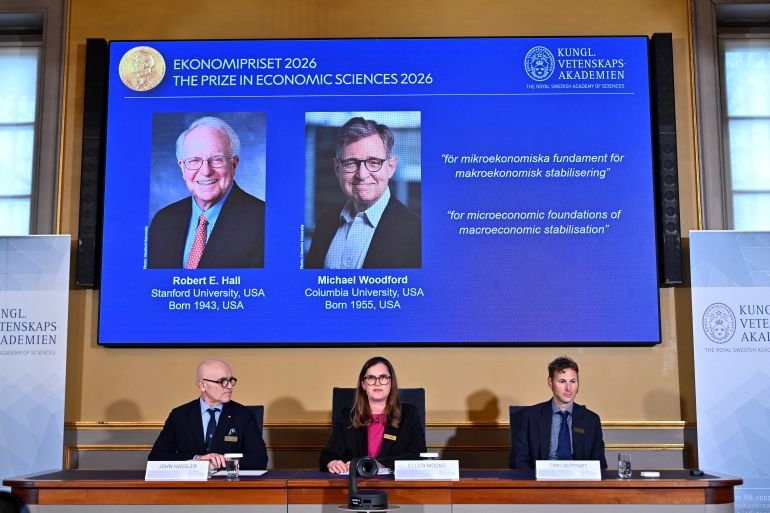
    The ⁠2026 Nobel Prize in Economic Sciences has been awarded to US academics Robert Hall and Michael ⁠Woodford for their work on how monetary and fiscal policy can help stabilise fluctuations in the economy, according to the Royal Swedish Academy of Sciences.

    The winners of the prestigious award, formally known ⁠as the Sveriges Riksbank Prize in Economic Sciences in Memory of Alfred Nobel and the final prize to be given out this year, were announced on Monday.

    Recommended Stories

    list of 4 itemsend of list

    The two laureates developed new macroeconomic models that improve people’s ability to implement effective stabilisation policies, enabling fiscal and monetary policy measures that can reduce damaging swings in the economy.

    “The laureates’ work has provided us ‌with a stable theoretical foundation for the models that are now used by central banks and governments around the world,” John Hassler, chair of the Committee for the Prize in Economic Sciences, said in a statement.

    “With them, we are better equipped to deal with shocks in the economy, such as energy crises or sudden changes in how much households consume.”

    During the oil crises in the 1970s, the existing Keynesian models used to determine when and how measures should be implemented to tackle recessions or other economic fluctuations stopped working. Hall and Woodford then developed new tools to understand what policy responses could be the most effective.

    “Rather than basing the models on statistical links between macroeconomic variables, such as inflation, production and consumption, they chose to build them on a microeconomic foundation,” the academy said. “This encompasses an understanding of how the total mass of individual households and businesses affect the economy through their actions.”

    The economics prize, first awarded ⁠in 1969, is not part of the five original awards ⁠created in the 1895 will of industrialist and dynamite inventor Alfred Nobel, but was instead established by Sweden’s central bank.

    The majority of previous laureates have been from the United States. Only three women have ⁠ever won, most recently Claudia Goldin in 2023 for her work on how gender has affected pay and employment over time ⁠in the US.

    Last year’s winners – Joel Mokyr, Philippe Aghion and Peter Howitt – won for ‌their work on “creative destruction” and how new technology and production methods can boost growth and living standards.

    Like the other Nobel awards, the economics prize consists of a diploma, a gold medal, and a $1.2m cheque.

    The Nobel prizes for medicine, physics, chemistry, literature and peace were announced last ‌week, with South African jurist Navi Pillay and Canadian writer Anne Carson among the winners.

  • Oval Office spat to public rebukes: A timeline of Trump-Zelenskyy ties

    Oval Office spat to public rebukes: A timeline of Trump-Zelenskyy ties

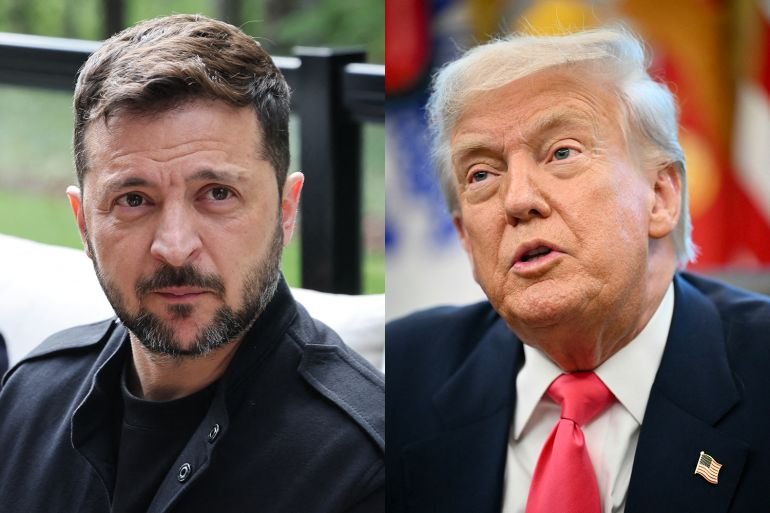
    United States President Donald Trump has called for the removal of President Volodymyr Zelenskyy after blaming the Ukrainian leader for rising diesel prices, which have put pressure on the Republican Party ahead of the November midterm elections.

    The criticism on Saturday came as tensions between the US and Ukraine have increased after Trump announced a diesel supply deal with Russia.

    Recommended Stories

    list of 3 itemsend of list

    “I think it’s ⁠⁠⁠⁠time for Ukraine to get a new president,” Trump told reporters at the White House on Saturday, saying Zelenskyy had hurt global diesel supplies with strikes on Russian refineries.

    “He wants to make problems for our farmers, our ranchers with diesel fuel because Russia supplies a large portion of the diesel fuel throughout the world,” Trump added.

    Zelenskyy on Sunday pushed back, vowing to continue striking Russian oil refineries. “Ukraine will be ready to stop striking Russian oil refineries if Russia stops striking our energy infrastructure,” Zelenskyy wrote on X.

    “It is possible to stop strikes on energy infrastructure as early as today, but (Russian President Vladimir) Putin does not want to do so,” he said.

    This is not the first time Trump has lambasted Zelenskyy. Their tense relationship goes back to Trump’s first term as president, when he pressured Zelenskyy to investigate his rival, Joe Biden, and his son, Hunter Biden.

    Here’s a timeline of some of the occasions when Trump has been critical of Zelenskyy:

    October 2026: In his remarks at the White House, Trump criticised Zelenskyy over the lack of a peace deal while demanding an end to Ukrainian strikes on Russian energy facilities.

    “I said to him, ‘Do what you want. Don’t hit refineries. There’s plenty of targets. Don’t ‌‌‌‌hit ‌‌‌‌refineries.’ And he went out and he hit,” Trump said. “He better damn well stop.”

    “I suggest they get a new leader who can make a deal because he could have made many deals, but for some reason, he never does,” Trump added.

    Trump, who has been urging Zelenskyy to stop attacking Russian energy infrastructure for weeks, struck a deal with Putin on Friday to buy diesel from Russia in an attempt to reduce high fuel prices.

    The deal marked a stunning reversal of years of Washington’s pressure on Russia over its full scale invasion of Ukraine.

    Zelenskyy, meanwhile, said every additional $1bn Russia earns from exports would help pay for weapons components, drone upgrades, missile production and the recruitment of mercenaries.

    Moscow would only be ready to stop when its ability to fight diminished, he added.

    April 2025: On April 15 , Trump criticised Zelenskyy and implied Kyiv had started the war against Russia, saying the Ukrainian leader was “always looking to purchase” US missiles. “You don’t start a war against someone 20 times your size and hope people give you some missiles,” Trump said.

    Then on April 23 , he criticised Zelenskyy for making “very harmful” statements after the Ukrainian president pushed back against the idea of ceding occupied Crimea to Russia in a potential peace deal.

    Zelenskyy had ruled out ceding any territory, declaring, “There is nothing to talk about – it is our land, the land of the Ukrainian people”.

    In a post on his social media platform, Trump accused Zelenskyy of stoking tension by “boasting” that Kyiv would not legally recognise ceding Crimea to Russia.

    “This statement is very harmful to the Peace Negotiations with Russia,” Trump said, adding that Russia invaded the Crimean Peninsula and annexed it back in 2014 “without a shot being fired”.

    “It’s inflammatory statements like Zelenskyy’s that makes it so difficult to settle this War,” Trump said. “He can have Peace or, he can fight for another three years before losing the whole Country.”

    Despite the tension, the two leaders held a private meeting at the Vatican on April 26, 2025, during Pope Francis’s funeral.

    Feb 28, 2025: During their fiery Oval Office meeting, Trump and Vice President JD Vance clashed with Zelenskyy over rare earth mineral agreements, security assurances and peace negotiations with Russia.

    Trump warned Zelenskyy, “You’re either going to make a deal [on ending the war with Russia] or we’re out,” and accused the Ukrainian leader of having “disrespected” the United States and “overplayed his hand”.

    The US president and Vance also berated Zelenskyy for lacking gratitude and refusing to compromise to end the war, with Trump arguing that Zelenskyy was unready for peace.

    The meeting devolved into a shouting match and Zelenskyy departed the White House abruptly.

    February 19, 2025: A month after returning to power for a second term, Trump called the Ukrainian president a “dictator without elections” and accused him of wanting to keep the “gravy train” of US military support going while Washington tries to end the war with Russia.

    In a lengthy and scathing post on his social media platform Truth Social, Trump accused Zelenskyy of taking US money and embroiling the country in an endless conflict.

    He later doubled down on those comments, telling an audience at an investment summit in Miami that Zelenskyy had “done a terrible job, his country is shattered, and millions and millions of people have unnecessarily died”.

    “A dictator without elections. Zelenskyy better move fast or he’s not going to have a country left. Gotta move. Gotta move fast cause that war’s going in the wrong direction,” Trump said on stage at the Future Investment Initiative (FII) Institute summit.

    “In the meantime, we’re successfully negotiating an end to the war with Russia. Something I’ll admit that only Trump is going to be able to do and the Trump administration – we’re going to be able to do it. I think Putin even admitted that,” he said.

    “Biden never tried. Europe has failed to bring peace and Zelenskyy probably wants to, maybe he wants to keep the gravy train going. I don’t know what’s the problem, but he has been able. He’s very upset,” he added.

    Trump had been critical of Biden’s financial and military support to Ukraine during the war. He had vowed to end the war within 24 hours of his taking office, but later said he was being “sarcastic”.

    2024 Campaign trail: On the 2024 US presidential election campaign trail, Trump repeatedly criticised Zelenskyy for not trying hard enough to end Russia’s war on Ukraine. In September, at an election rally speech in North Carolina, Trump lashed out at Zelenskyy for refusing to negotiate, stating that even the “worst deal” or giving up a small amount of territory would be better than ongoing death and destruction.

    July 2019: During his first term, Trump repeatedly urged Zelenskyy to work with Rudy Giuliani and the US attorney general to investigate Democratic political rival Joe Biden. That is according to a five-page memo summarising the July 25 call.

    At the time of the call, the Trump administration was also withholding from Ukraine nearly $400m in congressionally approved security assistance, prompting speculation the US president was using the money as leverage to get his desired investigations.

    Zelenskyy expressed willingness to look into new cases and cooperate with US investigations, though he and Ukrainian officials later maintained they did not feel directly threatened or pressured during the conversation itself.

  • Rubio pledges US cooperation in Marine-linked murder case

    Rubio pledges US cooperation in Marine-linked murder case

    A US Marine stationed on Okinawa has been arrested on suspicion of killing a 39-year-old woman.

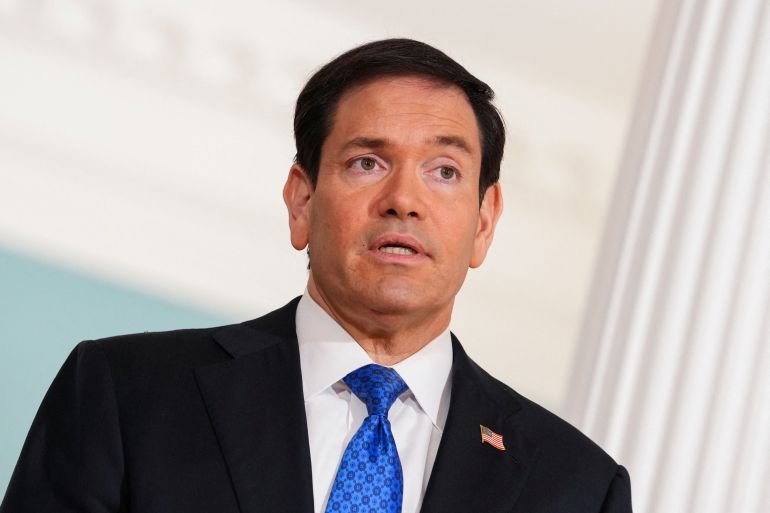
    The United States ‌Secretary of State Marco Rubio has vowed ⁠to cooperate ⁠with Japanese authorities investigating allegations that a US Marine murdered a woman in Okinawa, a case that provoked ⁠protests and prompted a US military curfew and mandatory training in standards and discipline.

    The top US diplomat spoke ⁠with Japanese Foreign Minister Motegi Toshimitsu in a phone call, the US Department of State said in a statement on Saturday following the death of a local woman in a hotel that has ‌renewed tensions over the US military presence.

    Recommended Stories

    list of 3 itemsend of list

    “Rubio expressed sincere condolences over the death of a Japanese national in Okinawa, as well as the United States’ determination to communicate and fully cooperate with the Government of Japan and local authorities as they conduct an investigation,” the ⁠department said.

    Devin Jacob Ballard, stationed at ⁠Marine Corps Air Station Futenma, was arrested on October 4 on suspicion of robbing and murdering Anna Yagi, 39, in a hotel in the ⁠capital Naha, according to local police.

    Local media reported that she was choked to death and her wallet stolen.

    Ballard has denied the allegations.

    The killing triggered outrage in Japan, where crimes involving US forces have been a thorn in relations between the close security allies and have long inflamed criticism of US troops being stationed there. Japan hosts the largest overseas contingent of US forces globally, ‌with most of the 18,000 Japan-based Marines stationed on Okinawa.

    Following the killing, US military personnel stationed ⁠there have been given ⁠a monthlong curfew and banned from drinking alcohol while they undergo discipline training.

    Rubio and Toshimitsu also discussed US sanctions on the International Criminal ‌Court ‌and the upcoming G20 Foreign Ministers meeting in Atlanta, scheduled to begin on October 30.

  • US opens antitrust probe into TV networks for halting Trump coverage

    US opens antitrust probe into TV networks for halting Trump coverage

    Department of Justice says it’s investigating whether the White House press pool’s decision violated antitrust laws.

    The United States Department of Justice has opened an investigation into television networks’ decision to halt coverage of President Donald Trump last month.

    A spokesperson said on Saturday that the department was investigating whether the networks violated federal antitrust laws by their boycott, which followed a White House decision to pull the credentials of reporters from three news organisations, including CNN.

    Recommended Stories

    list of 4 itemsend of list

    The ⁠networks under investigation are ABC, CBS, CNN, NBC and Fox News, said Emily Convington, the Justice Department spokesperson.

    “Group boycotts among commercial competitors can violate the Sherman Act,” she said of the antitrust legislation.

    “The Antitrust Division is simply investigating to determine whether these news organizations have violated the antitrust laws.”

    The investigation is the latest in a series ‌of clashes between the Trump administration and major news organisations. Trump has repeatedly called the mainstream media “fake news” and frequently clashes with reporters during encounters with the press.

    The action also puts legal and potentially financial pressure on the media to continue coverage of the president even when they disagree with how the White House handles them.

    The networks did not immediately comment on the announcement.

    The Justice Department’s move came after the television pool of five broadcasters last month ceased presidential coverage after the administration barred CNN, MS NOW and Politico from the White House.

    The White House said on September 19 that covering the president was a “privilege – not a right”. The outlets ⁠sued the administration, alleging the exclusions violated the First Amendment and that the White House was retaliating over their coverage.

    CNN is one of the five ⁠news organisations – along with ABC, CBS, Fox News and NBC – ⁠that make up the primary White House television pool.

    They share the costs of covering the president, take turns organising coverage, and share the footage with outlets around the country.

    All of the five television networks that cover the White House, including Fox ‌News, suspended coverage in solidarity and refused to provide replacement coverage.

    The White House reinstated the credentials on September 24 after US District Judge Timothy Kelly ruled that the ban was likely unconstitutional and ‌ordered ‌the administration to “immediately return, reinstate, and restore” their access.

    However, disputes over access to specific presidential events and pool assignments continued.

    Jose Zamora, the Committee to Protect Journalists’ Americas director, on Saturday criticised the administration’s decision to investigate.

    “The government should not use antitrust investigations to intimidate news outlets defending press access,” Zamora said on X. “The public’s right to know depends on that access.”

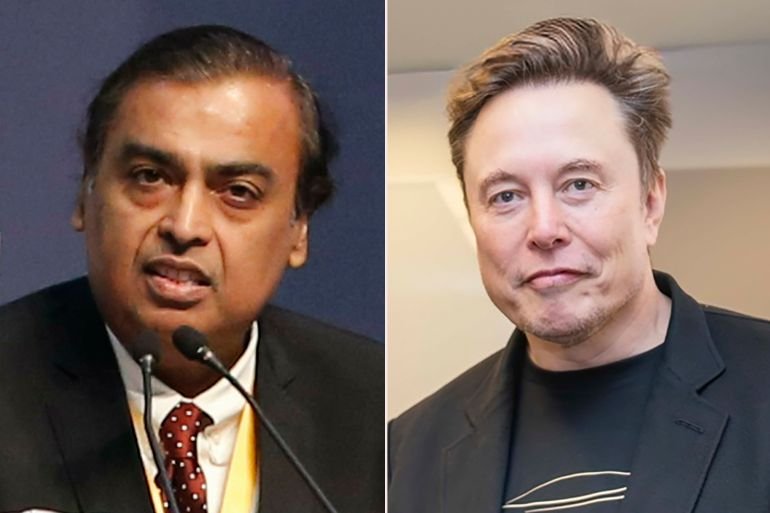
  • Musk vows ‘affordable’ Starlink in India as he escalates feud with Ambani

    Musk vows ‘affordable’ Starlink in India as he escalates feud with Ambani

    Elon Musk’s latest comments come days before Mukesh Ambani’s low-cost Reliance Jio’s parent launches India’s largest-ever initial public offering.

    ‌Billionaire entrepreneur Elon Musk has said he would price his Starlink satellite internet service affordably ⁠in India to take ⁠on Mukesh Ambani’s low-cost Reliance Jio, escalating his attacks on the rival tycoon days before Jio’s parent launches the country’s largest-ever initial public offering (IPO).

    Jio Platforms, ⁠which owns the telecom arm, is targeting a valuation of $106bn in the offering. Much like SpaceX-owned Starlink, Jio’s satellite venture is also awaiting final ⁠security clearance to launch.

    Cheap data is the playbook that built Jio in India, and the one Musk has used in markets like Kenya to unsettle local telecom players. SpaceX now plans to enter the mobile carrier market itself, starting in ‌the United States.

    Musk did not specify prices for India, where mobile data costs about rupees 7.74 ($0.08) per gigabyte, among the lowest in the world.

    “Obviously, if Starlink is too expensive in India, no one will buy it, so SpaceX will need to make pricing affordable,” he said in a post on his social media platform X on Saturday.

    “The reality is that ⁠competition would greatly benefit the average citizen in India by ⁠giving them more choices, as it always does. Ambani’s profits will be lower, but he is not going out of business,” Musk added.

    ‘Prime Minister Ambani’

    Musk’s remarks were the latest in ⁠a series of X posts in which he accused Prime Minister Narendra Modi’s government and Ambani of stalling Starlink’s entry ⁠into one of the world’s biggest internet markets to ⁠favour market leader Jio.

    The posts have marked a sharp turn for Musk, who has long enjoyed a warm public rapport with Modi.

    India’s government has denied any bias in its approval process, ‌noting that the three satellite ventures seeking to launch, including Starlink’s and Jio’s, are all awaiting final security clearance.

    Late on Friday, Musk taunted Ambani directly, addressing ‌him as “Prime ‌Minister Ambani” and asking whether he would “consider allowing Starlink to compete”.

    Reliance has not responded to Musk’s remarks.