Blog

  • The inside story of how a hike in Hong Kong changed crypto trading forever

    The inside story of how a hike in Hong Kong changed crypto trading forever

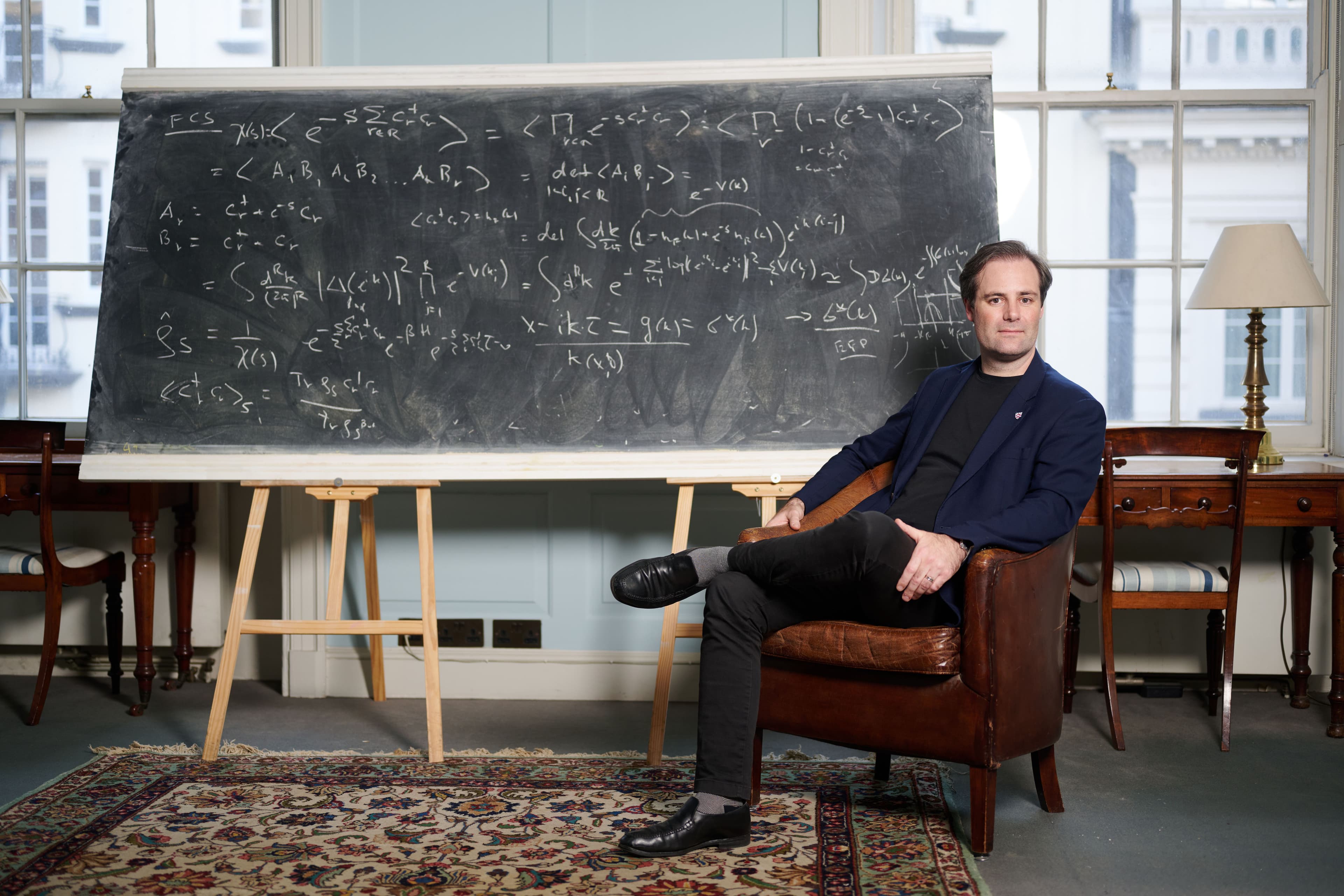
    It was sometime in 2015, on a hiking trail in Hong Kong, that the perpetual swap — also called a perpetual future or a “perp” for short — was born. Ben Delo, the mathematician and co-founder of BitMEX, was walking with a friend called Bavik, a derivatives trader, wrestling with a problem that had been nagging at him for months.

    BitMEX had been trying everything. Quarterly futures, monthly futures, weekly futures, 48-hour futures, even a contract that lasted just 24 hours before resetting. Nothing was working. Customers kept complaining that their positions were closing without warning. They wanted something that looked like spot, traded like spot, but gave them the leverage that only a derivatives exchange could offer.

    “What if a future never expired?” Delo asked.

    Bavik’s answer was immediate. “Mathematically, it would be worth infinity,” Delo recalls him saying.

    Technically, he was right. A futures contract’s value is partly derived from the time remaining until expiry and the cost of carrying the position. Remove the expiry date and that carrying cost compounds indefinitely, making the theoretical value infinite. But then Bavik offered a solution: just charge traders the bitcoin overnight rate, the way you might charge LIBOR (London Interbank Offered Rate) in traditional finance.

    There was one problem. “I said, what’s that?” Delo recalls. “He said, ‘Hm, just charge them the overnight bitcoin interest rate’. I said, ‘I don’t think that exists.’”

    So Delo built it. And in doing so, he invented one of the most consequential financial products of the 21st century.
    Building BitMEX

    To understand why the perpetual swap mattered, you have to understand what BitMEX was trying to be before it became the most liquid bitcoin market in the world.

    When Delo and Arthur Hayes founded the exchange in 2014, they were not thinking about retail traders chasing 100x leverage. They were thinking about institutional hedgers. Hayes had worked at Deutsche Bank, while Delo spent years building high-frequency trading systems at JP Morgan. Their thesis was that bitcoin miners and payment companies needed a way to hedge their exposure, and BitMEX would provide the professional infrastructure to do it.

    “We built it basically to look like a Bloomberg terminal,” Delo said. “We used Reuters instruction codes. Z14 meant expiring December 2014.”

    The institutions never came. What came instead were traders, sophisticated but retail, people who had financial experience but were playing with their own money. And what they wanted was not guaranteed settlement or low leverage. They wanted to speculate, and they wanted to do it with as much size and leverage as possible.

    BitMEX listened. By Halloween 2015, the exchange was offering 100x leverage, made possible by a real-time margining system that Delo had built from scratch. “I built the order matching engine, the position keeping system, the margining system, the PnL system, the settlement system,” he says. “Everything on that was me.”

    The issue with futures, even short-dated ones, is basis, the premium at which a futures contract trades above the spot price of the underlying asset. A futures contract trades at a premium to the underlying asset, and that premium reflects an implied interest rate. In traditional finance, this is well understood. In crypto, in 2015, it confused almost everyone.

    “Our customers would be like, why is bitcoin so expensive on your exchange?” Delo recalled “And we would say, ‘Well, if it is expensive, why don’t you short it?’ And that would blow some of their minds. You could short something rather than just long it.”

    BitMEX kept shortening the expiry of its listed futures contracts. Weekly futures. Then 48-hour. Then a contract that relisted every single day.

    “Every 24 hours, it would expire or settle. And people would say, ‘Why did you liquidate me?’ And we’d say, ‘We didn’t liquidate you. Your position closed at the index price. You got exactly the spot price,’” Delo said. “They’re like, ‘We don’t understand.’”

    The customers knew what they wanted, even if they could not articulate it. They wanted a leveraged product that never went away. Delo’s hiking trail conversation gave him the framework to build one.

    Inventing the funding rate

    The perpetual swap launched in May 2016 with little ceremony. The core mechanic was straightforward: a futures contract with no expiry date, anchored to the spot price through a daily funding rate. Longs paid shorts, or vice versa, depending on whether the swap was trading above or below spot. BitMEX took no cut. The rate was purely a balancing mechanism.

    The early funding rate was derived from third-party lending markets, primarily Bitfinex, where traders could borrow dollars or lend out Bitcoin. Take the dollar borrow rate, subtract the Bitcoin borrow rate, and you had something approximating the cost of holding a long position.

    It worked, until it did not. As Bitcoin began its rise through 2016 and into 2017, demand for long exposure on BitMEX overwhelmed the funding mechanism. The swap started trading at a persistent premium to spot, causing the contract price to drift away from the actual price of bitcoin and undermining the mechanism designed to keep them aligned. The interest rate being imported from Bitfinex was simply not high enough to reflect what was happening on BitMEX itself.

    “We had to dynamically adjust how we calculated that funding rate,” Delo said.

    The original funding rate had been imported from external lending markets, a fixed reference point that could not respond to conditions on BitMEX itself. The new approach replaced that with a dynamic one, looking inward at how the swap was actually trading rather than outward at what Bitfinex was charging to borrow dollars.

    The solution was elegant. Rather than looking outward to other markets, BitMEX would look inward. The exchange began measuring how far the swap was trading above or below spot over an eight-hour window, treating that gap as an implied basis, and back-calculating the annualized rate from it. That rate would then be charged at the end of the next eight-hour window.

    “This was very important because you gave market makers notice of how you were calculating it, what it would be, and then when you would charge it,” Delo said. “Because it was paid from longs to shorts, if the swap was trading at a 1% premium, you would charge longs 1% but give 1% to shorts. And then immediately the market makers, knowing that, would come in, short the swap, and anchor it back down to the spot price. It was a dynamic equilibrium.”

    This is, in essence, the funding rate mechanism that every major derivatives exchange in the world now uses.

    The product that took over

    By 2017, BitMEX was the most liquid bitcoin market on the planet. The exchange was processing $3-4 billion a day, and the perpetual swap was at the center of it all. Price discovery for bitcoin was happening not on Coinbase or Bitstamp but on the BitMEX order book.

    The concentration of liquidity was itself a product of the swap’s design. Before it launched, BitMEX had been running quarterly, monthly, weekly, 48-hour and 24-hour contracts simultaneously, spreading market maker capital thin across six different tenors. The swap collapsed all of that into one instrument.

    “By offering one product, they [traders] were able to consolidate their liquidity, which meant a more liquid market, tighter spreads,” Delo said.

    Competitors noticed. Another competitor exchange copied so literally that it reproduced portions of the BitMEX FAQ without understanding how the product worked, Delo told CoinDesk. Others took the concept more seriously. Eventually, every major exchange in crypto offered its own perpetual swap, each one built on the funding rate architecture that Delo had begun assembling on that Hong Kong hiking trail.

    “The fact that every other exchange has copied the swap just proves what a financial innovation it is,” he said. “I think it now does $40, 50 trillion dollars a year of turnover. It’s one of the most successful products in the history of capitalism.”

    What comes next

    BitMEX chose not to patent the perpetual swap. Delo says they considered it and decided the startup’s time was better spent building.

    “We were a scrappy startup,” he says. “We thought, just get it out there. If it was any good, the market would show us.”

    And show them the market did. Now, a decade on, the product is starting to attract the attention of traditional finance regulators. The CFTC is reportedly making room for perpetual swaps under its framework, and there is speculation that the CME could eventually list them on equities.

    For Delo, that prospect is the final validation of something that started as a question on a hillside above Hong Kong, asked by someone who had grown tired of watching his customers complain about positions that kept disappearing.

    “I think once traditional finance sees the benefits of this financial product,” he said, “it’ll be impressive.”


  • Penélope Cruz, Isabelle Huppert, Lee Chang-dong Among First TIFF Tribute Awards Honorees

    Penélope Cruz, Isabelle Huppert, Lee Chang-dong Among First TIFF Tribute Awards Honorees

    Penélope Cruz, Lee Chang-dong, Rosalind Eleazar, Siân Heder and Isabelle Huppert are the first honorees announced for the eighth annual TIFF Tribute Awards, the gala set for Sept. 13 during the Toronto International Film Festival.

    Cruz, who won the supporting actress Oscar for “Vicky Cristina Barcelona,” will receive the TIFF Special Tribute Award. Eleazar and Huppert will each be honored with the TIFF Tribute Performer Award, while Lee will take the TIFF Ebert Director Award. Heder, whose “Being Heumann” is this year’s opening night selection, will receive the TIFF Tribute Award in impact media.

    “Now in its eighth year, the TIFF Tribute Awards celebrate some of cinema’s most exciting artists at an event dedicated to the transformative power of film,” says Cameron Bailey, CEO of TIFF. “From the captivating performances of Isabelle Huppert, Penélope Cruz and Rosalind Eleazar to Lee Chang-dong and Siân Heder’s vital filmmaking, each has shown a profound impact on screen storytelling. It’s our privilege to recognize their achievements as we gather to celebrate another exceptional year in film and rally support for TIFF’s ongoing work.”

    Cruz arrives in Toronto with two titles including the Spanish-language drama “La Bola Negra” which premiered at Cannes, where directors Javier Calvo and Javier Ambrossi won best director. She also stars opposite Oscar winner Javier Bardem in “Bunker,” from writer-director Florian Zeller, the Oscar-winning scribe of “The Father” (2020).

    Lee returns to the festival with the Special Presentations premiere of “Possible Love,” his first feature since “Burning” in 2018. Eleazar, the breakout of Apple TV’s “Slow Horses,” appears in “Misty Green,” which Chris Rock wrote and directed. Huppert, whose career spans more than 100 films, reunites with director Marc Fitoussi, who guided her through “Paris Follies” in 2014, for the comedy “All About Corinne,” a gala presentation.

    Heder makes her festival debut with the world premiere of “Being Heumann,” her follow-up to “CODA,” which won best picture at the 2022 Academy Awards and earned her the adapted screenplay Oscar.

    The Tribute Awards is TIFF’s largest annual fundraiser, with proceeds supporting expanded access to cinema, artist development and industry initiatives.

    The 51st Toronto International Film Festival runs Sept. 10-20. The fest has long served as a launchpad for Oscar-winning fare, particularly through the People’s Choice Award, whose past winners include “Chariots of Fire” (1981), “American Beauty” (1999), “Slumdog Millionaire” (2008) and “Green Book” (2018).

  • Morning Minute: Claude Mythos Breaks Post-Quantum Cryptography

    Morning Minute: Claude Mythos Breaks Post-Quantum Cryptography

    Morning Minute is a daily newsletter written by Tyler Warner. The analysis and opinions expressed are his own and do not necessarily reflect those of Decrypt.

    GM!

    Today’s top news:

    • Crypto majors are green ahead of FOMC; BTC +1.6% at $64.4k
    • BlackRock joins Fidelity and Goldman in support of the Clarity Act
    • Anthropic says Mythos broke post-quantum cryptography
    • Zcash activated its Ironwood upgrade, 3.8% migrated out of Orchard so far
    • New Robinhood meme PIPEDOG soars to $40M+ on massive volume

    🔓 An AI Model Just Broke Post-Quantum Cryptography

    Anthropic said an unreleased version of its most powerful model, Claude Mythos Preview, found two previously unknown attacks on crypto algorithms, one of them against a scheme competing to become a U.S. federal standard.

    The target, HAWK, is a digital signature system that proves a transaction came from you without exposing your private key, and it was specifically designed to survive quantum computers. NIST had advanced it to the third round of its post-quantum competition in May, where it was the last lattice-based candidate standing. Claude found a symmetry in HAWK’s math that no human had used, dropping the cost of stealing its smallest key from 2^64 operations to 2^38, roughly 67 million times less work.

    Patching HAWK means roughly doubling its key sizes, and as Anthropic put it, that “eliminates many of the reasons” HAWK was attractive in the first place. Signature size is block space, and block space is fees, so any chain shopping for a quantum-resistant replacement is partly choosing on bytes per signature. Compact keys and fast signing were HAWK’s entire pitch, and the fix reduces that edge.

    To be clear for crypto holders: HAWK has never been deployed anywhere, and Bitcoin still runs on ECDSA, the pre-quantum scheme these candidates are eventually meant to replace. So nothing in the field is broken. But that’s not the problem.

    The problem is that post-quantum security remains the biggest overhang for crypto. The entire quantum defense effort spun up over the past weeks and months (the BlackRock-Coinbase-Strategy consortium, Vitalik’s post-quantum roadmap, NEAR and Zcash roadmaps, etc.) rests on the assumption that the post-quantum schemes replacing today’s cryptography are themselves sound. Claude Mythos just poked a hole in a leading candidate before it ever shipped.

    The good news is the same tool defends as well as it attacks, which is exactly why the industry is racing to point it at its own code first. Now we find out whether AI breaks cryptography faster than it can help rebuild it.

    🌎 Macro Crypto and Markets

    • Crypto majors are green and rebounding ahead of FOMC; BTC +2% at $64.4k; ETH +2% at $1,910; SOL +1% at $74; HYPE +1% at $54.90
    • Top alt movers include Kaito (+10%), JUP (+8%) and UNI (+7%)
    • Oil +4% at $83; Gold even at $4,030
    • Stock futures are mixed ahead of FOMC today; DOW -0.3%, Nasdaq +0.3%
    • BlackRock, Fidelity, and other Wall Street giants publicly backed the CLARITY Act, with BlackRock, Fidelity, Franklin Templeton, Goldman Sachs, and SoFi all urging passage, even as JPMorgan splits from the group over stablecoin-yield rules and the Senate’s window shrinks
    • Wall Street veteran Don Wilson said regulators are getting perps all wrong, arguing that crypto’s biggest trading innovation, perpetual futures, is being misunderstood by the CFTC and CME as they fight over onchain oversight
    • Ondo dropped its tokenized-asset blockchain plans in favor of a private, high-speed trading network, a notable pivot for one of the biggest names in real-world-asset tokenization
    • Ethereum startup EthSystems is betting privacy is the key to getting banks onchain, building tools so institutions can use public blockchains without exposing their activity
    • Michael Saylor called Bitcoin’s code “a constitution,” arguing that changes like BIP-110 are attacks on “economic rights”
    • Morgan Stanley launched spot Ethereum and Solana ETPs under tickers MSSE and MSOL, each staking a portion of holdings and passing rewards to investors
    • 1inch launched its Aqua shared-liquidity layer publicly on 13 chains, letting LPs keep tokens in their own wallets while backing several positions at once, in what it calls the first “risk-controlled” DeFi liquidity venue
    • Russia charged Telegram founder Pavel Durov with aiding terrorism and placed him on an international wanted list, with the FSB alleging Telegram won’t remove channels used to coordinate attacks inside Russia

    Corporate Treasuries & ETFs

    Meme Coin Tracker

    • Meme leaders were mixed; DOGE +1%, SHIB +3%, PEPE -2%, PENGU even, TRUMP -3%, BONK +1%
    • Robinhood chain was led by PIPEDOG which saw $66M and ran to $45M mc; Cashcat (+22%), Stonkbroker (+70%) and AI (+16%) were other movers
    • The Cashcat team announced a new launchpad in letscash dot fun which uses fees to buy and burn cashcat tokens
    • Solana leaders included frank (+44x), Jimothy (+110%) and Untie (+150%); ANSEM +10% at $180M, EPIK +10% to $14M

    💰 Token, Airdrop & Protocol Tracker

    🚚 What is happening in NFTs?

    • NFT leaders were mostly flat; Punks -1% at 32.3 ETH, BAYC -1% at 8.35 ETH, Pudgy even at 4.06 ETH; Hypurr’s +1% at 189 HYPE
    • StonkBrokers (+50% to 3 ETH) and Satari (+26%) led top movers; TTT +20%
    • FWA rebounded 23% to $21M overnight after dipping as low as $14M; the protocol added several new ERC20s including MOG and REKT

    Daily Debrief Newsletter

    Start every day with the top news stories right now, plus original features, a podcast, videos and more.

  • Jean-Pierre Dorléac, ‘Somewhere in Time,’ ‘Battlestar Galactica’ Costume Designer, Dies at 83

    Jean-Pierre Dorléac, ‘Somewhere in Time,’ ‘Battlestar Galactica’ Costume Designer, Dies at 83

    Jean-Pierre Dorléac, the costume designer behind “Somewhere in Time” and “Battlestar Galactica,” died July 23 from natural causes. He was 83.

    Dorléac earned an Oscar nomination for the 1981 film “Somewhere in Time.” He also landed 11 Emmy nominations for his TV work, winning two for “Battlestar Galactica” in 1979 and “The Lot” in 2001.

    Dorléac was born in Toulon, France, in 1943 to an American military service member stationed with his family in Europe. There he studied at the École des Beaux-Arts in France. After his family moved back to the United States, he started his career as an actor in Hollywood. But when one of his theater productions was looking for a costume designer, he took that opportunity, which led him to design the costumes for the play “Marat/Sade” in 1973 for West Coast Theatre in Los Angeles, earning critical acclaim and a Drama Critics Circle Award.

    He became Edith Head’s protégé, and as a film and television costume designer he designed for multiple productions. Dorléac was also a writer. Among his works, he wrote “Abracabra Alakazama” in 2005, and “The Naked Truth: An Irreverent Chronicle of Delirious Escapades” in 2015. 

    He frequently shared gossip and opinions on social media, where he became a controversial figure. Back in 2021, he took to Twitter and made several comments about “Battlestar Galactica” actor Patrick Macnee. He wrote, “Patrick Macnee was just as abysmal, conniving, nasty and evil as the part he played [Count Iblis]. He was a horrid person and a lousy actor who went out of his way to make life miserable for others on the show. The only thing of value to him was his ego. A major, terrible disappointment.”

    In his tell-all, “The Naked Truth,” he wrote, “I think this business is like King of Hearts, where they opened the asylum doors and let the patients loose. No one in production knows much about anything, and all the behind-the-scenes people are merely pretending, just like actors. They have no inkling regarding good taste, flair or panache, or the ability to create.”

    He is survived by his spouse, Gilberto Mello, whom he met 41 years ago in Rio de Janeiro, Brazil.

  • How Will the FED Decision Affect Bitcoin? What is the Likelihood of a Rise? Two Expert Analysts Answer!

    How Will the FED Decision Affect Bitcoin? What is the Likelihood of a Rise? Two Expert Analysts Answer!

    Today, all eyes in Bitcoin and altcoins are on the critical FED meeting. While the main scenario expected in the market is that interest rates will remain unchanged, a rate hike is not entirely ruled out. According to CME FedWatchTool, the probability of a 25 basis point increase by the FED in July is priced at 31.5%.

    While expectations remain mixed, leading cryptocurrency analysis firm K33 Research suggested that the impact of the Fed’s upcoming interest rate decision on Bitcoin may be less significant and more limited compared to previous cycles.

    The Impact of the FED Decision on Bitcoin May Be Limited!

    K33 Research head Vetle Lunde stated in the report that the Nasdaq entered July with strong upward momentum and heavy positioning, while Bitcoin continued to trade sideways with volatility near multi-year lows.

    According to Lunde, this situation has caused the correlation between Bitcoin and Nasdaq to approach its lowest levels in recent years, suggesting that the price movements of the two assets may increasingly diverge.

    Therefore, Lunde stated that this FED decision may not be as decisive for the $BTC price as it has been in the past. According to Lunde, Bitcoin’s low volatility and sideways movement (causing a reduced reaction to macroeconomic developments) and its price behavior diverging from the Nasdaq may limit the impact of FED decisions on $BTC and the crypto market.

    Bitcoin’s Rise May Continue After FOMC Meeting!

    Besides K33 Research, another analyst believes the FED decision will have a limited impact on $BTC. Popular analyst Michaël van de Poppe predicts that the rise in $BTC will continue after the FOMC meeting.

    Poppe argues that Bitcoin has shown a solid recovery and is likely to continue its upward movement after the FOMC meeting. Van de Poppe added that the market has priced in excessive fear ahead of the FOMC meeting, and Bitcoin’s strong resilience supports the view that the rally will continue.

    *This is not investment advice.

  • Ethereum Foundation names pcaversaccio to board amid leadership changes

    Ethereum Foundation names pcaversaccio to board amid leadership changes

    The Ethereum Foundation (EF) has appointed longtime ecosystem contributor pcaversaccio (known as “pc”) to its board, expanding the group’s leadership as it continues to refine the governance of the organization behind the world’s second-largest blockchain.

    pc, a security researcher and co-founder of the emergency response initiative SEAL 911, joins the board for an initial one-year voluntary term. He has also served on the EF’s Silviculture Society, an advisory group that provides informal guidance on preserving the foundation’s core principles, including censorship resistance, open source development, privacy and security.

    The appointment brings the Ethereum Foundation’s board to four members: President Aya Miyaguchi, Ethereum co-founder Vitalik Buterin, Swiss legal counsel Patrick Storchenegger and pcaversaccio.

    The board is responsible for setting the EF’s strategic vision and ensuring management’s decisions remain aligned with the organization’s values, accordinfg to the Foundation. It also serves as a “security council” tasked with safeguarding the foundation’s mission and ensuring compliance with the laws of Switzerland, where it is currently based.

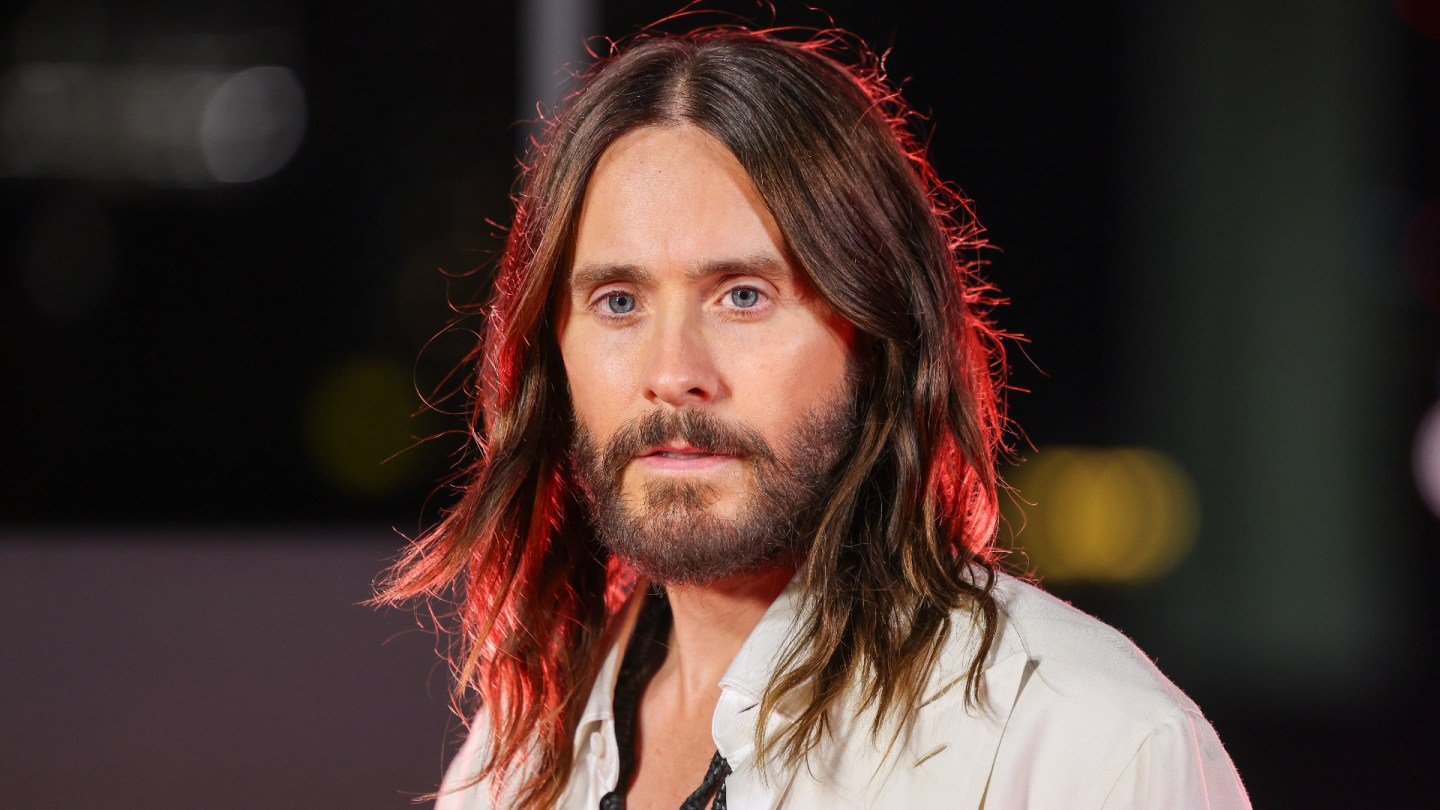
  • Jared Leto Accused of Sexual Misconduct by Four Women in New BBC Doc

    Jared Leto Accused of Sexual Misconduct by Four Women in New BBC Doc

    Jared Leto faces new sexual misconduct accusations from multiple women, with some of the allegations occurring when the women were teenagers.

    On Wednesday, the BBC revealed that in total 10 women have come forward with allegations against the Oscar-winning actor and frontman of rock band Thirty Seconds to Mars as part of a new BBC documentary titled Jared Leto: Hollywood’s Dark Secret.

    Four of the women have accused Leto of criminal sexual conduct, all occurring when they were teenagers, according to the BBC. The allegations against the 54-year-old stem from incidents between 2002 and 2016.

    In the BBC report, one of the women claims she was sexually assaulted by Leto in a motel bathroom when she was 17.

    A second woman says Leto threatened her with sexual assault when she was 19, after being “unexpectedly” left alone with him in a hotel.

    The third woman reveals she had sex with Leto when she was 17 in California, in a state where she would have been underage and the act classified as statutory rape. This same woman also claims she had a conversation with the actor about her age and he “shrugged off” concerns about California’s age of consent.

    The fourth woman claims she groomed by Leto, saying he “abused his celebrity status by making repeated sexually explicit phone calls to her when she was 16.” She adds that on at least one occasion, Leto suggested they should have sex. This fourth woman also alleges that she was subsequently sent a non-disclosure agreement to prevent her from talking about her relationship with Leto, but that she refused to sign it. The BBC says it has seen the NDA.

    A fifth woman claims that when she was 14, Leto had made a lewd comment about her chest during an autograph-signing event and then instructed a security guard to take her backstage at a music festival. The woman claims her mother confronted Leto at the time, but the actor repeated the lewd comment.

    An additional four women claim they received calls from Leto when they were younger that were “strange and often very sexual.”

    The BBC says it has “corroborated” a number of the women’s accounts with friends and family who were told about the encounters with Leto at the time. In some cases, the British broadcaster states, reporters have also seen pictures and messages that support the claims.

    Two men who worked with Leto’s band told the documentary staff were “uncomfortable” about the way Leto would interact with teenage girls. They say he would sometimes invite them backstage to his dressing room or invite them to the house where he was recording. “I think everyone thought the age gap was way too big,” one of the men, unnamed in the BBC report, says.

    The Hollywood Reporter has reached out to Jared Leto’s reps for comment on the investigation, but had yet to hear back when this story was published.

    Sexual misconduct allegations have long dogged the Dallas Buyers Club and Tron star. In June 2025, Leto‘s reps denied that the actor engaged in sexual misconduct or inappropriate relationships with women after an Air Mail exposé. That investigative report contained interviews with nine women, the majority of whom are anonymous. They alleged that Leto behaved inappropriately with them, and some say they were underage at the time they came in contact with the actor.

    The Air Mail piece also published a viral Twitter post shared by actor Dylan Sprouse in 2018. It reads: “Yo Jared Leto, now that you’ve slid into the DMs of every female model aged 18-25, what would you say your success rate is?” Filmmaker and DC chief James Gunn replied: “He starts at 18 on the internet?”

  • ‘Bloody Tennis,’ Tunisian Horror and a Surgeon With Kleptomania: Quirky Films at Locarno

    ‘Bloody Tennis,’ Tunisian Horror and a Surgeon With Kleptomania: Quirky Films at Locarno

    The Locarno Film Festival, whose 79th edition takes place Aug. 5-15, always features world premieres from around the world by established and up-and-coming auteurs, new hidden gems and cinematic discoveries, along with highlights from the festival circuit.

    But audiences can also expect the unexpected. After all, Locarno also features quirky, edgy and offbeat movies just waiting to unspool.

    So, buckle up for a ride on the wilder and more unorthodox side of the cinematic spectrum as THR presents its look at some of the more unusual-sounding films at Locarno79.

    Wandering Trees (Alberi erranti)
    Director: Salvatore
    Section: International competition

    ‘Wandering Trees,’ courtesy of Locarno Film Festival

    Once upon a time in Sardinia. Piero and his son Giuliano lived alone in a farmhouse filled with injured animals that they cared for. But the local notables wanted to drive them out because they lived like vagrants. One day, snow fell, and Piero disappeared, while the animals were killed. So, Giuliano had no choice but to search for his father. On his journey, he met Maddalena, and it was love at first sight.

    Giuliano’s dreamlike search across a wounded landscape explores the wonder and special experience of childhood, a time in life that provides a possibility of resistance against the violence of the adult world.

    The filmmaker puts it into magical images – and words. “To tell a love story, you mustn’t be afraid to open up emotionally,” says Mereu, who also wrote the script with Alberto Capitta, in a director’s note. “But to embark on a fairy tale, you need to risk something. When you accept its rules, you have to accept everything – even the unthinkable.”

    Objet A
    Director: Ann Oren
    Section: International competition

    ‘Object A’

    Courtesy of Juan Sarmiento G./Schuldenberg Films

    Ready for a bold, playful and stylized excursion into fragile relationships between humans as well as humans and nature, intimacy, desire, identity – and kleptomania – that uses the body as the core of its cinematic language? Well, Objet A is ready to bend your mind and leave you unsettled!

    “Ingeborg and Adam are visionary hand surgeons bound by love, control and irresistible fixations,” teases a synopsis. But there is more: “She is compelled to steal objects; he longs to become one. When an accident brings the enigmatic Gaia into their lives, unexpected desires begin to take shape, unsettling the careful balance that has long defined their relationship.”

    Berlin-based visual artist and filmmaker Ann Oren (Piaffe) returns to Locarno to serve up a film, which she wrote with Geoffroy Grison, that features cinematography by Juan Sarmiento G. (The Voice of Hind Rajab, A Poet) and editing by Hansjörg Weißbrich (Rose, Late Shift). It stars Aenne Schwarz (All Is Well, Every You Every Me) as Ingeborg, Louis Hofmann (All the Light We Cannot See, The Forger, Dark), and Simone Bucio (Piaffe, The Ivy) as Gaia. “I’m interested in human desire and how it connects us to other species,” Oren says in a director’s note. “The human body is the starting point for my cinematic language: the more control we have over it, the more we separate ourselves from the natural world.”

    Bloody Tennis
    Director: Nikias Chryssos
    Section: Out of competition

    ‘Bloody Tennis,’ courtesy of augenschein Filmproduktion

    The world of elite sports is taken to disturbing new heights full of brutality and painful ambition in the new film from Nikias Chryssos (The Bunker, Rave On, A Pure Place). “Sophie joins a prestigious tennis academy where the brutality of competitive sports is taken to its extreme, and only the hungriest survive,” warns a synopsis.

    Sandra Guldberg Kampp (Assassin’s Creed, Electric Child), Helena Zengel (News of the World, The Legend of Ochi, System Crasher) and others star in the movie, along with Elina Löwensohn (Schindler’s List), and Zlatko Burić (Triangle of Sadness), with an original score by Jim Williams (Titane, Raw).

    If that’s not enough for you yet, the press notes also promise, or should that be: threaten, “blood-sucking leeches, hard-hitting serves and delicious nightmares.” Game on!

    Bakma
    Abdelhamid Bouchnak
    Section: Out of competition

    ‘Bakma,’ courtesy of Chams Ghorab

    You have surely never seen Tunisia like this. And you likely haven’t seen a film from Tunisia like this before. What Bouchnak unleashes onto Locarno screens is an urban horror thriller, which he also wrote and edited, with cinematography by Chams Ghorab.

    Animalistic violence takes on a different meaning in this movie. Commissioner Ali and Khaled investigate the ritualistic murder of a young woman. So far, so horrible. But there is more, as a synopsis highlights: “Her limbs have been severed, her head is missing, and in its place, the killer has grotesquely sewn the head of a dog.”

    Locarno artistic director Giona A. Nazzaro, in unveiling this year’s festival lineup, highlighted said about Bakma: “It’s a film that, in a very specific way, addresses the political corruption in Tunis at the moment. It’s also a very bitter commentary on what’s left of the so-called Arab Spring that ignited the overthrow of some regimes – and, as you’ll remember, it originated in Tunis.”

    Tomorrow a Long Time Ago (Morgen vor langer Zeit)
    Director: Luise Donschen
    Section: Filmmakers of the Present Competition

    Not much dialogue is used, or needed, in the new film from Donschen (Casanovagen), which stars Gerti Drassl and Manuela Biedermann and others. After all, life and actions say more than words.

    Amid German reunification in 1990, the 50-year-old Patty first loses her job and then her friend Jelena. “In a small East German town, she collects discarded objects and meets the younger Franz,” teases a synopsis. “When her flat becomes so full of belongings that she can no longer enter it, she sets out into a colorful forest. A journey through landscapes and history begins, carrying away more than just her.”

    The movie has a personal dimension for the filmmaker who grew up in the GDR. “Inspired by my childhood experience of German reunification, the film captures the moment when the present splits into ‘before’ and ‘after’,” the moment when everything seems completely unseen and very familiar at the same time.”

    Donkey Princess (Princesa Burro)
    Directors: Cristóbal León and Joaquín Cociña
    Section: International competition

    ‘Donkey Princess’

    Courtesy of Benjamin Echazarreta

    Once upon a time… wait a second, isn’t that how we started this journey into the mind- and genre-bending films at Locarno79!? But wait, this one is different, although love plays a key role again.

    Diana is the princess of an ancient kingdom. Her father, King Arthur, has forbidden love. So, when Diana falls in love with Lalo, the King banishes him. A synopsis teases where things go from here: “Using a magical bracelet, Diana travels to other worlds in search of her love. Discovering that her father manipulates her decisions, she must face her fears and change her destiny.”

    The travels of the protagonist allow the director duo to play with the look and feel of the places she visits. “Diana travels through parallel worlds where each universe transforms the film’s genre,” León and Cociña explain. “The film brings this constant mutation of realities into live action, where fantasy reshapes everything.”

    So, who’s ready for a cinematic trip!?

  • HBO Max Rolls Out Vertical Video, AI Search to Help You Decide What to Watch

    HBO Max Rolls Out Vertical Video, AI Search to Help You Decide What to Watch

    HBO Max is the latest streaming platform to roll out a TikTok-style vertical short-form feed and an AI Search experience to help users quickly find their next watch.

    “HBO Max Shorts” will initially be limited to iOS users in the US. You can tap the new Shorts icon, next to the Home tab, to access the feed, which will feature trailers, clips, and bonus content based on your viewing history and preferences.

    If a clip prompts you to watch the show, you can tap the episode number to start watching or add it to your My List to watch later. The clips are selected by HBO Max editors, who pick from a pool of videos gathered by a built-in AI tool.

    “Once the tool has suggested these clips, HBO Max editors decide which best represent the stories viewers love and capture jaw dropping moments, pivotal plot twists, and visually stunning sequences,” Warner Bros. Discovery, HBO’s parent company, said in a press release.

    In the future, HBO Max Shorts will include sports content and expand to more devices and markets, the company added. ESPN, Disney+, Prime Video, and Netflix already have similar vertical video feeds.

    How to Use Natural Language Search on HBO Max

    The Ask HBO Max interface

    (Credit: Warner Bros. Discovery)

    Alongside the new video feed, WBD announced an experimental AI search experience called “Ask HBO Max.” The idea is to let users describe what they’d like to watch in plain language. They could, for example, use terms like “in the mood for a comedy,” “dysfunctional family drama,” or “best movie for a girls night in,” and find relevant results.

    Recommended by Our Editors

    The feature is limited to Android users aged 18 and older at launch and can be accessed from the search page. As with HBO Max Shorts, Ask HBO Max will eventually expand to more devices and markets, WBD said.

    The parent company is currently in the middle of a controversial merger. After Paramount-Skydance agreed to take over the company earlier this year, 12 states challenged the merger on antitrust grounds. Last week, Paramount and WBD decided to delay the merger until June 1, 2027, or five days after a court reaches a decision on the lawsuit.

    About Our Expert

  • Banijay Entertainment H1 Revenues Dip in First Earnings Update Since Completion of All3Media Deal

    Banijay Entertainment H1 Revenues Dip in First Earnings Update Since Completion of All3Media Deal

    Banijay Entertainment has posted it first financials since its mega-merger with All3Media was completed.

    Half-year revenues at the TV giant were down slightly in the first half of 2026, reaching at €1.37 billion ($1.56 billion), with production volume falling, a drop of 2.2% on the same six months in 2025.

    However, the latest results do not yet include the performance of All3Media, whose figures will be included as part of the results from the second half of this year.

    Meanwhile, Banijay Entertainment’s production revenue dropped 11.9 percent, with the company citing “anticipated phasing in production.” But distribution revenue rose 10.5 percent, something it said was “fueled in particular by a format sale in the first quarter” without detailing the particular format in question.

    There was an unprecedented growth in Banijay’s live event business, which is grouped with Banijay Entertainment, where revenues soar almost 50% thanks to both the Winter Olympic Games and FIFA World Cup.

     “The FIFA World Cup generated unprecedented player acquisition and engagement, supported double-digit pro forma revenue growth and strengthened our ability to grow across all products,” the company said. “In Entertainment & Live, record live activity and continued momentum across our content portfolio in distribution partly offset the anticipated phasing of content production, demonstrating the strength and diversification of our business model.”

    Earlier this month, Banijay completed the merger of its entertainment arm with RedBird IMI’s All3Media to create an $8 billion Goliath, with the combined group — housing shows such as “The Traitors,” “Big Brother” and “Peaky Blinders” — spanning 25 territories and housing one of the largest content catalogues in the industry, with more than 265,000 hours of content. Banijay Entertainment Chair Jeff Zucker asserted it was the largest indie producer ever created.

    “2026 is definitely a transformational year for Banijay Group,” said François Riahi, CEO of Banijay Group, of the latest results. “In the second half, we will enhance the integration processes in our two business units and will start delivering synergies.”