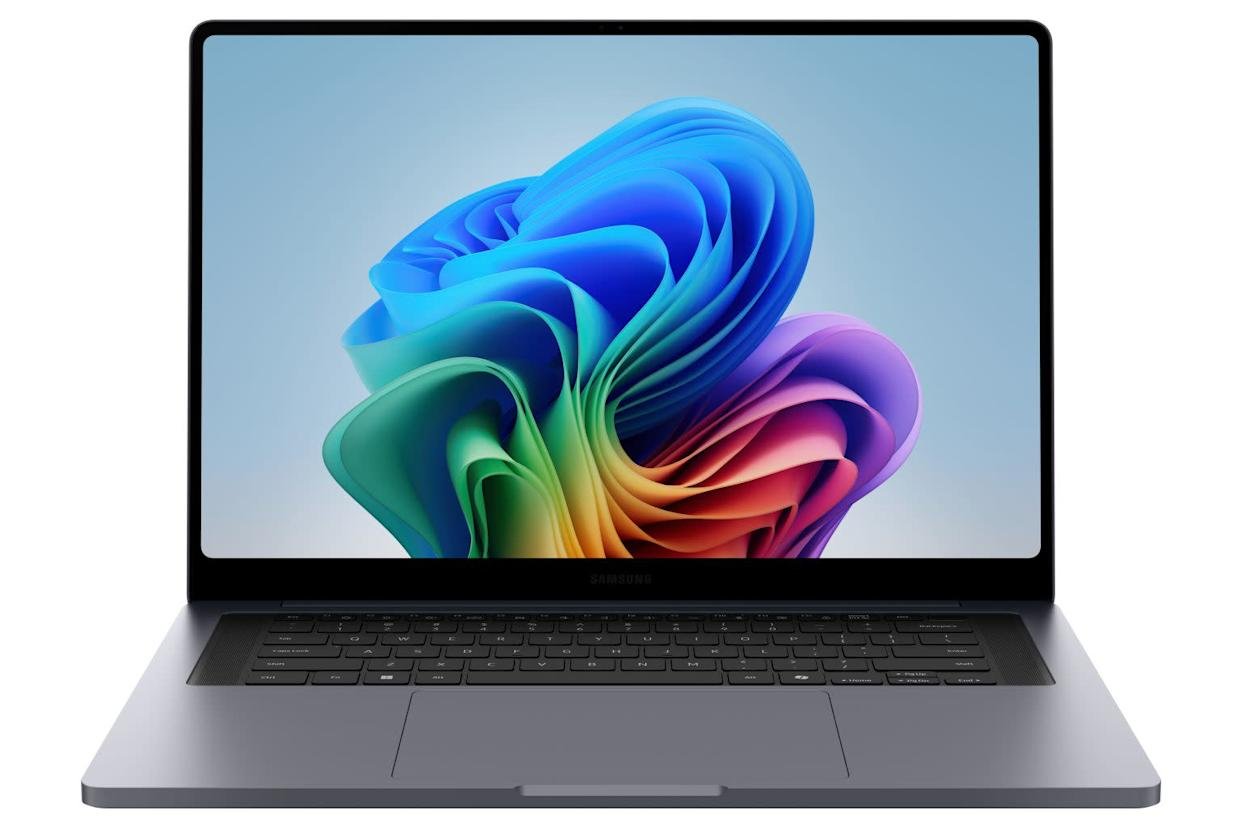
You can get any of the Samsung Galaxy Book 6 models in the US, starting on March 11. In fact, you can make a reservation right now through Samsung’s website and its experience stores. The company launched the Book 6 series of laptops, namely the basic Book 6, the Book 6 Pro and the Book 6 Ultra, at CES earlier this year. They’re powered by Intel’s new Core Ultra Series 3 processors, which were also announced at CES and which promise great graphics and battery life.
All three models come in grey and with AI features, such as AI Select and Search that you can use to look for information using natural language. The basic Book 6 laptop will set you back at least $1,050, while the Book 6 Pro’s prices start at $1,600. The Book 6 Ultra will cost you at least $2,450. The Galaxy Book 6 Pro will be available in 14- and 16-inch versions and will come equipped with up to Core Ultra X7 processors and Intel Arc graphics. Meanwhile, you can equip the 16-inch Galaxy Book 6 Ultra with up to Core Ultra X9 processors. The most expensive Book 6 promises significant performance improvements, thanks to its new 5th-generation MPU, Intel Arc graphics and NVIDIA’s RTX 50 series GPUs.
The Book 6 Ultra and the 16-inch Pro have slimmer profiles than their predecessors, though the former has a more traditional laptop shape and the latter looks more like the MacBook Air. It’s worth noting that Samsung redesigned the Ultra’s components across a larger surface area so that it can distribute heat more evenly. Both the Book 6 Pro and Ultra can last for up to 30 hours of video playback, since they feature Samsung’s longest-lasting batteries yet. Both models also come with AMOLED 2X (2,880 x 1,800) displays with refresh rates going up to 120Hz.
Legendary commentator Derek Rae joins Christian and Alexis for a wide-ranging conversation on soccer, culture, and storytelling. From his upbringing in Scotland to his deep connection with German football, Derek explains how his love for languages and history shaped his broadcasting career—and why getting players’ names right is about far more than phonetics. He shares a powerful story about the real impact correct pronunciation can have on players and their families.
Advertisement
Derek also takes listeners behind the scenes of how he became the voice of EA FC, revealing what the audition process was like, how the opportunity came together, and what it means to be recognized worldwide through a video game. Along the way, he reflects on the evolution of soccer media, iconic broadcasting moments, and the responsibility that comes with being a trusted voice of the sport.
Finally, the conversation dives into the global game itself. Derek breaks down the cultural differences between MLS and European leagues, explains why Germany has become such fertile ground for American players, and offers thoughtful insight into the unique identity of soccer fandom in the United States. It’s a smart, funny, and deeply human conversation with one of the most respected voices in the game.
Timestamps:
(2:00) – Why pronouncing player names correctly is important to Derek Rae
Advertisement
(10:45) – Derek Rae’s soccer origin story
(15:00) – How Europeans currently perceive MLS
(23:45) – Is Germany the best place for Americans to develop?
(35:00) – Is 2026 the year where the US becomes a real soccer country?
In a jam-packed Kevin O’Connor show, KOC analyzes the first trade of the deadline week and what it means for Keon Ellis, the Cleveland Cavaliers and the Sacramento Kings. Then, he discusses updates in the Ja Morant trade market: is there a new interest in him coming out of Chicago?
Advertisement
Next, Kyle Neubeck joins to talk Sixers: what’s up with the Paul George suspension? Is Joel Embiid back? Is a trade for Giannis Antetokounmpo without giving up VJ Edgecombe a possibility?
Later, KOC chats All-Star reserves before being joined by Kirk Henderson. They look back at the Luka Doncic to Los Angeles trade one year later, marvel at Cooper Flagg’s 2-game tear and ask the question: will Anthony Davis be traded this season?
Corey Tulaba then joins the pod for this week’s Draft Class to chat AJ Dybantsa and Darryn Peterson, the future of Richie Saunders and the biggest college games to watch for this weekend.
(0:25) Cavs trade for Ellis & Schroder (6:31) Bulls interested in Ja Morant? (8:22) Kyle Neubeck talks 76ers (27:27) All-Star reserves announced (30:48) Kirk Henderson talks Mavericks (46:01) Hornets win 6 straight games (1:00:00) Draft Class with Corey Tulaba
PHOENIX, ARIZONA – JANUARY 02: Keon Ellis #23 of the Sacramento Kings dribbles the ball during the first half against the Phoenix Suns at Mortgage Matchup Center on January 02, 2026 in Phoenix, Arizona. The Suns defeated the Kings 129-102. (Photo by Chris Coduto/Getty Images)
Spanish-language media giant TelevisaUnivision reported a 2 percent U.S. revenue fall to $1.3 billion in the fourth quarter of 2025 as an 11 percent U.S. advertising revenue drop to $423.2 million came alongside a 2 percent subscription and licensing revenue fall to $341 million.
Total U.S. revenue fell 7 percent to $777.2 million in the three months to Dec. 31, 2025, or a 3 percent drop when factoring in political advertising. Mexico revenues rose 7 percent to $546 million, as advertising revenue grew 15 percent to $433 million in that market.
Related Stories
TelevisaUnivision narrowed its fourth-quarter net loss to $234.7 million, compared to a year-earlier net loss of $809.7 million when the media giant recorded a $900 million non-cash impairment loss due in part to a write-down of TV broadcast licenses.
The latest financial quarter saw TelevisaUnivision record a $300 million non-cash impairment loss related to the writedown of trade names. The fourth-quarter financials also underlined how ViX streaming growth continues to offset legacy TV asset declines.
“ViX delivered record revenue, achieved profitability in every quarter, and expanded operating margins throughout the year, evolving into a scalable growth engine that is now a strategically central component to our business model. In 2026, we are building on this momentum to deepen audience engagement, unlock greater value for our partners, and reinforce our leadership as the voice of Hispanics,” Daniel Alegre, CEO of TelevisaUnivision said in a statement ahead of a late morning analyst call to discuss his latest financial results.
The company owns the Univision broadcast network, while also building up its ViX streaming platform to chase younger consumers.
The San Francisco Giants signed Luis Arráez to a one-year deal, with the hope that the three-time batting champion will be able to help solidify their offense after their blockbuster deal that brought Rafael Devers to the Bay last season. However, after finishing at 81–81, are the Giants doing enough to try and compete for a title?
Advertisement
On this episode of Baseball Bar-B-Cast, Jake Mintz and Jordan Shusterman examine the questionable offseason that President of Baseball Operations Buster Posey has navigated for his Giants. While being in the same division as the Los Angeles Dodgers does present some difficulties, should the Giants be doing a bit more to show their commitment to winning? Could they still find a way to improve their rotation before the start of the season?
Later, Jordan and Jake talk about the trade that saw the St. Louis Cardinals trade Brendan Donovan in a three-team deal to the Seattle Mariners and why he is going to be a key player for them. They then discuss the Chicago White Sox’s active weekend, the Sacramento A’s signing Jacob Wilson to an extension, all before they get into the problem that insurance is causing with World Baseball Classic rosters.
2:29 – The Opener: A look at the Giants
29:58 – Around the League: Mariners trade for Donovan
Advertisement
48:18 – Turbo Mode: Reds sign Eugenio Suárez
58:37 – Tarik Skubal vs. Detroit Tigers
1:01:44 – We Need to Talk About: WBC insurance
Photo by Brian Rothmuller/Icon Sportswire via Getty Images AP Photo/Benjamin Fanjoy, File Photo by Andy Kuno/San Francisco Giants/Getty Images
(Photo by Brian Rothmuller/Icon Sportswire via Getty Images AP Photo/Benjamin Fanjoy, File Photo by Andy Kuno/San Francisco Giants/Getty Images)
As Bari Weiss seeks to reimagine CBS News, staffers are preparing for the network’s flagship program 60 Minutes, arguably the most influential news program in all of TV, to be “revolutionized” along with it.
When Weiss first joined CBS News last year, 60 Minutes was hardly seen as a focal point. The network’s evening newscast the CBS Evening News and morning show CBS Mornings have been stuck in third place behind NBC and ABC for years, and early indications were that those were top priorities.
CBS’ Sunday newsmagazines, the lighter CBS News Sunday Morning, anchored by Jane Pauley, and the legendarily hard-hitting 60 Minutes led their respective time periods (60, in fact, has been the most-watched TV news program for years).
But the last few months have seen a flurry of events that portend a very different 60 Minutes in the not-too-distant future. Meanwhile, network-wide layoff plans in the next several months will reshape CBS News as Weiss puts her imprint on new areas of focus and adds to the mix her own contributor hires.
Earlier this month Anderson Cooper announced his plan to exit as a correspondent for the newsmagazine after nearly 20 years, and after weeks of negotiations to remain on the show, citing a desire to spend more time with his kids (while keeping his perch at CNN).
“We’re grateful to him for dedicating so much of his life to this broadcast, and understand the importance of spending more time with family. 60 Minutes will be here if he ever wants to return,” CBS said at the time.
On Sunday’s show, a segment anchored by Cooper about white South African refugees aired, after what had reportedly been an extended and unusual editing and vetting process.
And Sharyn Alfonsi, the correspondent whose report “Inside CECOT” sparked something akin to an internal revolt at the program after Weiss ordered it be pulled ahead of its release pending further reporting, is set to see her contract expire in the next few months. CBS staff are bracing for her potential exit, and wondering what other correspondents could be next (one insider noted that Lesley Stahl is 84 and Bill Whitaker is 74, while Scott Pelley has expressed frustration with Weiss in staff meetings).
“In my view, pulling it now — after every rigorous internal check has been met is not an editorial decision, it is a political one,” Alfonsi wrote at the time in a memo to her fellow correspondents, including Cooper.
60 Minutes has always been something of an outlier among TV news programs. At a moment when shows are leaning into their talent (see Weiss’ effort to overhaul the Evening News around Tony Dokoupil), it has a large roster of correspondents rather than a singular face of the show. Instead, the format and high production values are the real star.
And while most news shows are fighting for audience share, it benefits from CBS’ NFL lead-in for much of the year to secure its significant ratings (the show’s Feb. 15 episode drew 6 million viewers, marking the top non-Olympics series in broadcast in primetime). But the departure of a correspondent, or even multiple correspondents, is unlikely to change its ratings equation.
CBS News leaders Tom Cibrowski and Bari Weiss.
Photo credit: Michele Crowe/CBS
And in a move that may seem immaterial to outside observers, 60 Minutes will in the coming weeks move from its historic base on West 57th across the street to the CBS Broadcast Center in Midtown Manhattan, joining the rest of the CBS News programming. CBS Sports and Inside Edition will be moving too (they are going to Paramount’s Broadway office) but moving 60 Minutes into the larger CBS News space is nonetheless a shift for the show.
While office consolidations in media are a common occurrence (even at CBS), 57th St. served as a metaphorical and literal buffer on the influence that CBS had on the newsmagazine, which has long operated with a high degree of independence.
Of course, that independence has already been slowly deteriorating over the last year.
President Trump’s lawsuit against CBS over how 60 Minutes edited its interview with Vice President Kamala Harris angered staff at the news division, given how frivolous they viewed the accusations to be, and the decision by CBS (then owned by Shari Redstone) to settle.
Amid that suit, the show’s longtime executive producer Bill Owens resigned, telling staff it was over issues of editorial independence, and that network executives were getting involved in stories that in a way that they had not done previously.
“Over the past months, it has … become clear that I would not be allowed to run the show as I have always run it,” Owens wrote at the time. “To make independent decisions based on what was right for 60 Minutes, right for the audience. So, having defended this show — and what we stand for — from every angle, over time with everything I could, I am stepping aside so the show can move forward.”
Tanya Simon
Michele Crowe/CBS News via Getty Images
A few months later, staffers at the show breathed a sigh of relief when Tanya Simon was named Owens’ successor. A 25-year veteran of the show (and daughter of the legendary correspondent Bob Simon), her pick reassured staff that despite the tumult of the settlement and the exit of Owens, the show would have some stability as it charted a path forward.
And then Skydance acquired Paramount, and David Ellison brought in Weiss, promising to reinvent the news division at a moment when polarization was high, and trust in media was low.
Simon, sources say, has been cognizant of the changed internal politics, but wants to maintain 60 Minutes‘ place and influence at CBS and in the TV business.
Speaking at USC Annenberg’s Walter Cronkite Awards in December (notably before the Inside CECOT fiasco), Pelley was sanguine about the situation, even as he acknowledged that it was a “fraught time” for the show. “Our company is the new Paramount, and we were all very concerned at 60 Minutes about what that meant,” he said.
Weiss, for her part, has not ben shy about her desire to overhaul CBS.
Last month, Bari Weiss gathered the rank and file of CBS News in the network’s Broadcast Center on west 57th St. in New York, outlining her vision for the network, and 60 Minutes was on the agenda.
“This building holds a deep history of radical innovation. CBS aired the first presidential debate back in 1960. It put out the first television newsmagazine, 60 Minutes, in 1968,” Weiss told staff. “We are proud of that history. We talk a lot about it. The real question now is how we can revolutionize it in our own time.”
“We should devote vastly more of our attention — starting right now — to what’s coming,” she added. “That means investing in our extraordinary brands like 60 Minutes, 48 Hours, and Sunday Morning by building them out — creating podcasts, newsletters, live journalism events, and more.”
Of course no one at 60 Minutes expects the changes to be limited to a podcast, or a live event extension of the show. If Weiss does find herself in a position to add multiple correspondents to the program, who she selects and the stories they pursue will surely send a message about her overarching vision for CBS, from its most popular show to every corner of the news division.
Sports took center stage, or should that be: center field, at MIP London on Tuesday in a panel discussion entitled “Sport & Creators: Strategic Priorities Shaping Streaming Platforms.”
David Salmon, managing director, international at Fox Corp.’s Tubi, Olivier Jollet executive vp and international general manager at Paramount‘s Pluto TV, Paramount Skydance, and Walker Jacobs, global chief revenue officer and president of DAZN U.S. discussed content and monetization trends with moderator Jennifer Batty, media advisor, global streaming at JJB.
Jollet shared about Pluto TV that “we use sports more as a [user] acquisition driver.” He added that the streamer is particularly focused on “locally relevant sports rights,” pointing out the likes of darts and snooker in the U.K. The executive also cited women’s sports as an opportunity, highlighting that audiences are “underserved” in this regard on traditional TV.
Jollet on Tuesday also mentioned that Pluto TV recently partnered with Tinder on a dating show in Brazil, calling it “a huge partnership” and “a new way of doing advertising.”
Meanwhile, Salmon highlighted “shoulder content” that Tubi builds around popular sports events, such as it did in partnership with Naomi Osaka for the U.S. Open tennis tournament last year. That allows audiences to “go deeper and deeper” in support of live programming.
He also said that for him, it is currently about “how to redefine the boundaries around this strictness around professionally produced content, creators-produced content and [user-generated content]. There is essentially a blending that is happening across the industry, and consumers candidly don’t really care. The thing that is finite is their level of engagement, the time, the attention.”
Jacobs on Tuesday highlighted how his team has “reverse-engineered” an original content strategy in partnership with DAZN’s acquired Team Whistle business. He compared the process to surfing, where you have to wait for a wave you can catch.
As examples of DAZN’s original content, the executive cited The Kittle Things, the weekly original series featuring San Francisco 49ers tight end George Kittle and his wife Claire. The show is designed to offer a “human” look beyond the gridiron. Jacobs also highlighted that the series led to a spin-off, in Wife’d Up, Mic’d Up, a social-first YouTube series featuring Claire Kittle and Kristin Juszczyk, the fashion designer wife of 49ers fullback Kyle Juszczyk.
France’s Canal+ Group, has acquired a 51% majority stake in prominent Italian distribution and production company Lucky Red, marking the latest consolidation move in Europe.
Lucky Red, which is a leading Italian indie film distributor, and is also active in film and TV production, as well as sales, was among the few remaining Italian outfits that had not yet been snapped up by a bigger international group.
The Rome-based company’s recent releases include “Sentimental Value,” “Nouvelle Vague,” “Greenland 2: Migration” and Robbie Williams biopic “Better Man.” Their standout productions comprise Gabriele Mainetti’s “Freaks Out” and Netflix’s first Italian film “On My Skin.” More recent productions Lucky Red has been involved in comprise two works by French directors: Robin Campillo’s “Enzo” and Christophe Honoré’s “Marcello Mio.”
Lucky Red is also partners with Italy’s Indigo Film in sales company True Colours.
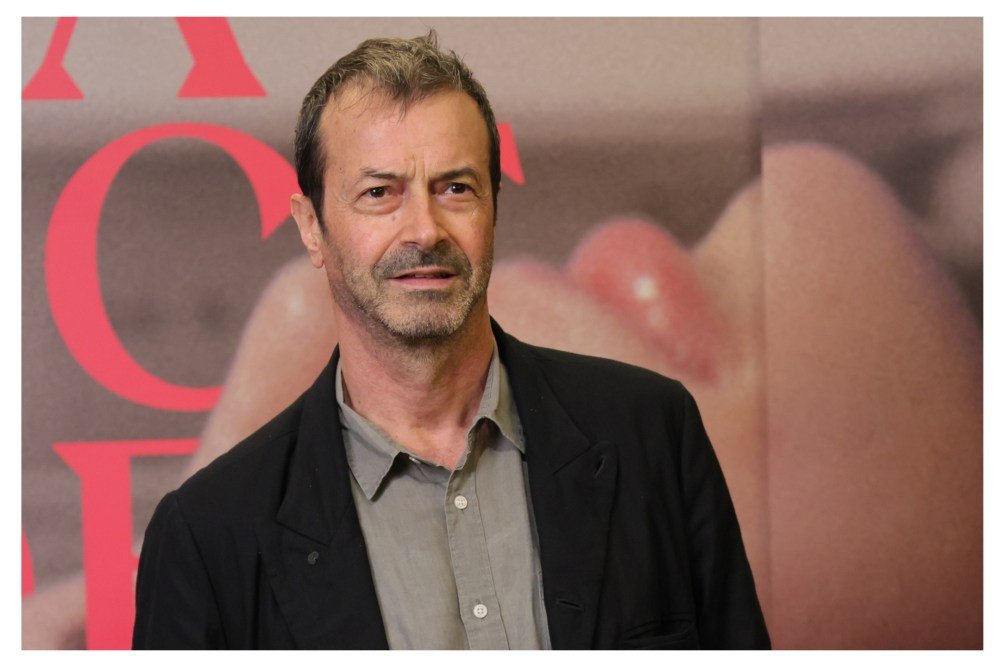
The deal, which reportedly values the 51% Lucky Red stake at roughly $31 million, is not expected to lead to management changes or impact creative decisions within the company that was founded in 1987 by Andrea Occhipinti and Kermit Smith. It is believed to be a strategic partnership geared towards European synergies. Occhipinti (pictured above) holds the remaining 49% stake.
Lucky Red over the past 39 years has distributed some 400 titles by the world’s top auteurs including Ang Lee, Jean Pierre e Luc Dardenne, Nanni Moretti, Aki Kaurismaki, Mario Martone, Hayao Miyazaki, Alexander Payne, Stephen Frears, Pablo Larrain, Paolo Sorrentino, Cristian Mungiu, Todd Haynes, Sofia Coppola, Denis Villeneuve, Wes Anderson, Darren Aronofsky, Jia Zhangke, Wong Kar Wai, Tim Burton, Asghar Farahdi, Luc Besson, Jim Jarmusch, and Jafar Panahi.
The Lucky Red acquisition deal was reportedly inked in Rome by Occhipinti, along with business partners Valerio Scarinci and Stefano Massenzi, with StudioCanal CEO Anna Marsh.
In 2024 Lucky Red reported revenues of over €50 million ($58.8 million) and a net profit of €3.7 million ($4.35 million). Revenues from distribution in 2025 reached nearly €24 million ($28 million) placing the company eighth among Italian distributors last year.
Vivendi‘s Lucky Red buy follows a series of acquistions of Italian companies by French groups in recent years including BIM Distribuzione by Wild Bunch, Palomar and Our Films by Mediawan, and Groenlandia by Banijay.
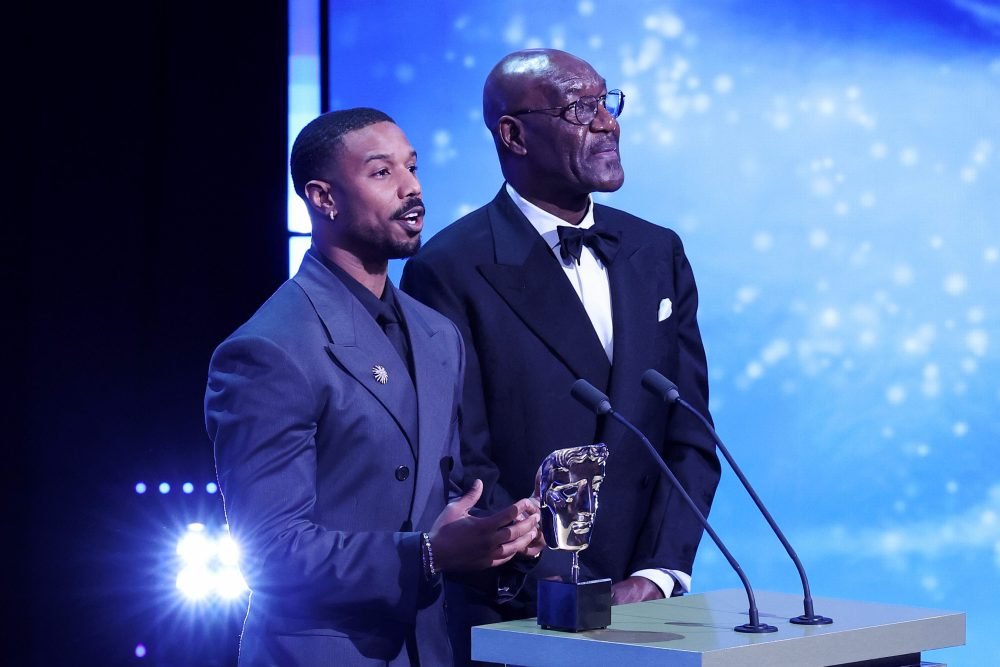
According to a well-positioned source speaking to Variety, once Tourette’s campaigner John Davidson’s made the involuntary outburst while “Sinners” stars Michael B. Jordan and Delroy Lindo presented the first award of the night, execs from the studio immediately raised the issue with BAFTA and requested that the incident be removed from BBC’s time-delayed broadcast going out later that night.
The source also noted that the Warner Bros. execs — who were in contact with BAFTA throughout Sunday evening and met with them on Monday — had been assured that the request had been passed on.
However, the broadcast aired with the racial slur not edited out, sparking further outrage, and prompting an apology from BBC. But the BBC’s claim that the producers had been unaware what was said until after it has aired has now been called into question following the source’s account of proceedings. Many commentators online have also cast doubt over how and why such an incident — which was audible in the ceremony room — would not be immediately relayed to the producers of the TV show.
The incident — and the handling of it by both the BBC and BAFTA — has sparked a firestorm of anger that continues to reverberate. Late on Monday, BAFTA put out a statement in which it said that it took “full responsibility” for putting its “guests in a very difficult situation and we apologise to all.” It also said it wanted to “apologise unreservedly” to Jordan and Lindo. “We would like to thank Michael and Delroy for their incredible dignity and professionalism,” it said.
Is James Rodríguez really headed to Minnesota United? In one of the strangest transfer rumors we’ve ever seen, the Cooligans unpack how a global superstar could end up in MLS, what it would mean for Minnesota, and whether James still has enough left to move the needle in the league — or if this is destined to be pure chaos.
Advertisement
Next, we revisit the USMNT hype machine and ask some uncomfortable questions. Gio Reyna, Yunus Musah, Gianluca Busio, Jordan Morris — all players who once felt like sure things. So what happened? We break down why their trajectories have stalled, what went wrong at club level, and whether there’s still time for a second act.
Finally, we react to the wildest stories from around world soccer. From Vinícius Jr.’s girlfriend revealing uncomfortable details involving Real Madrid, to Gabriel Barbosa’s tense encounter with fans, to Cristiano Ronaldo’s “missing” posters popping up in Saudi Arabia — it’s another reminder that no sport delivers chaos quite like football.
Timestamps:
(6:30) – James Rodriguez’s shock transfer to Minnesota United
Advertisement
(21:30) – USMNT rising stars that have now faded
(49:30) – Vini Jr’s girlfriend’s weird ointment story
(53:30) – Reacting to other news around the soccer world