Blog

  • New Binance US CEO Assesses Bitcoin’s Future: “It Will Be a Golden Age”

    New Binance US CEO Assesses Bitcoin’s Future: “It Will Be a Golden Age”

    Stephen Gregory, the experienced legal and compliance professional who took over the leadership of Binance US, gave optimistic messages about the future of the US cryptocurrency market.

    Gregory stated that Binance US has moved beyond past regulatory pressures and entered a fully growth-focused phase.

    Gregory acknowledged that the past few years have been challenging for crypto companies in the US, but said the current situation is rapidly changing. According to the CEO, the US is no longer just a market; it’s a hub for liquidity, innovation, and the developments that will trigger the next bull cycle.

    Related News BREAKING: Cryptocurrency Exchange Coinbase Lists a Surprise Altcoin

    In the interview, Gregory addressed one of the most frequently asked questions regarding his relationship with Binance Global, stating clearly that the two companies have completely separate operational processes and control mechanisms. Gregory said, “Although we share a common end-benefactor (UBO), Binance US and Global parted ways years ago and operate under different regulations.”

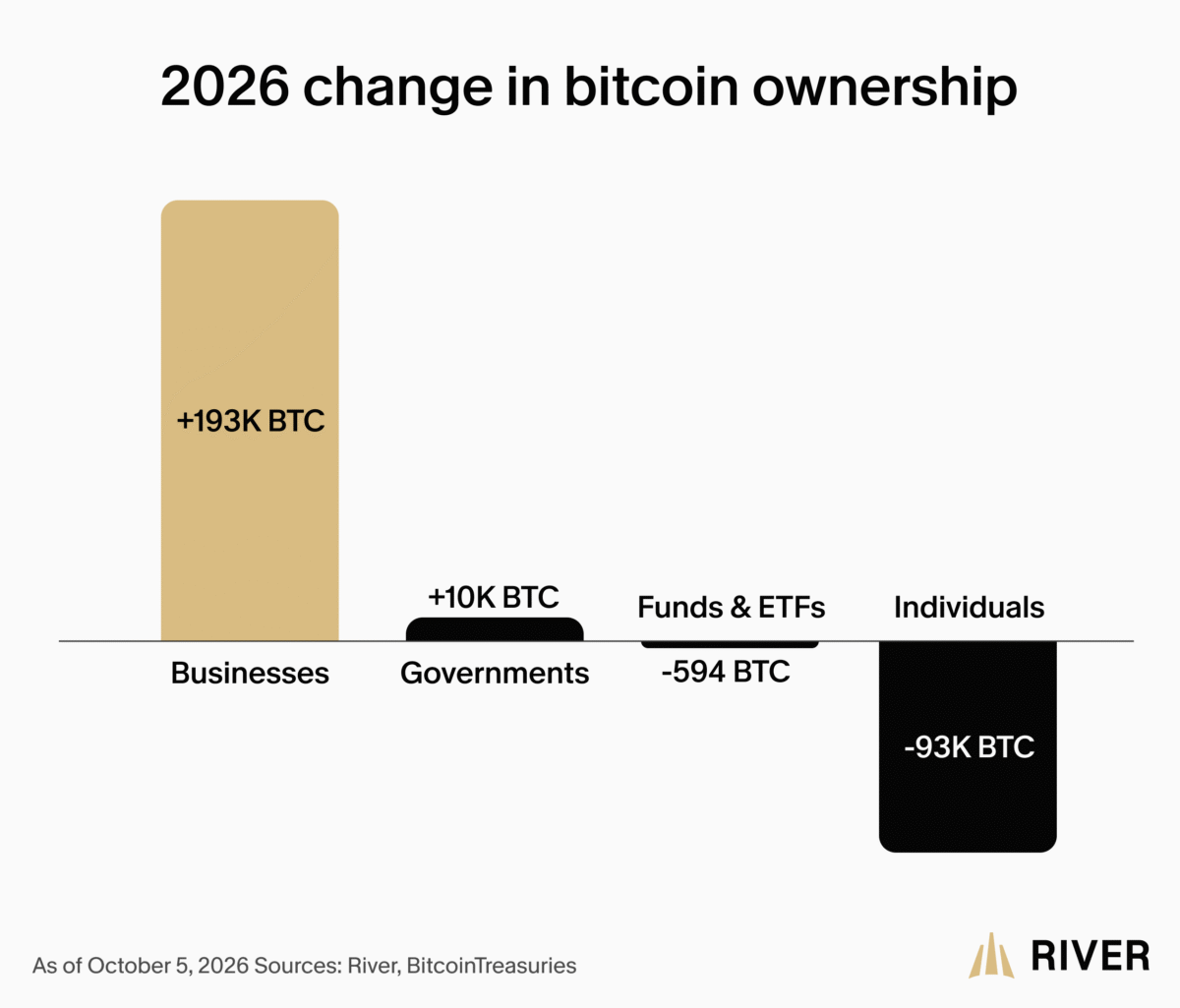
    Gregory predicts that while the recent rally was largely driven by institutional Bitcoin purchases, the next wave will be driven by genuine individual investor influx. According to the CEO, this period will be a “golden age” for crypto, where real-world use cases will emerge, translating it from mere speculation.

    *This is not investment advice.

  • Bitwise CIO makes the case for new AVAX ETF launch

    Bitwise CIO makes the case for new AVAX ETF launch

    Bitwise says Avalanche deserves a place alongside larger blockchain networks, arguing that its model offers differentiated exposure to the long term growth of tokenized assets, stablecoins, and onchain finance just after launching its Avalanche fund on April 15.

    In his latest CIO memo, Matt Hougan said Avalanche is attractive not because it already dominates the Layer 1 market, but because it approaches blockchain design differently from Ethereum and Solana. Rather than operating as a single shared chain, Avalanche lets firms and institutions launch their own customizable blockchains with their own rules, validators, and access controls.

    Hougan framed that model as especially relevant for banks, governments, gaming firms, and other regulated entities that may want blockchain infrastructure without fully adopting the operating model of a public chain.

    He tied that thesis to growing institutional activity on Avalanche, noting that tokenized real world assets on the network have climbed sharply and that the ecosystem has drawn partners including BlackRock, Apollo, Toyota, the State of Wyoming, and FIFA. Hougan argued that this gives Avalanche a credible shot at capturing part of a much larger market if hundreds of trillions of dollars in assets eventually move onchain.

    Hougan also used the memo to make a broader portfolio point. In an early and fast moving Layer 1 market, he said the most sensible approach is not pretending to know the final winner, but focusing on the networks with the clearest structural differences and the most realistic path to long term relevance. In his view, that group starts with Ethereum, Solana, and XRP, and extends to Avalanche.

  • Michael Jackson’s Relative Calls Out Media as Biopic Opens: “You Don’t Get to Control the Narrative Anymore”

    Michael Jackson’s Relative Calls Out Media as Biopic Opens: “You Don’t Get to Control the Narrative Anymore”

    A member of Michael Jackson’s family is taking aim at the media in the lead-up to Lionsgate‘s biopic launching this weekend.

    Michael hits theaters and Imax on Friday and stars Jackson’s nephew Jaafar Jackson in his feature debut as the pop music icon. Colman Domingo portrays the singer’s father, Joe Jackson, while Nia Long plays his mother, Katherine. Miles Teller, Laura Harrier, Kat Graham, Larenz Tate and Derek Luke round out the cast for director Antoine Fuqua‘s movie that tells the story of Michael Jackson‘s upbringing and rise to fame, with the film’s narrative ending in the 1980s.

    Taj Jackson, a musician and producer whose father is Michael Jackson’s brother Tito Jackson, took to social media Tuesday to chide the media over its coverage of the late music superstar. Michael Jackson’s Grammy-winning career included not only 1982’s Thriller, which remains the best-selling album of all time, and such enduring hits as “Billie Jean” and “Beat It,” but also a number of scandals and legal issues.

    “Sorry media, u don’t get to control the narrative anymore of who Michael Jackson truly was,” Taj Jackson wrote on X. “The public gets to watch this movie…they will decide for themselves. And you can’t handle that.”

    In a follow-up post, he added, “Can’t wait till some critics have to eat crow. And yes I will be that petty.”

    Michael is set to make plenty of noise at the box office as it heads for a domestic opening that is likely to surpass $65 million. The critical response has been more muted, as the film currently holds a 36 percent approval rating from reviewers on Rotten Tomatoes. In his Michael review for The Hollywood Reporter, chief film critic David Rooney called the feature “surprisingly affecting” and also noted, “The film leaves itself open to accusations of making Michael a saint, which will not sit well with the cancel crowd.”

    THR previously reported that an initial, longer version of the movie was set to feature scenes showing the star dealing with child sexual abuse allegations. The third act included a portrayal of an accuser whose past settlement with the performer’s estate stipulated that he would never be dramatized, leading the film to be retooled. A second movie focusing on the latter portion of Jackson’s life prior to his 2009 death has been in development from Lionsgate.

    Taj Jackson has been a vocal defender of his uncle’s legacy and previously spoke out about the 2019 documentary Leaving Neverland, which centered on two individuals who had accused Michael Jackson of abusing them as children. At that time, Taj Jackson called the allegations false and defamatory.

  • American Bitcoin Shares Spike After Trump-Backed Firm Activates 11K BTC Miners

    American Bitcoin Shares Spike After Trump-Backed Firm Activates 11K BTC Miners

    In brief

    • American Bitcoin Corp. completed activation of approximately 11,298 Bitcoin miners at its Drumheller facility in Alberta, Canada.
    • The deployment added 3.05 EH/s of hash rate, bringing total owned capacity to 28.1 EH/s.
    • American Bitcoin shares soared Wednesday morning following the announcement.

    American Bitcoin Corp. (ABTC) said Wednesday that it activated 11,298 Bitcoin miners at its Drumheller facility in Alberta, Canada, expanding the company’s total owned hashrate to 28.1 EH/s across 89,242 machines. And the Trump-backed firm’s shares are soaring following the announcement.

    The deployment fulfills expansion plans the company first announced on March 3. With the Drumheller activation complete, American Bitcoin’s owned fleet operates at an average efficiency of 16.0 J/TH.

    “Scaling hash rate is one of the ways we strengthen our position in Bitcoin,” said Eric Trump, co-founder and Chief Strategy Officer at American Bitcoin, in a statement. “Bringing these miners online at Drumheller reflects exactly how we intend to lead: moving quickly, allocating capital with discipline, and growing our Bitcoin exposure efficiently at institutional scale.”

    ABTC shares have jumped more than 13% since markets opened Wednesday, recently trading at $1.41. Shares have surged 49% over the last month, rising after hitting a low of $0.77 on March 30.

    The Drumheller expansion advances American Bitcoin’s core strategy of accumulating Bitcoin through self-mining at below-market costs. The company said it mined Bitcoin at a 53% discount to spot prices in the fourth quarter of 2025. This mining-focused approach has built American Bitcoin’s treasury to over 7,000 BTC, valued at approximately $552 million.

    “This deployment reflects our operating model in practice, turning execution and efficiency gains into lower-cost Bitcoin accumulation for shareholders,” said American Bitcoin President Matt Prusak, in a statement.

    American Bitcoin Corp., a majority-owned subsidiary of Hut 8 Corp., operates as a Bitcoin accumulation platform building what it calls America’s Bitcoin infrastructure through scaled self-mining.

    The deployment coincides with renewed legislative support for domestic Bitcoin mining. Senators recently unveiled a “Mined in America” bill aimed at boosting the sector.

    Daily Debrief Newsletter

    Start every day with the top news stories right now, plus original features, a podcast, videos and more.

  • How EcoSet Keeps Production Materials Out of the Landfill, While Letting Non-Profits Shop Its Warehouse for Free

    How EcoSet Keeps Production Materials Out of the Landfill, While Letting Non-Profits Shop Its Warehouse for Free

    It’s been 15 years since the Producers Guild introduced its Green Production Guide, and yet convincing film and television productions to think about the life cycle of their sets and props remains a work in progress.

    “A lot of these productions don’t have a plan in place,” says Reese Medefesser, the reuse coordinator at EcoSet in Northeast L.A.’s Glassell Park neighborhood. “They need to be off the stages. So what’s the easiest thing to do? They just get the dumpster,” he says, and everything goes into the landfill.

    The PGA’s sustainability guidelines encourage producers to “build in time at the end of production for a sustainable wrap” and warn “the landfill should be the last option.” But it’s still a battle to convince productions why money should be spent to eliminate waste.

    That’s where EcoSet comes in. The Glassell Park warehouse isn’t the only place where sets and props get recycled in Los Angeles, but since 2009, it’s been a key resource for film, TV, music videos, commercial productions and live events that want to divert waste away from landfills. Even better, EcoSet’s Materials Oasis provides a wide array of supplies free of charge to non-profits like schools and other organizations that can make use of cast-off sets, furniture, art supplies and assorted props.

    EcoSet’s mission is to get productions to consider what will happen to their materials when the show is wrapped – since everything that needs to be disposed of comes with an environmental and financial cost.

    “We’re an alternative dumpster. Just like you have to pay the dump to throw things away, that’s all that we are — an alternative stream for the stuff productions are trying to get rid of,” says Medefesser.

    On the day Variety visits, a woman is pushing a shopping cart filled with assorted decor materials. She designs haunted houses, she says, and backdrops for photo booths at horror conventions. Since she’s not part of a non-profit, customers like her pay $30 to grab whatever they can within an hour of shopping time.

    When materials arrive at the warehouse, “We’ll go through an assessment to find out which items have the most reuse value. We want to make sure that the nonprofits, the schools, the public sector get first dibs on it,” Medefesser explains.

    While a tour of the warehouse uncovers a few fun items like a giant inflatable pizza slice, a huge arrow sign and a section of jail bars, the bulk of the inventory is less eye-catching – lots of wood flats, walls, doors, windows and other construction materials. But it could all potentially help set builders, event designers and artists save money and reduce waste.

    “When you look at this junk, you’re looking at thousands upon thousands of dollars of walls and stuff,” Medefesser explains.

    Drop-offs are the most cost-effective way to unload used items, he says, though pickups are also available. And just like there would be a fee to drop waste off at the dump, there’s a fee to leave materials at EcoSet – starting at $350 for a vanload, up to $2200 or more for a large scenic trailer’s-worth.

    EcoSet was founded in 2009 by Shannon Bart, who was working on commercial production with now-executive director Kris Barberg, and wanted to find a more sustainable way forward for the chronically-wasteful industry. The company also consults on zero-waste practices for sets such as recyclable craft services items, and helps divert leftover craft services meals to Every Day Action, which distributes food to organizations in need.

    Also headquartered at the warehouse is Expendables Upcycler, which recovers everything from unused gaffer’s tape to camera equipment and batteries. Production crews can both buy and sell gently used or new expendables to cut down on both cost and trash on their sets.

    Though fluctuations in production affect the amount of items coming in, there are more customers looking to shop at the Materials Oasis than ever. Much of this is due to a few recent TikToks that promoted the warehouse as a treasure chest for devoted thrifters. But Medefesser warns that you’ll never know what you will find or what the value of it might be — and non-profits will get priority.

    “You are seeing a changing attitude now, a lot of the younger people are getting more in tune,” Medefesser says. But ultimately, he just wants everyone to think about how they’re going to dispose of everything they’re using, and whether it can be reused, stored or recycled.

    “The more communication, the more coordination, the more logistics that we’re able to work out, the more that I can help you guys out,” Medefesser tells productions. “Our whole motto here — it says it on our website — is ‘with a game plan in place, it’s not waste.’”

  • Noah Kahan on Exploring Mental Health Issues With ‘Out of Body’ Netflix Doc: ‘If One Person Watches This and Confronts Something Within Themselves, It’s Worth the Discomfort’

    Noah Kahan on Exploring Mental Health Issues With ‘Out of Body’ Netflix Doc: ‘If One Person Watches This and Confronts Something Within Themselves, It’s Worth the Discomfort’

    It’s “speak-up season” in “Noah Kahan: Out of Body,” the new Netflix documentary from director Nick Sweeney about the celebrated musician. Kahan has been frank about the ups and downs in his emotional life, which was part of the essential appeal of “Stick Season,” one of the most unexpected and wildly successful breakout albums of the 2010s. But for Kahan there was still the slightest of removes in presenting those feelings to an audience through the filter of songwriting, as opposed to appearing completely unfiltered over a period of months of filming in which some old mental health concerns and some brand new anxietiess rose to the fore along with his growing public profile.

    Some of the usual issues arise as they would with a newly minted star, like how it feels to go from zero to hero while still harboring some insecurities that don’t really square on the inside with the public adulation. But Kahan goes way beyond vague discussions of depression and anxiety, getting into the specifics of personal issues like a body dysmorphia that he’s struggled with most of his life. There are also practical issues that veer over into poetic difficulties, like the writers’ block he contends with after he’s removed himself from his beloved Vermont to be closer to the music-industry action in Nashville. Throughout “Out of Body,” Kahan is a fascinating mixture of rock-star confidence and small-town-lad humility, and again establishes himself as one of pop’s funniest and most self-deprecating quipsters, even as he leads fans through dark moments he hopes will shed some light on their own.

    Kahan and Sweeney spoke about the Netflix film with Variety, as the singer also provided some insight into how he broke a creative logjam discussed in the movie to come up with the goods for his new album, “The Great Divide,” out this Friday.

    This documentary probably began like most music documentaries do — with producers or executive producers who are involved in the artst’s business. How quickly did the most personal themes come into view, as opposed to more generic themes of touring success and follow-up albums?

    Noah Kahan: I will say that I did initially think we were kind of planning on doing a tour documentary, and when Nick came in, he started to pick up on deeper themes and subjects, and we went there. Nick, I would love to hear how you developed that idea.

    Nick Sweeney: I heard that Noah was interested in doing a documentary, and his music is very cinematic, so I was like, that could be really fun. But obviously the big question for me was, was Noah really ready to let somebody in? Because what’s really interesting as the filmmaker is seeing people at a kind of crossroads as they grapple with the big questions in their life. As soon as we started having discussions, it was really clear that there were all of these big challenges that he was dealing with beyond just the music — things to do with his family and hometown and identity and grappling with his mental health. At that point, as a filmmaker you’re like, how much of this am I gonna be able to show? What became really clear, as I was testing the waters and we were having the first discussions and first shoots, was that there was nothing off-limits. Anything that I would ask Noah when I would see what he was going through or what his challenges were, he never pushed back. He always answered very honestly. That was when it was really clear that this was so much more than kind of a tour doc, that it was really a very intimate and relatable story, or series of stories.

    Noah, you’re a candid person to begin with. Was there a moment when you kind of realized, this could address some of the stuff you’ve already talked about in songs, but in a more literally revealing way?

    Kahan: It happened pretty naturally. Like you said, in my life, I’m pretty open about things I’m going through or the dynamics of my life and my career and my family, and my family is very open with it. So when you start just capturing some of that stuff, it never seemed like, “OK, today is the day we’re gonna go talk about sad stuff with your dad.” What I think is great about the documentary is that you can be laughing hysterically and then kind of crying in the same few minutes. So it really kind of captured the natural way that I live my life. That comes from having honest conversations with family. We address things in our family every day that are tricky to talk about, which is a total privilege. Nick did a great job of allowing it to feel normal and not like “Here’s the scene we need to get.”

    In a lot of ways it was therapeutic for me, making the documentary. I didn’t really think about it coming out. In my head I was like, “OK, this is gonna help me address some things within my family, and within myself, that I might not have talked as much about without this spark.” But watching it at the premiere at South by Southwest, seeing people react to it showed us that this wasn’t just gonna maybe help just me or my family. It might actually help some other folks who are going through something similar. So any insecurity or fear that I might have had feels pretty small now compared to the potential impact. … I had some high-level industry people that came into the room and pulled me aside, and I thought I was gonna get “This is gonna be huge.” But they were like, “Look, that part where you talked about not recognizing your body or yourself, I feel that.” And to hear these people that you think have it all together really opening up to you after seeing something like that, I hope that’s the result for everybody, not just music fans or fans of mine. Man, I hope they come out of this being like, “I wanna talk about this,” or “I want to make that phone call.”

    Sweeney: There’s this really interesting line that Noah says towards the later part of the movie, where he’s talking about some of the mental health challenges that he’s going through. He says, “I’m not curing it, but I’m definitely walking near it and I’m poking up with a stick and saying, ‘What are you?’” I remember when we were filming, thinking, that’s such an interesting way to think about it.

    Noah Kahan in Noah Kahan: Out of Body.

    Courtesy of Netflix

    After dealing with writers’ block, the film ends with kind of a suggestion that a move away from Nashville back home to Vermont might help. This comes after having that blocked moment where you just declare, “I don’t even care about music right now.” If any of your professional associates were seeing you say that on camera, they must have thought, “Ohhh, interesting.”

    Kahan: “Oh, how am I gonna get my beach house?” [Laughs.] Yeah. I thought Nick and the team did a brilliant job ending it. I had no idea how it was gonna end. We were filming at so many different times, and there were so many different scenes that I was thinking, “Maybe that’ll be the ending of the movie.” But I thought it was a really beautiful, understated way to finish the movie in a way that didn’t give you a happy ending, but it gave you a step forward and enough of a hope at the end to show that life moves on and creativity returns, and you can have your issues, but the things that make you happy are still there for you. I love the ending because it captures me in a moment where I’m most happy and most myself. But Nick, I would love to hear from you about what drew you to that ending, specifically.

    Sweeney: I just remembered that quote about “I don’t give a fuck about music anymore.” And there’s this other moment where you’re saying, “I just don’t have a vision for what’s next. And I feel the darkness approaching.” I remember just thinking, oh my God. This feeling that I was observing you going through felt very heavy, and from the outside, it looked like to some extent you saw it as insurmountable. I remember feeling for you in those moments and being really shocked at the kind of language that you were using to describe this. One of the things you say is, “I’ve gone from 100 to zero after Fenway,” and just that feeling of feeling adrift. So then when we then saw you in the studio, which I really never thought we were gonna be capturing in this documentary, recording in this completely different state, with energy and momentum, I was like, “Oh, this feels like the place that we leave this story.”

    Noah, you are worried during the movie about how you can write a new album from such a different place, literally and otherwise, than where you were in creating “Stick Season.” Now a new album is coming out — spoiler alert — so something that was in the wheels starting to spin again at the end of the film worked for you.

    Kahan: Yeah, it did. It took a long time. It definitely took longer than I wanted it to. I just wanted the process to be the same so badly, because it was so pure and important to me, and it just felt like the perfect way to make an album. I was kind of trying to fit my new life back into my old life, and it didn’t fit anymore, and I had to start trying new things. I had a phone call with Marcus Mumford, which was helpful for me. I was really lost. It was right around after we finished filming and I was still kind of just feeling like, “I don’t know what I’m gonna do … I don’t know if I can do this again.” And he told me, “The process is never going to be the same again. You can’t get that back.”

    It was just letting go for a little while — letting go of the idea of making it a great album, or an album, even. I was just like, “What makes me want to be creative?” It required taking some time and being down to explore new places and to work with different people and to rethink what my principles on creativity were. It was realizing that it doesn’t have to be like drawing water out of a rock — it doesn’t have to be painful or scary all the time — and letting myself try to find what I enjoy about it. When I let go and when I had those conversations is when I started to be creative again.

    What you see in the documentary speaks to what worked so well about the process for this album and why I think the album is really cool: there’s a community around it. There’s people that have been through this experience with me. My producers and my band are playing all over the album. My wife helped me write a song on the album. I brought in community that let me feel like I was getting outside of myself, so I really do feel like the creative mojo returned. It still hasn’t left. I’m still feeling very creative, and I’m much more aware of how important it is to nurture that creativity. I think I really took too much time stepping away from what made me creative and trying to do what would make me bigger as an artist.

    People who got to know you through your albums, or through interviews, have probably had at least some mild curiosity about who your family and these other people in your life were and how they affected you. So to meet them as characters is really fun and enjoyable. But when you are talking with your mom late in the film about, you say something to the effect of: “Maybe I should have asked you guys before I revealed your lives to the world.” Of course, you are saying that with cameras watching, which heightens the irony.  So, how were they all with this?

    Kahan: I think one thing I learned from the “Stick Season” experience, which Nick was able to capture me learning in real time, was how important it is to let people have agency over what is described about them to the public. I didn’t realize how big of an album “Stick Season” would be, so I was just writing these feelings down just to get ’em out. Suddenly the album’s huge, and I’m having to grapple with my family being like, “What the hell?” So when we started thinking about a documentary, I feel like the first thing I wanted to clear with everybody is, “Are you comfortable with this?” And I think they all were. I think it’s always uncomfortable to have cameras around you. It’s always weird to see yourself back on screen. After we all watched it together, we were like, whoa — like, this is kind of crazy. It was maybe freaking us out a little bit. But what the documentary really did bring us was this ability to observe the love and the support we have for each other, and the really, really special family that I think we are. That overrides that discomfort, being able to just say, “Hey, we got to get closer as people because of this documentary. And this is going to show people how much we love each other.”

    I think everybody comes off so well in it. They all appear happy and funny. I think it’s naturally scary to open up like that, but for the most part, they’ve been absolutely down for the ride, and the communication has been very clear and honest from the beginning. I would never put out anything in the world if they didn’t like it, and they know that. So it’s been special to have their blessing.

    Sweeney: One thing I loved filming with Noah and his family is that Noah is having these types of conversations with them that I think many of us will do anything to avoid having. He says in the film at one point, “You may never have the conversation with your parents that you want to have, or that you know you should have.” And we see him having those conversations with them in this film in real time. Noah’s mom says, “Noah’s music makes our family’s dirty laundry seem like being human.”

    Noah has a well-noted sense of humor, so you knew there’d be a lot of laughs in the movie, so you at least had that security. But there’s a moment where Noah says, it’s one thing for him to joke about myself, but indicating it still stings when it comes from other people. So there’s that whole self-deprecating “beat them to the punch” sense of humor.

    Sweeney: I think Noah really exists in this kind of sweet spot between painful and funny. A lot of us use humor as a way to sometimes deal with some of the painful things in our life, and we see Noah doing that in the film. There’s this really hilarious joke that I’ve always loved that he says on stage at Fenway, which is like, “If your parents are split up, let me hear you say, ‘Two Christmases!” And so much of the audience yells back “Two Christmases!,” because they’re children of divorce too. It was a great tool in our belt that we did have this underlying humor that we see in Noah’s life, often going between struggle and pain and then very absurd moments.

    Kahan: One of my favorite moments captured on film is when we’re talking about body dysmorphia in my backyard, near the bonfire, and the chair breaks under me. There’s that moment where it’s very serious, and then that happens in real life, and I could tell everyone around us wanted to start laughing, but it was so intense… Just having the permission to laugh at yourself is something that I’ve always been really lucky to have, even in moments that are hard. I think Nick allowing that to be part of the movie instead of making all the sad parts be sad and all the funny parts be funny is what makes it a unique documentary.

    (L to R) Lauri and Noah Kahan in Noah Kahan: Out of Body.

    Courtesy of Netflix

    There are certain tropes you expect out of a doc about this, because they are a part of real life. Like the exhilaration of playing Fenway Park immediately followed by the isolation out on the pond, which could be taken as an “it’s lonely at the top” thing. But it’s something so-called normal people may be able to relate to, as well — because when you maintain a very busy life, what happens when you’re alone and have to deal with yourself? That’s a universal theme.

    Sweeney: We see Noah coming off stage at Fenway, a venue that’s hugely significant in his life, with fireworks and screaming, and he’s in a van and completely hyped up, and then the following day — I mean, hours later — standing at the kitchen counter, emptying cinnamon into this weird coffee drink he’s making. I was really kind of surprised how kind of extreme these contrasts in his life were.

    Kahan: You don’t want to be “woe is me” about a lot of this stuff. And I feel like allowing those moments of silence in the sound editing, and the silence of that moment right after Fenway, where it’s just completely quiet besides the bugs and the wind — that tells that story without having to be me sitting there being, “It’s so hard.” There’s a lot of “show, don’t tell” in the documentary, which I love in movies.

    There’s something about Noah’s popularity that is intrinsically tied to the sense of place people get about Vermont, whether they’ve ever been or just imagine it as a state of mind based on his music — a place that is mundane and relatable and yet maybe a little bit exotic to them at the same time. That’s a big part of this film. People could listen to the songs and sort of get an idea of what that landscape was like and how it affected Noah, being in the kind of small towns where people either want to stay forever or can’t wait to get out. Having interviews with some of the townspeople brings it all home.

    Kahan: The comment I’ve seen is, Vermont is as much a character in the documentary as anything else. I think they did a really great job capturing what it’s really like but also capturing… not the indifference, but the forward-moving way of Vermonters. They’re not sitting around considering my music all the time. And I think breaking up the idea that like there’s Bernie Sanders, maple syrup and “Stick Season”…. There’s so much depth to the people in Vermont, and I really love that we had scenes where people were like, “Yeah, I don’t know. I knew him growing up, but I don’t really listen to his music.” I just think that’s so quintessentially New England and Vermont. And getting footage that isn’t just summertime or changing leaves, but getting that dirty, muddy snow in March and the cold and all of that, I feel like really captured where I’m from. You could talk about it in music, but showing them is a better way to do it. We did get really dirty making this film! When we were up there filming in the winter months, we came back really caked in mud, literally.

    Do you ever have any regrets, even momentary, when you’re as candid as you are? Making an album, you have time to think about it before it goes out, but it might feel different when it’s something being captured on film and you’re not completely in control of whether anyone else at all hears it.

    Kahan: It has been difficult, I think more so than with music, just because there’s so much you can obfuscate with music. You can kind of hide behind lyrics or melodies or characters. I have been anxious about [the film] — not because there’s anything that I’m worried about the world seeing; I like to be an open book. But it is vulnerable, and that feeling is a little anxiety-inducing. I think it’s OK, because I know that at least one person is gonna watch this and it’s gonna make them call their dad or their mom or their friend or confront something within themselves. That is worth the discomfort. It’s also a really great tool to tell people about my music and the album and the tour, and I just think overall it’s gonna be more helpful than the feeling of being anxious about it.

  • Crypto trading firm GSR launches U.S. listed ETF tied to Bitcoin, Ether, and Solana

    Crypto trading firm GSR launches U.S. listed ETF tied to Bitcoin, Ether, and Solana

    Crypto trading firm and market maker GSR has launched its first exchange traded fund, the GSR Crypto Core3 ETF, giving investors exposure to Bitcoin, Ether, and Solana.

    The fund, which trades on Nasdaq under the ticker BESO, uses an actively managed structure, includes staking rewards, and carries a 1.00% management fee, marking GSR’s expansion into the fast growing U.S. digital asset fund market.

    The new product marks a notable step for GSR, which has spent years operating as a crypto market maker and liquidity provider and is now pushing further into asset management.

    Framework Digital Advisors is serving as the fund’s investment adviser, while GSR is positioning the ETF as a bridge between traditional finance demand and crypto native market expertise.

    Core3 allocates across Bitcoin, Ether, and Solana and rebalances weekly using research driven signals aimed at improving returns over time. GSR said the strategy is built around two of the market’s biggest themes, Bitcoin’s role as a macro asset and the continued growth of blockchain networks such as Ethereum and Solana, which support use cases including stablecoins and tokenization.

    The launch also reflects how quickly the U.S. crypto ETF market is broadening. GSR’s filing for Core3 had already been part of a wider pipeline of crypto fund proposals that moved beyond single token exposure and into baskets, staking, and active strategies. That expansion accelerated after rule changes in 2025 opened a faster path for plain vanilla crypto exchange traded products, helping fuel a wave of new listings and copycat filings.

    Earlier U.S. listed products tied to Solana introduced regulated fund structures that pass through staking rewards, and later market commentary pointed to regulatory clarification around protocol staking as a major catalyst for ETF innovation. BESO now takes that trend a step further by combining staking with a multi asset portfolio and active allocation inside a single listed vehicle.

  • 7 Realistic Things I Want Apple to Announce to Close Out the Tim Cook Era

    7 Realistic Things I Want Apple to Announce to Close Out the Tim Cook Era

    Honest, Objective, Lab-Tested Reviews

    PCMag.com is a leading authority on technology, delivering lab-based, independent reviews of the
    latest
    products and services. Our expert industry analysis and practical solutions help you make better
    buying
    decisions and get more from technology.

  • Sam Reid Plays Bloodsucking Rock Star in ‘The Vampire Lestat’ Trailer From AMC

    Sam Reid Plays Bloodsucking Rock Star in ‘The Vampire Lestat’ Trailer From AMC

    Sam Reid plays the camp vampire rock star Lestat de Lioncourt looking to set the record straight after being alive and undead for 265 years in the official trailer for AMC’s The Vampire Lestat drama that dropped on Wednesday.

    The Interview With The Vampire series, based on the late Anne Rice’s Vampire Chronicles books, has been retitled for the third season, as Reid’s character looks to reclaim his centuries-old story as an immortal, yet turbulent rock star.

    “It’s my era. I’m a rock star now,” a strutting de Lioncourt says at one point in the stylized and fast-paced teaser trailer, with one camera angle revealing the celebrity touring performer’s boots have the word “Hate” on one sole and “Me” on the other.

    But, as he attempts to set the record straight with a “rewrite” of the Vampire Chronicles, de Lioncourt’s life begins to spin out of control as he is haunted by the muses from his rebellious past.

    “I’m immortal… I’ve been a monster. This is my reckoning,” Reid’s character cries out as AMC reveals the latest series from its Immortal Universe that in the teaser has Lestat playing his version of Billy Idol’s catchy “Dancing With Myself” track.

    Along with Reid, The Vampire Lestat stars Jacob Anderson, Assad Zaman, Bogosian, Delainey Hayles and Jennifer Ehle and is executive produced by Mark Johnson, creator, writer and showrunner Rolin Jones, Hannah Moscovitch, Christopher Rice and Anne Rice. 

  • ‘Finding Satoshi’ Makes the Case for Hal Finney, Len Sassaman as Bitcoin Co-Creators

    ‘Finding Satoshi’ Makes the Case for Hal Finney, Len Sassaman as Bitcoin Co-Creators

    In brief

    • A new documentary argues that Bitcoin creator Satoshi Nakamoto was two people: late cryptographers Hal Finney and Len Sassaman.
    • The documentary’s investigation relied on a process of elimination that tapped a Unabomber investigator and cross-referenced suspects’ online activity.
    • The directors told Decrypt that a 90-minute interview with disgraced crypto mogul Sam Bankman-Fried didn’t make the final cut.

    A documentary released on Wednesday asserts that Satoshi Nakamoto was never an individual, but rather a pseudonym shared by two expert cryptographers who combined forces to create Bitcoin before their respective deaths: Hal Finney and Len Sassaman.

    Directed by Tucker Tooley and Matthew Miele, “Finding Satoshi” showcases a four-year investigation guided by American business writer William D. Cohan and private investigator Tyler Maroney, delving deep into one of the 21st century’s greatest unsolved mysteries.

    The film features well over a dozen interviews, ranging from the wealthiest people in the world to computer scientists who helped uncover Satoshi’s identity, sometimes unintentionally. 

    Investigations into Satoshi’s identity can bring unwanted legal or personal scrutiny to the individuals—longtime Bitcoin Core developer Peter Todd, for example—yet the conclusion of “Finding Satoshi” provokes little consternation because its suspects are no longer alive.

    In some ways, the documentary appears to break new ground, featuring an interview with Fran Finney, the late cryptographer’s widow. In the film, she concedes that her husband probably played a role in Bitcoin’s creation. Cohan told Decrypt, “I think [that] was very, very powerful.”

    Sassaman’s widow, Meredith L. Patterson, is also included in the documentary, assessing whether her husband could’ve been Satoshi as well. But that’s not before other suspects are identified first: Adam Back, Nick Szabo, David Chaum, Paul Le Roux, and Wei Dai.

    In many ways, the film comes across as a love letter to the digital underground where Satoshi found fertile ground, namely privacy-fighting cypherpunks. Phil Zimmermann is among the most notable featured in the film, a privacy pioneer who armed the public with “military-grade” email encryption in the early ‘90s by creating Pretty Good Privacy (PGP). 

    Sassaman, who took his own life in 2011 after Satoshi’s final public post, and Finney, who passed away due to complications from ALS in 2014, both worked on PGP’s encryption. The documentary theorizes that Finney composed Bitcoin’s code, while Sassaman handled written matters, including Bitcoin’s foundational nine-page white paper.

    Before Cohan and Maroney land on their suspects, Finding Satoshi’s directors devote ample time to mapping out the cultures that Bitcoin was likely born from—such as the Extropians, a group of techno-optimist transhumanists—and various Bitcoin forerunners that Satoshi combined elements of, including Adam Back’s Hashcash.

    Back, the co-founder and CEO of Bitcoin infrastructure firm Blockstream who established the concept of proof-of-work, was recently fingered as Satoshi in a New York Times investigation, which leaned heavily on linguistic analysis. Following the article’s publication, Back denied that he was Satoshi, as he has done many times.

    “If you had a $100 billion fortune, you’re not just going to sit there and live a life of frugality,” Cohan said, referring to the estimated 1.1 million Bitcoin that Satoshi holds. “We just used our analysis and deductive reasoning to get to a different conclusion.”

    The film’s investigators enlisted the help of Kathleen Puckett, a former FBI agent who helped bust Unabomber Theodore John Kaczynski, to assess the motivations of whoever wrote Bitcoin’s white paper. Her analysis: Bitcoin’s creator didn’t seem to care about money.

    Back is eventually eliminated alongside several Satoshi candidates following a conversation with Alyssa Blackburn, a data scientist who previously worked at Rice University and Baylor College of Medicine in Houston. She provides Cohan and Maroney with data that allows them to measure suspects’ online history against Satoshi’s. The profile fits Finney and Sassaman.

    The flick also presents a fact flagged by Jameson Lopp, CTO of security firm Casa, as a potential counterpoint: Satoshi emailed back and forth with a developer at the same time that Finney, an avid runner, participated in a race in Santa Barbara, California.

    That discrepancy ultimately backs investigators’ theory that Finney composed code, while Sassaman composed sentences. Still, Cohan and Maroney said that they conducted plenty of interviews across the cryptosphere that didn’t move the needle much.

    Conducted at the height of his powers in 2021, a 90-minute interview with FTX founder and former CEO Sam Bankman-Fried didn’t make the final cut, Cohan said. The disgraced crypto mogul was later sentenced to 25 years in prison for orchestrating a multibillion-dollar fraud scheme.

    The documentary features interviews from other figures in finance, including Strategy’s Michael Saylor and Microsoft’s Bill Gates. Cohan noted that those individuals appeared to downplay the importance of Satoshi’s identity, effectively giving investigators a stiff-arm.

    “We spent a year and a half interviewing all these people,” Cohan said. “They’re fascinating, and they should be their own separate documentary, but we weren’t getting anywhere.”

    Daily Debrief Newsletter

    Start every day with the top news stories right now, plus original features, a podcast, videos and more.