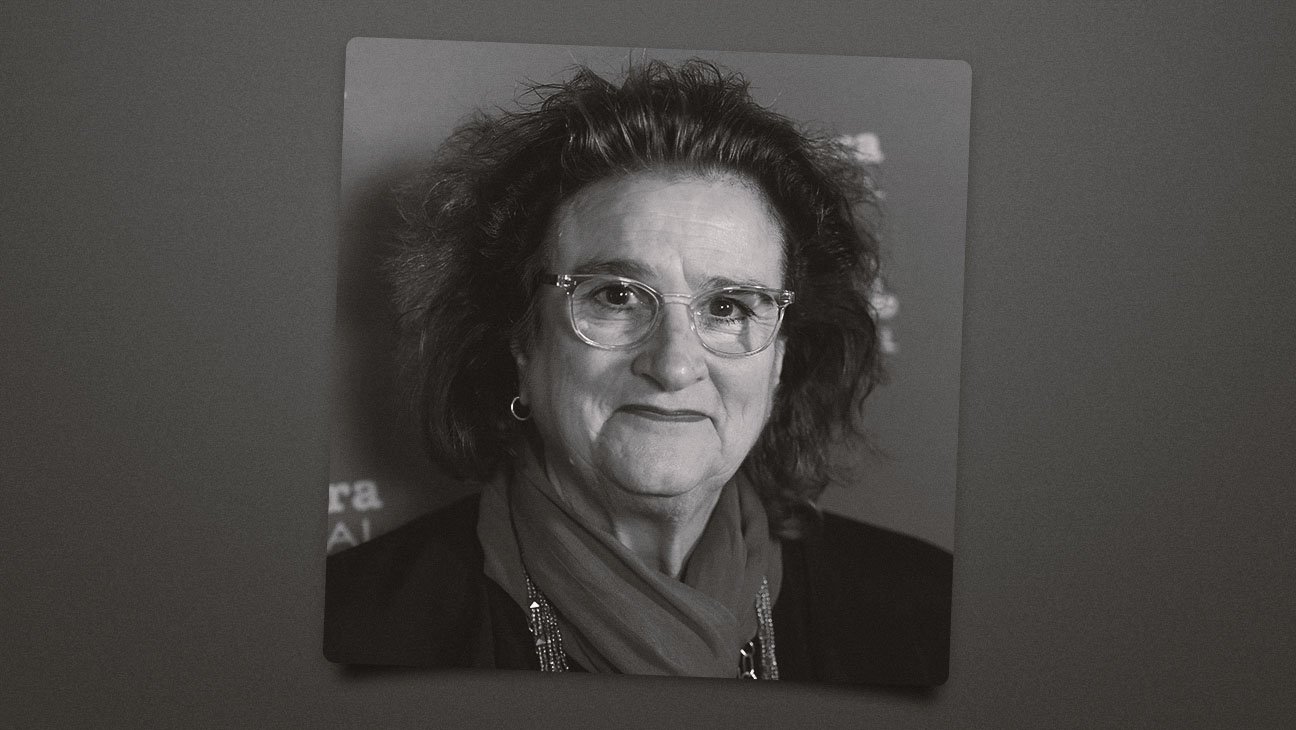
Barbara Ling, the production designer who turned back time and won an Oscar for re-creating 1969 Los Angeles for Quentin Tarantino’s acclaimed Once Upon a Time in Hollywood, has died. She was 73.
Ling died Thursday in Santa Barbara after a battle with cancer, a spokesperson for WME announced.
A Los Angeles native, Ling also tooled around her hometown for the present-day, Michael Douglas-starring Falling Down (1993), then reteamed with director Joel Schumacher to set up the fictional Gotham City for Batman Forever (1995) and Batman & Robin (1997).
In a career that spanned more than four decades, Ling served as the production designer on two 1991 classics, Oliver Stone’s The Doors and Jon Avnet’s Fried Green Tomatoes, on which she also was an associate producer.
She also teamed with director Scott Hicks on Hearts in Atlantis (2001), No Reservations (2007), The Lucky One (2012) and Fallen (2016).
Most recently, she worked on Marc Forster’s A Man Called Otto (2022), starring Tom Hanks, and on the blockbuster biopic Michael (2026), directed by Antoine Fuqua.
On Once Upon a Time in Hollywood (2019), Ling shared the Oscar for best production design with set decorator Nancy Haigh; the two had worked together once before, on the 1988 film Checking Out.
Tarantino’s “main thing from the moment we sat down was, ‘I want this to be real. I want to see. I want to smell and I feel that Hollywood. I don’t want to do green screen over here or have the digital interpretation. Let’s really change the billboards, and let’s put the real facades back on,’” Ling said in a 2019 interview.
“That is, to me, very exciting. It’s something we don’t do much of anymore. I knew that what he wanted was to encompass himself and the actors into an environment that you could feel is real. You’re not just staring at something that’s a piece of green screen where we piece together later. That was the starting ground of this.
“I had to go out and figure out where I could attach real things to. It was quite an engineering feat to do, particularly on Hollywood Boulevard, to say, ‘I want the Pussycat Theater back.’ To build those marquees, it’s added weight. These are old and fragile buildings that we were working with. We had to also work with engineers to make sure we weren’t going to pull the facade off once we rebuilt the old signs. It was laborious but well worth it.
“The night of the first shoot when all the neon lit up and the period cars came out and [Arianne Phillips’] costumes were out there, you absolutely believed you were in 1969 because everything was real. It was a movie filming a real street. We pretty much carried that theme through Westwood [to re-create the Bruin Theater] and everywhere we shot.”
After winning her Oscar, Ling lamented to reporters backstage that “L.A. is not a preservation city, never has been. Now there’s been a nonstop movement of apartment building and glass towers. … What we did will be impossible to do next year. It’s unfortunate. We hope this will bring some nostalgia back and stop things from being torn down.”
Born in August 1952, Barbara Claire Ling began her career designing sets and lighting for more than 200 theater, opera and musical productions. Among her early efforts was the 1981 HBO special The Pee-Wee Herman Show, taped at the Roxy in West Hollywood.
She made the leap to filmmaking when David Byrne enlisted her to design his directorial debut, True Stories (1986).
Her credits also included Heaven (1987), Less Than Zero (1987), V.I. Warshawski (1991), With Honors (1994) and Sydney Pollack’s Random Hearts (1999), among the films that demonstrated she was equally comfortable with period authenticity, contemporary realism and stylized fantasy.
Survivors include her wife, Lindsay, and their sons, Clay and Will.
For the area’s many elite runners, distance races can be as much about fueling and hydration strategies as they are about mileage build-up and training plans.
On race day, athletes dial in the amount of carbohydrates they are taking in via gels and sports drinks and they plan to the moment when said fueling must occur to optimize performance in a race setting. Nothing is left to chance.
Imagine, if you will, asking a crowd of runners not to stretch and limber up before the starter gun fires, but to take down a soft taco with seasoned beef and set out on an all-day run.
The idea is painfully (literally) simple. In order to be considered not a finisher but a “survivor” of the 50K event, one must run the approximately three miles between Napa’s two Taco Bell restaurants, eating a food item at nine of the 10 stops over a total of 31 miles.
Wait, there’s more.
While racers are allowed to pick and choose from the menu what might sit best in their gastrointestinal tract, there are two required food items. By stop No. 4, runners must have consumed at least one Chalupa Supreme or one Crunchwrap Supreme. By stop No. 8 (which is approximately 24 miles in) runners must have consumed at least one Burrito Supreme (think seasoned beef, onions, sour cream, cheese, beans, lettuce and red sauce) or one Nachos Bell Grande (same ingredients, just add chips).
Runners are asked to literally have receipts – in the form of wrappers from their orders.
As a journalist, I usually have many questions.
On this story it all boils down to just one. Why?
“We said, ‘Let’s plan something kind of silly, kind of dumb, and pretty fun and see what happens,” said Ryan Melendez, 31, of Vallejo.
Melendez is one of the three co-conspirators putting on the inaugural Napa Taco Bell 50K. He’s joined by Alec Villagomez, 30, of Napa and Jamie O’Sullivan, 49, of Napa. All three are elite runners with athletic resumes full of short, medium and long races. All three are training for the Javelina Jundred in October, a race so long it spans two days, not one.
But nary a one of them have done any mileage carrying a belly full of Chalupa.
“I think just the volume of food is going to be tough,” Villagomez said. “I think having a running stomach that is somewhat delicate, I’m worried about the volume of things I’m going to put in it. But there comes a kind of Zen moment and you have to be uncomfortable in a run and accept it.”
But distance runners are nothing if not optimistic folk. How could you lace up and run 50 kilometers (31 miles) and not hold a hopeful outlook? Hopeful that this pain will pass, that the next step will bring something better, that the finish line must be close?
So Villagomez said he’s banking on camaraderie and good cheer among his fellow runners to lift him in moments when the cheese and sour cream hit.
“In this race the discomfort will be a bloated stomach,” he said. “It’s going to be a hot day, the Taco Bell aspect, but I think it will be a lively atmosphere.”
See what I mean about optimistic?
Melendez, Villagomez and O’Sullivan — they go by Larry, Curly & Moe on some social media sign-up pages — did not invent this mayhem, but they loved the sound of it so much they decided to bring it to Napa where all three are active in the running community.
Call it a franchising effort.
“We all love Taco Bell and we all love running,” Villagomez said. “We have never tried the two together but we assume it would all go together. And then we’d see if we could get anybody to join us.”
So far, they have lured about 40 runners into their web.
The event started in Colorado. In October, the ninth running of the Denver Taco Bell 50K will be held. There, it’s a sweeping loop of the metro area with almost exactly the same rules as those adopted by the crew in Napa: 31 miles, nine stops, required items and bonuses if you can take down 2 liters of Mountain Dew Baja Blast and/or slather all items in Diablo sauce (and take a Diablo sauce shooter at the finish line).
Not familiar with the Baja Blast? Me neither, but I found this description on the interwebs: “Tastes like the back end of a Slurpee.”
What you are not allowed to imbibe? Pepto-Bismol, Alka-Seltzer and the like. This race is au naturel.
But pacers are allowed “for moral support and holding your hair if you must eject a Gordita.”
So popular has this adventure proven to be that sister events have popped up in Washington, D.C. and in the Twin Cities and in Southern California.
So why not Napa?
One “problem” (but what are ultra runners if not on-the-fly problem-solvers) was that the city only has two Taco Bell restaurants. So a sweeping loop route was out of the question.
But Melendez, Villagomez and O’Sullivan measured the distance between the Soscol Road Bell and the one on Jefferson Street. It was almost exactly a 5K (3.1 miles) between the two and runners could be funneled onto the Napa Valley Vine Trail for the majority of their miles.
But because the organizers don’t want runners with wobbly legs and wobblier stomachs out on the city streets all night, there is a 10-hour time limit for finishing and anyone on the course after 7 p.m. must wear a headlamp.
“Actually this is where there is a soft side to all of us,” O’Sullivan said. “We didn’t want anyone on the Vine Trail after 8 p.m. and we wanted a 10-hour cutoff.”
O’Sullivan was tasked with letting Taco Bell know of their plans. There is zero affiliation with the restaurants but organizers hope it might be considered a boon for business on a Saturday. Still, O’Sullivan wanted to cover their bases and be respectful.
“I don’t want anybody to be an unintentional victim, I don’t want anybody to be overworked,” he said. “This is going to be busy.”
So he set up a meeting with one of the managers. By O’Sullivan’s telling, what followed was in line with the whimsical feel of the event.
“I showed up with the waiver and the rules and the flier and she said, ‘I thought you were kidding,’” he said. “I was like, ‘No, I’m quite serious.’”
I showed up at said Taco Bell to confirm this story but did not hear back from the manager by my deadline.
Melendez, Villagomez and O’Sullivan might seem diabolical for staging such an event – they even planned a late 10 a.m. start to make sure it would be extra hot out there. But they are generous.
There is no fee for entry, just the cost of perhaps losing a sliver of dignity. They are also working out a Dine and Donate plan for each of the Taco Bells with funds going to the two elementary schools closest to the restaurants.
“This is our community,” O’Sullivan said. “We don’t want to create any negativity around this event.”
Plus, he figures that the back and forth nature of the route will mean less a crush of runners than a steady flow of customers. The route also means that athletes will see each other out there, be able to root each other on and offer support. And that is what the trio of organizers are going for.
“There is a saying, if you want to run fast, run by yourself, but if you want to run far, run with others,” Melendez said. “It’s community. For long endurance events, it’s very supportive and just great… definitely the community being able to share suffering experiences with yourself is really big.”
And Melendez, Villagomez and O’Sullivan say they already have a slew of folks signed up to volunteer on the course and outside the restaurants. They will be checking less for scofflaws (when I asked about the potential for cheating, O’Sullivan was appalled at the idea: “It’s totally honor system. That is one of the things we will tell the runners, ‘Are you really going to cheat on this? What is wrong with you?’”) than making sure runners are carrying water and standing upright.
“All of our volunteers are runners,” Villagomez said.
There are plans for a “vibe station” with music and good cheer for a needed morale boost when the build up of seasoned beef might get one down.
Organizers plan to have medals at the finish line for all survivors. To that end, there is a sign-up deadline on July 15.
But very clearly, completing this “race” isn’t about hanging a medal around your neck. It’s about something next-level, Villagomez said.
“We are hoping that everyone shows up and has a good time,” he said. “Anyone who shows up do the Taco Bell 50 is a champion of the heart.”
You’d recognize Apple’s iconic white earbuds anywhere. Or should I say everywhere, since everyone on the street seems to be sporting them. They’re common for a reason: AirPods look great, sound great, and round out the perfect iOS experience (as long as you’re an iPhone owner, that is). And at their usual $129.99 list price, they’re a pretty affordable pair of open-ear buds.
But if they were more affordable, that’d be the cherry on top. If you’re in need of a new pair of earbuds, you’re in luck—Walmart has the AirPods 4 on sale right now for $99, which is a solid 24% off the list price. Pocket that $30.99 in savings and put it toward your streaming apps, because you’re going to want to listen to these buds all day long.
Apple AirPods 4
H2 chip, IP54, 30 hours of battery life, Spatial Audio, Adaptive EQ, Siri support + Head Gestures
First things first, the model on sale does not have active noise cancellation—but you don’t need it if you’re just looking for fantastic-sounding daily drivers. The impressive base and crisp highs make up for it, plus neat Spatial Audio settings and Dolby Atmos support that make it sound like you just dropped by the recording studio with your favorite band. You can’t adjust your own EQ settings, but as long as you aren’t a strict audiophile, you’ll love Apple’s EQ presets in iOS.
Speaking of iOS, the AirPods 4 support Head Gestures, which means you can shake your head “yes” or “no” when Siri pops into your ears to share a notification. You can also summon the voice assistant by simply saying, “Hey, Siri.” Over time, she will familiarize herself with your specific movements to catch even the most subtle shake of your head.
In our in-depth review, PCMag expert Tim Gideon gave the famous buds an “Excellent” rating, praising their exceptional audio performance in an open-ear design and their status as Apple’s most affordable wireless buds. Take that affordable entry price and slash $30.99 off—that’s how cheap they can be yours today if you buy from Walmart.
Recommended by Our Editors
But if you’re looking for something with a little more pizazz, check out our experts’ list of the best wireless earbuds for 2026!
More Deals on Earbuds
*Deals are selected by our commerce team
About Our Expert
Apple is suing OpenAI for alleged trade secret theft, accusing the company and two staffers of stealing the iPhone maker’s confidential information to help build its own hardware.
“As a natural result, OpenAI’s nascent hardware business now rests on the shakiest of foundations, rotten to its core by its illegal reliance on misappropriated trade secrets,” Apple claimed in the lawsuit, which was first reported by The Wall Street Journal.
Apple filed the lawsuit in a US district court, naming the former employees as well as io Products, a startup from former Apple design chief Jony Ive. Last year, OpenAI acquired io, which has been developing a mysterious AI-powered device for Sam Altman’s company.
However, Apple claims it has uncovered evidence that OpenAI has been conspiring to steal its trade secrets by poaching employees or pressuring them to divulge their work during job interviews. “Unsurprisingly, Apple’s investigation has found a pattern by employees who depart for OpenAI of taking steps to evade the security processes intended to protect Apple’s confidential information,” the company says.
In the 41-page complaint, the company names former Apple VP of Product Design Tang Yew Tan and ex-iPhone electrical engineer Chang Liu as two major culprits, who’ve both joined OpenAI. Tan, now OpenAI’s Chief Hardware Officer, has been interviewing Apple employees interested in jumping ship to the company asking them to discuss unannounced products or even to bring actual hardware to interviews.
Meanwhile, Liu at one point hacked Apple’s shared network folders using a software bug. “He celebrated his improper access, exclaiming in a message left on his colleague’s Apple-issued work laptop ‘LOL’ and that it was ‘so funny,’” the complaint says. “Then, over several weeks, while developing hardware for OpenAI, Mr. Liu surreptitiously accessed and downloaded dozens of Apple’s confidential hardware-related files, including voluminous, detailed information about unreleased products, engineering presentations, technical specifications, and proprietary project data.”
OpenAI has allegedly been trying to piggyback on Apple’s supply chain by working with its trusted partners behind the company’s back. “This is the tip of the iceberg. Apple lacks visibility into what’s been happening behind closed doors at OpenAI, where such misconduct is normalized and exemplified by leadership,” the lawsuit adds. “Apple’s investigation has uncovered misconduct reaching across seniority levels, technical disciplines, and departments at OpenAI.”
Apple suggests, however, that OpenAI is “under mounting pressure to deliver its first commercial hardware product and facing the reality that building a successful consumer device business from scratch is more complex, time-consuming, and difficult than it anticipated, [so] OpenAI has resorted to taking unlawful shortcuts.”
OpenAI is still reviewing the complaint, but told PCMag: “We have no interest in other companies’ trade secrets. We remain focused on building innovative technology that empowers people everywhere.”
If Apple’s lawsuit proceeds, the controversy could blow up even further. “This lawsuit and the discovery process are needed to expose and begin to remedy the pervasive theft of Apple’s trade secrets,” the complaint noted.
“Apple’s lawsuit is demanding the court block OpenAI from using the trade secrets and erasing evidence of the illegal acts, force them to return “all of Apple’s property in their possession,” and pay up in damages and royalty fees.”
Disclosure: Ziff Davis, PCMag’s parent company, filed a lawsuit against OpenAI in April 2025, alleging it infringed Ziff Davis copyrights in training and operating its AI systems.
About Our Expert
Michael Kan
Principal Reporter
Experience
I’ve been a journalist for over 15 years. I got my start as a schools and cities reporter in Kansas City and joined PCMag in 2017, where I cover satellite internet services, cybersecurity, PC hardware, and more. I’m currently based in San Francisco, but previously spent over five years in China, covering the country’s technology sector.
Since 2020, I’ve covered the launch and explosive growth of SpaceX’s Starlink satellite internet service, writing 600+ stories on availability and feature launches, but also the regulatory battles over the expansion of satellite constellations, fights with rival providers like AST SpaceMobile and Amazon, and the effort to expand into satellite-based mobile service. I’ve combed through FCC filings for the latest news and driven to remote corners of California to test Starlink’s cellular service.
I also cover cyber threats, from ransomware gangs to the emergence of AI-based malware. In 2024 and 2025, the FTC forced Avast to pay consumers $16.5 million for secretly harvesting and selling their personal information to third-party clients, as revealed in my joint investigation with Motherboard.
I also cover the PC graphics card market. Pandemic-era shortages led me to camp out in front of a Best Buy to get an RTX 3000. I’m now following how the AI-driven memory shortage is impacting the entire consumer electronics market. I’m always eager to learn more, so please jump in the comments with feedback and send me tips.
UPDATE 7/10: Following backlash, Meta has removed the option to generate AI images using public Instagram photos.
“Earlier this week, we announced that one way for people to generate images in Meta AI is by @-mentioning public Instagram accounts that they want to reference,” Meta said in an update to its blog post. “Our intent was to provide a useful creative tool and to give people control over whether their public content could be referenced in this way. We’ve heard the feedback that this feature missed the mark, so it’s no longer available.”
This comes after the Screen Actors Guild (SAG-AFTRA) shared details on how to opt out of Instagram sharing. “Take action to protect your likeness,” it said at the time. Tonight, it cheered Meta’s removal of the feature. “A win is a win,” it tweeted.
As Variety reports, the Creative Artists Agency (CAA), which represents actors like Zendaya and Meryl Streep, also said on Wednesday that, “No one’s name, image, likeness, voice or creative work should be used by any third party, including AI models, without clear, documented consent.” It called on Meta “to make protection the default on Muse Image, not the exception, and enable individuals to opt-in if they want to allow usage of their image or likeness for AI content creation.”
Original Story 7/8: Meta has introduced a new image-generation model for its apps that lets users tag Instagram accounts and use their public images as references for AI prompts, among other things.
The Muse Image model was developed by Meta Superintelligence Labs, and it “pairs with Muse Spark to reason through your prompt, search the web, and plan before it generates,” says Meta’s chief AI officer, Alexandr Wang.
At launch, the Muse Image model is available for free through the Meta AI app, Instagram Stories, and the Meta AI chat window on WhatsApp. Get started with a conversational prompt or upload a photo and provide commands to modify it. Or use the Ideas button to get suggestions.
(Credit: Meta)
To provide the AI with more specific instructions, you can use Markup tools to draw over a part of the image and enter a prompt. For example, you can scribble over a person’s eyes and ask the AI to add sunglasses, or mark their head to add a hat. The model can also remove a person from the background or build a functional QR code, Meta says.
Allow People to Reuse Your Content?
More importantly, Muse Image lets users @mention Instagram accounts in the Meta AI app and use the account’s public images as a reference for the prompt. For example, you could tag a person and ask Meta AI to add them to an image.
Recommended by Our Editors
(Credit: Meta Ai)
Meta says this is in line with Instagram’s content reuse policy, meaning if your account is private, Meta AI won’t let others use your uploads to generate or edit images. Still, there are ways to stop Meta AI from scraping your content.
Go to your Instagram profile, tap the Menubar on the top right to enter Settings and activity,select Sharing and Reuse, and disable both options under Allow people to reuse your content on Instagram and with AI features at Meta. Changes made using this option “only apply to future media,” the support page warns.
(Credit: Jibin Joseph)
Meta’s new Muse Image model is currently available to users in the US and comes with a usage cap. For extended use, you’ll need to purchase one of Meta’s subscription plans. Soon, the model will be made available in other markets as well as on Facebook and Messenger.
About Our Expert
Experience
Jibin is a tech news writer based out of Ahmedabad, India. Previously, he served as the editor of iGeeksBlog and is a self-proclaimed tech enthusiast who loves breaking down complex information for a broader audience.
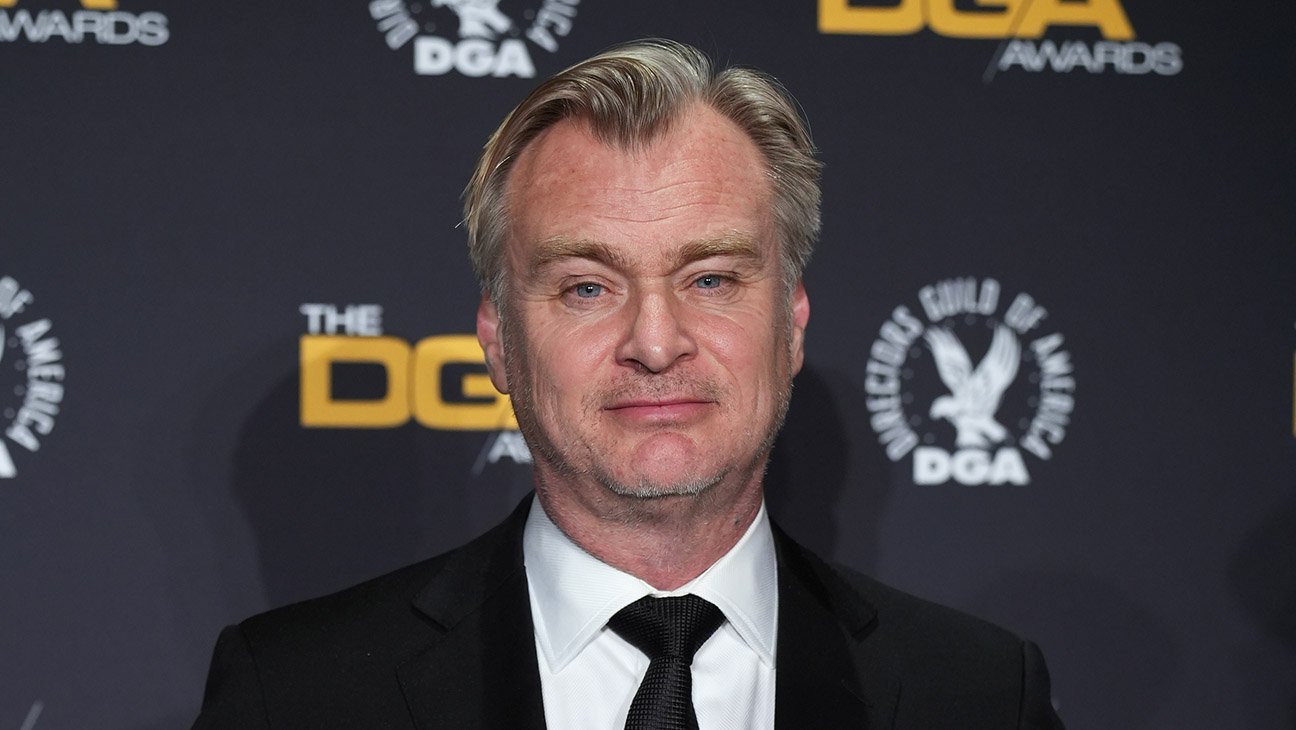
Christopher Nolan is the latest major filmmaker to praise the breakout horror hits Obsession and Backrooms.
In a new interview with The Telegraph promoting his upcoming epic The Odyssey, Nolan reflected on the lengths he went to in order to make the film feel authentic, including traveling the world and assembling a “cast of thousands.”
“I think cinema is vital and essential and continues to transform itself,” the Oscar winner said. “We’ve got all these great new young voices in movies, making the medium their own and moving it forward.”
The article states that Nolan pointed to Curry Barker and Kane Parsons — the filmmakers behind Obsession and Backrooms — as evidence that “things are on the right track.” Both horror films have made history at the box office.
“This is why I never bought into the arguments that young audiences’ attention spans are too fried to enjoy a three-hour Greek epic,” Nolan said. “Those films are so mysterious and ruminative. I mean, parts of Backrooms are like David Lynch at his most obscure. And yet young people can’t get enough of them.”
The Oppenheimer director continued: “I’ve never seen a more rapid wholesale dismissal of a supposedly foundational jump in technology in my lifetime. So much energy has been expended on bringing in AI, but if you look at that generation’s reaction, they’re utterly rejecting it.”
Nolan also cited his children, who are in their late teens and early 20s, as examples.
“Their judgment of AI slop has been immediate and harsh. They see it for what it is very quickly — and it’s much easier for them to identify it, because it grew out of an online world they know really well,” he explained. “While that doesn’t mean that every aspect of the technology is useless or meaningless, in filmmaking it’s hitting at exactly the wrong time. After years of driving towards heavily virtual environments, we’re seeing a renewed interest in more tactile, more real forms of storytelling.”
“Audiences in general, but especially audiences my age, are getting so overwhelmed by all of the CGI movies — the Marvel epidemic. It really deterred a lot of people from wanting to go and see these big-budget movies,” one moviegoer said.
Nolan isn’t the only legendary filmmaker championing the next generation of talent. Steven Spielberg also recently praised Obsession, saying he “loved” the film and applauded Barker for making it on a budget of less than $1 million.
As far as Nolan’s next film, The Odyssey tells the story of Odysseus’ long, torturous trip back to Ithaca after the Trojan War to save his wife Penelope and son Telemachus. Its star-studded cast includes Matt Damon, Anne Hathaway, Tom Holland, Zendaya, Robert Pattinson, Jon Bernthal, Travis Scott, Elliot Page, Lupita Nyong’o and more.
CBS has unveiled the cast for Big Brother season 28.
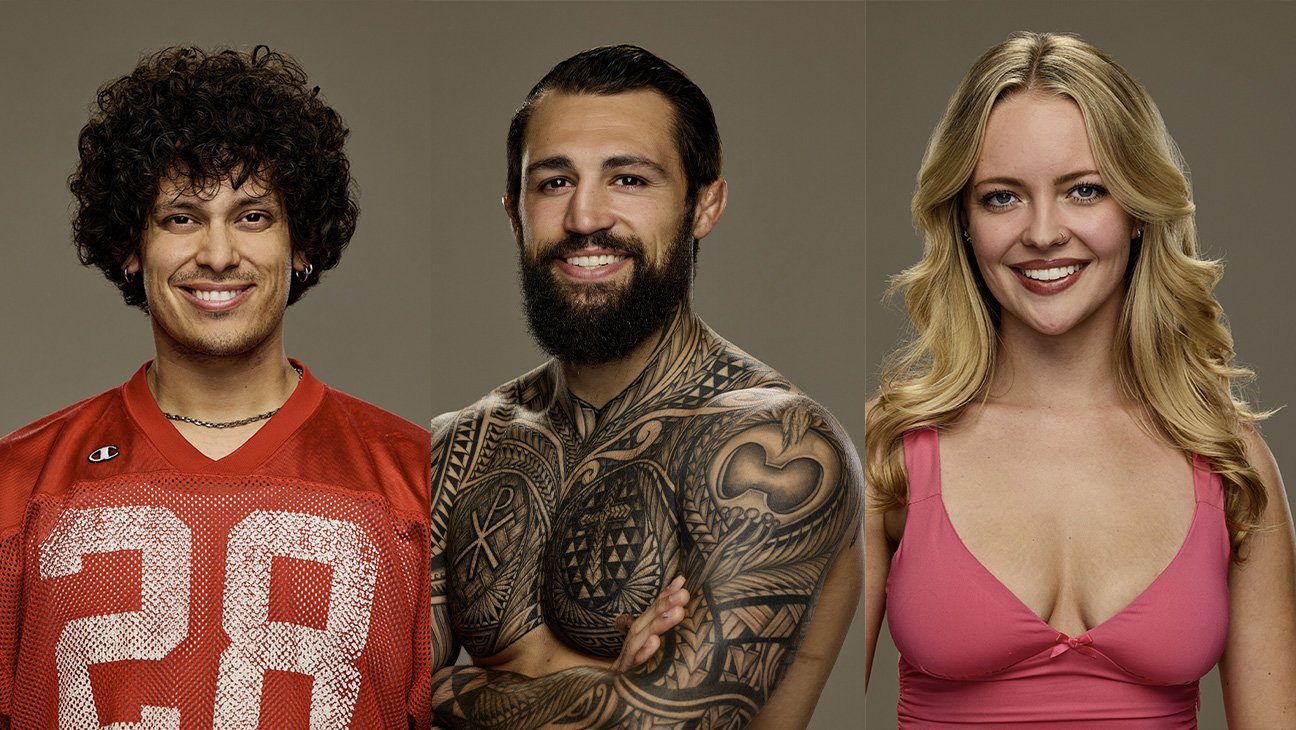
On Tuesday, the network announced the houseguests competing in the upcoming season of the long-running reality series. The initial 14-player cast includes everyone from a rocket scientist and an MMA fighter to a pickleball coach and a RuPaul’s Drag Race alum, better known as Salina EsTitties.
The reality competition series follows a group of strangers living together in a house under 24/7 surveillance as they form alliances, compete in challenges and vote one another out until one houseguest remains to claim the $750,000 grand prize. This season’s theme, “Time Trip,” will see the “past, present and future collide,” according to CBS.
Big Brother premiered on Thursday at 8 p.m. ET/PT. The 24/7 live feeds are available the following day on Paramount+, Pluto and YouTube for a limited time. Additional surprise houseguests will also be revealed during the premiere. (This list was originally published on July 7 and has been updated as new characters were revealed.)
Meet the Big Brother season 28 houseguests, with official bios and photos provided by CBS, below.
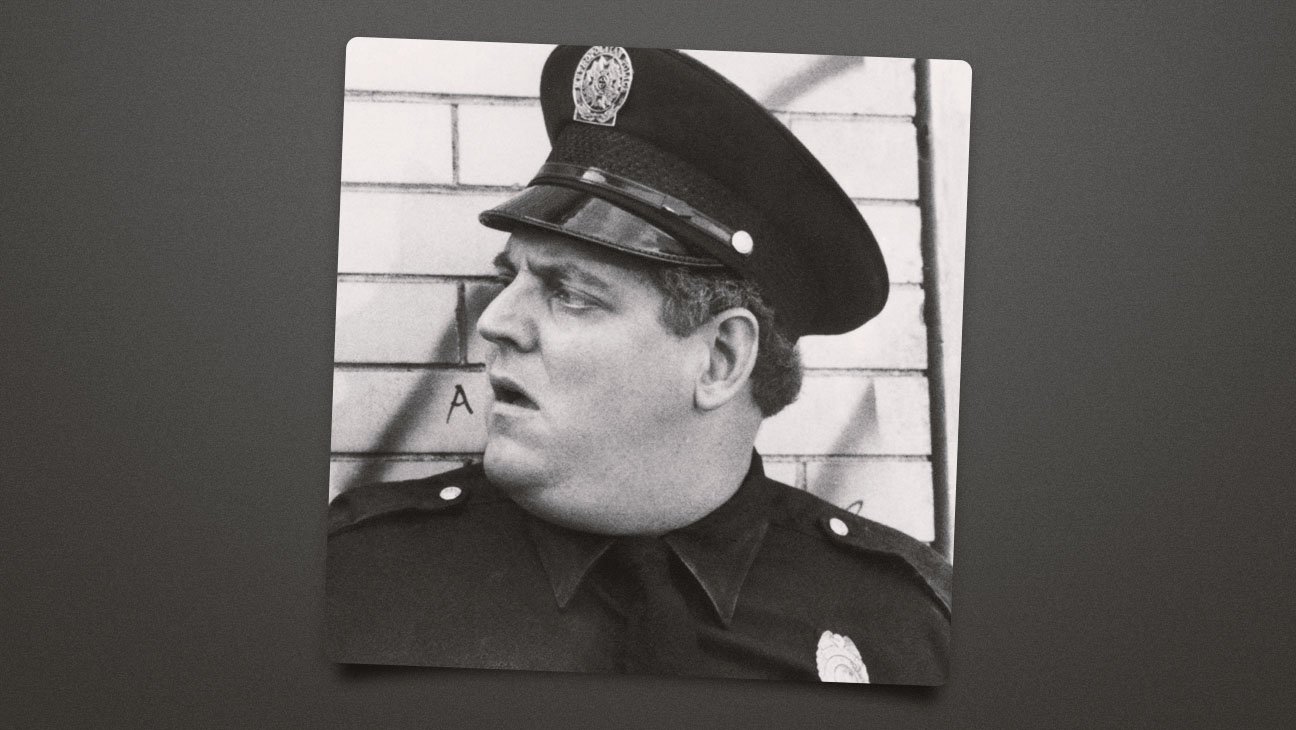
Peter Van Norden, the actor who appeared in the Police Academy and Naked Gun films, has died. He was 75.
Van Norden’s son, Robert, announced that his father died on Thursday.
“Peter passed away peacefully last night with his wife, Wendy, at his side,” Robert wrote in an Instagram post. “He was a terrific father, husband, friend, and a greatly respected member of the theater community. He will be missed.”
Born Dec. 16, 1950, Van Norden earned his first acting credit in the late 1970s in the comedy Squeeze Play. He went on to appear in numerous film projects, including the 1985 Police Academy follow-up, entitled Their First Assignment. There, Van Norden portrayed policeman Vinnie Schtulman, the first partner of Steve Guttenberg’s Carey Mahoney.
Another sequel, he acted in the second Naked Gun movie in 1991, where he took on the role of John Sununu, President George H. W. Bush’s former White House chief of staff.
On the small screen, he has acted in Three’s A Crowd (1985); an episode of Silver Spoons; a 1991 episode of Matlock; L.A. Law (1990-1992); The Stand; Murder, She Wrote (1989-1996); two 2004 episodes of Days of Our Lives; and 9-1-1 (2019).
Van Norden’s film credits include The Accused; An Innocent Man; Love Hurts; Hunky Dory; and West Virginia, among others.
Outside film and TV, Van Norden had an extensive stage career, appearing in various Broadway, off-Broadway and regional productions. His Broadway stints included features in St. Joan, Macbeth, Little Johnny Jones, Romeo and Juliet and The Inspector General. He performed his final stage role last year in Corktown ’39 at Los Angeles’ Matrix Theatre.
Van Norden was also part of The Rehearsal Room actors workshop, which “help[s] actors and artists grow their careers through challenging material.” Last August, he partook in breaking down Shakespeare’s Richard III.
He is survived by his wife, Wendy, and their son, Robert.