Blog

  • ‘Hijamat’ Review: A Gay Muslim and His Family Face Conflicts of Duty and Desire in Uneven Jafar Panahi-Produced Drama

    ‘Hijamat’ Review: A Gay Muslim and His Family Face Conflicts of Duty and Desire in Uneven Jafar Panahi-Produced Drama

    A family of Turks living in Berlin is riven when one younger member’s queer sexuality emerges in drama Hijamat, the earnest but underwhelming latest from Iranian-Turkish writer-director Nader Saeivar, and a competitor for the Crystal Globe at Karlovy Vary this year.

    Much is made in the film’s publicity and programming material of the involvement of auteur Jafar Panahi, who serves as the film’s editor and one of its three producers. He had the same credits for Saievar’s 2024 feature The Witness, one of several collaborations between the two. (Saievar co-wrote Panahi’s recent award-winner It Was Just an Accident and also was involved in Panahi’s features 3 Faces and No Bears.) However, this drawn out, sometimes clunky issues-driven drama lacks flow, although it has moments, including an oddly tacked-on but still compelling bit of scenery-chewing from a seldom-seen Nastassja Kinski as a mentally unwell neighbor.

    Hijamat

    The Bottom Line

    Shame and secrets eat the soul.

    Venue: Karlovy Vary Film Festival
    Cast: Kida Khodr Ramadan, Jael Cem Ilhan, Nicolette Krebitz, Aziz Capkurt, Moritz Bleibtreu, Nastassja Kinski, Vedat Erincin, Derya Durmaz
    Director/screenwriter: Nader Saeivar

    1 hour 43 minutes

    Although, like Panahi, Saeivar has a reputation as something of a dissident within the Iranian film world, where he still teaches in a Tehran university and makes films that are openly critical of the regime, one can only wonder if some kind of self-censorship has muddled the clarity of his storytelling here. That’s an especially tempting conclusion since there are passages that take flight, not least a bravura opening sequence shot as a fluid oner that tracks a little boy arriving at a party as the feted guest of honor.

    The occasion is the kid’s circumcision, and as the merriment takes hold (with separate areas for men and women) it all seems very jolly until word arrives that one member of the extended family, Kerem (Jael Cem Ilhan), is getting beaten up. As Kerem’s significantly older brother Murad (Kida Khodr Ramadan) tries to intervene, it emerges that the family is outraged by photographs that have circulated among them showing Kerem being intimate with a German man.

    Murad and his Kosovan wife Leyla (Nicolette Krebitz), both of them more open to Western ways than others in the clan, are accepting of Kerem’s homosexuality. But that’s not true of Kerem and Murad’s father Ibrahim (Vedat Erincin), a stern patriarch who controls the family through tradition and money, having done well with restaurants both in Berlin and back home.

    In fact, even Kerem himself is too tortured by fear to stand up to the family. He meekly goes along to get along when Ibrahim drags him off to the mosque where Sheikh (Aziz Capkurt), the local cleric, hectors him to confess his shame. But Sheikh’s motivations are not entirely religious. Murad knows that he’s in cahoots with a businessman back home who wants Ibrahim to sell a restaurant, and Sheikh is using his clerical position to leverage the situation.

    Just when these various plot strands start to felt together into an overall narrative, Saeivar will weave in a new bundle of plot. Some screen time is given over to the breakdown being experienced by Margot (Kinski), a friend of Murad’s late mother who lives across the street from Ibrahim and is still disturbed by her experience of trying to escape into West Berlin from the east years ago. The subplot serves to remind us of how the city has been a refuge for immigrants of all kinds for years and that the trauma of violent escape echoes across generations, but it’s never worked into the main body of the drama satisfactorily.

    Likewise, the late suggestion that Murad himself is tormented by feelings of attraction to men is awkwardly inserted and not especially convincing. But at least this reveal allows for another cameo from a German film star: Moritz Bleibtreu as a New Age healer in a ridiculous wig and headband get-up, who offers to fix Murad with some cupping therapy, also known as hijamat — hence the film title.
  • Who Will Take Home the Claret Jug? Here’s How to Watch The Open Championship 2026

    Who Will Take Home the Claret Jug? Here’s How to Watch The Open Championship 2026

    If you purchase an independently reviewed product or service through a link on our website, Variety may receive an affiliate commission.

    The final major championship of the 2026 golf season is here as the world’s best players head to Royal Birkdale in Southport, England, for the 154th playing of The Open Championship. Golf’s oldest major returns to one of its most historic venues, where players will compete for the coveted Claret Jug before the PGA Tour season shifts its focus to the FedExCup Playoffs.

    The tournament arrives with plenty of storylines, starting with defending champion and world No. 1 Scottie Scheffler, who enters The Open looking to build on his recent major success. Scheffler’s preparation took an unexpected turn last week at the Genesis Scottish Open, where he missed the cut for the first time since the 2022 FedEx St. Jude Championship.

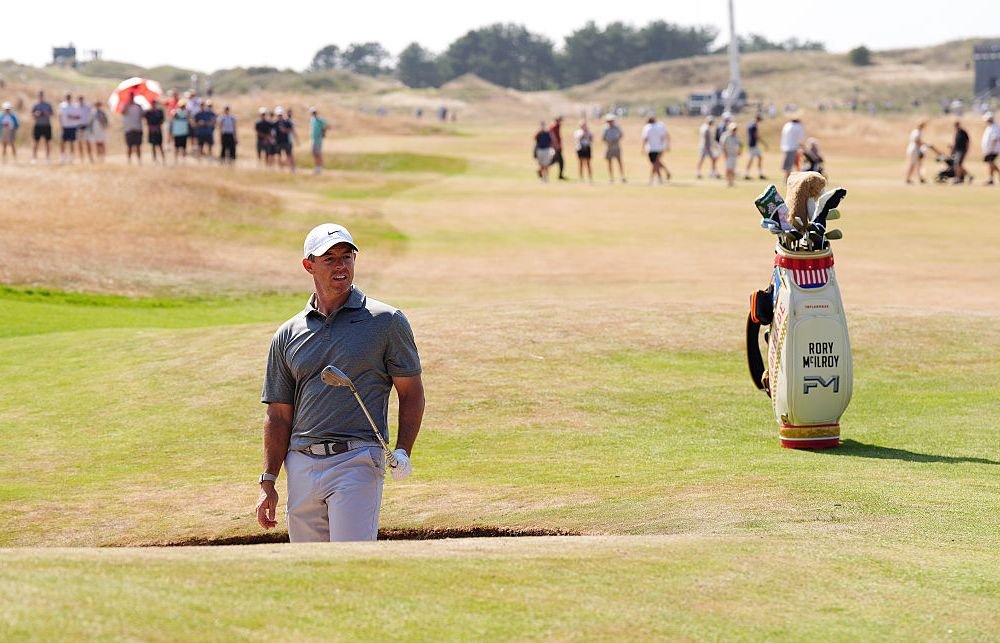
    Scheffler will face a strong group of contenders, including Tom Kim whose coming off a victory at last week’s Genesis Scottish Open and Tommy Fleetwood, who returns to Royal Birkdale with a unique hometown connection, growing up just minutes from the course in Southport. The field also features several recent major champions looking to add another title to their resumes, including Rory McIlroy, Aaron Rai, and Wyndham Clark, all chasing the 2026 Claret Jug.

    Here’s everything you need to know about how to watch The Open Championship, including the full TV schedule and the best ways to stream every round without cable.

    The Open Championship Streaming Schedule

    Coverage of The Open Championship begins Thursday, July 16 and streams on Peacock, NBC and USA Network all weekend long. Here’s when and where to stream all four rounds of golf’s final major:

    Thursday, July 16: 1:30 AM – 4:00 AM ET on Peacock | 4:00 AM – 3:30 PM ET on USA Network
    Friday, July 17: 1:30 AM – 4:00 AM ET on Peacock | 4:00 AM – 3:30 PM ET on USA Network
    Saturday, July 18: 5:00 AM – 7:00 AM ET on USA Network | 7:00 AM – 3:00 PM ET on NBC
    Sunday, July 19: 4:00 AM – 7:00 AM ET on USA Network | 7:00 AM – 2:00 PM ET on NBC

    How to Stream The Open Championship for Free

    If you’re looking to watch The Open Championship without cable, you have several streaming options to choose from, including services that offer free trials and flexible streaming plans.

    Peacock is the official streaming home but you can also use Hulu + Live TV, which is one of the easiest ways to stream The Open Championship, with access to NBC and USA Network in its live channel lineup in eligible markets. Plans start at $89.99 per month and include access to Disney+ and ESPN, with a 3-day free trial currently available for new subscribers.

    SlingTV is one of the more affordable options for streaming USA Network coverage of The Open Championship. The Sling Blue plan includes USA Network, with plans starting at $45.99 per month.

    DirecTV’s Entertainment package includes local NBC channels. For a limited time, the plan is discounted to $59.99 for the first month (a $30 savings) and includes 90+ channels, including ESPN. New customers can also take advantage of a 5-day free trial.

    One of the most affordable ways to access Peacock is through a Walmart+ membership. New members can try Walmart+ for just $1 for 30 days and receive six months of Peacock Premium at no additional cost, making it a budget-friendly option for streaming the tournament and more NBCUniversal content.

    You can now access Peacock through YouTube Primetime Channels, YouTube’s à la carte storefront for individual streaming subscriptions. Unlike YouTube TV, there’s no base monthly fee — you only pay for the services you choose to add. Peacock Premium Plus is available through YouTube for $16.99 per month.

  • Lamorne Morris, Abby Elliott Join Heidi Gardner in Dramedy ‘The Swimming Lesson’ (Exclusive)

    Lamorne Morris, Abby Elliott Join Heidi Gardner in Dramedy ‘The Swimming Lesson’ (Exclusive)

    A dramedy feature starring Heidi Gardner and William H. Macy is getting ready to make a splash as it adds to its cast.

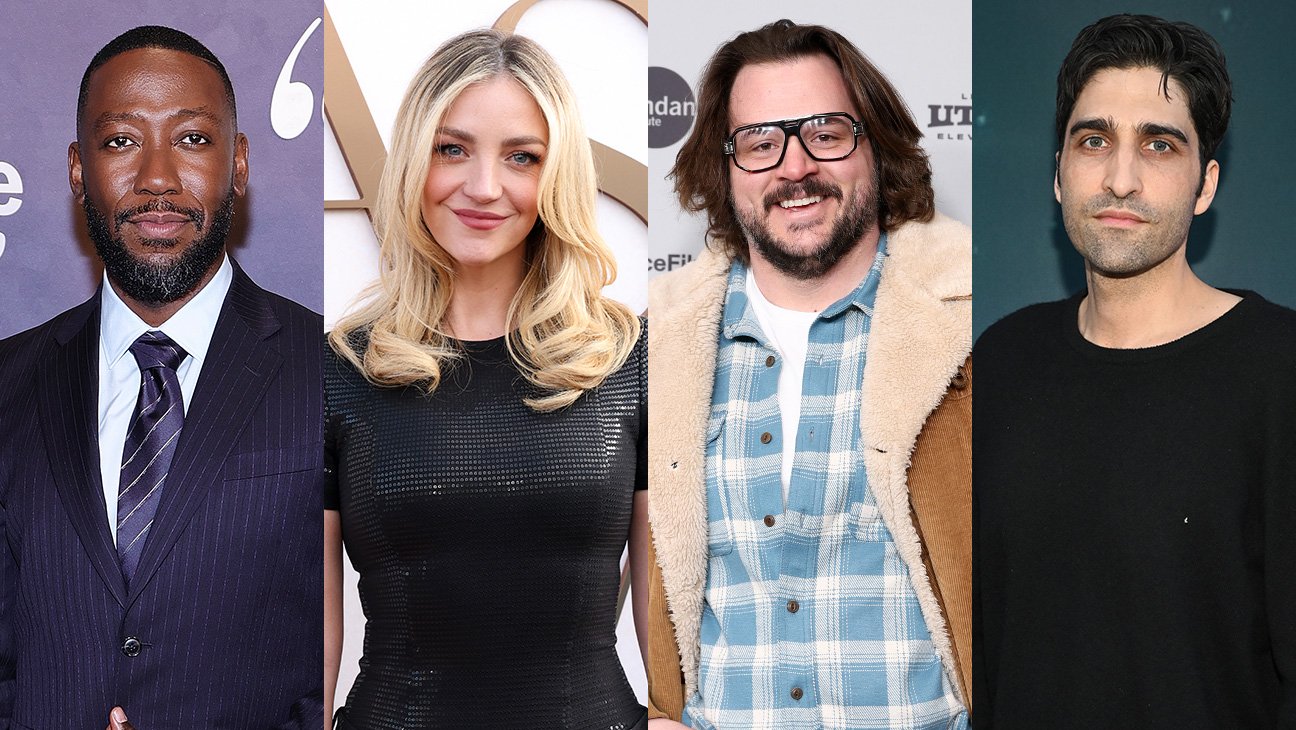
    Lamorne Morris (Spider-Noir, Fargo), Abby Elliott (The Bear, SNL), Michael Strassner (The Baltimorons) and Joey Bicicchi (Rudderless) have joined the cast of The Swimming Lesson, The Hollywood Reporter has learned. THR previously broke the news that Gardner and Macy will star in writer-director Casey Twenter’s indie film that is set to begin production next month in Gardner’s hometown of Kansas City.

    The Swimming Lesson centers on Tay (Gardner), a single mother who leaves behind her complicated life in Los Angeles to return to her childhood home. She winds up embroiled in a custody battle over son Albee, an autistic child who is obsessed with the ocean but terrified of swimming. Macy co-stars as Leonard, Tay’s foul-mouthed father whose blunt nature can sometimes disguise the fact that he remains loyal to his daughter and grandson.

    Morris will play charming swim instructor Caleb, while Elliott takes on the role of Vickie, the new wife of Tay’s ex. Additionally, Strassner plays Tay’s longtime friend Reiger, and Bicicchi portrays Albee’s newly sober father Steve.

    Newcomer Hudson Escudero makes his feature debut as Albee. The production prioritized casting an young autistic performer in the role to embody the character with lived experience.

    Heidi Gardner (left) and William H. Macy

    Nina Westervelt/Variety/Getty Images; Kristina Bumphrey/Variety/Getty Images

    Twenter marks his solo directorial feature debut with the project that he co-wrote with Jeff Robison. Twenter and Robison previously co-wrote the 2014 drama Rudderless, which was Macy’s directorial debut and landed distribution after premiering at Sundance.

    “From top to bottom, this is a murderers’ row of talent,” says Twenter. “This is a deeply personal story, and I’m beyond grateful that these actors have chosen to tell it alongside me. Their excitement for the material has been energizing from the start, and it has only strengthened my own belief in what we’re making.”

    The Swimming Lesson’s producers include Dan Koetting for KP’s Remain and Robison for Kindling Productions, along with Jen Greenstreet and Mandi Kearns for Just Like You Films. Mark Williams serves as director of photography, and Mateo Messina is composing the music. Spark Casting’s Stefanie Seifer and Hailey Giles are handling casting.

    Morris is represented by CAA, Entertainment 360 and The Lede Company. Elliott is repped by Paradigm Talent Agency and OPE Partners. Strassner is repped by Paradigm Talent Agency and Stride Management. Bicicchi is repped by Luber Roklin Entertainment. Escudero is repped by The Osbrink Agency, Rebel Creative Group and Campbell Agency.

  • Quentin Tarantino Plans to Retire After His Next Movie. Christopher Nolan Hopes He ‘Won’t Stay True’ to His Word

    Quentin Tarantino Plans to Retire After His Next Movie. Christopher Nolan Hopes He ‘Won’t Stay True’ to His Word

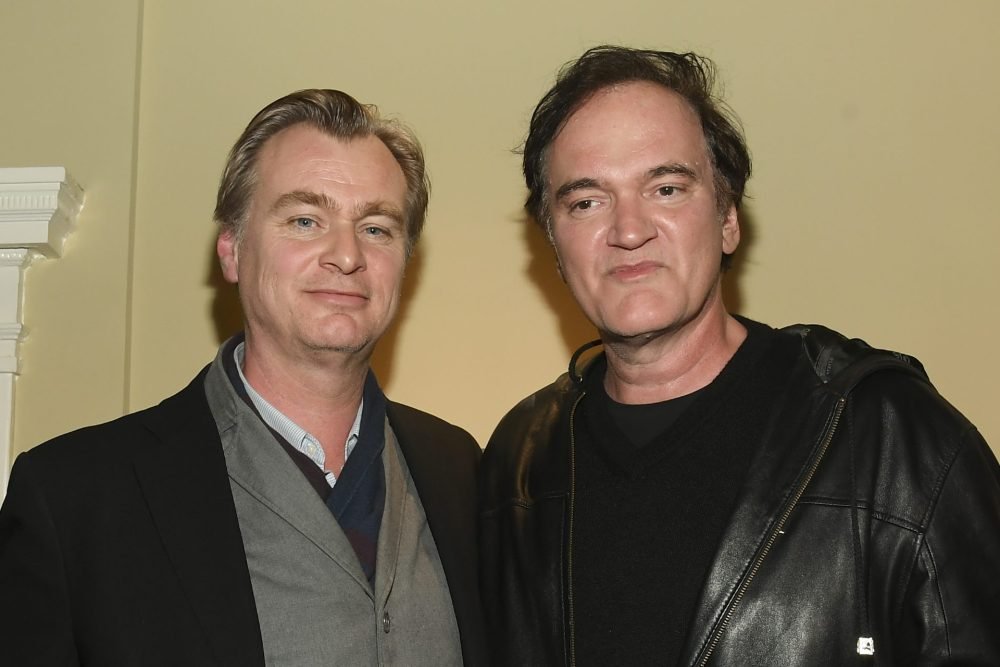
    If Quentin Tarantino remains committed to retiring from filmmaking after his 10th feature film, then whatever movie the Oscar winner decides to make next will be his swan song from the big screen. Christopher Nolan is disappointed.

    “I think it’s dangerous to look at it that specifically,” Nolan recently told The Telegraph about Tarantino’s long-discussed 10-movie retirement plan. “I mean, Quentin has his reasons, and I respect those enormously. But I’m hoping that he won’t stay true to them… I view every film that I do as the last I’ll ever make, and one day I will be right. So every time I want to put everything into the project at hand. I’m never thinking, ‘Well, I’ll save this for the next one.’ I don’t ever want to think like that. I want each movie to be everything.”

    Tarantino has spoken for years about his plan to retire after making 10 feature films (the “Kill Bill” movies count as one film in his eyes, as they were developed and shot as a single feature), saying he wants to leave behind a consistently strong and tightly curated body of work.

    “And do you believe him?” Nolan asked the “ReelBlend” podcast hosts in 2023 while promoting “Oppenheimer.”

    “Quentin’s point has always been that — and he never, very graciously, he’s never specific about the films he’s talking about or whatever — but he’s looking at some of the work done by filmmakers in later years and feeling that if it can’t live up to the heyday, it would be better if it didn’t exist,” Nolan explained at the time. “And I think that’s a very purist point of view. It’s the point of view of a cinephile who prizes film history.”

    “I’m not sure that I would trust my own sense of the absolute value of a piece of work to know whether or not it should have been brought into existence,” Nolan added. “I’m a big fan, as is Quentin, of films that maybe don’t fully achieve what they try to, but there’s something in there that’s a performance, or a little structural thing, or a scene, you know, that’s wonderful. And so, yes, I understand. I think he wanted to keep a sort of perfect reputation of something, but also kind of don’t want to take anything off the table.”

    Nolan and Tarantino’s friend and fellow filmmaker Paul Thomas Anderson has been a lot more blunt in his criticism of Tarantino’s 10-movie plan.

    “I know Quentin [Tarantino] likes to say, ‘I’m making 10 movies and then I’m quitting.’ But I could never do that,” Anderson said back in 2018. “I don’t know how he could say that, or how he could take himself seriously when he says that. This is what I want to do as long as I’m able to do it. As long as I’m able to do it, I’m going to do it. I think things can become peculiar when directors don’t act their age maybe, or seeing them try to keep up with the kids or trying to be hip. That’s never a good look.”

    As for what Tarantino has planned for his 10th and alleged final feature remains to be seen. There was a time when “The Movie Critic” was being prepped as his swan song, but Tarantino has since scrapped that screenplay. Even if Tarantino does retire, there are other artistic mediums through which he can continue to put out new content. He’s already authored a few books, and his new play, “The Popinjay Cavalier,” is set to open on London’s West End in 2027.

  • Why Analysts Aren’t Worried About Coinbase’s 30% Drop

    Why Analysts Aren’t Worried About Coinbase’s 30% Drop

    In brief

    • William Blair cut its 2026 and 2027 EBITDA estimates for Coinbase by 34% and reduced revenue forecasts by 12–13%, yet maintained an outperform rating, saying earnings should trough by year-end before a 2027 rebound.
    • Coinbase and Circle shares rose roughly 3–4% each on Wednesday after William Blair said key risks are already priced in and both stocks carry strong upside exposure to a Bitcoin recovery; COIN has fallen nearly 30% this year, CRCL about 20%.
    • John Bollinger, creator of the Bollinger Bands volatility indicator, flagged a fractal “W” double-bottom on Bitcoin’s daily chart—calling a completed pattern “a confirmation of a change in trend.”

    The numbers got worse. The stocks went up.

    Coinbase (COIN) and Circle (CRCL) each rose roughly 3–4% on Wednesday after William Blair—a Chicago-based investment bank founded in 1935 that most equity investors know from tech and growth coverage—released a note slashing its revenue and earnings forecasts for Coinbase while keeping its “outperform” rating.

    The read in TLDR terms is that the pain is already in the price. “We think investors should stay involved in Coinbase,” the firm said.

    The firm cut 2026 revenue estimates for Coinbase by 12% and 2027 estimates by 13%, and gutted adjusted EBITDA projections by 34% in both years. Analysts Andrew Jeffrey and Adib Choudhury said earnings are set to trough in the second half of 2026 before recovering in 2027, and that investors should stay the course as spot crypto volume bottoms alongside Bitcoin.

    William Blair expects Coinbase’s total trading volume to fall roughly 44% this year to $669 billion before rebounding more than 32% in 2027.

    The firm sees this cycle as structurally different from 2022: There are now spot Bitcoin ETFs, institutional flows have grown, and the regulatory environment has matured in ways that didn’t exist four years ago.

    The firm also highlighted Coinbase’s Base layer-2 network as a potential major earnings driver, with retail derivatives and prediction markets rounding out a revenue base that extends well beyond spot trading—retail derivatives alone crossed $200 million annualized in the first quarter.

    Not everyone was as constructive in the near term. Piper Sandler analyst Patrick Moley cut his price target to $155 from $170, keeping a “neutral” rating. He flagged prediction markets and perpetual futures as the defining story of Q2—the World Cup drove massive growth in prediction market activity—and warned of “significant investor attention on the perpetual future threat” heading into Q3.

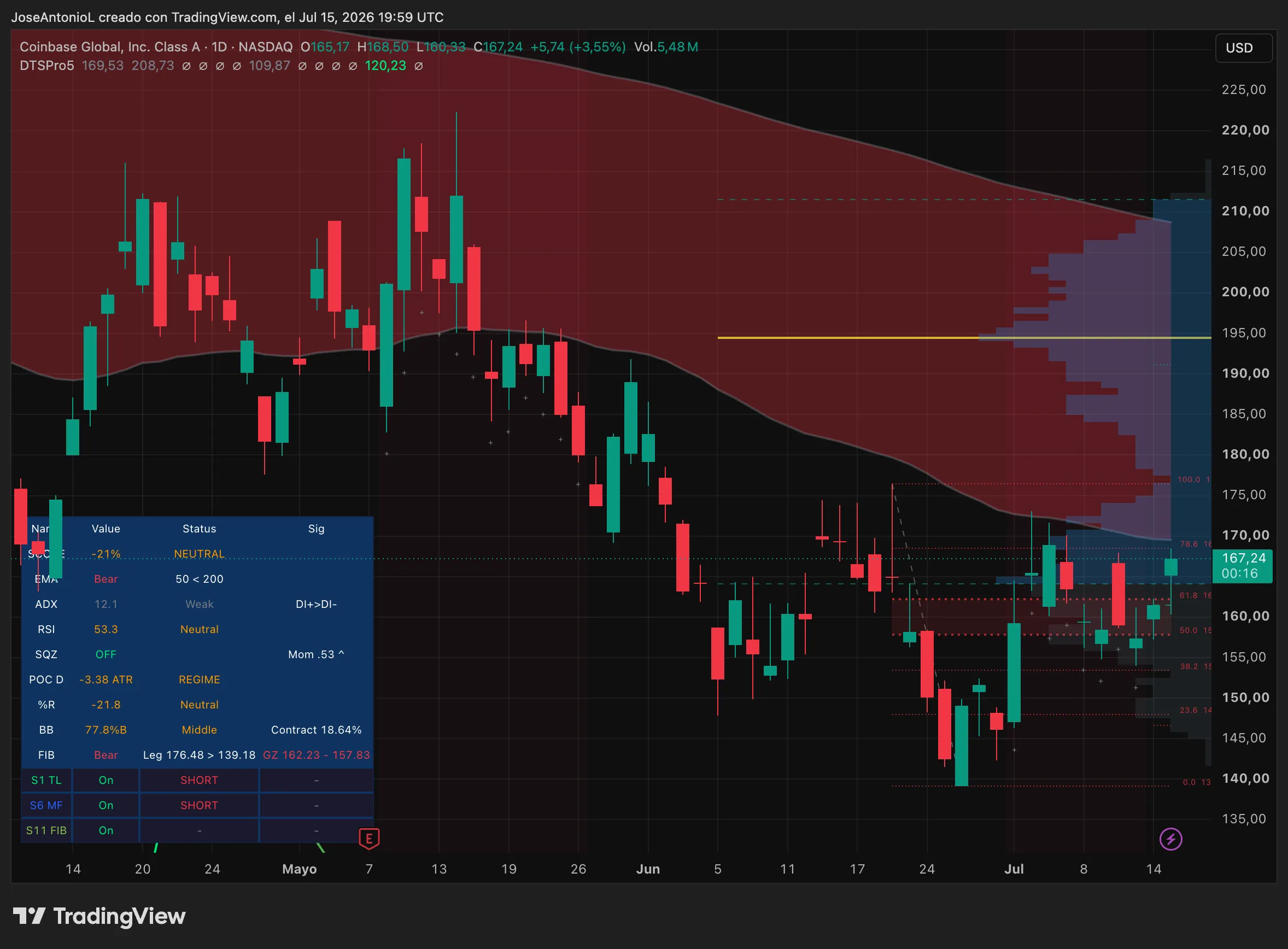
    Coinbase has fallen nearly 30% this year, alongside a roughly 26% decline in Bitcoin. Circle, which debuted in a splashy June 2025 NYSE IPO at $31 per share, has dropped about 20% since January.

    The “W” Pattern: Why John Bollinger says Bitcoin is ready to explode

    The same directional read is also appearing among technical analysts. John Bollinger—the veteran technical analyst who created Bollinger Bands, volatility envelopes plotted above and below a moving average that traders use worldwide to spot compression and potential breakouts—has been flagging a developing pattern on Bitcoin’s daily chart since early July.

    On July 2, Bollinger posted his analysis on X, identifying a “W” double-bottom taking shape. A double-bottom is a reversal formation defined by two swing lows with a rebound in between; it turns bullish once price clears the resistance at the apex between the troughs.

    He called the setup “perfectly fractal”—smaller versions of the same shape nest inside the larger structure, and the pattern is also visible on the weekly chart. He was upfront about the uncertainty: previous bullish setups had been invalidated by selling pressure throughout this cycle.

    In a more recent post, Bollinger mentioned that If this “W” completes, he would see it as “a confirmation of a change in trend.” That’s his clearest public signal yet that the trend may be turning rather than pausing.

    Bollinger disclosed a long Bitcoin position through his investment vehicle earlier this year, so his analysis and his book are pointing the same direction. In terms of technical analysis, the price of Bitcoin remains bearish, but that trend is losing strength.

    Bitcoin bottom is in?

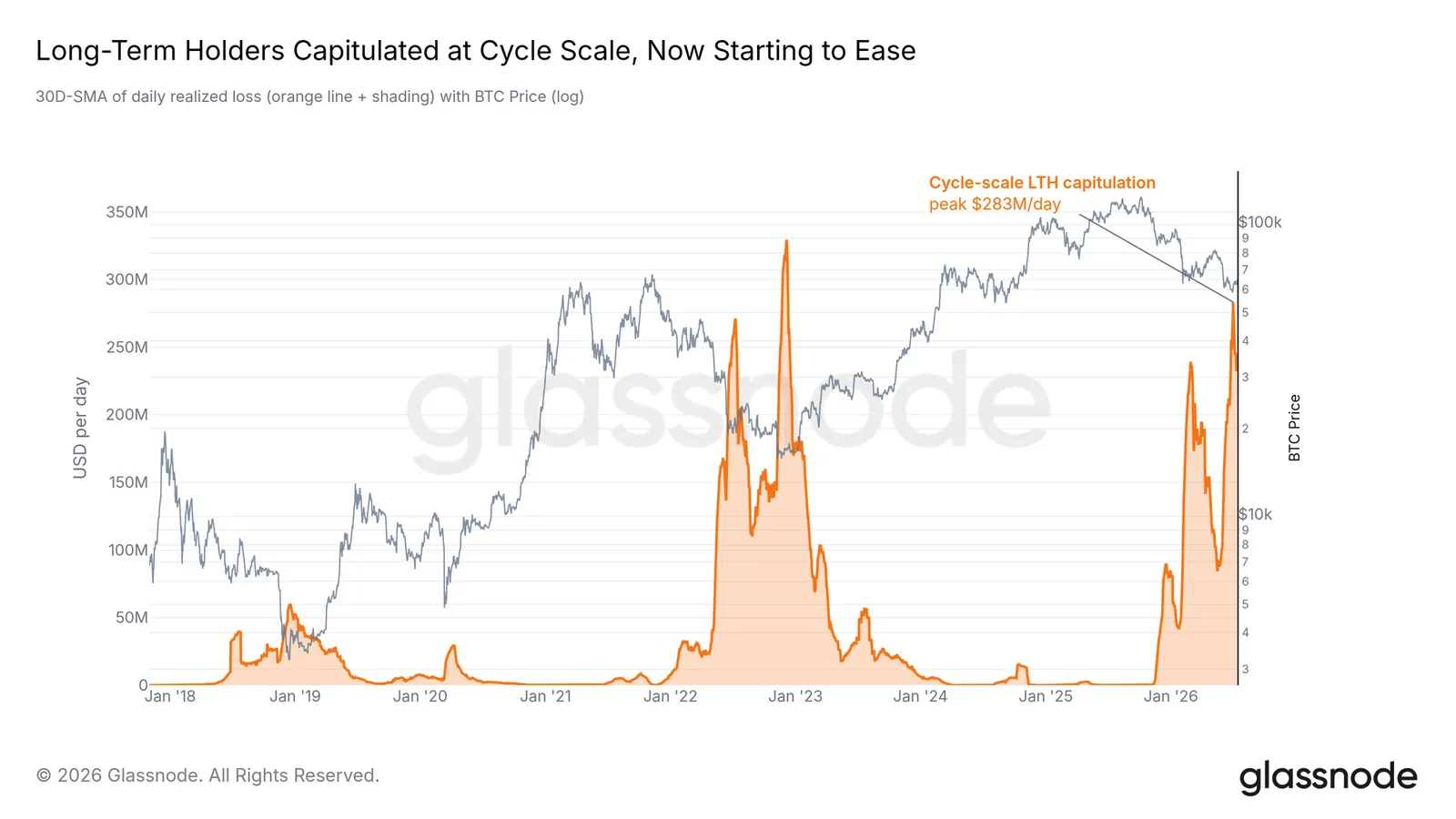
    According to Glassnode’s latest weekly analysis, long-term holder capitulation—the main source of selling pressure all year—set its cycle peak two weeks ago and has turned down. The metric that measures what long-term holders actually surrender each day, adjusted to exclude internal transfers, reached a peak and is now falling for the first time this cycle.

    Buyers showed up at the June lows. Glassnode documented a broad wave of accumulation across wallets of all sizes during that period. Bitcoin’s inverse relationship with the dollar has deepened while its correlation with U.S. equities has loosened, and its sensitivity to good macro news has returned: Tuesday’s soft inflation print moved Bitcoin more sharply than any major equity index.

    The sticking point is the same for on-chain analysts and Wall Street alike—no sustained spot-driven buying has confirmed the recovery yet.

    Derivative positions are unwinding, long-term sellers are thinning, and the fear premium in the options market is easing. But the capital hasn’t fully arrived. William Blair puts the inflection point at 2027, projecting a 32% rebound in Coinbase trading volume after this year’s expected 44% decline.

    Daily Debrief Newsletter

    Start every day with the top news stories right now, plus original features, a podcast, videos and more.

  • VELVET slides 18% – But key data points to consolidation, not sell-off

    VELVET slides 18% – But key data points to consolidation, not sell-off

    Velvet [$VELVET] has emerged as one of the market’s heaviest losers over the past day, sliding roughly 18% across the session as sellers took control.

    Despite the recent pullback, Velvet has held its position as one of the strongest gainers across the market over the past couple of months.

    Over the last 90 days alone, the token has outpaced every asset in the top 100 by market capitalization, posting a 571% gain that edged out the next-best performer, Audiera [BEAT], which surged 530% over the same stretch.

    Leveraged capital exits Velvet’s Futures market

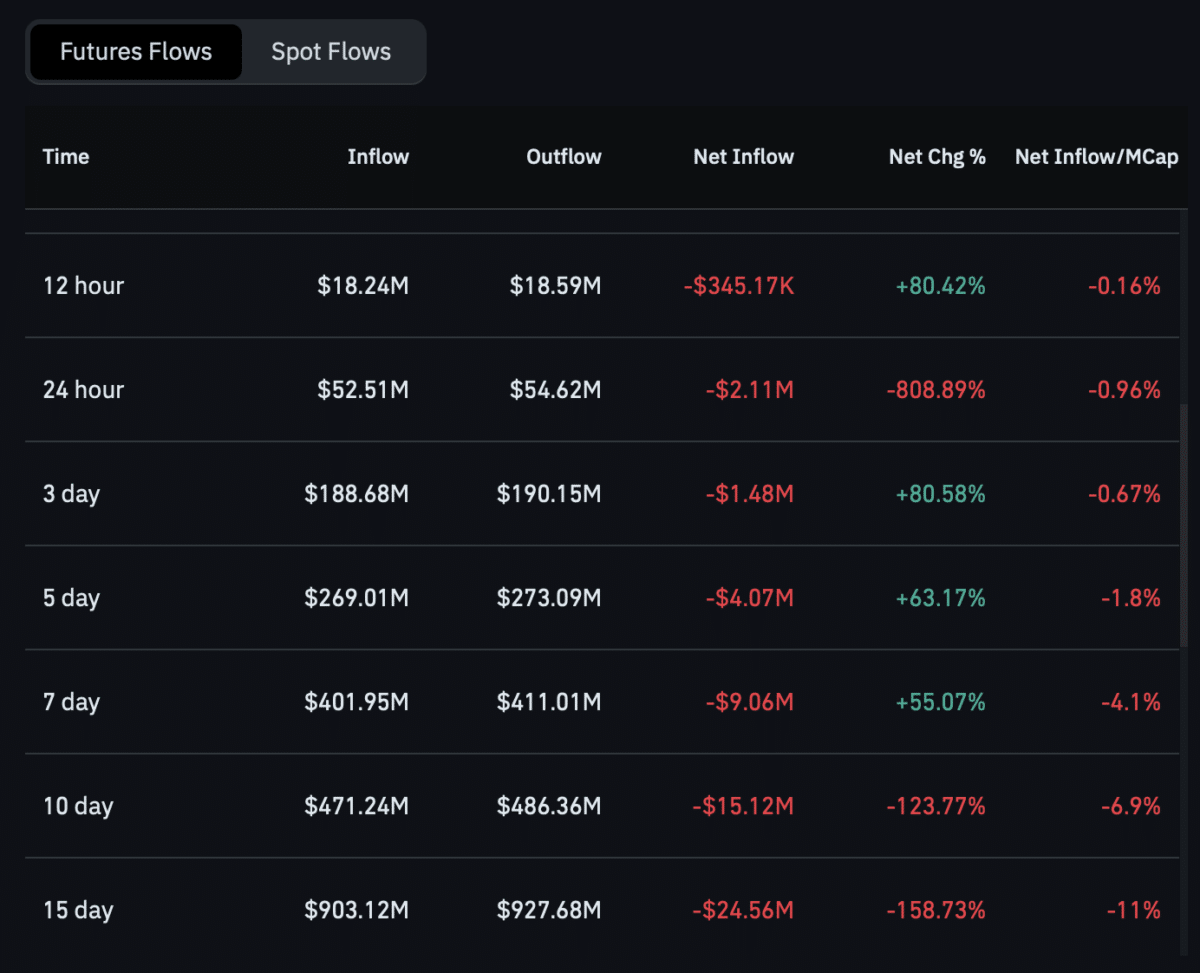
    A leading concern now weighing on Velvet is the capital exodus spreading across its market. The token’s perpetual Futures market shows heavier outflows than inflows, a sign that money is leaving rather than entering.

    Capital draining from a market typically signals that investors are pulling their funds out, a move that often reflects bearish sentiment. Roughly $24 million has flowed out of the perpetual market over the past two weeks, pointing to investors heading for the exits.

    Source: Coinglass

    Rising prices usually breed confidence and draw fresh capital into a market, yet Velvet has seen the opposite, with profit-taking and capital flight dominating the flows and underscoring the prevailing sentiment.

    Spot market investors have failed to keep pace with the move, buying comparatively little $VELVET over the same window. The chart shows a total Spot netflow of roughly $847,000.

    Spot buying of that scale rarely fuels a rally on its own, leaving little chance that price mounts a meaningful move to the upside off the back of it.

    Why Velvet’s decline isn’t bearish control

    On the surface, Velvet’s slide and the capital retreat from its perpetual market look like bearish dominance, yet the data underneath tells a more nuanced story.

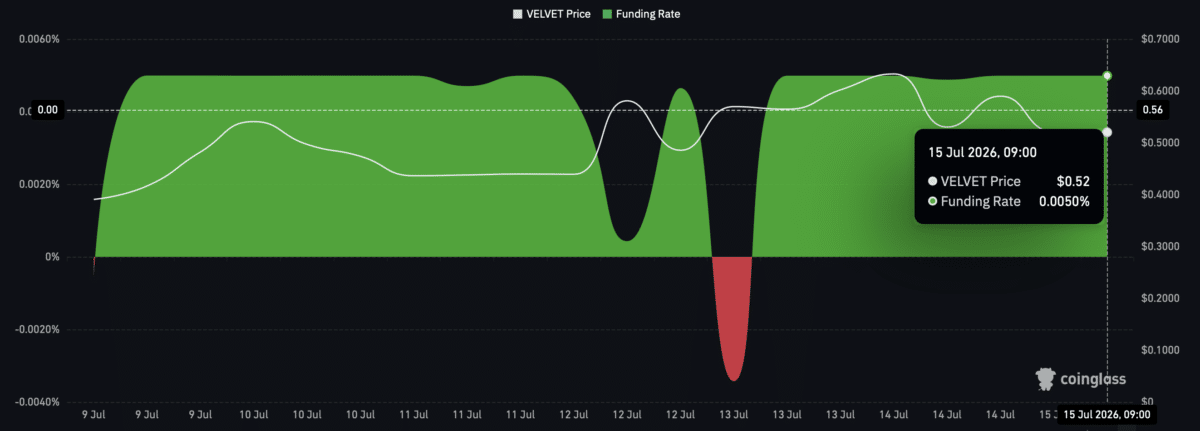
    Chart data shows that even as capital exits mounted over the past two weeks, traders in Velvet’s perpetual market have clung to a bullish outlook.

    Funding Rate data, which reveals which side of the market holds control based on who pays the funding fee, shows that longs have stayed in command.

    Source: Coinglass

    Despite the $2.17 million net outflow recorded over the past 24 hours, the Funding Rate reached 0.0044%, suggesting that the $27.87 million perpetual market balance still sits largely in long positions.

    One side, long or short, typically takes command when strong conviction builds that price will swing higher over the short to near term.

    In this case, the sentiment holds that Velvet’s decline looks more like consolidation and capital management from traders who have banked massive gains.

    This hangs on one key support level

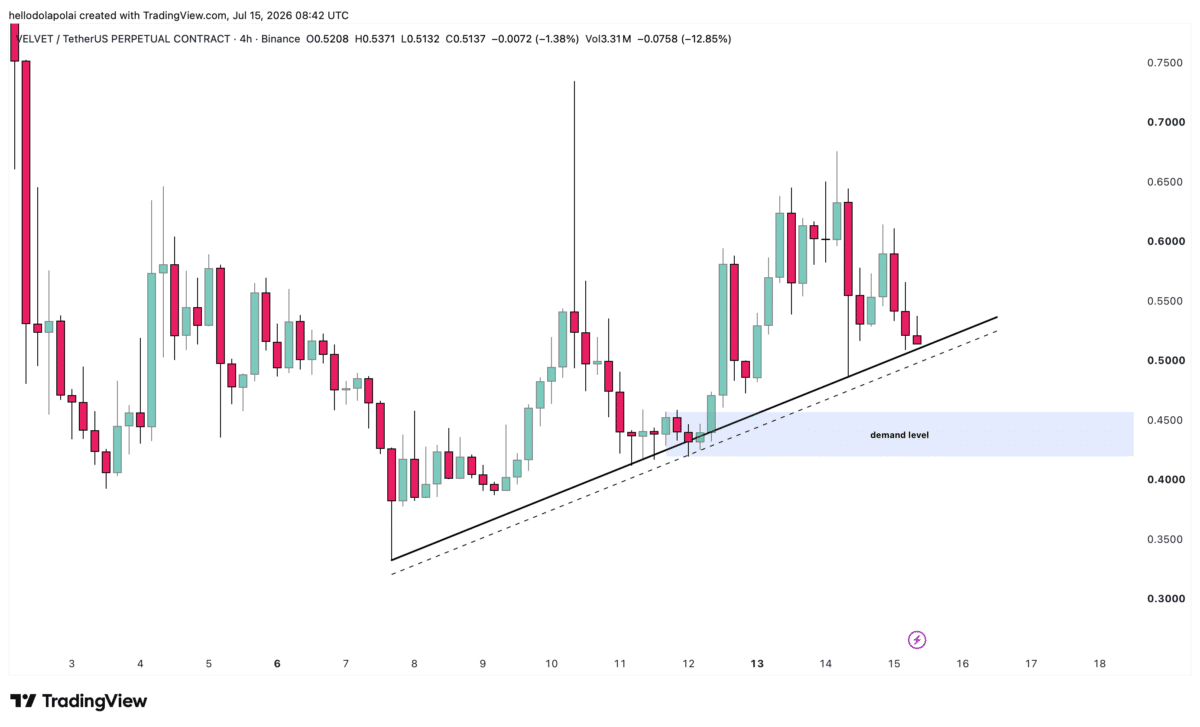
    Chart analysis places Velvet a single key level away from either staging a rebound or extending its slide.

    That read stems from price trading into an ascending support line that has powered rebounds on multiple occasions, at least three times so far.

    A breakdown from this level could send Velvet tumbling once more toward $0.45, where a key demand zone sits and could serve as a rebound catalyst.

    Source: TradingView

    Should the ascending support hold instead, Velvet’s rebound could already be taking shape. The support level remains the chart’s decisive area to watch for the next move.

    Final Summary

    • Velvet fell roughly 18% in a single day, but it remains one of the market’s top performers over the past three months, gaining 571% in 90 days and beating every other top-100 token.
    • $24 million left the perpetual market over 2 weeks, yet longs still control the balance.
  • ‘Motor City’ Review: Potsy Ponciroli’s Audacious Thriller — a Scorsese Opera without Dialogue — Announces the Arrival of a Startling Voice

    ‘Motor City’ Review: Potsy Ponciroli’s Audacious Thriller — a Scorsese Opera without Dialogue — Announces the Arrival of a Startling Voice

    The needle drop as we know it was born in 1969, with the instantly iconic use of “Born to Be Wild” in “Easy Rider.” There were precedents, of course. The first use of a rock ‘n’ roll song in a movie was “Rock Around the Clock” played over the opening credits of “The Blackboard Jungle” (1955), and by any measure the godfather of the needle drop was Kenneth Anger, whose 28-minute-long 1963 bikers-and-drugs-and-Jesus-and-leather-queers-gone-pop “Scorpio Rising” — in my estimation, one of the 10 greatest films ever made — invented the ecstatic juxtapositions that inspired the premier cinematic poet of the needle drop, Martin Scorsese. Which filmmakers have given us the greatest needle drops? The answer is Scorsese (the aesthetic son of Kenneth Anger), Tarantino (the son of Scorsese), Paul Thomas Anderson (the son of Tarantino), and, from a very different track, the Michael Mann of “Manhunter” (a movie I’ll write about next week, when it’s released for its 40th anniversary).

    I zip through this history because there’s a needle drop in “Motor City,” the startlingly high-wire new crime thriller (it’s got love, violence, suspense — but no dialogue), that earns comparison to the work of all those other directors. And so I want to be clear that we aren’t simply talking about an ordinary needle drop but, rather, the visionary hypnotic kind.

    Set in Detroit in 1977, the film introduces us to John Miller (Alan Ritchson), an ex-con and Vietnam veteran who is burly and blockish enough to look like he’s halfway between Bruce Banner and the Hulk. But in his G.I. Joe haircut, he’s trying to walk the straight and narrow. We have seen that he’s in love with Sophia (Shailene Woodley), his live-in girlfriend, who he gets down on one knee to propose to (an offer she gratefully accepts). And we’ve witnessed a rather strange crime in which his vintage green ’70s muscle car was stolen…and then returned to him. By this point, we like Miller and Sophia well enough to want to see them happy.

    Then the familiar, deliberate plucking of an acoustic guitar comes on the soundtrack, and we recognize the intro to “The Chain,” the great Fleetwood Mac song from 1977. In a scene that unfolds in slow motion, a canister of tear gas is tossed into the couple’s home, tearing through their veil of domestic bliss. Police detectives burst in and demand to see Miller, who from what we can tell has done nothing wrong (in fact, he’s just completed his parole requirement). Outside, the cops, led by a dry sinister officer in a long black leather coat, order him to get on the ground, face down; Sophia comes out of the house and is placed in the back of a car, staring at all this through the glass. As the cops open the trunk of Miller’s car and fish out kilos of drugs, our mounting horror and dread is echoed, but oh so ironically, by “The Chain,” which is playing throughout all of this. The song is a slow build, one that finally explodes into that gorgeously melancholy up-tempo climax (“Cha-a-a-ain…keep us together!…Runnin’ in the shadow!”), and it elevates the fear and trauma of what we’re watching into the purest opera.  

    Staging a great needle drop isn’t the same thing as directing a great movie. But Potsy Ponciroli, the director of “Motor City” (which opens July 24), has an operatic temperament in a large way. He has made a stylized crime drama that’s full of pop music, and also full of naturalistic sound, so that it looks and feels more or less real, only the characters don’t converse. (They say an occasional throwaway word here or there.) Even when two of them are just seated in the booth of a diner, what passes between them is suggested by looks, gestures, and our ability to read the situation. The reason this works is that we’ve seen enough thrillers to be able to color in the essence of the dialogue ourselves; we don’t need to hear the words. And without them, we plug into the sheer presence of the actors. At times, “Motor City” is like a silent movie directed by Scorsese. It draws us in because it’s got a glittering underworld-opera surface, but also because the audience needs to use its noodle a bit to participate in the film’s telling.

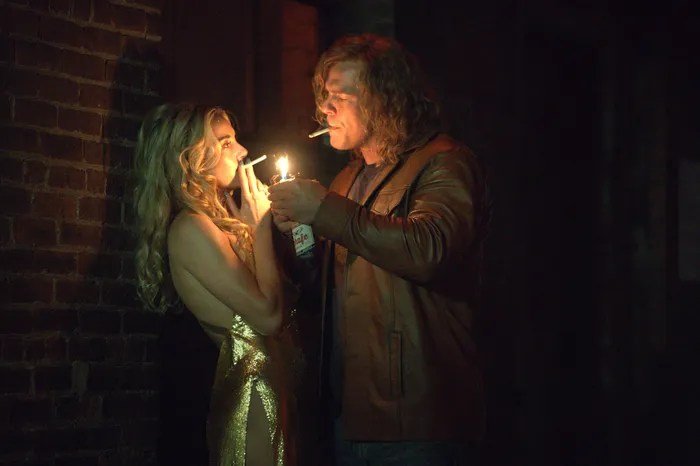
    “Motor City” offers up Detroit as a gritty and squalid place, a crumbling purgatory with a period rock vibe (posters of Styx and Zappa) that’s the perfect setting for crime drama. The sound of David Bowie’s “Cat People (Putting Out Fire),” heard in a revamped version (at this point, the song is a reference to a reference to a needle drop), sets the tone of dread-soaked rapture, and a flashback to what happens in the alleyway just outside a scuzzy club gives us all the drama we need. That’s where Sophia, hanging out of her dress like a ’70s “floozy,” first meets Miller, who resembles a party boy carved out of marble. The twist is that she’s already attached to Reynolds (Ben Foster), who looks like a dweeb — but is, in fact, an extremely wealthy and powerful drug kingpin. Miller wound up taking Sophia right out from under Reynolds’ controlling gaze. The cops come to Miller’s house because Reynolds, out for revenge, has set him up.

    A headline, glimpsed in a newspaper box, tells us that Miller has received a 25-year sentence for possession of narcotics. That’s what happens when you steal an underworld boss’s girlfriend. And now Reynolds has taken Sophia back. He comes to visit Miller in prison, giving him a photograph of himself and Sophia (they’re married now), with an inscription scrawled on the back: “You should have seen the honeymoon.” Ponciroli stages a powerful sequence, set to Donna Summer’s “I Feel Love,” that’s all about Miller’s jealous fantasies, and “Motor City” keeps tightening the screws of sadism and vengeance. It’s also got a diligent cop and a few canny twists, like one that hinges on a wedding ring. Written by Chad St. John, it’s a grungy piece of primal pop that recalls everything from “Drive” to David Lynch to the primitive low-budget ingenuity of “Dragged Across Concrete.”

    I was a fan of Ponciroli’s sneaky, stylish 2021 Western, “Old Henry,” starring Tim Blake Nelson as a varmint who wasn’t to be messed with. But “Motor City,” while it’s a less perfect film, demonstrates that Ponciroli has a talent I think could be explosive in a mainstream movie. If I were a producer or studio head, I would sign him up immediately. He brings out an expressiveness in his actors (that’s a big part of what makes the film work), and there’s an audacity to his choices that can feel rhapsodically right, as when he stages an intricate prison-escape sequence to the Moody Blues’ “Nights in White Satin.”

    That said, the last part of the movie falls off in a rather inexplicable way. Miller, having broken out of prison (with a dagger made of smelted candy), is going to get his revenge, but for some reason the movie’s needle drops drop out, replaced by a blandly orthodox suspense score. Did Ponciroli suddenly lose the rights to songs that he’d been planning to use? The trouble is, it feels like a violation of the film’s aesthetic, not to mention a colossally blown opportunity. I was greatly looking forward to scenes of ultraviolence set to the last songs on earth you’d imagine them being set to. And the epilogue, which takes place many years later, feels like a miscalculation. But “Motor City,” as its best, qualifies as a true immersive cinematic experience. It’s a movie almost entirely without words, but it speaks.

  • Kalshi traders price 88% chance of $4 US gas by July end

    Kalshi traders price 88% chance of $4 US gas by July end

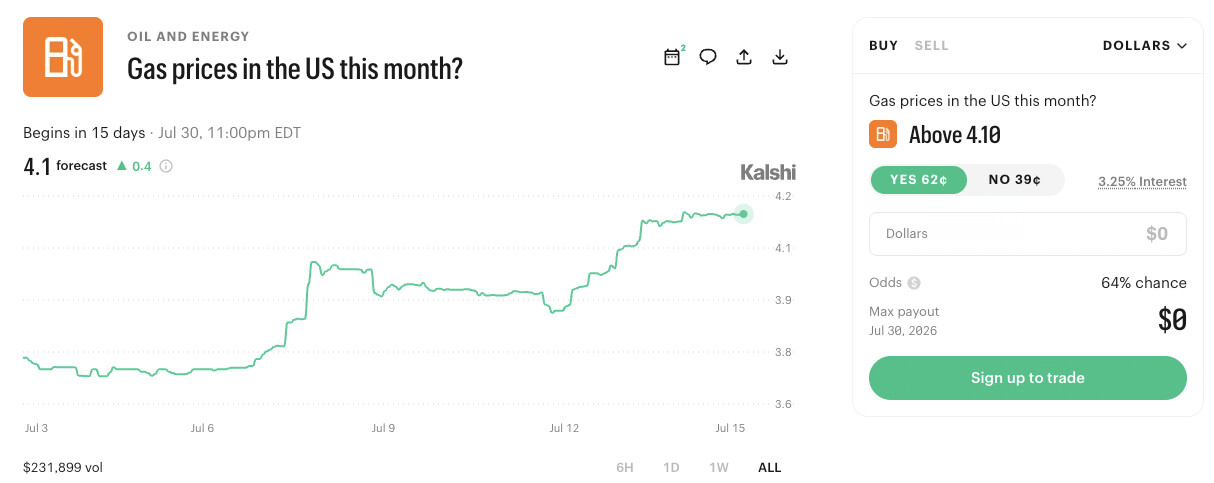
    Kalshi traders now price the odds of the US national average gas price exceeding $4 per gallon by the end of July at 88%, per CNBC’s Wednesday market tracking. The same contract sat at 56% two days ago.

    Source: Kalshi

    Traders also give a 64% chance that the average crosses $4.10 and less than 5% odds of hitting $4.50. The contract resolves using AAA’s daily national average, which stood at $3.89 on Wednesday, up about three cents from Tuesday. This year’s high was $4.56, set on May 21.

    US-Iran strikes push gas-price odds sharply higher

    The move followed the end of the US-Iran ceasefire last week and a fresh wave of strikes on Wednesday. US Central Command posted on X that a second round of strikes launched at 3 p.m. ET, targeting what it called “military capabilities Iranian forces have used to attack commercial shipping in the Strait of Hormuz.”

    The Strait represents the bottleneck for about a fifth of the world’s oil shipments, and the gas contract of Kalshi has followed events in the waterway very closely through 2026. West Texas Intermediate futures for August delivery closed Wednesday at $79.60 per barrel, up 26 cents on the day, marking the third straight session of gains.

    Brent’s September contract settled at $84.95, also up 0.3%. Oil fluctuated to a lesser extent than the Kalshi contract since the difference between pump prices and crude prices is about one week, and Kalshi traders are banking on the difference to catch up by July 31.

    Prediction markets read the shock as more than noise

    As Cryptopolitan earlier reported, Kalshi’s contracts have already tracked the oil-and-Iran story since May, when the platform priced a 2026 US recession at roughly 32.5% odds as oil crossed $100 per barrel.

    A separate Federal Reserve-affiliated study in early 2026 found Kalshi’s forecasts matched Wall Street and New York Fed survey accuracy across multiple Fed decisions and beat professional forecasters on headline CPI. That track record is what makes Wednesday’s 32-point swing worth reading as a signal rather than noise.

    Traders repricing from a 56% coin flip to a near-certainty in 48 hours suggests the crowd sees the Strait disruption as durable enough to push through the two-week window before month-end. On July 9, before Wednesday’s strikes, Kalshi traders gave a 75% chance that gas would still be above $3.50 per gallon on Election Day November 3, and 39% odds it would exceed $3.75.

    Those Election Day contracts have not moved as sharply in response to this week’s escalation, suggesting the crowd expects the near-term supply shock to peak in July and moderate by fall.

    Traders price in a short-term war premium at the pump

    Before the US-Iran war began in late February, US gas averaged below $3 per gallon, per AAA. Wednesday’s $3.89 average is roughly 30% above that baseline. The Kalshi crowd’s 88% odds on $4 gas by month-end means the market has effectively priced the war premium as permanent for at least the next two weeks.

    If the Strait of Hormuz remains a live target for US strikes past July 31, the same crowd will likely reprice the Election Day contracts higher as well.

  • Attorney General Nominee Todd Blanche Grilled On DOJ’s Greenlight Of Paramount-Warner Bros. Discovery Merger: “I Was Part Of That Decision”

    Attorney General Nominee Todd Blanche Grilled On DOJ’s Greenlight Of Paramount-Warner Bros. Discovery Merger: “I Was Part Of That Decision”

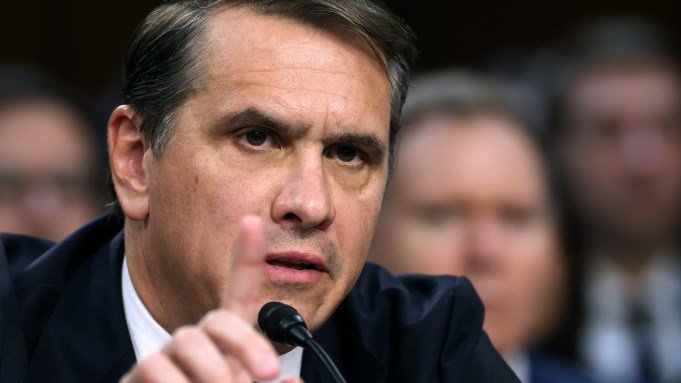
    Todd Blanche, Donald Trump’s former personal lawyer and his nominee to serve as attorney general, was grilled over his role in the Justice Department’s sign-off of Paramount‘s proposed merger with Warner Bros. Discovery.

    “I was part of that decision,” Blanche told Sen. Cory Booker (D-NJ) at his Senate confirmation hearing on Wednesday.

    In contentious questioning, Booker pressed Blanche on whether career attorneys at the DOJ’s Antitrust Division recommend closing the investigation into the merger. Paramount cleared a major hurdle in its effort to gain government approvals when the DOJ raised no objections in a statement on June 12. The Wall Street Journal reported several days later that career staffers were leaning toward a legal challenge to the transaction, but senior leadership closed the investigation before they had a chance to raise objections.

    Blanche told Booker that he had “no idea” of the views of the career attorneys on closing the investigation, to which Booker asked him, “You were in charge of that department, yet you have no idea?” Blanche has been serving as acting attorney general and previously was deputy attorney general.

    “I’m not sure what the view was with respect to closing it or not closing,” Blanche said.

    Booker also raised ethics issues, citing a dinner that Paramount threw in April for the Trump White House and its CBS News correspondents at the Institute of Peace.

    Booker noted that “on the same say that Paramount shareholders voted to approve the emerger, David Ellison, the head of the acquiring company, hsoted a dinner that you attended honoring the president of the United States. While you were at that dinner, the DOJ was still investigating a merger. Did you speak with Mr. Ellison on that evening?”

    “No,” Blanche said.

    “Did you discuss with anyone involved in that organization that evening the department’s ongoing investigations?”

    “No,” Blanche responded.

    Booker also asked him whether his attendance at the dinner created “an appearance of impropriety.”

    Booker added, “I think that’s improper. That the connected and the powerful are getting a chance to rub shoulders. It would seem appropriate that you avoid those kind of appearances and dinners like that.”

    Blanche said, “Every appearance or speech I give are cleared by ethics officials.”

    Booker is the top Democrat on the Senate Judiciary’s antitrust subcommittee. In April, Booker held a “spotlight forum” on Capitol Hill about the merger, drawing an extensive list of opponents but no Republican lawmakers.

  • Bitcoin Whales Are Not Selling Over Quantum Fears, Analyst Says

    Bitcoin Whales Are Not Selling Over Quantum Fears, Analyst Says

    Quantum Fears Appear to Be Influencing Buyers, Not Bitcoin Sellers

    Bitcoin’s largest holders have not attributed selling activity to quantum computing risks, according to Alex Thorn, managing director and head of firmwide research at Galaxy Digital, separating the technology debate from recent whale activity.

    On July 15, he wrote on X:

    “We work with a lot of whales and none has mentioned quantum as a reason for selling.”

    The comment suggests that quantum concerns have entered bitcoin’s investment debate without becoming an identified reason for large-holder selling.

    Institutional investors appear to be approaching the issue differently. “Have heard quantum fears as a reason not to buy from institutional investors, though,” Thorn revealed, indicating that concerns may be affecting potential buyers rather than existing holders looking to exit positions.

    The distinction comes as bitcoin investors continue examining the reasons behind major supply movements from older wallets. Galaxy’s research suggests recent whale activity reflects a broader distribution cycle rather than concerns about future quantum computing threats.

    Galaxy’s ‘Great Distribution’ Saw Old Bitcoin Return to Activity

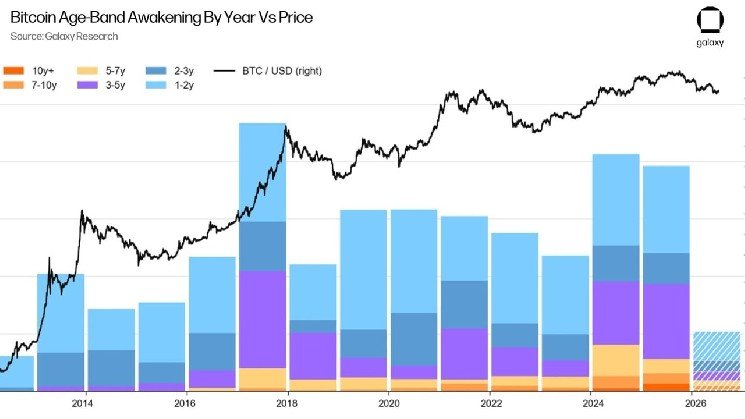
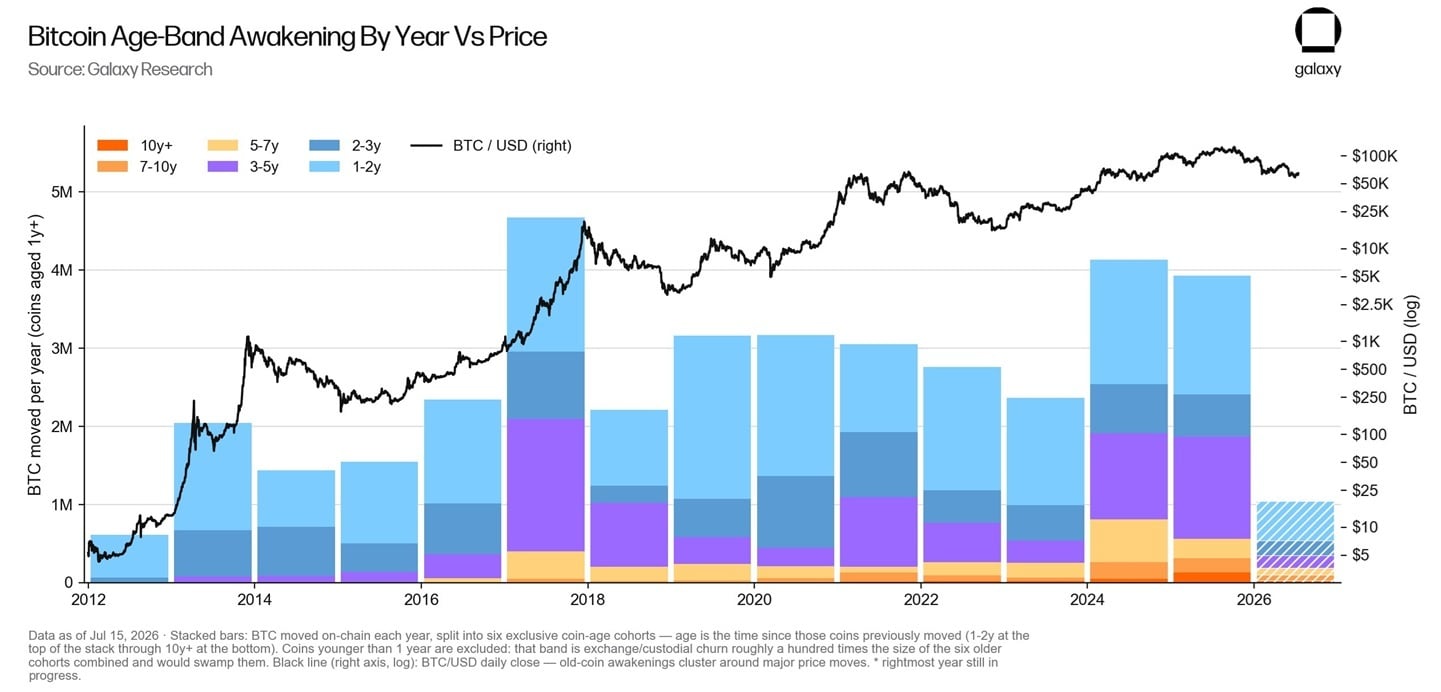
    Galaxy Research data show that large amounts of older bitcoin returned to activity during 2024 and 2025, creating one of the biggest waves of dormant supply movement in the network’s history.

    “An enormous amount of old BTC came online and moved onchain in 2024 and 2025, rivaled only by 2017,” Thorn stated in another July 15 X post. The head of research labeled this period a “great distribution,” describing the movement of previously dormant coins back into circulation. He noted:

    “This ‘great distribution’ is mostly over and 2026 is on pace to see less than half the amount of awakened coins as last year.”

    The decline in awakened coins suggests the large wave of older bitcoin movement has slowed. However, on-chain movement alone does not identify whether coins were sold, transferred between wallets, moved by custodians, or used for other purposes.

    Bitcoin’s Quantum Challenge Remains Focused on Future Preparation

    The quantum computing debate around bitcoin centers on whether future quantum machines could threaten existing cryptographic protections and whether the network can adapt before that becomes a practical risk. Researchers have examined potential vulnerabilities in digital signatures and possible approaches for strengthening blockchain security.

    The challenge for Bitcoin developers is preparing for a potential future threat before quantum computers reach the capability required to compromise existing protections. Any major cryptographic transition would require coordination across bitcoin participants.

    Thorn remarked:

    “Work is being done on quantum and more work is coming, so I think those fears will assuage.”

    The comment reflects the view that continued research and preparation could reduce investor concerns over time.

    Quantum risk has also appeared in institutional research on digital assets. Coinbase Institutional has described quantum computing as a long-term consideration for bitcoin and discussed possible mitigation strategies for addressing the threat.

    The market question now is whether quantum concerns remain a long-term consideration for investors or eventually become a factor in bitcoin positioning. For now, Galaxy’s comments indicate that the issue is influencing some potential buyers while remaining separate from reported whale selling decisions.