Blog

  • How Shawn Hatosy Could Break a 50-Year Emmy Record With ‘The Pitt’

    How Shawn Hatosy Could Break a 50-Year Emmy Record With ‘The Pitt’

    Emmys…paging Dr. Abbot.

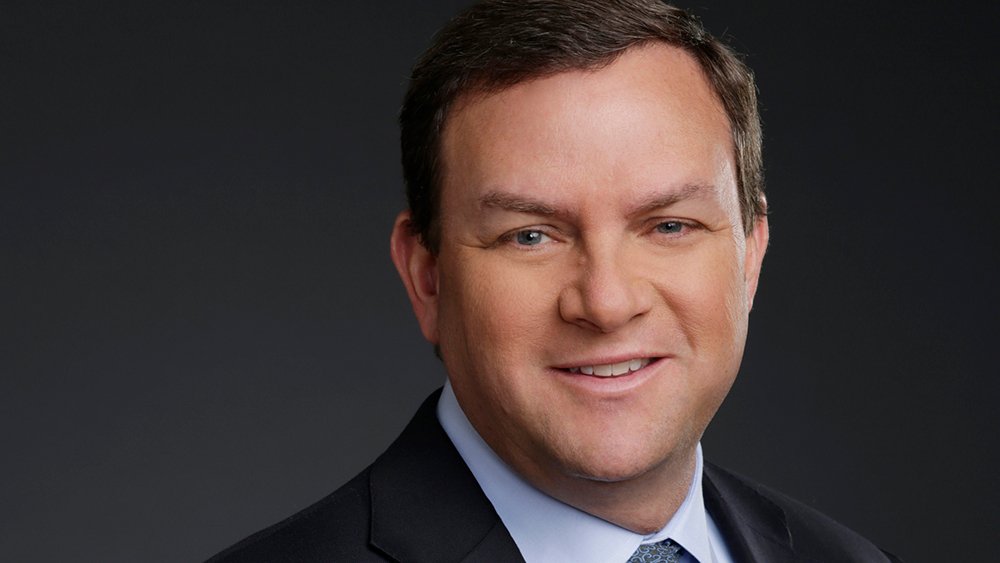
    After winning the Primetime Emmy Award for guest actor in a drama series for his turn as Dr. Jack Abbot, Shawn Hatosy returns in Season 2 with expanded visibility, appearing in six of the show’s 15 episodes. In the 50-year history of guest acting races, repeat winners are rare, and repeat winners for the same show are even rarer. Only five actors in the guest drama actor category have ever won more than once: Patrick McGoohan for “Columbo” (1975, 1990), Ed Asner for “Rich Man, Poor Man” (1976) and “Roots” (1977), John Lithgow for “Amazing Stories” (1986) and “Dexter” (2010), Charles S. Dutton for “The Practice” (2002) and “Without a Trace” (2003), and Ron Cephas Jones for “This Is Us” (2018, 2020).

    Notably, no performer has ever won back-to-back guest drama actor Emmys for the same role. It is a lane Hatosy could create entirely for himself.

    That kind of streak has been achieved in other guest categories, most famously by Mel Brooks, who remains the only three-time consecutive winner for “Mad About You,” and Jay Thomas, who won back-to-back for “Murphy Brown.” On the drama side, Margo Martindale pulled it off for “The Americans,” while the guest comedy actress category has seen consecutive wins from Jean Smart for “Frasier” and Maya Rudolph for “Saturday Night Live.” Expanding the lens further underscores the rarity, with only a handful of performers winning multiple times for the same show in nonconsecutive years, including McGoohan for “Columbo,” Patricia Clarkson for “Six Feet Under,” Cephas Jones for “This Is Us,” Colleen Dewhurst for “Murphy Brown,” and Kathryn Joosten for “Desperate Housewives.”

    Warrick Page/MAX

    The HBO Max medical drama broke out in a major way with its first season, winning five Emmys, including outstanding drama series, lead actor for Noah Wyle and supporting actress for Katherine LaNasa, alongside Hatosy’s guest victory. It enters this year’s race as the clear show to beat.

    Hatosy’s work is central to that momentum. As Dr. Abbot, he delivers a grounded, lived-in performance that plays effectively opposite Wyle, anchoring the show’s high-stakes storytelling. His slightly expanded role in Season 2, along with stepping behind the camera to direct the episode “3:00 P.M.,” could even position him for a potential double nomination. With six episodes under his belt, including the upcoming season finale, he once again sits in the gray area between guest and supporting, a space that Emmy voters and Television Academy officials continue to debate.

    Still, narrative matters. Repeat winners often benefit from a compelling story, whether it is overdue recognition or sustained excellence. Hatosy brings both, bolstered by his long collaboration with producer John Wells and standout roles on “Southland” and “Animal Kingdom.”

    With “The Pitt” it gives a chance to redefine what a guest acting win looks like in today’s television landscape. Dr. Abbot might just make Emmy history when he comes off the night shift.

  • Livestreaming Coachella 2026: A Complete Guide to the YouTube Schedule for Weekend 1

    Livestreaming Coachella 2026: A Complete Guide to the YouTube Schedule for Weekend 1

    Coachella 2026 is underway, and for home viewers, so is Couch-ella. Most of the performances from weekend 1 will be streamed live on YouTube, across seven channels for seven stages — check out the full schedule of streams, below.

    Although most sets will be seen live, some will be shown on a delayed basis, like Jack White’s 3 p.m. Saturday show, which won’t be viewable until the afternoon streams get underway at 4 p.m So for those tuning in at home, it pays to make sure you are checking the streaming schedule and not just the on-site lineup.

    Once each day’s performances conclude, the seven channels will spend the overnight and early morning hours serving night owls by rebroadcasting the full lineup from top to bottom, starting at around midnight in most cases and going through breakfast time.

    The three main stage headliners will, of course, be going out live from Indio: Sabrina Carpenter on Friday from 9:05-10:35 PT; Justin Bieber, getting a really late start Saturday at 11:25 p.m., with no announced end time; and Karol G on Sunday beginning at 9:55 p.m. On Friday, the main stage has what amounts to an additional post-headliner headliner, as electronic music artist Anyma goes on as the clock strikes midnight, an hour and a half after Carpenter has wrapped up.

    Here is a full list of the streams scheduled for weekend 1, all in Pacific time, with embedded video links to take you right to the corresponding YouTube channels. While these lineups are separated by stage and channel, if you want to see how the sets overlap as you map out what to prioritize, scroll down for a grid that lists the steams side by side.

    Main Stage Channel Schedule

    Friday, April 10

    5:30 – Teddy Swims
    7:00 – The xx
    9:05 – Sabrina Carpenter
    12 a.m. – Anyma Presents ÆDEN

    Saturday, April 11

    5:30 – Addison Rae
    7:00 – Giveon
    9:00 – The Strokes
    11:25 – Justin Bieber

    Sunday, April 12

    4:00 – Tijuana Panthers
    4:45 – Wet Leg
    6:10 – Major Lazer
    7:50 – Young Thug
    9:55 – Karol G

    Outdoor Theatre Channel Schedule

    Friday, April 10

    4:00 – Dabeull
    5:20 – Lykke Li
    6:40 – Dijon
    8:05 – Turnstile
    10:35 – Disclosure
    11:55 – Bonus Set from Do LaB

    Saturday, April 11

    4:00 – Los Hermanos Flores
    5:10 – Alex G
    6:10 – Blondshell
    7:05 – Sombr
    8:30 – Labrinth
    10:20 – David Byrne

    Sunday, April 12, 2026

    4:00 – Gigi Perez
    5:15 – Clipse
    6:45 – Foster the People
    8:40 – Laufey
    10:30 – Bigbang

    Sahara Channel Schedule

    Friday, April 10

    4:00 – Youna
    4:50 – Hugel
    6:15 – Marlon Hoffstadt
    8:00 – Katseye
    9:15 – Levity
    10:50 – Swae Lee
    12:05 a.m. – Sexyy Red

    Saturday, April 11

    4:00 – Zulan
    5:00 – Hamdi
    6:15 – ¥ØU$UK€ ¥UK1MAT$U
    7:15 – TEED
    8:00 – Nine Inch Noize
    9:10 – Rezz
    10:30 – Adriatique
    11:55 – Worship

    Sunday, April 12

    4:00 – Girl Math (Vnssa x Nala)
    5:05 – Bunt.
    6:10 – Duke Dumont
    7:25 – Mochakk
    9:05 – Subtronics
    10:45 – Kaskade

    Mojave Channel Schedule

    Friday, April 10

    4:15 – Bini
    5:30 – Central Cee
    6:45 – Devo
    8:10 – Moby
    9:20 – Slayyyter
    10:35 – Ethel Cain
    11:55 – Blood Orange

    Saturday, April 11

    4:00 – Jack White
    4:50 – Fujii Kaze
    5:50 – Royel Otis
    7:30 – Taemin
    8:55 – PinkPantheress
    10:15 – Interpol

    Sunday, April 12

    4:25 – Little Simz
    5:35 – Suicidal Tendencies
    6:30 – Samia
    7:10 – Iggy Pop
    8:45 – FKA Twigs

    Gobi Channel Schedule

    Friday, April 10

    4:00 – Bob Baker Marionettes
    4:45 – NewDad
    5:30 – Joyce Manor
    6:15 – CMAT
    7:20 – Fakemink
    8:25 – Holly Humberstone
    9:50 – Joost
    11:05 – Creepy Nuts

    Saturday, April 11

    4:05 – Whatmore
    5:10 – Luísa Sonza
    6:15 – Geese
    7:05 – Noga Erez
    7:50 – Davido
    9:00 – BIA
    10:10 – Morat

    Sunday, April 12

    4:05 – Cobrah
    5:15 – Oklou
    6:30 – Black Flag
    7:10 – Flowerovlove
    7:45 – Tomora
    9:05 – The Rapture
    10:00 – The Chats

    Sonora Channel Schedule

    Friday, April 10

    4:00 – Wednesday
    4:50 – Fleshwater
    6:00 – The Two Lips
    7:10 – Ninajirachi
    8:25 – Cachirula & Loojan
    9:15 – Febuary
    10:00 – Hot Mulligan
    10:55 – Carolina Durante
    11:50 – Not for Radio

    Saturday, April 11

    4:20 – Ecca Vandal
    5:30 – Ceremony
    6:40 – Rusowsky
    7:50 – 54 Ultra
    8:45 – Die Spitz
    9:45 – Mind Enterprises
    10:45 – Freak Slug

    Sunday, April 12

    4:00 – Model/Actriz
    4:45 – Jane Remover
    5:30 – Los Retros
    6:40 – RØZ
    8:00 – Drain
    9:10 – French Police
    10:15 – Glitterer

    Quasar Channel Schedule

    Friday., April 10

    5:00 – Tiga

    7:00 – Deep Dish

    9:00 – PAWSA 1

    11:00 – Disco Lines

    Saturday, April 11

    5:00 – Joezi

    7:00 – Afrojack x Shimza

    Sunday, April 12

    4:00 – Jazzy

    6:00 – JOY (Anonymous)

    8:00 – Fatboy Slim

    And here are the livestreaming schedules on a day-by-day grid, for help in making those tough viewing choices:

  • The FAA is encouraging gamers to get jobs in air traffic control

    Sick! The Federal Aviation Administration is targeting gamers in its most recent job advertisement for air traffic controllers. The administration’s annual hiring window opens at 12AM ET on April 17, and considering the ongoing shortage of air traffic controllers, it’s calling this a period of “supercharged hiring.” Rad! The FAA’s YouTube video draws parallels between gaming and directing air traffic, and notes that the average salary for the role after three years is $155,000. Hella!

    The FAA is clearly seeking players who are at least old enough to remember the Xbox One and Bjergsen in the LCS, which puts would-be candidates around their early 20s at least. It’s either that, or the ad editors really just picked videos at random from the pile of stock footage marked gamerz. But I won’t lie, it made me smile to see that Xbox One logo appear out of nowhere. Nostalgia is a hell of a thing.

    “To reach the next generation of air traffic controllers, we need to adapt,” US Transportation Secretary Sean P. Duffy said. “This campaign’s innovative communication style and focus on gaming taps into a growing demographic of young adults who have many of the hard skills it takes to be a successful controller.”

    The FAA has been losing more air traffic controllers than it can hire and retain since the 2010s, and this trend only worsened during the pandemic in the 2020s, according to a report released in December by the US Government Accountability Office. The administration increased hiring every year since 2021, but at the end of 2025 it employed 13,164 air traffic controllers, 6 percent fewer than in 2015, the report said. At the same time, the number of flights in the air traffic control system increased by about 10 percent, to 30.8 million.

    Or, as the FAA put it on the ATC hiring page: “Join the BEST AND BRIGHTEST, the elite squad of 14,000 controllers protecting 2.9 million daily passengers.” Applicants must be a US citizen, under 31 (maybe those video editors do know what they’re doing), and be able to speak fluent English. An aptitude test, medical screening and academy training follows, among other steps.

  • Epic is reportedly building an extraction shooter for Disney

    Besides a wealth of Fortnite skins based on Disney IP, it hasn’t really been clear what the entertainment company has gotten in return for its $1.5 billion investment in Epic from 2024. That could change this November, Bloomberg reports, when Epic releases a Disney-themed extraction shooter. The game is one of three Disney projects the publisher is currently working on, and is reportedly expected to be Epic’s comeback after the company laid off 1,000 employees in March due to a “downturn in Fortnite engagement.”

    The game is reportedly similar to Arc Raiders, a multiplayer shooter where players fight for resources before escaping through an extraction point, but with Disney characters fighting enemies instead of post-apocalyptic survivors. Bloomberg writes that internal reviewers have worried that the game’s mechanics are “not very original,” but the project is the most promising of the three Epic is developing. The second title received middling internal reviews, according to Bloomberg, and Epic moved resources off the third project “after reports that Disney was disappointed by Epic’s release timeline.”

    “This is not reflective of the ambitions of the Disney collaboration,” Liz Markman, Senior Director of Communications at Epic Games, said in a statement. “We are building a new games and entertainment universe of Disney experiences.”

    While details of Epic’s work for Disney are coming into focus, it’s still unclear whether this new extraction shooter will be a standalone game or incorporated as a mode in Fortnite. In its efforts to sell the title as a “multiverse” and a competitor to Roblox, Epic has introduced multiple games inside Fortnite over the last few years with distinct mechanics. The developer announced that it would shut down three of those titles — Rocket Racing, Ballistic and Fortnite Festival Battle Stage — as part of its recent round of layoffs. According to current and former Epic employees Bloomberg spoke to, several affected employees were also working on these unannounced Disney games.

    When it invested in Epic in 2024, Disney wanted to build an entertainment universe, where players could “play, watch, shop and engage with content, characters and stories from Disney, Pixar, Marvel, Star Wars, Avatar, and more.” Epic’s current plans sound less all-encompassing than that, but if they manage to increase engagement with Fortnite and Disney’s brand, that might not matter.

    Update, April 10, 7:29PM ET: Added a statement from Epic Games.

  • SIREN price prediction – After 300% rally, is a 150% price hike up next?

    SIREN price prediction – After 300% rally, is a 150% price hike up next?

    Siren [$SIREN] rallied by 17% in 24 hours and was up nearly 300% over the past week. This extraordinary performance in the short term has captured the attention of traders and investors once again.

    In the second half of March, the memecoin burst past the $0.76 resistance and briefly ascended past the $4-level. However, it has retraced this rally since then.

    Source: $SIREN/$USDT on TradingView

    The major rally and the deep retracement since then must have rocked investor confidence. Based on the 1-day chart’s price action, it can be argued that the move below the swing low at $0.225 earlier this month has shifted the structure bearishly.

    On the other hand, the volume on 4 April was the highest daily volume since 7 February. It was a statement of intent from the buyers as they rescued $SIREN’s price from falling even further below the $0.225 swing low.

    The OBV made new highs following this spike in demand, with the Stochastic RSI climbing back from the bearish extreme and heading higher. The MACD also seemed to be laboring to climb back above the zero line.

    Which way should $SIREN traders form their bias?

    The recent momentum and buying volume were a fantastic recovery from the extremely deep retracement. At the same time, the retracement in question might have been a structural shift.

    Based on the evidence at hand, the latter scenario appeared more likely. Given the market sentiment and potential for a Bitcoin [BTC] sell-off, traders should be prepared to take profits at key resistance levels.

    Source: $SIREN/$USDT on TradingView

    The triangle formation in March saw a bearish breakdown, but the consolidation around $1.88 affected the pattern’s reliability. Some analysts would see the pattern is broken and invalidated too.

    What matters is the sentiment the pattern is trying to capture. The willingness among sellers to force prices lower after increasingly shallow bounces after 23 March is the highlight.

    Now, the $0.762-level is under siege once more. A breakout beyond this level will likely see $SIREN rally to $1.88. These are the two levels that holders and traders can use to take profits.

    Final Summary

    • $SIREN has rallied by nearly 300% in a week, recovering from the drop below the $0.2255 swing low.
    • Current move would likely see a breakout to $1.88, but traders and holders should remember to take profits.
  • Cardano In Danger Zone? Trader Drops ‘Time Bomb’ Claim

    Cardano In Danger Zone? Trader Drops ‘Time Bomb’ Claim

    Cardano’s short sellers are taking a beating. Over the past 24 hours, over $500,000 worth of short positions were liquidated as $ADA hovered near $0.25 — a price point that one unnamed trader is calling a powder keg ready to blow.

    Whale Activity Signals Quiet Accumulation

    Exchange data tells a quiet story of confidence beneath the surface. More $ADA has been flowing out of exchanges than flowing in, a pattern that often shows up when large holders are pulling coins into private wallets rather than preparing to sell.

    Whale accumulation has picked up as well. Reports indicate the number of wallets holding 10 million or more $ADA recently climbed to a four-month high, even as the price continued sliding.

    The liquidation data reflects the same tension. Of the $637,500 in total $ADA positions wiped out in the past day, shorts accounted for nearly 80% of the damage. Long positions absorbed the rest — about $135,200 — as buyers got caught on the wrong side of brief downward swings.

    BREAKING:

    CARDANO ( $ADA ) IS A TICKING TIME BOMB SAYS EXPERT TRADER 🤯🤯🤯

    The target is 1.20$ end of this week.

    In his words “there’s nowhere left for it to go this week it will either go up or go down.” pic.twitter.com/Sg8yef818a

    — 🪏Mintern (@MinswapIntern) April 9, 2026

    A Chart Four Years In The Making

    The technical case for a breakout rests on a structure that has been building since early 2022. Based on a chart shared by Minswap DEX’s self-described chief meme officer Mintern on X, $ADA has been trading inside a horizontal price channel for roughly four years, bouncing between a ceiling and a floor without breaking decisively in either direction.

    $ADA’s all-time high of $3.10 came in 2021. After that peak, the coin dropped sharply. By the week of January 17, 2022, it had fallen from $1.60 to below $0.91, before eventually settling near the top of the channel around $1.18.

    That range — from roughly $0.23 on the low end to $1.18 on the high end — has contained price action ever since.

    $ADA market cap currently at $9.21 billion. Chart: TradingView

    A descending trendline developed inside the channel starting around August 2025, when $ADA peaked near $1.02 and then began forming a series of lower highs.

    Today, the price sits where that trendline meets the channel’s lower boundary — a compression point that typically forces a decisive move.

    The unnamed trader’s analysis calls for a breakout to the upside with a price target near $1.20 before the week ends. That would represent a roughly 380% gain from current levels in less than two days.

    A Bold Call From An Unknown Voice

    Still, the prediction carries real weight only if its source does — and that source remains unknown. The trader behind the “ticking time bomb” call was never identified in the analysis Mintern shared, which raises obvious questions about credibility, track record, and motive.

    A 380% rally in under 48 hours is an extraordinary claim. Extraordinary claims demand more than an anonymous chart.

    Featured image from Meta, chart from TradingView

  • Powell, Bessent Warn Banks About Security Risks From Anthropic’s Mythos AI: Bloomberg

    Powell, Bessent Warn Banks About Security Risks From Anthropic’s Mythos AI: Bloomberg

    In brief

    • U.S. officials warned major banks about cybersecurity risks tied to Anthropic’s Mythos AI model, Bloomberg reports.
    • The system can reportedly identify and exploit vulnerabilities in operating systems and browsers.
    • Anthropic has limited access to the model while it evaluates potential security risks.

    U.S. Treasury Secretary Scott Bessent and Federal Reserve Chair Jerome Powell reportedly convened a meeting with Wall Street bank CEOs earlier this week to warn about cybersecurity risks tied to a new artificial intelligence model from Anthropic.

    According to a report by Bloomberg, the meeting included executives from Citigroup, Bank of America, Wells Fargo, Morgan Stanley, and Goldman Sachs. Officials discussed Anthropic’s new AI model Mythos, which has recently drawn broad concern over its apparent advanced cybersecurity capabilities.

    Officials convened the meeting to ensure banks understand the risks posed by systems capable of identifying and exploiting software vulnerabilities across operating systems and web browsers, and to encourage institutions to strengthen defenses against potential AI-assisted cyberattacks targeting financial infrastructure.

    Security researchers have warned that tools capable of automatically discovering vulnerabilities could accelerate both defensive security work and malicious hacking if misused.

    Anthropic’s Mythos model first surfaced online in March after draft materials about the system leaked online, revealing what the company described as its most capable AI model yet. In testing, the system reportedly found thousands of previously unknown software vulnerabilities, including zero-day flaws across major operating systems and web browsers.

    Anthropic researchers said in a report earlier this week that Mythos Preview’s vulnerability-discovery capabilities were not intentionally trained, but instead emerged from broader improvements in the model’s coding, reasoning, and autonomy.

    “The same improvements that make the model substantially more effective at patching vulnerabilities also make it substantially more effective at exploiting them,” the firm wrote.

    Because of those capabilities, Anthropic has restricted access to a small group of cybersecurity organizations.

    “Given the strength of its capabilities, we’re being deliberate about how we release it,” Anthropic said in a statement. “As is standard practice across the industry, we’re working with a small group of early access customers to test the model. We consider this model a step change and the most capable we’ve built to date.”

    To address that risk, Anthropic is testing Mythos through Project Glasswing, a collaboration with major technology and cybersecurity companies that uses the model to identify and patch vulnerabilities in critical software before attackers can exploit them.

    “Project Glasswing is a starting point. No one organization can solve these cybersecurity problems alone,” the company said in a statement. “Frontier AI developers, other software companies, security researchers, open-source maintainers, and governments across the world all have essential roles to play.”

    Anthropic did not immediately respond to Decrypt’s request for comment.

    Daily Debrief Newsletter

    Start every day with the top news stories right now, plus original features, a podcast, videos and more.

  • Exodus Rolls Out ‘Exodus Pay’ to Turn Bitcoin Wallet Into Spending App

    Exodus Rolls Out ‘Exodus Pay’ to Turn Bitcoin Wallet Into Spending App

    In brief

    • Exodus launches Exodus Pay, a feature that lets users spend crypto directly from its wallet app.
    • The rollout is limited to five U.S. states, including New York and California.
    • The company says the feature aims to reduce reliance on third-party payment platforms.

    Exodus, the publicly traded crypto wallet provider, began rolling out a new “Exodus Pay” feature on Wednesday, aiming to turn its self-custodial storage app into a tool for everyday payments. The launch is currently limited to users in five states, including New York and California.

    The Omaha-based firm listed its stock on the New York Stock Exchange in 2024 and says the new feature expands the role of its wallet beyond storage into payments. The company positions the service as an alternative to centralized payment apps.

    “Most payment apps are third parties that hold your funds for you,” Exodus co-founder and CEO JP Richardson told Decrypt. “That means they can freeze your account, reverse transactions, and decide what you’re allowed to buy.” Exodus, by contrast, can’t do that, because users remain in control of their funds at all times.

    The company says Exodus Pay works within the existing wallet app and allows users to spend USD-backed stablecoins, such as USDC, or Bitcoin at merchants that accept Visa or Apple Pay.

    “The problem with self-custody until now has been the friction. Seed phrases, complicated networks—most self-custody consumer experiences aren’t built for someone who just wants to pay for groceries or send friends money,” Richardson said.

    To encourage adoption, Exodus says it will subsidize network fees and allow transfers using phone numbers. The service remains geographically limited due to regulatory requirements. It is currently available only in Nebraska, Texas, Florida, New York, and California.

    Richardson said the company has focused on simplifying the user experience, claiming that “someone with zero crypto experience should be able to use an app intuitively.”

    Exodus joins a growing list of crypto wallet developers that let customers pay for purchases using crypto or stablecoins, including Coinbase, BitPay, and PayPal.

    After the initial launch, Richardson said the company plans to expand the service nationwide over the next several weeks.

    “By mid-April, everyone in America will have Exodus Pay in their app,” Richardson said. For existing users, the feature will appear as an automatic update rather than a new download. “If you already have Exodus, you’ll have Exodus Pay,” he added.

    Daily Debrief Newsletter

    Start every day with the top news stories right now, plus original features, a podcast, videos and more.

  • US federal court hears new case against Trump tariffs

    US federal court hears new case against Trump tariffs

    The case is to overturn the temporary tariffs that Trump imposed after the Supreme Court struck down his earlier ones.

    The centrepiece of United States President Donald Trump’s economic policy — sweeping taxes on global imports — is under legal assault again.

    A three-judge panel of the US Court of International Trade, a specialised court in New York, is hearing oral arguments on Friday in an attempt to overturn the temporary tariffs Trump turned to after the Supreme Court in February struck down his preferred choice — even bigger, even more sweeping tariffs.

    Recommended Stories

    list of 4 itemsend of list

    Several US states and small businesses have said the 10 percent global import tax that Trump imposed in February sidesteps the Supreme Court ruling that invalidated most of his previous tariffs.

    A group of 24 mostly Democratic-led states and two small businesses sued the Trump administration to stop the new tariffs, which went into effect on February 24.

    Oregon’s lawyer Brian Marshall told the judges they should block the 10 percent tariffs rather than let them expire on the normal 150-day timeline, to keep Trump from invoking a variety of laws to keep them indefinitely.

    “[If] we have a successive series where there’s always tariffs in place, that’s a problem,” Marshall said.

    Marshall also said the tariffs were based on archaic authority that was meant to protect the US dollar from sudden depreciation in the 1970s, when dollars could be exchanged for gold reserves held in Fort Knox.

    He said that authority was meant to resolve significant “balance-of-payments deficits”, and Trump cannot repurpose it to address routine trade deficits.

    Tariffs, a central pillar

    Trump has made tariffs a central pillar of his foreign policy in his second term, claiming sweeping authority to issue tariffs without input from Congress.

    The administration has said that global tariffs are a legal and appropriate response to a persistent trade deficit caused by the fact that the US imports more goods than it exports.

    “President Trump is lawfully using the executive powers granted to him by Congress to address our country’s balance of payments crisis,” White House spokesperson Kush Desai said.

    Trump imposed the new tariffs under Section 122 of the Trade Act of 1974, which authorises duties of up to 15 percent for up to 150 days on imports during “large and serious United States balance-of-payments deficits” or to prevent imminent depreciation of the dollar.

    The states and small businesses argue that the Trade Act’s tariff authority is meant only to address short-term monetary emergencies, and routine trade deficits do not match the economic definition of “balance-of-payments deficits.”

    Trump announced the new tariffs on February 20, the same day the Supreme Court handed him a stinging defeat when ⁠it struck down a broad swath of tariffs he had imposed under the International Emergency Economic Powers Act (IEEPA), ruling that the law did not give him the power he claimed.

    No US president before Trump had used the IEEPA or Section 122 to impose tariffs. The two lawsuits do not challenge other Trump tariffs made under more traditional legal authority, such as recent tariffs on steel, aluminium, and copper imports.

  • Is the US-Iran ceasefire already doomed?

    Is the US-Iran ceasefire already doomed?

    Expectations for the upcoming talks between the United States and Iran in Pakistan are understandably modest. There is even a risk that the meeting won’t take place at all.

    Yet, paradoxically, the failure of the talks may still shift the situation in a positive direction. Indeed, the true measure of the ceasefire’s success may not be whether it yields a lasting accord with Iran. It may lie instead in what it forestalls: Even in the absence of a durable deal, Washington may have found a way to avoid going back into a futile war.

    Tehran’s reaction to the talks has been ambivalent. The government has cast the ceasefire as a victory, projecting strength at home and abroad. But many voices close to the security establishment are less sanguine, warning that Iran may have sacrificed momentum and weakened its deterrent posture by settling for anything short of a complete and immediate end to hostilities.

    Still, whatever the internal debate, there is little dispute about one point: The ceasefire, as it stands, reflects Iran’s terms more than America’s.

    Let us consider what the ceasefire entails. The negotiations will proceed on the basis of Tehran’s 10-point proposal, not US President Donald Trump’s 15-point plan for Iranian capitulation. As part of this, Iran will retain control of the Strait of Hormuz during the truce – continuing to collect transit fees from passing vessels.

    Washington appears to have conceded two critical points: That it tacitly acknowledges Iran’s authority over the strait, and that Tehran holds the upper hand in setting the terms of the talks. Trump himself seemed to signal as much, describing the Iranian proposal on social media as a “workable” foundation.

    Unsurprisingly, this has raised eyebrows in Washington, given the scope of Iran’s demands. They range from recognition of Iran’s continued control over the strait and acceptance of uranium enrichment, to the lifting of all US primary and secondary sanctions – as well as United Nations sanctions – to a withdrawal of US combat forces from the region, and a comprehensive ceasefire that would extend to Israel’s operations in Lebanon and Gaza.

    It is difficult to imagine Washington agreeing to such terms in full. Just as uncertain is how far Iran is willing to bend – whether it would pare back its demands or hold firm on a maximalist position.

    The geopolitical consequences would be profound if the final outcome reflects these demands. Yet it is equally important to recognise that Tehran is unlikely to wield control of the Strait of Hormuz as a blunt instrument of coercion. Rather, it is more likely to use that leverage to rebuild economic ties with Asian and European partners – countries that once traded extensively with Iran but were pushed out of its market over the past 15 years by US sanctions. Even so, this would be a bitter pill for Iran’s regional rivals.

    Trump, however, has already hinted he may be prepared to accept such an arrangement, noting that the US itself is not dependent on the oil that flows through the strait. The burden, in other words, would fall far more heavily on Asia and Europe.

    Tehran’s insistence that the ceasefire extend to Israel may prove the most difficult obstacle, given that the latter is not party to the talks and has long resisted being bound by agreements it did not help shape.

    For Iran, this demand is rooted in three considerations. First, solidarity with the peoples of Gaza and Lebanon is not merely rhetorical; it is central to Tehran’s regional posture. Having been widely perceived as abandoning these constituencies in 2024, Iran can ill afford another rupture that would further weaken the so-called “axis of resistance”.

    Second, continued Israeli bombardment risks reigniting confrontation between Israel and Iran – a cycle that has already flared twice since October 7, 2023. The linkage between these arenas is not only real but widely acknowledged, including in Western rhetoric that casts Iran as the hub of resistance to Israeli and US policies, expressed through its network of allied groups in Lebanon, Palestine, Iraq and Yemen. From Tehran’s vantage point, a durable halt to its own conflict with Israel cannot be separated from ending Israel’s wars in Gaza and Lebanon. As such, it is not an aspirational add-on but a necessary condition.

    Perhaps more consequentially, tying Israel to the ceasefire is a test of Washington’s willingness – and ability – to restrain its closest regional ally. If Trump cannot, or would not, do so, the value of any ceasefire with Washington comes into question. An agreement that leaves Israel free to reignite hostilities – and the US unable to keep itself from being drawn back in – offers little assurance of stability. Under such conditions, the utility of a ceasefire with the Trump administration diminishes sharply.

    Whatever the outcome of the talks in Islamabad, the strategic landscape has already been altered. Trump’s failed war has weakened the credibility of US military threats. Washington can still brandish force, but after a costly and futile conflict, such warnings no longer carry the same weight.

    A new reality now shapes US-Iran diplomacy: Washington can no longer dictate terms. Any agreement would require genuine compromise – patient, disciplined diplomacy that tolerates ambiguity, qualities rarely associated with Trump. It may also necessitate the involvement of other major powers, particularly China, to help stabilise the process and reduce the risk of a relapse into conflict.

    All of this argues for tempered expectations. Yet even if the talks collapse – and even if Israel resumes attacks on Iran – it does not automatically follow that the US would be drawn back into war. There is little reason to believe a second round would end differently, or that it would not again leave Iran positioned to disrupt the global economy. No wonder Tehran feels confident that its deterrence has been restored.

    The more plausible outcome is a new, non-negotiated status quo – one not codified through formal agreement but sustained by mutual constraint. The US would stay out of the war; Iran would continue to exert control over traffic through the Strait of Hormuz; Israel and Iran would continue a low-level conflict. A full-scale US-Iran war would be, for the moment, averted.

    Such an equilibrium would reflect not enough political will to reach a comprehensive settlement, but sufficient shared interest to avoid a wider conflagration – and a degree of tolerance for an arrangement in which both sides could claim partial victory.

    Iran could plausibly claim it weathered the combined might of Israel and the US while emerging with its geopolitical position intact – if not strengthened. Trump, for his part, could argue that he avoided another forever war, steadied energy markets, and secured tactical gains by degrading Iran’s military capabilities.

    So long as both sides cling to a narrative of victory, a fragile equilibrium – absent full-scale war – may yet endure.

    The views expressed in this article are the author’s own and do not necessarily reflect Al Jazeera’s editorial stance.