Blog

  • International Finance Bank Confirms XRP as a Payment Rail Within ILP Stream Protocol

    IFB Presentation Reveals $XRP’s Role as a Bank Payment Rail in ILP STREAM Protocol

    A newly surfaced internal presentation from International Finance Bank (IFB), highlighted by crypto researcher SMQKE, is reinforcing a growing narrative that $XRP goes beyond theory, positioning it as a live payment rail within the Interledger Protocol (ILP) rather than just a conceptual banking framework.

    The document, prepared for IFB’s technical and risk teams, details how banks can integrate with Ripple’s ILP framework. It highlights the STREAM protocol as a core layer enabling real-time value and data transfer across disparate ledgers.

    Notably, $XRP is explicitly identified as the settlement mechanism powering that exchange of value.

    This distinction is important because ILP is built to be asset-agnostic, routing value across different currencies and networks.

    Nevertheless, IFB’s implementation points to a more specific role for $XRP within STREAM, functioning as the bridge asset that moves value between systems. In practice, it serves as the liquidity layer that enables fast, efficient settlement across otherwise disconnected networks.

    IFB’s Multi-Rail Payment Strategy Reveals $XRP’s Real Institutional Role

    Even more revealing is how IFB frames its payment architecture as a multi-rail system, where different networks are used depending on need, much like choosing between PayPal, Apple Pay, or a bank transfer.

    Within this setup, RippleNet, ILP, and Mojaloop sit alongside legacy rails such as SWIFT and SEPA.

    Rather than a one-size-fits-all approach, IFB applies selective routing. RippleNet—and by extension $XRP, is deployed only where counterparties are already within Ripple’s ecosystem or where it offers clear FX and settlement efficiency.

    The takeaway is straightforward that $XRP isn’t used universally, but strategically, wherever it delivers measurable economic advantage.

    Interoperability is also of the essence and IFB confirms that ILP can run alongside SWIFT gpi Instant, underscoring a broader reality that blockchain isn’t replacing traditional finance overnight, but embedding itself within it. The result is a hybrid infrastructure where legacy rails and blockchain networks increasingly work in parallel rather than in opposition.

    This convergence narrative is reinforced by estimates suggesting that 60% of SWIFT-connected banks already have some level of exposure to Ripple-related technology.

    Looking forward, some within the $XRP Ledger community see $XRP expanding beyond cross-border payments into decentralized finance (DeFi) applications. If that trajectory continues, its role could shift from a liquidity bridge to a core component of emerging financial infrastructure.

    In conclusion, IFB’s documentation stands out for its practical framing of $XRP as a functional infrastructure within institutional payment systems.

  • Tina Knowles Reflects on Her Career at Variety’s Entertainment Marketing Summit, Says Hair Care Business Cécred was a ‘Dream for Me and Beyoncé’

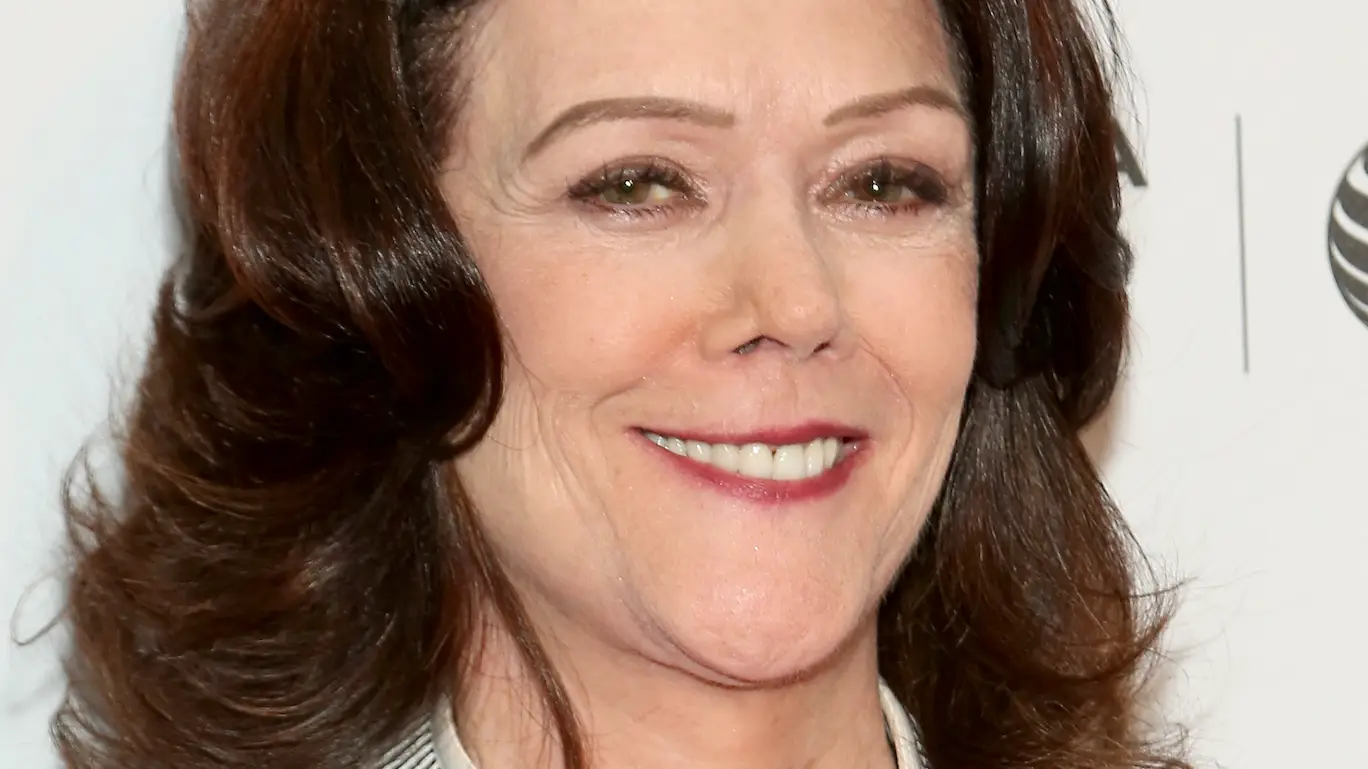
    Tina Knowles has worked as a businesswoman, fashion designer, and hairstylist, but the job she’s proudest of is her role as “Matriarch,” which is also the apt title of her 2025 autobiography. At Variety’s Entertainment Marketing Summit presented by Deloitte, Knowles and Variety’s Senior Entertainment Writer Angelique Jackson dove into her history and talked about what inspired her business decisions and collaborating with her family, including her daughter Beyoncé.

    When she was freshly divorced, Knowles began chronicling her life as a personal project. She credited writing the book with helping her navigate her insecurities and grief over the relationship ending.

    “I was 59 years old, which is really funny, because I’m 72 now and that’s not old, but back at 59 I was like, ‘Oh my God, my life is over,’” said Knowles. “I started recording into my telephone, not for a book, but to leave it to my kids, because I felt my mortality. If I die, my children wouldn’t know anything about their history, because they are just not very interested in it. I would try to tell them stories, and they wouldn’t listen. So, I was like, they’re gonna be real sorry one day.”

    “Matriarch” also reflected on Knowles’ career trajectory, with Knowles noting she often worked out of necessity and didn’t receive proper credit for her contributions.

    Knowles says she has finally learned to take credit for her achievements, including her House of Deréon clothing line with Beyoncé, and previous work designing costumes for Destiny’s Child, something the band’s label was not happy with.

    “They were constantly trying to get rid of me,” said Knowles, who explains the label often saw her costumes as “country.” “Some of them, I look back on [and] I don’t know what the hell I was thinking, but a lot of them were amazing, and it set them apart. I think that was a big part of what made them special and different, aside from the talent, because they were super talented, and I’m not taking away from that, but the imaging had a lot to do with it.  Sometimes I get sad about it, because I look back at pictures and I’m like, that was really good. But the record label was constantly tearing it down and saying, ‘They need to look like Britney Spears, and they need to have on a midriff top and some jeans.’ They even tried to get rid of me a couple of times, which didn’t work, thank God.”

    House of Deréon was not the duo’s last business endeavor, as the mother/daughter team launched the hair care line Cécred in 2024.

    “With textured hair, we needed lots of oils and butter, so I would mix up in my salon hot oil treatments with egg whites and things like that,” said Knowles, who ran a hair salon in Texas for many years. “It was always a dream for me and Beyoncé, because she grew up in the salon, that we would have a product that would do all of that.”

    After an extensive testing process, the pair launched their line of products, which Knowles says they both use. “Our customers did videos and TikToks, and they advertise, and they sell the product for us. We’ve won like 64 awards, and we’ve all been out less than two years. It was the number one launch at Ulta, and that is huge. And we did it with the help of our customers; they’ve come along with us through the journey.”

    Starting a haircare line felt “authentic” to Knowles, who said that the support and camaraderie she found at her salon made the business “way more than a hair salon.” Knowles hopes to keep that sense of community going, giving away 10 beauty school scholarships each year through Cécred. She says her role as “Mama Tina” means the most to her of all her titles, allowing her to help guide young people.

    Wrapping up the conversation, Knowles mentioned her new venture, Badass Teenie B Productions, and emphasized the value of staying authentic and taking pride in your achievements.

    “It’s something about turning 70 that lets you know that you should take credit,” Knowles said. “It’s a difference between being humble and not getting your just due. It’s a difference, and I wish I would have known that earlier in life.”

  • ‘Imperfect Women’ Star Elisabeth Moss on Mary’s Suspicions About Howard and Why Her Kids Matter Most: ‘Who Gives a S— About the Affair?’

    ‘Imperfect Women’ Star Elisabeth Moss on Mary’s Suspicions About Howard and Why Her Kids Matter Most: ‘Who Gives a S— About the Affair?’

    SPOILER ALERT: This post contains stories from Episode 7 of “Imperfect Women,” now streaming on Apple TV.

    Elisabeth Moss is no stranger to portraying a desperate mother on TV.  The “Imperfect Women” star spent almost a decade playing June — the lead character of “The Handmaid’s Tale” who recently made a reappearance in the spinoff series “The Testaments” — whose key aim is to reunite with her abducted daughter.

    While her acting in the dystopian drama was hardly unconvincing (Moss won an Emmy, a Golden Globe and a Critic’s Choice Award for her work in “The Handmaid’s Tale”), playing a mother on-screen has a whole new level of depth for the actress now. Moss had her first child in 2024, an experience that helped her connect with her role as Mary in Annie Weisman’s adaptation of Araminta Hall’s novel “Imperfect Women” for Apple TV. Optioning the rights six years ago, Moss also serves as an executive producer for the show – the first project she picked up with producing partner Lindsey McManus after launching their Love & Squalor production banner in 2020.

    “I played a mom for many, many years, and I think I understood it,” Moss told Variety. But post-motherhood, she says “there’s something about the emotion that is more on the surface. I don’t have to use my imagination as much. Your head just goes to a darker place, faster, and the emotion is just closer to the surface.”

    As of Episode 7, Mary is in her darkest place yet.

    Married to a presently unemployed professor, Howard Simpson (Corey Stoll), Mary, often referred to as someone with great talent and wasted potential, is shown to spend most of her time taking care of her three children, occasionally writing and taking part in workshops — until her best friend Nancy (Kate Mara) is murdered.

    What follows is a harrowing chain of events, as the show’s narrative volleys from the perspective of Eleanor (Kerry Washington), the third member of their trio, to the murdered Nancy and finally to Mary. Upon finding an obscure Latin translation of Howard’s in Nancy’s notebook, Mary realizes the two were having an affair before her death and confronts Howard, who vehemently denies any involvement with Nancy.

    After realizing he lied to her about his ex-wife years ago and finding Nancy’s ring in Howard’s closet, Mary flees to Eleanor’s house and shares her theories, before receiving a call from Howard informing her their daughter is in the hospital, unconscious after overdosing on the Adderall Mary was shown to secretly be stashing earlier in the episode.  

    Mary is handed an emergency protective order by the police that demands she not have any contact with her children until the investigation is over. When Howard makes it clear he knows she took Nancy’s ring, the two have an explosive fight in the hospital, where she accuses him not only of murdering Nancy but also deliberately providing their daughter with the Adderall – after all, Mary had left the pills on the cabinet’s highest shelf, far out of the reach of a young child.

    Howard provides the cops with a box of Nancy’s belongings, which an embarrassed Mary admits to stealing, with it later being revealed that Mary and Howard used to role-play as Nancy and her husband Robert (Joel Kinnaman). When Mary returns to her home to look for further evidence, Howards finds her and convinces her of an unfortunate truth: She has nothing concrete against him. And without evidence, there’s no chance she can regain custody of her children. She eventually agrees to keep quiet in exchange for the ability to be with her kids, telling Howard, “I won’t say a word. I’ll be good.”

    All of this turns out to be a moot point, when an upset Eleanor calls in a favor with Robert and has Howard taken in for questioning regarding Nancy’s murder. Mary crumbles on the front porch, sobbing and telling an unbelieving Howard she had nothing to do with his arrest, while he tells the police to call the Department of Children and Family Services. Mary is forced to say goodbye to her kids as they’re taken away by the authorities, seconds before the TV news reveals a new suspect in Nancy’s murder case.

    Below, Moss spoke with Variety about Mary’s intuition, her relationship with Howard — and why her role as a mother is her biggest motivating factor.  

    The show began with you optioning the novel. Where did you first come across the book? And did you know that you always wanted to play Mary?

    Yes, I did. I came across the book in an airport when I was going to go shoot a film in Hawaii, and I wanted a good beach read. I loved the cover, I loved the title, and I was like, “You know what? Let’s see what it is.” I wasn’t intending to buy it or option it, but I was taken by it, and told my producing partner, who wasn’t even my producing partner at the time – “Can you read this book?” And she did, and she loved it. That was in November of 2019, and then we took it to Apple in January of 2020. And I definitely always knew I wanted to play Mary, especially when I got to Mary’s part. The show is a bit different from the book, but it’s equally as exciting, just in a different way. I felt like she was in the background most of the book and what ended up being part of her story was an obvious statement about how she was pushed to the side because she was a housewife and a mom and didn’t have ambition or a big career or a lot of money — any of the things that made someone else stand out. And so, I thought, “Oh, that’s interesting. Why is that happening? Why are they pushing her to the side?” That’s the one I want to do.

    Do you think she’s underestimated before her viewpoint gets introduced?

    Oh, yeah, she’s in the background and aside at the beginning of the story. And I think that it’s on purpose that she’s being underestimated. It’s on purpose that she is being pushed to the side and not in the spotlight. She’s a little bit invisible, which I think is very common of women who don’t have a big, fancy job or that kind of thing.

    Eleanor cares very deeply about Nancy, but Mary’s character has always been shown to be more invested in actively trying to solve her murder from the start. Why do you think that is?

    It’s a hard question to answer. I think that there’s something about her life that isn’t making sense. She’s like, “If I solve this mystery, I will be able to figure something out about my life. Something will make sense.” And then it becomes obvious that’s not going to work. I mean, it is kind of how she figures out a lot about her life. So, she’s not wrong. Maybe there’s an instinct that she’s having, about there being a connection between Nancy’s death and something about her life.

    Everyone on the show is kind of unreliable in a sense — there’s some level of motive or the other when it comes to possibly murdering Nancy. Did you try to play up the unreliability angle, especially with Mary’s drug use to make viewers question her?

    Yes, I think so. Not in a way of trying to mess with you on purpose, but in the way that everyone is an unreliable narrator in the story because they’re all so flawed and so imperfect. In the beginning, you think, “I don’t like this person, or this person is my favorite.” You can’t help but place judgment a little bit. And the idea is, then we will show you the other side of the story. We will show you behind the scenes. We’ll show you what you didn’t get to see and why. So that person that you thought was your favorite isn’t going to be your favorite anymore, and that person that you hated, you’re going to end up seeing why they are actually the way that they’re acting. So, it wasn’t like trying to fuck with you to fuck with you, but more about these people. No one in this story is without blame; no one is perfect. No one is the hero, even Mary, who is arguably the least suspicious, ends up being the one who has a drug problem that definitely could have clouded her judgment.

    It’s really interesting that Mary always believes Howard – as shown in the flashbacks where he says he asked for a divorce from his ex-wife, who later tells Mary the roles were reversed – except for when they’re talking about Nancy, and she finds his translation in her notebook. Why is that the one time that she doesn’t believe what he’s saying?

    I think it’s one of those things that she knew and suspected all along, and it’s almost like the nail in the coffin, you know? It’s not that this is more damning than anything else. It’s just that’s the one thing that she can’t ignore. There have been so many times in the past when she has ignored her instincts. And I think we’ve all had that experience where, for some reason, something happens, and it’s just the straw that breaks the camel’s back. For some reason, you can’t ignore that one.

    As the season progresses, she finds out that he’s obviously very different from the person she thought she married. He does a lot of inexcusable stuff, including poisoning their child. How did you approach figuring out how a person would begin to deal with such revelations about the person they’ve married?

    I feel like it’s really hard for me to talk about process, because I don’t have a process. When I read something, if I connect to the character, it’s almost for reasons that I can’t even explain. It’s not like I’ve experienced it, or I know what that feels like. It’s just like there’s something about it that I feel like I understand and can portray.

    In a difficult decision, Mary goes back to Howard. How did you feel about that part of the script, and how did you react when you read it?

    She’s gonna do anything to be with her kids, period. There’s no question. And anyone who has ever loved anyone that way understands that she’s gonna do whatever she has to do to be with her kids and also to protect them.

    The scene where Mary has to say goodbye to her kids as they get placed in productive custody is really hard to watch. What do you remember about filming that scene?

    It’s so different filming that stuff now than before. I don’t want to say it’s easy, but it is something that I can connect to pretty easily.

    With that kind of scene, I tend to want to shoot my coverage first, because I know that the emotion is going to be real and it’s going to be right away. I can repeat it and manufacture it if we have to, but I would rather use the real thing and my first instincts. Daina [Reid] shot Episodes 6 and 7, a director I’ve worked with many, many times. [Moss and Reid previously worked together on “The Handmaid’s Tale,” “Shining Girls,” and “Run Rabbit Run.”] This is our fourth show together, and I can say anything to her. She knows me very, very well as an actor. And that was a moment when we weren’t sure whether or not we would do. [But] we decided that it was just too important, we had to see her watch those kids walk away. The idea of putting on a brave face and not crying, and making sure that your kids don’t see you cry, to me, is just so poignant, and I luckily have not experienced anything close to that. I am using my imagination to a certain extent, but my imagination is very strong, and so the idea just killed me. It just broke my heart, the idea of having to see that happen.

    When you say it’s different filming those scenes now —

    I think becoming a mom definitely gives you a little bit more of an understanding? I mean, I played a mom for many, many years, and I think I understood it. But I think there’s something about the emotion that is more on the surface. I don’t have to use my imagination as much, like your head just goes to a darker place, faster, and the emotion is just closer to the surface. So, I don’t have to dig as deep to get it, if that makes sense.

    Going back to Mary and Howard’s relationship, it’s revealed that they used to roleplay as Nancy and Robert. Do you think that role-playing made Howard want the real Nancy?

    I think that’s Mary’s fear. That is definitely something that she’s gonna be worried about. But she did not make him a sociopath. Believe me, it’s a valid question, but obviously, the truth is no, of course not, she didn’t make Howard who he is. I think that he probably agreed to it and liked it because that instinct to be aspirational and be someone else was already there in him and her.

    A lot of people in the show use the word obsessed when describing Mary’s relationship with Nancy, especially when it’s revealed she’s been hoarding her things. How did you view that scene?

    I don’t know if she’s obsessed, but I think that there’s a lot of envy and jealousy there. Mary wishes that she has what she thinks Nancy has. It’s not the real Nancy. She’s envious of the idea of what Nancy has, and I don’t think she wants to be Nancy. She just wants to be this better version of herself.

    It’s also difficult for her to balance her grief and obviously, anger and betrayal over Nancy’s affair with her husband.

    Incredibly complicated, which makes for really fun television! We love complicated stuff like that. It’s much more fun to play three things at the same time. But I think the thing that is most important, honestly — and this is what I kept saying when we were shooting — is the kids. There’s all this stuff she’s dealing with as a mom, the fact that he is threatening to take her kids away and does separate her from her kids, the fact that he poisons their daughter, is a bit more important than anything else. Who fucking gives a shit about the affair? Who cares about the fact that her friend cheated when her child was poisoned by her husband and her father? Very little else matters.

    I also want to ask you a bit about your involvement on the producer side of things. Did you have any specific notes for Mary that you really wanted to include in the show?

    I thought it was written really beautifully by Annie, and Kay [Oyegun] wrote a lot of the stuff later and I think that they both had beautiful instincts. Maybe the only thing, I guess, would have been to focus on the kids like that. I just couldn’t help this feeling that nothing mattered more than the fact that her kids were being taken away from her and that they were possibly in danger. And so anytime we got into an argument about the affair or Nancy or the murder, the only thing I kept going back to and kept reminding anyone writing was that nothing else matters to Mary, except for getting her kids back. Everything else is secondary.

    Without giving the finale away, what do you think viewers are going to be most shocked by?

    That’s hard to say. What do you think off the record?

    [REDACTED]

    That’s what I hope people are shocked by! I was hoping you’d say that. For me, that is definitely the most shocking, exciting, fun twist at the end, because everything you think and suspect is absolutely true. And we wanted you to think and suspect, and you’re supposed to be like, “Wait, what?” So, for your question, I think the viewers are going to be most shocked by literally the last moments.

    This interview has been edited and condensed.

  • Kalshi suspended three political candidates from its platform for insider trading

    Prediction market Kalshi has taken action against three political candidates, alleging that each was engaged with insider trading of information about their campaigns. The company implemented new rules last month aimed at preventing politicians and athletes from placing bets on events they can control, and it said those guardrails helped to flag this trio of cases.

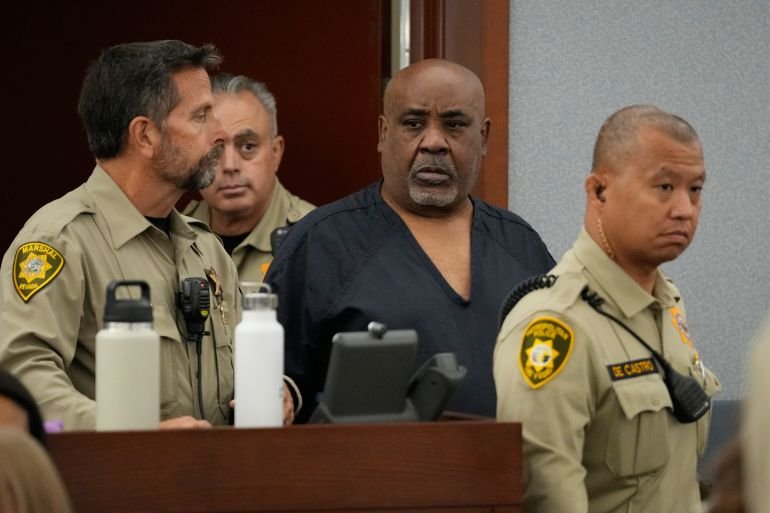
    The three candidates are Mark Moran of Virginia, Matt Klein of Minnesota and Ezekiel Enriquez of Texas. Kalshi reached settlements with Klein and Enriquez, both of whom cooperated in the platform’s investigations. Each will face a fine of less than $1,000 and suspensions of up to five years. Moran’s case has resulted in a disciplinary action, with a five year suspension and a fine of more than $6,000. He posted on X about the situation and claimed this was essentially a stunt to see if he’d be caught and “to highlight how this company is destroying young men.”

    Kalshi and other prediction markets have been the subject of several lawsuits by state attorneys general that are attempting to regulate the sector as gambling. Nevada, Arizona and New York have cases underway, but the state-level attempts are not looking promising. An appeals court ruled against New Jersey’s effort to govern this industry, and the US Commodity Futures Trading Commission has launched a lawsuit of its own in an effort to ensure it will be the only party to regulate prediction markets.

  • KCEX Unregistered Exchange Evades South Korean Ban: iOS App Store Loophole Exposed

    KCEX Unregistered Exchange Evades South Korean Ban: iOS App Store Loophole Exposed

    An unregistered overseas crypto exchange, KCEX, continues to operate in South Korea despite a government ban, leveraging a loophole through the iOS App Store. This situation reveals significant gaps in the country’s regulatory framework for virtual asset service providers. As of April 22, 2025, the exchange remains accessible to South Korean users, undermining efforts to enforce financial oversight.

    KCEX Unregistered Exchange: Background and Timeline

    South Korean financial authorities flagged KCEX for unregistered business activities in August 2024. The exchange, based overseas, never obtained the necessary license from the Financial Services Commission (FSC). Despite this, it continues to attract users through its mobile application.

    The timeline of events highlights the challenges regulators face. In 2024, the FSC strengthened rules for virtual asset service providers. They required all exchanges to register with the Korea Financial Intelligence Unit (KoFIU). Non-compliance carries penalties, including blocking access to local markets.

    However, KCEX sidestepped these measures. The exchange did not block South Korean IP addresses. Instead, it maintained its app on the iOS App Store. This move allowed users to download and trade freely. The app’s availability on Apple’s platform gives it legitimacy in the eyes of many users.

    How the iOS App Store Bypass Works

    The bypass relies on Apple’s global distribution system. Apple does not individually vet each app for compliance with foreign financial regulations. Instead, it relies on the app developer’s self-certification. KCEX likely listed its app as available in all regions, including South Korea.

    This oversight creates a major enforcement gap. South Korean authorities can block websites and domain names. They can also request internet service providers to restrict access. But they cannot directly remove apps from Apple’s App Store without a formal request to Apple. Such requests take time and often face legal hurdles.

    Additionally, users can bypass regional restrictions by changing their App Store account region. This technique requires no technical skill. It makes the ban nearly impossible to enforce at scale.

    Regulatory Gaps in South Korea’s Crypto Oversight

    South Korea has one of the strictest crypto regulatory environments globally. The Specific Financial Information Act requires all exchanges to register with KoFIU. Exchanges must also implement anti-money laundering (AML) and know-your-customer (KYC) procedures.

    Despite these rules, unregistered exchanges thrive. A 2024 report from the FSC found over 30 unregistered overseas exchanges targeting South Korean users. These platforms often offer higher leverage or fewer restrictions than domestic exchanges.

    Table: Comparison of Registered vs. Unregistered Exchanges in South Korea

    Impact on South Korean Crypto Users

    The continued availability of KCEX exposes users to significant risks. Without regulatory oversight, these exchanges may engage in market manipulation. They might also fail to secure user funds. In 2023, several unregistered exchanges collapsed, causing millions in losses for South Korean investors.

    Moreover, users face legal consequences. Trading on unregistered platforms violates South Korean law. The FSC has warned that users could face fines or criminal charges. Yet enforcement remains rare, creating a sense of impunity.

    Financial experts emphasize the need for better user education. Many traders choose unregistered exchanges for lower fees or access to specific tokens. They often overlook the risks until a problem occurs.

    Expert Analysis: Why Enforcement Fails

    Legal experts point to jurisdictional issues as the primary barrier. KCEX operates from a country outside South Korea’s legal reach. The FSC cannot issue fines or freeze assets held abroad. International cooperation through bodies like the Financial Action Task Force (FATF) exists but is slow.

    Furthermore, technology evolves faster than regulation. Decentralized exchanges (DEXs) and peer-to-peer platforms add another layer of complexity. Even if Apple removes the KCEX app, users can access the exchange via web browsers or alternative app stores.

    Dr. Kim Min-ji, a professor of financial law at Seoul National University, notes: “The current regulatory framework assumes a centralized, cooperative environment. The crypto market is neither. Regulators must adopt a more proactive, technology-driven approach.”

    Broader Implications for Global Crypto Regulation

    The KCEX case is not unique. Similar situations occur in Japan, the United States, and the European Union. Apple and Google face increasing pressure to vet financial apps more rigorously. In 2024, the EU’s Digital Services Act (DSA) began requiring app stores to verify the legal status of financial service providers.

    South Korea could adopt similar measures. The FSC has discussed requiring app stores to block unregistered exchanges. However, such a mandate would face legal challenges from Apple and Google. It could also set a precedent for other countries.

    Industry observers predict a shift toward self-regulation. Crypto exchanges may form consortiums to verify each other’s compliance. Blockchain analytics firms already offer tools to identify unregistered platforms. These tools could help app stores automate vetting processes.

    Conclusion

    The KCEX unregistered exchange case highlights the persistent challenge of enforcing crypto regulations in a globalized digital economy. Despite South Korea’s robust legal framework, the iOS App Store loophole allows the exchange to operate freely. This situation underscores the need for international cooperation, technological innovation in enforcement, and greater user awareness. Until regulators close these gaps, unregistered exchanges will continue to pose risks to investors and undermine financial stability.

    FAQs

    Q1: What is KCEX, and why is it considered unregistered in South Korea?
    KCEX is an overseas cryptocurrency exchange that has not registered with South Korea’s Financial Services Commission (FSC) as required by law. It was flagged for unregistered activities in August 2024 but continues to operate.

    Q2: How does KCEX bypass South Korea’s ban through the iOS App Store?
    The exchange lists its app as available in all regions on Apple’s App Store. Apple does not automatically block apps based on foreign financial regulations, allowing South Korean users to download and use it.

    Q3: What risks do users face when trading on unregistered exchanges like KCEX?
    Users risk financial loss from potential scams or exchange collapses. They also face legal consequences, including fines or criminal charges, for violating South Korea’s Specific Financial Information Act.

    Q4: Can South Korean authorities force Apple to remove the KCEX app?
    Yes, but only through a formal legal request. The process is slow and requires international cooperation. Apple may comply if the request is legally sound, but enforcement is not immediate.

    Q5: What steps can South Korea take to prevent similar loopholes in the future?
    Regulators could mandate app stores to verify the registration status of financial apps. They could also strengthen international partnerships and adopt blockchain-based monitoring tools to detect unregistered platforms.

  • A Decisive Moment for Bitcoin: The $80,100 Level Is Critical

    A Decisive Moment for Bitcoin: The $80,100 Level Is Critical

    In its latest report on the Bitcoin market, cryptocurrency analytics company Glassnode stated that the price is retesting critical thresholds and the market has entered a “decision phase.”

    According to Glassnode’s analysis, Bitcoin signaled a significant shift in market structure by surpassing the $78,100 level, which has long been considered a crucial reference point, often seen as the boundary between bull and bear regimes.

    The report states that the short-term investor cost basis is at $80,100, and this area currently stands out as strong resistance. According to the analysis, if the price rises towards $80,000, more than 54% of investors who bought recently will be in profit. This threshold historically marks the point where uptrends begin to tire and selling pressure increases.

    Glassnode data reveals that short-term investors realized profits of up to $4.4 million per hour, roughly three times the average of $1.5 million seen at local peaks earlier in the year. According to the analytics firm, this signals a need for caution in the market.

    Related News Anthony Pompliano Claims the Bitcoin Bull Market Has Begun – “The Sling Shot Effect Is Coming”

    On the other hand, there are signs of a limited recovery in the institutional sector. The 7-day average flows into Bitcoin ETFs turning positive again indicate a gradual return of institutional demand after a long period of outflows.

    Early signs of recovery are also being observed in the spot market. While the cumulative volume delta has moved into positive territory, buyers are reportedly behaving more aggressively, particularly on offshore exchanges. In contrast, derivatives markets are presenting a more cautious outlook. The continued negative perpetual funding rates indicate that short positions are gaining weight in the market. However, this situation could act as “fuel” for an upward movement if spot demand strengthens.

    On the volatility front, pressure persists. Both implied and realized volatility remaining low indicates the disappearance of premiums in option pricing, suggesting that investors have not yet taken a clear position on a strong direction.

    According to Glassnode, from a technical perspective, the $80,000 level acts as mechanical resistance in upward movements, but if the price falls back to $75,000, there is a risk that downward movements will accelerate.

    *This is not investment advice.

  • Prediction market Kalshi docks three US candidates for betting on own races

    Prediction market Kalshi docks three US candidates for betting on own races

    The penalties come amid calls for greater oversight, as the company pledges to proactively police ‘insider trading’ on its platforms.

    Predictive market platform Kalshi has punished three unnamed United States political candidates for taking part in “insider trading” by betting on their own campaigns.

    In a statement on Wednesday, Kalshi explained that it had taken the enforcement action after launching a new raft of safeguards.

    Recommended Stories

    list of 3 itemsend of list

    Concerns had been raised over the lack of regulations in online betting, amid an explosion in popularity for prediction market platforms. The sites allow people to place bets on an array of cultural, sporting, political and geopolitical events.

    “Just like in traditional financial markets, bad actors will try to cheat,” Kalshi said in a statement, adding that the three cases “are an example of how developing proactive engineering solutions can help identify illicit trading activity”.

    The first instance Kalshi identified involved a candidate in the Democratic primary for Minnesota’s 2nd congressional district. The statement did not identify which candidate it had penalised from the five-way primary, which will be held on August 11.

    Kalshi said the candidate “traded a small amount on the outcome of his own election”. He subsequently paid a $539.85 fine and was suspended from the platform for five years.

    A second case concerned a candidate in the Republican primary for Texas’s 21st congressional district, which former professional baseball player Mark Teixeira won in early April.

    Like the earlier case, Kalshi did not identify which of the three Republican candidates had placed a “fairly small” bet on the outcome of his own election. The individual was made to pay a $784.20 fine and was suspended for five years from the platform.

    A third case involved the Democratic primary for Virginia’s US Senate election. Four candidates are currently running in the race, including incumbent Senator Mark Warner, with the vote set for August 4.

    Kalshi did not identify the candidate in question but said he “traded in two markets related to his campaign”, the first concerning wagers about who would run for public office in 2026.

    The candidate “placed a trade on himself in this market”, Kalshi said.

    “Then, once the trader announced himself as a candidate for the Democratic Primary election for Virginia US Senate, he again traded on his own candidacy.”

    Kalshi added that the candidate stopped responding to contacts from the company and was given a five-year suspension and a fine of $6,229.30.

    Calls for oversight

    Platforms like Kalshi and its top rival, Polymarket, have expanded rapidly in recent years, raising concerns over the potential for insider trading.

    Those concerns were piqued most recently amid the US-Israel war on Iran, which has seen instances of bets surging ahead of government actions that should otherwise be shrouded in secrecy.

    In one example, 150 new accounts appeared on Polymarket ahead of the initial US-Israeli strikes on February 28, according to Senator Chris Murphy and Representative Greg Casar, who introduced legislation for more oversight in March.

    At least 109 of the new accounts made more than $10,000 in betting on the prospect of the US and Israel striking Iran. One account banked more than half a million dollars.

    Speaking at a news conference in March, Murphy charged that the insider information was coming from the administration of US President Donald Trump.

    “It seems pretty clear what happened. People inside the White House, or those close to the White House with knowledge of the attack that was imminent, cashed in,” Murphy said.

    Prediction market platforms are regulated in the US by the federal Commodity Futures Trading Commission (CFTC), but several states have said they should also be regulated under local gambling laws.

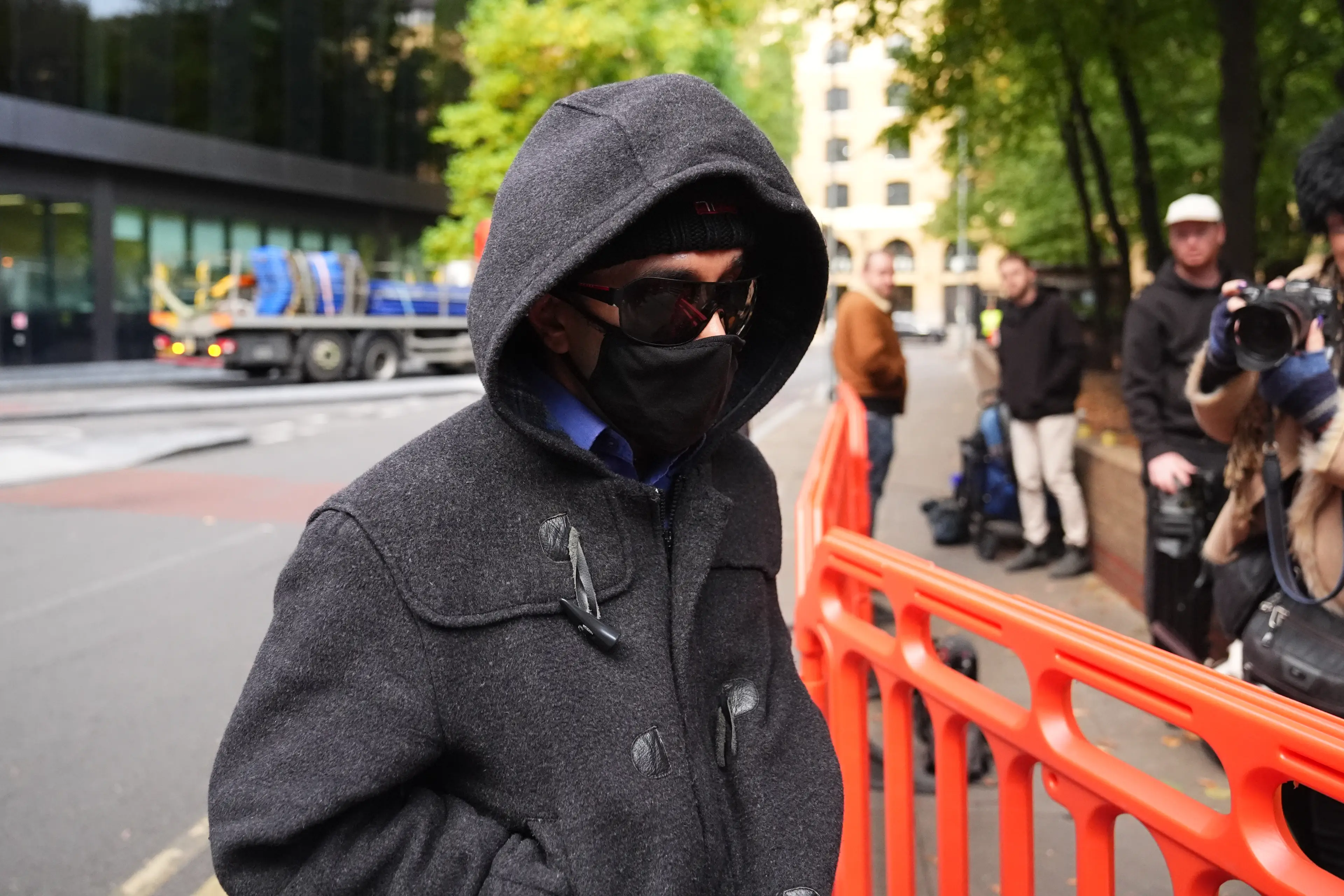
    In March, Arizona became the first state to file criminal charges against Kalshi for allegedly operating an illegal gambling operation.

  • IATSE Backs Tom Steyer in Race for California Governor (EXCLUSIVE)

    IATSE Backs Tom Steyer in Race for California Governor (EXCLUSIVE)

    The largest crew union in Hollywood has endorsed Tom Steyer, the hedge fund founder whose anti-corporate rhetoric has attracted labor backing in the race for California governor.

    In making the announcement, the International Alliance of Theatrical Stage Employees noted Steyer’s interest in keeping film and TV production in Los Angeles. Steyer has also slammed the merger of Paramount Skydance and Warner Bros. and proposed a tax on AI computations in order to fund training for displaced workers.

    “Tom Steyer is committed to protecting union work, advancing labor standards, and keeping production in California in live events, film and TV,” said Brigitta Romanov, the president of the California IATSE Council. “He recognizes that without immediate action, we risk losing the jobs and infrastructure that power our industry.”

    Steyer is among the top Democrats running in the June 2 primary, according to polls. He has spent more than $115 million of his own money on TV and radio ads, vastly more than his rivals.

    He has also picked up endorsements from the California Teachers Association, the California Federation of Teachers, and the California Nurses Association. He supports a single-payer health system for California and promised to tax wealthy people and corporations to pay for health care and education.

    In an interview with Variety last week, he said he wants to expand the state’s tax incentive for film and TV production, though he did not offer a specific proposal.

    “I look at this tax credit and I see it as an investment where we get more than our money back,” Steyer said. “So I don’t see this as a cost.”

    Steyer also blasted Warner Bros. CEO David Zaslav, saying that his $700-$800 million buyout as a result of the Paramount merger is “truly disgusting.”

    Other candidates have also vowed to increase the tax incentive. Matt Mahan, the mayor of San Jose, and Antonio Villaraigosa, the former mayor of Los Angeles, promised to eliminate the $750 million cap on the tax credit, though neither said how much that might cost.

    Meanwhile, the Teamsters union — including its Hollywood local — has thrown its support behind former Rep. Katie Porter.

    IATSE represents about 50,000 motion picture workers in California and 130,000 workers overall in the U.S. Its ranks include grips, prop masters, cinematographers, set dressers, boom operators, sound mixers, hair and makeup workers, costumers and others.

    “I look forward to safeguarding the entertainment industry and ensuring production not only stays in California but thrives with substantial tax credits and a commitment to unionized labor — and I’ll never be a rubber stamp for the AI industry,” Steyer said in a statement. “I’m honored to have IATSE’s support.”

    IATSE has led the way in pushing for a federal subsidy for film and TV production, which it argues is needed to put Hollywood on a level playing field with foreign competitors like London and Toronto.

    The Entertainment Union Coalition, a group of Hollywood labor groups, has met with nine candidates for governor, including three who have since dropped out. Rebecca Rhine, the president of the coalition, said that all of them, including Republican Steve Hilton, were generally receptive to the group’s point of view. The coalition does not make endorsements.

  • Ecco the Dolphin: Complete will combine remasters and a sequel into one package

    Last year, Ecco the Dolphin creator Ed Annunizata teased plans to remaster the first two games in the series and create an entirely new sequel. Ecco the Dolphin: Complete, announced by Annunziata’s studio A&R Atelier, appears to be the result of that work. The game doesn’t have a release date yet, but A&R Atelier says it combines the planned remasters and third title into “the complete, definitive Ecco the Dolphin experience, created by the people who made the originals.”

    Complete includes “all versions of Ecco the Dolphin and Ecco: The Tides of Time,” according to the developer, alongside “a brand-new contemporary Ecco game.” Besides graphical improvements, A&E Atelier says the game will introduce “built-in speedrunning support, achievements and leaderboards,” and things like the ability to create custom courses from existing levels. And while A&R Atelier’s announcement doesn’t include footage of the new game or the platforms it’ll release on, the official Ecco the Dolphin website has a countdown clock that could point to when more information will be released.

    Annunziata sued Sega to try and win the rights to the Ecco the Dolphin IP in 2013, the same year he failed to get The Big Blue, a spiritual sequel to Ecco the Dolphin, fully funded on Kickstarter. Sega and Annunziata ultimately settled their lawsuit in 2016, which may have laid the groundwork for Ecco the Dolphin: Complete to happen.

  • Coinbase warns of quantum risk: Is crypto prepared for a slow-moving security crisis?

    Coinbase warns of quantum risk: Is crypto prepared for a slow-moving security crisis?

    Quantum computing is no longer a distant theory, as early signals now suggest crypto holders may soon face a silent race to secure their funds.

    The Coinbase advisory board has now noted that a quantum computer capable of breaking encryption remains over a decade away.

    Source: Coinbase

    As the picture became clearer, attention shifted toward the “harvest now, decrypt later” risk model. This means exposed keys today may become targets once quantum capability arrives.

    Around 6.9 million Bitcoin [BTC], or 32% of the supply, already sits in exposed wallets.

    This creates uneven risk, where older wallets face higher vulnerability. As a result, holders may need to migrate funds within a proposed three-year window, which may reshape behavior and network activity.

    Blockchain responses to quantum risk begin to diverge

    Quantum risk is pushing blockchains into early preparation, which is reshaping how networks approach long-term security. Bitcoin is exploring new address formats, though it has not committed to a full upgrade, which reflects cautious coordination.

    As this unfolds, Ethereum [ETH] has outlined a detailed migration roadmap, which may improve scalability alongside stronger security.

    Meanwhile, Solana [SOL], Algorand, and Aptos have begun rolling out quantum-resistant options, which signals faster adaptation among newer chains.

    Layer 2 networks like Optimism [OP] have also introduced transition timelines, which adds clarity to execution.

    This uneven progress creates divergence, where some networks move faster than others. Over time, this gap may influence capital flows, as users and developers shift toward ecosystems with clearer upgrade paths.

    Execution risk drives quantum readiness

    The focus has shifted from quantum capability to execution risk, which now drives market perception. Post-quantum cryptography already exists, yet adoption speed remains the key challenge.

    As this becomes clearer, readiness starts to diverge, since Algorand and Aptos move faster than major networks.

    Meanwhile, Ethereum and Solana still use validator signatures that aren’t secure against future threats, which increases risks by making networks vulnerable to delays in upgrades, problems with validators, and possible security issues.

    As markets process this shift, price impact remains muted in the short term, since no immediate threat exists. However, medium-term volatility may rise, as news around breakthroughs or upgrades shapes sentiment.

    Over time, assets may develop a safety premium, as investors favor networks with proven migration paths. This dynamic shifts valuation toward crypto-agility, where faster upgrades may attract capital and strengthen long-term positioning.

    Final Summary

    • Bitcoin faces rising quantum risk, as exposed wallets and migration pressure begin to reshape long-term security and user behavior.
    • Ethereum and Solana show growing divergence, as quantum upgrade readiness starts to drive valuation and capital flows.