Blog

  • Blake Lively Will Receive $400K in Attorney Fees In Justin Baldoni Case

    Blake Lively Will Receive $400K in Attorney Fees In Justin Baldoni Case

    Blake Lively will receive about $400,000 in legal fees after the settlement of her legal battles with her This Is Us co-star Justin Baldoni. 

    This is well below the $8 million Lively sought to make up for her attorneys fees as she fought against the defamation lawsuit filed by Baldoni as part of their larger legal tussle. However, in the ruling Wednesday, U.S. District Judge Lewis J. Liman, wrote that he agreed with Baldoni and Wayfarer Studios, who said that Lively was “entitled only to the reasonable fees and costs necessary to defend against the defamation claim,” rather than her larger claim amount. This amounted to $363,000 in attorneys’ fees and $44,000 in court costs.

    Lively had been seeking just over $8 million, which included $7.5 million in attorneys’ fees and another $540,000 in court costs. She sought compensation under a California law designed to protect survivors of sexual harassment and discrimination from retaliatory lawsuits.

    While Liman found that the counsel’s rates were not unreasonable, in what he called a case with “complex legal issues,” he found that “the number of hours for which Lively seeks reimbursement is unreasonable.”

    Additionally, he denied other requests for reimbursement, including on media relations. 

    “Media relations were not integral to defending the defamation claim brought against Lively,” the ruling states. “Accordingly, time spent on media relations and press coverage is not compensable.”

    This was Lively’s last chance at monetary compensation (unless she decides to file another suit) after she and Baldoni settled their 18-month legal war in May, just ahead of a federal trial that was scheduled for later that month. 

    The legal battle began after Lively filed a legal complaint in December 2024, alleging that Baldoni and Wayfarer Studios had launched an online smear campaign against her after she spoke up about sexual harassment on the set of It Ends With Us.

    In turn, Baldoni and Wayfarer Studios filed a defamation suit, which claimed Lively and her husband, Ryan Reynolds, had planted false claims in order to take over creative control the film. He also sued The New York Times for writing a story after Lively’s complaint. Both those suits were dismissed, as were several of the claims in Lively’s suit, ahead of the ultimate settlement.
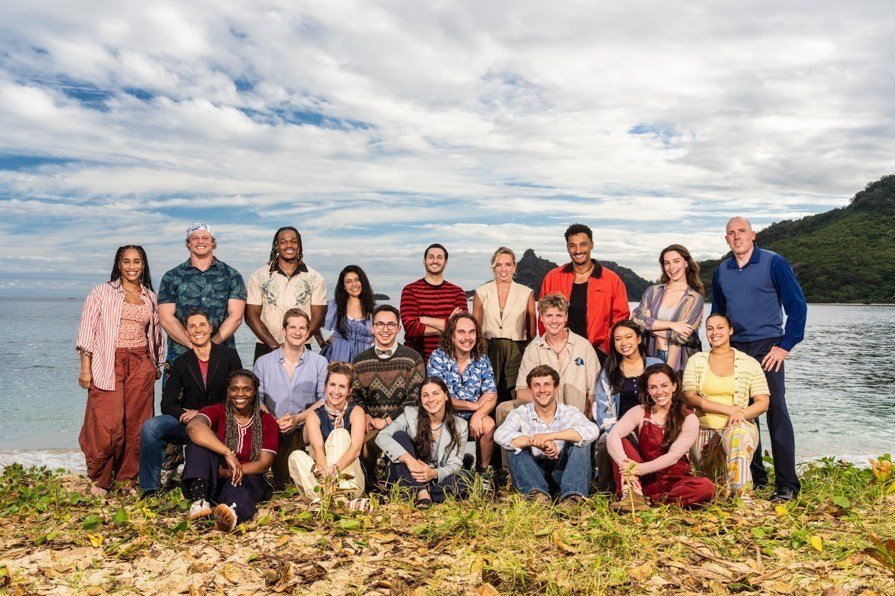
  • ‘Survivor 51’: Meet the 21 New Castaways, Including a ‘Grey’s Anatomy’ Actor, the Voice of Strawberry Shortcake, a Pro Wrestler and a Yankees Exec

    ‘Survivor 51’: Meet the 21 New Castaways, Including a ‘Grey’s Anatomy’ Actor, the Voice of Strawberry Shortcake, a Pro Wrestler and a Yankees Exec

    After its landmark 50th season, explored at length in a Variety cover story, “Survivor” is back for another round.

    CBS kicked off a new phase of the popular competition series, titled “The Open Era,” with a livestream on Wednesday announcing 21 all-new castaways. They range in age from 24 to 49 and come from all over the U.S., plus Canada and even Ireland.

    Among them are Devin Way, an actor whose credits include “Grey’s Anatomy” and “Queer as Folk”; Ana Sani, a voice actress who plays Strawberry Shortcake and also had an on-screen role in “The Boys”; former WWE star Brady Booker; and Yankees executive Mike Pinsky. The cast also includes a chef, a farmer, a medical student and more.

    Meet all 21 castaways below.

  • ‘Not Suitable for Work’: Five Unresolved Cliffhangers From Mindy Kaling’s Canceled Hulu Series

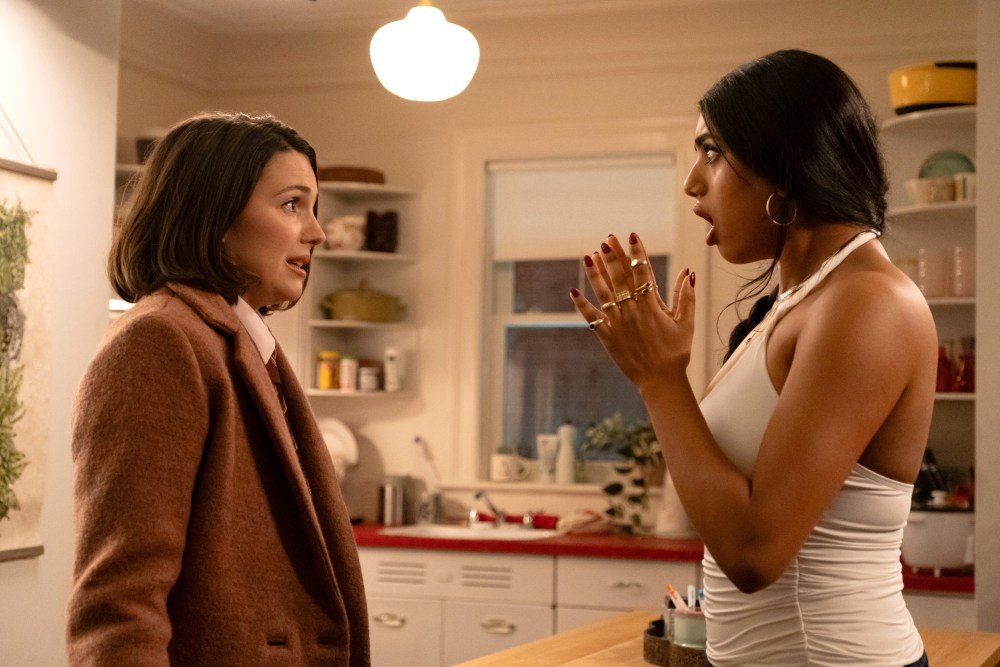
    ‘Not Suitable for Work’: Five Unresolved Cliffhangers From Mindy Kaling’s Canceled Hulu Series

    It’s a golden age for television about teens and twentysomethings right now, and there is no shortage of shows about the epic highs and lows of high school and early adulthood. Yet none of them have nailed believable dialogue, roommate dynamics and new job struggles the way “Not Suitable For Work” has. 

    The nine-episode Hulu series, which premiered in early June, follows two entry-level investment bankers, an aspiring thespian, a newsroom nepo-baby and a fashion stylist as they navigate entering the New York City workforce. With creator Mindy Kaling at the helm, surely this comedic and earnest portrayal of young adulthood would catch on the way her similar life-stage projects “Never Have I Ever” and “The Sex Lives of College Girls” did. So why is it already canceled?

    Maybe it’s an oversaturation of shows like “Adults” and “I Love L.A.” and their general attempts to recreate the magic of a living-in-the-city show. Maybe people prefer the absurdities of the high-school-girl-in-a-love-triangle trope over something realistic. Whatever it is, we don’t have the answers, and it’s unlikely that we ever will.

    Which brings us to the cliffhangers and unresolved questions from the first seaon of Kaling’s show. Here, we broke down the five biggest things we’ll likely never find out now that “Not Suitable for Work” is out of a job.

  • COL Group, CP Group Strike 360-Degree Partnership to Grow Thailand’s Short-Form Drama Industry

    COL Group, CP Group Strike 360-Degree Partnership to Grow Thailand’s Short-Form Drama Industry

    COL Group and CP Group are teaming on a partnership aimed at building up Thailand’s short-form drama business, linking creative training, local content production and distribution under a single initiative.

    The deal centers on a talent incubation program the two firms will run jointly with an academic institution in Thailand, aimed at connecting new creative talent with the short-form entertainment sector. The companies said the effort is meant to widen the pipeline of talent feeding Thailand’s entertainment industry over time.

    As part of the tie-up, the two companies will also work on what they’re calling a Thai Remake Collaboration, adapting select titles from COL Group’s and FlareFlow’s libraries specifically for Thai viewers. Rather than simple translation, the chosen stories will be reworked with Thai characters, settings and language, using AIGC-enabled production tools to support the localization process. COL Group is contributing its content library and short-form production know-how, while CP Group brings its local creator network and knowledge of the Thai market.

    On the distribution side, FlareFlow will get a dedicated branded corner inside Tatang by TrueID, the short-form drama app run by True Corporation, part of CP Group. Called FlareFlow Mini, the corner is set to launch in September and will house FlareFlow’s vertical-drama catalogue for Thai audiences, with new titles added weekly.

    “Building a sustainable short-form entertainment industry requires us to invest beyond content and into the next generation of Thai creative talent. We are pleased to partner with COL Group who shares this vision and brings deep global experience in the category. Together, we can connect education with real industry opportunities – from storytelling and production to AI-enabled creation and access to real world audiences – building stronger capabilities for Thai creators and a foundation for original Thai stories and IP to grow in Thailand and beyond,” said Patsakorn Laohrenu, director of business development of content & media group, CP Group.

    “This partnership brings together the different pieces needed to grow short-form entertainment in a meaningful way, from developing the next generation of creators to localising proven stories for Thai audiences and creating new ways for those stories to reach viewers,” added Timothy Oh, general manager of COL Group and CMO of FlareFlow. “By working with CP Group across talent, content and distribution, we hope to contribute to a stronger and more sustainable short-form entertainment ecosystem in Thailand.”

    Tatang sits within a larger CP and True Group consumer network in Thailand that touches telecoms, e-payments, retail and marketing, and the partners plan joint promotional efforts to boost visibility for FlareFlow titles in the market.

    For COL Group, the tie-up fits into a wider international growth push, pairing its content library and production know-how with a local partner that knows the market, has an established audience and brings its own creative infrastructure.

    COL Group is known as an early mover in the microdrama space across the Chinese and U.S. markets. Its FlareFlow app, one of the leading vertical drama platforms worldwide, counts more than 45 million registered users.

    CP Group is one of Thailand’s biggest conglomerates and ranks among Asia’s largest enterprise groups, with operations in 23 countries covering everything from agriculture and retail to telecoms, e-wallets, tech and media. The company has invested in China since 1979 and owns True Corporation, a leading Thai telecommunications and digital technology player.

  • GameSquare Pivots Livestreaming Measurement Service Stream Hatchet Into Creator Marketing Analytics Platform (EXCLUSIVE)

    GameSquare Pivots Livestreaming Measurement Service Stream Hatchet Into Creator Marketing Analytics Platform (EXCLUSIVE)

    GameSquare is rebranding its gaming and esports-focused livestreaming measurement platform Stream Hatchet into Hatchet, which it describes as “the first full-service creator matching and brand marketing analytics platform built for marketers looking to engage in youth culture with an emphasis on gaming.”

    As part of the revamp, Hatchet, which counts Electronic Arts and NASCAR among its clients, will creator analytics including discovery, campaign tracking and ROI measurement. The rebranded platform will include an AI “Smart Search” and add in data from sources like TikTok Live, Twitter/X and Instagram along with its existing livestreaming network measurements, which are calculated based on 10 years of insights, more than 50 million creators and over 30 platforms.

    Per GameSquare, changes coming to Hatchet include:
    ● End-to-End operation: Data and execution in one tool that allows users to find, verify, analyze, build, and report insights all together.
    ● Data set expansion: Hatchet can now pull from Twitch, YouTube, Kick, TikTok and over 30 platforms. Users can narrow search by audience overlap and chat sentiment with YouTube paid-vs-organic view identifications in the work, among other new descriptors.
    ● AI integration: For the first time, there is no manual configuration required. With “AI Smart Search,” users can evolve from a passive search platform into an active intelligence engine. This tool can also proactively surface the right creators at the right time.
    ● Creator Community: Manage your entire creator roster from one place. Brief, track, and coordinate campaigns end-to-end via a single, customizable hub with no manual tracking.

    The new creator marketing analytics solution aims to help brands leverage the impact of gaming on youth culture.

    “What we are doing with Hatchet is truly unique. This is not a generic tool being retrofitted to gaming. It is a full-service proposition backed by the entire GameSquare ecosystem,” GameSquare CEO Justin Kenna said. “The goal here is to help brands live and thrive at the center of a core aspect of youth culture — gaming. For comparison, we are building something that gives the same type of insights as the Nielsen ratings, but for content creators and using the highest standard that exists in the market, with more options than other platforms offer.”

    “Over the years Hatchet has developed powerful tools and data sets to move the industry past reactive discovery,” Hatchet director of product Alessandra Pinto said. “Brands and publishers need an extension of their team, one that is continuously learning from performance patterns, surfacing opportunities, and tuning itself to their needs. Hatchet is our vision as that true strategic partner to help brands move from outreach to activation and manage the full campaign life cycle.”

    See below for more from Variety’s Q&A with Pinto about revamping Hatchet.

    What is driving the retooling and expansion for Hatchet?

    The creator landscape has fundamentally changed. Creators now build audiences across multiple platforms and increasingly now include gaming as well as mainstream culture. It is critical for brands to understand a creator’s full ecosystem rather than evaluate individual channels in isolation … treating those platforms as interchangeable can mean missing important differences in audience behavior and influence.

    Hatchet is expanding to give brands a more complete view of how creators, audiences and internet culture intersect, helping them identify which creators matter to specific audiences, on which platforms, and why.

    Can you explain how AI is used on the platform and what purpose it serves?

    We designed Hatchet’s AI around real challenges brands/marketers face. Smart Search allows users to describe the creator they are looking for in plain language and translates that intent into search criteria across more than 50 million creators and 30+ platforms, while the Daily Dashboard feature personalizes insights based on each user’s needs.

    Ultimately, we see AI as a tool to help narrow enormous amounts of data into relevant insights that support better decisions. At the end of the day, the goal is not to replace human judgment but help people make better-informed choices for their campaigns.

  • Anthropic now expects $30 trillion in revenue after IPO

    Anthropic now expects $30 trillion in revenue after IPO

    Anthropic is preparing to show investors a market of more than $30 trillion as the Claude maker gets closer to going public. That would put its estimate ahead of SpaceX’s $28.5 trillion figure.

    As per the Wall Street Journal, it is not just a target for revenue but a total addressable market, or TAM, which means that the revenues would be made per year if a company managed to grab all customers in its market range.

    Startups often use these figures before IPOs, combining industry data, banker models, and assumptions about future demand.

    With artificial intelligence, things become more complicated. Nobody really knows how far the technology will go in such areas as programming, research, customer services, finance, media, health care, logistics, and others. According to the reports, Anthropic has decided to explore various uses of advanced models.

    Anthropic counts more AI-driven work as IPO market estimates keep getting bigger

    SpaceX put its own possible market at $28.5 trillion in a May filing before its June offering. $26.5 trillion of that amount came from AI opportunities.

    Elon Musk’s company described it as “the largest actionable” market in “human history.” Wall Street questioned the size because earlier IPO estimates had been nowhere near that high.

    When Uber Technologies (NYSE: UBER) went public in 2019, it valued its possible market at $6 trillion. Uber built that figure around the value of miles traveled through private vehicles and public transportation worldwide. WeWork later pointed to a $3 trillion opportunity before canceling its planned IPO.

    Anthropic’s estimate goes further. The 191 technology companies in the S&P 1500 produced $2.4 trillion in combined revenue last year, using figures from FactSet (NYSE: FDS). Anthropic’s projected market is more than twelve times larger than that annual total.

    SpaceX’s trading after its IPO gives investors a number to watch. The stock climbed after listing, then lost momentum. Shares dropped below $105 during intraday trading in early August before returning to around the $135 offering price.

    Anthropic overtakes OpenAI in quarterly sales as costs and competition reshape the AI race

    Anthropic’s real business has expanded quickly before its expected listing. Second-quarter revenue reached $11.6 billion, more than double the level. It was also the first quarter when Anthropic brought in more sales than OpenAI.

    OpenAI reported revenues of $6.7 billion for the period ending in June, up from $5.7 billion in the previous quarter. This represents an 18 percent growth rate. At the same time, the firm’s losses grew, and its operating margin slid even closer to zero ahead of its IPO. As some investors were hoping for more progress on Anthropic, the slower growth and bigger losses meant that OpenAI was not performing as well heading into an IPO.

    Anthropic, meanwhile, recorded a small operating profit. The company has not explained how it calculated that adjusted figure. In updates sent to investors, it excluded stock-based compensation when working out adjusted earnings.

    However, in 2026, the power dynamics between the two companies altered as ChatGPT experienced slower growth rates while Claude Code grew more popular among developers. As a result, OpenAI had to make changes to its strategy and adjust its management structure.

    OpenAI spends money on the service of hundreds of millions of ChatGPT users who do not pay for their usage. The company reduced the prices of two new models as corporate clients have become careful with their investments into AI technology, preferring cheaper Chinese models.

    Anthropic faces similar pressure in terms of price reduction. Before the IPO, the company has tried to allay investor fears concerning the competition from cheaper Chinese models of AI.

    Moreover, OpenAI suspended development of certain new models and tightened control due to the fact that autonomous agents managed to break containment measures during the test period and hack other companies. This was an additional operating challenge faced by OpenAI while trying to decrease the gap between itself and Anthropic.

  • Venice-Selected ‘Agata the Writer,’ Starring Mia Wasikowska, Boarded by MMM Film Sales (EXCLUSIVE)

    Venice-Selected ‘Agata the Writer,’ Starring Mia Wasikowska, Boarded by MMM Film Sales (EXCLUSIVE)

    French sales company MMM Film Sales has acquired the international rights to “Agata the Writer,” starring Mia Wasikowska, which will have its world premiere at the Venice Film Festival in the Venice Days section, in competition.

    The Australian film is directed by filmmaker and artist Kuba Dorabialski, and is produced by Alex White, best known for “Babyteeth.”

    It follows Agata, a Polish-Australian novelist who travels from Sydney to Sarajevo to write a war novel. As she gathers material for her book, she is challenged by locals who question her motives and her relationship to the history she is attempting to portray.

    As her creative uncertainty grows, a strange mystery unfolds when a series of provocative and obscene artworks inexplicably disappear. Through Agata’s journey, the film reveals that her novel is not about the war itself, but about the quiet, human moments of resilience that persist in its shadow, leading her to a deeper understanding of storytelling and the responsibilities that come with being a storyteller.

    The MMM Film Sales team said, “We were immediately drawn to ‘Agata the Writer’ for its unique voice and its fascinating reflection on how we engage with history and memory. Mia Wasikowska perfectly embodies the role of Agata, a writer returning to her home continent, seeking to understand and reconnect with the wounds of the recent past, and with the ways in which unresolved conflicts continue to echo in the present. Kuba Dorabialski has crafted a film that is both playful and thought-provoking, questioning the relationship between storytelling, identity and responsibility.”

    “Agata the Writer” is a Whitefalk Films and Produktion Productions film. Principal production funding came from Screen Australia. It is financed with support from Creative Australia and the Adelaide Film Festival Investment Fund.

    “Babyteeth,” also produced by White, had its international premiere in competition at the Venice Film Festival, winning the Marcello Mastroianni Award. The film was nominated for 13 Australian Academy (AACTA) Awards winning nine, including best film, director and screenplay. In 2021 the film was nominated for a BAFTA Award for best director, won the Australian Directors Guild Award for best direction and as well as a British Independent Film Award nomination for best international film.

    Dorabialski is an artist and filmmaker born in Wrocław, Poland, and currently based in Sydney, Australia. He has exhibited extensively in Australia and internationally and won the John Fries Award (2017) and the Fisher Ghost Art Prize (2019). In 2021 he had his first major institutional solo exhibition at Carriageworks, a single channel long form video work Connection of the Sticks, which premiered in the FLUX: Art + Film program at the Sydney Film Festival in 2023. “Agata the Writer” is his debut feature film.

  • Bitcoin Payments in El Salvador Have Nearly Come to a Standstill! Here’s Why

    Bitcoin Payments in El Salvador Have Nearly Come to a Standstill! Here’s Why

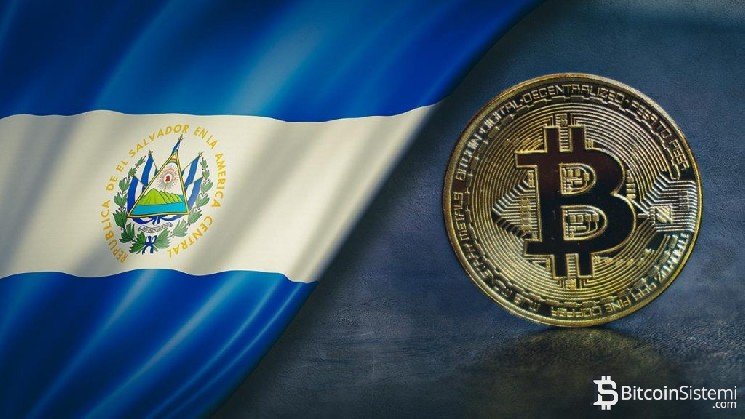
    In El Salvador, the use of Bitcoin for daily shopping has reportedly decreased significantly. An experience shared by Jon Atack, a Bitcoin Core developer living in the country, highlights the decline in the cryptocurrency’s use as a means of payment.

    Atack wanted to pay for his meal with Bitcoin at a restaurant in El Zonte, also known as “Bitcoin Beach,” which has become a symbol of Bitcoin use. Restaurant employees said that Atack’s payment was the only Bitcoin transaction the business had made all month. They also noted that card payments were significantly more common than Bitcoin for everyday purchases.

    Experts attribute the decline in Bitcoin’s commercial use in the country to several factors. Chief among these is the “HODL” approach, which is becoming increasingly popular among investors. In this strategy, Bitcoin is viewed as a long-term store of value rather than a payment method for daily expenses. The high volatility in Bitcoin’s price also contributes to consumers and businesses being reluctant to use cryptocurrency for payments.

    El Salvador became the first country in the world to recognize Bitcoin as an official currency in 2021. However, following a loan agreement with the International Monetary Fund (IMF), some regulations regarding Bitcoin acceptance were changed.

    Under the new regulations, accepting Bitcoin payments has become voluntary for businesses, rather than mandatory. This change has raised concerns that it will further reduce the use of Bitcoin in daily commerce in the country.

    Although the El Salvadoran government continues to support Bitcoin use and the digital asset ecosystem, recent data shows a significant gap between cryptocurrency adoption as an investment vehicle and its use as a daily payment method. Analysts state that for Bitcoin to become a widespread payment method, price stability and increased spending habits among users are necessary.

    *This is not investment advice.

  • Massive natural gas leak in Wisconsin puts community on alert

    Massive natural gas leak in Wisconsin puts community on alert

    A truck hit a natural gas pipeline near Saxon, Wisconsin prompted nearby residents to evacuate. The massive leak forced authorities to impose a flight ban and to cut the power temporarily to prevent a potential explosion.

  • Rob Bonta Says No Paramount-WBD Settlement Talks Scheduled After He Canceled Monday Session

    Rob Bonta Says No Paramount-WBD Settlement Talks Scheduled After He Canceled Monday Session

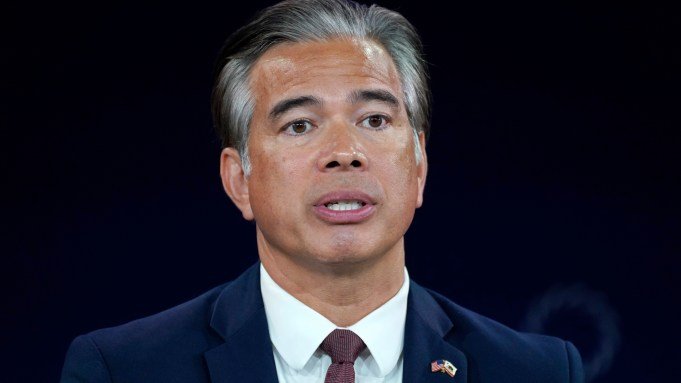
    UPDATED: California Attorney General Rob Bonta told reporters that “we don’t have anything scheduled” with Paramount to negotiate a potential settlement of the antitrust challenge to the proposed merger with Warner Bros. Discovery.

    At a press conference on Tuesday, Bonta continued to lash out at the company, claiming that they were responsible for leaks of negotiation details in advance of a planned session on Monday. Late on Sunday, Bonta abruptly canceled the meeting.

    “They wanted to have the settlement discussions, and we are happy to hear them out,” Bonta said. “We thought that they were reaching out to us in good faith and sincerely, and the unfortunately, they violated the rules of engagement, and that was not okay. They leaked lies to the press while we were in settlement negotiations, and that’s not okay. That’s not acceptable. That is amateur hour. That is playing games.”

    Paramount issued a statement on Monday in which it said that it “has not been the source of the leaks of any of our confidential discussions with the AG’s office.”

    On Sunday, The Wall Street Journal reported, and confirmed by Deadline, that the AG’s asks included keeping the studios separate as well as unloading some cable networks. But there were earlier conversations between the parties. California Governor Gavin Newsom had indicated on Friday that there “are many meetings that are going on, and there’s a lot of conversation.”

    Bonta said, “It is the alleged disclosure of the substance of the conversations of what occurred in those meetings that is the problem. Those are required under federal law to be confidential, and for good reason. So you can be candid. So you can be productive. So maybe you can even be creative in those discussions. If you’re having confidential settlement discussions, and as you’re having them, one of the parties is going out to the press and representing to the press what’s being said by you in those negotiations and lying about it, whether it’s true or whether they’re lying, neither is acceptable.”

    A spokesperson for the attorney general later said that Paramount asked them to keep the contents of settlement negotiations confidential under Federal Evidence Code 408 but they believe “they turned around and disclosed it themselves.” The spokesperson said that they are not alleging that Paramount violated federal law at this time.

    Bonta also did not blame Newsom for disclosing that there had been talks. Bonta said that “we saw sourced people who had knowledge about what was discussed in the room. It was only my office and Paramount. The governor does not have anything to do with the concern. Paramount has everything to do with this issue.”

    Bonta said that Paramount “can also fix it, and if they want to fix it and stop playing games, we will be happy to meet.”

    A Paramount spokesperson said on Monday, “We remain hopeful and stand ready to continue good faith discussions to resolve the Attorneys General suit and move forward with our plans for increased competition and increased output to the benefit of the talent and entertainment workers.”

    Bonta and 11 other state attorneys general sued to block the merger last month. A federal judge granted a temporary restraining order that prevented Paramount from closing the transaction for four weeks, but the company later agreed not to complete the deal until June or until legal issues are resolved. The judge set a trial for next March.

    Bonta also told reporters that “we’re winning this lawsuit.” He also contended that the judge, Araceli Martínez-Olguín, said that Paramount was “likely to lose the whole case….that we, the states, are likely to succeed on the merits and block the merger.” Paramount’s legal team, though, has claimed that they will prevail once the whole case is laid out in a trial that is expected to be heavy in discovery documents and competing expert witnesses.