“If it creates a separate financial instrument that holds or references freely transferable shares without changing the issuer’s rights, obligations, or authoritative shareholder record, issuer consent should not be required,” Tenev wrote.
That distinction is where AMC’s Aron and Tenev disagree.
Aron has called Robinhood’s product a “fictitious synthetic equity market” and argued that it could weaken AMC’s ability to raise capital, confuse investors about their rights and create a market bearing AMC’s name without the company’s consent.
Tenev, on the other hand, argued existing markets already allow similar arrangements. Options, unsponsored American depositary receipts and structured products can reference public shares without giving the underlying company control over the product.
He drew a line at products that alter the shares themselves. If a token changes shareholder rights, replaces a company’s official stock ledger or creates new obligations for the issuer or its transfer agent, Tenev said the company should have a say.
“If a product purports to change the rights attached to the underlying shares, replaces the company’s official stock ledger, or imposes new obligations on the company or its transfer agent, the issuer should be involved,” he wrote.
The disagreement matters beyond AMC and Robinhood. Firms are testing several ways to put stock exposure on blockchains, from synthetic products to conventional shares held by custodians and issuer-backed shares recorded directly onchain.
SPOILER WARNING: The following story contains plot details from Season 5 of “The Secret Lives of Mormon Wives.”
From its very first moments, “The Secret Lives of Mormon Wives” has been inextricable from the toxic entanglement between #MomTok influencer Taylor Frankie Paul and her on-again, off-again boyfriend Dakota Mortensen. Two years ago, the show began with a violent encounter between the pair as captured on police officers’ body cameras. (The incident resulted in Paul’s arrest and subsequent guilty plea for aggravated assault.) Then, earlier this year, a planned season of “The Bachelorette” starring Paul — a bit of crossover corporate synergy between ABC and “Mormon Wives” streamer Hulu, both owned by Disney — was canceled after more graphic, harrowing footage of the same fight was leaked to TMZ.
Paul’s new venture may have been scuttled, but her flagship star vehicle remains intact. This week, “Mormon Wives” returned for an abridged Season 5, almost entirely filmed before production went on hiatus in March amid Paul’s public relations furor. The new information revealed in the five episodes is minimal. We learn the eventual winner of the final rose on the unaired “Bachelorette” season, making it even less likely the competition will ever see the light of day. We also learn how irrelevant the victor’s identity is, because Paul slept with Mortensen again the very night she returned from filming. Paul and Mortensen, by her own admission, have “an addiction” to one another and their toxic relationship. Most pairings formed during the “Bachelor” franchise don’t last; Paul’s was doomed before it even began.
But watching Season 5, something else becomes clear: “Mormon Wives” itself has a seemingly unbreakable dependence on the Paul-Mortensen saga, a tragedy that’s at once the show’s driving force and its greatest liability. What has already incurred a quite literal cost to ABC is now exacting a more metaphorical toll on the hit reality show, which is being swallowed whole by its most volatile element. In the season’s closing minutes, cast member Mikayla Matthews expresses her amazement that the friend group known as #MomTok has mutated from a source of “empowerment” into something much darker. Yet viewers have watched this process unfold in almost real time, making it anything but mysterious. Paul and Mortensen can’t quit each other, “Mormon Wives” can’t quit Paul — and the ensuing tragedy has turned what was once an addictive work of pop sociology into a grim spectacle that’s the opposite of fun.
Season 5 makes some token attempts at milking other sources of intrigue, like a half-hearted conflict between “Dancing With the Stars” alumni Jennifer Affleck and Whitney Leavitt or Jessi Draper’s recovery from what she characterizes as excessive plastic surgery. Paul and Mortensen are nevertheless inescapable — partly because the exes are trapped in an endless cycle, and partly because their dynamic is echoed in so many other pairs within the cast. No one sinks to the same depths as Mortensen, who claims to have sent Paul a sex tape of himself with another woman and, it’s strongly implied, likely weaponized the TMZ footage in retaliation for Paul drawing a boundary. In context, however, the couple comes off less like an exception and more like a tone-setter for a larger study in cautionary romantic tales.
Affleck’s husband Zak, arguably the show’s secondary antagonist, complains about his wife wanting to pose for Sports Illustrated even as her fame allows him to drop out of medical school and drive a CyberTruck. Miranda Hope’s ex-husband Chase McWhorter, fresh off a DUI, clearly yearns to be on camera and is duly rewarded for his confrontational stunts. Layla Taylor dates McWhorter’s brother Mason, showering him with gifts and vacations while he’s unable to return the favor.
“Mormon Wives” has always held interest for how the cast’s lucrative internet fame — which predates, though is accelerated by, the show — inverts the traditional gender dynamics instilled by their religion. But five seasons in, that fascination has curdled into discomfort. “Mormon Wives” isn’t just depicting unhealthy partnerships; in many cases, it’s exacerbating them, creating a perverse incentive for malcontents like McWhorter to stick around in return for exposure that’s still conditional on the women in their lives. In some cases, this tension exists among the women themselves: Paul has the most followers of anyone in the cast, and Draper expresses concern fans will inevitably take her side against her well-meaning friends.
Unlike the stars of “The Real Housewives of Salt Lake City,” the other reality smash set in the same area, the “Mormon Wives” are much younger and remain more entrenched in the Mormon community. Where Housewives like Heather Gay have proudly emancipated themselves from their marriages and the social expectations that came with them, the “Mormon Wives” feel like they’re still mired in the worst heterosexuality has to offer. (Though Layla Taylor has recently shared that she’s now dating a woman.) Paul and Mortensen, who she often refers to as her “baby daddy,” are in some ways far from traditional matrimony. They’re still stuck performing their dysfunction in public — a process that’s gone on so long it feels irresponsible to keep centering. But if “Mormon Wives” isn’t about terrible men exploiting women, what is it about? That’s one question among many for an upcoming spinoff set in Orange County to answer.
The only way to win this game, it seems, is not to play. Following her Broadway debut as Roxie Hart in “Chicago,” Leavitt announced her plans to leave the cast after Season 5. But even before her official exit, Leavitt already feels physically and emotionally distant. Well-spoken and level-headed, she’s almost unrecognizable from the volatile villain she came off as in Season 1. She’s also barely willing to engage with Affleck, whose issues with Leavitt have the subtext of Affleck’s less successful music career. (I have little faith the flamingo-inspired single “Pink Back” will be Affleck’s breakout.) Whatever issues Affleck claims to have with Leavitt’s behavior, she seems more jealous that Leavitt was able to leverage her talents into an escape hatch, leaving Affleck to share such dire sentiments as “I feel like Zak doesn’t understand me.” The “Mormon Wives” may have a sincere belief in religious concepts like Heaven, but for now, the show feels more like purgatory.
Tuesday at 2:15 in the afternoon, the Senate holds a procedural vote that decides whether America gets crypto market structure law in this Congress.
Look at who wants it. The Treasury Secretary has publicly told the Senate to pass it. The President worked senators directly at a White House meeting with Ripple’s CEO, Coinbase’s CEO and the SEC chairman in the room. The Majority Leader filed cloture before the August recess instead of quietly letting the bill rot on the calendar. Brian Armstrong says flatly that it passes.
Now look at the count. Sixty votes. Republicans have fifty-three. At least two of those are expected to vote no anyway.
Galaxy Digital has tracked this bill all year and just cut its odds of 2026 passage to around 10%. In May they had it at 75%. Prediction markets put enactment in the low teens.
So the most senior economic officials in the country are whipping votes for something the people pricing it give roughly a one-in-ten shot. That gap is the story, and it is worth understanding before Tuesday instead of reading about it afterwards.
What Bessent actually said
The content is unremarkable. Who said it is not.
Bessent stated that the Senate should pass the CLARITY Act, framing it around regulatory certainty for digital asset markets and the competitive position of the United States. He has made related arguments through the year, including remarks tying stablecoin growth to demand for Treasury securities, and the administration has treated digital asset policy as a priority since the executive order issued in January 2025 that our executive orders page traces.
A sitting Treasury Secretary publicly whipping votes for a specific bill is not routine. Treasury Secretaries comment on fiscal policy, on debt management, on international financial conditions. Advocating for the passage of a particular piece of market structure legislation, by name, days before a procedural vote, places the department’s institutional weight behind an outcome in a way that is closer to legislative affairs than to economic stewardship.
JUST IN: The CLARITY Act is facing growing doubts ahead of a Senate vote on September 15
Former prosecutor Renato Mariotti said support has crumbled after talks with legislators and staff https://t.co/NFsjGXWGUB pic.twitter.com/qJE1ZhTunx
— crypto.news (@cryptodotnews) September 9, 2026
That is a signal about how much the administration wants this, and it is not by itself a signal about whether it will happen. Those are different things and the coverage has tended to merge them.
The vote that is actually happening
“The Senate votes on CLARITY” is doing a lot of work in most headlines. What happens Tuesday is narrower.
Thune filed cloture on August 8, immediately before the chamber left for recess. The vote scheduled for 2:15 p.m. Eastern on Tuesday is cloture on the motion to proceed to H.R. 3633. That is not a vote on the bill. It is a vote on whether to begin debating the bill.
Cloture on a motion to proceed requires sixty votes. If it succeeds, the Senate enters debate with an amendment process ahead of it, and a second cloture vote would eventually be needed to end debate on the bill itself. If it fails, the motion is defeated and leadership must decide whether to try again, restructure the bill, or move on.
The mechanism matters for reading Tuesday’s result. A failed cloture vote is not a rejection of market structure legislation on its merits; it is a determination that sixty senators are not yet willing to start. Our page on cloture covers why this threshold shapes every piece of crypto legislation, and our CLARITY Act status page tracks where the bill has reached.
Why the odds are so low
Seventy-five to ten is a big move, and Galaxy has no reason to talk down crypto legislation. Four things got them there.
The ethics provision never closed. The dispute over restricting federal officials from issuing or sponsoring digital assets consumed the negotiation. Republicans released text in July assigning sole enforcement to the Justice Department with a 2029 sunset, and Democrats rejected it the same day, with the objection centred on enforcement design and not on the prohibition itself. Our close read of that provision examines the three design choices at issue. No replacement has emerged publicly.
Seven votes have not materialised. Republicans hold 53 seats and at least two Republican defections have been expected, which raises the Democratic requirement above seven in practice. The Senate Banking Committee advanced the bill 15-9 with only two Democrats in favour, which was the first clear evidence that assembling a crossover coalition would be hard.
JUST IN: Fidelity does not expect the CLARITY Act to advance on Sept. 15
The asset manager is calling the Senate vote unlikely to move the bill forward https://t.co/NFsjGXXeK9 pic.twitter.com/uk9wj7r1PU
— crypto.news (@cryptodotnews) September 10, 2026
The calendar compressed. The chamber returns for a limited window before the October recess, with appropriations deadlines competing for floor time and members increasingly oriented toward November. Complex financial legislation historically struggles in that environment.
And opposition broadened beyond the ethics fight. New York’s attorney general came out publicly against the bill on preemption grounds, arguing it would undermine state and municipal authority to prosecute cryptocurrency fraud. That objection travels across party lines and is structurally harder to negotiate away than an enforcement clause, because preemption runs through the bill’s jurisdictional architecture instead of sitting in one title.
What moved in the other direction
Two things genuinely got better, and ignoring them would be dishonest.
The Sheriffs’ Association dropped its opposition on September 3, moving to a neutral position after negotiating amendments to the bill’s illicit finance provisions. Law enforcement opposition to a financial bill is a specific and durable obstacle, because it gives members from both parties a non-partisan reason to vote no. Removing it removes an argument instead of adding a vote, and that is still meaningful.
The White House engaged directly. The President met senators alongside Ripple’s chief executive, Coinbase’s chief executive, and the SEC chairman. Presidential attention does not produce votes on its own, and it does determine whether an administration spends capital on floor time, amendment negotiation, and the retail politics of persuading individual members.
And leadership filed cloture instead of letting the bill die quietly. Thune had the option of leaving H.R. 3633 on the calendar untouched. Filing before recess forced a scheduled vote and created a deadline, which is what leaders do when they want a bill moved instead of buried.
Set against the vote count, none of this changes the arithmetic. It changes the probability that the arithmetic gets worked on.
Why this is harder than the stablecoin bill
The obvious retort to all of this is that crypto legislation already passed once. The $GENIUS Act was signed in July 2025. If the Senate could do stablecoins, why not market structure?
Because they are not the same kind of bill, and the differences all run the wrong way.
Stablecoins had a constituency that wanted regulating. Circle and Paxos had spent years asking for a federal framework, because a licence is worth more than ambiguity when your product is a dollar and your customers are institutions. Market structure has a constituency that wants classification resolved in a specific direction, which is a different thing and a harder sell.
Stablecoins had banks partly onside. The yield prohibition was written into the statute precisely because the banking lobby wanted it, which converted a potential opponent into a participant. Market structure has the banking industry watching for exactly the loophole the American Bankers Association is now pressing senators to close, and has state prosecutors objecting on preemption.
Stablecoins were one product. The Act defines a payment stablecoin, names who may issue it, and says what backs it. Market structure has to classify every digital asset, split jurisdiction between two agencies, create registration regimes for exchanges, brokers, dealers and custodians, and write a developer shield. More surface means more objections.
And stablecoins did not touch the President’s family business. That is the entire ethics fight in one sentence, and it is why a provision that occupies a handful of pages has consumed a year of negotiation over a bill running more than six hundred.
The lesson from $GENIUS was never that crypto legislation passes. It was that narrow, single-product legislation with a cooperative industry and a neutralised opposition can pass. CLARITY is none of those things, which is a better explanation for the ten percent than anything about the calendar.
Reading the gap
So why push this hard on a one-in-ten? Three answers, and they can all be true at once.
The odds could be wrong. Prediction markets and research desks price public information. Vote counts are private until they are not, and a leadership office that files cloture usually has a better read on its own conference than an outside observer does. Thune’s willingness to schedule the vote is itself evidence, though his own public framing before the recess was notably unenthusiastic.
The push could be about the next attempt. A failed cloture vote with visible administration support creates a record: named senators who declined, an identifiable obstacle, and a case to make in November and in the next Congress. The industry’s political operation, which our examination of its spending documented, is built to run exactly that play. Losing a vote you have publicly fought for is more useful politically than never holding it.
Or the push could be the point. An administration that has made digital asset policy a priority benefits from being seen to fight for it whether or not it wins. Constituencies notice effort, and effort is cheaper than success.
The distinguishing evidence arrives Tuesday. If cloture clears with votes to spare, the odds were wrong and the private count was better than the public one. If it fails narrowly, the push was real and insufficient. If it fails badly, the exercise was about the record.
What the industry’s own position tells you
Watch what the industry does this week, not what it says.
Coinbase’s chief executive has said the bill will pass. The Ripple and Coinbase leadership attended the White House meeting. The industry’s super PAC network entered this cycle with a war chest measured in the hundreds of millions, and our audit of that spending documented crypto contributions reaching a substantial share of all corporate election spending. That is an operation built to produce exactly this vote.
Two years of that effort has produced one enacted statute, the stablecoin law, and a market structure bill that has not cleared a procedural motion. That is not nothing, and it is considerably less than the spending implied.
LATEST: Thune confirms CLARITY Act pushback to September
The Senate will revisit the crypto legislation after the summer break https://t.co/NFsjGXXeK9 pic.twitter.com/d1iCLct49M
— crypto.news (@cryptodotnews) August 7, 2026
What the sector does over the next five days is the more informative signal than what it says. Public confidence costs nothing. Whether the political operation spends on targeted advertising in the states of undecided senators, whether individual firms make direct approaches, and whether any concession on the ethics provision is publicly floated are all observable and all expensive. An industry that believes a vote is winnable spends into it. An industry that has concluded a vote is lost preserves capital for November.
There is also a structural bind worth naming. A rider or a quiet insertion into a larger vehicle passes without a recorded roll call, which is procedurally attractive and politically useless to an operation whose theory of influence rests on the threat of a funded primary challenge. Accountability requires named votes. So the sector has a reason to want this vote held even if it loses, which complicates any reading of its public optimism as a forecast.
The honest summary is that industry confidence is not evidence about the vote count, and treating it as such has been the most common error in coverage of this bill all year.
What Tuesday determines
Four outcomes. The coverage will treat them as two.
Cloture succeeds comfortably. The bill enters debate with an amendment process ahead, and the compressed calendar becomes the binding constraint instead of the vote count. Passage in this Congress becomes plausible without becoming likely, because a second cloture vote and House concurrence both remain.
Cloture succeeds narrowly. Same procedural position, weaker footing for the amendment fight, and every subsequent vote becomes a renegotiation.
Cloture fails narrowly. Leadership can refile. The gap becomes a target list, and the ethics provision becomes the explicit price of the missing votes.
Cloture fails badly. Market structure legislation moves to the next Congress, and everything governing digital asset classification in the United States continues to rest on the joint SEC-CFTC interpretive release from March 2026, which is agency policy revocable by a future commission. Our SEC page covers why that impermanence is the entire argument for the statute.
What is actually in the bill nobody is voting on yet
Lost in the vote-count arithmetic is that the thing the Senate might start debating on Tuesday is a specific 616-page text with specific contents, and most people arguing about its odds have not read what it does.
Classification. It defines digital commodities and separates them from securities, replacing case-by-case determination under the investment contract test with statutory categories. A grandfather provision would deem tokens anchoring exchange-traded products at the start of 2026 to be non-securities by operation of law, which resolves status instantly for the assets underlying every listed spot product.
Jurisdiction. Spot trading in digital commodities moves to the CFTC. The SEC keeps digital assets that are securities. Our CFTC page covers what the agency already governs and what it would inherit.
Registration regimes. New categories for digital commodity exchanges, brokers, dealers and custodians, each needing years of agency rulemaking before they function. Provisional registration lets existing firms operate during the build.
A developer shield. Non-custodial software developers excluded from money transmitter treatment under the Bank Secrecy Act, operating by definitional exclusion, with no rulemaking needed.
And preemption. Federal jurisdiction displacing conflicting state regimes for covered assets and intermediaries, which is the provision New York’s attorney general is objecting to and which is structurally harder to negotiate than the ethics title.
Two things follow. The grandfather clause and the developer shield take effect on enactment, so passage delivers something immediately. The registration regimes do not, and on the evidence of the stablecoin statute, whose implementing agencies missed their one-year rulemaking deadline this July, the useful parts arrive somewhere around 2028 or 2029.
Which is worth holding in mind on Tuesday. A cloture vote that succeeds does not produce a functioning market structure framework. It produces the beginning of a process that has historically run long.
The seven senators
Nobody has published the list, so here is how to build it yourself, because the names are more informative than any odds estimate.
Start with the two Democrats who voted the bill out of the Banking Committee. That 15-9 markup is the only recorded evidence of Democratic willingness to advance this text, and both have since expressed reservations about the version that emerged from the merge. Assume they are gettable and not guaranteed.
Add the seven Democrats who were negotiating on the ethics provision through the summer and then issued a joint statement rejecting the July text. That group is the target list, by definition: they were at the table, which means they wanted a deal, and they walked, which means the deal on offer was not one. They are also the reason the ethics title is the price, not a side issue.
Subtract the Democrats who have never been in the room. Members who opposed the stablecoin bill, who have been publicly critical of the administration’s digital asset posture, or who represent states where the attorney general has come out against preemption are not persuadable on a floor vote five days out.
On the Republican side, subtract the libertarian objections and the members who have voted against expanding federal regulatory authority as a matter of course. Two defections has been the working assumption all year, and nobody has publicly revised it.
Run that arithmetic and the coalition has to come almost entirely from the group that walked away in July. Which is why every serious read of Tuesday reduces to a single question: has anyone moved on enforcement of the ethics provision, and the answer as of this writing is that nothing has been announced.
If a hybrid mechanism surfaces before Tuesday, with the Justice Department primary and some independent or state backstop, the odds are wrong. If the vote arrives with the July text unchanged, the odds are approximately right.
What a failure actually costs
Assume cloture fails. What breaks, and what does not?
Nothing breaks immediately. Markets operate today under the joint SEC-CFTC interpretive release from March 2026, which names sixteen digital assets as digital commodities and places staking, mining and airdrops outside securities law. Exchanges list, funds launch, institutions custody. None of that stops.
The impermanence stays. That interpretive release is agency policy, not statute. A future commission can withdraw it by vote, and commissioners serve at presidential pleasure. Every firm making a decade-long infrastructure commitment is building on something a change of administration can unwind, which is the entire argument for legislating and the reason the industry keeps spending on it.
Newer assets stay stuck. The sixteen named assets have clarity. The seventeenth does not, and without the self-certification path the bill would create, there is no process for getting it. That is a growth constraint rather than an operating one, and it compounds.
The state patchwork survives. No preemption means the licensing map stays as it is, which our legality page documents, and the prediction market litigation across a dozen states keeps running on the current framework.
And the calendar gets much worse. A failed vote in September means the next window is a lame duck session, then a new Congress in January 2027 with a composition set by the November midterms. Analysts have warned that missing 2026 could push market structure legislation out by years, and the base rate for a bill that has to be reintroduced and re-marked-up in a new Congress is not encouraging.
The honest summary is that failure is expensive in a slow, compounding way rather than a dramatic one. Nothing collapses. The industry simply continues operating on borrowed permission, which it has done for two years and can presumably do for two more.
What to watch
The roll call itself, not the result. Which Democrats vote yes is the list that determines whether a second attempt is viable and what it would cost.
Whether any ethics compromise surfaces before Tuesday. A hybrid enforcement mechanism, with the Justice Department primary and some independent or state-level backstop, is the visible landing zone. Its appearance in the next five days would be the strongest possible signal that the count is closer than the odds suggest.
Republican defections. Two have been expected. A third raises the Democratic requirement to eight and changes the arithmetic materially.
Whether Galaxy or the prediction markets move before the vote. Both reprice continuously. A sharp move upward in the final days would indicate that information is reaching the market that has not reached the press.
What leadership says immediately after. Refile, restructure, or move on. That statement determines whether this is a setback or an ending.
Disclaimer: This article is for information and educational purposes only and does not constitute financial, investment, or legal advice. It describes pending legislation and a scheduled procedural vote whose outcome is unknown, and probability estimates cited are third-party assessments that change continuously. Nothing here predicts any legislative result. Information is accurate as of September 10, 2026.
What did the Treasury Secretary say about the CLARITY Act?
Scott Bessent publicly called on the Senate to pass the Digital Asset Market Clarity Act as the chamber returned from its August recess, framing it around regulatory certainty and American competitiveness. A sitting Treasury Secretary advocating by name for a specific market structure bill days before a procedural vote is unusual and places the department’s institutional weight behind the outcome.
What exactly is the Senate voting on September 15?
Cloture on the motion to proceed to H.R. 3633, scheduled for 2:15 p.m. Eastern. That is a vote on whether to begin debating the bill, not on the bill itself. It requires sixty votes. If it succeeds, the Senate enters debate with an amendment process ahead and a further cloture vote eventually needed to end debate.
How many votes does it need?
Sixty. Republicans hold 53 seats, so at least seven Democrats must cross, and in practice more, because at least two Republican defections have been expected. The Senate Banking Committee advanced the bill 15-9 with only two Democrats in favour, which was the first indication that a crossover coalition would be difficult to assemble.
Why are the odds of passage so low?
Galaxy Digital cut its estimate to roughly 10% from about 75% in May, and prediction markets have priced enactment in the low teens. Four factors: the ethics provision dispute never closed, the seven Democratic votes have not publicly materialised, the calendar compressed against appropriations deadlines and the midterms, and opposition broadened to include preemption objections from state law enforcement.
What is the ethics provision fight about?
Restricting federal officials, including the President, from issuing or sponsoring digital assets while in office. Republicans released text in July assigning sole enforcement to the Justice Department with a 2029 sunset, and Democrats rejected it the same day, objecting to the enforcement design and not to the prohibition. No public replacement has emerged.
Has anything improved for the bill?
Yes. The National Sheriffs’ Association dropped its opposition on September 3, moving to neutral after negotiating amendments to the illicit finance provisions, which removes a non-partisan reason for members to vote no. The White House engaged directly with senators, and leadership filed cloture before recess instead of letting the bill lapse.
What happens if the vote fails?
Leadership decides whether to refile, restructure, or move on, and that statement is the most informative thing that follows. If market structure legislation slips to the next Congress, digital asset classification in the United States continues to rest on the joint SEC-CFTC interpretive release from March 2026, which is agency policy that a future commission can withdraw by vote.
Does the administration’s support mean it will pass?
Not on its own. Political support and vote counts are different things, and the gap between them is the subject of this piece. Presidential and Treasury engagement determines whether capital gets spent on persuading individual members; it does not determine whether sixty senators are willing to proceed. Tuesday’s roll call is the evidence. This is educational analysis, not investment advice.
The return of Marco Bechis to filmmaking after 10 years is a welcome surprise, and the terrain he covers in “Back to Buenos Aires” is a familiar one for the veteran Chilean-Italian director who himself was caught up in the nightmare of Argentina’s military dictatorship. Set in the present, with frequent flashbacks, the film tells the story of an Italian doctor involved in Argentina’s resistance in the 1970s who reluctantly goes back to the country to give testimony about his three-plus years in the Garage Olimpo concentration camp. Stylistically looking like an uneasy hybrid between horror and film noir, Bechis’ return fails to satisfy on multiple levels, including the emotional one, though there are a few memorable scenes and the crux of the tale is potent.
It’s no coincidence, of course, that the prison where Mariano Guerra (Adriano Giannini) was held, Garage Olimpo, is also the name of Bechis’ 1999 film. “Back to Buenos Aires,” however, is a very different movie, less visceral and more hallucinogenic, but also less gripping. It’s a film that tries to come to terms with survival guilt, avoiding pat judgments but hinting rather too strongly at the possibility of redemption through confession. Pervaded by silences that mirror the decades of silence that allowed war criminals to walk among us, the story unfolds through a back-and-forth of past and present, keeping pace with the revelations and Mariano’s increasingly fraught state.
Multiple messages on Mariano’s answering machine in Italy ask him to return to Buenos Aires to testify, but he keeps ignoring them, incapable of coming to grips with his Argentine past. The pressure is building, making him more and more edgy, until he finally agrees to go — cue a stunning sequence of shots filmed from his plane seat. Once landed, he and other witnesses pile into a van, but recognition doesn’t lead to conversation, which Mariano avoids at all costs. (One can’t help compare the loquacious Iranian survivors in “It Was Just an Accident” with the nearly mute Argentines here.) Housed in what looks like an old-fashioned congress center, the group take meals together but barely talk, for doing so would force them to revisit the trauma of the past as well as confront their own actions while in prison.
Even before we know the details, it’s clear that Mariano’s resistance to testifying springs from the shame of collaboration. That guilt, eating away at him for decades, comes boiling to the surface when he’s visited by Evelyn (Veronica Gerez, in a poorly written role), the daughter of a woman who disappeared during the dictatorship. He rejects her request for information about her mother, though not convincingly since his nerves are so shot he can barely avoid trembling. Even when the lawyer (Marcelo Chaparro) for those testifying has him look through photos to see if he can identify some of the people who ran Garage Olimpo, he feebly claims not to recognize anyone.
Bechis plays with the claustrophobia of the congress center as well as the courthouse, both locations lit with a deadening flatness that contrasts sharply with the few outdoor scenes, especially when Mariano spies a short, balding man leaving the courthouse and, in great agitation, follows him to the hospital where he works. It comes as no great surprise that Dr. K (Adrian Fondari), as he was known in Garage Olimpo, was Mariano’s chief tormentor, the man who wore down his will to such a degree that he became a passive collaborator when so many other prisoners were killed.
Bechis accompanies these scenes with flashbacks to when medical student Mariano (Eduardo Hoy) was working for the Resistance together with Muneca (Olivia Nuss), whose daughter Evelyn is the woman in the present putting pressure on him to reveal what he knows about her mother’s disappearance. The scene where Muneca is taken away is one of the most effective in the film, especially when it melds past and present. This shift between the two time periods creates an effective dialogue as we learn what actually happened in the prison, less graphically represented than in “Garage Olimpo” but still conveying the brutality inside.
Back in the present, the testimony of Amalia Mendez (Ana Celentano), her dignity unbowed as she recounts the sexual assaults she endured, helps to center the film at a moment when it really requires a strong, articulate voice. Mariano is just too shaky, his trauma too much on the surface, making us question how he ever remained a functional doctor. Multiple elements in “Back to Buenos Aires” don’t quite come together, starting with the peculiar mise-en-scène, which evokes horror movies — empty dully lit corridors, eerie silences, isolated characters — and film noir with shadows cast by old-fashioned blinds and lots of cigarettes. Flashback sequences are inevitably given a very brown tone, since no evocation of the 1970s would be considered believable unless brown predominates.
India’s Maharashtra state has begun preparing policies to tokenize up to 50% of selected electricity transmission assets to finance new power lines and solar energy storage facilities.
Maharashtra considers tokens tied to power revenue
Praveen Pardeshi, chief economic adviser to Maharashtra Chief Minister Devendra Fadnavis and CEO of the Maharashtra Institution for Transformation, outlined the plan at The Box Launch, an invitation-only event held at the World Trade Center in Mumbai.
Real estate tokenization company RealX and MST Blockchain hosted the event, where Pardeshi described how Maharashtra could use digital tokens to raise money against revenue-producing state assets without selling the assets outright.
Under one possible structure, the state could tokenize 40% to 50% of an electricity transmission line. Investors who purchase the tokens would then receive a share of the income earned by Maharashtra State Electricity Transmission Company, commonly known as Maharashtra Transco.
Pardeshi said Maharashtra could direct the capital raised through token sales toward additional transmission lines. Funding could also support storage centers designed to hold solar power until electricity demand rises.
Rather than transferring full control of the infrastructure to private owners, the proposed model would allow investors to take part in the income generated by a defined portion of a public asset. Pardeshi described tokenization as a financing tool that could open public infrastructure development to more citizens.
Detailed terms have not been disclosed, including which transmission assets could enter the program, how token holders would receive revenue, who could invest, or which blockchain network would record ownership. The state has also not announced the size or timing of a possible token sale.
Limited grid capacity leaves solar power unused
Maharashtra’s interest in new financing stems partly from a mismatch between its solar power output and transmission capacity, according to Pardeshi.
The state produces more solar electricity than it can use during certain periods, yet its grid cannot always move the power to areas where demand exists. Without enough transmission lines and storage, low-cost electricity generated during surplus hours may not be available when consumption reaches its daily peak.
Pardeshi said electricity can be traded for as little as two paise per unit on the power exchange when supply exceeds demand. During peak hours, however, distribution companies may have to purchase power at rates ranging from 16 rupees to 18 rupees per unit.
Energy storage facilities could hold part of the daytime solar surplus and release it later, while new lines could carry electricity from generation sites to consumption centers. Maharashtra plans to use proceeds from any infrastructure tokenization program for both types of projects, based on the model presented at the event.
Token holders would rely on the revenue rights and legal protections attached to each asset rather than owning the entire physical transmission line. The final structure would therefore need to define how income is calculated, distributed, and recorded, as well as what rights investors would have if revenue falls below expectations.
Liquidity would present another consideration for any tradable version of the tokens. As crypto.news reported in September, the value of tokenized real-world assets had reached $34.6 billion, but only $3.79 billion was being used within protocols, leaving about 89% of the issued value inactive.
Falcon Finance chief RWA officer Artem Tolkachev said in the report that low utilization should be assessed against an asset’s intended use. A token designed primarily to distribute yield may still serve its purpose without frequent trading, while an asset created for use as collateral would face a different test.
DELTA Act would set rules for property tokenization
Alongside its power infrastructure proposal, Maharashtra is drafting the Maharashtra Digital and Land Token Asset Trading Act, known as the DELTA Act.
If enacted, the proposed law would make Maharashtra the first Indian state to adopt legislation specifically covering blockchain-based property tokenization, according to details presented at The Box Launch. The available information does not provide a legislative timetable or state whether a draft has reached the Maharashtra legislature.
Pardeshi used Mumbai’s Express Towers commercial building to explain how property tokenization could operate. The building was tokenized through a real estate investment trust structure, dividing an interest in the property into smaller investment units.
A June 2026 explainer described real-world asset tokenization as the process of representing rights to an off-chain asset through tokens recorded on a blockchain. Depending on the legal structure, a token may represent ownership, income rights, debt, or another contractual claim.
In Maharashtra’s proposed infrastructure model, the legal connection between a token and Maharashtra Transco’s revenue would be central. Blockchain records alone would not determine whether investors hold enforceable claims; those rights would depend on the state’s legislation, offering documents and contractual framework.
Pardeshi also rejected the idea that tokenizing a portion of a government asset automatically amounts to privatization. Under the model he presented, the state would continue creating and operating public infrastructure while token buyers would participate financially in the asset’s revenue.
U.S. rules show why token rights matter
For American investors, any access to Maharashtra-linked tokens would depend on the eventual offering terms and applicable U.S. securities rules. No plan has been announced to market the proposed tokens in the United States or make them available through U.S.-registered platforms.
Recent disputes involving stock tokens show why the legal rights attached to a digital asset matter. Robinhood’s conflict with AMC Entertainment raised questions over third-party tokens linked to publicly traded shares, including whether buyers receive the same rights as shareholders in the underlying company.
Robinhood’s tokenized stock products cited in the September report were offered through an offshore unit and were unavailable to U.S. users. AMC CEO Adam Aron objected to an AMC-linked product created without the company’s approval, while Robinhood said the tokens followed the value of the underlying shares through a custodial structure.
Maharashtra’s proposal differs in form because the state is considering a direct financing arrangement tied to public infrastructure revenue. Pardeshi’s presentation indicates that Maharashtra would establish the model through state policy and the proposed DELTA Act, though the final investor protections, eligibility requirements, trading rules and revenue-distribution process remain subject to the legislation and any later offering documents.
A court will hold a two-day settlement conference in the Paramount-Warner Bros. antitrust case in late October.
The conference is a standard part of civil procedure and does not indicate whether a deal is in the offing. A magistrate judge, Thomas Hixson, has been tasked with overseeing the settlement discussions and to determine whether it will be possible to avoid a trial, which is scheduled for next March in Oakland.
Paramount has been pushing for a deal with California Attorney General Rob Bonta, and has been hoping to get it done before Oct. 1. That’s the date that it will begin paying a $7 million daily “ticking fee” to Warner Bros. shareholders.
Bonta, in turn, has said he is open to a settlement but only if it includes “robust structural remedies” — that is, presumably, spinning off a significant chunk of the combined assets.
California and 11 other states allege that the $111 billion merger will illegally reduce competition in the theatrical and basic cable markets, and Bonta has been looking for terms that would address concerns in both markets.
Bonta’s office was set to have settlement discussions with Paramount on Aug. 24, but Bonta canceled the talks the night before, accusing Paramount of leaking details to the press. Paramount denied it, and has since been somewhat quieter about exerting pressure on Bonta to make a deal.
At a scheduling conference on Friday, the parties were ordered to submit dates by next Tuesday that will work for in-person discussions at the end of October.
A settlement could come through the court-supervised process or outside of it. So setting the court settlement conference for late October does not foreclose the possibility of an earlier deal.
Paramount has entered into a stipulation agreeing not to close the transaction until after the trial, which is set for March 2. However, the company subsequently asked a court to require the plaintiffs to put up a $1.88 billion bond to cover the costs of a delay in case the deal is approved.
A hearing on that request is set for Sept. 24. The states have argued that Paramount is seeking to renege the agreement it made to hold off on closing with no bond.
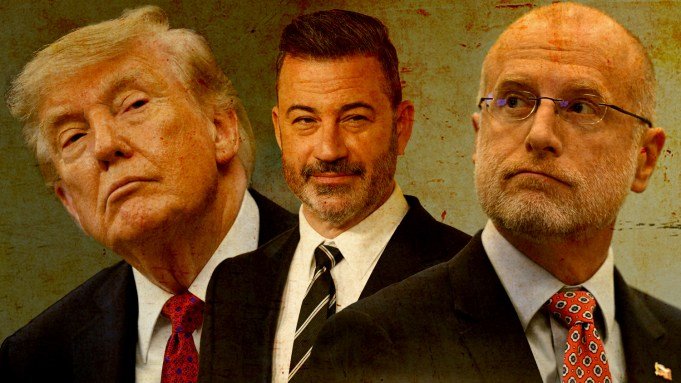
In the latest twist in the Jimmy Kimmel–James Talarico interview drama, the White House is now accusing the ABC late-night host and his network of spinning a fake tale of federal strong-arming.
Put another way, Team Trump insists there was never pressure put on Kimmel and ABC from the Trump administration to scuttle an interview with the poll-topping Texas Democrat and Senate hopeful.
“Jimmy Kimmel is play-acting — as he often does — to create a false narrative about this administration’s policies,” Assistant White House Press Secretary Davis Ingle said Thursday.
“Chairman Carr has not threatened him regarding interviewing James Talarico, or any other candidate.,” Ingle added of Carr, the FCC chairman, just before the second night of Donald Trump‘s GOP midterm convention aka pageant reconvenes. “Any media outlet blindly amplifying Kimmel’s egocentric delusion should insist on proof. Of which they will find none.”
ABC parent company Disney had no comment on the response from the White House when contacted by Deadline. The lack of response is unsurprising given that the company is the midst of an escalating legal and regulatory First Amendment clash with the FCC over station license renewals and charges of political thumbs on the scale.
Wednesday’s Jimmy Kimmel Live! monologue had some distinct déjà vu of what Stephen Colbert went through on CBS last year with Talarico, who is looking to flip the Lone Star state for the Dems for the first time in decades. The L.A.-based Kimmel revealed that an on-air sit-down with Talarico would not air on ABC tonight.
After naming off various political candidates including Trump, who Kimmel has talked to over the years, the Live! host put federal regulatory enforcement under the spotlight. “[The] FCC has threatened me, threatened our show, threatened our network, ABC, our affiliates, our local stations, based on simple, traditional editorial decisions,” Kimmel said. “Guest bookings, it would seem, they don’t like.”
“And so, out of consideration for our local stations, especially our ABC affiliates in Texas who would have to deal with this nonsense, my interview tomorrow with James Talarico will not air on television,” he stated. “It will be posted on YouTube instead.”
James Talarico
Brandon Bell/Getty Images
Interestingly, Talarico, who is in Los Angeles today and Friday for a series of deep-pocket Hollywood fundraisers, was not officially listed as a guest on Kimmel before the host made his announcement. In a separate interview with MS NOW’s Symone Sanders Townsend today on The Weeknight, Talarico called the Kimmel situation the “most dangerous form of cancel culture.” With the knowledge that much of the consumption of late-night shows actually happens online anyway, the candidate went on to say: “I’m still hopeful that we can have this interview on the air. So we’ll see what happens tonight.”
Between Trump in Texas and Talarico in California, we certainly will.
At the same time, with the wounds still fresh from Disney’s sudden sidelining of Kimmel for almost a week a year ago over affiliate fallout from a remark he made about the tragic assassination of conservative activist Charlie Kirk, there is a tendency for some to get lost in the weeds of this. There is also a tendency for some to start shouting about equal-time rules without a read of the fine print.
The equal time rule requires broadcasters that feature political candidates offer comparable airtime to rivals — if it is requested. Daytime and late-night talks shows have long operated under the assumption that they fell under an exemption for news and news interview programming. But in January, Carr issued guidance suggesting that such talk shows may not be free from the rule.
The equal time rule also is often misunderstood. It applies to political candidates in a certain cycle. So, for instance, Ted Cruz’s appearance on The View this week makes no difference because he’s not up for reelection this midterm.
Carr has argued that nothing is preventing late-night or daytime talk shows from featuring a political candidate as a guest. They just have to be prepared to offer time to rivals as well.
As ABC pushes back on Carr’s investigation of The View, the network’s argument is one of selective enforcement as the FCC chairman has not singled out other broadcasters, like conservative talk radio. The network has also pointed to a 2002 letter from the FCC confirming the show’s exemption from the equal time rule. The network also has characterized the equal time rule as unworkable, given that its stations may be on the hook not just for major party candidates but also third-party rivals.
Again, let’s see what happens tonight.
Worth noting that when the now axed Colbert’s interview with Talarico was shifted over to YouTube, it got a huge number of views and the candidate raised more than $2.5 million in just over 24 hours. That might be history worth repeating itself for the Texas Democrat, false narrative or not.
Grayscale Research Head Zach Pandl stated that Zcash ($ZEC) mining offers significantly higher profitability compared to Bitcoin mining under current market conditions, and that mining activity on the Zcash network has increased by more than 2.5 times since the beginning of the year.
The analysis published by Pandl states that Zcash uses a Proof-of-Work (PoW) consensus mechanism similar to Bitcoin, but also offers additional privacy features. It also notes that the strong performance of the $ZEC price has significantly improved the mining economy.
The Bitcoin network is significantly larger than Zcash in terms of scale. According to Grayscale data, the total daily reward distributed to Bitcoin miners is approximately $35 million, while for Zcash it is around $2 million. However, considering the amount of capital and energy used for mining, Zcash is said to offer a higher return.
According to Grayscale’s estimates, Zcash miners earn approximately twice the daily income per piece of mining equipment used compared to Bitcoin miners. In terms of energy consumption, the revenue generated per megawatt-hour (MWh) of Zcash mining is about four times that of Bitcoin. However, it was noted that the equipment used for Bitcoin and Zcash mining is not interchangeable due to the different algorithms employed.
Some industry data suggests that Zcash mining can yield higher returns per MWh than even certain AI and high-performance computing (HPC) cloud services.
Increased profitability in mining has also accelerated the influx of new processing power into the Zcash network. According to standard hashrate measurements, mining activity on the Zcash network increased by more than 2.5 times by 2026.
Grayscale believes this development could create a positive cycle for Zcash. The rise in $ZEC price increases mining activity, while the increased hashrate strengthens the network’s security. A more secure network, in turn, is seen as boosting investor confidence, which in turn can support the $ZEC price.
On Sept. 8, 2026, U.S. President Donald Trump said in a speech that he helped save victims of the 1912 sinking of the RMS Titanic.
Rating:
A rumor that U.S. President Donald Trump claimed in a speech he had saved victims of the 1912 sinking of the RMS Titanic is spreading online.
According to socialmediapostssharingthe claim, Trump said he “saved more people than anybody,” told the ship’s captain to “turn left,” and that “nobody knows icebergs better than [him].” This is despite the fact, of course, that Trump was born in 1946, meaning he was not alive in 1912 when the ship famously sank.
Some readers contacted us to ask whether Trump really said this.
We found that Trump made no such assertion, and the rumor is false.
To investigate the rumor’s legitimacy, we first used search engines such as DuckDuckGo, Google and Yahoo. If Trump truly had mentioned assisting rescuers on the Titanic in a speech, journalists with reputable news outlets, such as The Associated Press or Reuters, would have widely reported on it, and those search inquiries would have uncovered such evidence.
That was not the case. We did not find any credible reporting suggesting that Trump had mentioned the Titanic during a recent speech.
Snopes traced the claim as far back as an X post made on the afternoon of Sept. 8, but could not definitively confirm that post as the rumor’s origin. However, it neatly aligned with a speech Trump gave earlier that day at a tribute event for the Sept. 11, 2001, attacks, in which he repeated a long-standing claim that he participated in relief efforts. A transcript of that speech included no mention of the Titanic.
Given the timing of those remarks, we concluded that Trump’s words about 9/11 in that speech served as inspiration for the fictitious rumor, which we suspect was intended as satirical. However, the earliest account we found that shared the claim did not indicate that in its post. Snopes contacted the X user to confirm our suspicions, but had not heard back by publication.
For further reading, we also investigated whether there was any evidence two firefighters helped Trump escape a building in danger of collapsing after 9/11, as he claimed in the same Sept. 8 speech.
Since the days immediately following the Sept. 11, 2001, attacks, U.S. President Donald Trump, a native of New York City, has made numerous claims about what he saw that day and his involvement in the recovery efforts.
One such claim Trump has repeatedly made is his assertion that he was at Ground Zero within days of 9/11 and that he sent workers to the recovery effort at the site of the World Trade Center.
In September 2026, multiple X users debated the veracity of the claim. For example, one user (archived) wrote, “There’s no proof Trump sent a large group of construction workers to Ground Zero.”
Other popular (archived) posts (archived) said there was no evidence Trump, himself, went to Ground Zero and helped with recovery efforts.
Another X post (archived) alternatively claimed, “President Trump is dropping VIDEO PROOF for every Fake News outlet lying to millions that he was nowhere near Ground Zero after 9/11.”
(X)
Many Snopes readers searched the site to find out if Trump’s claims were true.
A couple of days after the Sept. 11 attacks, Trump told multiple news media outlets that he sent at least 100 workers to Ground Zero to help pull people and bodies out of the rubble, with 125 to 150 more on the way. However, Snopes has never been able to identify any public evidence that crews he hired helped in the immediate recovery of the 9/11 attacks. Since we cannot independently confirm with certainty whether Trump had crews on site somewhere, we are leaving this claim unrated.
Footage of interviews Trump conducted in the immediate days after 9/11 placed him within blocks of Ground Zero. Trump said in those interviews that he visited Ground Zero to encourage the workers he said he brought to assist with clearing rubble at the site. It was not possible to find evidence showing Trump helped clear the pile of debris at Ground Zero, as some posts disputed.
In a phone call with a local news media station immediately after the planes crashed into the Twin Towers, Trump said he watched the towers fall from the window of one of his buildings.
Trump’s September 2026 remarks
On Sept. 8, 2026, in a post on Truth Social (archived), Trump continued to maintain that he was at Ground Zero with construction workers after 9/11, clarifying that it was “obviously not on the same day as the collapse, but shortly thereafter”:
The Failing New York Magazine wrote a story that I wasn’t down at the World Trade Center after the Tragedy of September 11th, because nobody saw me there. Well, I don’t think I would be the first thing on anyone’s mind but, I was there, obviously not on the same day as the collapse, but shortly thereafter, with a large group of Construction Workers.
He then added he “was there as soon as the Law allowed.”
The president was referencing a New York Magazine article disputing his comments about where he was on the day of, and the days following, the attacks.
Trump also made this claim (archived) in a Fox News interview two days prior, in which he added the additional context that he was constructing a new building in New York City. This is the reason, according to Trump at a 9/11 anniversary event on Sept. 8, why he had workers who he could bring to the rubble of the World Trade Center:
I was building a big building in New York and I took the whole crew down there right after this happened and they had no hesitation. Everybody went down with me. We went down as a big group of people. It wasn’t too much we could do, I’ll be honest.
What Trump told the media in 2001
Trump spoke to the media multiple times a few days after 9/11. On Sept. 13, he told a German news channel, that he had more than 100 men down at the site of the World Trade Center and more than 125 on their way. According to the German-speaking reporter, the interview was conducted a few blocks from Ground Zero.
That same day, NBC News interviewed Trump at what appeared to be the same location as his interview with the German news channel. Trump said he had “hundreds of men inside working right now” and was bringing down another 125.
PBS has a recording of another Trump interview from Sept. 13, in which Trump said he had 100 workers helping to dig people and bodies out of the rubble at the World Trade Center, with another 100 to 150 workers “coming.” He told PBS that those workers were “digging out” at the site.
In another interview from that day, Trump told reporters his workers had been at Ground Zero “for about a day and a half.” He said they were men from his company and that a couple had gotten hurt while working at the site. He also said he was just down at Ground Zero and was there to support them.
The evidence
When Snopes first researched this claim in 2018, we spoke to Richard Alles, a retired deputy chief with the New York City Fire Department, who later served as director of 9/11 community affairs for the law firm Barasch McGarry Salzman and Penson. Alles said that in all his time he spent at Ground Zero as a New York City Fire Department battalion chief, starting 20 minutes after the buildings collapsed, he never saw a large group of workers whom Trump had hired at the site assisting with search and rescue efforts. “This is the first I’m hearing of it,” Alles said via phone call. “There would have been no need for that. Between police, fire and the construction crews, we had it all covered.”
Alles added that the construction crews he saw at Ground Zero helping rescue workers were from the trade unions and were not hired by Trump.
John Feal, founder of the 9/11 first responder health advocacy nonprofit the FealGood Foundation, told Snopes at the time that he responded to Ground Zero on Sept. 12, 2001, as a construction demolitions expert and that he didn’t see evidence of hundreds of workers hired by Trump at the site.
The Trump Organization was building in New York City in 2001, according to the Skyscraper Center database on skyscrapers. In fact, it finished a series of residential buildings in the city at Trump Place between 1998 and 2004. He was also building the Trump World Tower residential building near the United Nations Headquarters that year.
However, it was not possible to find verifiable information about how many people, either directly employed by Trump or contracted to work on one of the Trump Organization’s projects, were working on these buildings and in New York City at the time.
A New York Times fact-check from July 2019 referenced Timothy O’Brien, the author of “TrumpNation: The Art of Being the Donald,” who reportedly said the Trump Organization numbered “a little bit over a dozen people” at the time of the attacks, making it impossible to send as many workers to the relief effort as Trump claimed.
Neither the White House nor the Trump Organization responded to Snopes’ requests for corroborating evidence in 2018. This lack of response is consistent with past attempts by Politifact, The Washington Post, The New York Times and Politifact again to reach out to the White House and/or the Trump Organization to corroborate evidence of Trump’s claims.
Snopes contacted the Trump Organization by email to request evidence that its workers or contractors assisted in recovery efforts following the attacks on the World Trade Center. We will update this article if and when we receive a reply.