Blog

  • Avalanche’s Helicon upgrade cuts validator lockups from 14 days to 48 hours

    Avalanche’s Helicon upgrade cuts validator lockups from 14 days to 48 hours

    Avalanche’s Helicon upgrade is scheduled to give validators shorter, auto-renewing commitments while raising the uptime cutoff for rewards and reducing returns at the shortest durations.

    The network upgrade is set to activate on Avalanche Mainnet on Sept. 22 at 15:00 UTC. Validators must install AvalancheGo v1.15.0 beforehand to remain compatible with the upgraded chain.
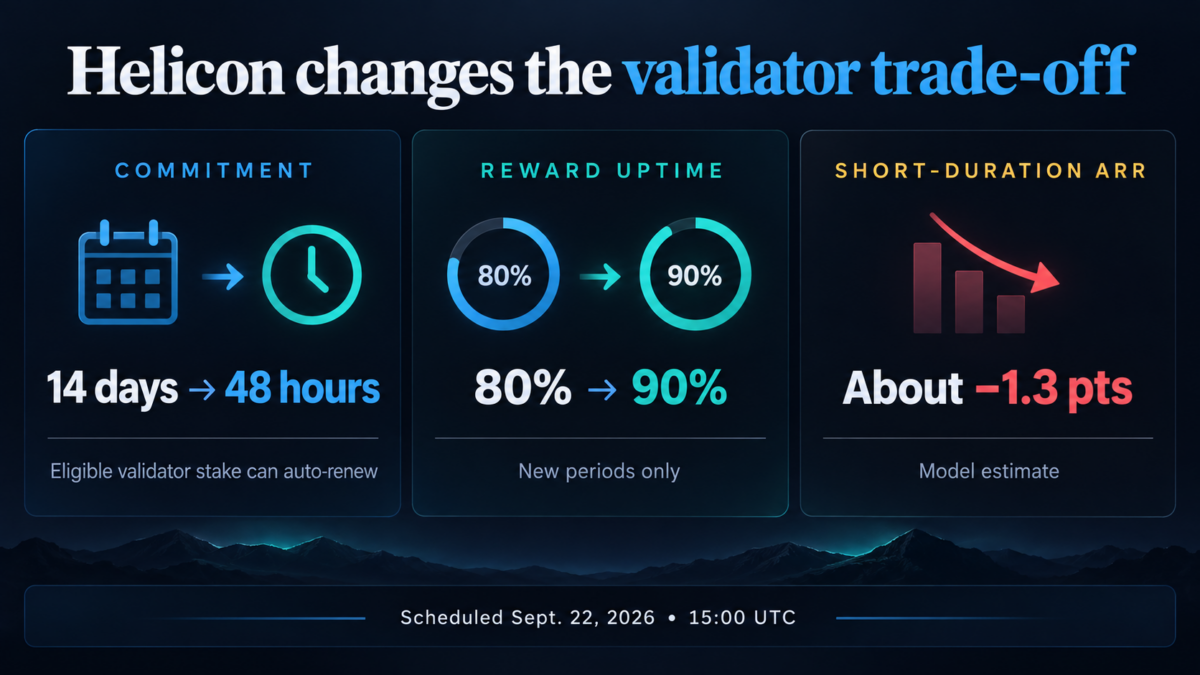
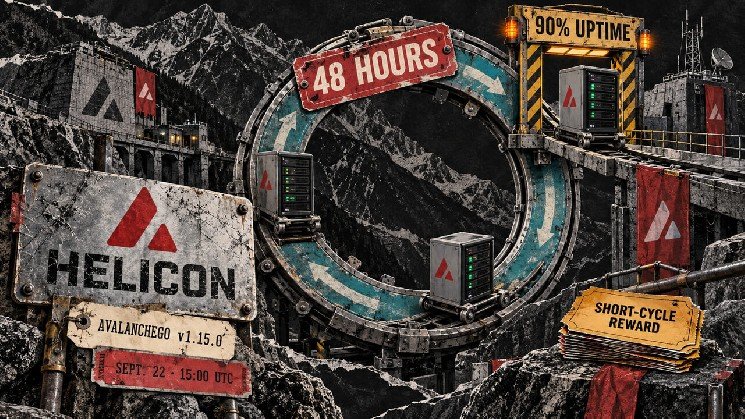
    Infographic shows Helicon reducing validator commitments from 14 days to 48 hours, raising reward uptime to 90%, and lowering short-duration ARR by 1.3 points.

    What changes for validators

    Helicon will cut the minimum Primary Network validation period from 336 hours to 48 hours. It will also let eligible validators automatically begin another cycle when the current one ends, reducing manual signing work and potential reward gaps from repeatedly leaving and rejoining the validator set.

    Operators can choose how much of each cycle’s reward to compound into the next one and can update the configuration for a future cycle. That creates a way to combine brief capital commitments with continuous validation, instead of choosing between a long lockup and repeated manual restaking.

    The feature applies only to the validator’s own stake. Delegations will not auto-renew, and each delegation must fit inside one validator cycle because the validator is not guaranteed to continue beyond that boundary.

    Validation periods that start on or after Helicon activation must achieve at least 90% uptime to earn rewards, up from 80%. The rule is not retroactive: periods that began before activation remain subject to the existing 80% requirement even if they extend beyond Sept. 22.

    Avalanche’s uptime measurement will not change, and rewards will remain all or nothing. Falling below the applicable threshold forfeits the full reward for that period, though the validator’s principal is not slashed.

    For a validator using auto-renewal, missing the threshold has an additional consequence. The position will not roll into another cycle, and the validator will exit. Its principal and rewards accrued in earlier cycles are returned, but the failed cycle’s reward is lost.

    Short cycles reduce how long capital is committed, while the higher threshold raises the operational reliability required to collect each cycle’s reward and continue automatically. For operators, that links continuity to cycle-by-cycle performance without changing how Avalanche measures peer responsiveness or adding a partial-reward buffer.

    How short-duration Avalanche rewards change

    Helicon will also begin a 90-day adjustment to Avalanche’s reward curve. The protocol’s minimum consumption rate, an input that helps determine staking rewards, is scheduled to decline linearly from 10% to 7.5%. The maximum rate at the one-year duration will remain unchanged.

    Avalanche’s modeling estimates that this adjustment will reduce the annualized reward rate at the shortest duration by about 1.3% after the phase-in. The exact realized yield will remain variable because it depends on factors including $AVAX supply, duration, and compounding choices.

    The same modeling projects annual $AVAX inflation falling by roughly 0.5% to 1% and the stake-weighted average duration increasing by about two months. Those outcomes are estimates depending on how validators and delegators respond.

    The mechanical trade-off is more certain: Helicon makes short, renewable validator commitments easier to use, but sets a lower reward at the short end while preserving the one-year rate and demands more reliable uptime for new validation periods.

  • Bizarre ‘footprints’ spotted on Mars leave scientists scratching their heads

    Bizarre ‘footprints’ spotted on Mars leave scientists scratching their heads

    To view this video please enable JavaScript, and consider upgrading to a web
    browser that
    supports HTML5
    video

    Scientists are perplexed by the discovery of what looks like footprints on the surface of Mars.

    Images captured by the Curiosity Rover show an unusual feature on the Red Planet’s surface – broad, shallow pits unlike anything researchers have previously spotted.

    The discovery was made as Curiosity explored Mount Sharp, a vast mountain rising from the floor of Gale Crater.

    The rover has been exploring Mars since landing in 2012, and despite more than a decade on the planet, it continues to find things that puzzle scientists back on Earth.

    These mysterious markings on Mars’ surface were found by the Curiosity Rover (Picture: NASA/JPL-Caltech/MSSS/Cover Images)

    Small pits and depressions are relatively common on Mars. They can form when harder nodules or pebbles embedded in rock gradually weather away, leaving a hollow behind.

    But the newly observed features are different. They are much wider and shallower than similar pits seen previously, and researchers could not identify obvious objects that might once have occupied them.

    The Curiosity team used the rover’s cameras and instruments to examine the features in detail.
    MAHLI and the Mastcam instrument captured overlapping images that can be combined to produce three-dimensional models of the pits and their structure.

    Detail of a mosaic taken by NASA?s Perseverance rover shows a boulder field on ?Mount Washburn? on May 27. Intrigued by the diversity of textures and chemical composition in the light-toned boulder at centre, the rover?s science team nicknamed the rock ?Atoko Point.? Scientists say they are puzzled over a bright white rock never seen before on Mars. The 14-inch-high boulder stands out among a large field of dark rocks and is described as
    Nasa’s Perseverance rover previously captured what appeared to be a boulder field on the Red Planet (Picture: NASA/JPL-Caltech/ASU/MSSS / SWNS)

    The team does not believe the marks are actual footprints, but the unusual formations provide a new clue about the geological processes that have shaped this part of Mount Sharp.

    The surrounding bedrock also provided plenty for Curiosity’s instruments to investigate. Mastcam images and measurements from the ChemCam instrument revealed layers whose texture and structure changed over relatively short distances.

    Maybe astronauts could whip up a mushroom risotto on Mars once Starship gets going? (Picture: Nasa/UFO Sightings Daily)
    People think they spotted a mushroom on Mars in previous images released by Nasa (Picture: Nasa/UFO Sightings Daily)

    Scientists say these variations could indicate changes in the conditions under which the sediments were deposited.

    The rover also examined rough, grey layers that were more resistant to erosion than the surrounding rock. ChemCam, MAHLI and the Alpha Particle X-ray Spectrometer (APXS) analysed the material, which may have a different chemical composition from the bedrock around it.

    After almost 14 years on Mars, Curiosity continues to provide scientists with new glimpses of the planet’s geological history – and, occasionally, features they have never seen before.

    In an image taken in 2013, UFO hunters thought they’d spotted a wrinkly mushroom on the planet’s surface.

  • House Lawmakers Launch Movies, Music, Entertainment & Sports Caucus

    House Lawmakers Launch Movies, Music, Entertainment & Sports Caucus

    EXCLUSIVE: A group of House lawmakers is launching a new caucus focused on the economic and cultural impact of movies, music, entertainment and sports.

    The Movies, Music, Entertainment & Sports (MoMEntS) Caucus is being launched by Rep. Sydney Kamlager-Dove (D-CA), whose district includes Culver City, and she will co-chair it along with Rep. María Elvira Salazar (R-FL) and Troy Carter (D-LA).

    Kamlager-Dove said in a statement, “America’s creative and entertainment sectors are economic powerhouses, generating more than $1 trillion each year and supporting over five million good-paying jobs. Yet for far too long, Congress has failed to give these industries and the workers and creators who power them the attention and support they deserve.”

    The caucus comes amid an industry push for the establishment of a federal film and TV tax incentive as a way to address the flight of production to other countries.

    The caucus will have a broader focus than TV and film, and also include broadcasting; music; sports and live entertainment; fashion and beauty; gaming, esports, and interactive media; streaming and digital platforms; content creators and the influencer economy; literary and publishing; and visual and performing arts, organizers said.

    Salazar said in a statement that the caucus “will bring lawmakers and creative industries together to better understand the challenges they face, protect creative rights, and keep American talent and innovation leading on the world stage.”

    Carter said the caucus “provides a critical opportunity for us to prioritize America’s creative and entertainment industries, which contribute so much to our nation’s history, economy, and culture.”

    The caucus also will focus on innovation, competition, and responsible platform practices, among other aims.

    Other members of the caucus include Rep. Joe Wilson (R-SC), Rep. André Carson (D-IN), Rep. Gilbert R. Cisneros, Jr. (D-CA), Rep. Jared Moskowitz (D-FL), and Rep. Ted W. Lieu (D-CA).

    Among those praising the formation of the caucus were Recording Academy President Harvey Mason Jr., TKO Group Chief Legal Officer Riché McKnight, TikTok USDS Joint Venture”s head of public policy Nicole Nason and Kathryn Busby, head of orginal programming at Starz.

    Congress also has a Creative Rights Caucus, focused on copyrights, First Amendment rights and intellectual property rights. It is co-chaired in the House by Rep. Judy Chu (D-CA) and Rep. Laurel Lee (R-FL), and in the Senate by Sen. Thom Tillis (R-NC) and Sen. Mazie Hirono (D-HI).

    Rep. Laura Friedman (D-CA) and Rep. Brian Jack (R-GA) appeared on a press call on Tuesday to call for a federal film incentive, telling reporters that legislation is being drafted. President Donald Trump announced his support for a federal film incentive earlier this month.

  • House Lawmakers Form American Film & TV Production Caucus Amid Push For Federal Incentive

    House Lawmakers Form American Film & TV Production Caucus Amid Push For Federal Incentive

    Key House supporters of a federal film & TV incentive are establishing a congressional caucus, as work continues on legislation establishing the nationwide production credit.

    The Congressional American Film & TV Production Caucus will “work to revitalize, strengthen, and expand film production across the United States,” per an announcement on Wednesday.

    The founding members of the caucus include Rep. Brian Jack (R-GA), Rep. Laura Friedman (D-CA), Rep. Nathaniel Moran (R-TX), Rep. Linda Sánchez (D-CA), Rep. Nicole Malliotakis (R-NY) and Rep. Tom Suozzi (D-NY).

    The organizers cited the loss of more than 100,000 film and television production jobs since a 2022 peak, and a fall in production spending by 20% while such output grew in the U.K. and Eastern Europe.

    They cited the lure of subsidies offered by foreign countries, and argued that states are unable to compete on their own.

    Supporters of an incentive are emphasizing support on both sides of the aisle.

    President Donald Trump recently announced his support for a federal incentive, and there are hopes among supporters that will generate momentum for congressional action when Congress returns after the midterms.

    Moran, Sánchez, Malliotakis and Suozzi are members of the Ways & Means Committee, which writes tax law. Jack serves on the Rules Committee, essential to getting a bill to the floor.

    Friedman, a former film producer, said in a statement, “Film and television work is leaving this country because 65 other nations decided to compete for these hundreds of thousands of good-paying jobs. A national film tax credit is how we bring that work home, and this caucus is a key step to build support for it.”

    Moran said, “Every production that sets up here ripples out, supporting the businesses around it and pumping money into local communities. We need to keep that going and keep American storytelling in America.”

    Supporters have not given any timeline for introduction of legislation, but it could be in the coming weeks. Friedman and Jack appeared in a press call on Tuesday organized by the Motion Picture Association to outline the urgency for a production credit.

  • Why is inflation rising again around the world?

    Rising energy prices are pushing inflation higher again, forcing major central banks to raise interest rates.

    For decades, central banks treated oil shocks as temporary, something to wait out, not hike rates over.

    And that’s because raising rates in this case can slow growth without bringing down the price of a single barrel of oil.

    But this time might be different.

    Oil surged past $100 a barrel last week.

    Six months into the Iran war, the Strait of Hormuz remains disrupted and Houthi advances threaten Saudi oil supplies, too.

    Energy costs are feeding through into household and business bills.

    That is forcing policymakers to reconsider the old rulebook even though tighter policy means higher borrowing costs.

  • How to Watch the 2026 Campeones Cup Game Live (Even for Free)

    How to Watch the 2026 Campeones Cup Game Live (Even for Free)

    How to watch for free: You may be able to watch the Inter Miami vs. Cruz Azul Campeones Cup match for free by signing up for an Apple TV free trial.


    Soccer tournaments are in full swing across the globe, with major competitions including the UEFA Champions League, Premier League, and La Liga restoring some of the buzz we experienced during the FIFA World Cup. In the US, the MLS season is getting closer to its business end, but before we head there, reigning MLS champions Inter Miami CF will face Mexico’s Liga MX champions Cruz Azul in the Campeones Cup on Wednesday.

    The game will be played in Miami this evening. Here’s everything you need to know about the Campeones Cup and how to watch it live from anywhere in the world.

    Read More: How to Watch the 2026 FIFA U-20 Women’s World Cup


    When Is the 2026 Campeones Cup Match?

    The 2026 Campeones Cup game between Inter Miami CF and Cruz Azul will kick off today at 8:00 pm ET on Wednesday, Sept. 16. The venue will be the Nu Stadium in Miami, Florida.


    How to Watch Inter Miami CF vs. Cruz Azul Campeones Cup Game Live?

    Apple TV is the exclusive official broadcaster of the Campeones Cup, so fans looking to watch the match online will need to do so through Apple TV.

    The game will be available to fans across the globe with an Apple TV subscription, which starts at $14.99 per month in the US.


    How to Watch the 2026 Campeones Cup Match for Free

    As mentioned earlier, you need an Apple TV subscription to watch the Campeones Cup live. Thankfully, though, Apple offers first-time subscribers multiple ways to access the streaming service for free for a limited time.

    If you’ve recently bought a new Apple device and haven’t subscribed to the streamer before, you can redeem a three-month free trial within 90 days of purchase.

    Apple TV also offers a seven-day free trial for first-time subscribers through its dedicated app, and Amazon Prime Video. Purchasing the Apple One bundle also gets you a 30-day free trial.

    apple tv logo


    What Is the Campeones Cup?

    The Campeones Cup is an annual exhibition match played between the reigning soccer champions in the US and Mexico.

    For MLS, qualification is straightforward: the winner of the MLS Cup represents the league. For 2026, that would be Inter Miami, courtesy of their MLS Cup win in the 2025 season.

    Mexico’s system, however, is a little complicated. The country’s Liga MX season is split into two tournaments: Apertura (first half) and Clausura (second half), each with its own champion.

    If the same team wins the Apertura and Clausura tournaments, it gets a direct entry into the Campeones Cup. If the tournaments have different winners, though, they’ll face each other in a separate game called the Campeón de Campeones. The winner of that match then becomes Liga MX’s representative for the Campeones Cup.

    For 2026, Cruz Azul won the Clausura, and Toluca won the Apertura. Cruz Azul defeated Toluca in the 2026 Campeón de Campeones, earning them the spot as the qualifier from Mexico.


    Will Lionel Messi Play in the 2026 Campeones Cup?

    Lionel Messi in action against Nashville SC on Saturday, Sept. 12.

    Lionel Messi in action against Nashville SC on Saturday, Sept. 12. (Credit: Chris Arjoon/Icon Sportswire via Getty Images)

    Based on blogs on MLS’s official website on other promotional materials, it is quite clear that Inter Miami’s captain, Lionel Messi, will be part of the 2026 Campeones Cup game against Cruz Azul.

    Messi recently retired from international soccer after a sensational World Cup run to the final with Argentina, and his sole focus currently is club soccer with Inter Miami. He arrives for the Campeones Cup game in decent form, having scored five goals in his last four appearances.

    Inter Miami also have some other big names in their squad, including Luis Suárez, Casemiro, and Rodrigo De Paul.

    About Our Expert

  • Peter Max, the Psychedelic Pop Artist, Dies at 88

    Peter Max, the Psychedelic Pop Artist, Dies at 88

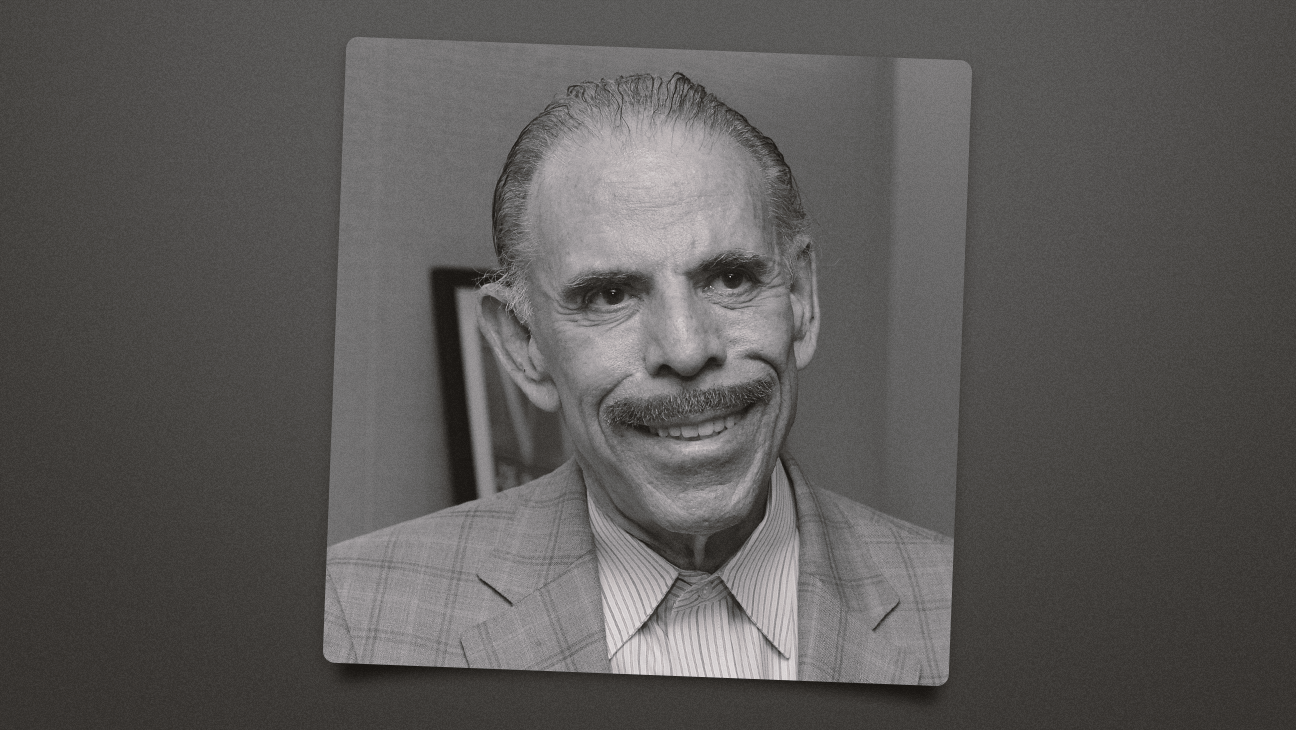
    Peter Max, whose colorful, psychedelic pop art expressed the optimism of the “flower power” movement of the 1960s and graced everything from postage stamps to a cruise ship, has died, his son said in a written statement Wednesday. He was 88.

    Max died on Monday, the statement said. No cause was given, but he had been suffering from advanced dementia.

    Max began his career in graphic design in the 1960s, and his swirly, colorful, instantly recognizable designs epitomized the era’s “flower power” art. But thanks to his prolific output and fun, accessible style, Max’s work remained popular well into the 21st century.

    Max was the official artist for the Olympics, the Super Bowl, the Indianapolis 500, the World Cup, the World Series and many other events. His art appeared on a Boeing 777 airplane and a Norwegian Cruise Line ship. His portrait subjects ranged from U.S. presidents to Taylor Swift.

    But in his first flush of success in the late 1960s and early 1970s, his murallike tableaus of flowers, the cosmos and cartoonish figures — all in vivid colors like turquoise, orange and neon green — seemed to be everywhere. Dorm room walls were plastered with his posters. Household furnishings like clocks and bedspreads sported his designs.

    He even created covers for the Manhattan Yellow Pages, a business phone directory distributed to millions of people. Max himself was featured on the cover of Life magazine in 1969, his trademark dark, bushy mustache framing a hearty grin.

    “We will remember his extraordinary creativity, his warmth, his curiosity, and the way he saw beauty and possibility everywhere,” his son Adam Max said in the statement announcing the death. “His art became part of American culture, but the man behind that art — the father we knew and loved — is the person we will miss most.”

    Family Fled Nazi Germany

    Max was born Peter Max Finkelstein in 1937 to a Jewish family in Berlin. They fled Nazi Germany for Shanghai when he was a baby and later spent time in Tibet, Israel and Paris before settling in New York City when Max was 16. By then, he said in an interview, he was already “a huge fan of American culture”: comics, movies and “all the jazz music.”

    Max studied in New York at the Art Students League, the School of Visual Arts and Pratt Institute. In 1961, he opened a graphic design studio with friends. His bold, unique style was an immediate hit with ad agencies, publications, the corporate world and in pop culture.

    That led to a booming commercial business. “My work was really, I would say, almost exploited,” he said. “It was on mugs, it was on bedsheets, it was on dresses, it was on silks and scarves and ties — 70 product lines.”

    But what “bothered” him about all that success, he said, was that he “wasn’t painting anymore.” So he shut the business down for a time in the early 1970s to reconnect with his art. One of his biggest projects after returning to public life was a series of portraits of the Statue of Liberty, painted at the White House at the invitation of First Lady Nancy Reagan in 1981.

    Max weathered various controversies in his personal and professional life. He pleaded guilty to tax fraud in 1997 after the IRS alleged he concealed more than $1 million in income from his art. He was originally sentenced to two months in prison but ultimately was allowed instead to serve the time in a work-release program, pay the back taxes and a $30,000 fine, and perform 800 hours of community service teaching art in Harlem schools.

    In 2015, his family life became tabloid fodder in a back-and-forth between his second wife, Mary Max, and Adam, his son from a previous marriage. The son and a guardian alleged that Mary Max had depleted his finances and browbeat him. She in turn claimed that they had kept him from her against his will and stolen paintings that belonged to her. Accounts of court appearances described him as frail.

    In 2019, Mary Max died by suicide two weeks after The New York Times published a story detailing legal battles over his work.

    His Art Had a Bright, Happy Vibe

    Those dark allegations contrasted with the relentlessly bright, happy vibe that infused his work. “The colors are strong, sometimes loud, sometimes raw and sometimes harmonious, but always powerful, and the images are always on the side of the peaceful nature,” he said. “I don’t discuss in my paintings negative things, I don’t dwell on it in my mind and don’t dwell on it in my canvasses.”

    In another interview, he summed it up like this: “I see everything through rainbow eyes.”

    Although accounts of Max’s career sometimes lament that he was not taken seriously by the art establishment, in fact his work has been featured in dozens of museum exhibitions around the world. New York’s Museum of Modern Art owns seven of his works.

    The art for the Beatles’ “Yellow Submarine” is sometimes mistakenly attributed to Max, but the design for the album cover and “Yellow Submarine” movie are officially credited to the late Heinz Edelmann. Max claimed in a 2012 interview he did the original “Yellow Submarine” design before handing it off to Edelmann. But the website for New York’s Park West gallery, a longtime dealer of Max’s art, described Max’s involvement in “Yellow Submarine” as “early consulting work.”

    Max was, however, friends with the Beatles and many other celebrities. He also had a deep interest in Eastern spirituality. He brought “Swami” Satchidananda Saraswati to the U.S., and helped him popularize yoga here.

    Max’s first marriage to Elizabeth Nance ended in divorce. In addition to his son, he is survived by a daughter, Libra Astro.

  • ‘South Park’ Returns as ‘South America’ as Plot Stays Local and Trump-Free

    ‘South Park’ Returns as ‘South America’ as Plot Stays Local and Trump-Free

    South Park, one of the longest-running comedy series on television, returned to Comedy Central for its 29th season after making the unexpected move of changing the show’s name to “South America” — a gag that creators Trey Parker and Matt Stone announced as a possible marketing gimmick but is certainly also a jab at President Donald Trump. Wednesday night’s season premiere provided little explanation as to when and why the name change happened for the fictional Colorado town, but it does offer a vague metaphor for current U.S. politics around immigration.

    Seasons 27 and 28 of South Park had shifted from the show’s traditional stand-alone episodes to a season-long arc centered on fictionalized happenings within the White House, including President Trump’s clandestine affair with Satan. With the premiere, the show appears to be returning to its traditional format — stand-alone episodes that may still carry overarching themes. It’s not entirely clear whether we’ve seen the last of South Park‘s satirical Trump character and the supporting cast of cabinet officials, hangers-on and vice-president-turned-lover J.D. Vance, but they’re absent from this one-off episode, which stays within the confines of the titular town.

    “Inspired by the bravery and patriotism of Apple and Google, we are changing the name of ‘South Park’ to ‘SOUTH AMERICA,’” Parker and Stone said in a Sept. 8 statement announcing the name change. One might have expected the season premiere to show Trump signing an executive order renaming Lake Ontario “Lake America” before eventually getting to South Park. Instead, the season begins after the name change has already been accepted — essentially baking the joke into the show, as characters refer to their town as “South America” without question. Only once does a character allude to the name change itself, and it’s clear the moment was divisive for the town.

    What the episode offers is a straightforward plot that, as usual, hides a metaphor for a social issue beneath dialogue soaked in double entendres. It begins with Eric Cartman faking being bullied at school to trick his mother into buying him an e-bike — a vehicle clearly designed for adults that has become the one thing every kid in town must have. Ever the earnest pushover, Liane Cartman complies, and soon the boy is terrorizing the town on his new, dangerous ride. Eventually, more of the town’s children are wreaking havoc around South America, crashing through diner windows and scaring pedestrians — a clear metaphor for groups of immigrants moving into American towns.

    Early in the episode, Kyle tries his own version of Cartman’s ploy on his mother, but he has to go through his father, Randy, who arrives home in flashy spandex and sneakers, now a 10-speed cyclist commuting in the bike lane that’s being overtaken by kids on e-bikes. Randy soon forms a gang of 10-speed riders that begins roughing up anyone in their way. They’re not especially fast, though — one motorist bemoans the “old farts” blocking the road. Still, the gang feels like a stand-in for Immigration and Customs Enforcement as they comb the town trying to eradicate the e-bike kids.

    As the kids’ South American youth biker gang is hunted by Randy’s gang of adults, the episode piles on satire aimed at the companies and public figures who have fallen in line as Trump took a marker to traditional maps. Google is repeatedly used to search things like “how to get the laws changed in South America?” (the answer: bribing government officials) and “how can police respond to gang violence in South America?” (the answer: extreme violence).

    The episode also spoofs the massive cultural anticipation ahead of the release of Grand Theft Auto VI, the video game sequel slated to arrive in stores in November — making it a natural stand-in for the upcoming midterm elections, which “the libs” of Trump’s America are looking to for drastic change. “Hopefully, things will get better in November. That’s when Grand Theft Auto Six comes out,” one character says. Someone has to do something — we need to get these kids off the streets and back inside on their phones.

    Parker and Stone have packed these metaphors into the premiere, a style that marks a clear departure from last season’s grotesque White House storylines. The question now is whether they plan to run this metaphor across the season and carry on with the e-bikes plot or if they will bring a new issue into the foreground and subject it to their now more subtle satire.

  • Sonia Rovai Appointed Disney Italy VP of Original Production (EXCLUSIVE)

    Sonia Rovai Appointed Disney Italy VP of Original Production (EXCLUSIVE)

    Sonia Rovai, one of Italy‘s most respected TV and film production executives, has been appointed VP of original production at the Italian unit of The Walt Disney Company.

    Rovai, who since 2024 served as CEO of Fremantle-owned Wildside — the Rome-based company behind “My Brilliant Friend” and, more recently, Netflix’s hit series “The Monster of Florence” — will report to Angela Jain, head of content, Disney+ EMEA.

    In her new role, Rovai will lead Disney+’s Italian team and be “responsible for scripted and unscripted local original productions, including production management and business affairs,” according to a Disney statement.

    Prior to heading Wildside, Rovai led Comcast-owned pay-TV serice Sky Italia’s original series department from 2016 to 2024. During her stint, she shepherded over 80 Sky Original productions including international standouts like “Gomorrah,” “The Young Pope” and “ZeroZeroZero.”

    “Sonia joins us at a pivotal moment of growth as we scale our originals across the world,” Jain said in a statement. “Italy is a key market for us, and following the greenlight of ‘Murder on Lake Garda’, our goal is to champion local content that enriches and complements our global line-up with true cultural authenticity and local specificity. Sonia brings an incredible wealth of experience to the team and can’t wait to work with the very best of the Italian creative industry.”

    The “Murder of Lake Garda” series, which is based on Tom Hindle’s eponymous Sunday Times bestseller, is being directed by Laura Bispuri (“Sworn Virgin,” “Daughter of Mine”) with cast details still under wraps.