Cineplex has put itself up for sale while unveiling former Landmark Cinemas head Bill Walker as its new CEO, replacing a retiring Ellis Jacob.
“As part of the strategic review, the board will consider a range of alternatives, including, but not limited to, a potential sale of the company. The board has engaged Goldman Sachs and TD Securities as co-financial advisors in connection with the strategic review,” Cineplex, the Canadian exhibition giant, said in a statement via its board of directors.
Cineplex operates around 1,606 movie screens at 156 locations across Canada, and is a major launchpad for Hollywood tentpoles and other films screening north of the border. Putting up a for sale sign gets Cineplex back to where it was the last time Jacob sought an exit from the exhibition giant in 2019.
At that point, U.K. exhibition giant Cineworld Group unveiled a deal to acquire Cineplex for $2.1 billion to create a company with more than 11,200 movie screens globally. But a year later, as the pandemic took hold on the exhibition industry, Cineworld abandoned the movie theater deal to create one of the world’s largest cinema companies.
Cineplex was subsequently awarded damages of $1.236 billion in lost synergies from the abandoned takeover deal, but was unable to collect those funds after Cineworld went through a Chapter 11 bankruptcy process in the U.S.
That left Jacob and his executive team at Cineplex having to manage their balance sheet and greatly disrupted business in Canada during the pandemic. The latest attempt to possibly sell Cineplex comes amid better times for the Canadian exhibitor as it rides a Hollywood box office rebound.
Jacob, a Canadian exhibition industry pioneer, in mid-2025 announced he will stay on at the movie theater chain until the end of 2016 to assist a transition to new leadership. That includes Walker being named as the new CEO. Walker previously served as CEO of Landmark Cinemas, Canada’s second-largest theatre exhibitor, which operates as part of Kinepolis Group NV, a publicly traded cinema company based in Belgium.
Walker helped seal Landmark’s sale to Kinepolis in 2017, while continuing to run the company under Kinepolis’ public ownership. Jacob will become a special advisor to the Cineplex board as it looked to strategic alternatives to maximize returns to shareholders.
“Bill brings a unique combination of industry expertise, operational leadership, transaction experience and strategic perspective. Given his deep understanding of the theatrical exhibition industry and proven leadership experience, the board is confident that Bill is exceptionally well positioned to lead Cineplex. At the same time, the board believes it is appropriate to conduct a comprehensive review of strategic alternatives available to the company,” Cineplex board chair Phyllis Yaffe said in a statement.
Cineplex added no timetable for its strategic review process has been set as the company added “there can be no assurance” that a transaction will follow as the company continues to operate as usual.
“Having spent much of my career in the exhibition industry, I have great respect for what the Cineplex team has built. I believe the company possesses an exceptional platform for growth, a powerful brand and meaningful opportunities to create value. I fully support the Board’s commitment to evaluating strategic alternatives and look forward to working closely with the board, management team and other stakeholders as the strategic review progresses,” Walker added in his own statement.
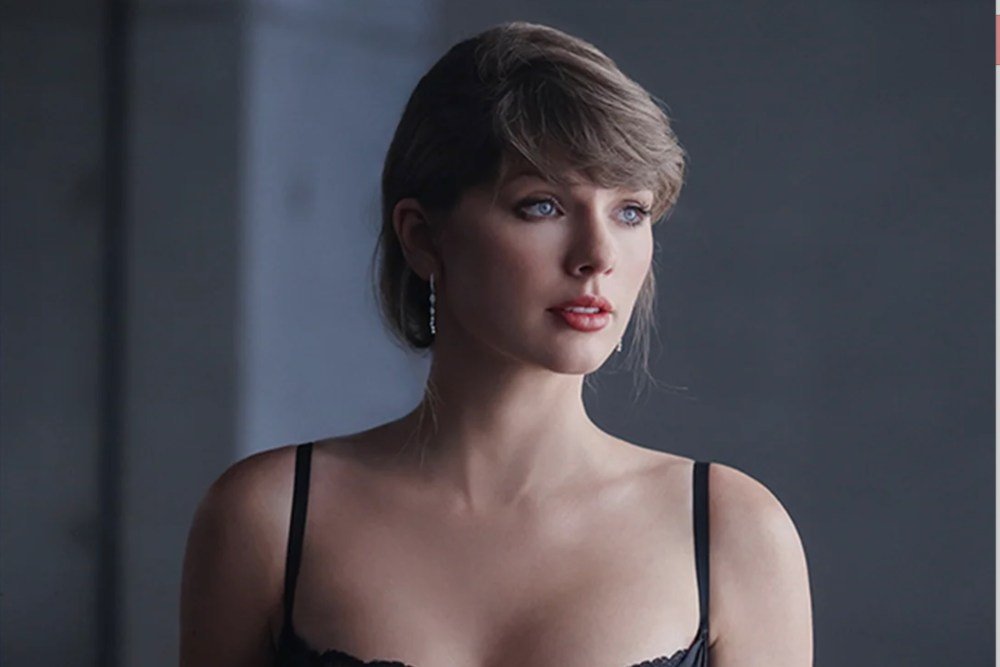
No surprise here: “Patient Zero,” the song Taylor Swift announced Tuesday, is not an orphan. The pop superstar followed news od the single a day later with a Wednesday morning reveal for a project that includes four new tracks —”The Life of a Showgirl: The Encore.”
On social media, Swift wrote, “About a year ago, you guys did a truly unfathomable thing. Something that completely blew my mind… You gave ‘The Life of a Showgirl’ the biggest first week for an album in history. I took a trip to Sweden to celebrate with Max and Shellback, my two collaborators on this album. Really we just wanted to reflect and take in how grateful we were for the moment we were in, but there was a studio there and we did what we do when we feel anything at all: We wrote more songs. I hope you love them, because they were born out of pure gratitude for your exuberance for and celebration of the album we made. ‘The Life of a Showgirl: The Encore’ including four new songs is out on Friday and available to pre-order and save now.”
Prior to “Showgirl,” she hadn’t worked with that dynamic duo since 2018’s “Reputation,” but apparently the reunion went so well, she couldn’t resist an extension.
For now, it puts to bed the previous widespread conjecture that Swift was certain to put out “Taylor Swift (Taylor’s Version)” this fall to celebrate the 20th anniversary of her debut album. But setting that aside for an all-new collection is a tradeoff most fans will be happy with. So, “Our Song (Middle Aged Version)” can wait. A
The 21st century has not been terribly kind to broadcast TV. The DVR, a spike in cable original programming and, most recently and seriously, the rise of streaming to become the primary way people consume TV, have battered the network model for the past couple of decades.
The stats don’t lie: Over the past year, broadcast networks have averaged only about 21 percent of all TV use in the United States, based on Nielsen’s Gauge measurement. The Oscars are moving to a streaming platform, and the Emmy Awards may follow. Late night shows are suffering deaths by a thousand cuts (or, in CBS‘ case, one big one).
Obviously, there’s a “but” coming, and here it is: Despite the structural forces weighing on the network business, there’s also a good deal of optimism among those who work there. Network shows don’t draw the on-air ratings they once did, but they make up a lot of the difference when they hit streaming platforms. The media giants that own both networks and streaming services seem to have figured out that the two platforms can support one another. And among the people who actually make the shows, there’s a growing sense that the network model of producing shows on a set schedule is a good way to do business.
UTA partner and TV literary agent Mickey Berman, who represents several writers and showrunners, puts things pretty succinctly: “When you look at the combined package, the shows are working and people are watching them.”
Part of the appeal of network TV, both for audiences and creatives, is its consistency: The expectation is that they’ll be on the air every year, usually with 12 to 22 episodes per season. The early years of the streaming boom promised a reprieve from the admittedly grueling schedule of a full network season — but as that model has moved from still fairly regular (if shorter) seasons to eight or 10 episodes every couple of years, the network model has come back into vogue (see also: The Pitt and HBO Max’s recently ordered How to Survive Without Me and FX and Hulu’s The Bear, among other streaming series that have approximated the network model).
“I think for a while, people were a bit seduced by streaming and enjoyed some of the creative freedom and other things about it,” Lisa Katz, president scripted content for NBC and Peacock, tells The Hollywood Reporter. “But over time, broadcast shows have continued to show they’re consistent, and I think that they continue to be high in quality and bring in fans. There’s something about it — maybe the new thing felt great, but NBC is celebrating its 100th anniversary, and there’s a reason it’s had the staying power and the legacy that it has.”
Berman also notes the “tremendous amount of stability” in working on a network series. For writers, actors, directors and other crew members, “They know that if a show works, they’re going to be shooting or writing for a certain period of time with more episodes and hopefully more seasons.”
Michelle and Robert King, the creators and showrunners of The Good Wife, The Good Fight and CBS’ freshman drama Cupertino (among other shows), have moved back and forth between broadcast and streaming. The network business has its pluses, they say.
“Selfishly, one thing about doing broadcast shows is they don’t get lost,” Michelle King says. “There are a few streaming shows that one hears about, but there are so very many that seem to just get lost that no one has heard of. Broadcast shows tend to get marketed. People have heard of them, and people get to see them. We’re super proud of Cupertino, so we’re thrilled that people are going to get to see it.”
Robert King adds that he’s found — somewhat counterintuitively — that they have more control over a network show than they might on a streaming series.
“You don’t have a lot of non-writing producers looking over your shoulder because of the speed with which everything needs to be done,” he says. “I mean, they talk about streaming doesn’t know how to do 20 episodes a year anymore. Writers do. It’s just the non-writing producers want to [sweat] everything. … I like doing 20 episodes because you can be intuitive in the writing and the stories you tell.”
Amy Reisenbach, the president of CBS Entertainment who greenlit Cupertino, says she has fielded calls from creators and showrunners looking to return to a broadcaster after making streaming shows.
“There is nothing like waking up the next day, from a writer’s perspective and executive’s perspective, in my mind, to getting the ratings and getting a [glimpse] into what you did last night,” she says. “And when you’re waking up to 8 million-ish viewers for Tracker and Marshals the next day … I don’t think you can underestimate the power in that and knowing how many people tuned in for your show the night before.”
The stability of network TV extends to the number of scripted series at the networks as well: 56 shows are due to air on the big four broadcasters in the 2026-27 season, up from 50 (plus one limited series, Fox‘s The Faithful) last season. ABC, CBS, Fox and NBC combined canceled only six scripted series (ABC kept all 10 of its shows), while adding a dozen to their rosters.
“There’s been a renewed interest from the talent base in broadcast because of the stability, because of the quicker turnaround, because of the opportunity for more episodes and more seasons, and that’s not just financial,” Berman says. “It’s also about building a relationship with the audience, where they fall in love with characters and can see them on a schedule that they expect. Grey’s Anatomy has been on the air for so long. People love those characters. But even [for shows that haven’t been on for as long], people want to grow with those characters.”
NBC’s Katz also led the charge for a mini-revival of pilot season in the spring, making eight of them and picking up four (dramas Line of Fire and The Rockford Files and comedies Newlyweds and Sunset P.I.). Networks continue to develop shows year-round and using various methods to develop shows, from smaller pre-pickup writers rooms to straight-to-series orders. But the pilot process has a lot of upside, from Katz’s perspective.
“It benefits the show and gives us the opportunity to launch it in the most successful way possible, and to make some adjustments, whether it be in casting or a storyline, when we still have time to do it,” she says. “That’s one of the things I’ve loved about broadcast that’s really challenging in streaming. In streaming, the way that we’re doing it, you have maybe three weeks left of shooting when you’re seeing the first cut. It’s very hard to make adjustments.”
One other key factor fueling the optimism around network shows is that in the past few years, media giants have recognized that broadcast and streaming can be complementary rather than mutually exclusive. That network shows bring in sizable audiences when they reach streaming is hardly new information, but better Nielsen measurement of streaming — and the public release of more data — has helped bring the point home.
For the 2025-26 season, about half of the top 25 shows in cross-platform ratings originated on broadcast networks. Nine network series (not including sports and news programs) averaged 10 million or more cross-platform viewers, and four others came in just below that threshold. With ABC, CBS and NBC’s parent companies each owning a big streaming service (Hulu/Disney+, Paramount+ and Peacock, respectively), the broadcast-streaming symbiosis is good for both aspects of the business. (Fox has a next-day streaming deal with Hulu for its shows, and some are also available on its own platforms, free streamer Tubi and the year-old Fox One subscription platform.)
“We have always considered Paramount+ and CBS parts of a larger ecosystem that includes Pluto as well,” Reisenbach says. “We have a great partnership with Cindy [Holland] and Jane [Wiseman]. They’re obviously working on their shows, which are very different than our shows, but we’re conscious of wanting to be complementary. I’m so appreciative of how grateful they have been for the next-day programming from CBS. They totally get what we do and the kind of shows that we make, and they have created this lane for us.”
The network-streaming relationship and the uptick in series orders has Berman feeling good about the next couple of years for his clients, and for network TV.
“I think in the next couple years, there’s going to be tremendous opportunity to capitalize on that [momentum], and hopefully new models come from that about how our clients participate,” Berman says. “I’m really optimistic. I feel like the worst is definitely behind us, and I’m glad we have a four-year [labor] deal so that we can really build some momentum toward the future.”
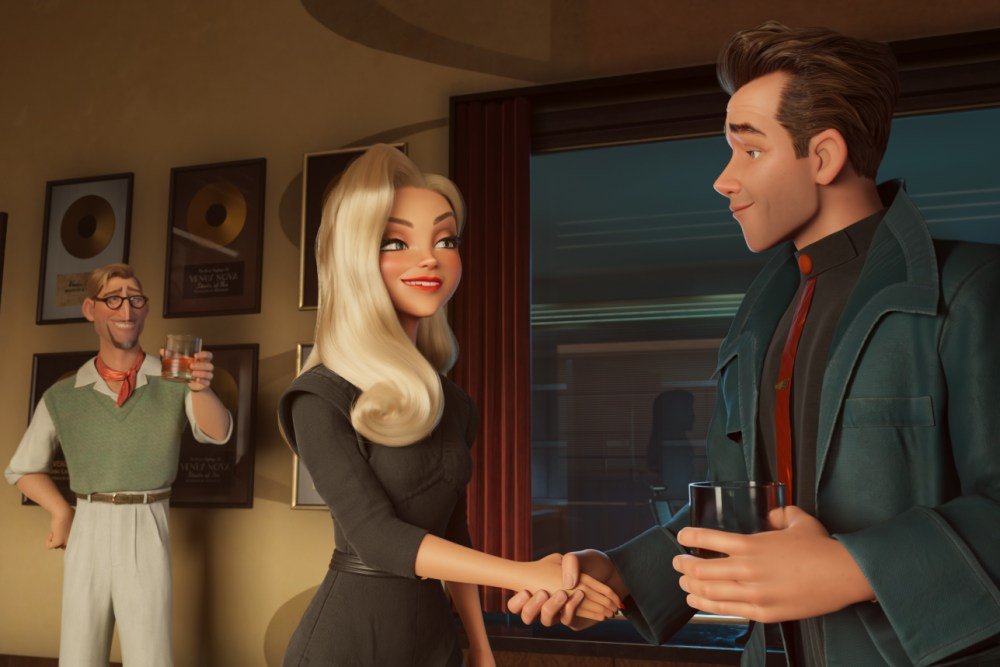
Netflix has released the trailer for “Ray Gunn,” an upcoming neo-noir, science fiction mystery film from Brad Bird.
It follows Raymond “Ray” Gunn (Sam Rockwell), a private eye detective, and Venus Nova (Scarlett Johansson), a pop star facing a scandal that could end her career — or her.
The trailer teases Gunn in his futuristic home world inhabited by humans and aliens. Alongside his alien colleague Eyera (Tom Waits), Gunn embarks on a case wrapped up in scandal and mystery. The cast also features Patton Oswalt, Kathryn Hunter, John Ratzenberger and Jamie Costa.
The project has been in the works for a while for Bird, who first had the idea after watching a trailer for the then-upcoming “Peter Gunn” (1989). The film was intended to be produced by Turner Feature Animation in the 1990s, but was shelved when Bird directed 1999’s “The Iron Giant” (Warner Bros.). In 2021, Bird signed a deal with Skydance Animation to direct “Ray Gunn,” a move that would reunite him with John Lasseter. During Lasseter’s time at Pixar, Bird wrote and directed “The Incredibles,” “Ratatouille,” and “Incredibles 2.” The project also reunited Bird with David Ellison and Dana Goldberg, who were at Skydance Media when Bird directed “Mission: Impossible – Ghost Protocol.”
Bird, Lasseter, Ellison, Goldberg and Lisa Beroud are producers on the film. Bird eventually stepped away from Pixar’s upcoming “Incredibles 3” (2028) to focus on “Ray Gunn.” He was replaced by Peter Sohn (“The Good Dinosaur,” “Elemental”).
“Ray Gunn” will be released on Netflix on Dec. 18.
Comedy veterans Colin Mochrie (“Whose Line Is It Anyway?”) and Andrea Martin (“Evil,” “My Big Fat Greek Wedding”) have boarded “Any Way You Want Me,” joining Callan Potter (“Heated Rivalry”), Cobie Smulders and Iris Apatow in Rana Strazza’s romantic drama, which is now shooting in Toronto.
Strazza writes and directs the film, which takes place in 1950s New England and is designed to play like a picture from that period. Fina Strazza stars as Billie Blake, who comes back to her hometown after her mother comes into a dress shop through an inheritance. Next door is a diner run by Calvin Wilkes (Brian Altemus), her boyfriend from high school. Thrown together with him again, Billie has to confront the honesty and the deception that brought their relationship to an end.
Smulders’ credits include “Shrinking,” “How I Met Your Mother,” “The Lincoln Lawyer” and the Marvel Cinematic Universe. Apatow appears in Alexandra Pechman’s Toronto title “Magazine” and has “The Hunger Games: Sunrise on the Reaping” on the way. Altemus is known for “Brilliant Minds” and Harlan Coben’s “Shelter.”
In keeping with the classic Hollywood pictures it draws on, the film has assembled a cast steeped in stage as well as screen work. Martin, a Broadway veteran, has won two Tony Awards from four nominations. She is also an alum of “SCTV” and has worked opposite Steve Martin, Catherine O’Hara, Eugene Levy and John Candy. Mochrie likewise came up through theater before improv made him an international name.
Fina Strazza made her Broadway debut at eight, playing the title role in “Matilda.” In 2025 she landed a Tony nomination for best performance by a featured actress in a play for “John Proctor Is the Villain,” in which she appeared with Sadie Sink. Smulders won the 2017 Theatre World Award for her debut performance in Noël Coward’s “Present Laughter,” opposite Kevin Kline.
“It’s great to get a chance to return to my stage roots with the pathos of this film, which started when I studied at Studio 58 in Vancouver, and of course at Second City,” Mochrie said. “Improv and theater are closely related, and there’s something incredibly exciting about bringing that experience into Rana’s world. I’m thrilled to be working with Andrea, Fina, and the rest of this wonderful cast.”
Marium Carvell, Rebecca Ablack, Jennifer Hui, Michaela McGowan, Robert Fulton and Joseph Daly complete the ensemble.
First Magnitude Films and Stagg Forrest Films are producing. The shoot is set to wrap in mid-October.
Fina Strazza is repped by Paradigm, Mara Entertainment and Jackoway Austen Tyerman. Smulders is repped by UTA and Gang, Tyre, Ramer, Brown & Passman. Altemus is repped by Innovative Artists and Linden Entertainment. Potter is repped by The Talent House and David Dean Management. Apatow is repped by UTA, 3 Arts Entertainment and Ziffren Brittenham LLP. Mochrie is repped by The Characters, and Martin by Play Management and Gary Gersh at Innovative.
Thirty-five Pennsylvania Republicans voted against a bill that guaranteed daily recess for children in the state.
Rating:
Context
It was unclear whether the Republicans who voted against House Bill 1505 did so specifically because of the recess provision or for other reasons.
In September 2026, a claim (archived) circulated online that 35 Pennsylvania Republicans voted against a bill that guaranteed daily recess for children in the state.
For example, the pro-Democratic X account @DemzDeliver wrote, “Democrats pass bill guaranteeing recess everyday to Pennsylvania students. 35 Republicans voted no.”
The claim was true. Thirty Pennsylvania Republicans in the House and five in the Senate voted against House Bill 1505, which, alongside other measures, included a section that made recess mandatory from kindergarten through fifth grade.
It was unclear whether the Republicans who voted against House Bill 1505 did so specifically because of the recess provision or for other reasons.
Rep. Scott Barger, who was the only representative to vote against the bill twice, told Snopes via a spokesperson that he voted against the bill because “the overall spending amount of the state budget was too high to be palatable to me, plus the 80 pages don’t actually contain meaningful reforms.”
House Bill 1505, which Pennsylvania Gov. Josh Shapiro announced (archived) that he had signed into law on Sept. 6, 2026, contained a number of changes to the state’s Public School Code of 1949.
Shapiro wrote:
Before this year, schools in Pennsylvania weren’t required to give students dedicated recess time so they could take a break from learning, get outside, and just be kids. Our latest state budget changes that.
The act added a new section about recess that read, in part (page 49):
Section 1512.2. Recess periods.–(a) a school entity shall provide at least thirty minutes of recess during each school day in full-day kindergarten through grade five and at least fifteen minutes of recess during each school day in half-day kindergarten
The bill went on to say that recess time should be separate from lunch time or physical education. It also specified that recess should be “provided outside” and should not “involve the use of electronic devices.”
History of the votes
The Pennsylvania House and Senate voted on the bill three times before it became law.
On July 7, 2026, 202 out of 203 representatives in the state House voted in favor of the bill, sending it on to the state Senate. The lone “nay” vote came from Republican Rep. Scott Barger.
The Senate voted to pass the bill on July 12, 2026. During this vote, five Republicans voted against the bill.
The bill then returned for a concurrence vote in the House on amendments made in the Senate. The House voted, also on July 12, to send the bill to Shapiro for his signature with the amendments from the Senate. Thirty Republicans, including Barger, voted against the bill at this vote, meaning a total of 35 Republicans had voted against the bill in both the House and Senate.
For further reading, Snopes has investigated a series of other rumors about public schools.
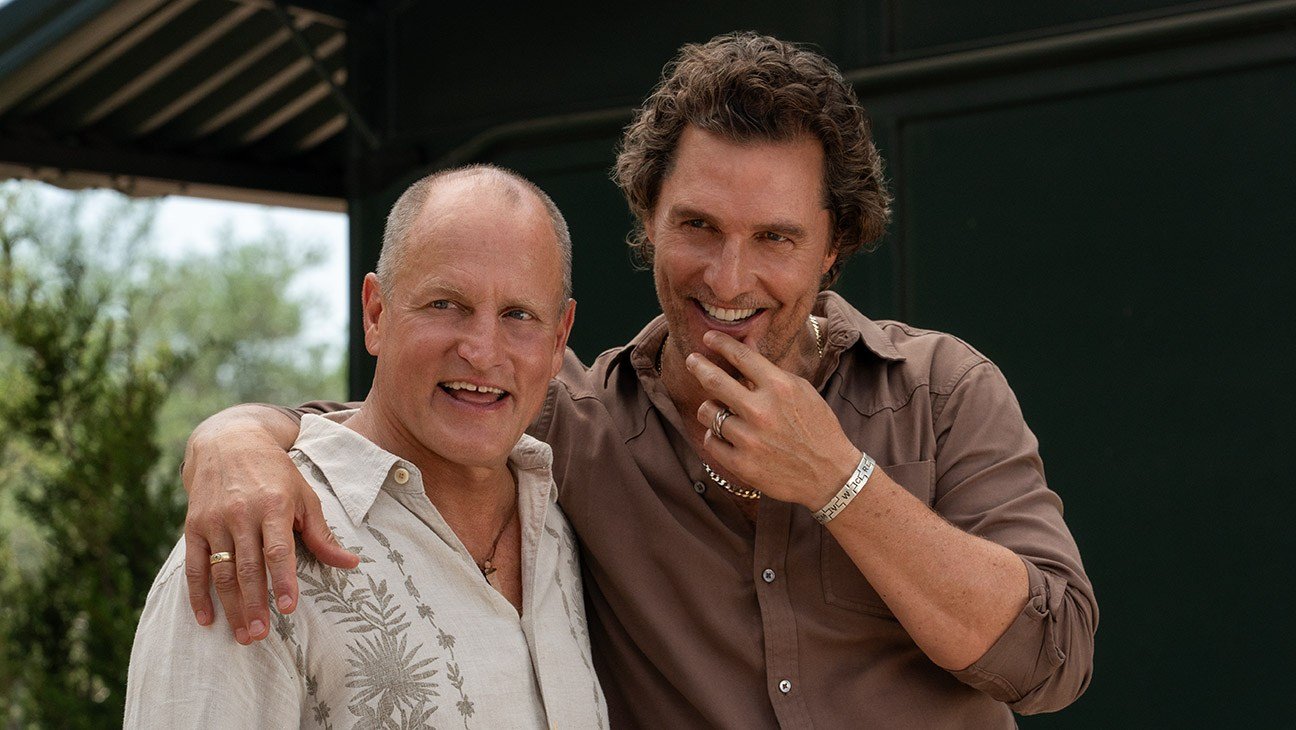
For a sense of the decline in creative ambition between Matthew McConaughey and Woody Harrelson‘s collaboration in HBO’s True Detective and Apple TV’s Brothers, one would have to imagine that after making Butch Cassidy and the Sundance Kid, Robert Redford and Paul Newman had made a movie that was primarily about how “Robert Redford” and “Paul Newman” loved to hang out and discuss how much fun it was to have made Butch Cassidy and the Sundance Kid.
The most creatively adventurous thing you can accuse Brothers of doing is taking two huge Hollywood stars and putting them in scripts that would have been deemed insufficiently creatively adventurous for ABC’s TGIF block in the mid-’90s — full of endless perfunctory bickering and bouts of limp farce, topped off with platitudes about “family” and “friendship” and how “incest isn’t incest if you aren’t blood relations.”
Brothers
The Bottom Line
Good for a couple of chuckles, little more.
Airdate: Wednesday, Sept. 23 (Apple) Cast: Matthew McConaughey, Woody Harrelson, Natalie Martinez, Brittany Ishibashi, Holland Taylor, Nolan Almeida, Ella Grace Helton, Noah Carganilla, Highdee Kuan, Oona Yaffe Creators: Matthew McConaughey & Woody Harrelson and David West Read and Lee Eisenberg
Much as the Emmys recently asked the longtime friends to vamp for five or 10 minutes while presenting, in order to salvage an awards show with no particular direction, Brothers asks them to vamp for eight 30-minute episodes, in order to salvage a TV show with no particular direction.
It’s a tribute, then, to the charismatic energy generated by McConaughey and Harrelson’s partnership that no matter how hacky some of its sitcom tropes are, Brothers is generally, if never propulsively, engaging.
The “created by” credit on Brothers goes to McConaughey & Harrelson and David West Read and Lee Eisenberg, which is a circuitous way of saying that Eisenberg (Lessons in Chemistry) replaced Read (The Big Door Prize) late in production. Wherever the tone of the series started or ended, whichever parts were produced under its original concept versus during reconceptions or reshoots, nothing resembling a cohesive voice ever emerges.
The “based on a true rumor” comedy begins with Woody (Harrelson) struggling to deal with the emotional volatility of his household of women — wife Joy (Brittany Ishibashi) and daughters Olive (Highdee Kuan) and Kai (Oona Yaffe) — in the aftermath of Olive’s broken engagement. He announces that what the family needs is a roadtrip in the souped-up bus known at The Mothership.
The destination? An unannounced visit to the McConaughey family — Matthew (McConaughey), wife Valentina (Natalie Martinez), teenage son Wyatt (Nolan Almeida), daughter Clara (Ella Grace Helton), younger son River (Noah Carganilla) and Matthew’s mother Mama Mac (Holland Taylor) — at Matthew’s ranch (not played by his real ranch) outside of Austin, Texas.
Woody’s arrival finds Matthew at a crossroads, as he’s planning a speech for a high school event honoring his late father and contemplating a run for governor, overseen by the politically vicious Gwen (Lisa Gilory, possibly coming from a different show, but definitely stealing every scene in which she appears).
Complication ensues when a late night conversation between Woody and Mama Mac reveals the possibility that Matthew’s deceased dad might not have been his biological father and that Matthew and Woody may be actual brothers in addition to devoted buddies.
Further complications ensue as Wyatt and Kai’s flirtation escalates in ways that are supposed to make viewers feel uncomfortable, but not grossed out.
If you’re not sure if that’s a sturdy enough foundation upon which to build a TV series, Brothers gives no indication that it’s sure either.
Woody and Matthew are playing confirmatory versions of themselves — fictionalized and superficial avatars that, rather than surprise you for a single second, suggest that what you’ve seen is what you get from these two very public figures.
Matthew is prone to meandering, pretentious monologues — his memoir and Lincoln commercials are acknowledged — but he’s a perfectly idealized Texan, in favor of both individual rights and collective empathy. Whether or not it’s true, he’s presented as a heavily present and structure-loving father, dedicated to folksy virtues and traditions.
Woody is prone to meandering and hippy-dippy monologues, as a weed-loving anarchist. While he may be freaked out by the aforementioned household of women, his detached parenting style has yielded a pair of smart, independent-minded women who appear not to have anything resembling lives of their own.
Matthew and Woody bicker, but it’s from a place of love, respect and shared references to their respective bodies of work (though never their shared collaboration on EdTV).
Depending on the episode you’re watching, Brothers is a very meta but largely unstructured comedy in which the interaction between its stars and our awareness of their identities is the source of its periodic laughs, or else a very cliché-driven sitcom about an odd couple of friends, or else an even more meta commentary on cliché-driven sitcoms.
I don’t know why anybody would care about any episodic storyline, given that I legitimately couldn’t tell if A-plots like “Woody and Matthew chaperone a high school dance” or a “Woody and Matthew wear silly latex makeup so that they can debut a musical act in a coffee shop and find out if people like them for their talent” — ones I swear came out of the “too obvious for Hannah Montana” discard pile — are meant to be amusing on their own (they’re not) or a commentary on bad TV plotting. But I’m not sure Brothers finds a recent to care about the big “Are they biological brothers or not?” question, either.
The two performances at the center are broad yet naturalistic, and nobody can dispute that Harrelson and McConaughey are convincingly able to play themselves. But if Gilroy feels like she’s coming in from a different show, most of the rest of the the supporting performances feel like they’re coming in from four or five different shows.
You have Taylor in from the kind of multi-cam that she’s proven to be so terrific at, but she often treats lines that aren’t punchlines like they’re punchlines, with head-scratching results. Martinez and Ishibashi play McConaughey and Harrelson’s real-life spouses like easily exasperated sitcom spouses, half disapproving wet blankets and half the only sane people in their respective families. Kuan and Yaffe, though both extremely likable, are understated, or else somebody forgot to write their characters individual personality traits other than “Woody Harrelson’s daughter.” Matthew’s three kids are just TV archetypes, rarely resembling real people at all.
Somebody like Gilroy or Jeff Kober and Barry Corbin (popping up occasionally as a pair of geriatric gangsters) will come and go in situations knowingly designed to feel contrived. But then the series will do a documentary-style montage of McConaughey meeting real Austin people in real Austin locations.
Sometimes the directors — Trent O’Donnell, Jason Winer and Erin O’Malley — capture a loose, unforced tone, with handheld realism and very pleasant photography of Texas settings. Then there are over-lit, flatly framed scenes that would be at home in a broadcast or basic cable half-hour.
None of it, regardless of style or tone, has anything interesting to say about stardom in general, nor about the specific type of approachable Everyman stardom enjoyed by McConaughey and Harrelson, modern families nor, really, about anything at all. I smiled here and there at Brothers, but I don’t remember experiencing more mirth than the occasional chuckle, and the show leaves nothing to latch onto or dwell on for a second past the conclusion of each installment.
If Adam Sandler’s greatest stroke of genius has been getting movie studios and Netflix to pay for and film his vacations with all of his close friends, one might as well give McConaughey credit for the inverse, getting Apple to pay him to hang out roughly at home with his one best friend. Calling Brothers “Matthew McConaughey and Woody Harrelson’s Grown-Ups” doesn’t offer much incentive to watch. But it properly sets expectations.
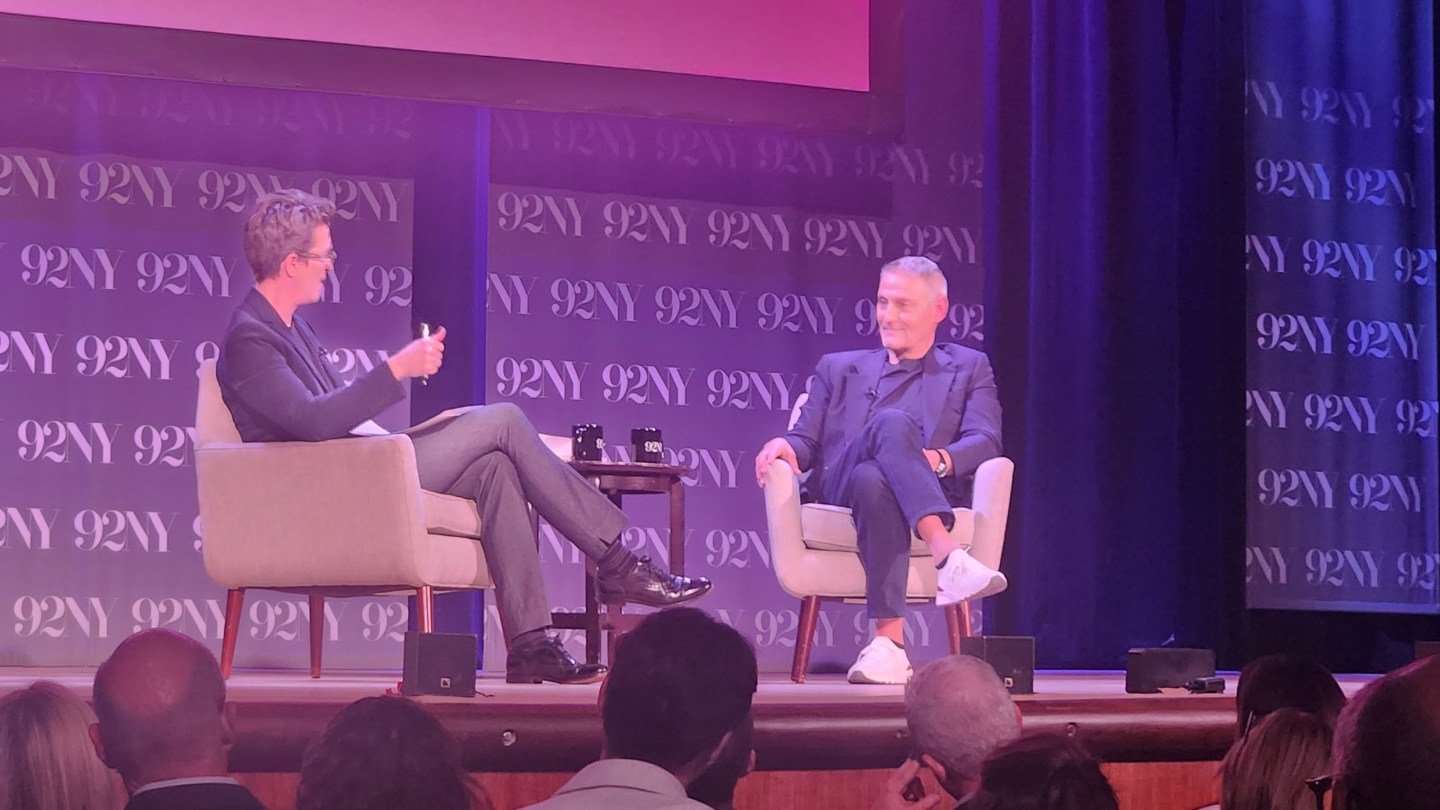
Donald Trump doesn’t want to stay in the White House past 2028, Ari Emanuel says — he’s too excited about JD Vance and Marco Rubio coming in instead.
“I spoke to him three weeks ago,” the TKO chief told Rachel Maddow at New York’s 92Y Tuesday night, describing a call with the president about the federal tax credit. “And in that conversation… He thought JD and Marco Rubio would be a formidable group.”
You mean as a joint ticket (presumably with Vance at the top), Maddow asked?
“Yes,” Emanuel said. “That’s what he thought.”
The best cable-news show Tuesday night wasn’t on the air. It was inside the New York venue, as Maddow interviewed her agent on the day of his memoir’s release, and despite their association repeatedly held his feet to the fire on a range of political and cultural topics. The (unstreamed) conversation went from convivial to feisty to testy and back again, as Emanuel sought to convince the audience, only sometimes successfully, that his friendliness with the White House and oligarchs like Elon Musk was for the greater good.
“I don’t think it’s productive to say I’ve never changed him,” Emanuel said of Musk. “I do think I’ve changed him a little.” (Emanuel is notably friendly with Elon Musk, his company even investing in Musk’s Twitter.)
Emanuel’s Roll the Calls tracks his time from a young apprentice in the CAA mailroom to his current status, at 65, atop the agency and UFC-WWE heap, with all the rage he (proudly) unleashed to get there.
But at the event he showed a cannier side, one willing to play nice with power, as Emanuel praised moguls like David Ellison — whom the agent very publicly supported in his successful bid to acquire Warner Bros. Discovery.
Though Emanuel allowed that he didn’t like how Paramount’s Stephen Colbert cancelation went down, he pointed to how Ellison has “let Matt and Trey do what they’re doing, and Jon do what he’s doing,” referring to South Park and The Daily Show, which regularly take aim at the president.
“That’s like a cop pulling you over and you saying, ‘Look at all the people in the crosswalk I didn’t hit!’” Maddow said.
“I appreciate the metaphor but I disagree with you,” Emanuel replied, as he talked up the (much-eyerolled) oversight board charged with ensuring CBS News and CNN independence.
“Do you worry about compliant billionaires taking over media?” Maddow asked.
“You’re getting most of your news from your phone and social media,” Emanuel said, avoiding the question.
Maddow was not done, noting how Ellison has “tanked the [CBS] morning show, the nightly news and is deep-frying 60 Minutes.” She called “the CBS News and 60 Minutes situation under Ellison” an “embarrassment.” She said she knew that for Emanuel there were “business reasons [to support the mogul] — he paid $8 billion to get UFC rights.”
“7.4,” Emanuel corrected. “I wish it was eight.”
The two spent some time in a lighter mode talking about such topics as Emanuel’s unusual longevity plays that has him doing cold plunges and eating live worms. (No, really.) But then one of the pricklier exchanges emerged when Maddow pressed the TKO leader on his 2018 meeting with Vladimir Putin (over potential UFC initiatives in Russia) and warming again to Saudi crown prince MBS after previously returning a $400 million investment in the wake of the Jamal Khashoggi murder.
“Where’s the line?” Maddow asked Emanuel.
“I’m sorry to say we’re adults… It’s not always black and white,” Emanuel responded, saying that he thinks MBS has now “done some incredible stuff.”
“You’re getting frustrated,” Maddow said.
“I’m not frustrated,” Emanuel replied, seemingly a little frustrated.
Emanuel also defended his decision to hold a UFC event on the White House lawn in June (“there were incredible videos on American history”) and doubled down on Musk. “I don’t agree with Elon [on immigration],” Emanuel said. “On the other hand I was happy what he did in Ukraine blocking the Russians, happy what he’s doing with Neuralink, happy what he’s doing in space,” he said.
Despite the support for some of the biggest business players around, Emanuel couldn’t resist a shot at the brass of rival CAA. “They have not handed the reins down,” he said of the top leaders, which includes Bryan Lourd, Kevin Huvane and several other longtime execs. “That’s bad leadership.”
Emanuel also sought to downplay the singular threat of Trump’s presidency. “You don’t think people said at the time Nixon was the most dangerous president in all of U.S. history?” Emanuel asked, to demurrals from Maddow and some in the audience. “Shut the fuck up, stop,” he said, half-smiling. “He’s a different kind of cat,” Maddow pushed back on Trump, noting her belief that “I don’t think he’s going to leave [in 2028].” Emanuel said the Vance-Rubio comment indicated to him “that’s not a man trying to be in the White House forever.”
(Rubio, incidentally, has indicated he won’t challenge Vance, which could pave the way to a VP selection. Of course, Vance would first have to win the nomination in what is expected to be a competitive primary, then deem Rubio enough of an asset in a post-Trump world to choose him. Also, an outgoing president hasn’t successfully joysticked the new one since the 1980’s.)
Meanwhile, Emanuel’s own family may also be a factor in the race as Rahm Emanuel potentially positions himself to play centrist spoiler on the Democratic side. The younger Emanuel did nothing to cool the speculation about his brother when he said he would do “whatever I can” should he try to run, because “he’d be a great candidate,” as he talked up the former White House chief of staff and Chicago mayor. “Is there anybody more qualified than my brother?” Ari Emanuel asked.
Maddow seemed most upset by Emanuel cozying up to Trump and oligarchs for what she suggested was his own benefit.
“Is there anything about your relationships [with them] that has ever had a positive or mitigating effect on the harm they are doing to our country?” she asked.
“I want to live in a society. You have conversations [in a society],” Emanuel answered. “When I’ve disagreed with the president, with Elon Musk, with a lot of the people you’ve mentioned, I have in my opinion swayed them. That might not satisfy you. I’m sorry,” he said.
Singaporean director Ang Geck Geck Priscilla’s “Ah Girl” will open the sixth Jakarta Film Week, set for Oct. 21–25, and Yosep Anggi Noen’s “The Sea Speaks His Name” (“Laut Bercerita”) will close the festival in its Indonesian premiere.
The program was unveiled Sept. 23 at a press conference at CGV Grand Indonesia, where Jakarta Deputy Governor Rano Karno and the Ministry of Culture’s Ahmad Mahendra joined the festival team. This year’s edition carries the theme Encounters, succeeding 2025’s Reignite.
“Six years of Jakarta Film Week have taught us that this festival is not just about screening films, but also about bringing together the people behind them, discovering new talent, and strengthening Indonesia’s film ecosystem. Encounters is a reflection of that meeting point,” said festival director Rina Damayanti.
The Global Feature Competition lines up Jane Schoenbrun’s “Teenage Sex and Death at Camp Miasma,” Markus Schleinzer’s “Rose,” Nagahisa Makoto’s “Burn,” Rafael Manuel’s “Filipiñana” and Abdallah Al-Khatib’s “Chronicles from the Siege.” The Currents strand includes Alice Winocour’s “Couture,” Karim Aïnouz’s “Rosebush Pruning” and Leyla Bouzid’s “In a Whisper,” and Paolo Sorrentino’s “La Grazia” is also on the program.
On the Indonesian side, Yogi S. Calam’s “Togel” and Andrew Kose’s “Harga Teman” will premiere in the Direction Award section, which also features Luki Herwanayogi’s “Our Son” and Bernardus Raka’s “Nobody Loves Kay.”
Kamila Andini’s Indonesian Oscar hopeful “Four Seasons in Java,” a co-production spanning Indonesia, France, the Netherlands, Norway, Poland, Saudi Arabia and Singapore, plays in the Global Feature Official Selection. That section also has Sompot Chidgasornpongse’s “9 Temples to Heaven,” Pete Ohs’ “Erupcja” and Sarah Arnold’s “Too Many Beasts.”
Four titles come out of Next Step Studio, a joint Indonesia–France initiative: “Holy Crowd,” from Reza Fahriyansyah and Ananth Subramaniam; “Annisa,” from Reza Rahadian and Sam Manacsa; “Original Wound,” from Shelby Kho and Sein Lyan Tun; and “Mothers Are Mothering,” from Khozy Rizal and Lam Li Shuen.
“For the first time, audiences will also be able to watch eight short films set in Jakarta through Jakarta Film Fund,” said program manager Novi Hanabi. “This is a new achievement for us in facilitating emerging talent among filmmakers in Jakarta.”
Three of those shorts were made under the fund’s student arm, a partnership with the J-Youth Film Festival 2026.
On the industry side, JFWNET returns with a Producers Lab, Pitching Forum, Talents Hub, Industry Talk and Festival Meeting. The Producers Lab has picked 10 up-and-coming local producers, drawn from Jakarta, West Sumatra, West Java, Central Java and Kalimantan. The Pitching Forum slate covers genres including horror and animation, with producers looking for local and overseas partners. Talents Hub participants were put forward by Minikino Film Week, Mollucas Film Festival, Craft Animfest and Layar Indonesiana locally, and by CinemaWorld Singapore, the Philippines’ QCinema International Film Festival and Vietnam’s Autumn Meeting internationally. The program is designed to feed participants into initiatives such as Goedam, BIFAN Fantastic School and Platform Busan, with support also available toward Cannes.
JFWNET is also working with Cerita Anak Nusantara, a Netflix-backed contest seeking story pitches for kids’ and family content, organized with the Indonesian Film Producers Association (APROFI) and the Indonesian Film Board (BPI). Ten projects from cities around the country will pitch during the festival.
“JFWNET–Industry Program seeks to open doors for young filmmakers, providing a space where they can grow, connect with international partners, and take their next steps, as demonstrated by our alumni. Each year, this ecosystem continues to expand and welcome new faces,” said Gayatri Nadya, the festival’s head of industry.
Industry partners include Netflix, ACFM Platform Busan, the Cannes Film Market’s Short Film Corner, the Hong Kong-Asia Film Financing Forum, HKIFF Industry, QCinema and the Bucheon International Fantastic Film Festival.
For general audiences, the Emergency Broadcast and Herstory strands use cinema to open up discussion of current issues, Fantasea joins the international competitions in showcasing current trends in world cinema, and Family Time offers screenings aimed at all ages. Young Indonesian actor Ali Fikry has been named festival ambassador as part of a push toward younger viewers.
“The Jakarta Provincial Government sees Jakarta Film Week as a strategic partner in realizing Jakarta as a cinema city. Through collaboration with the Jakarta Film Summit and Jakarta Film Commission, we hope to further open the capital’s film ecosystem to industry professionals and the wider public,” said Karno.
The Jakarta Provincial Government organizes the event with the Jakarta Film Commission, with backing from the Ministry of Culture’s Directorate General of Cultural Development, Utilization, and Promotion. International cultural partners include the Hong Kong Trade Development Council, Istituto Italiano di Cultura, Cinecittà, the Japan Foundation, Erasmus Huis, Institut Français Indonesia and the Italian, Dutch, French and U.S. embassies. Country showcases include an Italian Screen strand featuring Pietro Marcello’s “Duse” and Silvio Soldini’s “The Tasters,” along with the Dutch-focused Bioscoop Belanda.
Ahead of the main event, the festival’s JFW360 outreach program has hosted quiz events, shorts programs at JITEX and a free streaming slate of 24 shorts on Vidio, available Sept. 20 through Oct. 20.
Screenings will be spread across CGV Grand Indonesia, Galeri Indonesia Kaya, Mercure Jakarta Cikini, Paviliun Raden Saleh Artotel, Taman Ismail Marzuki, CGV FX Sudirman and FX Sudirman.
The Jakarta Tourism and Culture Agency set up Jakarta Film Week in 2021.
After two years, MIP London has ended and is set to be replaced by a new two-day conference taking place during the London Book Fair.
On Wednesday, RX France confirmed the launch of MIP Talks from Mar. 16-17, 2027. The event will be backdropped by the London Book Fair, one of RX’s flagship events, bringing together leading voices from across the worlds of entertainment, media and culture to explore what is changing, what is breaking through and where new opportunities are emerging.
MIP Talks will take place at London ExCel and is set to represent a “new expression of MIP in London, looking beyond traditional television and content to the wider cultural, creative, technological and commercial shifts reshaping global entertainment,” according to organizers.
The inaugural MIP Talks will be built around the editorial theme ‘From IP to Fandom — and Fandom to Global Business,’ in which experts will explore an entertainment landscape where traditional boundaries are disappearing, audiences move across platforms and experiences, and IP can come from anywhere.
Programming will be highly curated and editorially led, organizers added, spanning headline conversations, unexpected pairings, global trends and data, cultural insight and case studies from across the international entertainment business.
Lucy Smith, director of the entertainment division, RX France, said: “The boundaries of entertainment have all but disappeared. IP can come from anywhere, audiences don’t think in sectors and an idea can travel further and faster than ever before. MIP has always been about understanding where the entertainment business is going next. MIP Talks at The London Book Fair takes that curiosity further bringing together the people shaping what breaks through, how fandom is built and where new global businesses are emerging.”