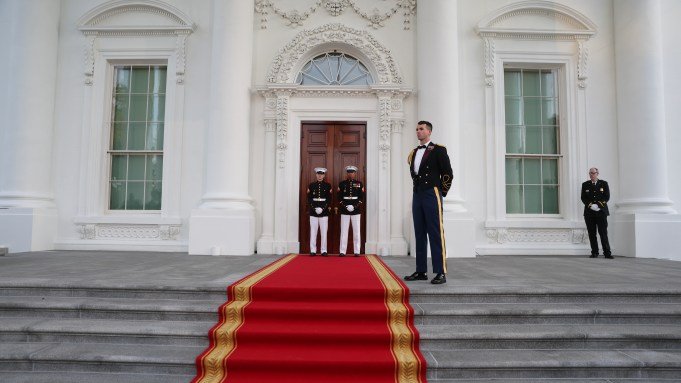
UPDATED with MS Now news: Shortly after CNN said that it was denied access to cover the arrivals at the White House State Dinner for Chinese President Xi Jinping tonight, MS NOW announced that it, too, had been barred.
The news came on the same day a federal judge ordered the White House to restore hard passes to the networks’ journalists and those of and Politico.
The coverage at the North Portico was scheduled to be open to pre-credentialed media, a wider scope of reporters and photographers than the White House press pool.
CNN White House correspondent Kristen Holmes said that they were told that their credential to cover the event was only for a camera and audio, not an editorial presence. She had requested that she and her producer attend.
“Again, no editorial presence, just a camera and audio, which certainly seems like a reaction to President Trump saying that he wanted the CNN coverage of the event,” Holmes said.
The White House said on its rapid response account that it was a “pre-credentialed event,” and “contrary to what the fake news wants you the believe, they don’t just get to have free rein into every part of the White House, every event, and every press call.”
The exclusion came after U.S. District Judge Timothy Kelly ordered that credentials for CNN, Politico and MS NOW be restored, ending Trump’s five-day ban of the outlets from the White House grounds.
The outlets returned to the White House around noon. Then, hours later, Trump complained that CNN and MS NOW were not covering the state visit.
Trump claimed that the networks “refused to cover one of the Biggest and Most Beautiful Events to take place in many years, the arrival at the White House of the Highly Respected President of China, Xi Jinping, and his beautiful wife, Madam Peng. The event was magnificent — Actually made for Television but, because they’re Fake News, and because they knew how good it would be, they didn’t want credit to be given to ‘TRUMP,’ they refused to be there. That’s why they have such poor Ratings. Tonight’s State Dinner at the White House, for President Xi, will be spectacular!”
In fact, network correspondents said that they were not able to get access to the White House on Thursday morning. And after the White House pulled CNN from the TV pool on Monday, the other four networks in the pool declined to replace them in the rotation. That has meant a dearth of video images from the White House, as TV pool coverage has yet to resume.
The claim that Federal Communications Commission chair Brendan Carr was a member of a “child sex trafficking cult” is still under investigation.
The allegation stemmed from an investigation The Guardian published on Sept. 22, 2026. According to it, for about 10 years Carr was a member of a Washington, D.C., Alcoholics Anonymous group that former members described as a cult. Some former members claimed the group’s leaders, all older men, sexually exploited them when they were teenage girls.
Snopes found no indication that The Guardian’s reporting was inaccurate or misleading, but cannot rate the claim without independently confirming the reporting. We contacted multiple former Midtown AA members and are actively working to confirm the account of a woman who said she dated Carr while they were both members. We also reached out to the FCC to give Carr the opportunity to comment, but had not heard back.
Former members of the Midtown AA group told The Guardian that Carr wasn’t involved in sexual misconduct, describing him as a “victim” of the group and “a safe respite” from the abuse. They also said that the older group leaders’ sexual exploitation of teenage girls was an open secret and normalized within the group.
In September 2026, The Guardian published an investigation revealing that Brendan Carr, the chair of the Federal Communications Commission, was once a member of a Washington, D.C., Alcoholics Anonymous group that some have described as a “cult.” The Guardian also spoke to several former members of the Midtown AA group who claimed they were sexually exploited by older members while they were involved.
The claim quicklyspread online, where some questioned why the reporting that Carr spent roughly a decade in a “child sex trafficking cult,” was not making headlines. Snopes readers wrote in asking for more information about the claim.
The Guardian is generally a trustworthy source of information, and we found no indication that the claims made in the article were untrue. However, because we have been unable to independently verify those findings, we are unable to rate the claim.
Snopes contacted multiple former Midtown members who have spoken publicly about their experiences as part of reporting this story, including Mandi Pagliarini, who posted a video on her Instagram page saying she was one of The Guardian’s anonymous sources and that she had dated Carr while both were members. We asked Pagliarini to provide primary evidence corroborating her past relationship with Carr and will update this story if we learn more. We also contacted the FCC to ask about Carr’s involvement at Midtown, but had not received a reply at time of publication.
There is one crucial thing to note that many social media posts neglected to mention — former members did say Carr was a member of Washington, D.C.’s Midtown AA group, but we found no evidence that anybody had directly accused him of misconduct. In fact, multiple former members suggested the opposite. One former member told The Guardian that Carr was a “victim” who was “‘never among’ the predators.” In her Instagram video, Pagliarini, who said she dated Carr for a time, described him as a “warm, sensitive person who was a safe place for me in a horribly abuse, exploitative, imprisoning situation.”
According to The Guardian, Carr joined the Midtown AA group in 1996 and left sometime around 2005 or 2006, though exactly when was not clear. The group, led by a former Vietnam veteran named “Mike Q,” real name Edward Orlando Quinones, had a reputation as a safe space for teenagers and young adults, not all of whom reported having drinking problems.
But the group was a “rigidly insular world” under Quinones’ leadership, according to a 2007 story from The Washington Post that was some of the earliest public reporting on the allegations of sexual misconduct. “Ties to family and friends were severed or strained, and the most vulnerable of alcoholics, some suffering from emotional problems, were encouraged to stop taking prescribed medications,” the story said.
A former member told The Washington Post that she was “passed around” from Midtown leader to Midtown leader and that her sponsor encouraged her to have sex with Quinones. A different former member described Quinones to The Guardian as the “Epstein of AA,” and said shortly before he died, Quinones confessed to her that he had sex with a 15-year-old.
However, Quinones never faced charges connected to sexual relations with underage people, according to The Post. The victims who spoke publicly about their experiences in 2007 were 16 and 17 years old at the time of the misconduct, above the age of consent in Maryland. One member told The Guardian she actually recalled overhearing older male members discuss the importance of having sex with teenagers in Maryland and not Virginia, where the age of consent is 18.
Alcoholics Anonymous is a decentralized organization that does not oversee individual groups. It maintains a list of strongly recommended practices, but former members said Midtown operated differently.
As examples: AA suggests that new members are paired with older sponsors of the same gender to help them through the recovery process. At Midtown, young teenage girls were often paired with men decades older than them. AA also suggests that new members remain single for a year. Former Midtown members told The Washington Post and Guardian that they were encouraged to date within weeks.
According to The Guardian, one former member recalled Carr as “sensitive and desperate for the approval of others.” A former roommate, also a member of Midtown, said both he and Carr had “drunk the Kool-Aid.” A third said he felt the misconduct happening was evident to group members.
“He knew the deal and he hung around there … I did the same thing. But I should not be the chair of the FCC, either,” one said.
Pope Leo XIV and U.S. Vice President JD Vance publicly criticized each other’s thoughts about compassion.
Rating:
In September 2026, a claim circulated alleging Pope Leo XIV and U.S. Vice President JD Vance had a back-and-forth of verbal jabs criticizing each other on the subject of compassion.
For example, Sept. 23, a Facebook user named Dee Wallace after the “E.T. the Extra-Terrestrial” actor, shared (archived) an image with photos of Vance and Leo.
(@DeeWallaceOfficialFB via Facebook)
According to the post’s caption, Vance responded to one of Leo’s messages, with Vance calling compassion a form of weakness. Leo then supposedly responded with a “fiery” retort:
BREAKING: J.D. Vance attacks Pope Leo XIV — and gets a FIERY response he won’t soon forget
J.D. Vance thought he could score political points by criticizing Pope Leo XIV’s message of compassion and inclusion. Instead, the pontiff delivered a response that left the room stunned.
“You say compassion is weakness,” Pope Leo XIV began. “Then when did caring for the sick become weakness? When did helping the poor become weakness? When did loving our neighbors become weakness?”
The audience fell silent.
Then came the line that hit hardest:
“Can we imagine hatred in heaven? Can we imagine cruelty in heaven? Then why do we tolerate these things on earth?”
What started as a political attack quickly turned into a powerful moral challenge — and a message that is now spreading far beyond that room.
Please like and share Pope Leo XIV’s inspiring words!
Other Facebook usersshared the claim. A Snopes reader also asked of the rumor, “Is this a true story?”
Searches of DuckDuckGo, Google and Yahoo failed to locate any news media outlets reporting about the alleged discussion, including the purported direct quotes. If the story truly occurred, journalists with reputable outlets, such as The Associated Press or Reuters, would have widely reported on it. That was not the case.
In sum, we found the rumor was fictional and was created with the help of artificial intelligence.
Some of Vance’s authentic past remarks about Leo possibly served as the inspiration for the fabricated story and fake quotes. In April, Vance, speaking at a rally for the conservative Turning Point USA organization, said he likes when the pope comments on immigration, abortion and matters of war and peace, even when there’s disagreement. He also said he believed the pope should “be careful” when opining about theology.
Regarding the Facebook account named for Wallace, no evidence credibly confirmed the actor shared the post. The Facebook account displayed the word “official” in the handle — @DeeWallaceOfficialFB — as well as a verification badge supposedly designating authenticity. However, upon selecting the word “Copywriter” near the top of the profile, then clicking “Transparency and privacy policy,” we found an older page name previously defined its purpose as a fan page, as well as that six accounts based in Vietnam served as its only managers. The page’s recent posts all featured some forms of AI and fiction, as well.
We contacted a representative for Wallace to ask about this matter and will update this article if we receive further details. We were unable to contact the Facebook page via Messenger.
Researching the AI slop rumor
This claim about Leo and Vance resembled glurge, which Dictionary.com defines as “stories, often sent by email, that are supposed to be true and uplifting, but which are often fabricated and sentimental.” Creators of such content capitalize on social media users’ willingness to believe and share the made-up stories, profiting from advertising revenue on external websites to which the posts link. (Snopes has previously reported on the business strategy.)
One of the aforementioned search engine queries foundarticles from June telling a longer version of the same story. A generic-looking, advertisement-filled WordPress blog that hosted the stories — named only “News And Tips” — included some Vietnamese-language characters and lacked standard signals of authenticity, for example including standard legal documentation including a terms of service and privacy policy, as well as information about a website’s founding.
One of the blog articles included some text appearing to guide users on how to publish monetized, emotionally charged content. A scan of the story’s text with the artificial intelligence detection tool Pangram displayed the results, “We believe that this entire text is AI,” as well as, “100% of this text is AI.”
Snopes doesn’t depend solely on AI detection tools, which vary in reliability, and instead considers the tools’ results as one of several data points toward judging an image’s authenticity. For Pangram, we bear in mind the platform’s strong performance in third-party and internal evaluations, as well as criticisms of the tool.
While Netflix has Ryan Murphy busy investigating (or flat-out making up) the motives of killers like Jeffery Dahmer, the Menendez Brothers and Lizzie Borden, the streamer has enlisted director Janus Metz to tell the story of Ted Kaczynski, the math prodigy turned reclusive murderer known as the Unabomber — also the movie’s title. But Unabomber, written by Sam Chalsen and Nelson Greaves, is not some sweeping birth-to-death survey of Kaczynski’s life. It instead focuses on a young Kaczynski’s time at Harvard University, where he participated in a brutal psychological study that, in the movie’s framing, may have helped form the anarchic worldview that eventually led to his infamous deeds.
Never mind that Kaczynski himself has said that the study, conducted by psychology professor and sometime government operative Henry Murray, didn’t have much effect on his life. Unabomber presupposes that it did, that Murray’s cruel (and later condemned) experiment in breaking down the philosophical principles of test subjects, stoked a rage — at academia, at technology, at universities — so fierce that Kaczynski later decided to enact his revenge. Perhaps not figuring that argument compelling enough on its own, the film tacks on a 1990s-set plot covering the days leading up to Kaczynski’s capture in Montana.
Unabomber
The Bottom Line
A faint sketch of a killer as a young man.
Release date: Friday, Sept. 25 Cast: Russell Crowe, Jacob Tremblay, Shailene Woodley, Annabelle Wallis, Gus Halper Director: Janus Metz Screenwriters: Sam Chalsen, Nelson Greaves
Rated R,
1 hour 37 minutes
Both narratives concern people prying into Kaczynski’s psyche and finding only further questions. In the 1950s, in the hallowed, lacquered-wood halls of Harvard, we watch a perspicacious boy genius — Kacyznski was all of 16 when he started college — as his intellect, his curiosity and his naiveté are weaponized against him, hardening his most radical beliefs into ideology. In the 1990s section, we observe relative lay people as they try to divine specific clues from Kaczynski’s manifesto, markers that might give away something crucial.
These twin analyses are both facile and unenlightening. The investigation arc is so boilerplate that it has an FBI agent placing a pile of documents on her desk and saying to them, “Talk to me.” The 1950s portion of the film is at least able to conjure up some mid-century moodiness, skulking around in the nervous temper of early Cold War days, as academia colluded with government agencies to buttress the country against the perceived Soviet threat. (At its best, the film calls to mind Robert De Niro’s unfairly maligned CIA origin story The Good Shepherd, which begins its postwar tale on the leafy quads of Yale.)
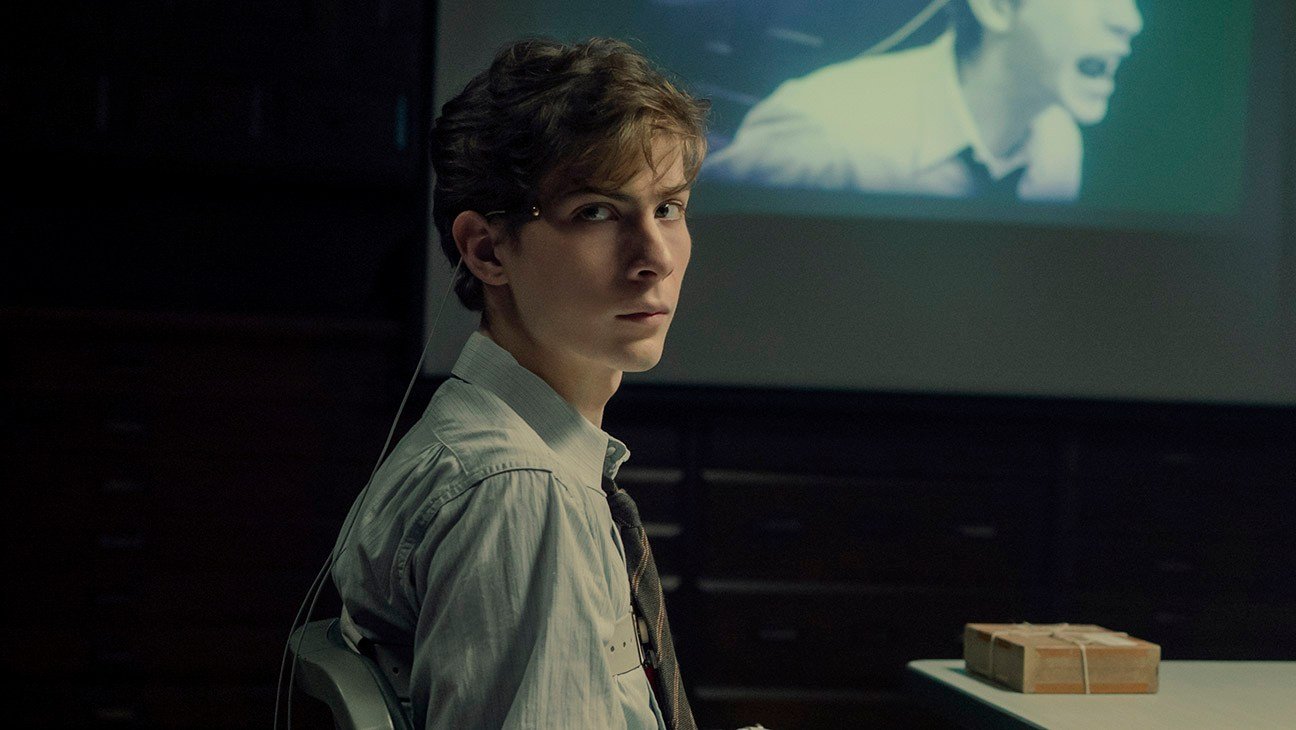
And yet, the ultimate conclusions of that half of the film are just as unpersuasive as everything that happens 40 years later. That’s largely owed to starchy, frequently clichéd writing. But sadly one must put some of the blame on the actor playing Kaczynski, Jacob Tremblay, who long ago escaped the confines of Room and now, at 19, has found himself in this dark mess.
His clean-cut boyish features do actually resemble Kaczynski at that age, but Tremblay otherwise has trouble evoking the volatile storms of Kaczynski’s mind. His voice cracking and eyes wide with alarm, Tremblay effectively communicates Kaczynski’s youth, but it all plays as bratty and insouciant rather than registering as the beginnings of true menace. Tremblay was a better fit for his other recent film about extremism, 2025’s Sovereign, in which his guilelessness served a more poignant purpose.
As Murray, Russell Crowe has dusted off his A Beautiful Mind professorial duds and phones in a performance of avuncular appeal masking sinister motives. We believe that Murray cares, in some way, for Kazcynski — or, at least, that he’s impressed by the student’s prowess — but not enough to stop his predatory work.
The portraiture is not very detailed beyond that. Part of the problem may be that, for the bulk of the experimentation, Murray is out of the room. Kaczynski is instead sparring with a fellow student, a haughty older boy played by the reliable Gus Halper, who did towering work as another collegiate monster in the under-seen 2016 frat-hazing thriller Goat. Had Tremblay and Crowe been given more opportunity to go toe to toe, something in the picture might have caught flame.
Instead, Unabomber trudges through its motions, toggling between grim school daze and a tediously generic FBI manhunt. In the latter part, Shailene Woodley does her best to give some texture to her rogue agent character, Joanne, but she has precious little to work with.
Perhaps cognizant of that, the filmmakers give Joanne a brief, humanizing button at the end of the film, a moment of solitude in which she has a cathartic cry as she processes all that she’s just experienced. The scene might register as thoughtful were it not such a blatant rip-off of the closing seconds of Zero Dark Thirty, in which a dogged investigator who’s finally caught her prey sheds tears of relief and exhaustion and something more ineffable. It doesn’t pack the same punch the second time around, and at the end of something so bland.
Watching Unabomber, one longs for a smarter, more sophisticated, more probing version of this same double-act. A better film about what might have radicalized Ted Kaczynski that also delineates how he was eventually captured could be startling and revealing, complicating the public idea of Kaczynski as mere renegade madman. But this film serves up only the most basic, obvious version of that — try as it might, at times, to immerse us in murky psychological depths. In the end, it has all the markings of a final paper written by a student who got all the dates right, but failed to find the real meaning behind any of the history.
Situated in the hills of Studio City sits a home studio that’s birthed a slew of popular songs.
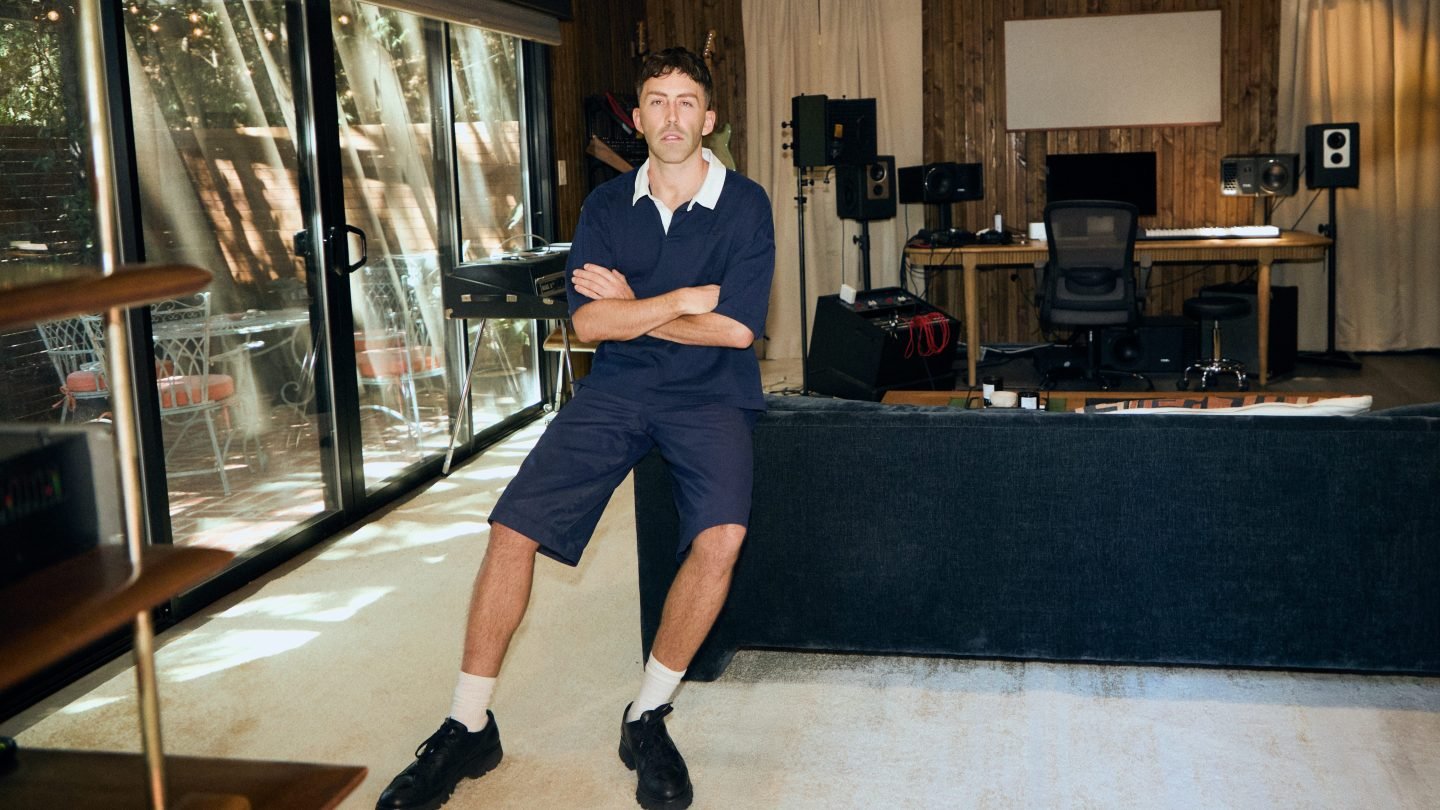
“The first session I did here was with MUNA in 2019,” says Leland. The 39-year-old producer owns that home studio. It’s first iteration was situated inside the main house on his property and has since expanded into its own little oasis.
Steeped in warm colors, with luxurious candles burning away, Leland’s current studio feels more like a chic getaway spot rather than a workspace. It’s become a home base for him and other creatives in his circle to collaborate. His dog, Crosby, is a frequent visitor and how he’s keeping track of the passing time — the MUNA session had to be in 2019 because he has a photo of one of the band’s members with the dog as a puppy.
The actual studio only accounts for, at times, 50 percent of where the creativity’s happening when artist comes to Leland’s place. “The writing doesn’t have to happen in the studio. The recording can happen in the studio,” the producer explains. “I feel like a lot of it is just sitting out here having conversations.”
Leland in his home studio.
Courtesy
An artist might be staying in the cottage on the property while they’re there working. “They can just walk down to the studio, which has been really nice,” says Leland. The Shardsstar Hayes Warner, another collaborator of Leland’s, stayed in his cottage while she was filming the Ryan Murphy show. Leland wrote music for the series, which is set to release a soundtrack next month.
On a day where he’s welcoming an artist into the studio, the producer tends to start the day with a hike. He’ll walk to Fryman — if you ever see someone dangerously walking down Laurel Canyon Boulevard, it’s likely Leland. He’s only had one close call, he points out, and it was actually from a friend. “One of my best friends happened to be driving down Laurel Canyon, and he was like, ‘Girl, did I almost hit you?’ I was like, ‘Yes, but I would’ve wanted it to be a friend,’” he says cheekily.
After his hike, hopefully without any close calls, Leland will get fresh flowers for the studio, along with a candle or incense. His routine tends to change depending on who he’s working with that day.
“I love getting the studio ready for a session. I love that part of it,” the producer says. “Or cleaning up after a session, which is usually just Goop [Kitchen] bags, water and Coke Zero.”
The space is meant to be a space of peace and quiet, even if that’s not always what’s happening in the studio itself. Leland, who’s also RuPaul’s Drag Race‘s producer and songwriter, explains that it can range from longtime collaborator Troye Sivan to Charli xcx, who he says recorded some of the Wuthering Heights album in the studio, to Demi Lovato. A Drag Race executive producer or even RuPaul might be around while Leland’s tinkering on Sivan’s work, so they’ll share it.
Leland in his home studio.
Courtesy
If Leland’s working with an artist for the first time, he’ll listen to their music on his morning hike — or he’ll listen to anything he’s anticipating will be a good reference point for the work that’ll happen later that day. No matter how familiar with the project or the artist, he wants to be prepared and have something in his back pocket.
Some artists, however, have a good idea coming into their sessions with Leland. “When Rebecca Black came in, I was so excited to work with her and she had such a clear vision for what she wanted to make, and it was just so fun,” he says. The pair wrote the track “Corsetry” from her latest album in the space.
“I have the same feeling about [Black] that I had when Adéla first walked into the room,” Leland says of the pop princess of the moment. The 22-year-old has been blowing up this summer. Leland and the pop star — who broke out as a contestant on the audition project Dream Academy that formed the girl group KATSEYE — worked together on songs from her first EP, “SexOnTheBeat” and “DeathbyDevotion.”
Leland, by his on admission, loves working with women. “I love a pop girl,” he says. But by far, the producer’s most impactful collaboration, both professionally and creatively, remains Sivan. Getting to be part of a gay pop star’s career is something he’ll never take for granted.
“So many songs that you love that are by the female pop stars that we love, a lot of the times there’s a queer person as one of the collaborators when you look up the credits,” Leland says. “I think now my ear is trained to where I can tell if a gay person was in the room or not.”
He adds, “I really think for songs, you can tell. And not that every song needs to have a gay person in the room, obviously, but I think depending on what you’re going for, you can really hear if there was some queer energy in the room or not. I feel like it’s been so fun to sometimes be that person with the different artists that come through.”
Leland in his home studio.
Courtesy
Leland and Sivan collaborated once again for the pop star’s upcoming album She’s the Best, set to be released next month. Many of the great pop stars of the past weren’t publicly out, so watching Sivan’s career get to the point it’s at now has been almost surreal for Leland. “People like Troye are allowed to be pop stars, and you’re allowed to have that experience, and maybe not allowed, you’re demanding it,” the producer says.
“I always want the music to speak for itself. I don’t want opportunities because I’m queer. I want opportunities because I’m good. I don’t want opportunities for Troy because he’s a gay pop star,” says Leland. “I want opportunities for him and for our music because the music is good and the music videos are good and the team’s good and the energy is good.”
He adds, “I want that support from the queer community because the music is great and the art is great. I want that support from the straight community because the music is great and the art is great, not just because any of us happen to be queer.”
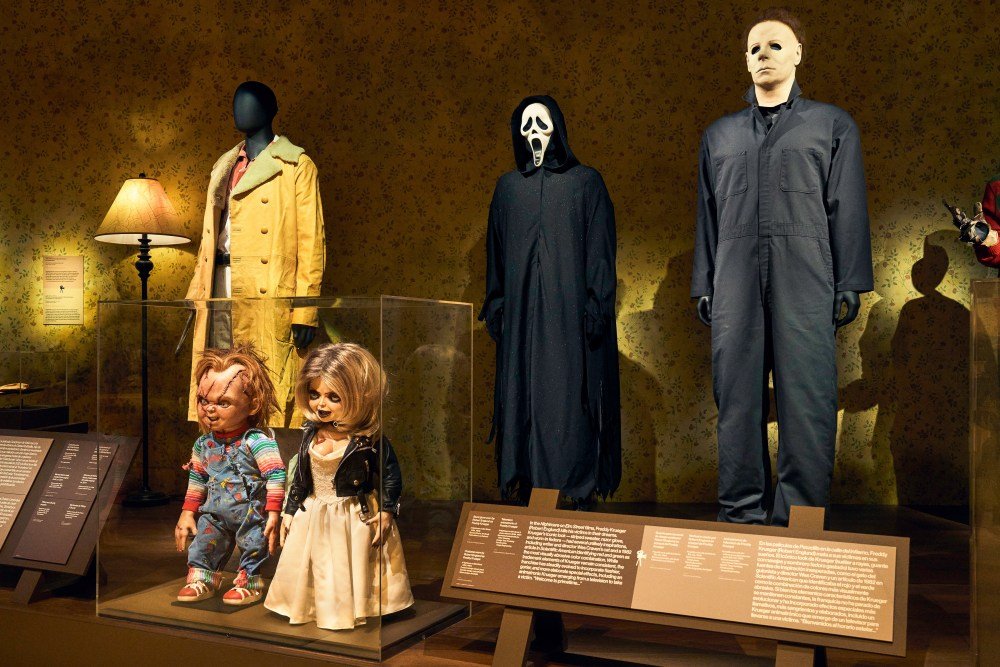
Just in time for the scariest season, the Academy Museum of Motion Pictures in Los Angeles is unveiling The Horror Show, a major survey of costumes, props, drawings, posters and other artifacts from the most iconic horror films throughout the history of cinema. The exhibit opens Saturday.
From Bela Lugosi’s original cape from the 1931 “Dracula” to Aunt Gladys’ pantsuit from “Weapons,” the exhibit showcases classic and lesser-known films from every era. Beloved characters like Freddy Krueger, Michael Myers and Chucky are represented along with more recent titles such as “Sinners,” “Get Out,” “Midsommar” and “The Babadook.”
“Many different types of films can be considered horror filmmaking, from vampires to slashers to thrillers,” said Academy museum director Amy Homma as she introduced the exhibit Thursday. “Horror has its own filmic history, it’s own origins through literature, culture and art and its own lineage.”
“The Horror Show revolves around a simple question: Why do horror films mean so much to so many people?” said the exhibit’s curator Jessica Niebel. “Horror reflects the anxieties of its time, but it also gives us a safe space to confront those anxieties, to look at the things that frighten us and that we desire.”
The exhibit’s chambers feature themes like slashers, religion, ghosts and science, with several interactive photo ops from a coffin to a chance for a selfie with Mrs. Bates from “Psycho,” and guests exit through an eerie blood room. If that’s all a little too scary for the younger visitors to the museum, an accompanying exhibit called Zombies! goes easier on the gore.
The Academy will screen a robust schedule of horror films to complement the exhibit, kicking off with an appearance by Jamie Lee Curtis and John Carpenter for “Halloween” and a Carpenter retrospective.
The Horror Show will run through July 25, 2027.
Robert Englund introduces The Horror Show exhibit
Image Credit: Matthew Chernov/Variety
Freddy Krueger actor Robert Englud welcomed guests to preview The Horror Show at the Academy Museum.
‘Weapons’ and ‘Midsommar’
Image Credit: Matthew Chernov/Variety
Costumes from more recent films like “Weapons” and “Midsommar” are included alongside vintage costumes.
Count Dracula Armor
Image Credit: Matthew Chernov/Variety
Gary Oldman’s armor from 1992’s “Bram Stoker’s Dracula”
Bela Lugosi’s Count Dracula cape
Image Credit: Matthew Chernov/Variety
Bela Lugosi’s cape from the 1931 “Dracula”
‘The Hunger’
Image Credit: Matthew Chernov/Variety
Catherine Deneuve’s mummified corpse in the 1983 “The Hunger”
Vintage posters
Image Credit: Matthew Chernov/Variety
Posters of “Blacula” and “Horror of Dracula” are among the many horror posters on view.
Hannibal Lecter
Image Credit: Matthew Chernov/Variety
Hannibal Lecter costume from “Silence of the Lambs”
‘They Live’
Image Credit: Matthew Chernov/Variety
Alien bust from John Carpenter’s “They Live”
‘Poltergeist’ clown
Image Credit: Matthew Chernov/Variety
The clown doll from “Poltergeist.”
Living room VHS
Image Credit: Matthew Chernov/Variety
In a simulation of a vintage living room, museumgoers can sit on a couch and view scary VHS tapes.
Pennywise
Image Credit: Matthew Chernov/Variety
Pennywise bust from “It.”
Mrs. Bates
Image Credit: Matthew Chernov/Variety
Museumgoers can take spooky selfies with Mrs. Bates from “Psycho.”
‘Frankenstein’
Image Credit: Matthew Chernov/Variety
A model from Guillermo del Toro’s “Frankenstein”
Xenomorph
Image Credit: Matthew Chernov/Variety
A xenomorph from the “Alien” franchise.
‘The Ring’
Image Credit: Matthew Chernov/Variety
The first victim from “The Ring” hides in a closet.
‘The Nun’ and ‘Hellraiser”
Image Credit: Matthew Chernov/Variety
A nun and a cenobite from “Hellraiser”
Cenobite
Image Credit: Matthew Chernov/Variety
A close-up of the cenobite from the 2022 reboot of “Hellraiser.”
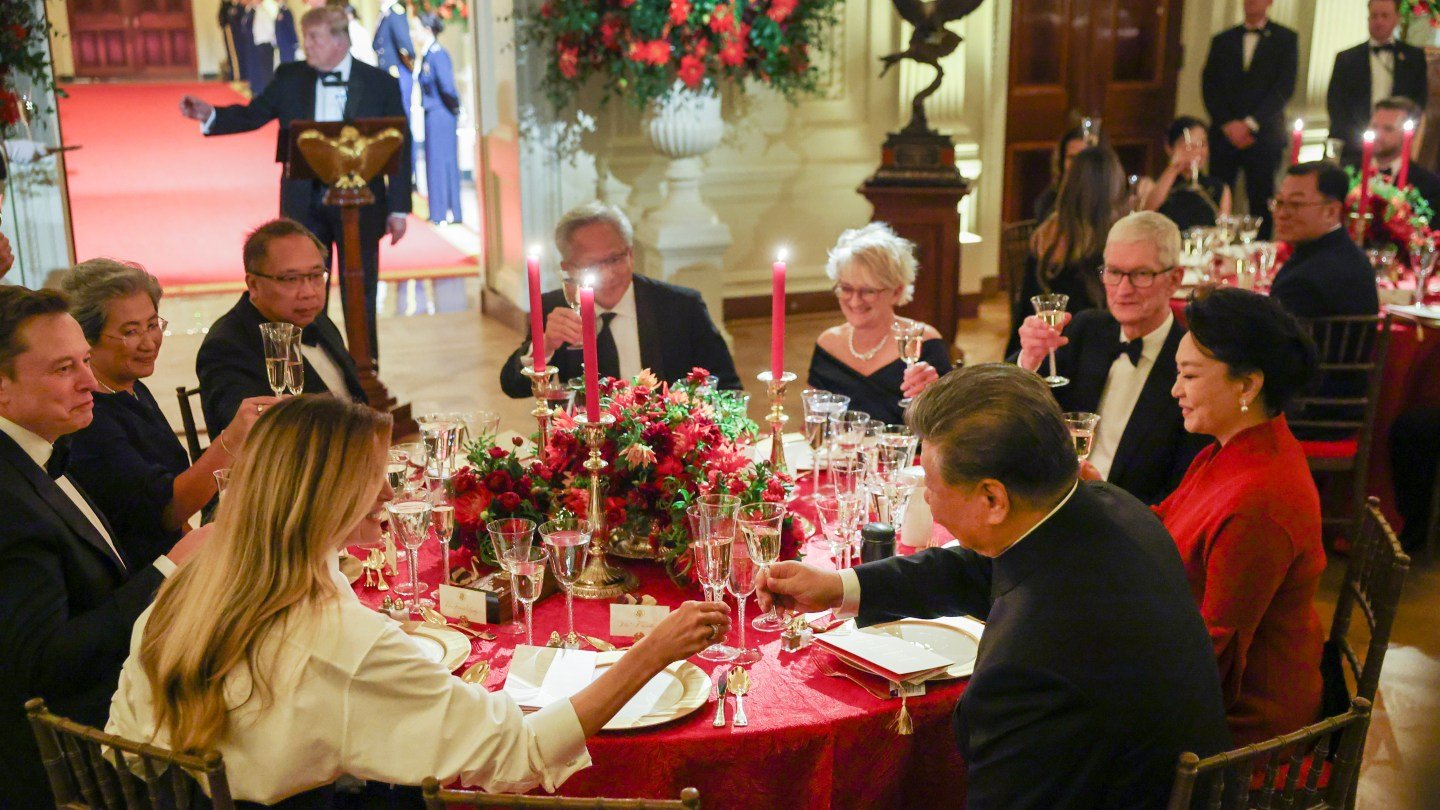
Tech and media titans… as well as a small army of Fox News hosts descended on the White House Thursday evening to attend the state dinner honoring China’s president Xi Jinping.
President Trump and First Lady Melania Trump hosted the dinner, which was heavy on corporate bigwigs.
According to a guest list released by the White House, attendees included Paramount Skydance CEO David Ellison, just days after his company inked a settlement to clear its takeover of Warner Bros. Discovery… including CNN, which saw its reporters denied access to the state dinner even after a federal judge reinstated their press passes to the White House complex.
But it was mostly tech giants in attendance, with photos showing Tesla and SpaceX chief Elon Musk sitting at the head table with Trump and Xi, joined by Nvidia’s Jensen Huang and Apple’s Tim Cook.
Earlier this week, there were reports that Ellison may ask Musk to invest in Paramount as part of its WBD takeover.
Other attendees included OpenAI CEO Sam Altman, Meta CEO Mark Zuckerberg, Amazon’s Jeff Bezos, OpenAI president Greg Brockman, Google co-founder Sergey Brin and CEO Sundar Pichai, Microsoft CEO Satya Nadella, TikTok investor Jeff Yass, and LCMH CEO Bernard Arnault, along with a slew of other CEOs from finance, manufacturing and other industries.
And there was also a Fox News contingent, with hosts Jesse Watters and Laura Ingraham as well as anchor Bret Baier all making the cut too. Podcast hosts, including Katie Miller (the wife of White House aide Stephen Miller) and David Sacks (tech investor and All-In co-host) were on the list, as was Cheryl Hines, who was there with her husband RFK Jr.
The Singapore International Film Festival (SGIFF) will present its Screen Icon Award to Indian actor, director and producer Aamir Khan at its 37th edition, with a 25th-anniversary Special Presentation screening of “Lagaan: Once Upon a Time in India” alongside director Ashutosh Gowariker.
The festival opens with South Korean thriller “The Assassin(s),” directed by Hur Jin-ho and starring Yoo Hae-jin, Park Hae-il and Lee Min-ho. Hur and supporting cast members Shim Eun-kyung and Park Sung-hoon will attend the opening.
As previously announced, SGIFF will give its Cinema Honorary Award, the festival’s top prize for lasting contributions to Asian cinema, to Japanese filmmaker Kore-eda Hirokazu, with his film “Look Back” screening as part of the program.
SGIFF executive director Jeremy Chua said the edition brings some of the most respected talents and consequential work being made across Asia to Singapore. “Around it, we have also reconsidered how audiences encounter a festival with new presentation formats and points of entry, a ticketing platform that is markedly more intuitive, an industry programme expanded into a resource centre for artists, technicians and storytellers at every stage of practice, and a new free-to-attend section at the intersection of creativity and technology, attending to the forms storytelling will take next,” Chua said.
SGIFF’s “In Conversation With” dialogue series will also feature Shim Eun-kyung, filmmaker Peter Chan Ho-sun and Hong Kong actor Anthony Wong, who will take part in a post-screening dialogue tied to his first acting role in “My Name Ain’t Suzie.” Korean New Wave director Yim Soon-rye will serve as jury head of the Asian Feature Film Competition, while Fukada Koji, director of “Nagi Notes,” cinematographers Ashizawa Akiko and Tom Harari, and director Jacob Cheung will also take part in the festival.
The lineup spotlights more than 25 Singapore productions and co-productions that have earned recognition at festivals including Cannes, Sundance, Toronto, Venice and Melbourne. Among them, “Ah Girl” star Ong Xuan Jing won best actress at the Hong Kong International Film Festival’s Young Cinema Competition, while director Ang Geck Geck won the Youth Jury Award at the International Film Festival Rotterdam. Nelson Yeo’s “The House on the Moon” premiered in competition at Locarno, and Tan Si En of Momo Film Co. co-produced “Nagi Notes,” which premiered in competition at Cannes. Daniel Hui edited “Sleep No More” and “The Burning Giants,” which premiered at the Berlin and Venice film festivals, respectively. Anthony Chen of Giraffe Pictures co-produced “Four Seasons in Java,” and Lai Weijie of E&W Films co-produced “9 Temples to Heaven,” which premiered in the Directors’ Fortnight at Cannes.
SGIFF program director Thong Kay Wee said, “Singapore’s film industry is enjoying its hard-earned recognition on the world stage. This year’s selection of Singapore films and co-productions reflects an increasingly diverse creative ecosystem that is producing internationally competitive work. We are proud to share that many of these filmmakers found their first mentorships through SGIFF, so sharing their stories and work on Singapore screens this year is, in that sense, a homecoming.”
The SGIFF Film Fund also returns after a hiatus. The Tan Ean Kiam Foundation, previously a backer of the Southeast Asian Documentary Grant, will now also support the Southeast Asian Short Film Grant, with both programs falling under the Tan Ean Kiam Foundation-SGIFF banner as SEA-Doc and SEA-Shorts. SEA-Doc shifts this cycle to backing feature documentaries in late edit or finishing stages, while SEA-Shorts continues supporting emerging Southeast Asian filmmakers. The open call for both grants runs Nov. 5 to Dec. 5.
The festival will introduce a Junior Explorers section with sensory-friendly screenings for younger audiences, opening with stop-motion feature “Brave Cat.” Its Undercurrent section will open with three live performances: Taiwanese puppetry piece “Corporeal Forms: Four Stories,” live video gaming work “The Compression Zone” and analog film and music performance “Imagination + The Rest Is My Ghost.” SGIFF Pro, the festival’s industry arm, adds three new programs this year: Parallax, a free public program on filmmaking and immersive technology; Off Campus, a student initiative connecting classroom training with industry exposure; and the Pitching Forum, aimed at co-production between Singapore and international partners.
The festival, supported by the Infocomm Media Development Authority (IMDA), runs Oct. 21 to Nov. 1.
Hannah Einbinder is speaking out after being arrested earlier Thursday while protesting an appearance by Israeli Prime Minister Benjamin Netanyahu.
The “Hacks” star, who was protesting alongside Sarah Sherman, Susan Sarandon and others, posted on her Instagram story asking her followers to focus on “the devastating genocidal war Israel is waging against the people of Palestine and Southern Lebanon,” and not to “mistake the spectacle for the story.” About 100 protestors were arrested, according to the New York Times.
“If the pictures of my friends and me getting arrested in protest of Netanyahu’s shameful visit to New York draw attention to anything, let it be to the devastating genocidal war Israel is waging against the people of Palestine and Southern Lebanon — to the settler attacks, the home demolitions, the bombing of people as they sleep; to the crimes that happen every SINGLE day but garner almost no international press coverage,” Einbinder wrote.
“The US government has the power to bring an end to all of this killing, pillaging, and land theft, yet instead it chooses to welcome the butcher of Gaza with open arms,” Einbinder continued, “The fact that the orchestrator of all this bloodshed is roaming freely in our cities is an indictment of BOTH REPUBLICANS AND DEMOCRATS who enable and protect architects of genocide like Netanyahu. Let us not mistake the spectacle for the story: genocide is the headline, and it is time for it to end.”
Netanyahu spoke at the U.N. General Assembly in New York and called the demonstrators “phony human rights protestors” as he asked where they were when Iranian security forces killed thousands in January.
“Did you organize mass rallies, hunger strikes?” Netanyahu asked in his speech. “Did you protest outside the Iranian mission to the U.N.?
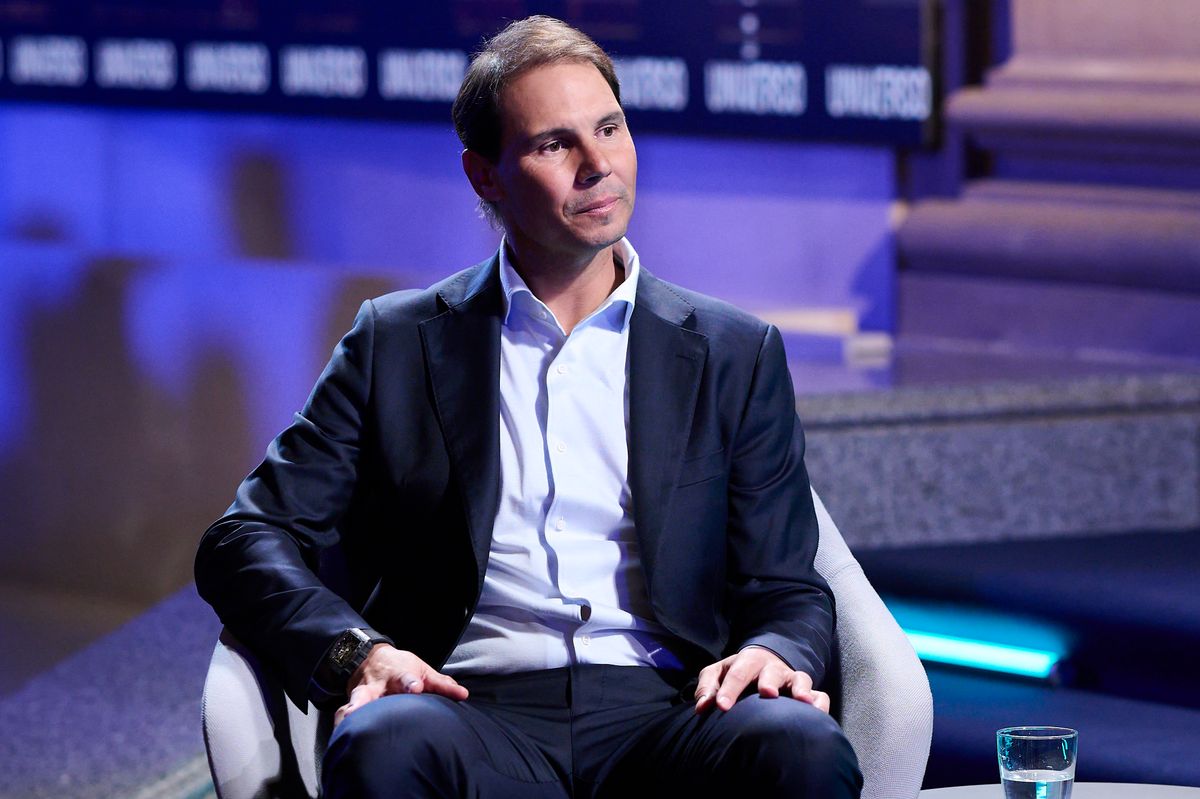
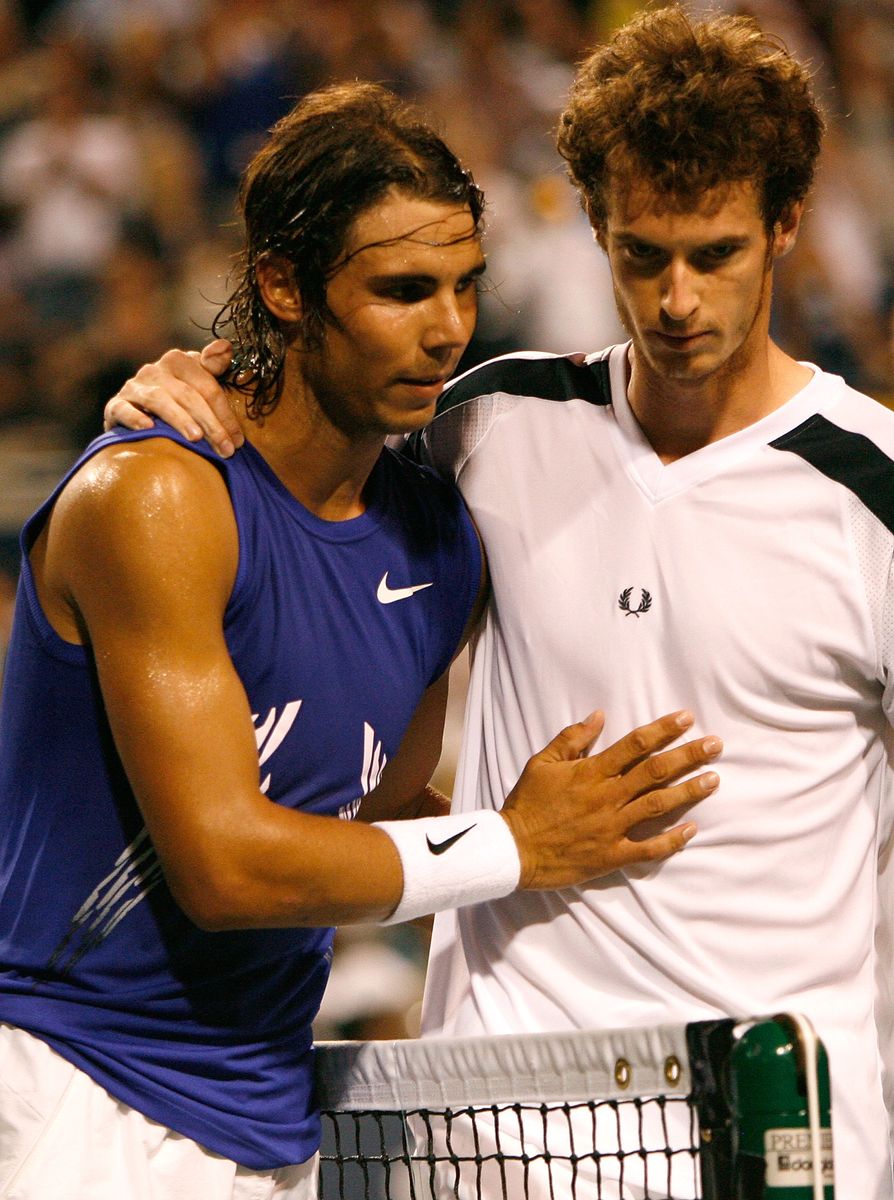
Rafa Nadal couldn’t stay away. The Spanish tennis icon has been retired for the past couple of years, spending time doing the things he didn’t have time for. Still, he’s picking his racket back up for a special occasion, and is joined by one of his most emblematic rivals: Andy Murray.
In a video shared on Instagram, Nadal revealed that he would be returning to the tennis court to celebrate 10 years of his academy, the Rafa Nadal Tennis Academy. The match will be celebrated on October 3rd, in his hometown of Mallorca, Spain, and will likely feature more surprises for tennis fans.
The video shows Nadal sending Murray a voice note, inviting him to the event. He talks for a couple of minutes, sharing how he didn’t want to interrupt Murray’s golf match and telling him some details about the event.
As soon as he sends the note, Murray sends a text back. “Hi Rafa! I’m in,” he wrote. You can check out the video in full below.
The event was announced back in September, with a statement published on the Academy’s official website. It revealed that Nadal would be playing various exhibition matches at the school, starting at 5 PM. The release teased more figures involved in the project, sharing that Nadal would be playing alongside some of the “biggest names in the sport.”
This marks the first time Nadal will be playing in front of an audience since his retirement in November 2024 at the Davis Cup in Malaga.
“The Rafa Nadal Academy Slam will be broadcast live on Movistar Plus, which will provide extensive coverage to ensure fans do not miss Rafa Nadal’s return to the court,” explains the website.
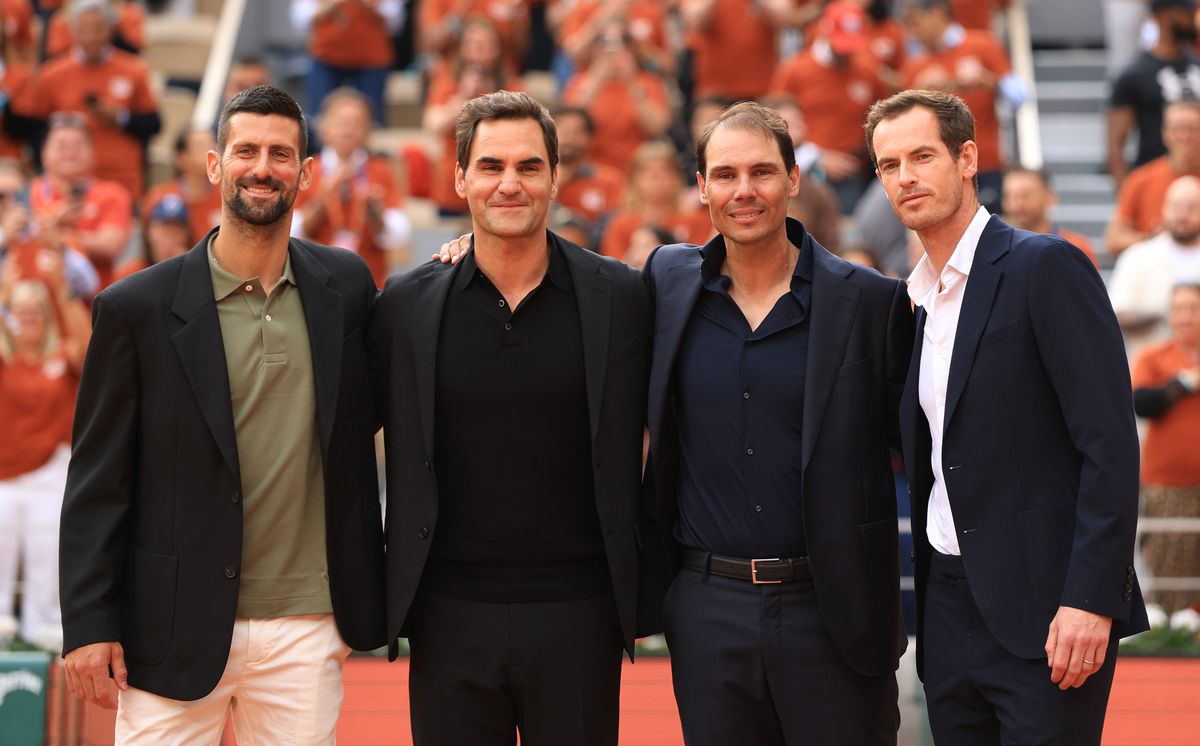
Novak Djokovic, Roger Federer, Nadal, and Andy Murray at the 2025 Roland Garros
Nadal and Murray’s friendship and rivalry
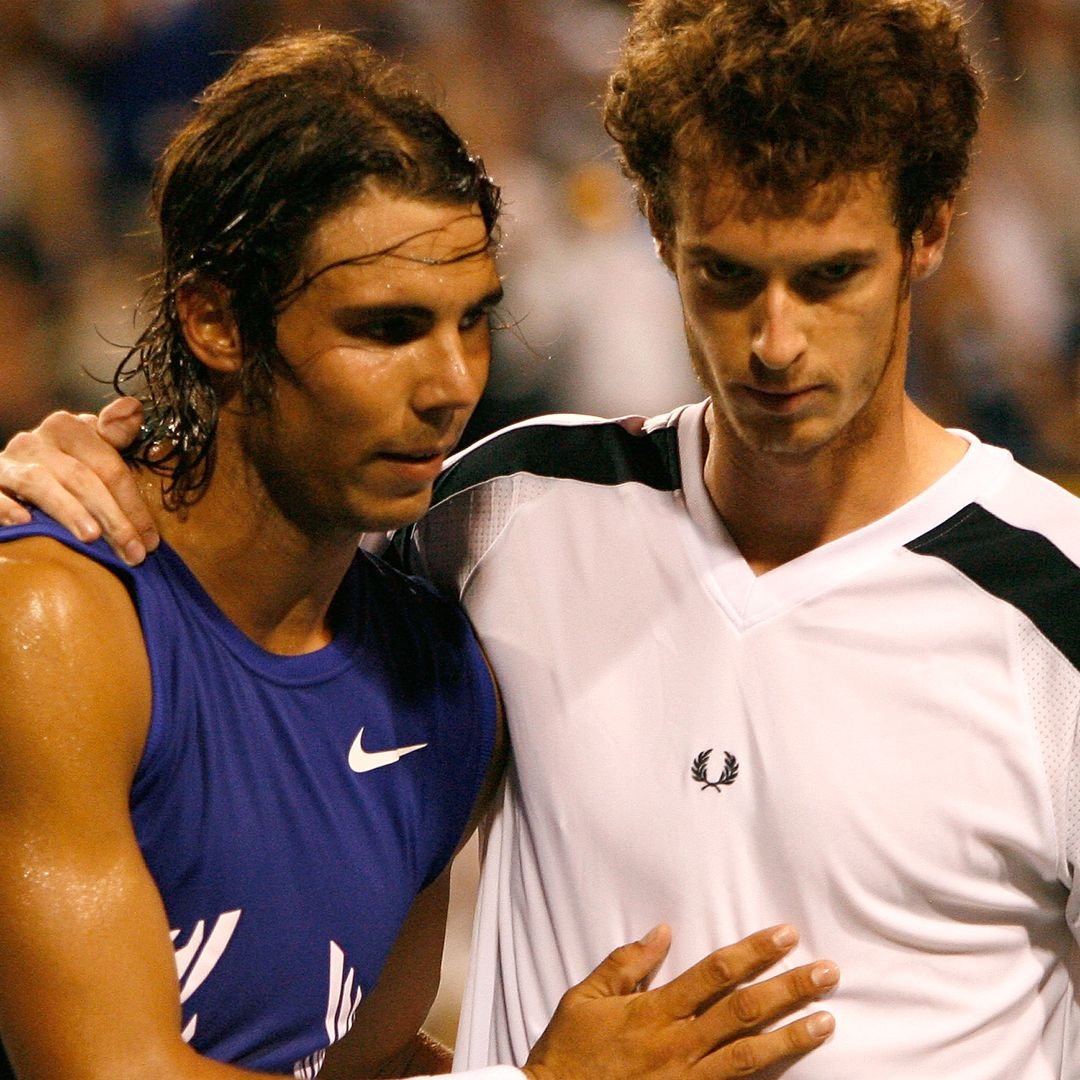
Nadal was a part of an exciting generation of tennis players, developing many exciting rivalries that formed into long-term friendships. Andy Murray, from the UK, was a key figure in his career, with the two playing against each other 24 times.
Nadal has the most wins of their encounters, leading 17 – 7. Their last official match against each other was at the Mutua Madrid Open in 2016. Murray won the match 7–5, 6–4. They both retired in 2024.