Blog

  • Box Office: ‘Super Mario Galaxy Movie’ Easily Tops Charts With $35 Million, ‘Lee Cronin’s The Mummy’ Debuts to $13.5 Million

    Box Office: ‘Super Mario Galaxy Movie’ Easily Tops Charts With $35 Million, ‘Lee Cronin’s The Mummy’ Debuts to $13.5 Million

    The Super Mario Galaxy Movie” easily retained its box office crown in its third weekend of release, topping the charts with $35 million. The Universal and Illumination release is already the year’s highest-grossing film, having earned $355.2 million domestically and $747.5 million globally, and seems destined to eclipse the $1 billion mark worldwide. At the rate, expect the studios to get more Mario into production as fast as they can level up and Nintendo will allow it.

    Amazon MGM Studios’ “Project Hail Mary” also shone brightly in its fifth weekend of release, picking up $20.5 million for a second place finish. That brings the sci-fi adventure’s domestic gross to a stellar $285.1 million. However, the continued success of “The Super Mario Galaxy Movie” and “Project Hail Mary” made it difficult for newcomers to gain much traction.

    “Lee Cronin’s The Mummy” had to settle for third in its debut weekend, earning a so-so $13.5 million. The Warner Bros. and New Line release didn’t cost much to make, carrying a budget of $22 million, but its final tally will be a far cry from the nearly $150 million that Cronin’s 2023 film “Evil Dead Rise” collected. Horror maestros James Wan and Jason Blum produced “The Mummy” through their production banners, Atomic Monster and Blumhouse Productions, and it continues their run of monster movies, falling somewhere between 2020’s well-received “The Invisible Man” ($144.5 million globally) and 2025’s lamentable “Wolf Man” ($35.2 million globally).

    The weekend’s other new wide release, Magnolia’s “Normal,” took seventh place, earning $2.5 million. The action film stars Bob Odenkirk as a small town sheriff who stumbles on a larger conspiracy following a local bank robbery. Ben Wheatley, who has developed a reputation for boundary pushing ultra-violence with the likes of “Free Fire” and “High Rise,” directs.

    In its third weekend of release, A24’s buzzy relationship comedy “The Drama” took fourth place, earning $4.8 million. The indie film, which stars Zendaya and Robert Pattinson, has earned an impressive $39.7 million. That’s good news, because Zendaya and Pattinson will appear together in three films this year, popping up in “Dune: Part Three” and “The Odyssey,” not that those blockbuster films will rise or fall on their chemistry alone.

    Rounding out the top five, Universal’s rom-com “You, Me & Tuscany” picked up $3.8 million to bring its haul to $14.4 million after two weeks in theaters. In limited release, Focus Features’ “Lorne,” a documentary about “SNL” creator Lorne Michaels, debuted to $270,000 from 415 theaters, while A24’s “Mother Mary, earned $168,063 from just five locations.

  • Box Office: ‘Super Mario,’ ‘Hail Mary’ Lords Over Lee Cronin’s Horror Pic ‘The Mummy’

    Box Office: ‘Super Mario,’ ‘Hail Mary’ Lords Over Lee Cronin’s Horror Pic ‘The Mummy’

    The Super Mario Galaxy Movie and Project Hail Mary continue to rule the box office, while new horror pic Lee Cronin’s The Mummy opens in third place domestically with an estimated $12.5 million/

    From Universal and Illumination, Super Mario stayed atop the North American chart in its third weekend with a better-than-expected $35 million for as it cleared the $350 million mark in North America. Overseas, it pulled in another $83.2 million to finish Sunday with a foreign tally of $392.2 million and just shy of $747.5 million globally. (In Israel, it became the first Hollywood to open in Israel since the ceasefire was declared and did decent business, according to Universal insiders.)

    The Mario franchise has now earned a combined $2 billion globally to put it at No. 10 on the list of the top-grossing animated franchises of all time after already becoming the top-grossing Hollywood film of the year so far.

    The landscape will change dramatically next weekend when Michael, Lionsgate’s Michael Jackson biopic opens, followed a week later by The Devil Wears Prada 2, which marks the official start of the summer box office.

    Amazon MGM Studios’ Hail Mary continues its remarkable journey, falling only 23 percent in its fifth weekend to an estimated $18.5 million for a domestic cume of $283 million. The sleeper hit is returning to Imax and other premium large format screens this weekend, several days after and star/producer Ryan Gosling and directors Phil Lord and Christopher Miller showed up at CinemaCon to thank theater owners and announce that Amazon MGM is extending the film’s exclusive run in cinemas.

    Produced by Jason Blum’s Blumhouse and James Wan’s Atomic Monster, The Mummy is Cronin’s an R-rated reimagining of Universal’s all-audience franchise. The film has divided critics, but audience exits are solid-to-decent. Also, the pic ended up sharing Imax screens with Hail Mary.

    Jack Reynor, Laia Costa, May Calamawy, Natalie Grace and Veronica Falcón star in the pic, which Cronin wrote and directed. The story centers on a family who has been grieving the disappearance of their daughter eight years earlier in Cairo. Suddenly, they get a call from Egyptian officials revealing she has been found after spending the past eight years in a 3,000-year-old sarcophagus and has been transformed into a living mummy-like creature.

    Cronin is celebrated for reviving the Evil Dead franchise with Evil Dead Rise, which grossed $147 million globally in 2023. He came on the scene with the 2019 feature The Hole in the Ground, which bowed at Sundance.

    James Wan, Jason Blum and John Keville produced The Mummy alongside Cronin.

    New openers at the specialty box office include the Anne Hathaway-led music industry drama Mother Mary from A24, and Morgan Neville’s Lorne Michael biopic Lorne.

    Mother Mary, playing in only five locations, is eyeing a promising per-location average of $35,000-plus before expanding nationwide next weekend.

    April 19, 7:45 a.m.: Update with revised figures.

    This story was originally publised at April 19.

  • The Strokes End Coachella Set With Video Condemning U.S. and Israeli Bombings in Iran and Gaza

    The Strokes End Coachella Set With Video Condemning U.S. and Israeli Bombings in Iran and Gaza

    The Strokes ended their performance on weekend 2 of Coachella on a note of political protest, capping the set with a video montage that accused the CIA of enacting regime change in foreign countries over the decades, finally concluding with footage of Israel bombing Gaza and the United States bombing Iran.

    These several minutes of video commentary came as a surprise to audiences viewing at home as well as in the desert, since it bore no resemblance to how the group rounded out its set the previous weekend. The song that accompanied this statement, “Oblivius,” had not been performed by the Strokes in concert at all since 2016; it included singer Julian Casablancas repeating the statement in the chorus, “What side you standing on?”

    As the Strokes wrapped up their final number Saturday night, performing in front of an illuminated mosque backdrop, the footage on the huge LED screens behind them portrayed recent American bombings in the Middle East with the large caption “Over 30 universities destroyed in Iran” — followed by another video clip of a large building in Gaza being destroyed in a controlled explosion, with the caption: “Last university standing in Gaza.”

    Most of the long montage took issue with what the band presented as America’s historic misdeeds, from the era of slavery up through America’s missile strikes in Iran. But bringing the Israeli/Palestinian conflict into it at the end was notable, given how the biggest controversy at last year’s Coachella had to do with the group Kneecap using its set to condemn Israel for military actions in the Middle East, albeit in more profane terms.

    A fan who posted video of the climax on X wrote: “This was the moment the Strokes ensured they’ll never set foot in Coachella again! I’m so proud of them.” But it seems like a long shot the group will be subject to any such blacklisting, with the Strokes already booked to headline Goldenvoice’s next Southern California festival in August.

    Unlike the Kneecap proclamations and video that appeared to take Coachella organizers aback in 2025, the festival appeared to be ready for and accepting of presenting the Strokes’ political statement, with long shots in the live video feed on YouTube making all of the group’s footage clearly visible.

    The bulk of the Strokes’ video montage had to do with assertions that the CIA has been responsible for overthrowing governments in South America or even assassinating leaders — along with giving voice to the conspiracy theory that the U.S. was involved domestically in the assassination of civil rights leader Martin Luther King Jr. After showing an image of King, a caption read: “US govt found guilty of his murder in civil trial.” (The trial referenced took place in 1999, and was followed by the Justice Department declaring in 2000 that there was no evidence to lend validity to the jury’s verdict.)

    Among the other accusations of secret U.S. intervention over the years, the Strokes’ video asserted that the CIA was suspected of involvement in the 1981 plane crashes that killed Panamanian president Omar Torrijos and the president of Ecuador (spelled “Equador” on screen), Jaime Rondos, as well as involved in the overthrow of figures from Iranian prime minister Mohammed Mossadegh in 1953 to Chilean president Salvador Alende in 1973 and Bolivian president Juan Torres in 1976.

    Following the climactic portrayal of bombings in Iran and Gaza, the Strokes’ video montage ended with a shot of a bomber plane in the air, as the song abruptly ended.

    Much of the reaction to the band’s video commentary at Coachella among their fans was initially positive, with statements on their Instagram posts like “Thank you so much for using your stage to highlight Gaza and Iran and Latin America” and “Amazing show and a bombshell of reality at the end!”

    Reaction among pro-Israel music fans and conservative U.S. fans may grow as clips of the performance are further disseminated on social media Sunday. Most followers of the Strokes, however, are likely to be aware of Casablancas’ past support for Palestine, as he signed a 2021 “Musicians for Palestine” letter.

    Following the group’s Weekend 1 appearance, the Strokes announced a world tour that will begin in June and run through the fall. It includes an L.A.-area headlining appearance in August at the Just Like Heaven festival at Brookside at the Rose Bowl in Pasadena, produced by Goldenvoice, which also produces Coachella.

  • Stevie Wonder, Dave Chappelle and More Honor Eddie Murphy at AFI Life Achievement Award Ceremony: ‘I Almost Teared Up’ 

    Stevie Wonder, Dave Chappelle and More Honor Eddie Murphy at AFI Life Achievement Award Ceremony: ‘I Almost Teared Up’ 

    Hollywood legends gathered at the Dolby Theater on Saturday night to celebrate Eddie Murphy as he received the AFI Life Achievement Award, the highest honor bestowed by the American Film Institute.

    Spike Lee presented Murphy with the 51st AFI Life Achievement Award, commending the comedian and actor for having been true to himself, prioritizing his family and for being a “great artist” throughout his esteemed career. 

    In addition to Lee, an A-list roster of stars turned out to celebrate Murphy’s achievement; Tracy Morgan, Dave Chappelle, Bill Burr, Chris Rock, Arsenio Hall, Judge Reinhold, Kenan Thompson, Robert Townsend, Eva Longoria and Da’Vine Joy Randolph all made speeches over the course of the night, sharing anecdotes about Murphy and what his work and legacy means to them. 

    Chappelle, who co-starred with Murphy in “The Nutty Professor,” recalled Murphy as one of his “heroes” growing up. “When I was 14 years old, ‘Raw’ came out and I would go and I would watch it every day after school like I was taking a class,” Chappelle said. “I knew, somehow, this was something really important in my life.”

    The comedian also worked with Murphy’s late brother, Charlie, on “Chappelle’s Show.”

    “A couple weeks ago, on a whim, I reached out to Eddie and asked if I could come by and visit him… and me and Eddie, for the first time, talked about Charlie since he passed,” said Chappelle. “In the midst of conversation, Eddie was doing this, ‘Man, you should do a ‘Chappelle’s Show’ movie or something like that.’ And I said, ‘Man, that would be tough without your brother.’ So Eddie, if I do it man, do Charlie’s part. And let’s fucking go.” 

    A surprise appearance from Stevie Wonder stunned audiences, as the musician recounted how he first learned of Murphy because of his imitations of him on “Saturday Night Live” early in his career.  As the artist joked: “He made fun of a blind man!” Though it was clear there’s no animosity there: “It’s not easy to make people smile, trying to get them to look on the brighter side, but Eddie has a way of getting in our head and hearts to create a belly laugh that eases the pain, builds the bridge and diffuses a situation which makes a real difference. That is power, that is courage and that is the funny man, my friend.” 

    The surprises didn’t stop with Wonder — Mike Myers appeared on stage in green “Shrek” makeup, an homage to the 2001 hit film he co-starred in with Murphy, who lent his voice to Donkey, the ogre’s sidekick. “Eddie is one of the greatest,” Myers said. “I never got to work with Charlie Chaplin, I never got to work with Alec Guinness, I never got to work with Peter Sellers, but it is my absolute honor to say and to be able to tell my kids that I got to work with Eddie Murphy.”

    Jennifer Hudson also delighted the audience with a “Dreamgirls” musical medley, a tribute to the 2006 film she starred in alongside Murphy — and which earned him a Golden Globe and SAG Award for best supporting actor. 

    When Murphy took to the stage to accept his honor, he noted that it couldn’t be coming at a better time — he’s just welcomed his first grandson, third granddaughter and celebrated his 65th birthday earlier this month. “I feel like it’s raining blessings on me,” he said. 

    In classic Murphy fashion, things got humorous quick as the comedian cracked a joke about what would’ve happened if AFI had made him wait until he was in his 90s to receive the achievement award: “If you made me wait until I was 92, I would’ve came out here and said fuck everybody… and then I’d get down and shit on the floor,” the comedian said to raucous laughter. “We staved off that happening by getting this award tonight.” 

    “I wish y’all could feel what I’m feeling and see what I’m seeing… I’d like to thank everybody for giving me this night that I will remember forever and ever and ever,” Murphy concluded, getting emotional. “I almost, almost teared up. I’m going to get backstage and cry.” 

    Over the course of his career, Murphy has appeared in hit films including “48 Hrs.,” “Trading Places,” “Dr. Dolittle,” “Coming to America,” and the “Beverly Hills Cop” franchise. Murphy began his career as a stand-up in the 1980s, joining the cast of “Saturday Night Live” at 19-years-old and giving viewers a number of unforgettable characters, like Velvet Jones, Buckwheat and Gumby.

    Earlier in the evening, Oscar-winning cinematographer Autumn Durald Arkapaw received the Franklin J. Schaffner alumni medal, an honor she described as “really beautiful.” “The last time I was here was for the Oscars, and then to receive this honor with someone I grew up with watching on television before I even knew that I was going to be in the film industry, before I knew I wanted to be a cinematographer,” Arkapaw told Variety on the red carpet. “He was so important in my trajectory of enjoying films on the big screen and just feeling like the theater was a place for me to go to and escape. And so now to be here with him, it’s really cool.”

    Most recently, AFI presented the 50th AFI Life Achievement Award to Francis Ford Coppola in 2025. Previous recipients include Julie Andrews, George Clooney, Meryl Streep, Martin Scorsese and Steven Spielberg.

    As previously announced, “The 51st AFI Life Achievement Award: A Tribute to Eddie Murphy,” will premiere on Netflix on May 31, marking the first year the AFI special will be available to stream on the platform.

  • Hacking Crisis Escalates: Record Outflows from Aave

    Hacking Crisis Escalates: Record Outflows from Aave

    The KelpDAO-related security breach crisis in the cryptocurrency market has led to a significant liquidity shock in DeFi protocols. According to recent data, large-scale $ETH outflows have occurred via Aave, while investor confidence is visibly weakening.

    According to information shared by the on-chain analytics platform Lookonchain, the KelpDAO exploit resulted in a “bad debt” on Aave after the attacker withdrew $ETH from the system using rsETH collateral. This development triggered panic selling, particularly among large investors.

    Related News Analyst Claims Selling Pressure on XRP’s Twin Altcoin May Have Eased

    According to the data, a total of over $5.4 billion worth of $ETH was withdrawn from the platform. During this period, it was reported that Justin Sun, a leading figure in the cryptocurrency market, also withdrew approximately 65,584 $ETH (approximately $154 million).

    Following these intense outflows, Aave’s $ETH usage reached 100%. This indicates that the protocol’s available liquidity has been largely depleted and that new borrowing capacity may be severely limited.

    *This is not investment advice.

  • Aave records $6 billion TVL drop as Kelp hack exposes structural risk at DeFi lender

    Aave records $6 billion TVL drop as Kelp hack exposes structural risk at DeFi lender

    Aave just watched $6.6 billion walk out the door, and it’s not because anyone hacked Aave.

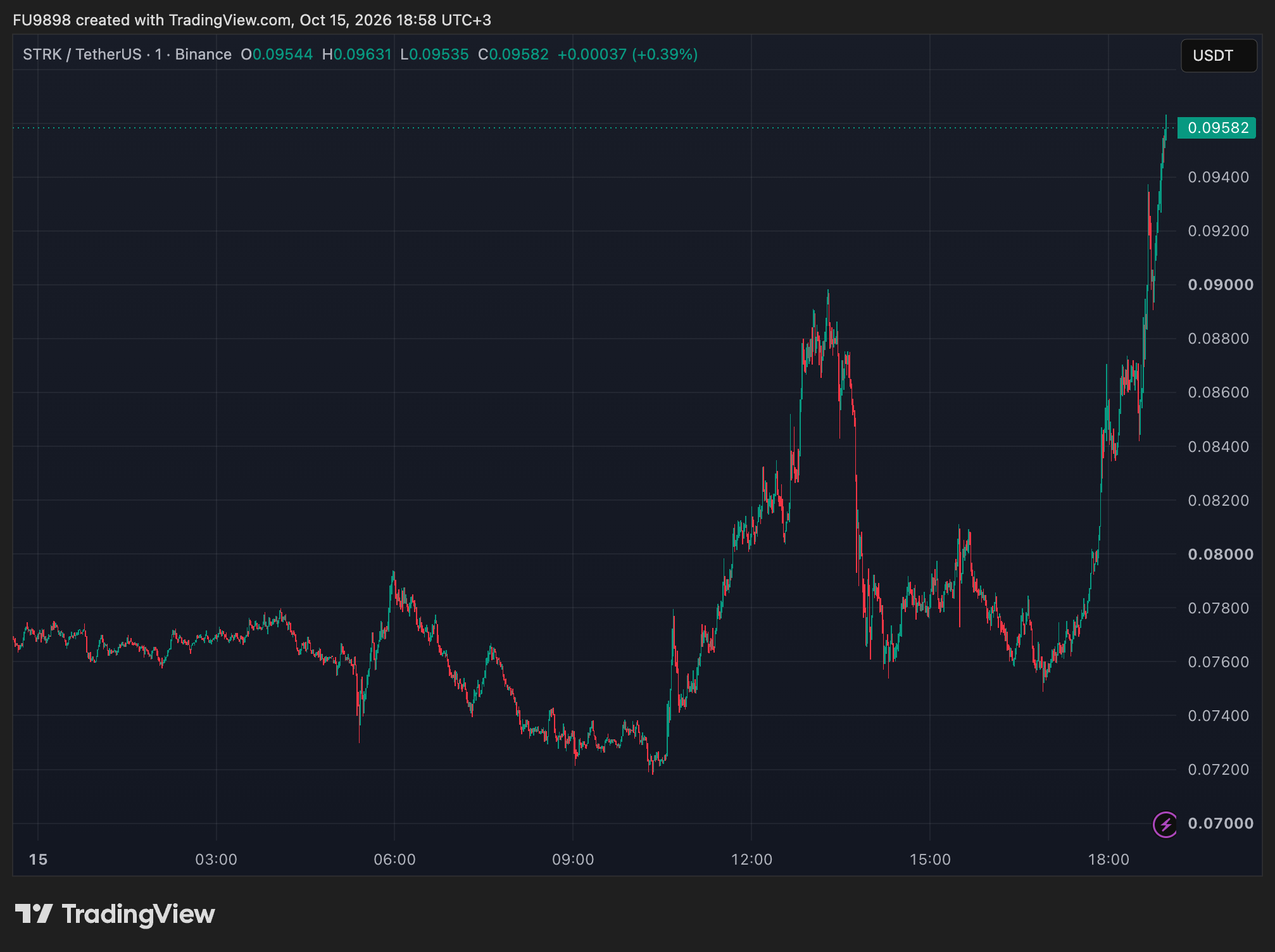
    The protocol’s total value locked dropped from $26.4 billion on April 18 to nearly $20 billion in U.S. morning hours on Sunday, per DefiLlama. The $AAVE token fell 16% to $92, and daily fees spiked to $1.99 million as liquidations ripped through the weekend.

    Depositors are running because Aave is carrying a hole it did not create. When attackers drained 116,500 rsETH from Kelp’s bridge on Saturday, they dumped the stolen tokens on Aave V3 as collateral and borrowed wrapped ether against them.

    On-chain trackers put the Aave-specific borrow at roughly $196 million, with total positions across Aave, Compound and Euler around $236 million.

    Aave is the largest lending protocol in DeFi, where users deposit crypto to earn yield and other users borrow against collateral. Kelp is a liquid restaking protocol, which takes ether that has already been staked on Ethereum and routes it through a separate yield-generating system called EigenLayer, issuing a receipt token called rsETH in exchange.

    That rsETH is what users trade and, critically, what some users posted on Aave as collateral to borrow against.

    On Saturday, attackers tricked Kelp’s cross-chain bridge into releasing 116,500 rsETH, about $292 million worth, to an address they controlled. They then deposited that stolen rsETH onto Aave V3 as collateral and borrowed wrapped ether against it.

    A bridge is a blockchain-based took that transfers tokens between different networks, where they may not be originally supported.

    Aave first said the Umbrella reserve would cover any deficit. By Saturday afternoon the language had softened to “explore paths to offset the deficit.” That is not how a protocol talks when it knows how much it owes and has the money to pay it.

    The concentration explains why the damage lands here. Aave’s loan book spans 22 chains, but Ethereum alone holds $14.24 billion of the $17.82 billion in outstanding borrows. WETH is 39.49% of all loans on the protocol, meaning the attack hit the exact collateral-to-WETH pair that dominates Aave’s book.

    Stani Kulechov, Aave’s founder, said the exploit was external and the protocol’s contracts were not compromised. But Aave accepted a liquid restaking token as collateral, and that token’s backing vanished on a bridge Aave does not control. The depositors lose either way.

    Liquid restaking tokens were whitelisted across every major lending protocol because they carried yield and represented growing share of Ethereum’s locked value.

    The risk models priced them as if they would hold peg under normal conditions. However, none of them priced a scenario where the collateral goes to zero because a bridge on a chain Aave does not touch got exploited on a Saturday.

    $AAVE is the backbone of DeFi, has billions in there, and pretty much every single new DeFi infrastructure on new chains is a fork of it,” trader Altcoin Sherpa wrote on X. “When $AAVE has contagion risk, it shows the fragility of the entire system.”

    What the token price is trying to answer now is whether Umbrella is big enough to cover the hole, and whether stkAAVE holders who back that reserve are about to eat the loss.

  • The Strokes Stir Political Passions at Coachella With Video Montage Condemning U.S. and Israeli Bombings in Iran and Gaza

    The Strokes Stir Political Passions at Coachella With Video Montage Condemning U.S. and Israeli Bombings in Iran and Gaza

    The Strokes ended their performance on weekend 2 of Coachella on a note of political protest, capping the set with a video montage that accused the CIA of enacting regime change in foreign countries over the decades, finally concluding with footage of Israel bombing Gaza and the United States bombing Iran.

    These several minutes of video commentary came as a surprise to audiences viewing at home as well as in the desert, since it bore no resemblance to how the group rounded out its set the previous weekend. The song that accompanied this statement, “Oblivius,” had not been performed by the Strokes in concert at all since 2016; it included singer Julian Casablancas repeating the statement in the chorus, “What side you standing on?”

    As the Strokes wrapped up their final number Saturday night, performing in front of an illuminated mosque backdrop, the footage on the huge LED screens behind them portrayed recent American bombings in the Middle East with the large caption “Over 30 universities destroyed in Iran” — followed by another video clip of a large building in Gaza being destroyed in a controlled explosion, with the caption: “Last university standing in Gaza.”

    Most of the long montage took issue with what the band presented as America’s historic misdeeds, from the era of slavery up through America’s missile strikes in Iran. But bringing the Israeli/Palestinian conflict into it at the end was notable, given how the biggest controversy at last year’s Coachella had to do with the group Kneecap using its set to condemn Israel for military actions in the Middle East, albeit in more profane terms.

    A fan who posted video of the climax on X wrote: “This was the moment the Strokes ensured they’ll never set foot in Coachella again! I’m so proud of them.” But it seems like a long shot the group will be subject to any such blacklisting, with the Strokes already booked to headline Goldenvoice’s next Southern California festival in August.

    Unlike the Kneecap proclamations and video that appeared to take Coachella organizers aback in 2025, the festival appeared to be ready for and accepting of presenting the Strokes’ political statement, with long shots in the live video feed on YouTube making all of the group’s footage clearly visible.

    The bulk of the Strokes’ video montage had to do with assertions that the CIA has been responsible for overthrowing governments in South America or even assassinating leaders — along with giving voice to the conspiracy theory that the U.S. was involved domestically in the assassination of civil rights leader Martin Luther King Jr. After showing an image of King, a caption read: “US govt found guilty of his murder in civil trial.” (The trial referenced took place in 1999, and was followed by the Justice Department declaring in 2000 that there was no evidence to lend validity to the jury’s verdict.)

    Among the other accusations of secret U.S. intervention over the years, the Strokes’ video asserted that the CIA was suspected of involvement in the 1981 plane crashes that killed Panamanian president Omar Torrijos and the president of Ecuador (spelled “Equador” on screen), Jaime Rondos, as well as involved in the overthrow of figures from Iranian prime minister Mohammed Mossadegh in 1953 to Chilean president Salvador Alende in 1973 and Bolivian president Juan Torres in 1976.

    Following the climactic portrayal of bombings in Iran and Gaza, the Strokes’ video montage ended with a shot of a bomber plane in the air, as the song abruptly ended.

    Much of the reaction to the band’s video commentary at Coachella among their fans was initially positive, with statements on their Instagram posts like “Thank you so much for using your stage to highlight Gaza and Iran and Latin America” and “Amazing show and a bombshell of reality at the end!”

    Reaction among pro-Israel music fans and conservative U.S. fans may grow as clips of the performance are further disseminated on social media Sunday. Most followers of the Strokes, however, are likely to be aware of Casablancas’ past support for Palestine, as he signed a 2021 “Musicians for Palestine” letter.

    Following the group’s Weekend 1 appearance, the Strokes announced a world tour that will begin in June and run through the fall. It includes an L.A.-area headlining appearance in August at the Just Like Heaven festival at Brookside at the Rose Bowl in Pasadena, produced by Goldenvoice, which also produces Coachella.

  • Nexchain Launches AI-Powered Smart Actions – The Future of Autonomous Blockchain Infrastructure

    Nexchain has developed its new product named Smart Actions, a series of intelligent modules which will help blockchain networks transition from manual and reactive systems to autonomous and self-optimizing ecosystems. With this announcement, Nexchain demonstrates their commitment to transitioning towards an Intelligent Web3. In the future, ML-based models will take care of all the work required to manage and govern networks instead of a human-run committee or their rigid and inflexible smart contracts.

    Autonomic Governance and Resource Elasticity

    The introduction of AI governance forms a crucial pillar to the Smart Actions of Nexchain’s platform. Historically, DAOs (Decentralized Autonomous Organizations) had to rely on slow manual processes, leading to a lot of friction associated with drafting proposals and experiencing voter fatigue from many lengthy proposals having been made at any one time. By creating real-time evaluations of proposals and analyzing voting patterns, Nexchain’s modules are designed to provide>Scaling Transaction Speed Through AI-Driven Verification

    Nexchain addresses the blockchain trilemma, including security, scalability, and decentralization, through its use of AI-powered verification. When there is a sudden spike in demand, the conventional nodes may fail to finalize the transactions leading to high fees or even network collapse.

    The Nexchain system has intelligent modules that can predictively load balance and optimize transaction settlement and validation. Thus, the Nexchain network can maintain high levels of throughput while at the same time ensuring that the validation process remains secure. Recent industry analysis suggests that the use of AI technology is quickly becoming common within the next generation of Layer-1 and Layer-2 technologies. Experts at CoinDesk believe that AI technology can act as a “shield” for smart contracts by enabling users to seek out possible vulnerabilities before they can be exploited.

    Strengthening the Web3 Ecosystem

    The emergence of Smart Actions signifies a broader movement towards cross-sector integration via Web3. The Nexchain brain could serve as the foundation for these specific application types, while ensuring that the underlying network is able to support the complexity of multi-faceted dApps.

    Conclusion

    Smart Actions from Nexchain is a huge step forward for a blockchain that is both resilient and more aware than ever before. Nexchain has established a new standard for what a “modern” blockchain can look like through the ability to repair and optimize itself without needing a human to make any manual interventions. Additionally, as AIs continue developing and becoming more intelligent, the line between smart contracts and intelligent actions will likely establish the standard for measuring success within the decentralized ecosystem.

  • Noah Wyle on the Origins of and Real-Life Connection to His Dark ‘Pitt’ Season 2 Journey

    [The following story contains spoilers from the season two finale of HBO Max’s The Pitt, “9:00 p.m.”]

    The Pitt season two finale conversation between Shawn Hatosy’s Dr. Jack Abbot and Noah Wyle‘s Dr. Michael “Robby” Robinavitch about their respective mental health struggles is not the first time that the two close friends and fellow attending physicians have talked about suicide.

    In fact, the topic comes up just minutes into the series’ first episode as Robby finds Abbot on the roof and jokes that jumping on his shift would be “rude.” Later in the first season, it’s Robby who’s up on the roof as Abbot tries to reassure him while Robby’s crying and talking about how he let himself and his staff down.

    Though both Robby and Abbot walk out of the hospital together at the end of season one, it was that moment that planted the seeds in Wyle’s mind for Robby’s suicidal thoughts in season two.

    “What would happen if Abbot hadn’t come back? If Abbot hadn’t stepped out and talked Robby down at the end of season one? Where does that scene end? How does Robby get off that roof? He was out there closer to the edge than Abbot had been that morning,” Wyle says. “I think that’s where the flirtation with this notion of checking out again came from.”

    From there, mapping out Robby’s dark mental health journey in season two just involved “responsible storytelling,” Wyle says.

    “If the one everybody looks to for help and guidance is the one that’s in the most trouble, who does he turn to?,” he adds. “And who can he show vulnerability to that he may not have it all worked out, especially when everybody looks to him to be such an authority and competent leader? So who helps the helpers seemed like a really good theme. And doctors don’t make good patients seemed like another good theme, this sort of isolation of leadership positions, feeling like you have to wear a double mask, was an interesting thing to explore.”

    And with the American College of Emergency Physicians reporting that roughly 300 to 400 physicians a year die by suicide and the American Medical Association noting that “physicians are at a higher risk of suicide and suicidal ideation than the general population,” Wyle acknowledges “it’s not statistically an anomaly; it’s actually quite common.”

    The team behind The Pitt got a real-life reminder of that halfway through the season, Wyle recalls, sharing that he learned from a friend of one of their directors that someone like Dr. Robby in his hospital, “who had gotten everybody through COVID and had been really an amazing figure,” went home one night and shot himself.

    Wyle and the Pitt cast taped a message to the hospital staff saying they were thinking of them, and the experience amplified the importance of the story they were telling.

    “That just underscored, to me, like how tragic [it] would be if Robby went through with it,” Wyle says, finding himself thinking, “We need to really explore this. We really need to take this all the way down to the studs to shout our comment.”

    Portraying that, though, Wyle says was “a fairly unpleasant headspace to occupy every day, 12 hours a day, from that same emotional place that you left the day before.”

    And he says it involved “fine brush work” to slowly reveal Robby’s state of mind across the season.

    “You really want to make sure you’re not letting out too little or too much,” he says. “And you certainly don’t want it to seem like it’s getting gratuitous. That was my big fear. You can’t show too much in all these episodes, because it slips away at the professionalism. It becomes a little bit like, ‘OK, enough already’ to an audience member that’s very sophisticated, jaded and thoughtful.”

    As for the significance of that final scene with baby Jane Doe, Wyle says it was not only “appropriate” to end the season with his character with that “innocent, abandoned life,” but also that it gives Robby the chance to “be able to tell a dark secret to somebody who can’t repeat it, who can’t respond to it, in a room that is almost hallowed ground for this kind of emotion.”

    “This is the room where all of Robby’s ghosts are, most of them anyway,” Wyle says of the place where he had his meltdown in season one and watched Dr. Adamson die during the COVID-19 pandemic.

    Looking ahead to season three, Wyle is reluctant to share too many specifics, in part because he doesn’t “know yet,” as the show’s writers, led by showrunner R. Scott Gemmill, are still mapping out the storylines.

    But he offers some mild speculation about where Robby goes next.

    “Knowing that if he wants to see more wonderful things and have people love him, he’s going to have to meet that universe more than halfway,” Wyle says. “And how to go about doing it is what we’re playing with now.”

    As for whether Robby goes on his planned motorcycle trip and how long his sabbatical lasts (three months or just a few days), Wyle says “all of that is being discussed.”

    And with respect to the writers’ approach to storytelling, Wyle says they’re trying to keep the focus relatively narrow and centered around the characters.

    “As this show keeps scaling larger and larger in its reception, resisting the temptation to scale it larger and larger in its narrative is almost like a mantra that we keep repeating in the room, that this is about a very small community treating a very small community, and it’s representative of a much larger problem in population,” he says. “But the more specific and focused we keep our narratives just being what you would find in this arena and what these characters will find in their lives, the more we’ll be on mark. It feels more authentic to start with what’s in our environment already and then work outward.”