Blog

  • Morning Minute: NEAR Intents Hacked for $3.8M – Was It A Bullish Hack?

    Morning Minute: NEAR Intents Hacked for $3.8M – Was It A Bullish Hack?

    Morning Minute is a daily newsletter written by Tyler Warner. The analysis and opinions expressed are his own and do not necessarily reflect those of Decrypt. And check out our daily news show ‘FOMO HOUR’ covering all of the top stories and market action.

    GM!

    Today’s top news:

    • Crypto majors rally 3-4% as oil and bonds cool; BTC at $86,400
    • SEC proposes rules letting advisors and funds hold crypto directly
    • ETH Foundation launches zkAPI for private AI
    • Pump leads onchain protocols again with $2.6M
    • The 7-Trait CryptoPunk sells for $5.9M in landmark sale on Gondi

    BitcoinBTC · USD

    $84,842+0.98%

    Sep 26Sep 28Sep 30Oct 1Oct 3

    $86.8k$85.4k$84.0k$82.7k

    24h HighHigh$86,796

    24h LowLow$83,898

    VolVol$1.3B

    Market projectionsOdds by Myriad

    →

    🔓 NEAR Intents Hacked for $3.8M—Was It A Bullish Hack?

    NEAR Intents shut down briefly on Thursday after an attacker took about $3.8 million.

    The flaw sat in the layer that moves money in and out, and how it talked to the main contract holding user funds. ZachXBT traced the stolen money to KuCoin, where it was converted to bitcoin. The team reported it to law enforcement and says a full report is coming.

    If you aren’t familiar with Near Intents, the tool lets you swap crypto across different blockchains with the ability to do so privately. It has been a big winner in the privacy boom, handling more than $30 billion in swaps across 35 networks.

    As for the hack, the response was fast. The contract-side hole is patched and core services came back within about an hour. Deposits and withdrawals on 11 networks including BNB Chain, Polygon, and Optimism stayed down another 12 hours while the rest of the fix went in. And every affected user will get paid back in full.

    NEAR fell nearly 9% to $4.86, and shares of the Bitwise NEAR ETF dropped more than 7%. That fund launched two days earlier, so its first week included a hack of the exact product Bitwise cited as proof the network was growing.

    But on the spectrum of how hacks can go, this is as close to the best version of a bad event. Kelp DAO was exploited for hundreds of millions. Bitget lost $387.5 million and froze withdrawals for four days. MetaMask pulled validators offline and has said almost nothing since. NEAR Intents found the bug, stopped the service, patched it, restarted in an hour, named the problem publicly, called law enforcement, and committed to making users whole. It was a rapid response with a very contained hack with minimal damage.

    That’s about as good as it gets. Some are going as far as calling it a “bullish hack” along the lines of the ZCash exploit found by their own team. Will this end up being a bullish event for Near? We will find out soon enough.

    🌎 Macro Crypto and Markets

    Corporate Treasuries & ETFs

    • The Bitcoin ETFs saw $103M in net inflows on Thursday; the ETH ETFs saw $55M in outflows and Solana had $1.1M in outflows

    Meme Coin Tracker

    • Meme leaders were green up 2-5%; DOGE +2%, SHIB +2%, PEPE +2%, PENGU +2%, TRUMP +4%, SPX +2%, BONK +4%
    • Robinhood chain leaders were mixed; Pons -2% to $360M; AI -2% at $154M; Cashcat +3% at $174M; Genie +500%, Shroom +24% and Moo +80% led top movers
    • Solana top movers were led by www +135x, Hooked +180%, Cards +26% and Sapling +170x

    💰 Token, Airdrop & Protocol Tracker

    🚚 What is happening in NFTs?

    • NFT leaders were mixed; Punks even at 33 ETH, BAYC -1% at 6.18 ETH, Pudgy -7% at 3 ETH
    • Quotrons (+6%) and OTC Desks (+14%) led top movers
    • The only 7-Trait CryptoPunk sold for ~$5.9M on Gondi, though the full sale details were not disclosed overnight

    Daily Debrief Newsletter

    Start every day with the top news stories right now, plus original features, a podcast, videos and more.

  • ‘Uptober’ Off With a Bang as Bitcoin Surges to $86K

    ‘Uptober’ Off With a Bang as Bitcoin Surges to $86K

    In brief

    • Bitcoin traded at $86,757 Friday, up 3% on the day and 2% over the week.
    • August core PCE came in at 3.0% against 3.3% expected, and futures now put a hold at the October FOMC at 74%, from 35.8% a week ago.
    • Spot Bitcoin ETFs took in $6.34 billion in the third quarter, but net inflows for 2026 remain under $1 billion.

    Bitcoin was trading at $86,757 on Friday, up 3% over 24 hours and 2% on the week, according to CoinGecko data, after a September that broke the month’s losing reputation. It remains about 31% below the record it set a year ago.

    The move follows Wednesday’s inflation reading. August core PCE came in at 3.0% against expectations of 3.3%, and the repricing that followed has swung the odds toward the Federal Reserve holding rates at its October 28 meeting. Futures put a hold at 74%, according to CME’s FedWatch tool, against 35.8% a week ago, and traders on Myriad, a prediction market owned by Decrypt’s parent company Dastan, price it at 75%. The shift came from an even split as recently as September 29, Nexo analyst Iliya Kalchev told Decrypt.

    BitcoinBTC · USD

    $84,842+0.98%

    Sep 26Sep 28Sep 30Oct 1Oct 3

    $86.8k$85.4k$84.0k$82.7k

    24h HighHigh$86,796

    24h LowLow$83,898

    VolVol$1.3B

    Market projectionsOdds by Myriad

    →

    New York Fed President John Williams said on Tuesday there was “no need for urgency” after September’s hike, while keeping one more increase in his baseline for later in the year. Vice Chair Philip Jefferson said on Thursday that policymakers needed more time, and that adjustments should follow the data and the balance of risks. High Treasury yields had been capping Bitcoin, and short covering added to the buying once price broke its range, said Tim Sun of HashKey.

    Jobless claims fell to 197,000 in the week to September 26 and continuing claims to 1.7 million, their lowest since March 2023, while ADP private payrolls rose 90,000, comfortably ahead of forecasts.

    Friday’s official report was weaker. Nonfarm payrolls rose 29,000 in September against forecasts of about 90,000, the Bureau of Labor Statistics said, and unemployment edged up to 4.2%. July and August were revised down by a combined 60,000, leaving July at a loss of 10,000, and average monthly gains over the past year now stand at 45,000. The analysts quoted here commented before the release; a print that soft strengthens the case for a hold while raising the question the Fed has been trying to avoid, of whether the labor market is turning. September’s CPI lands on October 14. “Cooling inflation without labor weakness is generally supportive of risk assets, Bitcoin included,” Kalchev said.

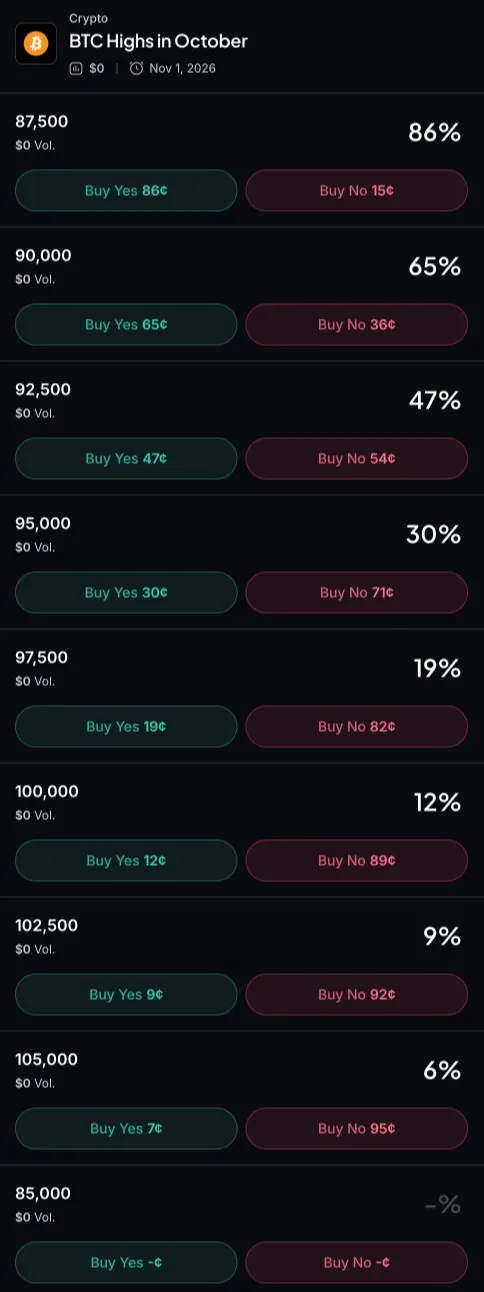
    Myriad: How high will Bitcoin go? Click to make your prediction.
    Myriad: How high will Bitcoin go? Click to make your prediction.

    Spot Bitcoin ETFs took in $2.65 billion in September, behind only August’s $3.52 billion since October 2025, and $6.34 billion across the third quarter, according to SoSoValue. Net assets stand at $109.3 billion. Kalchev counts inflows on 10 of the last 11 sessions, totaling roughly $3 billion.

    That quarter mostly undid earlier damage. The funds lost $4.97 billion in the second quarter and $490 million in the first, leaving 2026 net inflows under $1 billion.

    That intake came against a 25-basis-point hike and a 10-year yield above 5%, which Sun said showed the money was “not merely chasing liquidity, but are rather allocation-driven inflows.” Morgan Stanley’s ETF took in more than $200 million last month, a sign that “major investment banks’ wealth management systems are starting to incorporate Bitcoin into client asset allocation plans,” he told Decrypt.

    The analysts disagree on positioning. Kalchev has futures open interest down about 12% from its September 22 peak and in the bottom decile of its one-year range, so the advance is not leaning on leverage. Sun says open interest rose as price climbed. Options show “a market hedged against a drawdown but positioned for continuation,” Kalchev said, with protection at $80,000 and below and calls at $89,000 to $92,000.

    Into Uptober

    October and November have historically been Bitcoin’s best months, a pattern traders call Uptober, averaging an 18% October gain and 46% across the quarter over the past decade, said Stephen Wundke of Algoz, who told Decrypt that “traders feel there is more upside currently than there is downside.” He added: “There is a welter of money sitting on the sidelines waiting for more positive figures. If we get those softer figures and no rate rise, BTC will move very quickly and drag the rest of the quality assets with it.”

    The 10-year Treasury yield is at its highest since 2002 and the Fed still projects another hike this year, so a strong payrolls print or a hot CPI would put December back in play. Wundke puts the chance of an October hike at 40%, well above the 26% futures now imply.

    Owen Yang, chief executive of payments platform UPay, was more cautious. ETF flows and the SEC’s work on custody keep the institutional case moving, he told Decrypt, but “institutions entering at these price levels could mean less upside momentum.”

    “Whether Uptober lives up to its name will depend on the macroeconomic environment and the Fed,” Kalchev said, “and Bitcoin is actively pricing those outcomes.”

    Daily Debrief Newsletter

    Start every day with the top news stories right now, plus original features, a podcast, videos and more.

  • Bitcoin Heads Higher on Macro Moves: Where Does BTC Go Next?

    Bitcoin Heads Higher on Macro Moves: Where Does BTC Go Next?

    In brief

    • The U.S. added only 29,000 jobs in September versus 84,000 expected, and odds of an October Fed hike plunged to roughly 14% from 70% earlier this week.
    • Bitcoin trades at $86,152, about 1.4% below its $87,354 September high.
    • Where does BTC go next? Here’s what the charts are saying.

    Bad news for the economy is, once again, good news for risk assets.

    The U.S. added just 29,000 jobs in September, far below the 84,000 economists expected. The two previous months were revised down by a combined 60,000, and unemployment ticked up to 4.2%, according to the Bureau of Labor Statistics.

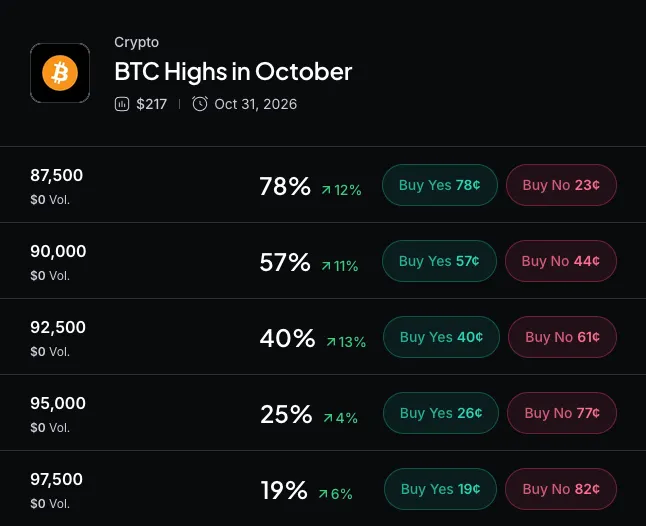
    Myriad: How high will Bitcoin go? Click to make your prediction.
    Myriad: How high will Bitcoin go? Click to make your prediction.

    Wall Street’s reading: the pressure to keep hiking rates just eased, which generally bodes well for risk assets like Bitcoin. The largest cryptocurrency by market capitalization rose sharply following today’s macro moves, and the charts suggest Bitcoin could go higher still during the month affectionately known as Uptober.

    Before diving into the data, here’s some context traders and investors should know: The Federal Reserve raised rates by a quarter point on September 16, in a unanimous vote, lifting the target range to 3.75%-4.00%. It was the first hike since 2023. Higher rates means less “cheap money” for investments, but Bitcoin shook it off far better than Wall Street.

    Since then, though, officials have been tapping the brakes. New York Fed President John Williams said Tuesday there was “no need for urgency,” and Fed Vice Chair Philip Jefferson said Thursday that policymakers may need more time before deciding whether to raise rates again.

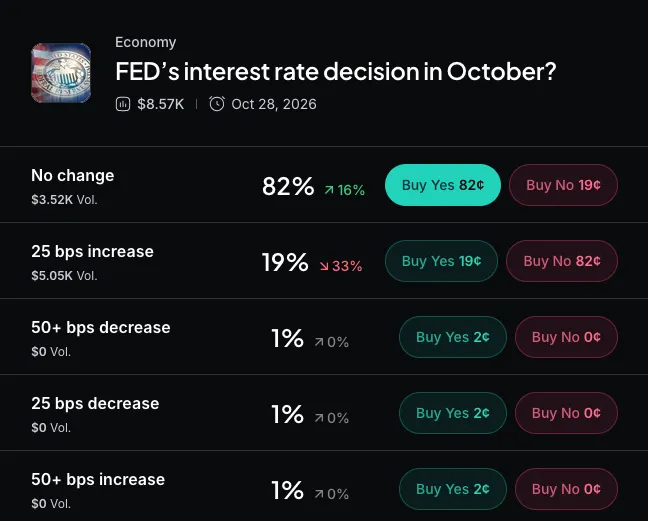
    CME FedWatch odds of a hike at the October meeting dropped sharply after the report, falling to 14% from 70% earlier this week. Prediction markets Kalshi, Polymarket, and Myriad agree: 80% odds of a hold on October 28.

    Myriad: What will the Fed do next? Click to make your prediction.
    Myriad: What will the Fed do next? Click to make your prediction.

    Crypto liked this a lot. The total crypto market cap is above $3 trillion, up 2.5% in 24 hours, and the Fear & Greed Index reads 71, firmly in “greed” territory. ETF flows are green at +$102 million today, and Bitcoin dominance sits at 59.1%.

    Bitcoin price: Staring at the ceiling

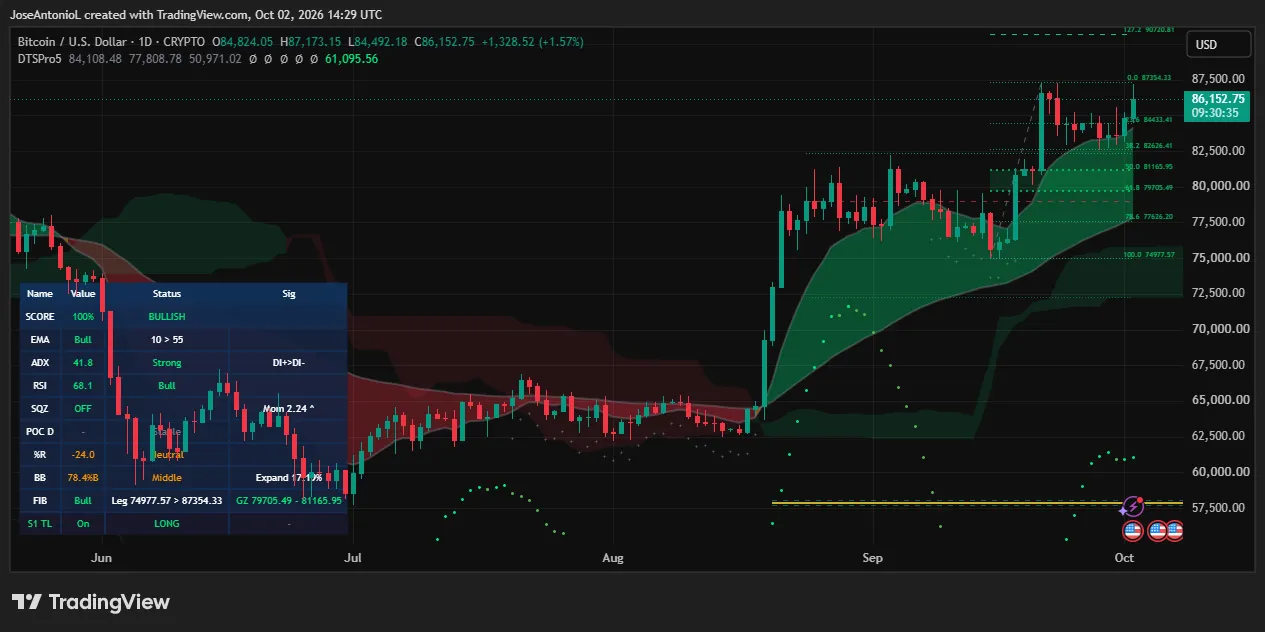
    Bitcoin is up 1.57% on the day, trading at $86,152.75 after opening at $84,824.05. Today’s candle has already tested a high of $87,173.15, just shy of the $87,354.33 September high that marks the top of the range, the yearly resistance bulls need to clear. The low was $84,492.18.

    Bitcoin price data. Image: Tradingview
    Bitcoin price data. Image: Tradingview

    That September high came at the end of a rally from the $74,977.57 swing low, a 16.5% climb. Since then, Bitcoin has been moving sideways around that mark. Here is what the indicators say about whether it breaks through.

    The Average Directional Index, or ADX, measures how strong a trend is, regardless of direction. Readings above 25 confirm a real trend, and BTC sits at 41.8. The directional lines show buyers (DI+) above sellers (DI-), so this is a strong uptrend, not a choppy market. Very high ADX readings also mean a trend is mature.

    The Exponential Moving Averages, or EMAs, track average prices, giving more weight to recent days. The chart shows the fast 50-day EMA above the slower 200-day, a bullish setup that usually means short-term momentum is outpacing the longer trend. The shaded cloud beneath price has also stayed green since mid-August, acting as a cushion.

    BitcoinBTC · USD

    $84,858+1%

    Sep 26Sep 28Sep 30Oct 1Oct 3

    $86.8k$85.4k$84.0k$82.7k

    24h HighHigh$86,796

    24h LowLow$83,898

    VolVol$1.3B

    Market projectionsOdds by Myriad

    →

    The Relative Strength Index, or RSI, gauges buying pressure on a scale of 0 to 100. At 68.1, it signals strong momentum but is knocking on the 70 line, where traders tend to start taking profits.

    The Squeeze Momentum Indicator is “off” with a positive reading of 2.2, which means the compression that preceded this move is over, and volatility has been released to the upside. Bitcoin’s price sits at 78.4% of the band range, in the upper half.

    The technical picture leans firmly bullish, but the setup has trade-offs.

    RSI is near overbought, and the macro backdrop is not exactly dovish: A December hike is still the market’s base case, and yields remain elevated. Traders will want to see a daily close above $87,354 with ADX holding up before calling it a breakout, while the Fed’s October 28 meeting is the next big macro test.

    Disclaimer

    The views and opinions expressed by the author are for informational purposes only and do not constitute financial, investment, or other advice.

    Daily Debrief Newsletter

    Start every day with the top news stories right now, plus original features, a podcast, videos and more.

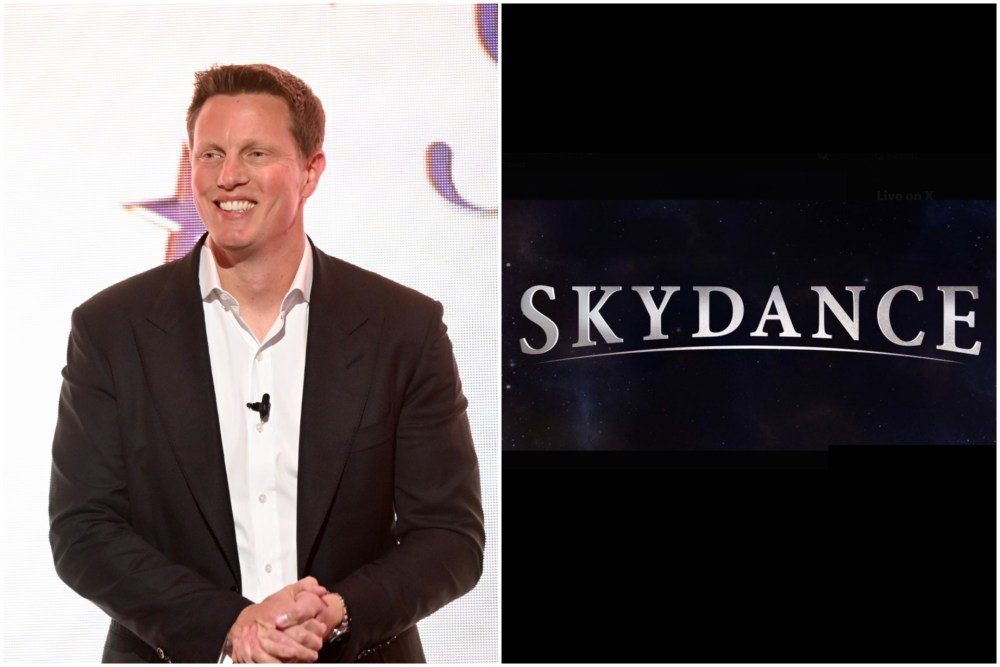
  • Skydance Blasts Off: Can David Ellison Make Paramount-Warner Bros. Merger Fly?

    Skydance Blasts Off: Can David Ellison Make Paramount-Warner Bros. Merger Fly?

    David Ellison has emerged victorious. And he’s boldly — or arrogantly, if you prefer — decided to name the entertainment giant that he’s bolted together Skydance Corp., nodding to the original name of his film production firm that has swallowed up two Hollywood studios over the past 14 months.

    Defying skeptics and beating back opponents, Ellison has harpooned his white whale in buying Warner Bros. Discovery. Now he has to prove that the $111 billion mega-merger can become a profitable entertainment powerhouse, and not just a vessel that will get sucked under by a massive whirlpool of debt.

    As the closing of the deal — set to occur Tuesday, Oct. 6 — became a certainty, entertainment industry insiders started to come to grips with the reality that the enlarged company is a new and unpredictable force in town. The deal has been polarizing for the creative community, with many boldface names going public in their opposition to the merger. The new leadership team that Skydance is assembling under the direction of Ellison and Ynon Kreiz, just recruited from Mattel to serve as co-CEO, has to navigate that dynamic. And they must do it while walking a tightrope on Wall Street to pay down debt and grow profits across film, linear TV and streaming.

    “They need to move as quickly as possible to get the leverage down,” says Jawad Hussain, managing director at S&P Global. “The biggest hurdle and the biggest thing we’re going to be keeping our eye on is integration and execution.” Two years ago, Hussain says, Skydance Meida was a small company that turned out a few films a year. “Now it’s managing one of the largest media companies. It’s not necessarily an easy task.”

    It’s all been a whirlwind. On the morning of Sept. 30, Ellison still didn’t know if it was a done deal.

    He had spent more than a year in his relentless pursuit of acquiring Warner Bros. and HBO. The WBD board rejected his takeover offers eight times. David Zaslav, Warner Bros. Discovery’s boss, ghosted Ellison in December 2025 after Netflix clinched a deal for WB’s streaming and studios business. But Ellison didn’t surrender; he finally outbid Netflix in February, with a $31/share offer that was nearly 2.5 times the stock price before the M&A frenzy kicked off. It was an offer WBD couldn’t refuse.

    Ellison and his legal team, headed by former DOJ official Makan Delrahim, predicted the proposed Paramount-WB combo would easily clear regulatory approvals. In June, Trump’s Justice Department rubber-stamped the pact without attaching any conditions. All told, regulators in 68 jurisdictions worldwide cleared the merger with minimal pushback.

    The last barricade in Ellison’s way? An antitrust lawsuit brought by 12 Democratic state attorneys general, led by California’s Rob Bonta. Ellison believed the litigation was politically motivated, stoked by fears he would try to turn CNN into a Trump-friendly mouthpiece. (He has repeatedly promised a hands-off approach to CNN’s news coverage.) But the AGs pressed their case and a federal judge agreed that their arguments — that Paramount-Warner Bros. would wield undue power in theatrical and basic cable markets — had merit. A trial was scheduled to begin in March 2027.

    Frustrated and incredulous, Ellison let it be known through press leaks in August that he would pull Paramount out of California if the state AGs didn’t let him close the WB deal. Paramount insiders continue to insist the notion of Ellison’s Golden State exit wasn’t a bluff or a threat. Bonta, seeming to realize he would gain no political capital by derailing or delaying the merger, relented. Paramount and the AGs announced a settlement of the suit on Sept. 21 — with a list of concessions so lenient that it surprised not only industry watchers but also employees at both companies.

    Now all that was left was the judge’s approval of the settlement. Worryingly for Ellison, U.S. District Court Judge Araceli Martínez-Olguin at a Sept. 24 hearing had left the door open to a potential further third-party review of the settlement at the behest of Sen. Cory Booker (D-N.J.). The groups behind the #BlockTheMerger coalition, which had amassed more than 5,700 signatories from actors, filmmakers and industry workers opposed to the deal, filed a brief with the court urging Martínez-Olguín to reject the settlement.

    But on Sept. 30 at just after 12:30 p.m pacific time, the judge issued her ruling: She had approved the settlement.

    The proposed consent decree, Martínez-Olguin wrote, reflects a “compromise that may leave some dissatisfaction for both sides and the public but a compromise that saves the risk, time and expense of litigating through trial.”

    Boom! Teams at both companies swung into action to make the final preparations needed to close the deal. That evening, Paramount and WBD confirmed the merger’s expected closing date of Oct. 6, at which point Paramount’s common stock will move from Nasdaq to list on the New York Stock Exchange. The stock symbol will change from “PSKY” to “SKYD,” reflecting the Skydance corporate name.

    Ellison is expected to lead a town hall meeting with employees next Tuesday, and Ellison and Kreiz are scheduled to host a virtual press briefing — along with the new Skydance’s executive leadership — at 7 p.m. ET on Oct. 6.

    Coincidentally, on Sept. 30 Ellison had been sitting on his own bit of hot news: He was ready to announce that he recruited media vet Kreiz to be co-CEO at the combined Paramount-WBD. The merged entity’s businesses will jointly report to Ellison and Kreiz.

    Word of Kreiz’s joining Paramount trickled out earlier in the day, but Ellison had already decided to wait until after market close to announce it. Paramount put the release on the wire at 1:06 p.m., a little over half an hour after the judge OK’d the antitrust settlement.

    Ellison triumphantly sent Paramount employees a companywide email about Kreiz’s hiring, timestamped at 1:18 p.m., praising the exec as a “proven builder and operator.” Kreiz, during his eight years at Mattel, had helped cut costs through layoffs — and oversaw its first theatrical release, 2023 blockbuster “Barbie.” He swung the company to profitability, but revenue has stubbornly stayed flat the last four years.
    Ellison wrote in his email: “Together we are well positioned to integrate, operationalize and run the businesses as we build one of the most ambitious next-generation media companies in the industry’s history. Kreiz, as part of his compensation package, will receive $31.5 million in fully vested stock as a signing bonus with the merger close.

    Then on Friday, Oct. 2, Ellison shared on X that the new corporation would be … Skydance. His post included a sizzle reel of the combined company’s biggest hits, leading off with a clip from “Titanic” — an inauspicious choice, perhaps, given how that infamous voyage turned out.

    “Paramount and Warner Bros. shaped over a century of culture,” Ellison wrote. “By combining them, we aren’t rewriting history — we’re equipping these iconic studios with a more powerful engine. Together, we are Skydance: a creative-first home for bold, quality storytelling.”

    Three years ago, Ellison was primarily known as a rich kid — scion of Oracle billionaire Larry Ellison, one of the world’s richest people — and a semi-successful movie producer, most notably with 2022’s “Top Gun: Maverick,” which turned in a boffo $1.5 billion at the box office. Now, having bagged Warner Bros., he can lay claim to being a titan in the business and no mere nepo baby.

    “Ellison stared down the attorneys general and won. He stared down the unions and won,” says Prof. Erik Gordon of University of Michigan’s Ross School of Business. “You can’t see David Ellison as daddy’s boy anymore. He’s a formidable force in the industry.”

    The Paramount-WBD merger is the biggest M&A deal in Hollywood history. It brings together two of Hollywood’s biggest movie studios, HBO Max and Paramount+ streaming services dand TV brands including CBS, CNN, MTV, TBS, Comedy Central, Food Network and more. The new company’s entertainment franchises span Harry Potter, Lord of the Rings, Game of Thrones and other HBO hits, the DC superhero universe, “Yellowstone,” “Mission: Impossible,” “Top Gun” and the Nickelodeon kids’ empire.

    “We still have work to do before the deal closes, and nothing changes until it does,” Ellison told employees in his memo about Kreiz.

    But even before the deal closed, the company’s new leadership was taking shape. Michael De Luca and Pamela Abdy, co-heads of Warner Bros. Motion Picture Group, will leave post-merger, sources told Variety. Paramount film heads Dana Goldberg and Josh Greenstein are in line to oversee both movie studios.

    With the deal close, Zaslav is expected to depart — with a boatload of money. Zaslav stands to earn at least $550 million in stock and cash once the Paramount-WBD deal closes, including $34.2 million in cash severance payments, per the terms of his “golden parachute” package.

    Skydance’s settlement-related obligations around theatrical film and the operation of its Paramount and Warner Bros. cable channels will undoubtedly have ripple effects in the marketplace that extend well beyond the U.S. Showbiz leaders in Europe have closely watched the transaction at a time when local-language production is at a peak thanks to the influence of Netflix, Amazon and Disney+. HBO has a growing international footprint that will be crucial to Skydance’s future growth.

    Pierre-Antoine Capton, chairman of France’s Mediawan, says the broader film and TV business is in line for a bumpy few years amid the shakeout of what he calls “a period of intense consolidation” of media assets. Mediawan bought Peter Chernin’s North Road Company earlier this year. It’s also circling Lionsgate as a potential acquisition.

    “Having spoken with David, I believe his vision is first and foremost an artistic, creative ambition,” Capton says of the Skydance merger. “He wants to build a more powerful group in order to invest in creation. It’s not only about making cuts. I believe in his commitment to cinema and to theatrical releases.” At the same time, “everywhere in the world we’re entering a much more difficult phase, where consolidation will be, in my view, one of the solutions to the economic problems we’re all going to face,” Capton says.

    Ellison and Kreiz will also be under pressure to deliver a clear roadmap for generating bigger profits from its streaming pillars, HBO Max and Paramount+.

    Casey Bloys, head of WBD’s HBO, is poised to assume oversight of the combined Paramount-Warner Bros. streaming business after Cindy Holland announced on Sept. 29 to staffers that she was stepping down from her role running Paramount+ and other direct-to-consumer businesses.

    Holland’s resignation blindsided some senior managers at Paramount, who thought Ellison had hired her for the long haul. “We all thought we had the home-court advantage — that David was bringing all the new people at Paramount to have them be part of Warner Bros.,” a company insider says.

    Paramount+ and HBO Max will together have more than 200 million subscribers. The newly merged Skydance can save money by consolidating its back-end streaming infrastructure. But “you don’t want to immediately combine the two streaming services because people won’t pay the sum of the two subscription prices,” says Prof. Sridhar Tayur of Carnegie Mellon University’s Tepper School of Business. For the foreseeable future, HBO Max and Paramount+ will continue as discrete brands.

    Another area to watch: what Ellison does with CNN, which throws off operating cash that Skydance Corp. will need to bolster its finances. Ellison has held preliminary talks with CNN chief Mark Thompson about staying on after the merger, sources tell Variety. The prospect of Thompson continuing at the helm, at least for now, came as a relief to CNN personnel, who have been worried that Bari Weiss, the “anti-woke” media entrepreneur Ellison put in charge of CBS News, might extend her fiefdom to include the news cabler.

    Under the settlement with the 12-state coalition, the merged Paramount-Warner Bros. will be subject to monitoring by a “news editorial independence board.” The board, which will include representatives from the states, will establish which will establish “guiding editorial and journalism principles” for CNN and CBS News. But critics have dismissed this as a toothless condition. One player displeased with this outcome was Connecticut Attorney General William Tong, who, although he signed off on the settlement, said afterward he had advocated for a full divestiture of CNN and CBS News.

    Foes of ParaBros remain hopping mad. Actor Mark Ruffalo, one of the deal’s most strident critics, has vowed to continue the fight. “This merger will stifle creativity, weaken free speech and cost people their jobs — it is a bad deal for this country and should never have been approved,” he said in a social media post Sept. 30.

    Ruffalo’s feud with Paramount got ugly. On Aug. 21, he posted a message warning about the dangers of the Paramount-WB merger and alleged Larry Ellison’s Oracle was complicit in “what we now have come to see as a genocide” by the Israeli government against Palestinians. Paramount responded forcefully. A company rep asserted the “antisemitic tropes” Ruffalo invoked “aren’t just wrong — they’re a bridge too far.” Ruffalo has been set to reprise his role as an FBI agent in a second season of HBO’s “Task” crime drama. It remains to be seen if Ellison will let bygones be bygones.


    Apart from the shouting, the biggest burning questions about the new entity are about its financial condition.

    How is Paramount buying Warner Bros. Discovery, which has a market cap that’s six times larger? Paramount is issuing billions in debt securities and securing new loans to help foot the bill. Larry Ellison is bankrolling the WBD merger to the tune of $46.7 billion in equity financing. Paramount also lined up about $24 billion in commitments from the sovereign wealth funds of Saudi Arabia, Qatar and the United Arab Emirates. In April, Paramount said the three Middle Eastern funds will own 38.5% of the combined entity, but that they will have no board seats or governance representation.

    The new company will be controlled by the Ellison family alongside Gerry Cardinale, founder and managing partner of RedBird Capital Partners. Cardinale’s firm is also pitching in equity for the WBD deal, after funding Skydance’s Paramount Global takeover.

    The new company’s net debt is estimated to be more than $80 billion. That staggering amount would translate into annual interest payments topping $6 billion. Add to that the fact that Paramount-WB, under the settlement with the AGs, is obligated to invest at least $300 million more on film production in the U.S. annually (above what the studios combined spent in 2025).

    Paramount execs have told Wall Street they can achieve $6 billion in cost savings through the merger. But not everyone thinks there’s $6 billion in cost savings to be squeezed out without negative consequences. There are obvious areas of overlap in corporate functions like IT, marketing, procurement and legal. But a big risk in executing a media merger of this scale is cutting into bone — resulting in the loss of creative professionals who are essential to the enterprise, says Prof. Tammy Madsen, a professor of management at Santa Clara University’s Leavey School of Business.

    “Creativity matters,” Madsen says. “If you are too aggressive in eliminating redundancies in the creative parts of the company, you could kill the value.”

    Ellison, after the final clearance for the merger came through, wasn’t exactly popping the Champagne just yet. But he did, apparently, pop open some breakfast burritos.

    On Oct. 1 — out of nowhere — employees on the Paramount Studios lot in L.A. and at the company’s offices Burbank were welcomed with buffet breakfasts: French toast, pancakes, egg burritos, shakes, berry bowls, chia pudding and more. One insider says it was the first time they had ever seen the company put out that kind of spread.

    Perhaps it was more like a peace offering, coming before the pain of a first wave of layoffs at the new Skydance expected before the end of the year. The merger could result in the loss of some 4,500 film and TV jobs over three years in L.A. alone, according to a report issued by Los Angeles County in August. Insiders believe layoffs will continue with further rounds into 2027.

    There’s no way around the fact that thousands of employees across the former Paramount and WBD are about to get pink-slipped. But Ellison is betting that through the crucible of consolidation, a stronger company will emerge. “We have big goals for Skydance,” he wrote in his post on X about the new name, “and we intend to pursue them with passion, imagination and a willingness to take smart risks.”

    Marc Malkin, Michael Schneider, Cynthia Littleton, Elsa Keslassy, Matt Donnelly, Angelique Jackson, Brian Steinberg and Gene Maddaus contributed to this story.


  • BlackRock offers a glimpse of how tokenization may change your investment portfolio

    BlackRock offers a glimpse of how tokenization may change your investment portfolio

    For most investors, building a portfolio still means either buying a collection of stocks, bonds and funds themselves or handing the job to an asset manager.

    Tokenization may eventually blur that distinction.

    BlackRock, the world’s largest asset manager, offered a glimpse of what that could look like with Ondo Finance via Intelligent Portfolios, packaging professionally constructed investment strategies into individual tokens on the blockchain.

    The three portfolios, developed by BlackRock for Ondo, combine different assets into strategies focused on high income, diversified growth and high growth. Instead of buying and rebalancing the underlying investments separately, an investor can hold a single token representing the portfolio.

    That may sound like a small change. After all, mutual funds and ETFs have bundled investments into single products for decades.

    But putting the portfolio itself onchain potentially gives it characteristics that traditional structures don’t have. It can move between wallets and platforms, be visible onchain and potentially be used as collateral for borrowing or plugged into other financial products.

    That starts to move tokenization beyond simply creating blockchain versions of individual stocks, bonds and funds.

    Why this matters

    Most of the tokenization boom so far has focused on individual assets: Treasury funds, private credit, stocks and ETFs.

  • Crypto’s Sisyphean struggle

    Crypto’s Sisyphean struggle

    If enacted, the bill would have unlocked crypto’s considerable potential, including its ability to expand financial inclusion and reduce the costs of cross-border payments. Realizing any of that at scale takes more than technical ingenuity, because regulated institutions naturally hesitate to commit capital while the rules remain unwritten, and everyday Americans have little reason to trust a market that no one fully oversees.

    Congress has long understood the need for a comprehensive regulatory framework. Legislative efforts date back to the Token Taxonomy Act of 2018, and successive attempts across four Congresses have all faltered, though none came as close as the Clarity Act.

    Progress will effectively reset when the new Congress is sworn in, because key senators who quarterbacked the bill will not be on the ballot again. Cynthia Lummis (R-WY), who chairs Senate Banking’s Subcommittee on Digital Assets, is retiring, and so is Thom Tillis (R-NC), who helped broker the bipartisan compromise on stablecoin rewards that cleared the Clarity Act’s path out of committee.

    What makes the bill’s defeat all the more exasperating is that the hardest part was already done. The fundamental questions concerning market structure had largely been resolved, which explained the uniquely broad coalition that assembled behind the bill. Wall Street and the crypto industry made for unlikely bedfellows, yet firms such as Goldman Sachs and BlackRock also endorsed the Clarity Act.

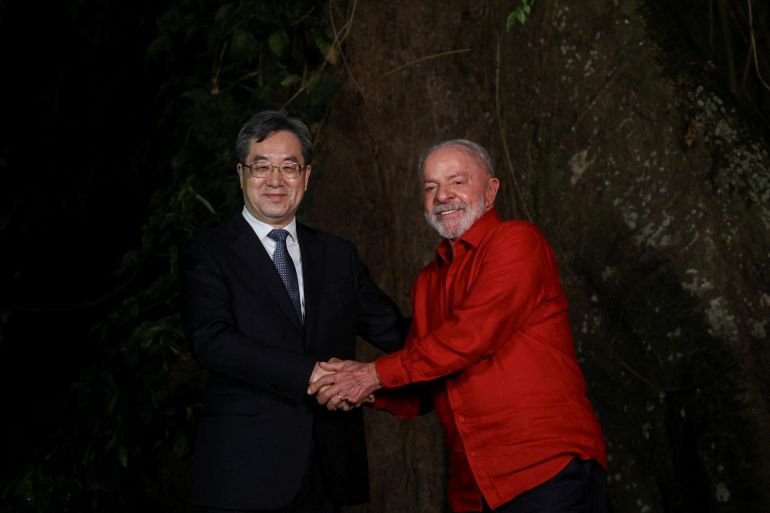
  • Latin America sees China as more positive global influence than US: Poll

    Latin America sees China as more positive global influence than US: Poll

    Annual Latinobarometro survey finds views of China’s influence improving as perceptions of US influence worsen.

    China is perceived more positively as a global influence than the United States in Latin America, according to a new regional survey, in a first since the poll began in 1995.

    The 2026 Latinobarometro survey published on Friday found that 65 percent of respondents in 17 countries saw China as a positive influence. That was compared with 57 percent who said the same of the US.

    Recommended Stories

    list of 3 itemsend of list

    Support for China has risen sharply since 2020, when 48 percent of respondents viewed its influence positively. The figure for the US has fallen from 60 percent over the same period.

    Costa Rica and the Dominican Republic were the only countries surveyed where respondents viewed US influence more positively than China’s.

    Latinobarometro, a Chile-based nonprofit organisation, conducts annual surveys across the region on issues including democracy, the economy, security and migration.

    The findings come during US President Donald Trump’s second term, as his administration has sought to strengthen Washington’s influence in Latin America, particularly through exercising more military might.

    That has included conducting strikes on alleged drug smuggling boats in the region, which rights groups have decried as extrajudicial killings, and abducting Venezuela’s then-leader Nicolas Maduro in Brazil.

    Trump has described his approach as the “Donroe Doctrine”.

    Despite the findings on global influence, the US remained more popular than China when respondents were asked about their overall views of the two countries.

    Some 63 percent of respondents said they had a favourable opinion of the US, compared with 58 percent for China. The US figure was down from 73 percent in 2024.

    The survey also asked respondents about the US military capture of Maduro.

    A majority in all but one country, Argentina, approved of Maduro’s capture by US forces.

    Views were more divided over what the operation meant for Venezuela, with 35 percent saying removing Maduro had benefitted the country and 28 percent saying it had harmed it.

    Venezuelans were among the populations most likely to view US influence positively, according to the survey.

    The 2026 survey was based on about 19,200 face-to-face interviews conducted in 17 countries between May 7 and June 17, with a margin of error of 1 percent.

  • DOJ Argues CNN & Other Outlets Can Be Banned From White House If Trump Determines They Didn’t Meet “Minimum Requirements Of Professionalism”

    DOJ Argues CNN & Other Outlets Can Be Banned From White House If Trump Determines They Didn’t Meet “Minimum Requirements Of Professionalism”

    The Justice Department argued that Donald Trump can legally ban CNN, MS NOW and Politico from the White House because he determined that they didn’t meet the “minimum requirements of professionalism.”

    Last month, a federal judge granted the three outlets a temporary restraining order that forced the White House to reinstate dozens of their reporters’ hard passes. The outlets are now asking the judge to extend that 14-day order for a longer term via a preliminary injunction, claiming that Trump’s ban is a violation of their First and Fifth amendment rights.

    U.S. District Judge Timothy Kelly, a Trump appointee, has said that he is bound by the precedent set in In a 1977 D.C. Circuit opinion, Sherrill vs. Knight, in which the judges ruled that “the protection afforded newsgathering under the First Amendment guarantee of freedom of the press requires that this access not be denied arbitrarily or for less than compelling reasons.”

    In a court filing on Friday, the DOJ claimed that the Sherrill case still would allow for the president to restrict the three outlets from accessing the White House grounds because the White House has a “compelling interest.”

    The DOJ lawyers claimed that the Sherrill decision does not “prevent the President from concluding that bona fide journalists would identify sources instead of relying on anonymous sources, commit to factual accuracy, and provide the White House an opportunity to comment, rather than ‘perform their duties in a way that … interfere[s] with the White House’s daily operations.’ …At a bare minimum, it is a significant violation of decorum to publish classified and sensitive national security information.”

    The news outlets’ legal team has rejected that assertion, writing in a filing earlier this week that Trump’s “statements also make clear he implemented the ban to coerce more favorable coverage from CNN, MS NOW, and Politico, and to deter other journalists and news organizations from newsgathering and reporting that the President might view as negative. And his administration has continued to retaliate against Plaintiffs even after the temporary restraining order, only underscoring that Defendants’ motive is to punish and chill journalism they dislike.”

    Even as access to the White House grounds has been reinstated, the White House has continued to restrict CNN from coverage of TV pool assignments, including travel with Trump on Air Force One.

    The outlets’ lawyers, led by Theodore Boutrous Jr., also noted that Trump and other White House officials “overlooked that the First Amendment protects reporting on matters affecting national security.”

    Kelly has set a hearing for Thursday on the news outlets’ motion for a preliminary injunction.

    In granting a TRO, Kelly concluded that the White House failed to provide due process to the news outlets.

    The DOJ has pointed to letters sent to the outlets as evidence that they were given due process. But those letters were sent on Sept. 22, four days after Trump’s ban was started.

    The judge also has noted that some of the objectionable stories cited by the DOJ do not have to do with national security. Kelly wrote in his order that “even the justifications provided to Plaintiffs after this case was filed are ambiguous about the true purpose of the revocations: while Defendants’ letters to Plaintiffs mention national security concerns, they purport to identify reporting that ‘threatened national security and/or spread falsehoods’ leaving open the possibility that all the stories fall into the later bucket, rather than the former.”

  • Projeto Paradiso Founder Olga Rabinovich to Receive Inaugural Encounters Award at the São Paulo Film Festival (EXCLUSIVE)

    Projeto Paradiso Founder Olga Rabinovich to Receive Inaugural Encounters Award at the São Paulo Film Festival (EXCLUSIVE)

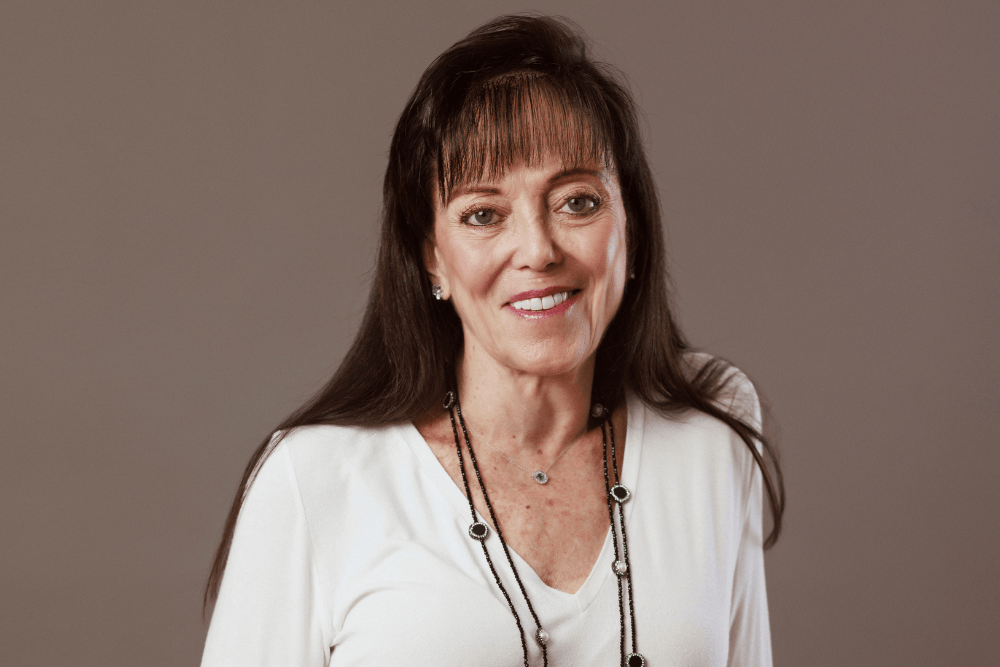
    Philanthropist Olga Rabinovich will receive the inaugural Prêmio Encontros (Encounters Award) at this year’s Encontro de Ideias Audiovisuais, the industry platform of the São Paulo International Film Festival. The award honors her enduring commitment to advancing Brazilian cinema and elevating the international profile of Brazilian film and talent through her work with Projeto Paradiso.

    The Encounters Award was created to spotlight the transformative role of private investment in culture, bringing together private funders and the creative professionals behind audiovisual productions. The inaugural honor will be bestowed upon Rabinovich during the event’s opening gala ceremony on Oct. 14 and ahead of an in-conversation event with Neon president Jeff Deutchman.

    Born in São Paulo, Rabinovich spent years volunteering in hospitals, working closely with terminally ill patients. In 2018, she founded the Olga Rabinovich Institute, launching Projeto Paradiso soon after. The initiative is dedicated to the advancement of the Brazilian audiovisual sector and grew out of her belief that “stories can change the world,” as well as a decision to invest in the people who create them and want to share them with audiences worldwide.

    “Olga Rabinovich is the first recipient of the newly created Prêmio Encontros, because she was the inspiration behind the award,” said Renata de Almeida, director of the São Paulo International Film Festival. I first heard Olga’s name in early 2018, when Josephine Bourgois came to see me about someone from the private sector who wanted to create an institute dedicated to cinema. The Olga Rabinovich Institute was announced during the 42nd Mostra, bringing a breath of hope at a time that promised to be particularly difficult for Brazilian film and culture.”

    “Eight years later, Projeto Paradiso, an initiative of the Olga Rabinovich Institute, has already made a major contribution to discovering and championing a new generation of talent, strengthening Brazil’s audiovisual sector as a whole,” continued the director. “Projeto Paradiso has an outstanding professional team, as its results clearly demonstrate. But the image that stays with me is of a meeting with Olga, climbing the winding stairs of our little building for a somewhat chaotic coffee in the festival’s office. Because, in the end, almost everything really does begin with an encounter.”

    Courtesy of Milena Palladino

    Earlier this year, Variety sat down with the philanthropist ahead of the third Projeto Paradiso National Network Meeting in Brazil’s buzzy production hub of Recife. Rabinovich said she “loved the idea of supporting cinema because I feel it is a magical art form.” “You enter a screening room without knowing whether you’ll be elated or disturbed or moved. It’s a transformative experience. I think it’s incredible to have a communal artistic experience that moves you like this.”

    Projeto Paradiso offers a wide range of support to Brazilian screen professionals to maximize their presence on the global stage, supporting the development of stories through fellowships, residencies, workshops, and other training and international reach initiatives. The Paradiso Talent Network now comprises 278 Brazilian professionals.

    The organization also helps connect Brazilian talent and projects with the international industry through a network of more than 250 partner institutions in Brazil and abroad, including the Hubert Bals Fund, La Fabrique Cinéma de l’Institut français, TorinoFilmLab, Film Independent and the Sundance Institute.

    The initiative was recently behind buzzy festival titles such as Allan Deberton’s Berlinale-winning “Gugu’s World” and Grace Passô’s “Our Secret,” and boasts a talent network of 264 professionals, including Anita Rocha da Silveira (“Medusa”), Juliana Rojas (“Good Manners”) and Dira Paes (“Manas”).

    In 2025 Projeto Paradiso teamed with the Embratur Brazilian Tourism Board to launch Screen Brasil, offering four Brazilian films a year in two calls – the latest of which closed Oct. 2 supporting their international distribution campaigns, submissions being made by the international sales agent holding the film’s commercial rights. Announced at Cannes Marché du Film this May, films backed to date take in Gabriel Mascaro’s “The Blue Trail,” Rafaela Camelo’s “The Nature of Invisible Things” and animated feature “Papaya.”

    Projeto Paradiso’s relationship with the São Paulo International Film Festival dates back to 2018, when the philanthropy initiatve was launched during the festival’s 42nd edition. Since then, Projeto Paradiso has steadily expanded its presence at the festival.

    Since 2023, it has presented the annual Paradiso Distribution Support Award, providing a distribution grant for the theatrical release of a fiction feature. In 2024, Projeto Paradiso was also one of the driving forces behind a new partnership with the Hubert Bals Fund (HBF), which led to the creation of HBF+Brazil following initial discussions at Encontro de Ideias.

    The 50th edition of the São Paulo International Film Festival runs Oct. 15-29.

  • Donald Trump Has Sold a Large Amount of Altcoins Since the Start of the Year

    Based on these figures, the total value of $TRUMP tokens transferred to exchanges reaches approximately $249 million.

    However, it appears the team still holds a significant amount of tokens. The team reportedly owns 80% of the $TRUMP token supply, or 800 million tokens, and has so far transferred approximately 8.2% of the total supply to exchanges.

    According to the data, the team currently holds approximately 718 million $TRUMP tokens in their wallets. This amount represents 71.8% of the total token supply and is worth approximately $1.49 billion at current prices.

    *This is not investment advice.